
Business Daily
2,127 episodes — Page 4 of 43
The worldwide weight-loss revolution
GLP-1 weight-loss drugs such as Ozempic, Wegovy, Mounjaro and Zepbound are reshaping the treatment of obesity around the world. But even when these medicines are judged “cost-effective”, access often depends on who can afford to pay. In the second episode of our Business Daily series on the global weight-loss economy, Sam Fenwick examines how different countries are funding — or rationing — access to these high-priced injections. In England, the state's National Health System says the drugs offer good value for money, and yet rollout is being phased in slowly because of cost and capacity pressures. In the United Arab Emirates, most patients rely on private insurance or pay out of their own pockets. And in India, where obesity is rising fast, affordability remains a major barrier, although lower-cost generics may soon change that. If these medicines can prevent diabetes, heart attacks and strokes, they might save health systems money in the long run. But right now, governments, insurers and patients are grappling with the same question: Can we afford the weight-loss revolution?Produced and presented by Sam FenwickIf you’d like to get in touch with the team, our email address is [email protected] Daily is the home of in-depth audio journalism devoted to the world of money and work. From small start-up stories to big corporate takeovers, global economic shifts to trends in technology, we look at the key figures, ideas and events shaping business.Each episode is a 17-minute deep dive into a single topic, featuring expert analysis and the people at the heart of the story.Recent episodes explore the growth in AI, the cost of living, why bond markets are so powerful, China's property bubble, and Gen Z's experience of the current job market.We also feature in-depth interviews with company founders and some of the world's most prominent CEOs. These include Google's Sundar Pichai, Wikipedia founder Jimmy Wales, CEO of Canva Melanie Perkins, and the CEO of Starbucks, Brian Niccol.(Photo: A man gets his waist measured. Credit: Getty Images)
Weight-loss drugs. Who pays?
GLP-1 weight-loss drugs such as Ozempic, Wegovy, Zepbound and Mounjaro are reshaping the treatment of obesity — and transforming the global pharmaceutical market.Originally developed to treat type-2 diabetes, these injectable medicines — including semaglutide and tirzepatide — are now widely prescribed for weight loss, with growing evidence they can also reduce the risk of heart disease and stroke.But in the United States, access to GLP-1 drugs often depends on insurance coverage — and on who can afford to pay.In this first episode of a three-part Business Daily series on the global weight-loss economy, Sam Fenwick examines the real cost of obesity drugs in the U.S. healthcare system.How much do GLP-1 medications like Ozempic, Wegovy, Zepbound and Mounjaro actually cost? Are they cost-effective in the long term? And can insurers and employers afford to provide them to millions of Americans living with obesity?If you’d like to get in touch with the team, our email address is [email protected] and presented by Sam FenwickBusiness Daily is the home of in-depth audio journalism devoted to the world of money and work. From small startup stories to big corporate takeovers, global economic shifts to trends in technology, we look at the key figures, ideas and events shaping business.Each episode is a 17-minute deep dive into a single topic, featuring expert analysis and the people at the heart of the story.Recent episodes explore the weight-loss drug revolution, the growth in AI, the cost of living, why bond markets are so powerful, China's property bubble, and Gen Z's experience of the current job market.We also feature in-depth interviews with company founders and some of the world's most prominent CEOs.These include Google's Sundar Pichai, Wikipedia founder Jimmy Wales, CEO of Canva Melanie Perkins, and the CEO of Starbucks, Brian Niccol.(Picture: Person standing on weighing scales. Credit: Press Association)
How a spiked drink led to a startup
Today - from a teenage DIY invention, to US national TV, to changing legislation, and now global sales. What started as a way to protect a friend who’d been drugged at a college bar became a product made from an old hair scrunchie and her mum’s stockings. Shirah Benarde tells us how she set up NightCap, a business that’s grown from a bedroom prototype, to securing investment on the Shark Tank show in the US, to a global safety brand in just a few years.If you'd like to get in touch with the team, our email address is [email protected]: Sam Fenwick Producer: Ahmed AdanBusiness Daily is the home of in-depth audio journalism devoted to the world of money and work. From small startup stories to big corporate takeovers, global economic shifts to trends in technology, we look at the key figures, ideas and events shaping business.Each episode is a 17-minute, daily deep dive into a single topic, featuring expert analysis and the people at the heart of the story.Recent episodes explore the weight-loss drug revolution, the AI boom, why bond markets are so powerful, China's property bubble, and Gen Z's experience of the current job market.We also feature in-depth interviews with company founders and some of the world's most prominent CEOs. These include Google's Sundar Pichai, Wikipedia founder Jimmy Wales, and the CEO of Starbucks, Brian Niccol.(Picture: Founder of NightCap, Shirah Benarde. Credit: Shirah Benarde)
How modular homes are rebuilding Portugal’s ruins
Today, we’re looking at a wooden house revolution that's happening in Europe. Concrete’s carbon footprint is turning architects and construction companies towards trees. In Portugal, a rush of new residents to the sparsely populated rural areas – and a lack of builders – is driving the flat-pack and modular wooden house market. Many of these rural plots often have a ruined, abandoned house on them, creating opportunities for faster construction.We also meet an architect who has dedicated his life to building in wood, championing a material he believes is key to more sustainable design.If you’d like to get in touch with the team, our email address is [email protected] and produced by Alastair LeitheadBusiness Daily is the home of in-depth audio journalism devoted to the world of money and work. From small startup stories to big corporate takeovers, global economic shifts to trends in technology, we look at the key figures, ideas and events shaping business.Each episode is a 17-minute deep dive into a single topic, featuring expert analysis and the people at the heart of the story.Recent episodes explore the weight-loss drug revolution, the growth in AI, the cost of living, why bond markets are so powerful, China's property bubble, and Gen Z's experience of the current job market.We also feature in-depth interviews with company founders and some of the world's most prominent CEOs. These include Google's Sundar Pichai, Wikipedia founder Jimmy Wales, CEO of Canva Melanie Perkins, and the CEO of Starbucks, Brian Niccol.(Photo: Wooden modular house. Credit: Getty Images)
Are passengers ready for digital borders?
The use of electronic travel authorisations or ETAs is growing worldwide. Dozens of countries have brought them in, or are bringing them in this year, but many passengers are forgetting to complete them - and missing flights. It is costing customers and business big money to re-book. We hear the arguments for and against the new digital border checks and how to navigate the changes.If you'd like to get in touch with the team, our email address is [email protected]/producer: Rick KelseyBusiness Daily is the home of in-depth audio journalism devoted to the world of money and work. From small startup stories to big corporate takeovers, global economic shifts to trends in technology, we look at the key figures, ideas and events shaping business.Each episode is a 17-minute deep dive into a single topic, featuring expert analysis and the people at the heart of the story.Recent episodes explore the weight-loss drug revolution, the growth in AI, the cost of living, why bond markets are so powerful, China's property bubble, and Gen Z's experience of the current job market.We also feature in-depth interviews with company founders and some of the world's most prominent CEOs. These include Google's Sundar Pichai, Wikipedia founder Jimmy Wales, Canva CEO Melanie Perkins, and the CEO of Starbucks, Brian Niccol.(Photo: A cheerful toddler sits on top of a suitcase, enjoying a playful moment with her father at the airport. Credit: Getty Images)
Why 'scarcity mindset' still persists in India
India is home to more than a billion people. For decades, many families lived with uncertainty around food, water and work. Even as incomes rise and the economy grows, for many people the fear of not having enough remains. It's called 'scarcity mindset'. We find out how it impacts daily lives.If you'd like to get in touch with the team, our email address is [email protected] and produced by Devina GuptaBusiness Daily is the home of in-depth audio journalism devoted to the world of money and work. From small startup stories to big corporate takeovers, global economic shifts to trends in technology, we look at the key figures, ideas and events shaping business.Each episode is a 17-minute deep dive into a single topic, featuring expert analysis and the people at the heart of the story.Recent episodes explore the weight-loss drug revolution, the growth in AI, the cost of living, why bond markets are so powerful, China's property bubble, and Gen Z's experience of the current job market.We also feature in-depth interviews with company founders and some of the world's most prominent CEOs. These include Google's Sundar Pichai, Wikipedia founder Jimmy Wales, Canva CEO Melanie Perkins, and the CEO of Starbucks, Brian Niccol.(Picture: A person's hand holding a brown leather wallet filled with Indian Rupee currency bills. Credit: Getty Images)
The deepfake CEOs
Fraudsters are increasingly using deepfake videos of CEOs and other company executives to trick firms out of millions of dollars. And with the evolution of AI, these videos are becoming ever-more sophisticated and convincing. We speak to two CEOs who have been deepfaked: the head of the Bombay stock exchange and the boss of password security company LastPass. And we hear how criminals used deepfake videos to trick British engineering firm Arup into handing over $25 million. How easy is it to make these videos? Ed Butler visits a cybersecurity company which shows him how it can be done, using readily available software. Ed's hosts make a deepfake of him and we compare the real Ed to the fake Ed. We also put figures on the size of this problem and explain how much it's costing businesses.If you'd like to get in touch with the team, our email address is [email protected]: Ed Butler Producer: Gideon Long Sound Mix: Toby JamesBusiness Daily is the home of in-depth audio journalism devoted to the world of money and work. From small startup stories to big corporate takeovers, global economic shifts to trends in technology, we look at the key figures, ideas and events shaping business.Each episode is a 17-minute deep dive into a single topic, featuring expert analysis and the people at the heart of the story.Recent episodes explore the weight-loss drug revolution, the growth in AI, the cost of living, why bond markets are so powerful, China's property bubble, and Gen Z's experience of the current job market.We also feature in-depth interviews with company founders and some of the world's most prominent CEOs. These include Google's Sundar Pichai, Wikipedia founder Jimmy Wales, and the CEO of Starbucks, Brian Niccol.(Picture: An image of a man in a cap being deepfaked. Credit: Getty Images)
Canva CEO Melanie Perkins
We meet Melanie Perkins, the CEO and co-founder of graphic design platform Canva, which has hundreds of millions of users and a valuation of nearly $40 billion. Despite her immense wealth, Melanie Perkins says the label “billionaire” has never felt quite right. Instead, she plans to give away most of her fortune during her lifetime. She also tells us why she believes young people should be educated differently to adapt to the growth of AI.If you'd like to get in touch with the team, our email address is [email protected]: Zoe Kleinman Producer: Philippa Wain Sound mix: Toby JamesBusiness Daily is the home of in-depth audio journalism devoted to the world of money and work. From small startup stories to big corporate takeovers, global economic shifts to trends in technology, we look at the key figures, ideas and events shaping business.Each episode is a 17-minute deep dive into a single topic, featuring expert analysis and the people at the heart of the story.Recent episodes explore the weight-loss drug revolution, the growth in AI, the cost of living, why bond markets are so powerful, China's property bubble, and Gen Z's experience of the current job market.We also feature in-depth interviews with company founders - like Melanie Perkins - and some of the world's most prominent CEOs. These include Google's Sundar Pichai, Wikipedia founder Jimmy Wales, and the CEO of Starbucks, Brian Niccol.(Picture: Melanie Perkins speaking at a conference in 2024. Credit: Getty Images)
Why is India striking so many trade deals?
In just a few months, the country has signed or advanced several major trade deals with other nations. Is it a reflection of the growing size of the Indian economy - it is on course to become the third largest in the world - or it is because of a global economic realignment due to US President Donald Trump's tariff policies? And is India ready to open its markets to foreign competition, or is there a danger that it will lead to job losses in some sectors? If you'd like to get in touch with the team, our email address is [email protected]: Rahul Tandon Producer: David CannBusiness Daily is the home of in-depth audio journalism devoted to the world of money and work. From small startup stories to big corporate takeovers, global economic shifts to trends in technology, we look at the key figures, ideas and events shaping business.Each episode is a 17-minute deep dive into a single topic, featuring expert analysis and the people at the heart of the story.Recent episodes explore the weight-loss drug revolution, the growth in AI, the cost of living, why bond markets are so powerful, China's property bubble, and Gen Z's experience of the current job market.We also feature in-depth interviews with company founders and some of the world's most prominent CEOs. These include Google's Sundar Pichai, Wikipedia founder Jimmy Wales, and the CEO of Starbucks, Brian Niccol.(Picture: Prime Minister Narendra Modi meets President of the European Council, Antonio Luis Santos da Costa and President of the European Commission, Ursula von der Leyen in Hyderabad House, New Delhi, India on the 27th of January 2026. Credit: Getty Images)
Why are so many French restaurants closing?
We’re in France, where traditional eateries, bistros, and brasseries, once a huge part of the economy, as well as the culture of the country, are disappearing fast. A few years ago, if you drove through France, you’d come across dozens of little restaurants. Now, in many small towns, you’ll only find a boulangerie and a takeaway. Restaurants serving traditional French food like steak and chips or coq au vin are closing at a rate of about 25 a day. The main problem: they’ve become too expensive.If you'd like to get in touch with the team, our email address is [email protected] and produced by John Laurenson Sound mix: Toby JamesBusiness Daily is the home of in-depth audio journalism devoted to the world of money and work. From small startup stories to big corporate takeovers, global economic shifts to trends in technology, we look at the key figures, ideas and events shaping business.Each episode is a 17-minute deep dive into a single topic, featuring expert analysis and the people at the heart of the story.Recent episodes explore the weight-loss drug revolution, the growth in AI, the cost of living, why bond markets are so powerful, China's property bubble, and Gen Z's experience of the current job market.We also feature in-depth interviews with company founders and some of the world's most prominent CEOs. These include Google's Sundar Pichai, Wikipedia founder Jimmy Wales, and the CEO of Starbucks, Brian Niccol.(Picture: Tables and chairs in a village square in Provence, France. Credit: Getty Images)
How ethical is 'ethical' investing?
We’re in Toronto in Canada, North America's second-biggest financial centre after New York, where so-called ethical investing has become big business, with many investors choosing funds they believe are better for people and the planet. But amid growing concerns about misleading environmental claims, it can be hard to know what’s genuinely ethical and what’s just clever marketing. We explore how politics is reshaping corporate commitments and hear from campaigners and regulators working to crack down on financial greenwashing.If you wouild like to get in touch with the team, our email address is [email protected]: Megan Lawton Producer: Sam GruetBusiness Daily is the home of in-depth audio journalism devoted to the world of money and work. From small startup stories to big corporate takeovers, global economic shifts to trends in technology, we look at the key figures, ideas and events shaping business.Each episode is a 17-minute deep dive into a single topic, featuring expert analysis and the people at the heart of the story.Recent episodes explore the weight-loss drug revolution, the growth in AI, the cost of living, why bond markets are so powerful, China's property bubble, and Gen Z's experience of the current job market.We also feature in-depth interviews with company founders and some of the world's most prominent CEOs. These include Google's Sundar Pichai, Wikipedia founder Jimmy Wales, and the CEO of Starbucks, Brian Niccol.(Photo: Sustainability consultant Lindsay Hampson works with companies around the world, helping them navigate ESG frameworks. Credit: Jon Evans)
Is AI about to transform food production?
We go right to the cutting edge of food production and glimpse into the future of farming. Farmers are increasingly using artificial intelligence-powered machines to try to maximise their crops and reduce their spiralling costs. We speak to farmers, those behind the AI systems, and hear concerns about the growing use of automation in agriculture.If you'd like to get in touch with the team, our email address is [email protected] and produced by Rob YoungBusiness Daily is the home of in-depth audio journalism devoted to the world of money and work. From small startup stories to big corporate takeovers, global economic shifts to trends in technology, we look at the key figures, ideas and events shaping business.Each episode is a 17-minute deep dive into a single topic, featuring expert analysis and the people at the heart of the story.Recent episodes explore the weight-loss drug revolution, the growth in AI, the cost of living, why bond markets are so powerful, China's property bubble, and Gen Z's experience of the current job market.We also feature in-depth interviews with company founders and some of the world's most prominent CEOs. These include Google's Sundar Pichai, Wikipedia founder Jimmy Wales, and the CEO of Starbucks, Brian Niccol.(Picture: Farmer inspects humidity of sunflower crops with AI driven software on laptop at dusk. Credit: Getty Images)
The banker who loaned to women when no one else would
Jennifer Riria grew up in a rural village in Kenya, juggled motherhood and university studies in her late teens, and ended up running one of the biggest microfinance institutions for women in Africa, which allows women to access loans for their businesses. The entrepreneur pioneered giving small loans to women at a time when they were not allowed to get finance. We hear about her story in life and in business. If you'd like to get in touch with the team, our email address is [email protected]: Leanna Byrne Producers: Ahmed Adan and Amber Mehmood Sound mix: Toby JamesBusiness Daily is the home of in-depth audio journalism devoted to the world of money and work. From small startup stories to big corporate takeovers, global economic shifts to trends in technology, we look at the key figures, ideas and events shaping business.Each episode is a 17-minute deep dive into a single topic, featuring expert analysis and the people at the heart of the story.Recent episodes explore the weight-loss drug revolution, the growth in AI, the cost of living, why bond markets are so powerful, China's property bubble, and Gen Z's experience of the current job market.We also feature in-depth interviews with company founders - like Jennifer Riria - and some of the world's most prominent CEOs. These include Google's Sundar Pichai, Wikipedia founder Jimmy Wales, and the CEO of Starbucks, Brian Niccol.(Picture: Jennifer Riria.)
What next for Venezuela?
Six weeks after the capture of President Nicolás Maduro, Venezuela appears to be shifting its economic strategy. The government is reopening its crucial oil industry to foreign investment and redirecting oil exports back toward the United States.Presenter Rahul Tandon is joined by producer Gideon Long, who spent five years reporting from Venezuela, to examine the changes introduced since Maduro’s capture and explore what further steps may be required to persuade international companies to return and invest. They also consider whether Venezuela can reduce its reliance on oil and develop a more diversified, resilient economy.We hear voices from inside and outside the country, including acting president of Venezuela, Delcy Rodríguez, as well as US President Donald Trump and Secretary of State Marco Rubio.If you'd like to get in touch with the team, our email address is [email protected]: Rahul Tandon and Gideon Long Produced by Gideon Long and Elisabeth MahyBusiness Daily is the home of in-depth audio journalism devoted to the world of money and work. From small startup stories to big corporate takeovers, global economic shifts to trends in technology, we look at the key figures, ideas and events shaping business.Each episode is a 17-minute deep dive into a single topic, featuring expert analysis and the people at the heart of the story.Recent episodes explore the weight-loss drug revolution, the growth in AI, the cost of living, why bond markets are so powerful, China's property bubble, and Gen Z's experience of the current job market.We also feature in-depth interviews with company founders and some of the world's most prominent CEOs. These include Google's Sundar Pichai, Wikipedia founder Jimmy Wales, and the CEO of Starbucks, Brian Niccol.(Picture: A man on a motorcycle transports water bottles past pumpjacks, beside deteriorating oil infrastructure on the shores of Lake Maracaibo, Venezuela. Credit: Reuters)
Biohacking: where fad meets finance?
Biohackers say they're making their bodies and brains run better by hacking their biology. And it's not just kitchen counter experimentation anymore. There's now an entire industry promising to optimise you with supplements, treatments and increasingly strange gadgets.Are these expensive, unproven “hacks” worth the investment? To get in touch with the team, send an email to [email protected]: Michelle Fleury Producer: Nathalie JimenezBusiness Daily is the home of in-depth audio journalism devoted to the world of money and work. From small startup stories to big corporate takeovers, global economic shifts to trends in technology, we look at the key figures, ideas and events shaping business.Each episode is a 17-minute deep dive into a single topic, featuring expert analysis and the people at the heart of the story.Recent episodes explore the weight-loss drug revolution, the growth in AI, the cost of living, why bond markets are so powerful, China's property bubble, and Gen Z's experience of the current job market.We also feature in-depth interviews with company founders and some of the world's most prominent CEOs. These include Google's Sundar Pichai, Wikipedia founder Jimmy Wales, and the CEO of Starbucks, Brian Niccol.(Picture: North America Business Correspondent Michelle Fleury and Midtown Biohack owner Chuck Morris, standing over a client trying out a red light therapy headset.)
After the cyclone: Can Sri Lanka’s economy recover?
Sri Lanka: a country long loved and marketed as a tropical paradise is reeling after Cyclone Ditwah, which hit the island nation last November. The storm left a third of the island in ruins. Hundreds of lives were lost, homes were destroyed, and hundreds of thousands of people were displaced. The country's President Anura Kumara Dissanayake has called it the country's worst-ever economic disaster. Can it recover?We hear from citizens and businesses affected by the latest disaster to hit a country that has already endured so many setbacks. If you'd like to get in touch with the team, our email address is [email protected] and produced by Vishala Sri-PathmaBusiness Daily is the home of in-depth audio journalism devoted to the world of money and work. From small startup stories to big corporate takeovers, global economic shifts to trends in technology, we look at the key figures, ideas and events shaping business.Each episode is a 17-minute deep dive into a single topic, featuring expert analysis and the people at the heart of the story.Recent episodes explore the weight-loss drug revolution, the growth in AI, the cost of living, why bond markets are so powerful, China's property bubble, and Gen Z's experience of the current job market.We also feature in-depth interviews with company founders and some of the world's most prominent CEOs. These include Google's Sundar Pichai, Wikipedia founder Jimmy Wales, and the CEO of Starbucks, Brian Niccol.(Photo: An aerial view of Warsaw, Poland, including modern skyscrapers. Credit: Getty Images)
Is Poland’s “economic miracle” for real?
Poland’s economy is expected to be the fastest-growing in Europe this year according to the European Union, with the spending power of its average worker on course to overtake that of Japan.So how, three and a half decades after the fall of communism, has it become a case study of capitalism?We hear from some of the country's biggest companies on that increased consumer power, their ambitions to take on the world with international expansion, and ask what hurdles lie in the way for what one economist calls "Europe's growth champion."If you'd like to get in touch with the team, our email address is [email protected] and produced by Will BainBusiness Daily is the home of in-depth audio journalism devoted to the world of money and work. From small startup stories to big corporate takeovers, global economic shifts to trends in technology, we look at the key figures, ideas and events shaping business.Each episode is a 17-minute deep dive into a single topic, featuring expert analysis and the people at the heart of the story.Recent episodes explore the weight-loss drug revolution, the growth in AI, the cost of living, why bond markets are so powerful, China's property bubble, and Gen Z's experience of the current job market.We also feature in-depth interviews with company founders and some of the world's most prominent CEOs. These include Google's Sundar Pichai, Wikipedia founder Jimmy Wales, and the CEO of Starbucks, Brian Niccol.(Picture: An aerial view of Warsaw, Poland, including modern skyscrapers. Credit: Getty Images)
The ex-ballerina betting big on prediction markets
In our first edition of Meet the Founders, we meet Luana Lopes Lara, creator of Kalshi, a prediction markets startup that allows users to trade on the outcome of real-world events - from inflation and interest rates to elections and geopolitics.Kalshi drew attention for showing Zohran Mamdani as a favourite in the NYC mayoral race, as prediction markets gain traction as political barometers. But the wider industry has also faced scrutiny: a trader on rival platform Polymarket reportedly made nearly half a million dollars betting on the capture of Venezuela’s former president Nicolás Maduro before it was announced. The controversy around prediction markets has placed Lopes Lara and her company at the centre of a growing regulatory and ethical debate in the US. In this episode, the Brazilian founder explains how the discipline and resilience of ballet has shaped her approach to building a business, and why she believes markets can often forecast the future better than experts.If you'd like to get in touch with the team, our email address is [email protected]: Sam Fenwick Producer: Amber Mehmood Sound mix: Toby JamesBusiness Daily is the home of in-depth audio journalism devoted to the world of money and work. From small startup stories to big corporate takeovers, global economic shifts to trends in technology, we look at the key figures, ideas and events shaping business.Each episode is a 17-minute deep dive into a single topic, featuring expert analysis and the people at the heart of the story.Recent episodes explore the weight-loss drug revolution, the growth in AI, the cost of living, why bond markets are so powerful, China's property bubble, and Gen Z's experience of the current job market.We also feature in-depth interviews with company founders - like Luana Lopes Lara - and some of the world's most prominent CEOs. These include the CEO of Google Sundar Pichai, Wikipedia founder Jimmy Wales, and billionaire founder Judy Faulkner of Epic Systems, one of the world's largest medical record software providers.(Picture: Luana Lara Lopes, founder and Chief Operating Officer of Kalshi.)
Japan's economic crossroads
As Japanese people prepare to head to the polls, economic concerns are back at the centre of public life.We explore how inflation, wages, demographics and geopolitics are shaping expectations, and whether the country can finally move beyond the "lost decades".To get in touch with the team, send us an email to [email protected]: Rahul Tandon Producer: David CannBusiness Daily is the home of in-depth audio journalism devoted to the world of money and work. From small startup stories to big corporate takeovers, global economic shifts to trends in technology, we look at the key figures, ideas and events shaping business.Each episode is a 17-minute deep dive into a single topic, featuring expert analysis and the people at the heart of the story.Recent episodes explore the weight-loss drug revolution, the growth in AI, the cost of living, why bond markets are so powerful, China's property bubble, and Gen Z's experience of the current job market.We also feature in-depth interviews with company founders and some of the world's most prominent CEOs. These include the CEO of Google Sundar Pichai, Wikipedia founder Jimmy Wales, and billionaire founder Judy Faulkner of Epic Systems, one of the world's largest medical record software providers.(Picture: Office workers cross a road near Tokyo station in Tokyo, Japan, on the second of December 2025. Credit: Getty Images)
Spain's economic case for more migration
The Spanish government has announced plans to legalise the status of half a million undocumented migrants. Many arrive with student or tourist visas but overstay and start working on the black market. Migration is a polarising issue in western Europe, so why is Spain keen to hurry up the process of regularisation? One reason is that Spain’s economy has been outstripping its European Union partners. In 2024 the economy grew by 3.5% but in sectors that struggle to recruit enough workers, so Spain wants its migrant population to work in a legal way to keep its economic momentum going. We meet some of the people the Spanish government wants to give legal status to and speak to organisations that are helping them to work legally.If you'd like to get in touch with the team, you can send us an email to [email protected] and produced by Ashish SharmaBusiness Daily is the home of in-depth audio journalism devoted to the world of money and work. From small startup stories to big corporate takeovers, global economic shifts to trends in technology, we look at the key figures, ideas and events shaping business.Each episode is a 17-minute deep dive into a single topic, featuring expert analysis and the people at the heart of the story.Recent episodes explore the weight-loss drug revolution, the growth in AI, the cost of living, why bond markets are so powerful, China's property bubble, and Gen Z's experience of the current job market.We also feature in-depth interviews with company founders and some of the world's most prominent CEOs. These include the CEO of Google Sundar Pichai, Wikipedia founder Jimmy Wales, and billionaire founder Judy Faulkner of Epic Systems, one of the world's largest medical record software providers.(Photo: View of Madrid city skyline from a sky bar terrace where people are gathered. Credit: Getty Images)
Gates Foundation CEO on cuts to global aid
As governments cut back on how much they spend on global aid, the head of the Gates Foundation Mark Suzman speaks exclusively to Business Daily about how the world’s poorest are being affected. He tells us world governments “should be embarrassed” that the Foundation has overtaken them to become the largest financial backer of the WHO.When governments reduce their air spend, the organisation inevitably becomes more prominent. But is there too much reliance on the Gates Foundation globally for an institution with little democratic accountability? And are its priorities the right ones? If you'd like to get in touch with the team, our email address is [email protected]: Sam Fenwick Producer: Matt LinesBusiness Daily is the home of in-depth audio journalism devoted to the world of money and work. From small startup stories to big corporate takeovers, global economic shifts to trends in technology, we look at the key figures, ideas and events shaping business.Each episode is a 17-minute deep dive into a single topic, featuring expert analysis and the people at the heart of the story.Recent episodes explore the weight-loss drug revolution, the growth in AI, the cost of living, why bond markets are so powerful, China's property bubble, and Gen Z's experience of the current job market.We also feature in-depth interviews with company founders and some of the world's most prominent CEOs. These include the CEO of Google Sundar Pichai, Wikipedia founder Jimmy Wales, and billionaire founder Judy Faulkner of Epic Systems, one of the world's largest medical record software providers.(Photo: Gates Foundation CEO Mark Suzman speaking at an event in New York City. Credit: Getty Images)
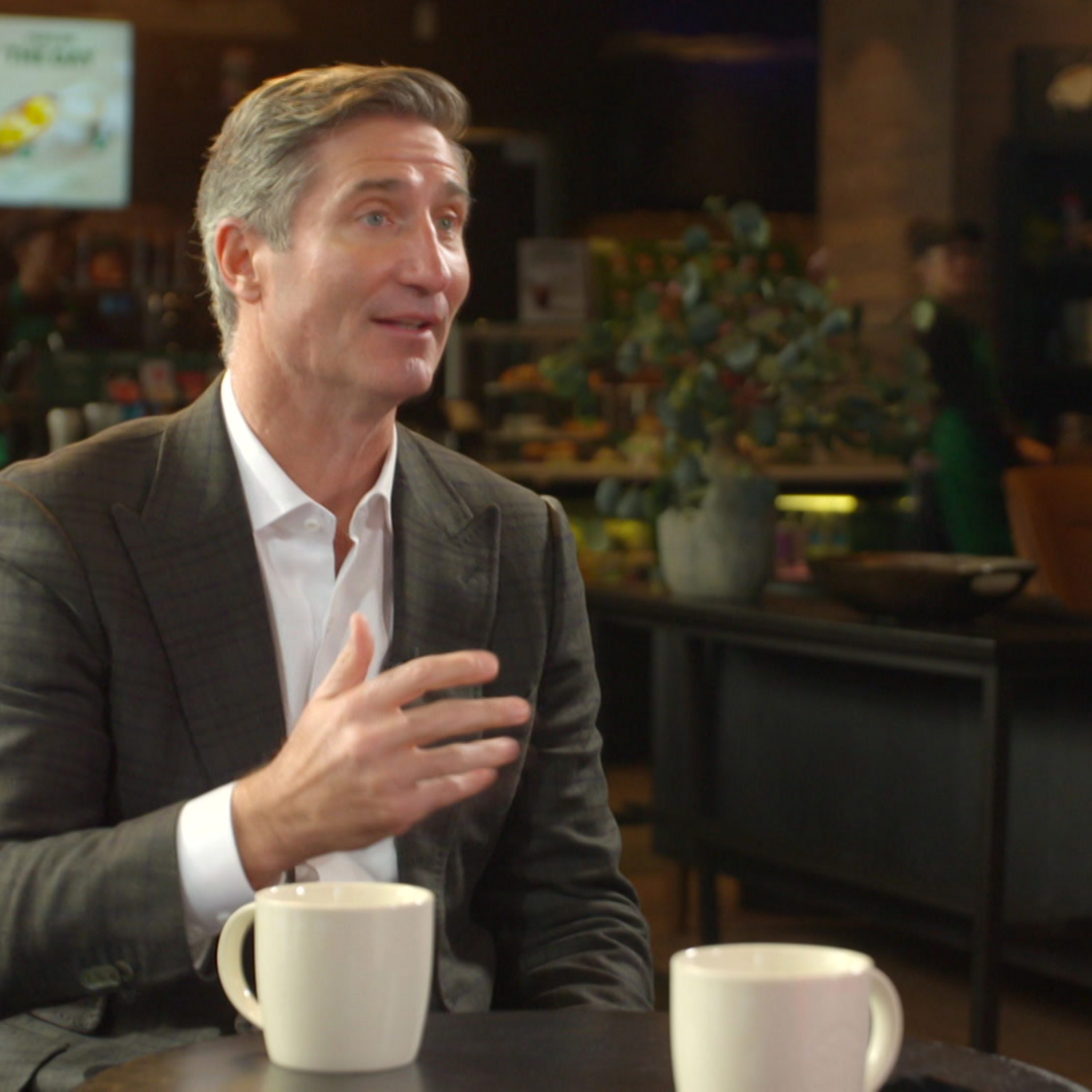
Can Starbucks regain its buzz?
It’s probably the world’s best-known coffee chain but just over a year ago, business wasn’t doing well. Sales had slipped, customers were drifting away and the buzz had gone. Newly-arrived CEO Brian Niccol was handed a tough task: stop the fall and make the coffee shops somewhere people wanted to return to. In an interview with our North America business correspondent Michelle Fleury, he explains why customers are returning and seem to be giving the company another shot. If you'd like to get in touch with the team, our email address is [email protected]: John Mervin and Justin BonesBusiness Daily is the home of in-depth audio journalism devoted to the world of money and work. From small startup stories to big corporate takeovers, global economic shifts to trends in technology, we look at the key figures, ideas and events shaping business.Each episode is a 17-minute deep dive into a single topic, featuring expert analysis and the people at the heart of the story.Recent episodes explore the weight-loss drug revolution, the growth in AI, the cost of living, why bond markets are so powerful, China's property bubble, and Gen Z's experience of the current job market.We also feature in-depth interviews with company founders and some of the world's most prominent CEOs. These include the CEO of Google Sundar Pichai, Wikipedia founder Jimmy Wales, and billionaire founder Judy Faulkner of Epic Systems, one of the world's largest medical record software providers.(Picture: Brian Niccol, CEO of Starbucks, sitting in one of the company's coffee shops in downtown New York.)
The man who built Africa's largest AI firm
From the deserts of Tunisia to the boardrooms of global tech giants, we meet Karim Beguir, the mathematician who turned two laptops and 2000 dollars into Africa’s biggest AI firm. We hear how his company, Instadeep, caught the attention of Meta’s Mark Zuckerberg, and how it helped to track dangerous new variants in the Covid pandemic using large language models.If you'd like to get in touch with the team, our email address is [email protected]: Ed Butler Producers: Niamh McDermott and Hannah MullaneBusiness Daily is the home of in-depth audio journalism devoted to the world of money and work. From small startup stories to big corporate takeovers, global economic shifts to trends in technology, we look at the key figures, ideas and events shaping business.Each episode is a 17-minute deep dive into a single topic, featuring expert analysis and the people at the heart of the story.Recent episodes explore the weight-loss drug revolution, the growth in AI, the cost of living, why bond markets are so powerful, China's property bubble, and Gen Z's experience of the current job market.We also feature in-depth interviews with company founders and some of the world's most prominent CEOs. These include the CEO of Google Sundar Pichai, Wikipedia founder Jimmy Wales, and the billionaire founder of Epic Systems, one of the world's largest medical record software providers, Judy Faulkner.(Picture: CEO of Instadeep, Karim Beguir, at a photoshoot in Paris in 2024. Credit: Getty Images)
Why you buy what you buy
We lift the curtain on how everyone from toothpaste brands to the United Nations is using science to influence your choices in ways you’re probably not aware of. Behavioural science has even made its way into TV drama. How does it work? And why is it so effective?If you'd like to get in touch with the team, our email address is [email protected] and produced by Rowan BridgeBusiness Daily is the home of in-depth audio journalism devoted to the world of money and work. From small startup stories to big corporate takeovers, global economic shifts to trends in technology, we look at the key figures, ideas and events shaping business.Each episode is a 17-minute deep dive into a single topic, featuring expert analysis and the people at the heart of the story. Recent episodes explore the weight-loss drug revolution, the growth in AI, the cost of living, why bond markets are so powerful, China's property bubble, and Gen Z's experience of the current job market. We also speak to some of the world's most influential business leaders. These interviews include the CEO of Google Sundar Pichai, Wikipedia founder Jimmy Wales, and the billionaire founder of Epic Systems, one of the world's largest medical record software providers, Judy Faulkner. (Picture: The hand of a woman about to cause a chain reaction by pushing over a domino. Credit: Getty Images)
Copper theft: A growing economic problem
Demand has been surging for copper around the world - from renewable energy projects, to AI data centres, to infrastructure networks. Production, however, has struggled to keep pace, pushing prices close to record highs in late 2025 and early 2026.As the value of the metal has risen, criminals have increasingly targeted copper for theft - stripping it from telephone cables, railway power lines and solar panels. The resulting damage and disruption is costing economies billions.If you'd like to get in touch with the team, our email address is [email protected] and produced by Russell PadmorePicture: Train passengers look at a train information board at Zwolle station in Zwolle on the first of December 2025 after an extensive track damage caused by an attempted copper theft disrupted train services. Credit: Getty Images)
How country music became cool
Country music is in the midst of a grand renaissance. The genre - whose popularity was previously confined to the American South - is now climbing the charts, grabbing the attention of Gen Z audiences, and changing the perception of what it means to be a country listener. Streaming of the genre in the US rose by nearly 110% in the five years to 2024. And it’s taking over markets all around the world. In the UK, the genre more than doubled its share of the singles market in two years. And Australia is now the third largest country music market globally. From ‘music city’ - Nashville, Tennessee - we speak to artists and industry leaders to better understand where the country music boom came from, and where it’s headed this year. How did country become so cool?To get in touch with the team, our email address is [email protected] and produced by Ellie House(Picture: Neon lights spelling 'Music City Tonight' at Robert's Honky Tonk, Nashville. Credit: BBC)
How global conflict is changing air travel
One of the world’s largest airline groups has told Business Daily that airspace closures, due to war zones, are now forcing substantial rerouting of flights. Lufthansa says the ban on using Russian and Ukrainian airspace is having a measurable cost impact on its long haul network, with typical detours of one to two hours.A recent Conflict Intensity index report shows that areas affected by armed fighting have grown by 89% over the past five years, that is one and a half times the size of the European Union.We examine the cost to consumers, and the environmental impacts of these changes. If you'd like to get in touch with the team, our email address is [email protected]/presenter: Rick Kelsey(Photo: Planes landing and taking off against a coloured sky. Credit: Getty Images)
Lew Frankfort: Building a billion-dollar brand
When Lew Frankfort joined Coach, it was a family run, wholesale handbag business worth six million dollars.He spent 35 years at the company, from opening the company's first shop to growing the business now valued at over five billion dollars.We find out what led Lew to an unlikely career in fashion and how a chance meeting with a US president sparked his social consciousness.If you'd like to get in touch with the programme, our email address is [email protected]: Ed Butler Producers: Hannah Bewley and Hannah Mullane(Photo: Lew Frankfort, chairman emeritus and former CEO of Coach)
Can an island of flowers become a global chip hub?
Forty years ago Japan made more than half of the world's semiconductors. Today, it produces just over 10%. But the country has big ambitions to turn that around.We hear from the CEO of a company at the centre of the government's high-stakes gamble to revive its semiconductor industry, and more broadly, its tech power.And we'll learn how the island of Hokkaido is now the site of billions in investment to turn what has long been an agricultural powerhouse into a global chip manufacturing hub.If you'd like to contact the programme, our email address is [email protected]: Suranjana Tewari Producer: Jaltson Akkanath Chummar(Picture: A lavender field and colourful flower garden in Hokkaido, Japan. Credit: Getty Images)
Slovakia: Small country, auto giant
When Slovakia was part of the Czechoslovak Socialist Republic, the cars it made were noisy, thirsty and slow by western standards at the time. But when Volkswagen bought the car-maker Skoda, that was the beginning of a major change. Now, Slovakia makes almost a million cars a year and with Volvo opening a factory here in 2027, it’ll be a quarter of a million more. Extraordinary for a country of five million people. We visit a factory and find out why this small nation is attracting so much car industry investment. If you'd like to get in touch with the programme, our email address is [email protected] and produced by John Laurenson(Picture: Workers on a production line in a car factory, Slovakia. Credit: BBC/John Laurenson)
America's affordability question
In the second of two programmes, we look at Donald Trump's record on the economy one year into his second presidential term. Today, we are asking is the United States still facing a cost of living crunch?Its economy - the largest in the world - is still growing faster than most others and the stock markets are hitting record highs, yet many Americans say they are still struggling to make ends meet. What's going on? We get the view from our North America business correspondent, Samira Hussain; a data scientist; an economist; and consumers from across the country.If you'd like to get in touch with the team, our email address is [email protected]: Rahul Tandon Producer: Craig Henderson Additional production (audio diaries): Niamh McDermott(Picture: A woman walks down the aisle at the grocery store with her shopping cart looking at shelved goods. Credit: Getty Images)
Life after DOGE
Twelve months into Donald Trump’s second term as President, we examine what it’s meant for the US workforce.For government workers it has been a year of cuts, sackings and Elon Musk’s now disbanded DOGE - Department of Government Efficiency - group. Some sections of the workforce have felt their rights under attack. Meanwhile, many Republicans feel DOGE has been a success. Has the past year also provided opportunities for those switching to the private sector?If you'd like to get in touch with the programme, our email address is [email protected] Presenter: Ed Butler Producer: Craig Henderson(Picture: President Donald Trump listens during a Cabinet meeting at the White House on the 26th of February 2025 in Washington, DC. He was holding the first Cabinet meeting of his second term, joined by Tesla and SpaceX CEO Elon Musk, then head of the Department of Government Efficiency (DOGE). Credit: Getty Images)
CEO of the Folio Society, Joanna Reynolds
We meet retail turnaround expert Joanna Reynolds, the woman behind the revival of the Folio Society, one of Britain’s oldest publishing houses. Ten years ago, the company was losing money and facing an existential threat from the digital revolution.Joanna explains how she transformed the business from a failing book club to a profitable, employee-owned publisher.If you'd like to get in touch with Business Daily, our email address is [email protected]: Sam Fenwick Producer: David Cann(Picture: Joanna Reynolds, CEO of the Folio Society, holding a book. Credit: Dunja Opalko)
The 'Dry January' effect
Festive celebrations at Christmas and New Year often involve increased alcohol consumption in many parts of the world. For some, that’s followed by a decision to take a break from drinking. It's become widely known as Dry January.However, data shows that more people are choosing to reduce their alcohol intake all year round. Alcohol-free drinks only make up about 1% of the total industry, but their popularity has risen quickly, and the vast majority is beer. How influential is Dry January really in this growing trend? And how will the smaller producers, who pioneered the non-alcoholic sector, fare now that the drinks giants are producing their own zero percent products? We examine the changing adult drinks market. If you'd like to get in touch with the programme, our email address is [email protected] and produced by Imran Rahman-Jones(Picture: Sonja Mitchell, founder of Jump Ship Brewing, based in Scotland, UK, holding a glass of non-alcoholic beer up in the air. Credit: Jump Ship Brewing)
What's gone wrong with Iran's economy?
Outrage has been growing in Iran over the country's struggling economy. Any growth this year or next looks unlikely.Protests starting in the capital have spread around the country, driven by mounting economic pressures, sanctions and rising consumer prices. They've been met with a violent crackdown by the government. More than two thousand people are reported to have been killed since the protests began and Iran remains under a days-long internet blackout.In this edition of Business Daily, we examine what has gone wrong with Iran’s economy and why financial pressures have led to so many people taking to the streets.If you'd like to contact the programme, our email address is [email protected]: Rahul Tandon Producers: David Cann and Matt Lines(Picture: An employee arranges a shelf at a store in the Iranian capital Tehran on the 7th of January 2026. Credit: Getty Images)
Bonds: Has the debt become too big?
The power of the global bond market seems to have grown in recent years, to the extent that it can now dictate government policy and even topple political leaders. How much clout do the debt markets actually have and should they be reined in? Many rich nations are more indebted than they have ever been in modern times, meaning that some are spending more simply on servicing their debt than on schools, hospitals or military defence. In the second of two programmes on the bond market, we ask, how sustainable is that debt and should we be worried about it? If you'd like to get in touch with the programme, our email address is [email protected]: Ed Butler Producer: Gideon Long(Photo: A view of financial buildings in the City of London. Credit: Getty Images)
Bonds: Heroes or villains?
We explore how the world became so dependent on bonds, those IOUs from governments and firms that helped build the modern economy. Bonds are often dismissed as a dull corner of finance, but behind the scenes they have played a central role in major economic dramas around the world. We hear about their history, how they have shaped companies and countries, and why some fear the bond market could trigger the next global meltdown. If you'd like to get in touch with the programme, our email address is [email protected]: Rob Young Producer: Gideon Long(Photo: A bond issued in 1648 by a Dutch water board to finance improvements to a local dike system. The bond, written on vellum, is held at Yale University Beinecke Library and is believed to be one of the oldest in the world that still pays interest. Credit: Yale University)
Prince Constantijn of the Netherlands
We hear from a man who is immersed in the world of startups, innovation, venture capital, and the work of policymakers whose job it is to strengthen Europe's standing in all those fields. He's also a Prince of the Netherlands and the brother of the Dutch King. Constantijn van Oranje has worked as a business consultant and at the European Commission. He is now a champion of the Dutch tech sector through his organisation, Techleap, set up to support the founders and startups hoping to shape the future of Europe's economy. It's given him a platform to have his say on some of the most pressing issues facing Europe today - but how does he balance his role with that of Prince? We talk politics, regulation and unicorns. If you'd like to get in touch with Business Daily, our email address is [email protected] and produced by Matthew Kenyon(Photo: Prince Constantijn of the Netherlands presents the annual report of Techleap during the conference State of Dutch Tech on 12 February, 2025 in The Hague, Netherlands. Credit: Getty Images)
The UAE's growing influence in Africa
The United Arab Emirates has become the largest state investor in Africa. It's spending billions of dollars across the continent; building ports, power plants and renewable energy projects. We look at why Emirati companies are expanding so rapidly, and find out how much this investment is reshaping economies.If you'd like to get in touch with the programme, our email address is [email protected] and produced by Sameer Hashmi(Picture: General view of Berbera Port and Bebera city in Somaliland in the Horn of Africa, on 31st August 2021. Dubai-based port operator DP World and the Government of Somaliland, opened a container terminal at Berbera Port in June 2021. Credit: Getty Images)
How might tech shape our world in 2026?
Will the boom in artificial intelligence continue in 2026? We hear how the world’s biggest companies are jockeying for position in the race to dominate the field. After a year of record spending on AI, we look at how sustainable that type of investment might be in the year ahead. Plus - what gadgets could become mainstream in 2026? The BBC's Technology Editor, Zoe Kleinman, and North America technology correspondent in Silicon Valley, Lily Jamali, give Will Bain their predictions. If you would like to get in touch with the show, please email: [email protected]: Will Bain Producer: Matt Lines(Picture: Guests including CEO of Meta Mark Zuckerberg; Amazon founder Jeff Bezos; CEO of Google Sundar Pichai; and CEO of Tesla, SpaceX, X and xAI Elon Musk, arrive before the 60th Presidential Inauguration in Washington, on Monday, 20th of January 2025. Credit: Getty Images)
Can Asia’s economic growth hold up in 2026?
We explore how economies and companies rode out the tariff-driven economic storms of 2025 and hear how many continue to forge new partnerships in a changing world of global trade. Asia business correspondent, Suranjana Tewari, and India business correspondent, Arunoday Mukharji, join us from Singapore and Delhi to discuss what the year might hold for the region's biggest economic players. If you'd like to contact the programme, our email address is [email protected]: Will Bain Producer: Matt Lines(Picture: India's Prime Minister Narendra Modi and China's President Xi Jinping shaking hands at the Brics summit of emerging economies held in Russia in 2024. Credit: Getty Images)
What's the future for Venezuelan oil?
After American forces arrested and removed the leader of Venezuela, Rahul Tandon looks at what the future might hold for the world's largest oil reserve, and what can we learn from the country's past.Many US companies were forced out of Venezuela when the oil industry was nationalised in the 1970s. The type of oil found there is also hard to reach and complicated to refine. We look at its difficult history, where the oil it produces now goes to, and whether US oil companies will want to spend the tens of billions of dollars it is thought will be needed to fix Venezuela's oil infrastructure. If you'd like to get in touch with the programme, our email address is [email protected]: Rahul Tandon Reporter: Gideon Long Producer: Justin Bones(Picture: A man wearing a face mask walks past a mural depicting an oil pump and the Venezuelan flag in a street of Caracas, on 26 May, 2022. Credit: Getty Images)
2026: What next for the global economy?
Tariffs and trade wars dominated 2025, but what does the year ahead have in store? And what about the prospect for rising prices we’ve seen around the world? The BBC’s Deputy Economics Editor, Dharshini David, and North America Business Correspondent, Michelle Fleury, pick through what we learned last year and explore the trends likely to shape the global economy in 2026. If you would like to get in touch with the programme, please email: [email protected]: Will Bain Producer: Matt Lines(Picture: Italian Prime Minister Giorgia Meloni, French President Emmanuel Macron, Canadian Prime Minister Mark Carney, US President Donald Trump, UK Prime Minister Keir Starmer and Germany’s Chancellor Friedrich Merz at the G7 summit in Kananaskis on June 16, 2025. Credit: AFP via Getty Images)
What's it like being a delivery rider?
Doorstep delivery services boomed during the Covid-19 pandemic and they're still popular in many parts of the world: ordering hot meals, or groceries, via a mobile app to your door at the click of a button. For the customer, it's a fast and convenient service. For the rider, it's flexible work, but there's no guaranteed income, the work is physical and the hours are often antisocial - especially during major holidays like Christmas and New Year. Why, then, do so many people do it? We speak to riders in the US and UK about their experiences delivering food, drinks and other essentials to customers at all hours of the day.If you'd like to get in touch with the programme, you can send us an email to [email protected]: David Harper Producer: Victoria Hastings(Picture: A delivery rider on a scooter, travelling through a city at night. Credit: Getty Images)
Business Daily meets: Ned Guinness
With 250 years of brewing history behind his family, Arthur Edward Guinness was discouraged from taking on the responsibility that the men of his family had for centuries. Now Ned, or Lord Iveagh, grows crops, brews beer and is in pursuit of being able to pour the perfect pint in one of the two pubs he owns in the rural east of England. He tells Leanna Byrne about the extraordinary family history he sees as his legacy, and talks about how the famous brewery at St James's Gate in Dublin, Ireland became one of the most successful in the world. Presenter: Leanna Byrne Producer: Hannah Bewley(Image: Ned Guinness, 4th Earl of Iveagh, attends the "House Of Guinness" London Premiere at Picturehouse Central on 23 September 2025 in London, England. Credit: Getty Images)
Yiwu: Christmas city
We're in Santa’s grotto – sort of - a Chinese city that some call the Christmas capital of the world. With 75,000 traders, across 50,000 stores, Yiwu offers the world’s largest wholesale market across a labyrinth of arcades. But at a time of growing trade tensions with the US, who’s actually buying the tinsel this year? If you'd like to send us an email, our address is [email protected]: Ed Butler Producer: David Cann Additional production: Victoriya Holland(Picture: Crowds of people walking through Yiwu wholesale market. Credit: BBC/Wang Xiqing)
The art of the Christmas advert
We look at what makes a great Christmas marketing campaign. From a budget-friendly advert based around coffee cups, to multi-million dollar epic commercials featuring Hollywood A-list celebrities.We unwrap the secrets behind the world's most iconic festive advertising.If you'd like to get in touch with the programme, our email address is [email protected] and produced by Elizabeth Hotson(Picture: A woman and a man wearing Santa hats, sitting in front of a TV with Christmas tree, candles and food. Credit: Getty Images)
How Christmas spending is changing
Festive spending habits are changing, with many, especially younger shoppers, predicted to cut back.We look at what’s driving the shift, the impact on retail, and how artificial intelligence is starting to shape the way shoppers choose gifts and search for lower prices.Plus - we hear from members of the World Service audience on what their holiday spending priorities are. You can get in touch with the programme - our email address is [email protected]: Megan Lawton Producer: Sam Gruet(Picture: Nelmar Cornes, a stationary enthusiast and the owner of the Toronto Pen Shoppe in Toronto, Canada.)
Business Daily meets: Balsam Hill's Mac Harman
As millions of households around the world put up their Christmas trees, we hear from the founder and CEO of US-based company Balsam Hill - one of the world’s biggest artificial Christmas tree retailers. Mac Harman tells us about his journey as an entrepreneur, how he's addressing sustainability concerns, and how the company's managing the pressures of tariffs.If you'd like to contact the programme, our email address is [email protected]: Ed Butler Producer: David CannCorrection, 22 December 2025: This episode, which first aired on 19 December, has been amended to include more detail and to clarify the sourcing of the materials used in the manufacture of Balsam Hill's trees. (Picture: Mac Harman. Credit: Balsam Hill)
The rise of the 'ghost job'
You might be familiar with the term "ghosting" when it comes to dating. One minute you’re talking to someone, the next they disappear.The same thing is now happening in the job market, with employers not responding to candidates or posting roles that never existed.It’s a problem thought to affect millions.In this programme, we hear why "ghost jobs" have become so common, look at the new rules meant to curb the practice, and hear directly from job seekers about how it makes them feel.You can email us - our address is [email protected]: Megan Lawton Producer: Sam Gruet(Picture: Woman applying for a job online. Credit: Getty Images)