Show overview
Bootie and Bossy Eat, Drink, Knit has been publishing since 2022, and across the 4 years since has built a catalogue of 71 episodes, alongside 8 trailers or bonus episodes. That works out to roughly 45 hours of audio in total. Releases follow a monthly cadence.
Episodes typically run thirty-five to sixty minutes — most land between 33 min and 43 min — and the run-time is fairly consistent across the catalogue. None of the episodes are flagged explicit by the publisher. It is catalogued as a EN-language Arts show.
The show is actively publishing — the most recent episode landed 1 months ago, with 9 episodes already out so far this year. The busiest year was 2025, with 21 episodes published. Published by Bootie and Bossy.
From the publisher
Bootie and Bossy are two sisters who share a love of cooking and crafting. Please join us in our adventures and misadventures! We'll share our best recipes and make you feel better about your craft projects. Whatever you do, don't knit like my sister! For show notes and more, please visit Bootieandbossy.com
Latest Episodes
View all 71 episodesWe're back and Mom's OK!
Pippa Latour, a Portrait in "Cool and Lonely Courage"
Episode 61: The Great Catering Adventure
S1 Ep 60What do Knitting and Espionage have in Common?
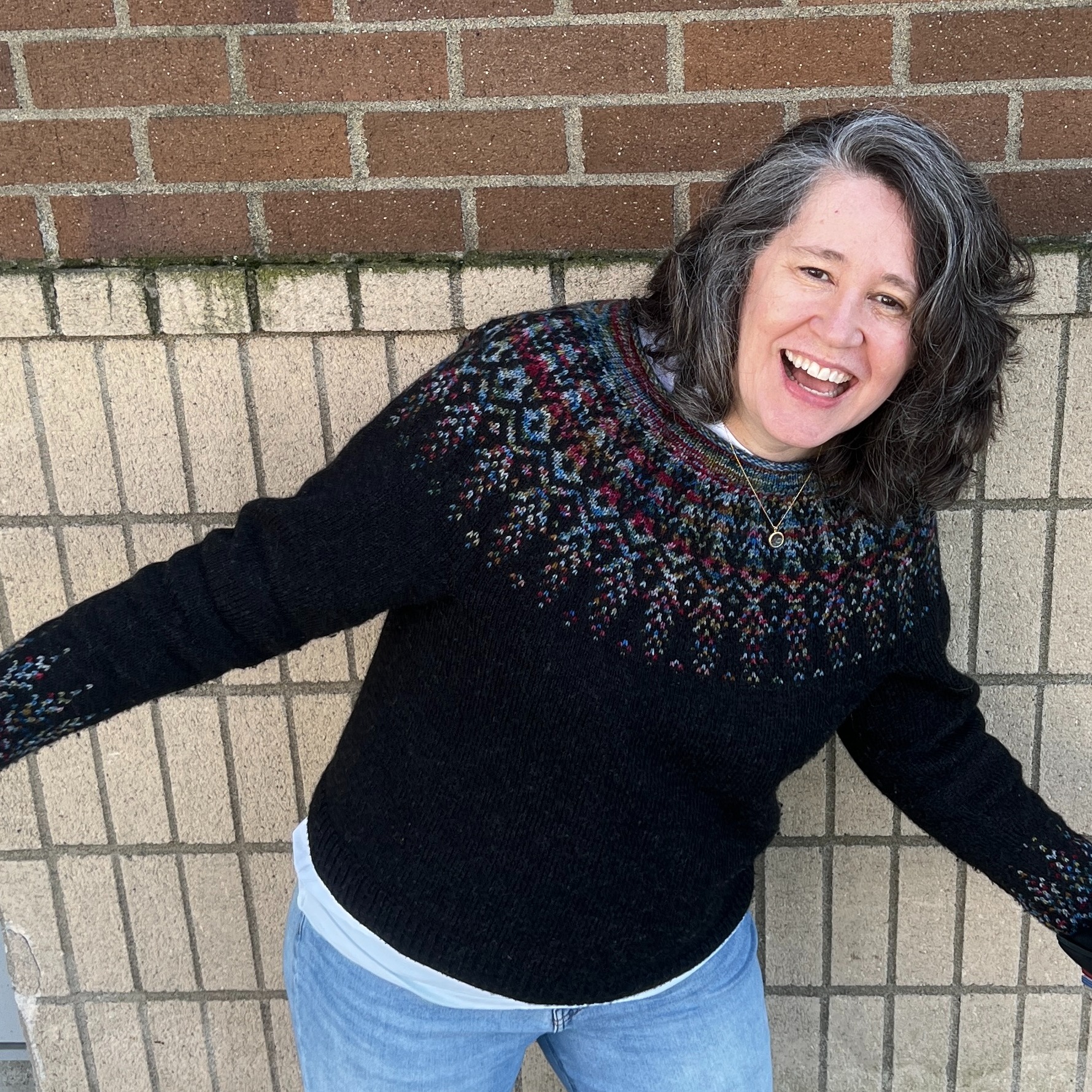
Knitting and espionage? What could they possibly share? A lot, as we learned from reading Jenny O’Brien’s new romance novel, The Resistance Knitting Club, which was inspired by the true story of how knitting was used by women working for the British Special Operations (SOE) during World War II. With its two stitches, knit and purl, knitting is a binary system, which makes it a great stand-in for Morse code. Even more, it was knitting’s very ordinariness that made it a great spy cover. This is the sad irony of knitting’s superpower in the espionage war context: as women’s work, it has a long history of being overlooked and ignored, so a woman sitting in a corner, quietly recording conversations in knits and purls, could not possibly be of consequence. So knitting has a new potential in wartime because as women’s work, it’s never been important. Le sigh. O’Brien’s novel made us want to read the biography of Pippa Latour, a real World War II spy, so stay tuned for the second part of what we have now decided is a “series” on knitting and espionage. Oye the weather. We are both tired of it, between the “Spring Tease” or “Fool’s Spring” followed by snow and the “Atmospheric River” in Seattle and the still-18-degree-mornings in Massachusetts. The only consolation is having fabulous sweaters to wear, like Bootie’s birthday Goldwing—doesn’t she look great? And a good meal—check out our adaptation of Ina Garten’s Baked Farro and Butternut Squash with our “Bootie and Bossy Imperatives for Cooking Sanity”: one pot! And use that whole bag of Farro because what are you going to do with the ½ cup that’s left? Now there’s some good advice. You’re welcome!
S1 Ep 59Episode 59: We Salute the Knitlympians
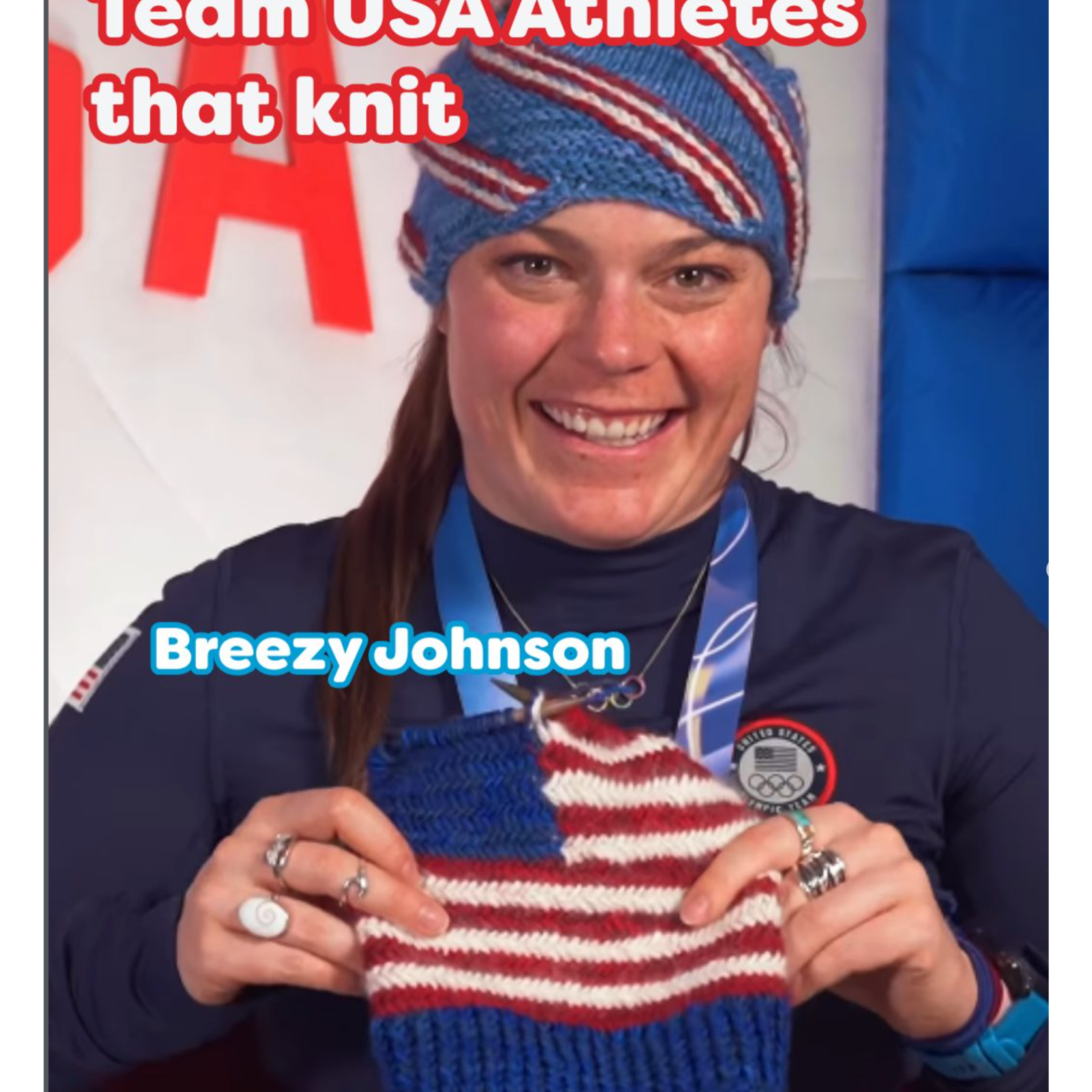
Breezy Johnson. Maddie Mastro. Deerdra Irwin. Margie Freed. Lucinda Anderson. Maxime Germain. Jaelin Kauf. Jessie Diggins. Julia Kern. Greta Myers. Ben Ogden. Sure, these are all members of the US Olympic Team who competed in the recent games in Cortina, Italy, but did you know that they are also Knitlympians? They belong to an even more elite circle of athletes who are also accomplished knitters--in fact, judging by their Instagram feeds, they are almost as proud of their knitting as they are of their medals and Olympic performances. We love this. From Breezy Johnson designing and knitting a headband the night before each race to Maxime Germain's scratchy sweater with colorwork and crochet along the hem, all have found in knitting the space for cultivating a relaxed, alert focus that enhances their performance on the slopes and the ice. Knitting has long been compared to yoga and meditation, but do you have a beanie or sweater to wear after doing yoga or meditating? You do not. We rest our knitting case. But there are other surprising points of comparison between Olympic sports and knitting: they are both equally important, excellent, time consuming, expensive, and, at times, heartbreaking and frustrating. Snowboarder Maddie Mastro summed it up nicely when she filmed herself knitting in the car on the way to Cortina:"Did not finish the beanie, but DID make it to the Olympics!"Maddie MastroWe like how making it to the Olympics comes second after the status report on the beanie. We know you'll get it done, Maddie.Speaking of getting it done, we are thinking more about the Melt-the-Ice hats we featured in our recent bonus episode and the symbol of the Phrygian hat on the seal of the U.S. Senate. We are thinking some senators need a hat of thanks, and perhaps others need to be reminded of what that red hat on the seal symbolizes. So we invite our listeners to send a hat to your senator, or maybe a red hat broach. We'll put up a template of a letter on our website bootieandbossy.com that you can send along with it. Maybe Jaelin Kauf, Knitlympian and producer of 50 beanies for her supporters, will help. So whip up some of Keeley Richardson's fabulous King Arthur's Everyday Olive Oil cake with a few drops of Fiori di Sicilia, grab your pointed sticks and join us in sending a message to our senators about what that red hat on their seal actually means.
S1 Ep 58Episode 58: A Dream Afternoon with Keeley Richardson
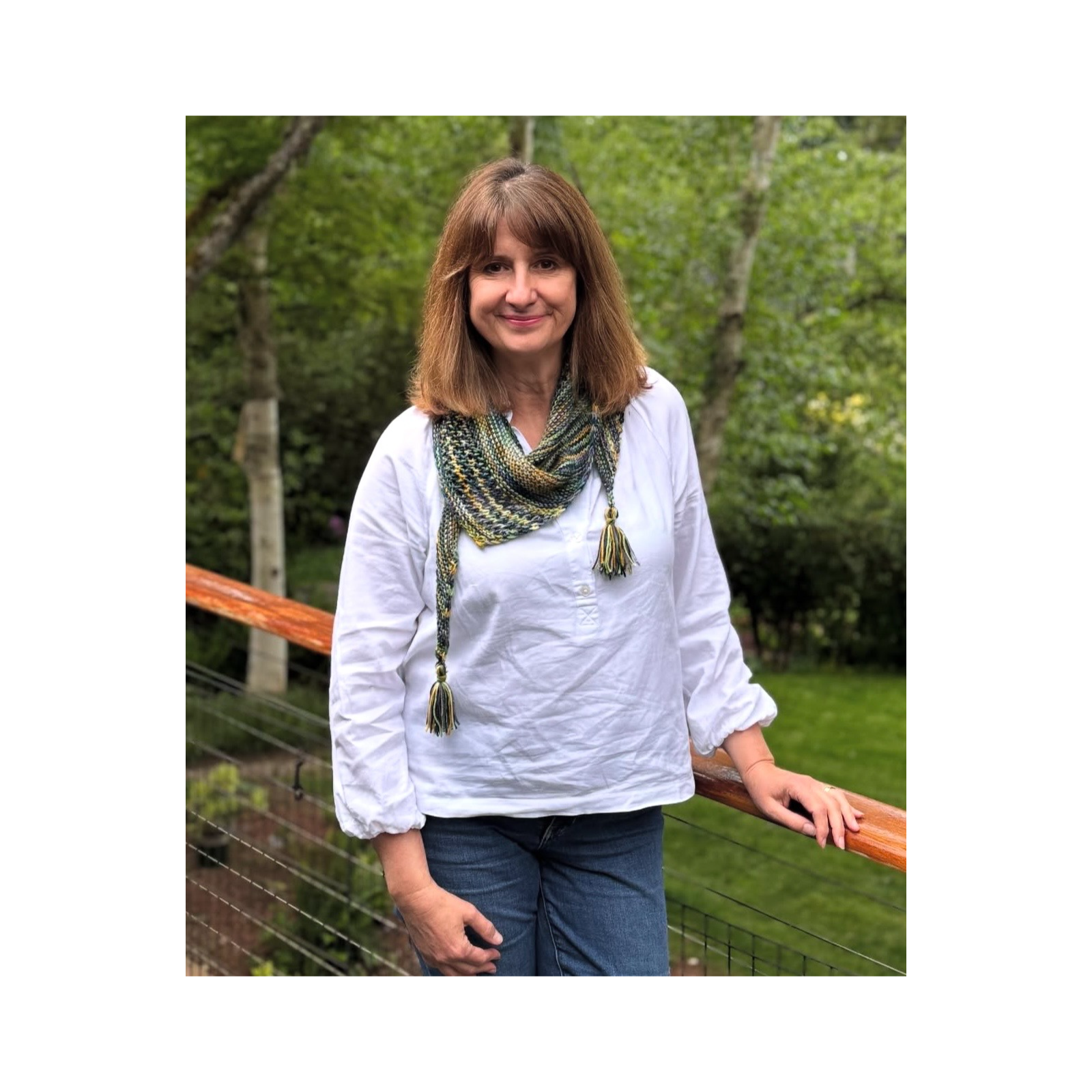
What is Keeley Richardson's idea of a "dream afternoon"? The founder of the online blog and magazine Puget Sound Woolpack does not hesitate: "You guys know this: sitting and knitting and eating cake, I mean, that is probably my dream afternoon. And if only I could spend every afternoon doing that, I would be very happy." We say, "Yes, please! Sign us up!" We could also spend all afternoon listening to Keeley's lovely British accent. We loved learning more about Keeley's fiber life, which started when she was about six growing up in Birmingham, the midlands region of the UK, in a fiber family with her mum, nan and aunt teaching her everything from knitting and embroidery to sewing: "Back then, we didn't call it 'the fiber arts'--that's a new phrase--it was just something we all did in our household." Her teddy bears were the first recipients of her efforts as they proudly sported long thin scarves. Crafts were also taught in schools, and when she noticed that her three young sons weren't coming home with the kinds of craft projects she remembered, she started a business teaching kids to knit and sew as a creative lunchtime club in schools. By the time she left the UK, 600 kids were enrolled in the program across three counties. When she and her family relocated to the Seattle area in 2017, she began connecting with people in the local fiber community. Starting the online blog/magazine Puget Sound Woolpack seemed like a natural next step for putting her background in marketing, writing and teaching the fiber arts to work:"The Woolpack isn't just about me . . . it is a platform for local businesses, for local yarn stores, for local wool producers, for dyers--it's a space for them to talk about what they do, their background, what motivates them, and what inspires them. The Woolpack isn't designed to be something that says, 'you should buy this.' It's about the people behind all of the things that we know and love. And I hope that comes across. That would be the intention." The Woolpack's feature "Fiber Heroes" tells those fascinating behind-the-scenes stories of the people behind the things, while "Yarn Adventures" focuses on local events and things to do. "The Yarn Test Kitchen" offers one-skein projects featuring yarn from local indie dyers as well as simple, favorite recipes for a good bake for the dream afternoon. We can't wait to try the "Everyday Olive Oil Cake" she recommended. And we also can't wait to connect with Keeley at Rhinebeck again, and with her guidance--she has tried them all!--try out some of the other fiber events in the area, such as A Woolen Affair, Indie Untangled and CAKEpalooza.So, while Rhinebeck is still months away, it's never too early to start thinking and dreaming about it, and our conversation with Keeley Richardson in this episode is a great place to start!
Got Red Wool?
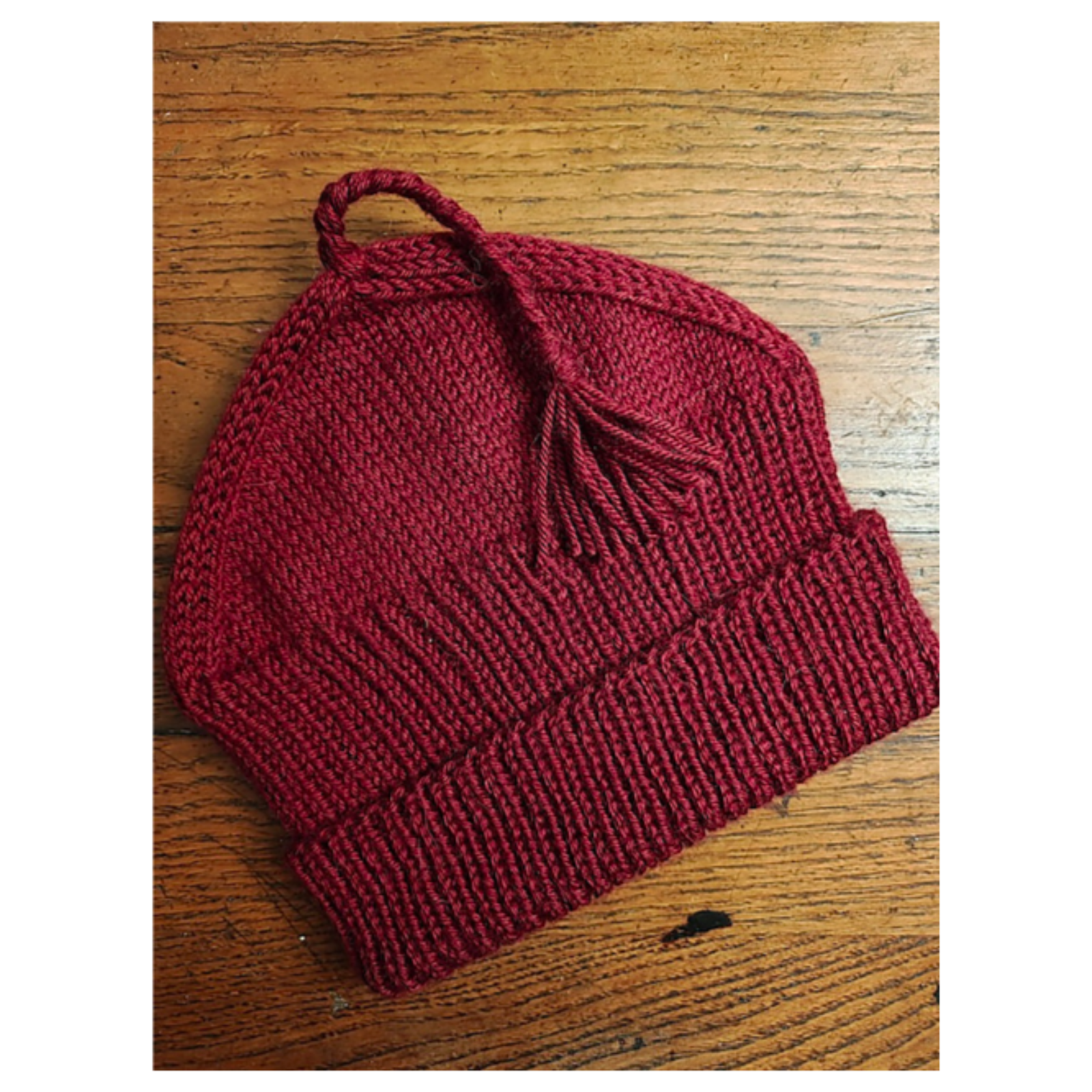
bonusThere's a quiet but powerful movement afoot in the knitting community. It started at Needle & Skein, a full-service yarn store in Saint Louis Park, Minnesota. Wanting to do something to protest the presence of ICE in his state, Paul Neary decided to look back in time for inspiration, and he found it in 1940s Norway. As Neary explains in his "Melt The Ice Hat" pattern,"In the 1940s, Norwegians made and wore red pointed hats with a tassel as a form of visual protest against the Nazi occupation of their country. Within two years, the Nazis made these protest hats illegal and punishable by law to wear, make or distribute. As purveyors of traditional craft, we felt it appropriate to revisit this design."Paul Neary, "Melt the Ice Hat," available on Ravelry and through Needle & Skein (needleandskein.com)"We felt it appropriate to revisit this design." We love the understatement. All proceeds from the sale of the pattern ($5) go to Minnesota Immigration Aid organizations. Over $650,000 has been raised, and the pattern has been sold in 43 countries. The movement might have started in a quiet corner of a Minnesota yarn store, but it's big now, and it's growing. This is what happens when you have a lot of people ready to take a stand and put their pointed sticks to work.In fact, the red cap's association with liberty has a much longer history, going back to Ancient Greece where former Phrygian slaves wore red pointed caps to signify their emancipation. Romans picked up the association and bestowed red caps on freed slaves as part of their manumission ceremony. In the American Revolution, Paul Revere carved a liberty cap on a stone obelisk in the Boston Common, and local towns often placed a red liberty cap on a pole or tree to signify their allegiance to the resistance. The tradition was continued during the French Revolution with Lady Liberty sporting a red cap and her followers donning the famous "bonnet rouge." Early draft designs of the Statue of Liberty even showed her with a red cap instead of a crown. Perhaps most surprising is the Seal of the U.S. Senate--take a close look, and oh, what's that you see? Could it be a little red liberty cap at the top? The irony.So we are buying red yarn and knitting "Melt the Ice" hats these days. We want to be part of the red liberty cap history, because, well, it's our history. Join us.
S1 Ep 57Episode 57: Will Bootie and Bossy Go on Game of Wool?
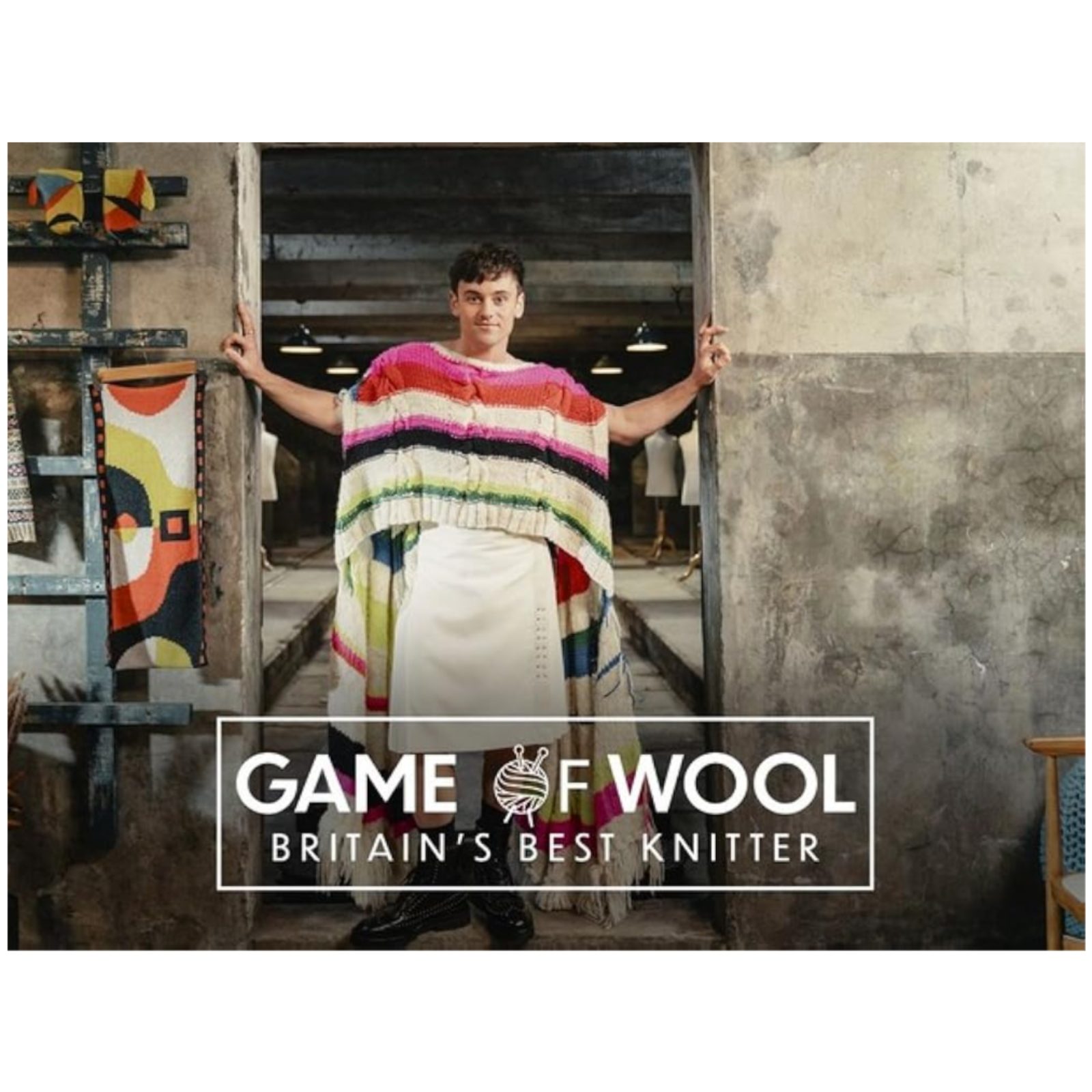
First we want to say that we love that there is a British show about knitting. Period. Full stop. And we love that Tom Daley is the host--he is warm, funny and good humored about testing the knitted deck chairs the contestants make with his well-sculpted butt. But knitters that we are, would Bootie and Bossy go on the show? Let's be clear: NO ONE IS ASKING US. We also don't live in the UK. But the answer is still a definite "No." For one, we would never subject anyone--even an Olympic swimmer with a flawless body--to wearing a swimsuit we had designed and knitted. "Game of Wool: Britain's Best Knitter" is a bit of a misnomer--we are reminded Mike Meyers's famous character of Linda Richman on Saturday Night Live who might have said, "I am feeling verklempted. I'll give you a topic: 'The show is neither a game, nor about wool or knitting.' Discuss amongst yourselves." There's a lot of crochet in this knitting show, which is kind of like mixing coffee and tea, as any fiber artist with an ounce of reverence for the two crafts will tell you. Plenty of accomplished knitters follow patterns as written with great creativity in selecting the material and colors, but the show often expected serious design skills, which left some some contestants in the dust from the start. And the time constraint of 12 hours meant contestants had to use bulky wool with needles the size of shotguns. As one contestant, Holger, remarked:"Asking me to express myself in chunky yarn is like asking a vegetarian to express themselves with only something like steak." Later he would say, "The method I am using is pure and utter desperation."Holger Auffenberg, "Game of Wool: Britain's Best Knitter," Episode 1.Here's the thing: we loved the contestants sporting their own handknits, and we wanted to know more about them. Where was the camera crew following them back to their homes so we could meet their kids and parents and learn more about what inspired them? As one of the judges Di Gilpin said, "Knitting generally is all about telling a story." What a great premise! How about following it? Tell us the stories behind Tom Daley's outfits!So we want another season where they get it right and tell more stories about the contestants, the judges, and knitting with something other than bulky yarn. The craft of knitting deserves this. We promise to watch the second season, but in the meantime, we will be busy eating Oreo Cookie Truffles because Valentine's Day is just around the corner, so we have to leave healthy behind (that phase lasted long, didn't it?!). This is the perfect homemade treat for your Valentine or Galentine or Palentine, or just for yourself--try it!

S1 Ep 56Episode 56: Your Stash: Inspiration or Albatross?
So it's the New Year. Hooray. And maybe like us you opened up that closet to put back the decorations and thought, "Do we need all of this? What's in these boxes anyway?" Perhaps your thoughts have now turned to your stash--not your drug stash, or a stash of stolen goods, the word's original meaning when it first entered English usage in 1914. We're talking about your yarn stash. Is it a source of inspiration to you, or an albatross? We are here to help. In typical Bootie and Bossy fashion, we decided the best way to tackle this was first to read about it, and then to talk about it, because you don't want to be too hasty and spring into action too quickly here. So we read A Stash of One's Own: Knitters on Loving, Living with, and Letting Go of Yarn, a wonderful collection of essays edited by Clara Parkes. Because a yarn stash is not just a pile of random string, as Parkes explains, "Yarn holds energy (literally twist), but it also holds energy in the form of memories . . . Every knitter will be able to pick up skein from her stash--any skein--and tell you a complete and compelling story about it" (p. 109). This might be why Stephanie Pearl-McPhee cannot get rid of the ball of yarn her daughters gifted her, even though it’s so pink and shiny it looks exactly like “what you’d get if Barbie and My Little Pony dropped acid and tried to come up with a colorway” (p. 32). As much as your yarn stash is a kind of fiber scrapbook—especially that vacation yarn that’s “all larded up with sentiment and emotion and meaning to the point where you weep slightly when recalling the now defunct yarn shop where you bought it" (Ann Shayne, p. 46)—it’s also connects you to the future. At its core, a stash is a repository of hope, as Anna Maltz explains: "There is a deep optimism in how much we acquire and keep around, and in our belief that we can make and learn from that vast quantity in a single lifetime.Anna Maltz, “Moving Yarn/Portable Stories,” in A Stash of One’s Own, p. 79. For Debbie Stoller, having a stash is also an empowering feminist act:"[A] yarn stash makes a pretty large statement to the world that a woman is planning to spend hours—nay, years—of her life engaging in something that doesn’t promise to make her skinnier or look younger or give her a tighter butt. Something that won’t make her a better mother, or a better wife . . . It announces to the world that she has decided to do something just for herself in pursuit of only one thing: pleasure.”Debbie Stoller, "A Stash of One's Own: Yarn as a Feminist Issue," A Stash of One's Own, p. 180. If your stash inspires and empowers you, great—keep doing what you are doing. If it starts to feel like an albatross, then there’s help for that too. As knitter and social worker Sue Shankle explains, “People have a hard enough time understanding themselves. Expecting others to ‘get’ you (or your love of beautiful yarn) is not always realistic. That’s why you need a posse. People who understand it all, no explanation necessary” (91-2). So make a nice, warm batch of healthy Instant Pot Curry with Chickpeas, Spinach and Tomatoes, and as you contemplate your stash, know that it’s much more than just yarn in a bin—it’s your past and your future, your statement to the world of how you want to spend your time, and we understand that because we are your posse!
S1 Ep 55Episode 55: What's so great about 1950's America?
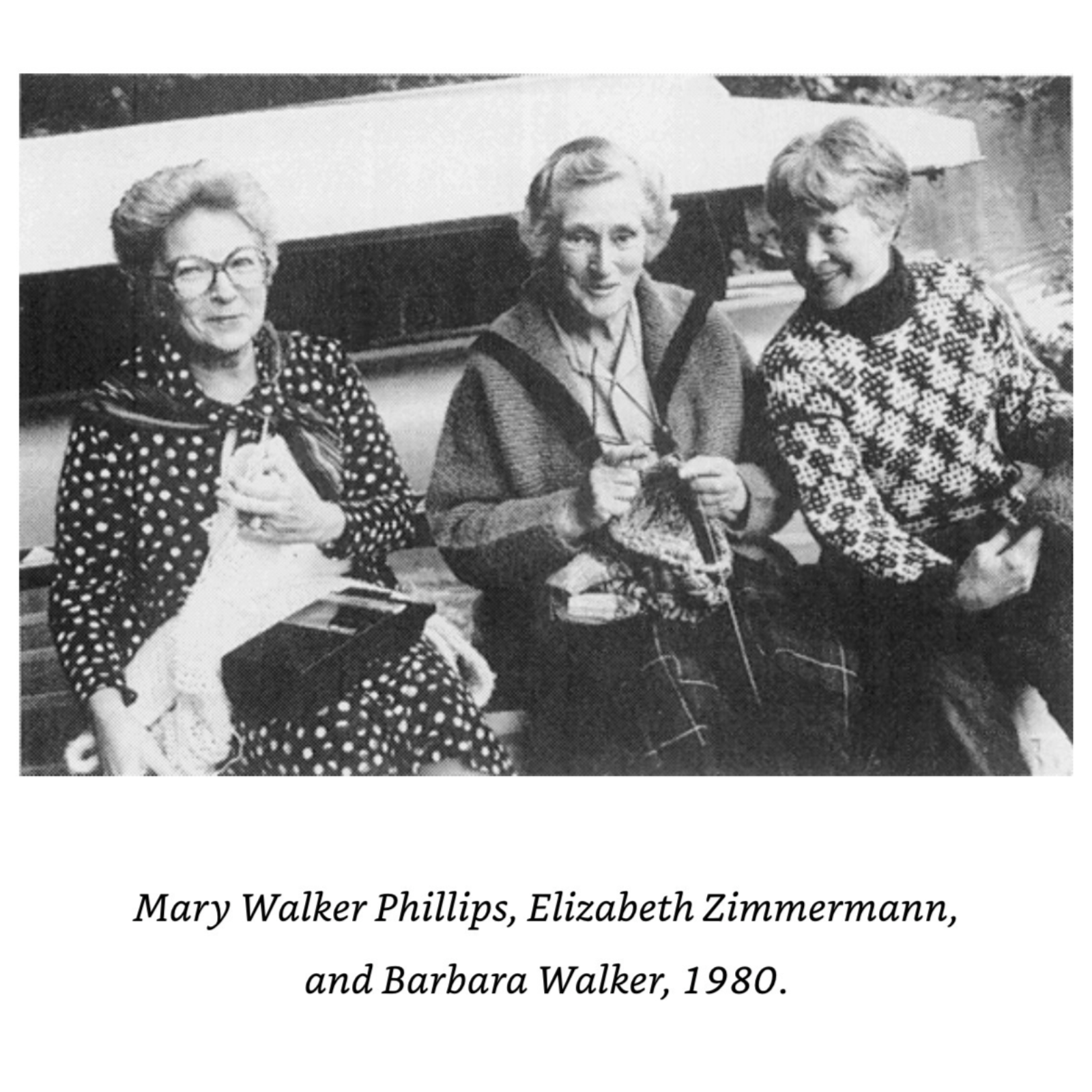
What's so great about 1950s America? We admit this is a trick question. It might have been great for men, but at least according to Anne Macdonald in No Idle Hands: The Social History of American Knitting, for many women, particularly young mothers, it felt like being "trapped in a squirrel cage" of modern appliance-packed houses that feminist writer Betty Friedan would later describe as "comfortable concentration camps" (p. 323). More women dropped out of college to get the coveted "Mrs" degree and then devoted themselves to cleaning their houses and popping out kids. And they succeeded--the birth rate at the time was close to India's. But they also struggled to meet impossible and opposing expectations, as one woman memorably described it:"I've been married ten years and I still feel my husband expects me to be a combination of Fanny Farmer and Marilyn Monroe."--Quoted in Anne Macdonald, No Idle Hands: The Social History of American Knitting, p. 323.With little time and mounting resentment, the 1960s and 70s unsurprisingly ushered in Women's Lib and the era of "Jiffy Knits" with giant needles. No one is knitting for thrift anymore, but knitting still offers cures for the following ailments: nail biting; arthritis (dubbed by one woman as "Mr. Arthur," whom she successfully banished from her hands with knitting every morning); anxiety; agoraphobia; overeating; smoking; impatience and finally boredom, as many knit while waiting in the long lines during the gas shortage. But out of this period emerge the three graces of the knitting world: Mary Walker Phillips, Elizabeth Zimmerman and Barbara Walker. They bring their expertise to the masses, and we all owe them a tremendous debt.As we approach the holiday season, we are grateful to Anne Macdonald for writing No Idle Hands, which has given us so much to talk about and stories to share. So take a moment to make a batch of biscotti, then grab your pointed sticks and settle in for some good stories about finding the bright side of things, stories that have made us smile many times over the years. And join us in declaring this the season of "Cookies for Everyone!"
S1 Ep 54Episode 54: Natasha Darius and the Soul of Spinning
Listen to this episode and you will never look at handspun yarn in quite the same way. A bold claim, we know, but that’s just one of the many things that Natasha Darius taught us in this interview. We met Natasha at Woolworks, Ltd., in Putnam, Connecticut, where she manages the volunteer-run store, teaches spinning, knits and does 10,000 other things. Growing up Haitian in Scotland, Connecticut, she did not come from a knitting family, but being a self-described old soul with an insatiable curiosity to “know all the things,” she was fascinated by the Afghans made by her friends’ mothers and grandmothers. So she went to the local library (imagine!) and checked out every book on the fiber arts. Thus began her odyssey that would lead to learning to knit and then spin at Yarns with a Twist, a local yarn store in Chaplin, CT. Eventually, she would join “Fleece to Shawl” competitions at local fairs and help others with their knitting projects at Woolworks. But it was her philosophy of spinning that most captivated us, as she explained that every fiber has a personality, an idea of what it wants to be, and each of her 28 spinning wheels has a personality and a story waiting to unfold too. Mix in Natasha’s own personality, and, well, that’s a lot of personality spinning around: "If you are going to pick up spinning, you have to realize that there are moments where your will will not be done. If you want to enjoy the process sometimes you just have to listen to the fiber and let the fiber tell you what it wants to be . . . you can’t control everything. You are not meant to control everything. You do not get the final say of what is a good instinct. You are not the final decision maker on what’s considered beautiful or perfect. Let it do what it wants to do."We can see that philosophy at work in how she approaches teaching spinning too, as she explained that every student has their own language for learning. The teacher’s job is to figure out what that language is by listening and observing. Her favorite part of teaching? Seeing the flicker of understanding that happens right behind her students’ eyes when they get it and all the complexity of spinning falls into place for them.Perhaps most of all, spinning brings Natasha joy—the joy of interacting with the unique personality of each fiber and spinning wheel, and the pride and satisfaction that comes from making something from start to finish: “If you can spin it, you can make something beautiful out of anything . . . I surprise myself all the time.” And then there’s the joy of sharing it with the magical community at Woolworks. As we enter the holiday season, we think sharing Natasha’s story about the joys of learning, making and teaching “all the things” with her local community is what we all need.
S1 Ep 53Episode 53: How Knitting Helps Everyone
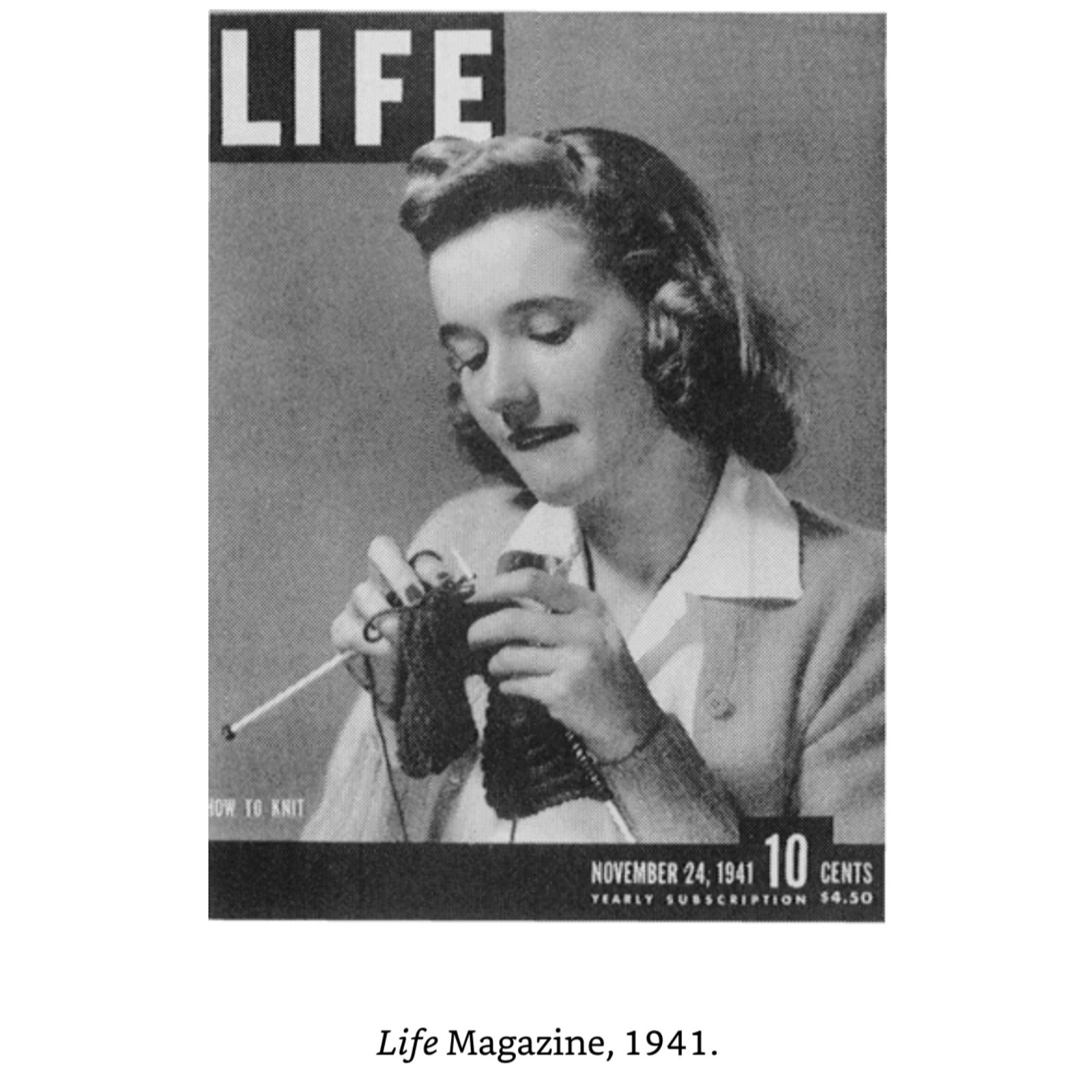
Let's go back about 85 years. It's November, 1941, and America is about to enter World War II, when once again we will discover that we are a cold-footed, sockless nation. We have been here before. Think Revolutionary War, then the Civil War, and then World War I. But coming out of the Depression when there was not much money, we have evolved. We are now a nation of knitters--10 million knitters strong according to estimates from the National Dry Goods Association. So when the men pick up their guns, women pick up their needles once again, according to Anne Macdonald in No Idle Hands: The Social History of American Knitting. What's different? This time we have more music to knit by, like Glenn Miller's "Knit One, Purl Two" (you can ask Alexa to play it for you). Emily Post also decides on some rules of etiquette for knitting in public like "Do not wave long or shiny needles about in the air" (Macdonald, p. 304), so if you are doing that, stop it. But more than anything, accounts of knitting at the time speak to how it keeps us calm and connected, and in that way, it's good for everybody, knitters and wearers alike. Handknit garments helped the men at the front because they were"visible evidence that someone at home has been thinking about him--a lot. ... Nothing warms the hearts of the boys away from home like articles knitted by the loving hands of those they hold near and dear."Quoted in Anne L. Macdonald's No Idle Hands: The Social History of American Knitting (New York: Ballantine Books, 1988), p. 294.Knitting also helped the knitter, as writer Jane Cobb explained: Knitters "get satisfaction from the orderly row of stitches falling into patterns of accomplishment. In times like these there are few occupations that have that sort of effect. It is quite possible that women in wartime knit as much for the knitting as for what their knitting accomplished" (quoted in Macdonald, p. 298).So as we enter the season of thanks and perhaps some panic knitting for holiday gifts, stop waving your needles, ask Alexa to play "Knit One, Purl Two," and then take a breath and a moment to enjoy the "orderly row of stitches falling into patterns of accomplishment." Then make our Pecan Pie, and we have no doubt that many hearts will be warmed.

S1 Ep 52Episode 52: Rhinebeck Recap!
What is it about Rhinebeck?! It's hard to believe that a modest gathering of local shepherds and 4-H Clubs to trade fleece and auction small livestock in 1980 is now a booming event attracting 30,000 people from all over the world. We met so many fascinating fiber folks, including Ting who owns a knitting store in Taiwan and three different knitting groups from Kansas City, in addition to seeing some of our favorite knitting celebs like Adele and Jimmy of Lolabean Yarn, designers Caitlin Hunter, Safiyyah Talley and Zanete, knitting gurus Patty Lyons and Carson Demers, and Gigi in all of her orange glory. We also reconnected with our friend Christina Kading and enjoyed watching her dad demonstrate how to shear a sheep. There's just a great sense of community that magically happens when a bunch of people sporting their handknit sweaters (Andrea Mowry's Ooey Gooey was well represented!) gather on a beautiful fall day on the Dutchess County Fair Grounds. Perhaps Alice Seeger, founder of Belfast Fiber Arts, said it best:"You can make a lot of things when you spin, dye, weave, knit, or crochet . . . But the most important things are the friendships.” Quoted in Laura Bannister's article, "Counting Sheep in Rhinebeck, New York," Vogue, October 24, 2022.
S1 Ep 51Episode 51: Does Knitting Shut Men Out?
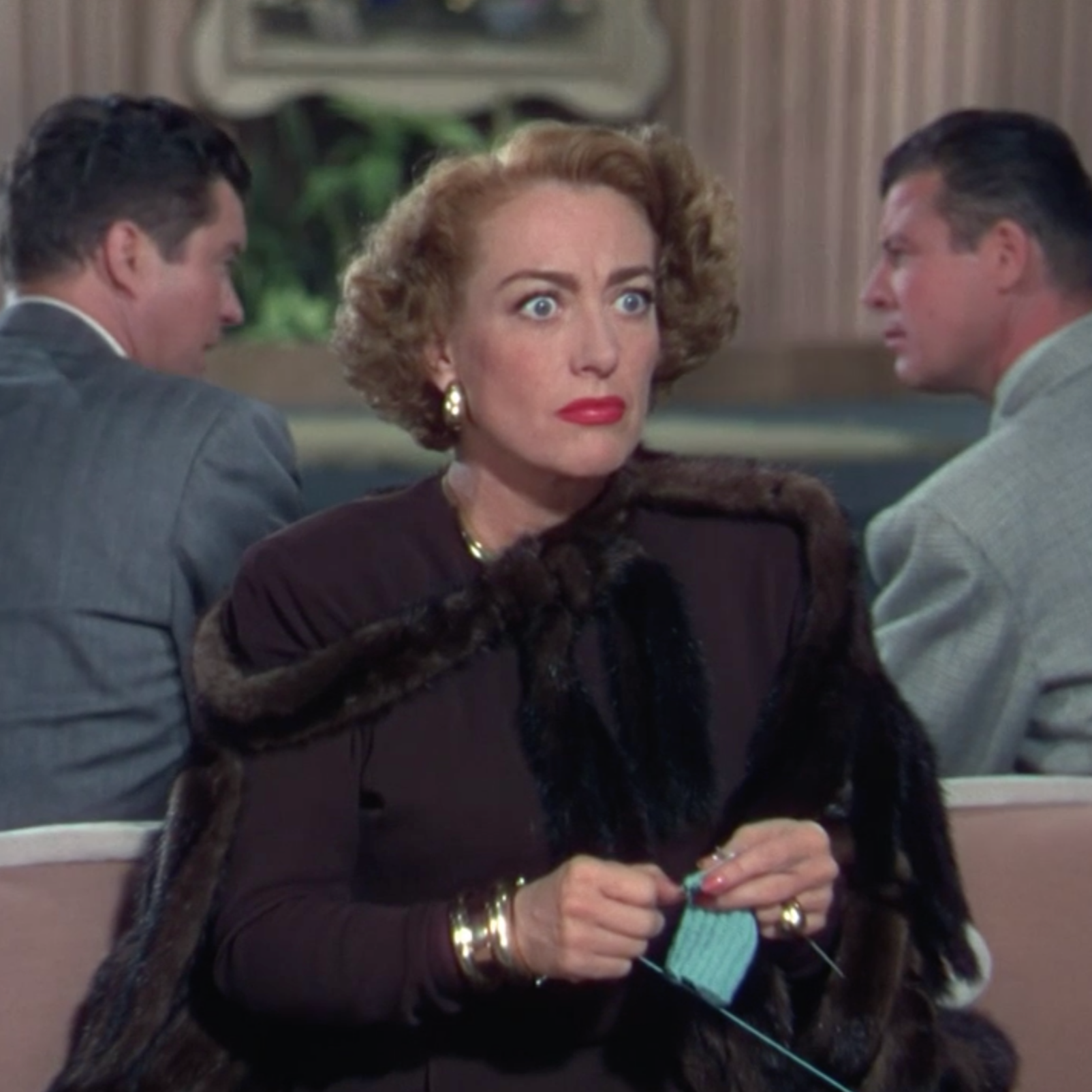
It's the Depression--the Great Depression. The economy is in the toilet, and birth rates, marriage rates, divorce rates are down, but guess what's up? Knitting! This is truly the Renaissance period for knitting according to Anne Macdonald in No Idle Hands: The Social History of American Knitting. The National Dry Goods Association estimated that 1/12th of the population knit, or about 10 million people. Between thrifty necessity, clever yarn companies sponsoring contests and stars like Joan Crawford and Katherine Hepburn taking up the needles on set, "the knitting craze" was the upside to the economic downside of the Depression. But does knitting shut men out? Humorist Ogden Nash devoted some rhymes to the claim that knitting wives left their husbands in a world of bitter silence:"Life will teach you many things, chief of which is that every man who talks to himself isn't necessarily out of his wits;He may have a wife who knits. . .Ah, my inquiring offspring, you must learn that life can be very bitter,But never quite so much so as when trying to pry a word out of a knitter."Ogden Nash, Not Many Years Ago, quoted in Anne Macdonald's No Idle Hands: The Social History of American Knitting, p. 277.So we wanted to know, does knitting shut men out? We did extensive research--okay, we asked one man--Bossy's husband. His answer? "I think knitting allows women to tolerate men." He gets a piece of Oreo cake for this answer, specifically Jevin's Victory Oreo Cake.Who says you can't inspire academic achievement with the promise of a special cake? So make this Oreo cake and always remember the power of knitting, as the 1932 Spring issue of McCall's Decorative Arts and Needlework proclaimed, "a gaily becoming sweater blouse always makes us feel like conquering the world."
50th Episode Giveaway Reminder
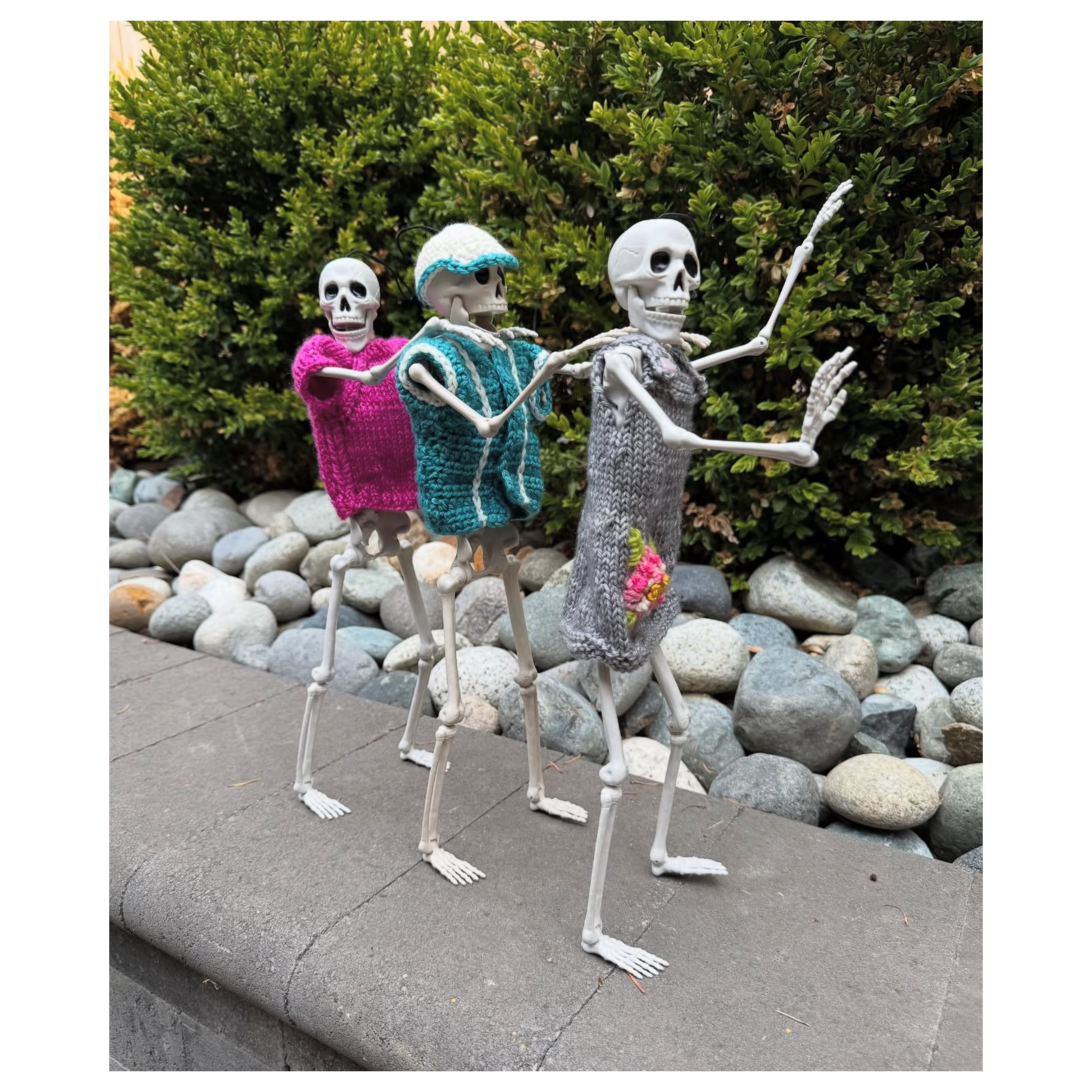
bonusBootie and Bossy are popping in to remind you that the deadline of October 7, 2025 for our 50th episode giveaway is fast approaching! We are giving away two Skellie kits (two winners) from the fabulous www.serialknitters.com All you need to do to enter is to sign up for our newsletter on our website: www.bootieandbossy.com That's it! Don't miss out on your chance to win!
S1 Ep 50Episode 50: A Giveaway because we thought that would be Fun!
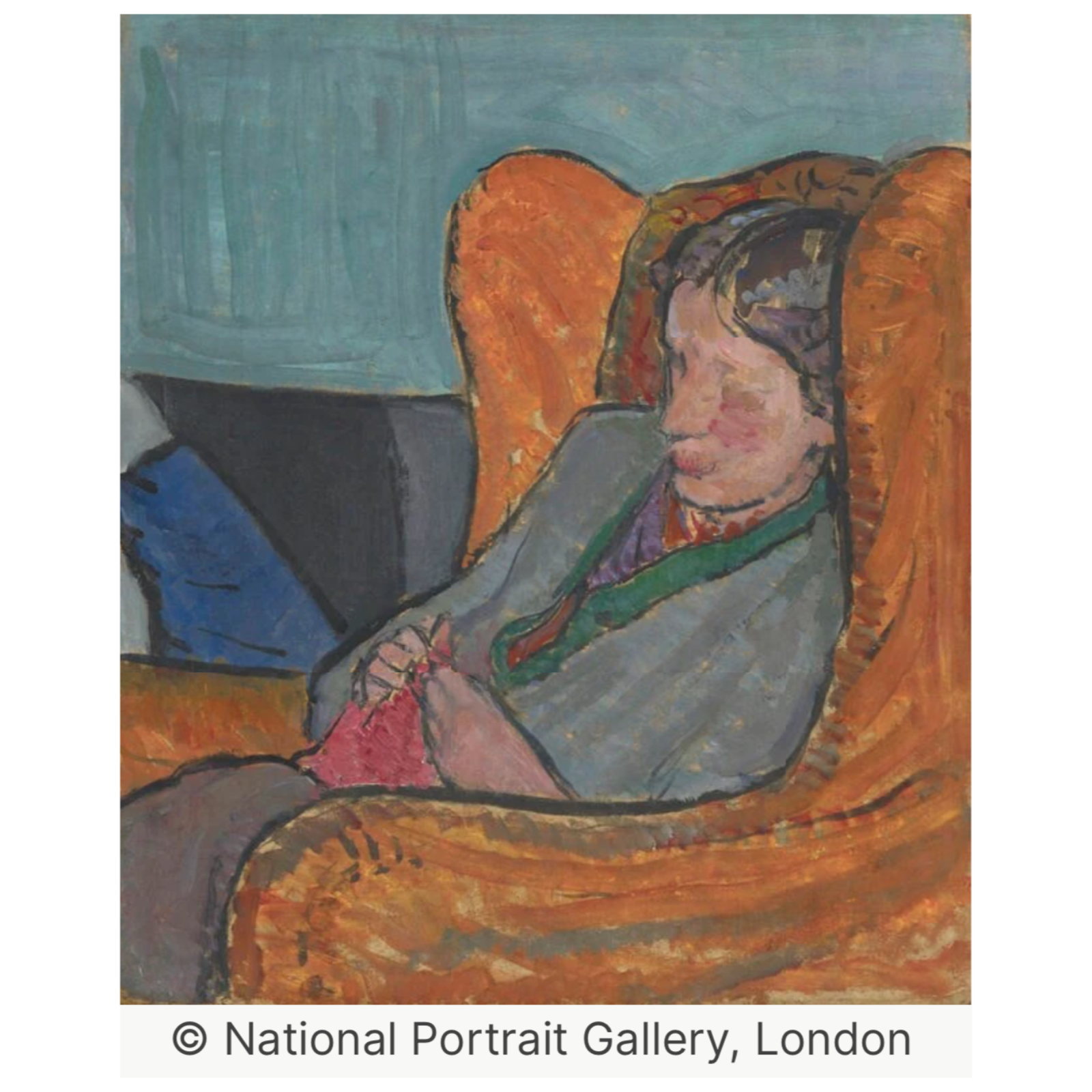
We made it to our 50th episode, so what keeps us going? In a word, YOU. From our listeners to invited guests, to family members who helped with tech and made suggestions--to everyone who graced us with their time, support and expertise, we want to say THANK YOU. And that's why we are offering a great giveaway--two of Debie Frable's Skellie Kits will be awarded to two randomly selected subscribers to our newsletter--if you don't subscribe, it's easy to sign up through our website bootieandbossy.com. Please subscribe by October 7th, 2025 to be entered into the drawing. Thank you, Debie, for providing the fabulous Skellie kits!"What is the meaning of life? That was all--a simple question; one that tended to close in on one with years. The great revelation had never come. The great revelation perhaps never did come. Instead there were little daily miracles, illuminations, matches struck unexpectedly in the dark; here was one."Virginia Woolf, To the LighthouseWhen we first embarked on this great podcast adventure, we had no idea how meaningful it would become, offering us a series of "little daily miracles, illuminations, matches struck in the dark," as Virginia Woolf wrote in her novel, To the Lighthouse. Woolf herself was an avid knitter and wrote to her husband in 1912 that "Knitting is the saving of life." Her sister Vanessa Bell even painted a portrait of her knitting quietly in a chair. The opportunity to connect with others, hear their stories and learn tidbits of history (like the whereabouts of Napoleon's penis . . . ) and share our mistakes and missteps as well as those little daily miracles, has propelled us through 50 episodes. Along the way listeners in 44 of the 50 states (time to step up, you knitters in Utah, Oklahoma, Tennessee, Wyoming, Montana and North Dakota!) and in 17 countries abroad have joined us.And a good drink has helped too--try our celebratory Kir Royal--a nice glass of sparkling white wine with a splash of liquor. And then grab your pointed sticks and tune in to hear us reminisce because, well, like Mom setting off to marry Dad, we "thought that would be fun," and frankly, that's as good a reason as any to do anything.
S1 Ep 49Episode 49: Bare Female Shoulders, Oh My!
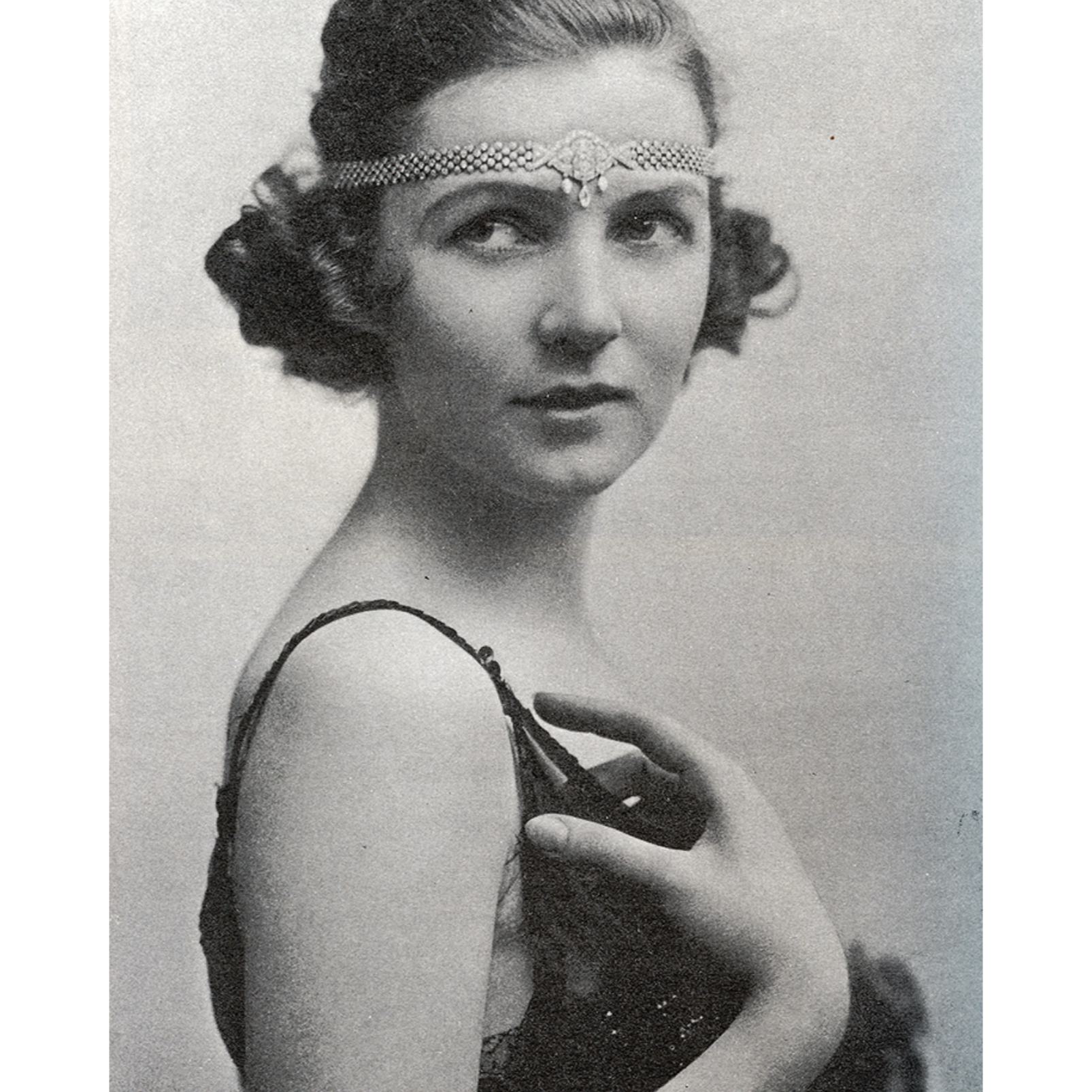
Bare Female Shoulders, Oh My! Flapping through the 1920s in Bootie and Bossy's Episode 49!Why, why, why do men care so much about what women wear? Oh right, because they want to control women, but Irene Castle did not let the condemnation of Pope Pius and other religious leaders stop her from bobbing her hair and baring her shoulders. As a result, Castle was blamed for everything from broken engagements to wrecked homes, according to Anne Macdonald in No Idle Hands: The Social History of American Knitting. But this was the roaring 20s, the era of the Flappers, when women emerged from World War I empowered by new economic opportunity, and they said hello to voting and goodbye to old fashion, especially the corset. Now women were finally free to breath and move, or in Irene Castle's case, dance. Despite the liberation, Flapper fashion had some downsides--like constant dieting to get the boyish figure that looked good in the new, clingy tube knits. With rising hemlines and plunging necklines, it also ushered in the practice of women shaving their armpits and legs. That practice is still with us. Thanks.Everyone was so tired of knitting socks for the war, many turned to more decorative needlework like embroidery, but wool companies fought hard to keep knitting on the national radar by sponsoring contests with top prizes running as high as $2000. And knitting was still known for calming the nerves, as First Lady Grace Coolidge explained while sailing on the Presidential yacht, the Mayflower:"Many a time when I have to hold myself firmly, I have taken up my needle. It might be a sewing needle, knitting needles, or a crochet hook—whatever its form or purposes, it often proved to be the needle of the compass, keeping me to the course."Grace Coolidge, quoted in Macdonald, No Idle Hands, p. 243.It’s not only the knitting that centers us though—the wearing of a beautiful, hand-knit garment brings a special joy, as Bossy recently discovered when wearing the Goldwing sweater that Bootie gifted her after three months of repeated badgering. It was worth it—this is just the best thing, and look, no bare shoulders! Certain popes might even approve--oh wait, we don't care.So join us for some good flapping about knitting then and now, and a great recipe for Vietnamese Chicken, compliments of Michele Lee Bernstein!
S1 Ep 48Episode 48: Is knitting an Anti-feminist act?
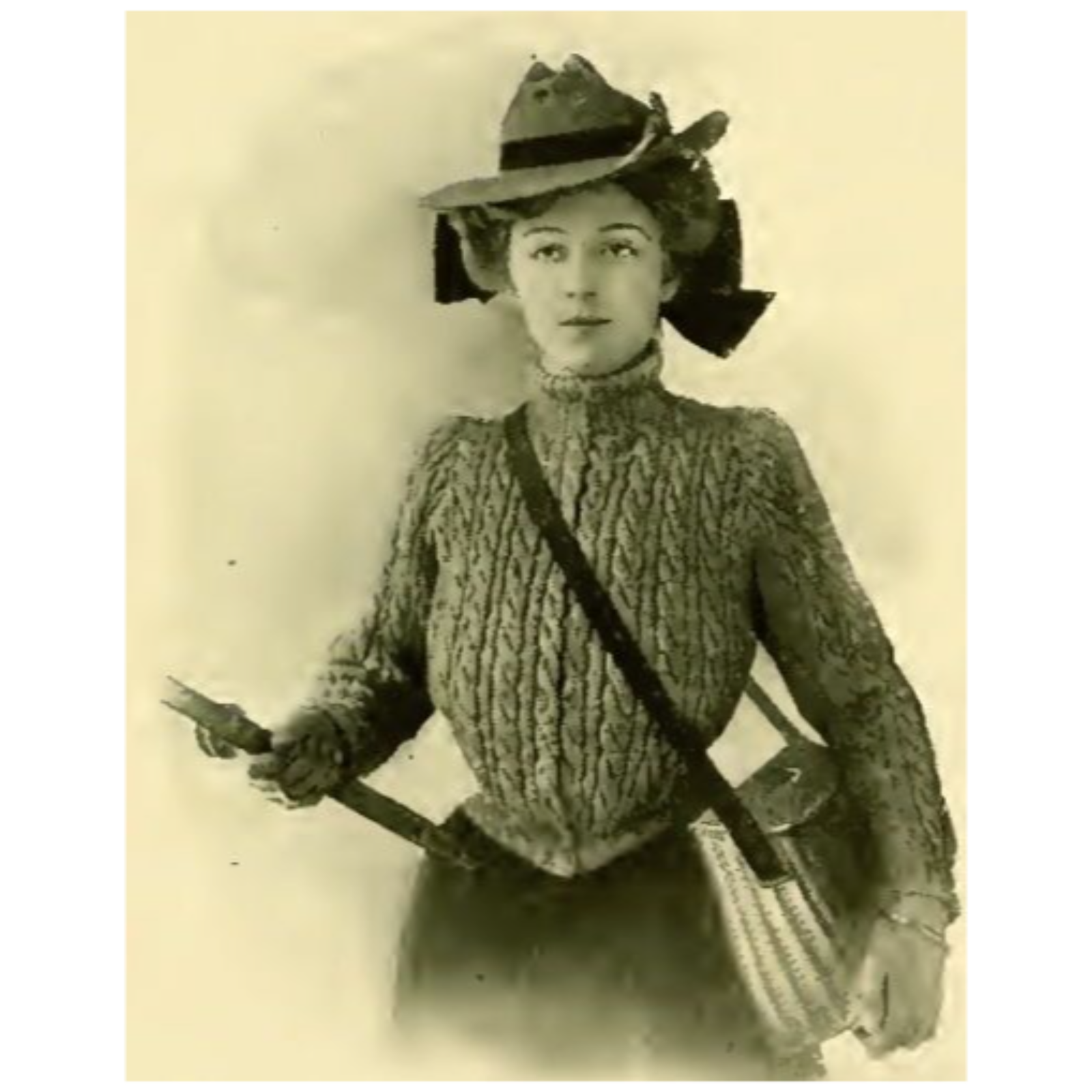
Let's set the scene: America at the beginning of the 20th Century, and despite their suffocating corsets that created the prized Gibson Girl physique, women are on the move, literally--they are fishing, biking, golfing, playing tennis and riding in those new automobiles. And there's a war raging between the Suffragists fighting for Women's rights, and the Anti-Suffragists who think it's enough that women are queens of the domestic sphere. What are their weapons? Pointed sticks--specifically knitting needles. According to Anne Macdonald's No Idle Hands: The Social History of Knitting, knitting for the Suffragists was exactly the kind of thing keeping women in chains, quiet, silent and occupied in the home. For Haryot Cahoon, a "forward woman" Suffragist, real women don't knit, and it's time to drop all those stitches and do something important: "A vast amount of drudgery is sugar coated with economy . . . If you wish to knit lace because you have more time on your hands than you know what to do with, you are the very one the world needs, with your youth and your energy and your industrious spirit . . . [Don't] puzzle your brain over 'knit one, skip one, purl one, drop one.' Drop them all! That's best!" Haryot Cahoon, quoted in Anne Macdonald's No Idle Hands: The Social History of American Knitting, p. 181. The "Antis" or Anti-Suffragists were quick to characterize their opponents as "a sisterhood of cranks who wear grey woolen underwear and number seven shoes and whose skirt and waist don't meet in the back" (Macdonald, p. 178). Knitting wasn't drudgery--it was magic for the Antis, "mysteriously 'feminine,' a bit of sorcery beyond the mere ken of males" (p. 182). The battle ended with a real war--World War I, where once again every woman, and yes, even man and child, picked up their pointed sticks to "Knit For Sammy" and save the world, or at least a lot of American feet. Even the "Rocky Mountain Knitter Boys" of Mapleton, Colorado stopped throwing spitballs for a while and declared "Knitting's the best thing ever to steady your nerves" (p. 235).We are glad to say goodbye to corsets, but we are grateful to the Suffragists for our rights and to the Anti-Suffragists who kept the magic of knitting alive--we'll take our rights with our knitting, thank you. We want the freedom to do what we want--whether that's knitting or making Michele Lee Bernstein's fabulous Lemon Orzo Pasta Salad, or something else. We say, do what you want! That's best!
S1 Ep 47Episode 47: Fun with Michele Lee Bernstein
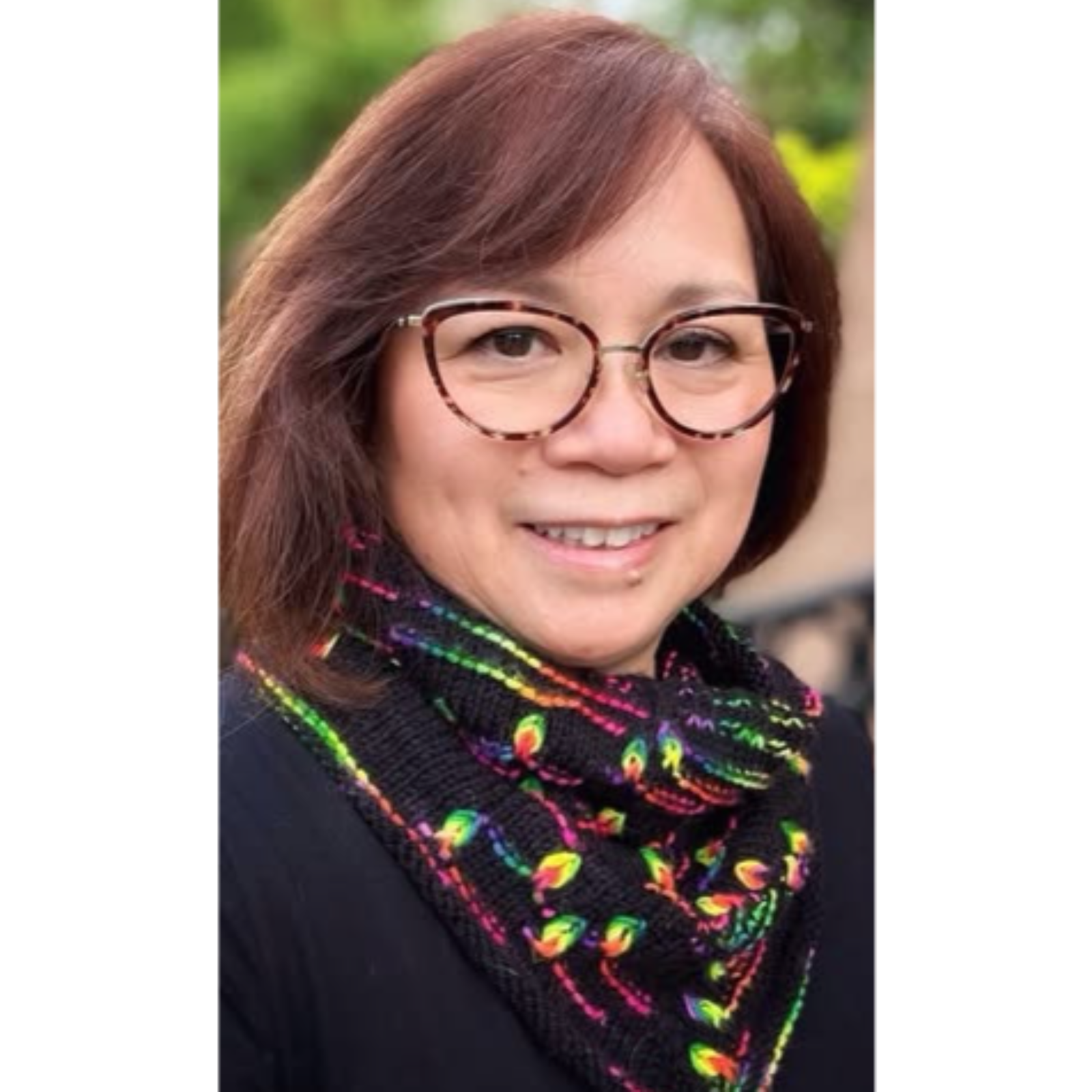
How do you eat Cheetos safely while knitting so everything is not covered with a fine neon orange dust? Chopsticks! How do you keep your balls of yarn from doing the Tango in your knitting bag while you are not looking? Yarn bras! How do you get yourself to do the things that you really don't want to do, like bookkeeping and managing your social media? Wear a tiara! How do fix your yarn after frogging a project so you can actually use it again? These are just some of the fun and helpful tips that Michele Lee Bernstein of PDXKnitterati shares with us here. Michele is a wonderful designer, teacher, blogger and author of Brioche Knit Love: 21 Skill Building Projects from Simple to Sublime, but her knitting journey began when she was 14 years old and too boy-crazy for her mother. So off she went to visit her Aunt Rose for a summer in Huntington Beach, California. We don't know what happened in the boy-crazy department, but her Aunt Rose taught her to knit, and she has never looked back. Her ambitious first project, a baby-blue pullover sweater with cables in front, also taught her that she has "a two-skein attention span" and her favorite three words are "Gauge not critical."She loves designing and teaching brioche knitting, but her knitting is always evolving--there's just so much to learn about knitting and food! Definitely try her recipe for Chocolate Chip Shortbread! She has recently added assigned pooling to her brioche repertoire, as shown in this design, "Scattered Petals." Unlike planned pooling, which requires a rock-steady gauge and careful calculations--not the best combination for a gauge-not-critical knitter!--assigned pooling is more random and free-form, with a pop of color conveyed through a special stitch every time a color occurs. She writes her patterns with the idea that they offer suggestions:"Assigned pooling is really fun, but just remember that you are the boss of the knitting, it's not the boss of you. . . Everything it tells you is a suggestion, but you are in charge!"--Michele Lee BernsteinThis is the magical flow of knitting: the way we discover that we always have something more to learn from a whole new technique liked assigned pooling to a quick tip about making yarn bras from a mesh bath poof. Michele Lee Bernstein taught us a lot in this episode, and we are honored to share it with you!
S1 Ep 46Episode 46: Quiet, Everyday Magic
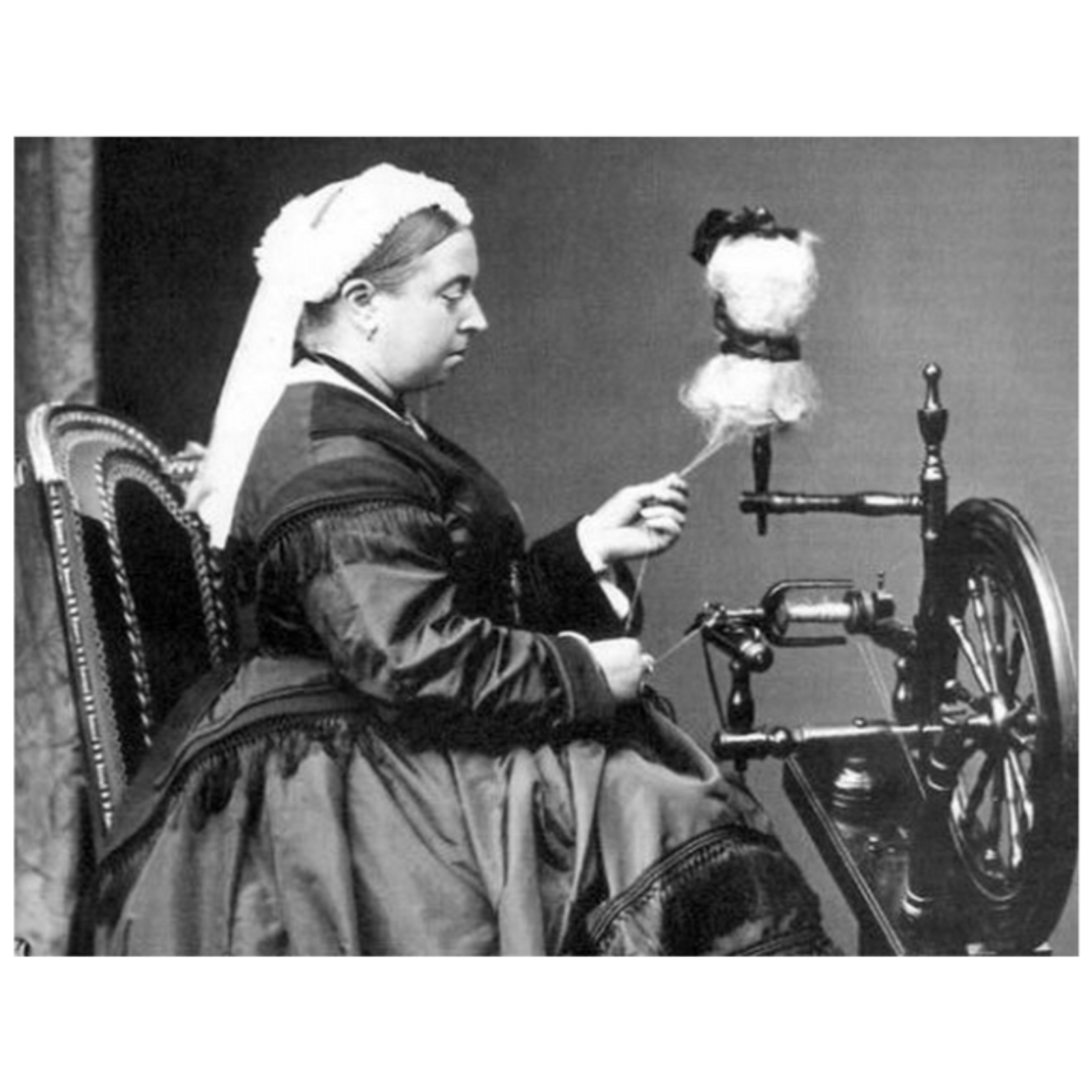
Here's something we love: Hunter Hammersen's "quiet, everyday magic that's easy to overlook. But it's magic nonetheless." She is talking about her "Noteworthy" pattern for a little pouch that looks like a piece of paper because "paper is magic, and the right piece of paper can change the world." When Bootie knit this little gem, it brought her "a bit of happy distraction," and while that did not change the world, it did just what Hammersen promised: it made the world "a tiny bit more comfortable, for just one person, for just a moment. And that's a kind of magic too." This is the power of knitting to take us out of the present and into a timeless moment of making. Hammersen is right--look at the world through the frame of quiet, everyday magic, and you'll find all kinds of magic. And here's a bit of culinary magic: Strawberry Shortcake with a Lemon Curd Cream--an upgrade on the old family favorite that you just have to try.We also found some magic in Anne Macdonald's account of women knitting in the 19th Century in No Idle Hands: The Social History of American Knitting. While we tend not to think of the Victorian era as particularly "sporty," this was when women started riding bicycles, playing tennis, golf and croquet; they were literally moving more and their clothing had to change to keep up. So they ditched their shawls, corsets and hoopskirts for sweaters and bloomers. Some regarded these new fashions as "ugly and eccentric," but thankfully, they persevered. The specter of a woman knitting was an assurance of womanliness that Mrs. Clorinda Nichols appropriated as she "tended strictly to her knitting" while she "duped male legislators into underestimating her crusade for more liberal property rights for women" at Kansas's first state constitutional convention (p. 143). Brilliant. But in the midst of all this moving and change, many women still found in knitting the space for creative transformation, as author Jane Croly expressed it:"The little work-tables of women's fingers, are the playgrounds of women's fancies, and their knitting needles are the fairy-wands by which they transform a whole room into a spirit isle of dreams."Jane Croly on her "view of knitting serenity," quoted in Anne L. Macdonald, No Idle Hands: The Social History of American Knitting, p. 142.So we hope we offer a little bit of quiet, everyday magic in this episode--it's not changing the world, we know, but if it makes you smile just once, or provides a bit of happy distraction, well, that's the kind of magic we aim to make.