PLAY PODCASTS
Books of Titans Podcast

Books of Titans Podcast

Seeking Truth in the World's Best Books

Erik Rostad

347 episodesEN

Show overview

Books of Titans Podcast has been publishing since 2017, and across the 9 years since has built a catalogue of 347 episodes. That works out to roughly 220 hours of audio in total. Releases follow a fortnightly cadence.

Episodes typically run twenty to thirty-five minutes — most land between 27 min and 43 min — though episode length varies meaningfully from one episode to the next. None of the episodes are flagged explicit by the publisher. It is catalogued as a EN-language Arts show.

The show is actively publishing — the most recent episode landed yesterday, with 21 episodes already out so far this year. The busiest year was 2025, with 51 episodes published. Published by Erik Rostad.

Episodes
347
Running
2017–2026 · 9y
Median length
32 min
Cadence
Fortnightly

From the publisher

Welcome to the Books of Titans Podcast where I (Erik Rostad) seek truth & beauty in the Immortal Books. My goal is to read the Great Books written by 200 authors over the next 15 years and share what I’m learning. I’ll talk a bit about each book, tie ideas together from a variety of genres, and share the one thing I always hope to remember from each of the Immortal Books. www.booksoftitans.com

Latest Episodes

View all 347 episodes

#291 - The Flowering Hawthorn by Hugh Ross Williamson

May 15, 202616 min

#290 - Anaximander & Anaximenes

May 8, 202625 min

#289 - Parmenides

May 1, 202619 min

#288 - Gorgias

Apr 24, 202630 min

#287 - Democritus

Apr 17, 202626 min

#286 - Anaxagoras

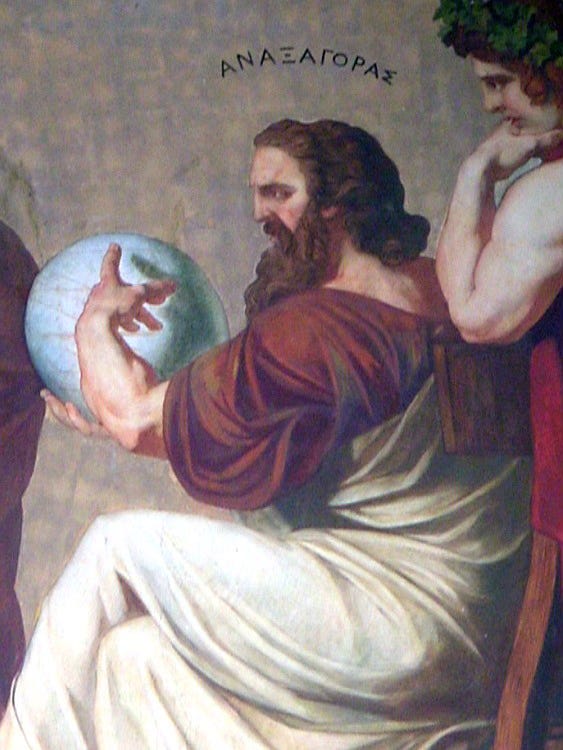
In this podcast episode, I cover the life and ideas of Anaxagoras of Clazomenae. His first principle, the thing that organized everything else, was the nous or the mind. He thought that in the beginning, there was an original mixture of unchanging seeds that a mind set in motion and began to organize. Anaxagoras was born in Asia Minor and moved to Athens, becoming one of the first philosophers to establish Athens as a hub of philosophy. In fact, Anaxagoras is a philosophical grandfather to Socrates through his student Archelaus. Socrates learned from Archelaus who learned from Anaxagoras.Books Referenced:* Early Greek Philosophy - Translation by Jonathan Barnes - Penguin Classics* The First Philosophers - Translation by Robin Waterfield - Oxford World’s Classics* Lives of the Eminent Philosophers - Diogenes Laertius - Loeb Classical Library This is a public episode. If you'd like to discuss this with other subscribers or get access to bonus episodes, visit www.booksoftitans.com/subscribe
Apr 10, 202621 min

#285 - Empedocles

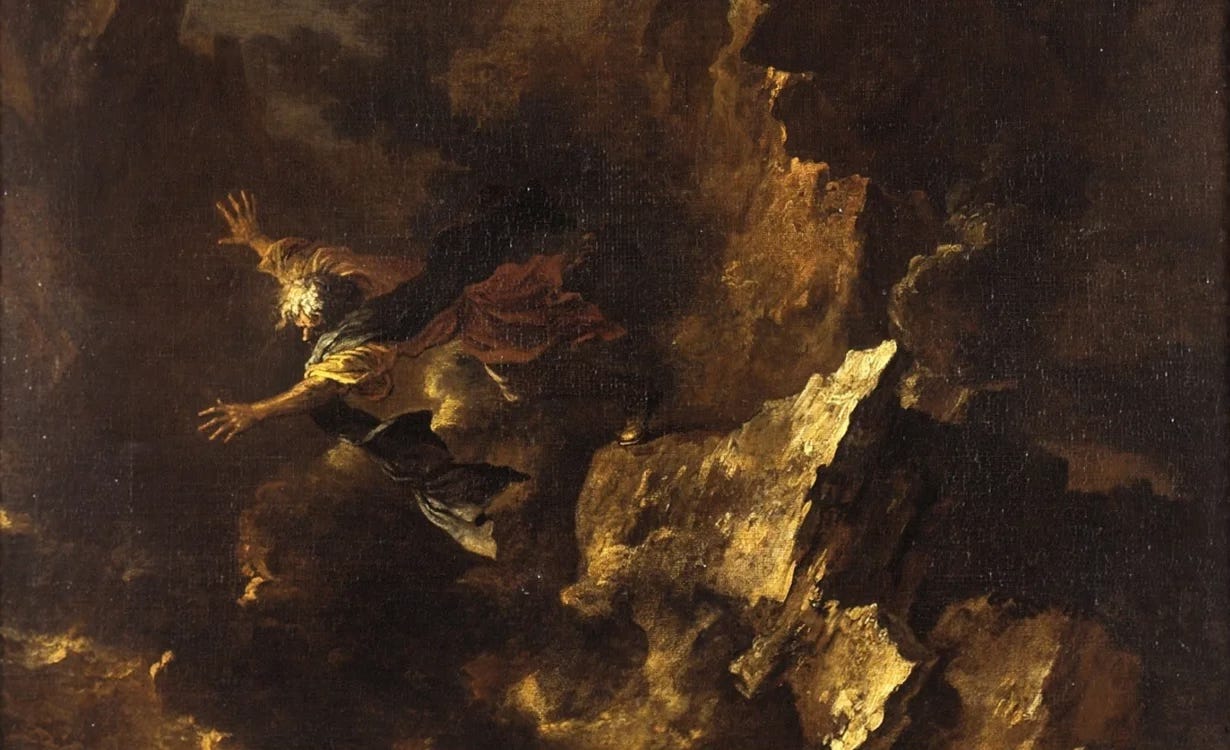
In this podcast episode, I cover the life and ideas of Empedocles of Acragas. He lived from 495 - 435 BC before dramatically diving into the volcano at Mt. Etna to prove he was immortal. As we find out in this episode, the accounts of the life and death of Empedocles are varied and contradictory and contain an element of myth, which is appropriate given his use of epic poetry to present his ideas. With Empedocles, we have the largest stash of fragments of any of the early Greek Philosophers.Books Referenced:* Early Greek Philosophy - Translation by Jonathan Barnes - Penguin Classics* The First Philosophers - Translation by Robin Waterfield - Oxford World’s Classics* Lives of the Eminent Philosophers - Diogenes Laertius - Loeb Classical Library This is a public episode. If you'd like to discuss this with other subscribers or get access to bonus episodes, visit www.booksoftitans.com/subscribe

Apr 3, 202628 min

#284 - Thales of Miletus

Aristotle called Thales the Father of Natural Philosophy. At a very high level, he’s credited with shifting from mythos to logos, from a mythological explanation of the world to one based upon natural observation. Thales believed that water was the underlying principle of everything, that an immortal soul existed, and that earthquakes were caused by waves underneath a flat earth instead of by the gods.Thales of Miletus is one of the earliest Greek philosophers (625 - 545 BC) and in this podcast episode, I look at his life, his ideas, and his impact both now and then.Books Referenced:* Early Greek Philosophy - Translation by Jonathan Barnes - Penguin Classics* The First Philosophers - Translation by Robin Waterfield - Oxford World’s Classics This is a public episode. If you'd like to discuss this with other subscribers or get access to bonus episodes, visit www.booksoftitans.com/subscribe

Mar 27, 202628 min

#283 - The Logos of Heraclitus by Eva Brann

Last week, I talked about the life and philosophy of Heraclitus of Ephesus. A number of his surviving fragments deal with the concept of Logos, what Eva Brann calls “the order that is the cosmos.” This week, I’m taking a deeper look into what Heraclitus meant by Logos and how that might help us better understand John’s use of it in the New Testament Gospel, where he writes, “In the beginning was the Logos…”In The Logos of Heraclitus, Eva Brann considers the fragments of Heraclitus in order to arrange a cohesive philosophy containing Logos, fire, and flux. I share what I learned from this short book and how it expanded my understanding of the Logos.Show Notes:* March 13, 2026 Episode about Heraclitus* Purchase The Logos of Heraclitus by Eva Brann This is a public episode. If you'd like to discuss this with other subscribers or get access to bonus episodes, visit www.booksoftitans.com/subscribe

Mar 20, 202619 min

#282 - Heraclitus

For the next month or so, I’m going to highlight different early Greek Philosophers on the podcast and in my Substack articles. Last year, I started reading Plato’s dialogues and realized that I didn’t know the philosophers or their ideas that he was referencing. I stopped reading the dialogues in order to get to know these Greek Philosophers.In this episode, I cover Heraclitus, a philosopher famous for his ideas on flux, fire, and the logos. While we don’t have his complete work On Nature, we do have fragments that provide an understanding of his main ideas. This will be a two-part episode with this first one focusing on the life and ideas of Heraclitus and the second one focusing on Heraclitus’ idea of the logos.Here are the books I referenced for this podcast episode:* Early Greek Philosophy - Translation by Jonathan Barnes - Penguin Classics* Heraclitus Fragments - Translation by Brooks Haxton - Penguin Classics* The First Philosophers - Translation by Robin Waterfield - Oxford World’s Classics* Heraclitean Fire - Erwin Chargaff - Book 20 in 2017* Lives of the Eminent Philosophers by Diogene Laertius - Vol 2 of Loeb.* Major Works of Gerard Manley Hopkins - Oxford University Press This is a public episode. If you'd like to discuss this with other subscribers or get access to bonus episodes, visit www.booksoftitans.com/subscribe

Mar 13, 202639 min

#281 - The Bible | A Straight Read-Through

I start each year reading straight through a different version of the Bible during January & February. This year, I selected the Intertextual Tanakh for the Five Books of Moses and the Early Prophets and used the Bibliotheca version for The Latter Prophets, The Writings, and The New Testament. In this episode, I share what stuck out this year over the 80 hours of reading through the Bible. This is a public episode. If you'd like to discuss this with other subscribers or get access to bonus episodes, visit www.booksoftitans.com/subscribe

Mar 6, 202624 min

#280 - 2026 Bible Reading Progress Update #7

Here’s episode 7 covering my 2026 read-through of the Bible. I talk about the ideas that have stuck out to me while reading the New Testament books of the Gospels, Acts, Romans, Corinthians, Galatians, Ephesians, Philippians, and Colossians.Show Notes:Dr. Jason Staples’ Suggested Bible Reading Order (start at the 1hr 16 minute mark): This is a public episode. If you'd like to discuss this with other subscribers or get access to bonus episodes, visit www.booksoftitans.com/subscribe

Feb 27, 202616 min

#279 - 2026 Bible Reading Progress Update #6

Here’s episode 6 covering my 2026 read-through of the Bible. I talk about the ideas that have stuck out to me while reading the books of Daniel, Ezra, Nehemiah, and Chronicles.Show Notes:Purchase The Intertextual Tanakh from Landmark Booksellers.Dr. Jason Staples’ Suggested Bible Reading Order (start at the 1hr 16 minute mark): This is a public episode. If you'd like to discuss this with other subscribers or get access to bonus episodes, visit www.booksoftitans.com/subscribe

Feb 20, 202614 min

#278 - Hadestown - Myth, Music, and Meaning

This special mid-week episode is a deep dive into the musical Hadestown, Anaïs Mitchell’s folk opera that reimagines the myth of Orpheus and Eurydice in a haunting, jazz-inflected underworld. Last week, I had the joy of playing violin in the on-stage band for a series of local youth-theater performances of Hadestown, and sharing the stage with my daughter made the entire experience unforgettable.During preparation, I became captivated by the music, the storytelling, and the rich threads of Greek mythology woven throughout Hadestown. I also discovered that the show’s writer published a book, Working on a Song: The Lyrics of Hadestown, which opens a window into the creative process behind the musical.In this episode, I explore:* The Greek myths at the heart of Hadestown* The subtle ways the musical reshapes and reimagines those myths* The connection points between this story and narratives found in the BibleThis musical moved me in a way that very few others ever have.Audio RecordingsOriginal Broadway Cast RecordingSpotify / Apple MusicLive from LondonSpotify / Apple MusicThis one is my personal favorite but it only contains about half of the songs. Hermes is played by a female and she just absolutely kills it. I love her passion.Talking Hadestown: Commentary & SongsSpotify / Apple MusicThis is a neat recording where Anaïs Mitchell talks about some of the songs from Hadestown.The BookWorking on a Song: The Lyrics of Hadestown by Anaïs MitchellThe Band This is a public episode. If you'd like to discuss this with other subscribers or get access to bonus episodes, visit www.booksoftitans.com/subscribe

Feb 17, 202651 min

#277 - 2026 Bible Reading Progress Update #5

Here’s episode 5 covering my 2026 read-through of the Bible. I talk about the ideas that have stuck out to me while reading the books of Psalms, Proverbs, Job, Song of Songs, Ruth, Lamentations, Ecclesiastes, Esther, and Daniel. I also highlight some overarching themes so far from this reading.Show Notes:Purchase The Intertextual Tanakh from Landmark Booksellers.Dr. Jason Staples’ Suggested Bible Reading Order (start at the 1hr 16 minute mark): This is a public episode. If you'd like to discuss this with other subscribers or get access to bonus episodes, visit www.booksoftitans.com/subscribe

Feb 13, 202620 min

#276 - 2026 Bible Reading Progress Update #4

Here’s episode 4 covering my 2026 read-through of the Bible. I talk about the ideas that have stuck out to me while reading the books of Ezekiel, the 12 Minor Prophets (Hosea, Joel, Amos, Obadiah, Jonah, Micah, Nahum, Habakkuk, Zephaniah, Haggai, Zechariah, and Malachi), and the Psalms. I also highlight some overarching themes so far from this reading.Show Notes:Purchase The Intertextual Tanakh from Landmark Booksellers.Dr. Jason Staples’ Suggested Bible Reading Order (start at the 1hr 16 minute mark) This is a public episode. If you'd like to discuss this with other subscribers or get access to bonus episodes, visit www.booksoftitans.com/subscribe

Feb 6, 202620 min

#275 - 2026 Bible Reading Progress Update #3

Here’s episode 3 covering my 2026 read-through of the Bible. I talk about the ideas that have stuck out to me while reading the books of Samuel, Kings, Isaiah, and Jeremiah. I also highlight some overarching themes so far from this reading.Show Notes:Purchase The Intertextual Tanakh from Landmark Booksellers.Dr. Jason Staples’ Suggested Bible Reading Order (start at the 1hr 16 minute mark) This is a public episode. If you'd like to discuss this with other subscribers or get access to bonus episodes, visit www.booksoftitans.com/subscribe

Jan 30, 202626 min

#274 - 2026 Bible Reading Progress Update #2

Here’s episode 2 covering my 2026 read-through of the Bible. I talk about the ideas that have stuck out to me while reading the books of Deuteronomy, Joshua, Judges, and Samuel. I also highlight some overarching themes so far from this reading.Show Notes:Purchase The Intertextual Tanakh from Landmark BooksellersDr. Jason Staples’ Suggested Bible Reading Order (start at the 1hr 16 minute mark) This is a public episode. If you'd like to discuss this with other subscribers or get access to bonus episodes, visit www.booksoftitans.com/subscribe

Jan 23, 202626 min

#273 - 2026 Bible Reading Progress Update #1

Over the next two months, I’m going to present quick podcast check-ins as I make my way through the Bible. I start each year reading a different translation of the Bible during the months of January and February. This year, I’m starting off with the Intertextual Tanakh, which covers The Five Books of Moses and The Former Prophets (Joshua, Judges, Samuel, Kings).In this episode, I share a few ideas that have stuck out so far as well as a theme that is developing that I plan to track as I make my way through the rest of the Bible.Show Notes:Dr. Jason Staples’ Suggested Bible Reading Order (start at the 1hr 16 minute mark)Also, here’s a way to crush your 2026 Bible reading plan! This is a public episode. If you'd like to discuss this with other subscribers or get access to bonus episodes, visit www.booksoftitans.com/subscribe

Jan 16, 202621 min

2026: The Reading Year Ahead

READING YEAR THEME: GREEK PHILOSOPHYI’ll be spending most of 2026 ploughing the depths of Plato and Aristotle. I divide eating reading year into semesters:* Spring Semester - March - June* Summer Break - July* Fall Semester - August - November* Winter Break - DecemberI start each year reading straight through the Bible during January & February. The versions I’m using this year are The Intertextual Tanakh (tah knock), Bibliotheca (The Latter Prophets, The Writings, The Apocrypha, and The New Testament)Spring Semester Book List (Subject to Change)I started Plato during Fall Semester last year. I’ll be continuing on, but am first taking a look at philosophers before Plato since he keeps referencing them. I’ll then return to the 20 or so dialogues of Plato that I have remaining within the Complete Works set.* The First Philosophers: The Presocratics and the Sophists* Early Greek Philosophy* Heraclitus Fragments* The Greek Sophists* Plato: Complete Works* The Republic / Bloom* A Commentary on Plato’s Meno / Jacob Klein* From Plato to Christ / Louis Markos* The Cave and the Light / Arthur HermanSummer BreakI’m going to dedicate the month of July to Gilgamesh. I love that epic so much and am going to read some of the books pictured above. I’ve been collecting anything I find about Gilgamesh and it’s time to read those books. If you know of other books related to Gilgamesh that I must read, please let me know in the comments below.Fall Semester (Subject to Change)If I finish reading Plato during the Spring Semester, I’ll begin reading Aristotle in the Fall Semester. Like Plato, I’m planing on reading the complete works of Aristotle. I realize that’s excessive and may change my tune, but why not. He’s one of the greatest philosophers of all time.* The Complete Works of Aristotle Volume 1 / Hackett* The Complete Works of Aristotle Volume 2 / Hackett* From Aristotle to Christ / Louis MarkosWinter BreakI’m going to explore another area of interest during December - Trees! I know nothing about these strange things surrounding us outside and simply want to know more. I don’t have a list yet, so suggestions are welcome. There’s only one book so far that I keep seeing over and over again:* The Hidden Life of TreesShort Great Books Reading GroupI lead a reading group in Franklin, TN and this year we’ll be covering the following books, so I’ll be interspersing these books with the list above. More details here.* A Good Man is Hard to Find by Flannery O’Connor - Jan 12* The Overcoat by Nikolai Gogol - Feb 2* Our Name is Dare by Kev Coleman - March 2* One Day in the Life of Ivan Denisovich by Aleksandr Solzhenitsyn April 6* Medea by Euripides - May 4* Apology (Defense of Socrates) by Plato - June 1* Till We Have Faces by C.S. Lewis - July 6* Billy Budd by Herman Melville - August 3* My Antonia by Willa Cather - September 7 (Labor Day)* Candide by Voltaire - October 5* Jason and the Golden Fleece by Apollonius - November 2* The Nutcracker and the Mouse King by E.T.A. Hoffmann - December 7 This is a public episode. If you'd like to discuss this with other subscribers or get access to bonus episodes, visit www.booksoftitans.com/subscribe

Jan 9, 202624 min
Erik Rostad