
Bookey Summary
930 episodes — Page 8 of 19

Understanding Wealth: Insights from Morgan Housel's 'The Psychology of Money‘
Chapter 1:Summary of The Psychology of MoneyThe Psychology of Money by Morgan Housel explores the complex relationship between money and human behavior. Housel emphasizes that financial success is not solely determined by knowledge or intelligence but is heavily influenced by individual behaviors, emotions, and perspectives towards money. Here are some key themes and takeaways from the book:1. The Role of Behavior : Housel asserts that financial success is more about behavior than technical knowledge. Emotional responses to money—such as fear, greed, and happiness—play a crucial role in financial decisions.2. Long-Term Perspective : The author highlights the importance of thinking long-term in financial planning. Wealth accumulation often requires patience and the ability to endure market volatility.3. Personal Finance is Personal : Each individual has a unique relationship with money shaped by their experiences, upbringing, and personal goals. This diversity means that financial advice is not one-size-fits-all.4. The Impact of Luck and Risk : Housel discusses the roles of luck and risk in financial outcomes. Some people succeed due to favorable circumstances beyond their control, while others face setbacks despite their efforts. Understanding these elements can help in managing expectations.5. Rethinking Wealth : The book challenges conventional notions of wealth, suggesting that it is not just about how much money one has, but how one feels about their financial situation and the freedom it provides.6. Savings and Lifestyle : Housel argues that saving is a critical element of financial success, and lifestyle choices can significantly impact one's financial trajectory. Prioritizing saving over lavish spending can lead to better financial security.7. The Importance of Enough : The author emphasizes the significance of recognizing "enough" in wealth accumulation. Striving for more without bounds can lead to dissatisfaction and financial strain.8. Historical Context : Housel also provides historical anecdotes and stories to illustrate how societal attitudes toward money and investing have evolved over time, offering lessons from the past.Overall, "The Psychology of Money" serves as a reminder that understanding our own attitudes and behaviors around money is crucial for achieving financial well-being, and that the psychological aspects of finance are just as important as the technical ones.Chapter 2:The Meaning of The Psychology of Money"The Psychology of Money" by Morgan Housel explores the complex relationship people have with money, emphasizing that financial success is not solely a result of knowledge or intellect, but is deeply influenced by behavior, emotions, and personal experiences. Here are some key themes and meanings from the book:1. Behavior Over Knowledge : Housel argues that how people behave with money—rather than what they know about it—plays a crucial role in financial success.2. Individual Experiences : Each person's perspective on money is shaped by their own experiences, upbringing, and life circumstances. This leads to differing views on wealth, risk, and spending.3. Compounding : The book emphasizes the power of compounding, not only in investments but also in behaviors and habits. Small, consistent actions can lead to significant long-term results.4. Psychological Factors : Emotions such as fear, greed, and regret can heavily influence financial decisions. Understanding these emotions can help individuals make more rational choices.5. Wealth vs. Richness : Housel distinguishes between being wealthy (having assets and security) and being rich (having a high income), highlighting that true wealth is often about freedom and choice rather than just money.6. Risk and Uncertainty : The book discusses the inherent risks and uncertainties in financial markets and life, promoting the idea of humility in investment decisions.7. Contextual Understanding : Housel advocates for understanding the broader context and history of financial markets and personal finance, as this can provide valuable insights into decision-making.Overall, "The Psychology of Money" communicates that financial literacy is essential, but understanding our psychology and behavior towards money is equally important for achieving financial well-being.Chapter 3:The Psychology of Money Chapters"The Psychology of Money" by Morgan Housel explores the intricate relationship between personal finance and human behavior. Below is a brief summary of the key themes and insights from each chapter of the book:1. No One's Crazy : Everyone has their own unique perspective on money based on their experiences. What might seem irrational to one person could be completely rational to another.2. Luck & Risk : Success in finance is often a combination of luck and risk. While people can control their actions, many outcomes are influenced by factors beyond their control.3. Never Enough : The pursuit of wealth can lead to dissatisfaction. The cha

Eating my Way through Despair: The Journey of 'I Want to Die but I Want to Eat Tteokbokki' by Baek Se-hee
Chapter 1:Summary of I Want to Die but I Want to Eat Tteokbokki"I Want to Die but I Want to Eat Tteokbokki" by Baek Se-hee is a poignant and raw portrayal of a young woman struggling with depression and disordered eating. The protagonist finds solace in tteokbokki, a popular Korean street food, but is consumed by conflicting desires to satisfy her hunger and numb her emotional pain. Through vivid descriptions and powerful imagery, the author explores the protagonist's inner turmoil and the profound impact of mental illness on her life. Ultimately, the story highlights the complex and often painful relationship between food, mental health, and self-destructive behavior.Chapter 2:the meaning of I Want to Die but I Want to Eat Tteokbokki"I Want to Die but I Want to Eat Tteokbokki" by Baek Se-hee is a phrase that expresses a conflicting desire between giving up on life and enjoying a delicious dish of tteokbokki, a popular Korean street food made of stir-fried rice cakes in a spicy sauce. This phrase highlights the complex emotions and struggles that people may experience, where they may feel overwhelmed by negative thoughts or situations but still find joy and comfort in simple pleasures like food. It captures the duality of human nature and the constant battle between despair and the will to live.Chapter 3:I Want to Die but I Want to Eat Tteokbokki chaptersChapter 1: The protagonist, who is feeling overwhelmed and hopeless, contemplates ending their life. They are drawn to the idea of eating tteokbokki, a dish from their childhood that brings them comfort.Chapter 2: The protagonist decides to go out and satisfy their craving for tteokbokki. They make their way to a restaurant, feeling a glimmer of hope in the midst of their dark thoughts.Chapter 3: As they eat the tteokbokki, the protagonist reflects on happier times and memories associated with the dish. They find solace in the familiar flavors and textures, momentarily escaping their despair.Chapter 4: The act of eating tteokbokki becomes a form of self-care for the protagonist. They realize that there is still joy and pleasure to be found in life, even amidst their struggles.Chapter 5: The protagonist resolves to seek help and support, knowing that there are people who care about them and want to see them thrive. They hold onto the hope that things will get better, one tteokbokki at a time.Chapter 4: 10 Quotes From I Want to Die but I Want to Eat Tteokbokki "I want to die but I want to eat tteokbokki. It's the only thing that brings me comfort in this miserable world." "I can't shake this feeling of despair, but maybe a spicy bowl of tteokbokki will make it a little more bearable." "Tteokbokki is my ultimate comfort food, the one thing that makes me forget about all my troubles, even if just for a moment." "I know I shouldn't be indulging in such decadent pleasures when I feel this way, but tteokbokki is the only thing that can lift my spirits." "As I devour each chewy rice cake smothered in spicy sauce, I can feel a small glimmer of hope returning to my heart." "Even in my darkest moments, tteokbokki remains a constant source of joy and solace. It's my one true comfort in this cruel world." "I want to drown my sorrows in a sea of tteokbokki, letting each fiery bite wash away my pain." "It may seem silly to find solace in a simple dish like tteokbokki, but for me, it's a lifeline in a sea of despair." "When the weight of the world feels too heavy to bear, I turn to tteokbokki for a brief respite from the darkness." "Some may say that tteokbokki is just a humble street food, but to me, it's a symbol of survival and resilience in the face of hardship."

Shell Shocked Childhood: The Heartbreaking Journey of The Boy Who Was Raised as a Dog
Chapter 1:Summary of The Book The Boy Who Was Raised as a Dog"The Boy Who Was Raised as a Dog" is a book by Bruce D. Perry that explores the impact of early childhood trauma on the developing brain. Through a series of case studies, Perry illustrates how adverse experiences in childhood can have lasting effects on a child's emotional and cognitive development. He shows how these experiences can shape a child's brain architecture, leading to behavioral and emotional problems later in life.Perry also offers insight into how trauma-informed care and therapeutic interventions can help children heal from their past experiences. He emphasizes the importance of creating a safe and nurturing environment for children who have experienced trauma, and highlights the significant role that relationships and connection play in the healing process.Overall, "The Boy Who Was Raised as a Dog" provides a powerful and insightful look into the impact of early childhood trauma, and offers valuable guidance for those working with children who have experienced trauma.Chapter 2:the meaning of The Book The Boy Who Was Raised as a DogThe book "The Boy Who Was Raised as a Dog" by Bruce D. Perry explores the impact of childhood trauma on the developing brain and how early experiences can shape a person's future. Through a series of case studies, Perry, a renowned child psychiatrist and neuroscientist, examines the effects of neglect, abuse, and other traumatic experiences on children's emotional and psychological well-being. The book also highlights the importance of understanding and addressing childhood trauma in order to help children heal and thrive. Ultimately, "The Boy Who Was Raised as a Dog" serves as a powerful reminder of the resilience of the human spirit and the potential for growth and healing, even in the face of severe adversity.Chapter 3:The Book The Boy Who Was Raised as a Dog chaptersChapter 1: The Boy Who Was Raised as a Dog - Dr. Perry begins by introducing the story of a young boy named Jesse, who was brought to him for therapy after experiencing severe neglect and abuse. Jesse's case serves as an example of the importance of understanding how early childhood trauma can shape a person's brain and behavior.Chapter 2: A Dance with the Devil - Dr. Perry reflects on his early experiences working with traumatized children and the challenges of addressing their complex needs. He discusses the impact of trauma on the developing brain and the ways in which children's behaviors can be understood within the context of their traumatic experiences.Chapter 3: Unlocking the Secrets of the Mind - This chapter explores the science behind trauma and its effects on the brain. Dr. Perry explains how childhood trauma can lead to changes in brain structure and function, affecting a person's emotional regulation, memory, and social behavior.Chapter 4: The Boy Who Didn't Count - Dr. Perry shares the story of a young boy named Luke who was neglected by his parents and suffered from developmental delays as a result. Through therapy and support, Luke is able to make significant progress in overcoming the effects of his early trauma.Chapter 5: The Girl Who Vanished - In this chapter, Dr. Perry describes his work with a young girl named Caroline who experienced severe abuse and neglect at the hands of her parents. Through therapy, Caroline is able to process her traumatic experiences and develop a sense of safety and trust.Chapter 6: The Tower of Babel - Dr. Perry discusses the complexities of treating children who have experienced trauma and the challenges of coordinating care across different systems and professionals. He emphasizes the importance of a unified approach to supporting children's mental health and well-being.Chapter 7: Grandmother's Voice - Dr. Perry shares the story of a young girl named Mary who suffered from severe trauma and attachment issues. Through therapy and the support of her grandmother, Mary is able to heal from her past experiences and form healthy relationships.Chapter 8: Facing the World - Dr. Perry reflects on the resilience of children who have experienced trauma and the importance of providing them with the support they need to thrive. He emphasizes the role of compassion, understanding, and connection in helping traumatized children heal.Chapter 9: Redemption - In the final chapter, Dr. Perry reflects on the lessons he has learned from working with traumatized children and the importance of advocating for their needs. He emphasizes the power of human connection in helping children heal from trauma and build a brighter future.Chapter 4: 10 Quotes From The Book The Boy Who Was Raised as a Dog "Trauma is not just a story about something that happened long ago, it is an imprint on the brain that affects the way one sees the world, the way one reacts to new situations, the way one processes information, the way one interacts with others." "The human brain is designed to be shaped by experience, and it is shaped v

Guiding Principles: An Analysis of Jordan Peterson's 12 Rules for Life
Chapter 1:Summary of 12 Rules for Life12 Rules for Life by Jordan Peterson is a self-help book that offers practical advice on how to live a meaningful and successful life. Peterson's rules are based on psychological principles and his own experiences as a clinical psychologist and professor.The 12 rules include:Stand up straight with your shoulders back: This rule encourages people to adopt a posture of confidence and assertiveness, which can help improve self-esteem and attract positive attention from others. Treat yourself like someone you are responsible for helping: This rule emphasizes the importance of self-care and self-compassion, as well as taking responsibility for one's own well-being. Make friends with people who want the best for you: Surrounding oneself with positive and supportive people can have a significant impact on one's mental health and overall happiness. Compare yourself to who you were yesterday, not to who someone else is today: This rule reminds people to focus on their own progress and growth, rather than constantly comparing themselves to others. Do not let your children do anything that makes you dislike them: This rule highlights the importance of setting boundaries and teaching children appropriate behavior in order to foster a healthy and respectful relationship. Set your house in perfect order before you criticize the world: Before trying to change the world, individuals should first focus on improving themselves and their immediate surroundings. Pursue what is meaningful (not what is expedient): This rule encourages people to prioritize long-term fulfillment and purpose over short-term gratification. Tell the truth – or, at least, don't lie: Honesty and integrity are essential for building trust and maintaining healthy relationships with others. Assume that the person you are listening to might know something you don't: This rule emphasizes the importance of humility and open-mindedness when engaging in conversations and seeking to learn from others. Be precise in your speech: Communication is key to successful relationships and problem-solving, and being clear and specific in one's speech can prevent misunderstandings and conflict. Do not bother children when they are skateboarding: This rule emphasizes the importance of allowing children to take risks and learn from their experiences in order to develop resilience and independence. Pet a cat when you encounter one on the street: This rule serves as a reminder to appreciate and find joy in the simple pleasures of life.Overall, 12 Rules for Life by Jordan Peterson offers practical and insightful guidance on how to navigate the complexities of modern life and find fulfillment and meaning in one's personal journey.Chapter 2:the meaning of 12 Rules for Life12 Rules for Life by Jordan Peterson is a self-help book that offers practical advice on how to live a meaningful and fulfilling life. Peterson provides guidance on how to navigate the complexities of modern life, including how to take responsibility for one's actions, set goals, and improve relationships. The book explores themes such as personal responsibility, discipline, and the importance of facing challenges head-on.Overall, the book emphasizes the importance of taking control of one's life and making positive changes for personal growth and well-being.Chapter 3:12 Rules for Life chapters Stand up straight with your shoulders back: The importance of adopting a confident posture in order to convey strength and confidence to others. Treat yourself like someone you are responsible for helping: The idea that we often neglect our own well-being and need to take better care of ourselves in order to be able to help others effectively. Make friends with people who want the best for you: Surrounding yourself with positive and supportive people who encourage you to be your best self. Compare yourself to who you were yesterday, not to who someone else is today: The importance of focusing on personal growth and improvement rather than comparing ourselves to others. Do not let your children do anything that makes you dislike them: The importance of setting boundaries and providing guidance for children in order to help them develop into responsible and respectful individuals. Set your house in perfect order before you criticize the world: The idea that we must first work on improving ourselves and our immediate surroundings before criticizing or trying to change the world. Pursue what is meaningful (not what is expedient): The importance of pursuing meaningful and fulfilling goals rather than taking shortcuts or choosing what is easy in the short term. Tell the truth—or, at least, don't lie: The importance of honesty and integrity in both personal relationships and society as a whole. Assume that the person you are listening to might know something you don't: The importance of listening to others and being open to learning from different perspectives. Be precise in your speech: Th

Mastering the Art of Investing: A Guide to The Intelligent Investor by Benjamin Graham
Chapter 1:Summary of The Book The Intelligent Investor"The Intelligent Investor" by Benjamin Graham is a classic book on value investing, written in 1949. The book lays out Graham's investment philosophy, which is based on the principles of value investing and the concept of "margin of safety." Graham emphasizes the importance of conducting thorough analysis of companies before investing in them, and emphasizes the importance of investing with a long-term perspective. The book also discusses the concept of market fluctuations and how investors should approach them, as well as the importance of diversification in a portfolio.Overall, "The Intelligent Investor" is a timeless guide to investing that has influenced generations of investors.Chapter 2:the meaning of The Book The Intelligent InvestorThe book "The Intelligent Investor" by Benjamin Graham is considered a timeless classic in the world of investing. Published in 1949, it outlines Graham's investment philosophy and principles for achieving long-term financial success. Graham emphasizes the importance of investing with a margin of safety, meaning buying stocks that are undervalued and have a low risk of permanent loss. He also stresses the importance of thorough research and analysis before making investment decisions.The book covers various topics such as the difference between investing and speculation, the concept of intrinsic value, and the importance of a disciplined and patient approach to investing. Graham’s principles have had a significant influence on many successful investors, including Warren Buffett.Overall, "The Intelligent Investor" provides valuable insights and practical advice for investors looking to navigate the unpredictable world of financial markets with a rational and disciplined approach.Chapter 3:The Book The Intelligent Investor chapters Chapter 1: Investment vs. SpeculationIn this chapter, Graham emphasizes the importance of investing in assets based on their intrinsic value rather than speculating on short-term price movements. He argues that a sound investment strategy requires a careful analysis of the fundamental value of a company or security. Chapter 2: The Investor and InflationGraham discusses the impact of inflation on investment returns and the importance of considering inflation when making investment decisions. He provides strategies for protecting against the erosion of purchasing power caused by inflation. Chapter 3: A Century of Stock-Market History: The Level of Stock Prices in Early 1972Graham reviews historical stock market trends and analyzes the factors that influence stock prices. He warns against market timing and advocates for a long-term investment approach based on conservative principles. Chapter 4: General Portfolio Policy: The Defensive InvestorGraham outlines a strategy for defensive investors, who prioritize capital preservation and steady returns over high-risk, high-reward opportunities. He recommends a diversified portfolio of low-cost, high-quality securities for the defensive investor. Chapter 5: The Defensive Investor and Common StocksGraham provides guidelines for defensive investors interested in investing in individual stocks. He emphasizes the importance of thorough analysis and risk management in stock selection. Chapter 6: Portfolio Policy for the Enterprising Investor: Negative ApproachFor enterprising investors willing to take on higher levels of risk, Graham recommends a more active approach to portfolio management. He discusses the potential benefits and pitfalls of value investing and provides guidelines for selecting individual stocks. Chapter 7: Portfolio Policy for the Enterprising Investor: Positive ApproachGraham continues his discussion of portfolio management strategies for enterprising investors, focusing on the importance of thorough research and disciplined decision-making. He advises against speculative trading and encourages a long-term investment horizon. Chapter 8: The Investor and Market FluctuationsGraham addresses the emotional challenges of investing in a volatile market and provides strategies for maintaining discipline and objectivity during market fluctuations. He emphasizes the importance of focusing on intrinsic value and avoiding herd mentality. Chapter 9: Investment FundsGraham discusses the benefits and drawbacks of investment funds, including mutual funds and exchange-traded funds. He provides guidelines for selecting and evaluating funds based on their investment objectives, fees, and performance history. Chapter 10: Newer Forms of Investment CompaniesGraham explores alternative investment vehicles, such as closed-end funds, unit investment trusts, and real estate investment trusts. He discusses the unique characteristics of these funds and their potential role in a diversified investment portfolio.Chapter 4: 10 Quotes From The Book The Intelligent Investor "The intelligent investor is a realist who sells to optimists and buys from pessimists." "The st

The Trolley Problem: Ethical Dilemmas and Moral Choices
Chapter 1:Summary of The Trolley Problem"The Trolley Problem" by Thomas Cathcart is a philosophical essay that explores ethical dilemmas related to moral decision-making. In the essay, Cathcart presents a scenario where a trolley is headed towards five people tied to the tracks, and the only way to save them is to pull a lever that would divert the trolley to a different track where only one person is tied. The ethical dilemma arises when considering whether it is morally acceptable to sacrifice one person to save five. Cathcart delves into various philosophical perspectives on the situation, including utilitarianism, deontology, and virtue ethics, to highlight the complexities of ethical decision-making and the importance of considering multiple factors in moral reasoning. Ultimately, the essay raises thought-provoking questions about the nature of morality and the challenges of navigating ethical dilemmas in real-world situations.Chapter 2:the meaning of The Trolley ProblemThe Trolley Problem is a moral dilemma that presents a hypothetical scenario where a person must choose between two morally conflicting options. In the scenario, a trolley is heading towards five people who are tied to the tracks and will be killed if the trolley continues its course. The person at the controls of the trolley has the option to switch tracks, diverting the trolley onto a different track where only one person is tied up, saving the five at the expense of the one.This thought experiment is used to explore ethical principles such as utilitarianism (maximizing overall happiness), deontology (following moral duties or principles), and consequentialism (focusing on the outcome of actions). It raises questions about the morality of sacrificing one person to save five, the importance of intentions versus consequences, and the ethical complexities of decision-making in morally ambiguous situations.Overall, The Trolley Problem challenges individuals to consider their ethical beliefs and values in a compelling and thought-provoking way.Chapter 3:The Trolley Problem chapters"The Trolley Problem" by Thomas Cathcart explores the ethical dilemmas and thought experiments related to moral decision-making. The book is divided into several chapters that each delve into different aspects of the trolley problem and its implications. Here is a summary of the main chapters: Introduction: Cathcart introduces the trolley problem as a classic philosophical thought experiment that forces individuals to confront difficult ethical choices. The Utilitarians: Cathcart examines the moral principles of utilitarianism, which focuses on maximizing overall happiness and well-being. He discusses how utilitarianism can be applied to the trolley problem. The Kantians: Cathcart explores the moral philosophy of Immanuel Kant, which emphasizes universal rules and the inherent value of human dignity. He discusses how Kantian ethics can provide a different perspective on the trolley problem. The Virtue Theorists: Cathcart delves into virtue ethics, which emphasizes the development of moral character and the cultivation of virtues such as courage and compassion. He discusses how virtue ethics can inform our decision-making in the trolley problem. Moral Psychology: Cathcart examines the psychological aspects of moral decision-making, exploring how emotions, intuitions, and cognitive biases can influence our ethical judgments. Evolutionary Ethics: Cathcart discusses how evolutionary theory can shed light on the origins of moral behavior and the ways in which moral principles may have evolved to promote social cooperation and well-being. Practical Ethics: Cathcart considers the real-world implications of ethical dilemmas like the trolley problem, exploring how ethical theories can be applied to everyday moral decisions. Conclusion: Cathcart concludes by reflecting on the complexities of moral decision-making and the importance of engaging in philosophical reflection to navigate these challenging ethical dilemmas.Overall, "The Trolley Problem" offers a comprehensive exploration of the ethical issues raised by the trolley problem and provides readers with a deeper understanding of the philosophical considerations involved in moral decision-making.Chapter 4: 10 Quotes From The Trolley Problem "The trolley problem forces us to confront the unavoidable trade-offs of everyday moral decisions." "Do we prioritize saving the many over the few, or do we choose to protect individual rights at all costs?" "The trolley problem highlights the complexity and uncertainty of moral reasoning in real-world situations." "Is it better to act or not act in the face of moral dilemmas? The trolley problem questions the validity of inaction as a morally defensible choice." "The trolley problem challenges our intuitive moral responses and forces us to consider the consequences of our actions." "The trolley problem demonstrates the limits of ethical theories in addressing complex moral dilemmas

Breaking Down White Fragility: Examining Racism in America
Chapter 1:Summary of White Fragility"White Fragility" by Robin DiAngelo explores the concept of white fragility, which refers to the defensive reactions that white people often have when confronted with issues of race and racism. DiAngelo argues that white people are conditioned by society to see themselves as racially neutral and that this leads to an inability to engage in meaningful discussions about race. She also discusses how white fragility can manifest in various ways, such as denial, defensiveness, and anger. DiAngelo offers suggestions for how white people can break free from their defensiveness and work towards creating a more equitable society.Chapter 2:the meaning of White FragilityWhite Fragility is a term coined by author and educator Robin DiAngelo to describe the defensive response that many white people have when their racial privilege is challenged or when they are confronted with discussions about racism. DiAngelo argues that white people often feel uncomfortable, guilty, or defensive when faced with conversations about race and racism, and that this defensiveness can prevent meaningful dialogue and progress towards racial justice. White Fragility is seen as a barrier to greater understanding of systemic racism and can serve to uphold and perpetuate racial inequality. DiAngelo's work encourages white people to recognize and dismantle their own defensiveness and biases in order to engage in more productive conversations about race and work towards a more equitable society.Chapter 3:White Fragility chaptersChapter 1: The Challenges of Talking to White People About RacismIn this chapter, DiAngelo introduces the concept of white fragility and discusses the difficulties of discussing racism with white people. She explains how white people often react defensively when confronted with their own racial biases and prejudices. She argues that this defensiveness is a way for white people to protect their privilege and uphold the status quo.Chapter 2: Racism and White SupremacyDiAngelo delves into the systemic nature of racism and white supremacy in this chapter. She explains how racism is not just individual acts of discrimination, but a system that benefits white people at the expense of people of color. She also discusses how white supremacy is ingrained in American society and how white people often benefit from this system without realizing it.Chapter 3: Racism after the Civil Rights MovementIn this chapter, DiAngelo examines how racism has evolved since the Civil Rights Movement. She explains how racism has become more subtle and covert, making it harder for white people to recognize and confront their own biases. She also discusses how the myth of colorblindness has allowed white people to ignore the realities of racism and maintain their privilege.Chapter 4: How Race Shapes the Lives of White PeopleDiAngelo explores how race shapes the lives of white people in this chapter. She discusses how white people often benefit from their whiteness in various aspects of their lives, such as education, employment, and housing. She also examines how white people's attitudes and behaviors are shaped by their racial privilege and how this privilege can blind them to the experiences of people of color.Chapter 5: The Rules of EngagementIn the final chapter, DiAngelo provides suggestions for how white people can begin to confront their own racial biases and work towards becoming anti-racist. She emphasizes the importance of listening to people of color, educating oneself about racism, and taking action to challenge systemic inequalities. She also encourages white people to be open to feedback and to engage in difficult conversations about race.Chapter 4: 10 Quotes From White Fragility "The attempt to avoid the subject by shifting the focus from individual bias to the social structure is a classic move of white fragility." "White people in North America live in a social environment that protects and insulates them from race-based stress." "The good/bad binary is the fundamental misunderstanding driving white defensiveness about race." "Although unavoidable, privilege itself is still an uncomfortable topic for many white people because to acknowledge it is to risk dislodging the assumption that we are the 'good' and moral 'people'." "Our simplistic definition of racism – as intentional acts of racial discrimination committed by immoral individuals – avoids the question of what racism and the system of white supremacy mean for us as a society." "Racism is deeply embedded in the fabric of society, and the question is not 'did racism take place?' but rather, 'how did racism manifest in this situation?'" "The simplistic idea that only mean people can be racist is foundational to the good/bad binary." "The racial status quo is comfortable for most whites. Therefore, challenging it is uncomfortable." "The unexamined worldview of white people is a key aspect of white fragility." "When white people cannot cope with th
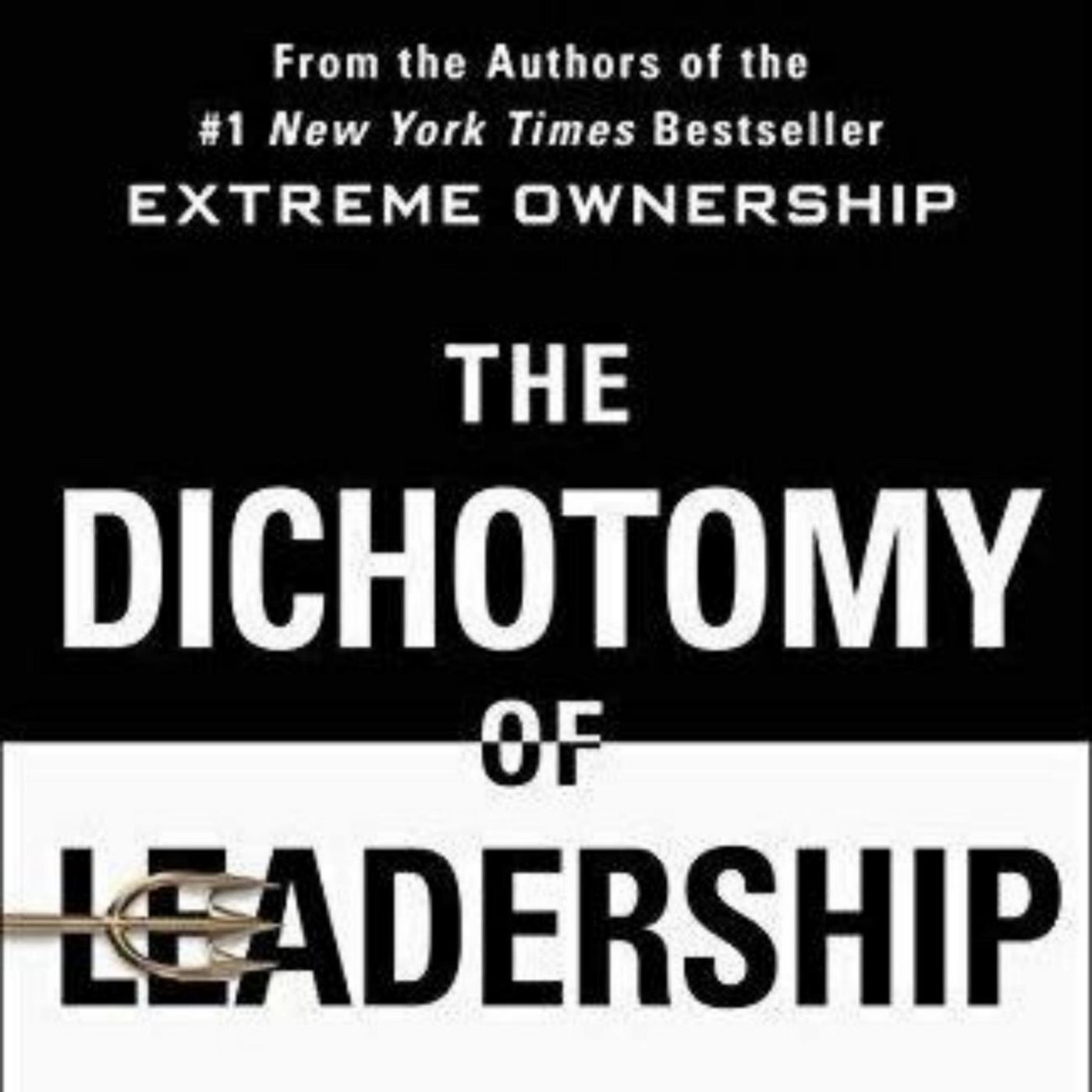
Mastering the Balance: The Dichotomy of Leadership
Chapter 1:Summary of The Dichotomy of Leadership"The Dichotomy of Leadership" by Jocko Willink and Leif Babin explores the balance between leadership traits such as humility and confidence, and aggressiveness and strategic thinking. The authors, both former Navy SEALs, draw on their experiences in combat and in corporate leadership to provide insights on how to effectively navigate the various dichotomies that leaders face.The book emphasizes the importance of finding the middle ground between seemingly contradictory traits, such as being both aggressive and thoughtful, humble and confident, decisive and open-minded. Willink and Babin argue that successful leaders are able to adapt their approach depending on the situation, and recognize when to dial up certain traits and dial down others.Through personal anecdotes and practical advice, the authors illustrate how leaders can balance these dichotomies to effectively lead their teams and achieve their goals. Ultimately, "The Dichotomy of Leadership" serves as a guide for leaders to develop the versatility and adaptability needed to succeed in a complex and ever-changing world.Chapter 2:the meaning of The Dichotomy of LeadershipThe Dichotomy of Leadership is a concept introduced by former Navy SEAL officer Jocko Willink in his book of the same name. This concept explores the idea that effective leadership requires striking a balance between seemingly contradictory qualities and approaches. For example, a leader must be both confident and humble, assertive yet empathetic, decisive but open to input from others.Willink argues that successful leaders must be able to navigate and reconcile these dualities in order to lead effectively in complex and challenging situations. By understanding and embracing the dichotomies of leadership, individuals can develop a more nuanced and balanced approach to leading others.Chapter 3:The Dichotomy of Leadership chapters The Ultimate Dichotomy: This chapter discusses the concept of balancing opposing leadership qualities such as humility and confidence, assertiveness and empathy, and decentralized command and centralized control. Balancing Both Sides of Leadership: Willink explores how effective leadership requires finding the right balance between being aggressive and patient, taking initiative and following orders, and being disciplined and flexible. Dealing with Uncertainty: The author delves into the challenges of making decisions in uncertain situations and emphasizes the importance of being able to adapt and think creatively under pressure. Leading Up and Down the Chain of Command: Willink discusses the importance of effectively leading both superiors and subordinates, emphasizing the need for clear communication, mutual respect, and humility. Decentralized Command: This chapter highlights the benefits of giving subordinates autonomy and trust in decision-making, while also acknowledging the importance of maintaining overall strategic control. Decisiveness Amid Chaos: Willink addresses the challenges of making quick and effective decisions in chaotic environments, emphasizing the need for clarity, decisiveness, and swift action. Discipline Equals Freedom: The author discusses how discipline and self-control are essential for achieving freedom and success in leadership, highlighting the importance of setting clear goals, sticking to a routine, and staying focused. Balancing Task Directives and Commander's Intent: Willink explores the balance between providing specific instructions and allowing flexibility for subordinates to achieve the overall mission, emphasizing the importance of effective communication and alignment on goals. Leading from the Front: The author discusses the importance of leading by example and being willing to take on difficult tasks alongside subordinates, emphasizing the benefits of building trust, respect, and loyalty. Combatting the Tendency for Overcontrol: Willink addresses the pitfalls of micromanaging and overcontrolling subordinates, emphasizing the importance of empowering and trusting team members to make independent decisions. Leveraging Chaos and Uncertainty: This chapter highlights the opportunities for growth and innovation that can arise from embracing chaos and uncertainty, emphasizing the importance of adaptability, resilience, and strategic thinking. The High Price of Indecision: Willink explores the consequences of indecisiveness in leadership, highlighting the importance of making timely and informed decisions, even in challenging and uncertain situations.Overall, "The Dichotomy of Leadership" provides valuable insights on navigating the complex and often contradictory aspects of leadership, offering practical advice and examples from the author's experiences in the military and business world.Chapter 4: 10 Quotes From The Dichotomy of Leadership "A leader must be close with his troops but not too close. The bond of trust cannot be compromised." "A leader must be willing to make the

Finding Your Way: Embracing Self-Discovery in 'You'll Come Back to Yourself' by Michaela Angemeer
Chapter 1:Summary of You'll Come Back to Yourself"You'll Come Back to Yourself" by Michaela Angemeer is a poem that explores themes of self-discovery, healing, and resilience. The poem encourages the reader to trust in their own journey and inner strength, even when faced with challenges or setbacks. It speaks to the idea that no matter what struggles may come your way, you will eventually find your way back to yourself and your true essence. The poem is a message of hope and empowerment, reminding the reader of their own inherent worth and ability to overcome obstacles.Chapter 2:the meaning of You'll Come Back to Yourself"You'll Come Back to Yourself" is a poem by Michaela Angemeer that conveys a message of hope and perseverance. The poem likely speaks to the idea that no matter how lost or disconnected we may feel at times, we have the strength and resilience to find ourselves again. It emphasizes the idea that even in our darkest moments, we have the ability to overcome challenges and rediscover our true selves. Ultimately, the poem offers a message of redemption and personal growth.Chapter 3:You'll Come Back to Yourself chaptersChapter 1: The End of a Relationship In this chapter, the protagonist experiences the end of a romantic relationship and is left feeling lost and unsure of herself. She reflects on the moments leading up to the breakup and the pain that comes with the sudden loss.Chapter 2: Finding Solace in Nature Seeking solace and a sense of grounding, the protagonist turns to nature. She finds comfort in the beauty of the outdoors and uses it as a refuge to heal and reflect on her emotions.Chapter 3: Reconnecting with Friends As she navigates the aftermath of the breakup, the protagonist leans on her friends for support. Through their encouragement and companionship, she begins to rediscover her sense of self and find joy in their company.Chapter 4: Embracing Self-Discovery With the help of her friends, the protagonist embarks on a journey of self-discovery. She explores her passions, sets new goals, and rediscovers the parts of herself that may have been lost during the relationship.Chapter 5: Embracing Independence As she continues to grow and evolve, the protagonist learns to embrace her independence. She gains confidence in her abilities and finds fulfillment in pursuing her own dreams and aspirations.Chapter 6: Rediscovering Love for Herself Through her journey of self-discovery, the protagonist learns to love and appreciate herself. She recognizes her own worth and finds inner strength and resilience that she may not have known existed before.Chapter 7: Moving Forward In the final chapter, the protagonist reflects on her growth and transformation since the end of the relationship. She realizes that despite the pain and challenges she faced, she has emerged stronger, wiser, and more self-assured. She looks forward to the future with hope and excitement, knowing that she is capable of overcoming any obstacles that come her way.Chapter 4: 10 Quotes From You'll Come Back to Yourself "You may lose yourself for a moment, but you'll always come back to yourself in the end." "Sometimes we need to wander off the path in order to find our way back to who we truly are." "No matter how far you stray, remember that you are never truly lost. You will always come back to yourself." "When you feel lost and alone, trust that you will find your way back to yourself. You are stronger than you realize." "Even in your darkest moments, remember that you are just one step away from rediscovering yourself." "Don't be afraid to lose yourself, for it is in those moments of confusion that you will find your true self waiting to guide you back." "In the midst of chaos, remember that you are the calm within the storm. You will always come back to yourself." "When you feel like you've strayed too far from who you are, trust that you will always come back to yourself. You are never truly lost." "You may feel broken and scattered, but trust that the pieces will come back together and you will find yourself again." "No matter how far you wander, always trust that you will come back to yourself. You are your own guiding light."

The Guide to Creating Strong Sibling Bonds: Siblings Without Rivalry
Chapter 1:Summary of Siblings Without Rivalry"Siblings Without Rivalry" by Adele Faber and Elaine Mazlish is a guide for parents on how to foster positive relationships among siblings and reduce conflict and rivalry. The book offers practical tips and strategies for improving communication, solving conflicts, and promoting empathy and understanding between siblings. It emphasizes the importance of treating each child as an individual, setting limits, and encouraging cooperation and positive interactions. The authors also stress the importance of modeling respectful behavior and providing a nurturing and supportive environment for all children in the family.Overall, the book provides a comprehensive and insightful approach to promoting harmony and cooperation among siblings.Chapter 2:the meaning of Siblings Without RivalrySiblings Without Rivalry is a book by Adele Faber which provides insight and practical advice on how parents can foster positive and harmonious relationships between their children. The book discusses the dynamics of sibling relationships, the causes of rivalry, and offers strategies to help parents promote cooperation, communication, and empathy among their children. The book emphasizes the importance of treating each child as an individual and fostering a sense of respect and understanding between siblings. It encourages parents to set clear boundaries, address issues of fairness, and empower children to resolve conflicts peacefully. Overall, Siblings Without Rivalry aims to help parents create a supportive and nurturing environment for their children to grow and develop positive relationships with each other.Chapter 3:Siblings Without Rivalry chaptersChapter 1: Helping Siblings Deal with Their Feelings - Discusses the importance of acknowledging siblings' feelings and helping them express their emotions in a healthy way. Offers tips on effectively listening to siblings and teaching them how to communicate their feelings.Chapter 2: Brothers and Sisters: Strangers in the Same Home - Explores the dynamics of sibling relationships and how they can be influenced by competitiveness and jealousy. Offers strategies for fostering positive sibling relationships and reducing rivalry.Chapter 3: The Perils of Comparisons - Examines the negative effects of comparing siblings and offers suggestions for how parents can avoid making comparisons and instead focus on each child's unique qualities.Chapter 4: Equal is Less - Discusses the pitfalls of treating siblings equally and suggests that focusing on each child's individual needs and strengths can lead to healthier sibling relationships.Chapter 5: Siblings in Roles - Explores how siblings often fall into specific roles within the family dynamic and offers strategies for helping siblings break out of these roles and develop a more balanced relationship.Chapter 6: Helping Children Solve Their Own Problems - Discusses the importance of teaching siblings conflict resolution skills and offers practical tips for helping siblings work through disagreements and problem solve together.Chapter 7: When the Fighting Starts - Offers strategies for handling conflicts between siblings, including setting boundaries, teaching communication skills, and encouraging empathy and understanding.Chapter 8: Work it Out - Discusses the benefits of teaching siblings to work through conflicts and disagreements on their own, rather than relying on parents to intervene. Offers tips for fostering cooperation and problem-solving skills among siblings.Chapter 9: In the Heat of the Moment - Provides strategies for handling tense situations between siblings, including staying calm, setting boundaries, and modeling positive conflict resolution techniques.Chapter 10: When the Going Gets Rough - Offers tips for parents on how to navigate challenging situations between siblings, including dealing with power struggles, managing anger and aggression, and fostering empathy and understanding.Chapter 4: 10 Quotes From Siblings Without Rivalry "If you want your children to get along better, show them how to do it." "Don't play the game of comparisons. Each child is unique and has his or her own strengths and weaknesses." "Remember, a child's sense of self is fragile. Praise each child for his or her individual accomplishments, rather than comparing them to each other." "Avoid labeling your children with roles such as 'the smart one' or 'the athletic one.' Let each child discover his or her own talents and interests." "Listen to each child's feelings and concerns without judgment. Show empathy and understanding, even if you don't agree with their perspective." "Teach your children conflict resolution skills, such as listening, compromising, and finding win-win solutions." "Encourage your children to express their emotions in a healthy way, rather than resorting to physical or verbal aggression." "Set clear boundaries and consequences for inappropriate behavior, but also give your children opportuni

Journey to Success: The Transformative Wisdom of The Traveler's Gift
Chapter 1:Summary of The Traveler's Gift"The Traveler's Gift" by Andy Andrews is a motivational and inspirational book that follows the story of David Ponder, a man who is facing numerous personal and professional challenges in his life. After a series of unexpected events, Ponder finds himself transported through time and space, where he meets seven historical figures who offer him wisdom and guidance.Each of these seven figures imparts a valuable lesson to Ponder, teaching him about the power of taking responsibility for his actions, the importance of perseverance and determination, the value of embracing change, the significance of helping others, and the impact of living with a positive attitude.Through his encounters with these historical figures, Ponder learns to take control of his life and make decisions that will lead him to success and fulfillment. By the end of his journey, Ponder gains a new perspective on life and realizes the key principles that will guide him towards a better future.Overall, "The Traveler's Gift" is a powerful and transformative book that encourages readers to reflect on their own lives and make positive changes to create a more fulfilling and purposeful existence.Chapter 2:the meaning of The Traveler's Gift"The Traveler's Gift" by Andy Andrews is a self-help book that blends fiction and motivational teachings. The main character, David Ponder, goes on a journey through time and encounters seven historical figures who each offer him a different important life lesson. These lessons are known as the "Seven Decisions" and cover topics such as personal responsibility, taking action, and living with a sense of purpose.The overall message of the book is that our decisions shape our destinies and that we have the power to change our lives by making positive choices. It emphasizes the importance of taking ownership of our actions, learning from past mistakes, and staying focused on our goals.Overall, "The Traveler's Gift" is a motivational and inspirational read that encourages readers to take control of their lives and strive for personal growth and success.Chapter 3:The Traveler's Gift chapters Chapter 1: The Unexpected VisitorIn this chapter, the protagonist, David Ponder, is faced with a series of challenges and disappointments in his life. Feeling lost and defeated, he finds himself contemplating suicide when he is suddenly visited by a mysterious stranger. Chapter 2: The Seven DecisionsThe stranger, named Gabriel, reveals to David that he has been chosen to receive the gift of seven priceless gifts that will change his life. These gifts, also referred to as "The Seven Decisions," are meant to guide David on his journey to personal and professional success. Chapter 3: The Gift of ResponsibilityGabriel explains the first of the seven decisions to David, the gift of responsibility. David learns the importance of taking ownership of his actions and choices in order to create the life he desires. Chapter 4: The Gift of the DayGabriel introduces David to the second decision, the gift of the day. This decision emphasizes the importance of being present and making the most of each day by focusing on the present moment and being mindful of one's actions. Chapter 5: The Gift of ChoicesIn this chapter, Gabriel reveals the third decision to David, the gift of choices. David learns the power of his choices and the impact they have on his life and the lives of others. Chapter 6: The Gift of ForgivenessGabriel introduces David to the fourth decision, the gift of forgiveness. David learns the importance of letting go of past grievances and finding peace in forgiveness. Chapter 7: The Gift of PersistenceThe fifth decision, the gift of persistence, is revealed to David by Gabriel. David learns the importance of perseverance and determination in achieving his goals and overcoming obstacles. Chapter 8: The Gift of GratitudeGabriel introduces David to the sixth decision, the gift of gratitude. David learns the power of expressing gratitude and appreciation for the blessings in his life. Chapter 9: The Gift of AttitudeIn this chapter, Gabriel reveals the seventh and final decision to David, the gift of attitude. David learns the importance of maintaining a positive attitude and mindset in order to attract success and abundance into his life. Chapter 10: The Choice is MineAs David reflects on the seven decisions and the gifts he has received, he realizes that he has the power to change his life and create the future he desires. He understands that the choice is his to make, and he is determined to embrace the gifts and use them to transform his life.Chapter 4: 10 Quotes From The Traveler's Gift "The decisions you make determine the life you live." "The buck stops here. I am responsible for my past and my future." "I will seek wisdom. I will choose perspective." "I am a person of action. I seize this moment. I choose now." "I am a person of character. I do what is right. I give 100%." "I will persist

Unlocking the Power of Healing: A Journey with Louise L. Hay's 'Heal Your Body'
Chapter 1:Summary of The Book Heal Your Body"Heal Your Body" by Louise L. Hay is a self-help book that explores the connection between our thoughts and emotions with the physical health of our bodies. Hay believes that many physical ailments are caused by negative emotions and beliefs that we hold about ourselves. By changing our thoughts and beliefs, we can heal our bodies and live a healthier, happier life. The book provides affirmations and exercises to help readers release negative thoughts and emotions, and replace them with positive ones. Hay's message is that healing is possible, and that we have the power to transform our health by changing our mindset.Chapter 2:the meaning of The Book Heal Your Body"Heal Your Body" by Louise L. Hay is a book that explores the mind-body connection and how our thoughts, beliefs, and emotions can impact our physical health. Hay suggests that by identifying and releasing negative emotions and beliefs, we can improve our overall well-being and heal our bodies. The book offers affirmations and exercises to help readers change their thought patterns and promote healing on a holistic level. Overall, "Heal Your Body" encourages readers to take control of their health by addressing their mental and emotional well-being.Chapter 3:The Book Heal Your Body chaptersHeal Your Body by Louise L. Hay is a comprehensive guide to understanding the mind-body connection and how our thoughts and beliefs can impact our physical health. Here is a summary of the chapters in the book:Introduction: In this chapter, Louise Hay introduces the concept of the mind-body connection and explains how our thoughts and beliefs can influence our health and well-being. A-Z List of Health Issues: This chapter provides an alphabetical list of common health issues, along with the mental and emotional patterns that may be contributing to these issues. Hay offers affirmations and positive thinking exercises to help heal each specific health problem. Emotional Causes of Physical Symptoms: In this chapter, Hay explores the emotional and psychological roots of various physical symptoms and illnesses. She explains how unresolved emotional issues can manifest as physical symptoms and provides tools for healing these underlying emotional patterns. The Power of Affirmations: Hay discusses the power of positive affirmations and how they can be used to reprogram the subconscious mind and promote healing. She offers a variety of affirmations for different health issues and encourages readers to practice affirmations daily. Forgiveness and Healing: Hay emphasizes the importance of forgiveness in the healing process. She explains how holding onto anger, resentment, and grudges can impact our physical health and offers tools for practicing forgiveness and letting go of past hurts. Loving Yourself: In this chapter, Hay emphasizes the importance of self-love and self-care in promoting physical health and well-being. She offers exercises and affirmations to help readers cultivate self-love and practice self-care. Nutrition and Exercise: Hay discusses the importance of nutrition and exercise in maintaining a healthy body. She offers guidance on choosing nutritious foods and engaging in regular physical activity to support overall health and well-being. Stress Management: Hay explores the impact of stress on our physical health and offers tips and techniques for managing stress effectively. She emphasizes the importance of relaxation, deep breathing, and mindfulness in reducing stress and promoting healing. Conclusion: In the final chapter, Hay summarizes the key concepts and tools presented in the book and encourages readers to take control of their health and well-being by practicing positive thinking, self-love, forgiveness, and self-care.Overall, Heal Your Body offers a holistic and empowering approach to healing that emphasizes the importance of addressing the underlying emotional and psychological factors that may be contributing to physical symptoms. Through the power of positive thinking, affirmations, forgiveness, self-love, and self-care, readers can take control of their health and create a life of greater well-being.Chapter 4: 10 Quotes From The Book Heal Your Body "The thoughts we think and the words we speak create our experiences." "Every thought we think is creating our future." "Illness, however, is just the body's way of letting us know that our thinking is off track." "We create every so-called 'illness' in our body." "To heal our bodies, we must first heal our minds." "Disease cannot live in a body that's in a healthy emotional state." "Love yourselves—the body is forgiving and will respond to love." "The body will always reflect what is going on in our minds." "True happiness and health comes from within." "The power that created us, also heals us."

Unlocking the Power of Public Speaking: A Review of "Talk Like TED" by Carmine Gallo
Chapter 1:Summary of Talk Like TED"Talk Like TED" by Carmine Gallo is a guide on how to deliver powerful and engaging presentations inspired by the popular TED Talks. The book breaks down the key elements that make TED Talks so captivating, such as storytelling, emotional connection, and simplicity. Gallo provides practical tips and techniques for crafting a memorable and impactful presentation, including how to structure your message, connect with your audience, and deliver with confidence. The book also emphasizes the importance of passion, authenticity, and practice in becoming an effective speaker.Overall, "Talk Like TED" is a valuable resource for anyone looking to improve their public speaking skills and make a lasting impression on their audience.Chapter 2:the meaning of Talk Like TEDTalk Like TED by Carmine Gallo is a book that focuses on how to effectively communicate ideas and present compelling speeches, using the same techniques that have made TED Talks so successful. The book highlights the key elements of successful TED Talks, such as storytelling, passion, authenticity, and the ability to connect with the audience on an emotional level. By learning to talk like a TED speaker, individuals can become more engaging and persuasive presenters, whether they are speaking in a professional setting or simply want to improve their communication skills in everyday conversations.Chapter 3:Talk Like TED chaptersTalk Like TED by Carmine Gallo is a book that outlines the key principles behind successful TED Talks and provides tips on how to develop and deliver a compelling presentation. The book is divided into several chapters, each focusing on a different aspect of delivering an effective TED-style talk. Chapter 1: Unleash the master withinThis chapter emphasizes the importance of passion and authenticity in delivering a successful talk. It encourages speakers to tap into their own personal experiences, emotions, and beliefs in order to connect with their audience on a deeper level.Chapter 2: Master the art of storytellingStorytelling is a powerful tool for engaging audiences and making ideas more memorable. This chapter highlights the importance of structuring a presentation like a story, with a clear beginning, middle, and end. It also provides tips on incorporating personal anecdotes, vivid descriptions, and emotional appeal into a talk.Chapter 3: Have a conversationEffective communication is a two-way street, and speakers should strive to create a dialogue with their audience rather than simply delivering information. This chapter discusses ways to engage listeners through eye contact, body language, and interactive elements such as questions and anecdotes.Chapter 4: Teach me something newTED Talks are known for presenting innovative ideas and cutting-edge research. This chapter explores the importance of providing valuable and actionable information to audiences, as well as the benefits of presenting ideas in a clear and easy-to-understand manner.Chapter 5: Deliver jaw-dropping momentsMemorable presentations often include unexpected or surprising moments that captivate and inspire audiences. This chapter offers tips on incorporating visual aids, demonstrations, and other dramatic elements to create a sense of excitement and wonder.Chapter 6: Lighten upHumor can be a powerful tool for engaging audiences and making presentations more enjoyable. This chapter discusses the benefits of incorporating humor into talks, as well as tips for using comedy effectively without distracting from the main message.Chapter 7: Stick to the 18-minute ruleResearch shows that shorter, more focused presentations are more effective at holding audience attention and conveying key messages. This chapter explores the benefits of adhering to the 18-minute time limit suggested by TED organizers, and offers tips on structuring a talk to fit within this timeframe.Overall, Talk Like TED provides a comprehensive guide to delivering a successful presentation in the style of a TED Talk. By incorporating the key principles outlined in the book, speakers can learn how to engage and inspire audiences with their ideas and stories.Chapter 4: 10 Quotes From Talk Like TED "The art of storytelling is essential to the art of persuasion." "Emotional stories are the most effective way to communicate ideas that move people to action." "The power of storytelling lies in the fact that it allows you to connect with your audience on a human level." "Passion is contagious. When you speak with passion, your audience can’t help but be moved by your message." "To be an effective communicator, you need to be authentic and genuine in your delivery." "Confidence is key. Your audience will only believe in your message if you believe in it yourself." "Simplicity is the ultimate sophistication. Keep your message clear and concise to make the greatest impact." "Practice is essential. The more you practice your presentation, the more confident and polished you w

Reconnecting with Love: A Journey through 'Volver al Amor' by Marianne Williamson
Chapter 1:Summary of Volver Al Amor"Volver Al Amor" by Marianne Williamson is a self-help book that explores the power of love and forgiveness in transforming our lives. The author explains that many of us have disconnected from love due to fear and negative beliefs, but we can choose to return to a place of love and healing through spiritual practices and forgiveness. Williamson discusses the importance of releasing past grievances, accepting ourselves and others, and embracing a loving mindset in order to live a more fulfilling and joyful life. She also emphasizes the idea that love is our natural state and that by reconnecting with our inner essence, we can experience profound transformation and inner peace.Overall, "Volver Al Amor" offers practical guidance and insights on how to cultivate love, compassion, and forgiveness in our lives.Chapter 2:the meaning of Volver Al Amor"Volver Al Amor" by Marianne Williamson is a Spanish translation of her bestselling book "A Return to Love." In this book, Williamson explores the power of love and forgiveness in overcoming fear and living a more fulfilling and joyful life. She emphasizes the importance of choosing love over fear in all aspects of our lives and how doing so can lead to personal growth, healing, and spiritual transformation. The book is a guide to reconnecting with our true selves and tapping into the inherent love and light within us.Chapter 3:Volver Al Amor chaptersChapter 1: The World of RelationshipsIn this chapter, Williamson discusses how relationships play a crucial role in our lives and the impact they have on our overall well-being. She emphasizes the importance of love and connection in all aspects of our lives.Chapter 2: Facing FearWilliamson explores the concept of fear and how it often holds us back from experiencing true love. She provides insights on how to overcome fear and embrace love in our relationships.Chapter 3: The Prison of PerfectionismThis chapter delves into the idea of perfectionism and how it can hinder our ability to experience love and connection in our relationships. Williamson discusses the importance of letting go of perfection and embracing our vulnerabilities.Chapter 4: Giving and Receiving LoveWilliamson explores the dynamics of giving and receiving love in relationships. She emphasizes the importance of balance and reciprocity in fostering healthy and fulfilling connections with others.Chapter 5: Relationships and HealingIn this chapter, Williamson discusses how relationships can serve as a powerful tool for healing and personal growth. She offers insights on how to approach relationships with a mindset of healing and transformation.Chapter 6: Letting Go of the PastWilliamson delves into the impact of the past on our present relationships and how to let go of past hurts and resentments. She offers practical strategies for releasing the past and creating space for love and forgiveness.Chapter 7: Forgiveness and LoveThis chapter explores the transformative power of forgiveness in our relationships. Williamson discusses how cultivating a mindset of forgiveness can lead to deeper connections and healing in our relationships.Chapter 8: Choosing Love Over FearIn the final chapter, Williamson emphasizes the importance of choosing love over fear in all aspects of our lives. She offers practical tips for cultivating love and compassion in our relationships and embracing a mindset of love and abundance.Chapter 4: 10 Quotes From Volver Al Amor "Our deepest fear is not that we are inadequate. Our deepest fear is that we are powerful beyond measure." "Love is what we were born with. Fear is what we learned here." "No one wants to be alone. We are all longing for a partner, a friend, a companion, someone with whom we can share our lives." "Forgiveness is the key to our happiness. It releases us from the pain of the past and allows us to move forward with love in our hearts." "The universe will always provide us with opportunities to learn and grow. It is up to us to embrace these opportunities with an open heart and mind." "When we let go of fear and embrace love, we can create miracles in our lives." "We are all connected to each other and to the universe. When we tap into this connection, we can experience true joy and fulfillment." "The more we give love, the more love we will receive in return. It is a never-ending cycle that can bring us endless happiness." "We are all capable of greatness. It is up to us to believe in ourselves and allow our light to shine brightly." "When we choose love over fear, we can transform our lives and the world around us."

Spiritual Healing: Unveiling the Anatomy of the Soul
Chapter 1:Summary of Anatomy Of The Spirit"Anatomy of the Spirit" by Caroline Myss is a book that explores the connections between physical, emotional, and spiritual well-being. Myss presents a model of the seven chakras, or energy centers, in the body that correspond to different aspects of a person's life and health. She discusses how blockages or imbalances in these energy centers can lead to physical illness or emotional distress. Myss also examines the power of beliefs and attitudes in shaping our health and life experiences. Overall, the book provides insights into the connection between mind, body, and spirit, and offers practical advice for engaging in self-healing and personal growth.Chapter 2:the meaning of Anatomy Of The SpiritAnatomy of the Spirit is a book by Caroline Myss, Ph.D., that explores the connections between mind, body, and spirit. In the book, Myss discusses how our physical health is deeply connected to our emotional, psychological, and spiritual well-being. She offers insights and practical tools for understanding and balancing these different aspects of ourselves in order to achieve overall health and well-being. The book also delves into the concept of personal empowerment and the importance of taking responsibility for our own health and healing. Overall, Anatomy of the Spirit offers a holistic perspective on health and wellness, emphasizing the interconnectedness of the various dimensions of our being.Chapter 3:Anatomy Of The Spirit chapters Introduction- Myss introduces the concept of energy medicine and how it is connected to spiritual evolution The First Chakra: Power- Myss discusses the first chakra, which is associated with power and survival instincts. She explains how blockages in this chakra can lead to physical and emotional issues. The Second Chakra: Emotions- Myss explores the second chakra, which is linked to emotions and relationships. She discusses the importance of balancing this chakra for healthy personal connections. The Third Chakra: Intention- Myss delves into the third chakra, which relates to personal power and will. She explains how this chakra influences our ability to manifest our desires. The Fourth Chakra: Love- Myss discusses the fourth chakra, which is centered on love and compassion. She explains how opening the heart chakra can lead to healing and transformation. The Fifth Chakra: Expression- Myss explores the fifth chakra, which is linked to communication and self-expression. She emphasizes the importance of speaking your truth and finding your voice. The Sixth Chakra: Insight- Myss delves into the sixth chakra, which is related to intuition and insight. She discusses the role of this chakra in spiritual growth and self-awareness. The Seventh Chakra: Spirit- Myss discusses the seventh chakra, which is associated with spiritual connection and enlightenment. She explores the role of this chakra in accessing higher states of consciousness. Healing- Myss offers practical techniques for healing and balancing the chakras, including meditation, energy work, and visualization exercises. Conclusion- Myss wraps up the book by emphasizing the importance of understanding and working with our energy anatomy for spiritual growth and well-being.Chapter 4: 10 Quotes From Anatomy Of The Spirit "Feeling grateful or appreciative of someone or something in your life actually attracts more of the things that you appreciate and value into your life." "We stand at a moral crossroads, and we must make a decision about what direction we choose to take: the path of fear, or the path of love." "We human beings are not born broken; we just forget that we are divine." "When we recognize that the soul can thrive only in an environment of love and respect, we begin to awaken to the kind of healing that our spirits truly long for." "Our body is like a well-tuned instrument that responds to the thoughts and emotions we have each day." "The universe is made up of energy, and so are we. When we align our energy with love and compassion, we can create miracles in our lives." "True power comes from understanding and embracing our own unique gifts and purpose in life." "The body is always communicating with us, giving us signs and signals about what it needs to be healthy and whole." "We have the power to heal ourselves and others through the energy of love and intention." "The journey of healing and awakening begins with the realization that we are not victims of our circumstances, but powerful creators of our own reality."

Exploring The Complexity of Relationships: A Review of The Book The State of Affairs
Chapter 1:Summary of The Book The State of Affairs"The State of Affairs: Rethinking Infidelity" by Esther Perel explores the complex nature of infidelity in relationships. Perel challenges common assumptions and simplistic narratives about cheating, arguing that infidelity is a complex and multifaceted phenomenon that cannot be easily reduced to a single cause or explanation.Perel discusses the emotional, psychological, and cultural factors that can contribute to infidelity, as well as the impact it can have on individuals and relationships. She explores the motivations behind cheating, the ways in which it can be understood and addressed, and the potential for healing and growth in the aftermath of betrayal.Overall, "The State of Affairs" offers a nuanced and thought-provoking examination of infidelity, challenging readers to reconsider their assumptions about cheating and to think more deeply about the complexities of love, relationships, and human nature.Chapter 2:the meaning of The Book The State of Affairs"The State of Affairs: Rethinking Infidelity" by Esther Perel is a book that explores the complex and often contradictory nature of infidelity in romantic relationships. Perel, a renowned therapist and relationship expert, delves into the reasons why people cheat, how infidelity affects individuals and relationships, and what it means for modern partnerships. By delving into the emotional, cultural, and psychological aspects of infidelity, Perel challenges readers to reconsider their beliefs about cheating and provides insights on how individuals and couples can navigate betrayal and rebuild trust. The book ultimately aims to help readers rethink infidelity in a nuanced and compassionate way, offering a fresh perspective on a common yet often misunderstood aspect of human relationships.Chapter 3:The Book The State of Affairs chaptersChapter 1: Infidelity Unpacked- In this chapter, Perel discusses the complexity of infidelity and how it can be seen as a symptom of deeper issues within a relationship. She also introduces the concept of the "new infidelity," where people seek emotional connection and validation outside of their primary relationship.Chapter 2: The Crisis of Desire- Perel explores the role of desire in relationships and how it can be impacted by factors such as boredom, familiarity, and societal expectations. She argues that infidelity can be a way for individuals to reignite their sense of desire and passion.Chapter 3: Silenced Desires- This chapter delves into the ways in which desires can go unexpressed or ignored in relationships, leading individuals to seek fulfillment elsewhere. Perel emphasizes the importance of communication and honesty in addressing and resolving these unmet needs.Chapter 4: Trauma and Transformation- Perel examines how past traumas and experiences can influence an individual's behavior and choices in relationships, including infidelity. She highlights the potential for growth and healing through addressing and processing these underlying issues.Chapter 5: Rethinking Infidelity- In this chapter, Perel challenges traditional views of infidelity as a strictly negative and destructive force. She suggests that infidelity can be an opportunity for couples to confront and address deeper relationship issues, ultimately leading to greater intimacy and connection.Chapter 6: When Love Grows Cold- Perel explores the impact of long-term relationships and the challenges that can arise when love and desire start to fade. She discusses how infidelity can sometimes serve as a wake-up call for couples to reevaluate and reinvigorate their relationship.Chapter 7: Navigating the Aftermath- This chapter offers guidance on how couples can navigate the aftermath of infidelity, including managing feelings of betrayal, rebuilding trust, and deciding whether to stay together or part ways. Perel emphasizes the importance of empathy, understanding, and open communication in the healing process.Chapter 8: The Ghosts of Infidelity- Perel examines the long-lasting effects of infidelity on individuals and relationships, including the ways in which past betrayals can resurface and impact future dynamics. She offers insights on how couples can address and move past these lingering ghosts to create a more resilient and fulfilling partnership.Chapter 9: Redesigning Relationships- In the final chapter, Perel encourages readers to rethink and redesign their relationships in ways that prioritize growth, connection, and authenticity. She advocates for approaching relationships with curiosity, flexibility, and a willingness to embrace change and evolution.Chapter 4: 10 Quotes From The Book The State of Affairs1."Infidelity is both the secret, and the open wound, at the heart of many relationships."2."Affairs are a form of self-discovery, a quest for a sense of aliveness and vitality that may feel missing in a primary relationship."3. "Affairs are a breach of trust, but they are also an attempt to create

The Pursuit of Creativity: Exploring Fear and Inspiration in Art by David Bayles
Chapter 1:Summary of Art and Fear"Art and Fear" by David Bayles explores the challenges that artists face in creating art and pursuing their creative endeavors. The book examines the various fears and doubts that artists often experience, such as the fear of failure, the fear of judgment, and the fear of not being good enough. Bayles emphasizes the importance of continuing to create art despite these fears, and encourages artists to embrace the process of making art as a means of growth and self-expression. The book offers practical advice and insights on how artists can overcome their fears and develop a strong and sustainable artistic practice.Chapter 2:the meaning of Art and Fear"Art and Fear" by David Bayles delves into the struggles and fears that artists often face in pursuing their artistic endeavors. The book explores the creative process, the importance of perseverance and discipline, and the challenges of self-doubt and criticism. Bayles emphasizes the importance of facing fears and embracing failure as a natural part of the artistic journey.Overall, the book serves as a guide for artists to navigate the obstacles and uncertainties they may encounter while pursuing their creative passions.Chapter 3:Art and Fear chaptersChapter 1: The Nature of the Problem - In this chapter, the authors explore the fears and anxieties that artists often face when creating art. They discuss the fear of failure, the fear of rejection, and the fear of not being good enough.Chapter 2: The Nature of the Solution - This chapter delves into the importance of perseverance and resilience in the face of fear. The authors emphasize the need for artists to continue creating and pushing through their fears in order to grow and improve.Chapter 3: Fears About Yourself - Here, the authors discuss the self-doubt and insecurities that artists often face. They address the importance of self-acceptance and trusting in one's own abilities.Chapter 4: Fears About Others - In this chapter, the authors explore the fear of criticism and rejection from others. They discuss the importance of seeking feedback and learning from criticism in order to grow as an artist.Chapter 5: Fears About Your Art - The authors delve into the fear of failure and the pressure to create something perfect. They emphasize the importance of embracing imperfection and allowing oneself to make mistakes in the creative process.Chapter 6: Being Afraid - In this final chapter, the authors offer practical advice and strategies for overcoming fear and embracing creativity. They encourage artists to face their fears head-on and continue to push themselves out of their comfort zones.Chapter 4: 10 Quotes From Art and Fear "Making art is undertaken as a compulsive search, and it is only when the artist has finally given up the search that the work is done." "Art can be made anywhere, at any time, out of anything." "Making art is like throwing yourself off a cliff and expecting to build a parachute on the way down." "The act of making art is an act of faith in the face of uncertainty." "The whole point of being an artist is to create something that didn't exist before." "The fear of making a mistake can often prevent us from making anything at all." "Success is not about getting it right the first time, but about having the courage to keep going even when things aren't going your way." "Art is not about perfection, but about the courage to embrace imperfection." "The only way to become a better artist is to keep making art, even when it feels like you're not getting anywhere." "Art is a journey, not a destination. It's not about reaching some final goal, but about the process of discovery and exploration along the way."

Embracing Hygge: Finding Joy and Comfort in The Little Book of Hygge
Chapter 1:Summary of The Little Book of Hygge"The Little Book of Hygge" by Meik Wiking is a guide to the Danish concept of hygge, which is all about finding happiness and contentment in the simple things in life. Wiking explores what hygge is, how it can be achieved, and why it is such an important part of Danish culture.The book covers various aspects of hygge, including the importance of atmosphere, creating a cozy and comfortable home, spending time with loved ones, and enjoying simple pleasures like good food and warm drinks. Wiking also discusses the benefits of hygge, such as increased happiness, relaxation, and a sense of belonging.Overall, "The Little Book of Hygge" is a charming and insightful read that offers practical tips and advice on how to incorporate hygge into your own life. It reminds readers to appreciate the small moments and to prioritize self-care and well-being.Chapter 2:the meaning of The Little Book of HyggeThe Little Book of Hygge by Meik Wiking is a guide to the Danish concept of hygge, which is a feeling of coziness, contentment, and well-being. In the book, Wiking explains the principles of hygge and provides tips on how to incorporate more hygge into one's life. The book explores the importance of comfort, togetherness, and mindfulness in creating a sense of hygge, and offers practical advice on how to create a hyggelig (hygge-like) atmosphere in your home and everyday life. Overall, The Little Book of Hygge is a charming and informative read that encourages readers to slow down, enjoy the simple pleasures in life, and find happiness in the present moment.Chapter 3:The Little Book of Hygge chaptersChapter 1: What is Hygge?- This chapter introduces the concept of hygge, a Danish term that encompasses feelings of coziness, contentment, and well-being. The author explains that hygge is a way of life that promotes happiness and relaxation.Chapter 2: Atmosphere- In this chapter, the author discusses the importance of creating a cozy atmosphere in your home and in your daily life. He explains how to use lighting, furniture, and other elements to cultivate a sense of hygge.Chapter 3: Experience- This chapter focuses on the importance of creating meaningful experiences and connections with others in order to achieve hygge. The author shares tips on how to enjoy simple pleasures and cultivate a sense of gratitude in everyday life.Chapter 4: Pleasure- In this chapter, the author explores how to incorporate small indulgences and treats into your daily routine to enhance feelings of hygge. He discusses the importance of savoring delicious food, enjoying a warm drink, and taking time to relax and unwind.Chapter 5: Gratitude- The author emphasizes the importance of practicing gratitude and appreciation in order to experience true hygge. He shares tips on how to cultivate a sense of mindfulness and focus on the present moment.Chapter 6: Harmony- This chapter explores the role of harmony in achieving hygge. The author discusses the importance of balance, simplicity, and unity in creating a sense of peace and well-being.Chapter 7: Comfort- In this final chapter, the author discusses the importance of physical and emotional comfort in experiencing hygge. He shares tips on how to create cozy, inviting spaces and foster feelings of security and contentment.Chapter 4: 10 Quotes From The Little Book of Hygge "Hygge is about an atmosphere and an experience, rather than about things. It is about being with the people we love. A feeling of home. A feeling that we are safe, that we are shielded from the world and allow ourselves to let our guard down." "Hygge is like a compass, steering our lives in the direction of what really matters - the small, everyday moments that bring us comfort and joy." "Hygge is about pleasure, about indulging, about slowing down and embracing the simple things in life. It’s about feeling cozy, content, and at peace with you surroundings." "Hygge is not a state of ‘mind over matter’. It is a feeling we get when we embrace the moment, when we take pleasure in the here and now and allow ourselves to be fully present." "Hygge is about finding the joy in the everyday. It’s about appreciating the beauty in the little things, like a crackling fire, a warm cup of tea, or a shared meal with loved ones." "Hygge is about creating a warm, inviting space that encourages relaxation and comfort. It’s about filling your home with soft textures, soothing colors, and cozy lighting to create a sense of sanctuary." "Hygge is about mindfulness and presence. It’s about being fully engaged in the moment, savoring the small pleasures, and creating a sense of connection and intimacy with those around us." "Hygge is about creating a sense of community and belonging. It’s about coming together with loved ones, sharing laughter and good conversation, and creating lasting memories." "Hygge is about self-care and self-compassion. It’s about giving ourselves permission to slow down, to relax, and to nurtu

Untangled: Navigating the Complex World of Adolescent Girls
Chapter 1:Summary of UntangledIn "Untangled," Lisa Damour offers practical advice for parents trying to navigate the tumultuous teenage years with their daughters. She outlines seven developmental stages that girls typically go through during adolescence, from "Parting with Childhood" to "Launching the Journey." Damour discusses common issues that arise during each stage, such as peer relationships, body image, and academic pressure. She also provides guidance on how parents can support their daughters through these challenges, including setting boundaries, fostering independence, and promoting self-care.Overall, "Untangled" is a valuable resource for parents looking to better understand and support their teenage daughters during this important stage of development.Chapter 2:the meaning of Untangled"Untangled" by Lisa Damour is a book that explores the journey of raising teenage girls and how parents can navigate the challenges and complexities of adolescence. Damour, a clinical psychologist and writer, offers insight and advice on understanding the emotional and psychological development of teenage girls and how to support them through this transitional stage. The book provides strategies for fostering strong relationships, promoting healthy communication, and helping girls navigate the pressures of school, peers, and growing up. Overall, "Untangled" aims to help parents and caregivers feel more empowered and equipped to guide their daughters through the challenges of adolescence.Chapter 3:Untangled chaptersChapter 1: The Pressures of RealityIn this chapter, Damour discusses the realities facing teenage girls today, including the pressures of social media, academic success, and self-image. She emphasizes the importance of recognizing and managing these pressures in order to help girls navigate adolescence successfully.Chapter 2: The Culture of PerfectionismDamour explores the culture of perfectionism that many teenage girls experience, noting that this pressure to excel can be overwhelming. She offers insight into how to help girls cope with these expectations and develop a healthy sense of self-worth.Chapter 3: The Dangers of TestingThis chapter delves into the challenges of standardized testing and academic stress for teenage girls. Damour offers strategies for parents and educators to support girls through these challenges and promote academic success without sacrificing mental health.Chapter 4: The Power of EmotionsDamour highlights the importance of understanding and managing emotions for teenage girls, who often face intense emotional experiences during adolescence. She provides guidance on how to help girls navigate their emotions in a healthy and constructive way.Chapter 5: The Friendship EffectFriendship plays a crucial role in the lives of teenage girls, and Damour explores the dynamics of female friendships, including conflict, loyalty, and support. She offers advice on how parents can help girls build strong and healthy friendships.Chapter 6: Inside the Teenage BrainThis chapter delves into the science behind the teenage brain, explaining how adolescents' brains are still developing and how this impacts their behavior and decision-making. Damour offers insights on how parents can better understand and support their teenage daughters.Chapter 7: The Selfie GenerationIn the age of social media, girls are constantly bombarded with images and messages that shape their self-image. Damour discusses the impact of social media on teenage girls and offers strategies for parents to help girls develop a positive and realistic sense of self.Chapter 8: Hope for HealingDamour concludes the book by emphasizing the importance of fostering resilience and hope in teenage girls. She offers practical advice for parents and educators to help girls navigate the challenges of adolescence and emerge stronger and more confident.Overall, "Untangled" provides valuable insights and strategies for helping teenage girls navigate the complexities of adolescence and develop into confident, resilient young women.Chapter 4: 10 Quotes From Untangled "Resilience is a muscle that can be built with use." "Parents have the opportunity to shape the world in which their children grow up." "Being a mother takes more than the ability to bear children – it takes the ability to raise them." "Adolescence is a time of volatility and vulnerability, but also of tremendous possibility." "Parents can’t protect their children from feeling bad, but they can give them the tools to cope." "Parenting is a journey that requires both wisdom and humility." "Our job as parents is not to shield our children from challenges, but to give them the skills to navigate them." "Adolescents need to know they can fall apart and still be loved." "Parenting is an art, not a science." "The key to parenting is being available and attuned to your child’s needs."

Simplifying Parenthood: Embracing Simplicity with Kim John Payne M.Ed.
Chapter 1:Summary of The Book Simplicity Parenting"Simplicity Parenting" by Kim John Payne, M.Ed. is a book that offers practical advice and strategies for parents who want to simplify their lives and create a more peaceful and harmonious environment for their children. The author argues that today's children are overwhelmed with too much stuff, too many choices, and too little time to just be kids. He suggests that by simplifying our homes, schedules, and expectations, we can help our children thrive and reach their full potential.Payne provides a four-step plan for simplifying parenting, which includes: creating rhythms and rituals, simplifying the home environment, limiting exposure to the adult world, and filtering out the noise of the adult world. By implementing these strategies, parents can help their children feel more secure, grounded, and connected to their families.Overall, "Simplicity Parenting" offers a practical and compassionate approach to raising children in today's fast-paced and chaotic world. It encourages parents to slow down, simplify their lives, and focus on what truly matters – their children's well-being and happiness.Chapter 2:the meaning of The Book Simplicity ParentingThe book "Simplicity Parenting" by Kim John Payne M.Ed. focuses on the importance of simplifying and decluttering your child's environment in order to reduce stress and create a calmer, more connected family life. Payne discusses the negative impact that materialistic and fast-paced lifestyles can have on children, and offers practical strategies for simplifying the home, schedules, and daily routines to help children thrive emotionally, socially, and academically. The book encourages parents to prioritize quality time, play, and meaningful experiences over excessive material possessions and activities. Payne's approach is rooted in mindfulness and intentional parenting, with the goal of helping families create a nurturing and supportive environment in which children can grow and thrive.Chapter 3:The Book Simplicity Parenting chaptersChapter 1: The Soul Fever of the Family- Payne introduces the concept of "soul fever," a state of overwhelm and stress that affects both parents and children in today's fast-paced and chaotic world.Chapter 2: Simplifying Environment- Payne discusses the importance of creating a calming and ordered environment for children, including decluttering and reducing the amount of toys and belongings in the home.Chapter 3: Filtering Out the Adult World- This chapter focuses on the impact of media, technology, and adult conversations on children, and emphasizes the importance of creating boundaries to protect children's innocence and emotional well-being.Chapter 4: Scheduling- Payne explores the idea of simplifying schedules and routines for children, allowing for more unstructured time for play, creativity, and rest.Chapter 5: Filtering Out the Adult World- This chapter examines the importance of protecting children from adult information and conversations that may be overwhelming or inappropriate for their age.Chapter 6: Filtering Out the Peer Adult World- Payne discusses the impact of peer pressure and social expectations on children, and encourages parents to create a protective environment that supports their children's emotional development.Chapter 7: Establishing Predictability- This chapter focuses on the importance of creating predictable routines and rituals for children, which can provide a sense of security and stability in an unpredictable world.Chapter 8: Warming the Environment- Payne explores the idea of creating a warm and nurturing home environment for children, emphasizing the importance of connection, love, and empathy in parenting.Chapter 9: Rhythm- This chapter discusses the concept of rhythm in family life, including daily, weekly, and seasonal rhythms that can bring structure and harmony to the home.Chapter 10: Soulful Parenting- Payne concludes the book with a reflection on the importance of soulful parenting, which involves connecting with one's own inner wisdom and intuition to guide and support children in their growth and development.Chapter 4: 10 Quotes From The Book Simplicity Parenting "Simplicity parenting is about fostering a sense of calm and connection in the family, creating an environment that allows children to feel safe and loved." "By simplifying our children's lives, we give them the space and time they need to develop their own interests, creativity, and sense of self." "In our fast-paced world, it's easy to get caught up in the whirlwind of activities and distractions, but by slowing down and focusing on what truly matters, we can create a more meaningful and fulfilling family life." "Children thrive on routine and predictability, so setting consistent boundaries and schedules can help them feel secure and confident." "By reducing the clutter and noise in our children's environments, we can create a more peaceful and harmonious home that allows them to

Perfecting Your Mental Game: The Truth About Golf
Chapter 1:Summary of Golf Is Not A Game Of Perfect"Golf is Not a Game of Perfect" by Bob Rotella is a self-help book that offers insights into the mental aspect of golf and how important it is to have a strong mindset in order to play well. The author draws upon his experiences as a sports psychologist and his work with professional golfers to provide advice on how to improve mental toughness, focus, and confidence on the golf course.Rotella emphasizes the importance of positive thinking, visualization, and having a routine to help golfers perform at their best. He also discusses the need to stay focused on the present moment and not get caught up in past mistakes or future outcomes.Overall, "Golf is Not a Game of Perfect" offers valuable tips and strategies for golfers of all skill levels looking to improve their mental game and perform better on the golf course.Chapter 2:the meaning of Golf Is Not A Game Of Perfect"Golf Is Not A Game Of Perfect" is a book by sports psychologist Bob Rotella that discusses the mental aspects of the game of golf. Rotella emphasizes the importance of mindset and mental toughness in achieving success in golf, arguing that the game is more about managing one's emotions and mental state than perfecting technical skills. The book offers strategies for improving mental focus, confidence, and resilience on the golf course, ultimately helping players overcome self-doubt and perform to their full potential.Chapter 3:Golf Is Not A Game Of Perfect chaptersChapter 1: "The Essence of Golf": Rotella discusses the mental aspect of golf and how important it is to have a strong mental game in order to succeed on the course.- Chapter 2: "Golfers Are Different": This chapter explores the unique personalities and mindsets of golfers and how they approach the game differently.- Chapter 3: "Under Pressure": Rotella addresses the issue of playing under pressure and provides tips on how to overcome nerves and perform well in high-pressure situations.- Chapter 4: "Practice": Rotella emphasizes the importance of consistent practice in order to improve your game and reach your full potential as a golfer.- Chapter 5: "How to Practice": This chapter delves into the specifics of how to practice effectively, including setting goals, maintaining focus, and using visualization techniques.- Chapter 6: "Confidence": Rotella discusses the importance of confidence in golf and how to cultivate a mindset of self-assurance on the course.- Chapter 7: "Decisions": Rotella emphasizes the importance of making confident and decisive decisions on the golf course in order to achieve success.- Chapter 8: "Going Low, Not Fast": This chapter discusses the importance of staying focused and playing within yourself in order to lower your scores and improve your game.- Chapter 9: "Being In The Present": Rotella stresses the importance of staying present and focusing on the task at hand in order to play your best golf.- Chapter 10: "Your Own Game": This chapter encourages readers to embrace their own individual style and strengths when playing golf, rather than trying to imitate others.- Chapter 11: "A Game of Confidence": Rotella concludes the book by emphasizing the role of confidence in golf and how it can help players achieve their full potential on the course.Chapter 4: 10 Quotes From Golf Is Not A Game Of Perfect "The key to confidence in golf, as in everything else, is preparing to the best of your ability and then accepting whatever happens as a result." "Putting is like wisdom - partly a natural gift and partly the accumulation of experience." "The more you think about technique, the more mechanical your swing becomes." "The best players have always been the most relaxed and carefree." "Every golfer, regardless of ability, should have a strategy for attacking the course." "The most important shot in golf is the next one." "You can be the most talented player in the world, but without confidence, you will never reach your full potential." "The mental game is the key to success in golf, just as in any other sport." "Success in golf is not about being perfect, it's about being confident in your abilities and staying positive, regardless of the outcome." "Believe in yourself, trust your instincts, and most importantly, have fun out there on the course."

The Importance of Parental Attachment: A Guide to Holding on to Your Kids
Chapter 1:Summary of Hold On To Your Kids"Hold On To Your Kids" by Gordon Neufeld is a parenting guide that discusses the importance of attachment in raising children. Neufeld argues that in today's society, many parents have relinquished their natural role as the primary caregivers and influencers in their children's lives, leading to a disconnection between parents and children.The book outlines the negative effects of peer orientation, which occurs when children prioritize their relationships with peers over their relationships with their parents. Neufeld explains the importance of maintaining a strong attachment between parents and children, as well as the impact that peer orientation can have on a child's development and well-being.Neufeld offers practical advice on how parents can strengthen their relationship with their children, including spending quality time together, setting boundaries, and providing emotional support. The book emphasizes the importance of being a secure base for children, in order to help them navigate the challenges of growing up.Overall, "Hold On To Your Kids" encourages parents to prioritize their relationship with their children and provides insights on how to raise confident, resilient, and well-adjusted individuals.Chapter 2:the meaning of Hold On To Your Kids"Hold On To Your Kids" by Gordon Neufeld is a book that explores the idea that the attachment between parents and their children is crucial for the healthy development of the child. Neufeld argues that in today's society, many children are becoming more influenced by their peers and outside influences rather than their parents, leading to a breakdown in the parent-child relationship. The book discusses ways in which parents can strengthen their bond with their children and reclaim their role as the primary influence in their child's life. Neufeld emphasizes the importance of maintaining a strong attachment with your child in order to raise a confident, well-adjusted individual.Chapter 3:Hold On To Your Kids chaptersHold On To Your Kids by Gordon Neufeld is a guide for parents on how to maintain a strong connection with their children in today's often disconnected world. Below is a summary of the chapters in the book:-Introduction: Neufeld explains the concept of "attachment theory" and how it is crucial for parents to maintain a strong emotional bond with their children in order to raise resilient, well-adjusted individuals.-Chapter 1: The Crucial Importance of Attachment. Neufeld emphasizes the importance of secure attachment for children's development and how it influences their behavior and relationships.-Chapter 2: Peers and Attachment. Neufeld discusses how peer attachment can be a threat to the parent-child relationship and how parents can navigate this challenge.-Chapter 3: Socialization and Attachment. Neufeld explains how the traditional methods of socializing children may be harming their attachment relationships and offers alternatives for parents.-Chapter 4: A World-Sized Classroom. Neufeld discusses the impact of technology and social media on children's attachment relationships and offers advice on how parents can maintain a connection despite these influences.-Chapter 5: Rituals, Rising and Meaning. Neufeld explores the importance of rituals in strengthening attachment and offers suggestions on how parents can incorporate meaningful rituals into their family life.-Chapter 6: Stages and Ages. Neufeld provides guidance on how parents can adapt their approach to attachment parenting as their children grow and develop.-Chapter 7: Beyond School Years. Neufeld discusses the importance of maintaining a secure attachment relationship with children even as they enter adolescence and adulthood.-Conclusion: Neufeld offers final thoughts on the importance of holding onto your kids and providing them with the love and support they need to thrive in today's world.Overall, Hold On To Your Kids is a comprehensive guide for parents on how to build and maintain a strong attachment relationship with their children in the face of modern challenges.Chapter 4: 10 Quotes From Hold On To Your Kids "Hold on to your kids…if we lose hold of them, we lose hold of who we are as parents." "The need to feel connected to parents is at the core of a child’s emotional well-being." "Our technology-driven world is pulling children away from their parents and their natural developmental path." "To keep our children close, we must prioritize emotional connections over distractions and outside influences." "Children need to feel a sense of loyalty and attachment to their parents in order to thrive." "Parental present and attention are essential for children’s emotional well-being and development." "Children are not meant to navigate the world alone, they need the guidance and support of their parents." "The bond between parent and child is the foundation for healthy development and lifelong well-being." "Parental authority should come from a

The Velvet Rage: Overcoming the Hidden Struggles of Gay Men
Chapter 1:Summary of The Book The Velvet Rage"The Velvet Rage" by Alan Downs is a book that explores the experiences of gay men and the unique challenges they face in finding happiness and fulfillment in a society that often stigmatizes and marginalizes them.Downs argues that many gay men struggle with feelings of shame and inadequacy due to societal pressures to conform to traditional gender roles and ideals of masculinity. These internalized feelings can lead to a range of behaviors, including perfectionism, compulsive behavior, and substance abuse, as individuals try to cope with the emotional pain.The book also examines the impact of growing up in a culture that often reinforces negative stereotypes about gay men, leading many to feel alienated and disconnected from their authentic selves.Through personal anecdotes and insights from his own experiences as a psychologist working with gay men, Downs offers strategies for overcoming these challenges and finding greater self-acceptance and happiness. He encourages readers to embrace their true selves, cultivate self-compassion, and build supportive relationships with others in order to live fulfilling and authentic lives.Overall, "The Velvet Rage" is a compassionate and empowering book that sheds light on the unique struggles faced by gay men and offers practical guidance for finding healing and self-acceptance.Chapter 2:the meaning of The Book The Velvet RageThe Book "The Velvet Rage" by Alan Downs is a non-fiction book that explores the experiences of gay men and the unique challenges they face in society. The book delves into issues such as shame, self-acceptance, and relationships, and offers a perspective on the impact of societal expectations and prejudices on the mental health and well-being of gay men. The title "The Velvet Rage" refers to the concept of the inner turmoil and suppressed emotions that many gay men experience as a result of societal norms and expectations. Overall, the book aims to provide insight and support for gay men navigating their identities and finding self-acceptance in a sometimes hostile world.Chapter 3:The Book The Velvet Rage chaptersChapter 1: The Mask of SuccessIn this chapter, the author introduces the concept of the "velvet rage," a term he uses to describe the hidden pain and anger that gay men often experience as a result of societal expectations and internalized shame. He explains how many gay men put on a mask of success and achievement in an attempt to hide their true feelings.Chapter 2: The Dark Side of PrideThe author delves into the ways in which gay men often struggle with feelings of shame and inadequacy, despite outward appearances of confidence and success. He explores the impact of societal homophobia on the self-esteem and self-worth of gay men, and the ways in which this can lead to destructive behaviors.Chapter 3: The False God of Money and PowerIn this chapter, the author discusses how gay men often turn to material success and external validation as a way to cope with their inner struggles. He explores the ways in which this pursuit of money and power can become a toxic cycle that only serves to mask deeper emotional pain.Chapter 4: The Quest for UtopiaThe author examines the ways in which gay men often seek out utopian ideals of love and acceptance in an attempt to fill the void left by societal rejection and shame. He explores the ways in which this search for perfection can lead to disappointment and disillusionment.Chapter 5: The Price of PerfectionIn this chapter, the author delves into the ways in which gay men often put pressure on themselves to be perfect in all aspects of their lives, from their careers to their relationships. He explores the toll that this constant striving for perfection can take on mental and emotional health.Chapter 6: The Tyranny of the ShouldThe author discusses the ways in which societal expectations and internalized shame can lead gay men to feel trapped by a sense of "should" – a list of rigid rules about how they should behave and who they should be. He explores the ways in which this internalized tyranny can limit personal growth and self-acceptance.Chapter 7: The Last Gasp of the EgoIn this final chapter, the author examines the ways in which gay men can begin to break free from the cycle of self-destructive behavior and emotional turmoil. He offers guidance on how to let go of the need for external validation and embrace true self-acceptance and inner peace.Chapter 4: 10 Quotes From The Book The Velvet Rage "Our fear of rejection keeps us in the closet, buried under shame, and isolated from the very community we crave" "The message that exists in the gay community - that to be accepted one must be beautiful, young, and sexually available - leaves most gay men feeling inadequate and alone" "Coming out is not a singular event; it is an ongoing process that requires confronting internalized homophobia and embracing one's authentic self" "Many gay men have learned t

The Power of Connection: Exploring Networks in The Book Linked
Chapter 1:Summary of The Book Linked"Linked: How Everything Is Connected to Everything Else and What It Means for Business, Science, and Everyday Life" by Albert-László Barabási explores the concept of networks and how they shape many aspects of our world. The book discusses how everything in the universe is interconnected through networks, and how understanding these connections can provide insights into various fields such as business, science, and everyday life.Barabási explains the principles of network theory and explores how networks form, evolve, and influence the world around us. He discusses the implications of network science for fields such as marketing, social media, and the spread of diseases. The book also touches on the idea of the "Six Degrees of Separation" and how we are all connected to each other through a relatively small number of intermediaries.Overall, "Linked" provides a fascinating look at the power and importance of networks in shaping our world and offers valuable insights into how we can better understand and navigate the complex web of connections that surround us.Chapter 2:the meaning of The Book LinkedThe Book "Linked: The New Science of Networks" by Albert-László Barabási explores the emerging field of network science, which analyzes how various systems and phenomena are connected and interact with each other. Barabási explains the principles of network theory and illustrates how networks are present in various aspects of our lives, ranging from social relationships to the internet. The book provides a comprehensive overview of the key concepts of network science and how they can be applied to understand complex systems and behaviors in both nature and society.Chapter 3:The Book Linked chapters Introduction: This chapter provides an overview of the concept of networks and introduces the key ideas that will be explored throughout the book. From Science to Culture: Barabási discusses how the principles of network science can be applied to various fields, from biology to social networks, and even to cultural phenomena such as popular music. Six Degrees of Separation: The author explains the concept of "six degrees of separation" and how it pertains to social networks, highlighting the work of Stanley Milgram. From Web to World Wide Web: This chapter explores the early days of the internet and how it evolved into the World Wide Web, becoming a global network of interconnected information. Hubs: Barabási discusses the role of hubs in networks, focusing on the importance of highly connected nodes in determining the structure and dynamics of a network. Islands: This chapter examines the concept of network islands, or subgroups within a larger network, and their implications for the spread of information and influence. Small Worlds: The author delves into the idea of "small worlds" networks, where nodes are connected in a way that facilitates short paths between any two individuals. Power Laws: Barabási explains the concept of power laws and their significance in understanding the distribution of connections and influence in networks. The Search for Order: This chapter discusses the search for order in complex networks, highlighting the challenges and opportunities of studying and analyzing real-world networks. Lessons from the Web: Barabási reflects on the lessons learned from studying the World Wide Web and how they can be applied to understanding and navigating other types of networks. Networks in the Wild: The author explores examples of networks in the natural world, from neural networks in the brain to ecosystems and food webs. Predicting the Future: Barabási discusses the potential for using network science to predict future trends and events, emphasizing the importance of understanding network dynamics and structures. The Rise of Complexity: This chapter examines the growing complexity of networks in the modern world and the challenges and opportunities it presents for researchers and practitioners.14. Conclusion: In the final chapter, Barabási summarizes the key ideas explored in the book and reflects on the implications of network science for our understanding of the world around us.Chapter 4: 10 Quotes From The Book Linked "One of the most exciting frontiers of knowledge today is the science of networks, where physicists, biologists, computer scientists, and sociologists are joining forces to unravel the fundamental principles that govern the behavior of systems made up of many interconnected parts." "Every one of us is linked to hundreds or even thousands of others by ties of family, friendship, work, and the myriad connections that make up the fabric of society." "It is through our relationships with others that we shape our own identities and make sense of the world around us." "The connections we form with others have a profound impact on our health, happiness, and success in life." "Networks are all around us, from the social networks that shape our relationships to

Finding Harmony: The Message of 'Peace Is Every Step' by Thich Nhat Hanh
Chapter 1:Summary of Peace Is Every StepPeace Is Every Step by Thich Nhat Hanh is a spiritual guide that offers practical advice on how to bring mindfulness and peace into our daily lives. The book emphasizes the importance of mindfulness in every moment, whether we are walking, eating, or working. Thich Nhat Hanh teaches readers how to cultivate inner peace through breathing exercises, meditation, and mindful living.He encourages readers to pause and be present in the moment, fully experiencing the beauty and joy of life around them. By practicing mindfulness, we can cultivate a sense of peace, joy, and gratitude in our lives. Thich Nhat Hanh also explores the concept of interbeing, the idea that we are all interconnected and part of a larger whole. This understanding can help us develop compassion and understanding towards ourselves and others.Overall, Peace Is Every Step is a practical and inspiring guide for anyone looking to cultivate inner peace and mindfulness in their daily lives. It offers simple yet profound teachings that can help us navigate the challenges of modern life with grace and compassion.Chapter 2:the meaning of Peace Is Every Step"Peace is Every Step" is a book written by Thich Nhat Hanh, a Buddhist monk and peace activist. The title of the book refers to the idea that peace is not something that can only be achieved through grand gestures or actions, but rather through the small, everyday moments of our lives.Thich Nhat Hanh emphasizes the importance of mindfulness and being fully present in each moment as a way to cultivate inner peace and create a more peaceful world. He argues that true peace comes from within, and that by being mindful and compassionate in our interactions with others, we can create a more harmonious and peaceful world.Overall, "Peace is Every Step" teaches us that peace is not something external that we must strive for, but rather something that can be found within ourselves and in the simple moments of our daily lives. It is a reminder to slow down, be present, and cultivate peace in every step we take.Chapter 3:Peace Is Every Step chapters Breathe! You Are Alive: In this chapter, Thich Nhat Hanh emphasizes the importance of mindfulness and the practice of conscious breathing. He explains how focusing on our breath can help us to be more present in each moment and to cultivate inner peace. Transformation and Healing: Thich Nhat Hanh discusses the concept of interbeing, or the interconnectedness of all things. He encourages readers to practice deep listening and compassionate communication in order to transform suffering and cultivate healing in themselves and others. Peace Is Every Step: In this chapter, Thich Nhat Hanh explores how we can bring peace into every aspect of our daily lives, from walking and eating to working and interacting with others. He shows how mindfulness can help us to live more fully and peacefully in each moment. The Miracle is to Walk on Earth: Thich Nhat Hanh reflects on the wonder and beauty of simply walking on the earth. He encourages readers to be fully present and grateful for each step they take, recognizing the miracle of being alive in the present moment. Non-Duality: In this chapter, Thich Nhat Hanh delves into the idea of non-duality, or the interconnectedness of all things and the illusion of separateness. He explains how practicing mindfulness can help us to see beyond dualistic thinking and cultivate a sense of unity and interconnectedness with all beings. The Seven Miracles: Thich Nhat Hanh shares seven miracles that can transform our lives, including mindfulness, letting go, and compassion. He explains how each of these miracles can help us to live more peacefully and joyfully in each moment. For a Future to Be Possible: Thich Nhat Hanh discusses the importance of taking care of our planet and each other in order to create a sustainable and peaceful future. He emphasizes the power of mindfulness and compassion in guiding our actions towards creating a more peaceful world for all beings. The Sun My Heart: In this final chapter, Thich Nhat Hanh reflects on the interconnectedness of all things and the power of love to transform our lives and the world around us. He encourages readers to cultivate a deep sense of love and compassion in order to create a more peaceful and harmonious existence for all beings.Chapter 4: 10 Quotes From Peace Is Every Step "Every moment that we are peaceful is a moment that we are not fighting or being violent in thought, word, or deed." "Peace is not simply the absence of violence or war. Peace is when we are free from the burden of anger, fear, and despair." "Peace is present right here and now, in ourselves and in everything we do and see. The question is whether or not we are in touch with it." "To be truly peaceful, we must be at peace with ourselves. This means accepting ourselves just as we are, with all our imperfections and limitations." "The only way to bring peace to the world is to fir

Finding Peace and Joy: The Comfort Book by Jack Canfield
Chapter 1:Summary of The Comfort BookThe Comfort Book by Jack Canfield is a collection of stories, poems, and essays that offer wisdom, inspiration, and comfort to readers during challenging times. The book covers a wide range of topics, including love, loss, gratitude, forgiveness, and resilience. Canfield shares personal anecdotes and insights to help readers navigate life’s ups and downs with grace and courage. The Comfort Book serves as a guide for finding peace and strength in moments of uncertainty and offers practical tips for cultivating happiness and inner peace. Overall, it is a heartfelt and uplifting read that encourages readers to find comfort and solace in the midst of life’s challenges.Chapter 2:the meaning of The Comfort BookThe Comfort Book by Jack Canfield is a collection of inspirational quotes, stories, and reflections aimed at providing comfort, hope, and peace to readers during challenging times. The book is intended to serve as a source of emotional support and encouragement, offering words of wisdom and comfort to help readers navigate difficult circumstances and find solace in moments of distress. Canfield's reflections and insights ultimately seek to inspire readers to find inner strength, resilience, and peace in the face of adversity.Chapter 3:The Comfort Book chapters Introduction: Canfield introduces the concept of The Comfort Book and explains how it can provide solace and inspiration in times of difficulty. The Power of Comfort: Canfield explores the importance of seeking comfort and how it can help us navigate through life's challenges. Finding Comfort in Nature: This chapter focuses on the healing power of nature and how immersing ourselves in the natural world can bring us peace and comfort. Comforting Thoughts and Affirmations: Canfield shares a collection of comforting thoughts and affirmations to help readers shift their mindset and find inner peace. Seeking Comfort in Relationships: Canfield discusses the importance of seeking comfort and support from loved ones and surrounding ourselves with positive influences. Ways to Nurture Yourself: In this chapter, Canfield offers practical tips and techniques for self-care and nurturing oneself during difficult times. Embracing Change and Uncertainty: Canfield explores how we can find comfort in embracing change and uncertainty, and how these challenges can lead to growth and transformation. Living in Gratitude: Canfield discusses the power of gratitude and how cultivating a grateful mindset can bring comfort and contentment. Finding Comfort in Creativity: This chapter explores how engaging in creative pursuits can bring comfort and joy, and how creativity can be a powerful tool for self-expression and healing. Comforting Stories and Inspirational Quotes: Canfield shares a collection of comforting stories and inspirational quotes to uplift and inspire readers. Cultivating Resilience: Canfield discusses the importance of cultivating resilience in the face of adversity and how we can bounce back from life's challenges with strength and optimism. Wrapping Up: Canfield concludes The Comfort Book by emphasizing the importance of seeking comfort in all areas of life and how we can find peace and solace through connection, gratitude, and self-care.Chapter 4: 10 Quotes From The Comfort Book "You have the power to change your life in an instant by choosing to shift your perception and attitude about any situation." "The key to happiness is accepting yourself exactly as you are in this moment, flaws and all." "Believe in yourself and all that you are. Know that there is something inside you that is greater than any obstacle." "Life is a journey, not a destination. Enjoy the ride and appreciate the lessons learned along the way." "The only limits that exist are the ones you place on yourself. Break free from self-imposed limitations and embrace your full potential." "Happiness is a choice that you must actively make every day. Choose to focus on the positive and let go of negative thoughts and emotions." "You are capable of achieving anything you set your mind to. Believe in yourself and take action towards your dreams." "Remember that failure is not the end, but rather a stepping stone to success. Embrace failure as an opportunity to learn and grow." "Gratitude is the key to a fulfilling and happy life. Focus on what you have instead of what you lack, and watch abundance flow into your life." "The beauty of life lies in its unpredictability. Embrace the unknown and enjoy the adventure of living each day to the fullest."

Sowing Seeds of Transformation: A Journey Into the Magic Shop
Chapter 1:Summary of Into the Magic Shop"Into the Magic Shop" by Jay Heinrichs is a memoir about the author's experience as a troubled teenager who meets a magic shop owner named Ruth who teaches him the power of mindfulness and compassion. Ruth introduces Jay to meditation and visualization techniques that help him overcome his insecurities and fears. Through his interactions with Ruth, Jay learns important life lessons that he carries with him into adulthood, including the importance of kindness, resilience, and self-compassion. The book explores themes of personal growth, transformation, and the power of the mind to shape one's reality. Ultimately, "Into the Magic Shop" is a story of healing, hope, and the transformative power of love and mindfulness.Chapter 2:the meaning of Into the Magic Shop"Into the Magic Shop" by Jay Heinrichs is a memoir that tells the story of the author's encounter with a mysterious woman named Ruth who teaches him mindfulness and meditation techniques. Through Ruth's guidance and wisdom, Heinrichs is able to overcome his troubled childhood and learn how to calm his mind and find peace in the present moment.The book explores the power of mindfulness and the impact it can have on our lives, as Heinrichs learns to navigate his emotions and connect with others in a deeper and more meaningful way. Ultimately, "Into the Magic Shop" is a story of transformation and self-discovery, as Heinrichs discovers the magic within himself and learns to live with more compassion, empathy, and joy.Chapter 3:Into the Magic Shop chaptersChapter 1: The Magician's HatIn this chapter, the author recounts his childhood experience of visiting a magic shop where he meets a strange and enigmatic magician named Charlie. Charlie introduces him to the concept of magic and teaches him a trick that leaves a lasting impression on the author.Chapter 2: The Rug MerchantThe author describes his difficult childhood growing up in a broken home with financial struggles. He meets a man named Mike who runs a rug store and teaches him the power of positive thinking and visualization. Mike becomes a mentor to the author and helps him gain confidence and belief in himself.Chapter 3: The ThiefThe author reflects on a traumatic incident from his childhood where he was robbed at knifepoint. He learns from this experience the importance of forgiveness and letting go of anger and resentment.Chapter 4: The EminenceThe author goes to college and meets Dr. Emanuel who teaches him mindfulness and meditation techniques to help him cope with stress and anxiety. Dr. Emanuel introduces him to the concept of neural plasticity and how the brain can change and grow through practice and repetition.Chapter 5: The HIPsThe author discovers the Healing Intention Program (HIP) where he learns about the power of compassion, empathy, and kindness towards oneself and others. Through HIP, he learns to cultivate a mindset of gratitude and positivity.Chapter 6: The Red CapeThe author experiences a turning point in his life when he faces a personal crisis and has to confront his fears and insecurities. He learns to face his fears head-on and embrace vulnerability as a pathway to growth and transformation.Chapter 7: The LotusThe author reflects on his journey of self-discovery and personal growth, culminating in a trip to India where he learns about the power of mindfulness and self-compassion. He learns to let go of past traumas and embrace the present moment with a sense of peace and gratitude.Chapter 8: The Magic ShopThe author returns to the magic shop where he first met Charlie and reflects on the lessons he has learned throughout his life. He realizes that true magic lies within oneself and that by cultivating self-love and compassion, we can transform our lives and create a sense of inner peace and happiness.Chapter 4: 10 Quotes From Into the Magic Shop "What we're doing now is not a game. It's a training ground for how we live the rest of our lives." "When we're under stress, the default network gets in the way, keeping us scared, anxious, and depressed. But if we can access the magic shop, we can transform our fear into courage and the discomfort of change into opportunity." "The key to transformation lies in the ability to focus the mind and heart in the present moment and to bring compassion and loving-kindness to ourselves and others." "The more we practice mindfulness and gratitude, the more our brains change, the better we become at controlling our emotions and focusing our attention, and the kinder we become to others." "Our thoughts and feelings create our reality. If we focus on negativity and fear, that's what we'll attract. But if we focus on love and abundance, we'll create a life of beauty and magic." "The magic shop is always open, and it's up to us to choose to enter it and transform our lives." "Success is not about how much money we make or how many possessions we have. It's about how we treat ourselves and others, how we live w

Breaking Point: The Heartbreaking Story of Maddy's Run
Chapter 1:Summary of The Book What Made Maddy Run"What Made Maddy Run" by Kate Fagan tells the heartbreaking story of Madison Holleran, a talented young athlete and student who took her own life at the age of nineteen. Through interviews with Maddy's friends and family, as well as access to her private journals and social media accounts, Fagan explores the pressures and expectations that led to Maddy's struggles with depression and anxiety.The book delves into the impact of perfectionism, social media, and the pressure to succeed on young people's mental health. Fagan also reflects on her own experiences as a college athlete, drawing parallels between her own struggles and those of Maddy.Ultimately, "What Made Maddy Run" sheds light on the importance of mental health awareness and support, and the devastating consequences of societal expectations and pressures on young individuals. It serves as a reminder to be kind, empathetic, and understanding towards others, and to prioritize mental well-being over external achievements.Chapter 2:the meaning of The Book What Made Maddy RunThe Book "What Made Maddy Run" by Kate Fagan tells the true story of Madison Holleran, a young student-athlete who tragically took her own life while attending the University of Pennsylvania. The book explores the pressures and mental health struggles that young people face in today's competitive and fast-paced society, and seeks to shed light on the importance of mental health awareness and support. Through interviews with Maddy's family and friends, as well as research into her life, Fagan delves into the complexities of depression, anxiety, and the impact of social media on mental well-being. Ultimately, the book serves as a powerful reminder of the need for compassion, understanding, and proactive measures to address mental health issues among young adults.Chapter 3:The Book What Made Maddy Run chaptersChapter 1: Maddy's StoryThe chapter introduces the reader to Madison "Maddy" Holleran, a talented and accomplished track athlete who seemed to have it all. However, behind the façade of success, Maddy struggled with anxiety and depression. The chapter also discusses Maddy's suicide and its impact on those who knew and loved her.Chapter 2: The Holleran FamilyThis chapter delves into Maddy's family background, specifically her parents Jim and Stacy Holleran, and her siblings. The family was close-knit and supportive, but Maddy's struggle with anxiety and depression went unnoticed until it was too late.Chapter 3: Growing UpMaddy was a talented athlete from a young age, and her success in track and field was a source of pride and accomplishment for her. However, as she entered high school and college, the pressure to perform and meet expectations became overwhelming for her.Chapter 4: The DecisionThe chapter explores the events leading up to Maddy's suicide, including her struggles with perfectionism, anxiety, and depression. It also discusses the impact of social media on Maddy's mental health and how it contributed to her feelings of isolation and inadequacy.Chapter 5: The AftermathMaddy's suicide was a shock to everyone who knew her, and the chapter delves into the emotional aftermath of her death for her family, friends, and teammates. It also explores the media coverage of Maddy's suicide and the public's reaction to her story.Chapter 6: The LegacyThe chapter discusses how Maddy's story has sparked conversations about mental health and the pressures facing young athletes today. It also highlights the work being done to destigmatize mental illness and provide support for those struggling with their mental health.Chapter 7: Moving ForwardThe final chapter of the book reflects on Maddy's life, legacy, and the lessons that can be learned from her story. It also offers resources and support for those struggling with anxiety, depression, and other mental health issues.Chapter 4: 10 Quotes From The Book What Made Maddy Run "Maddy had turned to all the wrong people in her life for help before she ended it all, but the truth is, maybe nobody could have stopped it." "Maddy wasn't looking to die; she just desperately wanted to stop feeling the way she did." "Maddy was the girl who seemed to have everything going for her, but inside she was struggling with a darkness that few could see." "Maddy's story serves as a powerful reminder that mental illness can affect anyone, regardless of their outward appearance or success." "We can never truly know what someone else is going through, no matter how well we think we know them." "Maddy's death was a wake-up call for me and many others that we need to do more to support those struggling with mental health issues." "Maddy's story highlights the importance of breaking the stigma surrounding mental health and reaching out for help when needed." "Maddy's death was a heartbreaking reminder of the invisible pain that so many people carry with them every day." "Maddy's story is a powerful reminder that we ne

Empowering Stories for Teens: Chicken Soup for the Teenage Soul
Chapter 1:Summary of The Book Chicken Soup for the Teenage Soul"Chicken Soup for the Teenage Soul" is a collection of inspirational stories, poems, and essays that aim to encourage and empower teenage readers. The book covers a wide range of topics relevant to teenagers, such as self-esteem, friendship, family, love, and overcoming obstacles.Through personal anecdotes and reflections, the book provides guidance and inspiration for navigating the challenges and joys of adolescence. It emphasizes the importance of staying true to oneself, building strong relationships, and pursuing one's dreams.Overall, "Chicken Soup for the Teenage Soul" offers a message of hope, resilience, and personal growth for teenagers who are looking for guidance and inspiration during this formative period of their lives.Chapter 2:the meaning of The Book Chicken Soup for the Teenage Soul"Chicken Soup for the Teenage Soul" is a series of books compiled by Jack Canfield, Mark Victor Hansen, and Kimberly Kirberger. The book is filled with inspirational and motivational stories, poems, and essays written by teenagers and adults to provide insight, support, and comfort to teenagers facing the challenges and struggles of adolescence. The stories cover a wide range of topics including peer pressure, self-esteem, friendship, family, love, and overcoming obstacles. The book aims to uplift, encourage, and inspire teenagers as they navigate the ups and downs of teenage life.Chapter 3:The Book Chicken Soup for the Teenage Soul chapters Friends: This chapter discusses the importance of friendship and the impact that friends have on a teenager's life. It shares stories about the ups and downs of friendships, and the value of loyalty and support from friends. Life: This chapter explores the challenges and the beauty of life as a teenager. It includes stories about dealing with obstacles, making difficult decisions, and finding joy in everyday moments. Family: This chapter focuses on the role of family in a teenager's life, including stories about love, support, and understanding from parents and siblings. It also discusses the struggles and the rewards of family relationships. Love: This chapter delves into the complexities of teenage love, including stories about crushes, heartbreak, and finding true love. It highlights the importance of communication, trust, and respect in relationships. Changes: This chapter addresses the changes and transitions that teenagers go through, including stories about personal growth, self-discovery, and learning to embrace change. It emphasizes the resilience and adaptability of teenagers. Challenges: This chapter discusses the various challenges that teenagers face, including stories about overcoming obstacles, dealing with peer pressure, and finding the strength to persevere. It inspires readers to never give up and to believe in themselves. Dreams: This chapter explores the power of dreams and aspirations in a teenager's life, including stories about following one's passions, setting goals, and pursuing success. It encourages readers to dream big and work hard to achieve their goals. Random Acts of Kindness: This chapter highlights the importance of kindness and compassion in a teenager's life, including stories about the impact of simple gestures of kindness and how small acts of generosity can make a big difference. It inspires readers to spread kindness and positivity. Choices: This chapter discusses the importance of making good choices and taking responsibility for one's actions, including stories about learning from mistakes, overcoming challenges, and growing as a person. It encourages readers to make wise decisions and to follow their instincts. Beliefs: This chapter explores the values and beliefs that shape a teenager's identity, including stories about faith, spirituality, and the search for meaning. It discusses the power of belief in oneself and in something greater than oneself.Chapter 4: 10 Quotes From The Book Chicken Soup for the Teenage Soul "Success is not the key to happiness. Happiness is the key to success." "Don't wait for someone to bring you flowers. Plant your own garden and decorate your own soul." "You have power over your mind - not outside events. Realize this, and you will find strength." "Don't compare your chapter 1 to someone else's chapter 20." "You are responsible for your own happiness. If you expect others to make you happy, you will always be disappointed." "Believe you can and you're halfway there." "Opportunities are like sunrises. If you wait too long, you miss them." "The only way to do great work is to love what you do." "Life isn't about waiting for the storm to pass, it's about learning to dance in the rain." "Dream big, work hard, stay focused, and surround yourself with good people."

Master The Art of Persuasion: Thank You For Arguing
Chapter 1:Summary of Thank You For Arguing"Thank You For Arguing" by Jay Heinrichs is a guide to mastering the art of persuasion and argumentation. The book covers a wide range of topics related to rhetoric and communication, such as how to establish credibility, create emotional connections with your audience, and use logic and reason to make a convincing argument.Heinrichs breaks down the elements of effective persuasion into easy-to-understand concepts and offers practical tips and strategies for improving your communication skills. He also draws on examples from history, politics, and popular culture to illustrate his points and show how the principles of rhetoric can be applied in real-world situations.Overall, "Thank You For Arguing" is a comprehensive and engaging exploration of the power of persuasion and how to use it to achieve your goals and influence others.Chapter 2:the meaning of Thank You For Arguing"Thank You for Arguing" by Jay Heinrichs is a book that explores the art of persuasion and argumentation. It provides practical techniques and strategies for effectively communicating and persuading others in various situations. The book covers topics such as rhetorical devices, logical fallacies, and the psychology of persuasion. Ultimately, the book aims to help readers become more successful and persuasive communicators in both personal and professional contexts.Chapter 3:Thank You For Arguing chapters The basics of arguments:In this chapter, Heinrichs introduces the reader to the basics of arguments, including the importance of understanding the three key elements of persuasion: logos (appeal to logic), pathos (appeal to emotions), and ethos (appeal to credibility). He also discusses the concept of the rhetorical triangle, which consists of the speaker, the audience, and the message. Set your goal:Heinrichs emphasizes the importance of setting a clear goal for your argument and tailoring your strategy accordingly. He introduces the concept of the hierarchy of argument, which consists of five levels ranging from name-calling to refutation, and explains how to match your argument style to your desired outcome. Control emotions:In this chapter, Heinrichs discusses the role of emotions in arguments and provides tips on how to control emotions during heated discussions. He introduces the concept of the “argumentarium ad hominem” and explains how to respond effectively to personal attacks. Get what you want:Heinrichs explains several techniques for persuading others and getting what you want in an argument. These techniques include using the power of silence, creating a sense of urgency, and making a strategic concession. Drive your audience:In this chapter, Heinrichs discusses how to keep your audience engaged and interested in your argument. He explains the importance of framing your argument in a way that resonates with your audience and provides tips on using storytelling and visual aids to enhance your message. Control the mood:Heinrichs explores the role of tone and mood in arguments and provides tips on how to control the mood of the conversation to your advantage. He introduces the concept of “sophisticated humor” and discusses how to use humor effectively in arguments. Turn the volume up:In this chapter, Heinrichs discusses the power of rhetoric and the importance of using language effectively in arguments. He explains how to craft persuasive messages using rhetorical devices such as analogies, metaphors, and rhetorical questions. Gain the high ground:Heinrichs explains how to establish credibility and gain the moral high ground in an argument. He introduces the concept of “the argument of definitions” and discusses how to frame the argument in a way that positions you as the voice of reason. Demonize your foes:Heinrichs explores the tactic of demonizing your opponents in arguments and explains how to use this technique effectively. He discusses the concept of “the nonviolent argument” and provides tips on how to refute your opponent’s arguments without resorting to personal attacks. Gain the moral high ground:In the final chapter, Heinrichs summarizes the key lessons from the book and offers practical advice on how to apply the principles of rhetoric in everyday life. He emphasizes the importance of practicing empathy, listening actively, and staying true to your values in arguments.Chapter 4: 10 Quotes From Thank You For Arguing "All rhetoric is motivated. You can't advance any argument without a goal in mind." "When you argue, never lose your temper. If you lose your temper, you've lost the argument." "Arguing is a dance, not a war. You're looking for common ground, not a body count." "The person who defines the terms of the argument usually wins the argument." "Aristotle believed that to persuade, you must first establish character. It's not just what you say, it's who you are." "To argue effectively, you have to understand your audience's values and beliefs and meet them where they are

Empowering Your Toddler: A Guide to Montessori Parenting
Chapter 1:Summary of The Montessori Toddler"The Montessori Toddler" by Simone Davies is a guide for parents and caregivers on how to incorporate Montessori principles into the lives of toddlers. The book emphasizes the importance of creating a prepared environment for toddlers that allows them to explore and learn independently. Davies offers practical tips on how to set up a Montessori-inspired home, foster independence and self-confidence in toddlers, and effectively communicate with young children. She also provides suggestions for age-appropriate activities and materials that support a child's development. Overall, "The Montessori Toddler" offers a comprehensive and accessible introduction to the Montessori method for parents looking to create a nurturing and stimulating environment for their young children.Chapter 2:the meaning of The Montessori Toddler"The Montessori Toddler" by Simone Davies is a parenting guidebook that offers practical advice on how to implement Montessori principles in raising and caring for toddlers. The book covers key aspects of toddler development, including fostering independence, creating a prepared environment, and supporting your child's natural curiosity and desire to learn. It provides tips and strategies for parents to help their toddlers thrive and develop important life skills in a Montessori-inspired way. Overall, the book aims to empower parents to create a nurturing and enriching environment for their toddlers based on the teachings of Maria Montessori.Chapter 3:The Montessori Toddler chapters Introduction: The author introduces the Montessori method and philosophy, and explains how it can be beneficial for toddlers. She also discusses the importance of creating a prepared environment for toddlers to foster independence and self-confidence. Setting up your home: This chapter focuses on creating a Montessori-friendly environment at home, including choosing age-appropriate materials, designing a child-friendly space, and organizing toys and materials in a way that promotes independence and exploration. Routines and rituals: The author explores the importance of establishing daily routines and rituals for toddlers, such as mealtimes, nap times, and bedtime routines. She offers practical tips for creating a smooth and predictable daily schedule for toddlers. Respectful communication: This chapter emphasizes the importance of respectful communication with toddlers, including active listening, using positive language, and modeling good behavior. The author provides strategies for effective communication with toddlers to promote mutual respect and understanding. Independence and confidence: The author discusses the importance of fostering independence and confidence in toddlers through daily activities and tasks. She offers practical suggestions for encouraging toddlers to engage in self-care activities and develop their skills and abilities. Supporting concentration and focus: This chapter explores ways to support toddlers in developing their concentration and focus through engaging activities and materials. The author provides tips for creating a calm and focused environment that promotes deep engagement and learning. Introducing Montessori concepts: The author introduces key Montessori concepts, such as the importance of following the child's lead, preparing the environment for exploration and learning, and fostering a sense of order and structure in the child's life. Developing a love of learning: This chapter focuses on cultivating a love of learning in toddlers through engaging and stimulating activities. The author provides ideas for age-appropriate activities that encourage toddlers to explore, discover, and learn through hands-on experiences. Nurturing relationships and connections: The author discusses the importance of nurturing relationships and connections with toddlers, including building strong bonds with caregivers and peers. She offers strategies for fostering positive and supportive relationships that promote emotional well-being and social development. Transitioning to school: The final chapter explores the transition from a Montessori toddler environment to a Montessori school setting. The author provides guidance on preparing toddlers for this transition, communicating with teachers and school staff, and supporting toddlers as they adjust to a new learning environment.Chapter 4: 10 Quotes From The Montessori Toddler "Our goal as Montessori parents is to raise children who are confident in themselves, are able to problem-solve, can communicate effectively with others, and understand their place in the world." "When we focus on the child's development rather than on their behavior, we see their actions in a new light. We see opportunities for growth and learning." "Montessori philosophy is all about following the child. We trust that children are capable of leading their own learning and development." "Allowing children the freedom to explore and learn

Communicating with Young Minds: A Guide to Talking with Little Kids
Chapter 1:Summary of The Book How to Talk so Little Kids Will Listen"How to Talk so Little Kids Will Listen" by Joanna Faber is a guide for parents and caregivers on effective communication with young children. The book offers practical tips and strategies for communicating with children in a way that promotes cooperation and understanding, while also respecting their emotions and autonomy.The key points covered in the book include the importance of listening to children, acknowledging their feelings, setting limits without resorting to punishment, and using positive reinforcement to encourage positive behavior. Faber emphasizes the power of empathy and validation in building strong relationships with children, and offers a range of practical examples and exercises to help parents put these principles into practice.Overall, "How to Talk so Little Kids Will Listen" provides valuable insights into how to communicate effectively with young children, fostering a positive and respectful relationship that benefits both children and parents.Chapter 2:the meaning of The Book How to Talk so Little Kids Will ListenThe book "How to Talk so Little Kids Will Listen" by Joanna Faber is a parenting guide that provides practical advice and strategies for effectively communicating with young children. The book emphasizes the importance of empathy, respect, and positive discipline in fostering healthy communication and building strong relationships with children. It offers tips and techniques for connecting with children, resolving conflicts, and addressing common parenting challenges in a constructive and respectful manner. Overall, the book aims to help parents and caregivers communicate more effectively with young children and create a positive and supportive environment for their growth and development.Chapter 3:The Book How to Talk so Little Kids Will Listen chapters The Power of Words: In this chapter, the author emphasizes the importance of choosing our words carefully when communicating with young children. She provides tips on how to use positive language and offer encouragement to foster better communication. Caring for Young Kids' Feelings: The author explores the concept of empathy and how it can help improve communication with children. She provides strategies for validating children's feelings and helping them cope with their emotions. Engaging Cooperation: This chapter offers practical advice on how to get young children to cooperate without resorting to threats or punishment. The author discusses the importance of setting limits and offering choices to empower children to make positive decisions. Alternatives to Punishment: The author explores alternative discipline strategies that focus on positive reinforcement and problem-solving. She emphasizes the importance of establishing a respectful and cooperative relationship with children. Praise and Encouragement: The author discusses the difference between praise and encouragement and how each can impact a child's self-esteem. She provides tips on how to offer genuine praise and encouragement to help children build confidence and resilience. Freeing Children from Playing Roles: This chapter explores how children may adopt certain roles or behaviors that limit their potential. The author offers strategies for helping children break free from these roles and explore their true interests and abilities. Solving Problems Together: The author discusses the importance of involving children in problem-solving processes to help them develop critical thinking skills and improve their communication. She provides tips on how to approach problem-solving collaboratively. Building Self-Esteem: The author explores the importance of building children's self-esteem through positive reinforcement and validation. She offers strategies for helping children develop a healthy sense of self-worth. Unconditional Love: This chapter emphasizes the importance of unconditional love and acceptance in fostering a strong parent-child bond. The author discusses the role of empathy and understanding in nurturing healthy relationships with children. Communication that Helps Children Grow: The author offers a summary of key communication strategies discussed throughout the book and emphasizes the importance of ongoing practice and reflection to improve parent-child communication.Chapter 4: 10 Quotes From The Book How to Talk so Little Kids Will Listen "Instead of trying to change or control your child's emotions, listen to them with empathy and validate their feelings. This will help them feel understood and accepted." "Use positive reinforcement and encouragement to motivate your child, rather than criticism or punishment. This will help build their self-esteem and confidence." "Remember that children are still learning how to communicate effectively, so be patient and understanding when they express themselves in difficult or challenging ways." "Set boundaries and rules for your child, but also

Surviving Together: A Journey of Love and Mental Illness in 'My Lovely Wife' by Mark Lukach
Chapter 1:Summary of The Book My Lovely Wife"The Book My Lovely Wife" by Mark Lukach is a memoir recounting the story of his wife Giulia's struggle with mental illness. Lukach describes how Giulia's mental health rapidly declined and the toll it took on their marriage and family. He details their journey through her hospitalizations, treatments, and the impact on their relationship. Through it all, Lukach remains committed to supporting his wife and navigating the complex world of mental health care. The book is a powerful and honest account of love, commitment, and resilience in the face of mental illness.Chapter 2:the meaning of The Book My Lovely Wife"The Book My Lovely Wife" by Mark Lukach is a memoir that explores the author's experience of dealing with his wife's mental illness. The book delves into the complexities of mental health, marriage, and resilience as the couple navigates through the challenges and struggles of living with mental illness. The title reflects the author's deep love and admiration for his wife, despite the obstacles they face. Lukach's poignant and personal account sheds light on the impact mental illness can have on relationships and the importance of love and support in overcoming adversity.Chapter 3:The Book My Lovely Wife chaptersChapter 1: The book begins with Mark Lukach reflecting on his early courtship and marriage to his wife, Giulia. They met in college and quickly fell in love, getting married shortly after graduation. Mark describes his deep love and admiration for Giulia, and how they were always focused on building a life together.Chapter 2: The couple moves to California and starts their life together, both pursuing successful careers in the tech industry. They revel in their happy marriage and the excitement of starting a family, and Mark describes the joy and anticipation they feel as they wait for their first child to be born.Chapter 3: Everything changes when Giulia experiences a severe mental health crisis and is diagnosed with a severe form of bipolar disorder. Mark is devastated and struggles to come to terms with the reality of his wife's illness. The couple's once stable and happy life is shattered, and Mark is forced to confront the challenges of caring for his wife and supporting her through her illness.Chapter 4: Mark describes the overwhelming fear and uncertainty that comes with managing Giulia's illness, as well as the toll it takes on their marriage and family life. He grapples with feelings of guilt and helplessness, and struggles to find a balance between caring for his wife and taking care of himself.Chapter 5: Despite the challenges they face, Mark and Giulia's love for each other remains steadfast. They work together to navigate Giulia's illness and build a new life that revolves around her mental health needs. Mark reflects on the strength and resilience of their relationship, and the ways in which their love for each other sustains them through the darkest moments.Chapter 6: As Giulia's illness continues to impact their lives, Mark learns to find moments of joy and gratitude amidst the chaos. He describes the highs and lows of caring for a loved one with mental illness, and the importance of finding ways to prioritize his own well-being while supporting his wife.Chapter 7: The book concludes with Mark reflecting on the enduring love and commitment he shares with Giulia, and the ways in which their journey has shaped their relationship and deepened their bond. He highlights the power of love and resilience in the face of adversity, and the importance of finding hope and courage in the midst of hardship.Chapter 4: 10 Quotes From The Book My Lovely Wife “We don’t promise each other forever. We don’t need to. It’s understood.”“I know what love is now. It’s not the grand gestures or the declarations. It’s the way she holds me when I’m scared. It’s the way she tells me I’m good, even when I’m not.” “We all have our demons. But it’s important to remember that we’re not alone in fighting them.” “Love isn’t always easy. But it’s always worth it.” “I never imagined my life would turn out this way. But I wouldn’t change a thing.” “We’re not perfect. But we’re perfect for each other.” “In sickness and in health, for better or for worse. That’s the vow we made, and that’s the vow we keep.” “Life is uncertain. But love is constant.” “We may not have it all together, but together we have it all.” “She’s my rock, my anchor, my everything. I couldn’t imagine my life without her.”

Parenting with Love and Logic: A Guide to Raising Responsible and Resilient Children
Chapter 1:Summary of The Book Parenting With Love and Logic"Parenting with Love and Logic" is a book that offers practical advice on how to raise children with compassion, empathy, and discipline. The authors, Foster W. Cline and Jim Fay, advocate for a parenting approach that involves setting clear boundaries and consequences for children, while also allowing them to make their own choices and learn from their mistakes.The book emphasizes the importance of teaching children to take responsibility for their actions and make decisions for themselves. It encourages parents to avoid power struggles and instead focus on building a loving and respectful relationship with their children.Overall, "Parenting with Love and Logic" provides valuable insights and strategies for parents to raise well-adjusted, responsible, and independent children.Chapter 2:the meaning of The Book Parenting With Love and Logic"Parenting With Love and Logic" is a book written by Foster W. Cline that outlines a parenting philosophy focused on balancing empathy and consequences in order to raise responsible, respectful children. The book emphasizes the importance of setting clear boundaries, maintaining consistency, and allowing children to learn from their mistakes while also showing them love and empathy. This approach aims to help parents raise confident, independent children who are capable of making good choices and solving problems on their own.Chapter 3:The Book Parenting With Love and Logic chaptersChapter 1: Introduction to Love and Logic Parenting - Introduces the Love and Logic parenting approach, which focuses on setting limits with empathy and allowing children to learn from the consequences of their choices. - Discusses the importance of empowering children to make their own decisions and take responsibility for their actions.Chapter 2: The Real World of Parenting - Explores the challenges and frustrations of parenting in today's world, including the pressure to provide everything for our children and the fear of not being a perfect parent. - Emphasizes the need to let children experience the natural consequences of their choices in order to learn important life lessons.Chapter 3: The Love and Logic Philosophy - Outlines the core principles of Love and Logic parenting, including setting firm limits with empathy, allowing children to experience the consequences of their actions, and providing choices and opportunities for children to take responsibility for themselves.Chapter 4: The Power of Empathy - Discusses the importance of showing empathy towards children and understanding their feelings, even when setting limits or consequences. - Provides strategies for using empathy to help children develop emotional intelligence and problem-solving skills.Chapter 5: Setting Limits with Empathy - Explores the concept of setting firm limits with empathy, including using consequences to teach children the importance of making responsible choices. - Offers practical advice on how to communicate limits effectively and show empathy towards children while still maintaining boundaries.Chapter 6: Teaching Responsibility - Discusses the importance of helping children develop a sense of responsibility for their actions and choices. - Provides techniques for guiding children towards taking ownership of their behavior and learning from their mistakes.Chapter 7: Developing a Love and Logic Parenting Plan - Offers guidance on creating a personalized Love and Logic parenting plan that aligns with your family's values and goals. - Provides tips for setting boundaries, enforcing consequences, and fostering a positive and respectful relationship with your child.Chapter 8: The Love and Logic Approach to Discipline - Explores how to use Love and Logic principles to effectively discipline children and teach them important life skills. - Provides strategies for responding to challenging behavior with empathy and setting appropriate consequences.Chapter 9: Love and Logic Solutions for Specific Parenting Challenges - Offers practical solutions for common parenting challenges, such as power struggles, sibling rivalry, and meltdowns. - Provides tips for using Love and Logic techniques to address specific issues and promote positive behavior.Chapter 10: Love and Logic in Action - Shares real-life examples of parents implementing Love and Logic principles in their parenting. - Highlights the benefits of using empathy, setting limits, and allowing children to experience consequences in promoting responsible behavior and fostering healthy relationships.Chapter 4: 10 Quotes From The Book Parenting With Love and Logic "The purpose of parenting is to prepare children for the real world, which requires establishing boundaries and allowing consequences to teach valuable life lessons." "Love and Logic parenting involves setting limits with empathy and respect, while allowing children to make mistakes and learn from them." "Children must experience the consequences of th

Exploring the Complexities of Female Sexuality: Girls & Sex
Chapter 1:Summary of Girls & SexIn "Girls & Sex," Peggy Orenstein explores the complex and often contradictory experiences of young women as they navigate relationships, sex, and intimacy in today's society. Through interviews with teenagers and young adults, as well as experts in the field, Orenstein delves into issues such as consent, pleasure, communication, and the influence of media and peer pressure on girls' sexual experiences. She also examines the impact of technology, pornography, and hookup culture on young women's understanding of sex and relationships. Ultimately, Orenstein argues for a more comprehensive and thoughtful approach to sex education and communication that empowers girls to make informed choices and prioritize their own desires and boundaries.Chapter 2:the meaning of Girls & Sex"Girls & Sex" by Peggy Orenstein is a book that explores the sexual experiences and attitudes of young women in today's society. Orenstein delves into topics such as sexual education, pornography, hookup culture, and the pressures young women face to conform to certain standards of beauty and sexuality.The book aims to shed light on the complex and often contradictory messages that girls receive about sex, and how these messages can impact their relationships, self-esteem, and overall well-being. Orenstein also offers practical advice for parents, educators, and policymakers on how to support and empower young women as they navigate their own sexual identities.Overall, "Girls & Sex" addresses important and timely issues surrounding female sexuality and provides valuable insights into the challenges that young women face in today's society.Chapter 3:Girls & Sex chapters Introduction: In the introduction, Peggy Orenstein introduces the topic of girls and sex, noting the contradictions and confusion that many young women face when navigating their sexuality. She discusses the importance of understanding the cultural forces that shape girls' sexual decisions and experiences. Girls and Desire: In this chapter, Orenstein explores the ways in which girls' desire is often marginalized or dismissed in our culture. She interviews a variety of young women about their experiences with desire and pleasure, and discusses the importance of recognizing and valuing girls' sexual agency. The Maidenhead: In this chapter, Orenstein delves into the topic of virginity and the pressure that many girls feel to conform to societal expectations around their sexual debut. She discusses the cultural obsession with virginity and the impact it can have on girls' self-esteem and relationships. The Return of the Slut: This chapter explores the complexities of slut-shaming and the contradictory messages that many girls receive about their sexual behavior. Orenstein interviews young women about their experiences with slut-shaming and discusses the damaging effects it can have on girls' self-esteem and relationships. The Attraction Gap: Orenstein examines the ways in which girls are socialized to prioritize boys' pleasure over their own in intimate relationships. She discusses the importance of teaching girls to prioritize their own desires and boundaries in order to have healthy and fulfilling sexual experiences. The High: This chapter explores the prevalence of hookup culture among young people and the pressure that many girls feel to engage in casual sex. Orenstein interviews young women about their experiences with hooking up and discusses the impact it can have on girls' emotional well-being. The C Word: In this chapter, Orenstein discusses the importance of open and honest communication about sex and relationships. She interviews young women about their experiences with talking about sex with partners and peers, and explores the ways in which communication can improve sexual satisfaction and safety. O, Really?: This chapter takes a closer look at girls' experiences with orgasm and pleasure. Orenstein discusses the challenges that many girls face in achieving orgasm and the importance of prioritizing pleasure in sexual encounters. The Afterglow: In the final chapter, Orenstein reflects on the lessons she has learned from her research and interviews with young women. She discusses the importance of supporting girls in their sexual experiences and helping them navigate the complexities of relationships and intimacy.Chapter 4: 10 Quotes From Girls & Sex "Girls today face intense pressure to be sexually attractive, to please boys, to 'hook up' for social status, and to be sexually skilled without acknowledging their own desires or boundaries." "We need to change our beliefs about girls' sexuality and promote a culture that values their sexual agency and pleasure, rather than objectifying them or shaming them for their sexuality." "Girls often lack the information and resources to make informed decisions about their sexual health and well-being, leading to risky behavior and negative experiences." "Girls are bombard

The Ace of Pages: Unveiling Angela Chen's Literary Masterpiece
Chapter 1:Summary of Book Ace"Ace" is a book by Angela Chen that explores the concept of asexuality and challenges societal norms around sex and relationships. The author delves into her own experiences as an asexual person and interviews others in the asexual community to shed light on the diverse experiences and identities within the ace spectrum. The book discusses the importance of representation and acceptance for asexual individuals, and offers a thought-provoking look at intimacy, desire, and identity. Through personal stories and research, "Ace" aims to create a greater understanding and acceptance of asexuality in a world that often values sexuality as a defining aspect of human identity.Chapter 2:the meaning of Book Ace"Book Ace" by Angela Chen is a non-fiction book that explores the intersection of disability and literature. Chen examines how disabled writers navigate the world of publishing and how disability influences their work and perspectives. The book delves into questions of representation, storytelling, and identity, shedding light on the unique challenges and experiences faced by disabled authors in the literary world. Ultimately, "Book Ace" is a thought-provoking and insightful exploration of the relationship between disability and literature.Chapter 3:Book Ace chaptersAce by Angela Chen is a nonfiction book that explores the experience of asexuality, a sexual orientation characterized by a lack of sexual attraction. Below is a summary of the chapters in the book:Chapter 1: In the first chapter, the author introduces the concept of asexuality and explains what it means to be ace. She discusses the ways in which asexuality is often misunderstood or overlooked in society.Chapter 2: The second chapter delves into the author's personal experience as an asexual person. She shares her journey of self-discovery and coming to terms with her asexuality.Chapter 3: In this chapter, the author explores the various ways in which asexuality intersects with other aspects of identity, such as gender, race, and disability. She discusses the unique challenges that asexual people face in navigating their identities.Chapter 4: The fourth chapter examines the history of asexuality and how it has been perceived throughout different time periods. The author also explores the role of asexuality in the LGBTQ+ community.Chapter 5: In this chapter, the author delves into the topic of relationships and intimacy for asexual individuals. She discusses the different ways in which asexual people navigate romantic and platonic relationships.Chapter 6: The sixth chapter explores the experiences of asexual individuals in a sexualized society. The author discusses the challenges that asexual people face in a culture that places a high value on sex and sexual desire.Chapter 7: The final chapter of the book looks towards the future of asexuality and the changes that are needed to create a more inclusive and accepting society for asexual individuals.Overall, Ace by Angela Chen is a thought-provoking exploration of asexuality and the experiences of asexual individuals. Through personal anecdotes, research, and interviews, the author sheds light on the challenges and triumphs of living as an ace in a society that often misunderstands and marginalizes asexuality.Chapter 4: 10 Quotes From Book Ace "It's not about being perfect. It's about constantly striving to be better." - Angela Chen, Ace "Strength comes from within. It's not about how you look or what you can do, it's about what's inside." - Angela Chen, Ace "Don't let anyone tell you what you can or cannot do. You have the power to define your own destiny." - Angela Chen, Ace "Success is not measured by how many times you fall, but by how many times you get back up." - Angela Chen, Ace "Self-love is the best love. You have to learn to love yourself before you can truly love others." - Angela Chen, Ace "Don't be afraid to stand out. Embrace your uniqueness and let your light shine." - Angela Chen, Ace "The only limits that exist are the ones you put on yourself. Break free from your own limitations and watch how far you can go." - Angela Chen, Ace "Never underestimate the power of kindness. It has the ability to change someone's life in ways you can't even imagine." - Angela Chen, Ace "Don't let fear hold you back from pursuing your dreams. Take a leap of faith and trust that the universe will guide you." - Angela Chen, Ace "Life is a journey filled with ups and downs. Embrace the challenges and celebrate the victories, for they all contribute to your growth and transformation." - Angela Chen, Ace

Cracking the Code of Connection: Wired for Love
Chapter 1:Summary of Book Wired for Love"Wired for Love" by Stan Tatkin is a book that explores the science and psychology behind relationships. Tatkin introduces the concept of "secure functioning relationships" in which partners prioritize each other's well-being and work together as a team. He provides practical advice on how to communicate effectively, manage conflict, and create a secure attachment bond with your partner. Tatkin also discusses the importance of understanding your attachment style and how it impacts your relationships. Overall, the book aims to help couples build stronger, more fulfilling relationships based on trust, mutual respect, and emotional connection.Chapter 2:the meaning of Book Wired for Love"Wired for Love" by Stan Tatkin is a book that explores the science of human relationships with a focus on how our brains are wired for connection and intimacy. Tatkin, a psychologist and relationship expert, explains how our early attachment experiences shape our adult relationships and offers practical advice on how to create secure and fulfilling connections with our partners. The book discusses the importance of understanding and respecting each other's attachment style, communication patterns, and emotional needs in order to build a strong and lasting bond. It also provides exercises and strategies for improving communication, resolving conflicts, and deepening emotional intimacy in relationships. Ultimately, "Wired for Love" aims to help couples strengthen their connection and build a secure and fulfilling relationship.Chapter 3:Book Wired for Love chaptersChapter 1: The Laws of AttractionIn this chapter, Tatkin introduces the concept of wired for love, which means that our brains are wired to seek and maintain relationships with others. He explores the different attachment styles people have in relationships and how they influence the way we interact with others.Chapter 2: The Neurobiology of LoveTatkin delves into the science behind love, explaining how our brains are wired to seek connection with others. He explores the role of mirror neurons in emotional resonance and the importance of co-regulation in relationships.Chapter 3: The Dance of RelationshipsTatkin discusses the importance of understanding the dynamics of relationships, including how we each bring our own attachment styles into our interactions with others. He also explores the concept of secure functioning relationships and how to create a strong, healthy partnership.Chapter 4: Secure Base and Safe HavenTatkin explores the concepts of secure base and safe haven, which are essential components of a healthy relationship. He explains how these elements help us feel secure and supported in our interactions with our partners.Chapter 5: Secure Attachment in PracticeTatkin offers practical tips for cultivating secure attachment in our relationships, including the importance of communication, attention, and emotional attunement. He also discusses the role of playfulness and humor in fostering connection and intimacy.Chapter 6: Using Your ImaginationTatkin explores the power of imagination in relationships and how it can help us create and maintain a strong emotional bond with our partners. He discusses the importance of envisioning a positive future together and the role of creativity in building intimacy.Chapter 7: Attachment Styles and ConflictTatkin delves into how our attachment styles influence the way we handle conflict in relationships. He offers strategies for managing conflict effectively and creating a more secure and supportive partnership.Chapter 8: Repair and ReconciliationTatkin discusses the importance of repair and reconciliation in relationships, including how to apologize effectively and rebuild trust after a conflict. He also explores the role of forgiveness and compassion in fostering a strong emotional connection with our partners.Chapter 4: 10 Quotes From Book Wired for Love "A good relationship is like a dance that requires two partners moving together in synchrony." "Our brains are wired to connect with others, and when we feel disconnected, we experience emotional pain." "When we feel understood and accepted by our partner, our stress levels decrease and we feel safer and more secure." "Emotional attunement is the key to building a strong and lasting connection with your partner." "Conflict is an inevitable part of any relationship, but it is how we handle it that determines the outcome." "Attention and affection are the building blocks of a healthy relationship." "It's not about finding the perfect partner, but about being the perfect partner for each other." "Trust is the foundation of a strong relationship, and it is built through honesty, integrity, and consistency." "Healthy communication is essential for resolving conflicts and maintaining a strong connection with your partner." "Love is not just a feeling, it is a choice and a commitment to prioritize your partner's needs and well-being."

Embrace Rejection to Achieve Success: The Path to Mastery in 'Go for No! ' by Richard Fenton
Chapter 1:Summary of Go for No! "Go for No! Yes is the Destination, No is How You Get There" is a motivational and self-help book that teaches readers to embrace rejection as a necessary step towards success. The authors, Richard Fenton and Andrea Waltz, argue that in order to achieve our goals and reach our full potential, we must be willing to face rejection and not let it discourage us. They provide practical tips and strategies for reframing rejection, setting goals, and persevering in the face of setbacks. Ultimately, the book encourages readers to shift their mindset from avoiding rejection to actively seeking out opportunities to hear "no" in order to ultimately achieve greater success.Chapter 2:the meaning of Go for No! "Go for No!" is a book that advocates for changing one's mindset towards rejection and failure. The author argues that in order to achieve success, one must not fear rejection but instead actively seek it out as a way to learn, grow, and ultimately reach one's goals. The book emphasizes that success is not built on a string of "yeses," but rather on a willingness to push through rejection and setbacks in order to reach the ultimate goal. The title reflects the idea that saying "no" is a necessary part of the journey towards success, and by embracing rejection, one can ultimately reach the desired destination of "yes."Chapter 3:Go for No! chaptersChapter 1: The Power of NoThis chapter discusses the importance of embracing rejection and using it as a tool for personal growth and achievement. The author emphasizes that hearing "no" is part of the process of reaching one's goals and success, and that a willingness to face rejection can lead to greater success in the long run.Chapter 2: Transform Your ThinkingIn this chapter, the author explores the mindset shift that is necessary to embrace rejection and use it as a stepping stone to success. By changing one's perspective on rejection and seeing it as a necessary part of the journey, individuals can overcome fear and self-doubt and achieve their goals.Chapter 3: The Power of GoalsThe importance of setting clear, specific goals is highlighted in this chapter. The author argues that having a clear vision of where you want to go can help you overcome rejection and stay focused on your ultimate objective.Chapter 4: The Go for No! StrategyThis chapter introduces the "Go for No!" strategy, which involves actively seeking out rejection in order to increase the chances of success. By aiming for a certain number of rejections each day or week, individuals can learn to embrace rejection and make it work for them.Chapter 5: Building a Go for No! NetworkBuilding a network of supportive individuals who can help you navigate rejection and stay motivated is key to success. This chapter explores the importance of surrounding yourself with like-minded individuals who can provide encouragement and support as you strive to achieve your goals.Chapter 6: Embracing FailureFailure is a necessary part of the journey to success, and this chapter encourages readers to embrace their failures as learning opportunities. By reframing failure as a stepping stone to success, individuals can overcome fear and self-doubt and keep moving forward.Chapter 7: The Power of No in SalesThis chapter explores how the principles of embracing rejection and seeking out "no" can be applied to sales and business. By learning to handle rejection gracefully and using it as a tool to improve, individuals can become more successful in their sales careers.Chapter 8: Growing through RejectionThe final chapter emphasizes the importance of continuously seeking out rejection and using it as a tool for growth and self-improvement. By embracing rejection and seeing it as a necessary part of the journey, individuals can achieve their goals and reach success.Chapter 4: 10 Quotes From Go for No! "The fastest way to get to yes is to get through the no's as quickly as possible." "Greatness is often just one more no away." "Every no gets you closer to a yes." "Accepting and even seeking out rejection is the key to success." "No is just a stepping stone on the path to yes." "Success is not avoiding no, it's embracing it." "The more no's you get, the more yes's you'll receive." "No is not the end, it's just a necessary part of the journey." "No is not a rejection, it's an opportunity to learn and grow." "The only way to truly fail is to stop trying after hearing a few no's."

Ascending to Success: Unpacking the Obstacles Holding Women Back in How Women Rise
Chapter 1:Summary of How Women Rise"How Women Rise" by Sally Helgesen and Marshall Goldsmith offers practical advice for women looking to advance in their careers. The book identifies 12 habits that hold women back in the workplace and provides strategies to overcome them. Some of these habits include reluctance to claim achievements, expecting others to spontaneously notice and reward their contributions, and the tendency to put their job before themselves. The authors also provide insights into how women can build their leadership presence, expand their networks, and develop a strategic mindset to advance in their careers. Overall, "How Women Rise" offers valuable insights and actionable strategies for women looking to overcome common challenges and reach their full potential in the workplace.Chapter 2:the meaning of How Women Rise"How Women Rise" is a book co-authored by executive coach Sally Helgesen and leadership expert Marshall Goldsmith. The book focuses on the 12 habits that hold women back in their careers and offers practical advice on how women can break free from these habits to advance in their professional lives. It explores gender-specific challenges that women face in the workplace and provides strategies for overcoming them to achieve success and fulfillment in their careers. The book aims to help women harness their strengths and leadership potential to rise to their full potential in their careers.Chapter 3:How Women Rise chapters The Leadership Gap: In this chapter, Helgesen explores the leadership gap between women and men by examining common societal beliefs and stereotypes that may hinder women's professional growth. Prove It Again: Helgesen discusses how women often feel the need to constantly prove themselves in the workplace, leading to added pressure and self-doubt. Ambition: Helgesen delves into the concept of ambition and how it may be viewed differently for women compared to men, which can impact women's career progression. Playing to Win: This chapter explores how women can challenge themselves to take more risks and be more proactive in pursuing their professional goals. The Perfection Trap: Helgesen examines the idea of perfectionism and how it can hold women back from taking on new challenges and opportunities. Sacrificing: Helgesen discusses how self-sacrificing tendencies can hinder women's professional growth and offers strategies for setting boundaries and prioritizing self-care. The Disease to Please: Helgesen explores the tendency for women to prioritize others' needs over their own, and offers advice on how to assert oneself and set boundaries in the workplace. Minimizing: This chapter delves into the habit of downplaying one's accomplishments and skills, and provides tips for women to confidently showcase their abilities. Dependence: Helgesen examines the dynamics of dependence in the workplace and offers guidance on how women can build their own networks and support systems for professional growth. Externalizing: This chapter explores how women may attribute their successes or failures to external factors, rather than recognizing their own agency and capabilities. Caretaking: Helgesen discusses the tendency for women to take on caretaker roles in the workplace, and offers strategies for setting boundaries and prioritizing one's own needs. Placating: This chapter explores the habit of placating others at the expense of one's own needs or opinions, and offers tips for women to assert themselves and communicate effectively. Ignoring the Cultural Imperative: Helgesen discusses the societal expectations placed on women to conform to traditional gender roles, and offers guidance on how women can challenge these norms and carve out their own paths to success. Overvaluing Expertise: This chapter explores the tendency for women to prioritize technical skills over leadership and strategic thinking, and offers strategies for women to develop a more well-rounded skill set. The Lure of the Comfort Zone: Helgesen examines the tendency for women to stay within their comfort zones, and offers advice on how to embrace challenges and step outside of familiar routines for professional growth.Chapter 4: 10 Quotes From How Women Rise "When women don't have a fixed destination, they may become easily distracted by opportunities that promise interesting experiences rather than a clear path to advancement." "Women often hesitate to voice their opinions in meetings for fear of being perceived as too aggressive or confrontational." "Women tend to downplay their achievements and undermine their credibility by using minimizing language." "Women are often hesitant to take risks and push themselves out of their comfort zones for fear of failure." "Women may avoid seeking out mentors and sponsors, and as a result miss out on valuable guidance and support." "Women frequently struggle to delegate tasks and let go of control, which can hinder their ability to focus on strategic priorities." "Women
Mastering the Balancing Act: The Dichotomy of Leadership
Chapter 1:Summary of Book The Dichotomy of Leadership"The Dichotomy of Leadership" by Jocko Willink is a leadership book that explores the concept of balancing dichotomies in leadership. Willink, a former Navy SEAL and co-author of "Extreme Ownership," discusses how effective leaders must navigate the tensions between opposing principles such as being decisive yet open-minded, disciplined yet flexible, and supportive yet challenging. Through personal stories and practical advice, Willink shows how leaders can achieve success by finding the right balance in these dichotomies. The book emphasizes the importance of adaptability, humility, and taking ownership of one's actions as key traits for effective leadership.Chapter 2:the meaning of Book The Dichotomy of LeadershipThe book "The Dichotomy of Leadership" by Jocko Willink explores the concept that effective leadership involves finding a balance between seemingly opposite traits and strategies. Willink, a former Navy SEAL officer, argues that leaders must be able to both be decisive and listen to their team, take charge and empower others, and be disciplined while also flexible. Through real-life examples and lessons learned from his military experience, Willink demonstrates how leaders can navigate these dualities to achieve success in both professional and personal life. The book serves as a guide for leaders to develop a well-rounded and adaptable approach to leadership.Chapter 3:Book The Dichotomy of Leadership chaptersChapter 1: Own It AllThis chapter emphasizes the importance of taking full responsibility as a leader. Jocko discusses the concept of extreme ownership and explains how leaders must take ownership of both the good and the bad in any situation.Chapter 2: Check Your EgoIn this chapter, Jocko explains the dangers of letting your ego get in the way as a leader. He discusses the importance of humility and the ability to put the team's needs above your own ego.Chapter 3: Cover and MoveCover and move is a military tactic that involves working together as a team to achieve a common goal. Jocko discusses the importance of teamwork and collaboration in leadership.Chapter 4: SimpleSometimes, the simplest solution is the best solution. Jocko explains how simplicity can lead to more effective leadership and decision-making.Chapter 5: Prioritize and ExecuteIn this chapter, Jocko discusses the importance of prioritizing tasks and eliminating distractions in order to focus on the most important objectives.Chapter 6: Decentralized CommandDecentralized command is a leadership approach that empowers individuals to make decisions at their level. Jocko explains how this can lead to more effective and efficient leadership.Chapter 7: PlanProper planning is essential for successful leadership. Jocko emphasizes the importance of detailed planning and preparation in order to achieve desired outcomes.Chapter 8: Leading Up and Down the Chain of CommandLeaders must be able to effectively lead both superiors and subordinates. Jocko discusses the importance of building trust and communication with individuals at all levels of the organization.Chapter 9: Decisiveness Amid UncertaintyLeaders must be able to make tough decisions in uncertain situations. Jocko explains how to maintain clarity and decisiveness in the face of uncertainty.Chapter 10: Discipline Equals Freedom – The DichotomyIn the final chapter, Jocko explores the concept of discipline as a means to achieving freedom. He discusses how discipline and structure can lead to greater autonomy and success in leadership.Chapter 4: 10 Quotes From Book The Dichotomy of Leadership "A leader must lead, but also be willing to follow. To master the dichotomy of leadership, you must know when to lead and when to follow." "There is no task too big for a leader, and no task too small. A leader must be willing to do whatever it takes to accomplish the mission." "A leader must be humble, but not weak. Humility is a strength, not a weakness." "A leader must be decisive, but not rash. Decisiveness is essential in a leader, but it must be tempered by wisdom and prudence." "A leader must take responsibility, but also hold others accountable. The buck stops with the leader, but they must also ensure that their team is held to the highest standards." "A leader must be disciplined, but not rigid. Discipline is essential in leadership, but it must be flexible enough to adapt to changing circumstances." "A leader must be confident, but not arrogant. Confidence inspires others, but arrogance alienates them." "A leader must be focused, but also have clarity. Focus is essential for achieving the mission, but without clarity of purpose, it can lead to disaster." "A leader must be empathetic, but also willing to make tough decisions. Empathy is essential for understanding and connecting with others, but sometimes tough decisions must be made for the greater good." "A leader must be balanced, but not indifferent. A leader must strike the righ
Life Strategies: A Practical Guide to Achieving Success and Fulfillment
Chapter 1:Summary of Life Strategies: Doing What Works, Doing What Matters"Life Strategies: Doing What Works, Doing What Matters" by Phillip C. McGraw is a self-help book that offers practical advice and strategies for achieving success and fulfillment in various areas of life. The book discusses the importance of taking responsibility for one's actions, setting realistic goals, and developing a clear sense of purpose. McGraw emphasizes the need to prioritize and focus on what truly matters, rather than getting caught up in distractions or negative patterns of thinking. He also provides guidance on managing relationships, overcoming fear and insecurity, and making positive changes in one's life. Overall, "Life Strategies" encourages readers to take control of their lives and make choices that lead to happiness, success, and personal growth.Chapter 2:the meaning of Life Strategies: Doing What Works, Doing What Matters"Life Strategies: Doing What Works, Doing What Matters" by Phillip C. McGraw is a self-help book that explores the concept of creating a successful and fulfilling life by focusing on strategies that are effective and meaningful. The book emphasizes the importance of taking practical steps to achieve goals and overcome obstacles, while also prioritizing activities and decisions that align with one's values and priorities. McGraw encourages readers to take control of their lives, make intentional choices, and develop a plan for personal growth and success. Overall, the book offers insights and practical advice for creating a life that is both successful and meaningful.Chapter 3:Life Strategies: Doing What Works, Doing What Matters chapters Introduction: Dr. Phil introduces the concept of life strategies and explains how they can help individuals achieve success and fulfillment. Define Your Values: The importance of identifying and living according to your core values in order to lead a purposeful and meaningful life. Raise Your Standards: How setting high standards for yourself can lead to personal growth and success, and how to maintain motivation and persistence in the face of challenges. Take Responsibility: The importance of taking ownership of your actions and choices, and how to overcome feelings of helplessness or victimization. Be Persistent: The value of perseverance in achieving your goals and overcoming obstacles, and strategies for maintaining focus and determination. Be In Control: How to take control of your life and make empowered decisions that align with your values and goals. Focus on the Long Term: The benefits of looking beyond short-term gratification and focusing on long-term goals and priorities. Define Success: How to define success on your own terms and create a roadmap for achieving it. Develop a Winning Attitude: The impact of attitude on success, and strategies for cultivating a positive and resilient mindset. Cultivate Relationships: The importance of building and nurturing meaningful relationships, and how to create healthy boundaries and communication habits.11. Balance Work and Personal Life: Strategies for achieving a healthy work-life balance and prioritizing self-care and fulfillment.12. Build a Support System: The benefits of seeking support from others and surrounding yourself with positive influences.13. Set Boundaries: How to establish and enforce healthy boundaries in all areas of your life to protect your well-being and values.14. Practice Self-Care: The importance of prioritizing self-care and maintaining overall well-being in order to lead a fulfilling and successful life.Chapter 4: 10 Quotes From Life Strategies: Doing What Works, Doing What Matters"There is no one-size-fits-all solution to life's challenges. What works for one person may not work for another. The key is to find what works for you and to do it consistently." "Successful people are not afraid to take risks and step outside of their comfort zones. They understand that growth and progress often require pushing past our fears and limitations." "Focus on what truly matters to you and prioritize your time and energy accordingly. Don't waste your limited resources on things that are not important in the grand scheme of your life." "You have the power to choose how you react to life's events. You can either let circumstances control you, or you can take control of your responses and make the best of any situation." "Don't let negative thinking hold you back from achieving your goals. Cultivate a positive mindset and believe in your ability to overcome obstacles and succeed." "Building strong relationships and connections with others is key to living a fulfilling life. Invest time and effort into nurturing your relationships and creating a supportive network of people who uplift and inspire you." "Set clear and achievable goals for yourself, and take consistent action towards accomplishing them. Break down your goals into smaller steps and celebrate your progress along the way." "Practice self-ca

Journey of Self-Discovery: The Book That Guides You Back to Yourself
Chapter 1:Summary of The Book You'll Come Back to Yourself"The Book You'll Come Back to Yourself" by Michaela Angemeer is a self-help book designed to guide readers through a journey of self-discovery and personal growth. The author shares personal anecdotes, insights, and exercises to help readers navigate difficult emotions, overcome obstacles, and reconnect with their authentic selves. The book encourages introspection, self-compassion, and a commitment to personal development. Through heartfelt storytelling and practical advice, Angemeer empowers readers to make positive changes in their lives and find inner peace and fulfillment. Ultimately, "The Book You'll Come Back to Yourself" serves as a compassionate and supportive companion for anyone seeking to rediscover their true essence and live a more meaningful and purposeful life.Chapter 2:the meaning of The Book You'll Come Back to YourselfThe book "You'll Come Back to Yourself" by Michaela Angemeer is a self-help book that focuses on personal growth and self-discovery. The main message of the book is about reconnecting with your true self, overcoming obstacles, and finding inner peace and happiness. It offers practical advice, insights, and exercises to help readers navigate life's challenges and find their authentic selves. Ultimately, the book encourages readers to embrace their uniqueness, live with purpose, and make positive changes in their lives.Chapter 3:The Book You'll Come Back to Yourself chaptersChapter 1: The Beginning In this chapter, the author introduces the concept of self-discovery and personal growth. She discusses how life's challenges and experiences can lead us to a deeper understanding of ourselves.Chapter 2: Embracing Change The author explores the idea of embracing change and the importance of being open to new experiences. She shares personal anecdotes and lessons learned from times of transition and transformation.Chapter 3: Letting Go of Fear In this chapter, Angemeer discusses the role of fear in holding us back from reaching our full potential. She offers practical tips and exercises for overcoming fear and stepping into a place of courage and confidence.Chapter 4: Trusting Your Inner Voice The author emphasizes the importance of trusting our intuition and inner voice. She shares stories of times when she followed her gut instincts and how it led her to positive outcomes.Chapter 5: Finding Your Purpose Angemeer explores the search for purpose and meaning in life. She delves into the process of uncovering our passions and values to align with our goals and aspirations.Chapter 6: Navigating Relationships In this chapter, the author discusses the impact of relationships on our personal growth journey. She offers advice on setting boundaries, communicating effectively, and nurturing healthy connections with others.Chapter 7: Self-Care and Well-being Angemeer emphasizes the importance of self-care and well-being in maintaining a balanced and fulfilling life. She provides tips and strategies for prioritizing self-care and incorporating healthy habits into daily routines.Chapter 8: Cultivating Gratitude The author explores the power of gratitude in fostering a positive mindset and outlook on life. She shares techniques for practicing gratitude and embracing a mindset of abundance.Chapter 9: The Journey Ahead In the final chapter, Angemeer reflects on the journey of self-discovery and personal growth. She offers words of encouragement and inspiration for readers to continue their path towards self-empowerment and fulfillment.Chapter 4: 10 Quotes From The Book You'll Come Back to Yourself "You are the author of your own story, and only you have the power to write new chapters." "In the silence of self-reflection, you will find the answers you seek." "Embrace your imperfections, for they are what make you beautifully human." "Your past does not define you; it only provides context for your journey ahead." "Let go of the need for validation from others, and find validation within yourself." "Honor your emotions, for they are the compass that guides you back to yourself." "Forgive yourself for the mistakes of your past, and open yourself up to the possibility of a brighter future." "Trust in the process of growth and transformation, knowing that every step forward brings you closer to your true self." "Stay true to your values and beliefs, even in the face of adversity." "Remember, you are capable of incredible things when you come back to yourself."

Mastering Stock Market Success: Insights from Peter Lynch's 'Beating the Street'
Chapter 1:Summary of Beating the Street"Beating the Street" by Peter Lynch is a comprehensive guide to investing in the stock market. Lynch shares his experiences and insights as a successful investor and provides practical advice on how to research and select winning stocks.The book is divided into three main sections. The first section focuses on Lynch's investment philosophy and strategies, such as investing in what you know and understanding the companies you invest in. Lynch emphasizes the importance of doing thorough research and staying informed about the companies you invest in.In the second section, Lynch discusses how to analyze financial statements and identify key indicators of a company's financial health. He also explains how to interpret market trends and predict future performance.The final section of the book covers practical tips for individual investors, including how to manage a portfolio, when to buy and sell stocks, and how to avoid common pitfalls. Lynch also shares his thoughts on market timing, diversification, and the importance of sticking to your investment strategy.Overall, "Beating the Street" is a valuable resource for both novice and experienced investors looking to improve their investing skills and achieve success in the stock market. Lynch's practical advice, insights, and personal anecdotes make this book an informative and engaging read for anyone interested in the world of investing.Chapter 2:the meaning of Beating the Street"Beating the Street" is a book written by renowned investor Peter Lynch. In this book, Lynch shares his investment strategies and insights on how individual investors can achieve success in the stock market. He emphasizes the importance of doing thorough research, investing in companies that you understand, and staying informed about market trends.Lynch also discusses the benefits of long-term investing and provides practical advice on how to identify promising opportunities in the market.Overall, the book aims to empower readers to make informed decisions and take control of their financial future by beating the market and achieving superior returns.Chapter 3:Beating the Street chapters Chapter 1: Lynch discusses his investment philosophy, emphasizing the importance of doing thorough research and taking a long-term view of investing. He also stresses the importance of understanding the companies you invest in and being patient. Chapter 2: Lynch explains how to choose stocks for your investment portfolio, including looking for companies with solid growth potential, a competitive advantage, and a strong balance sheet. He also discusses the importance of diversification and avoiding market timing. Chapter 3: Lynch shares his insights on how to analyze financial statements and interpret company data to make informed investment decisions. He emphasizes the importance of looking beyond just the numbers and considering other factors that may impact a company's performance. Chapter 4: Lynch discusses the different types of stocks and mutual funds, including growth stocks, cyclical stocks, and value stocks. He provides guidance on how to identify the best investment opportunities within each category and balance your portfolio accordingly. Chapter 5: Lynch explains the concept of "tenbaggers," or stocks that increase in value by ten times or more. He provides examples of successful tenbaggers he has invested in and offers advice on how to identify future potential tenbaggers. Chapter 6: Lynch discusses the pitfalls to avoid in investing, including following market fads, trying to time the market, and overreacting to short-term fluctuations. He emphasizes the importance of sticking to your investment strategy and remaining disciplined. Chapter 7: Lynch offers advice on how to navigate the ups and downs of the stock market and maintain a long-term perspective. He stresses the importance of staying informed, being patient, and staying focused on your investment goals. Chapter 8: Lynch shares his thoughts on the importance of staying curious and continuously learning in the world of investing. He emphasizes the value of seeking out new information, challenging your assumptions, and adapting to changing market conditions. Chapter 9: Lynch provides insight into how to invest in international markets and the unique opportunities and challenges they present. He offers advice on how to research and select international stocks, as well as how to hedge against currency risk. Chapter 10: In the final chapter, Lynch reflects on his successful investment career and offers his key takeaway lessons for aspiring investors. He encourages readers to take responsibility for their investments, do their homework, and stay focused on their long-term goals.Chapter 4: 10 Quotes From Beating the Street "There's no such thing as a free lunch on Wall Street." "The key to successful investing is to put money into companies with good prospects, when the price is right." "Don't try to ti

The Business Blueprint for Success in the 21st Century: A Guide by Robert T. Kiyosaki
Chapter 1:Summary of Full Book The Business of the 21st Century"The Business of the 21st Century" by Robert T. Kiyosaki is a book that focuses on network marketing as a viable business opportunity for the modern age. The book discusses the importance of financial education and the need for individuals to take control of their financial futures.Kiyosaki argues that network marketing offers individuals the chance to build their own business and create passive income streams, while also benefiting from the support and training provided by a network marketing company. He emphasizes the importance of investing in oneself and developing the skills necessary to succeed in this rapidly changing economy.The book also covers the common misconceptions and myths surrounding network marketing, and provides practical advice on how to succeed in this industry. Kiyosaki stresses the importance of having a positive mindset and a willingness to learn and adapt in order to achieve success in network marketing.Overall, "The Business of the 21st Century" encourages readers to take control of their financial future and consider network marketing as a legitimate and profitable business opportunity.Chapter 2:the meaning of Full Book The Business of the 21st Century"The Business of the 21st Century" by Robert T. Kiyosaki is a book that explores the concept of network marketing and the opportunities it presents for achieving financial success in the modern world. Kiyosaki discusses the importance of financial education and entrepreneurship in the current economic climate, and offers insights on building a successful network marketing business. The book also delves into the benefits of passive income, leveraging the power of networks, and creating financial freedom through smart investment strategies. Ultimately, "The Business of the 21st Century" encourages readers to think outside the traditional job market and consider the potential of network marketing as a viable business opportunity in today's fast-paced and ever-changing world.Chapter 3:Full Book The Business of the 21st Century chaptersChapter 1: The Business of the 21st CenturyIn this chapter, Robert Kiyosaki introduces the concept of network marketing as the business of the 21st century. He explains how the traditional job model is becoming less secure and reliable, and how network marketing offers a low-risk, high-reward alternative for individuals looking to take control of their financial future.Chapter 2: The Wealth-Building Assets of the 21st CenturyKiyosaki discusses the importance of building wealth-building assets, such as a successful network marketing business, in order to achieve financial freedom. He emphasizes the power of leveraging time and effort through a network of like-minded individuals to create a passive income stream.Chapter 3: The Perfect BusinessIn this chapter, Kiyosaki outlines the key characteristics of a successful network marketing business, including low start-up costs, flexible work hours, and unlimited income potential. He stresses the importance of choosing the right company and product to promote in order to maximize success.Chapter 4: The Entrepreneur MindsetKiyosaki highlights the importance of developing an entrepreneurial mindset in order to succeed in network marketing. He discusses the traits and habits of successful entrepreneurs, such as persistence, resilience, and a willingness to take risks.Chapter 5: Building Your BusinessIn this chapter, Kiyosaki offers practical advice on how to build and grow a successful network marketing business. He emphasizes the importance of setting goals, developing a strong work ethic, and continuously improving one's skills and knowledge.Chapter 6: The Power of Network MarketingKiyosaki explains the power of network marketing in generating passive income and building long-term wealth. He discusses the potential for exponential growth through leveraging the efforts of a network of distributors and customers.Chapter 7: The SystemKiyosaki stresses the importance of following a proven system for success in network marketing. He discusses the key components of a successful system, including training, support, and ongoing mentorship.Chapter 8: The Power of Your NetworkKiyosaki discusses the importance of building and maintaining strong relationships in network marketing. He explains how cultivating a network of contacts can lead to new opportunities, referrals, and business growth.Chapter 9: The Perfect BusinessIn the final chapter, Kiyosaki reiterates the benefits of network marketing as the perfect business model for the 21st century. He encourages readers to take action, pursue their entrepreneurial dreams, and create the financial freedom they desire.Chapter 4: 10 Quotes From Full Book The Business of the 21st Century "The most successful people in the world look for and build networks, everyone else looks for work." "Don’t be a lukewarm loyalist. Be a hot-blooded entrepreneur." "Poor people have TVs.

It's Your Ship: Leadership Lessons for Success
Chapter 1:Summary of It's Your Ship"It's Your Ship" by D. Michael Abrashoff is a leadership book that outlines the author's experience as the captain of the USS Benfold, a ship that went from being one of the worst-performing in the Navy to one of the best. Abrashoff emphasizes the importance of empowering and trusting his crew, giving them ownership of their roles and responsibilities, and fostering a culture of accountability and responsibility. He encourages leaders to listen to their team, take risks, and lead by example. The book provides practical advice and strategies for improving leadership and creating a high-performing team.Chapter 2:the meaning of It's Your Ship"It's Your Ship" by D. Michael Abrashoff is a book that discusses leadership principles and strategies based on the author's experiences as the captain of the USS Benfold, a United States Navy destroyer. Abrashoff emphasizes the importance of delegating authority, empowering team members, fostering a culture of accountability, and creating a supportive work environment. The title of the book reflects the idea that each individual has the power to take ownership of their role and contribute to the overall success of the organization.Chapter 3:It's Your Ship chaptersChapter 1: “How Did He Do That?”In this chapter, Abrashoff sets the scene by recounting his first days as the captain of the USS Benfold, a naval destroyer that was struggling with low morale and high turnover rates. He introduces the concept of "ownership," explaining that he wants his crew to take ownership of their roles and responsibilities on the ship.Chapter 2: “I Serve At The Pleasure Of The Crew”Abrashoff discusses the importance of treating those under his command with respect and understanding, emphasizing the need for open communication and trust between him and his crew members. He also talks about the challenges he faced in gaining the trust of his crew and earning their respect.Chapter 3: “It’s Your Ship”Abrashoff shares his philosophy of leadership, which is built on the idea of empowering his crew to make decisions and take ownership of their work. He believes that by giving his crew the freedom to act and think for themselves, they will feel more engaged and motivated to do their best.Chapter 4: “Lead By Example”Abrashoff talks about the importance of leading by example and setting a good precedent for his crew members. He explains that he always strives to demonstrate the qualities he wants to see in his team, such as accountability, integrity, and hard work.Chapter 5: “Listen Aggressively”Abrashoff emphasizes the importance of listening to his crew members and taking their feedback seriously. He believes that by actively listening to their concerns and ideas, he can create a more positive and cohesive work environment on the ship.Chapter 6: “Communicate Purpose and Meaning”Abrashoff discusses the significance of communicating a clear sense of purpose and meaning to his crew members. He believes that by helping them understand the importance of their roles and how their work contributes to the overall mission of the ship, they will feel more motivated and engaged in their jobs.Chapter 7: “Create a Climate of Trust”Abrashoff shares his strategies for building trust among his crew members, including being honest and transparent in his communications, admitting when he makes mistakes, and showing that he genuinely cares about their well-being. He believes that trust is essential for a successful team and that it must be earned through consistent actions and behaviors.Chapter 8: “Look for Results, Not Salutes”Abrashoff discusses his approach to evaluating the performance of his crew members, focusing on outcomes and results rather than on superficial measures like salutes or formalities. He believes that by setting clear expectations and holding his team accountable for their performance, he can create a culture of high standards and excellence on the ship.Chapter 9: “Take Calculated Risks”Abrashoff talks about the importance of taking calculated risks in leadership and being willing to try new things in order to drive innovation and improvement. He believes that by encouraging his crew members to take intelligent risks and learn from their mistakes, they can continue to grow and develop as individuals and as a team.Chapter 10: “Stand By To Get the Ship Underway”In the final chapter, Abrashoff reflects on the transformation of the USS Benfold under his leadership and shares some of the key lessons he has learned along the way. He emphasizes the importance of taking ownership of one's work, leading by example, and fostering a culture of trust and communication in order to achieve success as a leader.Chapter 4: 10 Quotes From It's Your Ship "Change is not a threat, it's an opportunity. Survival is not the goal, transformative success is." "Leadership is about instilling confidence in your crew, not fear." "Empower your people. Trust them to make decisions and take ow

Reclaiming Your Health: The Power of Heal Your Body by Louise L. Hay
Chapter 1:Summary of Book Heal Your Body"Heal Your Body" by Louise L. Hay is a guidebook that explores the connection between thoughts, emotions, and physical health. Hay argues that negative emotions and beliefs can manifest as physical illnesses and provides a comprehensive list of physical ailments, along with the emotional causes behind them. The book offers affirmations and suggestions for changing negative thought patterns in order to promote healing and well-being. Hay emphasizes the importance of self-love, forgiveness, and positive thinking as essential components of holistic healing. Overall, "Heal Your Body" encourages readers to take control of their health and well-being through the power of positive thinking and self-care.Chapter 2:the meaning of Book Heal Your Body"Heal Your Body" by Louise L. Hay is a self-help book that explores the connection between thoughts, emotions, and physical health. The book suggests that many physical ailments and illnesses are caused or exacerbated by negative thoughts and emotional patterns. Through affirmations, visualizations, and other techniques, the book offers a holistic approach to healing that focuses on changing beliefs and attitudes in order to improve overall well-being. The overall message of the book is that by changing our thoughts and beliefs, we can transform our health and create a more positive and fulfilling life.Chapter 3:Book Heal Your Body chaptersHeal Your Body by Louise L. Hay is a book that explores the connection between the mind and body and how our thoughts and beliefs can influence our physical health. Each chapter of the book focuses on a specific ailment or condition and offers affirmations and exercises to help readers release negative emotions and beliefs to heal themselves. Here is a brief summary of each chapter:Introduction: In this chapter, Louise Hay introduces the concept of the mind-body connection and explains how our thoughts and beliefs can impact our physical health. A-Z Guide to Healing: This chapter provides an alphabetical list of common physical ailments and the mental and emotional patterns that may be causing them. Hay offers affirmations and exercises to help readers release these patterns and heal themselves. The Mental Causes for Physical Illness: Hay explores the emotional and mental issues that can contribute to various physical ailments, such as fear, resentment, and self-criticism. The Metaphysical Causes for Illness: This chapter delves deeper into the spiritual and metaphysical roots of illness, such as lack of self-love, resistance to change, and feeling unsupported. Releasing Resentment: Hay discusses the destructive power of holding onto resentment and offers strategies for forgiving and letting go of past grievances. Healing the Body: This chapter focuses on techniques for nurturing and supporting the body through positive thoughts, affirmations, and self-care practices. Conclusion: In the final chapter, Hay emphasizes the importance of self-love and self-care in maintaining physical and emotional well-being.Overall, Heal Your Body offers practical tools and insights for readers to understand the connection between their thoughts, emotions, and physical health, and empowers them to take control of their healing journey.Chapter 4: 10 Quotes From Book Heal Your Body "I believe that we each create our own experiences and our own reality. Whatever is going on in your body is a reflection of your thoughts, beliefs, and emotions." "When we really love and accept and approve of ourselves exactly as we are, then everything in life works." "Every thought we think is creating our future." "The more we understand the underlying causes of our illnesses and the messages they bring us, the more power we have to heal ourselves." "We are all responsible for our own health and well-being. No one can take that responsibility away from us." "Our mental patterns can be transformed into new life-affirming beliefs that will bring healing and wholeness to our bodies." "The body is always talking to us, sending us messages through our symptoms. It is up to us to listen and respond accordingly." "Forgiveness opens the pathway to healing. Holding on to anger and resentment only causes harm to ourselves." "When we live in fear, we are constantly sending negative messages to our bodies, which can manifest as illness and disease." "Healing is an inside job. It starts with changing our thoughts, beliefs, and attitudes towards ourselves and our bodies."

Mastering the Art of Public Speaking: Insights from 'The Book Talk Like TED' by Carmine Gallo
Chapter 1:Summary of The Book Talk Like TEDIn "Talk Like TED," Carmine Gallo explores the secrets of successful TED talks and breaks down what makes them so compelling and memorable. The book reveals nine key principles that can help anyone give a captivating presentation, including storytelling, passion, and brevity. Gallo provides examples from some of the most popular TED talks, offering insights into how speakers can engage audiences, convey their message effectively, and leave a lasting impact. By following the strategies outlined in the book, readers can learn to communicate their ideas more persuasively and confidently, whether in a professional setting or a personal conversation.Chapter 2:the meaning of The Book Talk Like TEDThe Book Talk Like TED by Carmine Gallo is a guide on how to give powerful, persuasive presentations inspired by the popular TED Talks format. It provides tips and techniques for crafting and delivering engaging speeches that captivate audiences, inspire action, and drive change. The book draws on insights from successful TED speakers and offers practical advice on storytelling, visual aids, body language, and other key elements of effective communication. Overall, the book aims to help readers elevate their public speaking skills and communicate their ideas with impact and influence.Chapter 3:The Book Talk Like TED chapters Introduction: Turning Your Ideas into Powerful Stories- This chapter explains the purpose of the book, which is to help readers learn how to effectively communicate their ideas in a TedTalk-style presentation. Mastering the Art of Persuasion- Gallo discusses the importance of persuasion in public speaking, and offers tips on how to build credibility and establish a connection with your audience. Mastering the Art of Storytelling- This chapter emphasizes the power of storytelling in capturing the attention of an audience, and provides strategies for crafting compelling narratives. Sharing Awe-Inspiring Content- Gallo explores the concept of awe and how it can be used to captivate an audience, and offers advice on how to inject awe-inspiring content into a presentation. Delivering Jaw-Dropping Moments- The chapter focuses on creating memorable moments in a presentation that will leave a lasting impact on the audience. Sticking to the 18-Minute Rule- Gallo discusses the importance of keeping presentations concise and to the point, and offers strategies for condensing ideas into an 18-minute talk. Developing Stage Presence- This chapter provides tips on how to enhance your presence on stage, including body language, eye contact, and vocal delivery. Mastering the Art of Improvisation- Gallo discusses the importance of being able to think on your feet and respond to unexpected situations during a presentation. Owning the Stage- The final chapter offers advice on how to own the stage and command the attention of the audience through authenticity and confidence.Conclusion: The Secret Tips from TED Speakers- Gallo concludes the book by summarizing the key takeaways and sharing additional tips from TED speakers on how to deliver a successful presentation.Chapter 4: 10 Quotes From The Book Talk Like TED "The best presenters are confident in their message and deliver it with passion." "Great presentations are like a good conversation – they engage, inspire, and connect with the audience." "A captivating presentation is not about the speaker, it's about the audience." "To be a successful presenter, you must tell a compelling story that resonates with your audience." "Authenticity is key in delivering a compelling presentation – be yourself and let your passion shine through." "The most effective presentations are those that evoke emotion and inspire action." "The power of TED talks lies in their ability to communicate complex ideas in a simple and engaging way." "Visual aids, such as slides and images, can enhance a presentation but should never overshadow the speaker." "Practice and preparation are essential to delivering a powerful and memorable presentation." "The key to delivering a successful TED talk is to be authentic, engaging, and passionate about your message."

Journey of Discovery: The Traveler's Gift by Andy Andrews
Chapter 1:Summary of The Book The Traveler's Gift"The Traveler's Gift" follows the story of David Ponder, a man facing numerous setbacks in his life including financial ruin, the death of his young daughter, and the loss of his job. Feeling lost and hopeless, David embarks on a journey through time guided by Gabriel Prosser, an angelic figure, who introduces him to seven influential historical figures. Each of these figures imparts a valuable lesson to David, inspiring him to take control of his life and change his perspective.Through his encounters with figures such as Abraham Lincoln, King Solomon, and Christopher Columbus, David learns important lessons such as taking responsibility for his own actions, seeking wisdom and counsel, and persevering through challenges. As David gains insight and wisdom from each encounter, he begins to make positive changes in his life and finds renewed purpose and direction.Ultimately, "The Traveler's Gift" serves as a powerful reminder of the impact of personal choices and the importance of perseverance, faith, and self-improvement in overcoming life's obstacles and achieving personal fulfillment.Chapter 2:the meaning of The Book The Traveler's GiftThe book "The Traveler's Gift" by Andy Andrews is a self-help novel that follows the story of a man named David Ponder who is at a low point in his life. Through a series of encounters with historical figures and important moments in history, Ponder learns valuable life lessons that help him turn his life around and find success and fulfillment. The book explores themes of personal responsibility, perseverance, and the power of positive thinking. Ultimately, "The Traveler's Gift" is a motivational and inspiring story that encourages readers to take control of their own lives and make positive changes.Chapter 3:The Book The Traveler's Gift chapters The Gift of Perspective:In this chapter, the protagonist, David Ponder, finds himself in a difficult situation where he loses his job, his home, and his car all in one day. Struggling to see any hope in his situation, he meets a mysterious old man who offers him the chance to go back in time and learn from seven historical figures who faced and overcame great challenges. The Gift of the Decisions:David travels back in time to meet Harry Truman, the 33rd President of the United States, who teaches him the importance of making decisions and taking responsibility for the consequences of those decisions. The Gift of the Active Faith:David meets King Solomon, known for his wisdom in the Bible, who teaches him about the power of faith and how believing in oneself and taking action can lead to success. The Gift of the Value of Learning:David travels to see Christopher Columbus, who teaches him about the importance of continuous learning and the value of seeking knowledge and understanding. The Gift of the Power of Forgiveness:David learns about forgiveness from Anne Frank, a young girl who faced incredible hardships during the Holocaust. She teaches him about the power of forgiveness and how it can lead to freedom and peace. The Gift of the Good Samaritan:David meets Joshua Chamberlain, a Civil War hero, who teaches him about the importance of serving others and making a positive impact on the world around him. The Gift of a Plan:David meets Abraham Lincoln, who teaches him about the power of having a plan and setting goals to achieve success. The Gift of Persistence:David learns about the importance of persistence from Sir Isaac Newton, who encourages him to never give up and keep pushing forward towards his goals. The Gift of a New Beginning:In the final chapter, David returns to his present time with a new perspective on life and a renewed sense of purpose. He realizes that he has the power to shape his own destiny and create the life he wants for himself.Overall, The Traveler's Gift is a powerful story that teaches valuable life lessons about the importance of perspective, decision-making, faith, learning, forgiveness, service, planning, persistence, and the potential for new beginnings.Chapter 4: 10 Quotes From The Book The Traveler's Gift "Decisions are the doorway to change and change is the place of potential and progress." "It is impossible to be grateful and depressed at the same time." "In any list of the most important traits of successful people, persistence must be included." "The past is a place of reference, not a place of residence." "Failure is never enjoyable, but it is the best possible teacher." "The difference between the successful and the unsuccessful is not the absence of fear, but the determination to go through it." "Love casts out fear, and God's love never fails." "Don't waste your time searching for things that will never be important to you in the long run." "It is easy to stand in the crowd, but it takes courage to stand alone." "The choices we make determine the life we lead."

Regaining Love: Exploring the Path to Healing and Happiness in 'Volver Al Amor' by Marianne Williamson
Chapter 1:Summary of Full Book Volver Al Amor"Volver Al Amor" by Marianne Williamson is a spiritual guide that explores the power of love in overcoming fear and transforming our lives. The book is a reflection on the teachings of "A Course in Miracles" and offers practical ways to cultivate love in our daily lives.Williamson emphasizes the importance of forgiveness, gratitude, and mindfulness in creating a life filled with love and peace. She argues that we are all capable of experiencing miracles when we choose to align with love instead of fear.The book also delves into the concept of relationships and how they can be a vehicle for spiritual growth and healing. Williamson encourages readers to let go of past hurts and grievances, and to instead focus on nurturing loving and compassionate connections with others.Overall, "Volver Al Amor" is a powerful reminder of the transformative power of love and the importance of choosing love over fear in all aspects of our lives. It serves as a guide for those seeking to reconnect with their true selves and experience a life filled with love, joy, and abundance.Chapter 2:the meaning of Full Book Volver Al Amor"Volver Al Amor" by Marianne Williamson is the Spanish translation of the book "A Return to Love." The book explores the concept of love as the key to personal transformation and spiritual growth. It discusses the power of love to overcome fear, heal relationships, and bring peace and happiness into our lives. Williamson draws on teachings from A Course in Miracles to guide readers in embracing love as a guiding force in their lives. The book offers a spiritual perspective on love, forgiveness, and the true nature of our existence, encouraging readers to let go of fear and embrace the transformative power of love.Chapter 3:Full Book Volver Al Amor chaptersChapter 1: The Return to LoveIn this chapter, Marianne Williamson introduces the concept of returning to love as the ultimate goal and purpose of life. She explains that fear is the root of all negative emotions and behaviors, and that love is the antidote to fear. By choosing love over fear, we can transform our lives and relationships.Chapter 2: The Light WithinWilliamson explores the idea that every person has a spark of divinity within them, which is the source of love and inner peace. By connecting with this inner light, we can access the power of love and overcome our fears and insecurities.Chapter 3: Forgiveness and HealingIn this chapter, Williamson discusses the importance of forgiveness in healing relationships and releasing toxic emotions. She explains that forgiveness is not about condoning or excusing harmful behavior, but about freeing ourselves from the burden of anger and resentment.Chapter 4: The Power of PrayerWilliamson explores the transformative power of prayer in this chapter. She explains that prayer is a way to connect with the divine and align ourselves with the higher purpose of love. Through prayer, we can cultivate a sense of peace and guidance in our lives.Chapter 5: Embracing LoveIn the final chapter, Williamson encourages readers to embrace love as the guiding principle in our lives. She emphasizes the importance of practicing love in our thoughts, words, and actions, and reminds us that love is the only thing that truly matters in the end.Overall, "Volver Al Amor" is a powerful and insightful book that offers a practical guide to living a life guided by love and spiritual principles. Through personal anecdotes, reflections, and practical exercises, Williamson inspires readers to cultivate a deeper connection with the divine and experience the transformative power of love in their lives.Chapter 4: 10 Quotes From Full Book Volver Al Amor "Love is the absence of judgment." "Forgiveness is not always easy. At times, it feels more painful than the wound we suffered, to forgive the one that inflicted it. And yet, there is no peace without forgiveness." "When we love, we see the divinity in others." "Our deepest fear is not that we are inadequate. Our deepest fear is that we are powerful beyond measure." "Love is what we were born with. Fear is what we learned here." "As we let our own light shine, we unconsciously give other people permission to do the same." "Love is the essential reality and our purpose on earth. To be consciously aware of it, to experience love in ourselves and others, is the meaning of life." "The only thing that matters is love. Love is the answer, the only way forward, and the solution to all of our problems." "The past is not a place to live, it is only a place to learn." "Returning to love means returning to the essence of who we truly are, which is love itself."

Spiritual Healing: Unlocking the Anatomy of the Soul with Caroline Myss
Chapter 1:Summary of Anatomy Of The Spirit"Anatomy of the Spirit" by Caroline Myss explores the relationship between mind, body, and spirit through the lens of seven energy centers, or chakras, in the body. Myss discusses how these energy centers influence our physical well-being, emotional health, and spiritual growth.She argues that illness and disease are often reflections of imbalances in these energy centers and that addressing these imbalances through practices such as meditation, prayer, and energy healing can lead to healing and transformation on all levels.Myss also delves into the connections between our beliefs, emotions, and physical health, emphasizing the importance of understanding and healing the deeper spiritual roots of our physical ailments.Overall, "Anatomy of the Spirit" encourages readers to explore the links between their thoughts, emotions, and spiritual beliefs in order to achieve holistic healing and personal growth.Chapter 2:the meaning of Anatomy Of The Spirit"Anatomy of the Spirit" by Caroline Myss is a book that explores the connection between mind, body, and spirit. The book delves into the concept of the seven chakras, or energy centers in the body, and how blockages or imbalances in these centers can manifest as physical, emotional, or spiritual problems. Myss also discusses how our beliefs and emotions can impact our health and well-being, and offers insights and tools for healing and self-discovery. Overall, the book encourages readers to take a holistic approach to healing and to explore the interplay between the physical, emotional, and spiritual aspects of themselves.Chapter 3:Anatomy Of The Spirit chaptersAnatomy of the Spirit by Caroline Myss is a groundbreaking book that explores the relationship between the seven chakras of the body and our emotional and spiritual well-being. In this book, Myss delves into the connections between our physical health, emotional patterns, and spiritual beliefs, and how they can influence our overall well-being. Below is a summary of the chapters in Anatomy of the Spirit:Chapter 1: The Root ChakraIn this chapter, Myss introduces the concept of the seven chakras and their significance in our lives. The first chakra, the Root Chakra, is located at the base of the spine and is associated with survival, safety, and security. Myss explains how our beliefs and experiences related to these themes can impact our overall health and well-being.Chapter 2: The Sacral ChakraThe second chakra, the Sacral Chakra, is located in the lower abdomen and is associated with creativity, sexuality, and emotions. Myss discusses how our relationships and emotional patterns can influence the health and balance of this chakra, and offers insights on how to restore harmony in this area.Chapter 3: The Solar Plexus ChakraThe third chakra, the Solar Plexus Chakra, is located in the upper abdomen and is associated with personal power, self-esteem, and identity. Myss explores how our inner beliefs and sense of self-worth can impact the health of this chakra, and offers guidance on how to harness our personal power for positive transformation.Chapter 4: The Heart ChakraThe fourth chakra, the Heart Chakra, is located in the center of the chest and is associated with love, compassion, and forgiveness. Myss examines how our capacity for love and connection can influence our physical health and emotional well-being, and offers strategies for opening our hearts to healing and transformation.Chapter 5: The Throat ChakraThe fifth chakra, the Throat Chakra, is located in the throat and is associated with communication, self-expression, and creativity. Myss discusses how our ability to express ourselves authentically can impact our relationships and overall well-being, and offers insights on how to find our true voice and speak our truth.Chapter 6: The Third Eye ChakraThe sixth chakra, the Third Eye Chakra, is located in the forehead and is associated with intuition, insight, and spiritual awareness. Myss explores how our connection to our inner wisdom and higher consciousness can influence our perception of reality and guide us on our spiritual path.Chapter 7: The Crown ChakraThe seventh chakra, the Crown Chakra, is located at the top of the head and is associated with enlightenment, unity, and spiritual awakening. Myss explains how our beliefs and spiritual practices can open us to higher states of consciousness and connection to the divine, leading us towards greater wholeness and spiritual fulfillment.hroughout Anatomy of the Spirit, Caroline Myss provides a comprehensive overview of the chakra system and offers practical insights and exercises for aligning our physical, emotional, and spiritual energies for optimal health and well-being. This book is a valuable resource for anyone seeking to deepen their understanding of the mind-body-spirit connection and embark on a journey of self-discovery and healing.Chapter 4: 10 Quotes From Anatomy Of The Spirit "Your biology becomes