Blue-Collar BS
225 episodes — Page 1 of 5
Cash Flow
Borrow Smart or Stay Small with Sue Schuster
Family Dynamics...Damit No One Told Us
Your Labor Math Is Drunk with Cary Sparrow
9/11 Remembered
Plug the Biggest Hole with Jared Millar
Why American Manufacturing is NOT dead with Jim Vinoski
Can AI Find You a Great Welder? This One Can with Daniel Walsh
Hug a Contractor with Toby van Sistine
No Emojis Just Real Talk with Thomas Hermann
Bushwood Chronicles
6-7 Means Nothing. Your Network Should Mean Everything with Jamar Jones
3hr Scope Meeting WTF
Tradeswoman. Trouble Maker. TikTok Star. Brooke Laing
Transparency Without Clarity Is Just Opaqueness
Global Hustle, Local Lessons with David Hewitt
Hope is NOT a Business Plan
From Boss to Bossed - The Humble Pivot with Pat Riley
Decks, Daughters, and Dumb Decisions
This Gen Z Is Welding Her Own Path with Zoye Bryant
Your Network Sucks, That’s Your Problem a Steve Doyle Story
The Gen Z COO Who Actually Gets It with Sam Goldberg
Building Industry, Building People: The Apex Way with Ann Ensenbach
Why Private Equity Can Pound Sand with Matt Middendorp
Training Gen Alpha Isn’t Optional with Darryl Gratrix
Additive Manufacturing, Subtractive Bullshit Brian Hiatt

Ep 200EP200, Not Our Best Effort
EWhen we started this podcast back in 2021, we had no idea we'd reach 200 episodes with 133 amazing guests who shared their stories and expertise.The impact this show has had not just for us but for the guests who've connected with each other and the listeners we'll never hear from goes beyond anything we imagined.We talk about moments that stand out from previous episodes, the guests who made lasting impressions, and how relationships keep forming long after recordings wrap.The conversation shifts to practical risks businesses face right now. We are finding out about vehicle cameras are getting hacked and locking entire fleets until ransom gets paid.The conversation shifts to practical risks businesses face right now. Vehicle cameras are getting hacked and locking entire fleets until ransom gets paid. Massive CDL fraud was reported in Illinois and is going to have a huge effect on trucking capacity and supply chains.We cover what's working in hiring when you batch resumes and use screening questions to filter candidates before phone interviews.And make sure to listen to the end to hear what we're planning for the next phase of the show.Highlights:How 200 episodes with 133 guests creates a resource library where listeners can find solutions and experts for nearly any business challenge plus asking the professionals you're already paying means there's no reason to say "I didn't know".Why setting clear expectations about remote work and meeting participation matters more than rigid policies.The hiring process that works batch resumes, send screening questions, and only spend time on interviews with people who respond.How podcast connections keep creating opportunities months and years after episodes air.Thank you for being part of this journey through 200 episodes.If you haven't already make sure to subscribe to Blue Collar BS where we explore how different generations approach work, leadership, and building careers in the trades.Every episode tackles the gap between what you're told should work and what actually works when you're running a business in the real world.Who do you want to hear from next? Drop us a message with guests you'd love to see on the show.Get in touch with us:Check out the Blue Collar BS website.Steve Doyle:WebsiteLinkedInEmailBrad Herda:WebsiteLinkedInEmailThis podcast uses the following third-party services for analysis: Podtrac - https://analytics.podtrac.com/privacy-policy-gdrpOP3 - https://op3.dev/privacy
Ep 199Sewers, Suits, and Shit That Matters Lauri Rollings
ELauri Rollings worked as a lawyer for 20 years before ending up in trade associations completely by accident.A family member of a colleague was in need of emergency help with labor negotiations and she took the job not knowing anything about construction or apprenticeships.What she found surprised her people learning skilled trades while getting paid, graduating with zero debt, and making six figures with benefits. She couldn't figure out why more people didn't know this path existed.After running contractor associations in Milwaukee and Portland for a decade, she started consulting on leadership development because like many industries, nobody was training people to become the next leaders.We talk about why the biggest myth she fights is that young people don't want to work hard, how skills from unexpected places like video games or music transfer to trades work, and why asking different interview questions reveals talent that doesn't fit the farm kid stereotype.Highlights:Why the myth that younger generations don't want to work hard is completely false and comes down to individual values rather than birth year.Why asking better interview questions reveals how someone's background in gaming, music, or other hobbies translates to skills needed in trades work.Why older generations expect people to earn trust over time while younger generations expect to start with trust until they lose itWhy education systems did a disservice by removing hands-on training and pushing everyone toward college as the only path.Asking about best mentors or coaches helps people connect past experiences to workplace skills.Make sure to subscribe to Blue Collar BS where we explore how different generations approach work, leadership, and building careers in the trades. Every episode tackles the gap between what you're told should work and what actually works when you're running a business in the real world.Get in touch with Lauri:WebsiteLinkedInYoutubeFacebookGet in touch with us:Check out the Blue Collar BS website.Steve Doyle:WebsiteLinkedInEmailBrad Herda:WebsiteLinkedInEmailThis podcast uses the following third-party services for analysis: Podtrac - https://analytics.podtrac.com/privacy-policy-gdrpOP3 - https://op3.dev/privacy
Ep 198Stop Setting Dumb Goals
EWhat happens when the push for more revenue becomes the primary goal but there's no plan behind it and quality takes a backseat? We walk through scenarios that play out in businesses all the time. Sales brings in volume without considering fit or profitability. Operations tries to ship more while maintaining standards without addressing what's breaking down. Owners point to culture problems when the real issue is conflicting priorities from the start. We explore how chasing revenue numbers that look impressive can hide profitability problems. What changes when the actual cost gets connected to the owner's bottom line, and why goals created collaboratively get better results than directives from the top. The conversation includes manufacturing realities like tolerance issues that don't stack up and why checking more always uncovers more problems than you wanted to find.Highlights:What happens when goals compete against each other and teams focus on documenting failure instead of pursuing success.How revenue targets without profitability guardrails create situations where hitting the number means losing money.Why showing the real dollar impact on an owner's take-home changes the conversation about competing priorities.What shifts when teams across departments build goals together versus receiving mandates from ownership.How high-volume customers can drain resources when you factor in the full cost of serving them.Make sure to subscribe to Blue Collar BS where we explore how different generations approach work, leadership, and building careers in the trades. Every episode tackles the gap between what you're told should work and what actually works when you're running a business in the real world.Get in touch with us:Check out the Blue Collar BS website.Steve Doyle:WebsiteLinkedInEmailBrad Herda:WebsiteLinkedInEmailThis podcast uses the following third-party services for analysis: Podtrac - https://analytics.podtrac.com/privacy-policy-gdrpOP3 - https://op3.dev/privacy
Ep 197Polygenerational WTF: From AI to Elk Hunting with Zach Hanson
EZach did everything he was supposed to do went to college, got the tech job, bought the house. Then one day he looked around and realized he couldn't fix a single thing without calling someone. That bothered him enough to start learning skills on the side while keeping his white collar career going. What started as picking up welding and hunting turned into serious research about what happened to trades in this country and why people treat that kind of work like it's beneath them. When he was eliminated his tech position after 12 years and his savings ran out after 11 months, those side skills kept him afloat. Trapping and taxidermy paid the bills until he landed another tech role. COVID sped up what he'd already figured out being completely dependent on everything working perfectly all the time is a bad bet. We talk about how schools systematically got rid of shop classes, why looking down on skilled work makes no sense, and how learning to handle things yourself changes what you think you're capable of.HighlightsHow realizing you can't handle basic problems in your own life pushes you to learn practical skills even while working a desk job.Why education policy changes over decades systematically removed shop classes and created the skilled worker shortage we're dealing with now.The confidence that comes from learning hands-on skills carries over into everything else you do, not just the specific task you learned.How many people are quietly interested in becoming more self-reliant but won't say it out loud because of what others might think.Why the idea that white collar jobs are secure and blue collar work is beneath people turned out to be completely backwards.Make sure to subscribe to Blue Collar BS where we explore how different generations approach work, leadership, and building careers in the trades. Do you want to hear more stories like Zach's that challenge what you thought was possible and inspire you to try something different? We've got some amazing guests lined up!Get in touch with Zach:WebsiteLinkedInInstagramGet in touch with us:Check out the Blue Collar BS website.Steve Doyle:WebsiteLinkedInEmailBrad Herda:WebsiteLinkedInEmailThis podcast uses the following third-party services for analysis: Podtrac - https://analytics.podtrac.com/privacy-policy-gdrpOP3 - https://op3.dev/privacy
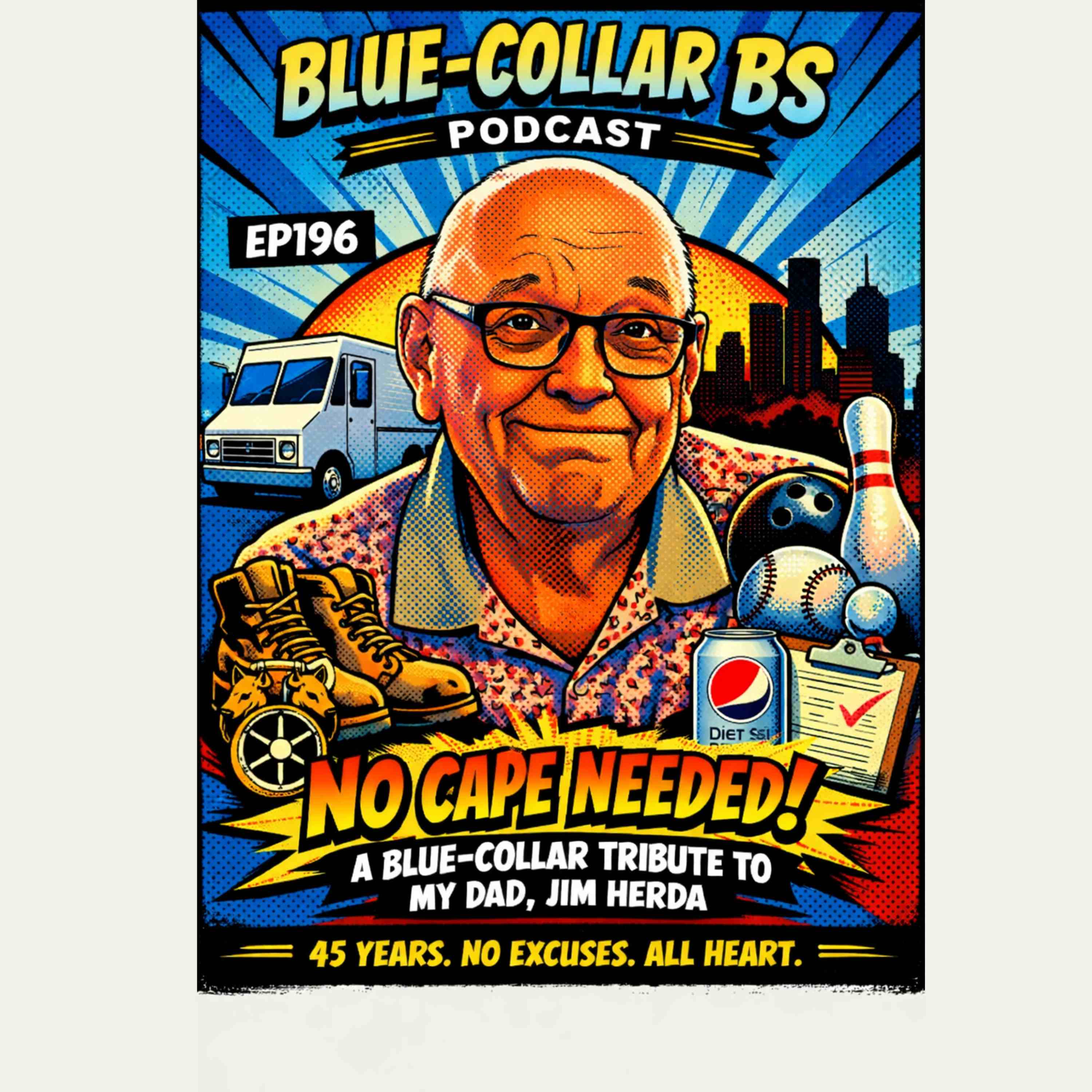
Ep 196No Cape Needed: A Blue-Collar Tribute to My Dad, Jim Herda
EBrad's father recently passed away, inspiring us to take time to honor the everyday heroes who show up without seeking recognition the people who teach us the most important lessons without even realizing they're doing it.Brad shares memories of his father who worked as a Teamsters driver and never missed a day of work, taught discipline without lectures, and showed integrity by owning mistakes when his job was at risk.The lessons came through presence rather than instruction being available when needed even if lengthy conversations weren't his style, showing up consistently for 45 years regardless of how he felt, and demonstrating values through actions instead of words.We explore how the most powerful teaching happens through observation rather than explanation, why consistency builds the credibility that matters when mistakes happen, and how being present counts more than being perfect.Highlights:How daily consistency builds the kind of credibility that carries you through mistakes and tough times.Why the most important lessons get taught through actions and presence rather than lectures or explanations.What integrity looks like when you have to own up to decisions that put everything at risk.The difference between being available and being perfect why showing up matters more than having all the answers.How learning to observe patterns and connect dots comes from watching people who lead through example.Please subscribe to Blue Collar BS where we talk about the real gaps between generations in blue collar work and what it takes to lead across different age groups in today's trades. Sometimes the most important episodes aren't about business at all they're about the people who shaped who we become.Get in touch with us:Check out the Blue Collar BS website.Steve Doyle:WebsiteLinkedInEmailBrad Herda:WebsiteLinkedInEmailThis podcast uses the following third-party services for analysis: Podtrac - https://analytics.podtrac.com/privacy-policy-gdrpOP3 - https://op3.dev/privacy
Ep 195When the Apprentice Becomes the Mechanic with Sam DeWitt
ESam DeWitt got told like every millennial to go to college and get a degree. The path from there to becoming a master mechanic wasn't anything he could have planned, moving through different roles and companies before landing somewhere that changed his entire perspective on what leadership could be. His supervisor Bob showed him what servant leadership actually looks like creating space for people to grow by recognizing where they need help and empowering them to learn instead of expecting them to already know everything. We explore how admitting what you don't know opens the door to real learning, why seeking knowledge directly from people doing the work beats any manual, and how hands-on practice with real failure scenarios builds the next generation of skilled technicians.HighlightsWhy companies banking on operators training replacements fails when the operator is protecting their own job instead of teaching.How servant leadership that recognizes strengths and weaknesses across teams while empowering people to struggle and learn changes careers.Why maintenance requires some innate ability beyond what's teachable and finding people who want to work on broke stuff every day is hard.Why creating the right training tools can work better than prescribed ones.Get in touch with Sam:PodcastLinkedInGet in touch with us:Check out the Blue Collar BS website.Steve Doyle:WebsiteLinkedInEmailBrad Herda:WebsiteLinkedInEmailThis podcast uses the following third-party services for analysis: Podtrac - https://analytics.podtrac.com/privacy-policy-gdrpOP3 - https://op3.dev/privacy
Ep 194Ms. Swiss and the Sisterhood of Trades with Nush
ENush knew by sophomore year that traditional college wasn't her path. Automotive classes in high school led to NASCAR Technical Institute, then CNC machining when motorsport jobs required connections she didn't have. Now she's built Sisterhood of Trades, a Discord community of 850 women worldwide supporting each other across different trades. We explore why women still face basic safety issues like inaccessible restrooms and unlit parking lots that employers ignore while claiming to support women. Nush shares the harsh reality where reporting harassment leads to punishment instead of accountability, how LinkedIn networking creates more opportunities than degrees, and the vision to fund scholarships providing toolboxes for women entering trades so they don't start behind like she did.Highlights:How a worldwide Discord community of 850 women proves there's massive demand for peer support across trades.Why employers claiming to support women while ignoring accessible restrooms, lactating rooms, lit parking lots, and safe building access is empty lip service.The accountability gap where women reporting harassment about their bodies face punishment while leadership protects the men creating hostile environments.How university paths aren't the only option and successful fulfilling careers exist without the debt.The scholarship vision to provide toolboxes and resources so women don't start trades careers at a disadvantage.Subscribe to Blue Collar BS where we talk about the real gaps between generations in blue collar work and what it takes to lead across different age groups in today's trades.Get in touch with Nush: InstagramLinkedInSisterhood of TradesGet in touch with us:Check out the Blue Collar BS website.Steve Doyle:WebsiteLinkedInEmailBrad Herda:WebsiteLinkedInEmailThis podcast uses the following third-party services for analysis: Podtrac - https://analytics.podtrac.com/privacy-policy-gdrpOP3 - https://op3.dev/privacy

Ep 193When Ego Paves the Wrong Road with Bryce Harem
EFresh out of college with a construction management degree, Bryce walked onto job sites telling field crews how to build based on what the book said.Fast forward to 2022 when he became a general manager and led his company to their largest financial loss ever at $1.5 million, forcing him to lay off 66 people.Instead of quitting, Bryce stood in front of the 35 remaining employees, wrote "I'm sorry" on a whiteboard, and owned the failure completely.We explore how treating people like numbers on a spreadsheet destroys companies, why chasing titles instead of impact sets you up for disaster, and how Bryce turned things around by asking field crews to teach him instead of pretending he knew everything.He shares his journey through alcohol and nicotine dependence trying to handle stress, the weekend journaling session that saved his career, and why the middleman mindset matters more than any title on your business card.Highlights:Why requesting to work with the toughest superintendents who didn't respect him became the turning point for earning trust.How treating a 100-person company like a spreadsheet with budgets and assets instead of people led to catastrophic financial loss.The moment where owning complete failure in front of his team changed everything.How to retain Gen Z talent by showing them the impact they're making instead of dangling titles and pay as the only rewards.How building personal power through relationships beats title power every time, especially when you're the middleman holding culture together.Subscribe to Blue Collar BS for practical advice on running your business better. Leading through failure requires more vulnerability than most people are willing to show - are you ready to own it?Get in touch with Bryce:LinkedInInstagramFacebookGet in touch with us:Check out the Blue Collar BS website.Steve Doyle:WebsiteLinkedInEmailBrad Herda:WebsiteLinkedInEmailThis podcast uses the following third-party services for analysis: Podtrac - https://analytics.podtrac.com/privacy-policy-gdrpOP3 - https://op3.dev/privacy
Ep 192Shoebox Accounting & Other Bullsh*t That’s Costing You
EToo many trades and construction business owners ignore their accounting until tax season hits, then spend days manually entering receipts from shoeboxes instead of using technology that does it automatically.We tackle the business operations side that gets pushed aside when you're busy doing the work that actually gets you paid.Steve reveals his manual QuickBooks process while Brad walks through why people fail to pay themselves properly, the three different rates you should be charging as owner-operator-CEO, and how to stop leaving money on the table with bad estimating.We explore tactics for building overhead into quotes without overcomplicating the math, why technology like receipt scanning apps can save days of work, and how understanding your customer's busy season changes your sales follow-up game completely.Highlights:HighlightsWhy paying yourself only after everything else is taken care of means you're getting a fraction of what you're worth instead of paying yourself first.How to calculate what you actually need to charge by separating your field labor hours from your CEO hours from your ownership compensationWhy most jobs are quoted wrong because overhead and profitability aren't properly estimated into the numbers.The garage door company example where tactical empathy in follow-up messaging closed the deal after understanding their busy season.Why seven touches before giving up beats three attempts, but only if you change your approach when the message isn't landing.Subscribe to Blue Collar BS for practical advice on running your business better. If you're still using shoeboxes and spreadsheets to track your money, this episode is for you.Get in touch with us:Check out the Blue Collar BS website.Steve Doyle:WebsiteLinkedInEmailBrad Herda:WebsiteLinkedInEmailThis podcast uses the following third-party services for analysis: Podtrac - https://analytics.podtrac.com/privacy-policy-gdrpOP3 - https://op3.dev/privacy
Ep 191Who's Sucking Now with DT
EStarting with a shop vac in a Ford Ranger, DT built a grease trap company that now runs 14 trucks across Washington State with his sights set on going national before turning 40. He's built a team that runs the business smoothly when he's not there, and employees talk up the company so much they're recruiting people from completely different industries. We explore how unconventional leadership creates this level of ownership, why creative benefits matter when you can't compete with corporate packages, and what happens when you give people freedom to figure things out instead of controlling every process.Highlights:Why 13 years of trial and error taught DT that internal communication was the missing piece until hiring a CFO.When employees ask for more responsibility, letting them take it and own it completely creates better results than telling them exactly how to do it.Monthly company shutdowns for yard day and meals show employees you value spending time with them beyond just getting work done.How DT's willingness to admit he screwed up 100 times makes employees want to help build the company instead of just collect paychecks.Why mistakes are inevitable but what you do about them determines whether your team fears failure or learns from it.Make sure to subscribe to the Blue Collar BS podcast where we talk about the real gaps between generations in blue collar work and what it takes to lead across different age groups in today's trades.Get in touch with DT: WebsiteFacebookInstagramGet in touch with us:Check out the Blue Collar BS website.Steve Doyle:WebsiteLinkedInEmailBrad Herda:WebsiteLinkedInEmailThis podcast uses the following third-party services for analysis: Podtrac - https://analytics.podtrac.com/privacy-policy-gdrpOP3 - https://op3.dev/privacy
Ep 190Chasing Checks Sucks with Joe Kaye
EHome service is now 4% of the US workforce and the fastest growing industry in the country, yet many successful businesses still struggle with basic invoicing and cash flow management. Joe Kaye, a tech veteran who worked construction through college, started exploring investments in blue collar businesses and discovered a massive gap between the amount of work available and the systems companies used to actually get paid. He teamed up with co-founder Luke to build Procured, a field service management software helping businesses get paid the same day jobs are completed instead of waiting weeks to send invoices. We explore why younger people are choosing trades over college debt, how 60-70% of home service businesses now embrace technology, and Joe's rapid-fire revelations including his vendetta against Reese's for changing their formula and why being 10 minutes early means you're on time.Highlights:Why tracking financials only when checks arrive creates cash flow chaos that makes it impossible to know if you can pay rent, staff, or buy equipment.The real cost of waiting 30-plus days to send invoices after completing jobs when you're paying for trucks, materials, and payroll today.How the gap between available work and getting paid is crushing successful businesses that should be thriving.Why younger workers choosing trades over college debt are forcing the industry to adopt technology or get left behind.The invoice that never gets sent because there's no system to track what's been completed versus what's been billed, leaving thousands of dollars on the table.Subscribe to Blue Collar BS where we talk about the real gaps between generations in blue collar work and what it takes to lead across different age groups in today's trades.Get in touch with Joe: WebsiteInstagramLinkedInEmail Get in touch with us:Check out the Blue Collar BS website.Steve Doyle:WebsiteLinkedInEmailBrad Herda:WebsiteLinkedInEmailThis podcast uses the following third-party services for analysis: Podtrac - https://analytics.podtrac.com/privacy-policy-gdrpOP3 - https://op3.dev/privacy
Ep 189You Good, Bro? with Jessica Hallahan
EConstruction is the second leading industry for death by suicide, yet most leaders don't know how to recognize when someone's struggling or how to have those check-in conversations. Jessica Hallahan grew up in a household full of addiction and poverty, became a drug and alcohol counselor, then burned herself out at age 24 before founding Journey to Yourself to help individuals and teams build resilience. We explore how different generations approach mental health from boomers who view it as unnecessary (62% are skeptical according to SHRM) to Gen Z who reports the highest rates of mental health issues and takes the most time off. Jessica shares why the angry person might need help just as much as the sad one, how older generations actually did care about mental health by going to the bar to "comment" about work, and why bringing your whole 70% is better than pretending you're at 100% when you're not.HighlightsHighlights:How to spot when someone's really struggling versus just having a bad day by watching for behavior that's different from their typical pattern.Why accountability goes both ways where leaders need to check in but employees also need to communicate when they're struggling.The difference between using ADHD or other diagnoses as awareness versus excuses and what to actually do with that information.Creating open door policies that actually work by leaders modeling vulnerability about their own rough days instead of hiding behind closed office doors.Why Gen Z needs the "yes and" lesson where you can acknowledge bad days and still understand other people have their own struggles too.Subscribe to Blue Collar BS for honest discussions about leadership challenges you're actually facing. Mental health isn't just a younger generation obsession share this episode with someone who needs to understand why it matters for everyone on their team.Get in touch with Jessica: WebsiteInstagram LinkedInGet in touch with us:Check out the Blue Collar BS website.Steve Doyle:WebsiteLinkedInEmailBrad Herda:WebsiteLinkedInEmailThis podcast uses the following third-party services for analysis: Podtrac - https://analytics.podtrac.com/privacy-policy-gdrpOP3 - https://op3.dev/privacy
Ep 188OnlyFans for Engineers? Let's Talk Strategy
EMost business owners are sitting here in early January without any real plan for 2026 because they're still trying to close out 2025. Steve makes the case for one single measurable outcome that determines a successful year while Brad pushes back with the reality of "we just want more" thinking. Using gross margin improvement as an example, we walk through how to get every department aligned on the same goal, why supplier accountability is an untapped opportunity, and how to turn objectives into 12-week strategies. We also tackle why leadership is hard when you actually have to make decisions, how the Hoshin planning system creates 81 squares of complexity nobody needs, and why squirrels with shiny objects will always try to derail your focus unless pet projects directly support your singular goal.Highlights:Why "we just want more" or "we want better" fails without defining what that actually means in measurable terms.The trust but verify approach to supplier invoices especially around tariff line items that might have been passed through five times.How employees come back with excuses about SAP tickets and IT problems when you give them nine goals instead of one clear focus.The danger of operating in a one-year vacuum where beneficial three-year projects get killed because they hurt this year's numbers.Why amazing things happen when you make actual decisions instead of living in "I'll think about it" mode that keeps everyone guessing.Subscribe to Blue Collar BS for more real conversations about running and growing your business. Share this episode with a business owner who's still trying to figure out what 2026 looks like.Get in touch with us:Check out the Blue Collar BS website.Steve Doyle:WebsiteLinkedInEmailBrad Herda:WebsiteLinkedInEmailThis podcast uses the following third-party services for analysis: Podtrac - https://analytics.podtrac.com/privacy-policy-gdrpOP3 - https://op3.dev/privacy
Ep 187Inviting Women In, Changing the Game with Meaghan Ziemba
EManufacturing has a storytelling problem and it's costing the industry talent to the skilled trades. Meaghan Ziemba, a technical writer with a master's degree who's been in the industry since 2008, got tired of watching male hosts ignore her suggestions to interview women in manufacturing. So she started Mavens of Manufacturing during the 2020 pandemic and has since interviewed over 200 women, creating a movement that's now bringing Gen Z into the industry through TikTok. We explore the broken rung theory keeping women stuck in their careers, why assumptions about family responsibilities block women from networking while men face no such barriers, and why communication breakdowns across genders, generations, and hierarchy levels keep shop floor workers out of strategic conversations where they could solve real problems.HighlightsThe broken rung theory where missing that first promotion opportunity creates a stagnant career path especially for women in manufacturing.How assumptions about women's family responsibilities exclude them from networking opportunities while the same assumptions don't apply to men.Gen Z isn't lazy but purpose-driven and tech-savvy enough to expect immediate results while wanting meaningful work.Communication breakdowns happen across genders, generations, and hierarchy levels when shop floor workers get excluded from strategic conversations.Subscribe to Blue Collar BS for more real conversations about running and growing your business. Share this episode with a manufacturer who's looking to attract and retain more women in their workforce.Get in touch with Meaghan:WebsiteFacebookLinkedInYoutubeGet in touch with us:Check out the Blue Collar BS website.Steve Doyle:WebsiteLinkedInEmailBrad Herda:WebsiteLinkedInEmailThis podcast uses the following third-party services for analysis: Podtrac - https://analytics.podtrac.com/privacy-policy-gdrpOP3 - https://op3.dev/privacy
Ep 186The wins, you know you have them
EMost business owners get so stuck in daily operations overwhelm that they forget everything they accomplished throughout the year. Brad shares his process for helping clients identify wins they didn't even realize they had, while Steve explains the psychology behind why your success list is actually programming you for future achievements. We tackle the recency effect in performance reviews, why most people announce seven goals when they should focus on two, and how to use your wins as a catapult into 2026 instead of starting from scratch.HighlightsBreaking down the overwhelm by separating what feels like fifteen problems into the two actual tasks you need to complete.How the recency effect causes recent setbacks to overshadow an entire year of accomplishments in performance reviews.Why your success list is actually programming your brain to understand that progress is possible and you can achieve goals with determination.The difference between announcing top-line revenue goals that mean nothing to your team versus specific targets like twelve projects of X dollars.How analyzing your wins helps you identify whether successes were repeatable systems or random acts of kindness.Subscribe to Blue Collar BS for more real conversations about running and growing your business. Share this episode with a business owner who could use a reminder to celebrate their wins.Get in touch with us:Check out the Blue Collar BS website.Steve Doyle:WebsiteLinkedInEmailBrad Herda:WebsiteLinkedInEmailThis podcast uses the following third-party services for analysis: Podtrac - https://analytics.podtrac.com/privacy-policy-gdrpOP3 - https://op3.dev/privacy

Ep 185Grandma Had It Right: Wealth, Wisdom & Generational Grind with Geoff Stuhr
EMost blue collar business owners see real estate as either something they have to deal with or a major expense eating into their profits. Brad sits down solo with millennial real estate investor Geoff Stuhr to explore how property ownership can become a wealth building tool instead of just another overhead cost. We discuss the generational differences in approaching property ownership, why selling your building and leasing it back might make more sense than you think, and the three critical factors to evaluate before buying your first commercial property. Geoff shares insights from managing $50 million in assets across industrial, multifamily, and self-storage properties, plus why investing in American manufacturing infrastructure is a smart long term play regardless of tariff uncertainty.HighlightsWhy selling your building and leasing it back creates cash to invest in your business while decoupling real estate from your sellable assets.The three non-negotiables before buying commercial property including location in the path of progress, conservative financing under 65% leverage, and flexible building layouts.Why projects always cost 20-30% more and take longer than expected so buy buildings that don't need major renovations.How automation and robotics in manufacturing facilities help attract and retain younger talent beyond just good lighting and clear signage.Critical mistakes younger business owners need to avoid when buying their first commercial property including getting over-leveraged and falling for bad deals from brokers chasing commissions.Subscribe to Blue Collar BS for more real conversations about running and growing your business. Share this episode with a business owner who's wrestling with whether to buy, lease, or sell their commercial property.Get in touch with Geoff:LinkedInWebsiteFacebookGet in touch with us:Check out the Blue Collar BS website.Steve Doyle:WebsiteLinkedInEmailBrad Herda:WebsiteLinkedInEmailThis podcast uses the following third-party services for analysis: Podtrac - https://analytics.podtrac.com/privacy-policy-gdrpOP3 - https://op3.dev/privacy
Ep 184Bonus or BS? Let’s Talk Holiday Compensation
EWith Christmas less than a week away, we tackle one of the most uncomfortable conversations happening in blue collar businesses right now: the holiday bonus. What happens when bonuses have become an expectation rather than a reward? We talk through why delaying bad news creates disengagement, how to communicate with empathy when bonuses aren't happening, and the critical mistake of buying yourself a new Denali while telling employees there's no money for bonuses. Plus, we dive into the difference between base pay increases and true variable compensation, why you should never run bonuses through regular payroll, and how to set up incentive plans that actually motivate your team. Fair warning: We don't agree on everything in this one, but that's what makes it interesting.Highlights:Delaying the bonus conversation creates disengagement and actively encourages your best people to start job hunting during the holidays.The Denali problem where buying yourself a new truck to avoid taxes while canceling bonuses sends exactly the wrong message to your team.Why running bonuses through regular payroll can cost you hundreds in unexpected overtime calculations.The great debate on base pay increases versus variable compensation and which approach actually works for small to mid-sized organizations.Celebrate the wins because forgetting what happened in January through November means you're missing opportunities to build morale year-round.Subscribe to Blue Collar BS for more honest conversations about the tough leadership decisions you're facing right now. Share this episode with a business owner who needs to hear it before next week.Get in touch with us:Check out the Blue Collar BS website.Steve Doyle:WebsiteLinkedInEmailBrad Herda:WebsiteLinkedInEmailThis podcast uses the following third-party services for analysis: Podtrac - https://analytics.podtrac.com/privacy-policy-gdrpOP3 - https://op3.dev/privacy
Ep 183The Bookkeeping Badass You Didn’t Know You Needed; Beth Carter
EWith Steve out on college tours, I sit down solo with Beth Carter, the self-proclaimed badass bookkeeper who talks to trades clients like actual human beings instead of reciting profit and loss statements like a robot. We discuss why your aunt Sue probably shouldn't be doing your books, the difference between quality bookkeeping and data entry, and how a negative $250,000 bank account on a balance sheet is a pretty good sign something's gone horribly wrong. We explore the generational divide in how business owners value bookkeeping services, why price shopping for bookkeepers is a terrible idea, and what happens when you try to sell your business with $200,000 in phantom accounts payable. Highlights:Understanding why specialization matters because your general contractor isn't an electrician and your office assistant probably isn't a trained bookkeeper.The generational shift in how younger business owners view bookkeeping services compared to those who rely on family members and checkbooks.What quality bookkeeping actually includes beyond data entry and why investing in good systems and expertise pays off.Real examples of marketing gone wrong and how an experienced bookkeeper knows to spot inconsistencies to help business owners save money.The importance of monitoring your numbers closely especially during growth periods to avoid spending profit before securing your business foundation.Subscribe to Blue Collar BS for more real conversations about the business fundamentals that actually keep your company running. Help us reach more listeners by leaving a review on Apple Podcasts.Get in touch with Beth:WebsiteLinkedInInstagramGet in touch with us:Check out the Blue Collar BS website.Steve Doyle:WebsiteLinkedInEmailBrad Herda:WebsiteLinkedInEmailThis podcast uses the following third-party services for analysis: Podtrac - https://analytics.podtrac.com/privacy-policy-gdrpOP3 - https://op3.dev/privacy
Ep 182Serve First, Sell Later-It’s That Simple
EWe dive into what separates great customer service from terrible experiences using Steve's recent dealership visits as an example. On this episode we discuss how behavioral styles impact sales performance, why most customer service failures are actually leadership problems, and the critical difference between selling to someone versus letting them buy from you. We explore how sales managers can better support different personality types on their teams and why rigid scripts often create more problems than they solve. If you've ever wondered why your sales team isn't converting or why customers walk away frustrated, this conversation will give you the answers you need.Highlights:Understanding behavioral styles in sales roles and why putting the wrong personality type under pressure with rigid processes sets everyone up for failure.The sales manager mirror test because when your team isn't performing, look at how you're leading them before blaming the individual.Serving versus selling and why giving value through meaningful connections beats aggressive sales tactics every time.When scripts work and when they don't, plus how to balance process with empathy in customer facing roles.Why letting people buy from you creates better relationships and more sustainable business than always be closing ever will.Subscribe to Blue Collar BS for more honest conversations about leadership, sales, and what actually works in business. Share this episode with a manager or business owner who's struggling with team performance.Get in touch with us:Check out the Blue Collar BS website.Steve Doyle:WebsiteLinkedInEmailBrad Herda:WebsiteLinkedInEmailThis podcast uses the following third-party services for analysis: Podtrac - https://analytics.podtrac.com/privacy-policy-gdrpOP3 - https://op3.dev/privacy
Ep 181From Best Buy Battles to Amazon Anxiety
ERemember when Black Friday meant people fighting at store entrances and camping out for deals? We dive into how one of America's biggest shopping traditions became a ghost town in just five years and what it reveals about how businesses must constantly evolve.In this episode, we get nostalgic about our completely different Black Friday experiences. Brad loved the event getting up early, hitting Home Depot for tool deals, and making it a tradition. Steve? He watched the chaos on TV from his couch and wanted nothing to do with it. But here's the thing: whether you loved it or hated it, Black Friday as we knew it is dead.We discuss how COVID accelerated a massive shift from in-store to online shopping, giving consumers the ultimate "easy button." But we're predicting the pendulum is about to swing back. Retailers will start using "in-store only" deals to drive foot traffic again. Free shipping and returns can't last forever the pricing models have to adjust. We break down what this means for your business and how you need to stay ahead of these shifts.Plus, Brad shares his quest for a reasonably-priced outdoor TV (send recommendations!), and we talk about the generational tool gap younger folks don't even have basic wrenches and screwdrivers in their apartments anymore.Highlights:The Easy Button Has Limits - We predict tiered pricing is coming because businesses can't keep giving away free shipping and returns forever.In-Store Exclusives Are Coming Back - We're calling it now: retailers will reverse course and use "in-store only" deals to get foot traffic back.Early Opening Times Return - Expect stores to go back to 6-7am openings as they compete for shoppers again.The Generational Tool Gap - Younger generations don't have basic tools anymore, creating both a skills gap and opportunities for the trades. This could be a great gift idea...Whether you're hitting the (empty) stores this Black Friday or clicking "add to cart" from your couch, ask yourself: Is your business adapting to meet your customers where they are today?The market never stops moving. Consumer behavior shifts faster than ever. What worked five years ago doesn't work now and what works now might not work in two years.Join us in the Blue Collar BS community where we discuss business evolution, market trends, and strategies for staying ahead of the curve. We host office hours Mondays & Wednesdays and offer one-on-one sessions Mondays & Wednesdays. Check out our website to connect with other trades professionals who are navigating the same challenges.Get in touch with us:Check out the Blue Collar BS website.Steve Doyle:WebsiteLinkedInEmailBrad Herda:WebsiteLinkedInEmailThis podcast uses the following third-party services for analysis: Podtrac - https://analytics.podtrac.com/privacy-policy-gdrpOP3 - https://op3.dev/privacy
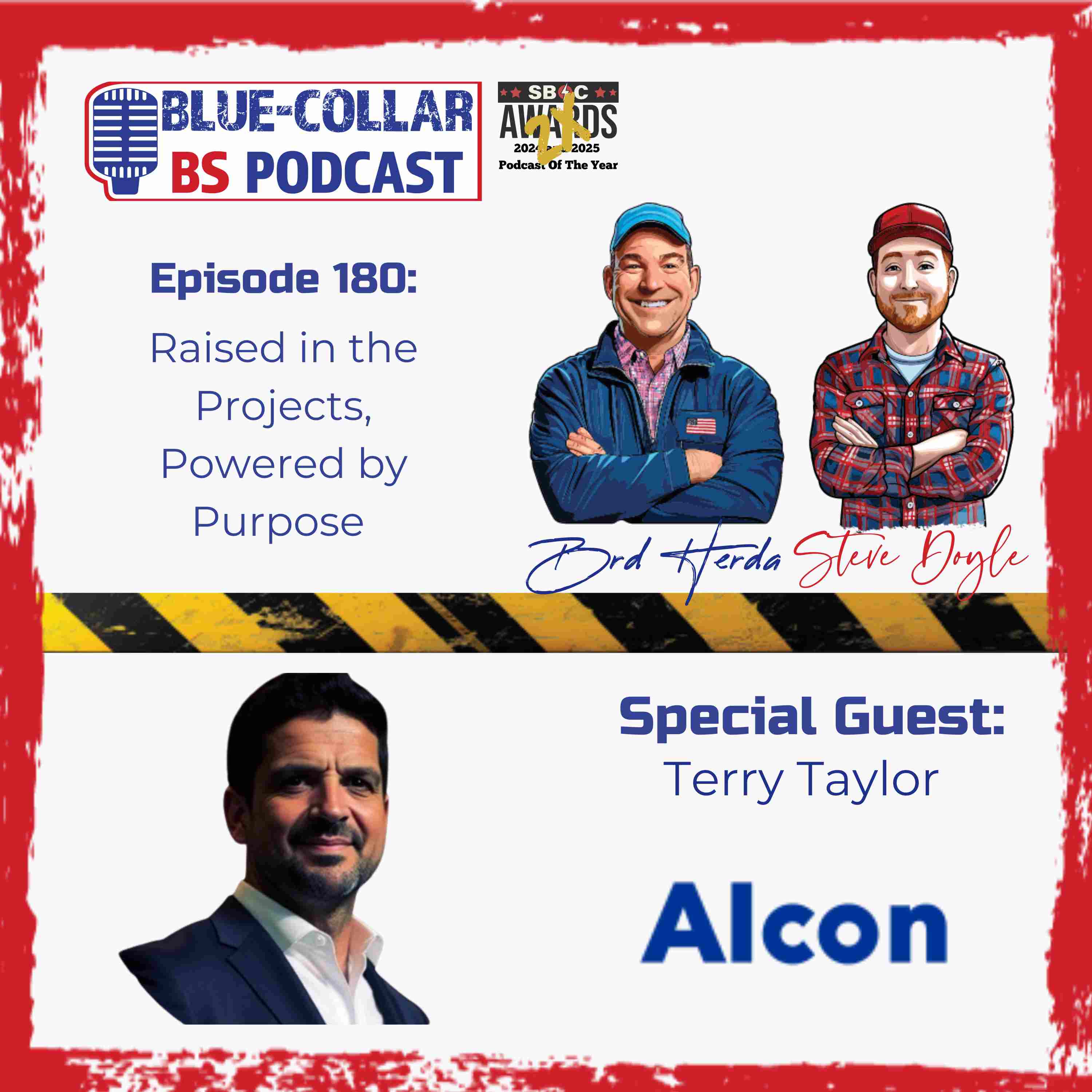
Ep 180Raised in the Projects, Powered by Purpose Terry Taylor
ETerry Taylor grew up moving 40 times before graduating high school, attending 25 different schools, and finding his path through sports instead of the wrong crowd. In this raw and honest episode, Terry shares how basketball and football taught him the perseverance, competitiveness, and accountability that propelled him from an hourly worker to plant manager at one of the biggest aerospace companies in the world all without a degree.Now with his MBA earned at age 50 (graduating summa cum laude with a 3.97 GPA while working full-time), Terry opens up about the personality traits that made him successful but also held him back. From starting with zero empathy to learning patience in a Gen Z world, he discusses the evolution required of leaders today. Terry also reveals how a business card nearly thrown in the trash revolutionized his entire hiring system through Veryable's hands-on interview platform and why going straight to the COO instead of HR is the real secret to implementation.Get ready for stories about chef's throwing pans, union negotiations, watching candidates get out of their cars during interviews, and why A-players actually want to be held accountable.HighlightsA nearly-discarded Variable card replaced Terry's entire hiring system and solved labor shortages in both union and non-union facilities.Terry's journey from scoring zero on empathy tests to understanding why patience matters when leading Gen Z workers.The best employees respect high standards while poor performers constantly push boundaries on attendance and commitment.Go straight to the COO or president who feels the operational pain instead of getting stuck with defensive HR teams.Subscribe to Blue Collar BS for more unfiltered conversations about leadership, generational differences, and what really works in the skilled trades. If this episode resonated with you, share it with someone who needs to hear Terry's story.Terry's Book RecommendationGet in Touch with Terry:LinkedInGet in touch with us:Check out the Blue Collar BS website.Steve Doyle:WebsiteLinkedInEmailBrad Herda:WebsiteLinkedInEmailThis podcast uses the following third-party services for analysis: Podtrac - https://analytics.podtrac.com/privacy-policy-gdrpOP3 - https://op3.dev/privacy
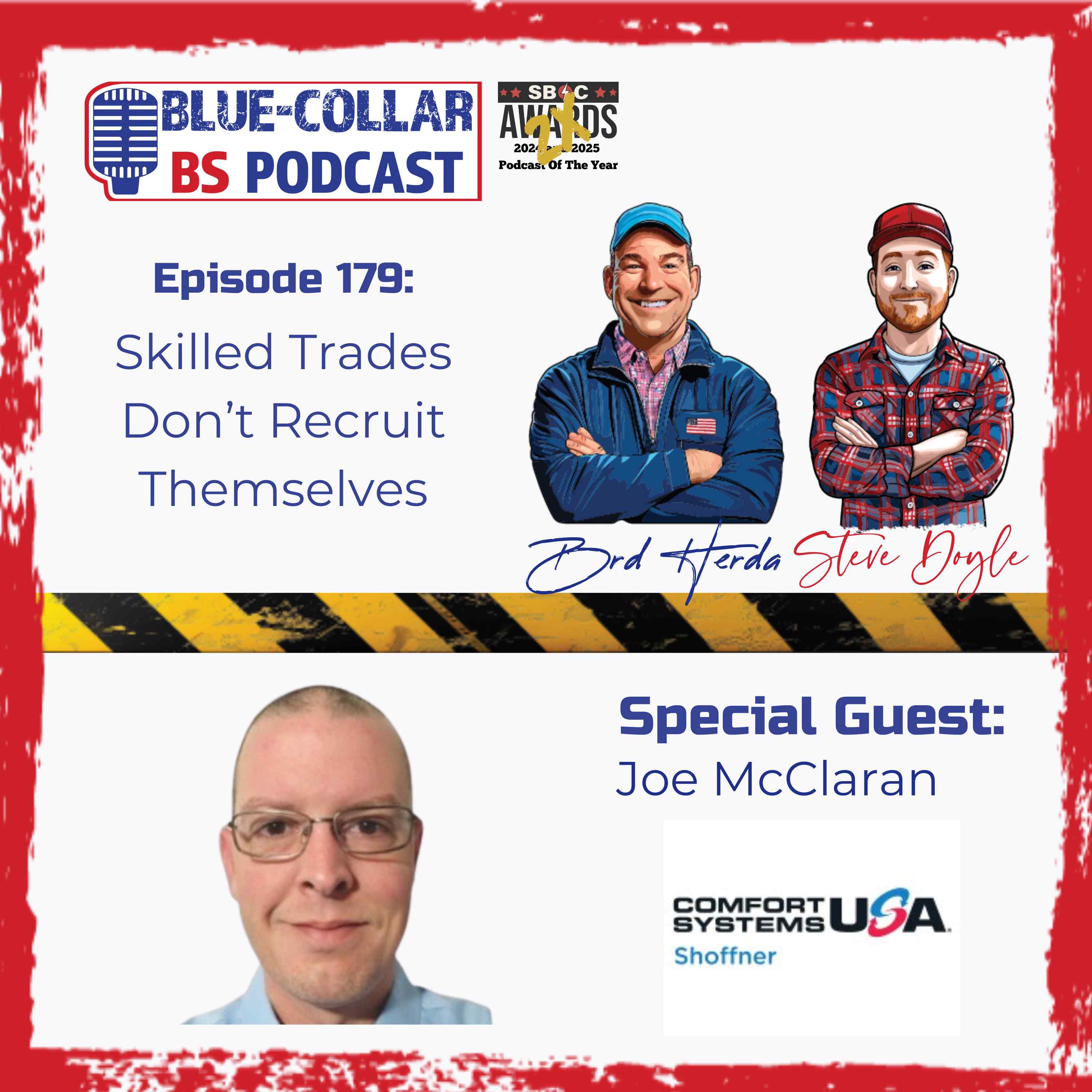
Ep 179Skilled Trades Don’t Recruit Themselves - Joe McClaran Shows You How
EIn this episode, we talk with Joe McClaran, a millennial talent acquisition manager who's passionate about changing perceptions of the skilled trades. Joe shares his journey from mortgage collections and food service to becoming a skilled trades advocate, and discusses the real challenges and opportunities in recruiting and retaining young talent in the construction industry.Joe reveals the truth about recruiting in construction: the six-month reality check when weather extremes separate the committed from the curious, managing wage compression with experienced workers, and why workers will leave for just 25 cents more per hour. He also shares what's working like using accredited apprenticeship programs to bridge the gap between parents who want their kids in college and kids who want to work with their hands.We dig into the office versus field divide, the coming leadership shift as boomers retire, and why Joe's approach to new hires starts with "I work for you. Without you, they don't need me." Plus, hear about the 23-year-old electrical foreman who was running work before he even graduated his apprenticeship program.HighlightsThe Six-Month Test: Highest attrition happens in the first six months when new hires experience their first extreme weather conditions transparency upfront is critical.Free Accredited Education: Four-year NCCER apprenticeship programs provide the perfect answer for parents demanding college while kids want the trades.Young Leaders Rising: Meet the 23-year-old electrical foreman running major projects and why the industry will see a massive leadership shift in just 3-5 years.Total Compensation Matters: Starter tool sets, PPE, medical insurance, and free training help combat workers leaving for small wage increases elsewhere.Get Parents On Board: The biggest barrier isn't the students—it's their parents who still believe the "college or bust" mentality.Don't miss future episodes of Blue Collar BS! Subscribe now and be part of the conversation changing how we think about careers in the skilled trades. Know someone who needs to hear this? Hit that share button.Get in Touch with Joe:LinkedInGet in touch with us:Check out the Blue Collar BS website.Steve Doyle:WebsiteLinkedInEmailBrad Herda:WebsiteLinkedInEmailThis podcast uses the following third-party services for analysis: Podtrac - https://analytics.podtrac.com/privacy-policy-gdrpOP3 - https://op3.dev/privacy
Ep 178When Personal Problems Clock In Too
EBrad's morning at Panera turned into an accidental observation study on how personal drama is infiltrating the workplace. Surrounded by Gen X and Boomer professionals complaining about family issues, relationship problems, and personal grievances with coworkers, he witnessed something that used to be unthinkable people bringing their entire personal lives into professional spaces.The once-impenetrable wall between work and personal life has shrunk to a speed bump. For Gen X professionals, that boundary used to be absolute. Personal problems stayed personal. Work problems stayed at work. Today's workplace doesn't operate that way anymore, and it's not just Gen Z driving this change.The blending of personal and professional lives creates challenges for leaders. It's a time suck, an energy drain, and a real cost. But it can also reduce turnover when handled with empathy and clear boundaries. The question isn't whether this blending will happen - it's already happening. The question is how leaders will manage it.Highlights:Gen X and Boomers are bringing personal drama to work, not just younger generations.Victim mindset conversations drain productivity regardless of generation.Company-first approach: provide designated time for personal talks with clear deadline expectations.Employee-first approach: offer time off to resolve personal issues before they become distractionsAre you struggling with personal drama bleeding into your workplace productivity? The solution starts with deciding what kind of culture you actually want.Subscribe to Blue Collar BS for more honest conversations about the messy realities of leading modern workforces across all generations. Share this episode with leaders who need permission to set boundaries while still showing empathy.Get in touch with us:Check out the Blue Collar BS website.Steve Doyle:WebsiteLinkedInEmailBrad Herda:WebsiteLinkedInEmailThis podcast uses the following third-party services for analysis: Podtrac - https://analytics.podtrac.com/privacy-policy-gdrpOP3 - https://op3.dev/privacy
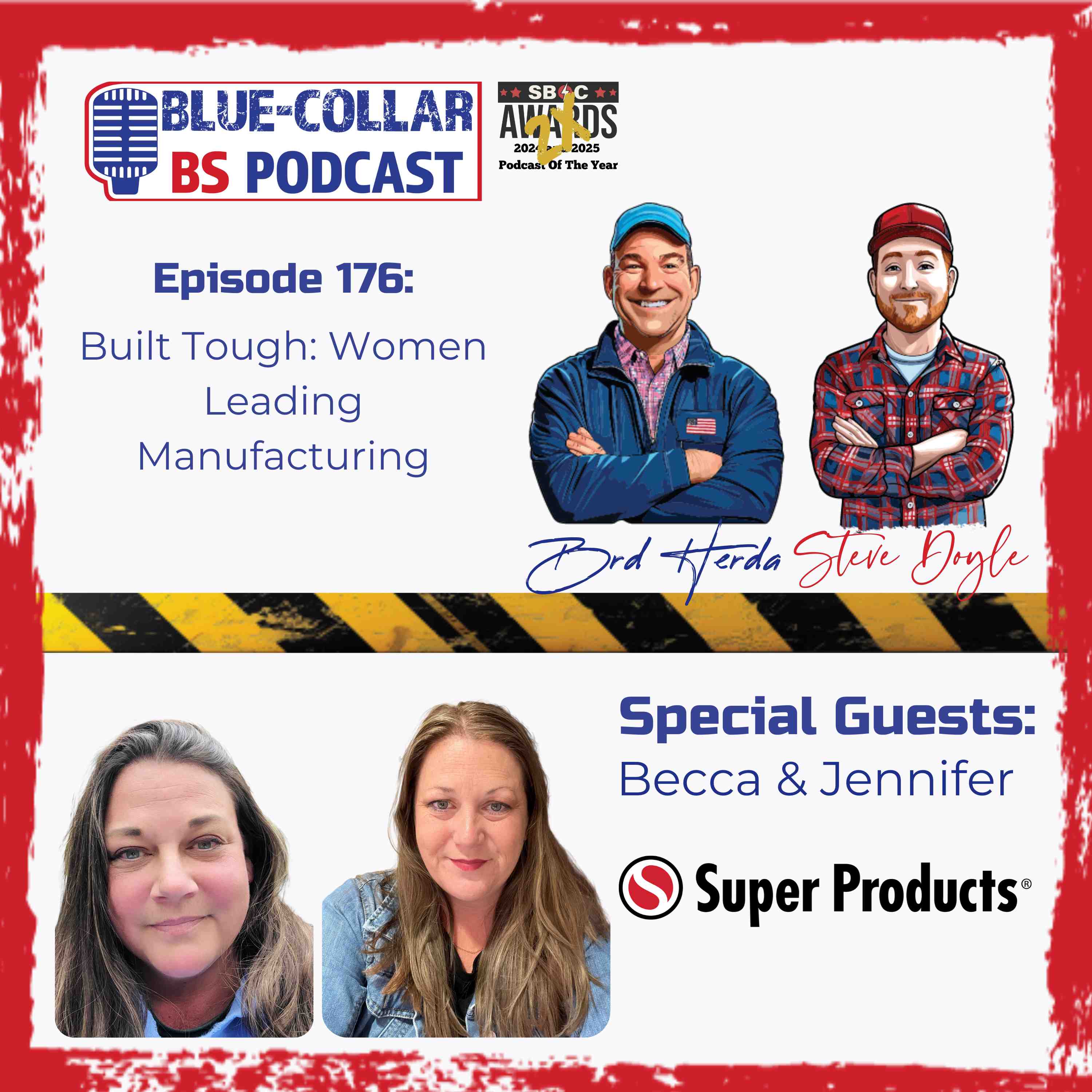
Ep 176Built Tough: Women Leading Manufacturing Becca and Jennifer
ETwo Gen X women who worked their way through male-dominated manufacturing share stories about earning respect, managing up, and why facts beat emotions every time. Becca and Jennifer reunite with Brad who used to manage them back when they all worked at Bucyrus to discuss leadership lessons.Both women rose from early roles to director level positions Becca now leads marketing at Super Products making truck mounted vacuums, while Jen oversees materials management. Their journeys reveal how women succeed in heavy manufacturing through pragmatism, strategic thinking, and refusing to accept limitations.Both emphasize that good leadership means listening, showing empathy within boundaries, teaching and mentoring, and never micromanaging. Jennifer's rule: if you come to her with a problem, bring at least one potential solution. She won't do your job for you but will remove roadblocks.Highlights:Jennifer and Becca share stories about what it was like to work with Brad. State your worth during hiring negotiations - advocate for yourself from day one.Discussion on if manufacturing has changed for women in the last 20 years.How many men in the industry actually act as big brothers looking out for women in the field.Managing up requires making complex issues understandable to those above you.Gen Z candidates may not understand professional boundaries or realistic skill levels.Get in touch with us:Check out the Blue Collar BS website.Steve Doyle:WebsiteLinkedInEmailBrad Herda:WebsiteLinkedInEmailThis podcast uses the following third-party services for analysis: Podtrac - https://analytics.podtrac.com/privacy-policy-gdrpOP3 - https://op3.dev/privacy