Audio is streamed directly from the publisher (media.transistor.fm) as published in their RSS feed. Play Podcasts does not host this file. Rights-holders can request removal through the copyright & takedown page.
Show Notes
Astrophysicist and professor, Dame Jocelyn Bell Burnell reflects on how she helped change astronomy forever.
In this episode, learn more about how a peculiar signal from space led Jocelyn to a groundbreaking discovery. She discusses her aerospace journey, building a radio telescope, discovering pulsars, and the 1974 Nobel Prize controversy. This one is going to be cool!
Key Takeaways:
- At the time, women were not often permitted to study science fields in school. Her parents protested this rule and Jocelyn became top of her class in Physics.
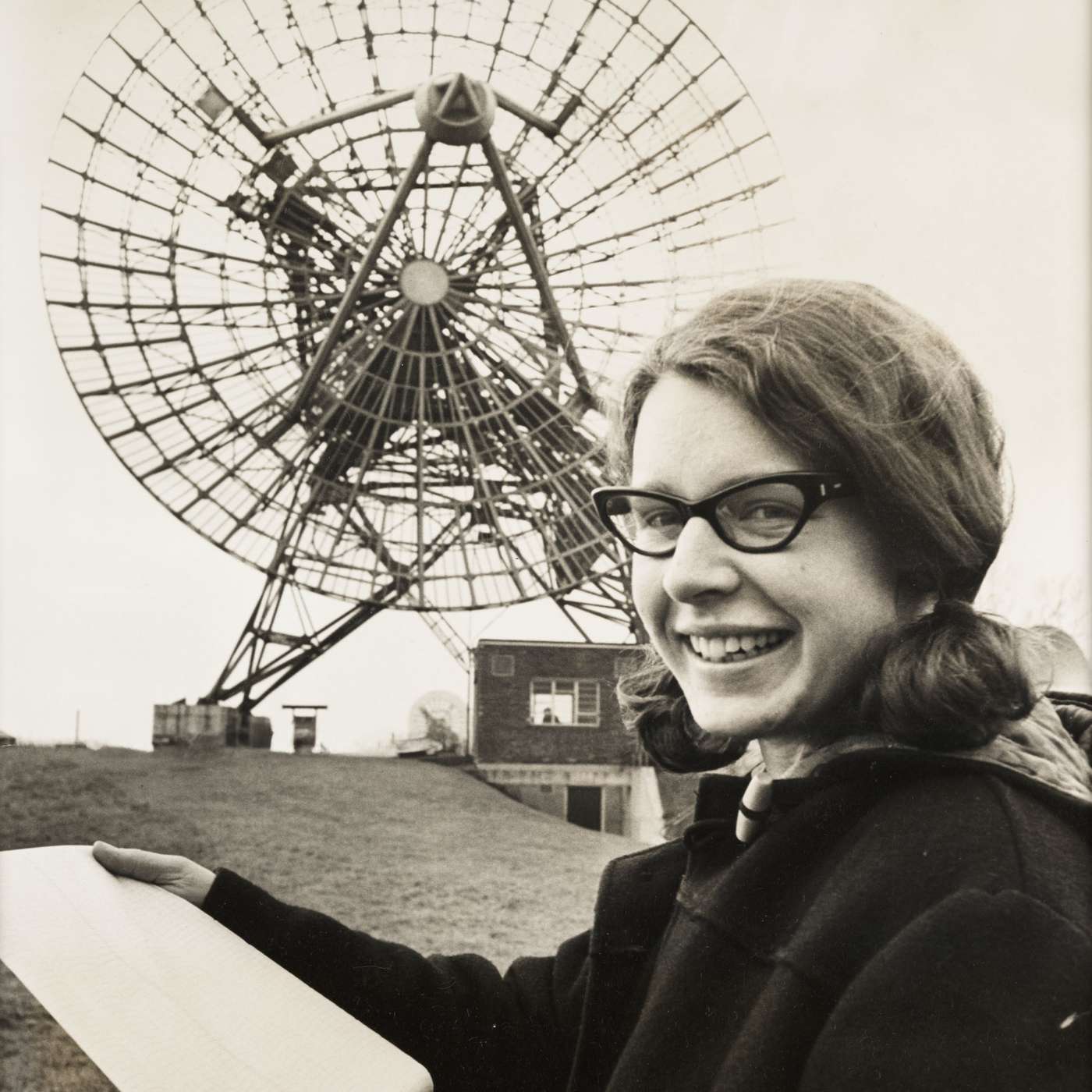
- While attending Cambridge, Jocelyn helped build their radio telescope alongside Astronomers Martin Ryle and Antony Hewish.
- Originally the telescope was built to study Quasars, which are distant galaxies whose incredibly bright cores are powered by supermassive black holes.
- While observing and researching the telescope, Jocelyn found a strange "pulse" that occurred at regular intervals. Labeled LGM-1 or Little Green Men 1, it was the first recording of a pulsar.
- Since pulsars were discovered, over 3,000 have been found today.
- In 1974, Martin Ryle and Antony Hewish were awarded the Nobel Prize for the discovery of pulsars. Because Martin and Antony were the telescopes' leaders, Jocelyn, a student at the time, was left out. She has since been awarded several prestigious accolades.
- Jocelyn encourages audiences to double-check anomalies as they never know which scientific discoveries could be found.
Resources:
Topics
aviationspacemuseumpulsarquasartelescopesciencestem