Becoming Your Best | The Principles of Highly Successful Leaders
447 episodes — Page 8 of 9

Less Stuff More Life with Courtney Carver
Less Stuff More Life with Courtney Carver https://www.becomingyourbest.com/less-stuff-life-courtney-carver/ Steve: Welcome to all our, Becoming Your Best Podcast listeners, wherever you might be in the world today! This is your host, Steve Shallenberger. Hosted on Acast. See acast.com/privacy for more information.

The Glory of the Start
The Glory of the Start Hosted on Acast. See acast.com/privacy for more information.
How Can I Be Less Cynical
How Can I Be Less Cynical? Hello, this is Steve Shallenberger, your host today with the, Becoming Your Best Global Leadership podcast. And this is an ongoing set of podcast on leadership principles that contribute to highly successful results. And today, Hosted on Acast. See acast.com/privacy for more information.
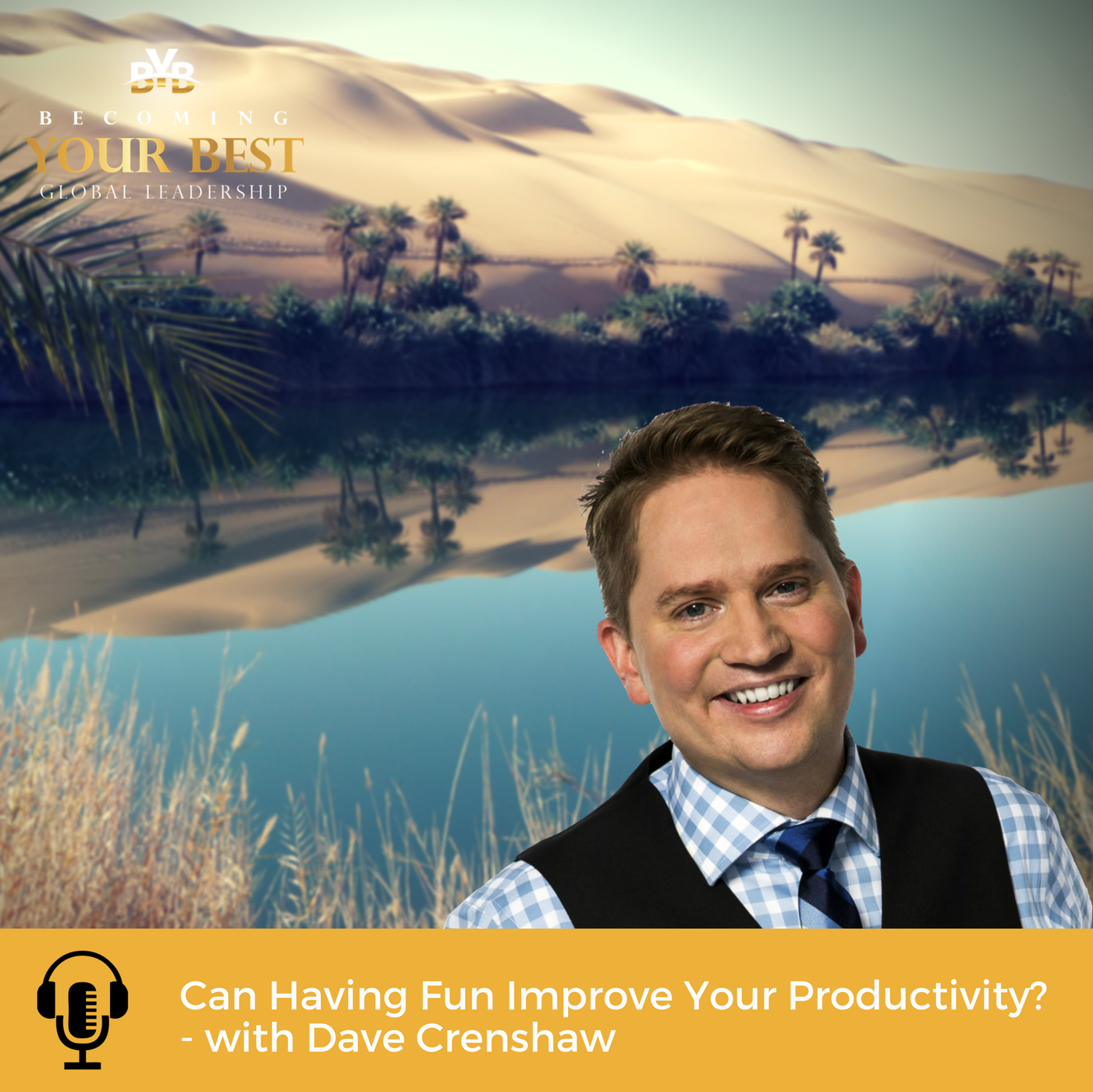
Can Having Fun Improve Your Productivity? - with Dave Crenshaw
Welcome to all of our "Becoming Your Best" podcast listeners, wherever you might be in the world today. This is your host, Steve Shallenberger, and we have a terrific guest with us today. I'm so excited to be able to visit with him, especially about the s Hosted on Acast. See acast.com/privacy for more information.
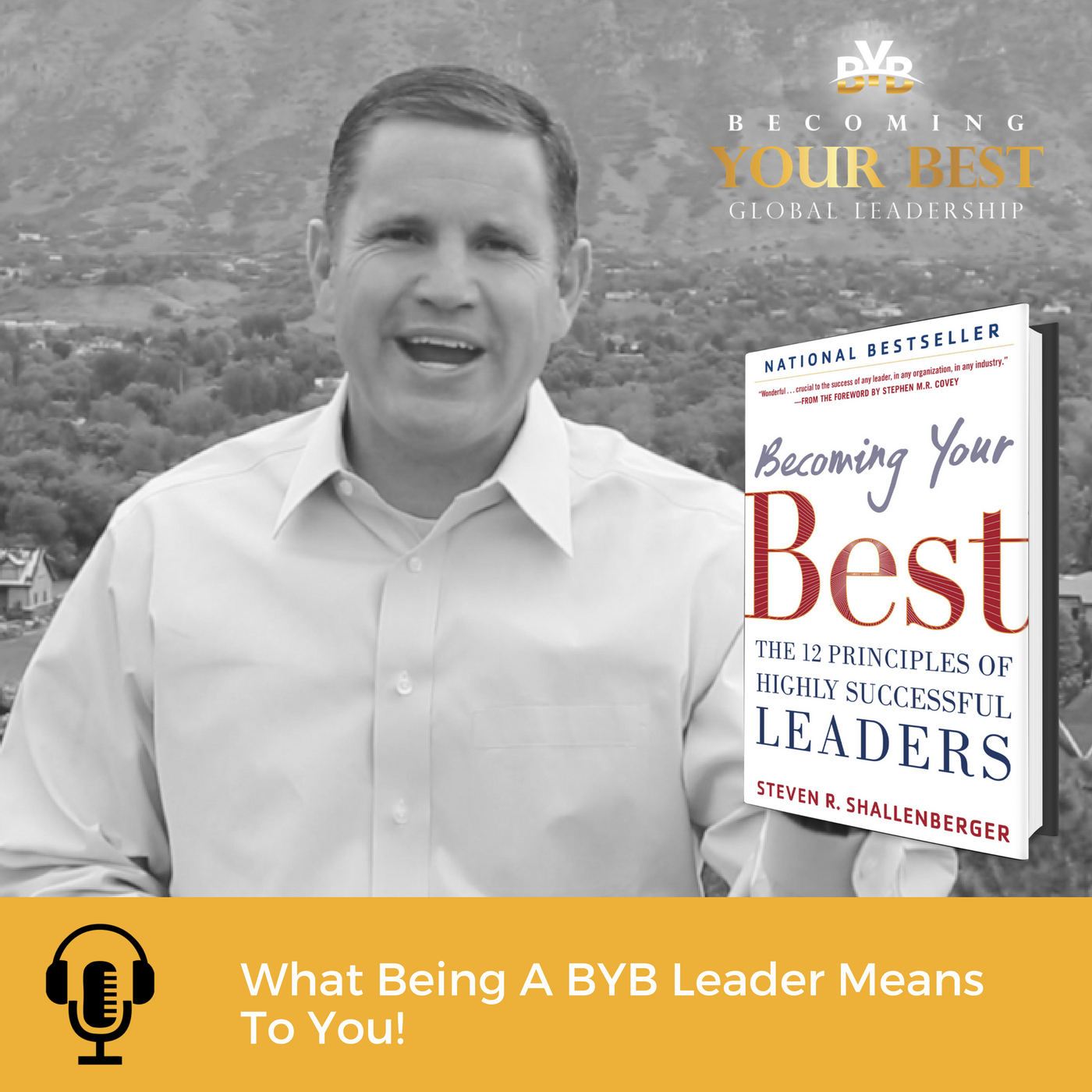
What Being A BYB Leader Means To You
What Being A BYB Leader Means To You Hosted on Acast. See acast.com/privacy for more information.
The Heart, Head, And Hands Of Change With Barbara Trautlein
The Heart, Head, And Hands Of Change With Barbara Trautlein Steve: Welcome to all of our Becoming Your Best Podcast listeners wherever you might be in the world today. This is your host, Steve Shallenberger and we have a very talented guest with us today. Hosted on Acast. See acast.com/privacy for more information.
Growing Weeders into Leaders with Jeff McManus
Growing Weeders into Leaders with Jeff McManus https://www.becomingyourbest.com/growing-weeders-leaders-jeff-mcmanus/ Steve: Super. Welcome to all of our Becoming Your Best podcast listeners wherever you might be today. This is your host, Steve Shallenberger, and I am so much looking forward to our guest today. He's unlike any other that I've had on this show. Our guest has an earthy background that has had a big impact taking principles from nature and helping recognize those in a leadership application. So, welcome, Jeff McManus. Hosted on Acast. See acast.com/privacy for more information.

How To Create a Positive, Vibrant and Engaged Culture
How To Create a Positive, Vibrant and Engaged Culture https://www.becomingyourbest.com/create-positive-vibrant-engaged-culture/ This is Steve Shallenberger welcoming you to this becoming your best podcast today. We're so grateful to have you listen in in Hosted on Acast. See acast.com/privacy for more information.
What Is A BYB Leader?
What Is A BYB Leader? https://www.becomingyourbest.com/what-is-a-byb-leader/ All right welcome to All of our Becoming your Best podcast listeners, wherever you are in the world today.This is gonna be a short yet, but what I hope will be a powerful podcast for you, and it really is something that is a result of you. And what I mean by that is there have been organizations and people out there that start to talk to their managers and leaders and start to say to them, you know, "Thank you for being a BYB leader." And this came back to us and has filtered through and around, and we've heard this and we thought you know, let's define a little bit what that is. I mean what's different about a leader versus a BYB leader, a becoming your best leader? And so our team went to work on developing a manifest, or a creed over the last couple of weeks of what that means and what that looks like, and what this means to you as you lead your family, your personal life, your team, your community in whatever capacity you're leading in. And so this is a part of a movement, a becoming your best movement. And one of the things that means is that BYB leaders are a new breed of leaders who no longer satisfied with mediocrity. BYB leaders strive daily to be their very best in each area of their life and to treat each other right. BYB leaders are committed to excellence, they find a way to do the impossible. BYB leaders are confident, optimistic, and determined to make a positive difference in their homes, schools, organizations, and certainly the world. Negativity, pessimism, and complaining have no part in their lives. BYB leaders know that they don't have to compromise their personal life, or family to be successful contrary to what many other entrepreneurs believe. And lastly, this is part of a family of true leaders. And so what is a BYB leader? It's someone who encompasses the 12 principles and is no longer satisfied with mediocrity and wants to strive for excellence. Is no longer satisfied with the status quo. So BYB leader is true to character, they lead with a vision, manage with a plan, prioritize their time, live the golden rule in business and in life. They build and maintain trust with their key peers, and associates, and family members. They're effective communicators and listeners, they aren't quick to anger or wrath, and they're quick to listen, slow to anger or wrath is a better way to say that. They innovate, they're cannibal, constantly seeking new knowledge. Living in peace and balance, and they have an attitude of never give up. And that's a BYB leader, it's not just a leader. That's why we're no longer satisfied with the status quo and you are part of a, becoming your best movement that is gonna encompass the world. It already is spreading to some many different parts, and you're the movement. I mean were hearing stories from people and we don't even know how they came to find becoming your best, except that they heard it from a friend a family member. And that it's really starting to transform their life as they start to think like a BYB leader, rather than just an average, or normal, or regular leader if you will. So welcome to the movement, this is something we're all in together. We're no longer satisfied with mediocrity its something that we're striving to do personally in our homes and certainly in our businesses. Now, as we think about what it is to be a BYB leader, I wanted to share with you a couple of personal stories from the last two weeks. One of those is when I had a chance to go down to Mexico, about 15, 14 days ago and join my son who's down there on a piano tour with a small group of about eight people. And they did some performances in Mexico City, then down in Medethane which is in the Yucatan area, and then lastly they went to Costa Rica and played in several different locations there in Costa Rica. It was an incredible experience for them, they were gone for two weeks and I just joined them for those three days down in Medethane, the Yucatan. And one of the things we did while we were together is we went swimming in these Mayan pools, they call them cenotes down there. And one of these was the coolest experience. I mean each one was this very unique and different cenote. Well, the last one we went to we walked down this set of stairs into this dark cave and our guide had a little flashlight. And we went out and stood on this pier and here's the water, and its more than 40 or 50 feet deep so you can't touch the bottom and it's this dark cave so you can just visual and imagine this. She shines her flashlight out past the pier, so it extends out maybe 10 feet and she just asks everyone to jump in and wait for her. And yeah, I'm on a little life jacket there, so it's not like you're at risk sinking there. So we all jump in, you have the teenagers in there with us, it's just cool. We're in this totally dark cave you can't see anything that's behind you and the only thing you can see is her light
The Secret To Staying Motivated
We welcome you to this Becoming Your Best Podcast today wherever you might be in the world today. This is Steve Shallenberger, your host, and today we are going to talk about how to stay motivated, and you might ask for what or who is this for. Well, it's in sales, it's for life, it's for marriage, a student, work, a CEO, coach, a teacher, a lawyer, doctor, caregiver. Really, we're all included and have a need to stay motivated. This is really inspired from an email from one of our listeners, and this person indicated that, "I have a good life, a good spouse, good income, a nice home, wonderful children, but something is missing. Sometimes I just don't feel happy. Our marriage doesn't have the same magic that it used to have. So what can I do to get back on track?" Well first of all, congratulations to this person for wanting to get back on track, to be fully happy. And so, this really ties back into maintaining the motivation throughout our lives that gives us the capacity to stay happy, to find solutions to our challenges, to stay productive, to stay on top, and especially when we're knocked down, and especially when things get tough, when we may not even want to try. I like to share an experience I have recently while I was out exercising and I was listening to a talk on concentration. I love to go out and exercise and listen to TED Talks, the podcast inspirational talks. This particular speaker asked his audience and it was a large audience, "How many were formally taught concentration in school?" And he said, "Really formally taught how to concentrate?" Two hands went up in the entire group audience. And then, he said, "Okay. How many of you were told to concentrate by a parent or a teacher?" And all of the hands went up. And then, another question, "How many tell your children or employees today, 'Well, concentrate.'" Well, again, all the hands went up. This person went on to talk about how we really are distracted all day long and it just racks our capacity to really concentrate. And what happens is we're frequently told to concentrate but not really taught how to concentrate. And then he went on to give some suggested ways of how to concentrate and focus. Well, today we will not just talk about motivation and focus we will talk about the things that you and I can do to stay motivated, and motivation is not just a flash in the plan or pan accomplishment, don't get me wrong. We will all take those high water mark accomplishments that we can in life. Those high water marks can bring great satisfaction in life, but we're talking about sustaining a high level of motivation that produces what we call an ever inclining program, always improving, always progressing, steady, solid, upward throughout life. And that type of sustaining accomplishment that far exceeds our high water marks by the end of our lives. And so sustaining a high level of motivation is at the very heart of what we do, it's the very heart of becoming your best. And that is why the spirit of becoming your best is a movement for people everywhere. We've actually been thinking about becoming your best manifesto, and I'd like to share how we see that. A manifesto to becoming your best manifesto is about a certain type of leader of becoming your best leader. It's a new breed of leader who is no longer satisfied with mediocrity. And becoming your best leader strive daily to be their very best in each area of their life and treat others right. Becoming your best leaders are committed to excellence in finding a way to do the impossible. Becoming your best leaders are confident optimistic and determined to make a positive difference in their home, schools, organizations and the world, and negativity passes and complaining have no part in their lives. Becoming your best leaders know they don't have to really compromise their personal life or family life to be successful. And becoming your best leaders know that life matters and what you do matters and your organization matters. And so we are part of a becoming your best family, and we are leaders that make a difference. So there are certain things that becoming your best leaders do to help you and I stay motivated. So let's talk about a few of them right now. I'm going to talk about five things that you can do to stay motivated. The first one is to control the things that you can control. Take responsibility for the outcome. Refuse to spend time on things that you cannot control. So for example, you can't control the weather, what others think, what people say about you or about your organization. You can't control the competition out there, people being mean or nice, or if you have an accident or you forget something or something bad happens, natural disasters. None of these things can you control, but you can control serving others, being kind, what you think about, forgiving others, filling your mind with good, your speech with good. You will find great power in writing down what you can control
Leading with Love - Interview with Tim Sanders
Welcome to all of our Becoming Your Best podcast listeners wherever you might be in the world today. This is your host Steve Shallenberger. And we have a tremendously interesting guest today. Our guest is a successful business leader and has influenced many many people for good. Welcome to our show today, Tim Sanders. Tim: Hey great to be with you Steve. Steve: I've been looking forward to this. Tim: Me too. Steve: Well, good. All right. Now, before we get started, I'd like to tell you a little about Tim's background. He spent his early career on the cutting edge of innovation and change. He was an early stage member of Mark Cuban's Broadcast.com, which had the largest opening day IPO in history. After Yahoo acquired the company, Tim was tapped to lead their Value Lab, and by 2001 he rose to a Chief Solutions Officer. And today he's one of the top-rated speakers on the lecture circuit. Tim is also the author of four books including The New York Times best seller "Love is the Killer App," which is an awesome book, "How to Win Business and Influence Friends," I really enjoyed reading that. Tim's book has been featured in Fast Company, USA Today, The New York Times, Boston Globe, and so on. He is a master storyteller who offers his listeners actionable takeaways that produce results right away. So I have been looking forward to having Tim here in our interview today. And to get going, Tim, can you tell our listeners maybe a little about your background, your story? What was it like growing up? And maybe some experiences that helped you see that you could be successful? Tim: Thank you. I grew up in Clovis, New Mexico. It's a farming community just east of the West Texas border. I'm sorry, just west of the...West Texas border. And I was raised by my grandmother. I was a special education student from second to fifth grade, which really, you know, taught me a lot of things. It taught me how to bounce back. That's for sure. Taught me how to fit in when people didn't understand who I was. But most importantly, my childhood taught me that anything is possible if I'm willing to put the preparation work in and seize the opportunity. In my adult life I had a period of time, say 15 years or so, where I was gainfully employed and successful to some degree but just not laser-focused on what mattered. You might say I was in a mediocrity trap. In 1997, I went to work for Mark Cuban about a year after I had gotten out of that trap and had a real paradigm shift about what it was gonna take for me to be successful for my family. When I worked for Mark Cuban you can imagine 1997, the dawn of the internet explosion. It was such a breathtaking opportunity Steve. But I remember those times mostly as being a student of the game. Something I learned from him. And I was a voracious book reader. I was a mentor to anybody I did business with. And by 2001 after he'd sold the company to Yahoo, I became Yahoo's Chief Solutions Officer right after the dot-com crash of 2000. So my team and I went out to rebuild hundreds of millions of dollars of lost business because all of those companies, like eToys, our big advertisers, had gone caput. And through those experiences, I built up a perspective that if we commit ourselves to lifelong learning, and we lead with love in our hearts for other people and expect nothing in return other than that they improve and pay it forward, you can accomplish anything in this world we live in. Steve: Wow, what a rich background and then to be able to take that background and, like, Clovis, New Mexico? You mean you can be successful if you were born in Clovis, New Mexico? Tim: I'll tell you something. Let me tell you something about Clovis, New Mexico. Little town, 30,000 people. I was on the debate team in high school, Steve. And we wanted to be nationally ranked. Now, it was a real kind of a pork chop circuit, right. There was the Las Cruces tournament, the El Paso tournament, the Odessa tournament. We had to get in our cars and drive over two hours to Lubbock, Texas, to go to a decent library to research for our debate. And we had to compete with, you know, Houston's Bellaire and Dallas' St. Marks and all these great folks in New Mexico, and all the big schools from Albuquerque and Santa Fe. But I'll tell you something, my senior year, we won state championship, and we went to the national tournament, and we didn't have nearly the resources of anybody we competed with. But man, I gotta tell you, and I thank my coach for this, we had heart. Steve: Wow! Well, I'll tell you I can attest that people from the salt of the earth communities like this can have a big difference in the world. Tim: Yeah. And I think too Steve, is that there's something in our values raised in that environment that makes us really good connectors. And I also think it makes us hungrier to find some way to get back that edge. And to look for those invisible resources that are out there, like knowledge that can really give us a leg up. And
Maximize Your Health To Live In Peace and Balance with Ron Williams
Maximize Your Health To Live In Peace and Balance with Ron Williams Welcome to our podcast listeners wherever you may be in the world today. This is Steve Shallenberger, your host. And we are excited to have a wonderful friend and guest with us today, Ron Williams. Welcome, Ron! Ron: Steve, thank you so much, man. I'm glad to be with you. Steve: Now, Ron is a repeat visitor on this podcast series. I met Ron, for the first time, about a year ago and we had Ron talk about fitness. He told us about his background which is an amazing background and to what he's doing today which is helping people all over the world to improve their fitness, their health, and of course, that leads into their happiness. So as we think about The 12 Principles of Highly Successful Leaders, each one of those has a big impact on our life. But they come together to help us be highly successful leaders as we touch not only our own lives have an influence in our relationships but also help contribute to best of class, world class organizations. So one of those principles is to Live In Peace and Balance. Part of that is how do we maximize our own health: our fitness, our mental health, emotional health? Well, it just so happens that that is exactly what Ron does. And when we had the chance to visit a year ago, I mentioned to Ron on the air that I have been trying to lose 10 or 15 pounds for maybe 10 years. I mean, I'm not like really overweight but it's always there. Do you know what I'm talking about? Can anybody that's listening relate to this? And it just kind of rubbed me wrong. I felt like I could do better but it was just really hard to knock it off. And so I asked Ron what his thoughts were, and we talked about a few ideas. At the end of our session, we turned off the equipment and I told him, I said, "Ron, really, I'm serious about this. I'd like to lose 10 or 15 pounds." And Ron said, "Well, I'll tell you what, I'll think about this and I'll call you tomorrow." And so on the phone the next day, he said, "Well, I've been thinking about this and you don't need to lose 10 or 15 pounds." And I threw my hands up and I said, "Yes." And he said, "You need to lose 20 to 25 pounds." And I gulped and I said, "Okay, but I'm going to need your help." Over the next few months, I did indeed lose 25 pounds. It was an amazing process, and the fact is it wasn't a torture for me. It was a positive upbeat process. And one of the things that I found as I went to my periodic checkup with the doctor, he was amazed, first of all, but second, we noticed that my blood pressure had decreased. It wasn't really particularly high before, it was in good shape, but it had gone down. My cholesterol levels had gone down, and this is tracking a 16-year baseline that I had with this particular doctor. And so we had all of this data, and you can push a button right there and it automatically graphs everything. And so you see this graph, and it kind of goes up over the years and all of a sudden, a big drop. Found that my weight had a big drop, and that this was a correlation throughout across the board and that I was much healthier. And so, first of all, I credit Ron. There's a number of things we did, and we're going to have the chance to talk about some of those today. First of all, Ron, I'm just going to invite you to share anything that you would like to about what's been happening in your life over the last year. I have also recommended Ron to a couple of friends and they've had similar experiences. So why don't you bring us up to speed on anything that you would like to talk about, experiences that you're having, what you're seeing? But what would you like to just introduce yourself with? Ron: Awesome. First of all, I want to say thank you, Steve, for all that you have done for my business. One of the things that I found with working with Steve was this is that here I am coaching this guy, thinking,"You know what, I'm doing him a great service," and you know, we lost the 25 pounds, but the little nuggets that I got from him let me know that I needed a coach. And he became my coach. So Steve is my coach today, and I want to appreciate him in what he does. But some of the things that have happened over the year is that I'd been able to put together programs for corporations that have drastically changed the face of you know, the companies, and we've really been enjoying that. And we realized that the principles of what we teach cross boundaries, meaning that we work in several areas: faith, family, fitness, and finances. And with that being said, regardless of what direction you're moving in, there are universal principles that actually cross those boundaries and we call them "Champion Principles," and if you apply it as far as your fitness is concerned, those same principles apply in your business, in your relationships, and across the board, Steve. Steve: Well good. Well, all right. So since we're having this discussion, Ron...and Ron has been a great coach f
5 Simple Innovative Ways to be a GREAT Time Manager
https://www.becomingyourbest.com/5-simple-innovative-ways-great-time-manager/ Welcome to our podcast listeners, wherever you may be in the world today! This is Steve Shallenberger. Your host for the Becoming Your Best podcast series. Today, we have an exciting subject. It is Five Simple, Innovative Ways to Great Time Management. And to preface this a little bit, I'd like to share an experience that I had not long ago. We were visiting our son and his wife, west of Phoenix, Arizona near the White Tank Mountains. It is beautiful but it's rugged mountain terrain. One morning we hiked up three miles up a ravine and we arrived at a waterfall. We enjoyed the captivating area where the American Indians made their home and we decided to jog down the trail. Now, this was an interesting experience. As we navigated the trail at about four miles per hour, I was utterly amazed at how my mind and body worked together. Knowing exactly how to adjust to an ever-changing terrain. A boulder here and a dip there, a rattlesnake slithering along the side of the trail, literally, a spiny cactus. As we gradually went up and down, descending safely back to where the cars were parked. This experience caused me to reflect on how our body system works together, as we navigate through the daily challenges of life. Just as our body adjusted to the terrain as we jogged, over a trail in the mountains. Or your mind or heart adjusts to the terrain of relationships, your work, and everything you face from moment to moment. This is amazing, this great tool that we are blessed to have. It's literally, this principle of prioritizing time allows us to merge our heart, and mind, and memory consistently. So that we can achieve a sustainable best and doing the things that really count most in our life. Repetition is crucial to the development of both muscle memory and heart and mind memory. One moment of creativity or being quick to listen really helps as we solve issues. Day to day they make us more effective in time management. This is really powerful as we're going to talk about these five simple, innovative ways to be great time managers. So, here we go. The first one is one we've talked about in the past. But it is absolutely a fundamental game changer. And it is to spend a few minutes each weekend doing pre-week planning. We use the example of you happen to be a pilot, let's say a commercial pilot or a fighter pilot or even a private pilot. If you had a complex flight coming up, going from one coast to the next. Or navigating through some desolate areas, how many of you would just go jump in the plane and take off? Well, no. It'd be crazy to do that. Suicide is what it would be. Well, how many of us do the very same thing as we start each week? We just go in from week in, week out with no thought. We jump in the cockpit and we show up to work. We do whatever we're doing. Well, we get the same type of results frequently. This little process of pre-flight planning in the pilot world assures the highest probability of a successful flight. Unless something just unusual goes wrong. Well, this is the very same way with our week. Pre-week planning allows us to assure, with some probability, some things could happen, that we're going to have a great week. That's just the way it turns out. Listen to the full episode...https://www.becomingyourbest.com/5-simple-innovative-ways-great-time-manager Hosted on Acast. See acast.com/privacy for more information.

The Secret to Peace, Confidence, Success and Trust
The Secret to Peace, Confidence, Success and Trust Welcome to our listeners wherever you might be today. This is Steve Shallenberger, your host of the Becoming Your Best Global Leadership podcast. Now, what thing can you do to bring you greater peace, confidence, internal, strength, greater trust with others? Open many doors to opportunities and just generally provide for a happier fuller more abundant life? More success professionally with other people? Well that leads us to today's subject, which is being True to Character. It's interesting as we think about character there's really a couple of different components to it. One is being honest. Notice the word “being”. This is really an internal quality. It's who we are. Being honest, doing the right things. There's a different component and that is integrity. It's interesting to look at the root words of integrity. It has to do with “being whole” or “complete”. So we might think of the example of a ship hull having integrity or the frame of an aircraft having integrity. It's being whole, this is what people see. Our integrity is really defined by those that are around us. They see that we are whole and especially in the terms of leadership. When we have integrity we create a wholeness. A predictability that people can count on within an organization. It's these two traits, if you will, these two factors: 1) being honest and 2) having an integrity. That literally create a character, something that people can count on, that is both internal and external. So being true to character is really based on being true to those things that consistently make a difference. Or what we frequently call correct or timeless principles. These then define an outcome we have. So being true to character means your actions reflect your beliefs. Your beliefs are based on these guiding correct principles and it's at the very bedrock of character. It's this integrity, honesty, respect for others in alignment with these principles. When you're true to character the feeling is good, solid and confident. The impact is remarkable! Added confidence, increased opportunity, stronger relationships, expanded influence, and certainly an enviable reputation. Now each of us is endowed with a conscience. In other words, you know right from wrong… To listen to the podcast to get the complete episode and Steve’s continued discussion of Being True to Character: https://www.becomingyourbest.com/secret-peace-confidence-success-trust/ Hosted on Acast. See acast.com/privacy for more information.
What’s Your Innovation Quotient? - Interview with Tamara Kleinberg
What’s Your Innovation Quotient? - Interview with Tamara Kleinberg Steve: Welcome to all of our "Becoming Your Best" podcast listeners, wherever you might be in the world today. This is your host, Steve Shallenberger. And we have a very interesting guest with us today. Our guest has helped and inspired many people on how to improve their lives and be more effective. Welcome, Tamara Kleinberg. Tamara: Thank you so much for having me. Steve: Oh, we're excited to have you. And before we get started today, I'd like to tell you a little about Tamara's background. First of all, this is fun. She's part of an elite group of TED speakers for completing three Tough Muddlers. Tell us what a Tough Muddler is, Tamara. Tamara: Oh, they are these...I don't know if you've done one yet...but they are these extreme sport events. It's usually 12 to 16 miles, 20 obstacle courses, and things like getting dumped in water so cold you can't breathe and electric shock wires. It just...it tests your limits, both physical and mental, every time you do it. Steve: Lovely. Well, we know what the Spartan event is. We've had a number of our family members that have participated in that. I think quite similar. Tamara: I love Spartan events. Steve: Yeah, they're great. And Tamara's life is about breaking through the status quo for game-changing results. And I'll just tell you a little bit more about her. She is the founder of LaunchStreet, an online innovation program, and the creator of a proprietary Innovation Quotient Edge, which we'll talk a little bit about later in the program. It's the only assessment able to help you discover your unique innovator archetype, and we'll talk about that, so that you can innovate on demand. She is a sought-after keynote speaker, CrossFit addict, and a knee-high sock lover. She lives in the Colorado area, has two young children, a husband, and they are rocking and rolling. Tamara: Don't forget my dog. My dog would be very upset if you didn't mention her. Her name is Zoe, and she's a 90-pound mastiff. So she's part of the family. Steve: Well, that's perfect. Okay, well, Tamara, what was life like growing up for you? And what experiences helped you to see that you could be successful? Tamara: Yeah, that's such a great question to open with, you know? So I was telling you a little bit offline that we moved every four years of my life. And the reason for that was my dad was an entrepreneur. So we basically bounced from business to business, and that required moving as well. And while that sounds horrible to a lot of people, what I will tell you is it taught me how to talk to everybody, because I had to start over every four years. I became the queen of reinvention I think before I was 18 years old because I always had to. And, you know, I kinda looked back on my life, and, you know, I realized that that entrepreneurial spirit was inside of me very early on. My very first business was when I was 14 years old. I turned my teenage girl's dream closet into a business of renting clothing, and keep in mind, just to date myself, it was the 80s. So the clothing was bad, and it was before the Internet and [inaudible 00:03:19] could rent everything. But, you know, I was always looking for opportunities to just do things a little bit differently. I think a lot of us have that inside of us, that little spark, and it ignites every now and again. And sometimes we shut it down. And sometimes we let it grow. But in that case, I let it grow. And that summer, I had a ton of money. It was great. But, you know, you would...one of the things that you would ask in a previous thing was, you know, kinda what are some of those defining moments in your childhood. And I would tell you a quick story, because I think this really kinda set up how I viewed life and how I ultimately was able to achieve success. When I was in third grade, I got the most awesome homework, which was, you know, come back on Monday morning and tell the class what you wanna be when you grow up. And I was so excited. And that's the best homework you can give a third grader ever because the possibilities at that point in your life are endless. So, you know, I spent all weekend. I really...I took it very seriously. And I got back to school, and I stood up there, and I was the first to raise my hand. So I got up, you know, in front of that dirty chalkboard. And to see if my...you know, kids in front of me in those low tables, and I said, you know, "I'm Tamara. And when I grow up, I wanna be president of the United States." Steve: Woo-hoo! Tamara: And, you know, then I waited... Yeah. Well, that's what I was hoping for. Thank you. You know, I put my head down waiting for the like obvious standing ovation that was coming. But instead, I got laughter. And it wasn't actually the other kids. It was the teacher. Yeah. She looked to me, and she said, "Tamara, don't be silly. You can't be president of the United States. You weren't born here. You need to come up with a new
Radical Abundance - It's a Way of Thinking
Radical Abundance - It's a Way of Thinking Steve: Welcome to all of our Becoming Your Best Podcast listeners wherever you might be in the world today. This is your host, Steve Shallenberger, and we have a fascinating guest today. I'm really looking forward to our conversation. She has helped and inspired many people on how to improve their lives. So welcome Dr. Sharon Spano. Dr Spano: Thank you so much, Steve. I'm very excited to have this time with you today and to share what I have to offer to your listeners, and to learn more about you as well. So, looking forward to this opportunity. Steve: Well, thank you. Well, now, before we get started, I'd like to tell you a little about Sharon's background. Sharon has a P.h.D. in Human and Organizational Systems. She's an author, a corporate business strategist, a workforce expert, professional speaker, former radio host of Work Smart Live. She and her husband actually run three businesses. And so she understands what it's like to have business challenges, and success, and setbacks, and overcoming those. She empowers business leaders and entrepreneurs to maximize performance. Also works on employee engagement and how to increase bottom-line results. She is a certified professional coach, she loves helping other people, and especially, stepping into radical abundance. And we're gonna talk about that shortly. Her research focuses on wisdom, adult development and leadership, and her work and her new book, The Pursuit of Time and Money: Step into Radical Abundance and Discover the Secret to a Meaningful Prosperous Life. So there you go. This is somebody we wanna have some fun and listen to. Dr Spano: Well, I appreciate it, Steve. I appreciate it. What a great introduction, thanks so much. Steve: Well, you bet. All right, well, let's jump right into things. So, tell us about where you grew up, what it was like growing up, and what experiences, Sharon, helped you to see that you could be successful? Dr Spano: Well, I think that's a great question, Steve, because we all have our story, right? And so, my early childhood story. My parents were divorced and I was literally dropped off at my paternal grandmother's home at probably around the age of five, my sister and I, in the inner city of Los Angeles. And so, we were kind of thrust into this different lifestyle as children, and it was a pretty intense environment back in the day. I can remember growing up and there were gangs and a lot of things like that. But my grandmother in her wisdom, put us in catholic school, which was not an easy thing, even at $15 a month. I mean, we were very poor, so it was difficult for her to make that happen. But that was the saving grace, I think, because she was worried about us being in the public school system with all the gangs and the things that were going on at that time. And I got a very, very good education with the nuns. And so a lot of my success, I attribute to those early years, because the emphasis was on literary work, and reading and writing, and I learned early. I'm a lifelong learner and I'm an avid reader. And so I would say, most of my success, if I could attribute it to any one thing, which of course there never is just one thing, is there? But it has to do with my willingness to learn, but also the ability to communicate, both in the written and spoken word. That has been really, just a big plus for me throughout my entire career. Steve: Well, that is quite a background, not only cultural, from Los Angeles, and that kind of experience in the inner city, but also that type of a tremendous education. Your grandmother must have been some woman. Dr Spano: Yeah, she was. She had nine children, she buried two husbands, lost her younger son in the war, which I've just recently learned his story because I grew up kind of under this cloud, if you will, of an uncle that she always expected to come home. She believed that he was captured by the Japanese. And I only just literally a month ago found out that he actually went down with the USS Houston. So, it was interesting in many ways, in that, I now have come to see how she prepared me spiritually, but she also prepared me for loss of a son, because I lost my own son in 2008. And so, her strength, her spirituality, her wisdom, you know, sometimes when you're growing up, you don't realize how all that's impacting you, but it's really had a tremendous impact on how I've carried myself through the adversity in my own life. You know, and particularly learning Roy's [SP] story now, in my later years and realizing how she handled, you know, that grief and that uncertainty, you know, never knowing for sure what had happened to him, was quite an amazing thing to grow up, you know, under and have within the household. And I didn't realize how much it prepared me, you know, for the loss of a child. Watching her, you know, witnessing her strength all those years. Steve: Having great role models like that have a far greater impact sometimes
I’m Possible vs Impossible!
I’m Possible vs Impossible! https://www.becomingyourbest.com/im-possible-vs-impossible/ Have you ever had a dream? Everything was working in your favor and your dream with was within your grasp. Suddenly a random accident cut his dreams short? That’s the story of Jeff Griffin. Jeff recounts, “I always dreamed of playing sports on the ‘big stage’! As a kid I envisioned playing college football as a receiver. I was one step closer to fulfilling this dream until the following summer when a construction accident left me broken and paralyzed from the waist down. The 'experts' told me the bad news that I would never walk or run again...EVER!” After Jeff’s construction accident he picked up the pieces of his shattered dreams. He realized he had a decision to make. He could either stay down and quit or get back up and succeed. He chose the latter! Jeff has turned the impossible to the possible! Jeff’s experience helped him find a formula for success! It's helped motivate himself as well as others to find a definite purpose in life. Jeff’s purpose is to inspire millions to Desire, Dream, and Do one step at a time. “I’ve turned this tragedy into a triumph! I have since fulfilled my lifelong dream of performing on the ‘big stage.’”, says Jeff. In today’s Becoming Your Best Podcast, Rob Shallenberger interviews Jeff Griffin. Jeff is a wheelchair athlete who earned his Master’s degree in Education and knows how to win. He played in the 2004 Athens Olympics, holds a Guinness Book of World Records, and is a four time NWBA All-Star MVP. He enjoys mentoring youth, distributing wheelchairs, and providing Peer Training Materials through his humanitarian efforts with LDS Charities, which he currently sits on the board. “These successes, all though impressive, do not define who I am. What really defines me is my ability to overcome life’s great challenges one step at a time! And inspire others to do the same.” - Jeff Griffin Hosted on Acast. See acast.com/privacy for more information.
Dogged Perseverance - The Power to Never Give Up
Dogged Perseverance - The Power to Never Give Up Today, we are going to talk about a principle that gets down to our very core, and is what allows us to see everything else through. It is perhaps one of the most noble, necessary, and powerful forces in our life. It's the principle of never giving up. Welcome to the "Becoming Your Best" podcast series. This is Steve Shallenberger, your host today. We welcome you here from wherever you may be in the world. I'd like to share an experience I had many years ago when I was a college student. I had been in South America for a couple of years and returned to my university studies to get an accounting degree. A friend of mine had sold educational books in the South and throughout the country the summer before. He made enough money to pay for his expenses for school. And so, he wanted to know if I'd like to go out and sell with him, this is door-to-door sales, but I said, "Yeah. Hey, let's go do it!" He was a good person and a big influence in my life. And so we headed off at the spring break, at the end of the springs semester, to Nashville, Tennessee with the Southwestern Company. This is going to be a place where we would be working 80 hours a week. The idea was to work as hard as you could during the summer. Make as much money as possible, so that you could pay your expenses for the whole school year and focus really on your studies. Well, anyhow, we had a week-long training, that's called "sales school," it was a great experience. And then we headed off to our assigned area. My assigned area happened to be just north of Aberdeen, Maryland. Communities such as, Bel Air, and Havre De Grace, and Churchville. Wow, what an experience that was. I'll never forget what took place as I had my first Saturday on the job. This is the very first day. I started at 8 a.m., and as I had been taught in that sales school, I went out on time, a little bit early. I was scared to death. And my first house was on a country road and it didn't seem like very friendly country, you know all the mind games that people can play. My first knock brought the reply, "What in the heck do you want?" Only it wasn't heck. I said, "Nothing," I shouted before hustling down the road. The next house I approached with some trepidation. I could tell that it was occupied by ferocious, big dogs. Those dogs were barking and they had deep voices, and I didn't dare to go on to the front door. So I stood outside, outside of the gate and just clapped my hands, which is what people do in South America in place of knocking on the door. And I felt like an idiot. There I was out there clapping away, early Saturday morning. I probably looked like one too, but eventually, a woman came out and after I explained what we were selling, she actually let me into the house. Before I went in I said, "Let's see, have your dogs eaten this morning?" Well, she assured me they were more barkers and not biters. And the woman was very kind and receptive to what we had to offer. She bought the full set of books. I had only visited two houses. I had been on that street just one hour, my career was launched. I got out my calculator and figured out that if I kept on at this pace I'd earn $16,000 in commissions by the end of the summer, so that's not bad for the early '70s. But it didn't quite work out that way. I'd peaked a little too soon. I sold nothing for the next two days. I mean, I knocked and I knocked, I knocked, I knocked, and I knocked, and I was rejected, and rejected, and no, no, no, no. Well, my future earnings calculator dropped to $334 for the entire summer as I figured it out, but I kept at it. And my hard work, slogging from door-to-door, eventually paid off. I hit my stride, and I hit my goal, making enough money to pay for my tuition expenses for the following year in college. Well, what I learned was that if just kept working, putting one foot in front of the other, I would eventually get enough yeses. As a matter of fact, I learned that the more no's I got the more yeses I also got. And so, I discovered the harder I worked the better I did. This is one of the greatest lessons that I've ever learned. That may have been one of the hardest jobs I've ever done, and I figured that if I could make it there, I could make it at anything. I actually made it a game to see how many no's I could get, trying to figure out how to have fun being a failure. I also learned a great deal from failure. It causes a great deal of introspection, and how can you improve? But by the very fact that I kept at it, I was able to build upon those things, and by the end of the summer I was getting a lot of yeses. The next summer I built upon those principles. I became a manager and I made four times the money the summer after that one, and the next summer, five times as much. As a matter of fact, I think about some of those experiences out there. I remember particularly one very difficult street, I wondered what I was doing out there. It was no
Lift and Sustain by Applying the Power of Knowledge
Lift and Sustain by Applying the Power of Knowledge - Steve Shallenberger Hi, this is Steve Shallenberger, your host for this podcast, the "Becoming Your Best Global Leadership." And today we're going to talk about an exciting principle, which is...and hold onto your seats, folks, because this has a huge impact on us all over the world, and it is apply the power of knowledge. Well, a number of years ago, two of our sons were cadets at the United States Air Force Academy, and during the Parents Weekend we were provided with a tour of the beautiful campus nestled in the foothills of the Rocky Mountains. And on the main quad I stood in front of a large statue depicting a falcon and her chick. And the inscription at the base of the statue reads, "Man's flight through life is sustained by the power of his knowledge." Well, the inscription uses words like "flight" which is wonderful, "sustained" which is so important for our success in life, and "power" in relation to knowledge. And indeed, one can be lifted and flight can be sustained by the power of knowledge and the wings of knowledge and enlightenment can help you soar to great heights in your personal life, in your relationships, and at work. And the lack of knowledge leaves you on the ground and at times renders you totally defenseless against the forces of the external environment. So, this knowledge and this metaphor is wonderful as we move through life in thinking about, "Well, how can I be my best?" Because that's really the vision of life, is to be the very best that you and I can be, and in our professional life, to be among the best at what you do. And so, I mean there's such an explosion of knowledge going on today. I was just reading a professional...excuse me...journal, and it talked about the number of abstracts had been increasing exponentially. So, for example, it talked about the number of abstracts published by the 12 leading publishers of secondary science had gone from 550,000 articles published in 1957 to in 1997, just a few years later, 3.7 million articles. Think about that. But that's just one discipline of knowledge. I love getting the Astronomy Magazine. I'm captivated by the universe. And the last article, the front cover said, "Well, astronomers have now said their original estimates were off a little bit by the number of galaxies they thought there were in the universe," and then there was a pause, a hyphen, that said, "by one trillion universes." So here we go. In my life alone, I was just thinking in about 1984. I'm a young businessman and I'm commuting to California to supervise one of our companies, and so I took my portable computer, which was the size of a small suitcase. You could actually unhook the keyboard and it was a three by five green screen and you put in floppy disks. And now we have all of this many, many times over in our devices in our pocket. And so, I think about computers. Internet has come on, the devices, and now digitization, which is going to trump most everything that we've seen in the past, may have as three to five times an impact on us that the internet has had. But this affects us in the economy, world affairs, politics, health, relationships. So the stakes are high. So what do we do about this? I would like to suggest there's two aspects, if you will, to managing this knowledge. And we all have the same challenges. Where do we start? How do we get ahead? I read an article not long ago and talked about the different...the faces of learning, if you will, and how it has also morphed from the nomadic learner to the ageless educator to the lifelong learner. And that's really what it's become, hasn't it? If we're going to get ahead, if we're going to become our best, we have to be a lifelong learner. I saw an article that said, "Well, there's no more three Rs, reading, writing, arithmetic, but it's the four Es and the three Cs." So, what are those? Well, this is an interesting way to think about it, then we'll get back to our two aspects of knowledge and how do we manage. But they're the four Es, which is: exposing knowledge, employing information, expressing ideas compellingly, and ethics. Okay, the four Es. And the three Cs that go right along with it: creativity, communication, and collaboration. Well, these all have to do with this principle, 1 of the 12 principles that I've identified with highly successful leaders, high achievers, and that is, apply the power of knowledge. That's the principle. That's what I've observed that has always taken place with those that have been able to make a difference. And so, here are the two aspects. The first aspect is to gain the knowledge in the first place. You can't apply something that you don't have. And so, how do we gain knowledge on a consistent basis? I love the rule of five. This is five hours. Investing five hours a week into yourself. This is really the minimum of being able to stay ahead of the game, and these five hours we utilize in fitness, physical

What Do Walt Disney, Florence Nightingale, Thomas Edison and Nelson Mandela Have In Common?
What Do Walt Disney, Florence Nightingale, Thomas Edison and Nelson Mandela Have In Common? https://www.becomingyourbest.com/innovate-like-waltdisney-and-thomasedison/ Hi, this is Steve Shallenberger with "Becoming Your Best Global Leadership". I'm your host today for this podcast and today we have an exciting principle that we're talking about: Innovate Through Imagination. So what do the following people have in common? Walt Disney, Florence Nightingale, Thomas Edison, Nelson Mandela, Mahatma Gandhi, Mr. Ford, J.K. Rowling, Marie Curie, and many more. What do you think? If you guessed that they all had an active imagination and each one has had an enormous impact on our world, you would be exactly right. Now what's interesting about these people, much like we are, is that they learned to flip on and engage their imagination to innovate and improve with the roles, responsibilities, or vocation that they had. In other words, they took their strengths, their abilities, and built upon them by using their imagination. And get this, there was no instruction book for them. So what did they do? How did they do it? It's interesting to think. How would you explain the 21st century to a time traveler from the Medieval times? It's difficult knowing where to begin. Think about how far we've come and now think about the possibilities that lie ahead of us. Digitization of all things, mind-controlled robotic limbs, 3D printers, space tourism, autonomous vehicles, electric cars, smartphones, and much more. We've already seen that but we haven't even seen the beginning of it. Of course, the many medical miracles that will continue, wearable computers that are part of our body. So all of these things come about from this very same thing which is imagination or innovating through imagination. And from research into what makes individuals, companies, and organizations successful, we've identified common success factors in the long-term highest achievers. And one of them was this ability to tap the powers of imagination to innovate and remain relevant over many years and decades. And it's about creating opportunities and possibilities in both your personal and professional lives. The human imagination is capable of producing endless opportunities and possibilities. And with them come hope and the belief that there are solutions to problems, even the most difficult ones. There are ideas waiting to be acted upon. There are many options available. This is the spirit of innovation driven by imagination. And imagine the effect it might have on your company or your family if each employee felt empowered to constantly find innovative ways to serve your customers and clients better and to make your product or service better. World-class companies have risen to the top of global business by tapping the imaginations of the best and brightest of their resources. And what about your business? What about your family? How might it benefit from inspired and imaginative employees or family members who are constantly striving to do things better, faster, and smarter? This indeed is the spirit of becoming your best. Ideas must be conceived in our minds before they can become a reality. And once an idea is developed, it starts growing and it takes shape. However, you must first dare to use your imagination to get the ball rolling. And as we think about it, every invention sprang from someone's imagination. Elon Musk imagined an electric car that was not a compromise but an advanced in technology and he's created Tesla. The innovative minds at Google imagined wearing a computer and they produced the Google Glass. J.K. Rowling, a struggling single mother, imagined the Harry Potter novels which delighted and engaged millions of fans and transformed her own life as well. Now, these breakthroughs arose from the imagination of regular, ordinary men and women who were working to stay ahead of an ever-changing world. And can you recall a time when you imagined an outcome and then it happened? Well, of course. And this is the ability to keep turning on this switch that we have. I wake up every day and I say, "Is my imagination switch on?" So as we think about imagination, this is the very same for you and I. You are the navigator to plot the course of your life and professional development. This course comes from your intellect and impressions and feelings that you have, research and analysis and thinking. And perhaps the most important is using the foundation of your imagination. So the real question for you and for me is how can you flip and how can I flip this switch to on? And how do you spark your imagination? How do you avoid getting stuck in the mud and stale? Well, I'm going to suggest just a few things that may be helpful to you that I have seen across the United States and the world, where people have been able to turn on that imagination. So number one...I'm gonna suggest three things that we can do. Number one is think of the issue, the probl
What Everyone Ought to Know About Trust
What Everybody Ought to Know About Trust Hi, this is Steve Shallenberger, your host for the "Becoming Your Best" podcast series today. And today we're going to have the opportunity to talk about one of the very powerful principles of highly successful leaders. Yes, those that make a difference, that create a culture by design and not a culture by default. And this particular principle we're talking about today is building and maintaining trust. Trust is like a...it's like a reservoir. It takes a long time to build and once the reservoir is full, it brings life and beauty to all around. It can withstand droughts and earthquakes and setbacks and continue to provide this type of life and sustaining to the environment around. And if it's well-maintained and managed, it will provide an ultimate benefit to everything within its reach. And just like a reservoir, if there is a break in the dam, all of that good that took years to build, can be depleted in just a few short hours. And it takes a significant repair and replenishing of the water before that trust is high enough that people can count on it again. Well, think about trust just for a moment. When trust is high, it's much easier to solve even the most complex problems together with other people. But when trust is low, it's difficult to solve even the easiest of problems and including the fact you may not even want to be in the same room with the other person where there's this low trust. I'd like to invite you to think of someone with whom you have low trust. And just think for a moment, why is there a low level of trust with that person? What have they done that may have bankrupt the trust bank if you will, and so the trust meter is at empty? So just think about that for a few second. What are the events, what are the actions, that broke that trust? And I hope that you have somebody in mind specifically. And there may have been one time or it may have been a repeated set of actions and we're going to talk about something called the trust meter in a moment and you'll see how those actions either drive that trust meter down or push it up to full. Now on the converse, I want you to think of somebody with whom you have a high level of trust. Why is there such a high level of trust with that person? What does that person do that deserves such a high level of trust? And what are the things that you do? Well, as you keep those two different examples in mind, building and maintaining trust is a choice. And it is one of the principles of highly successful leaders. It's something that we do unilaterally really, it's better when you have two people or a team or a whole organization. In other words, when it becomes a total culture. And I've seen that in many instances and this is where you have very successful organizations on a sustained basis. However, let me ask another question. How many people does it take to build and maintain trust? Well, really it takes one person, doesn't it? So regardless of where trust is today, one person can make a difference by the choices and actions that they make to improve trust. It's really this unilateral choice that I was just talking about. Now I'd like to have in your mind's eye, have you think about a gas gauge. And imagine yourself driving through the desert, late at night, on a very cold kind of wintery night. And you look down and the gas gauge is at full. How do you feel? Well, yeah. You feel confident, you feel happy, you're not worrying about if you're gonna make it to the other end of the desert. Okay. You can enjoy the trip. It's far more pleasant if there's other people in the car, you can enjoy a nice conversation and you can focus on the things that really matter most. Now on the other hand, let's say that you look down to the gas gauge and it is showing empty. Now how do you feel? Well, now of course, there's apprehension, you're upset, you're wondering what's gonna happen, you certainly can't enjoy the trip, you're thinking of all the options, "What happens if I ran out of gas in the next 10 minutes? Here I am in this cold environment." Well, you get the feeling. Well, trust is just like that and we call this taking a...having a trust meter. And it's very much just like a gas gauge. And so, when that trust meter is on full, then that means that your relationships are strong, they feel good, they're solid. On the other hand, if that meter, the trust meter is what we call it, if it's at a quarter tank or going down or even at empty, think how that relationship feels. It's far different, isn't it? Well, this a powerful metaphor that you and I can use to measure levels of trust with family members, friends, fellow workers, a boss, direct reports, customers and clients and even competitors. And it is uncannily accurate. All you have to do is in your mind's eye is hold up this trust meter in front of you with the gauge that's free moving and it can move to full or empty. And now just hold it up to each relationship that
Live the Golden Rule - People Will Remember How You Made Them Feel
All right, welcome back to all our Becoming Your Best Podcast listeners. Excited to be with you today, wherever you are. Driving in a car, at work, at home, what an honor that you would take the time to listen. And I really wanna make this worth the few minutes that we have together, and this is gonna a quick hitter. I was just talking with someone, a good friend of mine named Dean, and he said, "You know what I love about these podcasts, is they're short and sweet. I can listen to it on the way to work during a 20-minute drive." And he just...he really commented that, you know, "I love the power of it in a short amount of time," and he's exactly right. And that's the intent, is that you can listen to this and have some quick hitting ideas that can really impact your life in a short amount of time. Now this focus is on principle number five, Live the Golden Rule in Business and in Life. Now normally, this would be an outward focused principle, treating others right. I mean, I love what Maya Angelou said. She said, "People won't remember what you said or what you did, what they'll remember is how you made them feel." And typically, isn't that the truth? This principle also has to do within the business setting of creating a world class customer experience, both for the internal and external customer. Well, today is gonna be a little different, because I've really over the last month been focused on people, and watching people and observing, and trying to learn from them. You know what, what makes the difference in their life? And someone asked me the question that sparked this curiosity about a month ago, and the question was, "How do you give someone desire?" Oh, now that's a doozy of a question, isn't it? Like the trillion-dollar question if you could really answer that. And actually, I've been trying to answer that for three years. That was a book I wanted to write, desire, and I still wanna write that book. And so I've really been fascinated by that. How do you help someone have desire? And how does that question pertain to this principle? Well, let's turn this principle inward for this particular podcast, because what I found is, it's really difficult to be transformational and help lift someone to a better place, if we don't see ourselves in a positive light. And so a lot of this is a reflection of ourselves and how do we view ourselves. And as soon as we turn those tables and flip that switch, where you start to view yourself in a positive light and we start to see ourselves differently, it becomes much easier to then turn around and help others and help them get to a better place. And that really starts with desire. I mean, let me just give you an example here. I'll only use first names. I just finished an event in St. Louis, met some incredible people, and there's always a handful, one or two or three that just really stand out. I mean, like a light...like a lighthouse, and one of those was Jim. And within maybe 20 to 30 seconds of him talking with me, I knew that he was an incredible person. And since then, he's shared a couple of emails, I mean, this all in last couple of weeks here. He's just on fire. And his comment during the event was, "Man, I just feel like the rust is falling off here. I'm just feeling this fire starting to come within me that I used to feel, but I had lost along the way." And I'm so excited to watch what's gonna happen with Jim here over the upcoming months and year. And then there's another person who, Jamie, who's our VP of Business Development just talked with, and I'm just gonna make up a random name and her name is Jill. And she's with a company, she heads their HR department, and she was interested in bringing Becoming Your Best in to do some training for their company at some point the future, and she has the book. And the way she responded to Jamie on this call, he just had a few minutes go with her was, "Yeah, I really wanted to get around to this Jamie, but I've just been so busy. I haven't been able to even look at anything." And here is the irony, Jamie just asked her, "Have you read the book?" And she said, "No, no, no, no, I haven't, but I'll get to it eventually." And he just commented, "Hey, you may wanna consider chapter four on prioritize your time. There are some great ideas there that really can help you with time management." And her response was just awesome. She said, "I'm the queen of time management. I don't need it. I've got everything figured out. When it comes to time management, I'm the best." And she had just got done telling him how chaotic her life was and how busy she was. And let me contrast that with an email that Jim just sent regarding pre-week planning and the impact that it's having in his life. He said, and this is a quote from his email. "I'm amazed at the results of my first day using pre-week planning. I got so many meaningful things done today and it truly seems like I did nothing. So productive, but not busy. Ah, that's transform
Lead With A Vision
All right welcome back to the Becoming Your Best podcast. This is your host Rob Shallenberger and hope you're having a wonderful day wherever you are in the world today. Well today's podcast is focused on principle number two of highly successful leaders and that is leading with a vision. So let me ask you a couple of questions and just think about what comes to mind. When you wake up in the morning are you excited to get up and get out of bed? In other words, how do you feel in the morning when it's time to wake up? Are you excited and anxious to face the day because it's going to be another great opportunity or is it one of those where you just feel like you're kind of dragging yourself out of bed? Well here's another question. Do you have a clear vision or direction for your life? So if I was to ask you what's your vision, you know, where do you want to be in five in ten years? What does that look like? Would you be able to describe that? And this is one of those characteristics over and over and over that we saw in the most successful leaders is they had a clear vision of where they wanted to go. So, for example, look at you know great leaders through history such as George Washington, having a vision of a free liberated country. Or Bill Gates having a desktop computer in every home. Mahatma Gandhi to liberate a nice nation peacefully. You know, it's these simple visions that created a powerful direction for a lot of people. And that's what a vision can do in your life as it gives you a very specific direction. Amongst a team, if you're running or leading an organization, it creates that alignment with your team members. And that's the idea that everybody listening to this podcast is a leader in some form or fashion. At a minimum you're leading your own life. You may have a family and in that case you're leading your family. Or you may have a team and you're leading a team. In every one of those circumstances a vision is a critical piece of that puzzle. In other words, when you're speaking of your team, what's the direction your team is going? Well if you're talking about a family or you as a couple, what direction are you going as a family, as a couple? And then especially personally which way are you going personally? What direction are you going? And so the focus of this podcast is really those three areas and that is how to develop a vision for a team or a company. How to develop a vision for your family. And then, what I consider to be most important, how do you develop a personal vision? So let's start with the company vision. And, as you're thinking about the why, the why is always important to understand. Now think of this from a leader's perspective. You will have a culture by design or a culture by default. And that's one of the things the great leaders do is they establish a culture by design. In other words, it's not gonna happen on accident. If you're not focused on developing the right culture then it's going to evolve into whatever it evolves into. And that's what a vision can do, is it aligns and starts to create that culture a direction for the entire team an organization. So imagine in your mind a bunch of arrows and if those arrows are all pointing different directions and you start to move them, you know, there's no energy. Everybody's going a different direction. However, now imagine in your mind a bunch of arrows that are all aligned pointing the same direction and that's what a vision does. It aligns those arrows, it aligns employees and resources so that they're all moving the same direction. I mean, think about this. Almost everyone listening to this podcast has been a part of an organization or at least walked into a company where you could quickly tell that nobody was aligned. And you could feel that energy in that type of team. At the same time you've probably been with an organization at some point along the way where you felt like they were firing on all cylinders, all going the same direction they knew what the direction of the team and organization was. And there was this power behind that. And that's exactly what a vision can do for your team. So, for example, Southwest Airlines. Their vision is this, "We operate with a warrior spirit, a servant's heart and a fun loving attitude." And this really dictates the culture that exists at Southwest. You know, when you see a captain outside loading bags for an on time departure. And they're all about the fun and they're all about creating that environment, where it is a warrior spirit, a servant's heart and a fun loving attitude. They don't cater to the first class group, they don't have that premium of level service. It's about, "Hey get people on, give them a fun experience, get 'em there on time." And that's their vision and they do a great job of living and supporting that vision. So, on that note, the question then is how do you do this within your team? So here's the best place to start. There are four questions that I'm g
TruWood Interview - Two 23 Year Old Entrepreneurs With Social Conscience
Bish and Ibs are two 23 year old Canadian entrepreneur who started a company called TruWood in their last semester of University. TruWood sells affordable and unique fashion accessories and also gives back by planting 10 trees for every order. So far, the Hosted on Acast. See acast.com/privacy for more information.
Prioritize Your Time
All right, welcome to our "Becoming Your Best" podcast listeners. My name is Rob Shallenberger and welcome wherever you are. I'm looking out the window right now in Utah at some beautiful snow-capped mountains on a crisp beautiful spring day with a nice blue sky. It's just amazing. Well hey, this is gonna be a short podcast yet, I hope very impactful in your life. I've been thinking about some people recently who have reached out to becoming your best and have been calling us and the common theme amongst their lives and their stories are that they feel like they've been on fire. In other words, their lives have just totally transformed in the last few months and it's been interesting. I'm gonna have one of those people, a friend on the West Coast who has just had some amazing experiences. I'm gonna share her story in a couple of months and maybe potentially have her on the podcast. The common theme amongst these people as they start to apply the 12 principles and catch on fire, is that they feel this shift from being transactional in nature to being and living and thinking transformationally, and there's a huge shift in that. And one of those ladies who's become a good friend, she said that she wrote down in a seminar that at some point along the seminar I told her and the group, "If you apply the 12 principles and start to focus on them and master them, your entire life will start to change. You're going to start to think transformationally, and a fire will start to grow within you and it's going to impact every area of your life professionally, personally, your home life, across the board." And indeed that's exactly what happens when someone starts to pattern their lives around the 12 principles of highly successful leaders. Great leaders get great results because they do the same things that other great leaders have done, and those are the 12 principles. Let me share with you a story that some of you might have heard on a video that I did recently of what that transformation looks like and the impact that it can have. So we flew into San Diego a few months ago for a ball game, a football game. We landed, we walked out to the rental car shuttle, we got on the bus and people were just packing into the bus, so it's full of people. If you can imagine yourself being on the bus, what do most people do on a rental car shuttle bus? Most people immediately go heads down and start looking at their phones. Right? Well, this was different. We all got on the bus and the driver said, "Ladies and gentlemen, welcome to San Diego. For the next 10 minutes I'm gonna be your personal tour guide." And then he asked us to look off our right shoulders out the right side of the bus and there in 1874 Don Pedro, and he went on telling this fun story and I was fully raptured. He had my complete attention and I started looking around at the people and their responses and sure enough they started putting away their cell phones. They started listening. They started laughing. They started engaging. Now here's someone that could be arguably doing an ordinary job in an extraordinary way. Now why do I say arguably? What would most other drivers do in his situation? You could say that, "You know what, a lot of them may complain about their job." They're driving 10 minutes back and forth the same route every single day and they're making whatever they're making an hour $12 to $15 an hour and you could say that could be a very mundane routine potentially boring job. Yet here is someone who's not complaining, rather he's thinking and living transformationally. And what's the impact? Well, I'll show you the impact. So now he's got my full attention here. I can see that he's transformational, he's different than 99% of other rental car shuttle drivers. And so he has everyone's attention, it turns into a great ride, people are laughing. And when he pulls up to the rental car facility, people file off the bus and whereas before they were in a hurry, I watched a line form to say thank you to him. So people would shake his hand, they'd pat him on the shoulder. They'd just thank him for making their day, and then suddenly people are handing him these $5 and $10 tips. Along with us we did the same thing and I just suddenly was in the background watching. He probably made around $100 on that 10-minute drive. So imagine the impact of that throughout the day. How much more money do you think he's making than all the rest of the drivers out there? Do you think he enjoys his job? My guess is that he loves coming to work every day, that it's not just a boring, mundane, routine job. He's taken something ordinary and he's doing it in an extraordinary way, and that is the perfect example of what it means to be transformational rather than transactional. And think about how that impacts every area of his life. He's making way more than the other drivers, no doubt about it. In addition though he's happier. He has more joy in his life. He comes to work and he f
The Transformation Challenge: The Six Steps of Planning and Execution
The Transformation Challenge: The Six Steps of Planning and Execution Welcome to our podcast listeners wherever you might be in the world today, this is Steve Shallenberger your host. And have you ever had a big problem in your life, a challenge or a tremendous potential opportunity and not really sure how to tackle it? How to start? How do you develop it? How do I solve this problem? And sometimes the problems are highly emotional or discouraging. You're just not sure what direction to turn. Have you ever been immobilized by a problem so big that you just couldn't get going on it? Well, today we're going to talk about a tremendous process, it's an invitation really to each one of us of how to take our bad where it exists and make it better. And how to take your good and make it better. And how do we take our better and make our best and there is a process, it's a challenge really to each one of us. We call it the Transformation Challenge, and it is an invitation to each one of us to take these types of situations and transform them into something that is good, better and best. And how do we get the best results? This is the Transformation Challenge. When they come down the pike at us, whether it's a threat, or an opportunity, or a problem that we say we will take it on we because of our leadership, because of our commitment to get things to a better place, we will transform this. And so, let's go, game on. This is the idea, it's almost a response. So, we'll talk about a skill that you can use over and over and over again, that you can be courageous that you can have confidence, and be excited to tackle things. Wouldn't that be wonderful? And not only that, you can teach the transformation challenge to every member of your team. I'd like to give the background to the transformation challenge, The Six Steps of Planning and Execution. That's really the subtitle. About 30 years ago, I was working with an outstanding organization that has had a company named Buffalo Rock, one of the top Pepsi distributors in the world. They've been in business like for over 125 years and really great at what they do. I'll never forget as we're having the chance to work together that Jim, one of the very... he was the Executive VP of the company was sharing with me about a book that he read and he said, "This is the best book that I've ever read on planning and execution." And something happened to me that day that I said, "Hold it, this is a big part of what highly successful leaders do, the best of the best." And so, what is it? This is a learned skill and that if we can learn this skill, it helps us to get to a better place. So, I started researching and studying every bit of literature that I could find. Books, magazines, Harvard Business Review, the Stanford work that they had done and really from the best business schools in the world on planning and execution. How do we solve problems? And after all that time, I started developing some ideas. It had to be simple, it had to be something that anybody could really learn to apply from a child to a seasoned executive of a billion-dollar company. Could we really do that? Could that exist? Well, in the meantime, as many of you know, we've had a couple of sons who have been F16 pilots among other things. Another one has been an engineer and a lawyer, another got his master's in accountancy and so on. So, these you know, it's really been fun to watch them be thinkers about these kinds of things. Well Rob, as he is getting ready to get out of the United States Air Force, and we have decided to work together in a leadership training firm, he brought to bear as we talked about these Six Steps of Plan and Execution, this transformation challenge. He brought with him all of his experience in the Air Force world who are experts in planning and execution. Their ultimate success depends on being really the best in planning and execution and carrying out a mission. And so, what we did as we pulled these two worlds together, this experience that I had had and also planned it myself as a business executive and a leader, but also then bringing in Rob's experience and this is how we came up with the transformation challenge, The Six Steps of Plan and Execution. So, what are they? How can they be used? Well, you can use it virtually in any imaginable situation. How to increase sales, how to improve a relationship, how to save a relationship, how to save a marriage, how to improve operating margins, how to grow your revenues, how to take advantage of an opportunity if you're an entrepreneur, how do I really get this idea going and make it a success and how do I overcome depression? Well, let me first teach the six steps, and I invite you and challenge you to see if you can memorize these six steps by the time I've done. See if you can get them down cold and then they'll serve as a reflex, a guide any time you have an issue to move right into the transformation challenge you say, I've got this. A
The Strategic Rhythm
Welcome to our "Becoming Your Best" listeners, wherever you may be in the world today. This is your host, Steve Shallenberger and I'd like to start out with a few questions. Today, how many of you and I would like to have peace, happiness, and joy in our lives? Well, that's kind of a stack question, isn't it? Well, of course, we want to have peace, happiness, and joy. And how many of us would like to have employees or children that are focused, engaged, aligned with the things that matter most, and excited about what they're doing, and they solve problems rather than you having to solve the problems? Well, yeah, wouldn't that be great? Well, today, I'd like to help us accomplish these things, talk about a process that's called the "Strategic Rhythm." And this is in contrast to a strategic routine, which is much different. A rhythm is a positive force that we get into within our own life. In this process, I'm going to talk about the strategic rhythm. It's something we can apply in our life to produce that rhythm, or in a family, or certainly, in our teams and our organization. And it is built upon the principles of Becoming Your Best and the 12 principles of highly successful leaders. So as we master those, this strategic rhythm is really what leaders do to get the result but they use these, the 12 principles of being true to character and leading with a vision, and managing with a plan, knowing how to prioritize our time. And these things create a transformational leadership. They're the very same principles that allow us to use this strategic rhythm process to get this kind of results that I just talked about. Or the 12 principles in regards to creating transformational relationships and cultures such as living the Golden Rule and conscientiously building and maintaining trust. And one of the things we can do to help us do that is to be an effective listener and really capture. "Oh, thank you. Thanks for sharing that or bringing that up and so let me be sure that I have it," right? And then the fourth principle in that transformational team and relationship is innovative or innovation through imagination. This is the culture, then, that just creates this energy of excellence and adapts. And then, of course, the last 4 of the 12 would be transformational living. And it is to be accountable where we take responsibility, we apply the power of knowledge, we live in peace and balance, and we never give up. So these 12 principles come together to create a magic and is producing phenomenal results. It's how they come together that unleash a culture to excellence. Okay. Now, back to the strategic rhythm and what we can do as leaders. In your mind's eye, if you can imagine a pyramid, a one-dimensional pyramid that you're looking at and it has seven levels. And I'd like to just describe each one because we put these pieces into place as a leader and what they do is that they unleash a huge focus and potential. So the first rung up on the very top of the pyramid, the first level, is leaders create the vision. So that's why I said it's built upon the 12 principles. So is there an inspiring vision that establishes the purpose and cause of the organization, or the team, or even in our own life? And remember that the vision, as a reminder, points to the direction that we want to go. In the next level, if you will, right under the vision is what are our core values and standards? And essentially, this establishes our character and the guide that, really, we operate by. On an individual basis, it's very much a character. Within an organization, it's the culture and character that come together. These two are extremely powerful because now we have a direction we're going and we have our mores that, in other words, this powerful guide, a basic fundamental values to guide us that direct us. So the next level and in fact, the levels three, four, and five, as you go down the pyramid, they all have to do with the principle of manage with a plan. So we established the vision, the first level. We're sure that we have strong core values. So for example, we don't lie, cheat, or steal, nor do we tolerate anyone that does. Or another core value is safety is not a program. It's a way of life. And of course, the 12 principles would be among those type of core values that give us direction, or a team or an organization direction. Now, the third level is something we call a TIG, totally inspirational goals. Well, what this level does is set up a target. And it's a shorter range. The vision, that's where we're going over a long term. The TIG, totally inspirational goal, is what are we gonna accomplish? What do we hope to accomplish in the next two to five years? And it should cause us to wake up and just be totally inspired. One of our really wonderful clients and a very successful company headed by Jean Henri Lhuillier in Manila in the Philippines. So for example, the vision for their company is to be the best. And then, they have these c
What you need to be a Successful Entrepreneur
Do you have a great business idea? Or currently running a business but don’t know how to take it to the next level? Do you want to make it unstoppable? Or do you feel overwhelmed and confused? Don’t worry it’s not your fault. We understand, we’ve been there before too. That’s why Becoming Your Best Global Leadership puts on a LIVE 2 Day event called the Entrepreneur Success Bootcamp. The purpose is to help entrepreneurs take their idea and turn it into a thriving reality. Every entrepreneur is at a different place in the entrepreneurial process. Some people are stuck in the idea generation phase. Others are well down the path and looking to grow and scale their business. Today’s special guest is an experienced entrepreneur and successful CEO, Rob Nelson. Rob is the Founder / CEO of Grow.com. Rob is a true entrepreneur at heart. He loves the creative and building process in developing value for others. He discovered when leaders understand and unite their teams around the right metrics, the culture improves to accelerate growth. Rob is inspired by brilliant design, strong culture, competition, and the emotional connection products can give. “I believe in continuous growth and improvement, both personally and in helping others.” - Rob Nelson Grow helps companies accelerate their growth by helping to track and measure the right metrics. Consequently, companies can operate faster, make better and quicker decisions. Rob is a great example of living the 12 principles of Highly Successful Leaders, particularly of CREATING A VISION and MANAGING WITH A PLAN. In this episode, Rob Nelson explains his 5 keys ingredients a new company needs to succeed… Sticking with what you know The importance of recurring revenue Having passion for what you are doing Scalability Solve a problem you are personally acquainted with Hosted on Acast. See acast.com/privacy for more information.
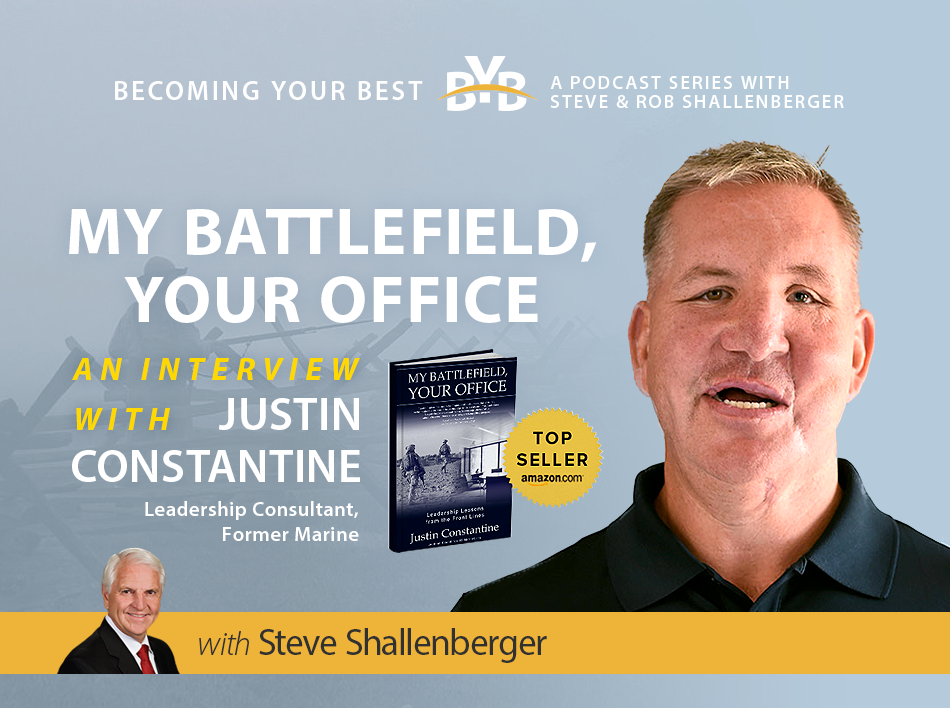
My Battlefield, Your Office | An Interview with Justin Constantine
Every year, millions of managers and supervisors get promoted into management positions without learning how to successfully lead a team. As a result, many of them find themselves at the top of the corporate ladder while lacking the training to lead. Justin Constantine wants to change that. As a Marine officer, Justin volunteered for deployment to Iraq in 2006, and served as a Civil Affairs Team Leader while attached to an infantry battalion. While on a routine combat patrol, Justin was shot in the head by a sniper. Although the original prognosis was that he had been killed in action, Justin survived. Through teamwork and a positive mental attitude, he has had quite a successful recovery. Justin is a great example of living the 12 principles of Highly Successful Leaders, particularly of doing WHAT MATTERS MOST and LIVING THE GOLDEN RULE and the vital role they play in being successful as a leader. He applies his incredible story of overcoming adversity to every level of an organization, and all audiences to move beyond the challenges they are facing in their own lives. In this episode, you will… Discover the importance of getting other people involved in your life Learn that you need to regularly set aside space to identify how you want to spend your time Learn your number one priority as a leader Realize the power of leading from the front [Tweet ""When you are leading from the front in your personal life it means you are being proactive." Justin Constantine"] SUBSCRIBE TO THE PODCAST EPISODE RESOURCES JustinConstantine.com My Battlefield, Your Office Get the 12 Principles Becoming Your Best Book Breakthrough Leadership Conference Becoming Your Best Website Becoming Your Best Podcast Becoming Your Best Blog Becoming Your Best iTunes Hosted on Acast. See acast.com/privacy for more information.
How to Deal with Difficult Situations and People
Working with people can be challenging. Sometimes conflict can happen. Or sometimes people are simply falling short on their potential. This episode is designed to help you navigate those situations as a leader with a focus on helping people truly become their best. This episode is about leadership. Leadership is a game changer. It's what makes a difference in the world. The five things we will go over in this episode are powerful things that help leader lead relationships to a better place. To lift, inspire, and build others. And... to deal with any situation, whether simple, complex, emotional, or high risk. In this episode, you will… Discover the 5 things leaders can do to MAKE A DIFFERENCE FOR GOOD when working with others Learn how three simple words can transform the way you get feedback from people Learn the two sides of the communication coin Realize the importance of your strategic rhythm [Tweet ""A leader helps people get to a better place." Steve Shallenberger"] SUBSCRIBE TO THE PODCAST EPISODE RESOURCES Get the 12 Principles Becoming Your Best Book Breakthrough Leadership Conference Becoming Your Best Website Becoming Your Best Podcast Becoming Your Best Blog Becoming Your Best iTunes Hosted on Acast. See acast.com/privacy for more information.
The Importance of Leading With A Vision
Do you want to create a team culture by design or by default? A culture by design only happens when you have a clear, compelling vision in place. A clear vision is what drives leadership and action in an intentional direction. But have you taken the time to create a vision for your team? ...your family? ....yourself? In this episode we will walk you through the process for creating a compelling vision in all three areas of team, family, and personal. Leading with a vision is Principle #2 of the 12 Principles of Highly Successful Leaders and it's one of the most important because without a clear vision your efforts can quickly lead you off track or be diluted from focusing in too many directions. In this episode, you will… Discover why a clear vision is a critical piece of the puzzle for creating team alignment Learn why creating visions for your team, family, and yourself is essential Learn the four question process for creating a vision that creates buy-in from your team Realize that a personal vision is the seed of your legacy [Tweet "Having a clear vision is characteristic of highly successful leaders we’ve seen over and over again."] SUBSCRIBE TO THE PODCAST EPISODE RESOURCES Get the 12 Principles Becoming Your Best Book Breakthrough Leadership Conference Becoming Your Best Website Becoming Your Best Podcast Becoming Your Best Blog Becoming Your Best iTunes Hosted on Acast. See acast.com/privacy for more information.
The Passion of Leadership | An Interview with Joshua Spodek
If you are going to become a good pianist it takes practice. If you want to be a good athlete it takes practice. The same goes for becoming a good leader. Joshua Spodek earned such praise as “Best and Brightest” (Esquire Magazine’s Genius Issue), “Astrophysicist turned new media whiz” (NBC), and “Rocket Scientist” (Forbes Magazine and ABC News) with success in such diverse fields as science, invention, entrepreneurship, art, leadership, coaching, and education. Joshua started his first venture over twenty years ago and has led, coached, taught, and developed courses since. Before then he helped build an x-ray observational satellite into space. You will find no one more passionate or effective at finding, expanding, and developing your leadership potential. Every major media source has covered him. In this episode of the podcast, we talk to him about the important leadership principles covered in his new book Leadership Step-by-Step. In this episode, you will… Hear how Joshua handled being a "science guy" in business school including the embarrassment of not know what "gross" and "net" meant Learn how make meaningful connections with those around you Understand that great leaders aren’t born with a ‘leadership gene’; great leaders develop the necessary skills and gain confidence through practice and hard work Realize that most of leadership is supporting people on the team so they aren’t distracted from the work they need to be doing [Tweet ""When teaching someone how to play piano you don’t tell them musical theory, you teach them to play the scales." - Joshua Spodek"] SUBSCRIBE TO THE PODCAST EPISODE RESOURCES SpodekAcademy.com JoshuaSpodek.com Leadership Step-By-Step by Joshua Spodek Becoming Your Best Website Becoming Your Best Podcast Becoming Your Best Blog Becoming Your Best iTunes Hosted on Acast. See acast.com/privacy for more information.
Be True to Character
There is no silver bullet for becoming a highly successful leader. In order to be a highly successful leader you need to embody several principles, the foundational one Being True to Character. In this episode of the podcast, we will look at what it means to be true to character and explore how you can start developing character within yourself and those around you. The foundation on personal and organization character must be strong in order for you and your organization to thrive. Join us in this episode as we look at the first of the 12 principles of highly successful leaders. In this episode, you will… Realize the importance of choosing the correct principles Learn how to develop your character and lead others to do the same Understand that the concequences that come from practicing the correct principles are predictable Realize the power of consistently creating positive consequences Understand the importance of the little things [Tweet ""If you fail or faulter with character it’s virtually impossible to develop the trust needed to be successful." Steve Shallenberger"] SUBSCRIBE TO THE PODCAST EPISODE RESOURCES Tis the Set Of The Sails poem by Ella Wheeler Wilcox Becoming Your Best Website Becoming Your Best Podcast Becoming Your Best Blog Becoming Your Best iTunes Hosted on Acast. See acast.com/privacy for more information.

How To Have Your Best Year
Are you ready to make 2017 your best year yet? Now is the time to set your plan to create a “Becoming Your Best” and “Best of Class” year. It's through this type of planning that you will achieve YOUR personal and professional best. You are starting out with a fresh slate and will never have this year again. On this episode of the podcast, I'll share five tools that I use each and every year. In this episode, you will... Learn how to make this year your best and achieve your dreams Hear about 5 powerful tools that will allow you to make this your best year of your life Understand how the 5 Hour You Rule will turbo charge your engine Realize the power of mantras for increasing your motivation Discover the importance of scheduling your priorities... [Tweet "“If you set up a plan you have a chance to achieve personal greatness.” – Steve Shallenberger"] SUBSCRIBE TO THE PODCAST EPISODE RESOURCES Becoming Your Best Planner Breakthrough Leadership Conference Becoming Your Best Website Becoming Your Best Podcast Becoming Your Best Blog Becoming Your Best iTunes Hosted on Acast. See acast.com/privacy for more information.

How to Prevent Child Abuse | A Conversation with Kit Summer
Child Sexual Abuse is happening at an alarming rate in our country. In this episode of the podcast, Kit Summer an extremely successful businessman joins us to talk about his experience with sexual abuse as a child. Kit is now on a mission to help prevent child abuse from happening. Kit shares some the the latest statistics and gives parents key strategies for communicating with their children. Abuse can leave long lasting trauma, it's important that every caring adult be vigilant in stopping and preventing the abuse of children. In this episode, you will… Realize that the best way to help a younger child prevent abuse is to have them listen to their "uh-oh" feelings Learn the importance of talking to your child about abuse at an early age. Discover the ways to communicate with your children to help prevent abuse Realize that if you are an abuser you can get help Learn the importance of getting treatment if you've been abused [Tweet ""If you are sexually abused you cannot run from the effects. You need to get treatment." - Kit Summer"] SUBSCRIBE TO THE PODCAST EPISODE RESOURCES Prevent Child Abuse Utah Male Survivor Becoming Your Best Website Becoming Your Best Podcast Becoming Your Best Blog Becoming Your Best iTunes Hosted on Acast. See acast.com/privacy for more information.
HOPE | Leadership Lessons from the Life of Jesus
Christmas is an undeniably special time of year. Christmas is naturally a time that invites the spirit of becoming your best. The spirit of hope, encouragement, love, and kindness that brings greater happiness, peace, and prosperity to all. Noticing the needs of others and reaching out to them is exactly what makes this time of year so special. One of the greatest gift of this season is the leadership example of Jesus. We are reminded that great leaders produce great results, and in this episode of the podcast I'll share some examples of the leadership that Jesus displayed. In this episode, you will… Realize that leadership is not defined by position, power, or wealth Learn 10 principles from Jesus that will help you to make a difference every day as a great leader in life Discover the importance of staying consistent [Tweet "“Christmas is a time and space that invites the spirit of becoming your best.” - Steve Shallenberger"] SUBSCRIBE TO THE PODCAST EPISODE RESOURCES Becoming Your Best Website Becoming Your Best Podcast Becoming Your Best Blog Becoming Your Best iTunes Hosted on Acast. See acast.com/privacy for more information.
Organizing Your Keys
Have you ever lost your keys? A simple misplaced key, wallet, or phone can send you scrambling through the house causing frustration, stress, and potentially even make you late for that important meeting. Why not eliminate that strain with a few simple steps? Steve shares a personal experience that has helped free up time and mental energy for more productive uses. In this episode, you will… Learn why it’s important to eliminate the little stressors Learn to better manage your time by thinking ahead Discover the four steps to organizing your keys [Tweet "“Learn to better manage your time by thinking ahead.” – Steve Shallenberger"] SUBSCRIBE TO THE PODCAST EPISODE RESOURCES Tile Becoming Your Best Website Becoming Your Best Podcast Becoming Your Best Blog Becoming Your Best iTunes Hosted on Acast. See acast.com/privacy for more information.
Save Your Business Rescue Your Life | A Conversation with Stacy Tuschl
Is your business worth saving? That’s the question Stacy Tuschl will help you find the answer to in this episode of the podcast. Stacy is an Entrepreneur and Business Performance Strategist. She started her first business in her parents’ backyard at the age of 18 and turned that company into a 7-figure business. Now, she is here to help entrepreneur pull themselves out of ruts with her Business Rescue Roadmap. On this episode we talk with her about the challenges of turning your passion into a business. In this episode, you will… Learn how you can build upon your passion Realize how you can be an internal entrepreneur while being employed Discover why you need to evaluate the responsibilities you want to take on before you take the leap to running your own business Hear how Stacy got her start teaching dance in her parent’s backyard Understand the importance of being consistent and authentic in order to repel the wrong people [Tweet "“You need to be uncomfortable. That’s where growth happens” – Stacy Tuschl"] SUBSCRIBE TO THE PODCAST EPISODE RESOURCES Get Focused Academy StacyTuschl.com Is Your Business Worth Saving? By Stacy Tuschl Academy of Performing Arts Business Rescue Roadmap Level Up Community Chatlight.com Trello Asana Slack Edgar Becoming Your Best Website Becoming Your Best Podcast Becoming Your Best Blog Becoming Your Best iTunes Hosted on Acast. See acast.com/privacy for more information.
Step into the World of Data with Dr. John H.Johnson
An expert with all things having to do with data, our guest for today’s episode is the President, CEO, and Co-Founder of Edgeworth Economics, professional economist and an internationally renowned speaker, consultant and author who helps consumers and some of the world’s largest companies understand how to interpret data, Dr. John H. Johnson. Dr. Johnson is here to discuss about how data is used for businesses and entrepreneurs. Getting the right data can lead you where you need to be. In this episode, you will… Discover how John started his career Find out about the people who can be your influencer Get to know the importance being open to learning Step into the world of data with Everydata Hear tips and advises from John on how to use properly data for entrepreneurs “I make sure I’m not acting out on my anecdotal information, I back it up with data.” – Dr…. CLICK TO TWEET SUBSCRIBE TO THE PODCAST EPISODE RESOURCES Becoming Your Best Website Becoming Your Best Podcast Becoming Your Best Blog Becoming Your Best iTunes Subscribe on iTunes Dr. John H. Johnson Hosted on Acast. See acast.com/privacy for more information.
How to Handle Personal Loss | Jill Thomas's Inspiring Story
Today’s episode will be a little different. We’ll talk about Jill’s story, an inspiring story we’d like to share. Jill Thomas is an amazing photographer, a mom and a person from an incredible family. Jill lost her 21-month old daughter, Penny. This tragic experience taught Jill many lessons in life. Losing someone will definitely change a person but Jill believes that you always have a choice. After experiencing tragic events in your life, you have an option to either stay in the state of suffering, to go back to your old life or move on to a new place where you can create new experiences. Jill’s story will remind us about the importance of making memories. In this episode, you will… Hear Jill’s inspiring story Find out how to overcome life’s difficult situation Learn how making choices impacts your overall life Discover how Jill moved on from losing her daughter Be reminded that all parts of our life are meant to be experienced “All parts of our life are meant to be experienced.” – Jill Thomas CLICK TO TWEET Hosted on Acast. See acast.com/privacy for more information.
The Strategic Rhythm: The Positive Force That Leads You to the Top!
How many of us would like to have peace, happiness, and joy in our lives? My guess is that all of us want these things, but the concept of achieving them can be elusive. I’d like to help us accomplish peace, happiness, and joy with a process called strategic rhythm. A rhythm is a positive force that we get into in our own lives. It’s built upon the principles of becoming your best. We’ll discuss: How the 12 principles come together to unleash excellence The multiple levels of strategic rhythm Defining your core values and standards The TIG: Totally Inspirational Goal General Goals VS Smart Goals For the graphics that go with this podcast, visit the shownotes at BecomingYourBest.com/056. “These 12 Principles come together to create a magic.” – Steve Shallenberger CLICK TO TWEET SUBSCRIBE TO THE PODCAST EPISODE RESOURCES Becoming Your Best Website Becoming Your Best Podcast Becoming Your Best Blog Becoming Your Best iTunes Subscribe on iTunes Breakthrough Leadership Conference: 12 Principle of Highly successful Leaders Entrepreneur Success Bootcamp Hosted on Acast. See acast.com/privacy for more information.
The Freedom and Power of Being Accountable!
Have you ever talked to a customer service representative who refused to take responsibility over a mistake? How did that make you feel about the company? Accountability has a huge influence on trust and who we decide to do work with. Is there a culture of responsibility and accountability in your company? So often we get stuck in a cycle of finger pointing. The principle of being accountable is such an important element of becoming your best. We discuss: What accountability REALLY means How accountability affects you in business and at home Three things we can do to build more accountability A 21-day challenge that can change the way you think “When there’s accountability, there’s a higher trust.” – Steve Shallenberger CLICK TO TWEET SUBSCRIBE TO THE PODCAST EPISODE RESOURCES Becoming Your Best Website Becoming Your Best Podcast Becoming Your Best Blog Becoming Your Best iTunes Subscribe on iTunes Breakthrough Leadership Conference: 12 Principle of Highly successful Leaders Entrepreneur Success Bootcamp How to Win Friends and Influence People Hosted on Acast. See acast.com/privacy for more information.
Student of the World: The Knowledge that Separates the Best from the Rest
How can having the right knowledge help you accomplish your dreams faster? Maybe you want to be a better parent or spouse. Maybe you want to start your own business or maybe you want to grow the business you already have. It all starts with a mindset. Do you really want it? Are you willing to put in the effort that it takes? We’ll discuss: Habits that set apart the most successful from the rest Why successful leaders are readers As parents, what you can do with your own children to get them to read Why you should invest 3% of your income in yourself How to vet your coach “Great leaders and high achievers are readers.”- Rob Shallenberger CLICK TO TWEET SUBSCRIBE TO THE PODCAST EPISODE RESOURCES Becoming Your Best Website Becoming Your Best Podcast Becoming Your Best Blog Becoming Your Best iTunes Subscribe on iTunes Breakthrough Leadership Conference: 12 Principle of Highly successful Leaders Entrepreneur Success Bootcamp How to Win Friends and Influence People Hosted on Acast. See acast.com/privacy for more information.
The ONE Rule that brings Happiness and Success!
After visiting numerous different organizations in the past few weeks, I’ve once again seen the impact that the 12 Principles of Highly Successful Leaders can have on both the personal and professional life! Vision, planning, and prioritizing your time, are key to your business success, however, they’re only one piece of the success puzzle. If you don’t create a world-class customer experience or treat people right, your plan will fall short of what it could have been. What is the common denominator of the “best in class” companies? They know how to focus on creating a world-class customer experience and they treat other people like gold. In this podcast, you’ll discover: How to be “a Duck” How to discover personal happiness by adopting an outward mindset. Prioritizing the customer experience Loyal verses satisfied customers. Owning an issue Go out there this week and have a great and fabulous week! “The more that we serve others, the more we tend to find ourselves.” – Rob Shallenberger CLICK TO TWEET SUBSCRIBE TO THE PODCAST EPISODE RESOURCES Becoming Your Best Website Becoming Your Best Podcast Becoming Your Best Blog Becoming Your Best iTunes Subscribe on iTunes Hosted on Acast. See acast.com/privacy for more information.
Top Sales Tips from the Master: Glenn Mattson
What separates high achievers from the rest? They never give up. “Failure is not a failure. Failure is nothing more than an outcome that you didn’t want to happen during your planning process,” says Glenn Mattson, president of Sandler Training in Long Island. Glenn is a world class professional in sales and sales management. He is a seasoned veteran of the selling profession, and his office consistently ranks in the top 1% of trainers worldwide. He shares with us his wisdom on sales, sales management, and business. Listen to learn: How he deals with setbacks His recommendations to help salespeople be more successful Your Black Wolf vs. Your White Wolf The top three challenges sales managers face and how to conquer them The top three challenges holding sales people from achieving their best You can contact Sandler Training directly at: 631-726-3537 or learn more atMattson.Sandler.com. “Failure is a lesson. It teaches you what to do and what not to do.” – Glenn Mattson CLICK TO TWEET SUBSCRIBE TO THE PODCAST EPISODE RESOURCES Becoming Your Best Website Becoming Your Best Podcast Becoming Your Best Blog Becoming Your Best iTunes Subscribe on iTunes Mattson.Sandler.com Sandler Training on LinkedIn Hosted on Acast. See acast.com/privacy for more information.
The Differentiating Power of Sales
Are you looking to grow your sales knowledge and take your business to the next level? It isn’t enough to know the basics. You have to stay curious. At the end of the day, the real differentiation starts with, you, the salesperson. Author and sales guru, Andy Paul, shares with us the critical elements of being successful at sales. Andy Paul is a best-selling author, podcast host, and international sales guru. His books Zero Time Selling and Amp up Your Sales are read by salespeople, marketing managers, and CEO’s alike. We’ll Discuss: Providing value in every step of the sales process Disqualifying prospects MILT – what’s it mean and why it is so important Dealing with career setbacks Finding a company with the “right fit” for you You can learn more from Andy on his podcast, Accelerate! Sales. Profits. Growth. “We can work to develop our talents and make magical things” – Rob Shallenberger CLICK TO TWEET SUBSCRIBE TO THE PODCAST EPISODE RESOURCES Becoming Your Best Website Becoming Your Best Podcast Becoming Your Best Blog Becoming Your Best iTunes Subscribe on iTunes Andy Paul Accelerate! Sales. Profits. Growth on iTunes Zero Time Selling on Amazon Amp up Your Sales on Amazon Hosted on Acast. See acast.com/privacy for more information.
How to Use Your Creativity to Bless Others and Succeed! [A Free Gift For You and Your Family Included!]
We all have dreams, and we can work to develop our talents and make magical things. When you believe in the goodness of people and have appreciation for God, anything is possible. No one exemplifies this more than my long-time friend, Kevin Peay. Kevin is a talented artist, singer, composer, and businessman whom I’ve known for 35 years. He shares with us his inspiration, his advice to others with a dream, and some of his best teaching experiences over the past 35 years. We’ll dig into: The source of his inspiration Finding and harnessing your gifts The story behind Power Tunes and How people are still using Power Tunes today We have a special gift for all of our listeners. For a limited time, visit:http://store.becomingyourbest.com/ and use the code: powertunes (all lowercase) to download a free mp3 of Power Tunes. “We can work to develop our talents and make magical things” – Rob Shallenberger CLICK TO TWEET SUBSCRIBE TO THE PODCAST EPISODE RESOURCES Becoming Your Best Website Becoming Your Best Podcast Becoming Your Best Blog Becoming Your Best iTunes Subscribe on iTunes Power Tunes Hardcover Book Power Tales Hosted on Acast. See acast.com/privacy for more information.
Growing Your Business and Your Dreams!
Do you put your business’s marketing campaigns on the backburner because more important things come up? What if we told you how much money you were leaving on the table by not putting marketing at the top of your list? Ajax Union founder and CEO, Joe Apfelbaum, joins us today to talk about just that – the power of marketing and how integral it is to growing your business. Tune in to get Joe’s three basic steps for building a social media campaign, hear about his upcoming book, From Average Joe to CEO, and get insights on how to build a successful business based on things you’re already doing to provide others with value. In this episode, you will… Learn how to build your brand using digital marketing Discover how important a cohesive marketing strategy is for building your brand Get insights on leveraging the competition to grow your business Understand how you, too, can transform your business from transactional to relationship-based Realize that marketing is all about testing “Become the best at what you’re doing.” – Joe Apfelbaum CLICK TO TWEET SUBSCRIBE TO THE PODCAST EPISODE RESOURCES Becoming Your Best Website Becoming Your Best Podcast Becoming Your Best Blog Becoming Your Best iTunes Joe Apfelbaum LinkedIn Joe Apfelbaum Website Joe Apfelbaum Twitter @JoeApfelbaum Joe Apfelbaum Instagram Joe Apfelbaum Facebook Ajax Union Digital Marketing Agency Hosted on Acast. See acast.com/privacy for more information.

What Made Me Who I Am! | A Heart-to-Heart with Bernie Swain
Do you find yourself at a turning point? A fork in the roads where your only choices are to either stay on your current trajectory or pursue a passion you can’t yet back with experience or expertise? Lucky for you, passion wins out over talent every day of the week, because having a natural talent is almost inconsequential if you’re not passionate about using it to achieve and make a difference. Bernie Swain joins us today to talk about his leap from steady career to entrepreneurship, how it almost failed, and what he did to turn his failing project into the thriving business we know today as The Washington Speakers Bureau. Tune in! In this episode, you will… Learn why passion is more valuable than talent Realize how important it is to discover your passion, and then incorporate it into your career Be reminded that relationships are integral to development, because success and accomplishment don’t happen in a vacuum Understand that people aren’t born great, but great qualities and traits can be developed Discover that a willingness to learn from others makes you stronger, wiser, and positions you for success “Our influences and defining moments add up to who we are.” – Bernie Swain CLICK TO TWEET SUBSCRIBE TO THE PODCAST EPISODE RESOURCES Becoming Your Best Website Becoming Your Best Podcast Becoming Your Best Blog Becoming Your Best iTunes The Washington Speakers Bureau What Made Me Who I Am by Bernie Swan Hosted on Acast. See acast.com/privacy for more information.
Creating a Vibrant Work Culture with Tore Steen
Are you asking yourself questions like, “What should I be doing with my life and time?” If you take stock, discover your passion, focus your future efforts, and work hard, you’re sure to find a niche you’ll succeed in. Most people succeed best at the thing they have a passion for, but it takes more than passion and a vision to grow a successful company. There’s no substitute for hard work, especially in the beginning of a new venture, but if you do your homework and really prepare, you’ll be ahead of the game. As an entrepreneur, it can be difficult to step back once you’ve developed the habit of working long days to develop your business, and it’s all too easy to continue trying to do everything ourselves. If you can learn how to rely on the talents of others to help your company grow, it will help you both achieve success and a healthy work-life balance more quickly. Tune in for insights on work-life balance, putting in the hours, and pursuing your passions, with Tore Steen! In this episode, you will… Discover how to allow others to help you lead Learn how to prepare yourself for success while taking risks Understand that there’s no substitute for hard work Realize that open communication can help you and your company grow Be reminded that your passion will always shine through “The most effective leaders have a way to bring out the best in people.” – Steve Shallenberger CLICK TO TWEET SUBSCRIBE TO THE PODCAST EPISODE RESOURCES Becoming Your Best Website Becoming Your Best Podcast Becoming Your Best Blog Becoming Your Best iTunes 1033 Foundation of Utah Excellence by Thomas J. Peters and Robert H. Waterman, Jr. [email protected] Hosted on Acast. See acast.com/privacy for more information.