Beauty & Bone Podcast
Exploring, from a real, raw, lived place, how it feels to live on this beautiful, tattered planet right now.
with Layla O'Mara
Show overview
Beauty & Bone Podcast has been publishing since 2023, and across the 3 years since has built a catalogue of 20 episodes. That works out to roughly 15 hours of audio in total. Releases follow a roughly quarterly cadence.
Episodes typically run thirty-five to sixty minutes — most land between 13 min and 1h 1m — with run-times ranging widely across the catalogue. None of the episodes are flagged explicit by the publisher. It is catalogued as a EN-language Health & Fitness show.
There hasn’t been a new episode in the last ninety days; the most recent episode landed 6 months ago. The busiest year was 2024, with 10 episodes published. Published by with Layla O'Mara.
From the publisher
Exploring a radically new way of mothering both ourselves and others, and the impact of that on how we manifest in the world. I have conversations with women doing this radical work - women who have ✺ opened my mind ✺ blown wide my heart ✺ pivoted how I see and navigate the world Pull up a chair and join us. laylaomara.substack.com
Latest Episodes
Imperfect Bodies : A conversation with Ali Isaac
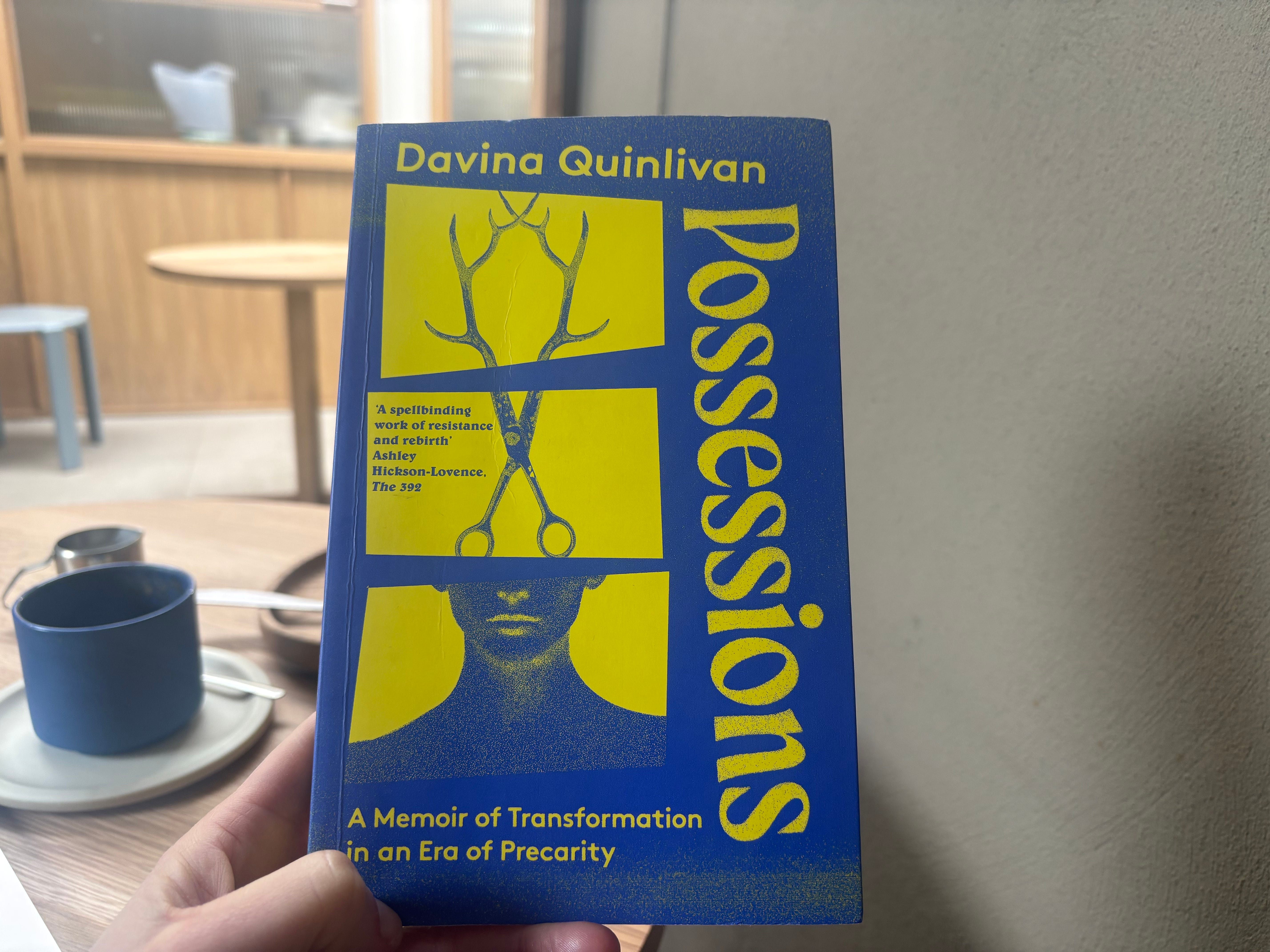
Possessions : A Conversation with Davina Quinlivan
Welcome to part one of BODY WORK - a series of conversations and workshops on the body - how we write it, listen to it, use it, create from it. To learn more about upcoming episodes and workshops, check out my post on my homepage.‘Before others tried to change me, I tried to change myself. Instinctively, I developed a habit, perfecting the art of self-imposed conditioning, preparation for the more violent and pernicious forms of possession that were to come. And they were coming, thick and fast. All I had to do was wait.’I recently had the pleasure of speaking with Davina Quinlivan about her new memoir Possessions: A Memoir of Transformation in an Era of Precarity. It is a wild, genre-bending narrative that charts Quinlivan’s ultimate rejection of ‘passing for something else’ as she reclaims her mind and body.After two decades of academic research and undergraduate teaching, Davina and the world of university education, were approaching crisis; teaching online, ticking boxes for other people’s diversity criteria, stuck, like so many others, in a cycle of fixed term contracts. Yet as a child of Anglo-Burmese parents, growing up in West London, academia had promised a way out. Something better.‘I was so thirsty for the prize of academia, so thrilled to defy the fates, that I suffocated my own history and culture, my Burmese heritage and my mother’s language. By doing this, I also possessed my ancestors and made them dance to the tune of Imperialism. How could I be so wrong?’Possessions is her powerful, compelling story of fragmenting and rebuilding from the inside out, one that is filled with the voices of both Burma and Southall. Haunted by the ghosts of colonialism, Quinlivan beautifully lays bare our blind spots as we grapple with decolonisation and the hypocrisies within our institutions of education.Which possessions came before me, drenching my bones? Which ones did I accept, and which ones did I resist?In this conversation we explore:𓇸 Trying to make our bodies fit into pre-made, preconceived moulds𓇸 Imaginative memoir and how it was a necessary way of exploring on the page her intersecting identities and lived experience𓇸 Portals, thresholds, magical creatures, goblin ancestors and not having line breaks between the living and the dead, the ancient and the new, body and soul. 𓇸 The changing face of higher level education system in the UK𓇸 The disembodiment that so often takes place in an online working environment𓇸 Ideas around shape-shifting, labour, productivity and motherhood𓇸 Ideas around presence and the value of witnessing, deep listening and community and connectionI’d love to hear your thoughts on our conversation - What sparked for you? What did you want to know more about? What peaked your interest?About DavinaDavina Quinlivan is a research fellow at the Department of English and Creative Writing at the University of Exeter. For several years she has run F: For Flanerie, a series of writing and film seminars at The Freud Museum. She is also Artistic Lead with Paper Nations, an award-winning creative writing incubator funded by Arts Council England. Her writing has appeared widely, and she is the author of Shalimar (Little Toller).Possessions is out now.If you’d like to follow along with this series of conversations and posts on writing the body, please do subscribe to my newsletter here:le grá,Layla xx This is a public episode. If you'd like to discuss this with other subscribers or get access to bonus episodes, visit laylaomara.substack.com/subscribe
water sounds
𓇸 This is a beauty & bone long read article. If you’d like to subscribe to access, plus join us for our early morning writing sessions, and upcoming MULCH meeting in which we’ll start to feel into what the landscape of 2026 might look like for each of us, you can upgrade to paid here:Ok, let’s begin !Hello friends,Welcome back to the ELEMENT SESSIONS. For those of you new here, the Element Sessions are series of slow, seasonal check-ins throughout the year, using as a framework the Five Elements as described in Taoist practices and Chinese Medicine.The Five Elements (Water, Fire, Metal, Wood & Earth) are all energetic expressions of pure life force. We have all of these five elements within us, and they also vibrate throughout the natural world, they are what makes up life. Each element is at its strongest at a particular time of the year - Earth in Late Summer, Metal in Autumn, Water in Winter, Wood in Spring and Fire in the Summer.When I’m not writing or mothering I work as a Five Element acupuncturist, and so it felt like a simple natural step to create a series of slow, seasonal explorations of each of these elements, weaving in some creative writing prompts. There is, I feel, great power in exploring each of these aspects of ourselves in the time of year it is at its height.Last year we explored each of the Elements through a series of podcast conversations, live calls and journalling prompts (links to our WATER session are below, including a wonderful conversation with Easkey Britton). This year, as we continue our exploration, I felt drawn to using sound and the body to tap into the elements a little more.In this short video on the WATER element and WINTER we:𖥸 Explore what the qualities of this time of year are𖥸 Use a simple sound and movement to wake up the Water meridians. In Taoist practice each of the organ pairings for each element have a particular sound associated with them, designed to vibrate at a particular frequency to stimulate them, get them moving, wake them up.𖥸 Finally, I’d highly recommend also taking a listen to the conversation I had with writer, social ecologist and big wave surfer Easkey Britton about the power of water in our lives. Our fascinating initial conversation can be listened to here:And you can also listen to this wonderful practice that Easkey shared with us around grief and loss and the holding and healing potential of water:These are conversations that have stayed with me since I had them over a year ago now, I’d love to hear how they land for you?Layla x This is a public episode. If you'd like to discuss this with other subscribers or get access to bonus episodes, visit laylaomara.substack.com/subscribe
Conversation with Caro Giles
Earlier this week myself and Caro Giles sat down to have a conversation about her wonderful new memoir Unschooled: The story of a family that doesn’t fit in. We could have spoken for another hour on all she touches on in it, we had so much to say, but I think we managed to cover some really fascinating topics in the hour we did have together !Unschooled is a book about trying to advocate for your children’s needs in an education system that does not serve them and describes the often Kafkaesque bureaucracy Caro is forced to navigate to access basic supports for her children, two of whom have a diagnosis of autism and can’t access the traditional school system.It is a book about not being heard - as a woman, a mother, a carer - and how sometimes it is hard to work out how these roles can fit together.It is also a love story - written to her children and to her partner who she met after seven years single parenting and feeling very alone.And it is a book advocating for thinking outside the box, for being a little bit wild, for dreaming big and, above all listening and being kind.We spoke about so much during this conversation -𓇸 what it means to fit in and whether that is always the right thing𓇸 how education does not always have to equals the classroom𓇸 the impact of being forced to conform to a rigid educational system has had on Caro’s girls, including masking𓇸 what it means to often feel ‘too much’ and be asked by society, health care professionals and more to stay small, to play a very specific role𓇸 the split we often feel as women between the mother and the woman𓇸 how the educational system needs to be taken apart and re built to support the needs and lives of modern day children, and the carers and parents who support them𓇸 the importance of creative practice for Caro - a way of saying this happened, I was here. Of being seen and expressing her anger and drive𓇸 what it means to be kind𓇸 the need for us all to find a little bit more wildand so much more.I loved this conversation and I’m sure it will lead to more - we were stamping out tangents left and right!Here’s a little more on Unschooled and on Caro Unschooled, written by a trained teacher with years of experience, exposes the governmental and societal faults which paint all children into one corner and fails to cater for those who cannot fit in, but have much to give. Unschooled has much to say about an education system on its knees but it has hope at its heart – that it’s possible to live and even, with much effort, thrive outside the system. Finally, Caro realises that to be Unschooled can mean also to be spontaneous, natural and unrestrained, a way to reclaim her identity as a woman.As Dr Sharon Blackie recently wrote of the book:Unschooled is highly recommended, whether you’re a mother or whether, like me, you’re just obsessed with the many shades of women’s experience and all the ways in which we struggle to understand who we areCaro Giles lives in Northumberland. In 2021 she won the inaugural BBC Countryfile New Writer Award. She is the author of Twelve Moons (HarperNorth) and writes a monthly column for Psychologies Magazine and her Substack Open in the Middle. She writes of the everyday act of mothering - of caring & advocating for her children with unassuming, humble, raw grace.The book is available to buy or order from all good booksellers now.Thanks for listening to our conversation - This post is public so feel free to share it. This is a public episode. If you'd like to discuss this with other subscribers or get access to bonus episodes, visit laylaomara.substack.com/subscribe

S1 Ep 6Beauty & Bone | The Element Sessions | Episode 6
“Fire calls us to reveal our true nature, to open to the unbearable beauty of creation, to riskthe heartbreak of loss in order to love the world more deeply.”- Lorie Eve DecharHello friends,I’m really looking forward to sharing this episode of the Element Sessions with you. As we step across into the summer season we are exploring the FIRE element in Chinese medicine. Last week I shared a Deep Dive into the FIRE element which you can catch up on using the link at the end of this post, plus as a paid subscriber you are very welcome to join us for our live journalling and embodiment call next Monday 26 May between 10 & 11am BST. For more info, check out the membership hub on my homepage.When I was considering who to have a conversation with for this episode, The Harmony Principle’s Claire Dabreo came straight to mind - she speaks so eloquently and in such a grounded, practical way about how all of the elements show up in our lives, but in particular she has spoken a lot about what she calls Love Activism, which struck me as a particularly FIRE kind of activity … !Here’s a little about Claire:Claire Dabreo is a Five Element acupuncturist with practices in both London and the Isle of Arran. In 2020, she founded The Harmony Principle —a platform designed to help individuals align with the energy of the seasons, harness the wisdom of nature’s Creative Cycle, and support practitioners across all healing modalities in deepening their connection to nature, health, and the healing journey.You can follow Claire @theharmonyprinciple and @thelondonacupuncturist on instagram and Facebook and sign up to her newsletter via her website www.theharmonyprinciple.com, as well as finding out more about her Autumn / Metal immersion retreat she is running this October.During our conversation I wanted to hear how Claire approached this season of the year both herself and with her clients, as well as digging deep and exploring how, when there is so much darkness in the world, can we keep our own inner fires burning? I also wanted to ask her what role does JOY play in activism?I found so much food for thought in this episode, most particularly for me I think around how the FIRE element relates to maturity and to this midlife phase of life I am in right now, as well as the simple yet eye-opening idea that this is the season of BEING rather than DOING !Below is a summary of our chat, plus some of the tips Claire shared with us for aligning us to this time of year, and a link to an earlier conversation with our mentor Gerad Kite which I mention during the call.Highlights include:𓇸 Being v’s Doing: How the summer energy should be about BEING rather than DOING and the need to give ourselves permission to tend to our social batteries𓇸 Pleasure & Joy: The differences between pleasure (fleeting, often distraction-based, dopamine related) and joy (spontaneous, heart-centred, collective)𓇸 Navigating heartbreak: How we can learn to allow heartbreak and difficult emotions as normal, transformative experiences that connect us more deeply to ourselves and others𓇸 Joy as a propulsive force: Its importance as a transformative energy in dark times𓇸 Inner and Outer Connection: Cultivating local, in-person community as an antidote to digital overload—nourishing micro-connections and supporting one another in tangible ways.𓇸 Fire, Maturity & Midlife: The parallels between the fire element’s maturity and the empowerment of midlife women, how authenticity, boundaries, and “full bloom” can come with age.𓇸 Practical Tools for Summer Alignment: Sunlight, essential oils on heart-centred acupuncture points (see tips below), honest assessment of social needs and even writing yourself a heartfelt love letter!Tips and links mentioned in the call :1. Here is our Deep Dive into the FIRE element:2. I also mentioned this conversation with Master acupuncturist and mentor of both Claire’s and mine, Gerad Kite:3. Here are Claire’s tips for using acupressure and essential oils to help us align with this FIRE season :* Use essential oils like rose, ylang ylang, geranium or frankincense on a point called REN 17, also called ‘Sea of Qi,’ ‘Chest Centre’ or ‘Revealing the Heart’. A wonderful point to help clear anxiety or fear, settle any rising panic and gently send it back into the earth with love. Can help to ‘unbind the chest’, and open us to more easily access love and connection.To locate Ren 17: On the midline of the sternum, in a depression level with the junction of the 4th intercostal space and the sternum – start under the clavicle and count down the spaces between each rib, then move to the centre of the chest. On a man, it is parallel with the nipple line.With all essential oils Claire recommends diluting them with a carrier oil before using on acupoints, with these oils a max of 10% dilution is good.* On two points known as the Inner and Outer Frontier Gates you can use Jasmine oil, again at same dilution as above. Our Gates are two points that both enabl
Beauty & Bone | The Element Sessions | Episode 5
This episode of the Element Sessions podcast uses the WOOD Element as a jumping off point for a conversation around ANGER.In Chinese Medicine each of the Five Elements has an emotion connected to it, and for the WOOD element (which is also connected to the season of Spring that we are stepping into right now on this side of the globe) the emotion is ANGER.There is no emotion that does not have its place, and there are times when appropriate anger is a really important catalysing force. There is also, from a Chinese Medicine perspective, times when anger and frustration surface because we are out of balance or feeling blocked or prevented from moving forward in the way we need to.My good friend coach, doula and writer Jessie Harrold recently wrote a newsletter all about her own feelings of anger and how she was trying to deal with them and after reading it, I really wanted to dive even deeper and unpack a lot of what she touched on more.Jessie is a coach and doula who has been supporting women through radical life transformations and other rites of passage for over fifteen years. She works one-on-one with women and mothers, facilitates mentorship programs, women’s circles and rituals, and hosts retreats and nature-based experiences. Jessie is the author of Mothershift: Reclaiming Motherhood as a Rite of Passage (Shambhala 2024) and Project Body Love: my quest to love my body and the surprising truth I found instead. She is also the host of The Becoming Podcast. Jessie lives on the east coast of Canada where she mothers her two children, writes, and stewards the land.I wanted to chat with Jessie about why we might be feeling anger in our lives, where did she see it showing up for the clients she worked with, where might it be coming from, what might lie underneath the anger so many of us feel, how much of that anger should rightly be directed outwards at the over culture we live in, how much of that anger is masking other emotions such as grief, sadness, loss?Why is it taboo for women to be seen to be angry? How does shame fit into it all? How can we take the anger we feel and harness it for positive change, rather than destructive attack? What role might surrender play?We talk about all this and more in the hour we had together! I love the considered and grounded way Jessie approaches the topic and I came away from the conversation with so much food for thought.I’m really hoping this chat with open up a continued dialogue around the anger we feel as women - where it comes from, and where it should go - so please do join in the conversation with a comment in the box below.𖥸 Further reading ::I mention three books on the call. 1. Seven Necessary Sins for Women and Girls by Mona Eltahawy, 2. The Myth of Normal by Daniel Maté and Dr Gabor MatéMaté writes about how suppression of emotion very often has a somatic impact.3. Jessie’s latest book MotherShift, Reclaiming Motherhood as a Rite of Passage, which is a wonderful guide for new mothers navigating the cascade of identity change and transformation that is motherhood and in which Jessie explores how anger might manifest in these early years.If you’d like to listen back and read back over previous Element Sessions content, head HERE for all we’ve covered so far. Ok friends, I really hope you enjoy this conversation, and as I said I’d love to hear what it sparks up in you ! Share in the comments below.Layla xxbeauty & bone is a reader-supported publication. To receive new posts and support my work, consider becoming a free or paid subscriber. This is a public episode. If you'd like to discuss this with other subscribers or get access to bonus episodes, visit laylaomara.substack.com/subscribe

A map to our true selves
Hello friends and welcome to week 2 of our REST series. This week, I’m delighted to share with you a conversation I had recently with coach, mentor and writer Lauren Barber about Human Design. I wanted to share with you my experiences of discovering and integrating this powerful way of understanding our energy into my life, and have Lauren explain to us what Human Design is, how it works and how it can be useful for us in terms of being more easeful in our lives.It felt really appropriate to have this conversation during the REST series, because for me, understanding how to best use and align with my unique energy has been a gamechanger in terms of how rested I feel in my day to day life. I’m working with myself, rather than battling myself day to day. I don’t run myself into the ground any more doing what I feel I ‘should’. I am better at knowing what suits me, how to find flow. The relief in this has been enormous and has impacted my creativity, my relationships, my working life.Human Design was reminding me who I was before I had become so consumed by what I thought the world wanted me to be.- Lauren Barber -Here’s how Lauren describes Human Design:Human Design, to me, is a map of our true selves, I use it very much as a tool of remembrance, mirroring to us our innate qualities and gifts to enable us to operate in the world in our most magnetic and magical way.[…] On a more intellectual level, Human Design is known as the science of differentiation. It emphasises our uniqueness and how each of us are designed to show up and operate in the world in our own way. The system itself is a combination of Quantum Physics, Eastern and Western Astrology, the Chinese, I’Ching, The Kabbalah and the Hindu Chakra System.I really hope you enjoy this conversation. Let me know in the comments what has been sparked for you? Have you used Human Design in your life? Or what other systems and frameworks have helpful you feel more easeful in your creative life, your work, your day to day life? Do share, I’d love to know. To keep up to date with what I have coming up for January and February here at beauty & bone head to my Membership Hub.Layla x This is a public episode. If you'd like to discuss this with other subscribers or get access to bonus episodes, visit laylaomara.substack.com/subscribe
Water & Grief | A healing practice
Hello friends,The morning after the conversation I had with Easkey Britton about the power of WATER for the Element Sessions she emailed me to say that she had woken with a sense she wanted to share a little more with us all around the healing and holding power of water when it comes to grief and loss.She offered to share with us a practical embodiment practice, a water ritual, as a way to honour our loss and express our grief, a way to be with our heartbreak, which has been immense for us as a species this last year and personally for each of us in many different ways.And so a few days later we met again and recorded this beautiful offering. Easkey explores how our relationship with grief is closely associated with ebb, a sense of withdrawing inward, a feeling of emptiness, a sense of murkiness. How neither ebb nor grief are valued or allowed space in our society. How the process of grieving is one of making space for what wants to emerge.She speaks about water as a holding element. As a memory keeper. How so many world myths around loss and death and grief involve water, how today this continues in rituals such as the paddle out ceremonies of surfers and other ocean going people.She shares here a simple yet powerful way of creating one’s own water ritual, which can be supportive as a way of honouring a loved one, a loss within ourselves, a loss in our world and is also a way to enhance your connection with the water. This is a public episode. If you'd like to discuss this with other subscribers or get access to bonus episodes, visit laylaomara.substack.com/subscribe

Beauty & Bone | The Element Sessions | Episode 4
The Element Sessions Podcast | WATER with Dr Easkey BrittonI recorded this conversation with writer, big wave surfer & social ecologist Dr.Easkey Britton a number of weeks ago. I can honestly say that the time since I spoke with her has been different. I’ve engaged with the water around me in a different way, I’ve placed myself in and beside bodies of water more often, I’ve thought about my relationship to water, within myself and, rippling out, within the planet we call home, in a deeper, more present way. I am so excited to share this chat with you, and look forward to hearing what impact what we speak about has for you, too.I was speaking to Easkey for the fourth episode of the Element Sessions and we were exploring the Element of Water, which is connected in Chinese Medicine with the season of Winter, into which we are stepping across the threshold into here in Ireland right now. Next Friday I’ll be sharing our Deep Dive into the Water Element, but I can’t think of a better place to begin feeling into this Element than with an hour spent listening to Easkey speak about it’s profound impact and the powers it holds.Easkey Britton is a pioneering marine social scientist, surfer, writer, and ocean advocate with a PhD in Environment and Society. Her research explores the intricate relationships between humans and nature, focusing on the health and wellbeing benefits of engaging with water environments. Britton combines science, art, and activism to address social and environmental challenges.Through her books, such as Ebb and Flow and Saltwater in the Blood, she uses storytelling to make scientific concepts more accessible. Her work empowers women, fosters cross-cultural connections, and advocates for environmental and social change, drawing on her deep connection to the ocean.On this call Easkey shares :𓇸 Her own remarkable, life long connection with bodies of water, from stepping onto a surfboard at age 4, to being named after a wave, to how her own life course has been profoundly influenced by her naming and connection to the water.𓇸 We talked about what it feels like to surf a 20 foot + wave, particularly as a woman, how she has learnt that there must be a dance between the masculine and feminine energies, of the lessons in surrender, letting go and opening that the waves have taught her. I loved how Easkey spoke about a ‘water mind’, or ‘blue mind’, that she has developed over a life time in the water.𓇸 We spoke about thresholds, intertidal zones, ecotones and about our relationship with fear when it comes to water, as well as the importance, so often overlooked in our lives, as well as in what we see of surfing, of the ebb before the flow state arrives.𓇸 Easkey spoke so powerfully about the connection between our own amniotic fluid and that of salt water, and of the sense of belonging and homecoming that water imbues in us. She spoke about the ways that water holds us, as well as the ways that our having a relationship with bodies of water help us to engage in a far more felt-sense way with the climate crises and other often hard to grapple with crises and issues.And, oh my, we spoke about so much more. I’ll stop typing now and let you go and listen to this conversation, I feel so delighted I’m getting to share it with you all! Below you’ll find links to Easkey’s two beautiful books, her website and an upcoming event she has next year. Next week I’ll also be sharing a really profound gift that Easkey has offered to us all - a practical embodiment, a water ritual, as a way to honour our loss and express our grief, a way to be with our heartbreak, which, as she writes ‘… has been immense for us as a species this last year and personally for each of us different ways.’ Please do subscribe to receive this gift next week.You can find out more about Easkey’s work On her website https://easkeybritton.comOn Instagram @easkeysurf You can find out more about her books hereAnd she is hosting a new retreat in March 2025! - find out more here.For more on the Element Sessions, head to my page www.laylaomara.substack.comLayla x This is a public episode. If you'd like to discuss this with other subscribers or get access to bonus episodes, visit laylaomara.substack.com/subscribe

Mid-life Chat | Part 2
Hi friends,{ words below are mostly penned by the wondrous wordsmith Lindsay Johnstone ! }We wanted to get this out to you ASAP so you can dig in over the weekend. This is the second part of our chat inspired by All Fours by Miranda July, which far more famous women than us implore you to read :We talk about leaning in to the messiness of midlife; fear of what’s going on inside our bodies; our relationship to our sexual bodies and how midlife offers us an opportunity to (re)discover who we are and what we like. This post from Celeste Davis was mentioned more than once in the chat:We dig into what it feels like to emerge from the oestrogen fug - what Dr. Susan Hardwick Smith calls the veil of oestrogen - and recognise that the mothering / caring part of us is evolving.What can we / do we expect from grandmothers, too? The chat was on fire over maternal burnout and whether it breeds future generations of grandmothers who will be less available when there are (more) small people to take care of.We talk about the conflicting information we’ve been told about testing for perimenopause and HRT and the complex landscape of women’s health generally, which can make it so hard to know what treatments to try to manage symptoms… Do we need to become our own doctor, too, as well as Jill-of-all-other-trades? One recommendation if you’re interested in going down a specific medical peri rabbit hole is The Menopause Brain by Dr. Louise Mosconi. And if you’re looking for a Substack to follow, Dr. Jen Gunter writes The Vagenda. Over on Instagram, check out The Menopause Sisters,Dr. Mary Clare Havers and Dr. Stacy Sims.Lindsay’s hugely popular most about losing her orgasm has a wealth of advice in the comments:And I share some thought about taking HRT in this post :as well as some thought on returning to my body after my hysterectomy here:Oh, also. We’re all moving to the Vale of Oestrogen which we have decided is a bucolic resort somewhere on the beautiful south-east coast of Wales.If you’d like to continue the conversation, jump in to the comments, or head to this thread: This is a public episode. If you'd like to discuss this with other subscribers or get access to bonus episodes, visit laylaomara.substack.com/subscribe

Doors Closing on €20 membership : why I'm here & how I want this community to feel
Hello dear friends,I’m sending this video by way of both introduction, and also as a way of telling you a little more about why I’m here on Substack, what my intentions for the beauty & bone community are and most importantly how I want this space to feel.I’ve a special offer running until midnight tonight for my membership (GMT, Nov 9). The offer is for €20 a year for as long as you subscribe versus the usual €50. I will be putting my prices up next year (but you’ll still pay €20).To get more of a feel for the membership, you can also check out my Membership Hub, but do come back for this offer, as it expires soon and I won’t run another at this price point again! And for those of you who’ve watched the video - here is me an hour ago, SOAKED and filthy and happy as a gal can be! Layla xx This is a public episode. If you'd like to discuss this with other subscribers or get access to bonus episodes, visit laylaomara.substack.com/subscribe

Beauty & Bone | The Element Sessions | Episode Three
OK, let’s dive in to the second spiral of the Element Sessions, which is exploringM E T A LThe Metal Element is connected to the season of Autumn, to a shedding, releasing, letting go. It is a deeply powerful time of the year. It was said in ancient China that the emperor would wait until Metal season to decide on which prisoners were to be release and which executed, because there was the greatest access to discernment and truth at this time. It is a a time of release, of return, of respect.I wanted to begin this spiral by sharing a deep and wonderful conversation I had just yesterday with my dear friend and wisdom weaver Mari Kennedy. Mari is an Irish Celtic cyclical guide, a map maker and a global gatherer of women. Her passion is evolution, in particular of ‘women and our relationship to power and wisdom at this wild messy bewildering edge of evolution’. Mari grew up in the ‘70s and ‘80s in the West of Ireland at a time when most of us didn't question anything. She was the archetypal "high achieving good girl." In her late 30s, the Cailleach, the great Dark Feminine force in the Celtic tradition, upended her life. As Mari writes:‘the Cailleach dragged me kicking and screaming onto the Path of Sovereignty, where she showed me that...I wasn’t in my bodyI didn’t have myselfI wasn't using my gifts. I was disconnected from nature I was playing small to stay secure...’𓇸 We talk in this conversation about how Mari climbed back into her body and started to weave a new way of life.𓇸 We talk about our avoidance and fear of the darkness, and of how we can with tenderness begin to move towards it more.𓇸 We talk about our relationship to failure and vulnerability, about how uncomfortable with not knowing, with messiness and disruption.𓇸 We talk about the collective Samhain and death our planet is going through at the moment and how the Celtic Wheel can help us navigate these times.It was such a powerful, truthful and moving conversation with a dear friend and a woman who I know will open your heart to a radically new way of being.You can find Mari on Instagram @marikennedywisdom or at www.marikennedy.com.This is the first part of the METAL spiral. Here’s what’s coming up for the remainder of the spiral :M E T A L Element Sessions𖥸 Friday 1 November : Podcast will land in your inboxes with wisdom weaver Mari Kennedy (free for all subscribers)𖥸 Friday 8 November : Deep Dive written post into the M E T A L Element will land in your inboxes (free preview, then access to paid subscribers)𖥸 Thursday 14 November : 10:30-11:30am GMT: M E T A L live call (Paid subscribers). You’ll receive a link to the Zoom the day before, recording available).Energetically connected, I’m also offering this series of four gatherings towards the end of the year.Chatting to some of you on the last Element Sessions call, I was struck by the value of simply committing to sit for an hour together and write, pause, think, create. I extend an invitation to you all to sit with me for 4 early mornings towards the end of the year and do just that. I’m picturing a womb-space, a dark, warm holding space for us all.Details are𖥸 6-7am GMT𖥸 Friday 29 Nov, 6 Dec, 13 Dec, 20 Dec𖥸 On Zoom, I’ll send the link the day before. Will not be recorded.𖥸 Free to all paid subscribersLayla xx This is a public episode. If you'd like to discuss this with other subscribers or get access to bonus episodes, visit laylaomara.substack.com/subscribe

our mid-life chat! | recording
Myself, Caro Giles, Lindsay Johnstone and Chloe George thoroughly enjoyed this thought-provoking chat, with a wonderful gathering of well over 30 of you, about how we are feeling at this wild time of mid-life.We’d all read and adored Miranda July’s All Fours, and thought it would be a wonderful spring board from which to explore so many of the experiences we find ourselves having in our 40’s.We spoke candidly about how we are feeling in our bodies now in our 40’s, what we are not ready to let go of, what we are grieving, what bothers us less, our motivations for taking care of ourselves now versus back in our twenties. We explored the idea of the male gaze, of how inescapable it feels almost despite ourselves …We talked about being seen, about our fear of being invisible.We talked about how hard it can be to navigate the transition between being a vibrant, sexual woman and the duties of domestic life and motherhood.We talked about what awakenings we’ve had in our 40’s, and wondered whether there is more to come.We didn’t get to speak enough about how the female body is seen, how this changes, or about anger and rage, or about HRT pros and cons. We didn’t talk enough about creativity or domesticity or what kind of older women we hope to become.I’m fairly certain we’ll be doing more of these chats - they were fun, they were eye-opening, they felt helpful, they felt good to do and feedback from all of you seems to signal the same…. so watch this space! And do let us know in the comments below what you thought of our conversation, and what else you’d like to hear us discuss.beauty & bone is a reader-supported publication. To receive new posts and support my work, consider becoming a free or paid subscriber. This is a public episode. If you'd like to discuss this with other subscribers or get access to bonus episodes, visit laylaomara.substack.com/subscribe

HRT - on taking it & being cross about it
I started taking HRT about two months ago. I was quite cross about starting to take it. I felt a little ashamed about it. A little bit like I’d failed. I’m also feeling remarkably, annoyingly, pretty great on it. I’d be lying if I said this didn’t piss me off quite a bit.A voice recording of a post in which I explain why.... This is a public episode. If you'd like to discuss this with other subscribers or get access to bonus episodes, visit laylaomara.substack.com/subscribe

Beauty & Bone | The Element Sessions | Episode Two
Hi dear friends, Welcome to the second conversation in this series of slow seasonal explorations of the five elements : The Element Sessions. Today, I’m sharing, for all subscribers, a glorious conversation I had with writer, mother, grower and holder Kerri ní Dochartaigh. (More on this below!)Next Tuesday morning I’ll be holding a live workshop and journalling session focussing on the element of EARTH. I’m so looking forward to putting some faces to names and meeting some of you in person. If you are curious about the offering but not yet a paid subscriber, DM me and I’ll share access to this first session together as a taster gift of the year to come.My wish for these sessions is they will provide us with an opportunity to explore, in all it’s messiness and confusion, what it means to be a human, living on the planet right now. I want to ask questions about how we can navigate this strange and tricky time we are living in together in new and radical, yet often very simple ways. The framework for this exploration are the touchstones of each of the five elements of Earth, Metal, Water, Wood and Fire. I see these as jumping off points from which to explore the ideas above in a simple, real, manageable way. I would like these sessions to be portals through which we can explore tenderly ideas around safety and gathering, grief and heartbreak, fear and longing, lust and joy, growth and anger. I’d love for you to join me as these conversations and these explorations evolve and deepen. Now! On to this week’s conversation… It has been a week of big realisations and tough truths for me. It has been a week of asking how, as I navigate so much loss, can I find ways to be held?It has been a week of really asking myself what is my relationship to the more than human world?Is there mothering and support offered by it? And if so, how, how, how, can I soften enough to let that in?So many of these questions have arisen because of the conversation I had with Kerri ní Dochartaigh that I am sharing today. Kerri is a writer, mother, holder and grower. She is the author of two beautiful books – Thin Places, which was awarded the Butler Literary Award and highly commended for the Wainwright prize for nature writing, and Cacophony of Bone which was longlisted for the Wainwright prize and was a Waterstones book of the year. She also writes regularly on her Substack newsletter Glimmers - a page dedicated to those sharp, bright moments of joy in our days and which meditates on why we need creativity, inspiration, and beauty; now more than ever. Kerri regularly runs OAK MOTHER - a free writing circle for mothers, MOSS MOTHER MOON - a women’s circle, as well as teaching and mentoring worldwide. Follow her here on Substack or on Instagram for updates on her offerings. I asked Kerri to join me to discuss the EARTH element and what the idea of earth in all its forms has meant and means to her. I began our conversation together by sharing Kerri’s words from her essay titled Solas, Solace, which appears in the gorgeous collection of essays by Daunt Books In the Garden. Kerri writes:I wish I’d known, long before now, that sowing is a way to grieve.As hands scatter seeds into earth beneath feet, they are really sculpting loss.With careful, repeated movements, the hands are moulding it into a thing like light on stone.So we started here, with these perfect words, and with the word soil, and an hour of conversation flowed. We talked about soil and safety and seeds, We talked about motherhood and mycelium,We talked about gardening and expectations and failure,We talked about outer space and time, We talked about broken bones and heartbreak,We talked about grace and grief.I came away from it feeling like we had covered so much, but also that I could have asked her a thousand more questions and filled many more episodes.I’d love for you to take a listen and to let me know what it sparked in you?A little more about The Element Sessions …If you are new to these sessions, you can read a little more about the structure of them here. You can also join me here for a deep dive slow deep dive in to E A R T H (ideas around Safety | Savour | Mothering | Gathering, including an audio version). And you can listen to a fascinating conversation I had with five element acupuncture master practitioner Gerad Kite here.Still to come in this first spiral of EARTH ::Tuesday 24 September | Live call (recording available) | E A R T H - reflections on transitions, gathering, harvesting, gratitude & safety.10-11am UTC + 1:00 (paid subscribers, you can subscribe here, or DM or emails me for free access as a taster gift)Friday 27 September | Lyndsay Kaldor from Story & Thread guest post | Notes from the garden I’m so delighted to share this post with you - Lyndsay writes so thoughtfully on how the plants and flowers in particular are speaking to her in each season, I always find I look at my own garden and surrounding anew having read her posts. Lyndsay also has a beautif

Beauty & Bone | The Element Sessions | Episode One
I’m delighted to welcome you to The Element Sessions. If you would like to follow along with this year long gentle exploration of the elements, please subscribe to my Substack beauty and bone.I’m thinking of these slow, seasonal sessions as small pitstops in our year.𖥸 Ways to pause, take a breath, take a look around.𖥸 See what is working for us, reflect on what is not.𖥸 Connect to different fundamental aspects of ourselves.𖥸 Be curious about what is challenging for us, absorb what has been good.𖥸 Be in community with other like-minded people.During these sessions, I’m going to be talking to people from all walks of life about what each element means to them in their lives. But I wanted to begin this series and this year long journey with a conversation with Five Element Acupuncture master practitioner, author, podcaster and psychotherapist Gerad Kite. You can check out Gerad's website here, or follow him on Instagram here. Gerad has been a mentor and teacher of mine for a number of years and I wanted to ask him to join us to give us a bird's eye overview of where the theory of the Five Elements comes from, why they're so fundamental to our lives, and how they can resource us and nourish us.I found this to be an eye opening, at times perspective shifting and fascinating conversation.In the couple of weeks since I had this conversation two things in particular have really stayed with me.𖥸 Firstly Gerad talked about the Daoist philosophy of oneness and how important the recognition of the oneness of everything, in particular the oneness of humanity - is in Chinese medicine. The vibration of the Wood energy is what makes a tree, but is also the vibration that makes our livers, our skin, our nails. Not only that, he also points out that ‘your liver is my liver, but it's your liver because it differentiates as a unique manifestation within you. But the vibration of life that creates your liver or your heart or kidneys is the same as mine. And that's why we, as human beings and our relationship with animals and nature is very close, and we are totally dependent on each other, because we are one thing.’ I've taken so much from this concept in recent weeks - gently shifting my perspective on how and who I am in the world!𖥸 Gerad also talks about the value of paying attention to what you are uncomfortable with in any particular season and therefore element - because there lies clues to where you may hold an imbalance, and therefore also the clues to potential change or healing.This season of Earth / Late Summer for me is always both the most delicious time of the year (the berries! the light! the blustery wind! the surprise sun! the light! the light!) but also brings up deep, fundamental challenges and discomforts for me - around being able to really absorb and accept goodness in my life and a constant yearning for and simultaneous rejection of any form of mothering, from myself or from others. These challenges for me, all the time, but in this season in particular, are coping mechanisms I have put in place to protect myself from heartbreak, and, I see now, are ones I need to find ways to open myself up to.So dive, in take a listen, and let me know what you think?Here’s what I have lined up for the next 10 days of The Element Sessions. Everything is designed to be listened to and accessed at your own pace ::𖥸 Tuesday 17 September | Deep-dive newsletter into the Earth Element, complete with journalling prompts. (paid subscribers only)𖥸 Friday 20 September | Podcast conversation with mother, writer and grower Kerri ní Dochartaigh (free to all subscribers)𖥸 Tuesday 24 September | Live call (recording available) 10-11am UTC + 1:00 | E A R T H - reflections on transitions, mothering, harvesting, gratitude & safety (paid subscribers only).𖥸 Friday 27 September | A wonderful surprise guest post - details to follow! This is a public episode. If you'd like to discuss this with other subscribers or get access to bonus episodes, visit laylaomara.substack.com/subscribe

octopus womb
In April 2020, at the age of forty one, I had a hysterectomy. It had been a long time coming. I’d been told at age thirty, after I’d had two big operations to remove aggressive fibroids from in, on and around my uterus, that I would probably need to have my womb removed at some later stage. The surgeries I had back then were in many ways a stop-gap, a way of holding back time long enough for me to be able to try and conceive. Which in and of itself seemed like a long shot – post the two operations I had a 50 / 50 change of getting pregnant. Which was better than the 0% chance I had with the fibroids distorting my womb, but they still weren’t great odds. Plus, I was single.But I managed it. I walked out of the doctor’s surgery with my prognosis that day and went to meet a scarlet-haired friend at a red-bricked French restaurant across the street from where I worked. Sitting at the bar with an American singer and an Australian base-player sat my future husband. The Australian would eventually marry B and I on an island in Croatia with our backs to the ocean and our feet dipping in the cool water of a swimming pool. My scarlet haired friend would wear a tight sleek bob and a long white dress. The American musician would wear his curly black hair wild in a halo around his kind face.Layla O’Mara’s Beauty & Bone is a reader-supported publication. Writing these words takes time. I am deeply grateful to all paid subscribers for their support.I managed to carry and birth three babies too, managed it by the skin of my teeth. Black and blue after the first one. On bedrest for two months with the second, my placenta stuck to my womb during delivery. On the third I bled from eighteen weeks until I delivered two months early having spent three months in hospital. But my womb and I did it. With luck, grit, determination, bull headedness, and a touch of miracles. But she was tired after it all, my womb. Tired and distorted and bulbous with the tumorous growths of fibroids returned. I was tired, too. And acutely sore. And I bled, my god did I bleed and bleed and bleed. It wasn’t much fun.I went for multiple opinions from surgeons and women’s health experts and nutritionists and healers and you name it I’ve done it. Looking for a way out, a way around it, a secret cure. A fix. The final surgeon I went to see, the man who would eventually perform the operation, kept using the word ‘reasonable’ during my consultation. A hysterectomy would be a very reasonable choice. It would be very reasonable for me to have my womb removed. Which it was: I was in a state and nothing else had made a blind bit of difference to my condition. But somehow this doctors insistence on my reason, on how logical and sensible it was to make this choice, unsettled me. I didn’t feel ready in my body, even if I could justify it intellectually. Employing my reason felt like I was forcing my own hand, overriding something in myself. It was hard to explain.A few weeks after my ‘reasonable doctor’ consultation I began to have a strange sense of something on the tip of my tongue. I had the continual sense there was something there at the periphery of my vision that I kept missing, that kept slipping away, sidling out of view. This went on for a week, maybe two, until one morning, as I reached for a cup to pour my morning coffee I finally caught sight of what it was I had been nearly seeing. It wasn’t quite a vision, it more of a strange inner knowing. And what I knew in that moment was that my womb was an octopus. An amorphous, otherworldly, ungraspable creature of the dark and the deep. Which I realise sounds a little bit bonkers, but this realisation made complete and utter corporeal, somatic sense to me. It was one of those moments in life where suddenly everything aligns. Ahhhhhhhhhh said my cells.A few weeks previously I had watched a documentary about an octopus and the relationship this small common cephalopod formed with a free diver who visited her every day for a year. It was a beautiful film, which (spoiler alert!) concludes with the octopus becoming pregnant and, as is the natural cycle for these creatures, slowly disintegrates and degenerates as she tends to the thousands of eggs she has lain in the darkness of her den. Eventually she dies, and her now almost translucent body is carried away in the jaws of a shark, her tentacles trailing in the fish’s wake like a silk scarf fluttering in the breeze.I had watched this film tucked up beside B in bed after the children had fallen asleep, the rain thrumming softly on the tin roof of our home. I’d watched it and enjoyed it and thought little more about it. But somehow, this film and these final scenes in particular had embedded themselves deep in my subconscious. Slowly, with gentle nudges, my brain offered up this deeply physical metaphor as a way for me to understand the choice I had to make. My beginning to see my womb as an octopus helped me to understand that the space in which my womb existed was

plug sockets & ugly clocks
One evening, about six months before I decided to say yes to a hysterectomy that had been recommended to me for some time (for constant, teeth grating, breath taking pain, collossal amounts of blood, bloating, pain during sex, & more), I got into bed beside my husband, we opened the laptop and we watched a documentary about an octopus. The film charted a relationship that unfolded between a small, common octopus and a man struggling to make sense of his life. Over the period of a year, the octopus and the man formed a remarkable bond with each other, deep down on the ocean floor in an underwater kelp forest. We got to know a mercurial creature who could grow horns, match colour, texture, pattern to her surroundings, shift from spiky to smooth, cover herself in armour, run, dart, dance like an old lady in a flamenco skirt. She did all of this in a heartbeat, with the swell of a wave, her body just knew. It was a beautiful, affecting film.About two weeks later I was at the kitchen sink when I caught a glimpse of something out of the corner of my eye. A flash that I nearly grasped and then it was gone. It was a slippery, seaweed like thing. This continued for days, a flash of something coming out of the dark, watching me, looking for my attention, but then it would disappear. It had the sense of something on the tip of my tongue.And then one morning, as I reached down for a coffee mug in a drawer, this slippery shadow of a thought slid out of her den. I suddenly saw her whole form. I knew that it was her. The octopus. It had been her eye, peeking out of the darkness. It was her, a fluid, amorphous being, pouring out of her velvet cave-bed to say hello. I hovered with my hand on the mug in the drawer, afraid to move too much, to think too hard in case I scared this vision away.As I hovered I knew on some cellular, primal level that this octopus was also my womb. Somehow this animal, this shape-shifting alien of the deep, was also my aching uterus. The map of me overlayed the map of her. I straightened up, coffee cup still in my hand, my pelvis settling over my legs. I suddenly understood why, in the endless meditations I had been doing, I had been unable to bring a blinding wash of bright into this bone bowl. I understood for the first time that this crucible needed to be dark – it needed to be murky and filled with wafts of kelp rising from cracks on the ocean floor. My womb-world was not, I saw, a bright, technicolour place, the lights did not need to be switched on. This was a dark, inky, velvet space. And it was a space that was, for the first time, alive. Pulsing. Undulating. It was a space from which this octopus, this octopus womb, had stretched out a tentacle and wanted to commune. She had things she wanted to say.This experience made no logical sense to me, but it felt extraordinarily true. Jig-saw piece, Tetris-line true.A few weeks later, I listened to a talk by parent educator and psychologist Steve Biddulph. He described an experience he had whilst grieving a pregnancy he and his wife had lost. He spoke about how he was unable to process the grief, even though, as a trained mental health professional, he ‘knew’ all about it. He described an experience he had one evening sitting out in a barn on his land. He picked up a guitar leaning against the wall and began to idly strum. The chords started to form a shape, create a pattern almost without his knowing; his fingers took on a life of their own. Gradually the chords began to sound familiar to him, a song he knew well for the last twenty years emerged. He began to cry for the first time since the loss of his child months before. His mind, allowed to wander and strum, arrived at a song and lyrics that allowed his stuck emotions to begin to move. Something was unlocked. The way Biddulph described this experience was precisely how I experienced the octopus. This was something that felt both entirely created by my brain, it felt like she crawled out of my mind’s eye, and also one which felt more than, mystical, the octopus seemed also to swim towards me. And so I wrote to Biddulph to ask him to explain his experience a little more. I wanted, specifically, to know more about the neuroscience of it all, what might be happening in my brain. How it can overlap and overlay in this way.He replied to explain that he saw it as being about how our right brain (in most people, sometimes its reversed) can do this big picture knowing, on a purely animal level. He wrote that the wild creature part of us is actually very complex, multi-dimensional, at ease with symbols, metaphors, and all the things that don’t fit easily into logical sense. (Which of course is most of the important things in life). On Biddulph’s recommendation, I researched the work of psychiatrist and neuroscientist Dr Iain McGilchrist. McGilchrist describes in remarkable detail the workings of the brain, outlining the necessary separation of the left and right hemispheres in almost all animals, righ

Issue #2 : On why I'm becoming less interested in talking about motherhood
Can I be deeply honest with you for a moment? I am becoming less and less interested in talking about motherhood. Which, yes, I realise is a little strange for someone who has talked about little else on her socials for the last couple of years…Let me explain.As humans we naturally are drawn to a pack, to a ‘tribe’ - and motherhood is no different. It is comforting to feel seen and recognised and part of a community that is just like you.But there are problems with this too.For starters, for all those a pack includes, it also excludes just as many. I can still remember the gut-punch I felt for nearly two and a half years as I walked by the park near my home in Berlin and watched all the gloriously happy, perfect mothers and their gleaming Bugaboos swanning about, whilst myself and my husband tried and failed and tried and failed to conceive. I felt decidedly outside the pack.I can also remember observing in myself how quickly and willingly, when I did conceive, I leapt across what had previously seemed to me an unbridgeable divide between those with babies and those without.And then once I became a card-carrying mother, I found that the pack I had so eagerly joined wasn’t so gilt-edged from the inside. Well, actually, it was even MORE gilded from within.The pack I had joined, although I didn’t know it at the time, was one that exemplified a patriarchal version of motherhood. It was a straight-jacket glue gunned with semi-precious jewels and distracting gleaming baubles. It insisted that I beBusyTogether ProductiveCalmGoodAnd because I felt like I wanted to belong, I tried very hard to fit in. I baked and I googled and I signed up and I joined and I self-cared and I volunteered. And I made lists and lists and lists. But it was a pretty imbalanced and prescriptive club, this patriarchal motherhood, and so I always felt a little out of place, like I never quite belonged. I felt lonely, I felt pissed off, angry, often without having a clue as to why. Not unlike how I felt walking by all those mothers in the park before I conceived. When I look at the group of women in my life that I have ended up being drawn to, those I have formed beautiful, deep friendships with, it is notable how many of them are women who are not mothers to their own children. I don’t know why this is, but I do know that the healing and the shedding and the evolution that we are going through has far more in common than it has not.I’ve come to think of it like an onion. Each of us has had to peel back layers. Many of those most external layers are those of societal conditioning, internalised patriarchies and patterns.What it means to be a mother, what it means if you are not a mother, what are our expectations of success, what it means to be a ‘good girl’, or a ‘good mother’. All of this is Patriarchal Motherhood, with a big dirty capital M.And here is where matrescence comes in. In my conversation with Amy Taylor Kabbaz I shared a couple of weeks ago, I asked her about the spiritual nature of matrescence (listen back, she is so great on it). This is for me the molten core of it all, this is the heart of the onion. This is the Beauty and the Bone, and it is where I want to hang out, what I want to explore. It is the same deep molten work that many of my other friends who are not mothers are doing. It isn’t that we are so very different, it is rather that societal, patriarchal norms and expectations are dividing us into different packs.But we can’t start here, at the rich deep communal heart of things. To get even close, we have to peel a few layers of the onion back first. We have to shed, grieve, compost.So that’s what we are going to do for the rest of this issue. Pick apart the conditioning, start to see how we have internalised it, and begin to realise how much of it is quite simply just not our s**t to carry.Next week, we are going to start peeling back those onion layers when I share 5 ways that Patriarchal Motherhood sets us up for failure and divides us from our sisters. What I’m going to share shifted an enormous amount for me in terms of how I saw my role as a mother, why I was feeling the way I was, why my relationship was struggling, why I felt so lost. I hope they help you as much as they helped me. This is a public episode. If you'd like to discuss this with other subscribers or get access to bonus episodes, visit laylaomara.substack.com/subscribe

Amy Taylor Kabbaz on Matrescence
In this conversation we talk about ::* Amy’s own story of realising that she could no long manage to continue to be the same woman she was before having her children and how it took a near pregnancy loss for her to realise that she needed to begin to let go of much she had held on to for so long* How she searched for and did not find an explanation for the massive changes she felt she was going through as a motherAmy also shares some incredible insights in to ::* why it is that so many of us find it so hard to slow down and let go of who we were before giving birth* what self-silencing is and why it has been one of the greatest turning points of her own understanding of matrescence* what the spiritual nature of matrescence is and how it is this aspect of mothering that has the potential to, quite literally, change the world.About Amy Amy Taylor Kabbaz is an author (of the best-selling Mama Rising), host of the ‘The Happy Mama Movement’ podcast, international award-winning course facilitator and coach and in 2019, she launched her world first Matrescence Facilitator Training, sharing her unique formula of coaching and support for a mother’s transition through matrescence.You can follow Amy on Instagram or check out her website. This is a public episode. If you'd like to discuss this with other subscribers or get access to bonus episodes, visit laylaomara.substack.com/subscribe