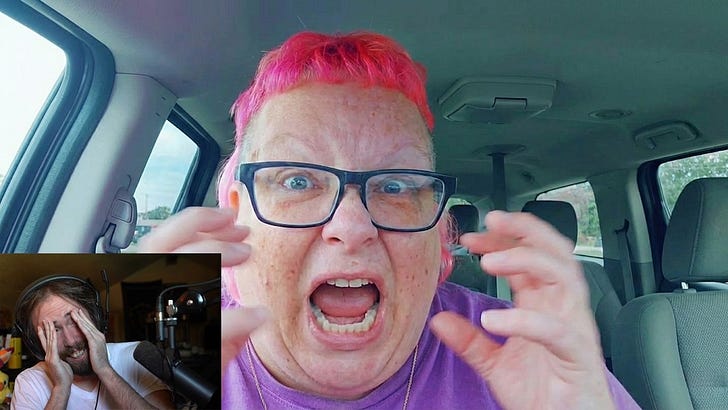
We Stopped Fearing Swamp Hags & Society Collapsed (A Historic Anthropology)
Based Camp | Simone & Malcolm Collins · Based Camp | Simone & Malcolm
Audio is streamed directly from the publisher (api.substack.com) as published in their RSS feed. Play Podcasts does not host this file. Rights-holders can request removal through the copyright & takedown page.
Show Notes
In this eye-opening episode of Based Camp, Simone and Malcolm Collins dive deep into the ancient archetype of the “Swamp Hag” – those deranged, liminal women from folklore who live on the edges of society, brewing potions, keening like banshees, and disrupting the peace. Drawing from European, Eurasian, and global myths (think Baba Yaga, Banshees, and even Jewish Bal Shems), we explore how these figures warned communities about real threats: spiteful mutants, mystical outsiders, and unmoored individuals who could harm society if not isolated.
But are swamp hags just insults, or do they reveal timeless truths about human genetics, physiognomy, and social roles? We discuss modern manifestations – from screaming protesters (hello, banshees like Greta Thunberg) to bureaucratic “Karens” in the deep state, Wiccans on Etsy, and even Disney’s evolving witch tropes (from villains in Snow White to mentors in Owl House). Why do cultures converge on these stories? How have we lost the plot by empowering liminal people in leadership? And what can we learn to protect our kids and rebuild prejudice against dangerous mystics?
Plus, a fun tangent on family life, JD Vance’s fourth kid, and mystery curries. If you’re into folklore, cultural evolution, pronatalism, and unfiltered takes
Episode Notes
* Asmongold:
* Regularly refers to deranged women at protests as swamp hags; he and his chat sometimes also realize, while watching clips of white women losing composure, that they’re basically banshees
* He has pointed out that every major culture has some sort of trope or mythology around this archetype:
* He has also mused over how these women are just born in the wrong time and place; that they’d probably be just fine off in a swamp somewhere selling mushrooms
* And this had me thinking he’s on to something
Swamp Hags
The “swamp hag” or woods-dwelling old woman selling herbs and mushrooms is a modern variation of a very old European and Eurasian hag/crone figure: an aged, liminal woman at the edge of society and of the wild, who can be healer, monster, or initiatory guide.
Deep roots of the hag
* The English word hag comes from Old English hægtesse, a term for a witch or night spirit, later generalized to mean a wizened old woman associated with magic and malice
* Across European folklore, hags and crones are depicted as ugly, elderly women living apart from the community and engaging in witchcraft, often as figures who threaten children, twist weather, or curse travelers.
* At the same time, early hag figures also preserve traces of older wise-woman roles—midwives, healers, diviners, and nature spirits—whose powers later get demonized as witchcraft.
Swamp hags
* Swamps and bogs have long been imagined as uncanny spaces—places of rot, spirits, and monsters—so attaching the hag figure to swamps (rather than just generic woods) taps into older associations between wetlands, death, and dangerous female beings.
* Specific “old woman of the swamps” or swamp crone figures appear in Native and global folklore as spirits born from decaying tools or matter, personifying swampy decay and moisture as an aunt or old woman who haunts wet lowlands.
* Contemporary fantasy and horror (RPGs, video games, TV tropes) codify all this into the recognisable swamp/forest hag: a dirty, old woman in a shack or hut amid trees and bogs, trading herbs, fungi, and curses—directly inheriting the wise-woman healer, the cannibal witch (like Baba Yaga), and the land-crone goddess, but flattened into a stock “witch in the woods” character.
Mythological forest hags
* In Slavic folklore, Baba Yaga is a classic forest hag: an ancient crone in a hut on chicken legs, deep in the woods, who may eat people or aid them, embodying both threat and rough mentorship.
* Baba Yaga’s hut, bone fence, skull lanterns, and association with wild animals mark her as a guardian of the forest and of a boundary between worlds, not just a generic villain.
* Scholars have linked Baba Yaga to older nature or underworld goddesses (sometimes compared to Persephone), emphasizing her role as a symbol of wild, transformative feminine power rather than pure evil.
Celtic and North Atlantic crone goddesses
* In Irish and Scottish tradition, the Cailleach is a hag-goddess of winter, weather, mountains, and sovereignty, imagined as an old woman who shapes the land and rules the harsh season.
* Local hags such as Black Annis (a blue-faced, child-eating cave-dweller in Leicester) or the Hag of the Mist and Hag of Hell in Welsh lore are monstrous, weather-and-death-linked old women haunting marginal landscapes like caves, bogs, and foggy crossings.
* These figures blur human witch, land spirit, and goddess: they can represent winter, storms, or death, while also preserving memory of powerful female beings who predate later male-dominated religious systems.
Banshees
* The Banshee is originally an Irish and Scottish “otherworld woman” who keens for the dead of particular families, and only later becomes a generalized screaming death‑ghost or attack monster in modern media.
* The word banshee is from Irish bean sídhe or bean sí, meaning “woman of the (fairy) mounds” or “otherworldly woman,”
* The banshee is part of a wider mythos of fairy beings tied to ancient hills and barrows.
* Descriptions vary: in many Irish accounts she can appear as a beautiful young woman, a stately matron, or an old hag, sometimes with long unbound hair, red or green clothing, and eyes red from weeping.
* Traditionally, the banshee is a familial spirit, attached to old Gaelic lineages (often O’ or Mac names), whose wail foretells the imminent death of a member of that family.
* She is usually not malicious: her keening functions as mourning and warning, making her more a messenger or guardian than a killer, and some stories portray her as grieving deeply for the person who will die.
* Very Greta Thunberg
* Some accounts restrict banshees to a few ancient aristocratic families, while others extend them to a wider range of Irish surnames and even to diaspora descendants who claim a “family banshee.”
* Reminds me of snark content creators and commentors
* Historians often connect the banshee to real keeners (bean chaointe)—professional women who led funeral laments (caoineadh) in medieval and early modern Ireland.
* Over time, tales arose that certain noble families had a supernatural keener, a fairy woman who would lament before a death, elevating the social role of human keeners into a mythic, otherworldly form.
* In some folk explanations, a banshee is the spirit of a woman who was a keener in life and now continues her office imperfectly or as a form of penance, blending social practice with religious and supernatural imagery.
How Hags, Crones, and Swamp Hags Lost Nuance and Became One Note
* Outside the Celtic context, the banshee is frequently turned into a generic shrieking ghost or sonic-weapon monster whose scream harms people directly, stripping away her specific family and keening associations.
* Historically, village “wise women” and herb-wives sold remedies, charms, and knowledge of plants and animals; later witchcraft accusations targeted many of these same practitioners, especially poor older women on the social margins.
* Over time, the helpful herbalist/healer and the dangerous poisoner/witch merged in popular imagination, turning the solitary, aging woman in the woods from a community resource into a feared supernatural threat.
* The hag/crone thus functions as an archetype of the post-reproductive woman excluded from respectable domestic roles, her age and liminality translated into both magical power and social suspicion.
Common Characteristics of Historical Hags and Banshees
* Often appearing in swamps or in liminal areas
* Responsible only for themselves
* Not moored to a husband, church, family, or children
* Female
* The male version of liminal, unmoored humans is:
* Marauder / vagrant / outlaw / bandit
* Hermit / wild man of the woods
* Wizard
* Trickster
* Chaotic figures that,
* When doing good: Provide warnings, cures, healing, medical care, and wisdom
* When doing evil: Are loud and annoying, disrupt order, curse, poison, and kill
Karens: The Modern Mythological Hags
Karens and other forms of abrasive affluent white woman could be argued to just be modern versions of hags and banshees
* Like these mythological figures, they disproportionately occupy swamps
* I.e. large bureaucracies (“drain the swamp”)
* Like these mythological figures, they’re disproportionately of European ancestry
* One of our listeners proposed the concept of the concept of the Karen just being racism against European women
* “I think the “Karen” thing is a brown people taking charge of culture thing.”
* And to her point, The “Karen” as a named trope for an entitled, abrasive (usually white) woman emerged online in the 2010s and crystallized through Reddit and “Black Twitter”
* She continued: Picture old German white women keeping everyone in line and making sure they obey the rules…”Karen” lets white women know they can’t be oppressive rule-enforcers anymore.
* She told a story of a time when she and her husband were late for a plane in a South American country and the airline held it for them. “They made 300 people wait an extra five minutes or so for two irresponsible people. We didn’t think it was okay. We didn’t think they should wait for us. But that is the culture. “Be chill.” That’s also why they will never be rich or outcompete cultures that value not being chill....”
* She also pointed out: “Studies have been done on preferences for quiet showing that the northern European genome strongly prefers quiet compared to southern.”
How to Save the Karens
Or Maybe the Problem is Us, Not Them?
* One can imagine that in the past, if there were an abrasive woman living in town who harangued residents and annoyed people, people would mostly just shrug them off, saying: “Well yes, that’s the town crone.” or “Little Jimmy, don’t go out of town, the old swamp hag is out there and she might take you away.”
* Maybe our problem is that we attempt to treat modern swamp hags as equals when, in reality, they are liminal beings
* They are not LESSER per se, but just of a different world
* What we should do, instead, is recognize their liminal role:
* That they are not responsible for anyone but themselves, and therefore not connected to society the way others are
* And therefore understand where they do and do not have power.
* What they’re sometimes good for is
* Sending warnings
* Enforcing discipline and order (though utter lack of “chill”)
* Healing
* Providing wisdom
* But we should be wary of them given their tendency to:
* Poison or curse
* Disturb the peace
* Steal children
For lack of a better way of putting it, maybe a better way of dealing with unmoored, liminal women is to just ask the same sort of question Glinda the Good Witch asked Dorothy in the Wizard of Oz: “Are you a good witch, or a bad witch?”
So we should be asking about single women: Are they a good hag, or a bad hag? A good witch, or a bad witch?”
Just like we should be asking ourselves about unmoored, liminal men: “Are they a wizard or trickster? A wildman or marauder?”
But we should broadly acknowledge that these people don’t:
* Belong in positions of command over society (Lord of the Rings shows us what happens when wizards get power hungry; loads of tales including Snow White, the Chronicles of Narnia, and Sleeping Beauty, tell of the evils of witches in charge).
* Play main character roles in society, as they are at best supportive, and most commonly, destructive
Episode Transcript
Simone Collins: [00:00:00] Hello Malcolm. I’m excited to be speaking with you today because you and I both love watching Aspen Gold and he regularly refers to deranged women at protests to swamp Ha and he and his chat sometimes also, he would just
Malcolm Collins: refer to them.
He says, if these women were alive in the medieval period. They would have been what we called a swamp. Ha. And I think he makes a strong point.
Simone Collins: Yeah. Like selling, selling mushrooms out in some swamp. Yeah. It, it’s, it’s as, as moon gold as well. Well, anyways, you know, just like it’s one of those things that just comes out of his, his mouth a lot.
But it’s huge. It is what it is. That kind of thing. Yeah. He even like he in the chat though, I should also say it’s, it’s not just swamp ha that, that he and his chat sometimes also realize while watching clips, that white women losing composure are also basically banshees. And he’s pointed out that every major culture has some.
Or mythology around this archetype. Malcolm, I can give you a clip along those lines where he [00:01:00] just, one of those cases in which he points it out, but he points us out a lot. Anyone who watches him will recognize this. And he’s also mused over how these women are just born in the wrong time and place and they’d rather.
Probably be ha they would be a lot happier. They would actually thrive if they were living in a swamp, a swamp somewhere selling mushrooms and just being weird. But no, now they’re, they’re in, you know, they’re in Minneapolis watching the news and therefore running out to ice protests and, you know, not, not ending up in great scenarios.
And this, I, I really feel like he’s onto something with this. ‘cause I don’t just mean this in a pejorative sense. There. My, my mom passed away quite young from ovarian cancer. It was very sad. But as an, an empty nester especially, she really struggled with depression and had a tough time and, and felt sort of very unmoored.
And at one point I remember my dad saying to me something along the lines of like, she, she really was [00:02:00] sort of m. Made for another time. And I feel like that she, she would’ve been a lot better living in some like on a medieval farm, like out in the country. And she obviously would’ve preferred that you know her.
You knew her. Oh, yeah.
Malcolm Collins: You know, she would’ve preferred just knowing, you know, you do the crops, you, you, you take care of the kids. Yeah, yeah,
Simone Collins: yeah. And you, but trying
Malcolm Collins: to build, well, I think a lot of people are built this way. A lot of people in society are really, I, I don’t wanna say built to be automatons, but when you, when you give them or just built to be, or just built to live off the land
Simone Collins: or like literally be a swamp hack.
So,
Malcolm Collins: I, I don’t even mean this. No, no. Hold on. I think you’re getting, I, I actually disagree very strongly with what you’re saying here and your framing. So I’ll put this into things. Okay. Some people in this world when you. Ask them to define meaning and life and build a metaphysical framework for themselves.
Mm-hmm. Historically people didn’t have to do that, right? No. Like you were told by your community, what, what purpose was the metaphysics of the universe, you know, what you [00:03:00] were gonna do that morning, what you were gonna do that afternoon, which you were gonna do that night? Mm-hmm. And when you tell people this.
And you don’t have a strong framework, which a lot of people from that generation didn’t. Mm-hmm. People can make very, they’re like, well, I get joy from this thing, so maybe that’s a thing of true value to me. Yeah. And it’s a really bad way, or this thing feels philosophically deep, which, you know, mysticism and magic and spell craft and all of that, that’s always gonna feel very deep when you first get into it.
Yeah. Because there’s all the lore, right? Mm-hmm. Instead of like, mm-hmm. Actually just sitting down. What, what I did when I was first interested in this stuff is I go, okay, I need to know particle physics. I need to know neuroscience. I need to know theoretical physics because I need to understand how reality works, and I need to understand how I perceive reality, because those are the two core aspects of myself.
Mm-hmm. But a lot of people from the, the, you know, 60 seventies, they didn’t have that, that way of approaching things. Yeah. That is different than the Swamp hack. Okay. The Swamp hack is a concept. And I, I was talking to Simone about this in a recent video. If you look at [00:04:00] you social insects, for example, like say ants or something like that.
Mm-hmm. If one of them gets six or is genetically malformed, the other ants in the colonies will kill it and take its body outside the nest so it doesn’t infect the rest of the ants. Right. Like it doesn’t, it doesn’t end up hurting the wider colonies. It’s intentionally
Simone Collins: isolated from society, either through murder or in the case of the swamp through semi.
Banishment.
Malcolm Collins: Well, no, this is true in, in social mammals as well. A lot of social mammals will ostracize eventually leading to death individuals within their communities that are either sickly or genetically other, otherwise detriment to the wider community, right? Because it’s, it is not just that they require more care than other members of the community, but they can cause active harm.
If they’re allowed to breed within the community. Now, if you look cross-culturally and you have the mythology of the swamp hack the, the woman who you should be afraid of who lives in a a, a swamp off the land, [00:05:00] this is a myth that is taught to people so that you know, because negative traits cross correlate.
So if you look at something like attractiveness, attractiveness correlates very strongly to something like IQ or self-control like this has been shown in lots of studies.
Simone Collins: Unfair good health. I mean, for example, also high IQ is also. Correlated with things like lower rates of, of mortality from cancer.
Now this could just be due to generally better health. It could also be due to. More intelligent people being in general, more conscientious, so they’re more likely to go to doctor’s appointments or follow up on cancer treatments, right? So
Malcolm Collins: yes. The point here being is like this is a well studied phenomenon.
Good genes for one thing typically mean good genes for another thing, like good genes cross correlate. And as somebody becomes more mutated and has more deleterious genes for whatever reason those are going to be as. A parent in their physiology as they, and, and, and you don’t just see this from genes.
Suppose somebody has a parasite [00:06:00] or a disease. Now this parasite on disease, historically speaking is going to affect their cognition. Often and as it affects their cognition, it might make them more aggressive, less agreeable, less any number of other things, which can also make them dangerous. ‘cause now they are both maybe more prone to violence, more prone to lashing out, but also.
They are contagious potentially, right? And so, when you teach kids about monsters, like we teach our kids about monsters, don’t go into the woods ‘cause the window goes, will get you don’t go into the swamp ‘cause the witches will get you. You are teaching them what to fear, like certain social prototypes to fear.
And the swamp ha was something that we created as a prototype was in our society to teach our children to fear a, a very specific and real archetype that. Boast you would have met in the medieval ages, but you also meet today. But we no longer today. Yeah, but hold on. Yes.
Simone Collins: Let And lemme take it back.
Yes. We, the here’s the problem is, is to your point, Malcolm, people aren’t recognizing [00:07:00] fully that swamp ha isn’t just a pejorative phrase that we use for like old woman. I don’t like, it’s actually, a trope slash mythological feature slash archetype that has a place in society that isn’t necessarily wholly bad but is should be treated differently.
And the reason why I think there are, there is this mythology around the trope and archetype is because it is meant to teach people. What this person’s optimal position is within society, and that we in general, as, as modern people would benefit from re recognizing this archetype and coming to understand or refresh ourselves on this type of liminal person, which is exactly what banshee and, and small swamp packs are, both in this modern context and in historical archetypical contexts too.
To have society function more optimally and you can actually see a lot of cases in which a misunderstanding [00:08:00] of what swamp hacks are has led to a lot of societal damage. So, let me, let me first walk then you through and in our audience through what these historical archetypes were. And then let’s discuss what this means about what the modern manifestation of swamps.
Should be doing or how we should be regarding them and where things have gone off the rails because we’ve forgotten what swamp hags are and basically where they belong.
Malcolm Collins: We have forgotten prejudice. We, we made the mistake of trying to construct an a society where you did not make judgments about people based on things that is observable even from their behavior.
Well, yeah, and I think a lot
Simone Collins: of it comes back to blank in assuming that. We’re all the same. We all have the same rights and capabilities and that that everyone has an equal shot at being an equally good leader or an equally good parent or an equally good friend [00:09:00] or whatever. And because we haven’t recognized that different types of people are optimal for different roles in society, we’ve ended up putting the wrong people in the wrong roles.
And that’s fundamentally the argument that I’m gonna be making. But can I, can I give you the history of the Swamp pack? Give me the history of the swamp hag. Okay. The swamp hag or the woods dwelling old woman selling herbs and mushrooms in a modern, is a modern variation. Sort of what what has been gold is referring to, to this very old European and Eurasian hag slash crone figure.
And there is something quite to this point, European about this. When, when Aspen gold points out a swamp bag, it’s not. It’s not a black woman. It’s not a, it’s not a Chinese woman. It’s, it’s not a, you know, it, it’s not a. It, it, it’s, it’s, it’s a white woman. Okay. But this, it’s this age. And they do have a physiology to them as well.
That is really Absolutely. They have a look. They have a look. And they’re European. So know what to look for. Typically, like maybe a little Eurasian. But it’s a liminal woman [00:10:00] at the edge of society who might be. A monster, but could also be a healer or an initiat guide. And I think we’ve forgotten this.
Like I’m, I’m pointing out there’s some, they’re kind of chaotic character. Okay. So like the, the English word hag comes from old English hag te. Which is a term for a witch or night spirit, which was letter later generalized into this, this idea of this wisened old woman more associated with both magic and malice and across European folklore, hags and Crohn’s are depicted as ugly, elderly women.
Living apart from the community and engaging within witchcraft often is figures who threaten children or twist weather or curse travelers, which I’m just. Like getting these sort of highlights reel of just social media posts. These of these ugly elderly women living apart from the community and engaging in witchcraft, selling spells on Etsy threatening children, you know, yelling at people on the streets, [00:11:00] twisting weather, literally buying spells to try to change the weather.
And, and cursing travelers. That is to say, you know, yelling at people, trying to go to work as they protest.
So this is definitely still a thing. It definitely still manifests though the same time early hag figures also. Preserve traces of older, wise woman tropes like they, they would serve sometimes as midwives or healers or diviners or nature spirits whose powers later got demonized as witchcraft.
So, I, I, again, I’m pointing out that there. They used to kind of have a utility as well.
Malcolm Collins: No, no. I think you are misunderstanding or you are reading recreated modern stories about the swamp ha that be lies the, the truth of, of what these stories were meant to tell you. So if, if a medieval story.
Told you about a swamp bag that could heal you. Yeah. That, that, that [00:12:00] this was always taught as a, a warning. Like she will say that she will heal you, but there Yeah. She wouldn’t also
Simone Collins: eat your children. I mean, no, I’m, I’m not, I’m not questioning any of that. No, no. But
Malcolm Collins: this is actually very important to understand how the warning worked and that the warning should be listened to in modern times.
Mm-hmm. If I go to one of these crazy looking swamp hags and I. Tell them that I have in a modern context. Right. Because I, I haven’t learned to be afraid of them. Yeah. They will tell me that they have esoteric knowledge about healing. I’m, I’m sure. I’m like, I’m sick. And they’ll be like, well, I have a special, I’ve got these crystals, I’ve got this, whatever.
And if you went to one of these crazy people who talked to themselves and was you know, malformed living in the woods, right. And you went to talk to them you know, they, they. They’d pull up their, their charms and little bone skulls and everything like that and, and, and they’d say in their Ty voice, I can heal you.
And we taught kids [00:13:00] run the FOA because the, the things that they were doing to heal in, in real life likely cause more harm than they did good. And. This is true across. Keep in mind, this isn’t just a, a, a European concept. Every culture had its swamp hacks. You know, you go, yeah. You know, so like the
Simone Collins: specific old woman of the swamps or swamp crone figure appears in both native and global folklore as spirits born from decaying tools or matter.
And personifying swampy decay and moisture as either sometimes as an ant or an old woman who haunts the wet lowlands. Like this is definitely not only a European thing and, and to the point of like why a swamp hag and not just a hag, swamps and bogs. Have long been imagined as really uncanny, creepy spaces with rot and spirits and monsters.
So attaching them to these, this type of person is, is considered apt because they’re both kind of liminal, dangerous, [00:14:00] rotty decaying. Things not flattering, but
Malcolm Collins: Yeah. Right. But the, the, the, the point I wanted to make here is that across Europe, you see this archetype evolve. Convergently, you know, if you go to Russia, you have the what’s her name?
Well, there’s
Simone Collins: Baba Yaga. Are you think that’s scope? Yeah.
Malcolm Collins: Yeah. Baba Yaga and, and, and Baba Yaga could. Heal you, right? Like she, she could do positive things for you. Yeah. She could either
Simone Collins: eat you or aid you. She could, she could threat you, threat threaten you, or, or offer mentorship for sure. She had, she lifted up, she has this like creepy hut and bone fence and skull lantern.
So I don’t think it’s like, it’s not ambiguous. This isn’t a, this isn’t a candy house, a gingerbread house.
Malcolm Collins: And we learn about this. I mean, and I, I, I pointed this out in another episode. You also see this in the Jewish community. While this has largely been forgotten that this is the way this was originally contextualized, if you go to medieval Jewish writings, there is the figure of the Bal Shim [00:15:00] and was,, the rabbinic community.
And you can read their text on them. Like today, this is seen as a respected thing. But back in the medieval period these were. Quack doctors who you were supposed to stay away from and were just as likely to curse you as they were to heal you. And if you were absolutely at your wit end desperate and, and, and, you know, just as likely to accidentally summon a demon as they were to, or, or spirit from the other side as they were to do something useful with their powers and you would only go to them as an absolute.
Last, last choice. And it was seen as, you know, you’re, you are making a gamble if you, if you go to these sort of traveling folk healer type people.
As you remember, I mentioned that all of these variants are unique, like the version of the Swamp, pag, and like. Ireland would’ve been different than the one in Russia, like the Baba yaga one with the house on, , chicken legs within the Bal Shim stereotype. , It was unique in that it was often a male and often a, , traveling snake oil salesman [00:16:00] sort of is what you would think of it.
Somebody who would come to your family when you had a sick child or something and say, oh, I can heal them and then offer you a collection of. Ambulates with magical inscriptions on them, , or various potions. , Or they would, . You know, allow you to talk to the dead or raise the dead, but when you did it, they, they could do something wrong and accidentally raise a demon.
And I’d also note that the Bal Shim, when they would make these mistakes, were often not exactly malicious. They were either con artists trying to make money by tricking people with fake magic, or they were, , people who were untrained or not trained enough, or who were overly ambitious in their mystical powers.
Who would often. Overdo what they were trying to do and that that would lead to evil, to seep into the world. They were not as often directly antagonistic, like a typical swamp witch or a baba yaga.
And these are all stories that you can find about the bashi [00:17:00] from this period. I know here that many Jews today would consider even me mentioning this because, you know, whenever you mention something that’s inconvenient for modern interpretations of Judaism, it’s somehow anti-Semitic to many Jews, even if it’s just.
A, a fact that just is easy to search. , That, , the Jews today would say this is antisemitic, but there was the bashi T which basically translate to , the good witch or the good bashi. Um.. Who became very important in Jewish history, , and became the founder of the Hasidic movement. And, , the Jewish tradition ended up instead of, , like the Christian tradition, keeping this mystical offshoot completely isolated and othered in part, integrating with it.
And you could say, well, that’s horrible. And of course, from my religious and theological perspective, I might, I might feel that way, which is why I made the mistake about Bolst in a, in a previous episode because. To me, that’s, that’s the way I, I see ‘em. But, , you’ve gotta keep in mind that the Jews haven’t been affected by all of this, all of, , the urban monoculture as much of other traditions.
Their fertility rates are still really, really strong.
So [00:18:00] was this the protective element for them? I don’t know, but it, but it might have been, it might have been the not othering of this. , And I’ll also note here that it is very notable that the Balham versus the Swamp witch in the Western tradition is a male. Figure. , And if you look at the Jews who are getting involved in these protests, , they are much more likely to be male than the, other, , Christian European descendants who are getting involved, who are much more likely to be these, these malformed females.
Malcolm Collins: And they, they taught these stories across communities because these people existed and they had convergent behavior patterns. And I think what’s really fascinating about the swamp hag.
Is the behavior practices that she was drawn to historically in the medieval period and that we used to warn our kids about mm-hmm. Are not at all incongruent with the behavior practices of the swamp ha today. Which [00:19:00] is to say these women who are, are offers
Simone Collins: wisdom, offers, cures. They’re often Wiccan of some sort.
Yeah. Yeah. Spiritual, they have sort
Malcolm Collins: of alternate metaphysical framework for reality that, that, that, that contracts with main societies. They often and the question is, is why, why is it so easy to be like. Oh, these are people who are going to search for alternate sort of social orders, alternate metaphysical frameworks to search for meaning in mysticism.
And the answer is, I think, really interesting is why you see this convergent phenomenon across cultures across communities. Is that if you are. Genetically, like a person can look at you and judge often what your role, like, what your status should be in society really quickly. Like we as a society have moved past that and it’s led to some problems because Physionomy does tell you you know, like the way a person will vote.
AI can tell really highly a person’s personality. AI can tell, [00:20:00] really highly people can guess these things by looking at a person’s physi. And, and, and, and often a person’s competence, right? And so if, if you’re living in a society where we’re still making judgements and you are born with a physionomy, that is just very clearly you know, and, and, and, and behavioral traits which augment that physionomy.
Like if you were born with one of these Mies, you’re also likely to have sociological traits that’ll have you be less conscientious. And so maybe you bathe less, and so you organize your house less. And so when you go to. The swamps Hags house. What does it look like? Right? It is, it is a mess. There is, there is stuff everywhere.
There’s, there’s rotting food on a, on a table. There’s, you know, you go to one of these modern swamp hag houses, what do you expect it to look like?
Simone Collins: Modern swamp ha house, you know, it just sounds
Malcolm Collins: great. You expect it to look the same of, of, of you know.
Simone Collins: Yeah, it, it is just in, instead of like rotted flowers, there’s empty glade plugins all over the floor.
Right, but, but you, but lemme, lemme, can I, no, hold on. I
Malcolm Collins: just [00:21:00] wanna
Simone Collins: finish
Malcolm Collins: what I’m saying here.
Simone Collins: So, alright. And then you need to give me time to move this forward so you can actually,
Malcolm Collins: you a small tag modern times or the past because you. Cannot find status within the existing worlds metaphysical framework or within the existing worlds.
The things that you could do to like find a, a husband, have kids work your farm, et cetera, you look for alternate sources. And the easiest way to build alternate sources is to build. Up an alternate and completely internal and subjective metaphysical framework. And that’s ultimately what mysticism is.
And one of the reasons why we try to be, you know, preach against it on the podcast. Because I think the swamp ha is part and parcel with the, the mystic outsider as opposed to trying to build constructively within objectively observable frameworks and frameworks that can easily be debated within a community.
But continue Simone.
Simone Collins: [00:22:00] So I would point out this, this is not purely a genetic thing and it’s the swamp ha is different. Plus the banse. They’re different from spiteful mutants and that. They are sometimes time-based or life period based things. You could have someone who was a normal member of society for most of their lives and then, I don’t know, they end up divorced or widowed and childless and suddenly they become a swamp hack.
A lot of it has to do with the perfect storm of circumstances that lead them to a certain state and these types of crazy women, crazy liminal women. Specifically that manifest historically as banshees or as swamp packs. They’re often age gated, like Banes are not necessarily old women. Swamp had swamp bags typically are.
But the banshee is, is, is something that, that, as I said at the top, as ol has sometimes referred to too, or people in this chat have recognized like, oh my God, she’s a literal ban shee, which people now mostly recognize as like, [00:23:00] oh, like a screaming woman. But originally the concept was this Irish and Scottish other world woman who keens for the dead of particular families and then.
This, this trope only later became this generalized screaming Death Ghost or Attack monster. But the word banshee comes from this, this Irish word, meaning woman of the mounds or otherworldly woman. And she’s part of this wider, fairly fairy mythos. And she’s traditionally the band. She is supposed to be actually a, a family specific spirit.
Like there would be the Collins. Banshee, I think they were attached to old Gaelic lineages. And then they, if, if they wailed or you heard their wailing, it would foretell the death of a member of that family. And that’s
Malcolm Collins: fascinating. I like,
Simone Collins: yes. The Banshee is not, she’s not intended to be malicious.
Her keening functions as, as, as, as both a mourning and a warning, making her more of like a messenger or guardian than a killer. [00:24:00] And some stories portray Van, she’s as, as this. Grieving deeply for the person who’s going to die. And I feel like this, like Greta Thunberg is a great example of the modern banshee where, you know, in this globalized world where women are no longer of a specific family and community.
What they are trying to keen for or mourn or cry about are things they believe are going to die like the environment or like Gaza. And so you have this keening screaming wailing person and they are the modern banshee.
Malcolm Collins: It’s, it’s interesting to me how little she seems to care about the Iranians.
Yeah, you just, I’m just saying it’s about
Simone Collins: the, their chosen affiliation. Now you choose your cultural family, so they keen. For their chosen families. But yeah, I mean it’s, I I do think it’s, you need to remember that the Banshee is not for everyone. Some accounts just restrict Banshees to just a few ancient aristocratic families.
Some extend them to a wider range of [00:25:00] surnames to even like a whole diaspora. But this is a very specific thing and I didn’t know that until I looked into this. Yeah, I think it’s really interesting. And, and some historians think this is because. Some moneyed families similar to like in ancient Egypt.
I didn’t know this was also a Celtic thing, would hire Keeners that this is to say professional women who would lean. Lead in, in funeral limits and, and cry professionally. I, I keep thinking of that. I mean, this isn’t just a, a, a Celtic thing or an ancient Egyptian thing. This is also something that happens in some country in Asia and in one of the idiot abroad episodes Carol Pelkington trains in this.
Do you remember that episode? What, what is it? Oh, yeah’s. The, the wailing. The, yeah. So there, there is like, I don’t know, convergently evolved this. Need to hire someone to grieve professionally. But that’s where historians think this concept of, of the Banshee came from. Like, first, these, these families would hire women to grieve at funerals.
And then [00:26:00] there came this mythological concept of this woman who’s, who’s screaming and freaking out in, in, in anticipatory mourning of. The family member to die. And I just feel like that is the modern banshee. So like there’s also this, this young woman concept, but still this is, this is typically viewed as personified as a single unattached woman.
And that’s what Banshees and, and hags. I’m, I’m
Malcolm Collins: thinking if our
Simone Collins: family
Malcolm Collins: has a Banshee,
Simone Collins: no. Oh, who know? Whatever. No. No. But here’s, here’s how, I mean, like. Where we lost the plot was Hags and Crohn’s. And, and, and Banshees became one note in, in, in like video games and movies where like now Banshees are like.
A generic summit, sonic weapon, monsters in, in games and stuff like, oh, you, there were, I think, are there Banes and d and d where you just like, they’re a sonic weapon basically. They’re, they’re an lrad. I mean,
Malcolm Collins: D and d hags are much more developed. You have you have like green hags and yeah, but [00:27:00] now like,
Simone Collins: they’re, like, they’re tactical things, you know, there, so we, we sort of lost the lore and the under.
Understanding of how this is supposed to help us relate with certain types of women in society. And I think that’s where we, we lost the plot, but I do think that there’s some, hold on,
Malcolm Collins: and I, I gotta tell you, lore of hags in d and d, because it’s interesting,
Simone Collins: okay.
Malcolm Collins: Is they will steal children and then eat them,.
And then they give.
Birth to them again after that. Oh, gross. And then that is how hags are born. And they look just like they used to look and act just like they used to act until they like go through puberty and then they transform into hags and like kill their family or whatever. And that’s why you cannot let your kids go and talk to the old mystical woman in the woods who doesn’t practice good hygiene.
Random, okay. ‘cause one day No, but it’s actually, this is borrowed. No,
Simone Collins: no. We’re going back to No, no, don’t. No. But it’s
Malcolm Collins: important. You can become a hag if you let your, if you let your children engage with hags, they will become hags.
Simone Collins: Yeah. More commonly they just get, you know, mythologically killed. Like, just don’t, don’t let [00:28:00] your kids around.
The crazy woman. But let’s go to the common characteristics of this type of thing. Just to, to bring it together so you can know what you recognize in modern times. Exactly. They they are often in swamps, or we’ll just say liminal areas. They’re responsible only for themselves. They’re not more to a husband or a church or a family or a community.
They are female. And let’s be clear, there are liminal males who are also dangerous. There’s the marauder slash vagrant slash outlaw or bandit. Then there’s also the hermit and wild man of the woods that are more like neutral. Then there’s the wizard. Just, I think similar to like a witch where they, they can be helpful and powerful and stuff, right?
And then there’s also just the, the random trickster. And finally they’re, they are chaotic figures that when doing good at best provide warnings or cures or healing or medical care or wisdom. If you’re lucky. But more commonly they do evil and they’re at, at the very least loud and [00:29:00] annoying.
Or they disrupt order, but then of course, at worst they will curse, poison and kill. But I think that the one manifestation of the modern mythological hag, like when society has attempted to explain this concept and provide a place for them and also try to. I try to tactically marginalize them to be like, no, we need to put this group in its place.
It doesn’t deserve a voice. What have, do you know what they’ve done? What have they done? The Karen, the Karen is the mythological hag of our modern times, but it’s not fully baked as a concept, and that’s because it was, it was created arguably and interestingly enough by the black community. Arguably again and, and I don’t think they fully understood the progressive,
Malcolm Collins: say the black community created everything.
No,
Simone Collins: no, no, no, no, no, no. I’ll give you the history, but like, the problem is that when the black community kind of recognized the need to marginalize the hag, they didn’t [00:30:00] understand the mythological depth and nuance of the hag. So they didn’t, they didn’t have, they didn’t know the spells. To, to silo her, you know, to like put her back in her box.
Okay. And, and that, that’s the problem is, is they, they recognized the hag, but they couldn’t put her in the box. And, and they. You have to keep in mind that they really, Karen’s really are the hag. They like mythological figures, disproportionately occupy swamps, right? What are swamps today? But larger bureaucracies?
Literally when Trump ran for office the first time, it was to drain the swamp. Okay? It’s full of swamp hacks. And then also like these mythological figures, they are disproportionately of European ancestry. One, one of our, our listeners actually proposed this concept of, of the Karen is just being sort of a racist concept against European women.
She, she wrote to me, I, I think the Karen thing is a brown people taking charge of [00:31:00] culture thing. And to her point, the Karen. Was a, a as a named trope for an entitled abrasive and usually white woman emerged online in the 2010s and crystallized through Reddit and, and black Twitter. And, and so to go back to what this, this listener to base camp said, she said, picture old German woman, white woman, keeping everyone in line and making sure they obey the rules.
Karen lets white women know they can’t be oppressive rule enforcers anymore. So she’s pointing out that starting with black Twitter and then emanating from there. People were trying to use the word Karen to point out that this type of woman doesn’t deserve a leadership position or shouldn’t, shouldn’t get a leadership position.
This, this same base camp listener told this story of a time when she and her husband late for a plane in a South American country, and the airline literally held it for her. She wrote, they made 300 people wait an extra five minutes or so for two irresponsible people. We didn’t think it was okay.
We didn’t think they should wait [00:32:00] for us, but the culture was be chill. And that’s I also why they’ll never be rich or out complete cultures that value not being chill. So she, she was pointing out actually that there is value to the Karen and that the Karen. Sort of, in the same annoying keening warning abrasive role also does keep things in check.
She, I mean, she’ll eat the children who get unruly and run out of town. Right. I,
Malcolm Collins: I think you’re mixing up concept here. So maybe, maybe.
Simone Collins: But let me, let me, let me, let me conclude and then you can provide your editorialization at the end. Okay? Okay. Thank you. She also pointed out that studies have been done on preferences for Quiet, showing that Northern European genome strongly prefers quiet compared to Southern, which I think is interesting.
But I think really the, the important thing about saving Karens both like for their own sake and wellbeing and for the sake and like the wellbeing of the rest of us and society at large is that we have to. [00:33:00] We have to really properly contextualize them and recognize, recognize them as swamp hacks and as banshees.
And one can imagine that in the past if there was an abrasive woman living in town or living just outside of town who ranked residents or annoyed people people would just shrug them off saying, well, that’s the old town Crone or Little Jimmy don’t go out of town. ‘cause the small P is gonna.
Probably kill you. And and our problem now is I think we’re attempting to treat women swamp, modern swamp hags as equals when in reality they’re liminal beings. I’m not saying they’re lesser per se, but they’re from a different world. Liminal beings. I love that. They’re, they are, I mean, in the same way that like any sort of unmoored person who, who doesn’t have, who isn’t married, who doesn’t have kids, who isn’t a part of a community, you know, actively contributing to it, they are liminal beings inherently.
And just as men, like everyone’s very comfortable talking about liminal men as free [00:34:00] radicals, you know, as dangerous, you know, in need of coupling. We need to recognize that liminal women are also. Not necessarily great for society. And what we should do instead is, is recognize that. And understand where they do and do not have power, like when they’re so