
Barbarians at the Gate
185 episodes — Page 2 of 4
What happens after a Barbarian walks away from the Gate?
EThis episode represents a new direction for the podcast, recorded on the eve of Jeremiah’s move to a new home base in Geneva. We start with a retrospective snapshot of the podcast’s beginnings – with many episodes recorded under the backdrop of COVID-19 – and then segue into our perennial concern, the plight of academic exchange in China, for which our consensus was “cautious optimism," while accepting an unsatisfying "new normal.” We sign off with future plans and ideas for the next phase of Barbarians at the Gate.
Seeking News, Making China
EIn this episode, John Alekna talks about his fascinating new book Seeking News, Making China: Information Technology and the Emergence of Mass Society. In 20th-century China, the gradual importation and development of information technology had an enormous impact on the way that news was disseminated and accessed by the general public. When radio first appeared in the early 1920s, less than 8 in 1,000 people had access to newspapers, whereas, by the time of the Mao period, hundreds of millions of citizens were receiving daily news and information via radio, TV, and shortwave technology. This book provides an enlightening “meta-historical” account of the evolving communications technologies that fueled the May 4th movement, KMT and CCP propaganda campaigns during WWII, and the mass information campaigns of the Mao era, such as the Cultural Revolution. The book describes how the various interlocking information technologies, infrastructure, and communication channels – what Alekna calls the “newsscape” – affect popular opinion, politics, and state power. John Alekna is an Assistant Professor of History of Science, Technology, and Medicine at Peking University.The publisher’s link for the book Seeking News, Making China: Information Technology and the Emergence of Mass Society.
The Mountains Are High with author Alec Ash
EIn this episode, we welcome back to the podcast our good friend, Alec Ash, who has written a fascinating book recounting a year spent in the city of Dali, Yunan Province. Unlike Alec’s previous book, Wish Lanterns, his new book, The Mountains are High, is a highly personal account of his attempt to find solace and healing after a pivotal emotional crisis and his decision to disentangle himself from his urban Beijing life and escape to a simpler life in mountainous Yunnan Province. But Alec’s life in Dali was not completely hermitic. Quite the contrary, Alec found his new life interwoven with a peripatetic group of fellow escapees, a kaleidoscopic array of religious seekers, hippies, stoners, and disenchanted white-collar elites, all seeking solace or salvation through Buddhism, psychedelics, New Age mysticism, or just a simpler, more meaningful life. We discuss the process of writing the book, the challenge of living off the grid, the struggle to resist the distracting allure of the Internet, and the hard work of transforming oneself to achieve a sense of contentment and peace. Previous episodes featuring Alec Ash:“China's New Youth” October 01, 2020 “Back to the Land: Author Alec Ash on escaping to Dali, rural retreats, and a return to England” October 30, 2022Alec’s website information about The Mountains Are High
Exile from Expat-ville
EIn this episode of Barbarians at the Gate, our guest is Michael Wester, founder and publisher of True Run Media and The Beijinger. Mike is a long-time resident of Beijing, and we talked with him about running the city’s most-read expat publication, his experiences in organizing the “Safe and Sane” WeChat communities during the pandemic, and what the future holds for the international population of China’s capital. Later, Jeremiah surprises David and Mike with an announcement.
Xi Built This City
EIn this episode, we chat with Andrew Stokols, who is currently a Ph.D. candidate at MIT researching varieties of digital urbanism globally, with an emphasis on China. On the podcast, we briefly compare notes on the urban development of Beijing in the 21st century, including the contradictions between Beijing as a technologically advanced urban center and an ancient capital city. Andrew also provides updates on the progress of Xiong’an, the digital “smart city” being constructed in Hebei province, as a showcase for Xi Jinping’s vision for urban development. The urban plan was initially unveiled in 2017 to relieve pressure on Beijing and promote the coordinated regional development of the Beijing-Tianjin-Hebei region, but what Xi has called a “thousand-year plan of national significance” has run into numerous setbacks and controversy. We also hear from Andrew about how the Party is merging Marxist ideology with traditional Chinese culture in recent urban architectural projects, particularly the mammoth National Archives of Publications and Culture (Zhongguo guojia banbenguan 中国国家版本馆), described as a “seed bank” of Chinese civilization. These mammoth archives, being constructed in the four geographically significant locations of Beijing, Hangzhou, Xi’an, and Guangzhou, will house original and digitized editions of imperial archives such as the Complete Library of the Four Treasuries (the Siku quanshu四库全书), as well as historical artifacts, music, and literature from the Mao era, thus effecting the goal of “two combines” (liangge jiehe 两个结合), Xi Jinping’s goal of “combining Marxist theory with China’s outstanding traditional culture.”Andrew's own online archive: https://www.andrewstokols.com/
No Laughing Matters: The State of Stand-up in China Today
EHas the Chinese government killed stand-up comedy in China? In May of 2023, a popular standup comedian made an innocuous joke in which he mentioned a phrase used to laud the fighting spirit of the People’s Liberation Army. The next day, a complaint from a nationalistic netizen resulted in the Shanghai Xiaoguo Culture Media Company being fined a whopping $2 million and the temporary shutdown of virtually all the standup TV shows and comedy clubs in China’s major cities. The immediate aftermath of the incident also cast a pall over other entertainment venues, leading to increased scrutiny of music and live entertainment in clubs and bars. In this episode, we talk with reporter and freelance writer Chang Che, who initially reported this incident and has been interviewing comedians and promoters grappling with the repercussions in the entertainment industry. Chang Che provides insights into how comedians, musicians, and creative media workers must function within a system where the lines for acceptable discourse are nebulous and ever-changing. Chang Che’s writing has appeared in The New Yorker, The Washington Post, and The Atlantic, and he was formerly with the New York Times reporting on tech in Asia. His first article on this subject of the podcast can be found at this link:No Joke: China Fines a Comedy Firm $2 Million for ‘Insulting’ the MilitaryChang Che’s websiteOur earlier episode on comedy in China: Chinese Funny Business with Mark "Da Shan" Roswell
Art with Altitude
On this episode of Barbarians at the Gate, I talk to Kristel Ouwehand, also known by her Tibetan language name, Tenzin Dolma, the founder of Snowland Academy in Gansu province where she lives with and teaches young Tibetan artists. Beginning at age 17, Tenzin traveled across Central America, Europe, parts of the Middle East, and the east coast of Africa before settling in India. She stayed in India for 11 years, mastering the traditional art of thangka painting. She also learned to craft butter sculptures and sand mandalas, contributed as one of 30 artists painting a new prayer hall, and even organized and translated for a year-long fundraising arts tour in North America from 2005-2006. In 2007, Kristel relocated to China, initially living in Sichuan until the earthquake in 2008, and then in Qinghai. In 2010, a pivotal moment occurred when a monk approached her, seeking art lessons. In the summer of 2014, she settled in Labrang (Xiahe), Gansu, where Snowland continues to operate today.Link to Snowland Art:http://www.snowlandart.org/about-us/
History Wars: The PRC pushes back against unsanctioned views of the past
EJeremiah kicks off the podcast with news that the decades-long Qing History Projectn being carried out by, among other institutions, Renmin University and the Chinese Academy of Social Science(CASS) seems to have been "put on ice" after the draft document produced by the team of Chinese historians was deemed as “politically unacceptable” by the authorities. One of the specific objections to the project’s content was that it was “overly influenced by the New Qing History,” referring to a group of prominent Western historians who have used Manchu-language sources and new perspectives to offer an interpretation of Qing history that departs from earlier narratives that emphasized the "Sinicization" of the Qing Empire. In the podcast, we discuss how the PRC government attempts to rewrite history to promote current-day political narratives, including revisionist attempts to downplay Mongol and Manchu influences in the story of China.Mentioned in the podcast:China Digital Times, Qing History another front against Western InfluenceMore from Jeremiah, Chinese Academy of Social Sciences Throwing Shade at the New Qing HistoryYoung Tsu-wong review of Qingchaoshi de jiben tezheng zai tanjiu: Yi dui beimei xin Qingshi guandian de fansi wei zhongxin 清朝史的基本特徵再探究: 以對北美新清史觀點的反思為中心 [A New Look at the Fundamental Characteristics of the Qing Dynasty History: Focus on Rethinking the Views of the New Qing History School of North America by Zhong HanGuo Wu, New Qing History: Dispute, Dialog, and InfluenceThe Art, “Blocked show on Genghis Khan finally opens in France,”Christian Henriot, "Who owns China's Past? American Universities and the Writing of Chinese History"Jeremiah’s review of Ian Johnson’s new book Sparks: China's Underground Historians and Their Battle for the Future, on the China Project
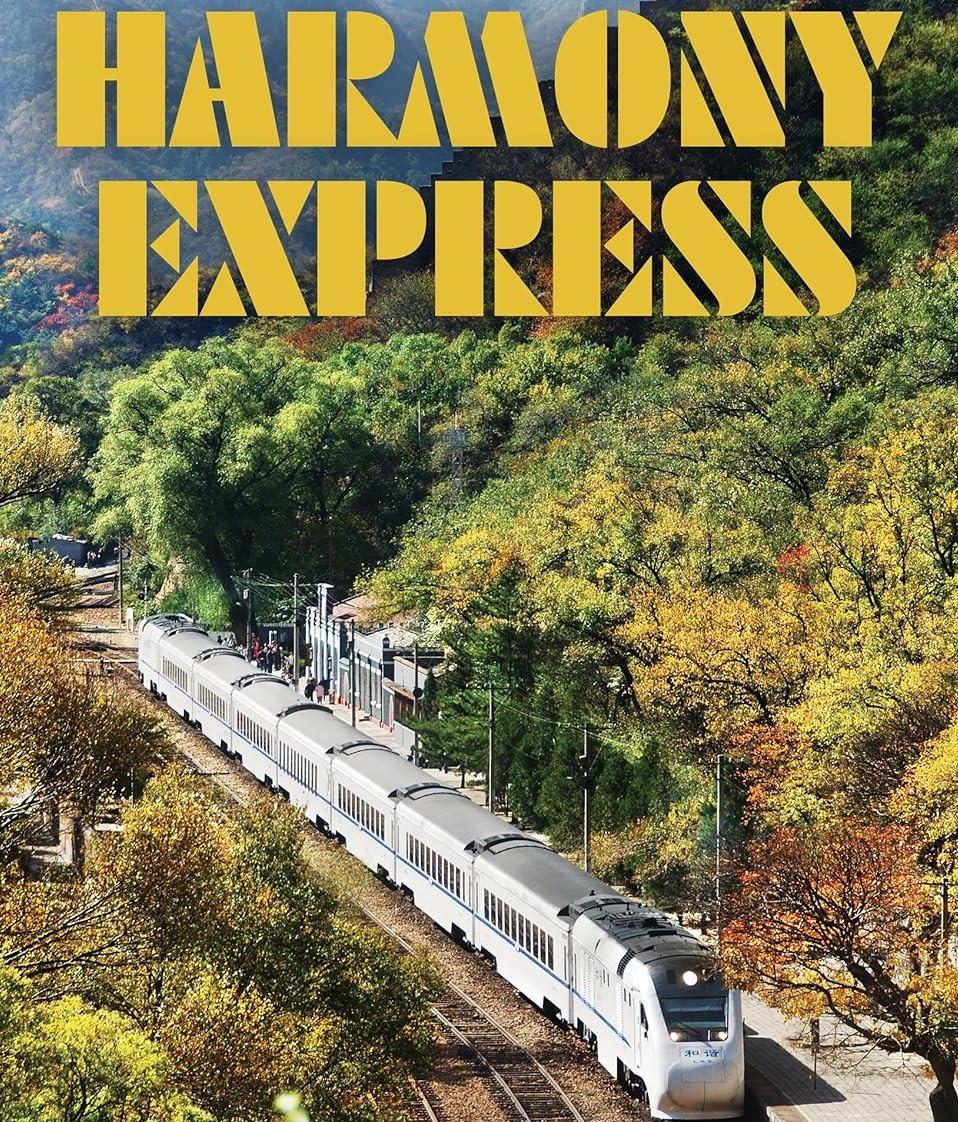
Riding the "Harmony Express" with author Thomas Bird
In today’s episode, we talk with journalist and travel writer Thomas Bird about his latest book, The Harmony Express. Entering an uncertain new chapter of his life several years ago, Bird decided to embark on an exploration of the People’s Republic of China via the country’s vast web of railroad lines. In the spiritual footsteps of travel writers such as Paul Theroux (Riding the Iron Rooster and The Great Railway Bazaar), Bird took the trains as his trajectory, exploring and documenting the diverse ethnic, geographical, linguistic, and culinary worlds of China by rail.With solid Mandarin skills, an intrepid, often foolhardy willingness to immerse himself into unfamiliar surroundings, and an ethnographer’s voracious intellectual appetite for detail, Bird gives the reader vivid accounts of the diverse places and personalities he encounters in his journey. We also talk about his impetus for writing the book, the evolution of train travel from the 绿皮火车 lüpi huoche “green trains” to the new sci-fi-style bullet trains, and what has changed – and not changed – in China.Thomas Bird, Harmony Express. (Earnshaw Books, 2023)Amazon Link
Do you really need to learn to write characters to study Chinese?
Warning: GEEKY CONTENTHosting solo in this week’s episode, David takes a geeky deep dive into the digital revolution in Chinese language learning in conversation with Chinese language pedagogy expert Matt Coss. The Sisyphean task of learning to write hundreds of Chinese characters has long been the bête noire of Chinese language students. The explosion of digital devices and apps for processing Chinese characters is giving rise to a radical rethinking (no pun intended) of the handwriting and dictation components of Chinese language curricula. Matt Coss is on the front line of a new generation of Chinese language educators who advocate a drastic reduction, if not outright elimination, of the handwriting requirement for Chinese language learners. Topics covered include the disturbing drop in the number of American students studying Mandarin, the implications of AI tools such as ChatGPT for Chinese language learning, and the escalating problem of native Chinese speakers forgetting how to write common characters (“character amnesia” tíbǐ wàngzì提笔忘字).Matt Coss holds a BA in Hispanic Linguistics and Asian Studies (Chinese) and an MA in Second Language Acquisition from the University of Maryland College Park. Matt has taught Chinese classes at George Washington University and Georgetown University and has worked as a Second Language Acquisition Specialist on the STARTALK project at the National Foreign Language Center. He is currently a PhD Student in Second Language Studies (Michigan State University)Mentioned in the podcast:Transforming L2 Hanzi Teaching & Learning in the Age of Digital Writing: Theory and Pedagogy (《电写时代汉字教学的理论与实践》) published by Routledge 2023https://scholarworks.brandeis.edu/esploro/outputs/bookChapter/Save-Your-Strokes-Further-Studies-on/9924210987301921L1: First language (i.e., native language)L2: Second language “The New Paperless Revolution in Chinese Reading.” Olle Linge’s Hacking Chinese Site. https://www.hackingchinese.com/the-new-paperless-revolution-in-chinese-reading/“Character Amnesia Yet Again” Victor Mair, Language Log, April 28, 2022. https://languagelog.ldc.upenn.edu/nll/?p=54465Hanzi Yingxiong 《汉字英雄》 “Chinese Character Heroes” https://www.youtube.com/watch?v=FaoxdiwKaHo&t=337sZhongguo Hanzi tingxie dahui《中国汉字听写大会》”Chinese Character Dictation Competition.”https://www.youtube.com/watch?v=insD5qbJw2g&list=PL0eGJygpmOH4xEZ7Gu2IluCL07GYcHiZu
A Career of Change Making: A Conversation with Isabel Nepstad of BellaTerra Consulting
Isabel Nepstad’s passion for nature, food, and agriculture can be traced back to her childhood growing up in Belém, a city on the mouth of the Amazon River in Brazil. Her connection to China dates to Isabel’s experience studying Chinese at the Beijing Foreign Studies University and economic development and environmental science at Yunnan University while still an undergraduate. For over 11 years, Isabel has worked in the food and agriculture industry in the United States, Brazil, the Netherlands, and China. From 2011 to 2012, she worked as an Analyst for a Brazilian NGO, Alliança da Terra, in Cuiaba, Brazil, and as a Program Manager for Solidaridad Network based in Beijing. In 2021, she founded BellaTerra Consulting to provide sustainability consulting in the food and agriculture supply chains, bridging China and the world. Isabel takes time out of her busy schedule to drop by the Barbarians at the Gate studio to share her career journey, give advice to those looking to pursue their professional lives in China, and discuss the challenges and opportunities in the environmental and agricultural sectors in China and around the world.
Have Tunes, Will Travel: The Musical Adventures of DJ Bo
EOn this episode of Barbarians at the Gate, Jeremiah talks to Brian “DJ Bo” Offenther. From being the FKFDJ (First Known Foreign DJ) to play in Pyongyang since 1945 to putting together the first Elvis Festival in Mainland China, DJ Bo has been at the center of China’s music scene for over a decade. The self-proclaimed "Shanghai's #2 DJ" is a DJ and event producer based in Shanghai who has performed in 29 countries and 42 cities around China. He’s involved in many cultural activities, including lecturing at universities, hosting the streaming The Critical Music Club, producing ARTGER, presenting public domain events, writing/editing, and more. DJ Bo also created a wonderfully curated Spotify playlist that accompanied past BATG guest Andrew Field’s book Rocking China. With David off on summer shenanigans, Jeremiah flies solo as DJ Bo, in town for a couple of gigs, regales us with his adventures performing across China, what drives his passion for music, and makes a case for Shanghai, that other city, as the true birthplace of Rock n’ Roll.
One From the Vault: Ideology and Education in China with Educator Jiang Xueqin
David and Jeremiah are on holiday this week, but we hope you enjoy this encore episode with educator Jiang Xueqin, originally released in February 2022.Contrary to the common stereotype that Chinese education is regimented and mired in tradition, the education system in China is actually one of the most dynamic sectors of Chinese society, with core aspects such as the gaokao college entrance exam constantly in flux. On the podcast, this week to discuss the evolution of Chinese education is Jiang Xueqin, an educational consultant who has worked with schools throughout China to promote the ideas of creativity and critical thinking skills. Topics include the new emphasis on ideology in the curriculum since the ascent of Xi Jinping, the massive effort to turn elite Chinese universities into “world-class” institutions to compete with schools such as Harvard and Oxford, and the plight of cross-national educational projects and international schools in these years of Covid-19 shutdowns and US-China “decoupling.” Jiang Xueqin has published two books: Creative China, which recounts his experiences working in the Chinese public school system, and Schools for the Soul, which presents his approach to fostering creativity in secondary education. Jiang’s articles have appeared in publications such as The Wall Street Journal and Chronicle of Higher Education.
A Great Leap Backwards?: The Closing of Cultural Spaces and the New Normal in Beijing
EThis episode of the podcast addresses a worrisome question: Is China’s “cultural space” shrinking? The recent crackdown on stand-up comedy content and the scrutiny of foreign musicians performing in bars have raised worries that other artistic domains will soon be targeted. Over the past decade, there has been a perception of a “death by a thousand cuts,” as increasing scrutiny and tightening regulations have slowly sanitized, squelched, or strangled many areas of artistic and cultural expression. The once vibrant LGBTQ scene in Beijing, characterized by thriving queer film festivals and active “tongzhi” websites, is now virtually moribund. Venues such as the Bookworm, where freewheeling literary festivals and public talks were tacitly allowed, are now a thing of the past. And the numerous academic exchanges that collapsed during the COVID-19 years do not show signs of reviving soon. In the podcast, we discuss questions such as: What are the implications of this trend for Chinese soft power? Can alternative “safe spaces” allow creative activity to continue? And what are the ramifications for the foreign exodus from China, as many ex-pats find the country less welcoming than in times past?
Rocking China with Historian Andrew Field
EIn this episode, we welcome back Andrew Field to discuss his new book Rocking China: Rock Music Scenes in Beijing, Shanghai and Beyond. While having already conducted valuable research into the history of Shanghai jazz, in 2007, Andrew began a deep dive into the nascent Chinese underground rock scene of the early 2000s with the passion of a rock fan and the intellectual fascination of an anthropologist. He spent years haunting the indie rock bars and performance venues of Beijing and other cities, interviewing the performers, observing the audience reactions, and taking extensive “field notes” (pun intended), all documenting this explosive chapter in the evolution of rock music in the PRC. Andrew followed seminal groups such as the Carsick Cars, Subs, and Hedgehog, giving first-hand accounts of the performance ambiance and providing fascinating portraits of performers like Yang Haisong, Kang Mao, and Wu Hao. Andrew has become one of the go-to documentarians of popular music in China: Rocking China: Rock Music Scenes in Beijing, Shanghai & Beyond Spotify playlist for Rocking China by DJ BO Shanghai’s Dancing World: Cabaret Culture and Urban Politics, 1919–1954The Chinese University of Hong Kong Press, 2010Documentary: A Century of Jazz in Shanghai Andrew Field's websitehttp://shanghaisojourns.net/ Mentioned on the show: China with a Cut: Globalisation, Urban Youth and Popular MusicJeroen de Kloet (IIAS Publications series)
Tik-Tok-for-Tat: Jeremiah and David try to Fix US-China Relations
EFueled by too many red bulls (Jeremiah) and some pretty good pharmaceuticals following an emergency root canal (David), our intrepid cohosts throw caution to the wind and attempt to fix US-China Relations in a single podcast. For those outside of China, the ups and downs of this troubled bilateral relationship are sometimes felt as a rather abstract quandary. Still, for those of us who have invested decades of our lives in this China, the often juvenile skirmishes between the two superpowers have existential consequences. In this episode of BATG, Jeremiah and David describe the deterioration of US-China relations brought about by an ongoing series of reciprocal clashes. The conversation includes media bias, tit-for-tat sanctions and expulsions, what-about-ism, ideological silos, historical grudges, diplomatic standoffs, national humiliation, and “face,” -- all problems for which we provide absolutely no solutions, but for which ranting can be cathartic. Grab a red bull (or four) and/or your favorite pharmaceuticals and join the conversation.
What Xi Said: Comedy and Cross-Cultural Communication with Performer and Content Creator Jesse Appell
This week we catch up with Jesse Appell, an English-Chinese standup comedy star better known to his more than 3 million Chinese followers as Ai Jiexi 艾杰西. Jesse talks about how he parlayed his Fulbright Fellowship research on Chinese humor into a stellar comedy career in China. Stuck in the US for several years during the Covid-19 crisis, Jesse had to find ways to continue his successful comedy career outside China. Jesse recounts how he began to make a name for himself in the media environment of the vast number of diaspora Chinese living and working in America and other countries. We explore the cultural differences between these more Westernized diaspora audiences and those of mainland China. We also hear about the struggles of maintaining a successful career as a standup comedian in the world of Chinese media.Jesse on Instagram (comedy): @whatxisaid Jesse on Instagram (tea): @jessesteahouseJesse's Tea HouseJesse's World Podcast
The Peking Express with Author James Zimmerman
In this episode, we are delighted to talk with James Zimmerman about his new book, Peking Express: The Bandits who Stole a Train, Stunned the West, and Broke the Republic of China. The book is an enthralling account of a largely forgotten chapter in Chinese history, the harrowing 1923 raid on a luxury train by Chinese bandits and the ensuing 37-day hostage standoff. Jim fills us in on the backstory of the incident, based on the treasure trove of diaries, newspaper accounts, and personal testimony, which he skillfully knits together into a fascinating narrative of a China in turmoil, contrasting the poverty-stricken villages caught in the crossfire between bandits and warlords with the opulent lifestyles of the elite group of western tourists.Jim Zimmerman is a lawyer who has lived and worked in Beijing for over 25 years and served four terms as the chairman of the Beijing American Chamber of Commerce.
Getting Elevated in Qinghai with Entrepreneur and Mountain Guide Ben Cubbage
In this episode, we are joined by Ben Cubbage, who calls in from the lofty heights of Xining, the capital of Qinghai province. Ben co-founded Elevated Trips, an organization that offers specialized tours in the remote regions of Tibet, Qinghai, Mongolia, and Gansu provinces. As a passionate advocate for eco-friendly tourism, Ben emphasizes principles such as respect for local cultures, providing sustainable economic value to local communities, minimizing visitor impact, and prioritizing biodiversity. We explore Ben's mission to offer travelers life-changing experiences, whether it's gaining a deeper understanding of Buddhist philosophy and material culture, admiring the breathtaking beauty of the Qinghai and Tibetan landscapes, or catching a once-in-a-lifetime glimpse of the elusive snow leopard that calls the Tibetan plateau home.https://www.elevatedtrips.com/The Official Elevated Trips Intro Video, Eco-tourism on the Tibetan PlateauAn Interview with Ben Cubbage from Elevated Trips
The Forbidden City with Matthew Hu
This week’s topic is the Forbidden City, and our tour guide once again is Matthew Hu Xinyu, Trustee of the Beijing Cultural Heritage Protection Center (CHP) and founder of the Courtyard Institute. Matthew provides us with updates on recently renovated sections of the Palace Museum previously inaccessible to tourists, such as the Palace of Compassion and Tranquility (Cining Gong 慈宁宫), where the Empress Dowager celebrated her birthdays and worshipped the Buddha, and the living quarters of the imperial concubines located north and west of Longzong Gate. Matthew also gives us a fascinating overview of the complex task of renovating the centuries-old compound and the challenges faced by the Palace Museum in restoring, protecting, and exhibiting the museum’s 1.8 million artifacts. Palaces, artifacts historical figures mentioned on the podcast: Hall of Mental Cultivation, Yangxin Dian养心殿 Palace of Established Happiness建福宮Jianfu Gong jinzhuan金砖 ”metal/gold bricks” Dr. Shan Jixiang 单霁翔, curator of the Palace Museum from 2012 and 2019 Imperial Fasting Palace Zhai Gong斋宫 “Dwelling in the Fuchun Mountains” Fuchun Shanju Tu 富春山居圖, famous Yuan Dynasty painted by Huang Gongwang (黃公望, 1269-1354). The painting was divided into two pieces after being rescued from a fire. The two sections were later separated, the main section is now housed at the Taipei Palace Museum, and the smaller section, referred to as “The Remaining Mountain,” 剩山圖 Sheng Shan Tu, is part of the Beijing collection. “Precious Works of the Stone Canal Pavilion” 石渠宝笈 Shiqu Baoji. A vast Qing collection of paintings and calligraphy by emperors and famous artists, divided into categories such as books, paintings, scrolls, and calligraphy. Hall of Three Rarities Sanxi Tang 三希堂 “Reign behind the curtain” Chuilian tingzheng垂帘听政 Retirement Lodge Juanqin Zhai倦勤斋 Palace of Longevity and Health Shoukang Gong寿康宫 Fragile Cargo: China’s Wartime Race to Save the Treasures of the Forbidden City by Adam Brookes. “The gripping true story of the bold and determined museum curators who saved the priceless treasures of China’s Forbidden City in the years leading up to World War II and beyond.” “Masters in the Forbidden City” Wo zai Gugong xiu wenwu 我在故宫修文物. State media documentary on the ongoing restoration projects of the Forbidden City. Available on YouTube:https://www.youtube.com/watch?v=Pw6awYYu_6s
CCTV Follies with Journalist and Author Philip Cunningham
In this episode, we welcome to the podcast journalist Philip Cunningham, freelance writer for newspapers such as South China Morning Post and Japan Times, and was a former Knight Fellow and Harvard Nieman Fellowship recipient. Philip is currently posting a daily Substack entitled CCTV Follies, which provides a visual chronicle of the daily CCTV evening news report Xinwen Lianbo《新闻联播》, accompanied with running commentary that is illuminating and humorous. Phil talks about the program’s quasi-ritual role in defining the boundaries of political discourse and its overt and subliminal influence on the framing of news stories in the Chinese information environment. Philip is also the author of the book Tiananmen Moon, a first-hand account of the 1989 protests in Beijing.
When will China re-open its doors for study abroad and educational exchanges?
In this episode, recorded on Jan 13, 2023, Jeremiah in Florida and David in Taiwan touch base and exchange updates on the evolving Covid-19 situation in China and elsewhere. We compare and contrast the foreign media accounts of China’s current Covid struggles with the reports from friends and family within China. David gives an account of his wife’s bout with Covid-19 in Taiwan. We also offer a quick update on the gradual opening of student visas for study in China and provide prognostications on the prospects for restoring academic exchanges with Chinese universities and educational institutions.
One from the Vault: Touring China with Historian Mo Yajun
David and Jeremiah are both traveling this week, and in that spirit, we offer a rebroadcast of one of our favorite episodes from the archives. In this episode from March 2022, we spoke with historian and author Mo Yajun about her book Touring China: A History of Travel Culture, 1912-1949. Enjoy, and Happy New Year!As Covid-19 gradually recedes and China resumes domestic travel, we are pleased to interview Mo Yajun about her book Touring China: A History of Travel Culture, 1912-1949, a fascinating history of the development of China’s travel industry during the Republican period. Professor Mo recounts how early tourism guides and photographic travel journals enabled Chinese people to expand the concept of quanguo 全国 ”the nation as a whole,” providing the public with an enhanced mental image of the vast scope and diversity of their “national space.” We also hear the story of Chen Guangfu, the father of China’s modern travel industry. He founded the China Travel Service during the tumultuous warlord period, partially responding to the hegemony of foreign travel services, which treated Chinese tourists as second-class citizens. Other topics covered include the issue of class in the tourism environment of semi-colonial China, cultural clashes with well-funded foreign researchers who traveled to historical sites such as the Dunhuang caves to study – and often purloin -- cultural relics, and the effect of the new technology of the personal camera on the perception, promotion and imagining of China’s historical sites.
Notes from the Medical Tent: Beijing Learns to Live with COVID
EIn an abrupt reversal, On December 7, China announced a rollback of most of its most draconian anti-COVID-19 restrictions, including limiting lockdowns, mass testing, and health app requirements for public transportation. About that same time – it had to happen sooner or later – Jeremiah caught COVID-19. In this episode, we talk about what it's like to deal with the virus at this historic juncture, joined by our frequent guest Zhang Yajun – who also has COVID-19. In addition to the first-hand experiences of Jeremiah and Yajun, we also discuss the possible consequences of the explosion of cases, the public uncertainty and anxiety about the reversal, and the motivations of the Chinese government in making this sudden change from the "zero-COVID" policy to a ZERO "COVID policy."Zhang Yajun is an executive living and working in Beijing and co-host of the WǑMEN PODCAST, an English podcast featuring Chinese people's daily lives from a female perspective.
Standing Up to Zero COVID: The View from Beijing
EThis episode of BATG provides a “time stamp” and an initial reaction to protests in several major Chinese cities on November 26 and 27, events that are still developing at the time of this recording. After a week of growing frustration over renewed lockdowns amid a spike in Covid cases, and increasing anger over the death of 10 people in a fire in Urumqi, Chinese citizens took to the streets in Shanghai, Beijing, Chengdu, Wuhan, and other cities to protest the continuing disruptive effects of the “zero Covid” policy. Expressions of rage and disillusionment expanded from complaints about the mishandling of the epidemic to furious calls for Xi Jinping to step down. We cover questions such as: What factors triggered these protests? Will the protests continue after this tumultuous weekend? What will the government’s next move be? Will the public dissatisfaction with the government’s handling of the epidemic lead to a collapse in public support for the Party and an undermining of the implicit “performance legitimacy” justification that has been the basis for CCP state control?For those interested in following the protests and the response, we highly recommend the Chinese Twitter feed 李老师不是你老师 (@whyyoutouzhele).
Lockdowns, Legacies, and Looking Back with Journalist Melinda Liu
EIn this week’s podcast, we are delighted and honored to talk to Melinda Liu, legendary journalist and long-time observer of post-Mao China. In addition to her long-time stint as Beijing Bureau Chief for Newsweek, Melinda has also covered the Soviet occupation of Afghanistan, the 1991 liberation of Kuwait, and the fall of Saddam Hussein. The conversation begins with updates on China’s “zero Covid” strategy against a backdrop of a new set of lockdowns in Beijing. Melinda then provides a journalist’s overview of the evolving censorship mechanism in China since Deng’s reforms, tracing the periods of relative openness and transparency and the increasing totalistic information control paradigm in the new era. Melinda also recounts the fascinating story of her father’s involvement during WWII as translator and go-between for the Doolittle Raiders, the small group of American pilots who conducted a bombing raid in Tokyo and were forced to land in an occupied area of China.
Back to the Land: Author Alec Ash on escaping to Dali, rural retreats, and a return to England
EIn this week’s episode, we catch up with our old friend Alec Ash, writer, journalist, and author of the Wish Lanterns, a portrait of six diverse members of China’s “post-80s” generation. Having resided in Beijing since 2008, Alec migrated to the mountain valley of Dali in Yunnan province in 2019, where he encountered other like-minded Chinese and ex-pats who had fled the big cities for the relative tranquility of the Chinese countryside. His experiences in Yunnan became his latest book project, which depicts the aspirations and lifestyles of this diverse group of migrants. The podcast conversation covers the results of the recent 20th Party Congress, the evolution of Beijing under Xi Jinping, and China’s ongoing Covid-19 policy (what else?).
CoCo19 and the Quarantines: The Scene from Beijing
EPost-Covid China border closings, the expulsion of western journalists, and suspensions of academic exchanges have resulted in a woeful lack of foreign “eyes on the ground” to provide updates and insights into the current situation in China. While the like-minded community of foreign journalists and China watchers often constitutes an insular community whose reportage devolves into group-think and fixed narratives, the presence of knowledgeable China-based reporters and researchers is essential for dispelling the Twitter-fed misinformation and hackneyed western media tropes. In addition to the podcast’s perennial topic of the “information asymmetry” between China and the US, Jeremiah and David also touch upon current Covid-19 restrictions on the eve of the 20th National Party Conference and the thorny question of whether or not foreigners should agree to appear as commentators on Chinese state media.
Beijing Calling Taipei
EIn this episode, David phones in from Taiwan to share some of his impressions of the current mood of the beleaguered island. The discussion touches on the recent visit of Nancy Pelosi, how the Taiwan people cope with their geopolitical plight, how the Taiwan health authorities have handled the COVID-19 crisis, the lack of Taiwanese voices in both Mainland and Western media, the influence of mainland China pop culture and media in Taiwan social life, Taiwan food culture, and the evolving ethnic self-identity of the younger generation of Taiwanese.
Beijing Calling Taipei
Beijing Calling Taipei
The Destruction of Yuanmingyuan (One from the Vault)
The Destruction of Yuanmingyuan (One from the Vault)
David and Jeremiah are on vacation this month, which means, like the days of summer TV (pre-Internet and pre-InfiniteStreamingNetflixVerse), we are replaying one of our favorite earlier episodes. We hope you enjoy this one from the vault, and we'll be back with fresh episodes later this month.This episode was originally posted on October 26, 2020. Yuanmingyuan, the "Garden of Perfect Brightness," commonly referred to as the Old Summer Palace, was a Qing Dynasty imperial residence comprised of hundreds of buildings, halls, gardens, temples, artificial lakes, and landscapes, covering a land area five times that of the Forbidden City, and eight times the size of Vatican City. This expansive compound, once referred to by Victor Hugo as "one of the wonders of the world," now exists only as a sprawl of scattered ruins on the northern outskirts of Beijing, having been thoroughly burned and looted by French and British over three days in October of 1860, in the aftermath of the Second Opium War.The razed remnants of the glorious gardens have been left in place by the Chinese government as an outdoor museum of China's "Century of Humiliation" at the hands of the foreign powers. On the 160th anniversary of the destruction of Yuanmingyuan, Jeremiah and David discuss the political and cultural clashes that led to the action, the significance of the incident for China's national self-image, and the government's attempts to repatriate the massive amounts of looted artifacts found scattered among the museums of Europe and the West. The conversation also explores the changing symbolic significance of the ruins in the context of a rejuvenated and economically powerful China.
The Destruction of Yuanmingyuan (One from the Vault)
It's a Matter of Trust: Social and Political Confidence in the United States and the PRC
Ewith special guest Zhang Yajun of the WOMEN podcast
It's a Matter of Trust: Social and Political Confidence in the United States and the PRC
It's a Matter of Trust: Social and Political Confidence in the United States and the PRC
Writing about China for the World
Writing about China for the World
Writing about China for the World
This week we talk with Hatty Liu, Managing Editor of The World of Chinese. This bi-monthly magazine explores all aspects of Chinese culture and society, providing vivid storytelling accounts of the experiences of Chinese people from all walks of life. We discuss the publication’s editorial mission and target audience and the challenges of conveying complex Chinese social issues in an accessible way to foreign readers. Whether it be topics of consent culture, Chinese UFO hunters, or the plight of migrant workers under the Covid-19 restrictions, Hatty and her multicultural writing staff are bringing to light fascinating glimpses of Chinese life that are seldom featured in the mainstream press.
Teaching Values: Ideology and Education in China with Jiang Xueqin
Teaching Values: Ideology and Education in China with Jiang Xueqin
Teaching Values: Ideology and Education in China with Jiang Xueqin
Contrary to the common stereotype that Chinese education is regimented and mired in tradition, the education system in China is actually one of the most dynamic sectors of Chinese society, with core aspects such as the gaokao college entrance exam constantly in flux. On the podcast this week to discuss the evolution of Chinese education is Jiang Xueqin, an educational consultant who has worked with schools throughout China to promote the ideas of creativity and critical thinking skills. Topics include the new emphasis on ideology in the curriculum since the ascent of Xi Jinping, the massive effort to turn elite Chinese universities into “world-class” institutions to compete with schools such as Harvard and Oxford, and the plight of cross-national educational projects and international schools in these years of Covid-19 shutdowns and US-China “decoupling.” Jiang Xueqin has published two books: Creative China, which recounts his experiences working in the Chinese public school system, and Schools for the Soul, which presents his approach to fostering creativity in secondary education. Jiang’s articles have appeared in publications such as The Wall Street Journal and Chronicle of Higher Education.
Pride, Politics, and Pandemics: Understanding China's Nationalism with Peter Gries
Pride, Politics, and Pandemics: Understanding China's Nationalism with Peter Gries
Pride, Politics, and Pandemics: Understanding China's Nationalism with Peter Gries
What do we know about Chinese nationalism? Do nationalistic sentiments manifest differently among different demographic groups, as is often the case in Western democratic countries? What kinds of global situations can provoke bouts of nationalism? And to what extent does grassroots nationalism influence China’s foreign policy? We explore these questions with this week’s guest, Peter Gries, Professor of Chinese Politics at the University of Manchester, and the Lee Kai Hung Chair of the Manchester China Institute. “Nationalism, Social Influences, and Chinese Foreign Policy” in China and the World. Shambaugh, D. (ed.). Oxford University Press, 2021.China’s New Nationalism: Pride, Politics, and Diplomacy, University of California Press, 2004.Peter Hessler. "A Teacher in China Learns the Limits of Free Expression," The New Yorker, May 16, 2022
Lockdown 2: Shacked up in Shanghai
Lockdown 2: Shacked up in Shanghai
No sooner had Jeremiah’s lockdown experience come to an end when Shanghai announced plans to shut down the entire city as cases of the Omicron variant skyrocketed. Now entering its third week, Shanghai’s historic citywide lockdown has imposed unprecedented restrictions and sacrifices on its 25 million people.Among the hapless homebound residents was our longtime friend and colleague, Andrew Field, who – unfortunately for him -- had plenty of free time to talk with us about his experiences during these turbulent few weeks. Andrew reports from the nearby suburb of Kunshan on the mood of residents in and around Shanghai (spoiler: it’s foul), the administrative and policy fiascos of the city government, and his ways of coping during the shutdown (Andrew has left us a special musical treat at the end of the episode).Andrew Field is Associate Professor of Chinese History at Duke Kunshan University and the author of three books, including Shanghai’s Dancing World: Cabaret Culture and Urban Politics 1919-1954. Andy is also a documentary filmmaker, having produced several films exploring China’s underground rock scene and the world of Shanghai jazz. We’ve wanted to get Andrew on the podcast for some time and will definitely invite him back on soon to discuss other topics – hopefully maskless and in the same room. Andrew Field’s blog Shanghai Sojournshttp://shanghaisojourns.net/ Shanghai’s Dancing World: Cabaret Culture and Urban Politics 1919-1954http://cup.columbia.edu/book/shanghais-dancing-world/9789629964481 Shanghai Nightscapes: A Nocturnal Biography of a Global City (with James Farrer)https://press.uchicago.edu/ucp/books/book/chicago/S/bo20298865.html Mu Shiying: China’s Lost Modernisthttps://press.uchicago.edu/ucp/books/book/distributed/M/bo37857676.html
Lockdown 2: Shacked up in Shanghai
Locked Down in Beijing!
EJeremiah and David discuss the current COVID-19 situation in China along with special guest Zhang Yajun (Wo Men Podcast). Jeremiah and Yajun have been confined to their apartment complex for (as of taping) 13 days after one of their neighbors tested positive for COVID-19. Jeremiah, David, and Yajun share stories of living with the current outbreak, how other folks are handling the situation, the response by local officials, and where China's Zero COVID policy goes from here.