
ART IS CHANGE: Strategies & Skills for Activist Artists & Cultural Organizers
202 episodes — Page 5 of 5
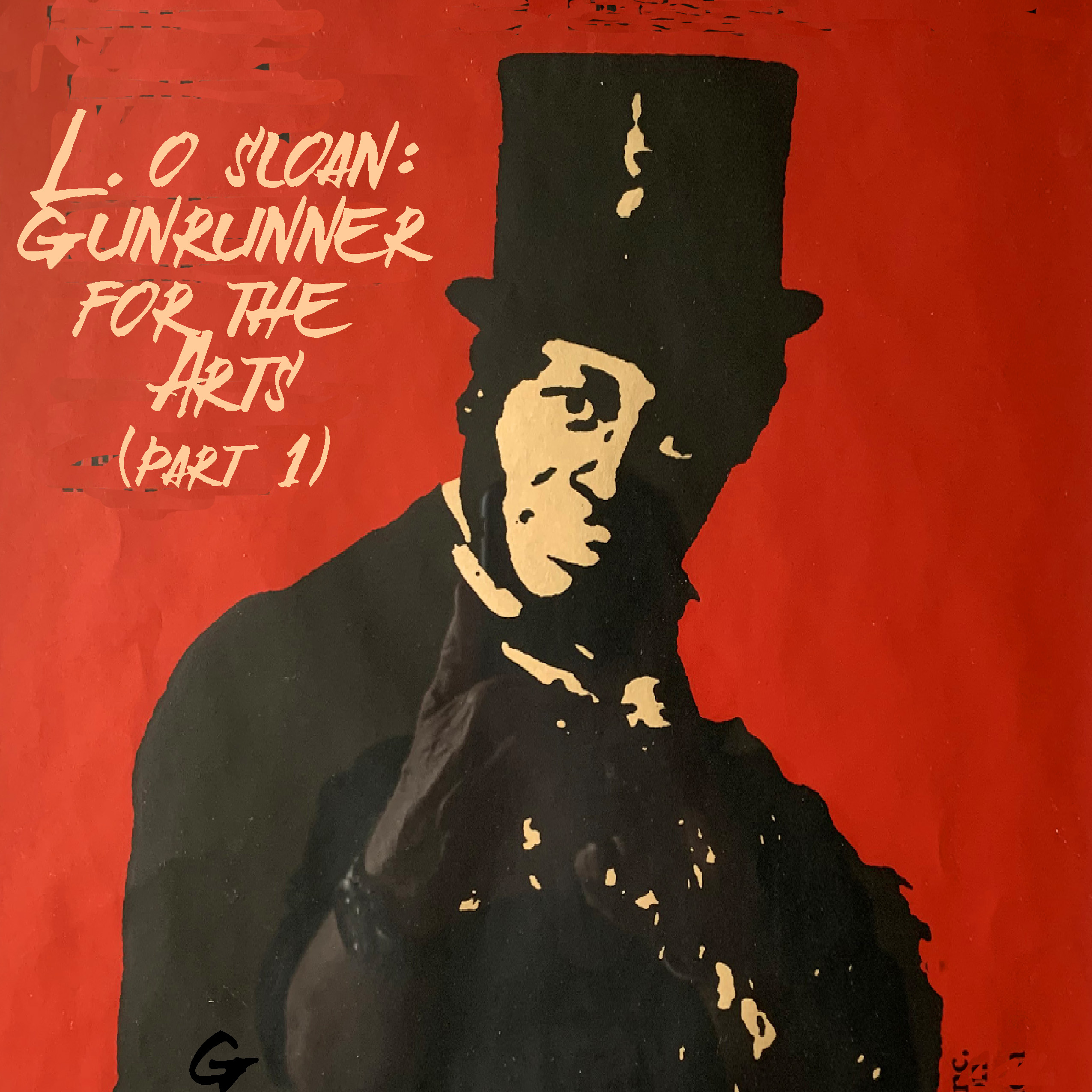
S1 Ep 22: The Gunrunner for the Arts: L.O. Sloan’s Half-Century of Thriving as an Artist for Change (Part 1)
This week we'll meet activist/performer/impresario and historian Lenwood O. Sloan, a man whose extraordinary career has unfolded like a half century-long social change musical.THRESHOLD QUESTIONS AND DELICIOUS QUOTES?What defines a "gunrunner for the arts?""I try to take things that already exist, and through positioning and repositioning to create magic, you know, to motivate, but performance and visual art, literature and writing, film, you know, whatever medium is the best catalyst or elixir for the magic, but I'm a gun runner for the arts"? How does history become an art form?"Well, you know, everything has a history, and everything has a story, and it's the human person that is the juice that brings the linear, sequential, chronological history, and oral tradition of storytelling together into art. It's not what happened in 1864, 1791, or 2018 you know. It's who were the people? What does it mean to you? What relevance does it have for your story today?"?What can the historic struggles for the passage of the 15th and 19th amendments to the U.S. Constitution teach us as we navigate the Covid Universe?"You know African American women, 1918 to 1920, who were trying to not only support to vote for women but to find a place for themselves and that they were doing that against the landscape of the 1918 flu. They were doing it in a pandemic year. You know, they were doing it with their men coming back from World War One having segregation in their communities. They, they were doing it on the eve of a national election of 1920, and they were doing it on the eve of the 1920 Census."?Monuments have often been used to distort and obscure our complex history. How can a monument reveal and celebrate these buried stories? "So I felt that it was essential that we do something old and big and exciting between the primary and the national election to call African Americans and women through the vote, and I felt that we needed to do something Bill that was not about ribbon cutting or confetti, but that we needed to do something bold and audacious"TRANSCRIPTEpisode 2—Leni Sloan: A Gunrunner for the ArtsBill Cleveland: Leni Sloan's father was an iron worker in Pittsburgh, Pennsylvania. He made his mark scaling and helping to erect the tallest buildings in that city's newly soaring post World War Two skyline. When he wasn't climbing iron, Leni's dad would wander local fields lovingly netting butterflies for his precious collection. When Leni was a teenager, his dad took a fall on the job that put him in a wheelchair for the rest of his life. When I met Leni in the late 1970s, he described a play he was working on. A tribute to his father called Wheels and Butterflies, which, in turn inspired me to make this song.From the Center for the Study of Art and Community, this is Change the Story Change the World, a chronicle of art and transformation. I'm Bill Cleveland.When I was a kid, I fell in love with the 1930s movie musicals that would often appear on late-night TV. I'm not sure what it was that attracted me. I suppose their airy predictability was reassuring, a little romance, a little drama all wrapped up in a comforting embrace of those inevitably over the top song and dance numbers."Hey, kids, listen up. I'm going to write a show for us, and we could put it on right here."Now, my friend Leni Sloan grew up watching those old TV shows too, and like me, he took them to heart.The first time I saw, Leni was on a Sacramento stage, starring in a musical played also written and directed called the Wake. The Wake also had a provocative subtitle, three black, and three white refined Jubilee minstrels. It had been commissioned by San Francisco's de Young Museum as a part of the 1976 us bicentennial celebration. The production I saw was in the middle of a three-year World Tour. The story was set in the backstage dressing room at the Ziegfeld Follies, where the ghosts of six famous minstrels, three black and three white from the past, were gathered for a week to lament the death of Bert Williams the last and arguably the greatest black minstrel. As the play unfolded, the minstrels sang and cakewalk, and argued the hundred- and 50-year story of minstrelsy. Looking back, the show was a quintessential Leni Sloan production, combining music, dance, and drama with a heavy dose of long-forgotten and often painful history. It was both a tribute to a great musical tradition and a condemnation of the brutal racism that helped define it.In this week's episode of Change the Story, Change the World, we'll explore the life and times of activist/performer/impresario and historian Lenwood O. Sloan, a man whose extraordinary career has unfolded like a half century-long social change musical. Some see Leni as an artistic shapeshifter. I just think of him as a creative dynamo.However you characterize him, he's certainly done a lot as a dancer with Alvin Ailey and the Joffrey Ballet; as an arts leader at the San Francisco Arts Commission, California A

S1 Ep 11.: How Art and Social Change Shaped My Life
EBad home, Drugs, and prison. A predictable story? Sure, except when you throw in the National Cathedral choir, a geodesic dome, and the stubborn belief that art can save the world. This is the first episode of a podcast produced by the Center for the Study of Art & Community called Change the Story, Change the World. (now called ART IS CHANGE) My name is Bill Cleveland. In this first episode I share the very personal story of how this podcast came to be and try to answer why would anybody want to listen to it. It’s a journey of many decades. It begins in the leafy suburbs of our nation’s capital around the time that America started losing what some have called its innocence---Along the way we encounter hippie communes, the requisite drugs, sex and rock and roll, art colonies in prisons, and armies of artists doing battle with the likes of the Slobodan Milosevic, Pol Pot and the US Department of Justice. This week on Change the Story, Change the World, I share how my story crosses paths with the early history and extraordinary growth of the global community arts movement.THRESHOLD QUESTIONS AND DELICIOUS QUOTES ?Can the creative process be a lifeline for people who are struggling? "The pervasive, penetrating pulse of all that music was a god damn miracle, all at once a soothing balm, a shattering depth charge, and a transcendent window into other dimensions." ?Can art help us re-imagine and recreate the social and cultural fabric of our communities? "One of the bedrock understandings of the hippie universe was, to coin a phrase “you can’t always get what you want, but if you really need it, well, you can make it yourself.” So, in no time at all, we found ourselves imagining that we could make our OWN music.”?What was CETA and how did it give birth to an ever-expanding community arts movement? "The prison partnerships we forged … were both groundbreaking and challenging. They taught is a whole lot in a hurry about what artists need to do to build trust with new communities and neighborhood organizations."? How can art help change the toxic nature of America’s prisons? "In those instants, we could see prison artists kind of tuning in, you know, moving from static to clear reception." ?How can these transformative stories feed the development of a growing community of creative change agents? "By the end of the Art in Other Places Conference, we had a mountain of documentation on artists and programs from all over the country. We had made a commitment to NEA to produce … a report, but to really tell the story of what was going on we had to do more, much more." ?How can artists help re-build civic infrastructure, heal unspeakable trauma, and give new voice to the forgotten and disappeared? "Art and Upheaval took me on an 8-year global journey, documenting artists working in communities facing intense, real-time conflict and trauma.” ?What is Change the Story / Change the World and why should anyone want to tune in? "We are doing this because we believe that meeting the obvious and daunting challenges of this century is going to require a revolution of thought and deed — in essence, a new set of stories powerful enough to change beliefs and behaviors." LINKSThe Hangin' On, William Cleveland from Songlines, by Cleveland PlainsongWashington's Howard Theater played host to many of the great Black musical artists of the early and mid-twentieth centur was billed as the "Theater of the People."Fritz Perls, a German-born psychoanalyst Perls coined the term 'Gestalt therapy' to identify the form of psychotherapy that he developed with his wife, Laura Perls, in the 1940s and 1950s. Perls became associated with the Esalen Institute in 1964, and he lived there until 1969.CETA and the Arts (Comprehensive Employment and Training Act) Here is an analysis of the impact of the U.S. Federal Government's largest annual investment in the arts.The William James Association's Prison Arts Project contracts with visual, literary and performing artists to provide in-depth, long-term arts experiences for incarcerated men and women in California state prison facilities.Art In Other Places: Artists at Work in America's Community & Social Institutions, William ClevelandArt and Upheaval: Artists on the Worlds Frontlines, William ClevelandTRANSCRIPT(Music) THE HANGIN ON “The Hangin On” is probably the saddest song I’ve ever written. But its more complicated than that, because, you see, the unfortunate story it represents also precipitated its creation. So, for me, it’s also a song of redemption, one of many that have emerged over the years that have both taught me, first-hand, about the healing power of human creativity and, to put it bluntly, probably saved my life. From the Center for the Study of Art and Community this is Change the Story, Change the World, A Chronicle of Art and Transformation. I’m Bill Cleveland.Bad home, Drugs, rock and roll, prison. A not uncommon and fairly predictable trajectory, but not really, especially whe