
AR Show with Jason McDowall
100 episodes — Page 2 of 2

Ep 164Andrew Hart (Dent Reality) on Connecting the Digital Layer to the Physical World at Scale
Andrew Hart is the co-founder and CEO of Dent Reality, a company building the digital layer for the physical world. Andrew and his team have solved key technology problems across indoor mapping and accurate indoor location at scale. And they’ve created a user interface centered around people, not AR gimmicks. Andrew is a CEO by day and pioneering developer by night. Prior to Dent Reality, Andrew pioneered the location-based AR space, building the most popular open-source project for Apple's AR platform, and demonstrated AR navigation and POI landmark experiences for the first time, which have since been implemented by Google and Apple.Today, Dent Reality is working with two of the UK’s largest retailers to develop solutions for shoppers and store employees. Andrew views Dent Reality’s place to be similar to Stripe’s payment solution: a thin layer of technology that’s easy to integrate and solves all of the complexities of location, navigation, and mapping.In this conversation, we go on to talk about the benefits of building a holistic solution rather than a series of loosely integrated point solutions as well as understanding where to draw the line between what you build and others build. We also discuss Andrew’s approach to building things customers value, a North Star, core values, and the transition from developer to CEO.You can find all of the show notes at thearshow.com.

Ep 163Dana Chermesh (inCitu) on Visualizing and Engaging in the Future of Our Cities
Dana Chermesh is the founder and CEO of inCitu, an Augmented-Reality-powered civic engagement app that democratizes city planning. Dana is an architect from Tel-Aviv, Israel, and an alumna of NYU Masters program in Urban Data Science (2018). During her career as an architect, she specialized in urban renewal and developed a passion for leveraging technology, data and innovation to form smarter, more resilient, and more just cities and city processes. In 2019 Dana co-founded *inCitu*, to bring together data and discourse with the aid of augmented reality helping citizens see the future of their cities. inCitu was incubated inside Eric Schmidt's social impact venture fund.In this conversation, we discuss Dana’s deep love and appreciation for cities and urban development. We talk about her goal of developing viable, dynamic, data-driven tools to empower residents and leaders to better deal with 21-century urban challenges. She feels driven by a mission that feels bigger than herself or the company.We go on to discuss Dana’s experience at Schmidt Futures, her perspective on the concept of the “metaverse”, and founding a company while being the mother of young children.You can find all of the show notes at thearshow.com.
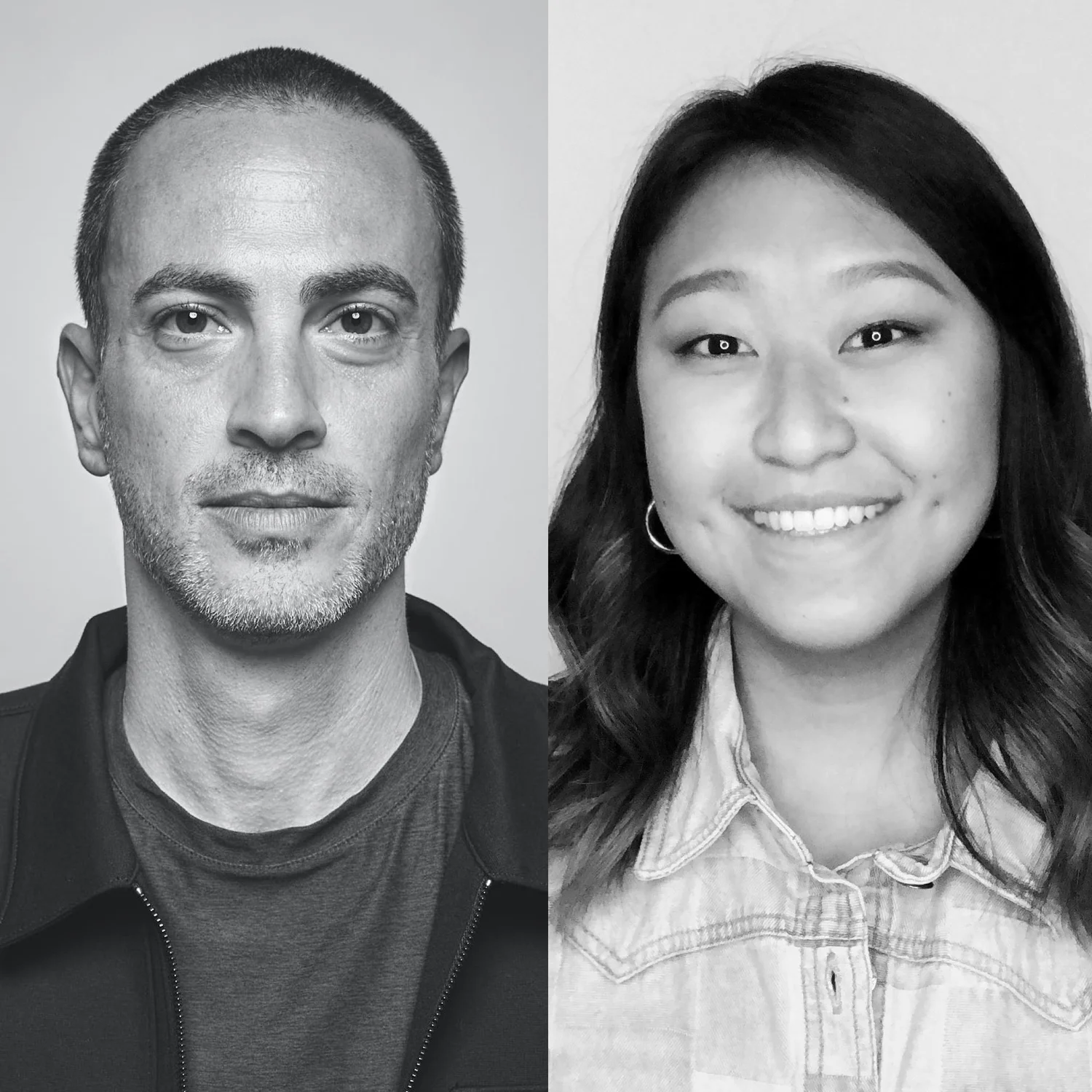
Ep 162Jon Gray and So-Hee Woo (Encore) on Elevating and Democratizing Musical Performance
Jon Gray is the co-founder and CEO, and So-Hee Woo is the Head of XR at Encore, a company building a live-streaming, interactive, AR-infused music performance app. Jon is an entrepreneur and software engineer, who prior to Encore, was the founder and CEO of Cask, a big data analytics platform, which was acquired by Google in 2018. Before that, he was a software engineer at Facebook where he worked on Messages and several other large-scale data platforms. Prior to Facebook, Jonathan founded Streamy.com, a content-oriented social network of the web 2.0 era. So-Hee has experience across many areas of transmedia industrial design, focused on experimenting with the future of products & experiences. Her special interests include, AR & VR of course, as well as the implications of AI and Tech Fashion. Jon and So-Hee are both graduates of Carnegie Mellon University. Jon with a BS in Electrical and Computer Engineering, and So-Hee with a Bachelor's of Fine Arts in Industrial and Product Design. She went on to receive a Masters Degree in Industrial Product and Design from the ArtCenter College of Design. In this conversation, Jon and So-Hee talk about how they empower musicians to create engaging AR art to complement their live musical performances. They go on to discuss how they are establishing a middle class of performance artists through the Encore fan experience app and the Encore Studio app for artists. We get into the business, the strategy, and even some philosophy about art and experience.You can find all of the show notes at thearshow.com.
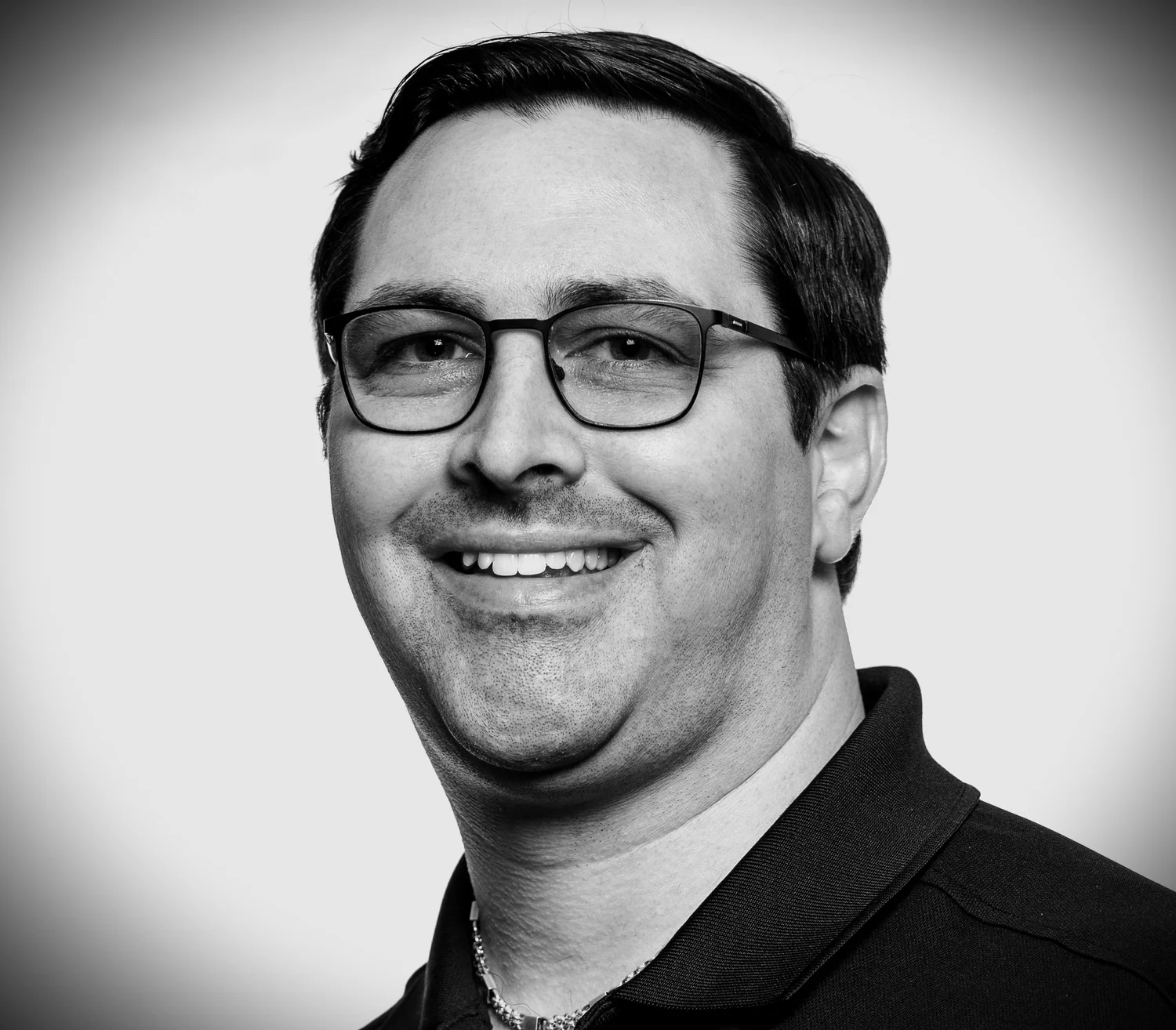
Ep 161David Bonelli (Pulsar) on Building AR Hardware that Actually Works
David Bonelli is the founder and CEO of Pulsar, a company of mechanical and optical experts dedicated to solving the hard problems of AR hardware. David is a U.S. Army veteran who went on to spend several years at the once-venerable Osterhout Design Group (ODG). After creating cutting-edge AR glasses at ODG, he also spent time at Rokid and KFS Industries. Across these companies he designed, managed, and brought to manufacture a range of products spanning optical engineering and augmented reality hardware. It was this set of experiences that really motivated the creation of Pulsar with the goal of lowering the hardware barriers to entry and speeding the design to market timeline.At Pulsar he’s worked with companies such as Red6, Qwake, Microsoft, and others on AR hardware solutions to meet the needs of everyone from fighter pilots to firefighters to space explorers. In this conversation, we chat about those projects as well as his experience at ODG building devices such as the R-8. He still uses an ODG R-8 to educate customers on what’s been done and what’s possible, including how much FOV is really necessary to deliver a quality experience.We go on to talk about the current state of AR hardware and his highlights from the recent SPIE AR/VR conference at Photonics West. David also shares his opinions about which display and optics technologies have the best chance of winning over the long term. You can find all of the show notes at thearshow.com.
Ep 160Brad Scoggin (ArborXR) on Enabling VR/AR at Scale as a Non-Tech Founder
Brad Scoggin is the co-founder and CEO of ArborXR, an XR device management solution for enterprises that is currently being used by more than 400 companies and educational institutions around the world. Brad and his team found companies are using consumer hardware, such as the Oculus Quest, but don’t have the right enterprise software to help them scale as they go from pilot projects to larger deployments. The problems addressed by ArborXR are an extension of the problems Brad saw as the co-founder and CEO of Springboard VR. Springboard was a venue management solution for VR arcades, which Brad successfully sold during the height of the pandemic. In this conversation, we discuss Brad’s insights on how to thrive as a non-tech founder pushing the boundaries of VR and AR, and his perspective on utilizing these devices as tools to enhance our experience with the real world, and not exclusively a means of escape.Brad goes on to share some excellent insights into scaling up (and down) a startup in VR/AR as well as the importance of managing pace, creating transparency, riding the creative tension between focus and experimentation, and successfully building out a remote team.And of course we get into the details of ArborXR, where Brad shares that they have multiple deployments of over 10,000 headsets!You can find all of the show notes at thearshow.com.
Ep 159Faisal Galaria (Blippar) on Overcoming the Risks of Market Timing
Faisal Galaria is the CEO at Blippar, a company creating the tools to enable everyone to create compelling AR experiences. During the course of his career, Faisal has gained over 25 years of experience leading and growing teams in some of the world's most disruptive consumer technology companies including Spotify, Kayak, Skype and now Blippar.Just prior to Blippar, he was the Chief Strategy and Investments Officer at Gocompare, which he helped digitally transform and IPO on the London Stock Exchange in 2016. Previously, Faisal was one of the youngest ever Senior Partners of Alvarez & Marsal, the world’s largest turnaround and restructuring company where he founded and led the European Digital Media practice. Faisal was previously a Senior Vice President at Spotify, where he launched Spotify in seven countries, including its biggest market the USA. He was also an early member of the Skype team, initially as Head of Global Business Development and became the European Director after Skype’s acquisition by eBay in 2005.Faisal took over at Blippar about 2 and half years ago, after the company went from being an early AR pioneer and tech darling in the UK, to a company fighting its way through insolvency. Under Faisal’s leadership, the company is releasing new products and has regained its stature as a key enabler of a broad range of AR experiences.In this conversation, we talk through the challenges of managing the downs and ups of tech startups and the recent product releases by the company. We discuss some of the challenges in working through a turnaround and how they’re similar to a fresh new startup. We also talk about the intrinsic and extrinsic factors that are common to the successful companies of which he’s been a part.You can find all of the show notes at thearshow.com

Ep 158Nicole Lazzaro (XEODesign) on the Four Keys to Crafting Compelling AR & VR Experiences
Nicole Lazzaro. Nicole is the founder and president of XEODesign. Previously she was the designer of “Tilt,” the first true iPhone-only game, but it’s her research into player emotions that has attracted big firms like EA, Sony, and Ubisoft to seek out her expertise. By tapping into “emotion profiles,” Nicole helps designers create more engaging gaming experiences that resonate with all types of players, from casual to hard-core.Nicole has been a leading expert in Player Experience Design for 30 years. She laid the foundation for her research and insights by earning a degree in Cognitive Psychology from Stanford.In this conversation, we dig into her distillation of how we as humans engage with games. She calls this framework the Four Keys to Fun. Nicole shares how her work on Myst and the Sims franchises broaden the industry’s perspective and helped motivate her to pursue her research.Nicole also shares how she’s turned her focus and insights to AR and VR, and sees a vast blue ocean of opportunity. We go on to talk about her work on the Bose AR glasses, and her current XR project, as well as her take on the biggest risk and hope for the new types of AR and VR experiences we’re creating.You can find all of the show notes at thearshow.com.
Ep 1572022 Kickoff: The Quest for Wearability in AR Glasses to Meet Consumer Acceptance
Today I am kicking off 2022 with another annual monologue. I hope you and your family were able to have a safe and relaxing holiday despite the isolation and other challenges imposed by this latest spike in COVID.This is the fifth such annual kickoff episode, and when looking back at my notes from last year, 2021 played out pretty much as expected, with the exception of Facebook’s parent company name change to Meta Platforms…and NFTs, but that’s for a different conversation for now.Mark Zuckerberg’s enthusiasm for all things VR and AR drove a lot of investment and broader awareness of the coming age of these technologies, even if everybody has a different idea of what “metaverse” means.2021 saw very little meaningful progress at the cutting edge of hardware, but there were a few notable developments.In this episode, I share my take on some of the highlights of 2021 and what we might see in 2022 as it relates to augmented reality. I also touch on a few concepts and mental models for how the consumer and enterprise market may come together.You can find all of the show notes at thearshow.com.
Ep 156Replay: Kirin Sinha (Illumix) on Crafting Compelling Content & Experiences for AR
Kirin Sinha is the co-founder and CEO of Illumix, a company building an AR-first mobile gaming platform. You may be familiar with Illumix if you’re a fan of the horror franchise, Five Nights at Freddy’s. The Illumix team has already found a lot of success with their first title, Five Nights at Freddy’s AR: Special Delivery.Prior to founding Illumix, Kirin was the founder and Executive Director of Shine for Girls, whose mission is to transform the lives of middle school girls by cultivating a passion for mathematics through a program that incorporates both math and dance. Kirin has a BS in Theoretical Math and Computer Science from MIT as well as three Masters degrees spanning mathematics, machine learning, and business from Cambridge, The London School of Economics, and Stanford.In this conversation, Kirin shares how she thinks about creating compelling stories and gameplay for mobile devices where AR is a central component.We go to talk about how the Five Nights at Freddy’s franchise is a great fit for AR, and also why the Illumix team needed to go beyond AR Kit, AR Core, and Unity in order to deliver their vision for a compelling AR-first mobile experience.Kirin talks about her broader ambitions and also has some amazing advice for building and maintaining self-confidence.You can find all of the show notes at thearshow.com.
Ep 155Brian Vogelsang (Qualcomm) on Drawing on Lessons of the Past to Build Today’s Headworn AR Ecosystem
Brian Vogelsang is the Senior Director of Product at Qualcomm focused on Snapdragon Spaces, an XR developer platform for headworn augmented reality. This AR development kit is built on open standards and meant to complement the efforts by Niantic’s Lightship and others.Brain started his career as the CTO and co-founder of a very early internet service provider startup. He then joined Qualcomm in the mid-1990s, back when it was still a young company. There he focused initially on IT Infrastructure and Security before shifting his focus to the very early days of mobile app development within Qualcomm.For the last four years, Brain has been working with Hugo Swart and other members of the Qualcomm team on developing Qualcomm’s strategy, products, and ecosystem around Augmented and Virtual Reality.In this conversation, Brian shares how his long history at Qualcomm gave him a front row seat to the development of the mobile app ecosystem in the late 1990s and early 2000s, as well as the smartphone ecosystem a decade later. He pulls some lessons forward to the AR ecosystem that Qualcomm is helping build today, and looks ahead to 2022.We go on to discuss the differences in stand alone vs companion devices (or “viewers" as Qualcomm calls them). And of course we talk about the recently announced Snapdragon Spaces, which is built on the Open XR standards and incorporates innovation around user and environmental understanding.You can find all of the show notes at thearshow.com.
Ep 154Alon Grinshpoon (echo3D) on Building the AWS for 3D and Founder-Market Fit
Alon Grinshpoon is the Co-founder and CEO of echo3D, a 3D-ready cloud platform that helps manage & deliver 3D, AR, and VR content to apps & devices everywhere. echo3D recently closed a $4M round of funding to feed continued growth after seeing a tremendous amount of momentum over the past year.Alon started his career in the Isrealli Intelligence Service, working on encryption and cloud technologies. After earning a B.S. in Computer Science and Electrical Engineering from Tel Aviv University, he spent several years as a software engineer working on improving the performance of cloud-based and client-server computer systems.Alon went on to receive his M.S. in Computer Science from Columbia University with a focus on computer graphics, virtual and augmented reality, and human-computer interaction.In this conversation, we discuss how Alon’s background made him a good fit for solving the unique set of challenges for developing an AWS or Akamai for 3D. Alon is a passionate entrepreneur with great advice for early-stage startups, and we talk about his perspective on the concept of founder-market fit. [quote]Alon goes on to discuss founder-investor fit, and the importance of pragmatically de-risking a startup as you go along. He also shares his funding and growth journey through the RLab and Techstars accelerators, and subsequent rounds of VC funding.You can find all of the show notes at thearshow.com.
Ep 153Jay Wright (Campfire 3D) on Innovating Ahead of the Curve and the Future of Workplace Collaboration
Jay Wright is the founder and CEO of Campfire 3D, a company that is focused on holographic collaboration for design and engineering workflows. Prior to Campfire, Jay spent 10 years building Vuforia from inception to becoming the leading augmented reality platform for developing handheld and headworn applications. Vuforia is currently part of enterprise software and services company, PTC, but Jay originally created Vuforia while at Qualcomm. There he was responsible for global commercialization of non-radio technologies, ranging from computer vision to neuromorphic hardware.Previously, Jay had created two software companies focused on the cutting edge of mobile computing, dating back to the mid 1990s. On the whole, he has been a technology entrepreneur building his vision for future computing platforms for more than 25 years.In this conversation, Jay shares stories from early days of mobile software, starting with his work on Apple’s Newton and his subsequent efforts to create the first App Store. We discuss the impetus for building Vuforia at Qualcomm, the lessons he learned about the AR market from that experience, and how that led to Campfire 3D.We get into the problem he’s trying to solve with Campfire, and the specific strategy he’s pursuing. We go on to discuss his perspective on the AR hardware efforts at Facebook and Apple, and the historical clues about how quickly we can expect general purpose consumer smartglasses to arrive.Jay shares a lot of wisdom about entrepreneurship and AR.It’s worth noting when we recorded this interview, Facebook was still named Facebook, and Meta referred to an early entrant building productivity-focused headworn AR. They shut down a few years back.You can find all of the show notes at thearshow.com.

Ep 152Guido Groet (Luxexcel) on Solving Prescription for Fashionable AR Smartglasses
Guido Groet is the Chief Strategy Officer of Luxexcel, a company that’s able to 3D print optical-quality lenses for smart eyewear. Earlier in his career, Guido worked for many years in both Europe and the USA for technology giant ASML, which is a world leader in semiconductor equipment. He’s held VP positions in Finance, Business development, M&A, and Strategy development. He was also CFO and then CEO of a venture-back company in disruptive high tech manufacturing technologies. Now at Luxexcel Guido is in charge of all commercial and strategic aspects of 3D printing of smart eyewear lenses. Luxexcel has been in the news recently for their partnerships with Lumus and WaveOptics where together they’re able to encase the waveguides within 3D-printed prescription lenses.In this conversation, Guido’s talks about the challenges of finding product-market fit, particularly for technologies that don’t perfectly fit industry’s pre-conceived notion of how things have been done...or should be done.We get into the meat of the technology and where it goes from here. He also shares his perspective on how and where smartglasses will find early success. Here he believes smartglasses will find success when we’re able to make fashionable glasses with some functionality, rather than focusing on field of view or functionality to the detriment of fashion.You can find all of the show notes at thearshow.com.
Ep 151Paul Powers (Physna) Teaching Computers to Understand 3D and Innovating at the Speed of Imagination
Paul Powers, the founder and CEO of Physna. You may have caught Physna in the news recently because they’ve raised $76M over the last year, including $56M earlier this summer from Tiger Global, Sequoia and others. Paul and his team have created a new way to search and compare 3D models in a way that is faster and more effective than what’s come before. This ability to recognize and understand physical objects, combined with Thangs, their online database of 3D models, creates the potential for them to become the Google Search of AR. Earlier, Paul attended Harvard at the age of 16, and went on to study in Germany, earning a law degree and passing the German bar exam. It was his work at a German patent law firm that inspired the foundation for what became Physna.In this conversation, Paul describes his unique educational experience and his path to becoming a tech entrepreneur. He goes on to describe the origins of Physna and how they are enabling computers to understand 3D in the same way they understand text. We talk through the technology and we discuss leadership, entrepreneurial mindset, a different way of thinking about goal setting, and aligning and motivating others. He also shares his perspective of the potential impact that glasses-based AR can have on the human experience.You can find all of the show notes at thearshow.com.
Ep 150Susan Cummings (Tiny Rebel) on AR-First Storytelling and City-Scale Games with Wallace and Gromit
Susan Cummings is the Managing Director of Tiny Rebel Games and a founder of Fictioneers. Susan and her team were awarded a major UK grant for Augmented Reality storytelling, which led to "Wallace & Gromit: The Big Fix Up." This effort was followed by the release this summer of "Wallace & Gromit: Fix Up the City", an ambitious city-scale AR game that takes place in San Francisco, Bristol, and Cardiff. Including her work at Tiny Rebel, Susan has spent more than 20 years in game development and publishing. She was a key player at the origins of Rockstar games and held vital roles as the VP of Publishing and VP of Business Development at 2K games and parent, Take Two Interactive.In this conversation, Susan shares insight into the origins of Grand Theft Auto and some other big deals and projects in the early days of console and PC games. She goes on to talk about the challenges in telling compelling stories with AR.We also talk about some of the lessons learned in making compelling and accessible city-scale AR-based games for mobile and the challenges of “immersion” in see-through AR glasses.(A quick note of disclosure: I’m an investor in Fantsmo, one of the partners Susan mentions when describing her efforts at Fictioneers.)You can find all of the show notes at thearshow.com.
Ep 149Kris Kolo (VRARA) on Mapping, Positioning, and Insights from the VR/AR Association
Kris Kolo is the Global Executive Director of the VR/AR Association, an international organization designed to foster growth, knowledge, and connections between its members.Previously, Kris was an executive at Verizon and Toys R Us, applying AR technology to business needs. At Toys R Us, Kris was working on digital in-store initiatives and shopping solutions, piloting the AR solution from Metaio (acquired by Apple). At Verizon, Kris was responsible for Media, Entertainment, and Location-Based apps & platforms, where he collaborated with Wikitude to integrate AR into Verizon's GPS Navigation. He also launched the Verizon Developer Program. In addition, Kris was an Advisor to FlyBy Media, an AR tech startup, acquired by Apple.As an entrepreneur, Kris was the Co-Founder of Spime Inc, a Silicon Valley startup acquired by Trimble. He’s also published the ground-breaking book, Local Positioning Systems, on geo spatial and location-based services, and holds graduate degrees from MIT.In this conversation, we chat about mapping and positioning in the early days of mobile, as well as the challenges and benefits of remapping the world for AR. Based on his insights from the Association, Kris describes what's working for VR & AR in healthcare and enterprise. He describes what he sees as a big challenge hindering adoption and the impact of Facebook's commitment to VR & AR on the rest of the market.You can find all of the show notes at thearshow.com.
Ep 148Replay: Cory Grenier (Geenee) on Getting Heard at Vergence Labs, Snap Spectacles, and now Geenee
Cory Grenier is the CEO of Geenee, a company on a mission to make the physical world around us easily recognizable to computers using mobile, browser-based technology. They combine image and video recognition, WebAR, and creative services to deliver unique value to brands.Cory started his career at Lenovo in Beijing, becoming a global product marketing manager. He returned to the US in 2013 to join Vergence Labs, an innovative startup building AR glasses. Vergence was acquired by Snap to form the basis of Snap Spectacles. Cory stayed for several years at Snap as the first director of sales and marketing before returning to more entrepreneurial roles.In this conversation, we chat about his efforts to build awareness of the Vergence Labs product, called Epiphany Eyewear. Cory shares how the Snap acquisition happened and some of the lessons he learned while he was there. Do you remember the marketing campaign for Spectacles with the pop-up vending machines, Cory led that.He goes on to describe how Geenee is now pushing the boundaries for brands by thinking deeply about how AR complements consumer behavior around commerce and awareness building.You can find all of the show notes at thearshow.com.
Ep 147Replay: Steve Sinclair (Mojo Vision) on AR Contact Lenses and Lessons from Handspring, Palm, & Apple’s iPhone
Steve Sinclair is the SVP of product at Mojo Vision, a company enabling invisible computing with their AR contact lenses.Steve has an amazing background in the product development and product marketing of personal computing technologies throughout the smartphone revolution. He worked at Handspring, Palm, Apple’s iPhone team, which he joined in 2007, as well as at HP and the Motorola division at Google, which was then sold to Lenovo.He brings 20 plus years of insight to Mojo Vision, which imagines a world where information is there when you need it, and then technology fades away when you don’t so you can connect with others without distraction.In this conversation, we dig into the details of Mojo Vision’s technology-infused contact lenses, including the underlying technology and how it works.He talks about Mojo’s initial use case around helping the visually impaired, as well as other types of experiences that make sense in the early days of wearable displays. We go on to dip into Steve’s history to extract some of the lessons he’s learned at the dawn of the smartphone era and discuss how they might apply to spatial computing.You can find all of the show notes at thearshow.com.

Ep 146Replay: Jeri Ellsworth (Tilt Five) on Resiliency and the Path to Compelling AR Smartglasses
EJeri Ellsworth is the co-founder and CEO of Tilt Five, a company that has created AR glasses that bring tabletop games to life. The Tilt Five system enables you to see, hear, and interact with realistic 3D holograms that entertain and educate.By the time this episode airs, they will have recently completed a Kickstarter campaign where Tilt Five raised more than $1.75 million for their initial product.Prior to Tilt Five, Jeri was the founder of CastAR, which was also making an augmented reality hardware and software platform, and one that had raised $15 million in venture funding before shutting down in 2017.Previously Jeri was at Valve as the first member of the hardware R&D team with a mandate to research novel user interactions and bring the entire family together in the living room. Through this, she contributed to the early development for Valve VR (which became the HTC VIVE), the Steam Box, and the Steam Controller.In this conversation, Jeri shares stories from along her amazing path from being a high-school dropout to building race cars to engineering electronic game systems to being recruited at Valve. Jeri goes on to describe the painful end of her time at Valve and her tumultuous CastAR experience. From those ashes emerged Tilt Five. Jeri describes what’s different this time as well as some of the underlying technology and its tradeoffs, and the deep seated ethos and focus of the company.She doesn’t mince words as she describes her missteps, setbacks, and successes along the way.You can find all of the show notes at thearshow.com.
Ep 145Replay: Matt Miesnieks on a 6D.ai Postmortem and Startup CEO Masterclass
Many of you know Matt Miesnieks as a serial entrepreneur and former investor focused on Augmented Reality. Matt was most recently the CEO and co-founder of 6D.ai, a company building tools to help mobile phones understand the real world and enable compelling AR experiences.Matt started his career in a number of engineering and business roles, before shifting his focus to Augmented Reality more than 10 years ago. Matt was head of customer development at Layar, an early consumer AR company. He founded Dekko, the first mobile mixed reality platform for iOS. Matt worked at Samsung as a director of product development in AR & VR. And he was a founding partner at Super Ventures, an early stage investor in AR & VR.Most recently, he was the founder and CEO af 6D.ai, which gained a lot of recognition among AR developers and enthusiasts for the demos they published showcasing their advanced software APIs enabling more useful and exciting AR experiences. Earlier in 2020, Niantic acquired the company.I caught up with Matt earlier this summer to talk about his entrepreneurial journey at 6D.ai. He shares an honest and insightful perspective across a number of topics, includingmapping the world for AR,what 6D got wrong about their target customer and how they addressed it,the worst mistake they made and what he learned from it,how companies are bought and valued,the responsibilities of a startup CEO in creating optionality,the emotional rollercoaster,the role of self care,and more.Matt shares a lot of hard earned wisdom. I think you’ll love this one.You can find all of the show notes at thearshow.com.
Ep 144John Black and Mina Fahim (MediView) on Giving Surgeons X-Ray Vision in the Operating Room
John Black and Mina Fahim are the CEO and CTO of MediView, a company working to give health practitioners “X-ray vision” in order to simplify minimally invasive procedures, enhance clinical workflow, and improve patient outcomes using Augmented Reality.John Black, MediView’s co-founder and CEO, is a physiologist with an educational background in orthopedic sports medicine and cardiopulmonary physiology. He moved from allied health to the medical device industry early in his career. Prior to MediView, John was leading a sales organization as the Regional Vice President at Orthofix, a global medical device company.Mina Fahim, MediView’s President and CTO, studied biomedical engineering and technology management as part of his career in medical device innovation. Prior to MediView, Mina spent 4 ½ years at Medtronic as a Principal Research Development Engineer. In this conversation, John and Mina discuss the unique challenges and opportunities for using AR during surgery. Mina notes that surgeons understand and act on human anatomy in 3D, but use 2D visualization and plan procedures. MediView is able to combine pre-operative 3D images (MRI, CAT) with real-time imaging during the surgery (ultrasound). He notes this approach is even more important in minimally invasive surgery where doctors can’t directly see the treatment area.We go on to discuss the benefits and lessons learned from their partnership with the Cleveland Clinic and how they see the landscape of immersive technology in the operating room.You can find all of the show notes at thearshow.com.
Ep 143Mark Greget (NuEyes) on Bootstrapping an AR Hardware Startup and the Path to the Pro 3 Glasses
Mark Greget is the founder & CEO of NuEyes, an AR hardware and software company that originally launched in 2016 to assist those with degenerative eye conditions. Recently the company has expanded its product offerings into enterprise, gaming, and entertainment with the launch of the Pro 3 and Pro 3e.Mark is a U.S. Navy veteran and an accomplished medical technology entrepreneur. Prior to NuEyes, Mark was the founder of Los Angeles Low Vision, which was recognized as a leader in the medical industry and became the number two distribution company for visual assistive technology in the country responsible for millions in revenue. In this conversation, Mark describes how the company got its start by changing the lives of the visually impaired using custom software, glasses from the now defunct ODG, and the patient's ability to learn how to see again through the glasses.We go on to talk about the demise of AR glasses maker ODG, and the resulting struggles and opportunities for Mark and the team at NuEyes. Now they are tackling healthcare, enterprise and entertainment with a pair of new wearable displays. He also describes how he’s built an AR hardware and software company on a shoestring budget and the challenges of raising money as a hardware tech company.You can find all of the show notes at thearshow.com.
Ep 142Sly Lee (Emerge) on the Importance of Touch to Immersive Presence
Sly Lee is the co-founder & CEO of Emerge, a cross-reality presence company, building a platform that aims to enable more meaningful, engaging, and diverse interactions in XR that bring us closer to the people we care about through touch and emotion.Sly is an entrepreneur and scientist who is passionate about creating positive global impact He was named to Forbes 30 Under 30, and he is a member of Global Future Council on Virtual and Augmented Reality at the World Economic Forum.Earlier in his career, Sly was the founder of The Hydrous, an organization that assembled an international consortium to create and share 3D maps of underwater coral reefs.In this conversation, we explore the concept of human connection in the age of the metaverse, and why the sense of touch has an important part to play.Sly goes on to describe the product he’s creating, how it differs from haptic controllers, and the feedback he’s getting from early users. We explore how touch is incorporated into social interaction within our inner circles, and what the trends and differences are internationally.You can find all of the show notes at thearshow.com.
Ep 141Amy LaMeyer (WXR Fund) on Investment Focus and Closing the Gender Gap in Venture Funding
Amy LaMeyer. Amy is the managing partner of WXR Fund, where she invests in early stage spatial computing and artificial intelligence companies with female leadership. Amy spent the first half of her career at Akamai Technologies, which helped enable the early web to scale. There she led the diligence and integration of 20 deals worth more than $1.5 billion.Now she’s fully immersed in AR and VR as an advisor and investor, and she was named one of the Top 30 people to Watch in Augmented Reality by Next Reality. Amy is also a lover of music and the author of the “Sound and AR” chapter in the book Convergence: How the World Will Be Painted With Data by Charlie Fink. In this conversation, Amy shares her observations on demographics and trends after attending the recent YC demo day and other events, and she makes the case for and challenges facing female founded companies. We talk about market trends, the venture fund, and she profiles the areas in which she’s most excited. She goes on to describe some of the founder traits she wants to see, including being an expert in the area where the startup is attempting to disrupt.You can find all of the show notes at thearshow.com.

Ep 140Japjit Tulsi (Matterport) on 3D Digital Twins and Building Strong Engineering Teams
Japjit Tulsi is the CTO at Matterport, a company building a set of technologies to accelerate and simplify the creation of immersive 3D digital twins for real estate, project planning, hospitality, insurance, and more.Prior to Matterport, Japjit gained more than 20 years of technical leadership experience, including as CTO at Carta, a tool for investors, founders, and employees to manage their equity. He was also VP of Engineering at eBay, leading engineering for new product development, including their AI-powered shopping assistant.Earlier in his career, he helped build products at Google, including Google Analytics and YouTubes’ innovative content platform. He also held numerous senior leadership positions at Microsoft, along with entrepreneurial pursuits at StumbleUpon.Japjit also serves as a board member at Grassroots Ecology, an environmental education and action nonprofit.In this conversation, we get into the technology at Matterport and how Japjit and his team are leveraging machine learning to deliver greater insights with less data, essentially enabling you to “teleport” into a space.But their vision is to do more than capture physical spaces. Matterport's Cortex AI and deep learning algorithms leverages the data to bring an unparalleled index of millions of spaces and new insights into the operational efficiency of buildings around the world.We talk about the company, the technology, and the roadmap. And Japjit shares some great advice for building and maintaining strong engineering teams.You can find all of the show notes at thearshow.com.
Ep 139Kirin Sinha (Illumix) on Crafting Compelling Content & Experiences for AR
Kirin Sinha is the co-founder and CEO of Illumix, a company building an AR-first mobile gaming platform. You may be familiar with Illumix if you’re a fan of the horror franchise, Five Nights at Freddy’s. The Illumix team has already found a lot of success with their first title, Five Nights at Freddy’s AR: Special Delivery.Prior to founding Illumix, Kirin was the founder and Executive Director of Shine for Girls, whose mission is to transform the lives of middle school girls by cultivating a passion for mathematics through a program that incorporates both math and dance. Kirin has a BS in Theoretical Math and Computer Science from MIT as well as three Masters degrees spanning mathematics, machine learning, and business from Cambridge, The London School of Economics, and Stanford.In this conversation, Kirin shares how she thinks about creating compelling stories and gameplay for mobile devices where AR is a central component.We go to talk about how the Five Nights at Freddy’s franchise is a great fit for AR, and also why the Illumix team needed to go beyond AR Kit, AR Core, and Unity in order to deliver their vision for a compelling AR-first mobile experience.Kirin talks about her broader ambitions and also has some amazing advice for building and maintaining self-confidence.You can find all of the show notes at thearshow.com.

Ep 138BONUS: Karl Guttag (KGOnTech) on Apple and Their Ability to Invent New Physics (Part 3)
Karl Guttag, is currently most well known as a speaker and the author of KGOnTech, a technology blog at kguttag.com.Karl has 40 years of experience in Graphics and Image Processors, Digital Signal Processing, memory architecture, and micro displays, for use in Heads Up Displays and AR glasses. He’s got 150 patents to his name related to these technologies and many billions of dollars of revenue attributed to those inventions. Karl spent nearly 20 years at TI (that’s Texas Instruments), and was named a TI Fellow - the youngest in the company’s history. In the 20 years since, he’s been a CTO at three micro display system startups, in two of which he was also a co-founder.And these days he’s also the Chief Science Officer at Ravn, a company developing a hardware and software platform to deliver mission-critical intelligence to military and first responders when they need it most.Today’s episode is a postscript to the previous two episodes. After I concluded my interview with Karl, we started talking about Apple and their rumored pursuits of VR and AR devices.You can find all of the show notes at thearshow.com.
Ep 137Karl Guttag (KGOnTech) on Mapping AR Displays to Suitable Optics (Part 2)
Karl Guttag, is currently most well known as a speaker and the author of KGOnTech, a technology blog at kguttag.com.Karl has 40 years of experience in Graphics and Image Processors, Digital Signal Processing, memory architecture, and micro displays, for use in Heads Up Displays and AR glasses. He’s got 150 patents to his name related to these technologies and many billions of dollars of revenue attributed to those inventions. Karl spent nearly 20 years at TI (that’s Texas Instruments), and was named a TI Fellow - the youngest in the company’s history. In the 20 years since, he’s been a CTO at three micro display system startups, in two of which he was also a co-founder.And these days he’s also the Chief Science Officer at Ravn, a company developing a hardware and software platform to deliver mission-critical intelligence to military and first responders when they need it most.In this second part of my conversation with Karl, we talk about matching display technologies to the right combiner optics technologies. Karl talks about which of those technologies he thinks have the best chance of being successful. He also discusses the importance of matching what the devices can do well to the user and the use case, and we get into some of those use cases across consumer, enterprise, and military.On this last one, Karl goes deeper into the hard tradeoffs in delivering something of essential value to the military and other first responders in the field.You can find all of the show notes at thearshow.com.
Ep 136Karl Guttag (KGOnTech) on the Attack of the Clones and Magic Leap’s Wasted Opportunity (Part 1)
Karl Guttag, is currently most well known as a speaker and the author of KGOnTech, a technology blog at kguttag.com.Karl has 40 years of experience in Graphics and Image Processors, Digital Signal Processing, memory architecture, and micro displays, for use in Heads Up Displays and AR glasses. He’s got 150 patents to his name related to these technologies and many billions of dollars of revenue attributed to those inventions. Karl spent nearly 20 years at TI (that’s Texas Instruments), and was named a TI Fellow - the youngest in the company’s history. In the 20 years since, he’s been a CTO at three micro display system startups, in two of which he was also a co-founder.And these days he’s also the Chief Science Officer at Ravn, a company developing a hardware and software platform to deliver mission-critical intelligence to military and first responders when they need it most.Like my first interview with Karl several years ago, this was a long and wide ranging conversation that I split into multiple parts. In this first part, we touch on cloning - both of microprocessors and AR devices. We also talk about why see-through AR is 10x harder than VR, the importance of field of view in AR vs VR, the poor visual quality of the Hololens 2, the challenges of diffractive waveguides and laser scanning displays, Magic Leap’s wasted opportunity, and more. Some of it gets technical, but Karl does a good job of making it accessible. If you’ve ever wondered what it’s like to sit down and have a drink with Karl, it’s something like this. You can find all of the show notes at thearshow.com.
Ep 135Julia Brown (MindX) Shines New Light on Brain-Computer Interfaces
Julia Brown is the co-founder and CEO of MindX, the creator of a novel brain computer interface that combines neurotechnology, augmented reality and artificial intelligence to create a "look-and-think” interface for next-generation spatial computing applications. Prior to starting MindX, Julia co-founded EpiWatch, a digital health spin-out from Johns Hopkins that developed a seizure detection and condition management platform for wearable devices in partnership with Apple. She was also a founding member of the Johns Hopkins Medicine Technology Innovation Center, where she oversaw a team of engineers and entrepreneurs to create 25+ novel digital solutions that improve patient care, many of which were spun out into independent startup companies. Julia has an academic background in computational biology, engineering, and human-centered design.In this conversation we get into the potential of brain computer interfaces and their contribution to private, personal computing when wearing AR glasses. Julia goes on to describe alternative approaches for brain computer interfaces, including those using EMG and EEG. And of course we dig into what Julia and her team are creating at MindX, which utilizes what they call Holographic Near Infrared Spectroscopy. We talk through where they are in bringing their product to market and what will be possible in the coming years. Julia also touches on lessons learned in working with academic research labs when bringing cutting edge innovation to market.You can find all of the show notes at thearshow.com.
Ep 134Adam Davis (Amalgamated Vision) on Focusing on What Matters with Wearable Displays for Healthcare and Enterprise
Dr. Adam Davis is the founder and CEO of Amalgamated Vision, a maker of wearable displays optimized for use as a reference display in healthcare and enterprise. Adam spent a career as a practicing physician focused on neruo-radiology, and regularly explored and pushed the boundaries of using 3D imagery to better understand each patient’s physiology. Most recently, he was a clinical associate professor and the Director of the Image Processing Lab at NYU Medical Center. There he specialized in medical image post processing, volume rendering, user interface, data visualization, image based procedural and surgical guidance. He’s also done product development for Siemens Healthineers and Olea Medical.It was from this deep appreciation for 3D medical imaging that Adam began developing a new type of wearable display highly suitable to medical environments. The team recently won the 2020 NASA iTech challenge alongside Mojo Vision.In this conversation, we dig into the technology and the unique perspective that is driving its development.The solution lies on your cheek bones, just below the primary visual field. It uses laser MEMs (laser beam scanning) with a novel pancake optic to project an image directly on the retina when you look down.We start the conversation with some background on medical imaging and the impact that stereoscopy (that is seeing images in 3D) can have in medicine. You can find all of the show notes at thearshow.com.
Ep 133Hannah and Matthew Arevalo (Pinfinity) on Fan Commerce and AR-enhanced Collectible Pins
Hannah and Matthew Arevalo are two of the co-founders of Pinfinity, an augmented reality collectible pin platform enabling interactive experiences around our favorite brands. Previously, Pinfinity’s CEO, Hannah Arevalo was the director of brands for several product lines at Loot Crate, a subscription box business focused on fan culture. There she worked directly with brands such as Warner Brothers and Disney and led a P&L of $100M annually. She also helped the team garner more than a dozen industry awards around fast growth, great products, and customer service.Matthew Arevalo was a co-founder and Chief Innovation Officer at Loot Crate, and has spent much of his career focused on developing brand, community, and strategic business relationships.AR is seeping into many corners of our daily lives, and now it’s coming to collectable pins, a category of collectibles popularized by Disney in the late 1990s.In this conversation, we discuss fan culture, the pin collectable movement, and how augmented reality fits into a broader concept Hannah and Matthew call “fan commerce”.They go on to describe some of the lessons from their previous experience in a high-growth subscription box business, and how they are applying them to Pinfinity.You can find all of the show notes at thearshow.com.

Ep 132Nathan Pettyjohn & Mike Lohse (Lenovo) on the ThinkReality A3 and Providing an End-to-End Solution to Enterprise
This episode features Nathan Pettyjohn and Mike Lohse at Lenovo. Nathan is the Commercial AR/VR Lead at Lenovo. He is also the founder and president of the VR/AR Association and the annual VR/AR Global Summit. Previously Nathan was also the founder and CEO of venture-backed asile411, a mobile indoor navigation and 3D product cloud platform.Mike is the Hardware Product Manager for Commercial AR/VR at Lenovo. Previously Mike spent 9 years at ODG, which for a long time was the premier creator of AR glasses. As the VP of Advanced Products there, he was behind the impressive R7, R8, and R9 glasses.In this conversation, Nathan, Mike, and I chat about the key use cases that Lenovo’s customers want to solve with spatial computing, and where AR or VR fit in the mix. We talk about the challenges of moving projects beyond initial pilots as well as Lenovo’s role in delivering holistic, end-to-end AR and VR solutions to companies. This includes software, services, and hardware. We talk about Lenovo’s ThinkReality A6 headset and the lessons learned in the two years since its release. We also discuss the new ThinkReality A3. This new device tethers to a smartphone or PC to satisfy industrial or work-from-home productivity needs. We discuss how this new product fits with offerings from Microsoft and RealWear, and the device agnostic approach Lenovo is taking to meet the needs of their customers.You can find all of the show notes at thearshow.com.
Ep 131Robert Scoble on Remorse, Growth, and Steve Jobs's Last Device
ERobert Scoble is a futurist, strategist and the author of four books about technology. His latest book is The Infinite Retina, co-authored with Irena Cronin, which explores the emerging era of spatial computing, including AR, VR, robotics, autonomous vehicles, and more.Robert has spent his career at the intersection of technology and media, working as a journalist, an evangelist, and a futurist, most notably at Microsoft and Rackspace. During that time, he’s interviewed more than a thousand people from research labs to startups to major tech companies, including the likes of Tony Hseih, Mark Zuckerberg, and Bill Gates. The interviews, mixed with his own insights, formed the basis for the four books on technology trends he’s published over the last 14 years.But in 2017, he was accused of sexual harassment by several women, which became public during the Me Too movement. What Robert did was wrong, and he admits as much in our conversation. He goes further to describe the necessity for better behavior and better, more diverse company cultures throughout the tech industry. He seeks to counsel founders on the dangerous mindsets that lead to sexual harassment and the damage it causes to victims, their careers, and the companies where they work. He also counsels founders on the risks of loneliness, mental illness, and addiction, which are all far more common than many of us realize. (Jump ahead in the episode to 1:04:16 for this part of the discussion.)We start our conversation talking about Robert’s latest prediction about Apple and their plans to create the next great spatial computing device.This interview was recorded a few days before the recent Apple announcement about the AirPod Max, a device that forms the basis of Robert's predictions. He describes something with immersive spatial sound and visuals that can create an entirely new type of experience. We also talk about Google Glass and its violation of an implicit social contract we have with each other, as well as the role of Tesla in the broader definition of spatial computing.You can find all of the show notes at thearshow.com.
Ep 1302021 Kickoff: Lots of New Devices Coming, None Ready for Mass Adoption
Today I am kicking off 2021 with another annual monologue. I hope you and your family were able to have a safe and relaxing holiday despite the isolation and other challenges imposed by COVID.This is the forth such annual kickoff episode, and when looking back at my notes from last year, 2020 played out pretty much as expected, with the glaring exception of the impact of COVID. However one thing COVID did not impact is the pace of progress at the bleeding edge of the technology. The industry continues to make slow progress—sometimes it feels painfully slow—towards addressing the biggest challenges of AR glasses.In this episode, I restate why I believe AR Glasses aren’t a passing fad like 3D TV. I also share my take on some of the highlights of 2020 and what we might see in 2021 as it relates to augmented reality.While the road in front of us is still long, I am a firm believer that Augmented Reality in general, and wearable AR glasses in particular, will have a profound impact on our lives.You can find all of the show notes at thearshow.com.

Ep 129Alex Hertel (Intuit) on Mixing Bits and Atoms within the World Computer
Alex Hertel is the former co-founder and CEO of Xperial, and currently an inventor at Intuit where he is a director in their Futures group.Alex completed his Ph.D. in computer science at the University of Toronto and is an expert in no-code languages as well as the use of immersive technologies to make the physical world digitally interactive.After his PhD program, he co-founded Walleto, which was acquired by Google and became Google Wallet. After several years at Google, he left to become the co-founder and CEO of Xperiel, where he helped to create a user-friendly programming language called “Pebbles” with the goal of democratizing AR and IoT programming in order to connect the Internet to the physical world.In this conversation, Alex explains how he applied his research to a concept he calls the “world computer” and how it relates to computing paradigms of the past. He sees the roles of displays being replaced by AR glasses, and our computing peripherals being replaced by the many internet-connected devices around us.Alex goes on to describe how a new no-code language can make the process of creating AR experiences more accessible. He also describes lessons learned through his two entrepreneurial experiences and the benefits of now being an inventor in Intuit’s Futures Group.You can find all of the show notes at thearshow.com.
Ep 128Justin Barad (Osso VR) on Making Surgery as Safe and Reliable as Air Travel (Part 2)
Justin Barad, MD, is the CEO and founder of Osso VR, a fully immersive, and scientifically validated, surgical training platform.Prior to starting Osso VR, Justin became a board-eligible orthopedic surgeon with a Bioengineering degree from UC Berkeley, and an MD (medical doctorate) from UCLA, where he graduated first in his class. He completed his residency at UCLA and his fellowship in pediatric orthopedics at Harvard and Boston Children’s Hospital.His experiences as a medical student and practicing surgeon opened his eyes to the many challenges faced by surgeons striving to provide the best care in the face of expanding medical understanding, technology, and complexity.In this second part of my two-part conversation with Justin, we talk about the imperative to improve medical education. He notes our approach to medical education and assessment is still largely based on what worked 100 years ago. But using today’s insights and technologies, while not a perfect, can dramatically improve and expand the quality of medical education. [quote]Justin goes on to describe the opportunity to accelerate the "trust curve" during in-hospital training—the notion that before you can get hands on and work your way up the learning curve, you have to work your way up the trust curve. Justin also talks about startup leadership principles he’s learned and his take on Virtual Reality versus Augmented Reality.Note: About half way into the episode you’ll notice we took a break and came back later to finish the interview.You can find all of the show notes at thearshow.com.
Ep 127Justin Barad (Osso VR) on Passion, Conviction, and the Pursuit of Better Medical Training & Assessment (Part 1)
Justin Barad, MD, is the CEO and founder of Osso VR, a fully immersive, and scientifically validated, surgical training platform.Prior to starting Osso VR, Justin became a board-eligible orthopedic surgeon with a Bioengineering degree from UC Berkeley, and an MD (medical doctorate) from UCLA, where he graduated first in his class. He completed his residency at UCLA and his fellowship in pediatric orthopedics at Harvard and Boston Children’s Hospital.His experiences as a medical student and practicing surgeon opened his eyes to the many challenges faced by surgeons striving to provide the best care in the face of expanding medical understanding, technology, and complexity. For example, after 14 years of education, nearly a third of graduating residents cannot operate without supervision.These insights, combined with a conviction to solve the problem, led him to co-found Osso VR.In this first part of my two-part conversation with Justin, we explore his life-long fascination with ways that software and technology can be applied to help people. He shares his journey of discovery, including some advice he got while still in high school. He was told if he really wants to invent something, then all he needs to do is understand the problem he’s trying to solve first. And the best way for him to solve medical problems is to be a doctor—an idea that did not appeal to him at the time.Justin goes on to describe his experiences as a medical resident and practicing surgeon, and how he came to hit on the problem he wanted to solve. He also shares the internal struggle he faced when forced to decide between two divergent career paths.You can find all of the show notes at thearshow.com.
Ep 126Charlie Fink (Author) on Inspiring the Next Generation of AR/VR Creators
Charlie Fink is a respected author and speaker focused on AR and VR. He has been at the bleeding edge of the intersection of entertainment and technology for more than 35 years. Charlie was a VP of Creative Development at Disney, where he created the concept for the Lion King. He was the COO at Virtual World Entertainment in the early 90s, which was the first company to bring VR experiences to retail locations across the world. Charlie was Chief Creative Officer at AOL studios, where he launched a number of early brands on the web. And after his startup was acquired by American Greetings Interactive, Charlie then took over as President and Chief Creative Officer and drove one of the most popular websites at the time to profitability and success.Over the last few years, he has been applying all of that experience and insight to his current passion around AR and VR as an author, speaker, and now teacher. About 2 years ago Charlie joined me for an interview where we explored his career and his first book on spatial computing called Charlie Fink’s Metaverse.Recently, about a week before the US presidential election, we caught up to discuss what he brings as an author and a teacher.We go on to discuss the classes he is currently teaching at Chapman University as well as his latest book and current take on where we are as an industry.You can find all of the show notes at thearshow.com.
Ep 125Angela Robert (Conquer Experience) on Adapting to Healthcare Training Needs During COVID
Angela Robert is the Co-founder and CEO of Conquer Experience, a company using VR to dramatically improve training for operating room nurses.After earning a degree in math and computer science, Angela started her career as a software engineer before joining Electronic Arts where she contributed to more than 20 games. She became the development director of the initial and sequel release of the popular Skate franchise.After several years of building and leading teams at EA, she set off to improve the lives of medical patients by improving the quality of training for nurses.Angela is an active supporter of girls in STEM and women in technology and business, as an advisor, mentor, and speaker.For this conversation, Angela joined me for a fireside chat at the recent VRAR Association Global Summit - the 2020 online edition - where the theme was adaptability.We discussed how Angela pivoted her iPad-based and VR-based training company in response to COVID. Hospitals were no longer buying, and live in-person training opportunities for most procedures disappeared. Now hospitals are filled with out-of-practice operating room nurses, who had been reassigned or furloughed for months, that need to be ready to support a huge backlog of surgeries.Much of the conversation happened live at the conference, but the last bit was recorded afterwards. Although it’s all presented here as one unified conversation.You can find all of the show notes at thearshow.com.
Ep 124Cory Grenier (Geenee) on Getting Heard at Vergence Labs, Snap Spectacles, and now Geenee
Cory Grenier is the CEO of Geenee, a company on a mission to make the physical world around us easily recognizable to computers using mobile, browser-based technology. They combine image and video recognition, WebAR, and creative services to deliver unique value to brands.Cory started his career at Lenovo in Beijing, becoming a global product marketing manager. He returned to the US in 2013 to join Vergence Labs, an innovative startup building AR glasses. Vergence was acquired by Snap to form the basis of Snap Spectacles. Cory stayed for several years at Snap as the first director of sales and marketing before returning to more entrepreneurial roles.In this conversation, we chat about his efforts to build awareness of the Vergence Labs product, called Epiphany Eyewear. Cory shares how the Snap acquisition happened and some of the lessons he learned while he was there. Do you remember the marketing campaign for Spectacles with the pop-up vending machines, Cory led that.He goes on to describe how Geenee is now pushing the boundaries for brands by thinking deeply about how AR complements consumer behavior around commerce and awareness building.You can find all of the show notes at thearshow.com.
Ep 123Matt Miesnieks on a 6D.ai Postmortem and Startup CEO Masterclass
Many of you know Matt Miesnieks as a serial entrepreneur and former investor focused on Augmented Reality. Matt was most recently the CEO and co-founder of 6D.ai, a company building tools to help mobile phones understand the real world and enable compelling AR experiences.Matt started his career in a number of engineering and business roles, before shifting his focus to Augmented Reality more than 10 years ago. Matt was head of customer development at Layar, an early consumer AR company. He founded Dekko, the first mobile mixed reality platform for iOS. Matt worked at Samsung as a director of product development in AR & VR. And he was a founding partner at Super Ventures, an early stage investor in AR & VR.Most recently, he was the founder and CEO af 6D.ai, which gained a lot of recognition among AR developers and enthusiasts for the demos they published showcasing their advanced software APIs enabling more useful and exciting AR experiences. Earlier in 2020, Niantic acquired the company.I caught up with Matt earlier this summer to talk about his entrepreneurial journey at 6D.ai. He shares an honest and insightful perspective across a number of topics, includingmapping the world for AR,what 6D got wrong about their target customer and how they addressed it,the worst mistake they made and what he learned from it,how companies are bought and valued,the responsibilities of a startup CEO in creating optionality,the emotional rollercoaster,the role of self care,and more.Matt shares a lot of hard earned wisdom. I think you’ll love this one.You can find all of the show notes at thearshow.com.

Ep 122Angelo Stracquatanio (Apprentice.io) on AR-Enabled Collaboration for Life Sciences
Angelo Stracquatanio is the co-founder and CEO of Apprentence.io, a software platform to help life sciences teams bring critical drugs to market faster and with higher reliability. Leveraging AR glasses is a key component of the solution.Angelo was a competitive swimmer in college and studied finance, winning the New York Society of Security Analysts Annual Investment Research Challenge competition.After starting his career in finance, Angelo shifted to mobile software development at the beginning of the iPhone era, and earned his MS in computer science from NYU.With an eye towards making the world a better place with cutting edge technology, Angelo started Apprentice almost 6 years ago.In this conversation, Angelo starts by sharing the story of his finance competition win, and how the lessons from swimming competitively in college carries over to his role as a startup CEO.Angelo describes the unique challenges faced by teams focused on life sciences, and how AR plays a role in solving them. He shares how Apprentice has responded to the COVID-19 outbreak, and the change in mindset within the life sciences industry.Angelo goes on to explain how AR isn’t just enabling greater efficiency, but is also unlocking new capabilities for their customers. We also talk about Angelo’s evolution as a CEO, and what he’s been doing to foster his growth.This episode was originally recorded in June 2020.You can find all of the show notes at thearshow.com.
Ep 121Remi Del Mar (Epson) on Zen and the Art of Fit, Form, and Function for AR Glasses
Remi Del Mar is the senior product manager responsible for Epson’s visual displays and Moverio AR glasses.Remi has been at Epson for almost 5 years. Previously she worked at BitTorrent and spent nearly 8 years at Logitech working on a number of different products, including on an early exploration in AR.She brings a deep passion for the art of product management, of delivering a product that consumers truly love.In this conversation, Remi explores some of the key use cases she’s seeing for the Moverio AR glasses, including uses around flying drones, remote assistance, education, HR, entertainment, and even art.We talk through some industry projections, and discuss what’s necessary for AR glasses to breakthrough to ubiquity. In addition to wearability and interoperability, Remi goes on to describe the importance of capability and privacy.She also talks about the challenges and responsibilities of being a good hardware product manager, as well as a couple of breaks she took during her career.You can find all of the show notes at thearshow.com.
Ep 120Pat Antaki (seeBOOST) on Becoming an Olympian at 42 and Giving Sight to the Visually Impaired
Pat Antaki is the founder and CEO of seeBOOST, a company creating a prescription glasses solution for people with vision impairment. The device incorporates an optimized, video pass-through AR system over one eye of the glasses.Pat is a former MIT grad with a long history in microelectronics design and engineering, including spending several years working with industry expert, Karl Guttag.These days Pat is committed to improving the quality of life for millions of people with vision impairment due to Macular Degeneration and Diabetes. But a few years back, he took a detour from his career as an engineer and entrepreneur. As he was entering his 40s, Pat set his sights on becoming an Olympic athlete and participating in the 2006 Torino Winter Games.In this conversation, we talk through his mindset as he embarked on his Olympic adventure, including his work on microdisplays at the turn of the century.Pat goes on to describe his decision, his preparation, and some challenging experiences on his road to the Olympics to compete in the Skeleton. It’s a really great story where his technology innovation plays a key role.We also talk about the impetus and focus of his work at seeBOOST, including some of the design tradeoffs and lessons learned in bringing the product to market. It turns out, aesthetics matter, even when the device is so critical, users can’t see these words without it.You can find all of the show notes at thearshow.com.
Ep 119Christina Heller (Metastage) on Capturing the Humanity of a Live Performance for AR & VR
Christina Heller is the CEO of Metastage, an XR studio that brings live performances into digital worlds through volumetric capture and complementary tools.The resulting 3D content can be experienced in augmented reality using mobile phones or high-end AR headsets, or using 3D displays. Metastage uses the Microsoft Mixed Reality Capture system and is located in Los Angeles.Prior to leading Metastage, Christina was the CEO of VR Playhouse, an immersive content company based in Los Angeles. She is a recipient of the Advanced Imaging Society's Distinguished Leadership in Technology Award, and was named in the Huffington Post as one of 5 women changing the virtual reality scene. She has a long history in immersive media, having contributed to over 120 immersive projects. Christina comes from the world of journalism, radio, and television.In this conversation, we dig into volumetric capture in general, and Metastage in particular. We explore a couple of the projects she and her team have done, along with some of the challenges and highlights along the way.We discuss how people get to experience the end result, and the impact of the underlying capture technology. Christina also shares a new initiative to make it easier for creators to leverage volumetric content.Christina share’s some of the lessons she’s learned from being an entrepreneur, including a lesson she picked up when she was young. She discovered the importance of envisioning the end state, and using that vision as a key motivator, while also recognizing the end result may look very different.We go on to talk more broadly about trends in immersive content.It’s worth noting this conversation was recorded in mid April, 2020, a few weeks after California issued its first “shelter-in-place” order in response to COVID-19. Some of the conversation reflects the newness of the crisis at the time.You can find all of the show notes at thearshow.com.
Ep 118Steve Sinclair (Mojo Vision) on AR Contact Lenses and Lessons from Handspring, Palm, & Apple’s iPhone
Steve Sinclair is the SVP of product at Mojo Vision, a company enabling invisible computing with their AR contact lenses.Steve has an amazing background in the product development and product marketing of personal computing technologies throughout the smartphone revolution. He worked at Handspring, Palm, Apple’s iPhone team, which he joined in 2007, as well as at HP and the Motorola division at Google, which was then sold to Lenovo.He brings 20 plus years of insight to Mojo Vision, which imagines a world where information is there when you need it, and then technology fades away when you don’t so you can connect with others without distraction.In this conversation, we dig into the details of Mojo Vision’s technology-infused contact lenses, including the underlying technology and how it works.He talks about Mojo’s initial use case around helping the visually impaired, as well as other types of experiences that make sense in the early days of wearable displays. We go on to dip into Steve’s history to extract some of the lessons he’s learned at the dawn of the smartphone era and discuss how they might apply to spatial computing.You can find all of the show notes at thearshow.com.

Ep 117David Gull (Outer Realm) on Helping the 40% of Home Buyers and Renters Who Regret their Decision
David Gull is the Founder and CEO of Outer Realm, a company within the Real Estate industry leading the shift from 2D screens to immersive Virtual and Augmented Reality for better decision making. The tool helps people visualize properties undergoing transformation.David has both an architectural design and technology background, and he believes that creating experiences that engage both gut-level intuition as well as concrete factual presentation are key to gaining trust, and ultimately stakeholder buy-in, for real estate developments.Prior to Outer Realm, David was a VP at Floored, a virtual technology startup acquired by real estate giant, CBRE. He also has 6 years of experience practicing architecture at the renowned firm Skidmore, Owings, and Merrill. David graduated first in his class from Cornell University’s #1 Ranked Bachelor of Architecture Program.In this conversation, we get into his perspective as an architect and what he sees as an opportunity, an imperative really, for the industry to incorporate better visualizations to help customers make better decisions, and ultimately for architects and real estate developers to create better homes.He likens the traditional real estate shopping experience to buying a car after seeing only the frame. Just as it is very hard to imagine the feel of the seats and the rush of acceleration without being able to experience a car, it is hard to commit to a new home without seeing it as you would live in it.We go on to explore his path as an entrepreneur, including his decision, and the consequences, of foregoing venture capital and bootstrapping the business.You can find all of the show notes at thearshow.com.

Ep 116Dominic Collins (Darabase) on Placing AR Content & Ads on the Physical World with Permission
Dominic Collins is the co-founder and CEO of Darabase, a platform to manage and monetize AR permissions on the physical world.Prior to Darabase, Dominic was the general manager of international for Jaunt, which was a content capture technology company and studio focused on VR and later AR. He has also been the CEO or Director of Digital across a number of telecom companies, including Sky, Orange Digital, and T-Mobile, as well as the Chief Marketing Officer of financial services company, Legal & General.In this conversation, we talk about the perspective that led Dominic to work with major property owners to help them control how digital content appears on their physical buildings.He shares the strategy at Darabase for taking the best of traditional Out-of-Home advertising, and applying it to the complex arena of property rights within augmented reality.He goes on to describe his entrepreneurial perspective on creating an augmented reality technology company, including some insight into his approach to building a business that is viable both today and for years to come.Dominic also shares some lessons learned from his time at Jaunt, an early immersive content company for VR & AR.You can find all of the show notes at thearshow.com.
Ep 115SXSW Spanning Realities With Music (Panel: Amy LaMeyer, Tony Parisi, Rebecca Barkin, Eric Wagliardo)
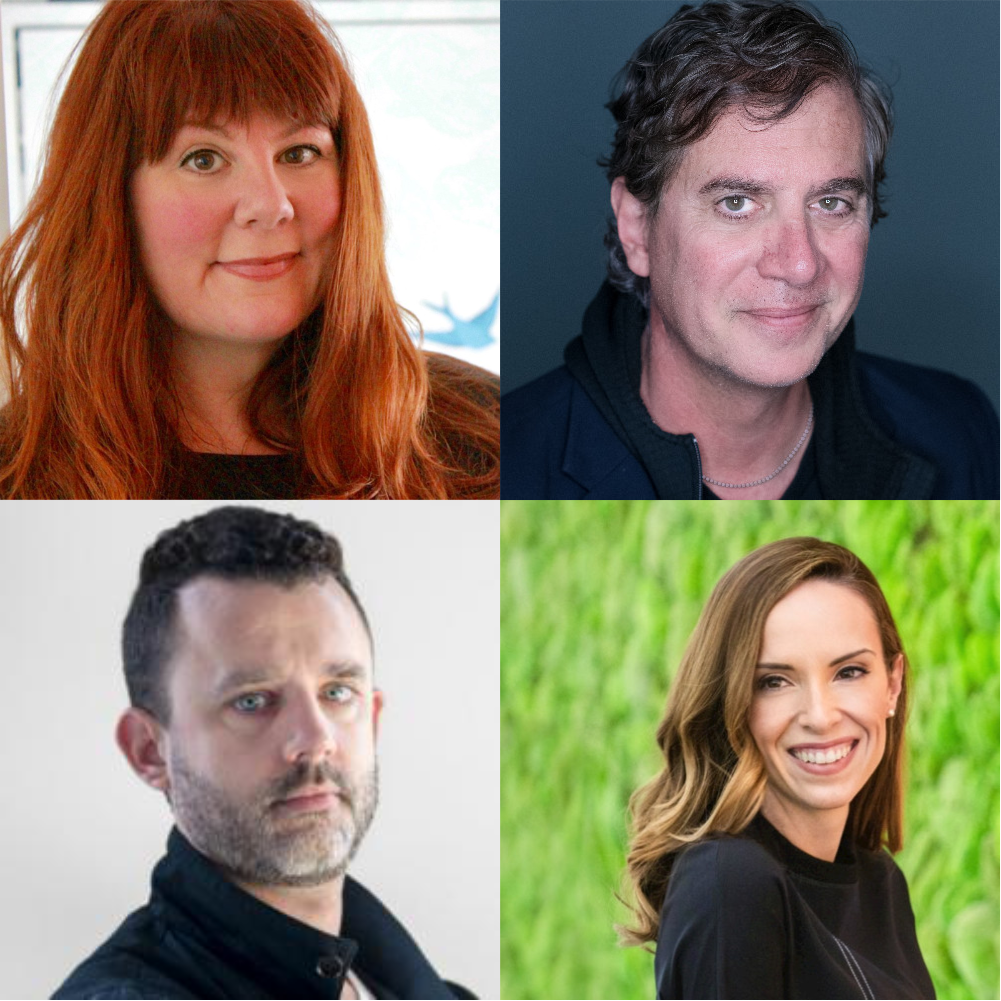
Today’s conversation is a recreation of a South-by-Southwest Panel that didn’t happen this year because the conference was canceled. My guests are so passionate about their topic, we got the panel together to share with you here. This conversation was recorded the same week that SXSW was scheduled to happen in March. Here’s a bit from the show guide:From Childish Gambino’s augmented reality dancing to Marshmello’s Fortnite concert in virtual reality to the mixed reality experience of Tonandi, immersive and spatial computing is closing the gap between the real and the virtual when it comes to music and art. Listeners can experience music in new and more profound ways. Musicians can take advantage of this shift to reach and connect more deeply with broader audiences. Artists can create a lasting emotional connection by letting their fans be in the center of the experience.In the conversation, we explore new methods for listeners and artists to span realities with music. We talk about which experiences are getting traction, as well as where the technology shines, and where it still falls short.We expanded the topics a bit to incorporate a discussion about survival advice for startups.The four panelists include:Amy LaMeyer is the managing partner of WXR Fund, where she invests in early stage spatial computing and artificial intelligence companies with female leadership. She’s a lover of music, and the author of the “Sound and AR” chapter in the book Convergence: How the World Will Be Painted With Data. She’s also an advisor for immersive music-focused startups: TribeXR, Stage, and Melodrive.Eric Wagliardo is an internationally recognized artist and creative who resides in Brooklyn, NY and Dallas, TX. Eric has been working in XR for 4 years and recently collaborated with Childish Gambino to create an augmented reality musical experience. Eric is the founder and creative director of &Pull.Rebecca Barkin is the VP of Immersive Experiences at Magic Leap, where she served as Executive Producer of Tónandi—a visceral, interactive audio-visual experience made in partnership with the band Sigur Rós. More recently, she teamed up with HBO and Framestore for Game of Thrones "Dead Must Die," a mixed reality experience brought to AT&T retail and Tribeca Film Festival. In 2020, opportunity informed a new focus on delivering services and solutions that bridge the physical and digital divide, ultimately expanding the reach of premium XR installations beyond any singular venue. She began her career at EMI Music.Tony Parisi is a pioneer of virtual reality, a serial entrepreneur and an angel investor. He is the co-creator of 3D graphics standards, including VRML, X3D and gl-TF. He’s also the author of several books from O’Reilly Media covering Virtual Reality, Programming 3D Apps, and WebGL. Tony has become one of the leading spokespeople for the immersive industry, and he was recently named to Next Reality’s 30 People to Watch in Augmented Reality. Tony is currently Head of AR/VR Ad Innovation at Unity Technologies.You can find all of the show notes at thearshow.com.