Mental Strength Strategies: 16 Ways to Boost Resilience
Anthony Metivier's Magnetic Memory Method Podcast
Audio is streamed directly from the publisher (traffic.libsyn.com) as published in their RSS feed. Play Podcasts does not host this file. Rights-holders can request removal through the copyright & takedown page.
Show Notes
 Do you ever feel helpless? Like your brain is fuzzy and you just want to pull the covers over your head and leave life’s challenges for another day?
Or maybe you just want someone else to come along and tell you what to do, say, think, and feel.
If so, you’re not alone.
In fact, my mind used to be pathetic and weak. I endured so much suffering, with a mind that had no power, no individualism, and no ability to rise up to life’s challenges.
I constantly sought others to pick me up and guide me along. During this time period, I was in deep and profoundly painful “learned helplessness.”
I had no mental strength — because I had no mental strength strategies.
But there’s a happy ending to this story.
With hard work and determination, I pulled myself out of this helpless state. I created strategies that worked for me. And today, I’m sharing everything I learned so you can do the same.
Want to see what’s ahead?
What Does Mental Strength Mean?
How to Test Your Mental Strength
How to Be Mentally Tough
1. Know and Evaluate Your Values
2. Seek Greatness
3. Water, Weed, Repeat
4. Track Your Progress
5. Accept Mistakes
6. Embrace Discomfort
7. Build Character
8. Craft Your Moral Compass
9. Practice Gratitude
10. Remind Yourself of Your Responsibility
11. Follow Through
12. Regulate Your Emotions
13. Take Care of Your Physical Health
14. Be Flexible
15. “Feel the Fear and Do it Anyway”
16. Practice, Practice, Practice
How to Be Mentally Tough: Book Recommendations
Mental Toughness Workouts
Become a Mental Strength Master
https://www.youtube.com/watch?v=qxH06MEuYjY
Ready to build your mental stamina and become strong and resilient?
What Does Mental Strength Mean?
Before you can build mental strength, you have to understand what it is.
Mental strength is a state of uninterrupted focus you can use to get the best quality from the effort that you put into a task.

Basically, knowing how to build mental toughness begins with having a strategy in place. It means having a plan for when things don’t go the way you expected — and the resilience to bounce back in the face of challenges.
Let’s look at a few other ways you might have heard the term.
Other Terms for Mental Strength
Resilience — if you look into psychology studies you’ll find the term “resilience” comes from engineering. It means the ability to spring back into shape.
If you have a baseline level of performance and your focus gets interrupted, how quickly can you spring back into focus?
These interruptions can be of several different types:
• Food interruption. You’re hungry and wander into the kitchen looking for a snack.
• Noise interruption. The phone rings or the neighbors are playing loud music again.
• Shiny object interruption. Something new and much more fun grabs your attention.
I use the acronym U.S.S.R. to assess my focus. In this case, resilience means being able to get interrupted and “spring back into the shape” of Uninterrupted Silent Sustained Reading.
Mental Stamina — stamina is both a duration and a qualitative notion. It’s not just that your focus lasts for a certain amount of time, but also maintains a certain shape and level.
It’s essentially grit, a kind of toughness. And sticking with something over time and with a certain maintenance of a level.
You might need to start with shorter periods of time (for example, focusing for 15 minutes instead of an hour) and then extend the time frame as you get more comfortable.
Discernment and Decisiveness — how easy is it for you to make decisions? I use the acronym W.R.A.P. (from Decisive, by Dan and Chip Heath) as a tool to help me make decisions.
- Widen your options
- Reality test
- Attain distance
- Prepare to fail
Now you know what mental strength is, how do you get it?
Mental Toughness Training
You may wonder: can mental toughness be taught?
The answer is… of course, yes. But also no.

In the end, it’s up to you to teach yourself how to be mentally tough.
The Feynman Technique – a method that allows you to learn complex concepts easily by explaining them in simple language – can be used to develop self-resilience as well as how to study more effectively.
Mental fortitude can be learned, by learning how to teach yourself. Seek teachers who teach by abandonment — they will have either limited availability or the skill of asking you questions that cause self-reflection and self-analysis.
These teachers will help you fly on your own and rely on yourself.
For example, I always like James Swartz, who talks about how he approaches enabling students like this:
“Let’s get you in the door, and back out again, as soon as possible, because you’ve got it, you learned it, you’re ready to go.”
That’s the best possible kind of teaching.
Next, you will develop a testing mentality and be a scientist in the laboratory of life.
You’ll gather evidence that confirms or denies your hypotheses or propositions. You’ll test them through your own personal experience. And you’ll validate (or invalidate) them.
The more actively engaged you are as a scientist and the more you get feedback from what some call your inner, “wise advocate“, the more progress you can make toward building your mental resilience.
Now you know that mental strength can be taught… but what does mental toughness have to do with memorization?
Mental Toughness and Memorization
As well as mental toughness being “taught” it can also be “caught.”
You’ll memorize relevant information for extended reflection. It’s not so much about teaching or being taught, it’s about you then reflecting on what you’ve been taught.

A major strategy for how to build mental toughness is to set aside time to reflect — to journal, mind map, take notes, and sit with the information you’ve memorized. This allows you to take the journey from internal (in your head) to external (into the world for reflection).
You can reflect until you’re blue in the face, but that’s no way to succeed. You have to dive right in, even if you’re scared or worried. You have to let go of the outcome and take action.
But you can’t take action if you don’t have a plan. Now you’ll take the results of your extended reflection – that journaling and mind mapping – to create an action plan.
You might even try an unconventional means of doing this, such as using The Cosmic Journal.
However you arrive at creating one, follow your plan. Take the steps, test out your hypotheses, and see what works.
As you’re taking your scientific approach to building your mind muscles, is there a way to test your mental toughness?
How to Test Your Mental Strength
Are you ready to unlock your best mental energy?
This is a very powerful mental strength test that will help you analyze yourself using a series of questions.

Get out a piece of paper or a text document, and answer the following 8 questions. Then give yourself a score on a scale of 1 to 10, with 10 being your strongest, most confident answer.
And be honest with your answers, because that’s the only way to come out of this with a plan and a path toward positive change.
1. Do you have a strategy for the next 3-5 years?
If not, you probably don’t have the mental strength to get where you need to go.
For example, if you were to lose your job (or your main source of revenue) do you have a strategy to pivot and compensate? Rather than going into panic mode, do you know how you would proceed?
You don’t need to make a “Plan B” — instead, you need a strategy that already encompasses situations that are not in favor of your goals.
2. Can you relax during moments of tension?
This is what mental strength is all about. Relax, relax, relax, relax. You need to relax. I’ll say it again: you need to relax.
For example, when I did my field exams for my Ph.D. and my dissertation defense, these were moments of extreme tension. They were pass or fail — moments of decision that would reflect on the rest of my life. I spent years getting to those tests and if I didn’t pass them, those years would be for nothing.
The good news is, I had relaxation strategies that allowed me to relax even during these incredibly important moments.
The day I passed my dissertation defense, I’ll never forget Victor Vitanza (one of the external academics on my dissertation committee) telling me, “The only guy cooler than you is Miles Davis.” That’s how relaxed I was, even though one member of the committee kept trying to fail me.
And despite this level of tension, I was able to remain calm and relaxed throughout the entire process.
3. Does failure cause you to quit, or work harder?
There are certain mental escape hatches – reasonable, rational times to throw in the towel – but most people quit when they should just reassess and figure out how to work harder or do things differently.
Don’t quit when things get tough — because things will get tough.
You can fail and still win. A test of your resilience is the ability to show up anyway and try something different.
For example, there was a point at which I was very tempted to give up on my Ph.D. Instead, I pressed on by creating an effective mental model that allowed me to keep going.
I didn’t want to be “that guy” who gave up. I knew enough people who had ABD (all but dissertation), and I didn’t want that outcome.
Instead, I created this mental image of my personal Mount Everest. It was the sort of thing where you start to climb the mountain and you’ll either know what it’s like to get to the top, or not. I decided I’d prefer to see the view from the top and plant my flag there.

4. Are you in control of your emotions, or do they control you?
This doesn’t mean things like laughing until your sides hurt, or being swept up in joyful moments. In this case, what you’re looking at is being controlled by destructive emotions that cause you to break things — whether physical objects or relationships.
You might also consider those times when you’re too in control of your emotions. You might not be able to let your hair down, or laugh with joy, or tell someone you’re happy for them. Instead, you’re so clamped down and in scarcity mode, you can’t express anything.
So for this question, think about “control” in both ways. Are you not in control? Too controlling? Or somewhere in the middle?
5. Do you believe in yourself?
Do you believe you can make it, and that things will work out fine in the end?
You also need to cross-index this with a strategy, so it’s not a completely meaningless statement. The “self” should be a series of strategies you can believe in.
You might also ask, “Is there something in me that is worthy of belief?” And then do this test in a scientific way, by running experiments, setting goals, and seeing if you are able to accomplish them.
Another exercise you can do to help you determine your beliefs is to write out 10 things you believe in or about yourself, and another 10 things that you’re not sure of or you don’t believe.
6. Do you have a strategy for handling self-doubt?
Self-doubt is normal. The insular cortex of the brain guarantees you will have self-doubt, and you’ve got to have strategies for it.
So when you find yourself in a situation where you don’t believe in yourself, what do you do?
If you don’t have a strategy for handling self-doubt, there’s a high likelihood you won’t take action — and when you don’t take action, you don’t get the results you want.
One of my favorite strategies for handling self-doubt is self-inquiry. Another is having a community where I can poll other people about the things I’m unsure of. Most people have more resources than they realize but never tap into asking questions of others.
7. Can you stay focused during complicated situations?
To help you answer this question, do a mental inventory or memory test. Try to write down ten complicated situations you were in and how focused you were during those situations.
You might consider the different ways situations get complicated — look at different genres of situations, and what focus means in those particular situations.
What kinds of focus might you need in those different situations? And what kind of focus did you have in those situations?

8. Are you equipped with decision-making tools?
Finally, when you’re faced with a decision do you just make it, or do you go through a process first?
For example, if you were trying to listen to a podcast or training, or read a blog post, and people in the room were speaking loudly, what would you do? Do you have some decision-making tools that would make it possible for you to listen or read somewhere else — where there aren’t interruptions?
Or how about choosing a topic to focus on? Ultralearning has some great tools that will help you decide, and then stick with it along the extra mile.
Next, you’ll figure out your score.
Score Your Mental Strength Test
Go back through each of your answers and give yourself a score of 1 to 10, if you haven’t already.
1 = not really, I don’t do this
10 = yes absolutely, I always do this
Then, add up each of those scores and tabulate your total:
80 = Mental Strength Master!
60-79 = Mental Strength Adept
40-60 = Mental Strength Squire
20-40 = Fledgling Mental Strength Novice
0-20 = Adventurous Activities Ahead
Wherever you land on the scale of mental strength mastery, let’s look at how to build mental toughness — to get you set up with strategies and a path forward.
How to Be Mentally Tough
One of the biggest keys to mental stamina is to take action!
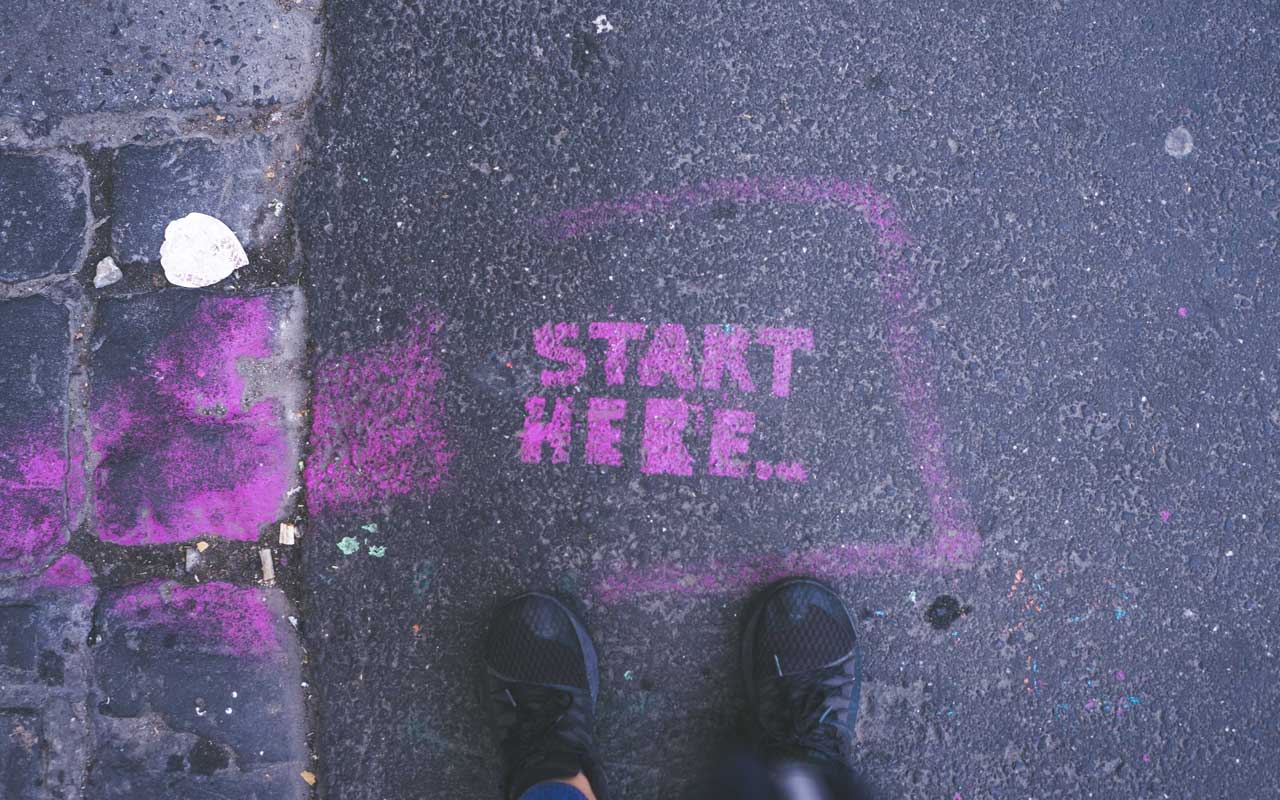
The good news is, you’re already on the right track. By taking the mental strength test, you took a micro-step. That tiny action is important, because most people make big plans for change and their first step is so monumental they never get started.
The micro-step you just took is the first of many. The first step leads to the second, and the more steps you take the more you begin to transform and change the neurochemicals in your brain.
This leads to more action, and those small incremental changes lead to massive change in the long run.
And as part of your mental toughness training here today, you need to know your values and create a vision for success. So let’s get started.
Part of that vision requires strategies for being S.M.A.R.T.E.R. which means Serious, Mature, And Ready To Embrace Reality.
To get “smarter” you need a vision and a guiding star — you need to have some practical idea of how you’ll get where you want to go.
Let’s look at 16 powerful ways to cultivate mental resilience.
1. Know and Evaluate Your Values
Beyond just knowing your values, it’s important to evaluate and test them.
You also need to test that you actually want to get to that place… because many people create destinations and destinies they realize they don’t really want once they get there.
Maybe their parents or spouses (or even an earlier version of themselves) want it. And because of Primacy Effect in the mind or in their memories, they end up caught in a prison of previous desires that are no longer true.
But how do you create a vision statement to get you where you actually want to go?
Your vision statement can be as simple as saying, “in the next X number of years [whether it’s 2 or 3 or 10] my vision is to accomplish Y.”
But I would recommend digging a little bit deeper, so I created this video to help you do just that:
https://www.youtube.com/watch?v=MFz31HpVkj0
In that video, I share my vision statement for Magnetic Memory Method and for my own projects, as well as a few other examples to help you craft your own.
2. Seek Greatness
As you evaluate your values, create your definitions of greatness in a way that’s possible for you to achieve them.

When we think about “greatness” it’s often tempting to exaggerate and create a vision that’s outside our reach — because we think it has to be epic.
Instead, true greatness is achieving something because you set a goal based on your existing competence.
For example, what things have you achieved already, and how can you build on an existing strength? And then, how can you set the path for another level that’s possible for you to attain because you’ve based it on your existing strengths?
On the other hand, if you don’t currently have the competence necessary to achieve your goal (crystal and fluid intelligence), greatness would be achieving the competence that moves you toward that larger goal.
And do it based on your values — in this case, my value is actual accomplishment. Not deluding yourself that activity is somehow accomplishment, but actual accomplishment. And that’s much greater than constantly taking actions that lead nowhere.
3. Water, Weed, Repeat
When you think about your strategies, remember the body and mind work in cycles. For whatever reason, the mind gets tired and the weeds grow back.
It’s a cycle: you water your mental garden, pull out the weeds as they grow, and then do it all over again.
Some of the weeds might be negative thinking (or black-and-white thinking) — I find that no matter how much I practice, sometimes I still get negative thoughts. So you practice weeding them out, and while you’re weeding, water the really good thoughts and repeat, repeat, and repeat.
Another type of weed might be draining thoughts. What thoughts do you have that drain you of energy? It’s important to have tools and strategies to get rid of them as they show up, or to at least be able to chip away at them until they disappear.
One self-inquiry tool you can use to help your thought weeding is to ask, “How are these thoughts behaving?” This might be:
- Out of scarcity,
- Out of irrational fear, or
- Out of tiredness or hunger.
In fact, you’re stronger than you think. It’s just that so many of your memory and mind muscles are being burned out by faulty application of your strength. So if you can get rid of that you’ll be much better off.
Finally, you want to identify and weed out comfort zone thinking. A lot of people stay in their comfort zones, and have a whole bunch of strategies for staying there.
But if you can step out of your comfort zone, even in small ways or a little at a time, you’ll have much more energy and focus for moving toward achieving your vision and goals.
4. Track Your Progress
Instead of just remembering all the things you did or didn’t do in any given time period, make a visual record that’s right in front of you. This gives you a tangible through-line.
I love to use a journal to track my progress. This journal can be simple, where you record what happened every day — like a Five Year Snapshot Journal. You might even mind map your days, to track where your time goes.

One powerful memory exercise is to take this journal and go back to last year’s pages. Cover up a specific day’s entry and say, “What do I think happened a year ago?” — whether you get it right or wrong doesn’t matter. Just doing the exercise is a great mental stretch.
I also recommend assisted tracking with a journal like The Freedom Journal or The Mastery Journal, both created by John Lee Dumas.
What I’ve really enjoyed about The Mastery Journal is it really breaks down and has space for tracking multiple habits and daily missions. You have a place to write out your morning routine and check off that you did it. You can score yourself every day, and at the end of the week it helps you chart out your progress.
This manual charting integrates your muscles and gets more of your brain involved.
But please note: assistance can help, but it might also hinder your progress. The reality is, you want to use assisted tracking long enough for it to become a habit, and then you no longer need to use it.
This is because of procedural memory. You develop strong habits and your brain changes — it develops chemicals like dopamine, myelin, norepinephrine, and other opioid receptors. It creates a physical memory that causes you to take action, almost like going on autopilot.
I highly recommend using my tutorial for The Freedom Journal first and then moving on to The Mastery Journal. By the time you finish both of them, you’ll have the necessary skills on autopilot so you can move forward without any kind of assisted tracking. For even more on journaling, check out James Clear on developing “Atomic Habits.”
5. Accept Mistakes
A lot of people get hung up thinking they don’t ever want to make a mistake.
In fact, you do want to make mistakes. You want to make as many as possible — because if you don’t, then you can’t learn from them.
You can also mine your memory for past mistakes to learn from. A great memory exercise is to reflect on errors you felt you made in the past: why you think you made it, and the lessons you can learn from it.
Going back and learning from past mistakes also helps you gradually explore discomfort. Many people don’t want to feel uncomfortable, but that’s where growth occurs. That’s where we make progress. That’s where we stretch, when we’re outside our comfort zones.
Of course, if you have any mental health issues, please be sure to talk to your doctor about the best way to revisit those memories, and have a strategy in place for how to do this safely.
And Memory Palaces can be a tool to help with depression. Tim Dalgleish has done tons of research on this topic (and on PTSD), and has shown that if you have a memory palace filled with positive memories, you can get great peace from dissolving them.
So if you have good memories on hand you can neutralize bad ones. You can also neutralize the bad situations in everyday life when you’re distressed.
To deal with everyday life, it’s helpful to have a strategy that helps you embrace mistakes, and to have good memories in place to help you counteract any mood dips or frustrations.
6. Embrace Discomfort
You need a strategy to push forward into challenge and discomfort in a way that’s not reckless — one based on real science and discernment.
The science of living is quite simple: to have the mental strength to get rid of self-delusion, and to filter out anything that’s not true so your data is good and true and solid. You also have multiple lenses through which to view your experience, and you know when to change the lens to get a new perspective.
This way of looking at your life allows you to use your data in a multi-faceted way so it gives you the highest possible amount of knowledge.

One of the techniques I absolutely love for embracing discomfort is taking cold showers.
I’ve found that taking a cold shower every day helped break down a lot of habits I had around discomfort — because getting into a cold shower requires something really powerful, which is developing your mental toughness.
It’s also a transferable skill that helps your clothed body get things done. It helps you just get things over with because you’re so good at embracing discomfort.
One of the key things you learn when you regularly take cold showers is the pain of the cold is an illusion created in your mind. It feels cold, much colder than it really is. And no matter how many times you expose yourself, it never gets any warmer.
But when you take cold showers, you get acquainted with your resistance and develop strategies to get over that resistance.
The other thing I like about cold showers is the clarity in thinking it creates. It sharpens the edges, and you feel more alert and capable.
There are other ways to embrace discomfort if you don’t want to get into an icy cold shower:
- If you don’t like giving talks, arrange a speaking engagement.
- If you’re painfully shy, decide to go out and meet someone new.
- If your daily schedule is stuck in a rut, make it a point to do something different tomorrow.
Whatever your method, switch things up and challenge yourself.
7. Build Character
There are a number of different ways you can build character, and avenues through which to make the change.
Physical — Engage in sports and fitness. Commit to a schedule for going to the gym, and stick to it. Join a recreational sports team. Or pick a sport like table tennis or billiards and spend a certain number of hours per week playing.
Social — Travel and engage in cross-cultural experiences. Get yourself invited to a dinner with people from many different cultures. Travel to a new country. Immerse yourself in new experiences to expand your field of reference.
Work and Volunteer — Volunteer your time to help a cause or an organization you believe in. Start a business, and learn the ins and outs of running a company (even something as simple as taking care of yards in your neighborhood).
Politics — Tackle a topic you dislike. There are a lot of people who are on one side of the political spectrum who could build a lot of character by learning more about the other side. And then, if you really want to build more character, learn about the center. Really understand the political spectrum, and get out of your comfort zone.
Teach — The more you teach, the more you learn what you already know. You also build character by seeing how others perceive information, and how the display of information affects others. You also learn to pivot and do things differently, in real-time.
8. Craft Your Moral Compass
Don’t just think about your morals — also write them down, dig into them, and read about what you think you believe.

I highly recommend reading something like Aristotle’s Nicomachean Ethics. There are many ethics texts you can read, but I think about this one, in particular, because it has a wonderful chapter on friendship. I think all of us could stand to be better friends to other people, and develop deeper friendships.
Often the reason why we don’t behave correctly around other people is because we never have thought about it in terms of our moral compass — and we don’t have strategies for dealing with other people.
Sartre had that famous line that “Hell is other people,” and certainly, if you’re lacking a moral compass, they will be. But if you have a proper moral compass then you have strategies for dealing with whatever challenges other people bring into your life.
Having a strong moral compass that keeps you responsible for your behavior without blaming others is part of having mental strength.
9. Practice Gratitude
Gratitude is something you can easily express in your daily journaling — there’s a lot of scientific research about why gratitude is good for you, and the neurochemicals involved.
Make sure to put what you’re thankful for down in writing, ideally every day (more than once a day, if you can). Actively get it out, whether through journaling or mind mapping.
But also be grateful in person. Tell other people you’re grateful for them, and teach your children to do the same.
Every day be grateful for others and be grateful for what you have. Be grateful that you are you. Gratitude is very important.
10. Remind Yourself of Your Responsibility
No one else is responsible for your results in life. When things go wrong, look in the mirror. When things go right… look in the mirror.
Other people will usually be involved as well, but you have to remind yourself that you have ultimate responsibility.

Having a vision statement is a huge part of reminding yourself that you (and you alone) are responsible for making things happen. So revisit your vision statement.
You also want to have a treasure map. You can check that out in that vision statement replay, where I share one of mine.
11. Follow Through
When you start an online course, finish the whole thing. When you want to learn something in a real and meaningful way, invest in a course or a teacher.
So many people tell me, “Oh, I’d never take your course on your site because I can’t imagine there’s anything there that isn’t on the free channel.” This is so far from the case.
Deep learning requires curation. You need courses that are designed and built from beginning to end, and you need to complete them from beginning to end. So many people try to learn by watching videos, and go down the rabbit hole of suggested video, suggested video, scan, scan, suggested video…
When you do this, you get chewed up by the machine, shown ads all the time, and don’t really learn anything in a meaningful (and sticky) way.
Believe me, I would love to just sit there and watch whatever recommended videos all day long because it’s pleasing — it’s a dopamine spike.
Instead, be thorough and complete courses in full, from beginning to end. When there are exercises, complete those exercises. If you need assistance with this, I created a resource to give you simple guidelines for completing and benefiting from any memory course you take.
Instead of just grazing on information and videos, getting stuck in hunter-gatherer learning syndrome, commit to fully engaging. Be thorough and complete things.
12. Regulate Your Emotions
Neediness is the opposite of mental strength.

Pure and true mental strength comes when you’re detached from the need for a particular outcome. When things don’t work out the way you wan