How to Study Effectively: 28 Tactics & Techniques
Anthony Metivier's Magnetic Memory Method Podcast
Audio is streamed directly from the publisher (traffic.libsyn.com) as published in their RSS feed. Play Podcasts does not host this file. Rights-holders can request removal through the copyright & takedown page.
Show Notes
 If you want to know how to study effectively, please use the tips I’ve got for you on this page.
As a PhD with two MAs and tenure as a Mercator guest professor, I’ve had to study a lot of things quickly.
And remember them well.
Using my suggestions, you’ll never feel like you’ve got exams breathing down your neck again.
Instead, you’ll always be prepared.
Quite the opposite. You’ll look forward to acing them.
Better:
Studying for long hours will be long gone. You’ll be able to retain information quickly and efficiently.
And you’ll do it in a way that also helps you enjoy life as a happy and healthy human.
To that end, on this page you’ll discover how to study and remember — and how to get all those books in your head, without all the stress.
Here’s what this post will cover:
9 Strategies for How to Remember What You Study
How to Study and Remember: 5 Mindset Techniques
Study Effectively: The Mind-Body Connection
6 Environmental Factors of Effective Study Techniques
Frequently Asked Questions
How to Study Effectively, Right Now
Ready to study effectively? Let’s get started.
9 Strategies for How to Remember What You Study
I used to be president of the English Undergraduate Student Association at York University, so I had an office while I was in undergrad.
https://www.youtube.com/playlist?list=PLkZ2FGJhR5R8OR3Qofo3XLX3iVeqPZdO2
I used to stay until the library was closed, and then I would take huge piles of books to my office. I would read, I would study, and I would read and study some more. And then I would sleep in my office.

And I remember waking up many times, laid out on a desk in that office with books everywhere… and feeling pure happiness.
To study until the end of all time, until you couldn’t open your eyelids anymore, and fall asleep, and then wake up and study some more… it was bliss.
But I know not everyone feels this way about studying. And studying for long hours is often frowned upon — people say you have to take breaks and you can’t extend it too long.
And while there’s truth to that, I have also figured out how to study effectively for long hours over the course of many years. I absolutely love studying for long hours.
The key to studying for long hours was having strategies and techniques in order to get the most out of it.
Let’s take a look at 9 of the most important strategies I discovered, so you can learn to study effectively, too!
1. Schedule Everything
The first strategy is simple: schedule your study hours.
The technique I recommend is to make a spreadsheet. Create a schedule and include the date, topic, book you’re studying, and the memory palace you plan to use.
Here’s an example of how you might build out your schedule spreadsheet:

One thing I find incredibly powerful when using a schedule like this is to write down my start and end times.
For example, when I was a student I used this technique to record when (and for how long) I studied each of my subjects. Instead of wondering where my time went at the end of the day, I had a written record of everything.
This approach does take time and effort, but the results will speak for themselves. To build this into a habit, invest in a nice physical journal so you can track time in your spreadsheet and on paper.
Before you know it, you’ll build a habit and have a record of exactly how you spend your time.
2. Take Better Notes
What do you do when you read? Do you just zip through a book or textbook and then have a hard time remembering what you just read?
Instead of stumbling through your reading with nothing to show for it, use a note-taking strategy. To help you figure out what strategy will work best for you, watch this video:
https://www.youtube.com/watch?v=U64awMHJkAU
Will this help you find the absolute perfect note-taking strategy for you? Perhaps. What I do know is that the video will be very useful to you. It’s up to you to pick a strategy, test it out, and see what works for you.
For this step, watch the YouTube video above and decide on a note-taking strategy to implement.
3. Use Memory Palaces
Here at the Magnetic Memory Method Headquarters, I’m partial to the Memory Palace technique — not because I’m deranged, but because it’s the most effective and exciting learning tool in the world.
You don’t have to take my word for it, either. This study from the journal Neuron is just one of hundreds that show why and how this technique succeeds for learners.
Once you learn what a memory palace is, take the time to create your own, and fully use your memory palace(s) from top to bottom, they become a key part of your effective study techniques.
In brief, this technique involves simply crafting a journey throughout a familiar location.
You then place the information your want to remember on spots like your desk, bed, kitchen counter, etc.
https://www.youtube.com/watch?v=c4J5ZUzCxZY
You can literally master this technique overnight.
But a lot of people miss out on the benefits of using a Memory Palace for one tragic reason:
They don’t schedule in how they’re going to use it. Or they think, “Oh, I don’t have time…” and never make any progress because they give up before they even begin.
Instead, use the scheduling strategy I shared above to carve out time in your schedule. Make time to learn about memory palaces, create your first memory palace, and start to use it.
The ultimate reason this technique saves you time while establishing long term memories?
The Memory Palace technique lets you perform an advanced version of spaced repetition. In combination with everything else you’ll learn on this page, it is perhaps the most powerful memory strategy that exists.
4. Incorporate Priming
Priming is one of the biggest and most powerful ways to study effectively.
Your experiences form priming memory — when you encounter an object, you subconsciously grow your ability to recall the same item (perceptual priming) or a similar or related item (semantic or conceptual priming).
In some cases, you are also “primed” by the things you most recently heard or read (or the things you hear or read often).
To help you learn more about priming and how to apply it to study effectively, watch this video on how to memorize a textbook:
https://www.youtube.com/watch?v=eIQRiqQFKQY
If you want to learn how to study effectively for long hours, priming is a key component.
5. Apply the “Big 5”
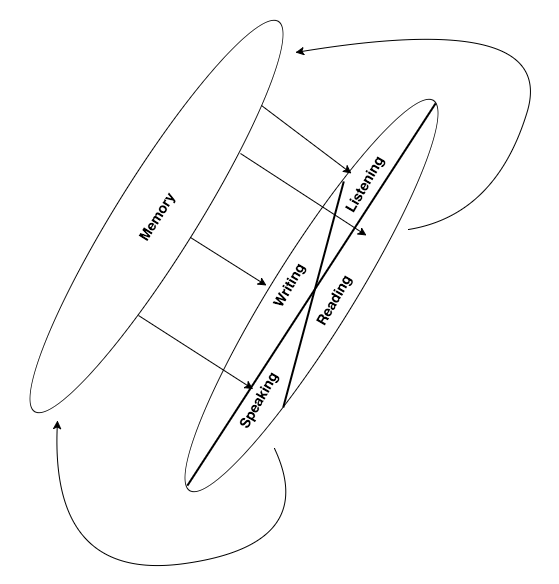
A robust study strategy includes the Big Five language skills.
What’s the Big Five?
- Reading,
- Writing,
- Speaking,
- Listening, and
- Memory.
This means you study information so it goes into memory and out of memory.
While a lot of my focus on the Big 5 has been around language learning, you can also use these for studying any subject.

Let’s look in more depth at 3 techniques involved in the “writing” component of the Big 5.
Summaries
One of the things you can do to make sure you’re studying effectively is to write little summaries of what you’ve studied. It might be as short as 100 or 200 words, or just enough to get the information out of your head.
This approach is beneficial because it helps you test that you actually understand what you’re reading.
Writing out a summary helps you engage with the information on a different level (see the 1972 Craik & Lockhart levels of processing model).
Self-Testing
Writing up a summary also helps you test your knowledge. You not only have the opportunity to figure out where you have weaknesses – what you are forgetting – but also think about solutions.
Rather than studying nonstop and hoping the information sticks in your brain, self-testing allows you to systematically go back and check that you retain the information you need.
Feynman Technique
The Feynman Technique is a teaching method that can also be applied to learning and studying. The four steps involve:
- Write down everything you know about a topic,
- Teach it as you would to a child — as simply as possible,
- Identify any gaps in your knowledge, and
- Review the material again to simplify your understanding.
Any time you run into a concept or information you don’t fully understand, you can apply the Feynman Technique. Write out your ideas about where the gaps are and how you might solve the problem.
6. Create Drawings & Illustrations
Another thing we don’t talk about enough is drawing — these types of effective study techniques include diagrams, illustrations, and mind maps.

Let’s break each one down.
Diagrammatic Thinking
To be honest, I often look at charts and graphs and think, “I can’t really follow this!” But instead of rejecting the information, I now redraw them to figure out what they’re telling me.
This is part of the levels of processing effect. You can even take notes while you’re doing it.
Because I integrated and assembled with these graphs and charts that used to confuse me, I now understand them better. Instead of immediately dismissing them and thinking I can’t understand, I start to imagine: what if I could?
Useful Illustrations
The same thing goes with illustrations. If you’re not in the mood for memory techniques and just can’t seem to find the motivation to create magnetic imagery, how do you get yourself to do it?
In cases like this, I like to just make illustrations. Even when I was depressed or hungover, I still used illustrations to study my German. I didn’t really feel like creating Magnetic Imagery solo… so I just picked up a pencil and drew.

And this mnemonic strategy doesn’t just apply to language learning. It can be for anything you don’t understand or facts you want to commit to memory. I’ve even used it during lectures to get information to stick.
It’s not about artistry — I’m certainly not an artist. It’s just about illustrating things to help get information into your brain so you can move forward.
Mind Mapping
Mind mapping is a bit different than using illustrations. Although it can include making illustrations, it’s more about placing things in space and teasing them out. It’s about generating new ideas.
And if you plan to use your mind map for memory, use Phil Chambers’ tip to use Roman numerals in the corner to track how many times you’ve reviewed it.
7. Give Your Brain a Break
Taking breaks is important for both the health of your brain and your ability to focus.
However! There are people – like me – who don’t enjoy taking breaks. So how can you take a break without really taking a break? There are a few approaches.
The first is to take a walk. Walking is great, because while you’re walking you can reflect on what you just finished studying. Your mind can keep going while your body gets the movement and stretch break.

And it’s diffuse thinking — it’s all the little things. Alex Pang’s book Rest has great ideas about walking.
To make sure you fit your walks in, schedule them. Rather than relying on an app, alarm, or timer you might just ignore, you’re more likely to obey things that are deep in your procedural memory. (That’s the type of memory where you just do things.)
There’s this crazy internal desire to, for example, go to the gym simply because this is the time of day I usually go to the gym. Ideally, you will get this way with taking breaks so your body almost forces you to take a break when it’s time.
The second is to alternate skills. This is one of my favorite things to do, and it’s scientifically confirmed in Rest. The basic idea is this: if you’re nonstop studying and reading, one of the things you can do to rest (aka: take a break) is to read something else.
So you don’t have to stop reading. You just switch up what you’re reading.
I find that while I’m reading other things my brain starts to make connections. And those connections are formative to remembering more and understanding on a deeper level.
In simple terms, you’re alternating skills by using the same skill for a different purpose. You can also alternate skills by doing something completely different — perhaps pursuing more of your life and interests in the in-between and getting better at your core skills.

For example, when I was in university I was not only reading a lot of books, but I also wrote them. I started a small press to publish my work, which allowed me to alternate skills while keeping up with my memory training work.
The third is to use cognitive shifting. You want to focus, but you want to do so in a way that’s not task switching or multitasking. The more you train yourself to be able to cognitive shift, the longer you can study effectively for long hours.
In Rest, the author teaches how to do cognitive shifting in a way that promotes rest. It’s beautiful.
8. Practice Strategization
Here’s the truth about having a strategic approach to studying:
Planning is often more important and powerful than the plans themselves.
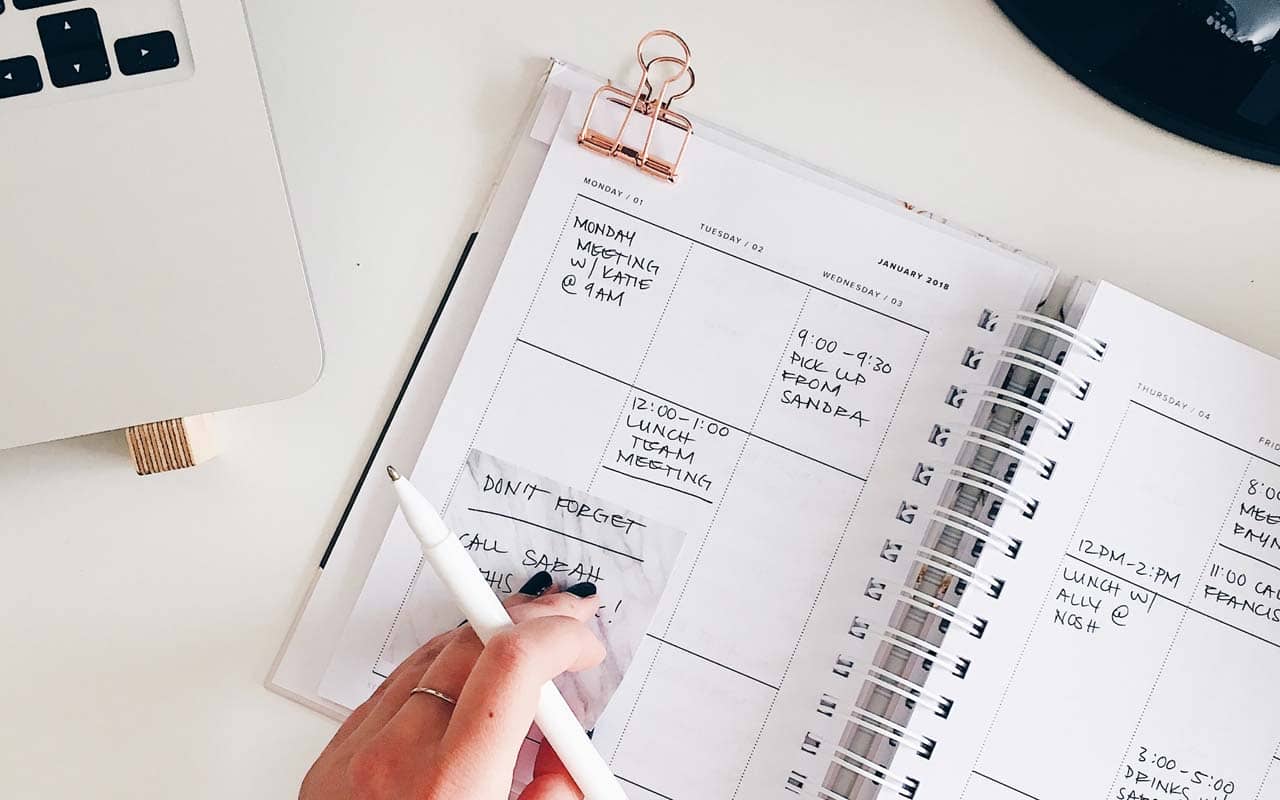
I spend a lot of time planning and replanning… and things rarely work out exactly as they seem like they might. But even if things don’t go the way you planned, that doesn’t mean planning isn’t important.
But how do you get the practice of “strategization” into your system? Practice scheduling, and practice all the things this post has already covered, so you can get them into your system.
Learn how to plan by planning to plan, and planning to practice and practicing planning — a perfect circle.
When in doubt: plan, plan, and plan some more.
9. Learn How to Learn
The final strategy is to have a steady diet of “learning how to learn,” which is a buzzphrase from the great Barbara Oakley and Peter Sejnowski.

This doesn’t mean just this or that book, but rather a steady diet of new books, new media, and new learning.
It’s meta-learning in some ways — constantly exposing yourself to the skill of learning, the study of learning itself.
In another book, Barbara Oakley uses the word “learnier.” But how do you become learnier? You have to schedule time in your life to practice strategization, and mind mapping or journaling can help you figure out how to do that.
As we wrap up this section on strategies, I recommend getting out a pen and paper. Take notes as we go through the upcoming categories. And make a plan for how you will implement each and every one of them so you can study effectively for long hours.
How to Study and Remember: 5 Mindset Techniques
There is a widely believed misconception around mindset. Namely, that it has anything to do with your mind or your ego.
But it doesn’t have anything to do with you. You don’t exist. Get over it, and stop thinking you actually exist. Because if you can find yourself you’re gonna win the prize.
You already are what you are seeking. You already are “self” itself, so to speak.
But that doesn’t mean you won’t have challenges in life. It doesn’t mean you won’t get frustrated. We all do. It’s part of the human experience.
So how do we deal with these challenges and frustrations?
1. The Challenge / Frustration Curve
Here’s the thing: “you” have an existing level of competence. And that’s just the way it is. You can’t snap your fingers and immediately change it.

Instead of getting frustrated, it’s helpful to identify where you are now.
Think back to the “Big 5” strategy of summarizing and write out a summary to help you identify where you stand. Use the Feynman Technique to identify where you want to get. Then make a plan, allowing yourself to be challenged and grow.
You don’t want to repeat the same things over and over, going on autopilot. Instead, identify what you can do to improve and head in the direction of where you want to go in order to improve.
Anyone who has a brain has an insular cortex that triggers pain responses when there’s a lot of work to do. So when you encounter challenges along the way, don’t allow any frustrations to trigger the “oh, poor me” sob story. That won’t help anything.
Follow the law of action – premised on competence you currently have – to get from where you are now to where you want to go. And find the balance between “challenging enough to keep you motivated” and “not difficult enough to leave you frustrated and defeated.”
Again, remember that mindset isn’t really about your mind — it’s about existing competence and your willingness to strategize.
2. Self-Inquiry
What is self-inquiry? And what does it have to do with how to study effectively?
Simply put, it’s inquiring into the nature of the self.

For example, when you feel like a task is too hard and you’re feeling down on yourself, you can simply ask, “Who is it that’s saying this? Where is that person?” And then you look around, and you can’t find the person, and so the feeling starts to dissolve.
You can also ask things like:
- “Is this thought useful?”
- “How does this thought behave?”
- “What is its origin?”
There are a lot of things you can do with self-inquiry that turns the volume down on all that mental noise.
If you want to learn more about self-inquiry as a practice, I wrote a book called The Victorious Mind that cuts through a lot of the junk thinking around the practice and gives you a more secular view.
And part of having a victorious mind is when you’re bored and don’t want to do stuff, you can use the practice of self-inquiry. Ask yourself, “To whom is this problem of boredom occurring?”
When you look around and can’t find the person – and encounter the monkey mind yelling “Blah blah blah blah” – you can start to dissolve the boredom and enforce curiosity.
3. Enforced Curiosity
There are a lot of strategies for encouraging curiosity and getting over boredom or procrastination.

For example, if you get really bored with the book you have to read you could pretend that you’re the host of a late-night talk show and you have to interview the author of the book.
Let’s pretend it’s a book by John P. Waterhole.
“Hey, John P. Waterhole, I’m not really interested in your book, but it’s my job as the late-night TV host of this program to ask you ‘What’s in your new book, How to Build an Outhouse?’ Okay, well, I’m very, very curious about this. What’s the first step our viewers would take to build their very own outhouse?”
And then you start to think this through and get really curious. It’s not a perfect strategy, but it is quite good because it can help you read and study faster. This is because you can pretend, in your mind, that you have to be prepared to have this interview with John P. Waterhole five hours from now.
And so you just start reading differently. You zero in, you laser in, but in quite a different way.
It might sound silly, but I used to do this in university all the time. One time, when I didn’t want to read City of God by Saint Augustine, I pretended that Frank Zappa was going to interview the Saint on the Frank Zappa Does Philosophy talk show.
It got me really curious about what the conversation would be like. What would they talk about? I was so bored with the idea, the assignment, and the texts that I had to come up with a strategy for how to force my way through the information.
That’s when the concept of enforced curiosity was born. The technique helped me understand what was going on in the text and develop a mental model.

Another way to make yourself more curious is to zero in on things as somebody else. Assume a mask or persona that is not your own.
For example, if you were Sherlock Holmes, how would you approach this subject? This textbook? This information you have to study and memorize?
The other thing to note is that people enforce mental models on each other all the time. Take, for example, learned helplessness.
If you are afraid of heights and you run around all the time saying you’re afraid of heights and can’t walk across a bridge, the people in your life will help you avoid bridges because you’re afraid of heights.
Now that model is forced on you (by both you and your friends and family) because you trained your environment to lock you into learned helplessness.
The same goes for telling yourself and others, “Oh, I can’t remember anything. My memory is terrible.”
The negative thought gets reinforced and becomes a self-fulfilling prophecy.
4. Motivation
Motivation goes hand-in-hand with mindset. And there are two distinct kinds of motivation — intrinsic and extrinsic.
Instead of taking more time here to talk about these two types of motivation, there are 2 Magnetic Memory podcasts I recommend:
Olly speaks 8 different languages and Camilla is an amazing language learner. They both understand motivation very well and use it effectively in their learning.
From my experience, motivation is not what it seems. It’s not the thing to hang your hat on.
You need to be able to show up and do something whether you’re motivated or not.
If you leave studying to the times when “you feel like it” you’re going to lose. To study effectively for long hours, motivation can’t be your primary driver.
5. Accountability
The final technique to help you with mindset is accountability.

It’s important to note: accountability works differently for different people. Some people do well staying accountable to themselves. Other people really need to be accountable to someone else.
And there is some power to group accountability, to having deadlines and other people who expect you to deliver.
Again, mindset is not about your mind — it’s about your basic brain structure and configuration in a network of other minds. And so you can tap into all kinds of powers that way.
We’ve covered how mindset ties in with effective study techniques, but there’s also a physical component.
Study Effectively: The Mind-Body Connection
In order to make the most of your study time, you have to take care of your body.
Your brain is produced as part of a well-oiled (or poorly-oiled) unit — and the more your brain is healthy, the more it’s going to produce a mind that functions properly and effectively.
Let’s take a look at 8 ways you can help take care of your brain.
1. Stay Hydrated
In a recent conversation with John Graham, we discussed supplementation for brain health. And guess what?
The best “supplement” for a healthy brain… is staying well hydrated! Water is basically better than any memory supplement on the market.
So fill up your water bottle and take sips regularly as you study.

2. Time Your Eating
Nutrition is another key component to keeping your body and brain healthy. But did you know that when you eat can be just as important as what you eat?
If you want to study effectively (and for longer hours) pay attention to how different foods affect you.
Keep a food journal and pay attention to how you feel after you eat. Not just right after, but also for the rest of the day and into the next. This helps you figure out what works for you.
You might also consider rotation or elimination diets to help you weed out problem foods from your diet. When you know how the food you eat will make you feel, you can become a lean mean focus machine.
If you get really clear about this you’ll learn that you have a 72-hour (or so) digestion cycle. For the 3 days before your big exam, avoid any foods that could have a negative physical effect. And instead, stick to the foods you know make you feel (