How to Create An UNSHAKABLE Memory Palace Training Routine
Anthony Metivier's Magnetic Memory Method Podcast
Audio is streamed directly from the publisher (traffic.libsyn.com) as published in their RSS feed. Play Podcasts does not host this file. Rights-holders can request removal through the copyright & takedown page.
Show Notes
 If you want to create an unshakable Memory Palace training routine, here’s the most important point:
Your memory exercise routine needs to be immovable from your schedule.
Like a mountain.
Think for a second about what mountains represent:
Mountains symbolize strength, and they dominate the landscape. Mountains endure extreme weather, erosion, and yet remain sturdy.
Now, you may not think of your mind as being as sturdy and consistent as a mountain.
But when it comes to establishing memory ability and the mental power consistent memory training can create in your life, this level of sturdiness is possible.
All it takes is self-discipline, the application of the right techniques, and an established routine you love to maintain.
But you might be thinking…
That’s easy for you to say, memory man!
I don’t even know how to get started!
How To Get Started?
The first step is to realize that you probably have mountain-sized obstacles in your path.
For example, you might have these three BAD habits:
https://www.youtube.com/watch?v=tAXBf61Q7Eg
Now, it might take some time to get rid of those habits, but I’m confident you can do it.
It wan’t exactly easy for me, but I was able to make progress.
And the fruits of progress are very profound indeed.
So let me me ask you:

Mine are.
And I’m so glad that I can say “yes!”
But how do I really know they are rock sturdy?
For one thing, I’ve recited the same passages from memory for nearly two and a half years (Ribhu Gita and Upadesa Saram).
I talked about this project at a TEDx event, a talk I also memorized:
https://www.youtube.com/watch?v=kvtYjdriSpM
Then there’s my personal productivity.
For nearly ten years as of today, I’ve released podcasts, blog posts and videos with (almost) weekly consistency.
Let me be clear:
Only a regular memory practice and personal discipline makes accomplishing such goals possible.
Along the way, I’ve interviewed and made friends with many of the best memory athletes and memory experts on the planet. They’ve inspired me on my mission to spread knowledge about memory techniques as far and wide as possible, and to keep up with memory training each and every day.
So, to help you, on this page, I’ll talk about what I’ve learned about Memory Palace training routines along the way.
How To Topple The Biggest Barriers To Consistent Memory Training
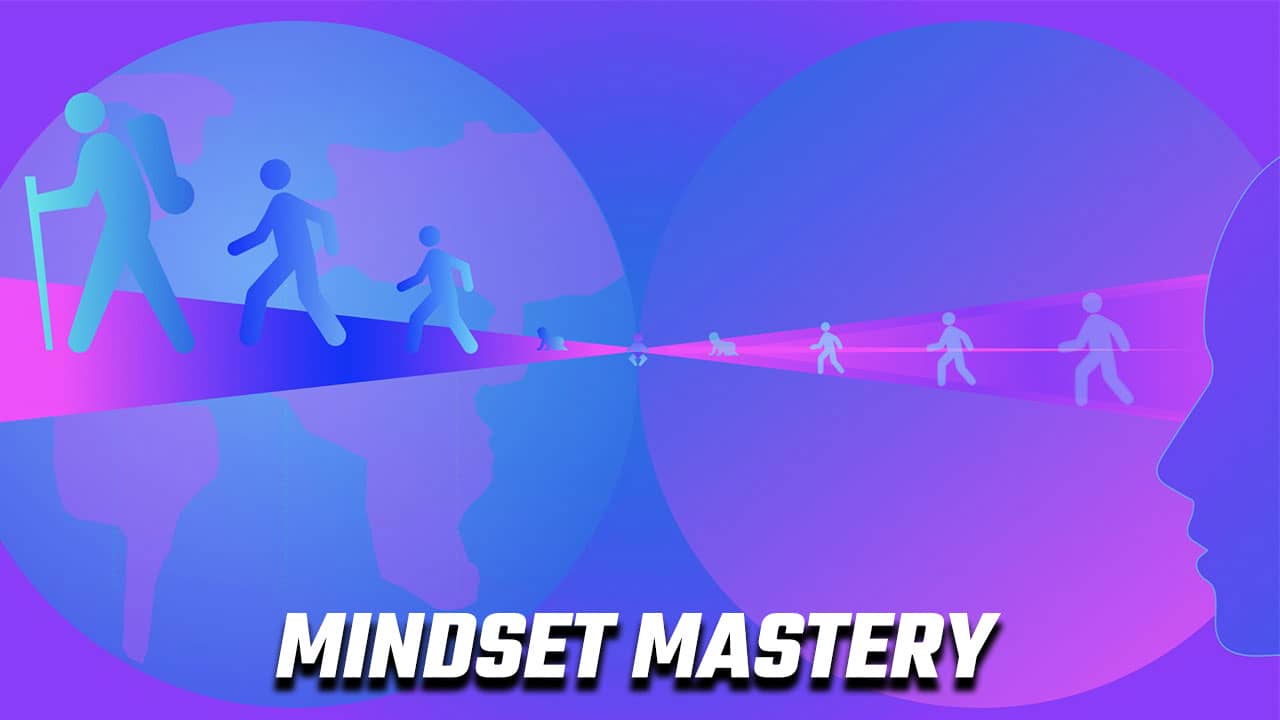
First things first, you must master your mindset.
This step will help you eliminate the pain people associate with training, and the flight mode the fear of pain places people in.
Listen, I know it’s easy to get overwhelmed when you’re building your first Memory Palace Network.
Heck, for some people, even the first Memory Palace can be a challenge.
That’s why I created this free course and separated it into smaller and simpler steps:
But here’s the truth:
Even the simplest course in the smallest amount of steps will still challenge you.
Not only is challenge to be expected…
It’s normal! Authentic brain exercise that leads to better memory must be a challenge. Otherwise, you won’t grow.
This fact (one that all scientists and top performers acknowledge) means that challenges are never a reason to accept defeat.
Yet… I’ve heard the same complaint a thousand times:
“Oh this is so much work.” “How will I ever have time for this? What if it doesn’t work?”
How To Escape The “Pain Vs. Gain” Hamster Wheel
Well, what if?
Mental mastery starts with giving up fear of the unknown.
Why is this so important?
Because life is – and always will be – filled with unknowns!
For example, I just started memorizing Chinese characters.
All of a sudden, my brain starts melting under questions for which there is no answer:
- What if I spend time on characters I won’t use?
- What if I don’t have enough Memory Palaces?
- What if I give up?
- What if, what if, what if…
The good news is:
I know how to shut these questions about the unknown off. And I can help you. Here’s how:
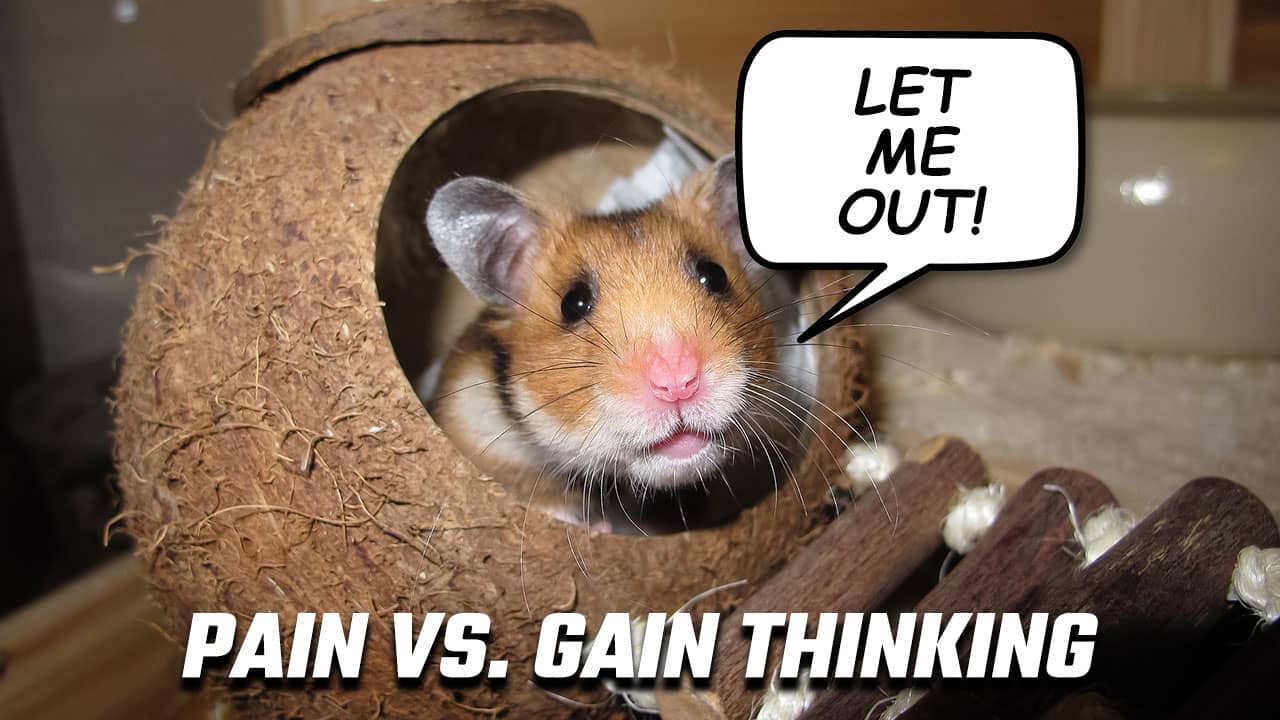
You need to separate your “pain thoughts” from your “gain thoughts.”
After all, the dread created by thoughts of “so much work” erases the promise of what you stand to gain.
Plus, you can get all kinds of interference, as memory scientists call it, just one of many causes of forgetting.
How To “Flip The Script”
Instead of focusing on the pain, flip the script. Ask instead:
“What if I actually had a fully functional Memory Palace Network and could memorize information quickly? AND not only memorize it, but have it at my fingertips, when I need it?”
Replace focus on the pain with a serious grasp on the outcomes, the benefits, and the goals needed to help you create your first Memory Palace Network. Then create the simple systems that will help you achieve those goals.
Want proof that the Memory Palace technique works? This memory science makes it undeniable! All you need to bring is the practice. The tips below will help. Keep reading!

Fight Vs. Flight:
How to Raise The Fists Of Your Memory And Keep Punching
Are “fight” or “flight” behaviors typical for you?
If you’re not sure, think about the last time you faced a really big challenge.
Did you dive in, or did you sit still and further cement your status as a “couch potato?” through more inactivity? (Let me know in the comments below if you wish.)
Now think about creating that Memory Palace Network (here are some varying examples of this memory technique to help you).
Do you see it as a challenge you can rise to or something to run from?
If you’re running from it, see if you can’t craft a different story for yourself. See yourself diving into battle without fear, for example.
Such a simple shift in mindset really can enable you to make it happen instead of throwing your hands up in the air, admitting defeat and hiding your head in the sand.
You really can harness those runaway, unhealthy, defeatist thoughts. You just need to step back from your ego a bit and objectively view the nature of your thoughts. Or use this simple tip:
https://www.youtube.com/watch?v=dW8tHFiTVNY
Contrary to popular belief, this form of self-inquiry like this does not lead to paralysis analysis.
Instead, an honest analysis of how your mind creates fears and endless self-doubt really can help you take action. You really can start to understand that the barriers you face are really just thoughts in your mind. Walking meditation can help if you don’t like asking and answering these kinds of questions while sitting still.
In all cases, you must take action in order to fully understand how memory techniques work.
Put it this way:
How would you know that you can’t lift Thor’s hammer until that you’ve actually had the handle in your grip?
This is where having a proper mindset separates the wheat from the chaff.
You must have an “all-in” attitude. You’ve got to go for it with laser-focused intent.
The only question is… how do you develop the mindset that allows you to leave your fear and overwhelm about such a “big task” behind?

Use The World’s Most Powerful Cliché And Find Your “Why”
“Know your why” is a cliché, to be sure.
But it works for a reason, and not just because it’s identifiable and relatable.
Thinking about your why causes you to take a long, hard look at your reason behind doing anything, much deeper than surface level reasons like looking smarter or getting a raise.
For this reason, every time we think about our Memory Palace training routines, we will do very well to revisit our why.
How To Dig Into Your Why
Ask yourself “What do I really need these techniques for?”
It is to become a memory champion? To pass exams? To learn languages?
Is it that you want to be able to deal with a large volume of information, or are you more concerned with the speed at which you’re learning and retaining information?
Next, dig deeper.
I recommend that you look for at least five levels of why.
These reasons do not necessarily have to be in a hierarchy of importance. It’s just important that you have enough fuel to draw upon when times get tough or other priorities start to compete with your memory training schedule.
Example of Five Levels Of Why
For example, here are my five levels:
- To grow the garden of my knowledge through multiple layers of connection
- To deepen my understanding of how world history and philosophy connect
- To correct errors where they exist and increase factual accuracy
- To increase cultural understanding and communication through ongoing language learning
- To maintain brain health through continual brain exercise
You might struggle at first to reach five reasons. Keep practicing and you’ll get there.

The Bucket List Technique
Another way to find your why involves creating a “bucket list.”
Think of the things you would really like to do, and then ask yourself “Why would you like to do them?”
Then ask yourself “Why else?” and repeat.
If you can’t figure out five reasons, or five whys, why you want to do a thing… what are you even bothering wanting to do it for? Do you really want it after all?
This high level “why” will help you not to waste time on training for things you don’t actually want to do, because your training will fall apart if you don’t actually want the goal you set out for.
Do you have to stop at five?
Of course not.
But when you have at least five, you’ll discover it’s easy to complete the next, crucial step: Crafting a Vision Statement.
https://www.youtube.com/watch?v=MFz31HpVkj0
And as you can see from Joe’s email and extract from his Memory Journal after he watched the video above, this technique really works:

“Hey professor 🙂
I just wanted to say thank you again for putting that vision statement video out. If you want to see what I ended up with for a vision statement, I attached it to this email. There’s 18 pages of work I had to go through to get it boiled down to this. It was exactly what I needed at the time I needed it.”
Thanks for sharing this part of your journey, Joe!
Now all you have to do is…
Link Your “Why” To Missions That Use Simple Systems
Wait a minute? Isn’t having a fully developed why enough?
In a word:
No.
A why is only as good as the action-based systems to which you link it.
Put it this way:
The biggest problem I’ve found is that a lot of people create goals that are forced. They proceed toward creating outcomes they’re not entirely passionate about.
For example, their parents have the vision of them becoming a doctor or lawyer, when they’d rather write children’s books or become touring musicians.
No wonder they don’t have a why they can create systems and missions for! You really can’t get a clear understanding of your why when… it isn’t yours. I know this from my own experience, when I once tried completing a mission with no truth to it whatsoever (long story).
Condensed Memory Training System Example
Here’s an example of a daily system I currently use:
- Wake up, drink water, stretch
- Recite memorized Ribhu Gita, Upadesa Saram and Bhagavad Gita verses in Sanskrit
- Memorize playing cards (a brief, but powerful eleborative encoding memory exercise)
- Gratitude journal and then recall the memorized cards
- Memorize more verses in Sanskrit
How is this linked to my five levels of why?
Very simple:
I spent years getting a PhD that involved understanding Western history and philosophy. As great as this mission was, I learned next to nothing about the Eastern traditions.
By studying a language and philosophical world of an Eastern tradition I grow connections between schools of thought in the garden of my mind. I deepen my understanding and develop greater factual accuracy. My cultural understanding develops and it all happens while fortifying my brain health through the combination of multiple memory exercises.
And in case you’re wondering about the playing cards, it is well known that a simple creative memory exercise helps prime the mind before taking on a harder task.
Plus, there are at least 13 reasons for memorizing playing cards. I thoroughly believe this memory activity is something everyone should do.

How To Structure Your Time
Obviously memory training takes place over time. It is a process and if you want the full benefits of what memory training can do for you, your practice sessions will take place over a period of time.
Don’t say you’ll get to it when you “find the time.” Time isn’t something you stumble across. Time is something you structure. Structuring time is itself something you must practice, so the good news is that memory training lets you kill two birds with one stone.
How to get started?
It depends on your goal. For example, if you don’t yet have a Memory Palace Network, that should likely be your first goal so that you can practice effectively.
Here’s how:
Set aside the time to create one Memory Palace per day.
That’s it. That’s not that difficult is it?
It’s a goal that’s easily attainable for anyone, even someone just starting out. Squash those thoughts of overwhelm right off the bat using the tools discussed above.

Commit to a routine and this will happen:
In less than a month you’ll have the minimum recommendation of Memory Palaces in place to serve you (and they will last for the rest of your life while helping you memorize faster).
Two to five hours is all the Memory Palace Network takes for most people. You can knock it out over a weekend.
Once you have your Memory Palace Network in place, your mini-missions can evolve. You can incorporate card memorization, section off time to work on a larger project (like learning a foreign language), and practice encoding and Recall Rehearsal daily.
For an extended example, here’s The Story of How to Learn and Memorize German Vocabulary.
For these larger goals, I suggest encoding five to ten pieces of information in each Memory Palace per day.
You can structure your time mentally, of course, but I would encourage you to save the mental space and journal.
I use tools like the Freedom Journal, Mastery Journal, and Snapshot Journal. They help with keeping track of time spent and progress towards goals. When you look back over your days, weeks and months, you can make comparisons to see just how far you’ve come by utilizing “captured” time in your journals.

How To Track Your Memory Palace Training Results
The same methods for structuring time can also be used to help you track your results.
But first you might be wondering…
What does tracking results actually accomplish?
In a nutshell, tracking helps you:
- Self-monitor and recognize when you’ve fallen off the wagon
- Spot trends (both positive and negative)
- Correct or improve negative trends (you’ll spot what isn’t working)
- Harness the value of positive trends (you’ll spot what is working and improve it)
- Produce solutions to training problems
- Create positive feedback at a glance that keeps your morale high
- Emphasize and ensure flexibility in your memory work
When you’re properly tracking your progress, you’ll never frustrate yourself when mistakes take place or you have a down day.
Instead of saying “Oh, this just isn’t working,” negative assessments will be replaced with, “That’s curious. What is it that I can do to improve this? What could I do to make a little change and experiment tomorrow?”
Then, track the adjustments you make, note your progress, and you’ll be amazed at how far you’ve come. This will create an endless supply of enthusiasm, and therefore motivation to keep that daily practice as priority.

How To Troubleshoot Memory Palace Training Problems
What about when mistakes happen, or you fall off the wagon?
Coaching
Maybe you need to get some memory coaching.
There’s a continuing huge trend in the field of life coaching, and for good reason. Perhaps you’re surrounded by “yes men” in your everyday life, or just people who needlessly enable you.
Invest in someone who not only will listen to your B.S., but who will point out the nature of it. Seeing things through an objective lens will help you move forward, and move forward consistently.
It doesn’t have to be a memory expert. Just establish some accountability through real communication, not just surface level, but real, honest, communication.
What if You Miss Just One Day?
We all know life happens and we should, at this point, expect the unexpected, right? We can’t predict the when of when life will throw us a curveball, but we know, at some point, it’s coming. That’s no surprise. We can’t control it…
But what we can control is our reaction to the unexpected, when our daily routine is thrown off course, when we miss a day of practice. What happens then?
First we must accept it. Just accept that you missed a day and don’t beat yourself up over it. Don’t give up when a minor setback occurs.
Nicholas Castle used memory techniques to help him overcome PTSD. His st