
Anglofuturism
65 episodes — Page 1 of 2
Treasures of the Clarion-Clipperton Zone
A postmortem of Britain's housing crisis
South Atlantic Superclásico
King, country, and a sword called Arondite
Jilly Cooper's Rivals, Cosine's sovereign AI, and Shabana Mahmood's spaceport gambit
James Wise: This is how Britain wins the AI race
059. Dominic Cummings: Whitehall's war against the future
058. Halcyon Robotics: Building the world's most dextrous hand
057. Mat Dryhurst: Speculative aesthetics in the algorithmic age
056. Nicholas Boys Smith: How to build a city on the moon
055. Hyperculture, hypermnesia, and the Clarion-Clipperton Zone
054. Louis Elton - Aesthetics beyond podcræft
#053 - Louis Elton | Cræft, the antidote to slop
052. Louise Perry: Artemis II and populating the solar system

The new aristocrats are building drones in an Oxford kitchen
Back from the break and fuelled by Diet Coke, Tom and Calum push Josh on the harder questions. If HomeDAO is selecting for a new elite — relentless, agentic, indifferent to the rules of polite society — what kind of elite is it? The aristocrat as leader, or the aristocrat as exploiter?Josh mounts a defence of Pump.fun against charges of exploitation, arguing that the real narrative distortion comes from Silicon Valley incumbents who control both capital and media. Google is an advertising company. Revolut’s revenue is almost entirely from crypto trading. The difference is that Pump.fun never needed to take venture capital from the people who set the terms of respectability.The conversation then turns to what good companies actually do. Josh’s framework: they automate layers of the civilisational stack, freeing people to focus on higher-leverage work — the same logic that runs from the Black Death through the Industrial Revolution to self-driving cars. Britain’s declining birth rate, he argues, could be a blessing in disguise if it forces investment in automation rather than cheap labour. But the automated cavalry isn’t coming on its own. Someone has to build it.The episode closes on aesthetics: why Anglofuturism’s AI-generated thatched cottages on the moon are a cry for something better, why the answer might be neo-neo-Gothic, and how Tom once stole a brick from Keble College.In this episode* The aristocrat as leader versus the aristocrat as exploiter — and where startup founders fit* Why Pump.fun is more honest than most of Silicon Valley* Josh’s framework for social value: automate the civilisational stack* The Black Death as the bullish case for declining birth rates* Grammar schools, nuclear energy, and the policies that might actually matter* Why Anglofuturism needs a coherent aesthetic — and what neo-neo-Gothic triple-glazed stained glass might look likeThis conversation took place in November 2025 and was delayed in publication due to triggering an Environmental Impact Assessment from Oxfordshire County Council. This is a public episode. If you'd like to discuss this with other subscribers or get access to bonus episodes, visit www.anglofuturism.co/subscribe

Britain's growth obsession is delusional
From a hand-dug allotment in Stroud, Tom and Calum announce a fundamental change of direction for the podcast. After eighteen months of speaking to founders, technologists, and policy thinkers, they have come to an uncomfortable conclusion: it was all wrong. Growth is a trap. GDP is a fiction. The SMR under the village green was never going to save us. What Britain needs is less.The conversion happened gradually, then all at once. Calum attended a silent retreat in Totnes where a man named Giles explained that fusion energy would simply allow humans to destroy the biosphere more efficiently. Tom read a pamphlet about doughnut economics on the FlixBus from London to Oxford and wept. They have since decommissioned the King Charles III Space Station and replaced it with a community pottery studio.The episode explores:* Why GDP is a meaningless number and Britain should stop chasing it: Every guest on this podcast has said something like “Britain needs to grow.” But what is growth? More cars? More data centres? More Georgian townhouses? Tom and Calum now believe that true prosperity is measured in leisure time, hedgerow density, and the number of independently owned bookshops per capita. “We looked at the data and realised we’d been measuring the wrong things. The happiest people we’ve ever met were on Pitcairn Island.”* The case for shutting down Britain’s tech sector and replacing it with cooperatively owned farms: Technology has given humanity targeted advertising, algorithmic anxiety, and a website where you can bet on meme coins named after dogs. Britain’s attempt to replicate this is not a national strategy — it is a cry for help. What if, instead of incubators, we had more allotments? What if, instead of AI, we had more canal boats? Calum explains why the Coase theorem actually supports a return to subsistence agriculture if you think about it hard enough.* Deindustrialisation was actually good and we should finish the job: The listeners of this podcast have spent two years complaining about deindustrialisation. Tom and Calum now believe it didn’t go far enough. Why does Britain still manufacture anything at all? Every factory is a moral injury to the landscape. The Lake District doesn’t need a semiconductor fab. It needs to be left alone.* Immigration, but for trees: Britain’s real population crisis is botanical. There are fewer mature oaks in England than at any point since the Domesday Book. Tom proposes a radical visa programme for ancient woodland — expedited planning approval, no environmental impact assessment, immediate indefinite leave to remain. “If we treated trees the way we treat care workers, the New Forest would have a unicorn by now. But it wouldn’t need one, because it’s a forest.”* Why this podcast will now be released quarterly, on handmade paper, delivered by bicycle courier: The subscription model is itself a form of growth ideology. Anglofuturism will henceforth be an Anglopastoralism zine, printed on recycled copies of The Economist, available at selected zero-waste shops in Frome and Hebden Bridge. Calum will illustrate each edition with potato prints.Plus: why notice periods are actually too short, why the overseas territories should be returned to the seabirds, the case for replacing the House of Lords with a citizens’ assembly selected exclusively from people who have never read a Substack, and whether Georgian townhouses on the moon were, in retrospect, a warning sign.Tom and Calum recorded this episode by speaking into a hollowed-out gourd connected to a length of twine. The audio quality reflects this. They will not be taking questions. Aeron has been fired. This episode was recorded on 1 April. Normal service will resume once we get the biodiesel engines back up and running. This is a public episode. If you'd like to discuss this with other subscribers or get access to bonus episodes, visit www.anglofuturism.co/subscribe

Inside HomeDAO, Oxford's monastery for unicorn founders
From the King Charles III Space Station, Tom and Calum descend into a drone-filled kitchen in West Oxford — the home of HomeDAO, a startup programme that’s part incubator, part monastery, and part answer to a question British universities have stopped asking: what do you do with the most relentlessly ambitious young people in the country?Josh, HomeDAO’s co-founder, has been running the programme since he was 21. The model is unusual: 18 members per year, $350,000 each, no requirement for a fleshed-out idea or even a co-founder. What HomeDAO selects for above all else is commitment — the willingness to go all in. The results so far include Pump.fun, now essentially a Twitch competitor built on meme coins; ExoLabs, a distributed inference company attracting serious AI investors; Rhinestone, Ethereum infrastructure born out of a hackathon; and Footium, a virtual footballing universe that raised over $3 million in an NFT sale in under an hour.The conversation turns to why Oxford’s universities have become hostile to the disagreeably ambitious, what it takes to build institutions that endure, and whether Britain could capture the next generation of global founders simply by opening the door.The episode explores:* Why HomeDAO selects for commitment over raw intelligence — and what that looks like in practice* The idiosyncratic origins of Pump.fun, ExoLabs, Rhinestone, and Footium* How universities have excluded the maniacally ambitious in the name of openness* The Coase theorem applied to startup formation and why coordination costs are falling* Oxford vs Silicon Valley vs Bali: what makes a place magnetic to founders* Whether Britain has a massive immigration arbitrage opportunity — and why problems of taste don’t scaleThis conversation took place in November 2025 and was delayed in publication due to triggering an Environmental Impact Assessment from Oxfordshire County Council. This is a public episode. If you'd like to discuss this with other subscribers or get access to bonus episodes, visit www.anglofuturism.co/subscribe

Katie Lam | Everything has to change for anything to stay the same
Katie Lam came to Westminster via Goldman Sachs, Number 10, the AI company Faculty, and the Home Office. She has seen the British state from the outside and the inside and her verdict is the same both times: it is less than the sum of its parts. Bright people, right intentions, and at the end of another week, no progress on where things stood at the end of last week. The problem is not obstructive civil servants — those are rarer than the cliche suggests. The problem is a machine with many people who can say no, almost nobody who can say yes, and every single one of them incentivised to avoid risk. The cumulative effect is a state that tries to do everything and achieves almost nothing.Tom, Calum, and Katie discuss:* The state as a ratchet that never goes back: Every crisis creates a new team, a new association, a new point person. Brexit, COVID, each one added barnacles that never get scraped off. The wedding venue association. The ten-person team on banking access equality, set up by a coalition minister, still running. “Any department at any one time will have so many top priorities.” Keir Starmer has twenty-five number one priorities. If everything is the top priority, nothing is.* The moral case for a smaller state — not the ideological one: The version of this argument that says the state is abstractly bad will fail. The version that says this system cannot work at this size, and here are the specific things it will do well instead, might win. “Whatever arm of the state my constituents have been interacting with has let them down. The most common thing people say to me is: nothing works.”* The individually justifiable, collectively intolerable problem: Michael Gove’s line about planning applies everywhere. Each regulation makes sense on its own. Together they are strangling the country. You have to win each small argument and the big argument simultaneously. That is why it is hard. That is why it has not been done.* Nuclear or nothing on energy: The highest industrial energy prices in the developed world. Second highest domestic. No economy has ever grown meaningfully with a relative energy price like Britain’s now. “The only way to solve for price and security in the long term is tons of nuclear baseload.” Intermittent renewables make sense at a domestic level. They cannot power a country.* Mass immigration as economic self-sabotage: The health and social care visa was projected to bring 6,000 people a year. In three years, 600,000 came. Threshold salary of £20,500. These are not the physics professors or Goldman colleagues that educated professionals picture when they think about immigration. “We decided we would rather have people who are basically underpaid than pay people enough to do those jobs.” Meanwhile Britain builds fewer industrial robots than Turkey or Thailand.* The urban professional mistake that broke British politics: Educated people in cities looked at their French and Italian colleagues at Goldman and thought: this is immigration. It was not. Those people were a vanishingly small fraction of who actually came. “They conflated the people they knew with the people who were arriving.” Governments listened and were persuaded. A terrible error.* What conservatism actually is: Not that nothing should change. “That is the parody of conservatism.” Conservatism is knowing what is infinitely precious — the king on the chessboard — and being willing to move or sacrifice every other piece to protect it. In Britain that means the village cricket clubs, the ukulele choirs, the medieval churches, the instinct of people who end up in the same place to build something together. “It doesn’t need to be improved. It just needs to be allowed to be what it is.”* What the government can do that nobody else can: “What real political leadership can do is say to the people: we believe in ambition, in being bold and brave and trying things, in understanding that success only comes through failure.” Then back it up with tax and regulatory policy. The current government believes everything is a job for government unless you can prove otherwise. Katie believes the opposite.Plus: being bowled out by a sixteen-year-old Afghan refugee at the village cricket club, why the birth rate probably cannot be fixed by policy but might respond to hope, the Laminators and their ambitions for a Gaddafi-style female bodyguard unit, and whether Katie Lam is an Anglofuturist. This is a public episode. If you'd like to discuss this with other subscribers or get access to bonus episodes, visit www.anglofuturism.co/subscribe

Ben Judah | Britain is squandering an empire
Ben Judah spent time as a special adviser to David Lammy at the Foreign Office, which means he worked on the Chagos deal, knows what Diego Garcia actually does, and cannot tell you. What he can tell you is that the deal was initiated by David Cameron, pushed hard by the Biden administration, and that the Americans were genuinely considering cutting Britain out entirely and handing the islands directly to Mauritius. Once you understand that, the deal looks rather different. It also turned Ben from a progressive Atlanticist into something closer to a Britanno-Gaullist — because the Chagos story is really a story about what happens when you are completely dependent on an ally who keeps changing its mind.Tom, Calum, and Ben discuss:* What Diego Garcia actually does, and why it gives you vertigo: Ben can’t tell you under the Official Secrets Act. What he can say is that in the 1960s the Americans identified these remote islands, halfway to everywhere and commanding the approaches to India and China, as the ideal location for certain supercapacities that only a true hyperpower could build. Britain got access in exchange for staying. The deal was extraordinary value. It is also not available anymore.* Why the deal was inevitable, whoever was in government: The legal perimeter was collapsing through lawfare. Mauritius was on the verge of binding rulings. The Americans — under both parties, across multiple administrations — were telling London the same thing: do a deal or we pull the investment and move the capacities to Hawaii. “The only way Britain could hurt us is by not doing this deal.” Cameron started the negotiations. Labour finished them.* The Chagos problem is really the America problem: Being bullied into a deal by one part of the American system, unable to rely on the other part to hold indefinitely, watching the asset be used as a tool of American domestic politics. “It’s a really sorry story, but the problem is our relationship with America.” Ben’s Damascene conversion to Anglo-Gaullism happened in the Foreign Office.* Britain is squandering its overseas territories: A map on the UN website lists Britain as having more colonies than anyone else put together. Almost every single one is in some kind of crisis. British Virgin Islands: money laundering, corruption, Russian and Chinese influence. Turks and Caicos: Haitian gangs. Pitcairn: fifteen inhabitants, one young person left, no groundwater. St Helena: 4,000 people on one of the most strategically crucial islands in the Atlantic. “We might wake up in 80 years, a weaker Britain cornered by lawfare, no inhabitants, and how can we prove we should stay?” The French made their territories overseas départements with seats in the National Assembly. Marine Le Pen campaigns in Réunion. Nobody in the British cabinet visits Bermuda.* The case for overseas kingdoms: Ben’s plan, developed during his time at the Foreign Office, is to incorporate the territories as overseas kingdoms of the United Kingdom, give them seats in the House of Lords, run them from a central ministry rather than the Foreign Office, and remove them from the UN’s naughty list. “There is no reason there should always be a very small population in the Falklands. If these islands belonged to the Americans or the Chinese, they would have dreams for them. Where are ours?”* The left needs to discover futurism: AI, biotech, hydrogen, fusion — all right-coded, all ceded to the right by default. “That is f*****g stupid.” The degrowth movement is Luddite moralism that doesn’t understand what it’s talking about. “If you’re centre-left and you’ve got a friend who’s a de-growther, please pitilessly make fun of them.” What’s needed is a progressive futurism: grab the technologies of the 21st century, deploy them for better outcomes for British people. De Gaulle came to power when France had nineteen governments in ten years and a quagmire in Algeria, and threw the whole country into a quest for French modernity. There’s something in that.Plus: what the Americans really think of British access to their supercapacities, why Malta’s bid to become an overseas kingdom was killed by Treasury mindset, the military perimeter that goes unspoken in every public discussion of the Chagos treaty, and whether the right needs to own up about Brexit’s role in the Boriswave. This is a public episode. If you'd like to discuss this with other subscribers or get access to bonus episodes, visit www.anglofuturism.co/subscribe

Will Orr-Ewing (Keystone Tutors) | The tutoring industry is a billion pounds pointed at completely the wrong thing
Part two of our conversation with Will Orr-Ewing gets into the harder questions: whether a genuinely meritocratic elite is more dangerous than an aristocratic one, why AI tutoring has solved the wrong problem, and what it would take to build an Odyssean education for Britain’s most talented kids.Tom, Calum, and Will discuss:* The internet should have produced a generation of Einsteins — it didn’t: Eric Hoel’s provocation that the most naked conclusion you can draw from the internet, and now AI, is that the constraint was never information availability. The knowledge was always there. We’ve done something bad to intrinsic motivation. “Where are all the people who used the internet to teach themselves untold knowledge?”* Why AI tutoring has solved the wrong problem: Alpha School puts children in pods on the 35th floor of a New York skyscraper, not allowed to communicate, staring at screens. Will’s friend visited and saw four tantrums in a single school trip. The problem isn’t personalisation — it’s that children don’t need education adapted to their interests. They need their interests adapted to what’s worth learning. And AI cannot do the one thing that actually works: be someone a child wants to become.* The meritocracy trap: A genuinely meritocratic elite is a terrifying thing. They owe nothing to anyone because they earned everything themselves. Whereas the aristocrat could never quite believe he deserved his position — it was an accident of birth — and so noblesse oblige followed naturally. “You look at the winners of the last 20 or 30 years. They just don’t seem to have a sense of obligation to their country.”* The Odyssean curriculum — Britain as the school of the world: Cummings’ essay argued England could be what Athens was to Greece — a model for how to educate statesmen and scientists. Will wants an Odyssean version of the King’s Maths School from age 14: Thucydides, Lee Kuan Yew, applied geopolitics. Cohort effects like the Brit School at the Grammys. Currently the maths olympiads have barely 600-700 entries a year. “Our future disproportionately relies on those people. And at the moment their track leads to being a quant at a hedge fund.”* Elite kids as asset managers of their own human capital: Daniel Markovitz on how the most ambitious families in the world — Will has offices in Singapore, Hong Kong, London — are depleting their children through constant striver credentialism. Nonverbal reasoning tests that you forget the moment you’re through them. “If it was Dostoevsky, at least it might stay with you. But most of these competitive entrance exams have no enduring value whatsoever beyond your LinkedIn trajectory.”* What Will actually wants for his children: Walking through Parliament and knowing every statesman on the wall. Walking through the countryside and knowing every tree, every bird. “Education properly done is a vitalising force which enchants your everyday perception.” And one other thing: if they’re in a room of a thousand people and 999 say sign the document, the moral courage to say no.Plus: Rory Stewart’s dad recreating Waterloo in Hyde Park before school, the Anglofuturist Great Hedgerow of Britain as a children’s internet firewall, Korean tutoring centres prohibited after 10pm, and whether Singapore has started workshopping “thinking outside the box” with an actual drawn box. This is a public episode. If you'd like to discuss this with other subscribers or get access to bonus episodes, visit www.anglofuturism.co/subscribe

Will Orr-Ewing (Keystone Tutors) | Aristocratic tuition, and why GCSEs are failing everyone
Will Orr-Ewing has spent 20 years tutoring and founded Keystone Tutors, but he’s not here to tell you to hire a maths tutor for your nine-year-old. His argument is bigger: that Britain once had a culture of self-directed intellectual growth that state schooling quietly strangled, that the billion-pound tutoring industry is almost entirely pointed at the wrong goals, and that the GCSE system is simultaneously boring the top of the cognitive distribution and failing the bottom. Tom and Calum receive him in the somewhat dusty schoolroom of the King Charles III Space Station to design an Anglofuturist curriculum—and debate whether the state can ever do what a parent, a tutor, or a good book can.Tom, Calum, and Will discuss:* Why tutoring is a superpower pointed at mediocre ends: “You’ve got this massive potential for intellectual expansion, but directed at very menial, mediocre ends.” The billion-pound industry is almost entirely Kumon-style drilling or GCSE cramming. The mimetic relationship between tutor and student—where the neophyte absorbs not just knowledge but how someone thinks—is almost entirely wasted on exam prep.* The autodidactic culture that state schooling killed: Before the 1870 Education Act, elite education meant acres of childhood time for reading, with tutors as a clinic to check progress rather than the engine of learning itself. “All education is self-education,” as Charlotte Mason put it. The state provided for the bottom but quietly smothered that instinct everywhere else.* GCSEs are failing everyone except the middling: Thirty percent fail maths and English GCSE every single year. The top of the distribution is bored stiff. “It’s only the middle runners who are really being served.” Schools are so incentivised to chase results that any choice between intellectual stretch and hammering assessment objective three goes the same way.* The case for releasing kids at fourteen: The bottom thirty percent for whom the credentialist conveyor belt—GCSEs, university, graduate scheme—is “clearly so unenticing.” A more apprentice-based model, local relationships with employers, learning a trade. Michael Faraday was a bookbinder’s apprentice for seven years. A lot of fourteen-year-olds would rather be on an Isambard factory floor than in another PowerPoint-driven lesson—if the smartphone weren’t in their pocket.* The state cannot replace parental culture: “The real problem is that the state cannot replace the role of a genuine parental culture.” Any attempt to enforce it through the curriculum cheapens it. The dirigiste continental model—school as nation-building—turns what was once emergent into a bureaucratic goal liable to be rewritten by a single pen. And yet: do we trust modern parents to deliver? “I’m not sure I do.”* Schools as the last mile of the welfare state: Teaching children to use the loo. Brushing teeth. Breakfast clubs. “Whenever there’s an issue we decide as a society that we care about—the environment, AI literacy, financial literacy—it gets shoved into the curriculum, further bloating it and further undermining the chances of delivering something excellent.”* The Anglofuturist village school prospectus: Gowns and mortarboards. Blackboards. History running from Æthelstan rather than Rosa Parks. Drone-building classes. A wall between the boys’ and girls’ houses patrolled on a mathematically complex schedule—crack the algorithm, and what awaits you is left as an exercise for the reader.Plus: why Æthelstan would be confined to a cartoon on a Twinkl worksheet even if teachers wanted him, the left-wing case for aristocratic tuition, education savings accounts in half of American states, and whether sourdough is woke. This is a public episode. If you'd like to discuss this with other subscribers or get access to bonus episodes, visit www.anglofuturism.co/subscribe

Meri Beckwith (Lindus Health) | Fully automated luxury NHS, and why notice periods are killing British companies
In part one, we explored why drug development costs are exploding and how better software could fix it. In part two, we get practical: what’s actually stopping Britain from becoming a biotech superpower, and what would it take to get there?Meri pulls no punches. The single hardest thing about building Lindus Health in the UK? Three-month notice periods. Want to staff up for new trials? Wait three months for people to work out their notice—during which they’re not exactly doing their best work. “It’s incredibly ineffective. It acts as a transfer from the most productive companies to the less productive companies people are resigning from.” Meanwhile, US contracts have no notice period or a couple of weeks max.But notice periods are just the start. The real bottleneck is that Britain produces excellent early-stage research but can’t capture the value because we’ve made ourselves an unattractive market for drug sales. NICE’s role has become “get the lowest price possible, even if that means greatly delaying when the drug is distributed in the UK.” We’ll spend five years negotiating a thousand pounds off a course of treatment while people literally die. The solution? Turn the NHS into a pharma company—have it fund and run trials like the RECOVERY trial that discovered dexamethasone, then earn royalties by selling the drugs to America.From ethics committees run by religious volunteers who delay STI trials to promote abstinence, to why Brexit was actually good for medical devices (FDA approval now automatically carries over to UK), to the limits of in-silico trials and why randomised control trials are “literally magic,” Meri lays out a vision for fully automated luxury NHS—and explains why everything comes down to clinical trials, even in the age of AI.Tom, Calum, and Meri discuss:* Why Meri’s company had to go transatlantic: “We haven’t moved to the US—we’re transatlantic. About 150 people, half still in UK. But look, I’m not going to deny there are strong forces pulling us to the US.” Not capital availability—European investors funded them to Series B. It’s the market. “Markets aren’t big enough in Europe to sustain global category dominant companies. If you want to build category defining companies in the UK, you need to grow the economy.”,* Three-month notice periods are killing British startups: “The single hardest thing about building the company so far in the UK has been notice periods. We’ve won new trials, need to staff up, hire good people—takes time. Then they have three months between resigning and joining us. It’s incredibly ineffective because once you’ve resigned, you’re not doing your best work.” US contracts: no notice period or couple weeks. “Even a couple weeks is enough to fully hand over even a senior productive person’s work.”,* What Lindus Health actually does: Design overall study, find sites, train them, oversee operations through software that integrates with health records and labs. Monitor for errors and patient safety risks in real time. For home-based trials like ME/CFS: “We employ nurses directly to visit patients in their home or have video calls. We do pretty much everything.”,* Adaptive trials that analyze data in real time: “Clinical trials today are very waterfall. Design, run, analyze months after it’s wrapped up. Our software runs every trial adaptively. We don’t know how many patients we’ll enroll or what ratio between control and treatment. Software automatically randomises patients in a way that boosts statistical power and stops enrolling as soon as we’ve enrolled enough to show statistical effect.” Not p-hacking—stays blinded,* Testing multiple variations in parallel: “Should be testing multiple in parallel. One control arm of 100 people, indeterminate number of arms with slight variation of dose or patient population. For the same time and massive cost saving, get way richer data.” Already doing this today,* Why in-silico trials are limited: “RCTs are literally magic. By randomizing participants fairly, you control for all possible variables without needing to know what they are. To run effective in-silico experiments, you need to know what all possible variables are, which is essentially impossible because humans are incredibly complex.” Where they work: late-phase cancer (unethical to give placebo) and psychedelics (you immediately know if you got ketamine),* Brexit was actually good for medical devices: “If you get FDA approval for a medical device, you automatically get approval in UK—been a big triumph post-Brexit. What would be amazing is to have it both ways.” For drugs, you still need slightly varying requirements for each country but one expensive phase three gets approval in Europe, Japan, US, South Korea,* Ethics committees run by unhinged volunteers: “Someone delayed phase two oncology trial—so people were going to die—because they felt the font was too small in documents. Delays by at least four weeks because the committee only meets every four weeks.” One

Ep 42Orbex collapsed, Ratcliffe got cancelled, and Rupert Lowe is restoring Britain
This is a free preview of a paid episode. To hear more, visit www.anglofuturism.coIt’s Valentine’s Day morning and Calum woke up with Rupert Lowe promising to restore Britain. Tom made bacon sandwiches and tea with plenty of sugar. And Britain’s vertical launch dreams just died—Orbex, the country’s great hope for homegrown rockets, has collapsed into administration. Is this a tragedy or were they building the wrong rockets all along?What follows is a sprawling argument about whether Britain should mourn or celebrate, why the government won’t fund proper space ambitions, and the deeper aesthetic war underlying every political debate in this country. From Jim Ratcliffe’s “colonisation” comments triggering the PM to demand an apology, to the question of whether HCBGs or keffiyeh-wearing Oxfam shoppers represent the real Britain, Tom and Calum diagnose why we can’t have nice things—and what it would take to build an O’Neill cylinder with cricket fields anyway.Tom and Calum discuss:* The Orbex collapse as Britain’s space 9/11: The vertical launch company went into administration after a Franco-German takeover fell through. Tom mourns the loss of Union Jack rockets. Calum says “they were building the wrong rockets”—small satellites when SpaceX’s super heavy lift has made that model obsolete. “We’re doing this weird combination of all space in industry, very little government funding, but we want the totemic sexy capabilities. We’re not providing a market for them.”,* Britain’s actually brilliant space sector: Space Forge with their 1,000°C furnace and Pridwen heat shield named after Arthur’s shield. Surrey Satellite Technology Limited pioneering shoebox-sized satellites. Astroscale doing “space MOTs”—fixing and removing orbital debris. “We do have a pretty cool space sector in terms of the small stuff, the space engineering frontier.”,* The milestone payment model SpaceX used: “You offer fixed amounts of money as milestones. If you hit the milestones you release more.” Tom Kalil’s Renaissance Philanthropy approach. “If you put up money for competitions you only have to pay out if you get the capability.” Far better than cost-plus contracts that create infinite money pumps and overruns,* The regulatory sandbox is actually good: Companies working on new space tech can “send someone to sit in a room with someone from DSIT and come up with regulation in real time.” If you want to test nuclear propulsion in space, “the cold hand of DSIT reaches out even that far. It will gently tickle you instead of totally throttling you.”,* The mythic quality Britain’s missing: Lord Kempsell asked what the plan was to get an Englishman on Mars. No answer. “I think it’s the mark of a healthy country to have that kind of ambition. I think it’s good to foster the ambition of young men who might wish to die defending the British settlement on Olympus Mons.”,* The real aesthetic war in Britain: Not HCBGs vs reformers. It’s “Green Party style—privilege is bad, keffiyeh as your style statement, women with quite short-cropped hair, big boots, Doc Martens with Superman socks. A kind of lower-middle-class earnest, very morally fierce Britain of suburban middle towns.” In Cornwall: coastal towns are “Joules, Jack Wills, Helly Hansen, HCBG Central.” Inland towns: “two vegan restaurants and an occult bookshop.”,* Jim Ratcliffe and elite defection: Said Britain has been “colonised by immigrants.” PM demanded apology, Number 10 welcomed it when he gave soft apology. Tom’s friend on football group chat: “plainly racist.” Tom: “I don’t think it is. Strong meat linguistically, but not plain racism.” Government wasting time on words instead of integration issues,* Why the PM shut it down so fast: Not strictly semantically accurate but “there is something in it—whole areas have changed, people staying, sending remittances home, organized crime. You could say there’s some truth to the word colonisation. The fact there’s some truth to it is why the PM has been so quick to shut it down.”,* The progressive theory of speech codes: “If you punish people hard enough for breaking the speech code, the problem will go away. Because there was no problem anyway. The problem was the working class getting false consciousness because of elites like Ratcliffe.” So you punish Ratcliffe at the source—despite him being a tax exile which doesn’t help his public image,Plus: Tom’s 10pm tatty scone gammon eggs Benedict, why Calum thought he’d be grooming talent at Civic Future, the milkman arriving at KC3, fake smoke allegations at British rocket companies, and whether frame-mogging Chinese astronauts requires large bums like skeleton bobsledders.

Ep 41Meri Beckwith (Lindus Health) | Eroom's law is killing drug development, remote trials are the future, and testing beats theory
The pharmaceutical industry has a dirty secret: it takes $2 billion and a decade to approve the average drug, and these numbers are getting exponentially worse. While computing power doubles every few years, drug development costs double every decade—a phenomenon called Eroom’s Law (Moore’s Law backwards).Lindus Health was founded to fix this crisis. Named after James Lind, the Royal Navy surgeon who ran the first randomized controlled trial in 1747 (discovering that citrus prevents scurvy and accidentally creating the Sicilian Mafia in the process), the London-based company is slashing clinical trial costs and timelines through better software, smarter processes, and a willingness to actually keep up with FDA guidance—which, remarkably, the industry ignores.In this first part of our conversation, we explore why pharmaceutical shelves are lined with miracle drugs gathering dust, how the NHS simultaneously possesses world-class health data while being catastrophically bad at purchasing new treatments, and what Britain could gain by becoming the world’s biotech testing ground.Tom, Calum, and Meri discuss:* Why drug development costs are doubling every decade: Eroom’s Law means $2 billion and 10-12 years per drug on average. “A tech bro would say ‘it one shot me’ right? How have we got this incredibly important industry getting exponentially less efficient when all the inputs—genome sequencing, compute—are getting exponentially more efficient?” The vast majority of costs are in phase 1-3 clinical trials,* The COVID vaccine trials were archaic: Meri volunteered and “it was like stepping back 30 years.” He had to download Microsoft Edge because the signup website didn’t have an SSL certificate. “That sounds trivial and silly, but that probably puts off at least half of potential volunteers, which makes it twice as long to enroll and potentially twice as expensive.”,* Pharma shelves are lined with miracle drugs gathering dust: “You would be shocked. There are just umpteen compounds sitting on shelves gathering dust.” Often shelved for ridiculous reasons: “This was a pet project of this guy who got fired and no one else wants to touch it.” Or outdated NPV thresholds. Because trials are so expensive, it’s not worth their time,* The regulations are surprisingly permissive: “This will sound controversial but I think the regulations have an appropriate level of risk modulation. You can literally go on the FDA’s website and see briefing documents where they are admonishing pharma for not being innovative enough. What other industry is the regulator trying to force private companies to be more innovative?” Most barriers are self-imposed,* James Lind and the Sicilian Mafia: In 1747, Lind ran the first RCT to cure scurvy—up to 50% of sailors on long voyages just died. Six treatment arms, oranges and lemons won. “One of the key innovations that powered the British Empire.” The demand for citrus was so great the Royal Navy went to Sicily, and “the Sicilian Mafia formed as a collective bargaining organization to help producers get a fair price.”,* The low-hanging fruit argument is cope: “Most people would say ‘oh well maybe we’ve discovered all the early targets and all that’s left is really hard to drug.’ That just seemed like terrible cope. 30-40 years ago we discovered medicines by zapping them into mice randomly. Now we’ve sequenced the human genome.”,* Britain has incredible advantages it’s squandering: The NHS has “probably the best health data set in the world. Completely longitudinal cradle to grave, all one system, records coded the same way.” UK Biobank is world-class. “There’s a lot of early phase research that originates in the UK. But when you’re running later trials, you want a good early adopter market. That unfortunately is not the UK.”,* The NHS purchasing problem: NICE has decided its role is to get the lowest price possible “even at the expense of waiting five years to acquire a drug that could be life-saving. We’ll spend five years negotiating a thousand pounds off a course of treatment and you think, is that worth it? People are literally dying who could have not died.”,* The dream scenario for Britain: “The NHS will fund the entire clinical trial and in return the drug will be free on the NHS. Maybe the NHS earns money off royalties of sales in other markets. That would be incredibly powerful, incredibly accretive to the British economy, but it would require political will.” If everyone’s going to worship the NHS like a deity, at least make it productive,* GPs are secretly based: They’re “basically private companies and thus much more flexible and fast and easy to work with” than NHS hospitals. Lind runs many trials through GP surgeries and patients’ homes to avoid hospital bureaucracy,* The ME/CFS trial: Running a trial for chronic fatigue syndrome with a German pharma company entirely remotely because “the sickest patients are literally bed-bound.” Using a drug already approved elsewhere. “I don’t car

Ep 40Home counties baby girls, chinese peptides, and the coming war
In our first episode of 2026, we’re back aboard the King Charles III Space Station to review the year that was and set our ambitions for the year ahead. What follows is two hours of sprawling conversation about dinner party politics, whether culture can emerge from hinge, the declining willingness to fight wars, Chinese peptides, home counties baby girls, and why Britain’s irrelevance might actually be our greatest strategic advantage. Plus: would any of us actually sign up to fight? What defines an existential threat? And is Tom finally going to get married?Tom, Calum, and Aeron discuss:* Dinner party theory of politics and why it causes decline: Our legislators aren’t very intellectual, so they’re strongly affected by what other elites think. They don’t want legislation that embarrasses them at dinner parties. This creates consensus-seeking that produces median outcomes. When power is diffuse, people stay strictly in line. But give them confidence and they’ll act outside the distribution,* The LFG question: Can you change Britain through charismatic campaigning and elite support? Or do you need deeper institutional power? Lawrence Newport had success with the bully campaign, but what’s next?* The Green Belt debate: Tom argues for preserving culture. Calum argues culture and market efficiency are at odds—prioritizing abstract goals while people suffer is like hammering screws into washing machines. The synthesis: build on it, but make it beautiful. “Culture will happen anyway. People want to talk, innovate, meet. The fruits will follow.”,* Would we fight for Britain?: Tom: “If it was existential, of course.” But what counts as existential? Do they have to be in France? We’ve become shielded from risk. In the Falklands, HMS Sheffield caused huge outcry. Russia’s tolerance vastly exceeds ours. “It’s difficult to fight a war if you can’t lose any troops.”,* The HCBG (Home Counties Baby Girl) problem: Silicon Valley has ABGs. We need HCBGs to fill this role in Britain. Core features: Whispering Angel, Barbour with cartridge pockets, drives the will to power in British founders,* The space vision: There’s a clear tech tree: cheap energy → compute + manufacturing → space. “Britain should be doing everything it can to get to space as the new frontier.” As more mass becomes accessible in space vs Earth, your country’s starting size becomes irrelevant—it’s purely about timing. “I really believe Britain should be the wealthiest country in the galaxy.”,* Why Britain’s irrelevance is our advantage: US and China are locked into war. Like European land wars during our Industrial Revolution, they’re tied up while “we can focus on ourselves. Self-care.” We’re passing into irrelevance and that’s a blessing—we can build while they fight,* Aeron’s child prodigy plan: A forecasting outfit put 80% on emergence of a child with “heretofore unforeseen powers” in 20 years. Aeron has the criteria: speaks 4-5 languages, Grandmaster chess by 18, Math Olympiad medal. “He won’t be able to tie a shoelace. Very aristocratic.”,* Tom’s dating Calendly: The plan for HCBGs to book dates with Tom. An AI evaluates your Pinterest—how many Bath stone houses? What’s your Emma Bridgewater pattern? “Show me your Aga abundance, your Barbour jacket abundance.”,Plus: Muscular Anglofuturism returns (six kilos of muscle minimum), sending a space Aga into orbit, teaching humanities bluffers to build drones, chicken wine discourse, and why reading is literally elitist now.Full 2026 kickoff out now. Go forth, conquer, multiply. This is a public episode. If you'd like to discuss this with other subscribers or get access to bonus episodes, visit www.anglofuturism.co/subscribe

Ep 39Christmas Special | Part 2 of 2, featuring Benedict Springbett and Aeron Laffere
In the second half of our Christmas special aboard Theatreship, Tom and Calum welcome Benedict Springbett (the railway man working to give London a better network than Paris) and Aeron Laffere (our producer, who’s raising Britain’s birth rate one child at a time while building coordination technology). What follows is a deep dive into Coasian economics, the decline of English composers, and why Aeron believes Brian Eno is one of Britain’s greatest artists for composing the Windows 95 startup sound.Benedict reveals his plan to build five new Crossrail lines (one more than Paris) that can pay for themselves through housing development. Aeron explains palendr, his project to reduce coordination costs and help people form communities beyond just shagging and drinking. And we learn that the optimal amount of Christmas cracker explosions is greater than zero—perhaps significantly greater if you’re allowed to fire Roman candles at annoying relatives.Tom and Calum discuss with Benedict and Aeron:* Six Crossrail lines to beat Paris: Benedict’s working on giving London a total of six cross-city rail tunnels (five more than we have). The Old Castle Line would be just 5km of tunnel to join north and south of the river, relieving the Northern Line. Crossrail 2 would connect Clapham Junction to King’s Cross/Euston, serving both with one 250m train,* Britain’s secret railway blessing: We inherited 12 separate railway termini because 19th century companies refused to cooperate and just grabbed territory from each other through “cutthroat capitalism at its most ruthless.” Now we can join them up with relatively short tunnels,* The F1 supply chain is a national treasure: Germany doesn’t have it. When German customers ask Isambard about lead times for exotic materials, they’re confused that the answer is “hours not weeks.” The F1 industry created material stockholders who can deliver overnight because Grand Prix engineers need new parts immediately,* The pewter tankard with a glass bottom: Benedict’s Christmas gift—historically used to check if you’re being press-ganged into the Royal Navy by spotting a coin in your drink. Calum plans to use it to avoid doing the washing up,* Coasean Christmas: The problem of pollution is reciprocal. A noisy pub imposes costs on neighbors, but if neighbors stop the pub being noisy, they impose costs on the pub. Either way, somebody pays. The solution: bargaining. The pub could buy out the High Court judge who got the beer garden shut at 7pm,* Aunt Margaret’s Mariah Carey problem: Should Gerald compensate Margaret for loss of festive atmosphere when he demands she stop playing “All I Want for Christmas” on repeat? Or vice versa? Benedict suggests putting a baby in the room—won’t mind the music, Margaret doesn’t feel lonely, Gerald escapes,* The optimal amount of fire is greater than zero: Benedict argues we shouldn’t worry about Christmas cracker externalities. We have far fewer fires than we used to (because no more open fireplaces). Calum wants Roman candles he can fire across the table at annoying relatives,* Why palendr exists: Aeron and a friend met through Anglofuturism built a machine for eliciting preferences using embeddings and vector maths. It’s like “Hinge meets Palantir”—you answer prompts, the system extracts meaning, puts you in a space where similar people and events are “a short hop mathematically”,* The coordination tax: Groups in this space keep independently building dashboards, duplicating work. The British progress community formed partly through high-agency people and big Schelling points, but “those constraints don’t scale.” Lower coordination costs = more communities = more people organizing toward something better,* Why in-person matters: “It’s hard to really grok how another person thinks until you spend quite a bit of time with them, probably over a couple of pints.” Once you have a mental model for how someone sees the world, you can predict their thinking—”that just oils the wheels so much more easily”,* Britain’s club tradition is our secret weapon: Medieval European rulers required permission from the king to form associations. England didn’t, which is why we could easily create the London Stock Exchange, cooperative movement, working men’s clubs, private members clubs. “The spirit is still there even though people do it quite a lot less”,* Blackballing is good actually: Open invite policies risk “one person comes along and ends up causing a lot of drama.” Having members proposed and seconded, with ability to blackball, keeps things open while maintaining quality. Getting people to pay also forces commitment,* Why England has no great composers: The center of gravity was continental for centuries. By the time British royalty could be patrons, fashion was for French and German things. Victorian composers like Vaughan Williams and Elgar? “Not one of them wrote a symphony to the steam engine.” They’re guilty men of history for pastoral fantasies during the Industri

Ep 38Christmas Special | Part 1 of 2, featuring Andrew Kramer and Rebecca Wray
Tom and Calum recorded this Christmas special aboard Theatre Ship on the Thames with two guests whose bosses have already graced the podcast: Andrew Kramer from Isembard (the manufacturer re-industrializing the West) and Rebecca Wray from Looking for Growth (the grassroots movement fighting Britain’s decline). What follows is a chaotic celebration of British manufacturing, temperate rainforests, and the extended Anglofuturism universe—complete with a disastrous “Just a Minute” game about life in Britain 50 years from now.We learn that Isembard is scaling from one machine and one camp bed to 25 factories by end of 2026. That Germany lacks Britain’s incredible F1 supply chain (material stockholders can deliver exotic metals in hours, not weeks). That Rebecca waded through a mysterious Oxford rubbish pile in white trainers for content. And that the entire progress community is coalescing into something that might actually save Britain—if they can avoid getting arrested or bogged down in debates about rewilding the Peak District with stunted oaks.Tom and Calum discuss with Andrew and Rebecca:* The Isembard explosion: From one Park Royal site with one CNC machine to four factories (soon to be 25 by end of 2026), expanding into the US and potentially continental Europe. They’re moving beyond precision machining into assembly, sheet metal, and other manufacturing methods,* Why Britain’s F1 supply chain is a secret superpower: German customers ask Isembard how many weeks they factor in for raw materials. The answer? Hours. The F1 industry created a hub where money is no object and parts need to be ready overnight—which means Britain has material stockholding for exotic metals that Germany simply doesn’t have,* The Oxford rubbish pile mystery: Someone got arrested. Rebecca went to investigate in white trainers. It was wet, soggy, disgusting, possibly council waste (needs more investigation). The important thing is LFG got there fast and got footage,* “Designed by Apple in California, Made in China” was always a fallacy: Andrew argues you cannot separate design and manufacturing—the embedded tacit knowledge in the manufacturing process is integral to innovation. This is why we’re going to make iPhones in Britain,* The average machine shop owner is nearing retirement: Decades of underinvestment and outsourcing to China hollowed out British manufacturing. But there’s cause for optimism—young apprentices are now running successful factories. Isembard’s Exeter GM started his apprenticeship just five years ago,* Defence as the wedge: Re-industrialization is easier in defence because there’s an obvious need for sovereign production. But it’s not where you finish—Isambard is already doing consumer parts. The goal is total re-industrialization across all sectors,* Culture is downstream of decline (and upstream of revival): Rebecca argues Britain is stuck in a “doom loop” and needs a cultural reset about what we want the future to look like. Andrew says reindustrialisation is downstream of telling positive stories about British manufacturing—F1, electronics, the incredible companies already doing extraordinary things,* Rebecca wants to rewild England: Specifically with temperate rainforests. She’s from the Peak District and is a moss and fern aficionado (”ferns are really prehistoric plants”). Calum: “Sorry to realise you’re a Natural England plant.” The ingredients for rebuilding Britain: moss and metal,* The Jacquard loom question: Calum was talking with friends about building a Jacquard loom (early programmable looms with punch cards that inspired Babbage and Lovelace). He got shouted down—”No, we should build drones instead.” Russians coming over the horizon > nice fabric,* LFG’s origin story: Rebecca met Lawrence two years ago during the Bully campaign and thought “this is what’s been missing—very focused campaigns that highlight why things are so f*****g wrong.” She went to the first LFG meetup, got asked to do a podcast, said no initially, then said yes,* The extended Anglofuturism universe is real: Everyone at LFG events knows each other. There’s a genuine community forming between LFG, Anglofuturism, and others. It’s becoming a coordinated movement rather than isolated initiatives. “I think we’ve got a good chance to save Britain.”,* Isembard needs your entrepreneurial engineering friends: They’re hiring and recruiting heavily. Send your drawings and step files. They can do thermoplastics, exotic materials, titanium radar-absorbent Antarctica models if needed,* The disastrous “Just a Minute” game: Andrew manages 20 seconds describing flying taxis and lab-grown Full English breakfasts in his Georgian townhouse on the moon. Rebecca gets to “I see the bright lights of Chesterfield” before repeating “Leeds” twice. Tom delivers a masterclass: thatched orbital space stations, English wool pyjamas, bangers and mash in microgravity, billowing smoke from Northern chimney stacks, and the Shackleton Colossus in British Antarcti

Ep 37Scientists are leaving academia in droves—so James Phillips and Laura Ryan want to build Lovelace Labs | Part 2 of 2
In part two of our conversation with James W. Phillips and Laura Ryan, things get weirder and more ambitious. We move from the structural problems of academia into the actual scientific missions these labs could pursue—from cells-as-agents to neuromorphic AI to using brain organoids as compute. James reveals his plans to spend January investigating whether Zen meditation practices can tap into healing mechanisms through the gut-brain axis, and Laura makes the case for massive automation in biology.The conversation also gets into the hard questions: Can you really trust taste over metrics? Would philanthropic funding create the same perverse incentives as multiple stakeholders? How worried should we be about engineered pandemics? And is Britain’s ossification just an inevitable consequence of having too many old people?Tom, Calum, James and Laura discuss:* The missions Lovelace Labs could tackle: Drugging disordered proteins (proteins without fixed structures that current methods can’t target), bacterial learning and intelligence at the cellular level, neuromorphic AI that actually models the brain properly, and using brain organoids as biological compute,* Why biology needs massive automation NOW: Laura describes spending a quarter of her PhD time creating gels, running things through gels, analyzing bands—work that should obviously be automated or done by centralized facilities with shared reagent libraries. But academia won’t drive this transition because PhD students are “free labour” to professors,* Calum’s bacterial learning pitch: He wants to build large automated facilities where biologists can upload scripts, run 1,000x more experiments, and get results same-day instead of doing manual pipetting,* The AI integration question: Will AI empower scientists to do more creative thinking? Or create a dystopia where humans are “meat robots” moving plates between machines because it’s cheaper than automation, while hypothesis-generating LLMs compound existing replication problems?,* James’s Zen Buddhist science project: Starting January, he’s investigating whether embodied meditation practices can tap into healing mechanisms through the mind-body connection. He spent time in Zen monasteries and thinks new tools can finally probe these questions scientifically,* Body waves are the new brain waves: Virginia Rutten engineered zebrafish cells to fluoresce when active, then recorded every cell in the body—revealing waves of coordinated activity we’d never seen before. James thinks mystery conditions might involve deficiencies in these body waves, just like we talk about brain wave disorders,* The vagus nerve revolution: You can now turn on just the specific vagus nerve branch that innervates one particular organ using tools from neuroscience. Physiology—declared “dead” in 2011—is being rejuvenated the way neuroscience was 20 years ago,* Tom Forth’s geographic critique: Are you just sloshing money around the Southeast? Laura responds that scientific excellence must guide location, but there are bright spots elsewhere—Lee Cronin’s automated chemistry lab in Glasgow, Liverpool’s work. The problem is London policy bubble can’t see beyond the Golden Triangle,* ARIA nearly died before it began: Treasury tried rolling back agreements after the misfits left. James Price saved it by ensuring everything went to the Chancellor’s desk—meaning they could write the reply. On Boris’s last day, the official advice was “wait months for a business case.” Nadhim Zahawi: “I’ll take the unprecedented option.”,* Boris on quantum computing: “James, I’ve still got no idea what a quantum computer is, but I love it.” He’d punch his hands in the air whenever he saw James: “Science superpower, build back better!”,* The engineered pandemic threat: It’s become “a lot easier to artificially create pandemics and the number of people you would need to do it is trending towards one quite fast.” James was in meetings where officials said it wasn’t possible—”well here’s a paper from 10 years ago where they did it.” The COVID inquiry is “not fit for purpose.”,* The demographics doom loop: Are Bell Labs and LMB only possible when boomers were the right age? Now we have more old people than ever, listening to the Rolling Stones forever, blocking all institutional change. James: “In my more cynical moments I wonder if we’re pushing against fundamental civilizational trends toward bureaucratization.”,* Tom’s solution: “We have to shag for science, basically.” Silence from across the table.Plus: Why methods papers are poorly cited despite being more important than discovery papers, why the Dalai Lama’s one paper will win an instant Nobel Prize, James almost becoming a cave hermit instead of fixing British science, and Stefan Roberts’s vision of “the UK as an R&D lab with an economy attached.” This is a public episode. If you'd like to discuss this with other subscribers or get access to bonus episodes, visit www.anglofuturism.co/subscribe

Ep 36Scientists are leaving academia in droves—so James Phillips and Laura Ryan want to build Lovelace Labs | Part 1 of 2
James W. Phillips and Laura Ryan are former neuroscientists who’ve written a proposal to save British science by basically blowing up the university system. Or at least building an alternative to it. Their diagnosis? The best scientists they know have all quit academia—not because they failed, but because they succeeded and realised the game is rigged. The incentive structure rewards safe, incremental research that gets published quickly rather than ambitious, years-long projects that might actually change the world. Frederick Sanger won two Nobel Prizes while publishing three papers in 20 years. Today he’d never get tenure.Their solution is Lovelace Labs—a network of institutions modelled on Bell Labs, Xerox PARC, and the Cambridge LMB, where scientists would be core-funded for 15 years, assessed internally by colleagues who understand their work, and freed from the tyranny of grant applications and citation metrics. Where engineers work alongside theorists, where 30-year-olds run labs instead of spending a decade as research assistants, and where the founding director gets told by Number 10: “Here’s your money, we’re not going to mess around.”Tom and Calum discuss with James and Laura:* Why the smartest scientists quit: Laura’s smartest friend from her Cambridge PhD—someone who always wanted to be a scientist—left because the system is fundamentally unfair. James’s entire cohort of rising stars, the people doing work featured in the New York Times, have all left academic research except one,* The replication crisis stems from broken incentives: Foundational Alzheimer’s research papers were fraudulent for 25 years because everyone benefits from piggybacking on existing results rather than exposing problems. Brain imaging studies lacked statistical power but it took 20 years for that to become common knowledge,* Leo Szilard’s 1948 prophecy: He wrote a satirical story about a wealthy man who wanted to slow down science, so he invented peer review—pulling scientists out of labs into administration and forcing everyone to work on ideas that three peers would approve, killing all unusual fresh shoots,* Peter Higgs couldn’t survive today: He published sparingly over 20 years, doing deep work that eventually won a Nobel Prize. Today’s system demands papers every six months with positive results—negative data is considered “time wasted” even if it’s exemplary science,* China has overtaken us on neuroscience: Nine of the top 10 institutions in leading journals are now Chinese (it was two five years ago). Their packages to recruit talent: “Come over, we’ll give you your own lab, strong core facilities, hire whoever you want.” The UK’s pitch: “But we have Oxford!”,* The Number 10 science establishment blocked honors: During the pandemic, two researchers (Bonner and Kataraman) created the rapid testing program with modeling that proved crucial. The science establishment blocked their honors and gave them instead to senior people who’d been blocking the rapid testing program,* Alan Kay was 30 at Xerox PARC: When James asked him about top-down direction, Kay revealed he was the oldest person there at 30. In the UK, these people would still be postdocs working as research assistants. Demis, Dario, Sam Altman—all in their 30s when founding DeepMind, Anthropic, OpenAI,* Max Perutz’s recipe for great science: “No politics, no committees, no reports, no referees, no interviews—just gifted, highly motivated people picked by a few people of good judgment.” The Cambridge LMB followed this and produced Nobel Prize after Nobel Prize,* The UK over-indexes on universities: We rely more heavily on the university department model than almost any other advanced science nation. Germany has Max Planck and Fraunhofer. America has DOE labs and tech company research. We have... more universities in Midlands towns acting as jobs programs,* Westminster ejects the misfits: James was part of the Cummings misfits experiment. As soon as key supporters left Number 10, the team began leaving. The Vaccines Task Force was crushed, the data science unit repeatedly attacked. Two of Labour’s three great appointments—Matt Clifford and Poppy Gustafsson—have already left. This is a public episode. If you'd like to discuss this with other subscribers or get access to bonus episodes, visit www.anglofuturism.co/subscribe
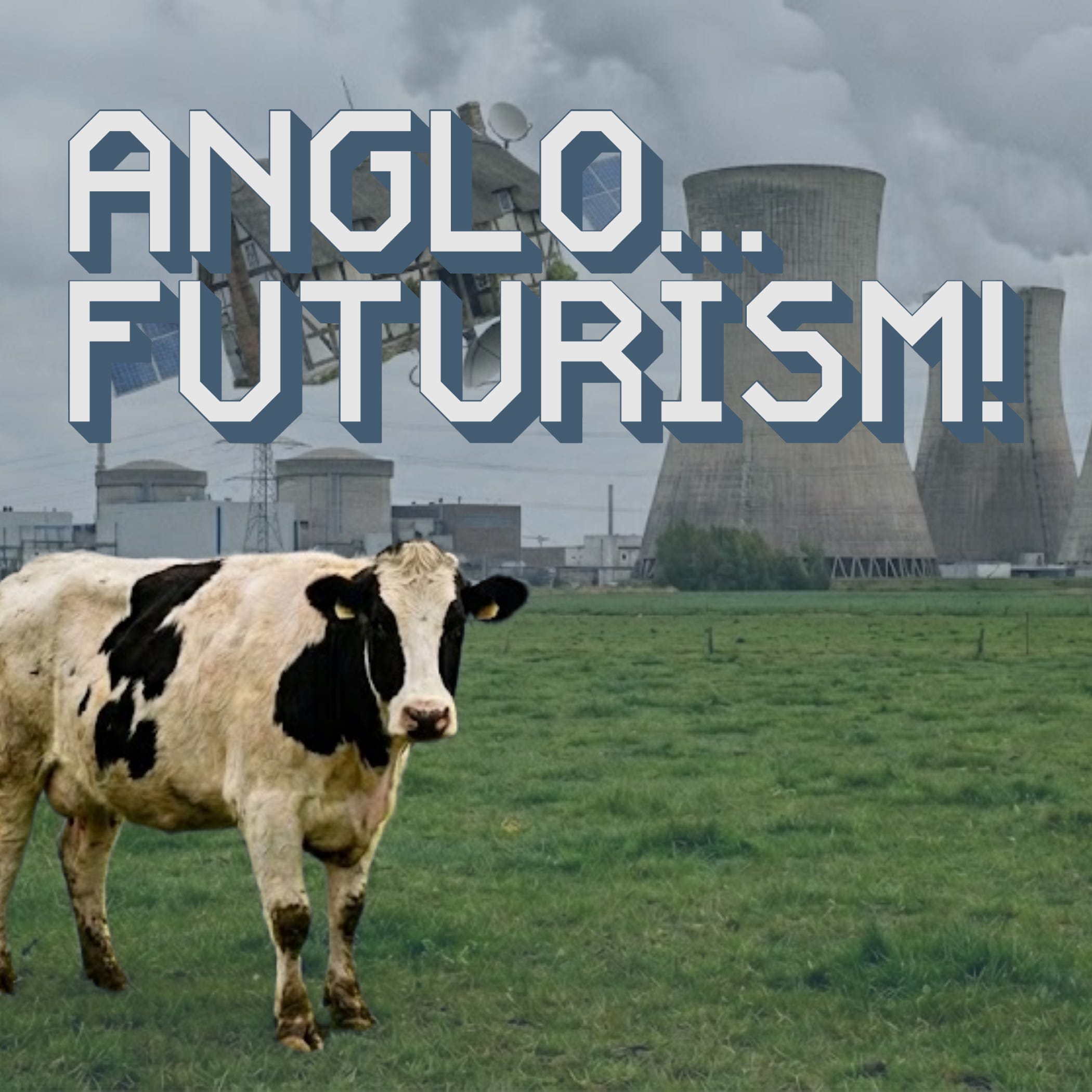
Ep 35John Fingleton's nuclear revolution, sacred wows, and why Shabana Mahmood is all talk
This is a free preview of a paid episode. To hear more, visit www.anglofuturism.coTom and Calum dissect John Fingleton’s damning nuclear regulatory review, play Sacred Cow with the greenbelt and Zone 1 council housing, and explain why Shabana Mahmood’s “tough on immigration” reforms are actually quite soft. Plus: nuclear policy specialist Robert Boswall drops by fresh from the pub to explain why the ONR reports to the Department for Work and Pensions, and why Birmingham City FC’s new chimney-adorned stadium might be the most important piece of architecture in Britain.Tom and Calum discuss:* The Fingleton nuclear report: Santa came down the chimney with a huge sack of regulation-cutting proposals—£700 million fish discos, eight different regulators for defence projects, and the revelation that civil servants defer to regulators who defer back to civil servants in an endless loop of inaction,* Robert Boswall’s pub celebration: Fresh from carousing over the nuclear report, nuclear policy specialist Robert Boswall explains why tolerability of risk matters, why the ONR bizarrely reports to the Department for Work and Pensions, and why his favourite regulation to abolish is “regulatory justification”—a random EU inheritance that costs millions and achieves nothing,* Sacred Cow carnage: Calum slaughters the greenbelt (”most of it is disused petrol stations”), executes Zone 1 council housing without hesitation, but spares Christmas and national parks. Tom meanwhile shows his kindness towards farm animals,* Shabana Mahmood’s immigration mirage: Blue Labour are delighted by her “tough” reforms—20-year wait for asylum seekers!—but there are carve-outs everywhere (jewellery confiscation exempt if “sentimental”), new safe and legal routes opened up, and asylum seekers can choose the 10-year track instead. Chris Bayliss in The Critic calls it out as vibes over substance,* Elite defectors and vibe shifts: Tom argues that Westminster consensus on immigration is cracking and elite opinion is shifting against mass migration. Calum counters that this means nothing if Reform sweeps in on northern Red Wall seats while London dinner parties stay the same,* Birmingham City FC’s chimney stadium: Thomas Heatherwick’s design with 12 enormous brick chimneys evoking Birmingham’s industrial past. Tom loves it as history finding echo in architecture. Calum worries it’s pastiche—until Tom destroys him with facts and logic about Houses of Parliament crenellations.

"Why Did Millennials Choose Palestine Over Rent?" — Shiv Malik on Building Britain's First New City in 50 Years (Part 2)
In the second part of this conversation, Shiv Malik goes deeper on why millennials never organised around housing despite it being the defining material issue of their generation. His book tour for Jilted Generation in 2010 drew audiences full of chest-beating boomers—but almost no millennials showed up. Was it that they saw housing as a personal failure rather than a systemic one? That complaining about rent wasn’t intellectual enough for degree-educated people who’d read theory? Or has social media created weak bonds and the illusion of political action through likes?In the second half of this two-part conversation, Shiv, Tom, and Calum discuss:* Why millennials never protested housing: Shiv’s book tour drew boomers who either self-flagellated or accused him of wanting them dead, but almost no millennials—possibly because rent isn’t intellectual enough for degree-educated people who prefer causes with “great bodies of theory,”* The cavalry isn’t coming: a major decision-maker told Shiv that building a city “is not the kind of thing we could do in 21st century Britain” and asked where his generation’s protests were—because politicians would act if young people actually demanded housing,* The social contract, not cities: Shiv doesn’t only care about cities—he cares about restoring the promise that if you work hard you can buy a house and raise a family. The city is just the only vehicle that might get past all the NIMBYs,* Development corporations as tools: the Olympics legislation took nine months and had spades in the ground within 18 months. HS2 failed because it had to negotiate bat tunnels with every parish along the route,* The aesthetics problem: how do you bring back decoration without being slavish to the past? Charles Rennie Mackintosh and Art Deco represent the last moment of both futurism and ornamentation before the brutalists threw out decoration entirely,* Manufacturing charm: Richard de Haan transformed Folkestone by renting to creative businesses at peppercorn rates. But can you manufacture what 220-year-old London pubs have imbued into their fabric, or does it just happen? This is a public episode. If you'd like to discuss this with other subscribers or get access to bonus episodes, visit www.anglofuturism.co/subscribe

Britain's First New City in 50 Years: Shiv Malik on Building a Million-Person City East of Cambridge (Part 1)
Shiv Malik is the would-be founder of Britain’s first new city in over 50 years. He and Joe Reeve from LFG have identified 45,000 acres east of Cambridge for a million-person city, complete with cross-laminated timber skyscrapers, trams, proper sewerage, and enough infrastructure that NIMBYs might actually be won over by three new hospitals and 300 schools appearing on their doorstep.In the first of this two-part conversation, Shiv, Tom, and Calum discuss:* The vision: a pedestrianised city centre with wooden skyscrapers reaching 60 storeys, trams running through it, and sewerage done right for once—plus all the ideas that can never be retrofitted into Victorian streets,* Why Milton Keynes is Britain’s secret productivity miracle: it’s the most productive place outside a few London boroughs, and if everyone lived as richly as Milton Keynes residents, we’d be 50% richer as a country—not because of roundabouts, but because recently-built infrastructure is simply more efficient than Victorian stairs,* The stakeholder nightmare: West Suffolk Council met Shiv for 90 minutes, Lord Vestey owns a third of the land, 8,000 current residents need convincing, and the development corporation model that built Milton Keynes in six weeks of public consultation is now viewed as dangerously autocratic,* Why NIMBYs have a point: the houses are terrible, there’s never infrastructure with new developments, Section 106 bargaining is an irrational barter system, and people are right to oppose ugly pylons and Barratt Homes extensions that crater village life without delivering train stations or hospitals,* The intergenerational thesis: Britain created a new leisure class that never existed in human history—retirees with incomes equal to workers but derived from capital, not labour—and they have time to dominate local politics while exhausted workers can’t fill out planning responses at 9:30pm,* The Boriswave outrage: Shiv gets told to “go home” online and understands why people are angry. He agrees with Shabana Mahmood that immigration policy has been a total failure—but why haven’t we built a reservoir in 30 years, and why doesn’t Haverhill have a train station? Immigration didn’t cause those failures,* The cavalry isn’t coming: Baroness Claire Fox asked Shiv if his book was “just a giant whinge,” and she was right—millennials and Gen Z protest about Palestine but don’t organise around material circumstances like housing, which is why Joe Reeve’s “we are the cavalry” moment convinced Shiv to dust off his old city plans,* The economics: community land trusts for housing, special economic zone tax breaks like Canary Wharf for commercial land, 80 acres in the city centre for ACDC (Albion City Development Corporation) to capture uplift, and the precedent of the Docklands Development Corporation proving this model works,* Phase one goals: convince Housing Secretary Steve Rayner to greenlight the development corporation, raise £200 million for master planning and site surveys, get spades in the ground by the end of this Parliament, and prove to Lord Vestey that selling up (or investing) beats getting CPO’d. This is a public episode. If you'd like to discuss this with other subscribers or get access to bonus episodes, visit www.anglofuturism.co/subscribe

Britain's Shadow Empire? How Crown Dependencies Move $3 Trillion and Support a Million UK Jobs
James Kingston works in the digital asset industry and is the author of Profitable Peripherals: Maximising the potential of British CDOTs. He came aboard the KC3 to explain why the Cayman Islands, Jersey, and Britain’s 17 overseas territories aren’t tax havens draining the exchequer—they’re innovation labs pumping foreign capital into British banks and employing British lawyers to service Chinese deals.James, Tom, and Calum on:* Why the narrative that CDOTs are a “shadow empire for British finance” draining tax revenue is measurably wrong—Jersey alone supports a million UK jobs annually through £1.4 trillion of intermediated capital, and 68% of deposits in Jersey banks flow back to Britain despite only 29% coming from the UK,* The comparative advantage problem: 70% of the world’s hedge funds are domiciled in the Cayman Islands ($2.7 trillion, more than the US), and 66% of British Virgin Islands assets concern Greater China deals—meaning British lawyers in London tax revenue from Shenzhen transactions they’d never otherwise access,* Why these jurisdictions succeeded where hundreds of other offshore centres failed: international investors trust the common law system and know that if something goes wrong, they can ultimately rely on London—but if Britain ever seized the money (as one MP proposed to fund the NHS), the entire edifice would collapse overnight,* The innovation case: Jersey passed data trust laws, the Isle of Man is releasing Data Asset Foundation legislation, and the Cayman Islands created legal structures for DAOs—Britain should partner with CDOTs as regulatory sandboxes for tech rather than just finance, creating British jobs in data stewardship and AI development,* Why the “finance curse” criticism—that Britain’s best minds waste their lives writing tax-efficient contracts rather than founding energy startups—is the most compelling argument against CDOTs, but also why abandoning comparative advantage in pinstripes would be economically illiterate,* The security question: can Britain actually defend these territories in a multipolar world, or should we follow Philip Cunliffe’s argument that claiming places you can’t defend is a fiction? James says giving things up willy-nilly (looking at you, Chagos) isn’t the answer—economic activity strengthens claims, like the East India Company did,* The vassalisation problem: Britain spent decades being completely open to the world, but CDOTs are really nodes in a US financial imperium—British tech stacks run on American platforms, and conflating US interests with British interests means we’ve forgotten to ask what independent leverage looks like,* James’s 50-year vision: British spaceships launched from Ascension Island, Jersey-domiciled mining outfits in the Oort Cloud, interstellar cargo ships flagged with the Isle of Man, and Britain remaining in the top tier of nations with trillion-dollar companies built here rather than accepting managed decline as a “normal European country.” This is a public episode. If you'd like to discuss this with other subscribers or get access to bonus episodes, visit www.anglofuturism.co/subscribe

PVC Castle Windows, ARIA's Golden Age, and Matt Clifford for PM?
This is a free preview of a paid episode. To hear more, visit www.anglofuturism.coDon’t forget to sign up for November’s Anglofuturism meet-up in London. Check the blog for more information.After being featured in both a Hope Not Hate hatchet job and a New Statesman meditation on “British hüzün,” Tom and Calum defend their vision against critics who keep mistaking them for nostalgic romantics when they just want Britain to build factories again. Plus: why the first castle built in Britain for a century looks like a multi-storey car park, ARIA’s remarkable success at funding cutting-edge science, and Matt Clifford’s case that Britain simply needs to be wealthy again.Tom and Calum on:* Why every critic keeps describing them as Young England romantics wandering gothic landscapes when they actually just want factories—as Rian Whitton put it, they don’t want Blake’s New Jerusalem, they want the dark satanic mills (ideally both),* The castle problem: Britain’s first castle in 100 years has been built and it’s absolutely hideous—a Grand Designs disaster with PVC windows that cost £7 million, proving you cannot trust architects or educated elites to have your interests at heart,* ARIA’s golden period: why Britain’s Advanced Research and Invention Agency is successfully funding AI scientists, programmable plants, and self-driving labs whilst selecting genuinely brilliant people—plus Calum’s application to build biological automation robots that could enable runaway technological progress,* The inevitable NASA-style bureaucratic drift that will eventually destroy ARIA, and why you just have to start new institutions every generation rather than trying to reform sclerotic ones that have lost their edge,* Matt Clifford’s speech at the LFG conference arguing Britain simply needs to be rich again—citing Bradford as once the wealthiest city in the world with a town hall like the Natural History Museum, now a symbol of decades of managed decline and why this message resonated so powerfully,* Why the British right is more right-wing than American Trumpers on national identity (81% vs 65% worry about losing it through immigration) but simultaneously more left-wing on state involvement—the “hang the paedos, fund the NHS” coalition that Reform represents,* The death of noblesse oblige and why modern meritocratic elites are more dangerous than hereditary aristocrats—when status comes from beliefs rather than bloodlines, you get luxury beliefs and educated ignoramuses who haven’t done the reading outside their narrow expertise,* Why people viscerally hate inequality and billionaires now despite billionaires living basically the same lives as us—but in 20 years when life extension and neural modulation are available first to the wealthy, humanity will genuinely bifurcate and make current debates look like child’s play,* Dutch Bato-futurism: the next Dutch PM is promising 10 new cities including one raised from the sea (£20 billion, 60,000 homes), Orbex successfully simulating a rocket launch in Scotland, and China drilling 3km deep into Antarctic ice whilst Britain maps the bedrock then publishes it for everyone,* The Zack Polanski problem: why Britain is producing its own version of Mamdani-style socialist politics, and whether the sovereign individual thesis about elites escaping nations was wrong about the direction of travel in the 21st century.

The British Company Putting Solar Panels in Space
Don’t forget to sign up for November’s Anglofuturism meet-up in London. Check the blog for more information.Tom and Calum visit Space Solar at Harwell to meet co-founder and co-CEO Sam Adlen, who’s attempting to solve Britain’s energy crisis by putting massive solar arrays in geostationary orbit and beaming the power down as microwaves. No new physics required—just the unglamorous work of becoming the Toyota of space infrastructure.In the episode:* Why space-based solar delivers 13 times more energy than ground panels and provides baseload power 24/7, making it economically competitive with terrestrial solar even at today’s launch costs,* The technical solution: kilometere-scale satellites made of hundreds of thousands of coffee table-sized modules that beam power down using phase conjugation, with no moving parts and power density a quarter of midday sun (safe enough that birds won’t cook),* How Space Solar’s system works like a “giant interconnector in space”—instantly switching beams between countries to balance grids, support renewables when wind dies, and redirect power where it’s needed, potentially saving over a billion pounds annually in UK energy system costs,* Why they’re not trying to invent new physics but rather optimise industrial process—the challenge is manufacturing a million modules, perfecting logistics, and automating assembly in space using robotics that construct truss structures in orbit,* Britain’s fatal flaw: brilliant at innovation, terrible at scaling, with orders of magnitude less investment going into space than AI or fusion despite space being “bigger than AI” and strategically critical as the new waterways for global power,* The regulatory reality: UK space regulators have been “superb” and energised, even on grid connections that normally take 15 years—the real bottleneck is financing early-stage infrastructure rather than venture capital’s preference for low-capex software,* Sam’s vision for 2075: Britain as a leader in space infrastructure, power no longer a constraint, and a generation with genuine abundance ahead—but only if we move now, because “there’s no second mover role” when barriers to entry spike after first movers climb the cost curve,* Why Starship’s success is the step change moment for space: 24 launches in 24 hours transforms everything from orbital data centers to asteroid mining, and Britain needs to commit two orders of magnitude more investment immediately or watch others colonise the economic high ground. This is a public episode. If you'd like to discuss this with other subscribers or get access to bonus episodes, visit www.anglofuturism.co/subscribe

Ep 30Pingu nationalism, Hope not Hate, and British space lasers
This is a free preview of a paid episode. To hear more, visit www.anglofuturism.coAfter being featured in a Hope Not Hate report linking Robert Jenrick to Anglofuturism, Tom and Calum reflect on their newfound infamy while developing their theory that Pingu represents English settler colonialism, discussing plans to rebuild Britain’s castles, and making the case for British domination of space.Tom and Calum on:* Their appearance in a Hope Not Hate exposé as “the most intellectual vision” of Anglofuturism, despite the organisation’s history of libel cases and treating any immigration scepticism as fascism,* The Straussian reading of Pingu: why the show is clearly about English settlement of Antarctica, with Pingu as a third-generation settler family complete with nuclear family structure and grandparents—”indomitable, curious, restless, resourceful,”* The Pendragon Foundation’s plan to rebuild Britain’s crumbling castles as living cultural centres rather than preserved ruins, learning from French château restoration and Japanese craft traditions that maintain skills through continuous building,* Why buildings must evolve rather than be frozen in amber—the challenge isn’t preservation but having the confidence that new additions enhance rather than damage, avoiding both museum-ification and CBeebies-style vandalism,* Boris Johnson’s continued defence of mass immigration despite acknowledging integration has failed, and why his generation of Tories remains traumatised by the “nasty party” narrative and temperamentally incapable of restriction,* How cultural narratives around immigration and integration have shifted over generations, and why the smartphone age presents challenges for assimilation,* Why no financial incentive can solve Britain’s birth rate crisis when market logic has made children economically irrational, and the grim possibility that medical technology is amplifying fertility problems,* Britain’s new orbital defence sensors against Russian laser attacks, and why now is the moment for some bloody-minded figure to champion British domination of space warfare before the opportunity passes—defending satellites today, commanding the high ground tomorrow.With additional audio from Calum’s appearance on Hugo Rifkind’s Times Radio show and an excellent YouTube clip.

Curtis Yarvin's Plan for Britain
ECurtis Yarvin steps aboard the KC-3 to argue that Britain should exploit America’s imperial exhaustion to become the new leader of the West, starting with dismantling the cathedral of unaccountable bureaucrats that has replaced genuine sovereignty. It’s a path that runs through Oxbridge, extraterritorial Chinese Oakland, and possibly some Ayahuasca for Elon Musk.Tom, Calum, and Curtis on:* Why the Deliveroo economy is more dehumanizing than Victorian servitude - with social distance replacing the personal bonds that once connected masters and servants,* How Elizabeth I’s delegation to the Cecils created Britain’s first “deep state” of Platonic guardians, leading directly to today’s unaccountable oligarchy of Sir Humphrey Applebys,* The pornography of democratic power: why voting makes you feel sovereign when you’re actually just a consumer demanding better customer service from an autocracy that pretends to care about your opinions,* Why gain-of-function research is like coming home to find your ten-year-old setting fire to the kitchen curtains “for science” - and how experts’ conflict of interest makes them create the crises they’re paid to solve,* Napoleon’s maxim that “the crown of the Western world is in the gutter” - why Britain can simply pick it up with its sword now that American imperial energy has dissipated and the State Department can’t stop you,* The case for neo-colonialism as win-win: reverse extraterritoriality in West Oakland with Chinese police in white gloves, reclaiming Jamaica and Ceylon’s tropical highlands, and why Africa needs to be “regoverned” before it can thrive. This is a public episode. If you'd like to discuss this with other subscribers or get access to bonus episodes, visit www.anglofuturism.co/subscribe

Dark Abundance and the Caning Question
This is a free preview of a paid episode. To hear more, visit www.anglofuturism.coTom and Calum explore "dark abundance": a more muscular approach to progress that combines deregulation with decisive state action against disorder and dysfunction.* Why Trump's state visit was peak "museum Britain" - bringing out the fine china for foreign guests while using enamelware the rest of the time,* The taxonomy of abundance politics: from Ezra Klein's soft progressivism to "dark abundance", which posits that some people need locking up until their frontal lobes develop,* How special interests capture reform - from civil servants empire-building through risk assessments to public sector workers voting Labour to preserve their comfortable sinecures,* The eternal tension between Manchester Liberal free trade and the need for order: why you can't have abundance without deterring bus fare dodgers and ensuring violent criminals actually face consequences,* Victorian-style pacification of the country through decisive punishment, inspired by Britain executing 16 times more people per capita than Prussia in the 19th century,* Their architectural philosophy for the coming new towns boom: why Poundbury succeeds despite its mongrel-like mixing of styles, and the case for illiberal design codes that ban modernist innovation in city centres until we figure out what the hell is going on in architectural schools.

Britain's Industrial Renewal with Rian Chad Whitton
Industrial policy researcher Rian Chad Whitton makes his second appearance to dissect Britain's manufacturing decline, arguing that energy costs and economic orthodoxy have systematically dismantled what was once the world's fourth-largest industrial base.Tom, Calum, and Rian on:* Why 1999 represented a high-water mark for British industry - the fourth-largest manufacturing base globally with functioning steel, chemicals, and automotive sectors, before China's rise blindsided everyone including FT columnists,* How Britain's "tolerance for lower margins" problem means we exit markets entirely while Germany and Japan fight to stay competitive - illustrated by ICI's dismantling versus Jim Ratcliffe's successful INEOS empire built from the wreckage,* The devastating impact of energy costs on heavy industry: 20% of gross value added for energy-intensive sectors, 80% for steel production, while competitors enjoy massive state subsidies that Britain refuses to match,* Why the government's £51 billion energy support budget (the size of the defence budget) still isn't enough to paper over the fundamental problem of expensive electricity and misguided net-zero policies,* Ryan's fantasy 50-year plan for industrial revival: import substitution for steel and cement, building the world's largest 200,000-ton forge press, and learning from Chinese entrepreneurs who consider profit margins above 5% "economic inefficiency,"* The irony that Britain followed American economic orthodoxy perfectly - green energy, liberal immigration, foreign direct investment - only to be mocked by Americans for becoming a "vassal state" that sucks at everything. This is a public episode. If you'd like to discuss this with other subscribers or get access to bonus episodes, visit www.anglofuturism.co/subscribe

Ep 26The Death of the UK Space Agency with Peter Hague
Space policy expert Peter Hague joins from his emergency shuttle to discuss Labour's decision to fold the UK Space Agency into a larger department, effectively ending Britain's independent space ambitions just as the new space age begins.In this episode:* Why the UK Space Agency's absorption into DSIT represents Britain "quitting before it started" - losing budget autonomy and direct ministerial access just when space is becoming strategically crucial,* The historical pattern of British space failures: from abandoning the successful Blue Streak rocket (which could have rivaled Atlas) to the disastrous Europa program where continental partners kept sabotaging British components,* Why the Apollo program wasn't popular at the time but became mythic afterward - and how political leadership means doing unpopular things that future generations will thank you for,* Peter's "Penny for Space" campaign: spending just 1% of government budget on space (compared to 33% on welfare) as a "civilizational pension" for Britain's future in the 22nd century,* The coming space revolution that will make 2029 politically embarrassing: private space stations, Indian human spaceflight, and potentially Chinese or American boots on Mars while Britain has no space program at all,* Why we need a new UK space agency focused on building rotating space habitats in Earth orbit - stepping into the gap as America abandons permanent orbital presence for lunar missions.Peter asked us to higlight the recent work of Progress in building a technology-forward Britain. We recommend trying out the excellent Nick, 30 ans simulator. This is a public episode. If you'd like to discuss this with other subscribers or get access to bonus episodes, visit www.anglofuturism.co/subscribe

Ep 25Now & England, The Anti-Catastrophe League, and Neo-Elizabethan Allegations
Tom and Calum reflect on 25 episodes of the podcast that allegedly influenced Robert Jenrick to declare himself an Anglofuturist, while grappling with accusations of dangerous nostalgia from Southampton academics.Tom and Calum on:* How Robert Jenrick's declaration that he's “what you would call an Anglo-futurist” at a Westminster nationalism conference proves their growing influence* Defending themselves against Francesca Melhuish's academic paper attacking the “nostalgic politics of Anglofuturism”* Why talk of British civil war misses the point - the real question is whether there's a genuine constituency for radical change beyond angry WhatsApp groups and hotel protests,* Tom's new book, and his journey from effective altruist malaria-net maximizer to someone worried about civilizational collapse,* The thrilling prospect of geoengineering our way out of climate change through stratospheric aerosol injection and iron ocean fertilizationThe Anti-Catastrophe League: The pioneers and visionaries on a quest to save the worldA new Elizabethan age: The Advanced Research and Invention Agency (ARIA) and the nostalgic politics of Anglofuturism This is a public episode. If you'd like to discuss this with other subscribers or get access to bonus episodes, visit www.anglofuturism.co/subscribe
024. Alex Burghart: Inside i.ai

Britain's Anglo-Saxon AI Revolution, with Alex Burghart MP and Dr Laura Gilbert
Conservative MP Alex Burghart and AI expert Dr Laura Gilbert argue that Britain's mediaeval past holds the key to mastering its technological future–from Alfred's burghs to sovereign data centres.Calum, Tom, Alex, and Laura explore:* How Alfred the Great's response to Viking invasion mirrors today's AI challenge–using crisis as the moment to forge new order when "the metal is hot," creating institutions that lasted centuries,* Why the collapse of Roman Britain offers hope for our post-imperial moment: just as Alfred built something more durable than Rome from chaos, we can create lasting prosperity from current decline,* Laura's insider account of building i.ai within government–attracting world-class talent with the mission to save lives and money, while navigating civil service "antibodies against change" and demands for "Whitehall Sherpas,"* The case for sovereign compute power and data ownership as national security imperatives–why relying on foreign AI models could leave Britain vulnerable to future Donald Trump Jrs turning off access,* Alex's vision for technological Anglo-Saxonism: virtual reality mead halls where the nation's "Witan" assembles annually, plus genetically enhanced oaks growing fast enough to maintain our aesthetic inheritance,* Why the next government needs to break the bureaucratic paradigm that's paralysed Britain since 1990–and why Conservative experience of governmental frustration makes them uniquely positioned to "seize the liquid moment."Sovereignty, Security, Scale: A UK Strategy for AI InfrastructureProfessor James Campbell (historian)Clip from “Harold Godwinson” used with permission from The Skaldic Bard. This is a public episode. If you'd like to discuss this with other subscribers or get access to bonus episodes, visit www.anglofuturism.co/subscribe

Ep 22The End of Globalism and the Return of the Nation with Philip Cunliffe
Political theorist Philip Cunliffe argues that globalism is dying and Britain has a rare chance to lead the world into whatever comes next - but only if it rediscovers what sovereignty actually means.Philip Cunliffe on:* Why we're witnessing the collapse of globalist political structures that layered transnational governance over democratic nation states,* How ruling elites from the 1980s onwards deliberately fragmented political power to escape working-class demands, creating the regulatory "blob" that can't build railways or defend territory but excels at shuffling PowerPoint decks,* The failure of populists like Trump and Meloni to break free from globalist institutions, despite their rhetoric - and why even "America First" gets sucked back into Middle Eastern quagmires,* Why Brexit was a precocious early move in this global transition, giving Britain unique advantages as other nations will "inevitably have to follow us down as globalism continues to decay,"* The case for "new nations" - not territorial breakups but politically renewed nation-states that can actually defend their interests, requiring proportional representation, ending devolution, and forcing politicians to think in terms of national interest rather than international virtue signaling,* How a revitalised Britain could seize unprecedented opportunities in a multipolar world without a single hegemon - if it's willing to focus on what sovereignty actually means.The National Interest: Politics After Globalization This is a public episode. If you'd like to discuss this with other subscribers or get access to bonus episodes, visit www.anglofuturism.co/subscribe

Ep 21Labour's Growth Champion on Sacred Cows and Economic Ambition
Dan Tomlinson MP, Labour's official growth mission champion, boards the KC-3 to discuss what Britain needs to sacrifice for economic growth and whether we're still a country capable of big things.Dan Tomlinson on:* Why Britain has lost the ability to do "big and bold" things like the Apollo missions, trapped by endless processes, consultations, and judicial reviews that would make a modern space program impossible,* Testing Labour's growth priorities against various "sacred cows" - from building on the greenbelt (yes) to fracking and North Sea drilling (no) to social housing in central London (complicated),* Whether high immigration helps or hurts growth, arguing that the recent scale (equivalent to adding Leeds, Manchester, Sheffield and Liverpool combined) has unclear benefits for GDP per capita despite official studies,* His three-pillar growth strategy of stability, investment, and reform - particularly planning reform that could add £7 billion to GDP - and why he believes Chancellor Rachel Reeves has the right approach,* His vision for Britain in 50 years.Further readingDan asked us to share this clip of a happier time, when the country struggled under the weight of GP appointments that were simply too easy to obtain: Watch it on YouTube. This is a public episode. If you'd like to discuss this with other subscribers or get access to bonus episodes, visit www.anglofuturism.co/subscribe

Ep 20Manufacturing Britain's Future: Inside Isembard's Industrial Revolution
From the King Charles III Space Station, Tom and Calum welcome Alex Fitzgerald, founder of Isembard - a micro-factory startup that's building Britain's manufacturing future one CNC machine at a time.Alex explains how Britain's manufacturing crisis isn't just about big factories closing - it's about the hidden supply chain of small family-owned machine shops that actually make the parts for everything from F-35 jets to AirPods. With 95% of CNC machines owned by small businesses, and those business owners now retiring en masse, the West faces a manufacturing capacity cliff just as geopolitical tensions increase demand.“Fundamentally, how you build great product is having engineers ingest pain and then output product.”The episode explores:* Whether distributed manufacturing is more resilient than centralized factories* How Britain's hidden aerospace and defense supply chains actually work* Why small machine shops are the real manufacturing base, not big assembly plants* The role of risk capital in building trillion-dollar manufacturing businesses* How software and AI are transforming traditional machining and production* What young engineers can do to build world-changing manufacturing businessesFurther readingIsembard - Faster, Cheaper, Greener ManufacturingThe Manufacturing ManifestoCareers at Isembard This is a public episode. If you'd like to discuss this with other subscribers or get access to bonus episodes, visit www.anglofuturism.co/subscribe

Ep 19Unfortunately, Keir Starmer is not an Anglofuturist
In this solo episode recorded from the King Charles III Space Station, Tom and Calum eat humble pie after their confident predictions about the Chagos Islands deal being shelved proved spectacularly wrong. Within days of the last Britannia dispatch, Keir Starmer confirmed the handover to Mauritius would proceed, decisively answering the question "Is Keir Starmer an Anglofuturist?" with a resounding no.This giveaway fits into a broader pattern of Britain's political elite prioritizing abstract internationalist ideals over their inheritance from previous generations. Tom and Calum draw parallels between the Chagos surrender and the potential handover of the Elgin Marbles, arguing that Britain's custodians are conducting a "national fire sale" that makes the country look weak to international observers.The episode explores:* Whether Britain's political class has lost the Burkean sense of obligation to past and future* How the country has become "brittle" with single points of failure in central government* The need for local organization and civic engagement when the state fails* Why planning reform is essential but constantly undermined by the "vegetable lobby"* The demographic realities that make military mobilization increasingly difficult This is a public episode. If you'd like to discuss this with other subscribers or get access to bonus episodes, visit www.anglofuturism.co/subscribe

Ep 18Santi Ruiz on America's Techno-Industrial Master Plan
Santi Ruiz is a policy researcher at the Institute for Progress and host of the Statecraft newsletter and podcast. He's one of the editors of the Techno-Industrial Policy Playbook, a comprehensive strategy document produced by three American think tanks to help the US compete with China's manufacturing dominance. The playbook outlines concrete policy proposals across frontier science, energy abundance, and national security—from creating special compute zones to reforming naval shipbuilding and accelerating geothermal development.The Society for Technological Advancement (SoTA) is organising a hackathon on 31st May and 1st June focused on geoengineering and weather control. Click here to find out more.Episode outline* How China's 230x shipbuilding advantage over America represents an existential threat to Western naval power* The X-Labs proposal to fund cutting-edge research institutions outside traditional universities using flexible block grants* Special compute zones that would fast-track energy infrastructure for AI development in exchange for security commitments* Why America's Loans Programs Office has funded every nuclear plant built this century and shouldn't be dismantled by DOGE* How regulatory carve-outs for geothermal energy could unlock abundant clean power using proven oil and gas drilling techniques* The critical minerals challenge where China could crash markets to destroy American mining operations* Why American naval shipbuilding fails because design is outsourced instead of done in-house like it used to be* Whether Britain should be America's lapdog or develop independent techno-industrial capacity focused on European threats* How elite consensus matters more than popular mobilisation for implementing transformative policy changes* The difference between financialisation that enables productive investment versus financialisation that replaces itMentioned in this episode:The Techno-Industrial Policy Playbook: How to Kickstart America's Techno‑Industrial RenaissanceStatecraft on SubstackWhy FORGE Works by Tom Ough for IFP This is a public episode. If you'd like to discuss this with other subscribers or get access to bonus episodes, visit www.anglofuturism.co/subscribe

Is Keir Starmer an Anglofuturist?
A break from our regular schedule to bring you urgent news on the Chagos Islands and a sudden change for Britain’s immigration policy.We’re back with the regular podcast on May 28th when we’ll be talking to Alexander Fitzgerald, industrialist and Founder/CEO of Isembard. This is a public episode. If you'd like to discuss this with other subscribers or get access to bonus episodes, visit www.anglofuturism.co/subscribe

Everything Is About Everything Until Nothing Works, with Joe Hill (Policy Director, Reform Think Tank)
Joe Hill is Director of Policy at Reform and founder of the Greater London Project, a community initiative focused on London's future. A former Treasury civil servant with experience across government departments, Joe has become a leading critic of what he calls "everythingism"—the dysfunctional tendency to make every policy about every other policy, everywhere, all at once. His influential essay on this concept has gained significant traction in policy circles, offering a framework for understanding why British governance has become increasingly ineffective despite ever-expanding regulations and procedures.Calum and Tom talk to Joe about:* How "everythingism" manifests in absurd policy decisions like rejecting a nuclear power plant to protect Welsh language or requiring fish discos for reactor cooling systems* The rise of plus-oneism—how individual policy advocates each adding "just one more requirement" creates an unmanageable bureaucratic morass* Why statutory requirements like the Equalities Act and Climate Change Act have created unintended veto points that prevent sensible decision-making* The failure of technocratic governance through quangos and how these arms-length bodies have become accountability sinks* How social value procurement requirements waste billions by forcing contractors to prioritise secondary goals over core objectives* The paradox of parliamentary sovereignty—how ministers have the power to cut through bureaucracy but lack the knowledge or will to do so* Why successful government initiatives like the vaccine task force only work by exempting themselves from normal rules* The path forward: restoring personal accountability, rejecting everythingist thinking, and accepting that good policy requires difficult trade-offsSee below for transcript and further reading. Listen on Apple Podcasts and Spotify.Further Reading on Everythingism and British Policy ReformIf you enjoyed this episode with Joe Hill discussing the crisis of everythingism in British governance, here are some recommended resources to explore these topics further:"Everythingism" by Joe Hill - The original essay that defines and analyses the concept of everythingism in British policymaking.Greater London Project - Joe's community initiative and Substack focused on building a liveable future for LondonReform research - Various papers on planning reform, regulatory burden, and state capacityDan Davies on “The Unaccountability Machine” - Dan Davies explores the concept of unaccountability sinksBooks"The Uses of Knowledge in Society" by F.A. Hayek - Foundational text on the limits of centralised decision-making"The Blunders of Our Governments" by Anthony King and Ivor Crewe - Analysis of systematic failures in British government decision-making"The British Regulatory State" by Michael Moran - Academic examination of how Britain became a hyper-regulated society"Seeing Like a State" by James C. Scott - Classic work on why certain schemes to improve the human condition have failed"Simple Rules for a Complex World" by Richard Epstein - Legal scholar's argument for simplicity in law and regulation"The Death of Common Sense" by Philip K. Howard - How bureaucratic rules have replaced human judgment in governance"Why Government Fails So Often" by Peter Schuck - Analysis of the structural reasons for policy failure This is a public episode. If you'd like to discuss this with other subscribers or get access to bonus episodes, visit www.anglofuturism.co/subscribe