Show overview
An Essay on Economic Theory has published 37 episodes during 2014. Releases follow a monthly cadence.
None of the episodes are flagged explicit by the publisher. It is catalogued as a EN-language Science show.
The catalogue appears to be on hiatus or wound down — the most recent episode landed 11.8 years ago, with no new episodes in over a year. Published by Mises Institute.
From the publisher
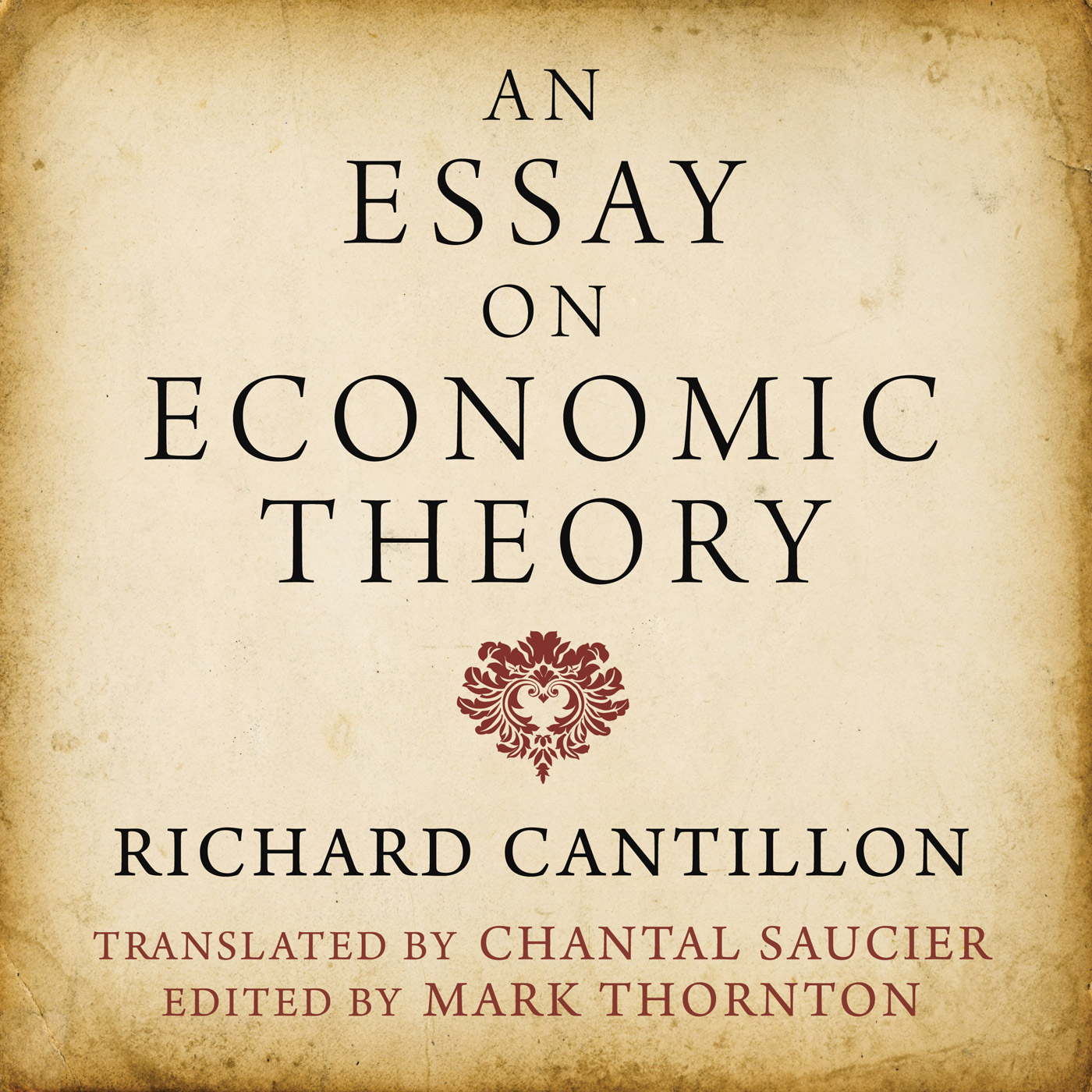
An English translation of Richard Cantillon’s Essai sur la Nature du Commerce en Général. Translated by Chantal Saucier. Edited by Mark Thornton. This audio book is made available through the generosity of Mr. Tyler Folger. It is narrated by Millian Quinteros.
Latest Episodes
View all 37 episodesEp 2Foreword to An Essay on Economic Theory
Foreword to Richard Cantillon's An Essay on Economic Theory. Mark Thornton and Chantal Saucier have accomplished the arduous task of bringing forth a new and improved translation of Cantillon’s famous work. Narrated by Millian Quinteros.
Ep 3Introduction to An Essay on Economic Theory
Introduction to Richard Cantillon's An Essay on Economic Theory. Cantillon deals with a wide variety of fundamental and philosophical issues such as the nature of property, the distribution of income, the origin of money, and the role of government. Narrated by Millian Quinteros.
Ep 41.1. Wealth
Cantillon defines wealth as the consumption goods produced by land and labor. This contrasted with the Mercantilists who thought money was wealth.From Part 1: "Production, Distribution, and Consumption". Narrated by Millian Quinteros.
Ep 222.2. Market Prices
Market prices are determined by the bargaining between suppliers and demanders. Price determination by supply and demand is illustrated with a thought experiment that uses a fixed quantity of a perishable product (i.e., green peas) and known maximum valuations of consumers.From Part 2: Money and Interest. Narrated by Millian Quinteros.
Ep 313.1. Foreign Trade
Here the circular-flow economy is extended to international trade. Instead of barter or exchange with money, Cantillon explains how international trade takes place on the basis of bills of exchange. He showsthat a state which accumulates money will enjoy a temporary gain in international trade, but that states where manufacturing industries develop will enjoy a higher standard of living. The only clear exception Cantillon makes to free trade is his famous endorsement of the English Navigation Acts, where domestic shipping is protected, not in its own right, but to provide ships and sailors during wartime.From Part 3: International Trade and Business Cycles. Narrated by Millian Quinteros.
Ep 333.3. Further Explanations on the Nature of Exchanges
Exchange rates are explained as a function of the balance of trade and other factors. A trade deficit can cause your money to exchange below par, while a trade surplus will cause it to exchange above par. In fact, the exchange rate, above and below par, is an indicator of the general balance of trade in a country. An attempt to prohibit the export of gold necessary to pay for deficits only hurts the economy.From Part 3: International Trade and Business Cycles. Narrated by Millian Quinteros.
Ep 373.7. Further Explanations and Enquiries as to the Utility of a National Bank
National Banks are of little utility and can be the source of economic chaos. The increase in the supply of money that they provide is relatively small and offers the same disadvantages as increases in real money. They are therefore unnecessary and potentially very harmful, as in the cases of the Bank of Venice and the Bank of London. The roles of legal tender laws, fractional reserve banking, and regional trade fairs are described.From Part 3: International Trade and Business Cycles. Narrated by Millian Quinteros.
Ep 61.3. Villages
In this first of four chapters on economic geography and location theory, Cantillon explains that settlements are based on the requirements of production, especially the quantity of labor, and the extent of the specialization and division of labor.From Part 1: Production, Distribution, and Consumption. Narrated by Millian Quinteros.
Ep 71.4. Market Towns
Entrepreneurs establish markets in centrally located villages which provide the necessary conditions under which prices are established between supply and demand. The size of the market town depends on the size of the economy it serves.From Part 1: Production, Distribution, and Consumption. Narrated by Millian Quinteros.
Ep 91.6. Capital Cities
Wherever a government establishes its capital, the city will grow in size because the additional spending attracts labor and businesses to service the government and its employees and thus, it becomes a commercial center for the nation as well.From Part 1: Production, Distribution, and Consumption. Narrated by Millian Quinteros.
Ep 101.7. The Labor of the Plowman is of Less Value than that of the Artisan
The opportunity cost of becoming a skilled worker includes both the direct expenses as well as the foregone labor during the training period or apprenticeship. As a result, skilled workers must be paid higher wages than unskilled workers.From Part 1: Production, Distribution, and Consumption. Narrated by Millian Quinteros.
Ep 121.9. The Number of Laborers, Artisans, and Others, Who Work in a State, is Naturally Proportioned to the Demand for Them
The supply of workers adjusts itself to the demand for labor, across all professions, via wage rates, migration, and changes in population. Prosperity cannot be created by subsidizing job training.From Part 1: Production, Distribution, and Consumption. Narrated by Millian Quinteros.
Ep 262.6. The Increase and Decrease of the Quantity of Money in a State
Here Cantillon uses his price-specie flow mechanism to analyze some of the effects of inflation. Increasing the supply of money by mining hurtssome people and benefits others because certain prices and incomes rise faster than others. However, if the new money is accumulated and saved by those who successfully export goods, either because of superior quality or more efficient transportation, it will lead to higher standards of living.From Part 2: Money and Interest. Narrated by Millian Quinteros.
Ep 282.8. Further Reflections on the Increase and Decrease of Money in a State
Increases in the supply of money from a balance of trade eventually causes prices to rise. This in turn puts pressure on domestic producers and increases imports. The result is that the balance of trade is reduced and eventually is negative. This is Cantillon’s price specie-flow mechanism which demonstrates the reasons for the tendency for equilibrium in international monetary flows. The balance of trade can result in economic power, but this also causes the economy to lapse into luxury and decline.From Part 2: Money and Interest. Narrated by Millian Quinteros.
Ep 343.4. The Variations in the Proportion of Values with Regard to the Metals Used as Money
The price of gold and silver and the ratio between them is determined by markets and is also based on their usefulness, cost of production, and transportation costs. When government mints establish a fixed ratio between gold and silver money that is not based on market prices, the overvalued metal will be driven from circulation. This is commonly referred to as “Gresham’s Law” where bad money drives out good money.From Part 3: International Trade and Business Cycles. Narrated by Millian Quinteros.
Ep 353.5. The Augmentation and Diminution of the Denomination of Money
Raising and lowering the nominal value of money is shown not to undermine the theory of the value of money. In contrast, such measures are shown to be methods by which the prince acquires resources by deceiving individuals about the value of money. The process causes chaos in the market.From Part 3: International Trade and Business Cycles. Narrated by Millian Quinteros.
Ep 131.10. The Price and Intrinsic Value of a Thing, in General, is the Measurement of the Land and Labor, which enter into its Production
Intrinsic value can be measured by the quantity of land and laborers, taking into account the quality of land and labor. Some goods are produced almost entirely with land, others solely from labor. In the garden example, intrinsic value is both the direct expenses of the garden and the foregone value of land. Intrinsic value of a choice never changes, but market prices vary according to demand. Cantillon’s construction of “intrinsic value” should therefore be understood as the concept of opportunity cost, not the essential nature of a thing.From Part 1: Production, Distribution, and Consumption. Narrated by Millian Quinteros.
Ep 141.11. The Par Value or Ratio between the Value of Land and Labor
William Petty set off the search for a par value between land and labor. Cantillon provides a theoretical answer (referenced in Adam Smith’s Wealth of Nations) that property owners must provide their labor with the production of at least twice the land necessary to sustain the worker in order that enough children are raised to maintain the workforce over time. The amount of land will actually vary from job to job, person to person, and among different countries and societies. Therefore, the practical circumstances of the world dictate that there is no such “par” value between land and labor, only money— a “most certain measure”—can be used for income measurements and comparisons.From Part 1: Production, Distribution, and Consumption. Narrated by Millian Quinteros.
Ep 151.12. All Classes and Individuals in a State Subsist or Grow Rich at the Expense of the Property Owners
Cantillon develops a circular-flow model of the economy that shows the distribution of farm production between property owners, farmers, and workers. Farm production is exchanged for the goods and services produced in the cities by entrepreneurs and artisans. While the property owners are “independent,” the model demonstrates the mutual interdependence between all the classes of people that Adam Smith dubbed the “invisible hand” in The Theory of Moral Sentiments (1759).From Part 1: Production, Distribution, and Consumption. Narrated by Millian Quinteros.
Ep 171.14. The Desires, Fashions, and Ways of Life of the Prince, and especially of the Property Owners, Determine the Use to which Land is put in a State, and Cause the Variations in the Market Prices of all Things
Cantillon constructs a model of the isolated estate or closed economy where the choices of property owners determine outputs and prices, regardless if they manage the isolated estate or lease it to farmers. Mistakes of the farmers or changes in demand by the property owners cause changes in prices, profits and losses, which drive the economy back to equilibrium. The result is that the price system directs resources to the same outcome as that provided by the direct management of the estate owner, ala Adam Smith’s use of the “invisible hand” in the Wealth of Nations.From Part 1: Production, Distribution, and Consumption. Narrated by Millian Quinteros.