
Alienating the Audience
171 episodes — Page 4 of 4
Who To Kill or Not Kill if You've Got a Time Machine
Brian Dunning, host of the Skeptoid Podcast, joins Heaton to talk about all things time travel--the best films, TV shows and books, plus how to get around pesky time travel paradoxes, if we should try to go back and kill Hitler, and the most interesting period of history to return to as a tourist.

How Midichlorians and Harry Potter's Wizard Genes Work
Dr. Eric Spana (Duke University biology professor and delightful nerd) joins Heaton to discuss how genetics works in various scifi and fantasy realms: from recessive wizarding genes in Harry Potter, to the midichlorians of Star Wars, to super power mutations in the world of X-Men.

Stop What You're Doing and Watch "Picard"
The long-awaited "Picard" series is out now, starring Patrick Stewart and following the exploits of Jean-Luc Picard two decades after we last saw him in "Nemesis." Nicholas Sperdute comes on to analyze the pilot, predict where the plot will take us, and generally enjoy the relief that it looks like it will be a great franchise.

How to Build a Colony Ship
If we had to send a spaceship to start a colony on another planet, how many humans would we need to get the party started? How do you avoid inbreeding, and what's a stable amount of people to maintain purpose on a multi-generational mission? Rob Raffety joins to discuss, looping in everything from "The Twilight Zone" to "Wool" and "Children of Time."

The Meaning of Spock
Mr. Spock is the most captivating character in Star Trek lore, and the embodiment of logic in popular culture. John Champion, host of "Mission Log" Star Trek podcast, joins Heaton for a deep dive into the character and meaning of Spock.

When Darwin Meets Star Trek
Dr. Mohamed Noor is the author of "Live Long and Evolve: What Star Trek Can Teach Us about Evolution, Genetics, and Life on Other Worlds," and is the head of Biology at Duke University. He joins the show to talk about the origins of life, and why aliens could probably never mate in real life despite knocking boots in Star Trek.

Let's Argue About "The Rise of Skywalker"
Alright, it's been a month--let's discuss "The Rise of Skywalker"! Is it the franchise-busting wompa scat critics panned it as, or just a situation of haters gonna hate? Nick Sperdute joins to analyze the film.

Are We Living in a Computer Simulation?
The central premise to The Matrix is that we're actually living in a computer simulation, as well as think piece episodes from Star Trek, Black Mirror, and even Rick & Morty. Jay Mutzafi, host of "The Last Turtle" philosophy podcast joins Heaton to talk about Simulation Theory, and it's scifi application.

The Tarkin Doctrine and Imperial Apologists
How would Emperor Palpatine's Press Secretary describe the Galactic Empire? How would Grand Moff Tarkin spin the destruction of Alderaan? Jonathan Last of "The Bulwark" joins Heaton to describe why he believes the Empire was a good thing--an imperfect system, but on balance the best one for peace and order in the galaxy.

Robert Heinlein: Individualism and Free Love on the Moon!
Robert Heinlein, author of "Stranger in a Strange Land," "The Moon is a Harsh Mistress," "Starship Troopers," and dozens of other novels, is at the tippy top of science fiction's pantheon of writers. Andrew Mayne joins the show to discuss Heinlein and the themes which pervaded his corpus: competency, rugged individualism, and free love. Want to chat about the episode with other nerds? Check out Heaton's Heathens on Discord.
Reptoid Aliens Shouldn't Have Nipples
Dr. Erin Macdonald is an astrophysicist and science fiction consultant who advises major Hollywood productions on what they're screwing up in scripts. She joins Heaton to discuss the physics pitfalls science fiction constantly blunders into, from artificial gravity to the proliferation of cleavage in species that don't have mammalian glands. Plus: the difference between warp bubbles in Star Trek, the FTL drive in Battlestar Gallactica, and the hyperspace of Star Wars.
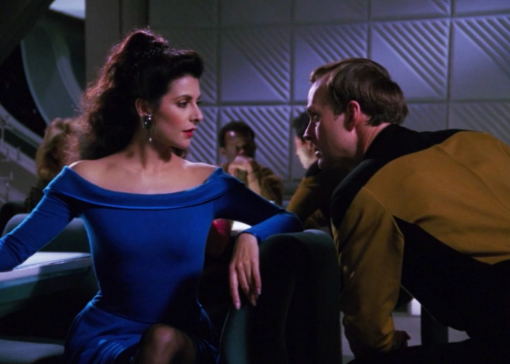
The Ethics of Holodeck Sex Romps and AI in Star Trek
What's Star Trek's take on Artificial Intelligence, and how do Aristotle's virtue ethics govern Data? Also if the holodeck can summon AI's, and they are indeed sentient, is it ethical to sleep with them? John Krikorian of "Trek Profiles" and Alexandra August of "The Disco Trek" come on for an awesome chat about AI in the Star Trek universe.

Isaac Asimov's Robots are Smarter than Whales
What do we learn about humanity when gazing through the optical sensors of a robot? Did Isaac Asimov write a novel where the end of humanity begins on a planet full of Libertarians? Ryan McGary joins for a full-throttle Isaac Asimov discussion, from whale intuition to transhumanism to Elon Musk.

The Twilight Zone's Nostalgic Cold War Bunker
Tim Sandefur joins Heaton on the podcast's kickoff episode to dissect The Twilight Zone, and how Rod Serling's fascination with nostalgia, the Cold War, collectivism, and totalitarianism made the most iconic scifi/horror show in American history.
P1 What Bladerunner Is Actually About
Ben Domenech joins Heaton to discuss "Bladerunner," "Bladerunner: 2049" and the book which inspired both, "Do Androids Dream of Electric Sheep" by Philip K. Dick.
P2 The Economics of "Dune"
Spice is a metaphor for oil. Arrakis is the Middle East. Ben Brockshmidt joins Heaton to discuss all things dune--the economic, political, and historical influences which shaped Frank Herbert's scifi universe.
P3 Cold War Kirk vs. Picard the Moral Relativist
Tim Sandefur joins Heaton to discuss the philosophical differences between Star Trek TOS and Star Trek The Next Generation. Gene Rodenberry and his contemporaries lived through World War II and the Cold War, and believed in clear right and wrongs. Whereas the TNG of the 1980s belies a more relativistic worldview.
P4 The Politics of Star Wars
Stephen Kent is the host of "Beltway Banthas" and joins Heaton to discuss the politics of Star Wars.
P5 Varys is the best Game of Thrones character
Grant Carlisle joins to discuss the power dynamics and political themes underlying Game of Thrones.
P6 Regarding Batman's Political Affiliation
Is Batman a Libertarian (wealthy, gizmos, works outside the law) or something else? Which superheroes would be Democrats? Any Republicans afoot? Comedian and Marvel aficionado Megan Sass joins Heaton to discuss.
P7 Star Trek vs. The Orville
Former Congressman Dan Maffei joins Heaton to discuss: Is the "The Orville" more Star Trek than Star Trek, or just a knockoff?