
Alienating the Audience
171 episodes — Page 2 of 4
Only You Can Save JFK - Stephen King's "11/22/63"
EIn Stephen King's finest work, protagonist Jake Epping discovers a time portal which allows him to go back to the late 50s and then stick around long enough to stop Lee Harvey Oswald from killing President Kennedy. . . But should he interfere with the timeline, however good his intentions? Josh Jennings and Tim Silfies join to discuss
How Time Travel Works in "Interstellar"
EJay Mutzafi rejoins the show to discuss the many elements of "Interstellar," from gravity to parenting to gut feelings. Jay's notes on the various forms of time travel here: https://jaymutzafi.com/time-travel-movies-tv-shows/
Every Single Star Trek Android, in Erratic, Sloppy Order
EDickie and Stone Lynch rejoin the show to discuss the entire panoply of androids in Star Trek, from Ruk, to Lore, to Automated Personnel Unit 3947. With special attention paid to "Requiem for Methuselah." Warning: slightly raunchy episode
Dark Side of "Moon"
EThe film "Moon," starring Sam Rockwell, follows the lonely exploits of a solo worker on a moon base, and the unfolding mystery and terror of what his life actually entails. Scottish scifi twins Stone and Dickie Lynch join to discuss SUPPORT THE SHOW! www.mightyheaton.com/ata
Why the Jedi Order Failed
EWhat ultimately brought down the Jedi Order, and was it actually worth saving? Kevin Delano and Mike TV join to discuss SUPPORT THE SHOW! www.mightyheaton.com/ata
Maoists and Space Aliens
E"The Three Body Problem", by Chinese author Liu Cixin, explores Maoism, how mankind reacts to imminent alien invasion, and asks the big question: is humanity worth saving? Andrea Jones-Rooy jones to discuss. Support the show! www.mightyheaton.com/ata Books mentioned on the show at: www.mightyheaton.com/goodscifi
The Mirror Universe in Star Trek
EFrom Kirk and Spock through Deep Space Nine, the world of Star Trek has a shadowy alternate universe where mankind is alternately evil or oppressed. Andrew Young joins to discuss. SUPPORT THE SHOW! www.mightyheaton.com/ata
"Her" is the Ultimate Breakup Film
ESpike Jonze's "Her", starring Joaquin Phoenix and Scarlett Johansson, follows the story of a lonely man who falls in love with a sentient operating system. The film explores AI and romance in the not-too-distant-future, isolation and alienation, and the emotional resolution of relationships ending. Henrique Couto joins to discuss. SUPPORT THE SHOW! www.mightyheaton.com/ata
Dilbert Meets Orwell in "Severance"
EIn "Severance" employees of the Lumen corporation undergo a surgery which separates their mind into two distinct personalities--one who works inside the company, and one on the outside oblivious to it. Brian Brushwood and Andrew Young join to discuss.
Only Watch "Flash Gordon" on Acid
EDickie and Stone join to discuss the overwhelming camp and pulp of "Flash Gordon," a big costume budget and excellent soundtrack which also sorta has a plot.
Hollywood Sermonizing vs. Good Storytelling
EWhen does science fiction get "too political"? What separates a film with a strong point of view from stale publum or Woke pulpitry? Josh Jennings joins to discuss how political messaging can derail or suffocate scifi.
Andor Loves Public Choice Theory
EAndor is one of the best Star Wars properties ever devised; a television program explicitly for adults! Beyond excellent storytelling, Andor highlights the problems which bedevil any organization: pettiness, career aspirations, incompetency, and zealotry. David Bizarro and Brian Brushwood join to discuss.

Moriarty on a Starship
James Moriarty is the best villain in Star Trek: The Next Generation. Or is he a villain at all? In "Elementary, My Dear Data" and "Ship in a Bottle" the holographic character gains sentience--and wants freedom. Josh Jennings and Andrew Young rejoin the show to discuss the character.

"The Prisoner" is Deliciously Campy
Patrick McGoohan's 1967 series "The Prisoner" is an avante-garde science fiction series about a secret agent abducted by nefarious forces and subject to psychological torment in an atavistic village. Jim Swift and Ron Hayden join to discuss the deeper meaning of the series.
How to Write Kickass Science Fiction
Josh Jennings temporarily hosts the show in order to interview Andrew Heaton about what all goes into writing science fiction, a la his new book, "Inappropriately Human: 21 Short Stories." Get your copy at: https://www.amazon.com/Inappropriately-Human-21-Short-Stories/dp/B09S3WYDSJ/ref=sr_1_1?crid=5UO16ZY0DADV&keywords=andrew+heaton+inappropriately+human&qid=1646195709&sprefix=men%27s+modal+shirt%2Caps%2C148&sr=8-1
"The Whistler"
From "Inappropriately Human: 21 Short Stories" by Andrew Heaton. Now available as an audio book! Get your copy at https://www.amazon.com/Inappropriately-Human-21-Short-Stories/dp/B09S3WYDSJ/ref=sr_1_1?crid=5UO16ZY0DADV&keywords=andrew+heaton+inappropriately+human&qid=1646195709&sprefix=men%27s+modal+shirt%2Caps%2C148&sr=8-1

Of Goblins and Autism
In "Vivarium," starring Jesse Eisenberg and Imogen Poots, a young couple find themselves trapped in some kind of suburban pocket universe. Their captors leave an alien infant on with the instructions "Raise the child and you will be released." Josh Jennings joins to discuss the various concepts the film plays with, including: autism, millennial adulting terror, fey folk, and suburban ennui. Find this film and others discussed on the show at www.mightyheaton.com/goodscifi
Scottish Starfleet Draft Picks
Stone and Dickie Lynch return to play Starfleet Draft Picks--which captains and officers do you recruit to build your own starship and crew?
Animatronic Humans of the Apocalypse
Please enjoy "Simulucrum," one of the stories from my new book, "Inappropriately Human: 21 Short Stories"! Get a copy at: www.mightyheaton.com/books

"The Singularity Comes For Home Office Equipment"
Enjoy this scifi piece from my new book "Inappropriately Human: 21 Short Stories." Like it? Trust me to provide some solid scifi content? Then check it out! Go to: www.mightyheaton.com/books Or look for "Inappropriately Human" or "Andrew Heaton" on Amazon. Thanks!
Franchise Fatigue
When does a science fiction go on too long, add too many new characters and odd plots, or just exhaust it's fans in general? Scottish scifi enthusiasts Stone and Dickie Lynch return to discuss
The Forever War
Joe Haldeman's novel "The Forever War" is great science fiction in and of itself, involving aliens, time dilation, and how conflicts stretch out for centuries thanks to relativity. It's also a great exploration of the nature and hopelessness of war, a la Vietnam. Tom Merritt joins to discuss Get the book at: https://mightyheaton.com/goodscifi
Humanity is Underrated: the Deathworld Series
Earth is a Class 12 Deathworld--we just didn't know it! To the rest of the universe it is violent and uninhabitable, and our amazing species grew up on this badass planet, and thought it was perfectly normal. Such is the premise of the Deathworld series. Michael "Macca" Cameron joins to discuss Deathworld, anthropology, and whether religion is an accident or intrinsic to the human condition. Source text: "Humans Don't Make Good Pets" https://www.reddit.com/r/HFY/comments/2ftcpy/text_the_kevin_jenkins_experience_chapter_1_part_i/

Keeping up with the Cardassians
Cardassians include some of Star Trek's best characters and plot, from Elim Garak (the best character ever) to Dukat (single greatest villain) to Orwellian illusions and Holocaust analogies. Scottish scifi aficionados Dickie and Stone Lynch return to discuss the Cardassian oeuvre.

Waterworld is an Aquatic Western
"Waterworld" depicts a post-flood dystopia of psychos on jet skis and Kevin Costner with gills. John DeVore, celebrated writer for "Humungus" joins to discuss its deeper meaning, and how it's ultimately a Western--only wetter.
What Makes a Terrible Sidekick
What qualities define a sidekick? What makes a good one or a cringey one? Tom Brennan and Jeremiah Johnson join to discuss.
Plot Holes!
What's the difference between a gaping plot hole, vs mere shoddy writing or poor character decisions? Scottish science fiction enthusiasts Stone and Dickie Lynch join the show to discuss.
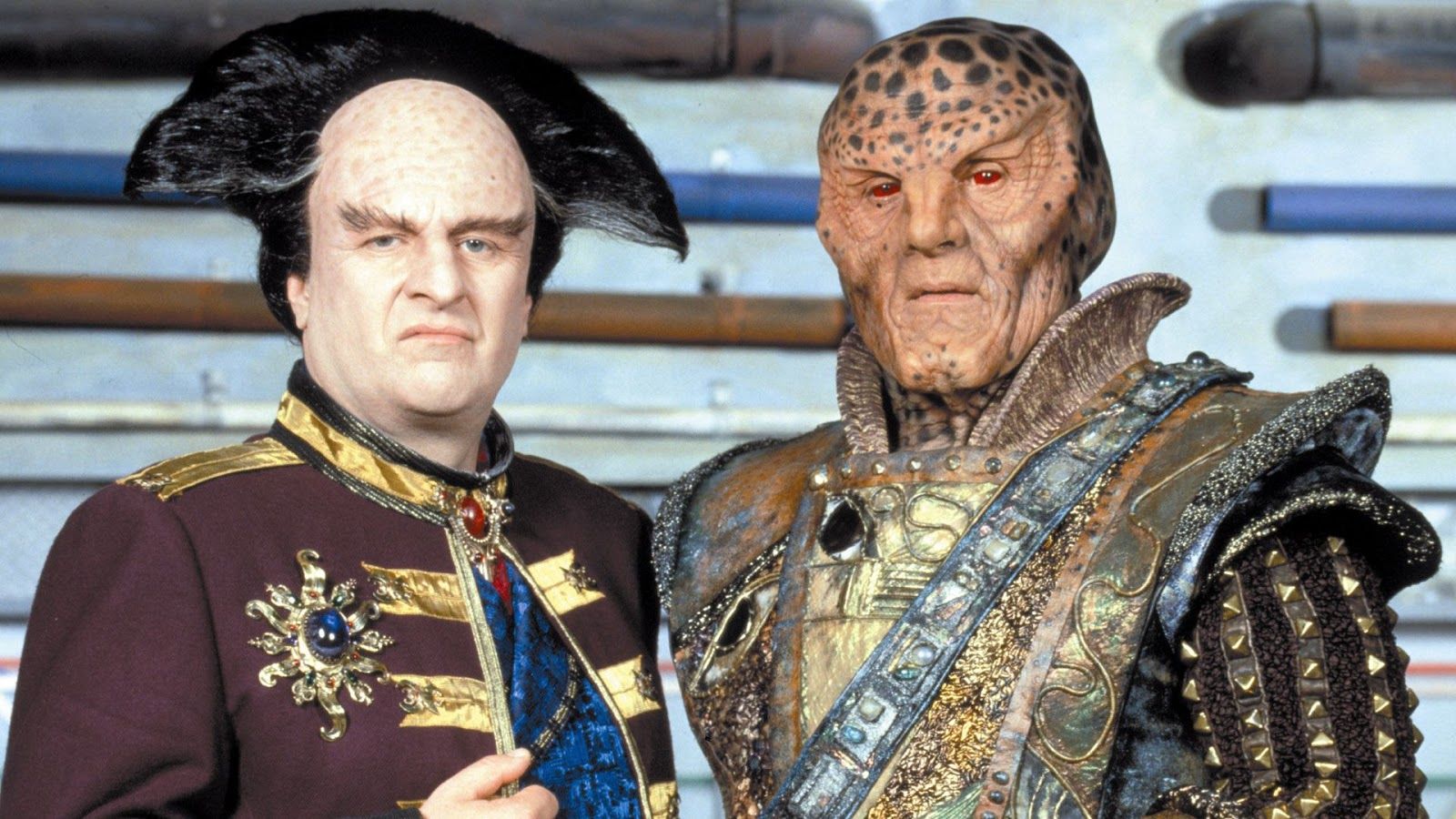
It's Time to Watch Babylon 5
Babylon 5 has a magnificent plot arch, solid writing, and vibrant characters. If it weren't for the low budget and 90s CGI, it would have been massive cultural sensation--bigger than Game of Thrones! John Krikorian and Cameron Riddles join to explain the sheer majesty of Babylon 5
Children of Men
What happens to society when everyone on Earth goes sterile, and there's no future generation to hand things off to or better the world for? Andrew Young and Josh Jennings join to discuss the film "Children of Men".
We Are Legion, We Are Bob
Dennis Taylor's "Bobiverse" comedically follows the exploits of an engineer whose mind is uploaded into a self-replicating probe, which becomes its own civilization of Bobs. Tom Merritt joins to discuss the implications of immortality, and when reproduction means copying yourself indefinitely.

The Giant Universe of Doctor Who
Justin Robert Young comes on to discuss "Doctor Who," arguably the most successful science fiction program (along with Star Trek) in history, and the most popular scifi program in Britain.

Jordan Morris on Satire in a Dome
Jordan Morris is the author of "Bubble" and the co-host of "Jordan, Jesse Go!" on Maximum Fun. He joins the show to discuss culture and economic satire... in space.

Los Angeles is Hideous
I have a new book out! Los Angeles is Hideous: Poems About An Ugly City. Arguably the funniest book ever written about the horribleness which is LA. Here are two quick readings from what is about to become your new favorite coffee table book. You can find "Los Angeles is Hideous: Poems About An Ugly City" at www.LAisUgly.com
False Memories in Science Fiction
In a world where you can download memories directly into your brain, how can you determine what's reality and what's artifice? Jay Mutzafi returns to discuss implanted memories in science fiction, from "Total Recall" to "Rick and Morty."

Logan's Run is Afraid of Baby Boomers
"Logan's Run" (1976) explores a society where everyone dies aged 30. In the most campy, over-the-top 70s scifi romp imaginable, it explores fear of ageing, fear of death, fear of infantalization... and fear of Baby Boomers.
M. R. Carey on Hopeful Dystopias
M. R. Carey is the author of "The Girl with All the Gifts" (previously discussed on this program) as well as the Koli Trilogy. He joins the show, along with Ashland Viscosi, to talk about his approach to science fiction. To see Carey's books and more, go to www.mightyheaton.com/goodscifi
The Bioethics of "Gattaca"
"Gattaca" (1997) explores a dystopian future where inequality is staggering--and genetic. Andrew Mayne joins the show to discuss the implications of genetic engineering and to what extent it should be avoided morally or prohibited legally.
Andy Weir on "Project Hail Mary"
Andy Weir, author of "The Martian," joins the program to talk about science fiction, technology, and his new book "Project Hail Mary" You can find his book, as well as others discussed on the program, by going to mightyheaton.com/goodscifi
Jedi Warriors and Islamic Mysticism
Dr. H. A. Hellyer gained international attention (and flak) when he compared Jedi monks to Sufi Islamic warriors in an article for CNN. He joins the show to discuss parallels between the Force and Islamic mysticism, why Star Wars is a cross-cultural touchstone, and the interaction between science fiction and Islam. Dr. H. A. Hellyer is a scholar at the Carnegie Endowment for International Peace in DC, as well as a senior associate fellow at at the Royal United Services Institute in London.
Kurt Vonnegut Hated War
The science fiction of Kurt Vonnegut was permeated by ethics and politics, not the least of which included socialism, opposition to war, secularism, and being nice to people in general. Royce Sharp joins to discuss.

Galaxy Quest is the Greatest Sci-fi Comedy, Ever
"Galaxy Quest" is the greatest parody of Star Trek imaginable… without technically being Star Trek. Nick Sperdute and Erin Macdonald join the show to discuss what makes the show so memorable--and hilarious. Links to the film and the referenced documentary at www.mightyheaton.com/goodscifi

The Time-Backwards Robot Monster
"Hyperion" by Dan Simmons projects Chaucer's Canterbury Tales onto a distant scifi future. Katherine Mangu-Ward joins to discuss the multiple characters who make their away on a deadly pilgrimage to meet the Shrike—a robot monster who moves backwards in time, and what it all means for humanity, mortality, and literature

Darth Vader is a 19th Century Supervillain
Michael Weiss, editor-at-large at The Daily Beast, joins the show to discuss Darth Vader: why he's such a compelling malefactor, the deep inner conflict and tumult which motivates him, and the mythological figures the dark lord of the Sith represents.
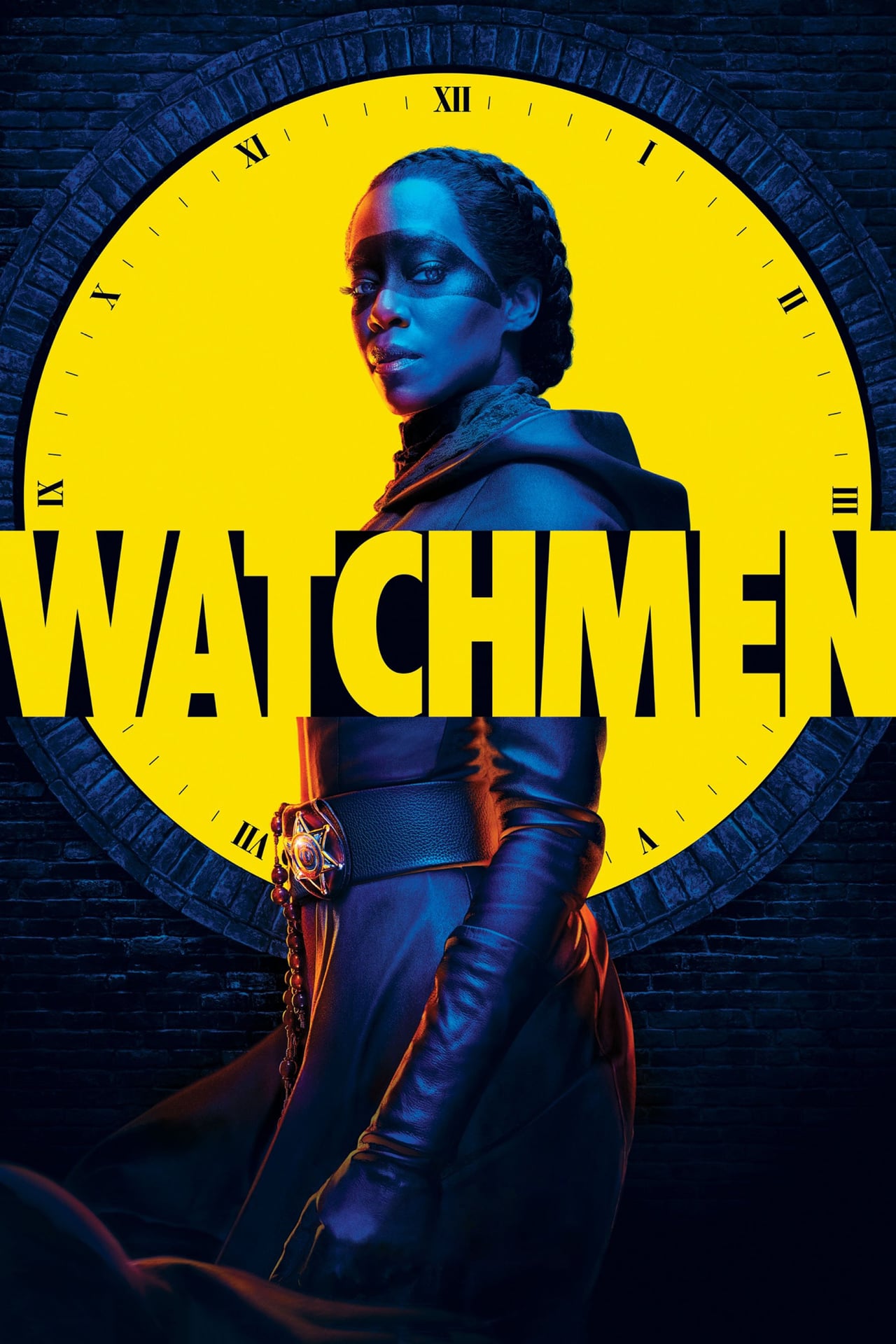
Watchmen Part 2: The Greenwood Massacre
"Watchmen" kicks off with the Tulsa Race Massacre, which defines the central theme of the rest of the series: race. Hannibal Johnson is the author of "Black Wall Street 100–An American City Grapples With Its Historical Racial Trauma," as well as the host of "Black Wall Street Remembered." He joins Heaton to discuss the Greenwood Massacre, racial animus, and reparations.

Watchmen's Fake Psychic Squid Attack
Brian Brushwood joins the show to discuss "Watchmen," the televised sequel to the film and book, "The Watchmen." Topics include: underlying tensions in the show, is Dr. Manhattan a stupid character, and was Ozymandias right? This is Part One of a two-part episode; episode two will go deep on the Tulsa Race Massacre which kicks off the series, and its unresolved racial tensions.

Are We Living in "Demolition Man"?
"Demolition Man" is a cult classic, wherein Sylvester Stallone gets thawed out in the near future to stop Wesley Snipes from destroying Los Angeles. Society is bifurcated into infantilized virginal technocrats up top, and rat-eating, free-thinking punks beneath. Economist Steve Horwitz joins to discuss.

If An Insane Asylum Was an Entire Planet
In "Clans of the Alphane Moon" by Philip K. Dick, a planet is colonized as an insane asylum, then abandoned, so that its inmates develop their own society and cultures. Tom Merritt, host of "Sword and Laser" joins to answer: what happens when pathologies become the basis of civilization, rather than its aberrations? You can check out "Clans of the Alphane Moon" as well as the other books and films discussed on the show by going to Mightyheaton.com/goodscifi
Mad Max Has the Best Barbarians
"Mad Max: Fury Road" is the height of post-apocalyptic wasteland glam--everyone is really getting into skulls, cars, and neo-Viking lore. Not to mention it may be the greatest feminist film in science fiction. Scott Johnson of Frogpants Studios joins to discuss!

Why "The Mandalorian" Works
Why is "The Mandalorian" so popular with Star Wars fans, yet the latest films are so divisive? Where does it veer from the traditional beats and themes of Star Wars, and where does it embrace that unique George Lucas flavor? Jack Helmuth and Nick Sperdute join to unpack everyone's favorite bounty hunter.

Deadly Sex Objects in The Stepford Wives
"The Stepford Wives" (1975) is a satirical horror film about spunky urban wives getting replaced by their husbands with submissive, ornamental robots. Chris and Cristi Moody come on to talk about the unease captured by the movie in a time of gender roles tumult, 1950s conformity, Second Wave Feminism, and parallels to "Get Out."