AI & The Future of Humanity: Artificial Intelligence, Technology, VR, Algorithm, Automation, ChatBPT, Robotics, Augmented Reality, Big Data, IoT, Social Media, CGI, Generative-AI, Innovation, Nanotechnology, Science, Quantum Computing: The Creative Process Interviews
151 episodes — Page 3 of 4

Can AI help us understand animal language? - Author SY MONTGOMERY & Illustrator MATT PATTERSON
"I would love it if AI could decode some animal languages that humans have not been able to do, like the whistles and clicks of whales and dolphins. Our human limit limitations have blinded us to so much of what animals are saying and telling us.More than anything, though, and I don't know if AI can do this, but we need something to talk our leaders into having some sense about preserving our world. Anything that AI can bring to ameliorate global climate change, to catch the poachers who are killing turtles and other wildlife, and anything AI can teach us about how not to consume the entire world like some horrible fire...let's leave some space for the animals.”Author Sy Montgomery and illustrator Matt Patterson are naturalists, adventurers, and creative collaborators. Montgomery has published over thirty acclaimed nonfiction books for adults and children and received numerous honors, including lifetime achievement awards from the Humane Society and the New England Booksellers Association.Patterson’s illustrations have been featured in several books and magazines, such as Yankee Magazine and Fine Art Connoisseur. He is the recipient of Roger Tory Peterson Wild American Art Award, National Outdoor Book Award for Nature and the Environment, and other honors. Most recently, Patterson provided illustrations for Freshwater Fish of the Northeast.Their joint books are Of Time and Turtles: Mending the World, Shell by Shattered Shell and The Book of the Turtle. Montgomery’s other books include The Soul of an Octopus, The Hawk’s Way and The Secrets of the Octopus (published in conjunction with a National Geographic TV series).www.mpattersonart.comhttps://symontgomery.comwww.harpercollins.com/products/of-time-and-turtles-sy-montgomery?variant=41003864817698www.harpercollins.com/products/the-book-of-turtles-sy-montgomery?variant=40695888609314https://press.uchicago.edu/ucp/books/book/distributed/F/bo215806915.htmlwww.creativeprocess.infowww.oneplanetpodcast.orgIG www.instagram.com/creativeprocesspodcast

Revolutionizing Sustainability: BERTRAND PICCARD's Path to a Cleaner Planet - Highlights
"So it's what you do with the invention that's important. And with AI, it's exactly the same. If you make deep fakes, I think you can just destroy trust and confidence in the world because you will never know what is true and what is false, but if you use AI to balance the grid, to incorporate renewable energies that are intermittent, the storage, the usage by consumers, then you begin to be much more efficient because you use energy at the right moment, in the right way, at the right place, for the right people, you will save a lot of energy. So, in the end, it's always human behavior that decides if an invention is good or not. What I would really like to avoid is AI being used for useless things."Bertrand Piccard is a notable Swiss environmentalist, explorer, author, and psychiatrist. His ventures include being the first to travel around the world in a non-stop balloon flight and years later in a solar-powered airplane. He is regarded as a pioneer in clean technology. Piccard is also the founder of the Solar Impulse Foundation, which has identified over 1500 actionable and profitable climate solutions and connects them with investors. As a UN Ambassador for the Environment, his goal is to convince leaders of the viability of a zero-carbon economy, which he will demonstrate via his next emission-free project Climate Impulse, a green hydrogen-powered airplane that can fly nonstop around the earth.http://www.solarimpulse.comhttps://climateimpulse.org/https://bertrandpiccard.com/Photos:Bertrand Piccard with Ilham Kadri, CEO Syensqo (main technological partner of Climate Impulse)Bertrand Piccard @ Solar Impulse, Jean Revillard

Beyond the Horizon: Pioneering Green Aviation with BERTRAND PICCARD - Aviator, Explorer, Environmentalist
What is the future of green aviation? How do we share environmental solutions to unite people and change the climate narrative from sacrifice and fear to enthusiasm and hope?Bertrand Piccard is a notable Swiss environmentalist, explorer, author, and psychiatrist. His ventures include being the first to travel around the world in a non-stop balloon flight and years later in a solar-powered airplane. He is regarded as a pioneer in clean technology. Piccard is also the founder of the Solar Impulse Foundation, which has identified over 1500 actionable and profitable climate solutions and connects them with investors. As a UN Ambassador for the Environment, his goal is to convince leaders of the viability of a zero-carbon economy, which he will demonstrate via his next emission-free project Climate Impulse, a green hydrogen-powered airplane that can fly nonstop around the earth."So it's what you do with the invention that's important. And with AI, it's exactly the same. If you make deep fakes, I think you can just destroy trust and confidence in the world because you will never know what is true and what is false, but if you use AI to balance the grid, to incorporate renewable energies that are intermittent, the storage, the usage by consumers, then you begin to be much more efficient because you use energy at the right moment, in the right way, at the right place, for the right people, you will save a lot of energy. So, in the end, it's always human behavior that decides if an invention is good or not. What I would really like to avoid is AI being used for useless things."http://www.solarimpulse.comhttps://climateimpulse.org/https://bertrandpiccard.com/Photos:COPSummitBertrand Piccard with Simon Stiell, Executive Secretary of the UNFCCCVille de Demain exhibition, Cité des sciences et de l'industrie, Paris

Who were the Neanderthals? - Highlights - DR. LUDOVIC SLIMAK
"AI is a fascinating question. You know children are sponges. They look and say this is something different. So your values are no longer good enough for the future. And this is what we are confronted with with AI. And that's a fantastic tool, but at a certain moment, this technology will evolve and become super efficient and smarter than we are. And at this moment, our children could simply reject everything that makes us human. And our society at this moment, and maybe that of our humanity, could collapse on itself. I begin the book with a question of intelligence outside of Earth. That could be AI, that could be extraterrestrials. This is fascinating for us because this is another intelligence. Now, we have created AI, and we are fascinated by what we see because we can discuss with an AI and it's very clear that the AI understands our concepts and responds with our own concepts."Ludovic Slimak is a paleoanthropologist at the University of Toulouse in France and Director of the Grotte Mandrin research project. His work focuses on the last Neanderthal societies, and he is the author of several hundred scientific studies on these populations. His research has been featured in Nature, Science, the New York Times, and other publications. He is the author of The Naked Neanderthal: A New Understanding of the Human Creature.http://ww5.pegasusbooks.com/books/the-naked-neanderthal-9781639366163-hardcoverhttps://lampea.cnrs.fr/spip.php?article3767www.odilejacob.fr/catalogue/sciences-humaines/archeologie-paleontologie-prehistoire/dernier-neandertalien_9782415004927.phpwww.creativeprocess.infowww.oneplanetpodcast.orgIG www.instagram.com/creativeprocesspodcast

Will human efficiency destroy the planet and us? - DR. LUDOVIC SLIMAK - Author of The Naked Neanderthal
Who were the Neanderthals? And what can our discoveries about them teach us about intelligence, our extractivist relationship to the planet, and what it means to be human?Ludovic Slimak is a paleoanthropologist at the University of Toulouse in France and Director of the Grotte Mandrin research project. His work focuses on the last Neanderthal societies, and he is the author of several hundred scientific studies on these populations. His research has been featured in Nature, Science, the New York Times, and other publications. He is the author of The Naked Neanderthal: A New Understanding of the Human Creature."AI is a fascinating question. You know children are sponges. They look and say this is something different. So your values are no longer good enough for the future. And this is what we are confronted with with AI. And that's a fantastic tool, but at a certain moment, this technology will evolve and become super efficient and smarter than we are. And at this moment, our children could simply reject everything that makes us human. And our society at this moment, and maybe that of our humanity, could collapse on itself. I begin the book with a question of intelligence outside of Earth. That could be AI, that could be extraterrestrials. This is fascinating for us because this is another intelligence. Now, we have created AI, and we are fascinated by what we see because we can discuss with an AI and it's very clear that the AI understands our concepts and responds with our own concepts."http://ww5.pegasusbooks.com/books/the-naked-neanderthal-9781639366163-hardcoverhttps://lampea.cnrs.fr/spip.php?article3767www.odilejacob.fr/catalogue/sciences-humaines/archeologie-paleontologie-prehistoire/dernier-neandertalien_9782415004927.phpwww.creativeprocess.infowww.oneplanetpodcast.orgIG www.instagram.com/creativeprocesspodcast

What does the future hold for our late-stage capitalist society with mega-corps controlling everything? - Highlights - KYLE HIGGINS, KARINA MANASHIL & KID CUDI
“I write science fiction, so it's fascinating from a technological standpoint, but we have dozens and dozens of years of science fiction warning us about technology unchecked. The irony is that now so many of those science fiction stories have probably been used to feed the AI training algorithms that they are now repurposing and ripping off. So it's very ironic in that regard to me. I've heard artists refer to AI as a plagiarism machine, and I do think that's a very apt descriptor. I have a lot of friends who are affected by this. And these tech companies think if we can make it easier and cheaper to capture some aspect of the human spirit and then, by God, isn't that best for shareholders?” -Kyle HigginsKyle Higgins is an Eisner award-nominated #1 New York Times best-selling comic book author and award-winning filmmaker known for his work on DC Comics’ Batman titles as well as his critically-acclaimed reinventions of Mighty Morphin Power Rangers for Boom! Studios/Hasbro, Ultraman for Marvel Comics, and his creator-owned series Radiant Black, NO/ONE and Deep Cuts for Image Comics. Kyle is the founder and creative director of Black Market Narrative and The Massive-Verse.Karina Manashil is the President of MAD SOLAR. After graduating from Chapman University with a BFA in Film Production, she began her career in the mailroom at WME where she became a Talent Agent. In 2020, she partnered with Scott Mescudi and Dennis Cummings to found MAD SOLAR. Its first release was the documentary “A Man Named Scott” (Amazon), and she then went on to Executive Produce Ti West trilogy “X,” “Pearl” and “MaXXXine” (A24). Manashil received an Emmy nomination as an Executive Producer on the Netflix animated event “Entergalactic." She also produced the Mescudi/Kyle Higgins comic book “Moon Man” which launched through Image Comics. She is next producing the upcoming Mescudi/Sam Levinson/The Lucas Bros film “HELL NAW” (Sony) and the animated feature “Slime” from auteur animator Jeron Braxton.moonmancomics.com https://imagecomics.comhttps://www.imdb.com/name/nm3556462/?ref_=fn_al_nm_1www.creativeprocess.infowww.oneplanetpodcast.orgIG www.instagram.com/creativeprocesspodcastAudio of Scott Mescudi courtesy of Mad Solar and Moon Man Comic Book Release and Revenge Of (Eagle Rock, CA, Jan 31, 2024)

Comics, Music, Ethics & AI: KYLE HIGGINS, KARINA MANASHIL & KID CUDI on the Making of Moon Man
What does the future hold for our late-stage capitalist society with mega-corporations owning and controlling everything? How can the world-building skills of the makers of films and comics help us imagine a better future?Kyle Higgins is an Eisner award-nominated #1 New York Times best-selling comic book author and award-winning filmmaker known for his work on DC Comics’ Batman titles as well as his critically-acclaimed reinventions of Mighty Morphin Power Rangers for Boom! Studios/Hasbro, Ultraman for Marvel Comics, and his creator-owned series Radiant Black, NO/ONE and Deep Cuts for Image Comics. Kyle is the founder and creative director of Black Market Narrative and The Massive-Verse.Karina Manashil is the President of MAD SOLAR. After graduating from Chapman University with a BFA in Film Production, she began her career in the mailroom at WME where she became a Talent Agent. In 2020, she partnered with Scott Mescudi and Dennis Cummings to found MAD SOLAR. Its first release was the documentary “A Man Named Scott” (Amazon), and she then went on to Executive Produce Ti West trilogy “X,” “Pearl” and “MaXXXine” (A24). Manashil received an Emmy nomination as an Executive Producer on the Netflix animated event “Entergalactic." She also produced the Mescudi/Kyle Higgins comic book “Moon Man” which launched through Image Comics. She is next producing the upcoming Mescudi/Sam Levinson/The Lucas Bros film “HELL NAW” (Sony) and the animated feature “Slime” from auteur animator Jeron Braxton.“I write science fiction, so it's fascinating from a technological standpoint, but we have dozens and dozens of years of science fiction warning us about technology unchecked. The irony is that now so many of those science fiction stories have probably been used to feed the AI training algorithms that they are now repurposing and ripping off. So it's very ironic in that regard to me. I've heard artists refer to AI as a plagiarism machine, and I do think that's a very apt descriptor. I have a lot of friends who are affected by this. And these tech companies think if we can make it easier and cheaper to capture some aspect of the human spirit and then, by God, isn't that best for shareholders?” -Kyle Higginsmoonmancomics.com https://imagecomics.comhttps://www.imdb.com/name/nm3556462/?ref_=fn_al_nm_1www.creativeprocess.infowww.oneplanetpodcast.orgIG www.instagram.com/creativeprocesspodcastAudio of Scott Mescudi courtesy of Mad Solar and Moon Man Comic Book Release and Revenge Of (Eagle Rock, CA, Jan 31, 2024)

Tech, Spirituality & Selfhood: TARA ISABELLA BURTON - Author of Here in Avalon, Social Creature, & Self-Made
"So everyone should probably throw their smartphones in a river, myself included. And I think that it is hard. There's never going to be a version where you get the right answer, and suddenly your life falls into place, and everything's perfect. And that's not what it's supposed to be for anyway. And I think there is a tendency in self-care circles that once we solve our demons and figure out our path in life, we are in touch with the vibes of the universe. Like suddenly, we're going to be wealthy and healthy and happy and have the perfect marriage. And I think the questions of philosophical inquiry are about how to live a good life, but that's not the same thing as assuming, as so much of contemporary wellness culture assumes, that a normatively successful life will come to us by virtue of doing the right things."Tara Isabella Burton is the author of the novels Social Creature, The World Cannot Give, and Here in Avalon, as well as the nonfiction books Strange Rites: New Religions for a Godless World and Self-Made: Curating Our Image from Da Vinci to the Kardashians. She is currently working on a history of magic and modernity, to be published by Convergent in late 2025. Her fiction and nonfiction have appeared in The New York Times, National Geographic, Granta, The Washington Post, The Wall Street Journal, and other publications.www.taraisabellaburton.comwww.simonandschuster.com/books/Here-in-Avalon/Tara-Isabella-Burton/9781982170097?fbclid=IwAR30lnvlXMrDJtCq_568jUM3hvzr6yUz_GUUZSkbR2RarreOF6PMcvhabBgwww.amazon.com/dp/B07W56MQLJ/ref=sr_1_fkmr0_1?keywords=strange+rites+tara+isabella+burton&qid=1565365017&s=gateway&sr=8-1-fkmr0www.creativeprocess.infowww.oneplanetpodcast.orgIG www.instagram.com/creativeprocesspodcast

What is the impact of AI on how we live, burn energy, and mitigate climate change? - KATHLEEN ROGERS - President, EarthDay.ORG
How can we reimagine a world without plastic? How can we push governments and companies to admit what they know about the health impacts of plastics and change public policy?Kathleen Rogers is the President of EARTHDAY.ORG. Under her leadership, it has grown into a global year-round policy and activist organization with an international staff. She has been at the vanguard of developing campaigns and programs focused on diversifying the environmental movement, highlighted by Campaign for Communities and Billion Acts of Green. Prior to her work at EARTHDAY.ORG, Kathleen held senior positions with the National Audubon Society, the Environmental Law Institute, and two U.S. Olympic Organizing Committees. She’s a graduate of the University of California at Davis School of Law, where she served as editor-in-chief of the law review and clerked in the United States District Court for the District of Columbia. EARTHDAY.ORG’s 2024 theme, Planet vs. Plastics, calls to advocate for widespread awareness of the health risks of plastics, rapidly phase out all single-use plastics, urgently push for a strong UN Treaty on Plastic Pollution, and demand to end fast fashion. Let's build a plastic-free planet for generations to come."The world recognizes that plastics have imperiled our future. Many environmentalists, myself included, view plastics as on par with, if not worse than, climate change because we do see a little light at the end of the tunnel on climate change. Babies vs. Plastics is a collection of studies, and we particularly focused on children and babies because their bodies and brains are more impacted than adults by the 30, 000 chemicals that assault us every day.We have histories littered with dozens of stories and court cases of malfeasance where companies knew for years before we, the public, did about the impacts. Climate change is a perfect example because we know Exxon scientists knew in 1957 that burning fossil fuels was creating climate change and that eventually, the temperature of the planet would heat up, and they hid it from us for 50-plus years. And more and more reports are coming out every day about what companies and some governments know. Tobacco companies knew tobacco caused cancer for decades before our scientists did. And so we have the same problem with plastics.”Planet vs. Plastics www.earthday.org Sign The Global Plastic Treaty Petition https://action.earthday.org/global-plastics-treaty Toolkits: https://www.earthday.org/our-toolkits NDC Guide for Climate Education https://www.earthday.org/wp-content/uploads/2023/11/NDC-GUIDE-Final.pdfwww.creativeprocess.infowww.oneplanetpodcast.orgIG www.instagram.com/creativeprocesspodcastPhotos courtesy of EARTHDAY.ORG

How will AI change the film and television industry? - ALAN POUL - ALAN POUL - Emmy & Golden Globe-winning Producer/Director
"There will come a time when AI will have consumed and devoured all the works of all the great filmmakers. And you'll be able to say, I want you to cut this scene as if it was in an Antonioni film. Or I want you to cut this scene as if it was in a Sam Peckinpah film. And it will do the work of the edit. So the finishing touches will probably always be human, but the amount of creative work that's going to be able to be offloaded to AI is something that we don't fully comprehend yet."Alan Poul is an Emmy, Golden Globe, DGA, and Peabody Award-winning producer and director of film and television. He is Executive Producer and Director on the Max Original drama series Tokyo Vice, written by Tony Award-winning playwright J.T. Rogers and starring Ansel Elgort and Ken Watanabe, as an American journalist in Japan and his police detective mentor. Poul is perhaps best known for producing all five seasons of HBO's Six Feet Under, all four of Armistead Maupin's Tales of the City miniseries, My So-Called Life, The Newsroom, Swingtown, and The Eddy, which he developed with director Damien Chazelle. His feature film producing credits include Paul Schrader's Mishima and Light of Day, and Ridley Scott's Black Rain.https://www.imdb.com/name/nm0693561 https://www.imdb.com/title/tt2887954/www.creativeprocess.info www.oneplanetpodcast.orgIG www.instagram.com/creativeprocesspodcast
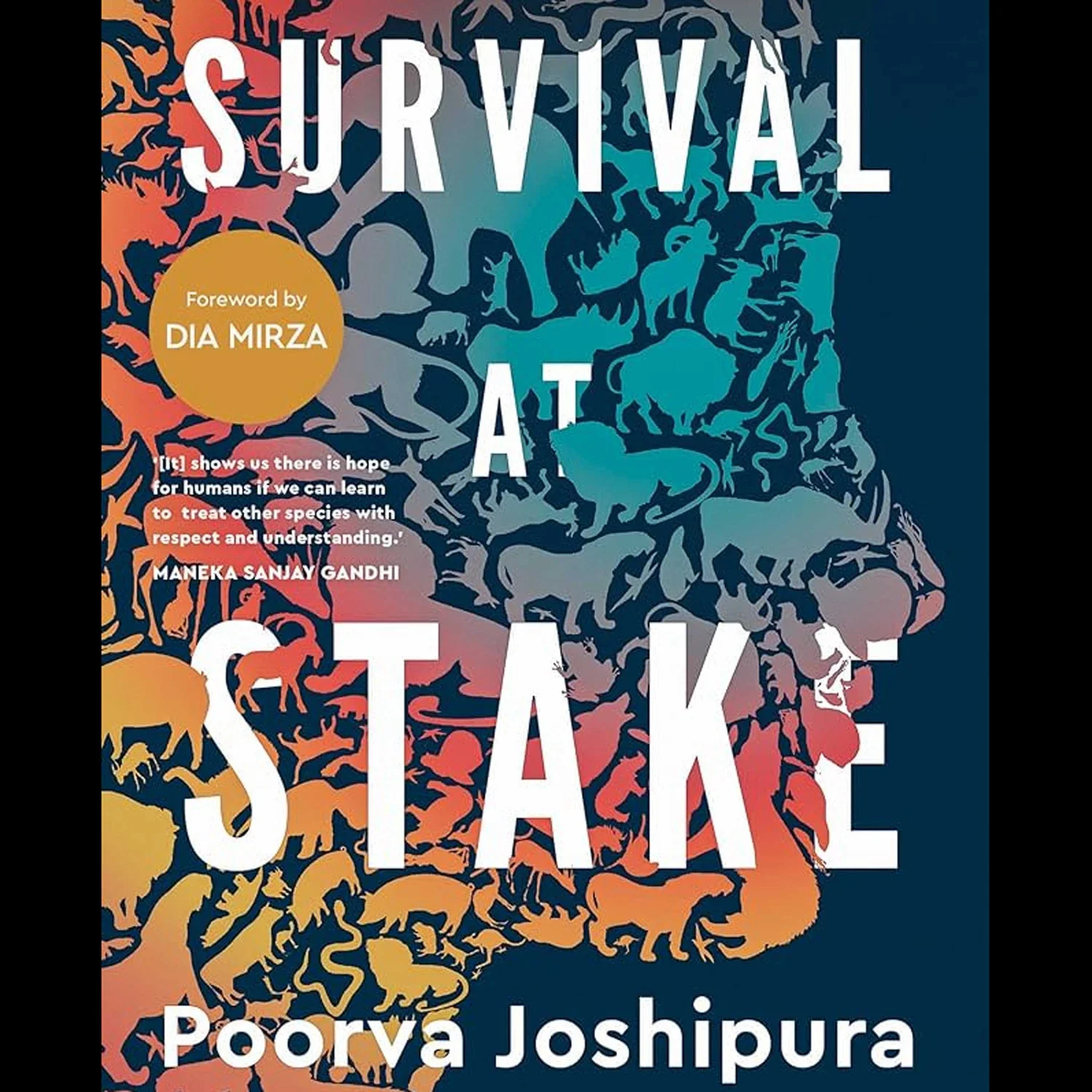
Can AI help us understand animal intelligence? - Highlights - POORVA JOSHIPURA
“With AI, I do think it is our societal responsibility to be aware of how it can be used to harm animals. For instance, there's the worry that the same types of ways that AI might help, for instance, protect against poachers, that same technology can also be used to find the animals to poach or to damage wildlife, not only protect wildlife. So there's that concern. There's a concern about factory farming and how animals are already wholly disregarded in that process. And AI could even further automate that process to where there's no consideration of the animals at all, even worse than what goes on today. At the same time, AI can be and already is starting to be used for things like doing way better than what we're able to do in terms of determining how well a drug might behave or how a chemical might react by way of looking at all of the data together that exists and drawing a conclusion way better than a human being can do. There are ways that AI is already being used to reduce how animals are used in the laboratory setting. There's a lot of research going on right now about deciphering what animals are saying. The question is, are we going to listen to those animals?”Poorva Joshipura is PETA U.K. Senior Vice President. She is the Author of Survival at Stake: How Our Treatment of Animals is Key to Human Existence and For a Moment of Taste: How What You Eat Impacts Animals, the Planet and Your Health.https://usw2.nyl.as/t1/24/2jdwp5ogezjqb5wxg76eqfqeq/0/14474d94f4e832cd573ffc39be471e57616314b12314a26ca7dd9c2bbf559ac0www.harpercollins.com/products/for-a-moment-of-taste-poorva-joshipura?variant=39399505592354www.creativeprocess.infowww.oneplanetpodcast.orgIG www.instagram.com/creativeprocesspodcast
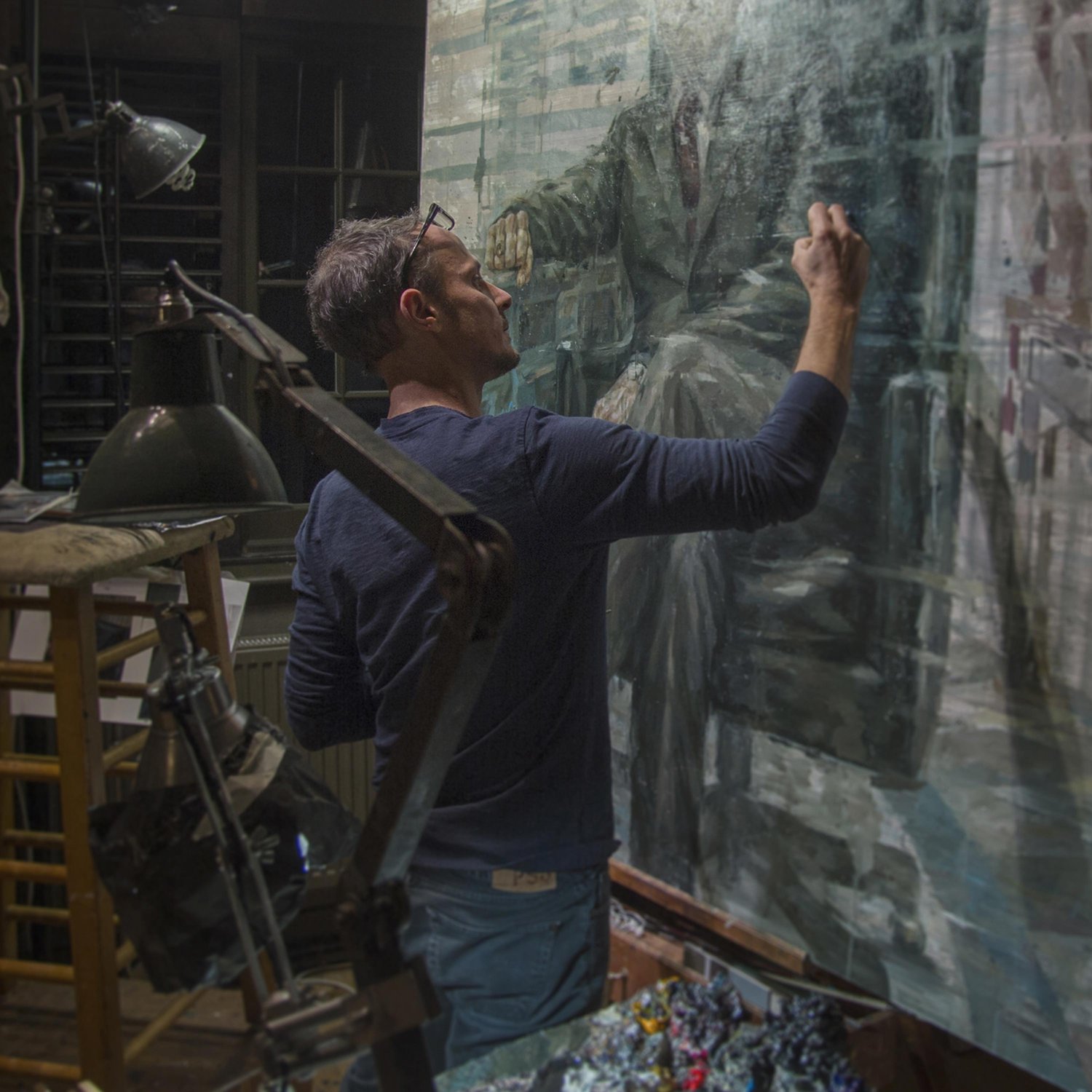
How Will AI & New Technologies Change the Role of Artists? - Highlights - JONATHAN YEO
"I'm optimistic about education. There will likely be more traffic between technology and the arts. The tech world needs more creative-minded people and less literal people who have some understanding of how things work.With Jony Ive, you've got someone who designed the iPhone and was very interested in photography himself. We were talking about doing a portrait. He mentioned that he'd been fascinated by self-portraiture as a kid, so much so that when he was doing his industrial design degree, he wrote his thesis on artists' self-portraits. Fast forward a few years, and we are all taking photos every day and learning really fast how to compose images and read images and why they've been cropped in a certain way. All these things, which were probably the preserve of artists and art historians in the past, are suddenly things that kids are thinking about because it's the way they communicate with each other. So I think that that shift is interesting.Painting is a two-dimensional thing. You're basically taking real, three-dimensional things and making them into fake, two-dimensional ones. When you get into the 3D space, some of those distinctions aren't there anymore. I remember when I showed David Hockney the VR project I'd been working on a few years ago, and he put his finger on this quite well. Most art is about perspective. Certainly, for what he is interested in. As soon as you see something in 3D, whether it's a physical sculpture or a virtual object, that's not there anymore because you're in the space with whatever's being shown, so you're in a very different place."Jonathan Yeo is one of the world’s leading figurative artists and portrait painters. From celebrated figures such as Sir David Attenborough, peace activist Malala Yousafzai, the Duke of Edinburgh, Nicole Kidman, and Tony Blair, sitting for a portrait with Yeo is a provisional necessity for any 21st century icon. His work, which has been exhibited in museums and galleries around the world, is the subject of several major mid-career retrospectives in the UK and internationally. Yeo’s course on portrait painting is available now on BBC Maestro.www.jonathanyeo.comwww.bbcmaestro.comwww.creativeprocess.infowww.oneplanetpodcast.orgIG www.instagram.com/creativeprocesspodcastImages courtesy of Jonathan Yeo

JONATHAN YEO - Celebrated Portrait Artist on the Importance of Connection & Intuitive Intelligence
How can the arts help cultivate our intuitive intelligence? What does visual art teach us about consciousness and the human condition? Jonathan Yeo is one of the world’s leading figurative artists and portrait painters. From celebrated figures such as Sir David Attenborough, peace activist Malala Yousafzai, the Duke of Edinburgh, Nicole Kidman, and Tony Blair, sitting for a portrait with Yeo is a provisional necessity for any 21st century icon. His work, which has been exhibited in museums and galleries around the world, is the subject of several major mid-career retrospectives in the UK and internationally. Yeo’s course on portrait painting is available now on BBC Maestro."I'm optimistic about education. There will likely be more traffic between technology and the arts. The tech world needs more creative-minded people and less literal people who have some understanding of how things work.With Jony Ive, you've got someone who designed the iPhone and was very interested in photography himself. We were talking about doing a portrait. He mentioned that he'd been fascinated by self-portraiture as a kid, so much so that when he was doing his industrial design degree, he wrote his thesis on artists' self-portraits. Fast forward a few years, and we are all taking photos every day and learning really fast how to compose images and read images and why they've been cropped in a certain way. All these things, which were probably the preserve of artists and art historians in the past, are suddenly things that kids are thinking about because it's the way they communicate with each other. So I think that that shift is interesting.Painting is a two-dimensional thing. You're basically taking real, three-dimensional things and making them into fake, two-dimensional ones. When you get into the 3D space, some of those distinctions aren't there anymore. I remember when I showed David Hockney the VR project I'd been working on a few years ago, and he put his finger on this quite well. Most art is about perspective. Certainly, for what he is interested in. As soon as you see something in 3D, whether it's a physical sculpture or a virtual object, that's not there anymore because you're in the space with whatever's being shown, so you're in a very different place."www.jonathanyeo.comwww.bbcmaestro.comwww.creativeprocess.infowww.oneplanetpodcast.orgIG www.instagram.com/creativeprocesspodcastImages courtesy of Jonathan Yeo

How has our biology shaped world history? - Highlights - LEWIS DARTNELL
"AI is neither inherently good nor inherently bad. It promises both enormous potential and capability from helping with medical diagnosis and catching cancer early or removing a lot of tedium and repetitive nature of many jobs. It can make a lot of great contributions. It's how we control that technology by making active decisions that can be the pathway to the future. There's been a lot of doomsday talk about artificial general intelligence and the Terminator-type outcome, and it's certainly not impossible, but I don't personally believe that is a probable outcome from where we are now.I think one of the things that AI is very good at is churning through and processing vast amounts of data, assuming that you've got your machine learning system set up correctly and trained properly and you're using it in the way that it was intended to be used. Machine learning and AI techniques are incredibly powerful in pulling out the important information in a sea of data, but to convert that information into new understanding, that is the role of humans in that process. And it will remain the role of humans in understanding what is important and how to implement that information once you've fished out this sea of data."How have our psychology and cognitive biases altered the course of human history? What would you do if you had to rebuild our world from scratch?Lewis Dartnell is an author, researcher, and holds the Professorship in Science Communication at the University of Westminster. He researches astrobiology and the search for microbial life on Mars. He also works as a scientific consultant for the media and has appeared in numerous TV documentaries and radio shows. Dr. Dartnell has won several awards for his science writing and outreach work. He has published five books, including The Knowledge: How to Rebuild our World from Scratch; Origins: How the Earth Made Us; and Being Human: How Our Biology Shaped World History. http://www.lewisdartnell.comhttp://lewisdartnell.com/en-gb/2013/11/the-knowledge-how-to-rebuild-our-world-from-scratchwww.penguin.co.uk/books/433955/origins-by-lewis-dartnell/9781784705435www.penguin.co.uk/books/442759/being-human-by-dartnell-lewis/9781847926708www.creativeprocess.info www.oneplanetpodcast.org IG www.instagram.com/creativeprocesspodcastPhoto credit: Shortlist/Paul Stuart
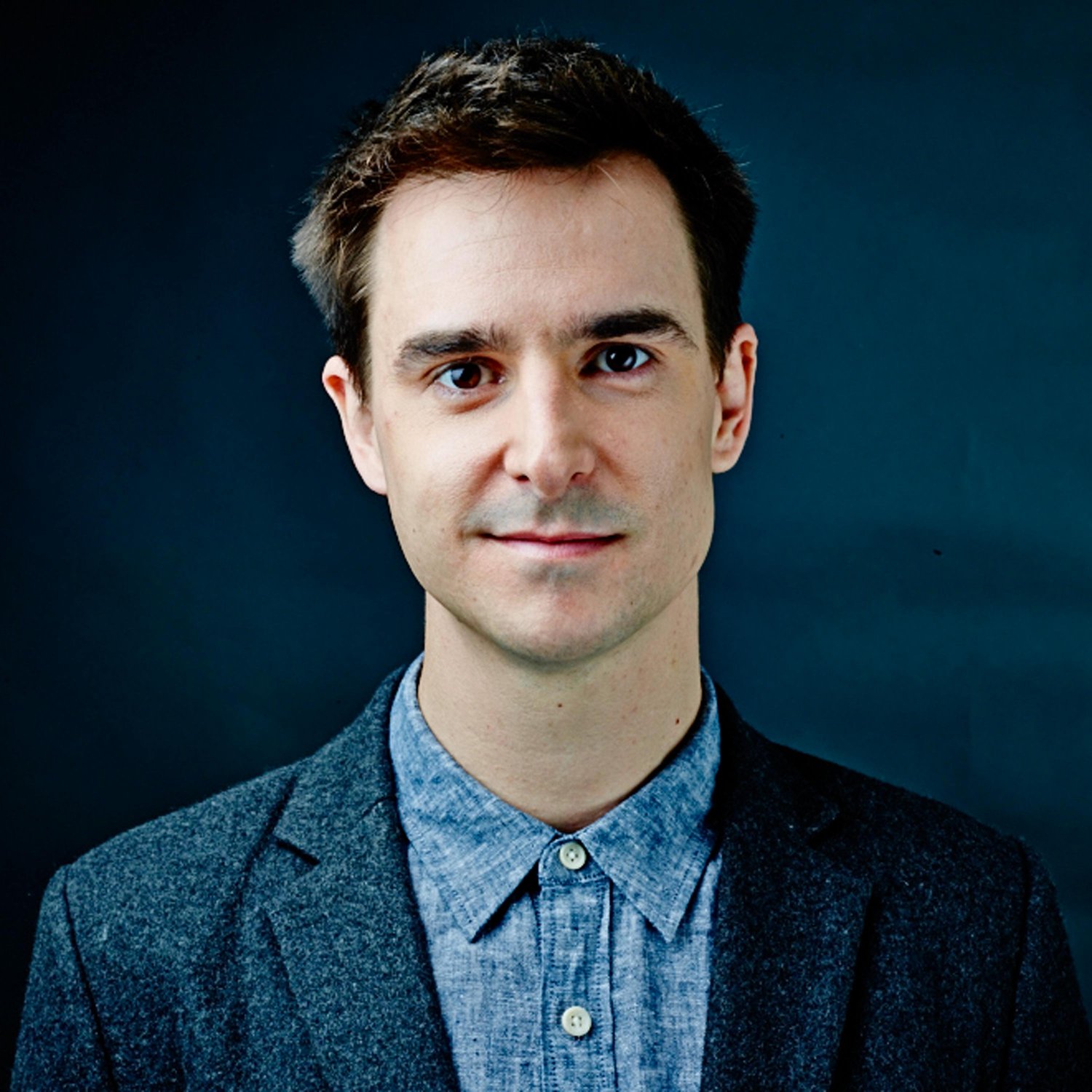
LEWIS DARTNELL - Author of Origins: How the Earth Made Us & Being Human: How Our Biology Shaped World History
How have our psychology and cognitive biases altered the course of human history? What would you do if you had to rebuild our world from scratch?Lewis Dartnell is an author, researcher, and holds the Professorship in Science Communication at the University of Westminster. He researches astrobiology and the search for microbial life on Mars. He also works as a scientific consultant for the media and has appeared in numerous TV documentaries and radio shows. Dr. Dartnell has won several awards for his science writing and outreach work. He has published five books, including The Knowledge: How to Rebuild our World from Scratch; Origins: How the Earth Made Us; and Being Human: How Our Biology Shaped World History. "AI is neither inherently good nor inherently bad. It promises both enormous potential and capability from helping with medical diagnosis and catching cancer early or removing a lot of tedium and repetitive nature of many jobs. It can make a lot of great contributions. It's how we control that technology by making active decisions that can be the pathway to the future. There's been a lot of doomsday talk about artificial general intelligence and the Terminator-type outcome, and it's certainly not impossible, but I don't personally believe that is a probable outcome from where we are now.I think one of the things that AI is very good at is churning through and processing vast amounts of data, assuming that you've got your machine learning system set up correctly and trained properly and you're using it in the way that it was intended to be used. Machine learning and AI techniques are incredibly powerful in pulling out the important information in a sea of data, but to convert that information into new understanding, that is the role of humans in that process. And it will remain the role of humans in understanding what is important and how to implement that information once you've fished out this sea of data."http://www.lewisdartnell.comhttp://lewisdartnell.com/en-gb/2013/11/the-knowledge-how-to-rebuild-our-world-from-scratchwww.penguin.co.uk/books/433955/origins-by-lewis-dartnell/9781784705435www.penguin.co.uk/books/442759/being-human-by-dartnell-lewis/9781847926708www.creativeprocess.info www.oneplanetpodcast.org IG www.instagram.com/creativeprocesspodcastPhoto credit: Shortlist/Paul Stuart

How can we develop AI systems that are more respectful, ethical, and sustainable? - Highlights - DR. SASHA LUCCIONI
“My TED Talk and work are really about figuring out how, right now, AI is using resources like energy and emitting greenhouse gases and how it's using our data without our consent. I feel that if we develop AI systems that are more respectful, ethical, and sustainable, we can help future generations so that AI will be less of a risk to society. And so really, artificial intelligence is not artificial. It's human intelligence that was memorized by the model that was kind of hoovered up, absorbed by these AI models. And now it's getting regurgitated back at us. And we're like, wow, ChatGPT is so smart! But how many thousands of human hours were needed in order to make ChatGPT so smart?The US Executive Order on AI still does need a lot of operationalization by different parts of the government. Especially, with the EU and their AI Act, we have this signal that's top down, but now people have to figure out how we legislate, enforce, measure, and evaluate? So, there are a lot of problems that haven't been solved because we don't have standards or legal precedent for AI. So I think that we're really in this kind of intermediate phase and scrambling to try to figure out how to put this into action.”What are the pros and cons of AI’s integration into our institutions, political systems, culture, and society? How can we develop AI systems that are more respectful, ethical, and sustainable?Dr. Sasha Luccioni is a leading scientist at the nexus of artificial intelligence, ethics, and sustainability, with a Ph.D. in AI and a decade of research and industry expertise. She spearheads research, consults, and utilizes capacity-building to elevate the sustainability of AI systems. As a founding member of Climate Change AI (CCAI) and a board member of Women in Machine Learning (WiML), Sasha is passionate about catalyzing impactful change, organizing events, and serving as a mentor to under-represented minorities within the AI community. She is an AI Researcher & Climate Lead at Hugging Face, an open-source hub for machine learning and natural language processing.https://www.sashaluccioni.comhttps://huggingface.co/http://www.climatechange.aihttps://wimlworkshop.org

DR. SASHA LUCCIONI - Founding Member Climate Change AI - Climate Lead & AI Researcher - Hugging Face
What are the pros and cons of AI’s integration into our institutions, political systems, culture, and society? How can we develop AI systems that are more respectful, ethical, and sustainable?Dr. Sasha Luccioni is a leading scientist at the nexus of artificial intelligence, ethics, and sustainability, with a Ph.D. in AI and a decade of research and industry expertise. She spearheads research, consults, and utilizes capacity-building to elevate the sustainability of AI systems. As a founding member of Climate Change AI (CCAI) and a board member of Women in Machine Learning (WiML), Sasha is passionate about catalyzing impactful change, organizing events, and serving as a mentor to under-represented minorities within the AI community. She is an AI Researcher & Climate Lead at Hugging Face, an open-source hub for machine learning and natural language processing."My TED Talk and work are really about figuring out how, right now, AI is using resources like energy and emitting greenhouse gases and how it's using our data without our consent. I feel that if we develop AI systems that are more respectful, ethical, and sustainable, we can help future generations so that AI will be less of a risk to society. And so really, artificial intelligence is not artificial. It's human intelligence that was memorized by the model that was kind of hoovered up, absorbed by these AI models. And now it's getting regurgitated back at us. And we're like, wow, ChatGPT is so smart! But how many thousands of human hours were needed in order to make ChatGPT so smart?The US Executive Order on AI still does need a lot of operationalization by different parts of the government. Especially, with the EU and their AI Act, we have this signal that's top down, but now people have to figure out how we legislate, enforce, measure, and evaluate? So, there are a lot of problems that haven't been solved because we don't have standards or legal precedent for AI. So I think that we're really in this kind of intermediate phase and scrambling to try to figure out how to put this into action.”https://www.sashaluccioni.comhttps://huggingface.co/http://www.climatechange.aihttps://wimlworkshop.org

How can AI & new technologies help reverse biodiversity loss and restore our ecosystems? - Highlights - THOMAS CROWTHER
“The wealth of learning that can come from our collective awareness that essentially AI is a fancy-sounding way of saying computers can learn from the collective wisdom that exists throughout the Internet. And if we can empower the local stewards of biodiversity, local landowners, farmers indigenous populations with all of that wealth of information in a smart way, it can be incredibly empowering to many rural communities. AI might also open up an opportunity for us to rethink what life is about.”Although they comprise less than 5% of the world population, Indigenous peoples protect 80% of the Earth’s biodiversity. How can we support farmers, reverse biodiversity loss, and restore our ecosystems?Thomas Crowther is an ecologist studying the connections between biodiversity and climate change. He is a professor in the Department of Environmental Systems Science at ETH Zurich, chair of the advisory council for the United Nations Decade on Ecosystem Restoration, and founder of Restor, an online platform for the global restoration movement, which was a finalist for the Royal Foundation’s Earthshot Prize. In 2021, the World Economic Forum named him a Young Global Leader for his work on the protection and restoration of biodiversity. Crowther’s post-doctoral research transformed the understanding of the world’s tree cover, and the study also inspired the World Economic Forum to announce its Trillion Trees initiative, which aims to conserve and restore one trillion trees globally within the decade.https://crowtherlab.com/about-tom-crowther https://restor.eco/?lat=26&lng=14.23&zoom=3www.creativeprocess.info www.oneplanetpodcast.orgIG www.instagram.com/creativeprocesspodcast

THOMAS CROWTHER - Ecologist - Co-chair of the Board for UN Decade on Ecosystem Restoration - Founder of Restor
Although they comprise less than 5% of the world population, Indigenous peoples protect 80% of the Earth’s biodiversity. How can we support farmers, reverse biodiversity loss, and restore our ecosystems?Thomas Crowther is an ecologist studying the connections between biodiversity and climate change. He is a professor in the Department of Environmental Systems Science at ETH Zurich, chair of the advisory council for the United Nations Decade on Ecosystem Restoration, and founder of Restor, an online platform for the global restoration movement, which was a finalist for the Royal Foundation’s Earthshot Prize. In 2021, the World Economic Forum named him a Young Global Leader for his work on the protection and restoration of biodiversity. Crowther’s post-doctoral research transformed the understanding of the world’s tree cover, and the study also inspired the World Economic Forum to announce its Trillion Trees initiative, which aims to conserve and restore one trillion trees globally within the decade.“The wealth of learning that can come from our collective awareness that essentially AI is a fancy-sounding way of saying computers can learn from the collective wisdom that exists throughout the Internet. And if we can empower the local stewards of biodiversity, local landowners, farmers indigenous populations with all of that wealth of information in a smart way, it can be incredibly empowering to many rural communities. AI might also open up an opportunity for us to rethink what life is about.”https://crowtherlab.com/about-tom-crowther https://restor.eco/?lat=26&lng=14.23&zoom=3www.creativeprocess.info www.oneplanetpodcast.orgIG www.instagram.com/creativeprocesspodcast

Does having too many choices make us unhappy? - Highlights - DR. BARRY SCHWARTZ
"I have very mixed feelings about AI, and I think its future and our future with it is very much up for grabs. And here's the reason why. At the moment, these extraordinary achievements like ChatGPT, I mean literally mind-boggling achievements, are completely indifferent to truth. They crawl around in the web and learn how words go together, and so they produce coherent meaningful strings of words, sentences, and paragraphs that you're astonished could have been produced by a machine. However, there are no filters that weed out the false concatenations of words from the true ones. And so you get something that's totally believable, and totally plausible, and totally grammatical. But is it true? And if AI continues to move in this direction, getting more and more sophisticated as a mock human, and continuing to be indifferent to truth, the problems that we started our conversation with are only going to get worse."Does having too many choices make us unhappy? How can we learn practical wisdom?Dr. Barry Schwartz is the Dorwin P. Cartwright Professor Emeritus of Social Theory and Social Action in the psychology department at Swarthmore College. He is the author of many books, including Why We Work, The Paradox of Choice: Why More Is Less, and co-author of Practical Wisdom: The Right Way to Do the Right Thing.www.swarthmore.edu/profile/barry-schwartzwww.simonandschuster.com/books/Why-We-Work/Barry-Schwartz/TED-Books/9781476784861 https://www.harpercollins.com/products/the-paradox-of-choice-barry-schwartz?variant=32207920234530https://www.penguinrandomhouse.com/books/307231/practical-wisdom-by-barry-schwartz-and-kenneth-sharpewww.creativeprocess.infowww.oneplanetpodcast.org IG www.instagram.com/creativeprocesspodcastPhoto credit: Bill Holsinger-Robinson - CC BY 2.0

DR. BARRY SCHWARTZ - Author of The Paradox of Choice & Why We Work
Does having too many choices make us unhappy? How can we learn practical wisdom?Dr. Barry Schwartz is the Dorwin P. Cartwright Professor Emeritus of Social Theory and Social Action in the psychology department at Swarthmore College. He is the author of many books, including Why We Work, The Paradox of Choice: Why More Is Less, and co-author of Practical Wisdom: The Right Way to Do the Right Thing."I have very mixed feelings about AI, and I think its future and our future with it is very much up for grabs. And here's the reason why. At the moment, these extraordinary achievements like ChatGPT, I mean literally mind-boggling achievements, are completely indifferent to truth. They crawl around in the web and learn how words go together, and so they produce coherent meaningful strings of words, sentences, and paragraphs that you're astonished could have been produced by a machine. However, there are no filters that weed out the false concatenations of words from the true ones. And so you get something that's totally believable, and totally plausible, and totally grammatical. But is it true? And if AI continues to move in this direction, getting more and more sophisticated as a mock human, and continuing to be indifferent to truth, the problems that we started our conversation with are only going to get worse."www.swarthmore.edu/profile/barry-schwartzwww.simonandschuster.com/books/Why-We-Work/Barry-Schwartz/TED-Books/9781476784861 https://www.harpercollins.com/products/the-paradox-of-choice-barry-schwartz?variant=32207920234530https://www.penguinrandomhouse.com/books/307231/practical-wisdom-by-barry-schwartz-and-kenneth-sharpewww.creativeprocess.infowww.oneplanetpodcast.org IG www.instagram.com/creativeprocesspodcastPhoto credit: Bill Holsinger-Robinson - CC BY 2.0

Highlights - How do we navigate ambiguity, uncertainty & move beyond linear thinking? - RUPERT SHELDRAKE
"The idea that the laws of nature are fixed is taken for granted by almost all scientists and within physics, within cosmology, it leads to an enormous realm of speculation, which I think is totally unnecessary. We're assuming the laws of nature are fixed. Most of science assumes this, but is it really so in an evolving universe? Why shouldn't the laws evolve? And if we think about that, then we realize that actually, the whole idea of a law of nature is a metaphor. It's based on human laws. I mean, after all, dogs and cats don't obey laws. And in tribes, they don't even have laws. They have customs. So it's only in civilized societies that you have laws. And then if we think through that metaphor, then actually the laws do change.All artists are influenced by other artists and by things in the collective culture, and I think that morphic resonance as collective memory would say that all of us draw unconsciously as well as consciously on a collective memory and all animals draw on a collective memory of their kind as well. We don't know where it comes from, but there's true creativity involved in evolution, both human and natural."How do we navigate ambiguity and uncertainty? Moving beyond linear thinking into instinct and intuition, we might discover other sources within ourselves that lie beyond the boundaries of science and reason.Rupert Sheldrake is a biologist and author best known for his hypothesis of morphic resonance. His many books include The Science Delusion, The Presence of the Past, and Ways to Go Beyond and Why They Work. At Cambridge University, Dr. Sheldrake worked in developmental biology as a fellow of Clare College. From 2005 to 2010, he was director of the Perrott Warrick Project for research on unexplained human and animal abilities, funded by Trinity College Cambridge. He was among the top 100 global thought leaders for 2013, as ranked by the Duttweiler Institute.www.sheldrake.orgwww.amazon.com/Science-Delusion/dp/1529393221/?tag=sheldrake-20www.amazon.com/Science-Set-Free-Paths-Discovery/dp/0770436722/?tag=sheldrake-20

RUPERT SHELDRAKE - Biologist & Author of The Science Delusion, The Presence of the Past
How do we navigate ambiguity and uncertainty? Moving beyond linear thinking into instinct and intuition, we might discover other sources within ourselves that lie beyond the boundaries of science and reason.Rupert Sheldrake is a biologist and author best known for his hypothesis of morphic resonance. His many books include The Science Delusion, The Presence of the Past, and Ways to Go Beyond and Why They Work. At Cambridge University, Dr. Sheldrake worked in developmental biology as a fellow of Clare College. From 2005 to 2010, he was director of the Perrott Warrick Project for research on unexplained human and animal abilities, funded by Trinity College Cambridge. He was among the top 100 global thought leaders for 2013, as ranked by the Duttweiler Institute."The idea that the laws of nature are fixed is taken for granted by almost all scientists and within physics, within cosmology, it leads to an enormous realm of speculation, which I think is totally unnecessary. We're assuming the laws of nature are fixed. Most of science assumes this, but is it really so in an evolving universe? Why shouldn't the laws evolve? And if we think about that, then we realize that actually, the whole idea of a law of nature is a metaphor. It's based on human laws. I mean, after all, dogs and cats don't obey laws. And in tribes, they don't even have laws. They have customs. So it's only in civilized societies that you have laws. And then if we think through that metaphor, then actually the laws do change.All artists are influenced by other artists and by things in the collective culture, and I think that morphic resonance as collective memory would say that all of us draw unconsciously as well as consciously on a collective memory and all animals draw on a collective memory of their kind as well. We don't know where it comes from, but there's true creativity involved in evolution, both human and natural."www.sheldrake.orgwww.amazon.com/Science-Delusion/dp/1529393221/?tag=sheldrake-20www.amazon.com/Science-Set-Free-Paths-Discovery/dp/0770436722/?tag=sheldrake-20

How can we learn to speak the language of the Earth? - Highlights - TIOKASIN GHOSTHORSE
"So we get to a certain stage in Western society, I'd never call it a culture, but a society trying to figure out its birth and how to become mature. Whatever it's doing it has slowed down natural relationships. It took us out of the land, put us into factories, put us into institutions where you can learn a trade. It kept giving you jobs that had nothing to do with Earth. And so if you're living, you're working in this box called a factory, and the farmers out there are becoming less and less. Even the farming, the ideas of farming are foreign. And I think that when the technical language came out, we dropped another natural umbilical cord to and with Earth. And so we severed that relationship. So you can see this gradual severing of relationships to Earth with Earth, that now we have to have retreats to learn empathy again. We do all these Westernized versions of piecing ourselves back together and as Indigenous folks where we're getting that way now, but a lot of traditional people don't need that. We don't need environmental movements. You know, Wild Earth is a foreign concept. There are a lot of words that organizations use to rationalize why we need to teach how to be human beings. So you see technology, the Industrial Machine Age taught us this language of disconnection, taught us things like plug-in, get connected. You know, all these words that came along to fill that information that could be controlled by authority now in the Western process. John Gatto, who won the New York State Teacher of the Year award in 2008, upon his retirement, specifically said, 'It takes 12 years to learn how to become reflexive to authority.' And who is the authority? Who is controlling information? Who's controlling education? Who's controlling knowledge? And now they want to control Wisdom, and all wisdom means is common sense.”Tiokasin Ghosthorse is a member of the Cheyenne River Lakota Nation of South Dakota and has a long history with Indigenous activism and advocacy. Tiokasin is the Founder, Host and Executive Producer of “First Voices Radio” (formerly “First Voices Indigenous Radio”) for the last 31 years in New York City and Seattle/Olympia, Washington. In 2016, he received a Nomination for the Nobel Peace Prize from the International Institute of Peace Studies and Global Philosophy. Other recent recognitions include: Native Arts and Cultures Foundation National Fellowship in Music (2016), National Endowment for the Arts National Heritage Fellowship Nominee (2017), Indigenous Music Award Nominee for Best Instrumental Album (2019) and National Native American Hall of Fame Nominee (2018, 2019). He also was recently nominated for “Nominee for the 2020 Americans for the Arts Johnson Fellowship for Artists Transforming Communities”. He is the Founder of Akantu Intelligence.https://firstvoicesindigenousradio.org/ https://akantuintelligence.orgwww.creativeprocess.info www.oneplanetpodcast.org IG www.instagram.com/creativeprocesspodcastSongs featured on this episode are “Butterfly Against the Wind” And from the album Somewhere In There “Spatial Moon” and “Sunrise Moon” Composed by Tiokasin Ghosthorse and Alex Alexander Music on this episode is courtesy of Tiokasin Ghosthorse.

TIOKASIN GHOSTHORSE - Founder/Host of First Voices Radio - Founder of Akantu Intelligence
How can we learn to speak the language of the Earth and cultivate our intuitive intelligence?Tiokasin Ghosthorse is a member of the Cheyenne River Lakota Nation of South Dakota and has a long history with Indigenous activism and advocacy. Tiokasin is the Founder, Host and Executive Producer of “First Voices Radio” (formerly “First Voices Indigenous Radio”) for the last 31 years in New York City and Seattle/Olympia, Washington. In 2016, he received a Nomination for the Nobel Peace Prize from the International Institute of Peace Studies and Global Philosophy. Other recent recognitions include: Native Arts and Cultures Foundation National Fellowship in Music (2016), National Endowment for the Arts National Heritage Fellowship Nominee (2017), Indigenous Music Award Nominee for Best Instrumental Album (2019) and National Native American Hall of Fame Nominee (2018, 2019). He also was recently nominated for “Nominee for the 2020 Americans for the Arts Johnson Fellowship for Artists Transforming Communities”. He is the Founder of Akantu Intelligence."So we get to a certain stage in Western society, I'd never call it a culture, but a society trying to figure out its birth and how to become mature. Whatever it's doing it has slowed down natural relationships. It took us out of the land, put us into factories, put us into institutions where you can learn a trade. It kept giving you jobs that had nothing to do with Earth. And so if you're living, you're working in this box called a factory, and the farmers out there are becoming less and less. Even the farming, the ideas of farming are foreign. And I think that when the technical language came out, we dropped another natural umbilical cord to and with Earth. And so we severed that relationship. So you can see this gradual severing of relationships to Earth with Earth, that now we have to have retreats to learn empathy again. We do all these Westernized versions of piecing ourselves back together and as Indigenous folks where we're getting that way now, but a lot of traditional people don't need that. We don't need environmental movements. You know, Wild Earth is a foreign concept. There are a lot of words that organizations use to rationalize why we need to teach how to be human beings. So you see technology, the Industrial Machine Age taught us this language of disconnection, taught us things like plug-in, get connected. You know, all these words that came along to fill that information that could be controlled by authority now in the Western process. John Gatto, who won the New York State Teacher of the Year award in 2008, upon his retirement, specifically said, 'It takes 12 years to learn how to become reflexive to authority.' And who is the authority? Who is controlling information? Who's controlling education? Who's controlling knowledge? And now they want to control Wisdom, and all wisdom means is common sense.”https://firstvoicesindigenousradio.org/ https://akantuintelligence.orgwww.creativeprocess.info www.oneplanetpodcast.org IG www.instagram.com/creativeprocesspodcastSongs featured on this episode are “Butterfly Against the Wind” And from the album Somewhere In There “Spatial Moon” and “Sunrise Moon” Composed by Tiokasin Ghosthorse and Alex Alexander Music on this episode is courtesy of Tiokasin Ghosthorse.
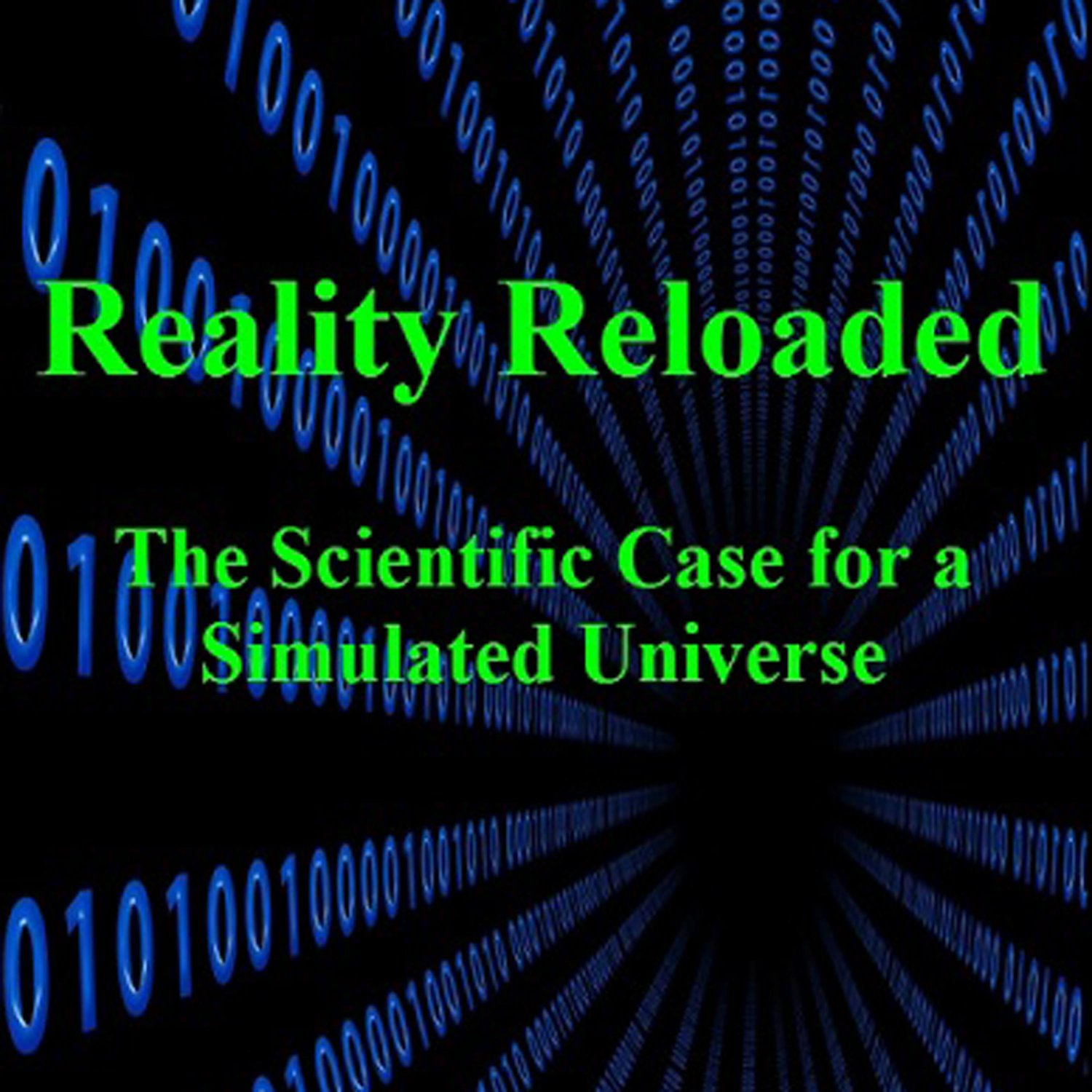
Are we living in a Simulated Universe? - Highlights - MELVIN VOPSON
"We are at a crossroads, a paradigm shift with the emergence of artificial intelligence which is going to transform our planet and mankind that is not even anticipated by the people who created AI technology. There are some signs that AI appears to be sentient, and soon it will surpass human brain and mind capacity. So, if you want, we are the creators of a new species. AI is based on silicon and not carbon like we humans are. This is a very interesting aspect. It is a new life form. And you can look at the definition of what it means to have consciousness or something similar. We are very fragile as a species. Could it be that the silicon-based life form is actually something more advanced than the biological carbon-based life form? Could it be that we are at the point where we are creating a life form that may be - by blending biological with this cybernetic entity that we're creating now - creating a post-human? Almost a new form of life that blends biological with machines and silicon technologies and gives us two things? One infinite intelligence that will be exponentially much more powerful in terms of our capacity to communicate, interact, and access information that will give us immortality? You will, just like I take my car to the garage and change parts when they break down, and I can drive this car for unlimited time, as long as I keep changing the parts and servicing it.The same could be a life form that is not entirely based on carbon, but is some kind of blended machine, biological, post-human type of entity. I see this as a natural evolution because it will make us stronger. If we can preserve all our qualities that we experience and enjoy in our life today, but we make them by merging ourselves with this new thing that we're creating, it could make us a more advanced form of life form, if you want.So we are the creators, but this is a process of evolution as well. We are evolving to something much more advanced through our own creation. So, there is a circle that feeds into its creation and evolution. They feed into itself, and they are part of the same supply chain circle, if you want.So it's interesting, and I believe that both are true and both are working hand in hand. To produce what we see around us, the entire universe and life forms and everything, there is some kind of interesting way of creation followed by evolution, and they feed into each other. We are there at that point now in our human history. We're creating a new life form.This AI will change the world as we know it in ways that are not even anticipated, but we can't stop it because it's a natural evolution of humans to something more powerful than biological life."Dr. Melvin M. Vopson is Associate Professor of Physics at the University of Portsmouth, Fellow of the Higher Education Academy, Chartered Physicist and Fellow of the Institute of Physics. He is the co-founder and CEO of the Information Physics Institute, editor-in-chief of the IPI Letters and Emerging Minds Journal for Student Research. He is the author of Reality Reloaded: The Scientific Case for a Simulated Universe. Dr. Vopson has a wide-ranging scientific expertise in experimental, applied and theoretical physics that is internationally recognized. He has published over 100 research articles, achieving over 2500 citations.https://www.port.ac.uk/about-us/structure-and-governance/our-people/our-staff/melvin-vopsonhttps://ipipublishing.org/index.php/ipil/RRwww.creativeprocess.info www.oneplanetpodcast.orgIG www.instagram.com/creativeprocesspodcast
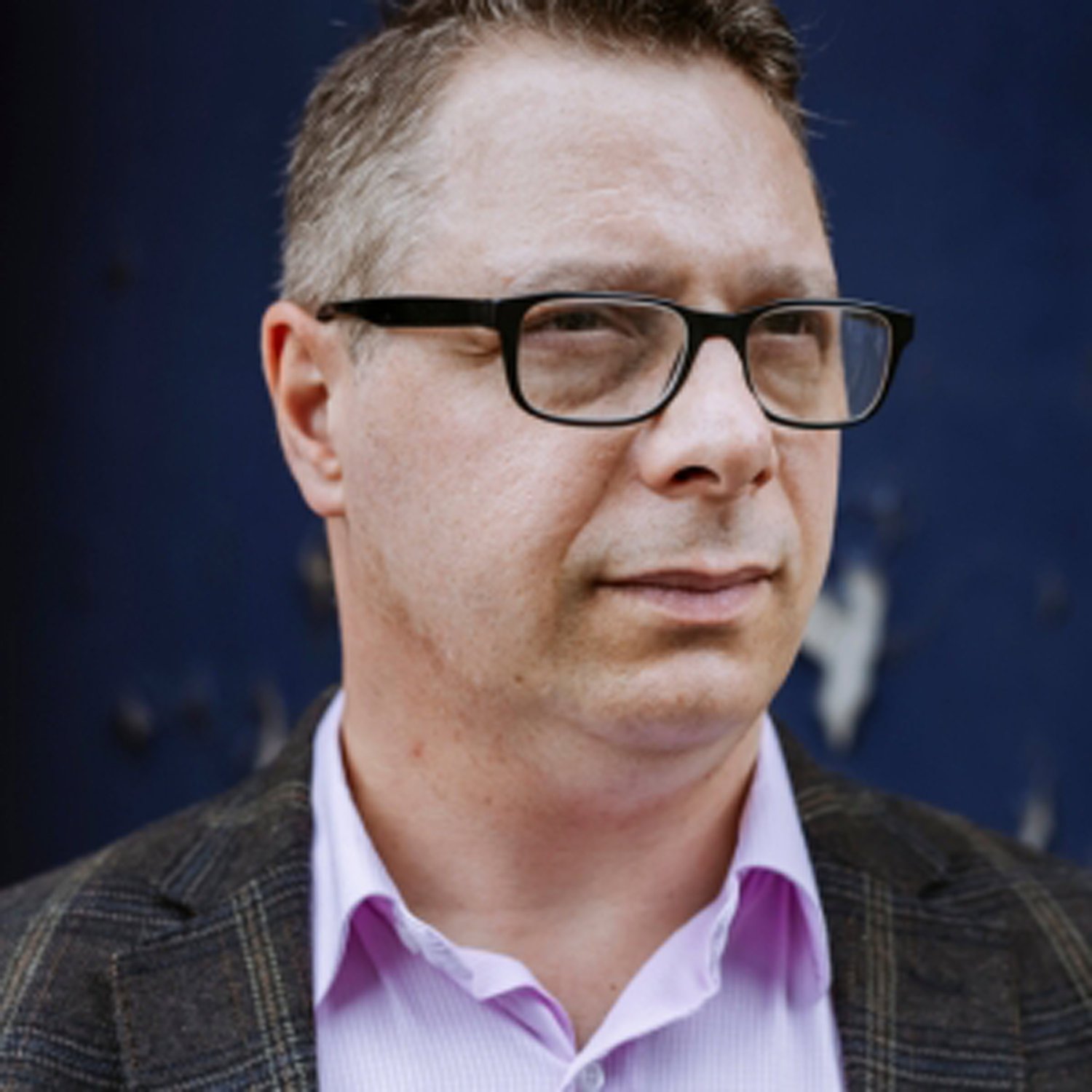
MELVIN VOPSON - Physicist - Author of Reality Reloaded: The Scientific Case for a Simulated Universe
Are we living in a Simulated Universe? How will AI impact the future of work, society & education?Dr. Melvin M. Vopson is Associate Professor of Physics at the University of Portsmouth, Fellow of the Higher Education Academy, Chartered Physicist and Fellow of the Institute of Physics. He is the co-founder and CEO of the Information Physics Institute, editor-in-chief of the IPI Letters and Emerging Minds Journal for Student Research. He is the author of Reality Reloaded: The Scientific Case for a Simulated Universe. Dr. Vopson has a wide-ranging scientific expertise in experimental, applied and theoretical physics that is internationally recognized. He has published over 100 research articles, achieving over 2500 citations."We are at a crossroads, a paradigm shift with the emergence of artificial intelligence which is going to transform our planet and mankind that is not even anticipated by the people who created AI technology. There are some signs that AI appears to be sentient, and soon it will surpass human brain and mind capacity. So, if you want, we are the creators of a new species. AI is based on silicon and not carbon like we humans are. This is a very interesting aspect. It is a new life form. And you can look at the definition of what it means to have consciousness or something similar. We are very fragile as a species. Could it be that the silicon-based life form is actually something more advanced than the biological carbon-based life form? Could it be that we are at the point where we are creating a life form that may be - by blending biological with this cybernetic entity that we're creating now - creating a post-human? Almost a new form of life that blends biological with machines and silicon technologies and gives us two things? One infinite intelligence that will be exponentially much more powerful in terms of our capacity to communicate, interact, and access information that will give us immortality? You will, just like I take my car to the garage and change parts when they break down, and I can drive this car for unlimited time, as long as I keep changing the parts and servicing it.The same could be a life form that is not entirely based on carbon, but is some kind of blended machine, biological, post-human type of entity. I see this as a natural evolution because it will make us stronger. If we can preserve all our qualities that we experience and enjoy in our life today, but we make them by merging ourselves with this new thing that we're creating, it could make us a more advanced form of life form, if you want.So we are the creators, but this is a process of evolution as well. We are evolving to something much more advanced through our own creation. So, there is a circle that feeds into its creation and evolution. They feed into itself, and they are part of the same supply chain circle, if you want.So it's interesting, and I believe that both are true and both are working hand in hand. To produce what we see around us, the entire universe and life forms and everything, there is some kind of interesting way of creation followed by evolution, and they feed into each other. We are there at that point now in our human history. We're creating a new life form.This AI will change the world as we know it in ways that are not even anticipated, but we can't stop it because it's a natural evolution of humans to something more powerful than biological life."https://www.port.ac.uk/about-us/structure-and-governance/our-people/our-staff/melvin-vopsonhttps://ipipublishing.org/index.php/ipil/RRwww.creativeprocess.info www.oneplanetpodcast.orgIG www.instagram.com/creativeprocesspodcast

Does privacy exist anymore? Or are humans just sets of data to be traded and sold? - Highlights - WENDY WONG
"Meta reaches between three and four billion people every day through their platforms, right? That's way more people than any government legitimately can claim to govern. And yet this one company with four major platforms that many of us use is able to reach so many people and make decisions about content and access that have real consequences. It's been shown they fueled genocide in multiple places like in Ethiopia and Myanmar. And I think that's exactly why human rights matter because human rights are obligations that states have signed on for, and they're supposed to protect human values. And I think from a human rights perspective, it's important to argue that we shouldn't be collecting certain types of data because it's excessive. It's violating autonomy. It starts violating dignity. And when you start violating autonomy and dignity through the collection of data, you can't just go back and fix that by making it private.”Does privacy exist anymore? Or are humans just sets of data to be traded and sold?Wendy H. Wong is Professor of Political Science and Principal's Research Chair at the University of British Columbia, Okanagan. She is the author of two award-winning books: Internal Affairs: How the Structure of NGOs Transforms Human Rights and (with Sarah S. Stroup) The Authority Trap: Strategic Choices of International NGOs. Her latest book is We, the Data: Human Rights in the Digital Age.www.wendyhwong.comhttps://mitpress.mit.edu/author/wendy-h-wong-38397www.creativeprocess.info www.oneplanetpodcast.orgIG www.instagram.com/creativeprocesspodcast

WENDY WONG - Author of We, the Data: Human Rights in the Digital Age
Does privacy exist anymore? Or are humans just sets of data to be traded and sold?Wendy H. Wong is Professor of Political Science and Principal's Research Chair at the University of British Columbia, Okanagan. She is the author of two award-winning books: Internal Affairs: How the Structure of NGOs Transforms Human Rights and (with Sarah S. Stroup) The Authority Trap: Strategic Choices of International NGOs. Her latest book is We, the Data: Human Rights in the Digital Age."Meta reaches between three and four billion people every day through their platforms, right? That's way more people than any government legitimately can claim to govern. And yet this one company with four major platforms that many of us use is able to reach so many people and make decisions about content and access that have real consequences. It's been shown they fueled genocide in multiple places like in Ethiopia and Myanmar. And I think that's exactly why human rights matter because human rights are obligations that states have signed on for, and they're supposed to protect human values. And I think from a human rights perspective, it's important to argue that we shouldn't be collecting certain types of data because it's excessive. It's violating autonomy. It starts violating dignity. And when you start violating autonomy and dignity through the collection of data, you can't just go back and fix that by making it private.”www.wendyhwong.comhttps://mitpress.mit.edu/author/wendy-h-wong-38397www.creativeprocess.info www.oneplanetpodcast.org IG www.instagram.com/creativeprocesspodcast
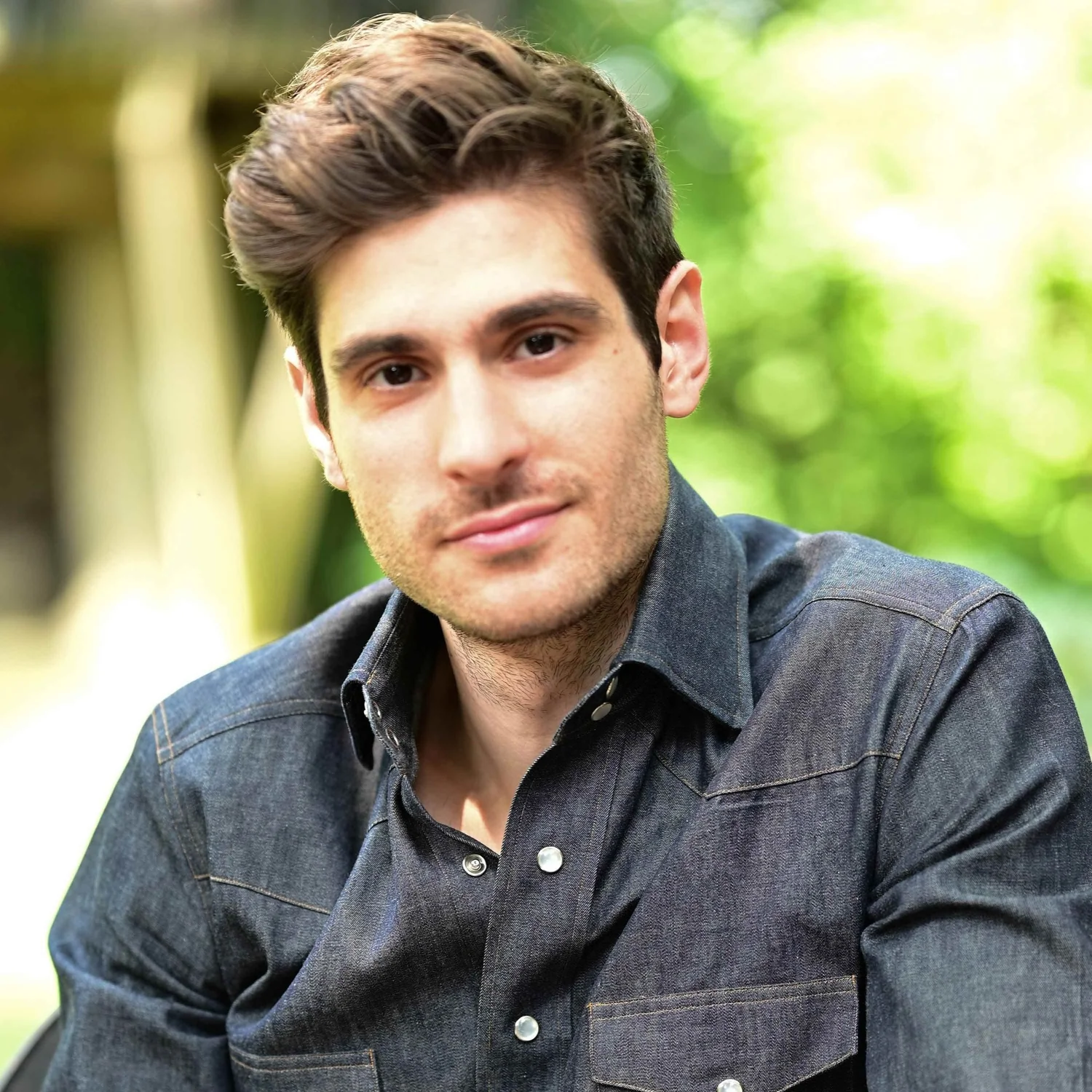
MAX BENNETT - Author of A Brief History of Intelligence: Evolution, AI, and the Five Breakthroughs That Made Our Brains - CEO of Alby
The more the science of intelligence (both human and artificial) advances, the more it holds the potential for great benefits and dangers to society.Max Bennett is the cofounder and CEO of Alby, a start-up that helps companies integrate large language models into their websites to create guided shopping and search experiences. Previously, Bennett was the cofounder and chief product officer of Bluecore, one of the fastest growing companies in the U.S., providing AI technologies to some of the largest companies in the world. Bluecore has been featured in the annual Inc. 500 fastest growing companies, as well as Glassdoor’s 50 best places to work in the U.S. Bluecore was recently valued at over $1 billion. Bennett holds several patents for AI technologies and has published numerous scientific papers in peer-reviewed journals on the topics of evolutionary neuroscience and the neocortex. He has been featured on the Forbes 30 Under 30 list as well as the Built In NYC’s 30 Tech Leaders Under 30. He is the author of A Brief History of Intelligence: Evolution, AI, and the Five Breakthroughs That Made Our Brains."So, modern neuroscientists are questioning if there really is one consistent limbic system. But usually when we're looking at the limbic system, we're thinking about things like emotion, volition, and goals. And those types of things, I would argue reinforcement learning algorithms, at least on a primitive level, we already have because the way that we get them to achieve goals like play a game of go and win is we give them a reward signal or a reward function. And then we let them self-play and teach themselves based on maximizing that reward. But that doesn't mean that they're self-aware, doesn't mean that they're experiencing anything at all. There's a fascinating set of questions in the AI community around what's called the reward hypothesis, which is how much of intelligent behavior can be understood through the lens of just trying to optimize a reward signal. We are more than just trying to optimize reward signals. We do things to try and reinforce our own identities. We do things to try and understand ourselves. These are attributes that are hard to explain from a simple reward signal, but do make sense. And other conceptions of intelligence like Karl Friston's active inference where we build a model of ourselves and try and reinforce that model."www.abriefhistoryofintelligence.com/ www.alby.com www.bluecore.com www.creativeprocess.info www.oneplanetpodcast.org IG www.instagram.com/creativeprocesspodcast
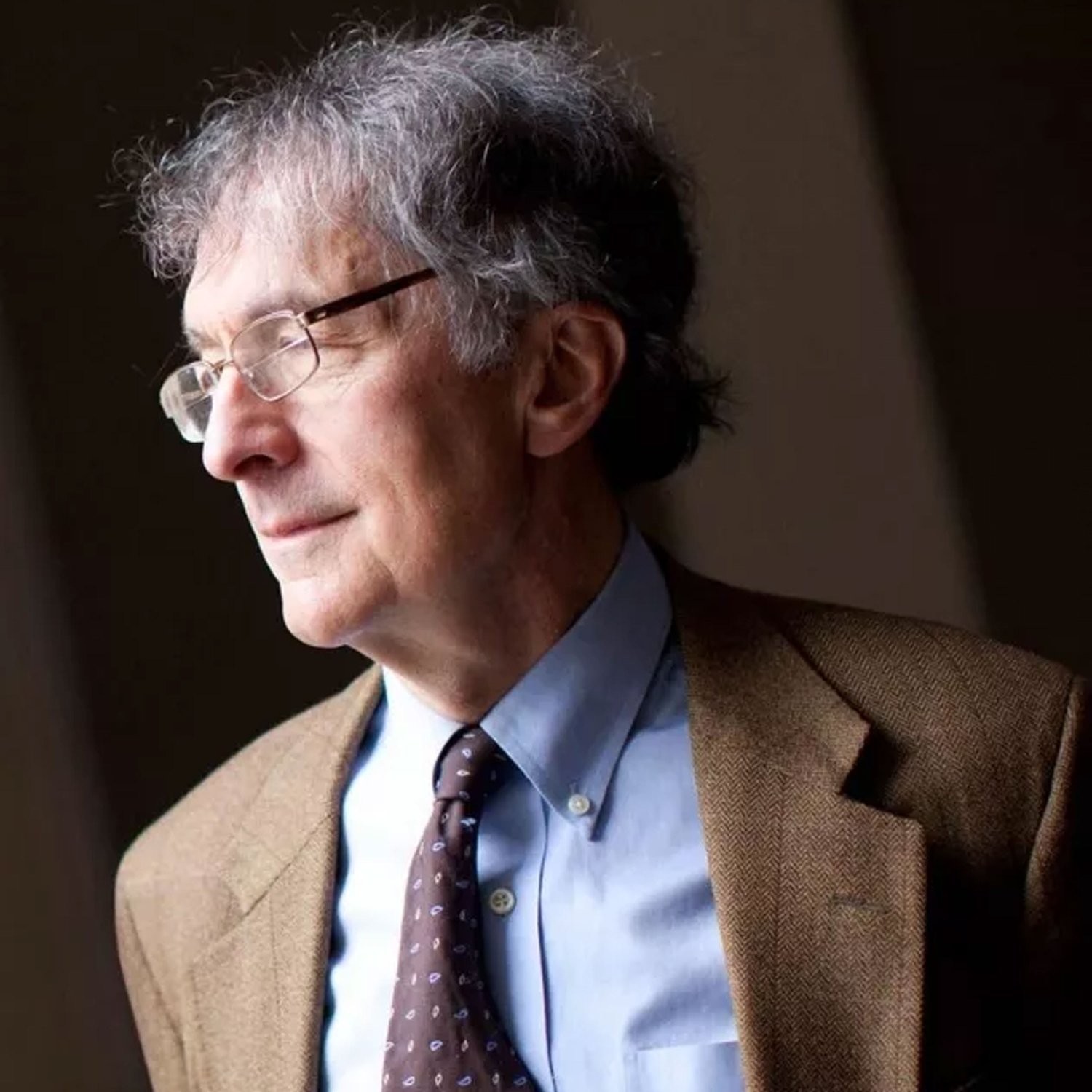
HOWARD GARDNER - Author of A Synthesizing Mind & Frames of Mind: The Theory of Multiple Intelligences - Co-director of The Good Project
How do we define intelligence? What is the point of creativity and intelligence if we are not creating good in the world? In this age of AI, what is the importance of a synthesizing mind?Howard Gardner, Research Professor of Cognition and Education at the Harvard Graduate School of Education, an author of over 30 books, translated into 32 languages, and several hundred articles, is best known for his theory of multiple intelligences, a critique of the notion that there exists but a single human intelligence that can be assessed by standard psychometric instruments. He has twice been selected by Foreign Policy and Prospect magazines as one of the 100 most influential public intellectuals in the world. In the last few years, Gardner has been studying the nature of human synthesizing, a topic introduced in his 2020 memoir, A Synthesizing Mind.For 28 years, with David Perkins, he was Co-Director of Harvard Project Zero, and in more recent years has served in a variety of leadership positions. Since the middle 1990s, Gardner has directed The Good Project, a group of initiatives, founded in collaboration with psychologists Mihaly Csikszentmihalyi and William Damon. The project promotes excellence, engagement, and ethics in education, preparing students to become good workers and good citizens who contribute to the overall well-being of society. Through research-based concepts, frameworks, and resources, The Good Project seeks to help students reflect upon the ethical dilemmas that arise in everyday life and give them the tools to make thoughtful decisions.“The word engagement doesn't mean anything when you're talking about computational systems. they aren't asked whether they like what they're doing or not, they just do it. But the issue of ethics is very difficult and very complicated. I touched on it earlier. If you're trying to decide what to do in a complicated economics matter, in a complicated military matter, do you leave the decision to the computational system? Or do you have human beings make it alone or in groups? My guess would be you should find out what would various computational systems recommend that the final decisions shouldn't be a majority vote among ChatGPTs. It should be human beings evaluating with these different systems. Recommend and then living with the consequences of human-made decisions. I don't want a decision about whether to have a nuclear weapon shot off to be made by ChatGPT. I would like to think that rational leaders consulting with one another and being very cautious about life-and-death decisions. There are things which large language instruments could recommend which would destroy the planet, but they don't care. It's not their planet.”www.howardgardner.comhttp://thegoodproject.orghttps://mitpress.mit.edu/9780262542838/a-synthesizing-mindwww.creativeprocess.infowww.oneplanetpodcast.orgIG www.instagram.com/creativeprocesspodcast

What distinguishes our consciousness from AI & machine learning? Highlights: LIAD MUDRIK - Neuroscientist, Tel Aviv University
"Even when I send a query to chat GPT. I always say, 'Hi, can I please ask you something?' And when it replies, I say, 'Thank you.' As if I am kind of treating it as a person who cares about whether I say hi or thank you, although I don't think that it does. I had the privilege to be a part of this group, an interdisciplinary group of philosophers, neuroscientists, and computer scientists. 'Thank It' was led by Patrick Battling and Robert Long, and we met and discussed and corresponded over the possibility of consciousness in AI. We, the field of consciousness studies, relying on theories of consciousness and asking in humans, what are the critical functions that have been ascribed by these theories to conscious processing?So now we can say, give me an AI system. Let me check if it has the indicators that we, in this case, our group has put together as critical for consciousness. If it does have all these factors, all these indicators, I would say that there is at least a good chance that it is either conscious or can develop consciousness. And with that exercise, current AI systems might have 1, 2, 3 indicators out of the 14 that we came up with, but not all of them. It doesn't mean that they cannot have all of them. We didn't find any substantial barrier to coming up with such systems, but currently, they don't. And so I think that although it's very tempting to think about GPT as conscious, it sounds sometimes like a human being, I think that it doesn't have the ability to experience. It can do amazing things. Is there anyone home? so to speak. Is anyone experiencing or, qualitatively, again, for the lack of a better word, experiencing the world? I don't think so. I don't think we have any indication of that."How we think, feel, and experience the world is a mystery. What distinguishes our consciousness from AI and machine learning?Liad Mudrik studies high level cognition and its neural substrates, focusing on conscious experience. She teaches at the School of Psychological Sciences at Tel Aviv University. At her research lab, her team is currently investigating the functionality of consciousness, trying to unravel the depth and limits of unconscious processing, and also researching the ways semantic relations between concepts and objects are formed and detected.https://people.socsci.tau.ac.il/mu/mudriklabhttps://people.socsci.tau.ac.il/mu/mudriklab/people/#gkit-popupwww.creativeprocess.infowww.oneplanetpodcast.orgIG www.instagram.com/creativeprocesspodcast
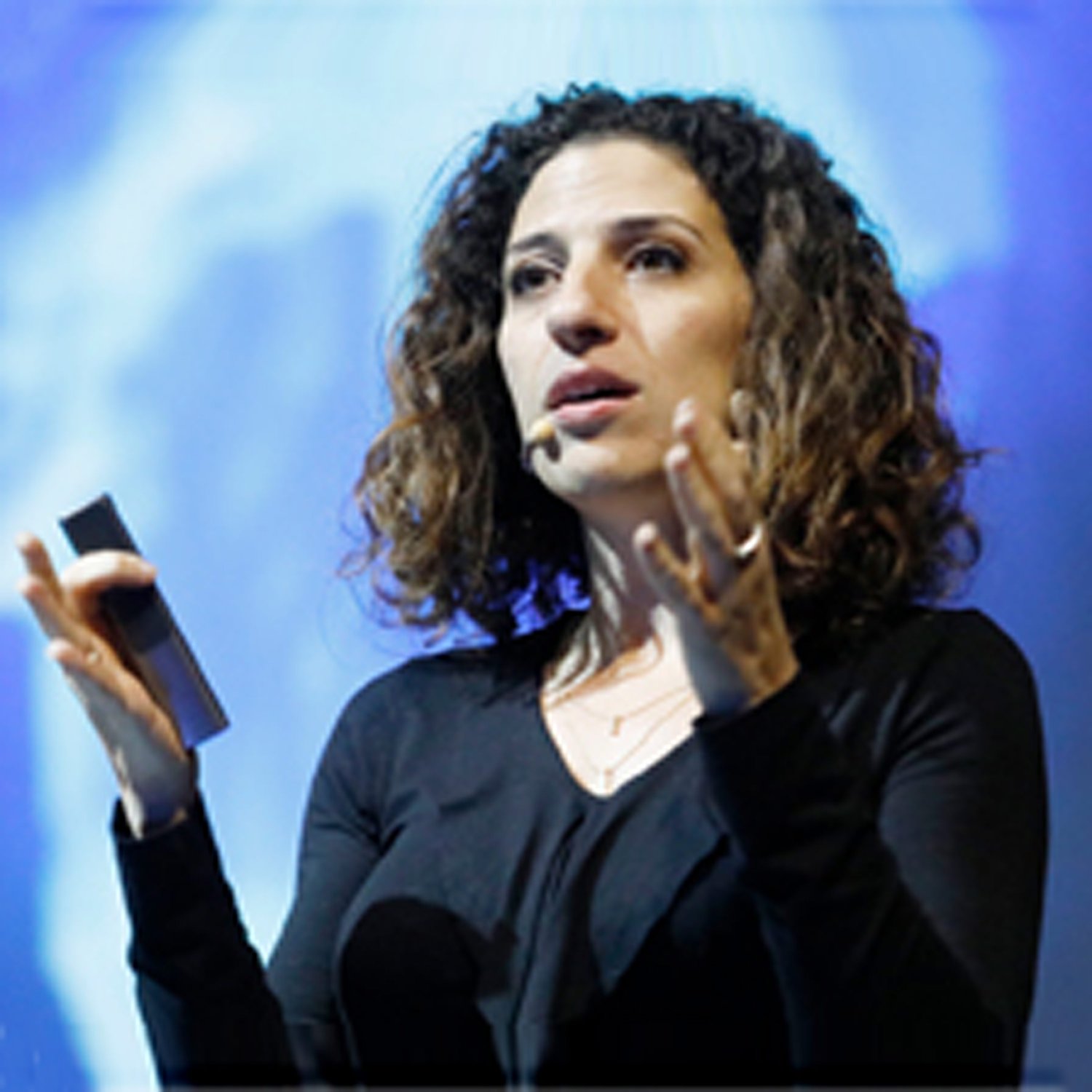
LIAD MUDRIK - Neuroscientist - Principal Investigator Liad Mudrik Lab, Tel Aviv University
How we think, feel, and experience the world is a mystery. What distinguishes our consciousness from AI and machine learning?Liad Mudrik studies high level cognition and its neural substrates, focusing on conscious experience. She teaches at the School of Psychological Sciences at Tel Aviv University. At her research lab, her team is currently investigating the functionality of consciousness, trying to unravel the depth and limits of unconscious processing, and also researching the ways semantic relations between concepts and objects are formed and detected."Even when I send a query to chat GPT. I always say, 'Hi, can I please ask you something?' And when it replies, I say, 'Thank you.' As if I am kind of treating it as a person who cares about whether I say hi or thank you, although I don't think that it does. I had the privilege to be a part of this group, an interdisciplinary group of philosophers, neuroscientists, and computer scientists. 'Thank It' was led by Patrick Battling and Robert Long, and we met and discussed and corresponded over the possibility of consciousness in AI. We, the field of consciousness studies, relying on theories of consciousness and asking in humans, what are the critical functions that have been ascribed by these theories to conscious processing?So now we can say, give me an AI system. Let me check if it has the indicators that we, in this case, our group has put together as critical for consciousness. If it does have all these factors, all these indicators, I would say that there is at least a good chance that it is either conscious or can develop consciousness. And with that exercise, current AI systems might have 1, 2, 3 indicators out of the 14 that we came up with, but not all of them. It doesn't mean that they cannot have all of them. We didn't find any substantial barrier to coming up with such systems, but currently, they don't. And so I think that although it's very tempting to think about GPT as conscious, it sounds sometimes like a human being, I think that it doesn't have the ability to experience. It can do amazing things. Is there anyone home? so to speak. Is anyone experiencing or, qualitatively, again, for the lack of a better word, experiencing the world? I don't think so. I don't think we have any indication of that."https://people.socsci.tau.ac.il/mu/mudriklabhttps://people.socsci.tau.ac.il/mu/mudriklab/people/#gkit-popupwww.creativeprocess.infowww.oneplanetpodcast.orgIG www.instagram.com/creativeprocesspodcast
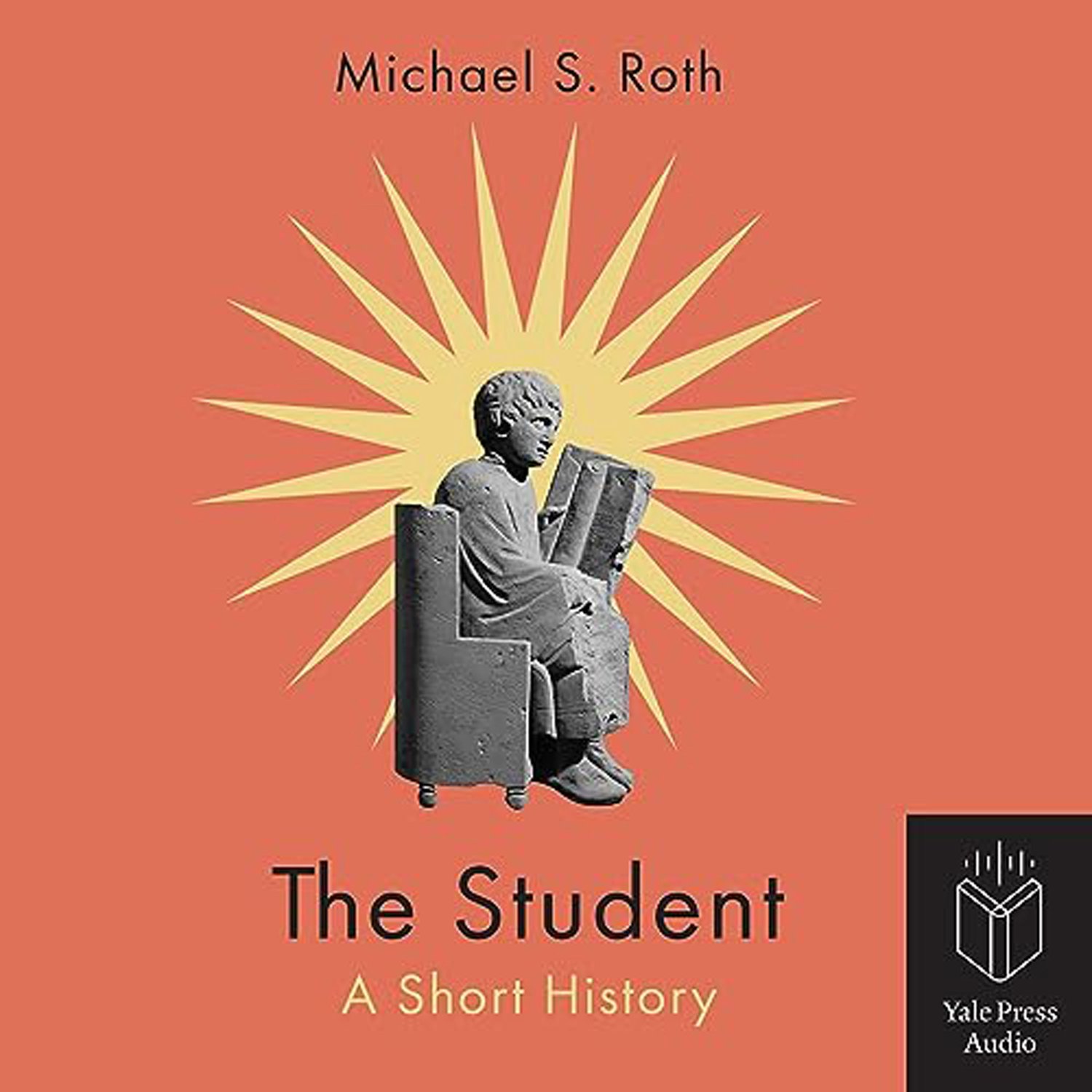
How is AI Changing Education, Work & the Way We Learn? - MICHAEL S. ROTH, President of Wesleyan University
What is the purpose of education? How are we educating students for the future? What is the importance of the humanities in this age of AI and the rapidly changing workplace?Michael S. Roth is President of Wesleyan University. His books include Beyond the University: Why Liberal Education Matters and Safe Enough Spaces: A Pragmatist’s Approach to Inclusion, Free Speech, and Political Correctness on College Campuses. He's been a Professor of History and the Humanities since 1983, was the Founding Director of the Scripps College Humanities Institute, and was the Associate Director of the Getty Research Institute. His scholarly interests center on how people make sense of the past, and he has authored eight books around this topic, including his latest, The Student: A Short History.https://www.wesleyan.edu/academics/faculty/mroth/profile.htmlhttps://yalebooks.yale.edu/book/9780300250039/the-student/www.wesleyan.eduhttps://twitter.com/mroth78www.creativeprocess.infowww.oneplanetpodcast.orgIG www.instagram.com/creativeprocesspodcast

Highlights - MAX STOSSEL - Youth & Education Advisor, Center for Humane Technology, Award-winning Poet
"Technology has very much changed the way we read and take in information and shortened it into quick bursts and attention spans. We're living in a new world, for sure. And how do we communicate in this new world? Not just in a way that gets the reach, because there are whole industries aimed at what do I do to get the most likes or the most attention, and all of that, which I don't think is very fulfilling as artists.It's sort of a diminishing of our art form to try and play the game because then we're getting the attention and getting the hits, as opposed to what do I really want to create? How do I really want to create it? How do I want to display this? And can I do it in a way that breaks through so that if I do it my way, it's still going to get the attention, great. But if it doesn't, can I be cool with that? And can I be okay creating what I want to create, knowing that that's what it's about. It's about sharing in an honest, authentic way what I want to express without letting the tentacles of social media drip into my brain and take over why I'm literally doing the things that I'm doing."Max Stossel is an Award-winning poet, filmmaker, and speaker, named by Forbes as one of the best storytellers of the year. His Stand-Up Poetry Special Words That Move takes the audience through a variety of different perspectives, inviting us to see the world through different eyes together. Taking on topics like heartbreak, consciousness, social media, politics, the emotional state of our world, and even how dogs probably (most certainly) talk, Max uses rhyme and rhythm to make these topics digestible and playful. Words That Move articulates the deep-seated kernels of truth that we so often struggle to find words for ourselves. Max has performed on five continents, from Lincoln Center in NY to the Hordern Pavilion in Sydney. He is also the Youth & Education Advisor for the Center for Humane Technology, an organization of former tech insiders dedicated to realigning technology with humanity’s best interests.www.wordsthatmove.com/www.instagram.com/maxstossel/www.humanetech.com https://vimeo.com/690354718/54614a2318www.creativeprocess.info www.oneplanetpodcast.org IG www.instagram.com/creativeprocesspodcast

MAX STOSSEL - Youth & Education Advisor, Center for Humane Technology, Award-winning Poet
Max Stossel is an Award-winning poet, filmmaker, and speaker, named by Forbes as one of the best storytellers of the year. His Stand-Up Poetry Special Words That Move takes the audience through a variety of different perspectives, inviting us to see the world through different eyes together. Taking on topics like heartbreak, consciousness, social media, politics, the emotional state of our world, and even how dogs probably (most certainly) talk, Max uses rhyme and rhythm to make these topics digestible and playful. Words That Move articulates the deep-seated kernels of truth that we so often struggle to find words for ourselves. Max has performed on five continents, from Lincoln Center in NY to the Hordern Pavilion in Sydney. He is also the Youth & Education Advisor for the Center for Humane Technology, an organization of former tech insiders dedicated to realigning technology with humanity’s best interests."Technology has very much changed the way we read and take in information and shortened it into quick bursts and attention spans. We're living in a new world, for sure. And how do we communicate in this new world? Not just in a way that gets the reach, because there are whole industries aimed at what do I do to get the most likes or the most attention, and all of that, which I don't think is very fulfilling as artists.It's sort of a diminishing of our art form to try and play the game because then we're getting the attention and getting the hits, as opposed to what do I really want to create? How do I really want to create it? How do I want to display this? And can I do it in a way that breaks through so that if I do it my way, it's still going to get the attention, great. But if it doesn't, can I be cool with that? And can I be okay creating what I want to create, knowing that that's what it's about. It's about sharing in an honest, authentic way what I want to express without letting the tentacles of social media drip into my brain and take over why I'm literally doing the things that I'm doing."www.wordsthatmove.com/www.instagram.com/maxstossel/www.humanetech.com https://vimeo.com/690354718/54614a2318www.creativeprocess.info www.oneplanetpodcast.org IG www.instagram.com/creativeprocesspodcast

Highlights - BRIAN DAVID JOHNSON - Director of the ASU Threatcasting Lab - Author of The Future You
"I think, oftentimes, what'll happen as a trap when we talk about technology. People say, 'Well, what do you think is the future of artificial intelligence? Or what is the future of neural interfaces? Or what is the future of this?' And I always pause them and say, 'Wait a minute. If you're just talking about the technology, you're having the wrong conversation because it's not about the technology.'So when people talk about what's the future of AI? I say, I don't know. What do we want the future of AI to be? And I think that's a shift that sounds quite subtle to some people, but it's really important because if you look at any piece of news or anything like that, they talk about AI as if it was a thing that was fully formed, that sprang out of the Earth and is now walking around doing things. And what will AI do in the future and how will it affect our jobs? It's not AI that's doing it. These are people. These are companies. These are organizations that are doing it. And that's where we need to keep our focus. What are those organizations doing. And also what do we want from it as humans?"Brian David Johnson is Futurist in Residence at Arizona State University’s Center for Science and the Imagination, a professor in the School for the Future of Innovation in Society, and the Director of the ASU Threatcasting Lab. He is Author of The Future You: How to Create the Life You Always Wanted, Science Fiction Prototyping: Designing the Future with Science Fiction, 21st Century Robot: The Dr. Simon Egerton Stories, Humanity in the Machine: What Comes After Greed?, Screen Future: The Future of Entertainment, Computing, and the Devices We Love.https://csi.asu.edu/people/brian-david-johnson/www.creativeprocess.infowww.oneplanetpodcast.orgIG www.instagram.com/creativeprocesspodcast

BRIAN DAVID JOHNSON - Author of The Future You: How to Create the Life You Always Wanted - Futurist in Residence, ASU’s Center for Science & the Imagination
Brian David Johnson is Futurist in Residence at Arizona State University’s Center for Science and the Imagination, a professor in the School for the Future of Innovation in Society, and the Director of the ASU Threatcasting Lab. He is Author of The Future You: How to Create the Life You Always Wanted, Science Fiction Prototyping: Designing the Future with Science Fiction, 21st Century Robot: The Dr. Simon Egerton Stories, Humanity in the Machine: What Comes After Greed?, Screen Future: The Future of Entertainment, Computing, and the Devices We Love."I think, oftentimes, what'll happen as a trap when we talk about technology. People say, 'Well, what do you think is the future of artificial intelligence? Or what is the future of neural interfaces? Or what is the future of this?' And I always pause them and say, 'Wait a minute. If you're just talking about the technology, you're having the wrong conversation because it's not about the technology.'So when people talk about what's the future of AI? I say, I don't know. What do we want the future of AI to be? And I think that's a shift that sounds quite subtle to some people, but it's really important because if you look at any piece of news or anything like that, they talk about AI as if it was a thing that was fully formed, that sprang out of the Earth and is now walking around doing things. And what will AI do in the future and how will it affect our jobs? It's not AI that's doing it. These are people. These are companies. These are organizations that are doing it. And that's where we need to keep our focus. What are those organizations doing. And also what do we want from it as humans?"https://csi.asu.edu/people/brian-david-johnson/www.creativeprocess.infowww.oneplanetpodcast.orgIG www.instagram.com/creativeprocesspodcast
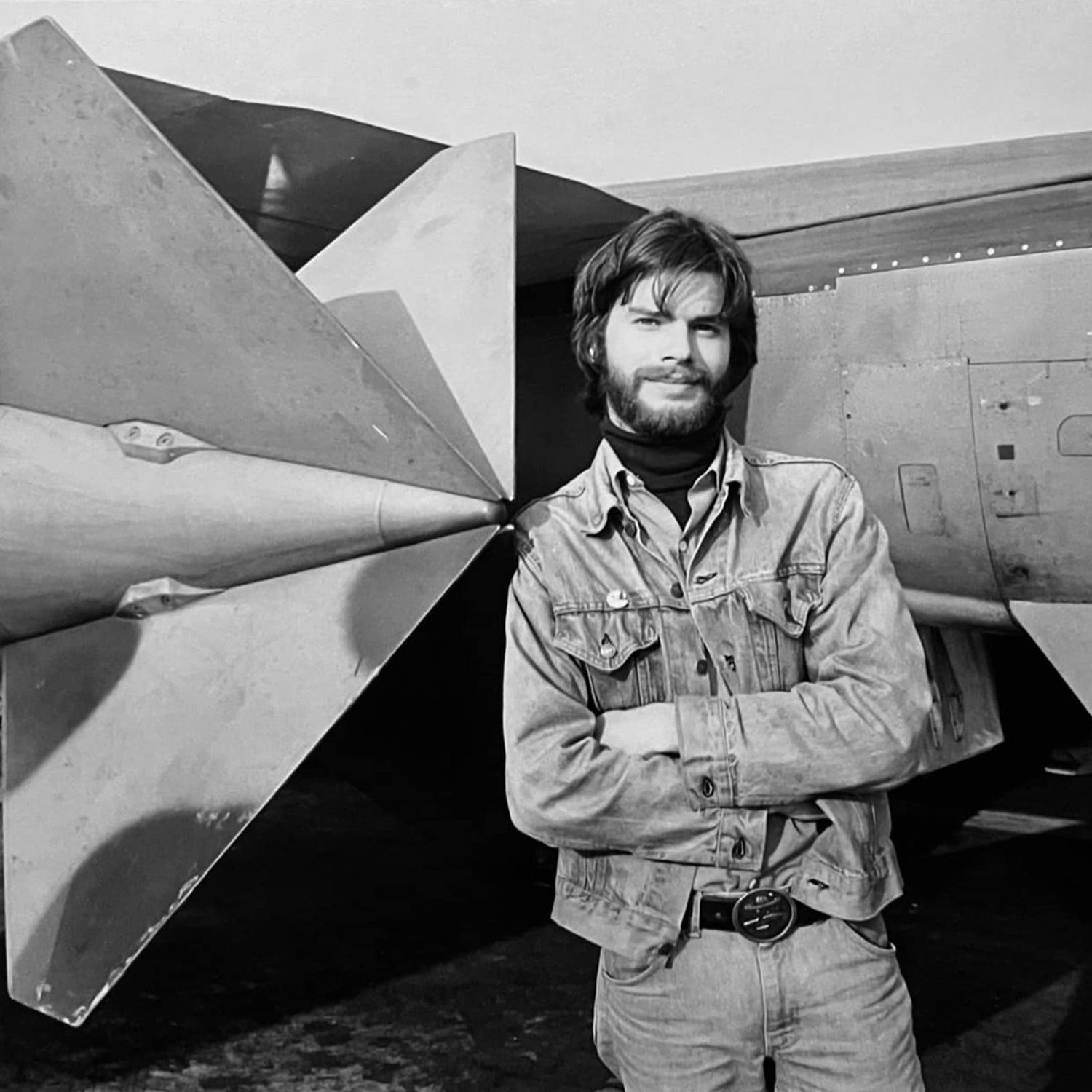
Highlights - ALLEN STEELE - Hugo Award-winning Science Fiction Author of the Coyote Trilogy, Arkwright
"I'm really very glad. I was happy to see that within my lifetime that the prospects of not just Mars, but in fact interstellar space is being taken seriously. I've been at two conferences where we were talking about building the first starship within this century. One of my later books, Arkwright, is about such a project. I saw that Elon Musk is building Starship One, I wish him all the best. And I envy anybody who goes.I wish I were a younger person and in better health. Somebody asked me some time ago, would you go to Mars? And I said, 'I can't do it now. I've got a bum pancreas, and I'm 65 years old, and I'm not exactly the prime prospect for doing this. If you asked me 40 years ago would I go, I would have said: in a heartbeat!' I would gladly leave behind almost everything. I don't think I'd be glad about leaving my wife and family behind, but I'd be glad to go live on another planet, perhaps for the rest of my life, just for the chance to explore a new world, to be one of the settlers in a new world.And I think this is something that's being taken seriously. It is very possible. We've got to be careful about how we do this. And we've got to be careful, particularly about the rationale of the people who are doing this. It bothers me that Elon Musk has lately taken a shift to the Far Right. I don't know why that is. But I'd love to be able to sit down and talk with him about these things and try to understand why he has done such a right thing, but for what seems to be wrong reasons."What does the future of space exploration look like? How can we unlock the opportunities of outer space without repeating the mistakes of colonization and exploitation committed on Earth? How can we ensure AI and new technologies reflect our values and the world we want to live in? Allen Steele is a science fiction author and journalist. He has written novels, short stories, and essays and been awarded a number of Hugos, Asimov's Readers, and Locus Awards. He’s known for his Coyote Trilogy and Arkwright. He is a former member of the Board of Directors and Board of Advisors for the Science Fiction and Fantasy Writers of America. He has also served as an advisor for the Space Frontier Foundation. In 2001, he testified before the Subcommittee on Space and Aeronautics of the U.S. House of Representatives in hearings regarding space exploration in the 21st century.www.allensteele.comwww.creativeprocess.infowww.oneplanetpodcast.orgIG www.instagram.com/creativeprocesspodcastPhoto from a field trip to Pease Air Force Base in Portsmouth NH, now closed. Photo credit: Chuck Peterson

ALLEN STEELE - Hugo Award-winning Science Fiction Author of the Coyote Trilogy, Arkwright
What does the future of space exploration look like? How can we unlock the opportunities of outer space without repeating the mistakes of colonization and exploitation committed on Earth? How can we ensure AI and new technologies reflect our values and the world we want to live in? Allen Steele is a science fiction author and journalist. He has written novels, short stories, and essays and been awarded a number of Hugos, Asimov's Readers, and Locus Awards. He’s known for his Coyote Trilogy and Arkwright. He is a former member of the Board of Directors and Board of Advisors for the Science Fiction and Fantasy Writers of America. He has also served as an advisor for the Space Frontier Foundation. In 2001, he testified before the Subcommittee on Space and Aeronautics of the U.S. House of Representatives in hearings regarding space exploration in the 21st century."I'm really very glad. I was happy to see that within my lifetime that the prospects of not just Mars, but in fact interstellar space is being taken seriously. I've been at two conferences where we were talking about building the first starship within this century. One of my later books, Arkwright, is about such a project. I saw that Elon Musk is building Starship One, I wish him all the best. And I envy anybody who goes.I wish I were a younger person and in better health. Somebody asked me some time ago, would you go to Mars? And I said, 'I can't do it now. I've got a bum pancreas, and I'm 65 years old, and I'm not exactly the prime prospect for doing this. If you asked me 40 years ago would I go, I would have said: in a heartbeat!' I would gladly leave behind almost everything. I don't think I'd be glad about leaving my wife and family behind, but I'd be glad to go live on another planet, perhaps for the rest of my life, just for the chance to explore a new world, to be one of the settlers in a new world.And I think this is something that's being taken seriously. It is very possible. We've got to be careful about how we do this. And we've got to be careful, particularly about the rationale of the people who are doing this. It bothers me that Elon Musk has lately taken a shift to the Far Right. I don't know why that is. But I'd love to be able to sit down and talk with him about these things and try to understand why he has done such a right thing, but for what seems to be wrong reasons."www.allensteele.comwww.creativeprocess.infowww.oneplanetpodcast.orgIG www.instagram.com/creativeprocesspodcast
Highlights - SUSAN SCHNEIDER - Author of Artificial You: AI and the Future of Your Mind, Fmr. Distinguished Scholar, US Library of Congress
“So it's hard to tell exactly what the dangers are, but that's certainly one thing that we need to track that beings that are vastly intellectually superior to other beings may not respect the weaker beings, given our own past. It's really hard to tell exactly what will happen. The first concern I have is with surveillance capitalism in this country. The constant surveillance of us because the US is a surveillance capitalist economy, and it's the same elsewhere in the world, right? With Facebook and all these social media companies, things have just been going deeply wrong. And so it leads me to worry about how the future is going to play out. These tech companies aren't going to be doing the right thing for humanity. And this gets to my second worry, which is how's all this going to work for humans exactly? It's not clear where humans will even be needed in the future.”Will AI become conscious? President Biden has just unveiled a new executive order on AI — the U.S. government’s first action of its kind — requiring new safety assessments, equity and civil rights guidance, and research on AI’s impact on the labor market. With this governance in place, can tech companies be counted on to do the right thing for humanity? Susan Schneider is a philosopher, artificial intelligence expert, and founding director of the Center for the Future Mind at Florida Atlantic University. She is author of Artificial You: AI and the Future of Your Mind, Science Fiction and Philosophy: From Time Travel to Superintelligence, and The Blackwell Companion to Consciousness. She held the NASA Chair with NASA and the Distinguished Scholar Chair at the Library of Congress. She is now working on projects related to advancements in AI policy and technology, drawing from neuroscience research and philosophical developments and writing a new book on the shape of intelligent systems.www.fau.edu/artsandletters/philosophy/susan-schneider/index www.fau.edu/future-mind/www.creativeprocess.infowww.oneplanetpodcast.orgIG www.instagram.com/creativeprocesspodcast

SUSAN SCHNEIDER - Director, Center for the Future Mind, FAU, Fmr. NASA Chair at NASA
Will AI become conscious? President Biden has just unveiled a new executive order on AI — the U.S. government’s first action of its kind — requiring new safety assessments, equity and civil rights guidance, and research on AI’s impact on the labor market. With this governance in place, can tech companies be counted on to do the right thing for humanity? Susan Schneider is a philosopher, artificial intelligence expert, and founding director of the Center for the Future Mind at Florida Atlantic University. She is author of Artificial You: AI and the Future of Your Mind, Science Fiction and Philosophy: From Time Travel to Superintelligence, and The Blackwell Companion to Consciousness. She held the NASA Chair with NASA and the Distinguished Scholar Chair at the Library of Congress. She is now working on projects related to advancements in AI policy and technology, drawing from neuroscience research and philosophical developments and writing a new book on the shape of intelligent systems.“So it's hard to tell exactly what the dangers are, but that's certainly one thing that we need to track that beings that are vastly intellectually superior to other beings may not respect the weaker beings, given our own past. It's really hard to tell exactly what will happen. The first concern I have is with surveillance capitalism in this country. The constant surveillance of us because the US is a surveillance capitalist economy, and it's the same elsewhere in the world, right? With Facebook and all these social media companies, things have just been going deeply wrong. And so it leads me to worry about how the future is going to play out. These tech companies aren't going to be doing the right thing for humanity. And this gets to my second worry, which is how's all this going to work for humans exactly? It's not clear where humans will even be needed in the future.”www.fau.edu/artsandletters/philosophy/susan-schneider/index www.fau.edu/future-mind/www.creativeprocess.infowww.oneplanetpodcast.orgIG www.instagram.com/creativeprocesspodcast
AI & THE FUTURE OF HUMANITY
What will the future look like? What are the risks and opportunities of AI? What role can we play in designing the future we want to live in?Voices of philosophers, futurists, AI experts, science fiction authors, activists, and lawyers reflecting on AI, technology, and the Future of Humanity. All voices in this episode are from our interviews for The Creative Process & One Planet Podcast.Voices on this episode are:DR. SUSAN SCHNEIDER American philosopher and artificial intelligence expert. She is the founding director of the Center for the Future Mind at Florida Atlantic University. Author of Artificial You: AI and the Future of Your Mind, Science Fiction and Philosophy: From Time Travel to Superintelligence, and The Blackwell Companion to Consciousness. www.fau.edu/artsandletters/philosophy/susan-schneider/indexNICK BOSTROM Founder and Director of the Future of Humanity Institute, University of Oxford, Philosopher, Author of NYTimes Bestseller Superintelligence: Paths, Dangers, Strategies. Bostrom’s academic work has been translated into more than 30 languages. He is a repeat main TED speaker and has been on Foreign Policy’s Top 100 Global Thinkers list twice and was included in Prospect’s World Thinkers list, the youngest person in the top 15. https://nickbostrom.com https://www.fhi.ox.ac.ukBRIAN DAVID JOHNSONFuturist in residence at Arizona State University’s Center for Science and the Imagination, a professor in the School for the Future of Innovation in Society and the Director of the ASU Threatcasting Lab. He is Author of The Future You: How to Create the Life You Always Wanted, Science Fiction Prototyping: Designing the Future with Science Fiction, 21st Century Robot: The Dr. Simon Egerton Stories, Humanity in the Machine: What Comes After Greed?, Screen Future: The Future of Entertainment, Computing, and the Devices We Love.https://csi.asu.edu/people/brian-david-johnsonDEAN SPADE Professor at SeattleU’s School of Law, Author of Mutual Aid, Building Solidarity During This Crisis (and the Next), and Normal Life: Administrative Violence, Critical Trans Politics, and the Limits of Law.www.deanspade.netALLEN STEELEScience Fiction Author. He has been awarded a number of Hugos, Asimov's Readers, and Locus Awards. of the Coyote Trilogy, Arkwright, and other books. His books include Coyote Trilogy and Arkwright. He is a former member of the Board of Directors and Board of Advisors for the Science Fiction and Fantasy Writers of America. He has also served as an advisor for the Space Frontier Foundation. In 2001, he testified before the Subcommittee on Space and Aeronautics of the U.S. House of Representatives in hearings regarding space exploration in the 21st century.www.allensteele.comwww.creativeprocess.infowww.oneplanetpodcast.orgIG www.instagram.com/creativeprocesspodcast

Highlights - SIR GEOFF MULGAN - Fmr. UK Prime Minister’s Strategy Unit Director, Downing Street’s Head of Policy
"The great thing about a complex society is there is space for lots of different kinds of people. There's space for wildly visionary poets and accountants and actuaries and engineers. And they all have a slightly different outlook, but it's the combination of this huge diversity, which makes our societies work. But what we probably do need a bit more of are the bilingual people, the trilingual people who are as at ease spending a day, a week, a year designing how a criminal justice system could look in 50 years and then getting back to perhaps working in a real court or real lawyer's office.”Sir Geoff Mulgan is Professor of Collective Intelligence, Public Policy and Social Innovation at University College London. Formerly he was chief executive of Nesta, and held government roles (1997–2004), including as the Prime Minister’s Strategy Unit director and as Downing Street’s head of policy. He is the founder or co-founder of many organisations, from Demos to Action for Happiness, and the author of Another World is Possible, Social Innovation: how societies find the power to change, Big Mind: how collective intelligence can change our world, and other books. geoffmulgan.comhurstpublishers.com/book/another-world-is-possiblewww.creativeprocess.infowww.oneplanetpodcast.org

SIR GEOFF MULGAN - Author of Another World is Possible - Prof. Collective Intelligence, Public Policy & Social Innovation, UCL
Sir Geoff Mulgan is Professor of Collective Intelligence, Public Policy and Social Innovation at University College London. Formerly he was chief executive of Nesta, and held government roles (1997–2004), including as the Prime Minister’s Strategy Unit director and as Downing Street’s head of policy. He is the founder or co-founder of many organisations, from Demos to Action for Happiness, and the author of Another World is Possible, Social Innovation: how societies find the power to change, Big Mind: how collective intelligence can change our world, and other books. "The great thing about a complex society is there is space for lots of different kinds of people. There's space for wildly visionary poets and accountants and actuaries and engineers. And they all have a slightly different outlook, but it's the combination of this huge diversity, which makes our societies work. But what we probably do need a bit more of are the bilingual people, the trilingual people who are as at ease spending a day, a week, a year designing how a criminal justice system could look in 50 years and then getting back to perhaps working in a real court or real lawyer's office.”geoffmulgan.comhurstpublishers.com/book/another-world-is-possiblewww.creativeprocess.infowww.oneplanetpodcast.org
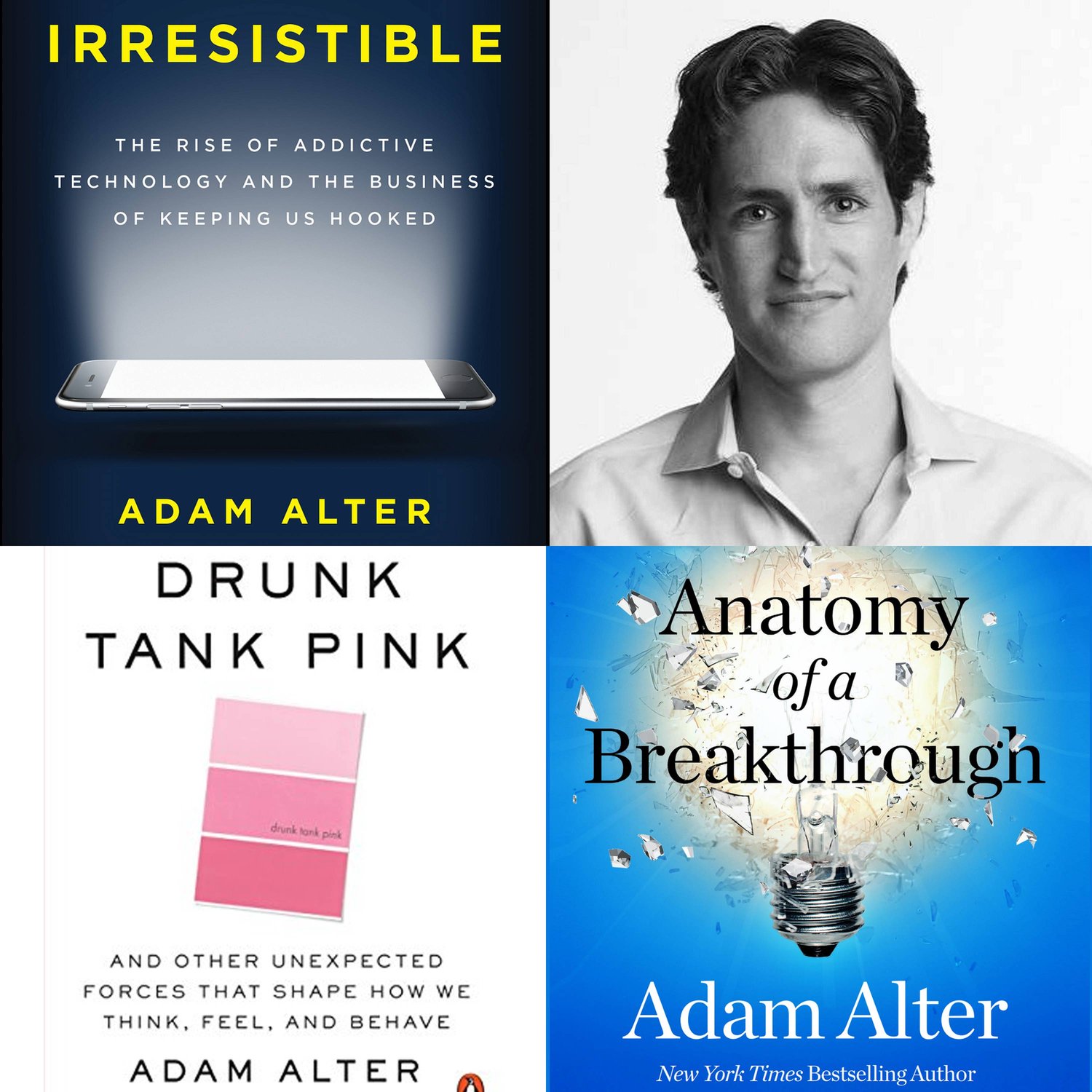
Highlights - ADAM ALTER - Author of Irresistible: The Rise of Addictive Technology - Professor NYU’s Stern School of Business
"So there are different parts of the brain responsible for liking and wanting. So wanting is unbelievably robust in the brain. In other words, the neural connections are very robust, and wanting is what drives most addictive behavior. It's when you really want something, like you want a cigarette, you want alcohol, a drug, whatever it is, that's your poison. And actually, screens for some people as well. The liking part. When you say to people, what does it mean to be addicted to something? A lot of people say it's, 'You really like it so much that you just keep going back to it.'It's actually not about liking. What actually happens is that, in the beginning, liking and wanting go together. So let's pick something like a cigarette. If you start smoking in the beginning, you like the experience of smoking, and you also really want the nicotine. You want the cigarette. They go hand in hand, but eventually what happens is the liking is much more fragile, and it decays. And what's left is the wanting. And often in the absence of liking, it's kind of like a bad relationship. Like if you're in a bad romantic relationship, it starts out being about wanting and liking, but then the liking goes away, and you just kind of want to be with a person, even though you know it's undermining your welfare. That's effectively addiction. The real skill today is figuring out how to create space between you and your tech devices."Adam Alter is a Professor of Marketing at NYU’s Stern School of Business and the Robert Stansky Teaching Excellence Faculty Fellow. Adam is the New York Times bestselling author of Irresistible: The Rise of Addictive Technology and the Business of Keeping Us Hooked, and Drunk Tank Pink, which investigates how hidden forces in the world around us shape our thoughts, feelings, and behaviors. He has written for the New York Times, New Yorker, The Atlantic, Washington Post, and a host of TV, radio, and publications. His next book Anatomy of a Breakthrough will be published in 2023.https://adamalterauthor.com www.penguin.co.uk/books/431386/irresistible-by-adam-alter/9781784701659 www.simonandschuster.com/books/Anatomy-of-a-Breakthrough/Adam-Alter/9781982182960www.stern.nyu.edu/faculty/bio/adam-alterwww.creativeprocess.info www.oneplanetpodcast.org IG www.instagram.com/creativeprocesspodcast

ADAM ALTER - Author of Irresistible: The Rise of Addictive Technology - Anatomy of a Breakthrough
Adam Alter is a Professor of Marketing at NYU’s Stern School of Business and the Robert Stansky Teaching Excellence Faculty Fellow. Adam is the New York Times bestselling author of Irresistible: The Rise of Addictive Technology and the Business of Keeping Us Hooked, and Drunk Tank Pink, which investigates how hidden forces in the world around us shape our thoughts, feelings, and behaviors. He has written for the New York Times, New Yorker, The Atlantic, Washington Post, and a host of TV, radio, and publications. His next book Anatomy of a Breakthrough will be published in 2023. "So there are different parts of the brain responsible for liking and wanting. So wanting is unbelievably robust in the brain. In other words, the neural connections are very robust, and wanting is what drives most addictive behavior. It's when you really want something, like you want a cigarette, you want alcohol, a drug, whatever it is, that's your poison. And actually, screens for some people as well. The liking part. When you say to people, what does it mean to be addicted to something? A lot of people say it's, 'You really like it so much that you just keep going back to it.'It's actually not about liking. What actually happens is that, in the beginning, liking and wanting go together. So let's pick something like a cigarette. If you start smoking in the beginning, you like the experience of smoking, and you also really want the nicotine. You want the cigarette. They go hand in hand, but eventually what happens is the liking is much more fragile, and it decays. And what's left is the wanting. And often in the absence of liking, it's kind of like a bad relationship. Like if you're in a bad romantic relationship, it starts out being about wanting and liking, but then the liking goes away, and you just kind of want to be with a person, even though you know it's undermining your welfare. That's effectively addiction. The real skill today is figuring out how to create space between you and your tech devices."https://adamalterauthor.com www.penguin.co.uk/books/431386/irresistible-by-adam-alter/9781784701659 www.simonandschuster.com/books/Anatomy-of-a-Breakthrough/Adam-Alter/9781982182960www.stern.nyu.edu/faculty/bio/adam-alterwww.creativeprocess.info www.oneplanetpodcast.org IG www.instagram.com/creativeprocesspodcast

Highlights - NICHOLAS CHRISTAKIS - Author of Blueprint: The Evolutionary Origins of a Good Society - Director of Human Nature Lab, Yale
“We're not attempting to invent super smart AI to replace human cognition. We are inventing dumb AI to supplement human interaction. Are there simple forms of artificial intelligence, simple programming of bots, such that when they are added to groups of humans – because those humans are smart or otherwise positively inclined - that help the humans to help themselves? Can we get groups of people to work better together, for instance, to confront climate change, or to reduce racism online, or to foster innovation within firms?Can we have simple forms of AI that are added into our midst that make us work better together? And the work we're doing in that part of my lab shows that abundantly that's the case. And we published a stream of papers showing that we can do that.” Nicholas Christakis, MD, PhD, MPH, is a social scientist and physician who conducts research in the areas of biosocial science, network science and behavioral genetics. He directs the Human Nature Lab at Yale University and is the co-director of the Yale Institute for Network Science. Dr. Christakis has authored numerous books, including Blueprint: The Evolutionary Origins of a Good Society published in 2019 and Apollo's Arrow: The Profound and Enduring Impact of Coronavirus on the Way We Live published in 2020. In 2009, Christakis was named by TIME magazine to their annual list of the 100 most influential people in the world.Nicholas Christakis: humannaturelab.net/people/nicholas-christakisHuman Nature Lab: humannaturelab.net Yale Institute for Network Science: yins.yale.edusociology.yale.edu/people/nicholas-christakisBlueprint: The Evolutionary Origins of a Good Society Apollo's Arrow: The Profound and Enduring Impact of Coronavirus on the Way We LiveTRELLIS - Suite of software tools for developing, administering, and collecting survey and social network data: trellis.yale.edu.The Atlantic: “How AI Will Rewire Us: For better and for worse, robots will alter humans’ capacity for altruism, love, and friendship”www.creativeprocess.infowww.oneplanetpodcast.org

NICHOLAS CHRISTAKIS - Director of Human Nature Lab, Yale - Author of Blueprint: The Evolutionary Origins of a Good Society
Nicholas Christakis, MD, PhD, MPH, is a social scientist and physician who conducts research in the areas of biosocial science, network science and behavioral genetics. He directs the Human Nature Lab at Yale University and is the co-director of the Yale Institute for Network Science. Dr. Christakis has authored numerous books, including Blueprint: The Evolutionary Origins of a Good Society published in 2019 and Apollo's Arrow: The Profound and Enduring Impact of Coronavirus on the Way We Live published in 2020. In 2009, Christakis was named by TIME magazine to their annual list of the 100 most influential people in the world.“We're not attempting to invent super smart AI to replace human cognition. We are inventing dumb AI to supplement human interaction. Are there simple forms of artificial intelligence, simple programming of bots, such that when they are added to groups of humans – because those humans are smart or otherwise positively inclined - that help the humans to help themselves? Can we get groups of people to work better together, for instance, to confront climate change, or to reduce racism online, or to foster innovation within firms? Can we have simple forms of AI that are added into our midst that make us work better together? And the work we're doing in that part of my lab shows that abundantly that's the case. And we published a stream of papers showing that we can do that.”Nicholas Christakis humannaturelab.net/people/nicholas-christakisHuman Nature Lab: humannaturelab.netYale Institute for Network Science yins.yale.edusociology.yale.edu/people/nicholas-christakisBlueprint: The Evolutionary Origins of a Good Society Apollo's Arrow: The Profound and Enduring Impact of Coronavirus on the Way We LiveTRELLIS - Suite of software tools for developing, administering, and collecting survey and social network data: trellis.yale.edu.The Atlantic: “How AI Will Rewire Us: For better and for worse, robots will alter humans’ capacity for altruism, love, and friendship”www.theatlantic.com/magazine/archive/2019/04/robots-human-relationships/583204/www.creativeprocess.infowww.oneplanetpodcast.org

Highlights - NICK BOSTROM - Author of Superintelligence: Paths, Dangers, Strategies - Founding Director, Future of Humanity Institute, Oxford
"I think what we really face is an even more profound change into this condition where human nature becomes plastic in the sense of malleable, and we then have to think more from the ground up - What is it that ultimately brings value to the world? If you could be literally any kind of being you chose to be, what kind of being would you want to be? What constraints and limitations and flaws would you want to retain because it's part of what makes you, you. And what aspects would you want to improve? If you have like a bad knee, you probably would want to fix the knee. If you're nearsighted, and you could just snap your fingers and have perfect eyesight, that seems pretty attractive, but then if you keep going in that direction, eventually, it's not clear that you're human anymore. You become some sort of idealized ethereal being, and maybe that's a desirable ultimate destiny for humanity, but I'm not sure we would want to rush there immediately. Maybe we would want to take a kind of slower path to get to that destination."Nick Bostrom is a Swedish-born philosopher with a background in theoretical physics, computational neuroscience, logic, and artificial intelligence, as well as philosophy. He is the most-cited professional philosopher in the world under the age of 50.He is a Professor at Oxford University, where he heads the Future of Humanity Institute as its founding director. He is the author of some 200 publications, including Anthropic Bias, Global Catastrophic Risks, Human Enhancement, and Superintelligence: Paths, Dangers, Strategies, a New York Times bestseller which helped spark a global conversation about the future of AI. He has also published a series of influential papers, including ones that introduced the simulation argument and the concept of existential risk.Bostrom’s academic work has been translated into more than 30 languages. He is a repeat main TED speaker and has been on Foreign Policy’s Top 100 Global Thinkers list twice and was included in Prospect’s World Thinkers list, the youngest person in the top 15. As a graduate student he dabbled in stand-up comedy on the London circuit, but he has since reconnected with the heavy gloom of his Swedish roots.https://nickbostrom.comhttps://www.fhi.ox.ac.ukwww.creativeprocess.infowww.oneplanetpodcast.org