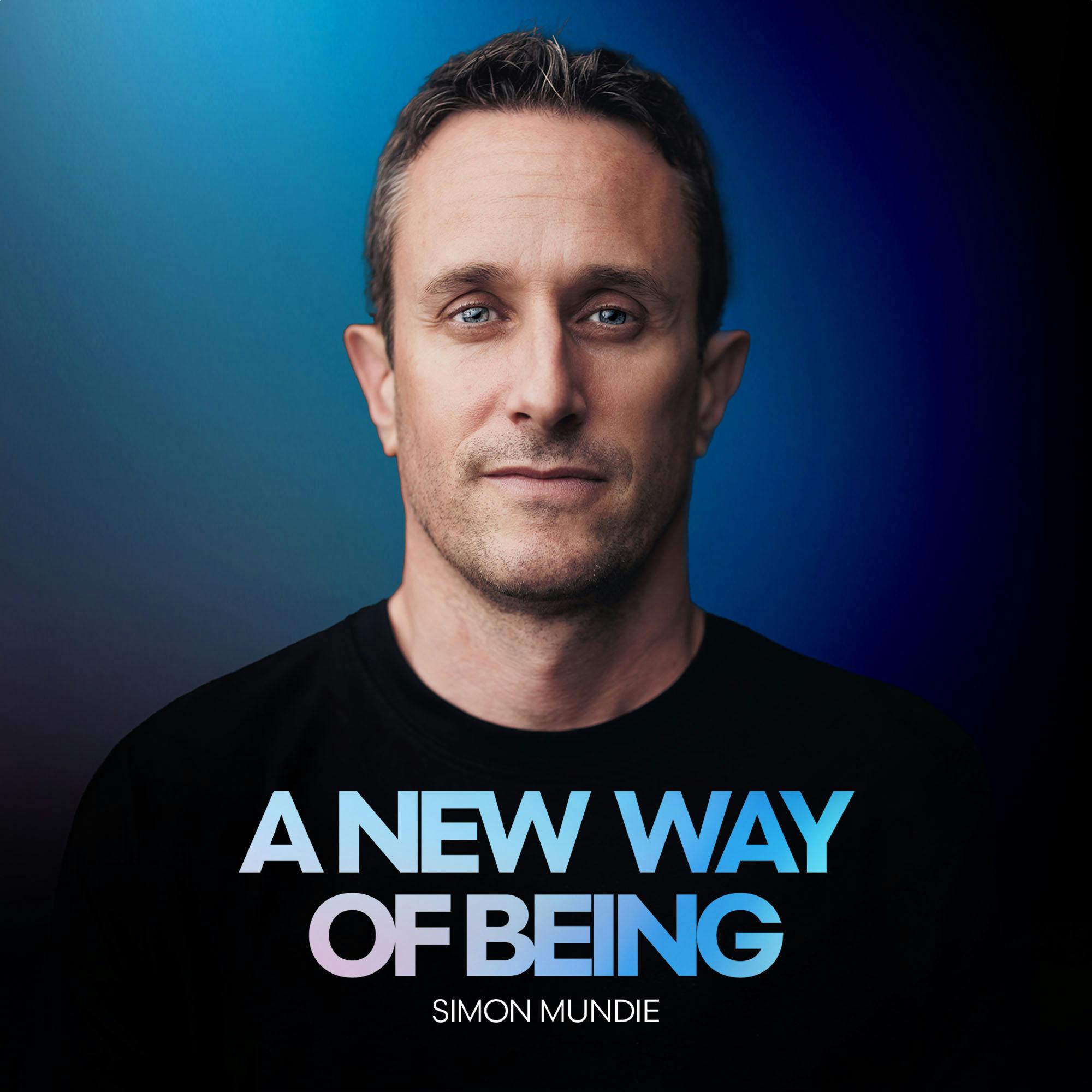
A New Way of Being
473 episodes — Page 10 of 10
Ep 23Stoicism: Ryan Holiday
How to use the ancient Greek philosophy of stoicism to cope with the ups and downs of life.See clearly, act correctly and endure and accept the world as it is; these are the three key pillars of stoicism.Best-selling author Holiday teaches us how to use this ancient Greek philosophy to cope with the ups and downs of life, and explains why we should focus on objective judgement, unselfish action and willing acceptance of all external events. @simonmundie**For the newsletter - head to simonmundie.comHosted on Acast. See acast.com/privacy for more information. Hosted on Acast. See acast.com/privacy for more information.
Ep 22Character: Bill Beswick
Taking full responsibility for your life and facing challenges head on with the former Manchester United psychologistBeswick is one of the world's best-respected sports psychologists, having worked at United under Sir Alex Ferguson during the club's dominant reign. In this episode he talks about developing a ‘fighter mindset’; ie taking full responsibility for your life and facing the inevitable challenges it throws up head-on.This contrasts with a ‘victim mindset’, in which someone make excuses and blames others, and the world, for all their misfortunes. I would be hugely grateful if you could share this episode - it makes a big difference.@simonmundie**For the newsletter - head to simonmundie.comHosted on Acast. See acast.com/privacy for more information. Hosted on Acast. See acast.com/privacy for more information.
Ep 21How our environment shapes us: John McAvoy
Judging behaviour but not the person with the ex-armed robber reformed through sport in high-security prison.Having grown up around some of the most notorious criminals in the country, McAvoy spent ten years in the UK's highest security prisons – where he had an epiphany that transformed his outlook and identity. McAvoy – now a Nike-sponsored Iron Man athlete – proves that a leopard can change its spots, and that while we can judge someone’s behaviour, we may want to reconsider being too quick to judge the person, because the environment we find ourselves in has a profound impact on our life choices. I would be hugely grateful if you could find time to leave DTMTS a rating (ideally 5* and a kind review if you have time). It would make a huge difference.@simonmundie**For the newsletter - head to simonmundie.comHosted on Acast. See acast.com/privacy for more information. Hosted on Acast. See acast.com/privacy for more information.
Ep 20No regrets: Alex Danson
Giving your everything and having no regrets with Olympic gold medal winning hockey player Alex DansonAfter suffering a traumatic brain injury in 2018, Danson – one of Britain’s greatest ever hockey players – shares why the most difficult aspect of her accident was the loss of identity, connection and purpose.She has now come to see what happened as a gift that has enabled her to have more balance in her life, and value what is truly important; her health and relationships.**For the newsletter - head to simonmundie.comHosted on Acast. See acast.com/privacy for more information. Hosted on Acast. See acast.com/privacy for more information.
Ep 19Emotional Intelligence: Daniel Goleman
Why emotional intelligence can be more important than IQ.An internationally known psychologist and author of the best-selling book Emotional Intelligence, Goleman explains how EQ is about understanding ourselves better, managing our own emotions, and using empathy to better understand the feelings and emotions of the people around us. In this episode, he explains how we can develop it – as well as how mindfulness can contribute to that process – and, ultimately, why emotional intelligence can be even more important than IQ.Hosted on Acast. See acast.com/privacy for more information. Hosted on Acast. See acast.com/privacy for more information.
Ep 18Knowing yourself: Damon Hill
Resolving complicated feelings, recognising patterns and understanding yourself better – with the 1996 Formula One World Champion.When Hill secured the Formula1 Championship in 1996, he ensured that he and his father Graham Hill entered the record books as the first father-and-son pair to win the sport’s biggest prize.But sadly, his dad was not there to celebrate the achievement; he tragically died in a plane crash in 1975 shortly after retiring from the sport.After his own retirement, Hill went on a journey of self-discovery, battling depression and questions of identity – as well as understanding and unpicking complicated feelings, and patterns that get passed down through the generations. **For the newsletter - head to simonmundie.comHosted on Acast. See acast.com/privacy for more information. Hosted on Acast. See acast.com/privacy for more information.
Ep 17Mindfulness: Andy Puddicombe
How to use mindfulness to thrive with Headspace co-founder and former Buddhist monk Andy PuddicombeMindfulness is about focusing one's awareness on the present moment, while calmly acknowledging and accepting one's feelings, thoughts, and bodily sensations.Puddicombe, former Buddhist monk and founder of Headspace, has arguably done more than anyone to popularise mindfulness. He speaks about how the technique directly applies to sport, but he also goes deep into the ultimate aim of meditation; to achieve enlightenment and reveal 'non-duality'. ***Follow me @simonmundiesimonmundie.com for 'Mundie on Monday' newsletterHosted on Acast. See acast.com/privacy for more information. Hosted on Acast. See acast.com/privacy for more information.
Ep 16Confidence: Sir Chris Hoy
Why having self-doubt is normal and how preparation and perspective are key, with the six-time Olympic gold medalist.Having won six Olympic gold medals during a dazzling cycling career, becoming World Champion 11 times, Hoy is perfectly placed to explain how to develop the right attitude.He explains why looking a fear of failure in the face can be utterly transformative, and how thoughts of winning and losing create pressure. Hosted on Acast. See acast.com/privacy for more information. Hosted on Acast. See acast.com/privacy for more information.
Ep 15Self-acceptance: Billy Monger
The power of accepting yourself and letting go of the need for approval.Billy Monger is a racing driver who, after having both his legs amputated after a crash, was back behind the wheel of a car within a year.Since the accident, he has been thrust into the limelight, but he has not lost sight of what is important; positivity, kindness and authenticity. Hosted on Acast. See acast.com/privacy for more information. Hosted on Acast. See acast.com/privacy for more information.
Ep 14Exploration: Jos Buttler
Exploring your own limits and trusting your own judgement with the England cricketer and World Cup winner.One of England’s greatest cricketers and an integral member of the team that won the World Cup in 2019, Buttler tells how staying in touch with the childlike enthusiasm for what you are doing and by taking delight in exploring your own limits you can tap into your deepest potential.Hosted on Acast. See acast.com/privacy for more information. Hosted on Acast. See acast.com/privacy for more information.
Ep 13Being true to yourself: Sam Warburton
Why being true to yourself is vital to success and happiness with Wales rugby legend‘Being true to yourself’ is something Warburton values highly – and it can as simple as saying no to something that doesn’t feel right, he explains in this episode.The former Wales rugby captain also talks about the importance of knowing yourself and keeping your personal standards as high as possible, the benefit in getting out of your comfort zone, how confidence comes from proper preparation, why facing adversity in life is important, the importance of manners and respect, and how often less is more. www.simonmundie.com - sign up for the Mundie on Monday newsletterHosted on Acast. See acast.com/privacy for more information. Hosted on Acast. See acast.com/privacy for more information.
Ep 12Courage: Ollie Ollerton
Being willing to throw yourself into something without any guarantee of a successful outcome – with the former Special Forces soldier.Ollerton is a former Special Forces soldier turned TV star and author who passed the SAS's gruelling six-month selection process – testing his physical and mental endurance to the limit – before spending six years with the SBS.But it was after leaving the special forces that he came unstuck; the process of getting himself back on track informed many of the life lessons he holds dear, including courage, motivation, purpose, self-doubt and ego. Hosted on Acast. See acast.com/privacy for more information. Hosted on Acast. See acast.com/privacy for more information.
Ep 11Insomnia: Dr Guy Meadows
How to address insomnia and anxious thoughts with the Sleep School founderMeadows uses an approach known as ACT - Acceptance and Commitment Therapy - which teaches you to relate to your uncomfortable feeling and emotions in an often counter-intuitive way. (ACT has helped a number of top sportspeople including Sir Alastair Cook, who talked about it in our earlier episode).This approach is a powerful tool for addressing anxiety in all areas of life. **Sign up for the Mundie on monday newsletter at www.simonmundie.comFollow me on instagram.com/simonmundie/Follow me on twitter.com/simonmundieHosted on Acast. See acast.com/privacy for more information. Hosted on Acast. See acast.com/privacy for more information.
Ep 10Fear: Alex Honnold
How to overcome fear with the legendary Free Solo climber and Oscar winnerAs the saying goes, there’s nothing to fear but fear itself. In this episode, free solo climber Honnold, the man who scaled a 3000 foot vertical cliff without ropes, discusses fear and how to overcome it. His conquering of the awe inspiring El Capitan in America has been described as ‘one of the greatest athletic feats of any kind, ever’ – it was so impressive, they made an Oscar winning film about it called Free Solo. As Honnold recalls his legendary climb, he shares the importance of preparation and visualisation and tells why incremental practice can be used to overcome just about any fear, including social anxiety and fear of public speaking.Hosted on Acast. See acast.com/privacy for more information. Hosted on Acast. See acast.com/privacy for more information.
Ep 9Positivity: Frankie Dettori
The importance of a positive outlook in achieving success is crucial, according to legendary jockey Dettori.While he tells us he aims to be in a positive frame of mind every time he leaves the house, which has contributed to his remarkable longevity, he says it also has a tangible effect on his horses, who can sense the frame of mind he is in and react accordingly.That may well explain how he famously managed to win all seven races in one day at Ascot in 1996, when he lost his sense of 'self' on what was his final ride of the day…Hosted on Acast. See acast.com/privacy for more information. Hosted on Acast. See acast.com/privacy for more information.
Ep 8Hard Work: Sir Alastair Cook
Why all the greats have hard work in common, with the England cricket legend.As well as being England captain, Cook was one of the most prolific batsmen cricket has ever seen.He remains England's most capped player, and is still their leading run scorer in Test matches – and he says it is in a big way down to his work ethic.Here, he gives us tips on managing our inner critics, tells why all the greats have hard work in common, and explains why he would intentionally make himself uncomfortable in training.Hosted on Acast. See acast.com/privacy for more information. Hosted on Acast. See acast.com/privacy for more information.
Ep 7Role model: Kate Richardson-Walsh
Setting a positive example with former Team GB hockey captain and Olympic gold medal winner Kate Richardson-Walsh.As Team GB hockey captain, Richardson-Walsh captained the UK to a historic gold medal at the 2016 Rio Olympics.She talks about actively seeking out other people to learn from, the importance of having tough conversations, and explains why it’s worth finding out how you react to pressure. Hosted on Acast. See acast.com/privacy for more information. Hosted on Acast. See acast.com/privacy for more information.
Ep 6Self-reflection: Jamie Peacock
The value of observing and evaluating yourself in order to grow as a person.Unlike many athletes, rugby league great Peacock made a smooth transition out of the sport upon retiring, thanks in no small part to his ability to separate his personal from his sporting identity.He explains the importance of living your values, what sport teaches you about problem-solving, and the value of observing and evaluating yourself in order to grow as a person. Hosted on Acast. See acast.com/privacy for more information. Hosted on Acast. See acast.com/privacy for more information.
Ep 5Walking: Professor Shane O'Mara
Most of us do it - but almost all of us don’t do it enough. Yes, we're talking about walking. It's hardly news that we are, as a species, too sedentary, and the fact is that we were not designed to spend as much time as we do sitting or slouching around. Walking is what we are designed to do, and our ability to walk long distances helped humans become the dominant species on earth. It helps to protect and repair organs, aids digestion and can turn back the ageing of our brains. Not only that but it's simple and it's good for us - so why aren't we doing it enough? Neuroscientist Shane O’Mara is on a one-man mission to convince us to up our step count. He says that doing so will benefit our muscles, brains and waistline, that our mood will improve and our stress levels will fall - and walking has also been scientifically proven to aid creativity. So if you’re stuck on a problem, going for a brisk walk could well help you on your way to solving your conundrum.**MyTwitter: https://twitter.com/simonmundieInstagram: https://www.instagram.com/simonmundie/Email me: [email protected] for the 'Mundie on Monday' newsletter - featuring three of the best Life Lessons from four years and 250 of these conversations - head to simonmundie.com (where you can also drop me an email)Please do share this episode - it makes a big difference in helping people find this podcast. Much obliged.Hosted on Acast. See acast.com/privacy for more information. Hosted on Acast. See acast.com/privacy for more information.
Ep 4Self-talk: Lucy Gossage
Exploring the stories we tell ourselves and the impact they can have on our lives with Ironman champion and cancer doctor Lucy Gossage.A 13-time Ironman Champion and oncology doctor, Gossage tells us about how she learned to understand how the way she was talking to herself, and the unconscious beliefs she held about herself and the world around her, impacted and hindered her performance. She uncovered her limitations with the help of sports psychologist Helen Davis, who we speak to in the next episode of the series… Hosted on Acast. See acast.com/privacy for more information. Hosted on Acast. See acast.com/privacy for more information.
Ep 3Teams: Frances Houghton
How to create a successful team culture and thrive within it – with the five-time Olympic rower.Over the course of her two decades in the British rowing system, including competing at five Olympic Games and winning three siler medals, Houghton underwent a big evolution that led her to question what is truly important. What she discovered is valuable to anyone wanting to compete, collaborate and cooperate to the best of their ability…Hosted on Acast. See acast.com/privacy for more information. Hosted on Acast. See acast.com/privacy for more information.
Ep 2Circadian rhythms: Professor Satchin Panda
How our circadian rhythms impact our athletic performance, mood and overall health. Dr Panda is Professor at the Salk Institute for Biological Sciences in California – and a leading expert in the field. He argues that developing a robust circadian rhythm is one of the best things you can do for your health – and in this episode he explains exactly how you can do so. He reveals how athletic performance can vary by as much as 26% in the course of a day – and how some top teams are using that to their advantage when playing matches away from home**MyTwitter: https://twitter.com/simonmundieInstagram: https://www.instagram.com/simonmundie/And for the 'Mundie on Monday' newsletter - featuring three of the best Life Lessons from four years and 250 of these conversations - head to simonmundie.com (where you can also drop me an email)Please do share this episode - it makes a big difference in helping people find this podcast. Much obliged.Hosted on Acast. See acast.com/privacy for more information. Hosted on Acast. See acast.com/privacy for more information.
Ep 1A New Way of Being
trailerA New Way of Being is about recognising that we are all innately enough. Most of us don’t always feel that way, but it’s an illusion largely created by identifying with the outdated voice in our heads.And so much stuff out there, including much of the so-called high performance culture, comes from a place of inadequacy. If we are not enough as we are, of course we will expand vast amount of energy trying to BECOME enough in the future. But that’s a trap. We cannot become what we already are, and the search obscures this recognition.Does this mean we become passive, lazy, indifferent and don’t look to do big and important things in the world? Of course not. But crucially the intention is different. We are not seeking to prove our worth. We are choosing to express it.Time for a new way of being, don’t you think? Hosted on Acast. See acast.com/privacy for more information.