A Matter of Degrees
Dr. Leah Stokes, Dr. Katharine Wilkinson
Show overview
A Matter of Degrees has been publishing since 2020, and across the 6 years since has built a catalogue of 55 episodes, alongside 4 trailers or bonus episodes. That works out to roughly 40 hours of audio in total. Releases follow a roughly quarterly cadence, with the show now in its 4th season.
Episodes typically run thirty-five to sixty minutes — most land between 39 min and 52 min — and the run-time is fairly consistent across the catalogue. None of the episodes are flagged explicit by the publisher. It is catalogued as a EN-language Government show.
The show is actively publishing — the most recent episode landed 2 months ago, with 4 episodes already out so far this year. The busiest year was 2021, with 13 episodes published. Published by Dr. Leah Stokes, Dr. Katharine Wilkinson.
From the publisher
Give up your climate guilt. Sharpen your curiosity. Join Dr. Leah Stokes and Dr. Katharine Wilkinson as they tell stories about the powerful forces behind climate change — and the tools we have to fix it. This show makes sense of big climate questions and critical topics. Our episodes are filled with stories of bold climate leadership, groundbreaking campaigns, and people doing their best to be part of the solution. A Matter of Degrees is produced in partnership with The 2035 Initiative at UC Santa Barbara and The All We Can Save Project.
Latest Episodes
View all 55 episodesThe Carbon Wave
Climate Wayfinding
The Long Arc of Climate Action with Gina McCarthy
Gina McCarthy has been at the center of nearly every federal climate fight of the last two decades. She led the EPA during the Obama years. Then, under President Biden, she became the first ever White House National Climate Advisor. In this episode of A Matter of Degrees, we sit down with Gina for a sweeping conversation about the victories, the setbacks, and why the climate story is much longer than any single administration. We cover the collapse of the Waxman-Markey Bill, the strange victory of a Clean Power Plan that was stayed before it started, the rollercoaster of getting the Inflation Reduction Act over the finish line, and what it all means now, as we move to defend all of Gina’s hard-won progress.
Melting ICE: The Climate Movement Defends Democracy
Back in December, the Trump administration sent thousands of Immigration and Customs Enforcement agents into Minnesota. They terrorized communities, took people from their homes, and murdered two American citizens. Climate groups helped lead the resistance. In this episode of A Matter of Degrees, a city stands up to state violence. We bring on Aru Shiney-Ajay, the executive director of the Sunrise Movement, to tell us about leading on the frontlines in Minneapolis. Then we talk to Ben Passer, the McKnight Foundation's Midwest Climate Director, about how preserving democracy is key to climate action. Finally, we chat with Emily Atkin, founder and Editor-in-Chief of HEATED, on the connection between ICE violence and fossil fuels. Resources mentioned in the episode: Read I don't know how to do this and Actually, I do know how to do this by Emily Atkin, and her newsletter, HEATED Read Ben Passer’s essay in Atmos, Lessons from Minnesota: To Preserve Our Planet, We Must Also Preserve Our Democracy Learn more about Minnesota’s 100% clean electricity standard in our previous episode, Minnesota’s Climate Breakthrough
The Only Good Planet
Dr. Kate Marvel builds climate models — digital worlds that simulate our possible futures. They can tell us how hot it will get, how high the seas will rise, and which forests will burn. But they can’t tell us what humans will do next — or how we’ll feel as the planet transforms. In this episode of A Matter of Degrees, we talk with Kate about her new book, Human Nature: Nine Ways to Feel About Our Changing Planet. This conversation has it all: science, feelings, geoengineering, fossil fuel industry mischief, and even witches.
The Sun Is Having Its Day
”In the midst of a lot of big, bad things happening, there's one big good thing happening on planet Earth right now.” Today on A Matter of Degrees, we’re bringing back the podcast’s very first guest — legendary activist and author Bill McKibben. Bill’s latest book, Here Comes the Sun: A Last Chance for the Climate and a Fresh Chance for Civilization, shows how clean energy can create a healthier, safer, more prosperous world. Bill is also organizing “Sun Day” – a national day of action on September 21st to celebrate the power of clean energy. You can get involved in an event in your area by visiting SunDay.earth In this episode, Bill takes us through the history of solar – how it became the cheapest energy on earth, its potential to transform our lives, and how we can harness it to heal our planet.
Cash In On Clean Tech Incentives (Before It's Too Late)
Donald Trump’s so-called “One Big Beautiful Bill Act” took a sledgehammer to U.S. climate policy, including tax credits for clean cars and appliances. These incentives were helping people cut pollution, lower their energy bills, and make their homes more comfortable. Trump’s bill eliminates the credits by the end of this year. Wait, don’t change the channel—because these incentives haven’t expired yet! So for the next few months, there is a federally-funded BLOWOUT SALE on clean tech. Shop until your energy bills drop! In this episode of A Matter of Degrees, we break down which credits are expiring, what they can do for you, and how to take advantage of them before they’re gone. We also dive into how the incentives were cutting pollution, improving people’s lives, and transforming our economy. Finally, we talk about what’s next for household electrification and how we can continue to make progress under the current administration. To help tell these stories, we bring on Ingrid Malmgren, the Senior Policy Director at Plug In America. Visit pluginamerica.org to learn more about electric vehicles and how to get one before federal incentives expire at the end of September. We’re also joined by Sarah Gracia, a Senior Go Solar Help Desk Associate at Solar United Neighbors. Visit solarunitedneighbors.org/help-desk to find resources to help you get solar panels on your home and save on your energy bills. Lastly, we hear from Saul Griffith, engineer, inventor, and clean energy entrepreneur. Saul Griffith’s new book “Plug In! The Electrification Handbook” walks you through how to electrify your home, save money, and cut climate pollution.
The Climate Crisis Is Breaking Insurance
Thousands of people lost their homes in the Los Angeles wildfires. Now, they’re looking to their insurance companies to help them rebuild. But as the world warms, disasters like these are becoming more frequent and more severe, exposing an insurance system that isn’t equipped to cover the rising damages. In Los Angeles, people who lost everything were left to fend for themselves. This is just the latest example of how insurance is failing to keep up with climate change. In this episode of A Matter of Degrees, we’re joined by Dave Jones, California’s Insurance Commissioner from 2011 to 2018 and the current Director for the Climate Risk Initiative at UC Berkeley’s Center for Law, Energy & the Environment. We dive into how the climate crisis is breaking our home insurance system, what we can do to fix it, and how to make fossil fuel companies pay their fair share.
Presenting: L.A. Wildfires: Rebuilding for a Hotter, Drier Future
This week we are sharing a special bonus episode from Boiling Point, a new podcast produced by the LA Times and hosted by climate columnist Sammy Roth. This new audio series explores how climate change is impacting California and the American West. The first episode focuses on the recent wildfires in Los Angeles and what they mean for the future of the city. Sammy talks with Kelly Sanders, an engineering professor at USC and former White House advisor on energy policy, about how Los Angeles can look at resilience as it builds back. Boiling Point is an LA Times Studios podcast and releases new episodes every Thursday.
S4 Ep 6Leah Stokes: 2024 Schneider Award Winner
In this episode of A Matter of Degrees, we partner with Climate One to share an inspiring conversation between Dr. Leah Stokes and Greg Dalton, the founder and co-host of Climate One, when Leah received the 2024 Stephen H. Schneider Award for Outstanding Climate Science Communication in December. And as a double feature, this episode also includes a conversation between writer, historian, and activist Rebecca Solnit and Climate One co-host Ariana Brocious from 2023. This episode was also released on the Climate One podcast.
S4 Ep 5Cleaning Up Industry
The industrial sector makes all of our physical stuff – the clothes we wear, the cars we drive, the buildings we live in, and much more. It’s also one of the biggest sources of U.S. climate pollution. In this episode of A Matter of Degrees, we bring on guest host Dr. Eric Masanet, world-leading industrial decarbonization expert, to break down how we can clean up this sector. We are also joined by Rebecca Dell, the Senior Director of the Industry Program at the ClimateWorks Foundation, Nick Santero, the Sustainability Science Team Lead at Rivian, and Yinka Bode-George, the Founder, President, and CEO of Sustain Our Future.
S4 Ep 4The Questions We Ask Matter with Dr. Ayana Elizabeth Johnson
In this live episode of A Matter of Degrees, Dr. Katharine Wilkinson joined Dr. Ayana Elizabeth Johnson for a conversation on Ayana’s new book, What If We Get It Right, Visions of Climate Futures. The need to build community and the imperative to imagine the futures we want are now more important than ever. These topics are at the heart of this discussion, which took place before the election at the Carter Center in Atlanta. This episode was also released on the What If We Get It Right? podcast.
What the Election Means for Climate Policy
The election is over, but climate progress doesn’t have to be. How can we continue to push for equitable climate policies and defend current investments in clean energy? What are the state and local avenues for addressing the climate crisis? In this live episode of A Matter of Degrees, Dr. Leah Stokes is joined by Adrian Deveny, the Former Director of Energy and Environmental Policy for Senate Majority Leader Charles Schumer. Leah and Adrian talk through what the results of the 2024 election mean for the future of our planet and how we can keep moving forward. Mentioned in this episode is the All We Can Save Project’s facilitation guide for coming together in community during this moment.
Minnesota’s Climate Breakthrough
On this episode of A Matter of Degrees, we tell the story of how a powerful grassroots movement, ambitious lawmakers, and Governor Tim Walz turned Minnesota into a climate leader. Then, we talk about using the Minnesota blueprint to make change everywhere else. It’s election season, but the federal government isn’t the only venue for climate action. States also play a huge role in our path to healing the planet. Beyond just cutting pollution within their borders, states implement our big federal climate laws, test new innovative policy ideas, and build momentum for nationwide progress. And the center of gravity for state-level climate action isn’t California, or Washington, or Massachusetts. It’s Minnesota. Over the past few years, Minnesota has done more on climate than perhaps any other state, anchored by a nation-leading clean electricity standard that requires 100% carbon-free power by 2040. But these wins didn’t happen overnight, and they didn’t come easy. To tell Minnesota’s success story, we spoke to Aimee Witteman, the Vice President of Investment and Network at Rewiring America, Chris Conry, the Managing Director of 100 Percent MN, and Rep. Jamie Long, the Majority Leader of the Minnesota State House of Representatives.
Project 2025
Project 2025 has been all over the news lately. But what exactly is this conservative playbook for the Federal government? And what does it mean for climate policy? This week, A Matter of Degrees dives into the Heritage Foundation's plan for the next conservative presidential administration. Just weeks away from a pivotal election, we lay out what Project 2025 would mean for the climate movement and how it threatens to unwind all the progress we’ve made. This 900+ page document covers a lot of ground and, as we found out, the devil is in the details. In this episode, we walk through the policies that define Project 2025’s vision for a Federal government that’s fundamentally anti-government, anti-science, and anti-equity and justice. We also take a hard look at just exactly how we got here: who wrote Project 2025, who benefits from it, and what we can learn from it. To discuss all of this, and much more, we spoke to Abbie Dillen, the President of EarthJustice, Zoya Teirstein, a staff writer at GRIST, and Jade Begay, a member of the White House Environmental Justice Advisory Council. Also referenced in this episode is Zoya’s article on Project 2025 and climate policy and The Second Half Of The Decisive Decade: Potential U.S. Pathways On Climate, Jobs, And Health report by Energy Innovation, which models the impact of different climate and energy policy pathways starting in January 2025.
A Look Back at Vice President Kamala Harris on Climate Leadership, Justice, and Solutions
bonusWelcome back for a special bonus episode of A Matter of Degrees! In this episode, we are taking a look back at our live conversation with Vice President Kamala Harris. Since we are once again at a pivotal moment for the climate, we wanted to kick off our new season by looking back at this incredible climate leader who has played a key role in getting us where we are today. We are excited to share this inspiring conversation with you one more time… “We must understand that we are in a very specific moment in time, and this window is going to shut on us. But it doesn’t have to shut on us, if we act.” — Vice President Kamala Harris on A Matter of Degrees Ahead of the 2022 midterm elections, we had the honor of joining Vice President Harris live in San Francisco for a conversation about climate leadership, justice, and solutions. She underlined the critical importance of the current moment, and the need to act with urgency in service of what’s still possible. This episode covers a lot of ground, from electric school buses and job creation to the direct link between reproductive justice and climate justice. Vice President Harris shares her personal motivation for doing environmental work, and explains what the Biden-Harris administration is doing on the policy front. Leah cites this academic study on the intergenerational impacts of prenatal exposure to air pollution and points us to a tool for calculating EV and heat pump rebates in the Inflation Reduction Act. Katharine references the Pentagon’s 2014 report describing climate change as a “threat multiplier.” We hope you find the conversation informative and inspiring. Fun fact, this is our first appearance in front of a live audience!
S3 Ep 14Live Episode: A Climate Book Talk with Rebecca Solnit
bonusWelcome back for a bonus episode of A Matter of Degrees! We were lucky enough to sit down with Rebecca Solnit — author, historian, and climate activist — to talk about her newest climate anthology, Not Too Late. Leah and Nikayla Jefferson both wrote essays for the book and joined Rebecca onstage for this live episode. Not Too Late gets at the tough, vital work of culture change and features diverse climate voices from around the world. In this episode, Leah, Nikayla, and Rebecca hold an expansive conversation about hope, love, and how to stay engaged in the climate movement. Rebecca has written over twenty books on a diverse range of topics, including feminism, history, social change, and of course climate change. Our listeners may also recognize Nikayla as a guest host from our episodes on “The Stages of Black Climate Grief” and “The Journey of Justice40”. Read up on the top ten social drivers of climate change that Nikayla mentions in the episode. For more inspiration, visit the Not Too Late website, created by Rebecca Solnit and Thelma Young Lutunatabua to shift the climate story from despair to possibility. Discover meaningful ways to take climate action via The All We Can Save Project.
S3 Ep 10The Tongass: A Way Forward For The Forest
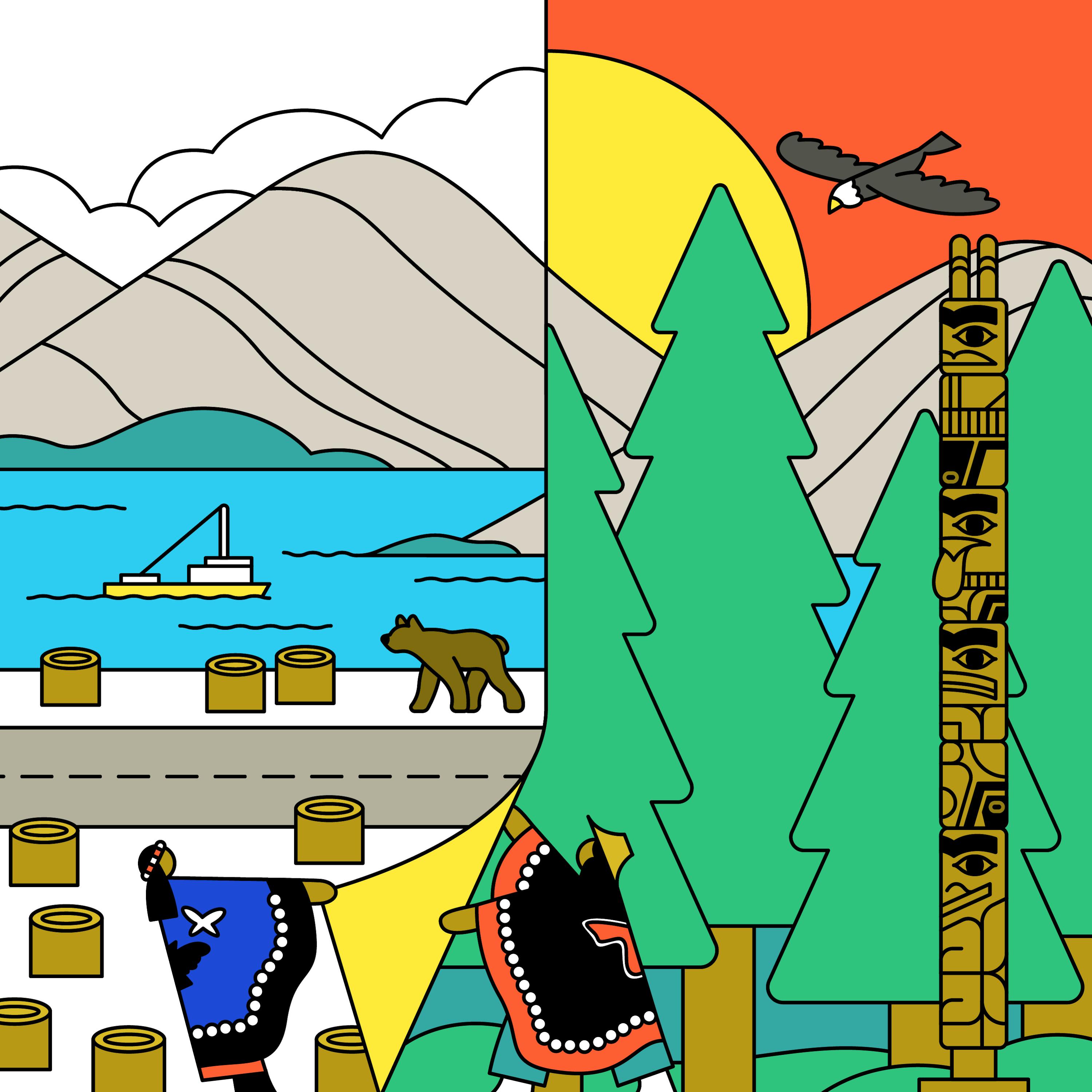
In our season three finale, we’re transporting listeners to the largest intact temperate rainforest in the world and a vital carbon sink: the Tongass. Katharine and Leah investigate the impact of decades of industrial logging in Southeast Alaska and political debates pitting ecology against economy. We learn from the Tlingit, Haida, and Tsimshian people, who have lived on and with these lands for more than 10,000 years. And we discover how a new chapter for the Tongass is taking root. This episode features Marina Anderson, deputy director of the Sustainable Southeast Partnership, and President Richard Chalyee Éesh Peterson of the Central Council of the Tlingit & Haida Indian Tribes of Alaska. Marina and Richard describe the boom-and-bust extractive economy of the past, and they share new collaborative approaches that are now moving Southeast Alaska towards a regenerative economy — in which the forest and local communities can thrive. Along the way, we learn about key moments in the history of the Tongass: its designation as a National Forest in 1907, major pulp mill contracts in the 1950s, the 1971 Alaska Native Claims Settlement Act, the 1990 Tongass Timber Reform Act, the 2001 Roadless Area Conservation Rule, and now, the modern-day Southeast Alaska Sustainability Strategy. It’s a powerful tale that ultimately points to so much possibility. As this season comes to a close, we’re curious: Have the stories on our show inspired you to take climate action or set new climate goals? We’d love to know! Please take a moment to fill out our first-ever listener survey. Thank you to all our guests, listeners, supporters, production team, and amazing guest hosts, Nikayla Jefferson and Paasha Mahdavi, for a great season! While we’re away, you can discover more meaningful ways to take part in the climate story via The All We Can Save Project.

S3 Ep 9The Journey of Justice40
In his early days in office, President Biden took executive action to deliver environmental justice. Are those policies delivering justice in practice? This episode, we talk to EJ activists and federal policymakers about Biden’s Justice40 Initiative, which directs 40% of the overall benefits of climate investments toward disadvantaged communities. We explore the decades of organizing that led to this moment, and what it will take now to fulfill the promise of the Justice40 Initiative. Our special guest host Nikayla Jefferson is back for this episode! She speaks with former People United for Sustainable Housing (PUSH Buffalo) Executive Director Rahwa Ghirmatzion; Evergreen Action policy lead Rachel Patterson; and Shalanda Baker, Director of the Office of Economic Impact and Diversity at the U.S. Department of Energy (DOE), who leads the agency’s Justice40 implementation. In this episode, Rachel cites the Council on Environmental Quality’s Climate and Economic Justice Screening Tool that aims to identify “disadvantaged communities.” Nikayla names the nonprofit, Justice 40 Accelerator, which is helping community groups building capacity to access government funding. Check out the NY Renews coalition, also mentioned in this episode, and listen to another episode hosted by Nikayla, The Stages of Black Climate Grief. Next time we follow Katharine on her journey to the Tongass, a vast temperate rainforest in Alaska and a massive carbon sink, alongside the people and creatures who call it home. Subscribe wherever you get your podcasts and don’t miss a single episode this season!
The ‘Darth Vader’ of Electric Utilities
Electric utilities are falling short on climate action. To explain why, we’re bringing back our season one finale. This episode features former utilities regulator Kris Mayes, who recently won a nail-biting election to become the second woman and first openly LGBTQ attorney general of Arizona. Go, Kris! Since season one, Leah has been busy investigating utilities’ past and present role spreading climate denial, doubt, and delay. You can read the paper she co-wrote on the topic last fall, and discover the dirty truth about your electric utility and their climate plans in the report she released with Sierra Club. Spoiler alert, Arizona Public Service is one of the top offenders. We can’t wait to share the whole sordid tale with you one more time… In 2013, a series of attack ads blitzed television sets across Arizona. They warned of a dire threat to senior citizens. Who was the villain? Solar energy. These ads came from front groups funded by Arizona Public Service, the state’s largest utility. It was part of a years-long fight against rooftop solar that turned ugly. “I mean, for Star Wars fans, APS became the Darth Vader of electric utilities in America. I mean, I think you would be hard-pressed to find a utility that behaved as badly as APS did in the last decade,” explains former regulator Kris Mayes. But APS isn’t alone. It’s a prime example of how monopoly utilities abuse their power to influence regulatory decisions and slow clean-energy progress. What happens if your electric utility starts doing things you don’t agree with? What if they start attacking solar and proposing to build more and more fossil gas plants? What if they actively resist clean energy progress? Well, you don’t get a choice. You have to buy electricity, and you have to buy it from them. As a customer you’re funding that. In this episode, we’ll detail how it happened in Arizona – and how public pressure forced APS to come clean. Featured in this episode: Ryan Randazzo, Kris Mayes, David Pomerantz.