
80,000 Hours Podcast
354 episodes — Page 5 of 8

Introducing 80k After Hours
Today we're launching a new podcast called 80k After Hours. Like this show it’ll mostly still explore the best ways to do good — and some episodes will be even more laser-focused on careers than most original episodes. But we’re also going to widen our scope, including things like how to solve pressing problems while also living a happy and fulfilling life, as well as releases that are just fun, entertaining or experimental. It’ll feature: Conversations between staff on the 80,000 Hours team More eclectic formats and topics — one episode could be a structured debate about 'human challenge trials', the next a staged reading of a play about the year 2750 Niche content for specific audiences, such as high-school students, or active participants in the effective altruism community Extras and outtakes from interviews on the original feed 80,000 Hours staff interviewed on other podcasts Audio versions of our new articles and research You can find it by searching for 80k After Hours in whatever podcasting app you use, or by going to 80000hours.org/after-hours-podcast.
#121 – Matthew Yglesias on avoiding the pundit's fallacy and how much military intervention can be used for good
If you read polls saying that the public supports a carbon tax, should you believe them? According to today's guest — journalist and blogger Matthew Yglesias — it's complicated, but probably not. Links to learn more, summary and full transcript. Interpreting opinion polls about specific policies can be a challenge, and it's easy to trick yourself into believing what you want to believe. Matthew invented a term for a particular type of self-delusion called the 'pundit's fallacy': "the belief that what a politician needs to do to improve his or her political standing is do what the pundit wants substantively." If we want to advocate not just for ideas that would be good if implemented, but ideas that have a real shot at getting implemented, we should do our best to understand public opinion as it really is. The least trustworthy polls are published by think tanks and advocacy campaigns that would love to make their preferred policy seem popular. These surveys can be designed to nudge respondents toward the desired result — for example, by tinkering with question wording and order or shifting how participants are sampled. And if a poll produces the 'wrong answer', there's no need to publish it at all, so the 'publication bias' with these sorts of surveys is large. Matthew says polling run by firms or researchers without any particular desired outcome can be taken more seriously. But the results that we ought to give by far the most weight are those from professional political campaigns trying to win votes and get their candidate elected because they have both the expertise to do polling properly, and a very strong incentive to understand what the public really thinks. The problem is, campaigns run these expensive surveys because they think that having exclusive access to reliable information will give them a competitive advantage. As a result, they often don’t publish the findings, and instead use them to shape what their candidate says and does. Journalists like Matthew can call up their contacts and get a summary from people they trust. But being unable to publish the polling itself, they're unlikely to be able to persuade sceptics. When assessing what ideas are winners, one thing Matthew would like everyone to keep in mind is that politics is competitive, and politicians aren't (all) stupid. If advocating for your pet idea were a great way to win elections, someone would try it and win, and others would copy. One other thing to check that's more reliable than polling is real-world experience. For example, voters may say they like a carbon tax on the phone — but the very liberal Washington State roundly rejected one in ballot initiatives in 2016 and 2018. Of course you may want to advocate for what you think is best, even if it wouldn't pass a popular vote in the face of organised opposition. The public's ideas can shift, sometimes dramatically and unexpectedly. But at least you'll be going into the debate with your eyes wide open. In this extensive conversation, host Rob Wiblin and Matthew also cover: • How should a humanitarian think about US military interventions overseas? • From an 'effective altruist' perspective, was the US wrong to withdraw from Afghanistan? • Has NATO ultimately screwed over Ukrainians by misrepresenting the extent of its commitment to their independence? • What philosopher does Matthew think is underrated? • How big a risk is ubiquitous surveillance? • What does Matthew think about wild animal suffering, anti-ageing research, and autonomous weapons? • And much more Chapters:Rob’s intro (00:00:00)The interview begins (00:02:05)Autonomous weapons (00:04:42)India and the US (00:07:25)Evidence-backed interventions for reducing the harm done by racial prejudices (00:08:38)Factory farming (00:10:44)Wild animal suffering (00:12:41)Vaccine development (00:15:20)Anti-ageing research (00:16:27)Should the US develop a semiconductor industry? (00:19:13)What we should do about various existential risks (00:21:58)What governments should do to stop the next pandemic (00:24:00)Comets and supervolcanoes (00:31:30)Nuclear weapons (00:34:25)Advances in AI (00:35:46)Surveillance systems (00:38:45)How Matt thinks about public opinion research (00:43:22)Issues with trusting public opinion polls (00:51:18)The influence of prior beliefs (01:05:53)Loss aversion (01:12:19)Matt's take on military adventurism (01:18:54)How military intervention looks as a humanitarian intervention (01:29:12)Where Matt does favour military intervention (01:38:27)Why smart people disagree (01:44:24)The case for NATO taking an active stance in Ukraine (01:57:34)One Billion Americans (02:08:02)Matt’s views on the effective altruism community (02:11:46)Matt’s views on the longtermist community (02:19:48)Matt’s struggle to become more of a rationalist (02:22:42)Megaprojects (02:26:20)The impact of Matt’s work (02:32:28)Matt’s philosophical views (02:47:58)The value of formal education (02:56:59)Worst thing Matt’s ever advocated for

#120 – Audrey Tang on what we can learn from Taiwan’s experiments with how to do democracy
In 2014 Taiwan was rocked by mass protests against a proposed trade agreement with China that was about to be agreed without the usual Parliamentary hearings. Students invaded and took over the Parliament. But rather than chant slogans, instead they livestreamed their own parliamentary debate over the trade deal, allowing volunteers to speak both in favour and against.Instead of polarising the country more, this so-called 'Sunflower Student Movement' ultimately led to a bipartisan consensus that Taiwan should open up its government. That process has gradually made it one of the most communicative and interactive administrations anywhere in the world.Today's guest — programming prodigy Audrey Tang — initially joined the student protests to help get their streaming infrastructure online. After the students got the official hearings they wanted and went home, she was invited to consult for the government. And when the government later changed hands, she was invited to work in the ministry herself.Links to learn more, summary and full transcript. During six years as the country's 'Digital Minister' she has been helping Taiwan increase the flow of information between institutions and civil society and launched original experiments trying to make democracy itself work better. That includes developing new tools to identify points of consensus between groups that mostly disagree, building social media platforms optimised for discussing policy issues, helping volunteers fight disinformation by making their own memes, and allowing the public to build their own alternatives to government websites whenever they don't like how they currently work. As part of her ministerial role Audrey also sets aside time each week to help online volunteers working on government-related tech projects get the help they need. How does she decide who to help? She doesn't — that decision is made by members of an online community who upvote the projects they think are best. According to Audrey, a more collaborative mentality among the country's leaders has helped increase public trust in government, and taught bureaucrats that they can (usually) trust the public in return. Innovations in Taiwan may offer useful lessons to people who want to improve humanity's ability to make decisions and get along in large groups anywhere in the world. We cover: • Why it makes sense to treat Facebook as a nightclub • The value of having no reply button, and of getting more specific when you disagree • Quadratic voting and funding • Audrey’s experiences with the Sunflower Student Movement • Technologies Audrey is most excited about • Conservative anarchism • What Audrey’s day-to-day work looks like • Whether it’s ethical to eat oysters • And much more Chapters:Rob’s intro (00:00:00)The interview begins (00:02:04)Global crisis of confidence in government (00:07:06)Treating Facebook as a nightclub (00:10:55)Polis (00:13:48)The value of having no reply button (00:24:33)The value of getting more specific (00:26:13)Concerns with Polis (00:30:40)Quadratic voting and funding (00:42:16)Sunflower Student Movement (00:55:24)Promising technologies (01:05:44)Conservative anarchism (01:22:21)What Audrey’s day-to-day work looks like (01:33:54)Taiwanese politics (01:46:03)G0v (01:50:09)Rob’s outro (02:05:09)Producer: Keiran HarrisAudio mastering: Ben CordellTranscriptions: Katy Moore
#43 Classic episode - Daniel Ellsberg on the institutional insanity that maintains nuclear doomsday machines
Rebroadcast: this episode was originally released in September 2018.In Stanley Kubrick’s iconic film Dr. Strangelove, the American president is informed that the Soviet Union has created a secret deterrence system which will automatically wipe out humanity upon detection of a single nuclear explosion in Russia. With US bombs heading towards the USSR and unable to be recalled, Dr Strangelove points out that “the whole point of this Doomsday Machine is lost if you keep it a secret – why didn’t you tell the world, eh?” The Soviet ambassador replies that it was to be announced at the Party Congress the following Monday: “The Premier loves surprises”. Daniel Ellsberg - leaker of the Pentagon Papers which helped end the Vietnam War and Nixon presidency - claims in his book The Doomsday Machine: Confessions of a Nuclear War Planner that Dr. Strangelove might as well be a documentary. After attending the film in Washington DC in 1964, he and a colleague wondered how so many details of their nuclear planning had leaked. Links to learn more, summary and full transcript. The USSR did in fact develop a doomsday machine, Dead Hand, which probably remains active today. If the system can’t contact military leaders, it checks for signs of a nuclear strike, and if it detects them, automatically launches all remaining Soviet weapons at targets across the northern hemisphere. As in the film, the Soviet Union long kept Dead Hand completely secret, eliminating any strategic benefit, and rendering it a pointless menace to humanity. You might think the United States would have a more sensible nuclear launch policy. You’d be wrong. As Ellsberg explains, based on first-hand experience as a nuclear war planner in the 50s, that the notion that only the president is able to authorize the use of US nuclear weapons is a carefully cultivated myth. The authority to launch nuclear weapons is delegated alarmingly far down the chain of command – significantly raising the chance that a lone wolf or communication breakdown could trigger a nuclear catastrophe. The whole justification for this is to defend against a ‘decapitating attack’, where a first strike on Washington disables the ability of the US hierarchy to retaliate. In a moment of crisis, the Russians might view this as their best hope of survival. Ostensibly, this delegation removes Russia’s temptation to attempt a decapitating attack – the US can retaliate even if its leadership is destroyed. This strategy only works, though, if the tell the enemy you’ve done it. Instead, since the 50s this delegation has been one of the United States most closely guarded secrets, eliminating its strategic benefit, and rendering it another pointless menace to humanity. Strategically, the setup is stupid. Ethically, it is monstrous. So – how was such a system built? Why does it remain to this day? And how might we shrink our nuclear arsenals to the point they don’t risk the destruction of civilization? Daniel explores these questions eloquently and urgently in his book. Today we cover: • Why full disarmament today would be a mistake and the optimal number of nuclear weapons to hold • How well are secrets kept in the government? • What was the risk of the first atomic bomb test? • Do we have a reliable estimate of the magnitude of a ‘nuclear winter’? Get this episode by subscribing to our podcast on the world’s most pressing problems and how to solve them: type 80,000 Hours into your podcasting app. The 80,000 Hours Podcast is produced by Keiran Harris.

#35 Classic episode - Tara Mac Aulay on the audacity to fix the world without asking permission
Rebroadcast: this episode was originally released in June 2018. How broken is the world? How inefficient is a typical organisation? Looking at Tara Mac Aulay’s life, the answer seems to be ‘very’. At 15 she took her first job - an entry-level position at a chain restaurant. Rather than accept her place, Tara took it on herself to massively improve the store’s shambolic staff scheduling and inventory management. After cutting staff costs 30% she was quickly promoted, and at 16 sent in to overhaul dozens of failing stores in a final effort to save them from closure. That’s just the first in a startling series of personal stories that take us to a hospital drug dispensary where pharmacists are wasting a third of their time, a chemotherapy ward in Bhutan that’s killing its patients rather than saving lives, and eventually the Centre for Effective Altruism, where Tara becomes CEO and leads it through start-up accelerator Y Combinator. In this episode Tara shows how the ability to do practical things, avoid major screw-ups, and design systems that scale, is both rare and precious. Links to learn more, summary and full transcript. People with an operations mindset spot failures others can't see and fix them before they bring an organisation down. This kind of resourcefulness can transform the world by making possible critical projects that would otherwise fall flat on their face. But as Tara's experience shows they need to figure out what actually motivates the authorities who often try to block their reforms. We explore how people with this skillset can do as much good as possible, what 80,000 Hours got wrong in our article 'Why operations management is one of the biggest bottlenecks in effective altruism’, as well as: • Tara’s biggest mistakes and how to deal with the delicate politics of organizational reform. • How a student can save a hospital millions with a simple spreadsheet model. • The sociology of Bhutan and how medicine in the developing world often makes things worse rather than better. • What most people misunderstand about operations, and how to tell if you have what it takes. • And finally, operations jobs people should consider applying for. Get this episode by subscribing to our podcast on the world’s most pressing problems and how to solve them: search for '80,000 Hours' in your podcasting app. The 80,000 Hours Podcast is produced by Keiran Harris.

#67 Classic episode – David Chalmers on the nature and ethics of consciousness
Rebroadcast: this episode was originally released in December 2019. What is it like to be you right now? You're seeing this text on the screen, smelling the coffee next to you, and feeling the warmth of the cup. There’s a lot going on in your head — your conscious experience. Now imagine beings that are identical to humans, but for one thing: they lack this conscious experience. If you spill your coffee on them, they’ll jump like anyone else, but inside they'll feel no pain and have no thoughts: the lights are off. The concept of these so-called 'philosophical zombies' was popularised by today’s guest — celebrated philosophy professor David Chalmers — in order to explore the nature of consciousness. In a forthcoming book he poses a classic 'trolley problem': "Suppose you have a conscious human on one train track, and five non-conscious humanoid zombies on another. If you do nothing, a trolley will hit and kill the conscious human. If you flip a switch to redirect the trolley, you can save the conscious human, but in so doing kill the five non-conscious humanoid zombies. What should you do?" Many people think you should divert the trolley, precisely because the lack of conscious experience means the moral status of the zombies is much reduced or absent entirely. So, which features of consciousness qualify someone for moral consideration? One view is that the only conscious states that matter are those that have a positive or negative quality, like pleasure and suffering. But Dave’s intuitions are quite different. Links to learn more, summary and full transcript. Instead of zombies he asks us to consider 'Vulcans', who can see and hear and reflect on the world around them, but are incapable of experiencing pleasure or pain. Now imagine a further trolley problem: suppose you have a normal human on one track, and five Vulcans on the other. Should you divert the trolley to kill the five Vulcans in order to save the human? Dave firmly believes the answer is no, and if he's right, pleasure and suffering can’t be the only things required for moral status. The fact that Vulcans are conscious in other ways must matter in itself. Dave is one of the world's top experts on the philosophy of consciousness. He helped return the question 'what is consciousness?' to the centre stage of philosophy with his 1996 book 'The Conscious Mind', which argued against then-dominant materialist theories of consciousness. This comprehensive interview, at over four hours long, outlines each contemporary theory of consciousness, what they have going for them, and their likely ethical implications. Those theories span the full range from illusionism, the idea that consciousness is in some sense an 'illusion', to panpsychism, according to which it's a fundamental physical property present in all matter. These questions are absolutely central for anyone who wants to build a positive future. If insects were conscious our treatment of them could already be an atrocity. If computer simulations of people will one day be conscious, how will we know, and how should we treat them? And what is it about consciousness that matters, if anything? Dave Chalmers is probably the best person on the planet to ask these questions, and Rob & Arden cover this and much more over the course of what is both our longest ever episode, and our personal favourite so far. Get this episode by subscribing to our show on the world’s most pressing problems and how to solve them: search for 80,000 Hours in your podcasting app. The 80,000 Hours Podcast is produced by Keiran Harris.
#59 Classic episode - Cass Sunstein on how change happens, and why it's so often abrupt & unpredictable
Rebroadcast: this episode was originally released in June 2019. It can often feel hopeless to be an activist seeking social change on an obscure issue where most people seem opposed or at best indifferent to you. But according to a new book by Professor Cass Sunstein, they shouldn't despair. Large social changes are often abrupt and unexpected, arising in an environment of seeming public opposition. The Communist Revolution in Russia spread so swiftly it confounded even Lenin. Seventy years later the Soviet Union collapsed just as quickly and unpredictably. In the modern era we have gay marriage, #metoo and the Arab Spring, as well as nativism, Euroskepticism and Hindu nationalism. How can a society that so recently seemed to support the status quo bring about change in years, months, or even weeks? Sunstein — co-author of Nudge, Obama White House official, and by far the most cited legal scholar of the late 2000s — aims to unravel the mystery and figure out the implications in his new book How Change Happens. He pulls together three phenomena which social scientists have studied in recent decades: preference falsification, variable thresholds for action, and group polarisation. If Sunstein is to be believed, together these are a cocktail for social shifts that are chaotic and fundamentally unpredictable.Links to learn more, summary and full transcript. In brief, people constantly misrepresent their true views, even to close friends and family. They themselves aren't quite sure how socially acceptable their feelings would have to become, before they revealed them, or joined a campaign for social change. And a chance meeting between a few strangers can be the spark that radicalises a handful of people, who then find a message that can spread their views to millions. According to Sunstein, it's "much, much easier" to create social change when large numbers of people secretly or latently agree with you. But 'preference falsification' is so pervasive that it's no simple matter to figure out when that's the case. In today's interview, we debate with Sunstein whether this model of cultural change is accurate, and if so, what lessons it has for those who would like to shift the world in a more humane direction. We discuss: • How much people misrepresent their views in democratic countries. • Whether the finding that groups with an existing view tend towards a more extreme position would stand up in the replication crisis. • When is it justified to encourage your own group to polarise? • Sunstein's difficult experiences as a pioneer of animal rights law. • Whether activists can do better by spending half their resources on public opinion surveys. • Should people be more or less outspoken about their true views? • What might be the next social revolution to take off? • How can we learn about social movements that failed and disappeared? • How to find out what people really think. Get this episode by subscribing to our podcast on the world’s most pressing problems: type 80,000 Hours into your podcasting app. Or read the transcript on our site. The 80,000 Hours Podcast is produced by Keiran Harris.

#119 – Andrew Yang on our very long-term future, and other topics most politicians won’t touch
Andrew Yang — past presidential candidate, founder of the Forward Party, and leader of the 'Yang Gang' — is kind of a big deal, but is particularly popular among listeners to The 80,000 Hours Podcast. Maybe that's because he's willing to embrace topics most politicians stay away from, like universal basic income, term limits for members of Congress, or what might happen when AI replaces whole industries. Links to learn more, summary and full transcript. But even those topics are pretty vanilla compared to our usual fare on The 80,000 Hours Podcast. So we thought it’d be fun to throw Andrew some stranger or more niche questions we hadn't heard him comment on before, including: 1. What would your ideal utopia in 500 years look like? 2. Do we need more public optimism today? 3. Is positively influencing the long-term future a key moral priority of our time? 4. Should we invest far more to prevent low-probability risks? 5. Should we think of future generations as an interest group that's disenfranchised by their inability to vote? 6. The folks who worry that advanced AI is going to go off the rails and destroy us all... are they crazy, or a valuable insurance policy? 7. Will people struggle to live fulfilling lives once AI systems remove the economic need to 'work'? 8. Andrew is a huge proponent of ranked-choice voting. But what about 'approval voting' — where basically you just get to say “yea” or “nay” to every candidate that's running — which some experts prefer? 9. What would Andrew do with a billion dollars to keep the US a democracy? 10. What does Andrew think about the effective altruism community? 11. What's one thing we should do to reduce the risk of nuclear war? 12. Will Andrew's new political party get Trump elected by splitting the vote, the same way Nader got Bush elected back in 2000? As it turns out, Rob and Andrew agree on a lot, so the episode is less a debate than a chat about ideas that aren’t mainstream yet... but might be one day. They also talk about: • Andrew’s views on alternative meat • Whether seniors have too much power in American society • Andrew’s DC lobbying firm on behalf of humanity • How the rest of the world could support the US • The merits of 18-year term limits • What technologies Andrew is most excited about • How much the US should spend on foreign aid • Persistence and prevalence of inflation in the US economy • And plenty more Chapters:Rob’s intro (00:00:00)The interview begins (00:01:38)Andrew’s hopes for the year 2500 (00:03:10)Tech over the next century (00:07:03)Utopia for realists (00:10:41)Most likely way humanity fails (00:12:43)What Andrew would do with a billion dollars (00:14:44)Approval voting vs. ranked-choice voting (00:19:51)The worry that third party candidates could cause harm (00:21:12)Investment in existential risk reduction (00:25:18)Future generations as a disenfranchised interest group (00:30:37)Humanity Forward (00:32:05)Best way the rest of the world could support the US (00:37:17)Recent advances in AI (00:39:56)Artificial general intelligence (00:46:38)The Windfall Clause (00:49:39)The alignment problem (00:53:02)18-year term limits (00:56:21)Effective altruism and longtermism (01:00:44)Persistence and prevalence of inflation in the US economy (01:01:25)Downsides of policies Andrew advocates for (01:02:08)What Andrew would have done differently with COVID (01:04:54)Fighting for attention in the media (01:09:25)Right ballpark level of foreign aid for the US (01:11:15)Government science funding (01:11:58)Nuclear weapons policy (01:15:06)US-China relationship (01:16:20)Human challenge trials (01:18:59)Forecasting accuracy (01:20:17)Upgrading public schools (01:21:41)Producer: Keiran HarrisAudio mastering: Ben CordellTranscriptions: Katy Moore

#118 – Jaime Yassif on safeguarding bioscience to prevent catastrophic lab accidents and bioweapons development
If a rich country were really committed to pursuing an active biological weapons program, there’s not much we could do to stop them. With enough money and persistence, they’d be able to buy equipment, and hire people to carry out the work. But what we can do is intervene before they make that decision. Today’s guest, Jaime Yassif — Senior Fellow for global biological policy and programs at the Nuclear Threat Initiative (NTI) — thinks that stopping states from wanting to pursue dangerous bioscience in the first place is one of our key lines of defence against global catastrophic biological risks (GCBRs). Links to learn more, summary and full transcript. It helps to understand why countries might consider developing biological weapons. Jaime says there are three main possible reasons: 1. Fear of what their adversary might be up to 2. Belief that they could gain a tactical or strategic advantage, with limited risk of getting caught 3. Belief that even if they are caught, they are unlikely to be held accountable In response, Jaime has developed a three-part recipe to create systems robust enough to meaningfully change the cost-benefit calculation. The first is to substantially increase transparency. If countries aren’t confident about what their neighbours or adversaries are actually up to, misperceptions could lead to arms races that neither side desires. But if you know with confidence that no one around you is pursuing a biological weapons programme, you won’t feel motivated to pursue one yourself. The second is to strengthen the capabilities of the United Nations’ system to investigate the origins of high-consequence biological events — whether naturally emerging, accidental or deliberate — and to make sure that the responsibility to figure out the source of bio-events of unknown origin doesn’t fall between the cracks of different existing mechanisms. The ability to quickly discover the source of emerging pandemics is important both for responding to them in real time and for deterring future bioweapons development or use. And the third is meaningful accountability. States need to know that the consequences for getting caught in a deliberate attack are severe enough to make it a net negative in expectation to go down this road in the first place. But having a good plan and actually implementing it are two very different things, and today’s episode focuses heavily on the practical steps we should be taking to influence both governments and international organisations, like the WHO and UN — and to help them maximise their effectiveness in guarding against catastrophic biological risks. Jaime and Rob explore NTI’s current proposed plan for reducing global catastrophic biological risks, and discuss: • The importance of reducing emerging biological risks associated with rapid technology advances • How we can make it a lot harder for anyone to deliberately or accidentally produce or release a really dangerous pathogen • The importance of having multiples theories of risk reduction • Why Jaime’s more focused on prevention than response • The history of the Biological Weapons Convention • Jaime’s disagreements with the effective altruism community • And much more And if you might be interested in dedicating your career to reducing GCBRs, stick around to the end of the episode to get Jaime’s advice — including on how people outside of the US can best contribute, and how to compare career opportunities in academia vs think tanks, and nonprofits vs national governments vs international orgs. Chapters:Rob’s intro (00:00:00)The interview begins (00:02:32)Categories of global catastrophic biological risks (00:05:24)Disagreements with the effective altruism community (00:07:39)Stopping the first person from getting infected (00:11:51)Shaping intent (00:15:51)Verification and the Biological Weapons Convention (00:25:31)Attribution (00:37:15)How to actually implement a new idea (00:50:54)COVID-19: natural pandemic or lab leak? (00:53:31)How much can we rely on traditional law enforcement to detect terrorists? (00:58:20)Constraining capabilities (01:01:24)The funding landscape (01:06:56)Oversight committees (01:14:20)Just winning the argument (01:20:17)NTI’s vision (01:27:39)Suppliers of goods and services (01:33:24)Publishers (01:39:41)Biggest weaknesses of NTI platform (01:42:29)Careers (01:48:31)How people outside of the US can best contribute (01:54:10)Academia vs think tanks vs nonprofits vs government (01:59:21)International cooperation (02:05:40)Best things about living in the US, UK, China, and Israel (02:11:16)Producer: Keiran HarrisAudio mastering: Ryan KesslerTranscriptions: Katy Moore
#117 – David Denkenberger on using paper mills and seaweed to feed everyone in a catastrophe, ft Sahil Shah
If there's a nuclear war followed by nuclear winter, and the sun is blocked out for years, most of us are going to starve, right? Well, currently, probably we would, because humanity hasn't done much to prevent it. But it turns out that an ounce of forethought might be enough for most people to get the calories they need to survive, even in a future as grim as that one.Today's guest is engineering professor Dave Denkenberger, who co-founded the Alliance to Feed the Earth in Disasters (ALLFED), which has the goal of finding ways humanity might be able to feed itself for years without relying on the sun. Over the last seven years, Dave and his team have turned up options from the mundane, like mushrooms grown on rotting wood, to the bizarre, like bacteria that can eat natural gas or electricity itself.Links to learn more, summary and full transcript. One option stands out as potentially able to feed billions: finding a way to eat wood ourselves. Even after a disaster, a huge amount of calories will be lying around, stored in wood and other plant cellulose. The trouble is that, even though cellulose is basically a lot of sugar molecules stuck together, humans can't eat wood. But we do know how to turn wood into something people can eat. We can grind wood up in already existing paper mills, then mix the pulp with enzymes that break the cellulose into sugar and the hemicellulose into other sugars. Another option that shows a lot of promise is seaweed. Buffered by the water around them, ocean life wouldn't be as affected by the lower temperatures resulting from the sun being obscured. Sea plants are also already used to growing in low light, because the water above them already shades them to some extent. Dave points out that "there are several species of seaweed that can still grow 10% per day, even with the lower light levels in nuclear winter and lower temperatures. ... Not surprisingly, with that 10% growth per day, assuming we can scale up, we could actually get up to 160% of human calories in less than a year." Of course it will be easier to scale up seaweed production if it's already a reasonably sized industry. At the end of the interview, we're joined by Sahil Shah, who is trying to expand seaweed production in the UK with his business Sustainable Seaweed. While a diet of seaweed and trees turned into sugar might not seem that appealing, the team at ALLFED also thinks several perfectly normal crops could also make a big contribution to feeding the world, even in a truly catastrophic scenario. Those crops include potatoes, canola, and sugar beets, which are currently grown in cool low-light environments. Many of these ideas could turn out to be misguided or impractical in real-world conditions, which is why Dave and ALLFED are raising money to test them out on the ground. They think it's essential to show these techniques can work so that should the worst happen, people turn their attention to producing more food rather than fighting one another over the small amount of food humanity has stockpiled. In this conversation, Rob, Dave, and Sahil discuss the above, as well as: • How much one can trust the sort of economic modelling ALLFED does • Bacteria that turn natural gas or electricity into protein • How to feed astronauts in space with nuclear power • What individuals can do to prepare themselves for global catastrophes • Whether we should worry about humanity running out of natural resources • How David helped save $10 billion worth of electricity through energy efficiency standards • And much moreChapters:Rob’s intro (00:00:00)The interview begins (00:02:36)Resilient foods recap (00:04:27)Cost effectiveness recap (00:08:07)Turning fiber or wood or cellulose into sugar (00:10:30)Redirecting human-edible food away from animals (00:22:46)Seaweed production (00:26:33)Crops that can handle lower temperatures or lower light (00:35:24)Greenhouses (00:40:51)How much to trust this economic modeling (00:43:50)Global cooperation (00:51:16)People feeding themselves using these methods (00:57:15)NASA and ALLFED (01:04:47)Kinds of catastrophes (01:15:16)Is New Zealand overrated? (01:25:35)Should listeners be doing anything to prepare for possible disasters? (01:28:43)Cost effectiveness of work on EMPs (01:30:43)The future of ALLFED (01:33:34)Opportunities at ALLFED (01:40:49)Why Dave is optimistic around bigger-picture scarcity issues (01:46:58)Energy return on energy invested (01:56:36)Nitrogen and phosphorus (02:03:25)Energy and food prices (02:07:18)Sustainable Seaweed with Sahil Shah (02:21:44)Locusts (02:38:33)The effect of COVID on food supplies (02:44:01)How much food prices would spike in a disaster (02:50:46)How Dave helped to save ~$10 billion worth of energy (02:56:33)What it’s like to live in Alaska (03:03:18)Producer: Keiran HarrisAudio mastering: Ben CordellTranscriptions: Katy Moore

#116 – Luisa Rodriguez on why global catastrophes seem unlikely to kill us all
If modern human civilisation collapsed — as a result of nuclear war, severe climate change, or a much worse pandemic than COVID-19 — billions of people might die.That's terrible enough to contemplate. But what’s the probability that rather than recover, the survivors would falter and humanity would actually disappear for good?It's an obvious enough question, but very few people have spent serious time looking into it -- possibly because it cuts across history, economics, and biology, among many other fields. There's no Disaster Apocalypse Studies department at any university, and governments have little incentive to plan for a future in which their country probably no longer even exists.The person who may have spent the most time looking at this specific question is Luisa Rodriguez — who has conducted research at Rethink Priorities, Oxford University's Future of Humanity Institute, the Forethought Foundation, and now here, at 80,000 Hours.Links to learn more, summary and full transcript. She wrote a series of articles earnestly trying to foresee how likely humanity would be to recover and build back after a full-on civilisational collapse. There are a couple of main stories people put forward for how a catastrophe like this would kill every single human on Earth — but Luisa doesn’t buy them. Story 1: Nuclear war has led to nuclear winter. There's a 10-year period during which a lot of the world is really inhospitable to agriculture. The survivors just aren't able to figure out how to feed themselves in the time period, so everyone dies of starvation or cold. Why Luisa doesn’t buy it: Catastrophes will almost inevitably be non-uniform in their effects. If 80,000 people survive, they’re not all going to be in the same city — it would look more like groups of 5,000 in a bunch of different places. People in some places will starve, but those in other places, such as New Zealand, will be able to fish, eat seaweed, grow potatoes, and find other sources of calories. It’d be an incredibly unlucky coincidence if the survivors of a nuclear war -- likely spread out all over the world -- happened to all be affected by natural disasters or were all prohibitively far away from areas suitable for agriculture (which aren’t the same areas you’d expect to be attacked in a nuclear war). Story 2: The catastrophe leads to hoarding and violence, and in addition to people being directly killed by the conflict, it distracts everyone so much from the key challenge of reestablishing agriculture that they simply fail. By the time they come to their senses, it’s too late -- they’ve used up too much of the resources they’d need to get agriculture going again. Why Luisa doesn’t buy it: We‘ve had lots of resource scarcity throughout history, and while we’ve seen examples of conflict petering out because basic needs aren’t being met, we’ve never seen the reverse. And again, even if this happens in some places -- even if some groups fought each other until they literally ended up starving to death — it would be completely bizarre for it to happen to every group in the world. You just need one group of around 300 people to survive for them to be able to rebuild the species. In this wide-ranging and free-flowing conversation, Luisa and Rob also cover: • What the world might actually look like after one of these catastrophes • The most valuable knowledge for survivors • How fast populations could rebound • ‘Boom and bust’ climate change scenarios • And much more Chapters:Rob’s intro (00:00:00)The interview begins (00:02:37)Recovering from a serious collapse of civilization (00:11:41)Existing literature (00:14:52)Fiction (00:20:42)Types of disasters (00:23:13)What the world might look like after a catastrophe (00:29:09)Nuclear winter (00:34:34)Stuff that might stick around (00:38:58)Grace period (00:42:39)Examples of human ingenuity in tough situations (00:48:33)The most valuable knowledge for survivors (00:57:23)Would people really work together? (01:09:00)Radiation (01:27:08)Learning from the worst pandemics (01:31:40)Learning from fallen civilizations (01:36:30)Direct extinction (01:45:30)Indirect extinction (02:01:53)Rapid recovery vs. slow recovery (02:05:01)Risk of culture shifting against science and tech (02:15:33)Resource scarcity (02:23:07)How fast could populations rebound (02:37:07)Implications for what we ought to do right now (02:43:52)How this work affected Luisa’s views (02:54:00)Boom and bust climate change scenarios (02:57:06)Stagnation and cold wars (03:01:18)How Luisa met her biological father (03:18:23)If Luisa had to change careers (03:40:38)Producer: Keiran HarrisAudio mastering: Ben CordellTranscriptions: Katy Moore
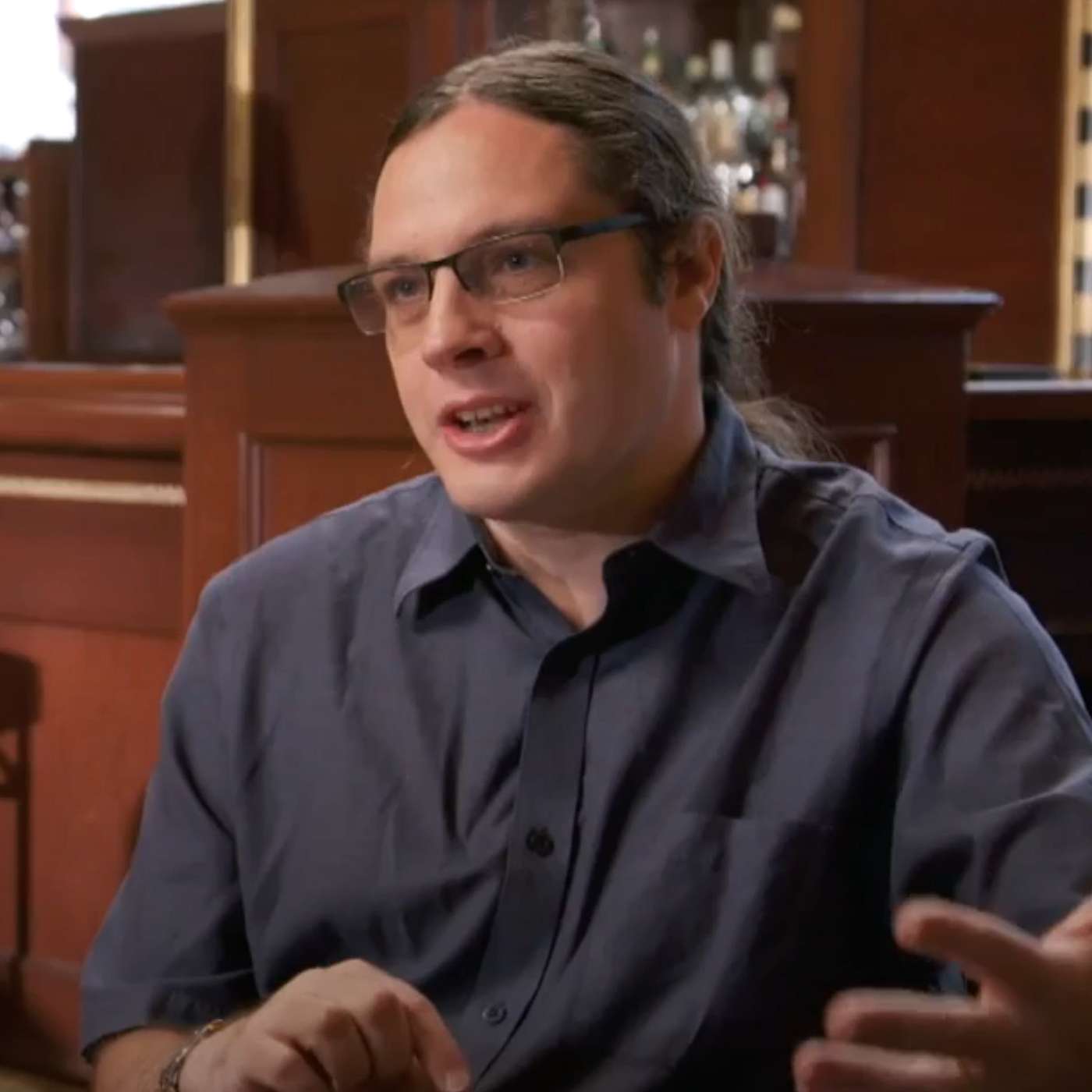
#115 – David Wallace on the many-worlds theory of quantum mechanics and its implications
Quantum mechanics — our best theory of atoms, molecules, and the subatomic particles that make them up — underpins most of modern physics. But there are varying interpretations of what it means, all of them controversial in their own way. Famously, quantum theory predicts that with the right setup, a cat can be made to be alive and dead at the same time. On the face of it, that sounds either meaningless or ridiculous. According to today’s guest, David Wallace — professor at the University of Pittsburgh and one of the world's leading philosophers of physics — there are three broad ways experts react to this apparent dilemma: 1. The theory must be wrong, and we need to change our philosophy to fix it. 2. The theory must be wrong, and we need to change our physics to fix it. 3. The theory is OK, and cats really can in some way be alive and dead simultaneously. (David and Rob do their best to introduce quantum mechanics in the first 35 minutes of the episode, but it isn't the easiest thing to explain via audio alone. So if you need a refresher before jumping in, we recommend checking out our links to learn more, summary and full transcript.) In 1955, physicist Hugh Everett bit the bullet on Option 3 and proposed Wallace's preferred solution to the puzzle: each time it's faced with a ‘quantum choice,’ the universe 'splits' into different worlds. Anything that has a probability greater than zero (from the perspective of quantum theory) happens in some branch — though more probable things happen in far more branches. While not a consensus position, the ‘many-worlds’ approach is one of the top three most popular ways to make sense of what's going on, according to surveys of relevant experts. Setting aside whether it's correct for a moment, one thing that's not often spelled out is what this approach would concretely imply if it were right. Is there a world where Rob (the show's host) can roll a die a million times, and it comes up 6 every time? As David explains in this episode: absolutely, that’s completely possible — and if Rob rolled a die a million times, there would be a world like that. Is there a world where Rob becomes president of the US? David thinks probably not. The things stopping Rob from becoming US president don’t seem down to random chance at the quantum level. Is there a world where Rob deliberately murdered someone this morning? Only if he’s already predisposed to murder — becoming a different person in that way probably isn’t a matter of random fluctuations in our brains. Is there a world where a horse-version of Rob hosts the 80,000 Horses Podcast? Well, due to the chance involved in evolution, it’s plausible that there are worlds where humans didn’t evolve, and intelligent horses have in some sense taken their place. And somewhere, fantastically distantly across the vast multiverse, there might even be a horse named Rob Wiblin who hosts a podcast, and who sounds remarkably like Rob. Though even then — it wouldn’t actually be Rob in the way we normally think of personal identity. Rob and David also cover: • If the many-worlds interpretation is right, should that change how we live our lives? • Are our actions getting more (or less) important as the universe splits into finer and finer threads? • Could we conceivably influence other branches of the multiverse? • Alternatives to the many-worlds interpretation • The practical value of physics today • And much more Chapters:Rob’s intro (00:00:00)The interview begins (00:02:15)Introduction to quantum mechanics (00:08:10)Why does quantum mechanics need an interpretation? (00:19:42)Quantum mechanics in basic language (00:30:37)Quantum field theory (00:33:13)Different theories of quantum mechanics (00:38:49)Many-worlds theory (00:43:14)What stuff actually happens (00:52:09)Can we count the worlds? (00:59:55)Why anyone believes any of these (01:05:01)Changing the physics (01:10:41)Changing the philosophy (01:14:21)Instrumentalism vs. realism (01:21:42)Objections to many-worlds (01:35:26)Why a consensus hasn’t emerged (01:50:59)Practical implications of the many-worlds theory (01:57:11)Are our actions getting more or less important? (02:04:21)Does utility increase? (02:12:02)Could we influence other branches? (02:17:01)Should you do unpleasant things first? (02:19:52)Progress in physics over the last 50 years (02:30:55)Practical value of physics today (02:35:24)Physics careers (02:43:56)Subjective probabilities (02:48:39)The philosophy of time (02:50:14)David’s experience at Oxford (02:59:51) Producer: Keiran HarrisAudio mastering: Ben CordellTranscriptions: Sofia Davis-Fogel and Katy Moore

#114 – Maha Rehman on working with governments to rapidly deliver masks to millions of people
It’s hard to believe, but until recently there had never been a large field trial that addressed these simple and obvious questions:1. When ordinary people wear face masks, does it actually reduce the spread of respiratory diseases?2. And if so, how do you get people to wear masks more often?It turns out the first question is remarkably challenging to answer, but it's well worth doing nonetheless. Among other reasons, the first good trial of this prompted Maha Rehman — Policy Director at the Mahbub Ul Haq Research Centre — as well as a range of others to immediately use the findings to help tens of millions of people across South Asia, even before the results were public.Links to learn more, summary and full transcript. The groundbreaking Bangladesh RCT that inspired her to take action found that: • A 30% increase in mask wearing reduced total infections by 10%. • The effect was more pronounced for surgical masks compared to cloth masks (plus ~50% effectiveness). • Mask wearing also led to an increase in social distancing. • Of all the incentives tested, the only thing that impacted mask wearing was their colour (people preferred blue over green, and red over purple!). The research was done by social scientists at Yale, Berkeley, and Stanford, among others. It applied a program they called ‘NORM’ in half of 600 villages in which about 350,000 people lived. NORM has four components, which the researchers expected would work well for the general public: N: no-cost distribution O: offering information R: reinforcing the message and the information in the field M: modeling Basically you make sure a community has enough masks and you tell them why it’s important to wear them. You also reinforce the message periodically in markets and mosques, and via role models and promoters in the community itself. Tipped off that these positive findings were on the way, Maha took this program and rushed to put it into action in Lahore, Pakistan, a city with a population of about 13 million, before the Delta variant could sweep through the region. Maha had already been doing a lot of data work on COVID policy over the past year, and that allowed her to quickly reach out to the relevant stakeholders — getting them interested and excited. Governments aren’t exactly known for being super innovative, but in March and April Lahore was going through a very deadly third wave of COVID — so the commissioner quickly jumped on this approach, providing an endorsement as well as resources. Together with the original researchers, Maha and her team at LUMS collected baseline data that allowed them to map the mask-wearing rate in every part of Lahore, in both markets and mosques. And then based on that data, they adapted the original rural-focused model to a very different urban setting. The scale of this project was daunting, and in today’s episode Maha tells Rob all about the day-to-day experiences and stresses required to actually make it happen. They also discuss: • The challenges of data collection in this context • Disasters and emergencies she had to respond to in the middle of the project • What she learned from working closely with the Lahore Commissioner's Office • How to get governments to provide you with large amounts of data for your research • How she adapted from a more academic role to a ‘getting stuff done’ role • How to reduce waste in government procurement • And much more Chapters:Rob’s intro (00:00:00)The interview begins (00:01:33)Bangladesh RCT (00:06:24)The NORM model (00:08:34)Results of the experiment (00:10:46)Experimental design (00:20:35)Adapting the findings from Bangladesh to Lahore (00:23:55)Collecting data (00:34:09)Working with governments (00:38:38)Coordination (00:44:53)Disasters and emergencies (00:56:01)Sending out masks to every single person in Lahore (00:59:15)How Maha adapted to her role (01:07:17)Logistic aptitude (01:11:45)Disappointments (01:14:13)Procurement RCT (01:16:51)What we can learn (01:31:18)Producer: Keiran HarrisAudio mastering: Ben CordellTranscriptions: Katy Moore
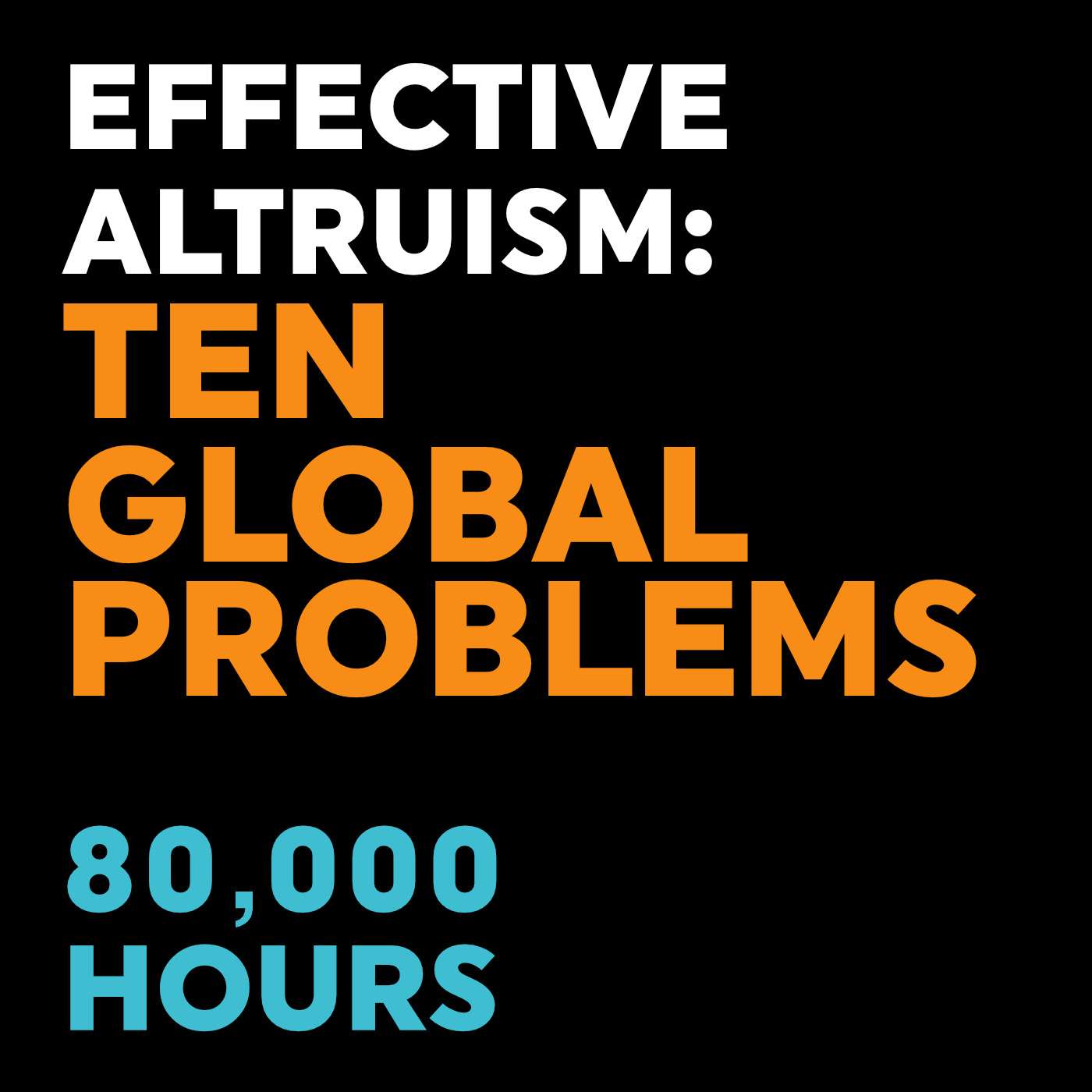
We just put up a new compilation of ten core episodes of the show
We recently launched a new podcast feed that might be useful to you and people you know. It's called Effective Altruism: Ten Global Problems, and it's a collection of ten top episodes of this show, selected to help listeners quickly get up to speed on ten pressing problems that the effective altruism community is working to solve. It's a companion to our other compilation Effective Altruism: An Introduction, which explores the big picture debates within the community and how to set priorities in order to have the greatest impact.These ten episodes cover: The cheapest ways to improve education in the developing world How dangerous is climate change and what are the most effective ways to reduce it? Using new technologies to prevent another disastrous pandemic Ways to simultaneously reduce both police misconduct and crime All the major approaches being taken to end factory farming How advances in artificial intelligence could go very right or very wrong Other big threats to the future of humanity — such as a nuclear war — and how can we make our species wiser and more resilient One problem few even recognise as a problem at all The selection is ideal for people who are completely new to the effective altruist way of thinking, as well as those who are familiar with effective altruism but new to The 80,000 Hours Podcast.If someone in your life wants to get an understanding of what 80,000 Hours or effective altruism are all about, and prefers to listen to things rather than read, this is a great resource to direct them to.You can find it by searching for effective altruism in whatever podcasting app you use, or by going to 80000hours.org/ten.We'd love to hear how you go listening to it yourself, or sharing it with others in your life. Get in touch by emailing [email protected].

#113 – Varsha Venugopal on using gossip to help vaccinate every child in India
Our failure to make sure all kids globally get all of their basic vaccinations leads to 1.5 million child deaths every year.According to today’s guest, Varsha Venugopal, for the great majority this has nothing to do with weird conspiracy theories or medical worries — in India 80% of undervaccinated children are already getting some shots. They just aren't getting all of them, for the tragically mundane reason that life can get in the way.Links to learn more, summary and full transcript. As Varsha says, we're all sometimes guilty of "valuing our present very differently from the way we value the future", leading to short-term thinking whether about getting vaccines or going to the gym. So who should we call on to help fix this universal problem? The government, extended family, or maybe village elders? Varsha says that research shows the most influential figures might actually be local gossips. In 2018, Varsha heard about the ideas around effective altruism for the first time. By the end of 2019, she’d gone through Charity Entrepreneurship’s strategy incubation program, and quit her normal, stable job to co-found Suvita, a non-profit focused on improving the uptake of immunization in India, which focuses on two models: 1. Sending SMS reminders directly to parents and carers 2. Gossip The first one is intuitive. You collect birth registers, digitize the paper records, process the data, and send out personalised SMS messages to hundreds of thousands of families. The effect size varies depending on the context but these messages usually increase vaccination rates by 8-18%. The second approach is less intuitive and isn't yet entirely understood either. Here’s what happens: Suvita calls up random households and asks, “if there were an event in town, who would be most likely to tell you about it?” In over 90% of the cases, the households gave both the name and the phone number of a local ‘influencer’. And when tracked down, more than 95% of the most frequently named 'influencers' agreed to become vaccination ambassadors. Those ambassadors then go on to share information about when and where to get vaccinations, in whatever way seems best to them. When tested by a team of top academics at the Poverty Action Lab (J-PAL) it raised vaccination rates by 10 percentage points, or about 27%. The advantage of SMS reminders is that they’re easier to scale up. But Varsha says the ambassador program isn’t actually that far from being a scalable model as well. A phone call to get a name, another call to ask the influencer join, and boom — you might have just covered a whole village rather than just a single family. Varsha says that Suvita has two major challenges on the horizon: 1. Maintaining the same degree of oversight of their surveyors as they attempt to scale up the program, in order to ensure the program continues to work just as well 2. Deciding between focusing on reaching a few more additional districts now vs. making longer term investments which could build up to a future exponential increase. In this episode, Varsha and Rob talk about making these kinds of high-stakes, high-stress decisions, as well as: • How Suvita got started, and their experience with Charity Entrepreneurship • Weaknesses of the J-PAL studies • The importance of co-founders • Deciding how broad a program should be • Varsha’s day-to-day experience • And much moreChapters:Rob’s intro (00:00:00)The interview begins (00:01:47)The problem of undervaccinated kids (00:03:16)Suvita (00:12:47)Evidence on SMS reminders (00:20:30)Gossip intervention (00:28:43)Why parents aren’t already prioritizing vaccinations (00:38:29)Weaknesses of studies (00:43:01)Biggest challenges for Suvita (00:46:05)Staff location (01:06:57)Charity Entrepreneurship (01:14:37)The importance of co-founders (01:23:23)Deciding how broad a program should be (01:28:29)Careers at Suvita (01:34:11)Varsha’s advice (01:42:30)Varsha’s day-to-day experience (01:56:19)Producer: Keiran HarrisAudio mastering: Ben CordellTranscriptions: Katy Moore
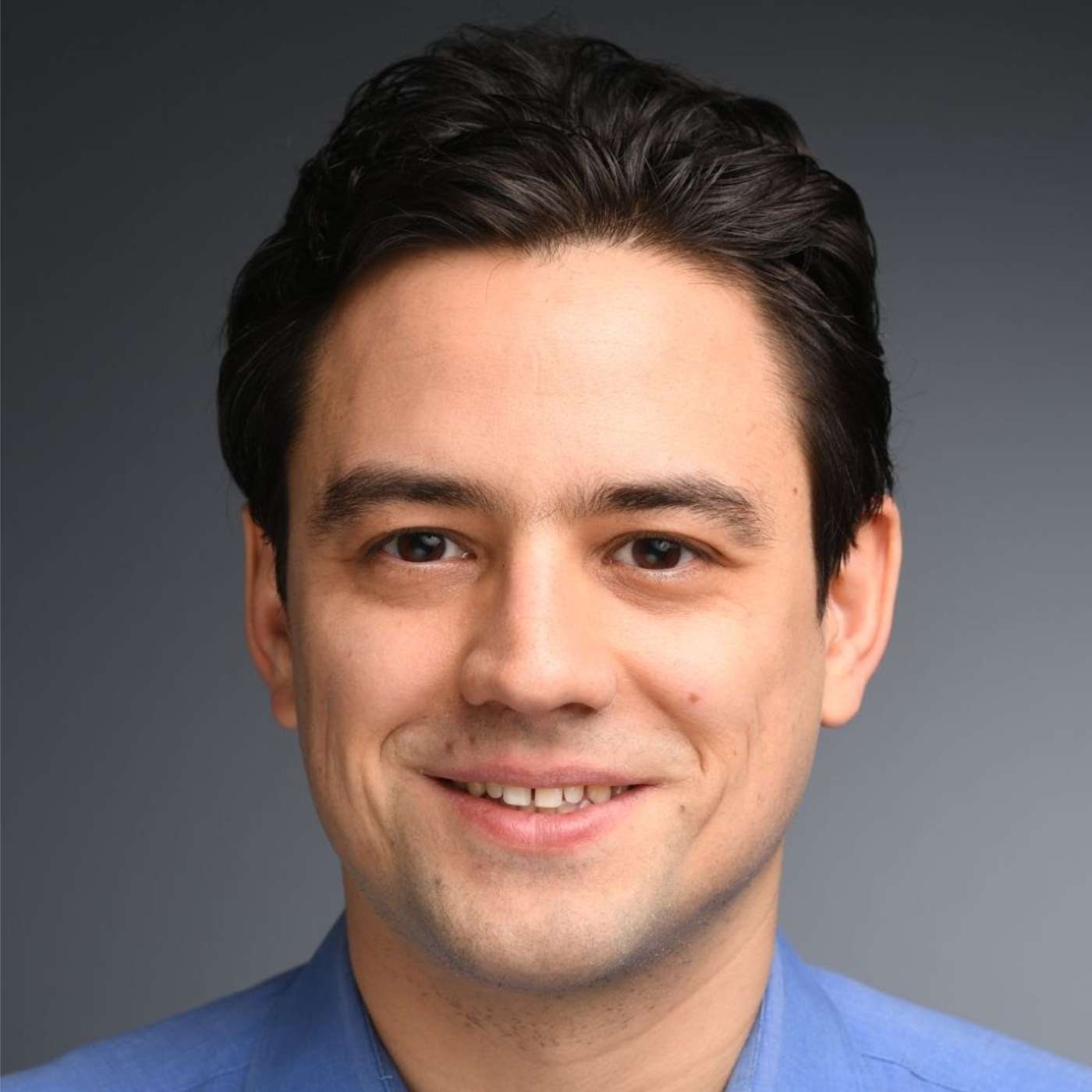
#112 – Carl Shulman on the common-sense case for existential risk work and its practical implications
Preventing the apocalypse may sound like an idiosyncratic activity, and it sometimes is justified on exotic grounds, such as the potential for humanity to become a galaxy-spanning civilisation.But the policy of US government agencies is already to spend up to $4 million to save the life of a citizen, making the death of all Americans a $1,300,000,000,000,000 disaster.According to Carl Shulman, research associate at Oxford University's Future of Humanity Institute, that means you don’t need any fancy philosophical arguments about the value or size of the future to justify working to reduce existential risk — it passes a mundane cost-benefit analysis whether or not you place any value on the long-term future.Links to learn more, summary and full transcript. The key reason to make it a top priority is factual, not philosophical. That is, the risk of a disaster that kills billions of people alive today is alarmingly high, and it can be reduced at a reasonable cost. A back-of-the-envelope version of the argument runs: • The US government is willing to pay up to $4 million (depending on the agency) to save the life of an American. • So saving all US citizens at any given point in time would be worth $1,300 trillion. • If you believe that the risk of human extinction over the next century is something like one in six (as Toby Ord suggests is a reasonable figure in his book The Precipice), then it would be worth the US government spending up to $2.2 trillion to reduce that risk by just 1%, in terms of American lives saved alone. • Carl thinks it would cost a lot less than that to achieve a 1% risk reduction if the money were spent intelligently. So it easily passes a government cost-benefit test, with a very big benefit-to-cost ratio — likely over 1000:1 today. This argument helped NASA get funding to scan the sky for any asteroids that might be on a collision course with Earth, and it was directly promoted by famous economists like Richard Posner, Larry Summers, and Cass Sunstein. If the case is clear enough, why hasn't it already motivated a lot more spending or regulations to limit existential risks — enough to drive down what any additional efforts would achieve? Carl thinks that one key barrier is that infrequent disasters are rarely politically salient. Research indicates that extra money is spent on flood defences in the years immediately following a massive flood — but as memories fade, that spending quickly dries up. Of course the annual probability of a disaster was the same the whole time; all that changed is what voters had on their minds. Carl expects that all the reasons we didn’t adequately prepare for or respond to COVID-19 — with excess mortality over 15 million and costs well over $10 trillion — bite even harder when it comes to threats we've never faced before, such as engineered pandemics, risks from advanced artificial intelligence, and so on. Today’s episode is in part our way of trying to improve this situation. In today’s wide-ranging conversation, Carl and Rob also cover: • A few reasons Carl isn't excited by 'strong longtermism' • How x-risk reduction compares to GiveWell recommendations • Solutions for asteroids, comets, supervolcanoes, nuclear war, pandemics, and climate change • The history of bioweapons • Whether gain-of-function research is justifiable • Successes and failures around COVID-19 • The history of existential risk • And much moreChapters:Rob’s intro (00:00:00)The interview begins (00:01:34)A few reasons Carl isn't excited by strong longtermism (00:03:47)Longtermism isn’t necessary for wanting to reduce big x-risks (00:08:21)Why we don’t adequately prepare for disasters (00:11:16)International programs to stop asteroids and comets (00:18:55)Costs and political incentives around COVID (00:23:52)How x-risk reduction compares to GiveWell recommendations (00:34:34)Solutions for asteroids, comets, and supervolcanoes (00:50:22)Solutions for climate change (00:54:15)Solutions for nuclear weapons (01:02:18)The history of bioweapons (01:22:41)Gain-of-function research (01:34:22)Solutions for bioweapons and natural pandemics (01:45:31)Successes and failures around COVID-19 (01:58:26)Who to trust going forward (02:09:09)The history of existential risk (02:15:07)The most compelling risks (02:24:59)False alarms about big risks in the past (02:34:22)Suspicious convergence around x-risk reduction (02:49:31)How hard it would be to convince governments (02:57:59)Defensive epistemology (03:04:34)Hinge of history debate (03:16:01)Technological progress can’t keep up for long (03:21:51)Strongest argument against this being a really pivotal time (03:37:29)How Carl unwinds (03:45:30)Producer: Keiran HarrisAudio mastering: Ben CordellTranscriptions: Katy Moore

#111 – Mushtaq Khan on using institutional economics to predict effective government reforms
If you’re living in the Niger Delta in Nigeria, your best bet at a high-paying career is probably ‘artisanal refining’ — or, in plain language, stealing oil from pipelines. The resulting oil spills damage the environment and cause severe health problems, but the Nigerian government has continually failed in their attempts to stop this theft. They send in the army, and the army gets corrupted. They send in enforcement agencies, and the enforcement agencies get corrupted. What’s happening here? According to Mushtaq Khan, economics professor at SOAS University of London, this is a classic example of ‘networked corruption’. Everyone in the community is benefiting from the criminal enterprise — so much so that the locals would prefer civil war to following the law. It pays vastly better than other local jobs, hotels and restaurants have formed around it, and houses are even powered by the electricity generated from the oil. Links to learn more, summary and full transcript. In today's episode, Mushtaq elaborates on the models he uses to understand these problems and make predictions he can test in the real world. Some of the most important factors shaping the fate of nations are their structures of power: who is powerful, how they are organized, which interest groups can pull in favours with the government, and the constant push and pull between the country's rulers and its ruled. While traditional economic theory has relatively little to say about these topics, institutional economists like Mushtaq have a lot to say, and participate in lively debates about which of their competing ideas best explain the world around us. The issues at stake are nothing less than why some countries are rich and others are poor, why some countries are mostly law abiding while others are not, and why some government programmes improve public welfare while others just enrich the well connected. Mushtaq’s specialties are anti-corruption and industrial policy, where he believes mainstream theory and practice are largely misguided. Mushtaq's rule of thumb is that when the locals most concerned with a specific issue are invested in preserving a status quo they're participating in, they almost always win out. To actually reduce corruption, countries like his native Bangladesh have to follow the same gradual path the U.K. once did: find organizations that benefit from rule-abiding behaviour and are selfishly motivated to promote it, and help them police their peers. Trying to impose a new way of doing things from the top down wasn't how Europe modernised, and it won't work elsewhere either. In cases like oil theft in Nigeria, where no one wants to follow the rules, Mushtaq says corruption may be impossible to solve directly. Instead you have to play a long game, bringing in other employment opportunities, improving health services, and deploying alternative forms of energy — in the hope that one day this will give people a viable alternative to corruption. In this extensive interview Rob and Mushtaq cover this and much more, including: • How does one test theories like this? • Why are companies in some poor countries so much less productive than their peers in rich countries? • Have rich countries just legalized the corruption in their societies? • What are the big live debates in institutional economics? • Should poor countries protect their industries from foreign competition? • How can listeners use these theories to predict which policies will work in their own countries? Chapters:Rob’s intro (00:00:00)The interview begins (00:01:55)Institutional economics (00:15:37)Anti-corruption policies (00:28:45)Capabilities (00:34:51)Why the market doesn’t solve the problem (00:42:29)Industrial policy (00:46:11)South Korea (01:01:31)Chiang Kai-shek (01:16:01)The logic of political survival (01:18:43)Anti-corruption as a design of your policy (01:35:16)Examples of anti-corruption programs with good prospects (01:45:17)The importance of getting overseas influences (01:56:05)Actually capturing the primary effect (02:03:26)How less developed countries could successfully design subsidies (02:15:14)What happens when horizontal policing isn't possible (02:26:34)Rule of law <--> economic development (02:33:40)Violence (02:38:31)How this applies to developed countries (02:48:57)Policies to help left-behind groups (02:55:39)What to study (02:58:50) Producer: Keiran Harris Audio mastering: Ben Cordell Transcriptions: Sofia Davis-Fogel
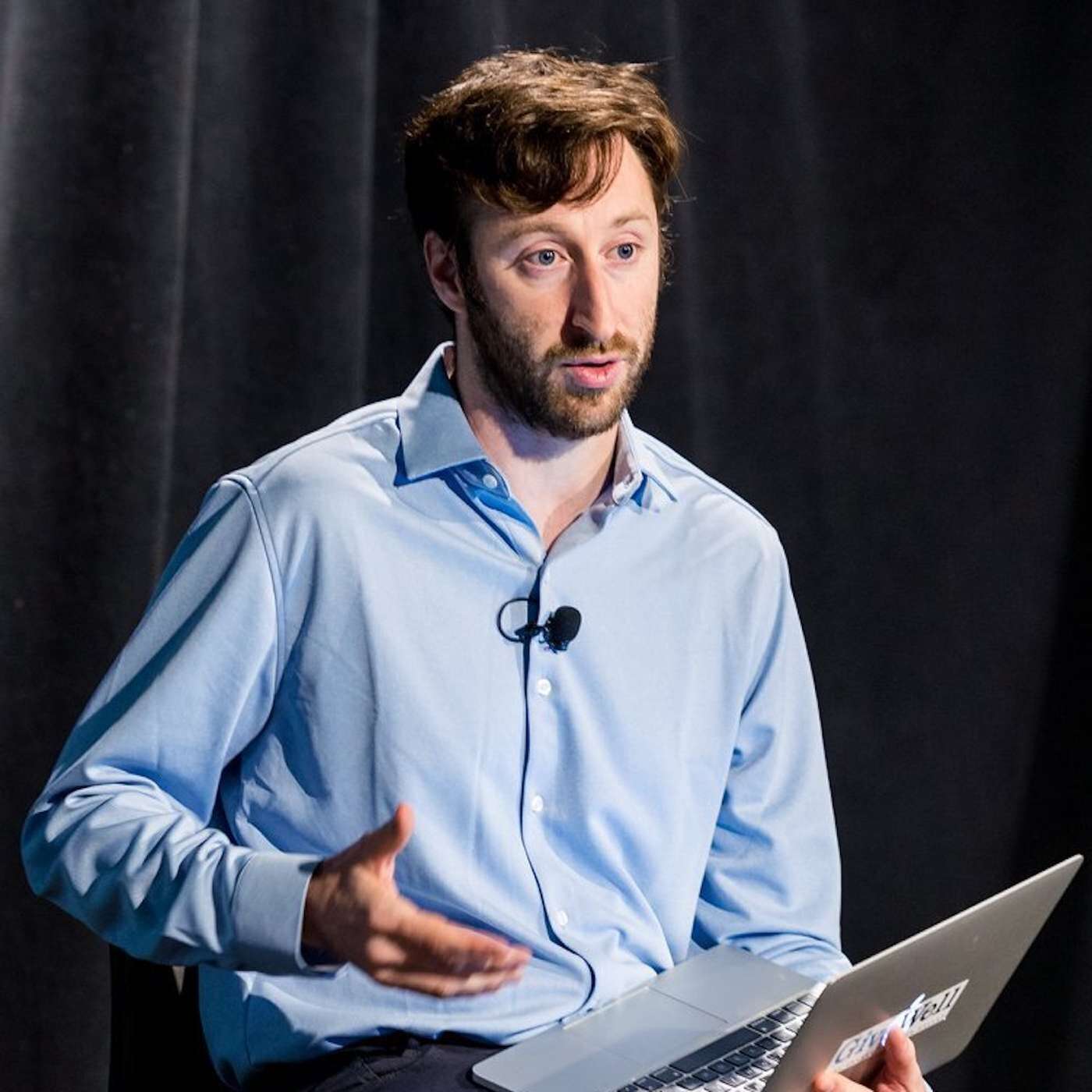
#110 – Holden Karnofsky on building aptitudes and kicking ass
Holden Karnofsky helped create two of the most influential organisations in the effective philanthropy world. So when he outlines a different perspective on career advice than the one we present at 80,000 Hours — we take it seriously.Holden disagrees with us on a few specifics, but it's more than that: he prefers a different vibe when making career choices, especially early in one's career.Links to learn more, summary and full transcript. While he might ultimately recommend similar jobs to those we recommend at 80,000 Hours, the reasons are often different. At 80,000 Hours we often talk about ‘paths’ to working on what we currently think of as the most pressing problems in the world. That’s partially because people seem to prefer the most concrete advice possible. But Holden thinks a problem with that kind of advice is that it’s hard to take actions based on it if your job options don’t match well with your plan, and it’s hard to get a reliable signal about whether you're making the right choices. How can you know you’ve chosen the right cause? How can you know the job you’re aiming for will be helpful to that cause? And what if you can’t get a job in this area at all? Holden prefers to focus on ‘aptitudes’ that you can build in all sorts of different roles and cause areas, which can later be applied more directly. Even if the current role doesn’t work out, or your career goes in wacky directions you’d never anticipated (like so many successful careers do), or you change your whole worldview — you’ll still have access to this aptitude. So instead of trying to become a project manager at an effective altruism organisation, maybe you should just become great at project management. Instead of trying to become a researcher at a top AI lab, maybe you should just become great at digesting hard problems. Who knows where these skills will end up being useful down the road? Holden doesn’t think you should spend much time worrying about whether you’re having an impact in the first few years of your career — instead you should just focus on learning to kick ass at something, knowing that most of your impact is going to come decades into your career. He thinks as long as you’ve gotten good at something, there will usually be a lot of ways that you can contribute to solving the biggest problems. But Holden’s most important point, perhaps, is this: Be very careful about following career advice at all. He points out that a career is such a personal thing that it’s very easy for the advice-giver to be oblivious to important factors having to do with your personality and unique situation. He thinks it’s pretty hard for anyone to really have justified empirical beliefs about career choice, and that you should be very hesitant to make a radically different decision than you would have otherwise based on what some person (or website!) tells you to do. Instead, he hopes conversations like these serve as a way of prompting discussion and raising points that you can apply your own personal judgment to. That's why in the end he thinks people should look at their career decisions through his aptitude lens, the '80,000 Hours lens', and ideally several other frameworks as well. Because any one perspective risks missing something important. Holden and Rob also cover: • Ways to be helpful to longtermism outside of careers • Why finding a new cause area might be overrated • Historical events that deserve more attention • And much more Chapters:Rob’s intro (00:00:00)Holden’s current impressions on career choice for longtermists (00:02:34)Aptitude-first vs. career path-first approaches (00:08:46)How to tell if you’re on track (00:16:24)Just try to kick ass in whatever (00:26:00)When not to take the thing you're excited about (00:36:54)Ways to be helpful to longtermism outside of careers (00:41:36)Things 80,000 Hours might be doing wrong (00:44:31)The state of longtermism (00:51:50)Money pits (01:02:10)Broad longtermism (01:06:56)Cause X (01:21:33)Open Philanthropy (01:24:23)COVID and the biorisk portfolio (01:35:09)Has the world gotten better? (01:51:16)Historical events that deserve more attention (01:55:11)Applied epistemology (02:10:55)What Holden has learned from COVID (02:20:55)What Holden has gotten wrong recently (02:32:59)Having a kid (02:39:50)Producer: Keiran HarrisAudio mastering: Ben CordellTranscriptions: Sofia Davis-Fogel

#109 – Holden Karnofsky on the most important century
Will the future of humanity be wild, or boring? It's natural to think that if we're trying to be sober and measured, and predict what will really happen rather than spin an exciting story, it's more likely than not to be sort of... dull. But there's also good reason to think that that is simply impossible. The idea that there's a boring future that's internally coherent is an illusion that comes from not inspecting those scenarios too closely. At least that is what Holden Karnofsky — founder of charity evaluator GiveWell and foundation Open Philanthropy — argues in his new article series titled 'The Most Important Century'. He hopes to lay out part of the worldview that's driving the strategy and grantmaking of Open Philanthropy's longtermist team, and encourage more people to join his efforts to positively shape humanity's future. Links to learn more, summary and full transcript. The bind is this. For the first 99% of human history the global economy (initially mostly food production) grew very slowly: under 0.1% a year. But since the industrial revolution around 1800, growth has exploded to over 2% a year. To us in 2020 that sounds perfectly sensible and the natural order of things. But Holden points out that in fact it's not only unprecedented, it also can't continue for long. The power of compounding increases means that to sustain 2% growth for just 10,000 years, 5% as long as humanity has already existed, would require us to turn every individual atom in the galaxy into an economy as large as the Earth's today. Not super likely. So what are the options? First, maybe growth will slow and then stop. In that case we today live in the single miniscule slice in the history of life during which the world rapidly changed due to constant technological advances, before intelligent civilization permanently stagnated or even collapsed. What a wild time to be alive! Alternatively, maybe growth will continue for thousands of years. In that case we are at the very beginning of what would necessarily have to become a stable galaxy-spanning civilization, harnessing the energy of entire stars among other feats of engineering. We would then stand among the first tiny sliver of all the quadrillions of intelligent beings who ever exist. What a wild time to be alive! Isn't there another option where the future feels less remarkable and our current moment not so special? While the full version of the argument above has a number of caveats, the short answer is 'not really'. We might be in a computer simulation and our galactic potential all an illusion, though that's hardly any less weird. And maybe the most exciting events won't happen for generations yet. But on a cosmic scale we'd still be living around the universe's most remarkable time. Holden himself was very reluctant to buy into the idea that today’s civilization is in a strange and privileged position, but has ultimately concluded "all possible views about humanity's future are wild". In the conversation Holden and Rob cover each part of the 'Most Important Century' series, including: • The case that we live in an incredibly important time • How achievable-seeming technology - in particular, mind uploading - could lead to unprecedented productivity, control of the environment, and more • How economic growth is faster than it can be for all that much longer • Forecasting transformative AI • And the implications of living in the most important century Get this episode by subscribing to our podcast on the world’s most pressing problems and how to solve them: type 80,000 Hours into your podcasting app. Producer: Keiran Harris Audio mastering: Ben Cordell Transcriptions: Sofia Davis-Fogel

#108 – Chris Olah on working at top AI labs without an undergrad degree
Chris Olah has had a fascinating and unconventional career path. Most people who want to pursue a research career feel they need a degree to get taken seriously. But Chris not only doesn't have a PhD, but doesn’t even have an undergraduate degree. After dropping out of university to help defend an acquaintance who was facing bogus criminal charges, Chris started independently working on machine learning research, and eventually got an internship at Google Brain, a leading AI research group. In this interview — a follow-up to our episode on his technical work — we discuss what, if anything, can be learned from his unusual career path. Should more people pass on university and just throw themselves at solving a problem they care about? Or would it be foolhardy for others to try to copy a unique case like Chris’? Links to learn more, summary and full transcript. We also cover some of Chris' personal passions over the years, including his attempts to reduce what he calls 'research debt' by starting a new academic journal called Distill, focused just on explaining existing results unusually clearly. As Chris explains, as fields develop they accumulate huge bodies of knowledge that researchers are meant to be familiar with before they start contributing themselves. But the weight of that existing knowledge — and the need to keep up with what everyone else is doing — can become crushing. It can take someone until their 30s or later to earn their stripes, and sometimes a field will split in two just to make it possible for anyone to stay on top of it. If that were unavoidable it would be one thing, but Chris thinks we're nowhere near communicating existing knowledge as well as we could. Incrementally improving an explanation of a technical idea might take a single author weeks to do, but could go on to save a day for thousands, tens of thousands, or hundreds of thousands of students, if it becomes the best option available. Despite that, academics have little incentive to produce outstanding explanations of complex ideas that can speed up the education of everyone coming up in their field. And some even see the process of deciphering bad explanations as a desirable right of passage all should pass through, just as they did. So Chris tried his hand at chipping away at this problem — but concluded the nature of the problem wasn't quite what he originally thought. In this conversation we talk about that, as well as: • Why highly thoughtful cold emails can be surprisingly effective, but average cold emails do little • Strategies for growing as a researcher • Thinking about research as a market • How Chris thinks about writing outstanding explanations • The concept of 'micromarriages' and ‘microbestfriendships’ • And much more. Get this episode by subscribing to our podcast on the world’s most pressing problems and how to solve them: type 80,000 Hours into your podcasting app. Producer: Keiran Harris Audio mastering: Ben Cordell Transcriptions: Sofia Davis-Fogel

#107 – Chris Olah on what the hell is going on inside neural networks
Big machine learning models can identify plant species better than any human, write passable essays, beat you at a game of Starcraft 2, figure out how a photo of Tobey Maguire and the word 'spider' are related, solve the 60-year-old 'protein folding problem', diagnose some diseases, play romantic matchmaker, write solid computer code, and offer questionable legal advice. Humanity made these amazing and ever-improving tools. So how do our creations work? In short: we don't know. Today's guest, Chris Olah, finds this both absurd and unacceptable. Over the last ten years he has been a leader in the effort to unravel what's really going on inside these black boxes. As part of that effort he helped create the famous DeepDream visualisations at Google Brain, reverse engineered the CLIP image classifier at OpenAI, and is now continuing his work at Anthropic, a new $100 million research company that tries to "co-develop the latest safety techniques alongside scaling of large ML models". Links to learn more, summary and full transcript. Despite having a huge fan base thanks to his explanations of ML and tweets, today's episode is the first long interview Chris has ever given. It features his personal take on what we've learned so far about what ML algorithms are doing, and what's next for this research agenda at Anthropic. His decade of work has borne substantial fruit, producing an approach for looking inside the mess of connections in a neural network and back out what functional role each piece is serving. Among other things, Chris and team found that every visual classifier seems to converge on a number of simple common elements in their early layers — elements so fundamental they may exist in our own visual cortex in some form. They also found networks developing 'multimodal neurons' that would trigger in response to the presence of high-level concepts like 'romance', across both images and text, mimicking the famous 'Halle Berry neuron' from human neuroscience. While reverse engineering how a mind works would make any top-ten list of the most valuable knowledge to pursue for its own sake, Chris's work is also of urgent practical importance. Machine learning models are already being deployed in medicine, business, the military, and the justice system, in ever more powerful roles. The competitive pressure to put them into action as soon as they can turn a profit is great, and only getting greater. But if we don't know what these machines are doing, we can't be confident they'll continue to work the way we want as circumstances change. Before we hand an algorithm the proverbial nuclear codes, we should demand more assurance than "well, it's always worked fine so far". But by peering inside neural networks and figuring out how to 'read their minds' we can potentially foresee future failures and prevent them before they happen. Artificial neural networks may even be a better way to study how our own minds work, given that, unlike a human brain, we can see everything that's happening inside them — and having been posed similar challenges, there's every reason to think evolution and 'gradient descent' often converge on similar solutions. Among other things, Rob and Chris cover: • Why Chris thinks it's necessary to work with the largest models • What fundamental lessons we've learned about how neural networks (and perhaps humans) think • How interpretability research might help make AI safer to deploy, and Chris’ response to skeptics • Why there's such a fuss about 'scaling laws' and what they say about future AI progress Get this episode by subscribing to our podcast on the world’s most pressing problems and how to solve them: type 80,000 Hours into your podcasting app. Producer: Keiran Harris Audio mastering: Ben Cordell Transcriptions: Sofia Davis-Fogel

#106 – Cal Newport on an industrial revolution for office work
If you wanted to start a university department from scratch, and attract as many superstar researchers as possible, what’s the most attractive perk you could offer?How about just not needing an email address.According to today's guest, Cal Newport — computer science professor and best-selling author of A World Without Email — it should seem obscene and absurd for a world-renowned vaccine researcher with decades of experience to spend a third of their time fielding requests from HR, building management, finance, and so on. Yet with offices organised the way they are today, nothing could be more natural. Links to learn more, summary and full transcript. But this isn’t just a problem at the elite level — this affects almost all of us. A typical U.S. office worker checks their email 80 times a day, once every six minutes on average. Data analysis by RescueTime found that a third of users checked email or Slack every three minutes or more, averaged over a full work day. Each time that happens our focus is broken, killing our momentum on the knowledge work we're supposedly paid to do. When we lament how much email and chat have reduced our focus and filled our days with anxiety and frenetic activity, we most naturally blame 'weakness of will'. If only we had the discipline to check Slack and email once a day, all would be well — or so the story goes. Cal believes that line of thinking fundamentally misunderstands how we got to a place where knowledge workers can rarely find more than five consecutive minutes to spend doing just one thing. Since the Industrial Revolution, a combination of technology and better organization have allowed the manufacturing industry to produce a hundred-fold as much with the same number of people. Cal says that by comparison, it's not clear that specialised knowledge workers like scientists, authors, or senior managers are *any* more productive than they were 50 years ago. If the knowledge sector could achieve even a tiny fraction of what manufacturing has, and find a way to coordinate its work that raised productivity by just 1%, that would generate on the order of $100 billion globally each year. Since the 1990s, when everyone got an email address and most lost their assistants, that lack of direction has led to what Cal calls the 'hyperactive hive mind': everyone sends emails and chats to everyone else, all through the day, whenever they need something. Cal points out that this is so normal we don't even think of it as a way of organising work, but it is: it's what happens when management does nothing to enable teams to decide on a better way of organising themselves. A few industries have made progress taming the 'hyperactive hive mind'. But on Cal's telling, this barely scratches the surface of the improvements that are possible within knowledge work. And reigning in the hyperactive hive mind won't just help people do higher quality work, it will free them from the 24/7 anxiety that there's someone somewhere they haven't gotten back to. In this interview Cal and Rob also cover: • Is this really one of the world's most pressing problems? • The historical origins of the 'hyperactive hive mind' • The harm caused by attention switching • Who's working to solve the problem and how • Cal's top productivity advice for high school students, university students, and early career workers • And much moreChapters:Rob’s intro (00:00:00)The interview begins (00:02:02)The hyperactive hivemind (00:04:11)Scale of the harm (00:08:40)Is email making professors stupid? (00:22:09)Why haven't we already made these changes? (00:29:38)Do people actually prefer the hyperactive hivemind? (00:43:31)Solutions (00:55:52)Advocacy (01:10:47)How to Be a High School Superstar (01:23:03)How to Win at College (01:27:46)So Good They Can't Ignore You (01:31:47)Personal barriers (01:42:51)George Marshall (01:47:11)Rob’s outro (01:49:18)Producer: Keiran HarrisAudio mastering: Ben CordellTranscriptions: Sofia Davis-Fogel

#105 – Alexander Berger on improving global health and wellbeing in clear and direct ways
The effective altruist research community tries to identify the highest impact things people can do to improve the world. Unsurprisingly, given the difficulty of such a massive and open-ended project, very different schools of thought have arisen about how to do the most good. Today's guest, Alexander Berger, leads Open Philanthropy's 'Global Health and Wellbeing' programme, where he oversees around $175 million in grants each year, and ultimately aspires to disburse billions in the most impactful ways he and his team can identify. This programme is the flagship effort representing one major effective altruist approach: try to improve the health and wellbeing of humans and animals that are alive today, in clearly identifiable ways, applying an especially analytical and empirical mindset. Links to learn more, summary, Open Phil jobs, and full transcript. The programme makes grants to tackle easily-prevented illnesses among the world's poorest people, offer cash to people living in extreme poverty, prevent cruelty to billions of farm animals, advance biomedical science, and improve criminal justice and immigration policy in the United States. Open Philanthropy's researchers rely on empirical information to guide their decisions where it's available, and where it's not, they aim to maximise expected benefits to recipients through careful analysis of the gains different projects would offer and their relative likelihoods of success. This 'global health and wellbeing' approach — sometimes referred to as 'neartermism' — contrasts with another big school of thought in effective altruism, known as 'longtermism', which aims to direct the long-term future of humanity and its descendants in a positive direction. Longtermism bets that while it's harder to figure out how to benefit future generations than people alive today, the total number of people who might live in the future is far greater than the number alive today, and this gain in scale more than offsets that lower tractability. The debate between these two very different theories of how to best improve the world has been one of the most significant within effective altruist research since its inception. Alexander first joined the influential charity evaluator GiveWell in 2011, and since then has conducted research alongside top thinkers on global health and wellbeing and longtermism alike, ultimately deciding to dedicate his efforts to improving the world today in identifiable ways. In this conversation Alexander advocates for that choice, explaining the case in favour of adopting the 'global health and wellbeing' mindset, while going through the arguments for the longtermist approach that he finds most and least convincing. Rob and Alexander also tackle: • Why it should be legal to sell your kidney, and why Alexander donated his to a total stranger • Why it's shockingly hard to find ways to give away large amounts of money that are more cost effective than distributing anti-malaria bed nets • How much you gain from working with tight feedback loops • Open Philanthropy's biggest wins • Why Open Philanthropy engages in 'worldview diversification' by having both a global health and wellbeing programme and a longtermist programme as well • Whether funding science and political advocacy is a good way to have more social impact • Whether our effects on future generations are predictable or unforeseeable • What problems the global health and wellbeing team works to solve and why • Opportunities to work at Open Philanthropy Get this episode by subscribing to our podcast on the world’s most pressing problems and how to solve them: type 80,000 Hours into your podcasting app. Producer: Keiran Harris Audio mastering: Ben Cordell Transcriptions: Sofia Davis-Fogel

#104 – Pardis Sabeti on the Sentinel system for detecting and stopping pandemics
When the first person with COVID-19 went to see a doctor in Wuhan, nobody could tell that it wasn’t a familiar disease like the flu — that we were dealing with something new. How much death and destruction could we have avoided if we'd had a hero who could? That's what the last Assistant Secretary of Defense Andy Weber asked on the show back in March. Today’s guest Pardis Sabeti is a professor at Harvard, fought Ebola on the ground in Africa during the 2014 outbreak, runs her own lab, co-founded a company that produces next-level testing, and is even the lead singer of a rock band. If anyone is going to be that hero in the next pandemic — it just might be her. Links to learn more, summary and full transcript. She is a co-author of the SENTINEL proposal, a practical system for detecting new diseases quickly, using an escalating series of three novel diagnostic techniques. The first method, called SHERLOCK, uses CRISPR gene editing to detect familiar viruses in a simple, inexpensive filter paper test, using non-invasive samples. If SHERLOCK draws a blank, we escalate to the second step, CARMEN, an advanced version of SHERLOCK that uses microfluidics and CRISPR to simultaneously detect hundreds of viruses and viral strains. More expensive, but far more comprehensive. If neither SHERLOCK nor CARMEN detects a known pathogen, it's time to pull out the big gun: metagenomic sequencing. More expensive still, but sequencing all the DNA in a patient sample lets you identify and track every virus — known and unknown — in a sample. If Pardis and her team succeeds, our future pandemic potential patient zero may: 1. Go to the hospital with flu-like symptoms, and immediately be tested using SHERLOCK — which will come back negative 2. Take the CARMEN test for a much broader range of illnesses — which will also come back negative 3. Their sample will be sent for metagenomic sequencing, which will reveal that they're carrying a new virus we'll have to contend with 4. At all levels, information will be recorded in a cloud-based data system that shares data in real time; the hospital will be alerted and told to quarantine the patient 5. The world will be able to react weeks — or even months — faster, potentially saving millions of lives It's a wonderful vision, and one humanity is ready to test out. But there are all sorts of practical questions, such as: • How do you scale these technologies, including to remote and rural areas? • Will doctors everywhere be able to operate them? • Who will pay for it? • How do you maintain the public’s trust and protect against misuse of sequencing data? • How do you avoid drowning in the data the system produces? In this conversation Pardis and Rob address all those questions, as well as: • Pardis’ history with trying to control emerging contagious diseases • The potential of mRNA vaccines • Other emerging technologies • How to best educate people about pandemics • The pros and cons of gain-of-function research • Turning mistakes into exercises you can learn from • Overcoming enormous life challenges • Why it’s so important to work with people you can laugh with • And much moreChapters:The interview begins (00:01:40)Trying to control emerging contagious diseases (00:04:36)SENTINEL (00:15:31)SHERLOCK (00:25:09)CARMEN (00:36:32)Metagenomic sequencing (00:51:53)How useful these technologies could be (01:02:35)How this technology could apply to the US (01:06:41)Failure modes for this technology (01:18:34)Funding (01:27:06)mRNA vaccines (01:31:14)Other emerging technologies (01:34:45)Operation Outbreak (01:41:07)COVID (01:49:16)Gain-of-function research (01:57:34)Career advice (02:01:47)Overcoming big challenges (02:10:23)Producer: Keiran Harris.Audio mastering: Ben Cordell.Transcriptions: Sofia Davis-Fogel.
#103 – Max Roser on building the world's best source of COVID-19 data at Our World in Data
History is filled with stories of great people stepping up in times of crisis. Presidents averting wars; soldiers leading troops away from certain death; data scientists sleeping on the office floor to launch a new webpage a few days sooner. That last one is barely a joke — by our lights, people like today’s guest Max Roser should be viewed with similar admiration by historians of COVID-19. Links to learn more, summary and full transcript. Max runs Our World in Data, a small education nonprofit which began the pandemic with just six staff. But since last February his team has supplied essential COVID statistics to over 130 million users — among them BBC, The Financial Times, The New York Times, the OECD, the World Bank, the IMF, Donald Trump, Tedros Adhanom, and Dr. Anthony Fauci, just to name a few. An economist at Oxford University, Max Roser founded Our World in Data as a small side project in 2011 and has led it since, including through the wild ride of 2020. In today's interview Max explains how he and his team realized that if they didn't start making COVID data accessible and easy to make sense of, it wasn't clear when anyone would. Our World in Data wasn't naturally set up to become the world's go-to source for COVID updates. Up until then their specialty had been long articles explaining century-length trends in metrics like life expectancy — to the point that their graphing software was only set up to present yearly data. But the team eventually realized that the World Health Organization was publishing numbers that flatly contradicted themselves, most of the press was embarrassingly out of its depth, and countries were posting case data as images buried deep in their sites where nobody would find them. Even worse, nobody was reporting or compiling how many tests different countries were doing, rendering all those case figures largely meaningless. Trying to make sense of the pandemic was a time-consuming nightmare. If you were leading a national COVID response, learning what other countries were doing and whether it was working would take weeks of study — and that meant, with the walls falling in around you, it simply wasn't going to happen. Ministries of health around the world were flying blind. Disbelief ultimately turned to determination, and the Our World in Data team committed to do whatever had to be done to fix the situation. Overnight their software was quickly redesigned to handle daily data, and for the next few months Max and colleagues like Edouard Mathieu and Hannah Ritchie did little but sleep and compile COVID data. In this episode Max tells the story of how Our World in Data ran into a huge gap that never should have been there in the first place — and how they had to do it all again in December 2020 when, eleven months into the pandemic, there was nobody to compile global vaccination statistics. We also talk about: • Our World in Data's early struggles to get funding • Why government agencies are so bad at presenting data • Which agencies did a good job during the COVID pandemic (shout out to the European CDC) • How much impact Our World in Data has by helping people understand the world • How to deal with the unreliability of development statistics • Why research shouldn't be published as a PDF • Why academia under-incentivises data collection • The history of war • And much moreChapters: • Rob’s intro (00:00:00)• The interview begins (00:01:41)• Our World In Data (00:04:46)• How OWID became a leader on COVID-19 information (00:11:45)• COVID-19 gaps that OWID filled (00:27:45)• Incentives that make it so hard to get good data (00:31:20)• OWID funding (00:39:53)• What it was like to be so successful (00:42:11)• Vaccination data set (00:45:43)• Improving the vaccine rollout (00:52:44)• Who did well (00:58:08)• Global sanity (01:00:57)• How high-impact is this work? (01:04:43)• Does this work get you anywhere in the academic system? (01:12:48)• Other projects Max admires in this space (01:20:05)• Data reliability and availability (01:30:49)• Bringing together knowledge and presentation (01:39:26)• History of war (01:49:17)• Careers at OWID (02:01:15)• How OWID prioritise topics (02:12:30)• Rob's outro (02:21:02) Producer: Keiran Harris. Audio mastering: Ryan Kessler. Transcriptions: Sofia Davis-Fogel.

#102 – Tom Moynihan on why prior generations missed some of the biggest priorities of all
It can be tough to get people to truly care about reducing existential risks today. But spare a thought for the longtermist of the 17th century: they were surrounded by people who thought extinction was literally impossible. Today’s guest Tom Moynihan, intellectual historian and author of the book X-Risk: How Humanity Discovered Its Own Extinction, says that until the 18th century, almost everyone — including early atheists — couldn’t imagine that humanity or life could simply disappear because of an act of nature. Links to learn more, summary and full transcript. This is largely because of the prevalence of the ‘principle of plenitude’, which Tom defines as saying: “Whatever can happen will happen. In its stronger form it says whatever can happen will happen reliably and recurrently. And in its strongest form it says that all that can happen is happening right now. And that's the way things will be forever.” This has the implication that if humanity ever disappeared for some reason, then it would have to reappear. So why would you ever worry about extinction? Here are 4 more commonly held beliefs from generations past that Tom shares in the interview: • All regions of matter that can be populated will be populated: In other words, there are aliens on every planet, because it would be a massive waste of real estate if all of them were just inorganic masses, where nothing interesting was going on. This also led to the idea that if you dug deep into the Earth, you’d potentially find thriving societies. • Aliens were human-like, and shared the same values as us: they would have the same moral beliefs, and the same aesthetic beliefs. The idea that aliens might be very different from us only arrived in the 20th century. • Fossils were rocks that had gotten a bit too big for their britches and were trying to act like animals: they couldn’t actually move, so becoming an imprint of an animal was the next best thing. • All future generations were contained in miniature form, Russian-doll style, in the sperm of the first man: preformation was the idea that within the ovule or the sperm of an animal is contained its offspring in miniature form, and the French philosopher Malebranche said, well, if one is contained in the other one, then surely that goes on forever. And here are another three that weren’t held widely, but were proposed by scholars and taken seriously: • Life preceded the existence of rocks: Living things, like clams and mollusks, came first, and they extruded the earth. • No idea can be wrong: Nothing we can say about the world is wrong in a strong sense, because at some point in the future or the past, it has been true. • Maybe we were living before the Trojan War: Aristotle said that we might actually be living before Troy, because it — like every other event — will repeat at some future date. And he said that actually, the set of possibilities might be so narrow that it might be safer to say that we actually live before Troy. But Tom tries to be magnanimous when faced with these incredibly misguided worldviews. In this nearly four-hour long interview, Tom and Rob cover all of these ideas, as well as: • How we know people really believed such things • How we moved on from these theories • How future intellectual historians might view our beliefs today • The distinction between ‘apocalypse’ and ‘extinction’ • Utopias and dystopias • Big ideas that haven’t flowed through into all relevant fields yet • Intellectual history as a possible high-impact career • And much moreChapters:Rob’s intro (00:00:00)The interview begins (00:01:45)Principle of Plenitude (00:04:02)How do we know they really believed this? (00:13:20)Religious conceptions of time (00:24:01)How to react to wacky old ideas (00:29:18)The Copernican revolution (00:36:55)Fossils (00:42:30)How we got past these theories (00:51:19)Intellectual history (01:01:45)Future historians looking back to today (01:13:11)Could plenitude actually be true? (01:27:38)What is vs. what ought to be (01:36:43)Apocalypse vs. extinction (01:45:56)The history of probability (02:00:52)Utopias and dystopias (02:12:11)How Tom has changed his mind since writing the book (02:28:58)Are we making progress? (02:35:00)Big ideas that haven’t flowed through to all relevant fields yet (02:52:07)Failed predictions (02:59:01)Intellectual history as high-impact career (03:06:56)Communicating progress (03:15:07)What careers in history actually look like (03:23:03)Tom’s next major project (03:43:06)One of the funniest things past generations believed (03:51:50)Producer: Keiran Harris.Audio mastering: Ben Cordell.Transcriptions: Sofia Davis-Fogel.
#101 – Robert Wright on using cognitive empathy to save the world
In 2003, Saddam Hussein refused to let Iraqi weapons scientists leave the country to be interrogated. Given the overwhelming domestic support for an invasion at the time, most key figures in the U.S. took that as confirmation that he had something to hide — probably an active WMD program. But what about alternative explanations? Maybe those scientists knew about past crimes. Or maybe they’d defect. Or maybe giving in to that kind of demand would have humiliated Hussein in the eyes of enemies like Iran and Saudi Arabia. According to today’s guest Robert Wright, host of the popular podcast The Wright Show, these are the kinds of things that might have come up if people were willing to look at things from Saddam Hussein’s perspective. Links to learn more, summary and full transcript. He calls this ‘cognitive empathy’. It's not feeling-your-pain-type empathy — it's just trying to understand how another person thinks. He says if you pitched this kind of thing back in 2003 you’d be shouted down as a 'Saddam apologist' — and he thinks the same is true today when it comes to regimes in China, Russia, Iran, and North Korea. The two Roberts in today’s episode — Bob Wright and Rob Wiblin — agree that removing this taboo against perspective taking, even with people you consider truly evil, could potentially significantly improve discourse around international relations. They feel that if we could spread the meme that if you’re able to understand what dictators are thinking and calculating, based on their country’s history and interests, it seems like we’d be less likely to make terrible foreign policy errors. But how do you actually do that? Bob’s new ‘Apocalypse Aversion Project’ is focused on creating the necessary conditions for solving non-zero-sum global coordination problems, something most people are already on board with. And in particular he thinks that might come from enough individuals “transcending the psychology of tribalism”. He doesn’t just mean rage and hatred and violence, he’s also talking about cognitive biases. Bob makes the striking claim that if enough people in the U.S. had been able to combine perspective taking with mindfulness — the ability to notice and identify thoughts as they arise — then the U.S. might have even been able to avoid the invasion of Iraq. Rob pushes back on how realistic this approach really is, asking questions like: • Haven’t people been trying to do this since the beginning of time? • Is there a great novel angle that will change how a lot of people think and behave? • Wouldn’t it be better to focus on a much narrower task, like getting more mindfulness and meditation and reflectiveness among the U.S. foreign policy elite? But despite the differences in approaches, Bob has a lot of common ground with 80,000 Hours — and the result is a fun back-and-forth about the best ways to achieve shared goals. Bob starts by questioning Rob about effective altruism, and they go on to cover a bunch of other topics, such as: • Specific risks like climate change and new technologies • How to achieve social cohesion • The pros and cons of society-wide surveillance • How Rob got into effective altruism If you're interested to hear more of Bob's interviews you can subscribe to The Wright Show anywhere you're getting this one. You can also watch videos of this and all his other episodes on Bloggingheads.tv. Producer: Keiran Harris. Audio mastering: Ben Cordell. Transcriptions: Sofia Davis-Fogel.
#100 – Having a successful career with depression, anxiety and imposter syndrome
Today's episode is one of the most remarkable and really, unique, pieces of content we’ve ever produced (and I can say that because I had almost nothing to do with making it!). The producer of this show, Keiran Harris, interviewed our mutual colleague Howie about the major ways that mental illness has affected his life and career. While depression, anxiety, ADHD and other problems are extremely common, it's rare for people to offer detailed insight into their thoughts and struggles — and even rarer for someone as perceptive as Howie to do so. Links to learn more, summary and full transcript. The first half of this conversation is a searingly honest account of Howie’s story, including losing a job he loved due to a depressed episode, what it was like to be basically out of commission for over a year, how he got back on his feet, and the things he still finds difficult today. The second half covers Howie’s advice. Conventional wisdom on mental health can be really focused on cultivating willpower — telling depressed people that the virtuous thing to do is to start exercising, improve their diet, get their sleep in check, and generally fix all their problems before turning to therapy and medication as some sort of last resort. Howie tries his best to be a corrective to this misguided attitude and pragmatically focus on what actually matters — doing whatever will help you get better. Mental illness is one of the things that most often trips up people who could otherwise enjoy flourishing careers and have a large social impact, so we think this could plausibly be one of our more valuable episodes. Howie and Keiran basically treated it like a private conversation, with the understanding that it may be too sensitive to release. But, after getting some really positive feedback, they’ve decided to share it with the world. We hope that the episode will: 1. Help people realise that they have a shot at making a difference in the future, even if they’re experiencing (or have experienced in the past) mental illness, self doubt, imposter syndrome, or other personal obstacles. 2. Give insight into what it's like in the head of one person with depression, anxiety, and imposter syndrome, including the specific thought patterns they experience on typical days and more extreme days. In addition to being interesting for its own sake, this might make it easier for people to understand the experiences of family members, friends, and colleagues — and know how to react more helpfully. So we think this episode will be valuable for: • People who have experienced mental health problems or might in future; • People who have had troubles with stress, anxiety, low mood, low self esteem, and similar issues, even if their experience isn’t well described as ‘mental illness’; • People who have never experienced these problems but want to learn about what it's like, so they can better relate to and assist family, friends or colleagues who do. In other words, we think this episode could be worthwhile for almost everybody. Just a heads up that this conversation gets pretty intense at times, and includes references to self-harm and suicidal thoughts. If you don’t want to hear the most intense section, you can skip the chapter called ‘Disaster’ (44–57mins). And if you’d rather avoid almost all of these references, you could skip straight to the chapter called ‘80,000 Hours’ (1hr 11mins). If you're feeling suicidal or have thoughts of harming yourself right now, there are suicide hotlines at National Suicide Prevention Lifeline in the U.S. (800-273-8255) and Samaritans in the U.K. (116 123). Producer: Keiran Harris. Audio mastering: Ben Cordell. Transcriptions: Sofia Davis-Fogel.
#99 – Leah Garcés on turning adversaries into allies to change the chicken industry
For a chance to prevent enormous amounts of suffering, would you be brave enough to drive five hours to a remote location to meet a man who seems likely to be your enemy, knowing that it might be an ambush?Today’s guest — Leah Garcés — was.That man was a chicken farmer named Craig Watts, and that ambush never happened. Instead, Leah and Craig forged a friendship and a partnership focused on reducing suffering on factory farms.Leah, now president of Mercy For Animals (MFA), tried for years to get access to a chicken farm to document the horrors she knew were happening behind closed doors. It made sense that no one would let her in — why would the evil chicken farmers behind these atrocities ever be willing to help her take them down?But after sitting with Craig on his living room floor for hours and listening to his story, she discovered that he wasn’t evil at all — in fact he was just stuck in a cycle he couldn’t escape, forced to use methods he didn’t endorse.Links to learn more, summary and full transcript. Most chicken farmers have enormous debts they are constantly struggling to pay off, make very little money, and have to work in terrible conditions — their main activity most days is finding and killing the sick chickens in their flock. Craig was one of very few farmers close to finally paying off his debts, which made him slightly less vulnerable to retaliation. That opened up the possibility for him to work with Leah. Craig let Leah openly film inside the chicken houses, and shared highly confidential documents about the antibiotics put into the feed. That led to a viral video, and a New York Times story. The villain of that video was Jim Perdue, CEO of one of the biggest meat companies in the world. They show him saying, "Farmers are happy. Chickens are happy. There's a lot of space. They're clean." And then they show the grim reality. For years, Perdue wouldn’t speak to Leah. But remarkably, when they actually met in person, she again managed to forge a meaningful relationship with a natural adversary. She was able to put aside her utter contempt for the chicken industry and see Craig and Jim as people, not cartoonish villains. Leah believes that you need to be willing to sit down with anyone who has the power to solve a problem that you don’t — recognising them as human beings with a lifetime of complicated decisions behind their actions. And she stresses that finding or making a connection is really important. In the case of Jim Perdue, it was the fact they both had adopted children. Because of this, they were able to forget that they were supposed to be enemies in that moment, and build some trust. The other lesson that Leah highlights is that you need to look for win-wins and start there, rather than starting with disagreements. With Craig Watts, instead of opening with “How do I end his job”, she thought, “How can I find him a better job?” If you find solutions where everybody wins, you don’t need to spend resources fighting the former enemy. They’ll come to you. It turns out that conditions in chicken houses are perfect for growing hemp or mushrooms, so MFA have started their ‘Transfarmation project’ to help farmers like Craig escape from the prison of factory farming by converting their production from animals to plants. To convince farmers to leave behind a life of producing suffering, all you need to do is find them something better — which for many of them is almost anything else. Leah and Rob also talk about: • Why conditions for farmers are so bad • The benefits of creating a public ranking, and scoring companies against each other • The difficulty of enforcing corporate pledges • And much moreChapters:Rob's intro (00:00:00)The interview begins (00:01:06)Grilled (00:06:25)Why are conditions for farmers so bad? (00:18:31)Lessons for others focused on social reform (00:25:04)Driving up the price of factory farmed meat (00:31:18)Mercy For Animals (00:50:08)The importance of building on past work (00:56:27)Farm sanctuaries (01:06:11)Important weaknesses of MFA (01:09:44)Farmed Animal Opportunity Index (01:12:54)Latin America (01:20:49)Enforcing corporate pledges (01:27:21)The Transfarmation project (01:35:25)Disagreements with others in the animal welfare movement (01:45:59)How has the animal welfare movement evolved? (01:51:52)Careers (02:03:32)Ending factory farming (02:05:57)Leah’s career (02:13:02)Mental health challenges (02:20:40)Producer: Keiran HarrisAudio mastering: Ben CordellTranscriptions: Sofia Davis-Fogel
#98 – Christian Tarsney on future bias and a possible solution to moral fanaticism
Imagine that you’re in the hospital for surgery. This kind of procedure is always safe, and always successful — but it can take anywhere from one to ten hours. You can’t be knocked out for the operation, but because it’s so painful — you’ll be given a drug that makes you forget the experience. You wake up, not remembering going to sleep. You ask the nurse if you’ve had the operation yet. They look at the foot of your bed, and see two different charts for two patients. They say “Well, you’re one of these two — but I’m not sure which one. One of them had an operation yesterday that lasted ten hours. The other is set to have a one-hour operation later today.” So it’s either true that you already suffered for ten hours, or true that you’re about to suffer for one hour. Which patient would you rather be? Most people would be relieved to find out they’d already had the operation. Normally we prefer less pain rather than more pain, but in this case, we prefer ten times more pain — just because the pain would be in the past rather than the future. Christian Tarsney, a philosopher at Oxford University's Global Priorities Institute, has written a couple of papers about this ‘future bias’ — that is, that people seem to care more about their future experiences than about their past experiences. Links to learn more, summary and full transcript. That probably sounds perfectly normal to you. But do we actually have good reasons to prefer to have our positive experiences in the future, and our negative experiences in the past? One of Christian’s experiments found that when you ask people to imagine hypothetical scenarios where they can affect their own past experiences, they care about those experiences more — which suggests that our inability to affect the past is one reason why we feel mostly indifferent to it. But he points out that if that was the main reason, then we should also be indifferent to inevitable future experiences — if you know for sure that something bad is going to happen to you tomorrow, you shouldn't care about it. But if you found out you simply had to have a horribly painful operation tomorrow, it’s probably all you’d care about! Another explanation for future bias is that we have this intuition that time is like a videotape, where the things that haven't played yet are still on the way. If your future experiences really are ahead of you rather than behind you, that makes it rational to care more about the future than the past. But Christian says that, even though he shares this intuition, it’s actually very hard to make the case for time having a direction. It’s a live debate that’s playing out in the philosophy of time, as well as in physics. For Christian, there are two big practical implications of these past, present, and future ethical comparison cases. The first is for altruists: If we care about whether current people’s goals are realised, then maybe we should care about the realisation of people's past goals, including the goals of people who are now dead. The second is more personal: If we can’t actually justify caring more about the future than the past, should we really worry about death any more than we worry about all the years we spent not existing before we were born? Christian and Rob also cover several other big topics, including: • A possible solution to moral fanaticism • How much of humanity's resources we should spend on improving the long-term future • How large the expected value of the continued existence of Earth-originating civilization might be • How we should respond to uncertainty about the state of the world • The state of global priorities research • And much moreChapters: • Rob’s intro (00:00:00)• The interview begins (00:01:20)• Future bias (00:04:33)• Philosophy of time (00:11:17)• Money pumping (00:18:53)• Time travel (00:21:22)• Decision theory (00:24:36)• Eternalism (00:32:32)• Fanaticism (00:38:33)• Stochastic dominance (00:52:11)• Background uncertainty (00:56:27)• Epistemic worries about longtermism (01:12:44)• Best arguments against working on existential risk reduction (01:32:34)• The scope of longtermism (01:41:12)• The value of the future (01:50:09)• Moral uncertainty (01:57:25)• The Berry paradox (02:35:00)• Competitive debating (02:28:34)• The state of global priorities research (02:21:33)• Christian’s personal priorities (02:17:27) Producer: Keiran Harris. Audio mastering: Ryan Kessler. Transcriptions: Sofia Davis-Fogel.
#97 – Mike Berkowitz on keeping the US a liberal democratic country
Donald Trump’s attempt to overturn the results of the 2020 election split the Republican party. There were those who went along with it — 147 members of Congress raised objections to the official certification of electoral votes — but there were others who refused. These included Brad Raffensperger and Brian Kemp in Georgia, and Vice President Mike Pence.Although one could say that the latter Republicans showed great courage, the key to the split may lie less in differences of moral character or commitment to democracy, and more in what was being asked of them. Trump wanted the first group to break norms, but he wanted the second group to break the law.And while norms were indeed shattered, laws were upheld.Today’s guest, Mike Berkowitz, executive director of the Democracy Funders Network, points out a problem we came to realize throughout the Trump presidency: So many of the things that we thought were laws were actually just customs.Links to learn more, summary and full transcript. So once you have leaders who don’t buy into those customs — like, say, that a president shouldn’t tell the Department of Justice who it should and shouldn’t be prosecuting — there’s nothing preventing said customs from being violated. And what happens if current laws change? A recent Georgia bill took away some of the powers of Georgia's Secretary of State — Brad Raffensberger. Mike thinks that's clearly retribution for Raffensperger's refusal to overturn the 2020 election results. But he also thinks it means that the next time someone tries to overturn the results of the election, they could get much farther than Trump did in 2020. In this interview Mike covers what he thinks are the three most important levers to push on to preserve liberal democracy in the United States: 1. Reforming the political system, by e.g. introducing new voting methods 2. Revitalizing local journalism 3. Reducing partisan hatred within the United States Mike says that American democracy, like democracy elsewhere in the world, is not an inevitability. The U.S. has institutions that are really important for the functioning of democracy, but they don't automatically protect themselves — they need people to stand up and protect them. In addition to the changes listed above, Mike also thinks that we need to harden more norms into laws, such that individuals have fewer opportunities to undermine the system. And inasmuch as laws provided the foundation for the likes of Raffensperger, Kemp, and Pence to exhibit political courage, if we can succeed in creating and maintaining the right laws — we may see many others following their lead. As Founding Father James Madison put it: “If men were angels, no government would be necessary. If angels were to govern men, neither external nor internal controls on government would be necessary.” Mike and Rob also talk about: • What sorts of terrible scenarios we should actually be worried about, i.e. the difference between being overly alarmist and properly alarmist • How to reduce perverse incentives for political actors, including those to overturn election results • The best opportunities for donations in this space • And much moreChapters:Rob’s intro (00:00:00)The interview begins (00:02:01)What we should actually be worried about (00:05:03)January 6th, 2021 (00:11:03)Trump’s defeat (00:16:44)Improving incentives for representatives (00:30:55)Signs of a loss of confidence in American democratic institutions (00:44:58)Most valuable political reforms (00:54:39)Revitalising local journalism (01:08:07)Reducing partisan hatred (01:21:53)Should workplaces be political? (01:31:40)Mistakes of the left (01:36:50)Risk of overestimating the problem (01:39:56)Charitable giving (01:48:13)How to shortlist projects (01:56:42)Speaking to Republicans (02:04:15)Patriots & Pragmatists and The Democracy Funders Network (02:12:51)Rob’s outro (02:32:58)Producer: Keiran Harris.Audio mastering: Ben Cordell.Transcriptions: Sofia Davis-Fogel.

The ten episodes of this show you should listen to first
Today we're launching a new podcast feed that might be useful to you and people you know. It's called 'Effective Altruism: An Introduction', and it's a carefully chosen selection of ten episodes of this show, with various new intros and outros to guide folks through them. Basically, as the number of episodes of this show has grown, it has become less and less practical to ask new subscribers to go back and listen through most of our archives. So naturally new subscribers want to know... what should I listen to first? What episodes will help me make sense of effective altruist thinking and get the most out of new episodes? We hope that 'Effective Altruism: An Introduction' will fill in that gap. Across the ten episodes, we cover what effective altruism at its core really is, what folks who are tackling a number of well-known problem areas are up to and why, some more unusual and speculative problems, and how we and the rest of the team here try to think through difficult questions as clearly as possible. Like 80,000 Hours itself, the selection leans towards a focus on longtermism, though other perspectives are covered as well. Another gap it might fill is in helping you recommend the show to people, or suggest a way to learn more about effective altruist style thinking to people who are curious about it. If someone in your life wants to get an understanding of what 80,000 Hours or effective altruism are all about, and prefers to listen to things rather than read, this is a great resource to direct them to. You can find it by searching for effective altruism in your podcasting app, or by going to 80000hours.org/intro. We'd love to hear how you go listening to it yourself, or sharing it with others in your life. Get in touch by emailing [email protected].

#96 – Nina Schick on disinformation and the rise of synthetic media
You might have heard fears like this in the last few years: What if Donald Trump was woken up in the middle of the night and shown a fake video — indistinguishable from a real one — in which Kim Jong Un announced an imminent nuclear strike on the U.S.?Today’s guest Nina Schick, author of Deepfakes: The Coming Infocalypse, thinks these concerns were the result of hysterical reporting, and that the barriers to entry in terms of making a very sophisticated ‘deepfake’ video today are a lot higher than people think. But she also says that by the end of the decade, YouTubers will be able to produce the kind of content that's currently only accessible to Hollywood studios. So is it just a matter of time until we’ll be right to be terrified of this stuff? Links to learn more, summary and full transcript. Nina thinks the problem of misinformation and disinformation might be roughly as important as climate change, because as she says: “Everything exists within this information ecosystem, it encompasses everything.” We haven’t done enough research to properly weigh in on that ourselves, but Rob did present Nina with some early objections, such as: • Won’t people quickly learn that audio and video can be faked, and so will only take them seriously if they come from a trusted source? • If photoshop didn’t lead to total chaos, why should this be any different? But the grim reality is that if you wrote “I believe that the world will end on April 6, 2022” and pasted it next to a photo of Albert Einstein — a lot of people would believe it was a genuine quote. And Nina thinks that flawless synthetic videos will represent a significant jump in our ability to deceive. She also points out that the direct impact of fake videos is just one side of the issue. In a world where all media can be faked, everything can be denied. Consider Trump’s infamous Access Hollywood tape. If that happened in 2020 instead of 2016, he would have almost certainly claimed it was fake — and that claim wouldn’t be obviously ridiculous. Malignant politicians everywhere could plausibly deny footage of them receiving a bribe, or ordering a massacre. What happens if in every criminal trial, a suspect caught on camera can just look at the jury and say “that video is fake”? Nina says that undeniably, this technology is going to give bad actors a lot of scope for not having accountability for their actions. As we try to inoculate people against being tricked by synthetic media, we risk corroding their trust in all authentic media too. And Nina asks: If you can't agree on any set of objective facts or norms on which to start your debate, how on earth do you even run a society? Nina and Rob also talk about a bunch of other topics, including: • The history of disinformation, and groups who sow disinformation professionally • How deepfake pornography is used to attack and silence women activitists • The key differences between how this technology interacts with liberal democracies vs. authoritarian regimes • Whether we should make it illegal to make a deepfake of someone without their permission • And the coolest positive uses of this technologyChapters:Rob’s intro (00:00:00)The interview begins (00:01:28)Deepfakes (00:05:49)The influence of synthetic media today (00:17:20)The history of misinformation and disinformation (00:28:13)Text vs. video (00:34:05)Privacy (00:40:17)Deepfake pornography (00:49:05)Russia and other bad actors (00:58:38)2016 vs. 2020 US elections (01:13:44)Authoritarian regimes vs. liberal democracies (01:24:08)Law reforms (01:31:52)Positive uses (01:37:04)Technical solutions (01:40:56)Careers (01:52:30)Rob’s outro (01:58:27)Producer: Keiran Harris.Audio mastering: Ben Cordell.Transcriptions: Sofia Davis-Fogel.

#95 – Kelly Wanser on whether to deliberately intervene in the climate
How long do you think it’ll be before we’re able to bend the weather to our will? A massive rainmaking program in China, efforts to seed new oases in the Arabian peninsula, or chemically induce snow for skiers in Colorado. 100 years? 50 years? 20? Those who know how to write a teaser hook for a podcast episode will have correctly guessed that all these things are already happening today. And the techniques being used could be turned to managing climate change as well. Today’s guest, Kelly Wanser, founded SilverLining — a nonprofit organization that advocates research into climate interventions, such as seeding or brightening clouds, to ensure that we maintain a safe climate. Links to learn more, summary and full transcript. Kelly says that current climate projections, even if we do everything right from here on out, imply that two degrees of global warming are now unavoidable. And the same scientists who made those projections fear the flow-through effect that warming could have. Since our best case scenario may already be too dangerous, SilverLining focuses on ways that we could intervene quickly in the climate if things get especially grim — their research serving as a kind of insurance policy. After considering everything from mirrors in space, to shiny objects on the ocean, to materials on the Arctic, their scientists concluded that the most promising approach was leveraging one of the ways that the Earth already regulates its temperature — the reflection of sunlight off particles and clouds in the atmosphere. Cloud brightening is a climate control approach that uses the spraying of a fine mist of sea water into clouds to make them 'whiter' so they reflect even more sunlight back into space. These ‘streaks’ in clouds are already created by ships because the particulates from their diesel engines inadvertently make clouds a bit brighter. Kelly says that scientists estimate that we're already lowering the global temperature this way by 0.5–1.1ºC, without even intending to. While fossil fuel particulates are terrible for human health, they think we could replicate this effect by simply spraying sea water up into clouds. But so far there hasn't been funding to measure how much temperature change you get for a given amount of spray. And we won't want to dive into these methods head first because the atmosphere is a complex system we can't yet properly model, and there are many things to check first. For instance, chemicals that reflect light from the upper atmosphere might totally change wind patterns in the stratosphere. Or they might not — for all the discussion of global warming the climate is surprisingly understudied. The public tends to be skeptical of climate interventions, otherwise known as geoengineering, so in this episode we cover a range of possible objections, such as: • It being riskier than doing nothing • That it will inevitably be dangerously political • And the risk of the 'double catastrophe', where a pandemic stops our climate interventions and temperatures sky-rocket at the worst time. Kelly and Rob also talk about: • The many climate interventions that are already happening • The most promising ideas in the field • And whether people would be more accepting if we found ways to intervene that had nothing to do with making the world a better place.Chapters:• Rob’s intro (00:00:00)• The interview begins (00:01:37)• Existing climate interventions (00:06:44)• Most promising ideas (00:16:23)• Doing good by accident (00:28:39)• Objections to this approach (00:31:16)• How much could countries do individually? (00:47:19)• Government funding (00:50:08)• Is global coordination possible? (00:53:01)• Malicious use (00:57:07)• Careers and SilverLining (01:04:03)• Rob’s outro (01:23:34) Producer: Keiran Harris. Audio mastering: Ben Cordell. Transcriptions: Sofia Davis-Fogel.
#94 – Ezra Klein on aligning journalism, politics, and what matters most
How many words in U.S. newspapers have been spilled on tax policy in the past five years? And how many words on CRISPR? Or meat alternatives? Or how AI may soon automate the majority of jobs? When people look back on this era, is the interesting thing going to have been fights over whether or not the top marginal tax rate was 39.5% or 35.4%, or is it going to be that human beings started to take control of human evolution; that we stood on the brink of eliminating immeasurable levels of suffering on factory farms; and that for the first time the average American might become financially comfortable and unemployed simultaneously? Today’s guest is Ezra Klein, one of the most prominent journalists in the world. Ezra thinks that pressing issues are neglected largely because there's little pre-existing infrastructure to push them. Links to learn more, summary and full transcript. He points out that for a long time taxes have been considered hugely important in D.C. political circles — and maybe once they were. But either way, the result is that there are a lot of congressional committees, think tanks, and experts that have focused on taxes for decades and continue to produce a steady stream of papers, articles, and opinions for journalists they know to cover (often these are journalists hired to write specifically about tax policy). To Ezra (and to us, and to many others) AI seems obviously more important than marginal changes in taxation over the next 10 or 15 years — yet there's very little infrastructure for thinking about it. There isn't a committee in Congress that primarily deals with AI, and no one has a dedicated AI position in the executive branch of the U.S. Government; nor are big AI think tanks in D.C. producing weekly articles for journalists they know to report on. All of this generates a strong 'path dependence' that can lock the media in to covering less important topics despite having no intention to do so. According to Ezra, the hardest thing to do in journalism — as the leader of a publication, or even to some degree just as a writer — is to maintain your own sense of what’s important, and not just be swept along in the tide of what “the industry / the narrative / the conversation has decided is important." One reason Ezra created the Future Perfect vertical at Vox is that as he began to learn about effective altruism, he thought: "This is a framework for thinking about importance that could offer a different lens that we could use in journalism. It could help us order things differently.” Ezra says there is an audience for the stuff that we’d consider most important here at 80,000 Hours. It’s broadly believed that nobody will read articles on animal suffering, but Ezra says that his experience at Vox shows these stories actually do really well — and that many of the things that the effective altruist community cares a lot about are “...like catnip for readers.” Ezra’s bottom line for fellow journalists is that if something important is happening in the world and you can't make the audience interested in it, that is your failure — never the audience's failure. But is that really true? In today’s episode we explore that claim, as well as: • How many hours of news the average person should consume • Where the progressive movement is failing to live up to its values • Why Ezra thinks 'price gouging' is a bad idea • Where the FDA has failed on rapid at-home testing for COVID-19 • Whether we should be more worried about tail-risk scenarios • And his biggest critiques of the effective altruism community Producer: Keiran Harris. Audio mastering: Ben Cordell. Transcriptions: Sofia Davis-Fogel.
#93 – Andy Weber on rendering bioweapons obsolete & ending the new nuclear arms race
COVID-19 has provided a vivid reminder of the power of biological threats. But the threat doesn't come from natural sources alone. Weaponized contagious diseases — which were abandoned by the United States, but developed in large numbers by the Soviet Union, right up until its collapse — have the potential to spread globally and kill just as many as an all-out nuclear war. For five years today’s guest — Andy Weber — was the US Assistant Secretary of Defense responsible for biological and other weapons of mass destruction. While people primarily associate the Pentagon with waging wars, including most within the Pentagon itself, Andy is quick to point out that you can't have national security if your population remains at grave risk from natural and lab-created diseases. Andy's current mission is to spread the word that while bioweapons are terrifying, scientific advances also leave them on the verge of becoming an outdated technology. Links to learn more, summary and full transcript. He thinks there is an overwhelming case to increase our investment in two new technologies that could dramatically reduce the risk of bioweapons and end natural pandemics in the process. First, advances in genetic sequencing technology allow direct, real-time analysis of DNA or RNA fragments collected from the environment. You sample widely, and if you start seeing DNA sequences that you don't recognise — that sets off an alarm. Andy says that while desktop sequencers may be expensive enough that they're only in hospitals today, they're rapidly getting smaller, cheaper, and easier to use. In fact DNA sequencing has recently experienced the most dramatic cost decrease of any technology, declining by a factor of 10,000 since 2007. It's only a matter of time before they're cheap enough to put in every home. The second major breakthrough comes from mRNA vaccines, which are today being used to end the COVID pandemic. The wonder of mRNA vaccines is that they can instruct our cells to make any random protein we choose — and trigger a protective immune response from the body. By using the sequencing technology above, we can quickly get the genetic code that matches the surface proteins of any new pathogen, and switch that code into the mRNA vaccines we're already making. Making a new vaccine would become less like manufacturing a new iPhone and more like printing a new book — you use the same printing press and just change the words. So long as we kept enough capacity to manufacture and deliver mRNA vaccines on hand, a whole country could in principle be vaccinated against a new disease in months. In tandem these technologies could make advanced bioweapons a threat of the past. And in the process contagious disease could be brought under control like never before. Andy has always been pretty open and honest, but his retirement last year has allowed him to stop worrying about being seen to speak for the Department of Defense, or for the president of the United States – and we were able to get his forthright views on a bunch of interesting other topics, such as: • The chances that COVID-19 escaped from a research facility • Whether a US president can really truly launch nuclear weapons unilaterally • What he thinks should be the top priorities for the Biden administration • The time he and colleagues found 600kg of unsecured, highly enriched uranium sitting around in a barely secured facility in Kazakhstan, and eventually transported it to the United States • And much more. Job opportunity: Executive Assistant to Will MacAskill Producer: Keiran Harris. Audio mastering: Ben Cordell. Transcriptions: Sofia Davis-Fogel.
#92 – Brian Christian on the alignment problem
Brian Christian is a bestselling author with a particular knack for accurately communicating difficult or technical ideas from both mathematics and computer science. Listeners loved our episode about his book Algorithms to Live By — so when the team read his new book, The Alignment Problem, and found it to be an insightful and comprehensive review of the state of the research into making advanced AI useful and reliably safe, getting him back on the show was a no-brainer. Brian has so much of substance to say this episode will likely be of interest to people who know a lot about AI as well as those who know a little, and of interest to people who are nervous about where AI is going as well as those who aren't nervous at all. Links to learn more, summary and full transcript. Here’s a tease of 10 Hollywood-worthy stories from the episode: • The Riddle of Dopamine: The development of reinforcement learning solves a long-standing mystery of how humans are able to learn from their experience. • ALVINN: A student teaches a military vehicle to drive between Pittsburgh and Lake Erie, without intervention, in the early 1990s, using a computer with a tenth the processing capacity of an Apple Watch. • Couch Potato: An agent trained to be curious is stopped in its quest to navigate a maze by a paralysing TV screen. • Pitts & McCulloch: A homeless teenager and his foster father figure invent the idea of the neural net. • Tree Senility: Agents become so good at living in trees to escape predators that they forget how to leave, starve, and die. • The Danish Bicycle: A reinforcement learning agent figures out that it can better achieve its goal by riding in circles as quickly as possible than reaching its purported destination. • Montezuma's Revenge: By 2015 a reinforcement learner can play 60 different Atari games — the majority impossibly well — but can’t score a single point on one game humans find tediously simple. • Curious Pong: Two novelty-seeking agents, forced to play Pong against one another, create increasingly extreme rallies. • AlphaGo Zero: A computer program becomes superhuman at Chess and Go in under a day by attempting to imitate itself. • Robot Gymnasts: Over the course of an hour, humans teach robots to do perfect backflips just by telling them which of 2 random actions look more like a backflip. We also cover: • How reinforcement learning actually works, and some of its key achievements and failures • How a lack of curiosity can cause AIs to fail to be able to do basic things • The pitfalls of getting AI to imitate how we ourselves behave • The benefits of getting AI to infer what we must be trying to achieve • Why it’s good for agents to be uncertain about what they're doing • Why Brian isn’t that worried about explicit deception • The interviewees Brian most agrees with, and most disagrees with • Developments since Brian finished the manuscript • The effective altruism and AI safety communities • And much more Producer: Keiran Harris. Audio mastering: Ben Cordell. Transcriptions: Sofia Davis-Fogel.
#91 – Lewis Bollard on big wins against factory farming and how they happened
I suspect today's guest, Lewis Bollard, might be the single best person in the world to interview to get an overview of all the methods that might be effective for putting an end to factory farming and what broader lessons we can learn from the experiences of people working to end cruelty in animal agriculture. That's why I interviewed him back in 2017, and it's why I've come back for an updated second dose four years later. That conversation became a touchstone resource for anyone wanting to understand why people might decide to focus their altruism on farmed animal welfare, what those people are up to, and why. Lewis leads Open Philanthropy’s strategy for farm animal welfare, and since he joined in 2015 they’ve disbursed about $130 million in grants to nonprofits as part of this program. This episode certainly isn't only for vegetarians or people whose primary focus is animal welfare. The farmed animal welfare movement has had a lot of big wins over the last five years, and many of the lessons animal activists and plant-based meat entrepreneurs have learned are of much broader interest. Links to learn more, summary and full transcript. Some of those include: • Between 2019 and 2020, Beyond Meat's cost of goods sold fell from about $4.50 a pound to $3.50 a pound. Will plant-based meat or clean meat displace animal meat, and if so when? How quickly can it reach price parity? • One study reported that philosophy students reduced their meat consumption by 13% after going through a course on the ethics of factory farming. But do studies like this replicate? And what happens several months later? • One survey showed that 33% of people supported a ban on animal farming. Should we take such findings seriously? Or is it as informative as the study which showed that 38% of Americans believe that Ted Cruz might be the Zodiac killer? • Costco, the second largest retailer in the U.S., is now over 95% cage-free. Why have they done that years before they had to? And can ethical individuals within these companies make a real difference? We also cover: • Switzerland’s ballot measure on eliminating factory farming • What a Biden administration could mean for reducing animal suffering • How chicken is cheaper than peanuts • The biggest recent wins for farmed animals • Things that haven’t gone to plan in animal advocacy • Political opportunities for farmed animal advocates in Europe • How the US is behind Brazil and Israel on animal welfare standards • The value of increasing media coverage of factory farming • The state of the animal welfare movement • And much more If you’d like an introduction to the nature of the problem and why Lewis is working on it, in addition to our 2017 interview with Lewis, you could check out this 2013 cause report from Open Philanthropy.Chapters:Rob’s intro (00:00:00)The interview begins (00:04:37)Biggest recent wins for farmed animals (00:06:13)How to lower the price of plant-based meat (00:24:57)Documentaries for farmed animals (00:37:05)Political opportunities (00:43:07)Do we know how to get people to reduce their meat consumption? (00:45:03)The fraction of Americans who don’t eat meat (00:52:17)Surprising number of people who support a ban on animal farming (00:57:57)What we’ve learned over the past four years (01:02:48)Things that haven’t gone to plan (01:26:30)Animal advocacy in emerging countries (01:34:44)Fish, crustaceans, and wild animals (01:40:28)Open Philanthropy grants (01:47:43)Audience questions (01:59:29)The elimination of slavery (02:10:03)Careers (02:15:52)Producer: Keiran Harris.Audio mastering: Ben Cordell.Transcriptions: Sofia Davis-Fogel.

Rob Wiblin on how he ended up the way he is
This is a crosspost of an episode of the Eureka Podcast. The interviewer is Misha Saul, a childhood friend of Rob's, who he has known for over 20 years. While it's not an episode of our own show, we decided to share it with subscribers because it's fun, and because it touches on personal topics that we don't usually cover on the show. Rob and Misha cover: • How Rob's parents shaped who he is (if indeed they did) • Their shared teenage obsession with philosophy, which eventually led to Rob working at 80,000 Hours • How their politics were shaped by growing up in the 90s • How talking to Rob helped Misha develop his own very different worldview • Why The Lord of the Rings movies have held up so well • What was it like being an exchange student in Spain, and was learning Spanish a mistake? • Marriage and kids • Institutional decline and historical analogies for the US in 2021 • Making fun of teachers • Should we stop eating animals? Producer: Keiran Harris. Audio mastering: Ben Cordell.

#90 – Ajeya Cotra on worldview diversification and how big the future could be
You wake up in a mysterious box, and hear the booming voice of God: “I just flipped a coin. If it came up heads, I made ten boxes, labeled 1 through 10 — each of which has a human in it. If it came up tails, I made ten billion boxes, labeled 1 through 10 billion — also with one human in each box. To get into heaven, you have to answer this correctly: Which way did the coin land?” You think briefly, and decide you should bet your eternal soul on tails. The fact that you woke up at all seems like pretty good evidence that you’re in the big world — if the coin landed tails, way more people should be having an experience just like yours. But then you get up, walk outside, and look at the number on your box. ‘3’. Huh. Now you don’t know what to believe. If God made 10 billion boxes, surely it's much more likely that you would have seen a number like 7,346,678,928? In today's interview, Ajeya Cotra — a senior research analyst at Open Philanthropy — explains why this thought experiment from the niche of philosophy known as 'anthropic reasoning' could be relevant for figuring out where we should direct our charitable giving. Links to learn more, summary and full transcript. Some thinkers both inside and outside Open Philanthropy believe that philanthropic giving should be guided by 'longtermism' — the idea that we can do the most good if we focus primarily on the impact our actions will have on the long-term future. Ajeya thinks that for that notion to make sense, there needs to be a good chance we can settle other planets and solar systems and build a society that's both very large relative to what's possible on Earth and, by virtue of being so spread out, able to protect itself from extinction for a very long time. But imagine that humanity has two possible futures ahead of it: Either we’re going to have a huge future like that, in which trillions of people ultimately exist, or we’re going to wipe ourselves out quite soon, thereby ensuring that only around 100 billion people ever get to live. If there are eventually going to be 1,000 trillion humans, what should we think of the fact that we seemingly find ourselves so early in history? Being among the first 100 billion humans, as we are, is equivalent to walking outside and seeing a three on your box. Suspicious! If the future will have many trillions of people, the odds of us appearing so strangely early are very low indeed. If we accept the analogy, maybe we can be confident that humanity is at a high risk of extinction based on this so-called 'doomsday argument' alone. If that’s true, maybe we should put more of our resources into avoiding apparent extinction threats like nuclear war and pandemics. But on the other hand, maybe the argument shows we're incredibly unlikely to achieve a long and stable future no matter what we do, and we should forget the long term and just focus on the here and now instead. There are many critics of this theoretical ‘doomsday argument’, and it may be the case that it logically doesn't work. This is why Ajeya spent time investigating it, with the goal of ultimately making better philanthropic grants. In this conversation, Ajeya and Rob discuss both the doomsday argument and the challenge Open Phil faces striking a balance between taking big ideas seriously, and not going all in on philosophical arguments that may turn out to be barking up the wrong tree entirely. They also discuss: • Which worldviews Open Phil finds most plausible, and how it balances them • How hard it is to get to other solar systems • The 'simulation argument' • When transformative AI might actually arrive • And much more Producer: Keiran Harris. Audio mastering: Ben Cordell. Transcriptions: Sofia Davis-Fogel.

Rob Wiblin on self-improvement and research ethics
This is a crosspost of an episode of the Clearer Thinking Podcast: 022: Self-Improvement and Research Ethics with Rob Wiblin. Rob chats with Spencer Greenberg, who has been an audience favourite in episodes 11 and 39 of the 80,000 Hours Podcast, and has now created this show of his own. Among other things they cover: • Is trying to become a better person a good strategy for self-improvement • Why Rob thinks many people could achieve much more by finding themselves a line manager • Why interviews on this show are so damn long • Is it complicated to figure out what human beings value, or actually simpler than it seems • Why Rob thinks research ethics and institutional review boards are causing immense harm • Where prediction markets might be failing today and how to tell If you like this go ahead and subscribe to Spencer's show by searching for Clearer Thinking in your podcasting app. In particular, you might want to check out Spencer’s conversation with another 80,000 Hours researcher: 008: Life Experiments and Philosophical Thinking with Arden Koehler. The 80,000 Hours Podcast is produced by Keiran Harris.

#73 - Phil Trammell on patient philanthropy and waiting to do good [re-release]
Rebroadcast: this episode was originally released in March 2020. To do good, most of us look to use our time and money to affect the world around us today. But perhaps that's all wrong. If you took $1,000 you were going to donate and instead put it in the stock market — where it grew on average 5% a year — in 100 years you'd have $125,000 to give away instead. And in 200 years you'd have $17 million. This astonishing fact has driven today's guest, economics researcher Philip Trammell at Oxford's Global Priorities Institute, to investigate the case for and against so-called 'patient philanthropy' in depth. If the case for patient philanthropy is as strong as Phil believes, many of us should be trying to improve the world in a very different way than we are now. He points out that on top of being able to dispense vastly more, whenever your trustees decide to use your gift to improve the world, they'll also be able to rely on the much broader knowledge available to future generations. A donor two hundred years ago couldn't have known distributing anti-malarial bed nets was a good idea. Not only did bed nets not exist — we didn't even know about germs, and almost nothing in medicine was justified by science. Does the COVID-19 emergency mean we should actually use resources right now? See Phil's first thoughts on this question here. • Links to learn more, summary and full transcript. • Latest version of Phil’s paper on the topic. What similar leaps will our descendants have made in 200 years, allowing your now vast foundation to benefit more people in even greater ways? And there's a third reason to wait as well. What are the odds that we today live at the most critical point in history, when resources happen to have the greatest ability to do good? It's possible. But the future may be very long, so there has to be a good chance that some moment in the future will be both more pivotal and more malleable than our own. Of course, there are many objections to this proposal. If you start a foundation you hope will wait around for centuries, might it not be destroyed in a war, revolution, or financial collapse? Or might it not drift from its original goals, eventually just serving the interest of its distant future trustees, rather than the noble pursuits you originally intended? Or perhaps it could fail for the reverse reason, by staying true to your original vision — if that vision turns out to be as deeply morally mistaken as the Rhodes' Scholarships initial charter, which limited it to 'white Christian men'. Alternatively, maybe the world will change in the meantime, making your gift useless. At one end, humanity might destroy itself before your trust tries to do anything with the money. Or perhaps everyone in the future will be so fabulously wealthy, or the problems of the world already so overcome, that your philanthropy will no longer be able to do much good. Are these concerns, all of them legitimate, enough to overcome the case in favour of patient philanthropy? In today's conversation with researcher Phil Trammell and my colleague Howie Lempel, we try to answer that, and also discuss: • Historical attempts at patient philanthropy • Should we have a mixed strategy, where some altruists are patient and others impatient? • Which causes most need money now? • What is the research frontier here? • What does this all mean for what listeners should do differently? Get this episode by subscribing: type 80,000 Hours into your podcasting app. Or read the transcript linked above. Producer: Keiran Harris. Audio mastering: Ben Cordell. Transcripts: Zakee Ulhaq.

#75 – Michelle Hutchinson on what people most often ask 80,000 Hours [re-release]
Rebroadcast: this episode was originally released in April 2020. Since it was founded, 80,000 Hours has done one-on-one calls to supplement our online content and offer more personalised advice. We try to help people get clear on their most plausible paths, the key uncertainties they face in choosing between them, and provide resources, pointers, and introductions to help them in those paths. I (Michelle Hutchinson) joined the team a couple of years ago after working at Oxford's Global Priorities Institute, and these days I'm 80,000 Hours' Head of Advising. Since then, chatting to hundreds of people about their career plans has given me some idea of the kinds of things it’s useful for people to hear about when thinking through their careers. So we thought it would be useful to discuss some on the show for everyone to hear. • Links to learn more, summary and full transcript. • See over 500 vacancies on our job board. • Apply for one-on-one career advising. Among other common topics, we cover: • Why traditional careers advice involves thinking through what types of roles you enjoy followed by which of those are impactful, while we recommend going the other way: ranking roles on impact, and then going down the list to find the one you think you’d most flourish in. • That if you’re pitching your job search at the right level of role, you’ll need to apply to a large number of different jobs. So it's wise to broaden your options, by applying for both stretch and backup roles, and not over-emphasising a small number of organisations. • Our suggested process for writing a longer term career plan: 1. shortlist your best medium to long-term career options, then 2. figure out the key uncertainties in choosing between them, and 3. map out concrete next steps to resolve those uncertainties. • Why many listeners aren't spending enough time finding out about what the day-to-day work is like in paths they're considering, or reaching out to people for advice or opportunities. • The difficulty of maintaining the ambition to increase your social impact, while also being proud of and motivated by what you're already accomplishing. I also thought it might be useful to give people a sense of what I do and don’t do in advising calls, to help them figure out if they should sign up for it. If you’re wondering whether you’ll benefit from advising, bear in mind that it tends to be more useful to people: 1. With similar views to 80,000 Hours on what the world’s most pressing problems are, because we’ve done most research on the problems we think it’s most important to address. 2. Who don’t yet have close connections with people working at effective altruist organisations. 3. Who aren’t strongly locationally constrained. If you’re unsure, it doesn’t take long to apply, and a lot of people say they find the application form itself helps them reflect on their plans. We’re particularly keen to hear from people from under-represented backgrounds. Also in this episode: • I describe mistakes I’ve made in advising, and career changes made by people I’ve spoken with. • Rob and I argue about what risks to take with your career, like when it’s sensible to take a study break, or start from the bottom in a new career path. • I try to forecast how I’ll change after I have a baby, Rob speculates wildly on what motherhood is like, and Arden and I mercilessly mock Rob. Get this episode by subscribing: type 80,000 Hours into your podcasting app. Or read the linked transcript. Producer: Keiran Harris. Audio mastering: Ben Cordell. Transcriptions: Zakee Ulhaq.
#89 – Owen Cotton-Barratt on epistemic systems and layers of defense against potential global catastrophes
From one point of view academia forms one big 'epistemic' system — a process which directs attention, generates ideas, and judges which are good. Traditional print media is another such system, and we can think of society as a whole as a huge epistemic system, made up of these and many other subsystems. How these systems absorb, process, combine and organise information will have a big impact on what humanity as a whole ends up doing with itself — in fact, at a broad level it basically entirely determines the direction of the future. With that in mind, today’s guest Owen Cotton-Barratt has founded the Research Scholars Programme (RSP) at the Future of Humanity Institute at Oxford University, which gives early-stage researchers leeway to try to understand how the world works. Links to learn more, summary and full transcript. Instead of you having to pay for a masters degree, the RSP pays *you* to spend significant amounts of time thinking about high-level questions, like "What is important to do?” and “How can I usefully contribute?" Participants get to practice their research skills, while also thinking about research as a process and how research communities can function as epistemic systems that plug into the rest of society as productively as possible. The programme attracts people with several years of experience who are looking to take their existing knowledge — whether that’s in physics, medicine, policy work, or something else — and apply it to what they determine to be the most important topics. It also attracts people without much experience, but who have a lot of ideas. If you went directly into a PhD programme, you might have to narrow your focus quickly. But the RSP gives you time to explore the possibilities, and to figure out the answer to the question “What’s the topic that really matters, and that I’d be happy to spend several years of my life on?” Owen thinks one of the most useful things about the two-year programme is being around other people — other RSP participants, as well as other researchers at the Future of Humanity Institute — who are trying to think seriously about where our civilisation is headed and how to have a positive impact on this trajectory. Instead of being isolated in a PhD, you’re surrounded by folks with similar goals who can push back on your ideas and point out where you’re making mistakes. Saving years not pursuing an unproductive path could mean that you will ultimately have a much bigger impact with your career. RSP applications are set to open in the Spring of 2021 — but Owen thinks it’s helpful for people to think about it in advance. In today’s episode, Arden and Owen mostly talk about Owen’s own research. They cover: • Extinction risk classification and reduction strategies • Preventing small disasters from becoming large disasters • How likely we are to go from being in a collapsed state to going extinct • What most people should do if longtermism is true • Advice for mathematically-minded people • And much more Chapters: • Rob’s intro (00:00:00)• The interview begins (00:02:22)• Extinction risk classification and reduction strategies (00:06:02)• Defense layers (00:16:37)• Preventing small disasters from becoming large disasters (00:23:31)• Risk factors (00:38:57)• How likely are we to go from being in a collapsed state to going extinct? (00:48:02)• Estimating total levels of existential risk (00:54:35)• Everyday longtermism (01:01:35)• What should most people do if longtermism is true? (01:12:18)• 80,000 Hours’ issue with promoting career paths (01:24:12)• The existential risk of making a lot of really bad decisions (01:29:27)• What should longtermists do differently today (01:39:08)• Biggest concerns with this framework (01:51:28)• Research careers (02:04:04)• Being a mathematician (02:13:33)• Advice for mathematically minded people (02:24:30)• Rob’s outro (02:37:32) Producer: Keiran Harris Audio mastering: Ben Cordell Transcript: Zakee Ulhaq
#88 – Tristan Harris on the need to change the incentives of social media companies
In its first 28 days on Netflix, the documentary The Social Dilemma — about the possible harms being caused by social media and other technology products — was seen by 38 million households in about 190 countries and in 30 languages. Over the last ten years, the idea that Facebook, Twitter, and YouTube are degrading political discourse and grabbing and monetizing our attention in an alarming way has gone mainstream to such an extent that it's hard to remember how recently it was a fringe view. It feels intuitively true that our attention spans are shortening, we’re spending more time alone, we’re less productive, there’s more polarization and radicalization, and that we have less trust in our fellow citizens, due to having less of a shared basis of reality. But while it all feels plausible, how strong is the evidence that it's true? In the past, people have worried about every new technological development — often in ways that seem foolish in retrospect. Socrates famously feared that being able to write things down would ruin our memory. At the same time, historians think that the printing press probably generated religious wars across Europe, and that the radio helped Hitler and Stalin maintain power by giving them and them alone the ability to spread propaganda across the whole of Germany and the USSR. Fears about new technologies aren't always misguided. Tristan Harris, leader of the Center for Humane Technology, and co-host of the Your Undivided Attention podcast, is arguably the most prominent person working on reducing the harms of social media, and he was happy to engage with Rob’s good-faith critiques. • Links to learn more, summary and full transcript. • FYI, the 2020 Effective Altruism Survey is closing soon: https://www.surveymonkey.co.uk/r/EAS80K2 Tristan and Rob provide a thorough exploration of the merits of possible concrete solutions – something The Social Dilemma didn’t really address. Given that these companies are mostly trying to design their products in the way that makes them the most money, how can we get that incentive to align with what's in our interests as users and citizens? One way is to encourage a shift to a subscription model. One claim in The Social Dilemma is that the machine learning algorithms on these sites try to shift what you believe and what you enjoy in order to make it easier to predict what content recommendations will keep you on the site. But if you paid a yearly fee to Facebook in lieu of seeing ads, their incentive would shift towards making you as satisfied as possible with their service — even if that meant using it for five minutes a day rather than 50. Despite all the negatives, Tristan doesn’t want us to abandon the technologies he's concerned about. He asks us to imagine a social media environment designed to regularly bring our attention back to what each of us can do to improve our lives and the world. Just as we can focus on the positives of nuclear power while remaining vigilant about the threat of nuclear weapons, we could embrace social media and recommendation algorithms as the largest mass-coordination engine we've ever had — tools that could educate and organise people better than anything that has come before. The tricky and open question is how to get there. Rob and Tristan also discuss: • Justified concerns vs. moral panics • The effect of social media on politics in the US and developing countries • Tips for individuals Chapters:Rob’s intro (00:00:00)The interview begins (00:01:36)Center for Humane Technology (00:04:53)Critics (00:08:19)The Social Dilemma (00:13:20)Three categories of harm (00:20:31)Justified concerns vs. moral panics (00:30:23)The messy real world vs. an imagined idealised world (00:38:20)The persuasion apocalypse (00:47:46)Revolt of the Public (00:56:48)Global effects (01:02:44)US politics (01:13:32)Potential solutions (01:20:59)Unintended consequences (01:42:57)Win-win changes (01:50:47)Big wins over the last 5 or 10 years (01:59:10)The subscription model (02:02:28)Tips for individuals (02:14:05)The current state of the research (02:22:37)Careers (02:26:36)Producer: Keiran Harris.Audio mastering: Ben Cordell.Transcriptions: Sofia Davis-Fogel.

Benjamin Todd on what the effective altruism community most needs (80k team chat #4)
In the last '80k team chat' with Ben Todd and Arden Koehler, we discussed what effective altruism is and isn't, and how to argue for it. In this episode we turn now to what the effective altruism community most needs. • Links to learn more, summary and full transcript • The 2020 Effective Altruism Survey just opened. If you're involved with the effective altruism community, or sympathetic to its ideas, it's would be wonderful if you could fill it out: https://www.surveymonkey.co.uk/r/EAS80K2 According to Ben, we can think of the effective altruism movement as having gone through several stages, categorised by what kind of resource has been most able to unlock more progress on important issues (i.e. by what's the 'bottleneck'). Plausibly, these stages are common for other social movements as well. • Needing money: In the first stage, when effective altruism was just getting going, more money (to do things like pay staff and put on events) was the main bottleneck to making progress. • Needing talent: In the second stage, we especially needed more talented people being willing to work on whatever seemed most pressing. • Needing specific skills and capacity: In the third stage, which Ben thinks we're in now, the main bottlenecks are organizational capacity, infrastructure, and management to help train people up, as well as specialist skills that people can put to work now. What's next? Perhaps needing coordination -- the ability to make sure people keep working efficiently and effectively together as the community grows. Ben and I also cover the career implications of those stages, as well as the ability to save money and the possibility that someone else would do your job in your absence. If you’d like to learn more about these topics, you should check out a couple of articles on our site: • Think twice before talking about ‘talent gaps’ – clarifying nine misconceptions • How replaceable are the top candidates in large hiring rounds? Why the answer flips depending on the distribution of applicant ability Get this episode by subscribing: type 80,000 Hours into your podcasting app. Or read the linked transcript. Producer: Keiran Harris. Audio mastering: Ben Cordell. Transcriptions: Zakee Ulhaq.
#87 – Russ Roberts on whether it's more effective to help strangers, or people you know
If you want to make the world a better place, would it be better to help your niece with her SATs, or try to join the State Department to lower the risk that the US and China go to war? People involved in 80,000 Hours or the effective altruism community would be comfortable recommending the latter. This week's guest — Russ Roberts, host of the long-running podcast EconTalk, and author of a forthcoming book on decision-making under uncertainty and the limited ability of data to help — worries that might be a mistake. Links to learn more, summary and full transcript. I've been a big fan of Russ' show EconTalk for 12 years — in fact I have a list of my top 100 recommended episodes — so I invited him to talk about his concerns with how the effective altruism community tries to improve the world. These include: • Being too focused on the measurable • Being too confident we've figured out 'the best thing' • Being too credulous about the results of social science or medical experiments • Undermining people's altruism by encouraging them to focus on strangers, who it's naturally harder to care for • Thinking it's possible to predictably help strangers, who you don't understand well enough to know what will truly help • Adding levels of wellbeing across people when this is inappropriate • Encouraging people to pursue careers they won't enjoy These worries are partly informed by Russ' 'classical liberal' worldview, which involves a preference for free market solutions to problems, and nervousness about the big plans that sometimes come out of consequentialist thinking. While we do disagree on a range of things — such as whether it's possible to add up wellbeing across different people, and whether it's more effective to help strangers than people you know — I make the case that some of these worries are founded on common misunderstandings about effective altruism, or at least misunderstandings of what we believe here at 80,000 Hours. We primarily care about making the world a better place over thousands or even millions of years — and we wouldn’t dream of claiming that we could accurately measure the effects of our actions on that timescale. I'm more skeptical of medicine and empirical social science than most people, though not quite as skeptical as Russ (check out this quiz I made where you can guess which academic findings will replicate, and which won't). And while I do think that people should occasionally take jobs they dislike in order to have a social impact, those situations seem pretty few and far between. But Russ and I disagree about how much we really disagree. In addition to all the above we also discuss: • How to decide whether to have kids • Was the case for deworming children oversold? • Whether it would be better for countries around the world to be better coordinated Chapters:Rob’s intro (00:00:00)The interview begins (00:01:48)RCTs and donations (00:05:15)The 80,000 Hours project (00:12:35)Expanding the moral circle (00:28:37)Global coordination (00:39:48)How to act if you're pessimistic about improving the long-term future (00:55:49)Communicating uncertainty (01:03:31)How much to trust empirical research (01:09:19)How to decide whether to have kids (01:24:13)Utilitarianism (01:34:01)Producer: Keiran Harris.Audio mastering: Ben Cordell.Transcriptions: Zakee Ulhaq.

How much does a vote matter? (Article)
Today’s release is the latest in our series of audio versions of our articles.In this one — How much does a vote matter? — I investigate the two key things that determine the impact of your vote: • The chances of your vote changing an election’s outcome • How much better some candidates are for the world as a whole, compared to others I then discuss what I think are the best arguments against voting in important elections: • If an election is competitive, that means other people disagree about which option is better, and you’re at some risk of voting for the worse candidate by mistake. • While voting itself doesn’t take long, knowing enough to accurately pick which candidate is better for the world actually does take substantial effort — effort that could be better allocated elsewhere. Finally, I look into the impact of donating to campaigns or working to ‘get out the vote’, which can be effective ways to generate additional votes for your preferred candidate. If you want to check out the links, footnotes and figures in today’s article, you can find those here. Get this episode by subscribing: type 80,000 Hours into your podcasting app. Or read the linked transcript. Producer: Keiran Harris.
#86 – Hilary Greaves on Pascal's mugging, strong longtermism, and whether existing can be good for us
Had World War 1 never happened, you might never have existed. It’s very unlikely that the exact chain of events that led to your conception would have happened otherwise — so perhaps you wouldn't have been born. Would that mean that it's better for you that World War 1 happened (regardless of whether it was better for the world overall)? On the one hand, if you're living a pretty good life, you might think the answer is yes – you get to live rather than not. On the other hand, it sounds strange to say that it's better for you to be alive, because if you'd never existed there'd be no you to be worse off. But if you wouldn't be worse off if you hadn't existed, can you be better off because you do? In this episode, philosophy professor Hilary Greaves – Director of Oxford University’s Global Priorities Institute – helps untangle this puzzle for us and walks me and Rob through the space of possible answers. She argues that philosophers have been too quick to conclude what she calls existence non-comparativism – i.e, that it can't be better for someone to exist vs. not. Links to learn more, summary and full transcript. Where we come down on this issue matters. If people are not made better off by existing and having good lives, you might conclude that bringing more people into existence isn't better for them, and thus, perhaps, that it's not better at all. This would imply that bringing about a world in which more people live happy lives might not actually be a good thing (if the people wouldn't otherwise have existed) — which would affect how we try to make the world a better place. Those wanting to have children in order to give them the pleasure of a good life would in some sense be mistaken. And if humanity stopped bothering to have kids and just gradually died out we would have no particular reason to be concerned. Furthermore it might mean we should deprioritise issues that primarily affect future generations, like climate change or the risk of humanity accidentally wiping itself out. This is our second episode with Professor Greaves. The first one was a big hit, so we thought we'd come back and dive into even more complex ethical issues. We discuss: • The case for different types of ‘strong longtermism’ — the idea that we ought morally to try to make the very long run future go as well as possible • What it means for us to be 'clueless' about the consequences of our actions • Moral uncertainty -- what we should do when we don't know which moral theory is correct • Whether we should take a bet on a really small probability of a really great outcome • The field of global priorities research at the Global Priorities Institute and beyondChapters:The interview begins (00:02:53)The Case for Strong Longtermism (00:05:49)Compatible moral views (00:20:03)Defining cluelessness (00:39:26)Why cluelessness isn’t an objection to longtermism (00:51:05)Theories of what to do under moral uncertainty (01:07:42)Pascal’s mugging (01:16:37)Comparing Existence and Non-Existence (01:30:58)Philosophers who reject existence comparativism (01:48:56)Lives framework (02:01:52)Global priorities research (02:09:25) Get this episode by subscribing: type 80,000 Hours into your podcasting app. Or read the linked transcript. Producer: Keiran Harris. Audio mastering: Ben Cordell. Transcriptions: Zakee Ulhaq.

Benjamin Todd on the core of effective altruism and how to argue for it (80k team chat #3)
Today’s episode is the latest conversation between Arden Koehler, and our CEO, Ben Todd. Ben’s been thinking a lot about effective altruism recently, including what it really is, how it's framed, and how people misunderstand it. We recently released an article on misconceptions about effective altruism – based on Will MacAskill’s recent paper The Definition of Effective Altruism – and this episode can act as a companion piece. Links to learn more, summary and full transcript. Arden and Ben cover a bunch of topics related to effective altruism: • How it isn’t just about donating money to fight poverty • Whether it includes a moral obligation to give • The rigorous argument for its importance • Objections to that argument • How to talk about effective altruism for people who aren't already familiar with it Given that we’re in the same office, it’s relatively easy to record conversations between two 80k team members — so if you enjoy these types of bonus episodes, let us know at [email protected], and we might make them a more regular feature. Get this episode by subscribing: type 80,000 Hours into your podcasting app. Or read the linked transcript. Producer: Keiran Harris. Audio mastering: Ben Cordell. Transcriptions: Zakee Ulhaq.