
5-Alarm Task Force!
199 episodes — Page 4 of 4
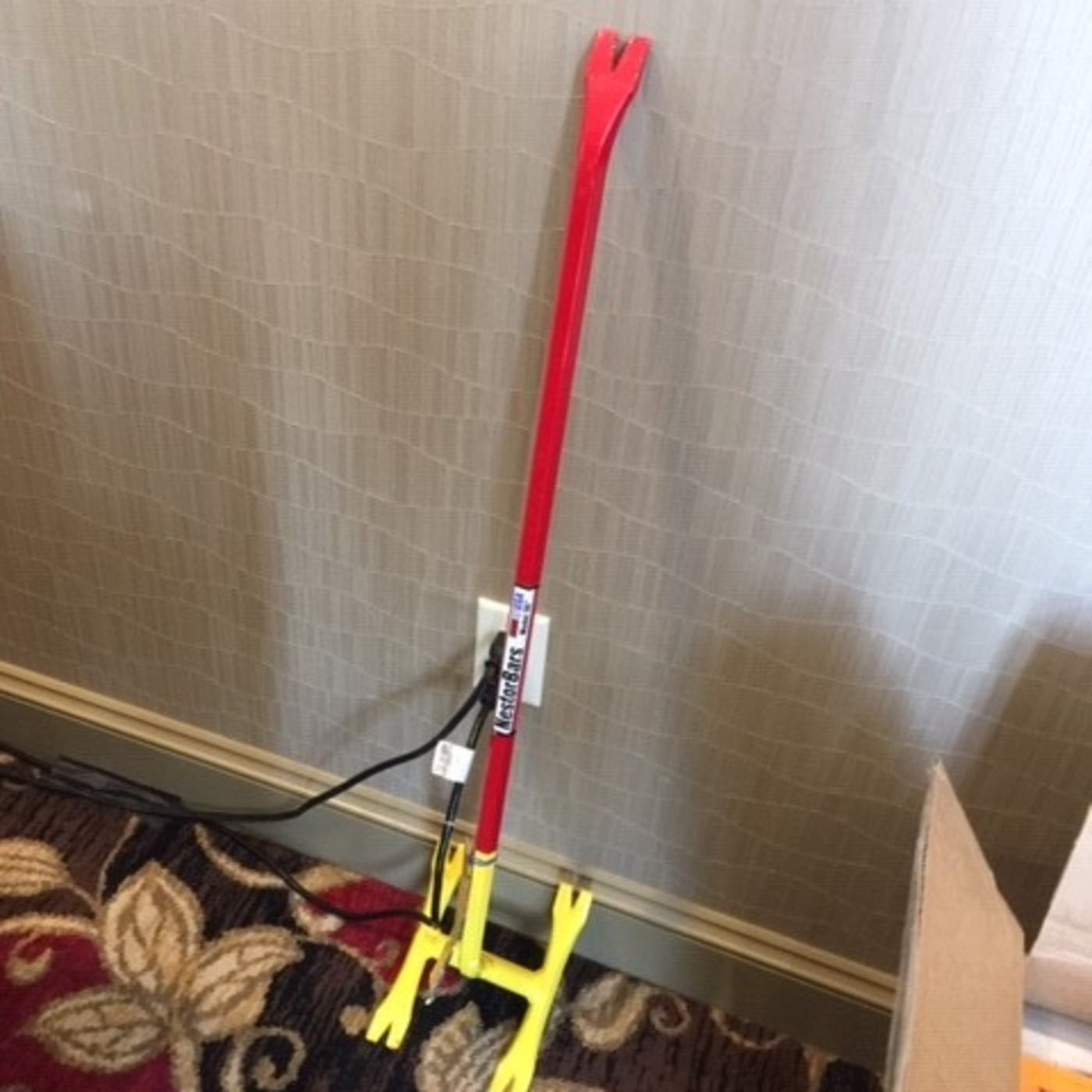
The Nestorbar - What's the Latest? (Mini-Cast)
Since his first appearance on "5-Alarm Task Force" my guest (and friend) Mark Slafkovsky, co-creator of the Nestorbar, has been busy "spreading the news" about this unique tool across both the fire-rescue services, as well as the building and contracting service. And if you have a half-dozen or more years on the job, you'll understand why the Nestorbar is similar to several other tools that we've carried for years, that were "comfortable" in different workshops, as well. Mark was able to stop by after having the opportunity to spend a couple of days at the Louisiana Instructors & Firefighters Training conference. As he explains in this podcast, people will often scratch their heads when he first presents the tool. After he explains, they're still scratching their heads, but this time, they do so as they strive to think of even more ways it would be useful to them! If you haven't yet heard about the Nestorbar, you'll want to listen to this podcast carefully!
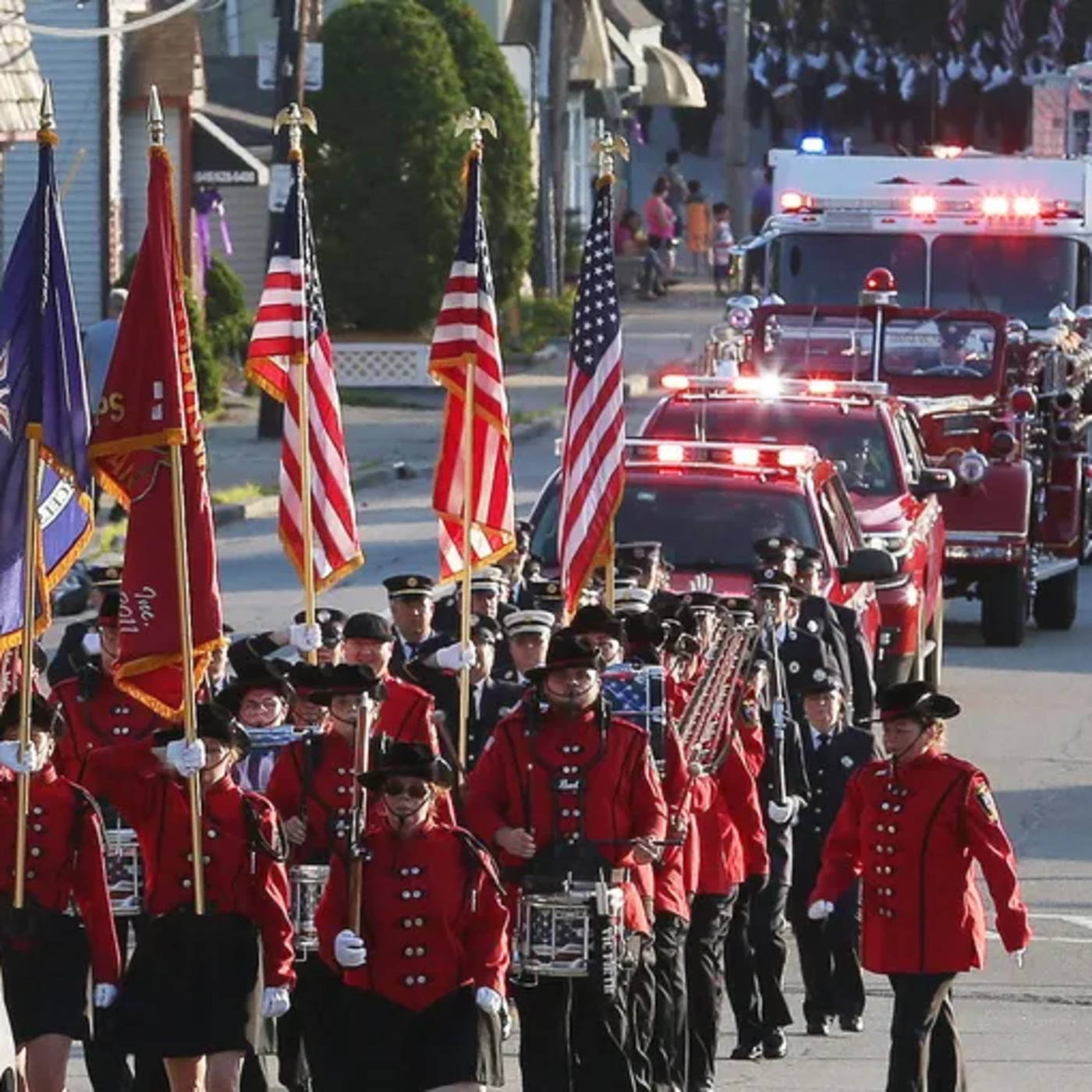
Marketing Your First Responder Agency!
Most of us who have or now serve as first responders have passed out stickers with emergency numbers, fire prevention pamphlets and posters that we hand-stamped with our name and address, key rings and much more. Why? To establish a connection between you and the community you serve. In a word, you are “marketing” your organization! Few people think that a fire, police or EMS organization, volunteer or career, needs a “New York City 5th Avenue advertising and marketing plan. But if you think again, what hard could a marketing program do? Sure, you drive around the fire district on Santa Saturday and collect a few dollars; some of you have a pancake breakfast or barbecue dinner. All of that is marketing, too! My guest on this episode of “5-Alarm Task Force,” is Lt. John Kowalski, with the Lone Oak Volunteer Fire Department outside of Chattanooga. John’s vocation is on communications and marketing. However, once he joined his small department (18 members and two pieces of apparatus) he saw a way to help them both market and brand themselves to their community. It’s worked so well, that neighboring departments have asked for his and his department’s help. After you listen to this episode, visit his website at www.babacita.com. If you’re interested in purchasing his program, you can save 20% off the regular price, visit our website (www.dalmatianproductions.tv)and go to John’s Guest Page entry for a special coupon code for listeners of “5-Alarm Task Force.” Tune in at www.dalmatianproductions.tv or iTunes® , Google Play® , Spotify® or your favorite podcast platform. And remember – Stay Safe & Stay Well!
"21 Tips for the Company Officer"
Returning guest, Deputy Chief (ret) Kevin Burns of the Framingham MA Fire Dept., joins us on this episode to discuss, “21 Tips for the Company Officer.” If you follow Chief Burns on Twitter (@burns227) or you have heard his first episode with us, “The Shift Commander,” you know that Chief Burns is well-experienced and very well-versed in the career firefighting life and ops. In today’s podcast, Chief Burns presents his “21 Tips for the Company Officer.” The easiest way to explain this topic is this – being a company officer is a lot more complex than sitting in the right seat of the apparatus. You might want to be the one to “floor” the pedal for the “Q,” or yank the line for those Grover airhorns. However, Chief Burns provides a great set of concepts for the current or future company officer, that goes far and above a “co-pilot” role. Be smart and have a pad and pen or pencil handy to take notes on Chief Burns’ discussion. Tune in a www.dalmatianproductions.tv or iTunes® , Google Play® , Spotify® or your favorite podcast platform.
Dr. Graham Peaslee - Carcinogens in Bunker Gear
From cigarettes to well-water and from X-rays to cooking pans, almost everywhere we turn over the past forty years or so, we see warnings for cancer. And while we may be surprised by other products that we may be warned about, the last place we ever expected to find carcinogenic compounds was in our protective bunker gear! How the hell could that have happened? Did the manufacturers know what was happening? And there are many more questions we have! Being dedicated followers of @yourturnoutgear on Twitter, we were able to invite Dr. Graham Peaslee of the University of Notre Dame, who, for the past year or so, has been conducting particle-level research on the amount of PFOA (a fluorine derivative) in used bunker gear. Dr. Peaslee explains his research and provides us will a few more surprises regarding this basic chemical, that has been in our water and toothpaste for decades. If you are following all of the “chatter” regarding the Firefighter Cancer Initiative and making the effort to keep yourself healthy, than please make time for this abbreviated podcast! This is one of those that just might save your life! Tune in atwww.dalmatianproductions.tv or on your favorite podcast streaming platform.
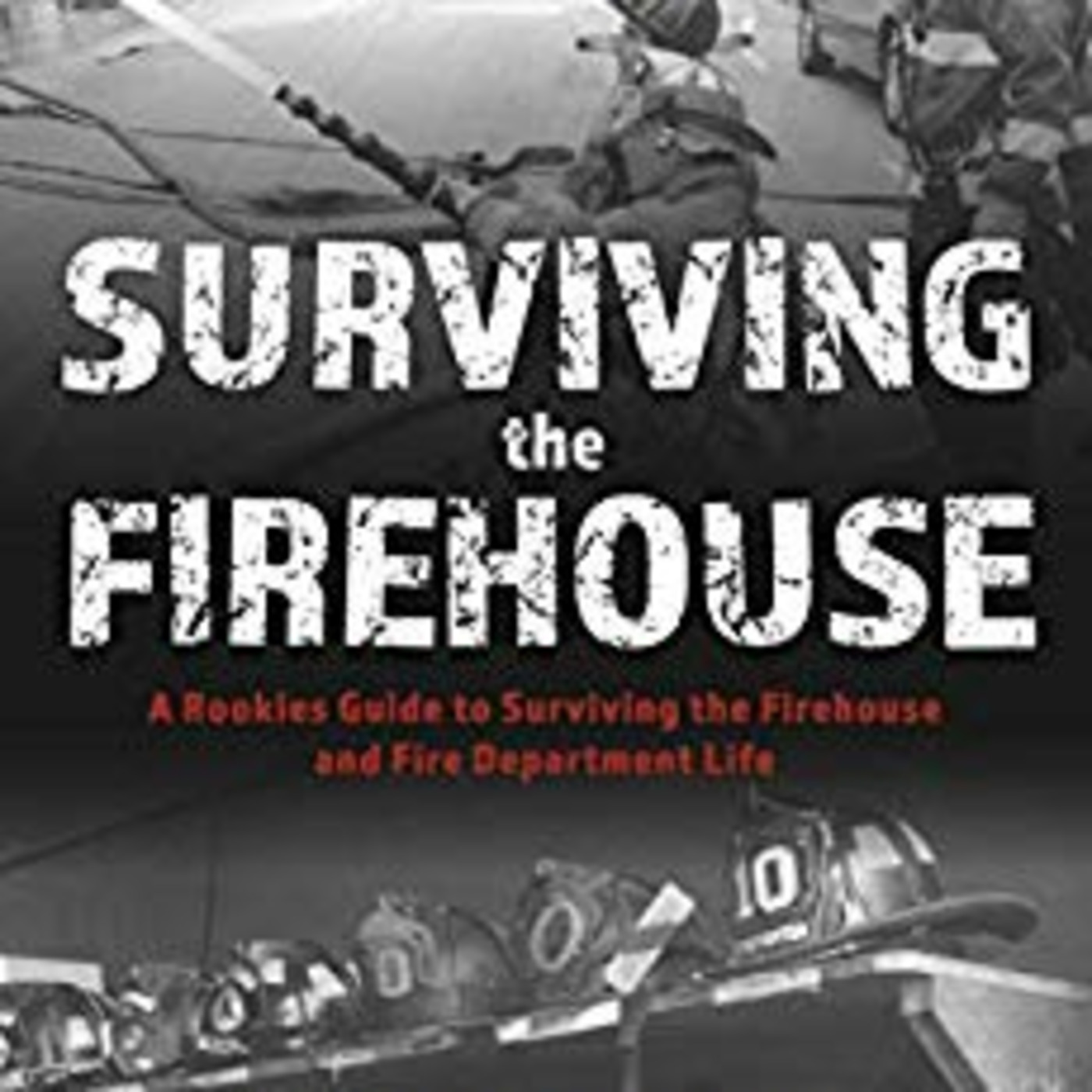
"Surviving the Firehouse"
So you want to be a firefighter? Sure, you like all the lights and sirens; the excitement of barreling down the roadways, making others get out of your way! But do you really know what it takes to be a firefighter? Do you know what you have to do to become a firefighter (career or volunteer)? What is life in a firehouse like?My guest on this podcast, Mauro Porcelli, is a former firefighter with a 25-year career. He worked for a smaller, county department and for a large urban department. He has written the book, “Surviving the Firehouse” It takes that interest to be a firefighter and provides a step-by-guide from your first steps like, where to learn, almost to the day you wave goodbye to your friends as you head towards a well-earned retirement. Some of the topics include, “Do you need to be a paramedic, as well as a firefighter?, Where to learn to be a firefighter? What’s the rookie year like? What are pitfalls I should avoid? And many more. You cannot go wrong reading this book no matter where you are in the process, even if you already have a few years under your belt. Not only is does the book provide a great deal of information, it’s a fun read and gives the reader a good peek “behind the curtain!”Let Mauro be your guide to this great profession or avocation. You’ll be glad you did.Tune in at www.dalmatianproductions.tv or on your favorite podcast streaming platform.
Preparing for Command Level
The make-up of each firefighter is different, whether career or volunteer, some love humping that hose and always busting through the breach. With a few years under their belt, others start looking for leading that first group on the fireground or other emergency scene. Then, there are those who have their sights on a higher goal, the command level. A group of them remain committed to directing personal at scene of urgent need. Then, there are those whose bugles on the collars bring them to highest posts in the department – command administration and “the buck stops here!”No matter the size of a department and no matter if it’s a career, volunteer or paid-on-call, someone has to run the show. However, being at that command level involves much more than directing the lower officers and firefighters. In reality, that chief becomes the CEO of a corporation (sometimes, literally if that department hold a not-for-profit corporate designation).My guests, Chief (ret) Dan Jones and his business partner, Kelly Walsh have seen these problems first hand. Chief Jones has extensive experience as a command officer and Kelly comes to the table with years of HR experience, especially in the fire service. Together, they have created both a company and a methodology to help fireground officers of all levels, who decide they want to set higher leadership goals. Through seminars, websites and one-on-one connection, they have the ability to help guide you through the maze of executive tasks that are often unexpected to the line officer who finds him/herself as the leader of a department. Tune in to “5-Alarm Task Force,” at our website, www.dalmatianprodcutions.tv , on iTunes®, Google Play®, Spotify®, or your favorite podcast platform!
The Difficult Psychology of First Responders
From an outside view, the life of first responders looks glamorous and exciting. The red, white and blue lights flashing, “busting” the speed limit, sirens screaming. However, when those first responders arrive on the scene, they often find sadness and desolation, the darkest side of humanity or tragic, unnecessary loss. Now, imagine facing those situations day-after-day or on almost every shift. As we are about to close the second decade of the twenty-first century, our first responders see this dark side far too often. Add to that the pressures of everyday life in today’s “I need it now” society and some reach a breaking point. They don’t wear capes, nor do they have super powers, for those first responders are our neighbors, members of our church or synagogue, shop at the same grocery store that we do. And when we do see them in public, whether in uniform or not, there will probably always be a smile or a friendly nod. However, if we could look deeper, we just might see a very troubled individual. My guest, Mark Lamplugh, Jr., is a former fire captain and knows of what I describe above. And he has dedicated himself to helping those first responders who suffer from the trauma of the profession, that truth be told, they love. For the past ten years, Mark has answered phone calls and emails from first responders around the county, reaching out from the darkness for help. In today’s episode, Mark discusses the issues that many first responders face and how he has helped them deal with these behavioral health problems. Additionally, he has taken that experience to create a non-profit agency, to allow first responder agencies or their communities to have their own, private and secure website, customized specifically for that agency or community, where those first responders can turn to learn or for help that has already been vetted to not only work with first responders, but will also accept the insurance coverage of the responder. Learn more with my guest, Mark Lamplugh, Jr.
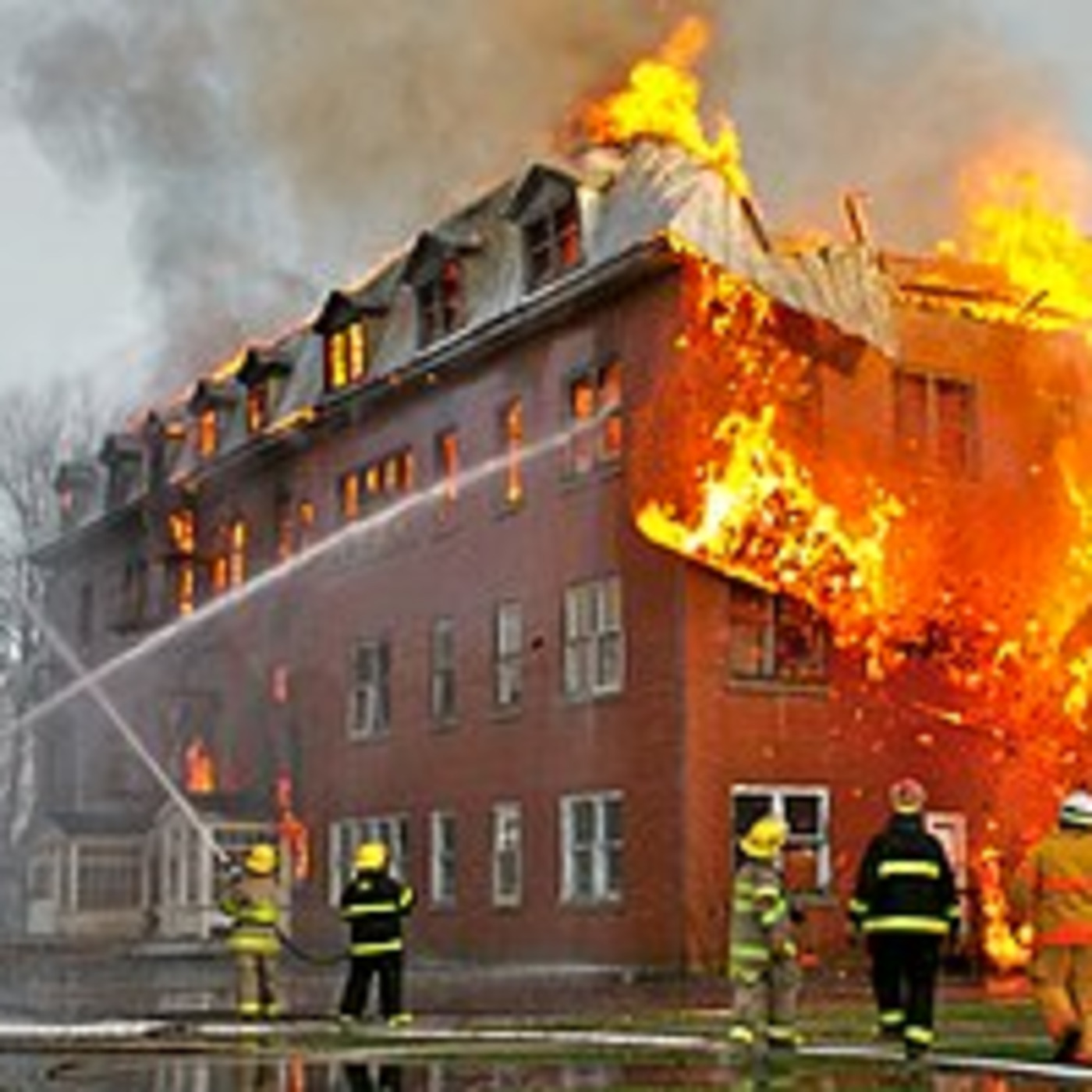
Staffing, Recruitment & Retention – A Panel’s View
There are few greater issues facing not only the fire service today, but all manner of first responders. To address these important matters, I am proud to present four current or past chiefs, who share their own experiences and views.Joining me is Chief Anthony Correia (ret.) Burlington Township NJ Fire Dept., Commissioner Jaren Renshaw, Western Berks Fire Dept., PA, Chief Brian Soller, Monticello NY Fire Dept. and Chief James Tornebene, TX.As the roles and demands of our ever-changing society push and pull us in diverse directions, so have our abilities to be able to serve our communities, not only as first responders, but in serving those civic and religious organizations that we once devoted free time to. This ever stronger “push-pull” requires new ideas and approaches as we look to both increase and retain those who wish to serve their communities as members of career, volunteer or paid-on-call departments.These four gentlemen share their experiences over their many years of service. They have seen this evolution of society, as well as the fire service over the past forty years and how our job descriptions and requirements have changed many times over. With that much change, we might also see confusion and high turnover in our departments. Each of these chiefs share with you the listener, what they have seen and/or done, within their own or neighboring communities. Be ready to take notes! This is a podcast the likes of which we have never done before!

Situational Awareness Matters!
If you’re a firefighter or in law enforcement, if you’re in EMS or another profession where “risk” at the top of the job description, you have probably had that “feeling in your gut.” You know the one; you are about to do something, but that little voice inside whispers to you to reconsider? If you’re in any profession with high risk, you know exactly what I am talking about. That is your inner-self speaking to you, as it sees or knows a bit more than you do at that very moment.My guest on this episode is Dr. Richard Gasaway, renowned authority on human factors, situational awareness and the decision-making process in high stress, high consequence, work environments. He has authored six books and he has been widely cited in more than four-hundred books, book chapters, journal articles and online publications. He is the creator and host of the podcast, “Situational Awareness Matters,” available on your preferred podcast streaming service. In our discussion, we focus on the concepts of “gut feeling” and “intuition;” are they the same, complimentary or different and how the concept applies. Dr. Gasaway shares some of the details from his recent episodes, “Top 10 Near-Miss Interviews,” and “Mental Rehearsal.”Look at this way, not every decision we make on a day-to-day basis, drives that “gut feeling” or needs that intuitive angle. However, if you to “5-Alarm Task Force” on a regular basis, most likely, you are a first responder. If so, you probably know what we are referring to. To learn more about it, tune in with us for this podcast, “Situational Awareness Matters!”

Hoods for Heroes Part II-Who Pays for My Cancer Treatment?
I am happy to welcome back the two founders of Hoods for Heroes, Jeff Rountree and Bill Hamilton. In Part I of their program, we learned how Jeff and Bill have dedicated the past year to providing new flash hoods, ones with a special weave, the precludes soot, toxins and carcinogens for passing through to the sensitive skin on our neck and face. Their foundation is raising funds from other foundations, corporate sponsors and others, to meet the goal of providing these hoods to every firefighter in the U.S. In this second appearance, Jeff and Bill are here to answer two very important questions, 1. “Who pays for my cancer treatment if I am diagnosed? 2. Is there a way to financially prepare myself and/or my family?As someone who was declared disabled at the age of 40, with a wife, two young children and a new house, I was lucky to have purchased a private disability policy at age 29. That policy saved my butt! Now ask yourself, with our strong Firefighter Cancer Initiative education and mitigation programs, do you have any idea of what happens if you receive a diagnosis of some type of cancer?Joining Jeff and Bill is a friend Tanya, who firefighter husband was recently diagnosed with a Stage 4 cancer. Tanya, who had been in the insurance business until her husband’s illness, explains the financial “tornado” they find themselves in. They had thought that with her husband’s insurance policies through work, everything would have been taken care of. But that is not the case.Jeff and Bill and explain how payments may work depending on your insurance coverage and tell us about a new program, “Living Benefits,” that provides funds for the patient and his/her family, and not necessarily for just a cancer diagnosis. Every first responder should listen to this podcast!
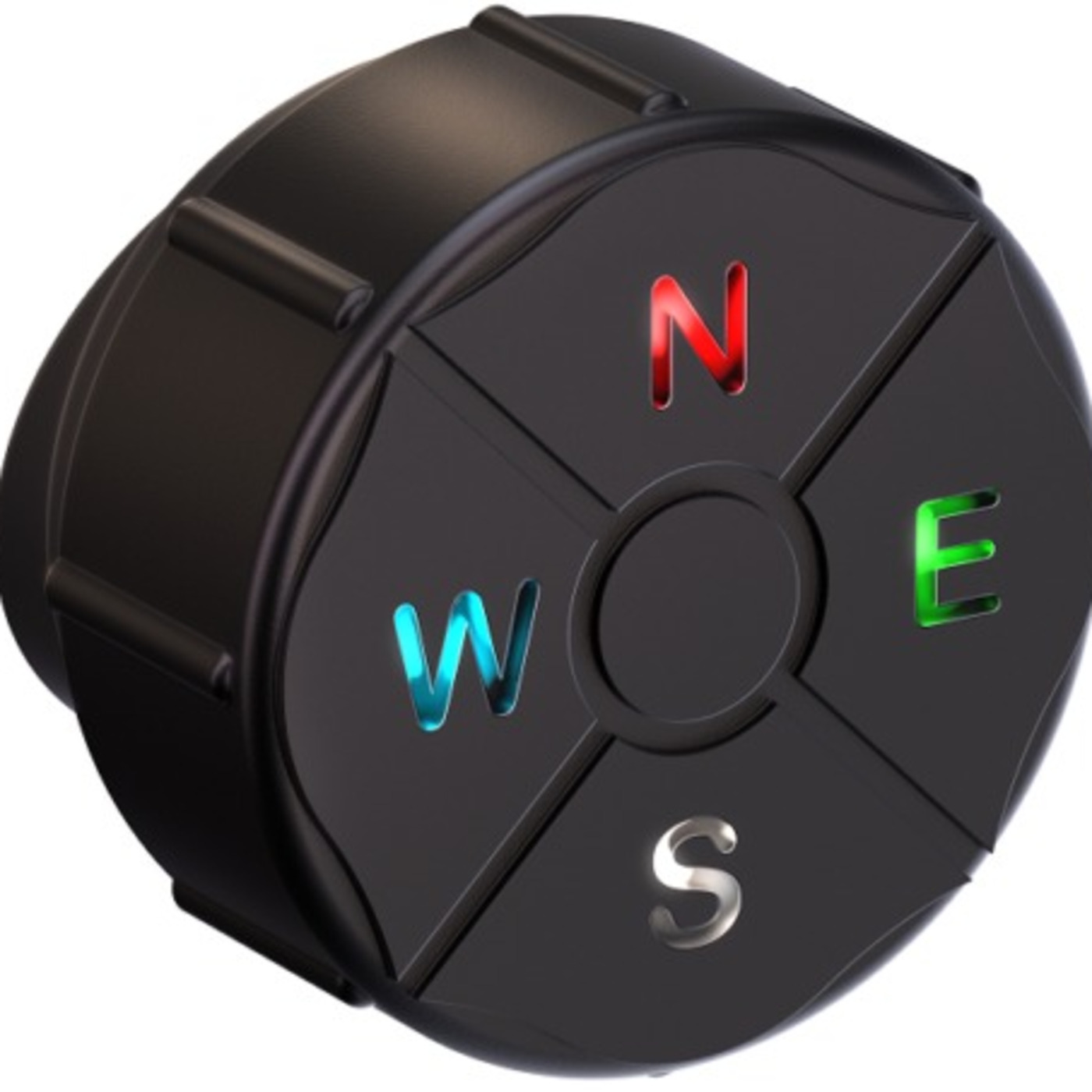
The Northern Star Fire Compass System
Technology – it’s all around us. From our homes, to our cell phones and for many of us, where we work. Many of us are enthralled with new technology and make an effort to keep up with it, especially in our personal lives. Yet, the fire service, as much as we like new equipment, tools, etc., can often be reticent to accept and embrace new technology. It goes without saying that we should do our due diligence when examining a new product. At the same time, we also need to keep an open mind.Jeff Dykes, a fire captain in Wisconsin, saw a need for a device that could provide a firefighter wearing an SCBA mask, with his/her situational awareness via the Cardinal Directions of North, South East and West. With that, the Northern Star Fire was born. As you will hear in this podcast, Jeff has been working for the last three years on bringing the Northern Star Fire compass device to market. Placed inside the SCBA mask, the Northern Star Fire provides you with your cardinal direction in eight positions, even in the darkest, smoke-filled hallway or room. The device is so accurate, it has been used by Navy Seals, deep-sea pipeline divers and many others. Tune in to learn more about the Northern Star Fire and learn how a device the approximate size off a U.S. quarter, might save your life!
"Courage Under Fire-Being the Best Officer You Can!"
After a few years on the front lines, a number of us believe that we should be officers. Perhaps I “should” have used “could be officers!” And that is because being an officer, from a lieutenant up to the chief, is not an easy job, no matter what you see, think or what your pals have told you! Not sure? Then I encourage you to listen to this podcast. No, it’s not a listing of all the negatives about being an officer. In fact, you may learn some important traits you will need if you choose to pursue this course in your career.My guest is Deputy Chief Steve Prziborowski of the Santa Clara County CA Fire Department. With over 25 years on the job and an accomplished speaker, instructor and mentor, Steve has a passion for helping others get hired, stay hired, get promoted and stay promoted.In this podcast, Steve presents two lists for you to consider; one are five traits that demonstrate you may be ready for a leadership role and the second is a list of five attributes that will help to better your chances of being successful. As we all know, there are no guaranties in life. Perhaps though, if you have a clearer picture of both your motives, as well as the right personal goals to aim for, you might have a gold bar or two, or even a trumpet or two, in your future.Stay Safe & Stay Well!
Where We Fall Short in Our Training
Career or volunteer, our days are busy, at least most of the time. Nevertheless, training and drills are an important and integral part of the job we do. If you’re in a busy department, you may feel that all the calls that you run are enough training. If you’re a volunteer, you hardly have enough time to take care of the family, work full-time and respond to the calls you can! And to be honest, most of us like to train when it’s convenient. The problem is, the emergencies we respond to don’t know what “convenient” means and it is imperative for us to know and know well, everything we have to do to mitigate any emergency.My guest, Chief Dennis P. Reilly, currently serves as the Assistant Chief for the Davis CA Fire Department and is a 40-year veteran of the fire service and a veteran of our armed forces. When you look at his topic, some may get all blustery and will be ready to argue, while others may ask themselves, “I wonder where we may be missing something.” It all depends on if you view the “glass half-empty or half-full.”The Chief makes an excellent point when he discusses the difference between, “training” and “drilling.” For example, you take a 3-hour class on thermal imaging cameras. Great class and you feel as though you’ve learned a lot. However, for the next three months, you don’t pick up a TIC. Are you still prepared to use that tool to possibly save the life of a civilian or even a firefighter?After you listen to Chief Reilly’s podcast, think about his conversation and bring either the podcast or his wise words, back to share with your department. Training and drilling cannot always take place at times that we feel are convenient. Then again, neither is Mrs. Smith’s emergency when her house erupts into flames. Remember – we don’t want to “fall short” on the scene of an emergency!
How to Avoid those "Career Crushers!"
You’ve seen it happen. You may have even done it yourself. No, not being a few minutes late for your shift! No, not horsing around in the day room! We are talking about making the type of judgement error that could cost you your job and possibly, your career! So, listen up – this podcast applies to all first responders.My guest is Chief Dennis L. Rubin, currently serving as the first Chief of Fire & EMS for Upper Merion Township in Pennsylvania, not too far from the great city of Philadelphia. Chief Rubin has been the Chief in Atlanta, Washington DC and Petersburg VA, before coming to PA. He has several books published and is a well-traveled speaker, instructor and mentor. This is his third appearance on “5-Alarm Task Force,” where he has discussed his principles of leadership and, along with his dear friend, the late Chief Alan Brunacini, was on the podcast to discuss the Wingspread VI conference, which is held once per decade!In this episode, Chief Rubin cautions us to avoid those actions which could be, “career crushers;” actions and/or reactions that could result in serious consequences to the point that you could be terminated and lose your ability to work in the profession. As he put it, “Don’t be the one when the public safety tabloids say, ‘What was he/she thinking!’”On Chief Rubin’s entry on our website page for our guests, (www.dalmatianproductions.tv) you will find two of the posters he uses to educate his members. While some of the suggestions seem simple enough, you can never be sure just how someone else may react. Remember – whether you’re a firefighter, EMT/Paramedic or in law enforcement we hold the public trust. When you screw up, you tarnish the badge for all of us!
Hoods for Heroes - Part I
For most folks, especially those who are first responders, if they someone in pain or truly distraught, they won’t have the heart to just pass it by and go on with their shopping, run, picking up the dry-cleaning, etc. My two guests on this podcast, Jeff Rountree and Bill Hamilton, are “cut from the same cloth.” This past May, while first-timers at promoting International Firefighters’ Day in Clay County, Florida, they found out about the scourge that is devouring great firefighters every single day – CANCER. Their background is the insurance business, so they were well aware of cancer and the toll it wreaks upon both the patient and those around him/her. But they had no idea of how strongly it was depleting the American Fire Service of great firefighters, of all ages.Not ones to sit around and do nothing, they create and non-profit organization, “Hoods for Heroes.” Their goal is to present each and every one of the approximate 1.2 million firefighters in the U.S., with a newly designed, flash hood, with a processing that traps particulate matter from soot before it reaches the most vulnerable areas of our body, the thin layers of skin around the neck, ears and scalp. The numbers of diagnoses are climbing. In a relatively recent study with the Boston Fire Dept., a firefighter were being diagnosed with cancer every THREE WEEKS! Moreover, the type of cancers being found in firefighters are either highly aggressive or new strains and type that oncologists and researchers have see little or none of, before this.Listen as Jeff and Bill tell their story. See to whom they are turning to for help. Your employer just might be a perfect match!
The Firefighter Cancer Initiative - Part II
It is what it is! This job that we love to do has inherent risks and now, besides everything else, we know, all too well, that one of those risks is cancer. It’s a fact that firefighters have higher occurrences of cancer than the average American. However, we also have excellent medical and research teams around the country who are doing everything they can to learn about our behaviors, exposures, the equipment we use and more, in the herculean effort to help us reduce these risks.One of those teams is right here in South Florida at the University of Miami – Sylvester Comprehensive Cancer Center. Two of the leaders are Dr. Alberto Caban-Martinez and Dr. Natasha Schaefer-Solle. For at least the past four years, the medical and research teams have worked diligently to glean the facts of what we are exposed to and the means to reduce that exposure as much as possible. Dr. Schaefer-Solle was an integral member of the team that recently developed a gross-decon bucket that was made available to every fire department in Florida and for each apparatus that they have! Inside the bucket are various tools, instructions and videos to instruct members how to perform a gross decon BEFORE they get back on the apparatus and leave the fireground.Join us, as we look back where we were six months ago when the doctors first joined us and see, not only where we are today, but where we are headed for tomorrow. For specific information on the links mentioned in this podcast, please visit www.dalmatianproductions.tv, and under the NEWS tab, you will see the FIREFIGHTER CANCER INITIATIVE tab. Stay Safe & Stay Well!

New Water Enhancement Product From "Fire Rein"
When we have one “cookin,” we know we’re going to need water and lots of it. In most cases, if you’re located in an urban or metro area, water will probably not be a problem, but perhaps pressure may. But, what if we could use less water and what we do use, would have a greater effect on our efforts to extinguish the blaze?My two guests on this podcast, Quincy Emmons and Peter Sells, discuss their product which, they say, can actually accomplish the statement in the last sentence above – “…use less water and what we do use, would have a greater effect on our efforts to extinguish the blasé.” Their Toronto-based company is Fire Rein and their new product is “Eco-Gel.”Both of these men are or were firefighters, Peter was even a District Chief for training. Together with their science team, they developed a product made entirely of food-grade bio products and approved by UL Laboratories and the U.S. Department of Agriculture.Instead of me trying to tell you about the product here, you’re better off to tune in to the podcast either at www.dalmatianproductions.tv or your favorite podcast streaming service and hear what they have to say. I will add, that I would really like to receive your comments about this product. If you listen on our podcast host site at http://Bit.ly/5AlarmTFPodcast, you can leave a comment there. Otherwise, please send me an email at dalmatprod-at-outlook.com.

"The Evolving Fire Ground"
When you’re on the fireground, it often looks like organized chaos. Why? Because, rarely does the situation remain stagnant. Things are always changing. Whether its redirecting a hose line, raising the stick, one crew heads out to rehab, while a fresh one gets ready for entry. Change in wind direction, etc.My guests on this podcast, Dep. Chief PJ Norwood and Capt. Sean Gray, have seen this occur over and over again through their years of experience. However, more than the simplistic view that I’ve provided above, they have looked at the fireground in a much more focused manner, seeing, “The Evolving Fireground,” which is the name of their current book.Based on research-based data they use in the text, we discuss key areas such as, “How firefighting activities affect the fire tetrahedron,” “How to stay safe while working in the flow path of the fireground,” “Search methods that isolate the firefighter and victim” and several others.Their years of experience, together with the data they have culled from numerous research projects, provide them with a solid foundation that they look to share with firefighters, both in the U.S. and around the world. Tune in at www.dalmatianproductions.tv or your favorite podcast streaming service and give them a listen. I think that not only will you understand their ideas, but you will embrace them, as well.
Size-Up & 360 for First Arriving on Scene
If you’ve been riding the apparatus for as little as a few months, you already know that there is something special about being on the first arriving piece at a “worker!” That’s the first arriving piece, not the first due piece. Traffic, construction, etc., can and does often get in the way, making the first due the second or even third to arrive.As our guest, Capt. Joe DeVito points out in this podcast, there is a great deal of responsibility that falls on the shoulders of the first arriving crew, especially the officer. And there are and will be times, that due to staff shortages, this responsibility may fall on the driver/engineer/chauffeur or even someone in a jump seat!Capt. DeVito explains his new acronym, C.L.U.E.S., as Conditions, Location, Utilities, Exposures and Survival spaces, to help with your size-up and 360. He also makes the important point that whomever is making the size-up, should never leave the TIC (thermal imaging camera) on the apparatus. That device can help you devise your initial attack plan and could make the difference between life and death. Capt. DeVito knows of what he speaks!As always, tune in to “5-Alarm Task Force” at www.dalmatianproductions.tv or via your favorite podcast streaming service. Stay Safe & Let’s Make Sure Everyone Goes Home!
Proper Blocking on Active Roadways
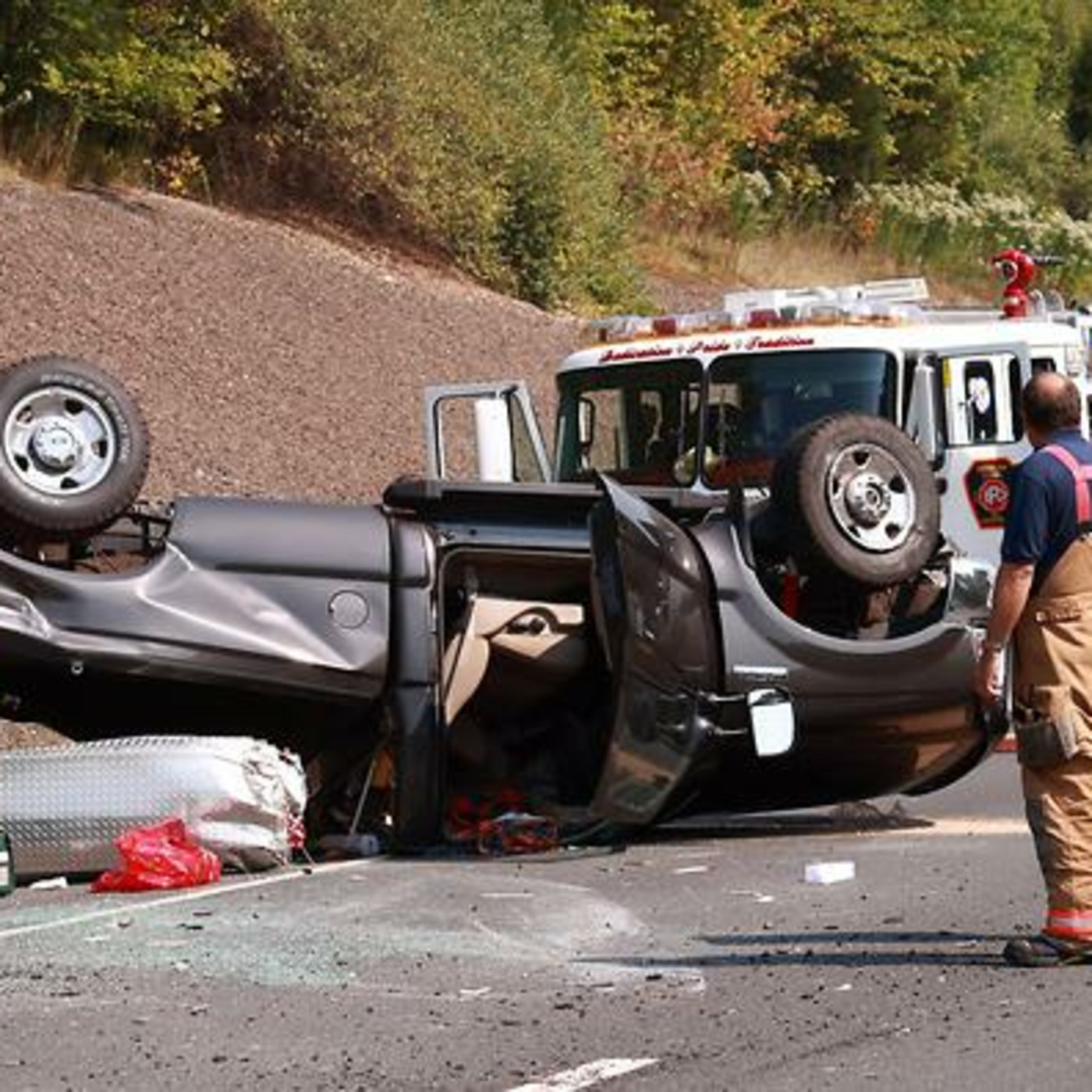
Looking back over the last several months, there have been several firefighters, EMS workers, LEO’s and recovery personnel, who have lost their lives on the scene of an emergency, on active roadways. Sadly, this is nothing new. As the number of distracted and/or drivers under the influence have increased, so have the numbers of deaths and injuries to emergency and recovery workers. This issue hit very close to home for Chief Victor Conley and the members of the Irving TX Fire Department, when one of their ladder trucks that was blocking an emergency scene, was hit by a fully-loaded tractor-trailer, throwing three firefighters in all directions and totaling a million-dollar tiller. Luckily, all three survived, but this incident was the proverbial, “straw that broke the camel’s back.” Chief Conley never wanted to see this occur again and set to work, together with the City of Irving, to create a new program that would use retired apparatus to be the “official” blocker vehicle at these types of emergencies. Whether your department already has a blocking program, (as Irving did) or you haven’t created one yet, you need to hear Chief Conley discuss the Irving blocking program! Tune in to this episode of “5-Alarm Task Force at www.dalmatianproductions.tv or your favorite podcast streaming service and learn!
A Visit to the Irish Fire Brigade & More!
When we think of the fire service, we think of the one where we live. But how often do you think about the fire service in other countries? Luckily, many of our listeners are spread out across the globe. And in this podcast, a good friend of the show, Exec. Asst. Chief Todd LeDuc shares with us hos recent visit to the Irish Fire Brigade. Chief LeDuc traveled to Ireland on behalf of the IAFC-SHS (The International Association of Fire Chiefs – Safety, Health and Survival) Division. While there, Chief LeDuc shared with the important information on the Firefighter Cancer and Behavioral Health Initiatives, among other issues facing fire departments no matter where one might be located. We all share the same basic job and we all finds ways to carry out our duty. In October, Chief LeDuc was at the National Fallen Firefighters’ Strategy Summit, which was held in Nashville TN at FIREHOUSE® Expo. To augment that topic, Chief LeDuc will join with Bill Carey of Firefighter Nation for a FREE webinar on December 6th, dealing with occupational cancers and the importance of early detection. Bill will also share his personal fight with occupational cancer. You won’t want to miss it. So tune in to this episode of “5-Alarm Task Force at www.dalmatianproductions.tv or your favorite podcast streaming service and learn!
A New "Wonder Tool?" The Nestorbar(R)
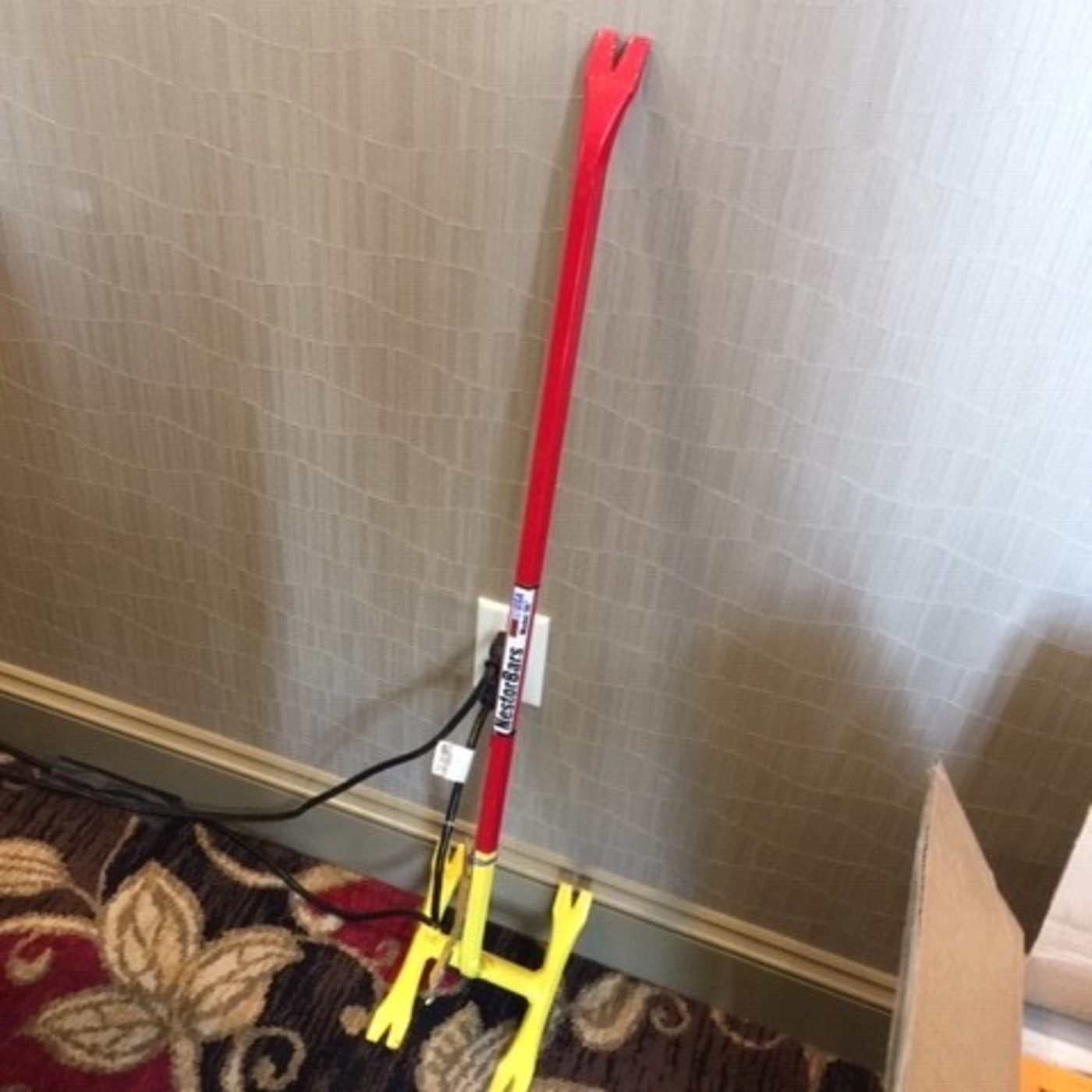
What happens when you’re the co-creator of a new tool that, although you see it works very well for its original purpose in construction and demolition, you have the feeling that it could do so much more? That’s exactly where co-creator of Nestorbar®, Mark Slafkovsky found himself. He had this new, remarkable tool that combined a standard pry bar with a doubled claw hammer, in three different lengths and, which created its own fulcrum point wherever it might be used. After Hurricane Sandy, Mark started to use the Nestorbar®, to assist his neighbors in the demo of major sections of their homes that had been flooded and severely damaged. Instead of using a simply pry bar that poked a small hole in the drywall, the Nestorbar®, made a much larger hole going in and a huge one coming out! This work being a citizen “first responder” gave Mark the idea that real first responders could use the Nestorbar® not only for overhaul and demo, but for actual rescue work. Imagine someone with their arm pinned by a toppled drill press in a garage. Using the Nestorbar®,, rescuers could slip the double claw under the heaviest part of the tool and by exerting downward pressure on the long handle, lift the machine high enough to remove the patient from the entrapment, long before the air bags could be deployed and filled. Listen, as Mark Slafkovsky explains the Nestorbar®,, from creation to its many uses, especially for the fire-rescue services.
Interested in a Promotion in a Busy Department?
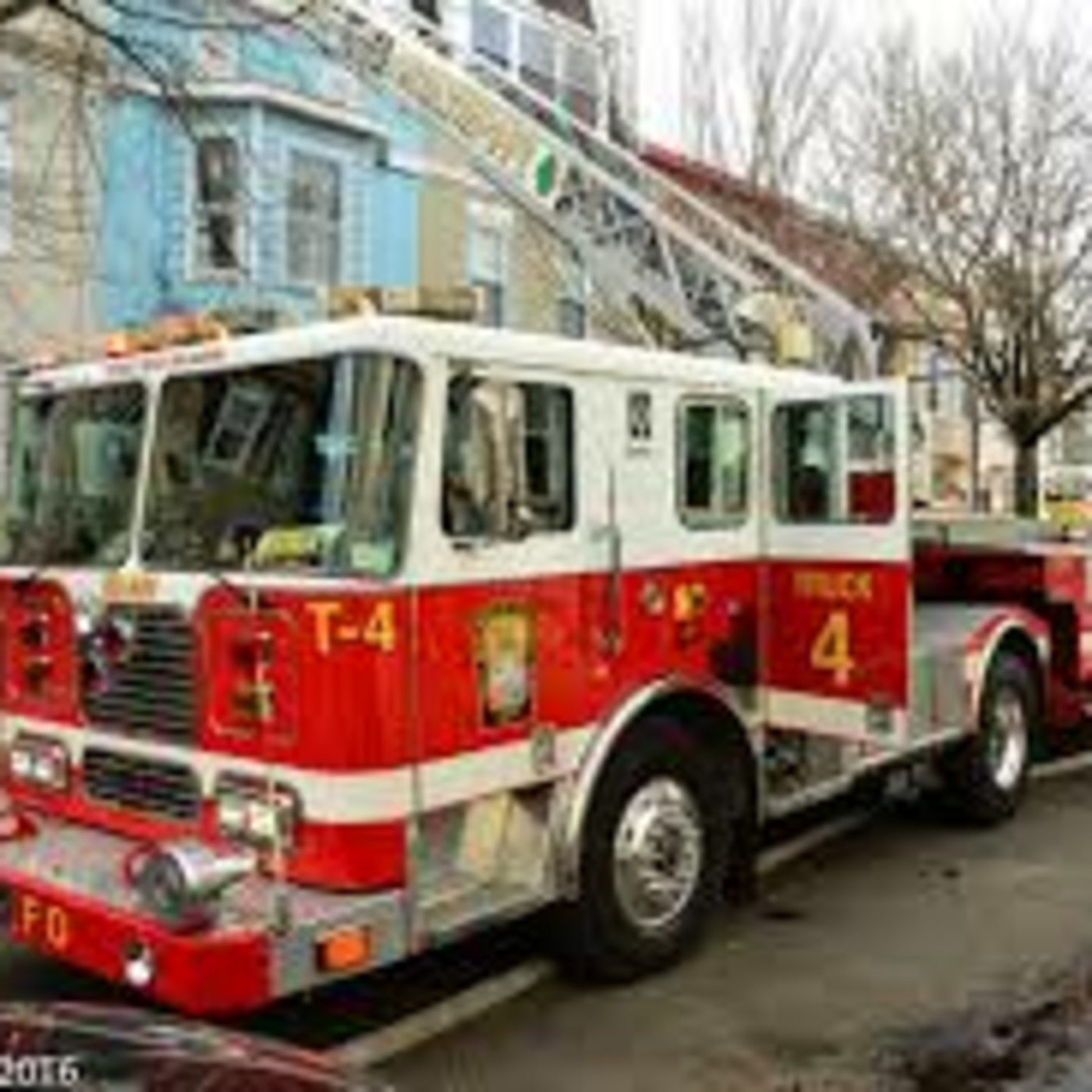
Our nation’s capital, Washington DC, is actually a relatively small parcel of land. At the same time, DC Fire usually can be found in the top 12 for total runs and several of its engines and ladders run in the top 5! Our guest today, Capt. (ret) Jimmy Partridge, knows all about that, having served over thirty years in DCFD. In our podcast today, Jimmy starts off telling us about several of the challenging calls he ran, including the last call of his long career. As you listen, you’ll hear him describing conditions and tactics, rather than self-promotion and bluster. These calls lead to the crux of what the retired captain wanted to focus on, namely if you are thinking about seeking a promotion, what are some of the challenges you will face. An officer must change the way he or she thinks as a basic firefighter. With rank comes responsibility – a lot of responsibility, over many areas. Jimmy tries to help you move over that “mine field.” Listen to a real, long-time veteran of one of the busiest departments in the country.
The Need for Decon On Scene
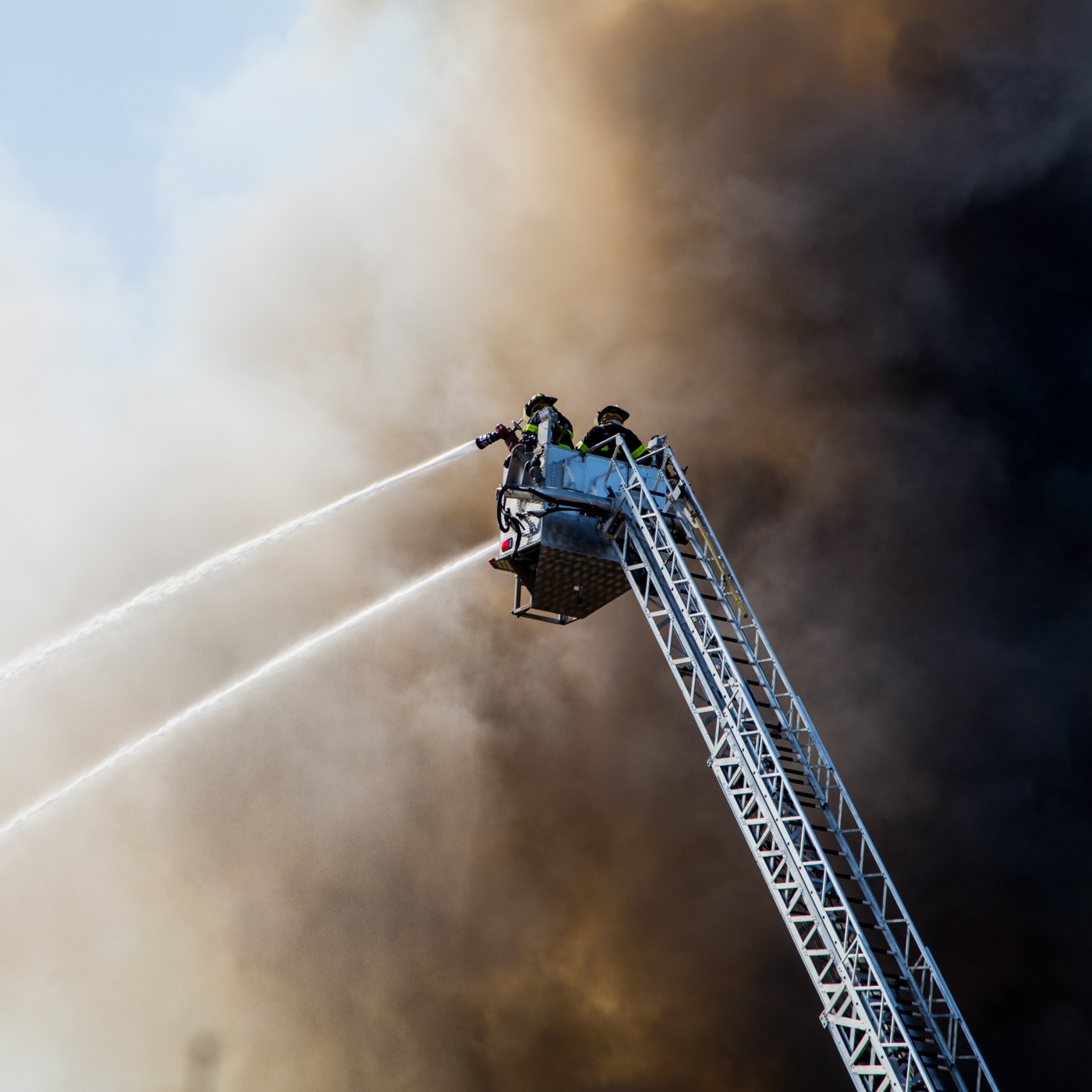
Smoke from any type of fire has never been good for a human, even long before we could actually know what was in it. All it took was a good “snootfull,” and we were coughing, hacking and crying…all at the same time! Today, nearly 20 years after 9|11 and after losing so many brothers and sisters who worked the pile or anywhere near Ground Zero, we now realize that smoke from almost any combustion, isn’t just bad for us – it’s deadly! Firefighter/Engineer/Paramedic/PIO Brad Bihun, is doing everything he can to warn firefighters in southern California about the dangers of the invisible carcinogens and toxins in the smoke we so often find ourselves immersed in while fighting everything from a dumpster fire to a vehicle fire, to a multi-story structure fire. Brad is also the co-founder of “Stachetober Fest,” a moustache competition for both men and women, where proceeds are dispersed to firefighters in need. And all too often, this fundraiser has helped firefighters in his area that are fighting cancer, or to a family of a firefighter who has paid the ultimate price. In our podcast, Brad explains some of the toxins with which we come into contact with and what happens to both us and our gear, when we do. Additionally, he explains some of the methodology needed today to avoid both initial contamination and cross-contamination.FULL DISCLOSURE – Brad Bihun is a part owner of a distribution company for Hygenall Full-Spectrum Firefighter Decon products. However, as a firefighter, his main goal is first and foremost, to educate the fire service so that they can make informed decisions and implement procedures to help mitigate the toxins firefighters face on a daily basis.Photo by Hermes Rivera on Unsplash

The Importance of Firefighter Health & Wellness
The job of being a firefighter has never been a “lightweight, even going back to the days of hauling canvas buckets of water. Over a hundred years later and even with all the tools we have, the job still demands that we fit and healthy. That’s hard enough, but factor in today’s lifestyle and what we face when we fight fires that we cannot even see, this job demands that we are in the best shape possible. My guest today, Dr. Lance Walker, knows quite a bit about firefighter health and wellness. His company, SiteMed provides over 6,000 firefighter physical exams per year. And for the past twelve years, Dr. Walker has dedicated himself to speak not only to firefighters, but to other health practitioners as well, to advise them in the particulars of firefighter health and wellness. Listen in as Dr. Walker discusses his list of the issues we face and how regular physical exams and common testing can not only keep us fit and healthy but help us look forward to long careers and long and healthy retirements. Join us on our website, www.dalmatianproductions.tv, iTunes, Spotify or your favorite podcast streaming service, to learn that a healthy firefighters is a safer firefighter!
Critical Thinking & Fireground Deceision Making
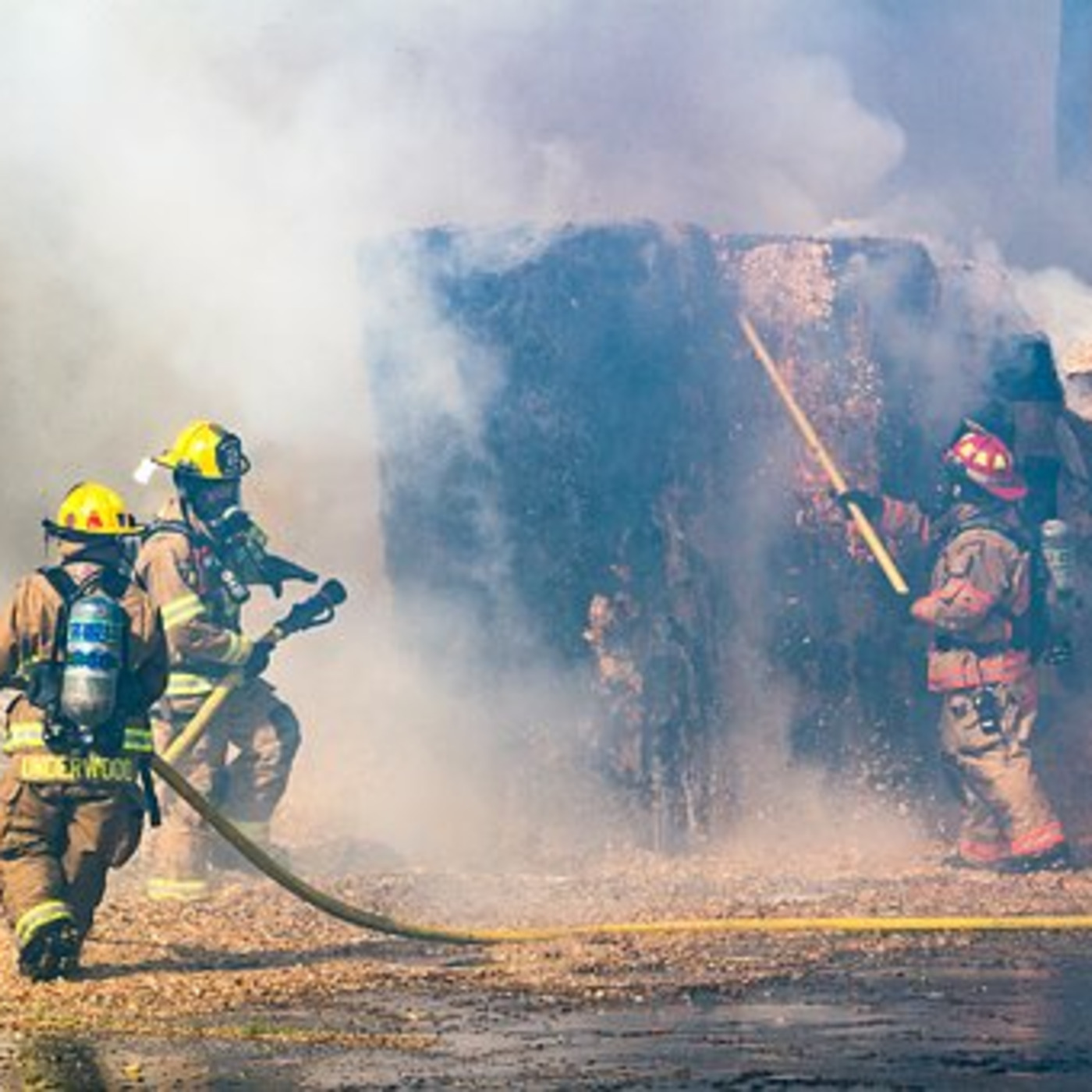
This job (whether you are career, volunteer, wildfire or paid-on-call) that we love to do, is rarely a “walk in the park.” No matter how simple the dispatch or phone call appears to be, it often turns out to NOT be that simple or easy and that requires us to think it through and fast! My guest on this podcast is Nicholas Higgins, the editor and frequent contributor to the Firehouse Tribune website (firehousetribune.com), a long-time supporter of the show and a repeat presenter at FIREHOUSE Expo. As a matter of fact, Nic will be teaching the course that he shares with us today, at this year’s Expo, on Thursday October 18th. In his discussion, Nic addresses the need that the task of firefighting requires every firefighter, whether in training at the station, performing a preplan or on the scene of a call, no matter his/her rank, to always be thinking several steps ahead of the next move. Look at it as a game of chess, where multiple moves or actions, must be considered in advance. Whether you plan on attending Firehouse Expo or not, here’s your chance to hear from a seasoned firefighter and instructor who can help you to “think on your feet.” Tune in at www.dalmatianproductions.tv or on your favorite podcast streaming service. Just search for “5-Alarm Task Force!”
Our Turnout Gear - Safe or Sorry
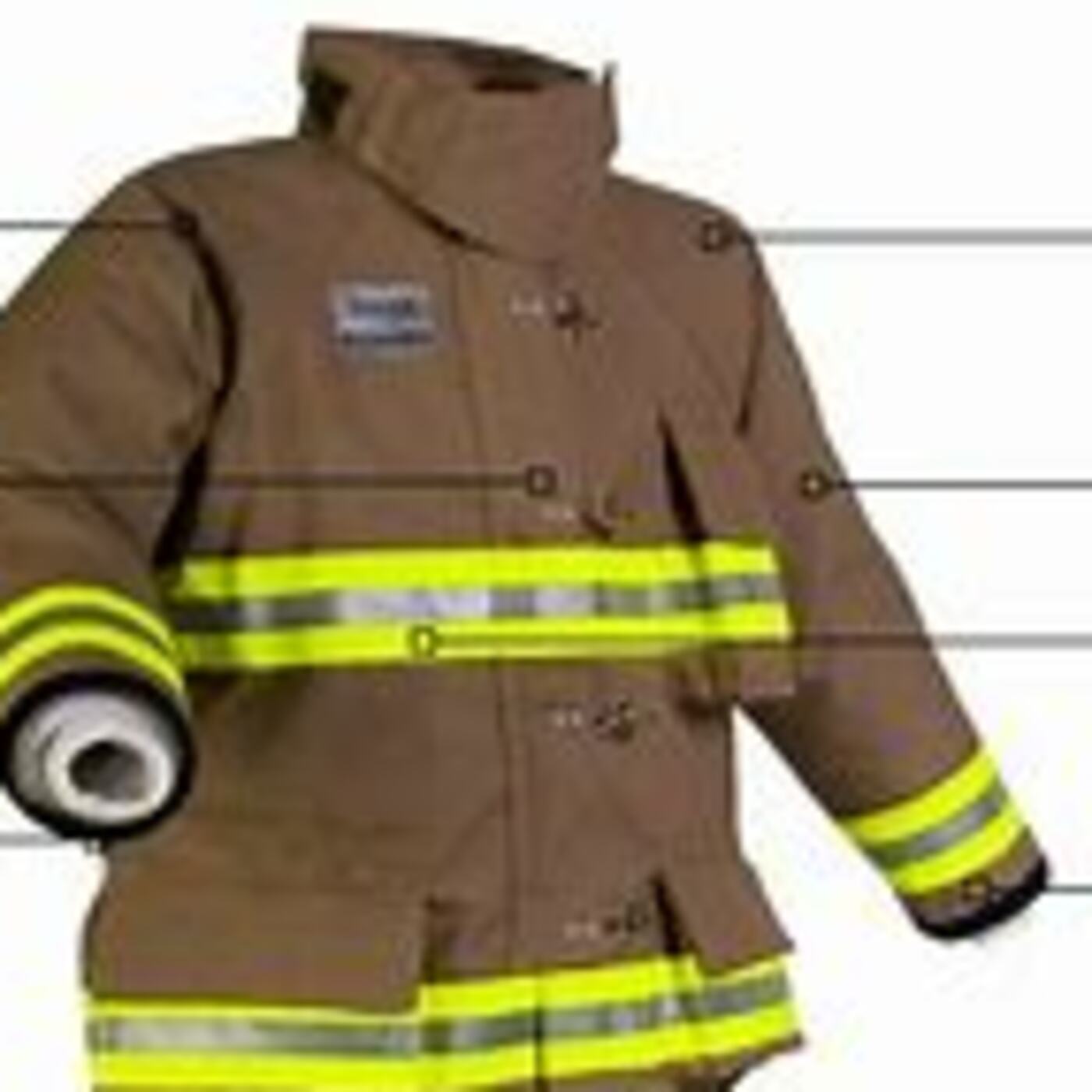
It’s there, hanging on the rack, next to our bunk, in the backseat or trunk of our car. What is it? Our bunker or turnout gear; part of our entire PPE ensemble. It is designed to protect us from sharp or pointy edges, to prevent the heat from reaching our “civilian” bodies and to not allow wetness to pervade into the inner layers which might cause us suffering steam burns. Besides our boots, coat and pants, it includes our hoods and gloves – all playing a critical role in protecting us from environmental toxins and carcinogens so often found in what is burning today. However, what if this PPE is doing its job at a higher risk than we had ever known or suspected? It is here that the “waters get muddied.” We know for a fact that certain chemicals used to waterproof not only our PPE, but carpets, upholstery and almost anything else that is made where we do not want any liquid incursion, when joined together and over a period of time, can develop into carcinogenic compounds. What do we do about this and why did we not know about it? My guest on this podcast, knows a great deal about this topic. Diane Cotter is the wife of Lt. (ret) Paul Cotter of the Worcester MA Fire Dept. A month after Paul’s promotion he was diagnosed with prostate cancer. Yet, before that, he had been at the peak of health and fitness-for-duty. So, they began looking into this issue, certainly not by themselves, but along with scientists, researchers, and many more. You will be surprised my any number of the facts that Diane shares with us on this podcast. If you did not know about this side of the firefighter cancer battle, you just might be amazed at what you hear. One thing is for sure – you will never look at your bunker gear the same way again.

The Value of Education in the Fire Service
Over the years, many men and women have entered the fire service with little or no prior training other than perhaps being a “junior” firefighter, an Explorer® or perhaps the departments basic training program. Yet, as we are all well aware, we are quite often, not fighting the types of fires that our forebears did and, as a matter of fact, we are responding to many different types of calls, altogether. Add to the mix is the fact that many people entering both the career and volunteer fire service are looking towards advancing their knowledge to meet the changing role of the firefighter and the best way to do that is to expand your educational reach. My guest on this podcast is Anthony Mangeri. Not only has Anthony been a volunteer in NJ for over thirty years, he is the Director of Fire & Emergency Services Initiatives at American Public University System. Anthony clearly and concisely explains how one can advance a career in not only the fire service, but in many areas of emergency services, through any number of choices of fields of studies, as well as the different types of degrees that are available. If you are thinking of expanding your emergency services educational horizons, I urge you to listen carefully to Anthony’s descriptions of the types of degrees and which ones may or may not be transferable to other fire schools/academies or even towards college credits. This information might help you avoid some of the common difficulties when seeking to transfer your studies and credits.
The Firefighter Cancer Foundation
As firefighters, we face some very difficult situations such as flammable liquids, concentrated atmospheres of flammable gas, heavy content fires, mass casualty incidents and more. Yet, many might agree that in 2018, there is one that could bring the bravest and “toughest” firefighter to his/her knees – and that is a diagnosis of cancer. Although today, more people are surviving cancer than ever before, our love for our work can often bring us together with strange, alternative forms of known cancers, even ones that have rarely, if ever, been seen before. That is where our guest on this podcast, Cindy Ell, comes in. Cindy is the founder of the Firefighter Cancer Foundation, which was established in 2004. Cindy and her group of over three dozen volunteers, spread out across the country to help lead the charge against cancer in the fire service. They work on multiple platforms, including legislative at both state and federal levels; medical, working with medical professionals and facilities who are studying the causes of cancer in the fire service and searching for new treatment methods, and perhaps, their most important mission, working with firefighters and their families who are dealing with a cancer diagnosis. This podcast contains excellent information and a great deal of it. You will see that Cindy doesn’t “beat around the bush,” and tells it like it is. The statistics that Cindy provides are somewhat overwhelming. Yet, she counters those with messages of real hope thanks to the work of the FFCF. Who knows? This podcast just might save your life.
Heavy Content (Hoarding) Fires & Social Media Etiquette
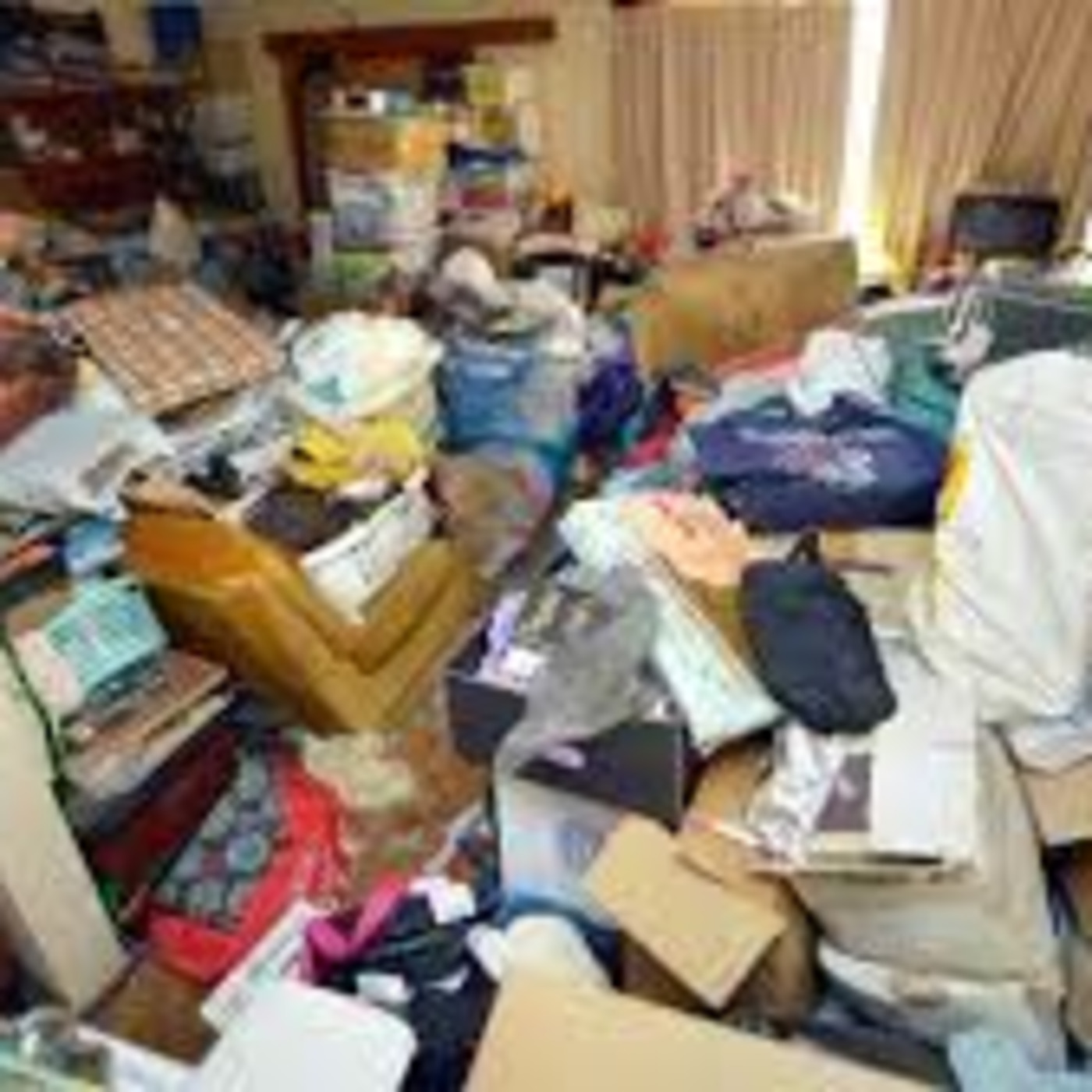
Even though the premier example of “heavy content” or hoarding fire dates back to the Collyer brothers’ mansion fire in Manhattan in1947, the problem has taken on a new urgency in today’s fire service over the last decade or so. With television programs displaying various interventions for people who may be suffering from a disorder, the public has no idea what it is like for members of the fire service to battle a blaze that breaks out in a structure where extreme clutter is the norm. Our guest, Lt. Ryan Pennington, considered one of the country’s foremost firefighting experts in this topic, returns to the podcast to share with us additional information he gathers from speaking with firefighters both in the U.S. and Canada, who have come face-to-face with this serious problem. If there is one warning that Ryan emphasizes, it is that no firefighter can enter this type of structure fire, thinking that his/her general firefighting education and experience has prepared them for this type of incident. “It doesn’t even come close!” This discussion also leads us down another path as we discuss firefighting “chatter” that we find on social media today. Unfortunately, the word, “chatter” is far too polite a term to use in many cases. Instead, we see personal attacks, diatribes and more, as firefighters across the country and even throughout the world, discuss many firefighting topics, but “tactics” is the most common one that often displays vitriolic language. Ryan cautions all that we should always re-examine what our message is saying, before we push that “send” or “tweet” button and what the ramifications may be, should that message come back to bite us in the butt. And while there is noting wrong with a little bit of ego or as he calls it, “swagger,” remember that we are all here for one purpose and that is to safely protect the lives and property of the community we serve.

Are We Fighting Cancer or Our Own Egos?
We are the fire service. We’re all about fighting fires and kicking its butt. We have always believed that for most materials, we put the “wet stuff on the red stuff” and we’re done. Sure, we might catch a “snootfull” of smoke; perhaps suffer a small burn here, a steam burn there, maybe even a broken bone. Yes, we’ve had tragic losses too, from time-to-time, but those were usually the building’s fault! However, in the aftermath of 9|11, we suffered a strong dose of reality – what’s actually burning in many of these fires is “fighting back,” by off-gassing and/or releasing toxic chemical compounds and high levels of carcinogenic substances that are found in much of the furnishings of our homes and offices. In turn, creating, for all intents and purposes, an “epidemic” of various and sometimes, strange types of cancer to those who have taken the oath to protect lives and property in the communities which we serve. My guest on this podcast is Heather Mazurkiewicz. She is a lead advocate in the Florida chapter of the Firefighter Cancer Support Network. She works very hard, all too often, out of the spotlight, to help Florida firefighters avoid hearing the news of a cancer diagnosis, and if they do, to support both the firefighter as well as his or her family. If you are a firefighter, no matter where you may live or work, you stand a significantly higher probability of a cancer diagnosis than the average citizen in your country. Please – listen to this podcast, listen to what Heather advises and learn what you can do to reduce your exposure risks and keep yourself alive and hopefully thriving through a long career and a long and healthy retirement.

Firefighter Suicide - Stemming the Tide & Reaching Out
No one said, “Life is easy.” And for those of us who are first responders, we get to see life at its very worst sometimes. It may be just one call, or it could be several really serious ones in a row. Fires, auto collisions, shootings, tragedies involving children and more; they often seem to pile up, one on another. Add to that mix how little sleep we often get, maybe problems at home with family, money, and yes, even health, and the result is a toxic soup from which we may see only one way out. According to the current statistics, the number of firefighter suicides in 2017 was equal to the number of LODD’s registered. And to that, the number of our EMS colleagues who took their lives and the numbers are almost staggering. My guest on this podcast, Jeff Dill, knows these numbers and well. Currently, Jeff and his organization, the Firefighter Behavioral Health Alliance (FFBHA.org) are the only ones who keep track of firefighter and EMS suicides. You will hear Jeff explain the process he follows and the organization’s efforts to not only assist those who are living with these dark shadows, but the families who are often left behind to cope with little understanding of what happened. This podcast is for every single listener out there, firefighter, EMS, law enforcement, buffs and civilians, too. YOU might be able to make a difference in someone’s life. To learn how and why, tune in, sit back and listen.
Clutter & Hoarding - Solutions Through Community Risk Reduction
If you’re a first responder, you’ve come across “heavy content” properties and homes. That’s “polite-speak” for severe clutter or hoarding. And many of us have responded to some type of call there, from a trip and fall or critical illness, to an actual working fire. All of us in fire, police and EMS want to do something about these problems in our community, but there never seems to be enough people, funding or motive to drive a solution, until sadly, it’s too late. Our returning guest is Shanna Perino, a Certified Professional Organizer. She has been working in this field for nearly two decades and has seen it all. She has studied the issues of clutter and hoarding and as you’ll hear, the causes are more than you may suspect. However, she has also been working on the mitigation of these issues together with first responder partners, as well as members of the community. Being certified as a Fire Inspector II by the KY State Fire Marshall and now preparing for the NFPA Fire Protection Specialist Certificate, Shanna shares with us that the issue is more than one of just hoarding. In truth, we must work together in a new initiative (at least in the U.S.) called Community Risk Reduction. Listen in and see how this goes much further than just fire prevention and the rewards both the community and its residents can reap.
Tactics & Terminology
In the premier episode of Season 3 of “5-Alarm Task Force,” we are pleased to welcome back a dear friend and great supporter of the podcast, Capt. Robby Owens, Sr. (@averagejakeff) as we discuss “Tactic and Terminology.” As we have heard from other guests, especially line officers and above, no singular tactic is appropriate for every working structure fire. What almost all agree on, are the two words that they believe are appropriate, “It Depends!” The first arriving officer who assumes initial command has precious little time to ascertain all the factors facing him/her as they pull up on the scene. Of course, the determination of whether or not people may be trapped must be foremost in the initial IC’s mind. As is, the initial method of attack he/she feels will best suit this particular fire for the first arriving apparatus. Will it be an engine? Will the truck company arrive first? What if it’s the Heavy Rescue? Capt. Owens discusses how important it is for the first front-line personnel, initial IC and even whoever assumes IC, not to pigeon-hole the methodology of tactics without having the benefit of a full-360 and other pertinent information. Capt. Owens also brings up today's far-too-common practice of on-line bullying occurring on social media by firefighting personnel who may not agree with the bravado and “bash through the front door at all costs” thinking by some, especially those who hide behind anonymous social media identities. Welcome to Season 3 of “5-Alarm Task Force!”
You STILL Don't Know What You Don't Know!
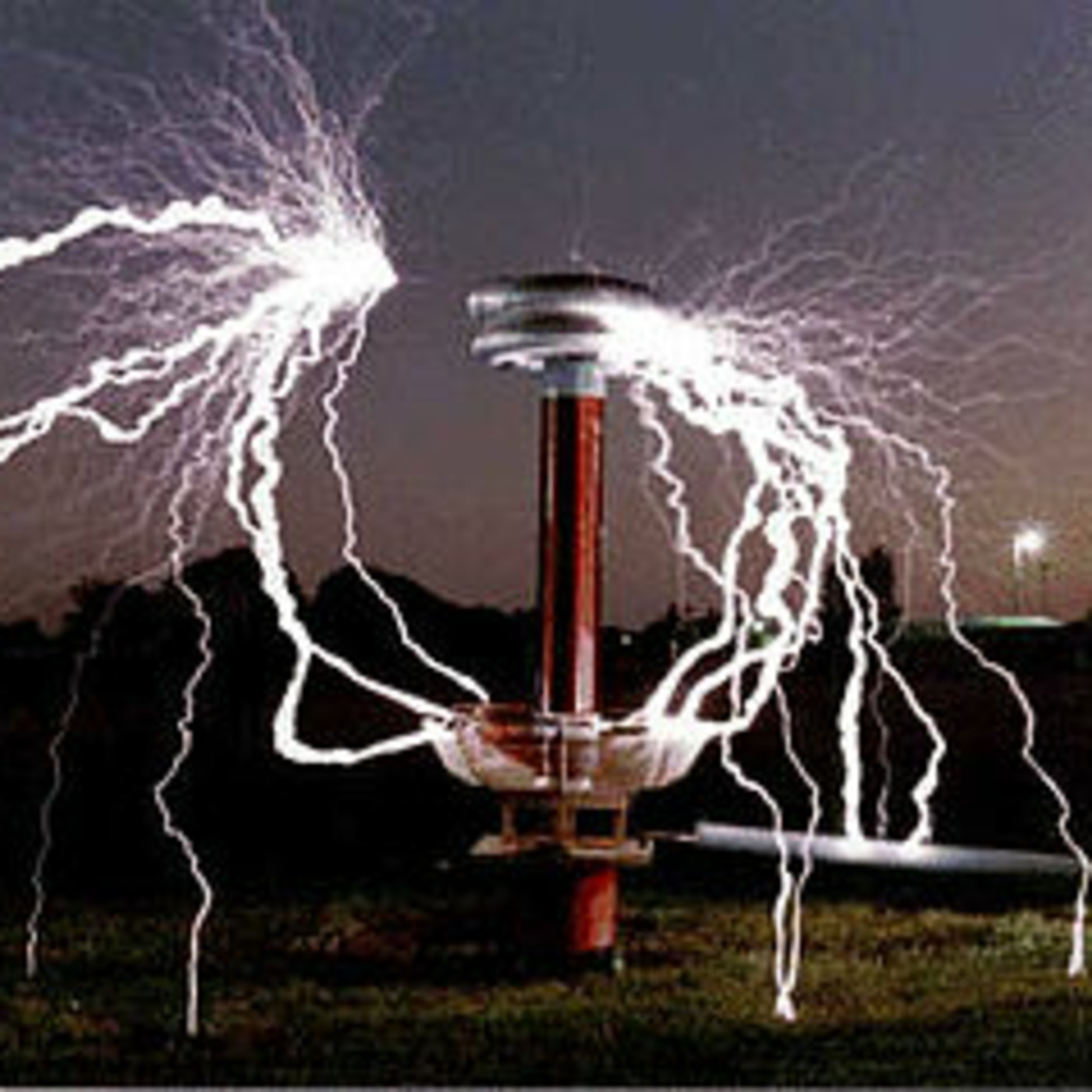
This podcast is not an old one from two years or so ago. Rather, it was on this past spring. However, it may be one of the most important podcasts you will ever hear. My guest is Battalion Chief (ret) John Cagno of the North Providence RI Fire Dept. Chief Cagno has a long and successful career. But it certainly didn’t start that way. His story will teach you one of the most important facts of this job, “You don’t know what you don’t know.” When we’re young and we first join a fire department, we’re all “spit and vinegar.” We probably watched the firefighters for years and were scratching at the chance to get in there and do what they did. And lots of us were pretty damn sure we could do it better. Chief Cagno’s story starts out that way, but it soon goes to “hell in a hand basket;” and we’re not just talking about his future career, we’re talking about his LIFE! Listen to this replay of Chief’ Cagno’s, “You don’t know what you don’t know,” and ask yourself, “Could that be me?
Firefighters & Cancer = The Deadly Mix!
As we once again return to the “5-Alarm Task Force” podcast vault during our summer hiatus, we turn to another excellent podcast that deals with the exorbitantly high rate of cancer in the fire service. Firefighters around the world risk their lives almost every day, running in when everyone else is running out. While it is well known that our job is inherently dangerous, over the last 10-12 years, we have learned about a different danger, one that hides as a microscopic "time-bomb," where no one knows, if or when it may go off! Our guest on this Episode is Keith Tyson, a 34-year veteran of Miami-Dade Fire Rescue. Just a few months after retiring 10 years ago, he was diagnosed with an aggressive form of prostate cancer and several skin cancers. These diagnoses started Keith on a journey and mission that continues today. He immediately began looking into the cancer rates of colleagues in his department. Each number, each fact, led to the discovery that his was not a sole incident. Both men and women in MDFR were experiencing rates far above the national average. Dealing with his own treatments, he engaged the Univ. of Miami's Sylvester Comprehensive Cancer Centers, who joined the search for the cases and apparent causes of these rates. From his own case, he learned of another, this time in the Palm Beach County Fire Dept. and started to engage their participation in the studies. With that, Keith founded the Florida Chapter of the Firefighter Cancer Support Network. Listen as Keith relates his personal journey which has led him around the country, to both inform and support firefighters about this very dangerous enemy that we face and what we can do to reduce our exposure. For more information, visit the website FirefighterCancerSupport.org
The Firefighter Cancer Initiative: From the Docs!
Due to the level of importance this podcast bears, I am releasing today in hopes that many of you will have the opportunity of listening to it over the weekend. Keeping with this is important topic, I am following up the past two “summer” shows with one we recorded this past March, featuring Alberto Caban-Martinez, DO, PhD and Natasha Schaefer-Solle, PhD, RN of the University of Miami, Sylvester Comprehensive Cancer Care Centers, along with Exec. Asst. Chief Todd LeDuc and Frank Correggio of Broward County Sheriff’s Office – Fire Rescue Services. Doctors Caban-Martinez and Schaefer-Solle and both part of the team leading Sylvester’s study in the prevalence and natures of fire service occupational cancer. As you will hear, they are both “in the thick of it” and answer our questions forthrightly and honestly. The entire team at Sylvester is not only studying the problem, but also working on solutions, both socially, by getting the word out even to the newest of recruits, but medically as well, as the team has been at the forefront of enhancing the methodology of the “early detection – better chances” push.Additionally, Exec. Asst. Chief LeDuc discusses the success of the early detection programs, not just theoretically, but with actual facts from his firefighters at Broward Sheriff’s Office – Fire Rescue Services. And Frank Correggio, a former firefighter/paramedic, raises some excellent points regarding some of the occupational hazards that we have face and some still do. This podcast is one that might just save your life or the life of someone you work with. Remember, you can listen or download every podcast from our website at www.dalmatianproductions.tv, iTunes®, Google Play®, Spotify®, Listen Notes®, or other podcast aggregators. Just search for “5-Alarm Task Force!”
Fighting Back Against Cancer - Cindy Ell
Last week, I re-leased our interview with Bill Banks, a former Battalion Chief with Ft. Lauderdale Fire, who provided me with my first, real education in the cancer dangers that firefighters and other first responders face. Today, I am proud to follow that interview with my interview with Cynthia (better known as “Cindy”) Ell.Cindy Ell is a former firefighter/paramedic in Anne Arundel County MD and a founding critical care paramedic at Johns Hopkins Hospital. She has been investigating and studying occupational exposures & their results for over 25 years. However, after own diagnosis of a line-of-duty cancer, she saw it as the opportunity to serve as both a first responder advocate and the founder the Fire Fighter Cancer Foundation. She now works to raise on-the-job cancer awareness to all first responders, but especially to firefighters. The foundation now works in many areas of the country, assisting afflicted first responders and their families. I am proud to say that Cindy and the FFCN was one of my first “promotional partners,” helping to get the word out about “5-Alarm Task Force,” as I, in turn, help to educate first responders about the dangers of cancer in these jobs we love to do. The facts and figures are real and Cindy and her "crew" are doing everything possible to make sure YOU know all about them. If you're a first responder, you NEED to listen to Cindy Ell!
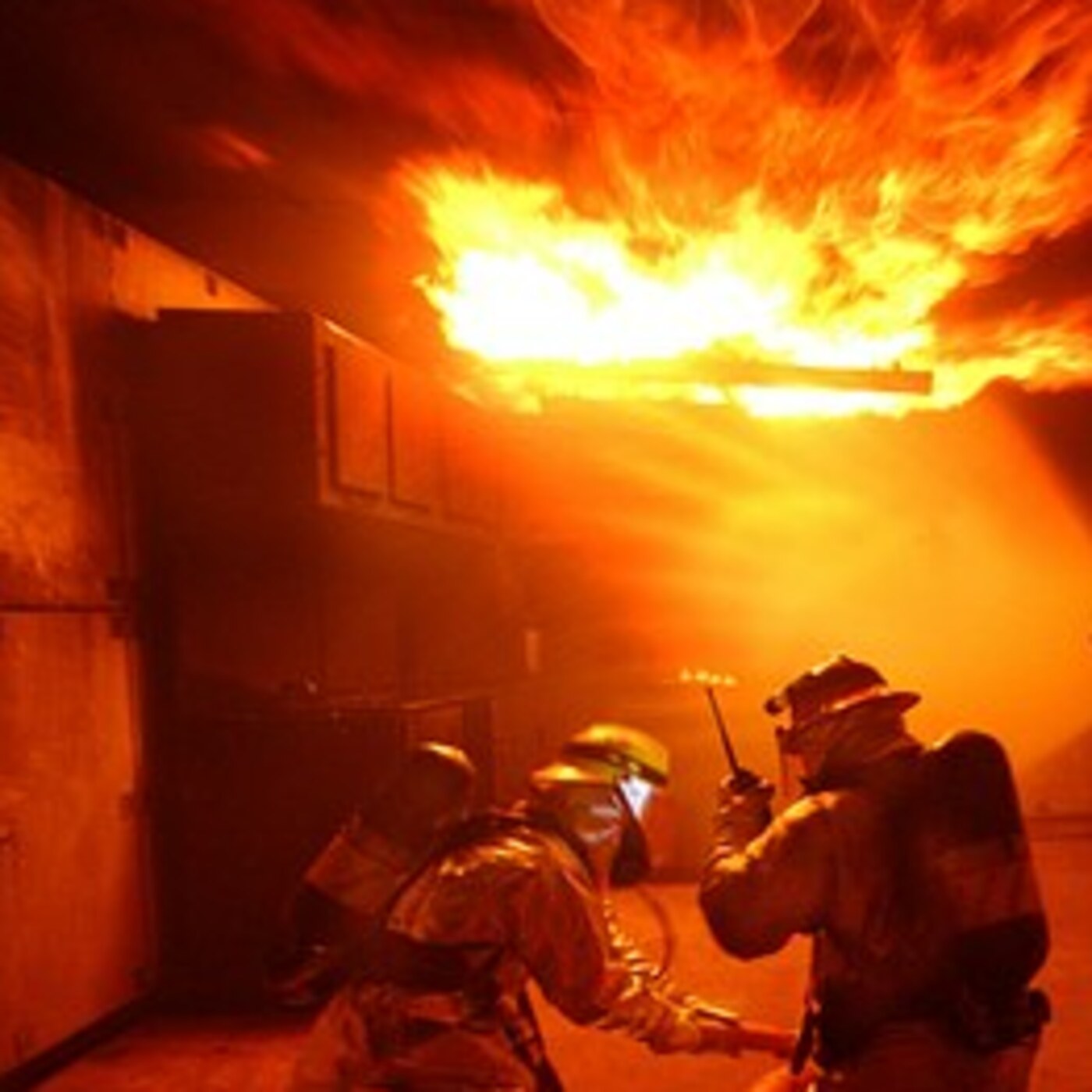
Firefighter Cancer - An "Awakening"
I was like many of you. I had heard on the news or had read in one of the trade journals, that firefighters had been diagnosed with cancer. It often pointed to FDNY and these were firefighters who had worked, so determinedly, on the Pile left after the collapse of the WTC on 9|11. However, as I was about to learn, this was just the tip of the iceberg, as they say.This “Out-of-the-Vault” episode of “5-Alarm Task Force,” takes us back to March 2017. My guest was Bill Banks, a former battalion chief with FT. Lauderdale Fire Dept. And he gave me, as well as thousands of listeners, a real education in how the fire service was being decimated by cancer. And no, it was affecting just those who worked on the Pile. It included firefighters from FDNY, Boston, Los Angeles County, Miami-Dade County and so many more.This podcast still ranks as the second highest episode listened to and the podcast with the most downloads in our history. Why? Listen to what Bill has to say and you’ll get a hint!
Another Opportunity to Learn from Chief Brunacini
It’s hard to believe that it has been almost a year since we lost one of the greatest leaders and teachers of the fire service, Chief Alan Brunacini. If you have been a firefighter for a couple of years or longer, you know to whom I refer. Past Chief of the Phoenix AZ Fire Department, “Chief Bruno,” as he was affectionately referred to, was a firefighter’s firefighter. He rose up through the ranks in Phoenix and at the same time, not only took the American fire service along for the ride, by sharing what he had learned, but became the officer and chief that many of us hoped to be, as well. I thought it a good idea to re-post the podcast I was quite lucky to have at the very beginning of “5-Alarm Task Force,” thanks to Chief Dennis Rubin. In this episode, Chief Bruno and Chief Rubin discuss the then-recently held Wingspread VI Conference. In 1966 the Johnson Foundation (of Johnson Wax) invited representatives from first responder agencies to their facility in Wisconsin, to discuss the then state of affairs in public safety and what did these representatives see in the future. That meeting was Wingspread I and it was agreed they would return in ten years’ time, to review and again, look ahead. This podcast results from Wingspread VI,50 years later.My sincere appreciation to Chief Dennis Rubin for making the arrangements to have Chief Brunacini join us in this early episode. Nonetheless, there is still a great deal we can learn from it.
Leadership: An Introspective Analysis
The word, “leadership,” especially in the ranks of first responders, is bandied about by many. And for all those that participate in this conversation, there are probably at least, twice or three times the number of definitions of what leadership is in emergency services.In this podcast, our guest, Asst. Chief John Luca of Boca Raton Fire-Rescue Services, provides us with a new and deeper definition of the term and strongly encourages us to look inward first, before we even think of leading others. Chief Luca guides us on a path through what he calls, an introspective analysis; meaning that before we can even think of leading others, what type of leadership skills do we have in leading our individual self?With over 27 years in the fire service, Chief Luca makes no claims that he was a great self-leader throughout his career. He is quite open in his self-critique, through which he guides us in the hope of assisting us in finding our “way;” not just through a long career, but also through a long, enjoyable and healthy retirement once we complete our duty.I urge you to listen to this surprisingly frank discussion with Chief Luca. I can guaranty you that this is not another “routine” podcast on being a good leader on the fireground and in the firehouse. This episode proceeds down roads many of us have barely thought of, yet it will have a great deal of meaning or meanings to every listeners.
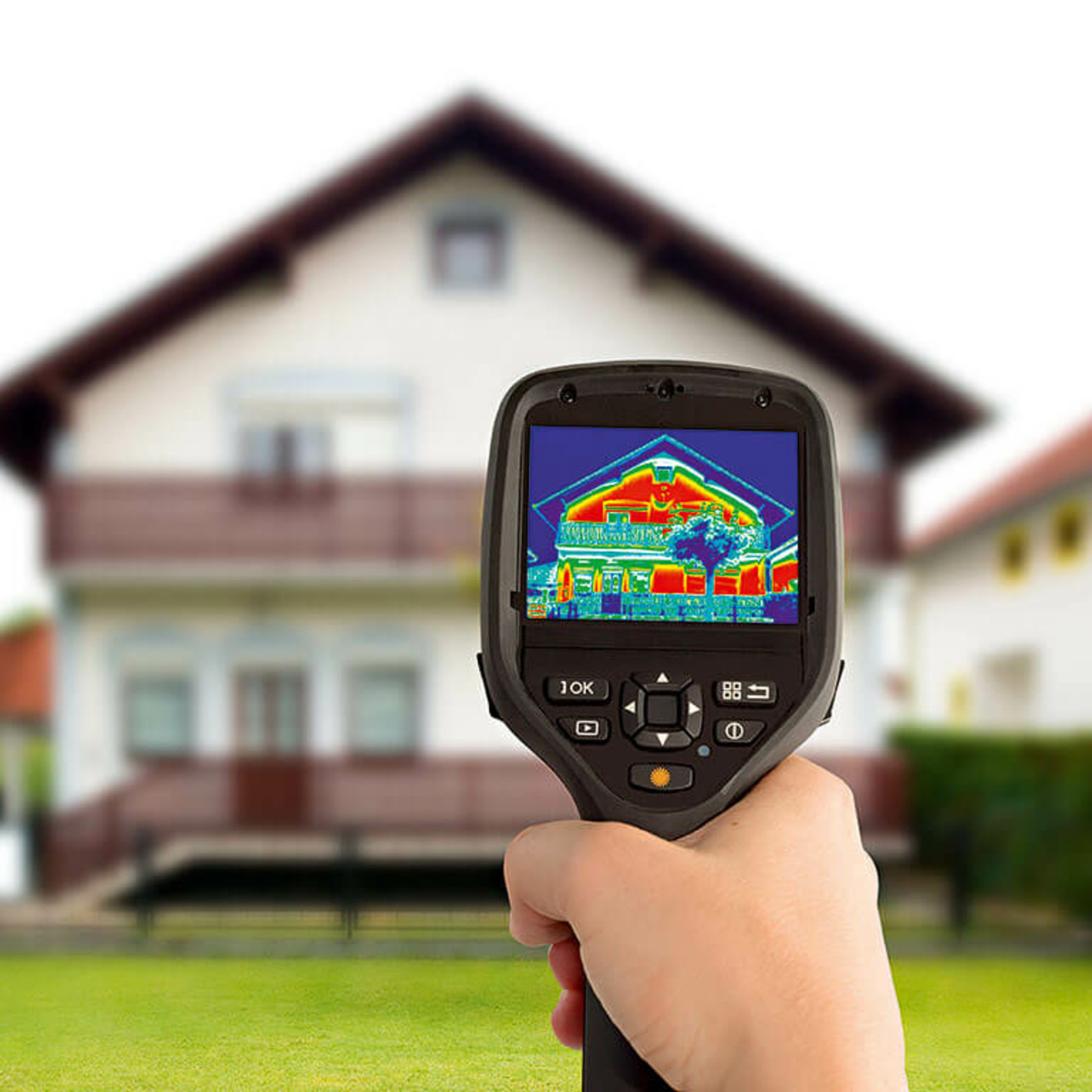
The Thermal Imaging Camera: Friend or Foe (or Somewhere In Between)
One of the most important tools that the modern fire service is the T.I.C. or thermal imaging camera. While it’s first use that resulted in the saving of a human life is traced back to 1985 in London, due to cost and development factors, it is believe that the first U.S. fire department to purchase one for regular use was Seattle in 1997. Just over 20 years later, the tool is ubiquitous in the fire service, with most, but the smallest, having at least one camera for the department. And why not? It is a tool that has multiple uses for us! However, as the owner of a successful South Florida floor covering company says in his TV ads, “Would you call a neurosurgeon to fill a cavity?” meaning, the camera user must know the capabilities (and lack thereof) damn well! Our guest on this podcast, Capt. Andy Starnes, might not be a neurosurgeon, but he knows most fire service TICs inside and out. As a captain and group leader with a major North Carolina fire department, not only does he use a TIC frequently, he has studied their manufacturing process and is involved in testing models on a regular basis, for he is considered one of the leading experts in the use of the TIC, teaching across the U.S., Canada and Germany. In today’s episode, Capt. Starnes addresses three critical areas of TIC use: A.Is it an advantage or a detriment? B.Enhancing fire attack & search methodologies C.What are we really seeing; usefulness and common terminologies At the end of the podcast, Capt. Starnes provides some of his contact information and we have it all on his Guest Page at our website, www.dalmatianproductions.tv. Capt. Starnes invites anyone with TIC questions or concerns to feel free to reach out to him for assistance or training.
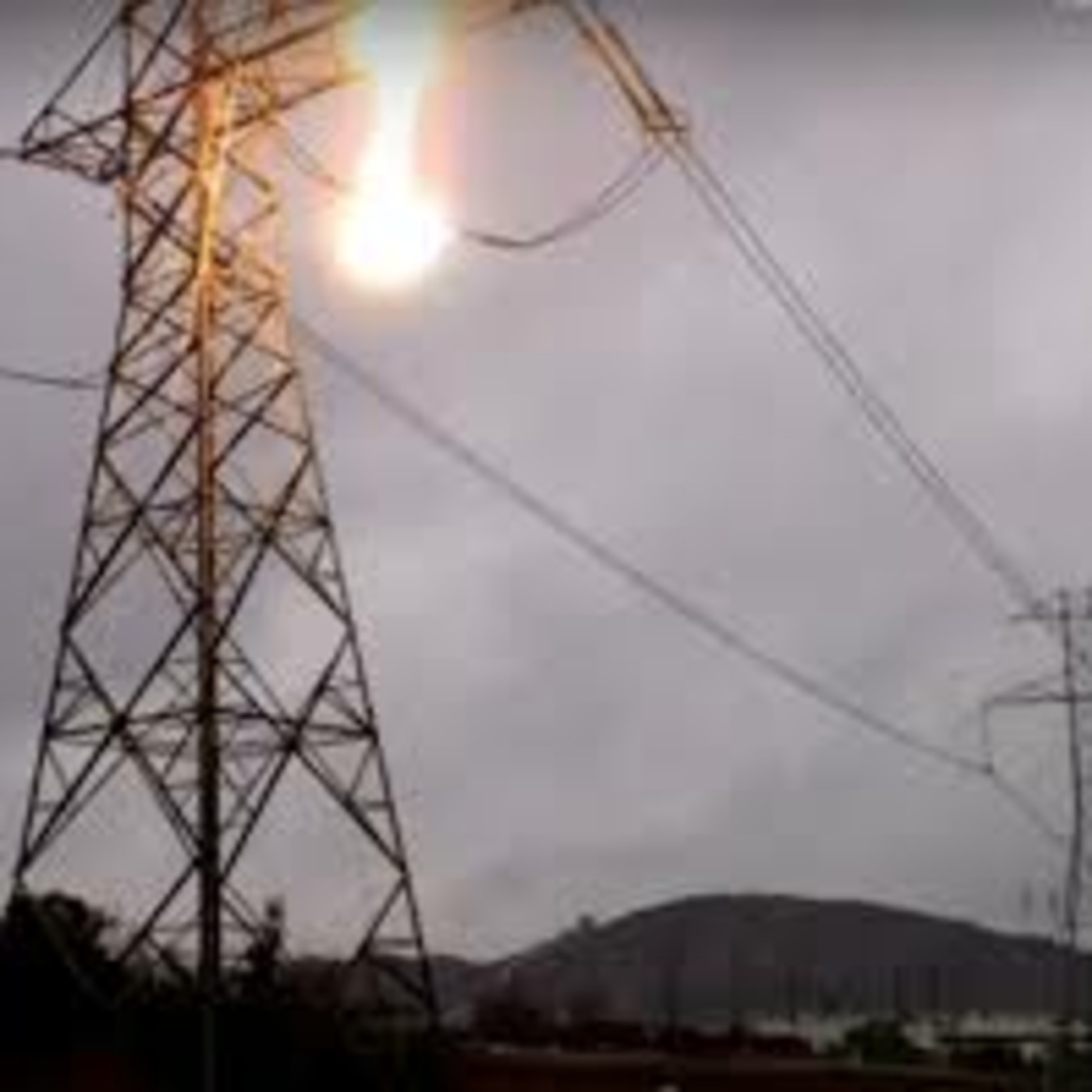
"You Don't Know What You Don't Know - Part II
In Part II of of our interview with retired Battalion Chief, John Cagno of the N. Providence RI Fire Department, we hear how the young, injured, "firefighter" Cagno, had to fight against the odds of getting his old job back. While recovering from his severe injuries, he never took his eyes of the bullseye - coming back to the job he had idolized since he was a child. However, his wants and desires did not necessarily meet with those of the Town of North Providence. It was only after a meeting with the Chief, where his request for reinstatement was declined due to the results of his injuries, that John felt he had to prove both his abilities and himself to the Chief. While he probably should not have done it, it did get John back on the job. Yet his journey through this next chapter of his life was not free of further adversity. He describes the serious problem he faced and how he struggled to climb over another stumbling block. Whether you're currently a firefighter, EMT/Paramedic or law enforcement officer, we all have to deal with problems and difficulties that the public very rarely sees. And Chief Cagno shows that when we are dedicated to our goal, we can come back and overcome the trials we face, if we remain dedicated to the task.
"You Don't Know What You Don't Know!"
Many of us are pretty damn excited when the dreams of little kids to be firefighters comes to fruition in our usually, young adult lives. We are usually in our late teens or early twenties. We may have had some experience by “buffing” until we were old enough to ride the apparatus. We’ve watched the experienced members do so many tactics, that we feel we’ll know exactly what to do when that special day arrives. As our guest today explains in Part I of his interview, (the first time in our history to create a two-part interview), “we don’t know what we don’t know!”N. Providence RI retired Battalion Chief was like so many of the rest of us. He joined his then, on-call department at age 16 and ate up all the knowledge he could. At 18, he was allowed to ride the apparatus and actively participate in drills. On a Saturday morning, he was a “truckee,” participating at an old mill, no longer in operation. The aerial was set against the building at a fourth-floor window. Additionally, out-of-reach, above the aerial, were high-voltage transmission lines with 40,000 volts. Colleagues had stretched an empty 2-1/2” line up the ladder, but a coupling became lodged between the rungs of the main body and the fly. Young John placed his tools down and raised his hand to signal his comrades to stop pulling on the hose. As he did, he was caught in an induction zone of the lines, allowing an estimated 14,000 volts to course in and then out of his body, changing his life in the blink of an eye.Join us, for this gritty, enthralling and emotional story about one of America’s truly bravest, on Part 1 of our interview with Chief John Cagno.
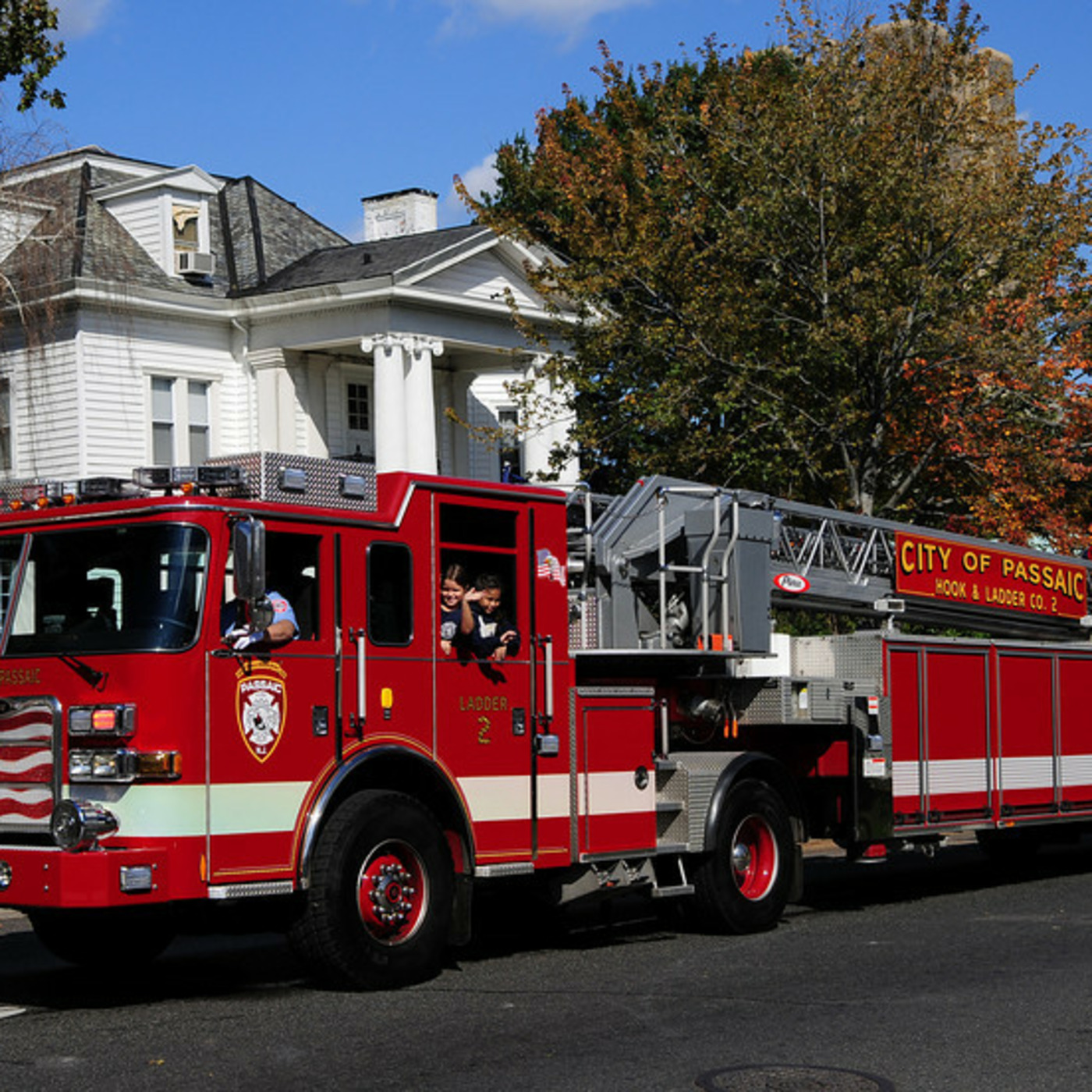
The Chauffeur - The "Unsung Hero" + More
Forget what you've seen in movies or those driving long, sleek, fancy limousines. In the fire service a chauffeur is the person who drives a fire apparatus, usually the engine, tanker, or one of the various types of ladder apparatus, the tiller, tower ladder or elevated platform. While the name "chauffeur" is most often used in the northeast area of the U.S., it aptly describes the unique services this firefighter provides. And to tell us all about this vital position is Capt. John Hayowyk, Jr. a Captain with a NJ fire department and a long time ladder firefighter, driver and officer. His many years of personal experience bring a clear and concise description of the duties of the firefighters whose only news photos are usually taken from behind! Additionally, Capt. Hayowyk, also discusses some of the changes the fire service is going through and how the chauffeurs, who are often those with a great deal of experience and seniority, are integral in passing on the knowledge they have accrued, to the new and younger members in a practical manner. Finally, we spend a few minutes chatting about some of the wonderful benefits of the job, that have nothing to do with paychecks, contracts or insurance. Just people talking with like-minded people. There's a lot to learn in this episode! Time to tune in!

Cultivate a Culture of Firefighter Fitness in 10 Steps!
While some firefighters take fitness-for-duty seriously, they often run into the "hard wall" of those who either don't think it's necessary of afraid of punitive actions if the do participate. Well-known fire officers and fitness "gurus," Dan Kerrigan and Jim Moss return to "5-Alarm Task Force" with a concise summary of their successful class taught at this year's FDIC 2018: "10 Steps to Cultivate a Culture of Firefighter Fitness in Your Department." This podcast only runs about 1 hour, but Dan & Jim give it their all to explain the "why" and how" to achieve this goal in your station and/or department. Maybe the single most important lesson everyone should take away from this podcast is that it does not require a "second-mortgage" on your station to fund a great fitness program for every firefighter. Tune in to this podcast to learn the 10 steps to help change the mindset of your comrades and officers!
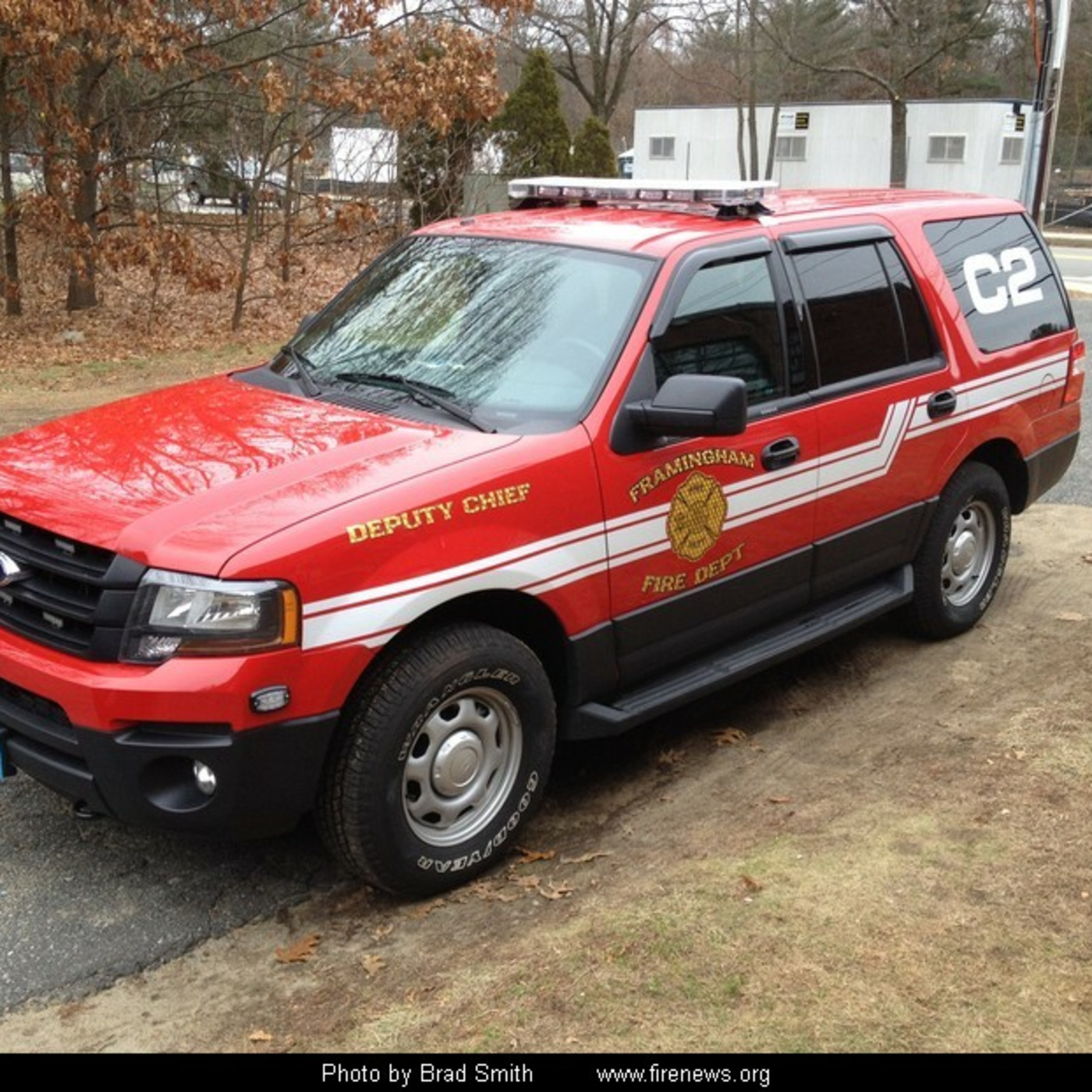
The Shift Commander - Before - During & After the Fire
While shiny new pumpers, ladders and rescues grab most of the headlines, the Shift Commander's Buggy, looks almost like another SUV. However, the person driving this vehicle has paid his/her "dues" and has been promoted to the position of Shift Commander. This interview with Dep. Chief (ret) Kevin Burns of the City of Framingham MA, is special to me, because I grew up in Framingham. And it was my exposure to the wonderful firefighters in my community as a child that planted the seed of my lifelong admiration for them. In this in-depth interview, Chief Burns takes us through the responsibilities of the Shift Commander at the three key levels on a major incident; before, during and after a fire. As you listen to Chief Burns, not only will you learn tactics, but he coaches us on how to think and act as a Commander; the highs from the job and the lows that creep in. If you have any notion of rising through the ranks to become a Shift Commander, Battalion Chief, etc., this is the podcast for YOU! My personal thanks to Chief Burns for his preparation for and dedication to making this podcast as informative and enjoyable as possible!

"Brotherhood Coaching"
On his website, BrotherhoodCoaching.com, our guest, Capt. John Lovato, Jr poses this question: Do you want to work in a fire station or do you want to work in FIREHOUSE!?!" Almost seems that there's no real question there. However, Capt. Lovato sees quite a difference and he explains the differences in this podcast. In this context, the word "brotherhood" has nothing to do with gender. Instead, it deal with how firefighters, no matter their gender, work together, working as a well-practiced team. Each member know what his/her responsibilities are, where to be and where to go. Capt. Lovato brings a refreshing view of how a crew can and should know each others abilities and how to put them best to use when the house-bells rings. We hope you'll enjoy this podcast and will share it with the members of your crew and with others in your department, as well!
The IAFC-SHS Division - Both Domestic & Abroad
An excellent friend and supporter of "5-Alarm Task Force," Executive Asst. Chief Todd LeDuc of the Broward County Sheriff's Office - Fire/Rescue Division, joins us to explain the work of this important group of the IAFC and his recent trip to the Kingdom of Bahrain for a first-ever SHS conference there! The acronym SHS stands for "Safety, Health and Survival," all issues that are playing a major role in the lives of firefighters today. We are all aware of the major focus being placed on reducing our workplace and situation injuries, our health, wellness and fitness for duty and the Cancer Initiative. A great deal of the effort comes from this important and hard-working group of command officers who, besides their duties and responsibilities in their home departments, put in an inordinate amount of time to focus on these key issues for the rest of the 1.2 million firefighters in this country.