
15 Minute History
154 episodes — Page 1 of 4
Episode 154: The Nature of Empire: Power, Ecology and Knowledge
How the environment has been perceived, valued and manipulated by humans since prehistoric times. But in the last millennium, empires brought something new into the mix — the organization of local knowledge and practices into bureaucratic and military systems that centralized power — and indeed, funded it. We’re joined today by Sumit Guha, a UT professor of history focused on demography and agriculture. Professor Guha is the author of, Ecologies of Empire in South Asia, 1400–1900 , which looks at how the Mughal and British Empires transformed the landscape of the Indian subcontinent — and indeed, how they transformed environmental knowledge itself. It’s a fascinating journey over 500 years that raises plenty of questions for today as humans grapple with climate change, extreme weather and the loss of wilderness.
Episode 153: Horses and Humans throughout History
Horses and humans have gone hand in hand for centuries. Our guest today is CU Boulder professor William Taylor, whose new book "Hoof Beats” takes us across thousands of years and miles to explore how horses helped create the human world we live in today. In doing so, Taylor challenges our understanding of prehistory and reflects on what our relationship with horses means for the future of humanity and the world around us.
Episode 152: Rethinking the Slave Trade
Beginning in the 15th century, European history took a dark turn with the rapid expansion of the slave trade. We’re joined today by Emory professor David Eltis, the co- editor of www.slavevoyages.org that draws on thousands of records — ship logs, registers, letters and government records — to understand the mechanics of the trade. His new book, Atlantic Cataclysm, utilizes these records to offer a new interpretation of transatlantic slavery centered on the Iberian rather than French or British Americas.
Episode 151: Henri Christophe: First and Last King of Haiti
Between 1807 and 1820, Haiti was led by it’s first and last king, Henri Christophe. A contemporary of Robespierre and Napoleon, Washington and Hamilton, his life was as colorful, controversial and as tragic as any from his age. He presided over a Haitian state that was opulent and cultured on one hand, brutal and repressive on the other. Today I’m joined by Yale professor Marlene Daut, whose new book, "The First and Last King of Haiti", charts the rise and fall of this revolutionary, enigmatic and largely forgotten figure who despite all his flaws pioneered a vision of black sovereignty amidst almost impossible circumstances.
Episode 150: America First: The Debate Then and Now
In the late 1930s, War in Europe seemed inevitable. Meanwhile, across the Atlantic, a fierce debate was underway — if war comes to Europe, should America get involved or stay out? On one side of the debate was President Franklin Roosevelt — who favored intervention — and on the other, Charles Lindbergh — the most famous aviator of his day, the son of a congressman and the de facto spokesperson for the “America First” committee. At the time, it was the latest round in a debate that has raged in America since the 18th century. Our guest today is UT professor HW Brands whose new book is, America First Roosevelt vs. Lindbergh in the Shadow of War. We discuss how the interventionist/isolationist debate panned out in the ’30s and ’40s, why those are imperfect terms for the two sides, and how the interventionist consensus is more fragile today than at any point since Pearl Harbor.
Episode 149: A crisis of confidence – America in 1876
Two years from now, America will enter its 250th year as a nation. For some, it will be a day to celebrate without question. But, for others it may be something of an anti-climax, or at least a chance to reflect upon the continuing gap between the promise and reality of the American project. Today, I’m joined by UT professor Jeremi Suri to discuss the lay of the land in 1876 — America’s 100th birthday. That year witnessed another incredibly tight and contentious election rife with accusations of voter fraud and corrupt bargains. Jeremi is the author of Civil War by Other Means: America’s Long and Unfinished Fight for Democracy and The Impossible Presidency: The Rise and Fall of America's Highest Office.
Episode 148: US China relations in the 1970s
During the 1970s, relations between the US and China were transformed. Previously the two nations were cold war enemies. But Kazushi Minami argues that the '70s saw Americans reimagine China as a country of opportunities, while Chinese reinterpreted the US as an agent of modernization, capable of enriching their country. Crucial to this process was "people's diplomacy" the title of Minami's book on US-China relations which focuses on how Americans and Chinese from all walks of life engaged in people-to-people exchanges across the realms of business, culture and sport. Minami teaches history at Osaka University in Japan.
Episode 147: The Court Packing Crisis
In 1937, American politics was gripped by President Roosevelt's court packing plan. Frustrated with what he perceived to be an aging, obstructionist Supreme Court, Roosevelt pressed congress to expand the court from 9 to 15 members. Stepping into the ensuing maelstrom was Texas congressman Hatton Sumners, chair of the House judiciary committee, ally of Roosevelt and an opponent of the plan. We're joined today by Josiah Daniel. Now a full time legal historian, Daniel was a partner in the intl. law firm Vinson & Elkins. He received his JD in Law and MA in History from UT Austin.
Episode 146: Black Labor in Boston
The historian Henry Adams once wrote that, “the American boy of 1854 stood nearer the year 1 than to the year 1900.” Changes during that period were indeed profound in Adam’s home town of Boston. And yet, for the majority of the city’s black men and women, life and work in 1900 were not that different from the 1850s — despite Boston’s proud progressive history. We're joined today by Professor Jackie Jones, whose new Pulitzer Prize-winning book “No Right to An Honest Living” traces the Struggles of Boston’s Black Workers in the Civil War Era. Professor Jones’ book not only reconstructs black life — and indeed white hypocrisy — in compelling detail, it also shows the incredible value that labor history furnishes us with for understanding the past.
Episode 145: Student Protests
Over the course of the academic year, student protests have roiled college campuses like at no other time in recent memory. Going further back though, historians see plenty of parallels — as well as some key differences — with student protest movements focused on Vietnam (1960s/70s) and South Africa (1980s/90s.) Today we're joined today by Jeremi Suri, a professor in UT Austin’s Department of History and LBJ School of Public Affairs. Jeremi is the author and editor of eleven books on politics and foreign policy, most recently: Civil War By Other Means: America’s Long and Unfinished Fight for Democracy, and also Power and Protest: Global Revolution and the Rise of Détente.
Episode 144: Partisanship in the Revolutionary era
Political partisanship is not only a hallmark of US democracy today. There is also a long history of dysfunction and division as old as America. H.W. Brands's new book, Founding Partisans is a revelatory history of the Revolutionary era's stormy politics, which includes a look at the nation's earliest political parties — those of Hamilton and Jefferson — the federalists and the anti-federalists. It's an ugly story for the most part, but one that can hold its head high for establishing another hallmark of democracy — the peaceful transfer of power.
Episode 143: Glen Canyon and Water Infrastructure
Climate change and population growth is creating a new appreciation — and anxiety — around water infrastructure, both in the western United States and around the world. We're joined today by Professor Erika Bsumek, whose new book, The Foundations of Glen Canyon, focuses on America’s second highest concrete-arch dam. Not simply a massive piece of physical infrastructure it is also what Professor Bsumek calls an infrastructure of dispossession whose history shows us how cultural structures, power relations and indigenous knowledge and labor interacted in the 19th and 20th centuries — and gives us a window into how the might interact moving forward as the fight for western water intensifies in an age of climate change.
Episode 142: World War I and the Hapsburg Empire
The Hapsburg Empire was founded in 1282 (or 1526, depending on who you ask) and lasted until 1918. Despite its increasingly antiquated and illiberal tendencies, it survived the reformation, the thirty years war, the enlightenment, the age of Revolution, the revolutions of 1848, and the Austro-Prussian war of 1866 — but not World War I. We're joined today by Jonathan Parker who walks us through why. Jonathan is a historian of nationalism and national identity, especially within the Austro-Hungarian lands in the decades before and after the First World War. His current project examines the establishment of Czechoslovakia in 1918 and the transfer of popular allegiances from the Empire to the nation-state.
Episode 141: Reconstruction From Past to Present
In the wake of the Civil War, the Reconstruction Era emerged as a time of radical change in the 19th century United States. Dr. Peniel Joseph brings this conversation into the 20th and 21st centuries as we discuss his most recent book, The Third Reconstruction: America’s Struggle for Racial Justice in the Twenty-First Century.
Episode 140: Ridley Scott’s Napoleon
Ridley Scott's new film, Napoleon, is a monumental historical epic that has endured mixed reviews since its release last month, due to historical inaccuracies and narrative jumps. But do such criticisms miss the point? Today 15 Minute History is joined by Professor Judith Coffin, who studies and teaches French history at UT Austin, including the French Revolution and Napoleonic era.
Episode 139: New Theory of American History
"How can a nation founded on the homelands of dispossessed Indigenous peoples be the world's most exemplary democracy?" asks Professor Ned Blackhawk (Te-Moak Tribe of Western Shoshone), author of The Rediscovery of America: Native Peoples and the Unmaking of U.S. History. Today, Dr. Blackhawk discusses what it would look like to build a new theory of American history that can fully grapple with the intertwined histories of the United States and Native America.
Episode 137: Jean Paul Sartre In The Arab World
In 1967, the French philosopher Jean Paul Sartre traveled to Egypt and Israel on a quest to understand the region and its conflicts. The trip would challenge and change him — and lead to accusations of betrayal. Today, 15 Minute History is joined by Yoav Di Capua, author of “No Exit Arab Existentialism, Jean-Paul Sartre, and Decolonization.”
Episode 138: Sex, Race, and Labor in French Colonialism
Traditionally, we think about European power being built with ships and swords. However, new scholarship uncovers a more nuanced and complex picture. Today, 15 Minute history is joined by Mélanie Lamotte, a historian of the French Empire whose work demonstrates the role that sex, race and labor played in the global expansion of French power during the 17th and 18th centuries.
Ep 136Episode 136: Afro-Indigenous Histories of the US
Afro-Indigenous histories are central to the history of the United States, tribal sovereignty, and civil rights. Today, Dr. Kyle Mays (Saginaw Chippewa) author of An Afro-Indigenous History of the United States and Hip Hop Beats, Indigenous Rhymes: Modernity and Hip Hop in Indigenous North America, discusses the intersections of Black and Indigenous history through the lens of individuals whose lives existed at those intersections.
Ep 135Episode 135: Connected Histories of Cuba and the United States
While the Cuban Missile Crisis and the Cold War are important aspects of the United States and Cuba's shared history, they are not the only elements the two share. According to today's guest and author of Cuba: An American History, Professor Ada Ferrer, there are the centuries of interconnected history between Cuba and the US.
Ep 134Episode 134: Austin’s Black History
To kick off the new season of 15 Minute History, we sit down with Dr. Javier Wallace, founder and guide of Black Austin Tours. While those familiar with Austin know the George Washington Carver Museum as well as historically Black East Austin, Dr. Wallace unpacks other hidden, and not-so-hidden elements of Black history in the Texas capital. Learn more about Black Austin Tours at https://blackaustintours.com/ and follow them on social media at BlackAustinTours.
Ep 133Episode 133: The 1844 Philadelphia Riots
In 1844, Philadelphia, a hub for Irish immigration to the United States, witnessed a series of violent Nativist riots that targeted Irish Americans and Roman Catholic churches. In our season finale, Zachary Schrag discusses the events leading up to the Philadelphia Nativists Riots of 1844, who was there, and how it fits into the broader history of the century. Professor Schrag's most recent book, The Fires of Philadelphia: Citizen-Soldiers, Nativists, and the 1844 Riots Over the Soul of a Nation (Pegasus Books, June 2021) is an account of the moment one of America's founding cities turned on itself, giving the nation a preview of the Civil War to come. In the aftermath, the public debated both the militia’s use of force and the actions of the mob. Some of the most prominent nativists continued their rise to political power for a time, even reaching Congress, but they did not attempt to stoke mob violence again. This episode of 15 Minute History was mixed and mastered by Harper Carlton, Amanda Willis, and Will Kurzner.
Ep 132Episode 132: History of the Second Ku Klux Klan
Historians argue that several versions of the group known as the Ku Klux Klan or KKK have existed since its inception after the Civil War. But, what makes the Klan of the 1920s different from the others? Linda Gordon, the winner of two Bancroft Prizes and the Los Angeles Times Book Prize, writes in The Second Coming of the KKK The Ku Klux Klan: of the 1920s and the American Political Tradition that the KKK of the 1920s expanded its mission to include anti-Black racism, anti-Catholicism, and anti-Semitism, electing legislators and representatives in government, and were hyper-visible. "By legitimizing and intensifying bigotry, and insisting that only white Protestants could be "true Americans," a revived and mainstream Klan in the 1920s left a troubling legacy that demands a reexamination today." With more than a million members at its peak, the Second coming of the KKK was expansive, to say the least. Resources: The Second Coming of the KKK The Ku Klux Klan of the 1920s and the American Political Tradition by Linda Gordon (2017) This episode of 15 Minute History was mixed and mastered by Alejandra Arrazola, Karoline Pfeil, and Morgan Honaker.
Ep 131Episode 131: Climate and Environmental History in Context
How do historians teach Environmental History in an age where climate catastrophe fills the headlines? Megan Raby and Erika Bsumek, both History Professors and Environmental Historians discuss what drew them to the field, how they talk about environmental history with their students, and the 2021 Institute for Historical Studies Conference, "Climate in Context: Historical Precedents and the Unprecedented" (April 22-23). "Among many other questions, the conference will ask: Can history offer an alternative to visions of the future that appear to be determined by prevailing climate models, and help provide us with new ways of understanding human agency?" Mentioned in today's episode: Institute for Historical Studies (https://liberalarts.utexas.edu/historicalstudies/) "Annual Conference examines climate crisis through lens of historical scholarship, culminates year-long discussion on "Climate in Context" theme" (https://liberalarts.utexas.edu/historicalstudies/news/annual-conference-examines-climate-crisis-through-lens-of-historical-scholarship-culminates-year-long-discussion-on-climate-in-context-theme) Radical Hope Syllabus (http://radicalhopesyllabus.com/) This episode of 15 Minute History was mixed and mastered by Alejandra Arrazola and Will Kurzner.
Ep 130Episode 130: Black Reconstruction in Indian Territory
Nineteenth-Century Indian Territory (modern-day Oklahoma) was home to a wide array of groups including Native American Nations, enslaved Indian Freed-people, African Americans, White settlers, and others. In a conversation on Black Reconstruction in Indian Territory, Alaina Roberts discusses what Reconstruction might have meant for Black people in what is now called Oklahoma in the years immediately following the Civil War, and why it should be included in broader conversations about Reconstruction. Roberts' new book, I’ve Been Here All the While: Black Freedom on Native Land (University of Pennsylvania Press, 2021), ties African American and Native American history tightly together, revealing a western theatre of Civil War and Reconstruction in which Cherokee, Choctaw, Chickasaw, Creek, and Seminole Indians, their Black slaves, and African Americans and whites from the eastern United States fought military and rhetorical battles to lay claim to land in Indian Territory that had been taken from others. Resources: I've Been Here All the While Black Freedom on Native Land by Alaina E. Roberts https://www.upenn.edu/pennpress/book/16221.html "A Native American Tribe In Oklahoma Denied Black Citizens COVID-19 Vaccines And Financial Relief" by Joseph Lee (Buzzfeed News-https://www.buzzfeednews.com/article/josephvlee/seminole-oklahoma-black-freedmen-vaccines ) "A timeline for Cherokee Freedmen" (The Cherokee Phoenix- https://www.cherokeephoenix.org/news/a-timeline-for-cherokee-freedmen/article_b22ddd23-1dfc-5da3-8258-b12ab7e010e7.html) This episode of 15 Minute History was mixed and mastered by Ean Herrera and Will Kurzner.
Ep 129Episode 129: Slavery in the West
In the antebellum years, freedom and unfreedom often overlapped, even in states that were presumed "free states." According to a new book by Kevin Waite, this was in part because the reach of the Slave South extended beyond the traditional South into newly admitted free and slave states. States like California found their legislatures filled with former Southerners who hoped to see California and others align with their politics. "They pursued that vision through diplomacy, migration, and armed conquest. By the late 1850s, slaveholders and their allies had transformed the southwestern quarter of the nation – California, New Mexico, Arizona, and parts of Utah – into a political client of the plantation states." But it didn't end there. The "continental South" as Waite calls it, had visions of extending into Central and South America as well as the Pacific. In West of Slavery, Waite "brings to light what contemporaries recognized but historians have described only in part: The struggle over slavery played out on a transcontinental stage." West of Slavery: The Southern Dream of a Transcontinental Empire By Kevin Waite (https://uncpress.org/book/9781469663197/west-of-slavery/) California Bound: Slavery on the New Frontier, 1848–1865 September 26, 2018 - April 28, 2019 curated by: Tyree Boyd-Pates, History Curator and Program Manager, and Taylor Bythewood-Porter, Assistant History Curator (https://caamuseum.org/exhibitions/2018/california-bound-slavery-on-the-new-frontier-18481865)
Ep 128Episode 128: The Racial Geography Tour at U.T. Austin
For almost two decades, Edmund (Ted) Gordon has been leading tours of UT Austin that show how racism, patriarchy, and politics are baked into the landscape and architecture of the campus. According to the now digitized tour's website, "What began as lectures about UT’s Black history turned into a more sustained research project about the broader racial history of the University—an approach less taken. Controversies around the Confederate statues that once lined UT’s iconic South Mall were key sites to explore the intersection of the physical and geographical campus with its racial history. This physical articulation became a framework for examining other parts of UT’s campus and history and thus, the impetus for the public history provided in the walking tour." Today, in a special episode recorded in April 2019, founding host, Professor Joan Neuberger and Professor Gordon discuss the history of the racial geography tour at UT Austin, the history of campus landmarks, and even the origins of the Eyes of Texas song. Learn more at racialgeographytour.org/ or read an illustrated transcript of this conversation at notevenpast.org/the-racial-geography-tour-at-ut-austin/
Ep 127Episode 127: History of the U.S.-Mexico Border Region
In recent years, conversations about the US-Mexico border have centered around the border wall. However, according to today’s guest, C.J. Alvarez, the wall is one of many construction projects that have occurred in the border region in the last 30 years. "From the boundary surveys of the 1850s to the ever-expanding fences and highway networks of the twenty-first century, Border Land, Border Water examines the history of the construction projects that have shaped the region where the United States and Mexico meet." Resources: Border Land, Border Water: A History of Construction on the US-Mexico Divide.C.J. Alvarez. (University of Texas Press, 2019.) "Border Land, Border Water: A History of Construction on the U.S.-Mexico Divide by C.J. Alvarez (2019) Reviewed” by Alejandra C. Garza. Not Even Past, 2020.
Ep 126Episode 126: Postwar Lesbian History
Stereotypes of the 1950s family generally include a hardworking husband, a diligent housewife, their children, and a white picket fence. However, research by Lauren Gutterman and others suggests a much more flexible family system that could sometimes include same-sex relationships. In today's episode, we talk to Dr. Gutterman about the postwar family, her book, Her Neighbor's Wife: A History of Lesbian Desire Within Marriage, the stories of the women who "who struggled to balance marriage and same-sex desire in the postwar United States" and how this new history expands the landscape of LGBTQ history in this period to include the "homes of married women, who tended to engage in affairs with wives and mothers they met in the context of their daily lives: through work, at church, or in their neighborhoods."
Ep 125Episode 125: Environmental Justice and Indigenous History
In the Spring of 2016, protests concerning the Dakota Access Pipeline dominated national headlines. For many people, it was the first time they'd thought about the relationship between Indigenous peoples and environmental justice. However, what occurred at Standing Rock and the #NoDAPL movement was part of a long history of Indigenous resistance and protest. In today’s episode, Dina Gilio-Whitaker describes the importance of those events and how they are connected to other movements, past and present. Her most recent book, As Long as Grass Grows: The Indigenous Fight for Environmental Justice from Colonization to Standing Rock, Gilio-Whitaker (a citizen of the Colville Confederated Tribes) explores this history through the lens of “Indigenized Environmental Justice” through the " fraught history of treaty violations, struggles for food and water security, and protection of sacred sites while highlighting the important leadership of Indigenous women in this centuries-long struggle.”
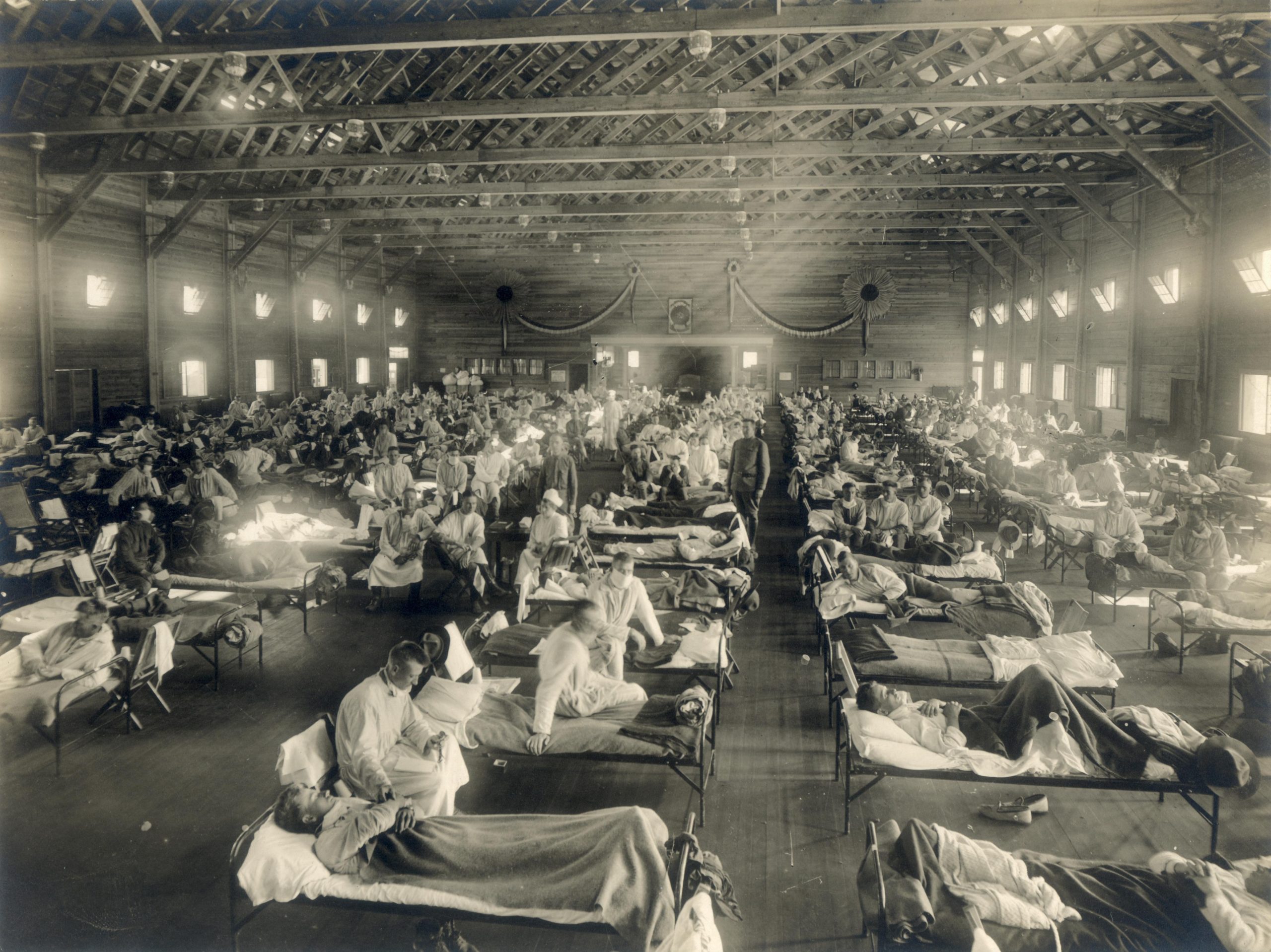
Ep 124Episode 124: The “Spanish” Influenza of 1918-1920
In the age of coronavirus and COVID-19, comparisons are being made to an unusually long-lived and virulent epidemic of influenza that occurred a century ago. The so-called “Spanish” flu went around the world in three waves, claiming more than fifty million lives–more than perished in the just-ended First World War. What was the Spanish flu? Why was it called that? And can we learn anything about what’s in store during the coronavirus pandemic of 2019-20 by casting our eyes back a century?
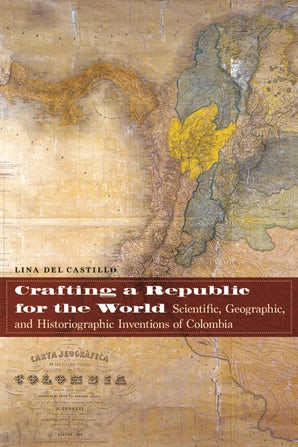
Ep 123Episode 123: Scientific, Geographic & Historiographic Inventions of Colombia
The historian Andre Gunder Frank has theorized that former colonies cannot develop economically until they have overcome the legacy of their colonial past. The ways that the United States has overcome the legacy of its colonial past with Great Britain is, in many ways, unique, especially by comparison to the former Spanish Americas. Today’s guest, Lina del Castillo, recently published a book titled Crafting Republic for the World: Scientific, Geographic, and Historiographic Inventions of Colombia, which offers a new understanding of how Gran Colombia–which split from Spain at the beginning of the 19th century, and then further subdivided into Panama, Colombia, Venezuela, and Ecuador–came to deal with its own past, and the role that science, geography, and history came to play alongside politics as the former colonies grew into nationhood.
Ep 122Episode 122: The History of Sexual Orientation Conversion Therapy in the U.S.
Sexual orientation conversion therapy, the attempt to change one’s sexual orientation through psychological or therapeutic practice, has now been banned in 17 American states and the District of Columbia and Puerto Rico, three Canadian provinces, one state in Australia and several nations in Latin America, Europe, and Asia. Beyond the merits of sexual orientation conversion therapy as a medical practice, however, lies a social importance of what the practice represents for a segment of American society. Today’s guest, Chris Babits, is a postdoctoral fellow at the University of Texas at Austin, where he researches the history of the practice and why so many people still support it, even in the face of opposition from medical and psychological professionals.
Ep 121Episode 121: The Case for Women’s History
In the spring of 2019, a widely circulated column assailed the field of history for being too “esoteric,” in particular calling out subfields like women’s and gender studies. The executive director of the American Historical Association, Jim Grossman, wrote a response suggesting that the critic should have talked to actual historians about why fields that may seem esoteric are actually very valuable. Today’s guests are the editors of the Oxford Handbook of American Women’s and Gender History. Ellen Hartigan O’Connor and Lisa Matterson, both professors of history at the University of California, Davis, join us to discuss the field of women’s studies, which as they’ve argued in the introduction to the book, is not an esoteric topic at all, but actually quite critical to our understanding of American history.
Ep 120Episode 120: Slave-Owning Women in the Antebellum U.S.
Historians have long assumed that white women in the U.S. south benefited only indirectly from the ownership of enslaved people. Historians have neglected these women because their behavior didn’t conform to the picture we have of the patriarchal culture of the 18-19 century marriage. In an extraordinary new book, Stephanie E. Jones-Rogers shows that “slave owning women not only witnessed the most brutal features of slavery, they took part in them, they profited from them, and they defended them.” Prof. Jones-Rogers joins us today to talk about the narratives of formerly enslaved people, whose testimony changes the way we view those white women and the lives of the enslaved in the U.S.

Ep 119Episode 119: Beatlemania and the 55th Anniversary of the First Beatles Tour to the US
The Beatles arrived for their first concert in the United States on February 11, 1964 to rabid fanfare. Legions of screaming women greeted John Lennon, Paul McCartney, George Harrison, and Ringo Starr on every stop of the U.S. tour, leading to observers dubbing the period as “Beatlemania.” As one of the most commercially successful and influential musicians of all time, almost every pop music artist cites their influence over their music. Yet who were the Beatles? What was their music like? And why were they so popular? Ph.D. student in history Eddie Watson takes us deep into the history of the Beatles first tour in the United States, and reveals why we should understand these popular cultural movements. But perhaps most importantly, Eddie tells us who is the best Beatle, reveals their greatest hits, and regales us of his own attempt at the Beatle bowl cut.
Ep 118Episode 118: The Caribbean Roots of Biodiversity Science
Biodiversity has been a key concept in international conservation since the 1980s, yet historians have paid little attention to its origins. Uncovering its roots in tropical fieldwork and the southward expansion of U.S. empire at the turn of the twentieth century, Megan Raby details how ecologists took advantage of growing U.S. landholdings in the circum-Caribbean by establishing permanent field stations for long-term, basic tropical research. From these outposts of U.S. science, a growing community of American “tropical biologists” developed both the key scientific concepts and the values embedded in the modern discourse of biodiversity.
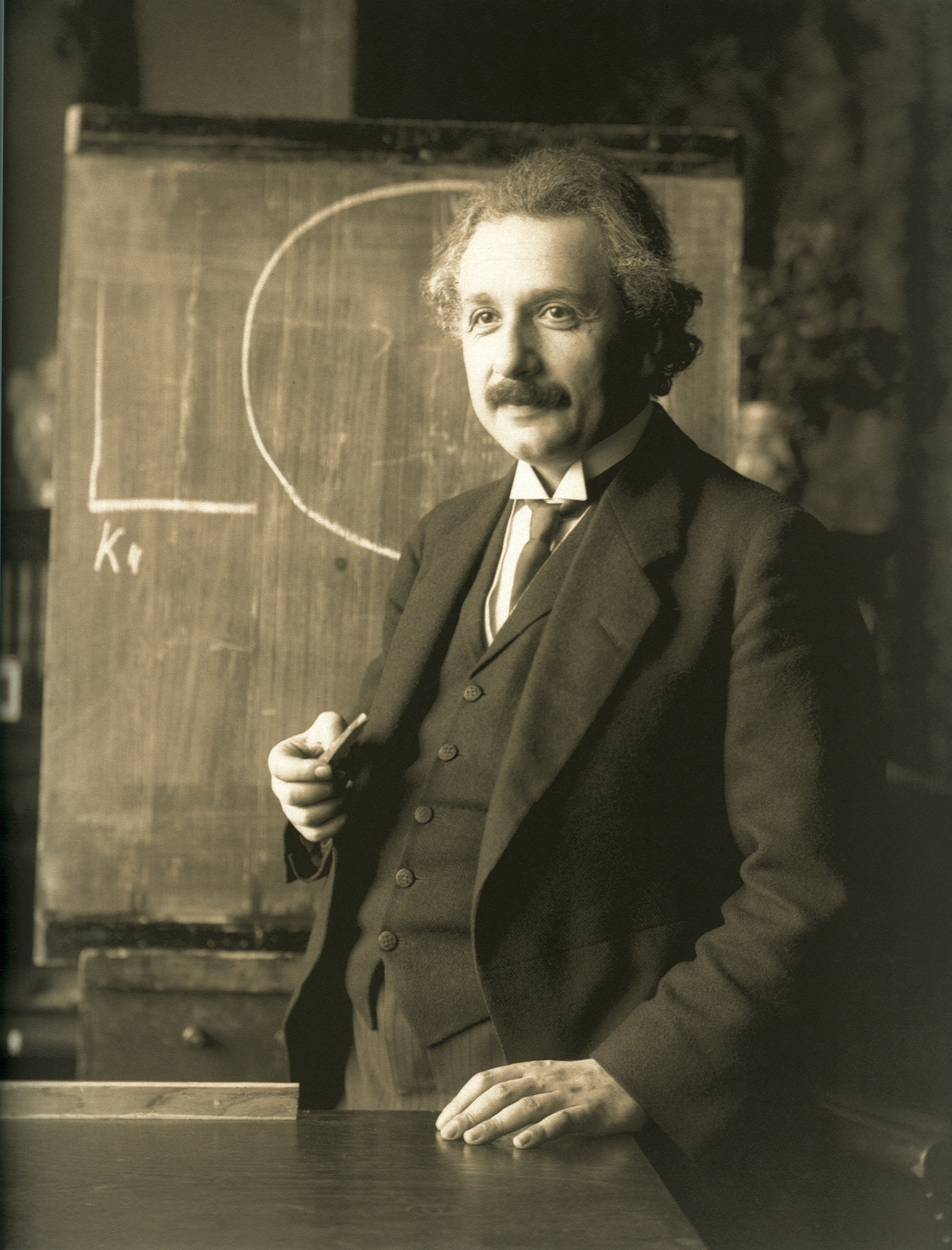
Ep 117Episode 117: Albert Einstein – Separating Man from Myth
The subject of endless speculation, fascination, and laudatory writings, German physicist Albert Einstein captured the imaginations of millions after his discoveries transformed the field of physics. Hailed as a god, saint, a miracle, and even a canonized angel by his biographers and contemporaries alike, Einstein seems a figure worthy of his larger than life status. Not so fast says today's guest, Dr. Alberto Martínez. We go deep into the personal life of Einstein, discussing his damaged relationships, intellectually incoherent views on pacifism and religion, and his own eccentric worldview. Guest Dr. Martínez of the University of Texas at Austin joins us today to discuss who Einstein really was, and how science really is done - reminding us that Einstein was not Jesus Christ, not Harry Potter, but just a normal man.
Ep 116Episode 116: Jewish Life in 20th Century Iran
Iran is home to the largest Jewish population in the Middle East outside of Israel. At its peak in the 20th century, the population of Jews was over 100,000; today about 25,000 Jews still live in Iran. Iranian Jews rejected the siren call of the Zionist movement to instead participate in the Iranian nationbuilding process, welcoming European refugees during World War II, and participating in international exchanges between Iran and Israel. Guest Lior Sternfeld from Penn State discusses the rich history of Iran’s Jewish community in the 20th century, and discusses the unique place of the community in Iran under the Shah, and how Jews even contributed to the 1979 revolution.
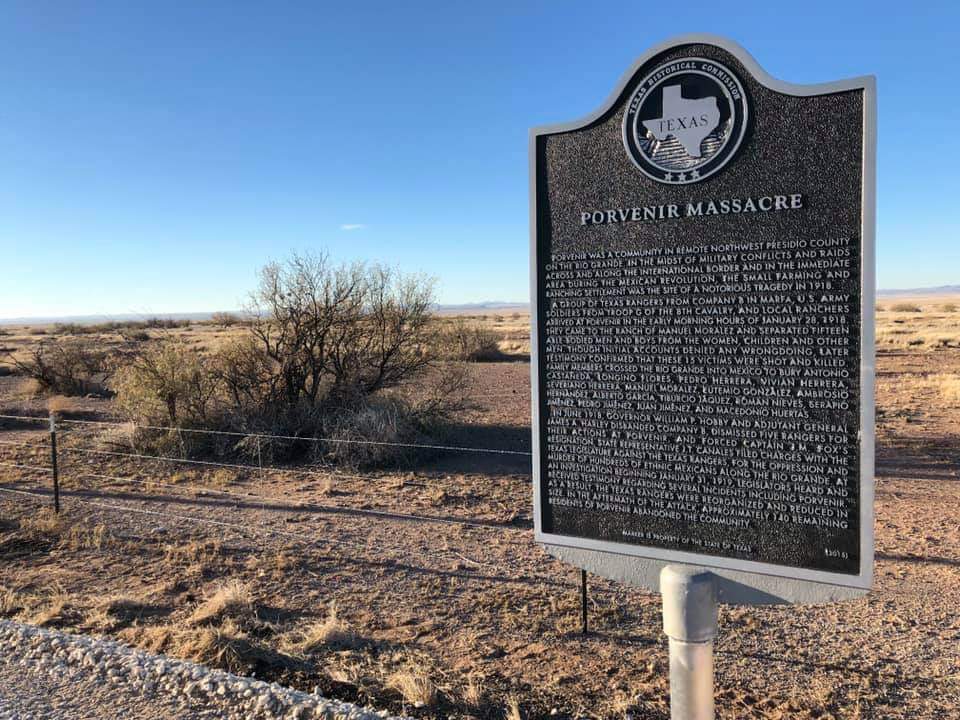
Ep 115Episode 115: Violent Policing of the Texas Border
Between 1910 and 1920, an era of state-sanctioned racial violence descended upon the U.S.-Mexico border. Texas Rangers, local ranchers, and U.S. soldiers terrorized ethnic Mexican communities, under the guise of community policing. They enjoyed a culture of impunity, in which, despite state investigations, no one was ever prosecuted. This period left generations of Texans with a deep sense of injustice, and representations of this period in popular culture still celebrate police violence against ethnic Mexicans. Yet families fought back, demanding justice for atrocities against Mexican-American communities. Guest Monica Martínez of Brown University joins us today to discuss what happened on the Texas border a hundred years ago. She also reveals the striking similarities of the period to the Trump administration's November 2018 decision to send military troops to the border.
Ep 114Episode 114: Slavery in Indian Territory
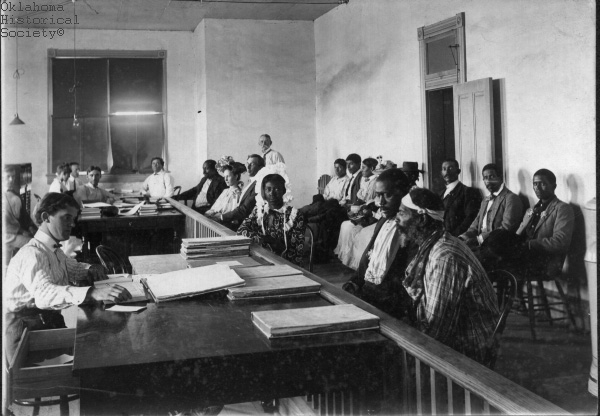
Many American Indian cultures, like the Choctaw and Chickasaw Indians, practiced a form of non-hereditary slavery for centuries before contact with Europeans. But after Europeans arrived on Native shores, and they forcibly brought African people into labor in the beginning of the 17th century, the dynamics of native slavery practices changed. Supporting the Confederacy during the Civil War, how did traditional native slavery transform in the Indian Territory throughout the 18th and 19th centuries into something resembling the unchangeable enslavement system of the American South? Guest Nakia Parker joins us to discuss the African American slave-holding practices of the Choctaw and Chickasaw Indians during the 19th century, tells us how this system evolved, and reveals the claims to tribal citizenship from this enslavement persisting to the present day.
Ep 113Episode 113: 1968 – The Year the Dream Died
The year 1968 was a momentous and turbulent year throughout the world: from the Prague Spring and the riots at the Democratic National Convention in Chicago, to the assassinations of Martin Luther King, Jr., and Robert F Kennedy, to the Tet offensive and the surprise victory of Richard Nixon (possibly the most normal thing that happened all year). Apollo 8’s trip around the moon is said to have saved the year from being all bad news. Guest Ben Wright has helped curate an exhibition on 1968 at UT’s Briscoe Center for American History called The Year the Dream Died, and discusses why 1968 looms large in our collective memory.
Ep 112Episode 112: Harvey Milk, Forty Years Later
On November 27, 1978, Harvey Milk and George Moscone were murdered in San Francisco’s City Hall. Milk was one of the first openly gay politicians in California, and his short political career was not only emblematic of the wider gay liberation movement at the time, but his death and legacy inspired a new generation of activism which was seen not only during the 1980s AIDS crisis, but has lingering impacts four decades later. In this episode, we are joined by Lisa L. Moore from the University of Texas’s English Department and incoming chair of the new LGBTQ Studies portfolio program, to discuss the legacy of Harvey Milk on the 40th anniversary of his assassination.
Ep 111Episode 111: The Legacy of World War I in Germany and Russia
On November 11, 1918, the guns fell silent in Europe as the armistice with Germany ended World War One. World War I changed the face of Europe and the Middle East. The war had brought bloodshed on an unprecedented scale: tens of millions of people were dead, and millions more displaced. The German and Russian economy were in ruins, and both nations rebuilt in different ways before meeting on the battlefield again a generation later.
Ep 110Episode 110: The Legacy of WWI in the Balkans and Middle East
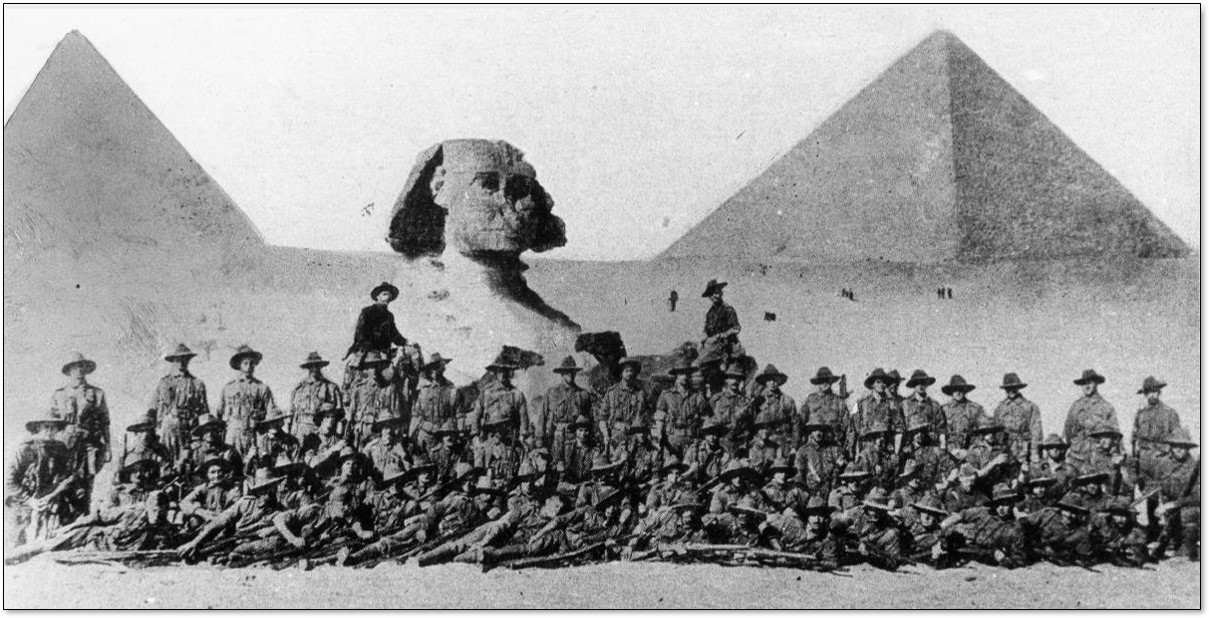
On October 30, 1918, the Ottoman Empire signed a treaty of capitulation to the Allied Powers aboard the HMS Agamemnon, a British battleship docked in Mudros harbor on the Aegean island of Lemnos. Bulgaria and the Ottoman Empire were the first of the Central Powers to formally end their participation in World War I. Five days later, the Austro-Hungarian Empire followed suit, and finally the guns fell silent with the capitulation of Germany on November 11. World War I dramatically changed the face of Europe and the Middle East. The war had caused millions of deaths and millions more were displaced. Two great multinational empires–the Austro-Hungarian Empire and the Ottoman Empire–were dissolved into new nation states, while Russia descended into a chaotic revolution. In this first of two roundtables on the legacy of World War I, I am joined by Mary Neuburger, Professor of History and Director of the Center for Russian, East European and Eurasian Studies, and Yoav Di-Capua, Professor of Modern Arab History, to discuss the war’s impact on Southeastern Europe and the Middle East.
Ep 109Episode 109: The Tango and Samba
The first notes of the samba and the tango instantly capture ones attention, transporting the listener to Bahia and Rio de Janeiro in Brazil and the River Plate in Argentina. Seen as national symbols for their respective countries, the samba and the tango are more than just popular musical and dance genres. A deeper dive into the development of these musical genres reveals a conflict between African slaves, indigenous people, and European migrants over musical identity and Latin American state formation. Andreia Menezes, a linguistics and literature professor at the Federal University of São Paulo in Brazil, joins us to explain how the samba and the tango transformed from the music of the socially marginalized to an important issue for national intellectuals.

Ep 108Episode 108: A History of the U.S. Marine Corps
The US Marine Corps may now proudly boast to be the home of the few and the proud, but this wasn’t always the case. In the early part of the 20th century, it was the poorest funded and least respected branch of the military, and at the end of World War Two there was actually a movement to shut them down. How, then, did this transformation from relative unpopularity to the most prestigious armed service in the United States occur? Aaron O’Connell, a history professor at UT Austin, joins us today to describe how, as the Cold War heated up, Marines utilized their own internal culture to win power and influence throughout U.S. political and social circles.
Ep 107Episode 107: The Yazid Inscription
Like digging through archaeological layers, documenting the development of language and writing provides important clues about historical events. Recent discoveries in the deserts of Syria and Jordan are yielding clues not only about the origins of the Arabic writing system, but also about the rich history of the Arabs in the periods just before and after the rise of Islam. A new archaeological find seems to provide the first contemporary evidence of a major figure in the early history of Islam–and even more fascinating, it appears to have been written by a loyal Christian Arab subject. Ahmad al-Jallad, the incoming Sofia Chair of Arabic Studies at the Ohio State University, discusses his work in the desert of Jordan, and describes recent finds that paint a picture of a vibrant Christian Arab community in Syria, decades after the Islamic conquest.
Ep 106Episode 106: The Blood Libel
In Kiev, in 1911, a Jewish factory manager named Mendel Beilis was indicted for murdering a young boy. Many believed that Beilis had carried out the murder as part of a ritual known as the “blood libel,” in which Jews used the blood of gentile children for baking Passover matzo. Where the idea of the “blood ritual” come from and why did people all over the world believe it? And what happened to Mendel Beilis? Historian Robert Weinberg, who teaches Russian history at Swarthmore College is here to answer these questions.
Ep 105Episode 105: Slavery and Abolition
Host: Brooks Winfree, Department of History, UT-Austin Guest: Manisha Sinha, Draper Chair in American History, University of Connecticut It’s well known in American history that slavery was abolished with the 13th amendment to the constitution, however, the debate over slavery and the movement to abolish it is as old as the American republic itself. Who were abolitionists? How did they organize? What were their methods? And, considering that it took a Civil War to put an end to slavery, did they have any real effect? Yes, they did! Dr. Manisha Sinha from the University of Connecticut joins us to discuss her research on the deeper legacy of abolitionists–men and women, blacks and whites, Northern and Southern–and how the debate over slavery shaped American history from the Revolution to the Civil War.