
15 Minute History
154 episodes — Page 2 of 4
Ep 104Episode 104: Foreign Fighters in the Spanish Civil War
During the Spanish Civil War (1936-39), which pitted a left-leaning Republic, suported by the Soviet Union, against right-leaning nationalists, supported by the Nazi, more than 35,000 people from more than 50 countries went to Spain to fight against fascism for the Republic. Today’s guest, Lisa Kirschenbaum, talks about who some of those people were and what role the Soviet Union played in training them and welcoming them as exiles.
Ep 103Episode 103: French Child Ambassadors in the East
In the 17th and 18th centuries, France had its eyes on creating a worldwide trading empire. French merchant families began sending young men–teenagers by modern definitions–to the Ottoman Empire, India, and Southeast Asia, where they were expected to learn local languages and trading customs, while representing French values and serving as the vanguard of French imperialism. However, things didn’t always go according to plan. Guest Julia Gossard shares her research into the fascinating world of child ambassadors who were expected to live in two worlds and create lasting relationships between France and a global network of allies.
Ep 102Episode 102: The “Servant Girl Annihilator”
In 1885, the world’s attention was focused on a series of grisly murders that took place in the otherwise quiet town of Austin, Texas. Several African-American women were murdered in the middle of the night, leading the press to dub the unknown assailant “the Servant-Girl Annihilator.” Some even went so far as to speculate that Jack the Ripper was the same person. Lauren Henley describes the events of 1884-85, but also discusses how these murders tell us something about the uneasy racial history of the postbellum south, and also asks what drives our fascination with serial killers and unsolved mysteries.
Ep 101Episode 101: The Bolshevik Revolution at 100
It’s been 100 years since the Emperor of Russia was overthrown by a group of left wing revolutionaries espousing a radical change in politics and economics, who turned the Russian Empire into the Union of Soviet Socialist Republics. The echoes of 1917 reverberated around the world, and, at the close of 2017, historians did what historians tend to do: look back at what happened and try to encapsulate the global significance of the Bolshevik Revolution. Today’s guest, Sheila Fitzpatrick, discusses some of the myriad interpretations that have been given to the 1917 revolutions, judgments about its success and importance, and offers insight into Russia’s own subdued attitude toward the centenary.
Ep 100Episode 100: Extravaganza Spectacular!
bonusWe’ve made it to 100 episodes! Join co-hosts Joan Neuberger and Christopher Rose as they look back on the origins of 15 Minute History, relive the awkwardness of the first few outings in the studio, recap their favorite episodes, share embarrassing moments with impressive guests in the studio, ponder the phenomenon of being asked to entertain serious questions at weddings, and give short glimpses into those April Fools’ episodes that we never quite got around to recording.
Ep 99Episode 99: The 40 Acres During World War I
With America’s entry into World War One in April 1917, life immediately changed for many young Americans. Nowhere was this change more evident than on college and university campuses. The University of Texas, with its 3,000 students, was a typical example: the liberal arts were set aside in favor of military drills for young men, and nursing classes for young women. As we near the 99th anniversary of Armistice Day, Ben Wright from UT’s Briscoe Center for American History, takes a look at World War One on our very own home front: the storied Forty Acres of the University of Texas at Austin.
Ep 98Episode 98: Brazil’s Teatro Negro and Afro-Brazilian Identity
Nearly half of the ten million Africans brought to the Americas over the course of the Atlantic Slave trade were brought to the shores of Brazil. Yet, despite having the largest African descended population of any country outside Africa, Brazil has long struggled to deal with the legacies of slavery and the racial equality that has persisted in its society. In the years after WWII, a new movement called teatro negro sought to put black bodies front and center in a rapidly changing Brazilian culture, a development that has been seen as political, social, and cultural. Guest Gustavo Cerqueira explores the cultural sterotypes that centuries of slavery left in post-emancipation Brazil, and the ways that teatro negro sought to re-position Afro-Brazilian people–literally–on the national stage.
Ep 97Episode 97: The Zionist Movement in Czechoslovakia
After World War 1, the Zionist movement – the Jewish nationalist movement that had the creation of a national homeland as its ultimate goal – took root in the new country of Czechoslovakia. However, through the mechanisms of the Zionist movement itself, Czechoslovak Jews realized their collective power as an organized group within their own country for the first time. What happened next was a struggle between the goals of international Zionism and the potential reality of what Czechoslovakian Jewry could attain through collective bargaining – until the rise of Hitler and WWII tipped the scales. Guest Tatjana Lichtenstein has studied the Zionist movement in Czechoslovakia and gives us a glimpse into the interwar period when Czech Jewish leaders saw the possibility of being accepted into European society, ironically through the mechanisms of a movement that’s become associated with immigration to the Middle East.
Ep 96Episode 96: Louis XIV’s Absolutism and the “Affair of the Poisons”
Satanic masses. Child sacrifice. Renegade priests who deal in love potions and black magics. And a secret tribunal set up to weed out the unholy members of nobility who use them, all desperate to get close to an absolute monarch who keeps the entire nation under his thumb. It’s not the subject of Dan Brown’s latest book, it’s something that really happened in 17th century France at the court of Louis XIV, “The Sun King.” Julia Gossard, an alumna of UT’s History Program, now an Assistant Professor of French History at Utah State University, has read through the archives of the secret court and walks us through the connections between Louis XIV’s absolutist rule and a fantastic series of events that’s become known as “The Affair of the Poisons.”
Ep 95Episode 95: The Impossible Presidency
Over the past two and a half centuries, the expectations placed upon the office of the President have changed and evolved with each individual charged with holding the position. From George Washington to Barack Obama, each occupant has left his mark on the office. However, since WWII, the occupant of America’s highest office has aspired to do more and more, but seems to have accomplished less and less. Have the expectations placed upon the office actually made the position less effective? In his new book “The Impossible Presidency: The Rise and Fall of America’s Highest Office,” returning guest Jeremi Suri (UT-Austin) takes a long historical look at what has made presidents successful in the role of chief executive, and asks whether the office has evolved to take on too much responsibility to govern effectively.
Ep 94Episode 94: Populism
Populism seems to describe everything in America these days, from politics to styles of communication. Some might say that it’s used so often, and in so many context, that it’s lost most of its meaning. But populism, or the movement from which it gets its name, arose in a specific context in American history at the end of the 19th century, and revisiting the history of this specific movement can help us understand how and why the term is used the way it is in present day politics. Our guest for this episode, Dr. Steven Hahn of New York University, literally wrote the book on populism and helps us turn this political buzzword into a historical phenomenon from a time period in American history that has a number of parallels with our own.
Ep 93Episode 93: Women and the Tamil Epics
Male-dominated narratives, male authors, and male-centered agency and priorities have been the norm throughout history, until the latter half of the 20th-century. So it’s no surprise that in ancient literature and epics, if you consider something like Homer’s Odyssey or other classics, even the Ramayana, the story of King Rama in early India, you see male authors telling the stories, adventures, and histories of men. In the Tamil literature of South India, however, we see something different. Guest Andrea Gutierrez introduces us to epic South Asian poems from the beginning of the first millennium that past the Bechdel test, when women’s narrative critiqued, cajoled, narrated, and provided guidance for the devout.
Ep 92Episode 92: Disability History in the United States
Americans with disabilities compose approximately 50 million people today, and yet remains largely removed from the historical record. The road to recognition has been long and varied; from President Franklin Delano Roosevelt’s use of a wheelchair while in office, to the popularity of “freak shows,” wherein physical ailments were put on display. How have organizations and activist groups groups dealt with stigma and asked for rights to be able to participate in the public sphere in the United States? First year history graduate student John Carranza, specializing in disability history, sheds some light on historical representations of disability, and how modern understanding of disability is informed by the past.
Ep 91Episode 91: The History of the Family
“Kids today.” Everyone says it, it seems, in reference to the idea that children today are spoiled, raised with poor values, and somehow have it worse than their parents generation. This notion dominates discussions from political debates to stand up comedy acts. But, what defines the stages of life and how people are supposed to act in each? Has it always been that way? Steven Mintz has long been interested in the transformations of family life through the ages and, in this episode, talks about how nearly everything we think we know about family life would be unrecognizable even a century ago.
Ep 91Episode 90: Stokely Carmichael: A Life
Stokely Carmichael, the charismatic and controversial black activist, stepped onto the pages of history when he called for “Black Power” during a speech one Mississippi night in 1966. A firebrand who straddled both the American civil rights and Black Power movements, Carmichael would stand for the rest of his life at the center of the storm he had unleashed that night. This week, preeminent civil rights scholar Peniel E. Joseph, author of Stokely: A Life, winner of the Benjamin L. Hooks Institute for Social Change National Book Award (2014), discusses Carmichael, using his life as a prism through which to view the transformative African American freedom struggles of the twentieth century.
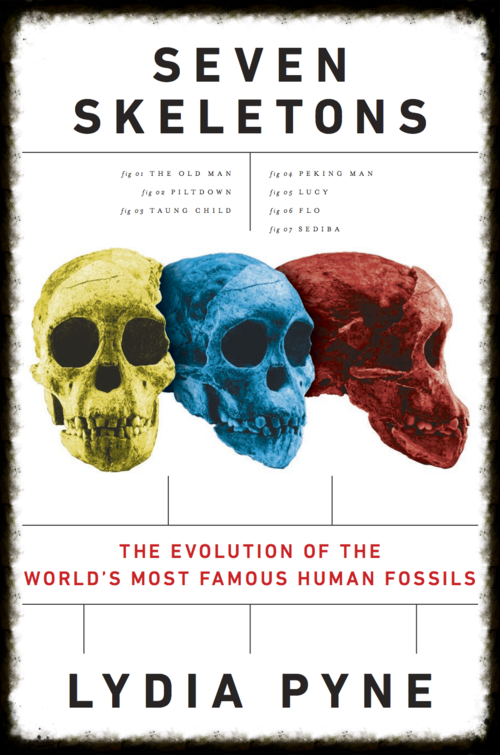
Ep 89Episode 89: Seven Skeletons
Over the last century, the search for human ancestors has spanned four continents and resulted in the discovery of hundreds of fossils. While most of these discoveries live quietly in museum collections, there are a few that have become world-renowned celebrity personas–ambassadors of science that speak to public audiences. But how does a fossil become a celebrity? Lydia Pyne, historian, author, and fellow of UT’s Institute for Historical Studies, has written a book about seven of the world’s most famous human fossils–appropriately titled Seven Skeletons. In this episode, she shares vivid examples of how human ancestors have been remembered, received, and immortalized.
Ep 88Episode 88: The Search for Family Lost in Slavery
One of the most callous and tragic aspects of slavery in the United States was the slave owners’ practice of dividing families: children were taken from parents, husbands and wives were separated, brothers and sisters too. Why was this practice initiated? How did it impact families? Did the slave-owners feel any responsibility or remorse? And, after the Civil War, how did families scattered across the south try to reconnect? Our guest today, Heather Williams, Professor of History at the University of Pennsylvania, has written a moving book about on the subject, Help Me Find My People: The African American Search for Family Lost in Slavery.
Ep 87Episode 87: Nigeria’s Civil War & The Origins of American Humanitarian Interventions
Humanitarian intervention has become such an accepted part of international relations, and our news headlines are full of stories about humanitarian efforts from the Balkans in the 1990s to Syria today. But it wasn’t always the case – the concept of humanitarian intervention originates at a specific time and place, as today’s guest explains. Brian McNeil specializes in history of United States foreign relations, and is currently revising his book manuscript titled, Frontiers of Need: the Nigerian Civil War and the Origins of American Humanitarian Intervention, the subject of this episode.
Ep 86Episode 86: Rethinking the Agricultural “Revolution”
Thousands of years before recorded human history, anthropologists have traced the evolution of human society from a nomadic hunter-gatherer phase to the rise of agricultural practices, which allowed people to stay settled in one place, form complex societies, and ultimately early civilizations. This transition, it is said, was so momentous that it has become known as the Agricultural Revolution. A few decades ago, however, a scholar posited that humans lost leisure time in the process, becoming virtual slaves to their new agricultural lifestyles that required hours of maintenance daily. This counterargument declared that the Agricultural Revolution was nothing less than the greatest disaster to ever befall mankind. “Not so fast!,” says our guest this week. Rachel Laudan, a renowned food historian and author of Cuisine and Empire: Cooking in World History, argues that this thesis, which has found a champion in Jared Diamond’s best-selling Guns, Germs & Steel, fails to take food preparation into account. Our interview offers a different perspective and raises some new questions about the social impact of the beginnings of agriculture.
Ep 85Episode 85: Brexit
On June 23, 2016, British voters stunned many political observers (if not themselves) by voting to leave the European Union. To many outside observers, the election result was unthinkable, provoking a major political shakeup in the UK as well as an identity crisis within the EU. The factors that led Britain’s electorate to reject the EU, however, are rooted in decades of uneasy alliance with former rivals and enemies in the European bloc. Philippa Levine from UT’s Department of History and Program in British Studies walks us through the contemporary British politics and rocky history of Britain and the EU that contributed to this historic decision.
Ep 84Episode 84: Behind the Tower: New Histories of the UT Tower Shooting
Fifty years ago, on August 1, 1966, twenty-five year old student Charles Whitman killed 16 people and wounded at least 32 more at UT Austin. A former Marine sharpshooter, he went to the 28th-floor observation deck of the UT Tower and began shooting people on the ground as they walked by or tried to hide. A news cameraman set up a camera under the tower so the shooting was broadcast on television. Several police officers and a recently retired Air Force officer made their way to the top of the tower not knowing what they would find and, after the rampage had lasted 96 minutes, Houston McCoy and Ramiro Martinez killed the sniper. Later it was found that Whitman had killed his mother and wife in the early hours of the morning. These events were seared into the memory of everyone living in Austin, but historians have neglected the story and, for decades, the university avoided and eventually suppressed it. A small plaque on a hard to locate rock was only erected in 2008. Why? In Spring 2016, as the fiftieth anniversary neared, graduate students in the UT History Department’s Public History seminar led by Joan Neuberger decided to make the history of the tower shooting more widely available and accessible to the public. They examined documents in local archives and wrote a collection of historical essays on many important aspects of that day’s events, as well as on the historical context, and the aftermath. And they put these essays on a website (BehindTheTower.org). In this episode, Neuberger discusses the project with four of those students: Itza Carbajal, Maria Hammack, Rebecca Johnston, and John Lisle.
Ep 83Episode 83: Simone de Beauvoir and ‘The Second Sex’
Simone de Beauvoir was one of the most important intellectuals, feminists, and writers of the 20th century. Her life and writings defied the expectations of her birth into a middle class French family, and her philosophies inspired others, including Betty Friedan. Her seminal work, The Second Sex, is a dense two volume work that can be intimidating at first glance, combining philosophy and psychology, and her own observations. Fortunately, Judith Coffin from UT’s Department of History, is here to help contextualize and parse out the context, influences, and impact of one of the 20th century’s greatest feminist works.
Ep 82Episode 82: What Writing Can Tell Us About the Arabs before Islam
In most world history survey courses, Arabia is introduced for the first time only as backstory to the rise of Islam. We’re told that there was a tradition of oral poetry in Arabic, a language native to central Arabia, and that the Qur’an was the zenith of this oral tradition. New evidence, however, suggests that Arabia was linguistically diverse, that the language we’ve come to know as Arabic originated in modern day Jordan, and that the looping cursive writing system that’s become the language’s hallmark wasn’t the original system used to write it. What to make of all this? Guest Ahmad al-Jallad has spent the past several summers digging in Jordan and Saudi Arabia, uncovering new inscriptions thousands of years old, and shares his research that’s shedding new light on the writings of a complex civilization that lived in the Arabian peninsula for centuries before Islam arose.
Ep 81Episode 81: The Trans-Pacific Silver Trade and Early-Modern Globalization
With the establishment of Manila as a Spanish trading port in 1571, one of the most important economic links in the early modern world was established. Spanish silver flowed from the mines of Potosí (in modern Bolivia) through Manila to Ming-dynasty China. The interplay between these two empires created a global financial system that linked far flung parts of the world in a way that mirrors the 20th century phenomenon that has become known as “globalization.” Guest Ashley Dean just completed her doctorate in history at Emory University examining the impacts of this pre-modern trans-Pacific linkage whose far-reaching impact touched nearly every part of the globe.
Ep 80Episode 80: Colonial Medicine and STDs in 1920s Uganda
Part of the civilizing mission of European powers in their colonies in Asia and Africa was an interest in encouraging hygiene and health among the population, according to recently established medical practices in Europe. Diseases such as cholera and plague were often targeted, but in sub-Saharan Africa, British colonial officials were especially concerned with sexually transmitted diseases (or, rather, what were assumed to be sexually transmitted diseases), which allowed colonial officials to tackle both the disease as well as what was assumed to be the licentious behavior that led to its spread. Guest Ben Weiss has been studying the history of public health in Africa from the colonial era through to the current HIV/AIDS epidemic, and discusses these earliest encounters between indigenous Africans and European medical practitioners.
Episode 79: Fishmeal—The Superfood That Never Was
After World War II, international aid and food agencies were looking for a way to fertilize land and quickly increase the nutritional value of crops around the world that had been devastated by war and climactic conditions. They found an unlikely suspect in fishmeal, and with it, lit up the economies of South America along the Humboldt Current. But the fish, as it turned out, had other ideas. Guest Kristin Wintersteen has worked on the history of industry subject to the temperaments of on-again off-again current cycles in the Pacific, and how the boom and bust of one of the first superfoods has led to new discussions about global nutrition.
Episode 78: The U.S. and Decolonization after World War II
Following World War II, a large part of the world was in the hands of European powers, established as colonies in the previous centuries. As one of the nations that came out on top of the geo-political situation, the United States was looked to with hope by aspiring nationalist movements, but also seen as a potential source by European allies in the war as a potential supporter of the move to restore the tarnished empires to their former glory. What’s a newly emerged world power to do? Guest R. Joseph Parrott takes a look at the indecisive position the United States took on decolonization after helping liberate Europe from the threat of enslavement to fascism.
Episode 77: The Paris Commune
For four months in 1871, angry citizens of Paris seized control of the city after a humiliating defeat against the Prussian Empire and the collapse of the Second Empire. The radical and revolutionary government and its brutal suppression was the inspiration for Karl Marx’s “dictatorship of the proletariat.” Although the experimental regime met a violent end, it has become part of the French national narrative. John Merriman, Charles Seymour Professor of History at Yale, has just published a book about the Paris Commune that takes a new look at how a radical government managed to find support from rich and poor, conservative and liberal, to try to regain dignity in the face of France’s brutal defeat.
Episode 76: The Trans-Pacific Slave Trade
At the height of the Spanish Empire, the Manilla Galleon – an annual flotilla between Manilla and Acapulco – was considered the lifeline of Spain’s economy, bringing silver from the mines of New Spain to the markets of Asia. On the reverse trip, the galleons would be loaded with Asian luxury goods, such as spices, silks — and slaves. This episode presents a micro history of the Trans-Pacific slave trade through the lens of Diego de la Cruz, a chino slave who managed to escape and evade capture for three years in the highlands of Central America. Guest Kristie Flannery found Diego’s story in the Spanish colonial archives, and narrates his tale in the broader context of the powerful political and economic forces at work in Spain’s global empire.
Episode 75: The Birmingham Qur’ān
In the summer of 2015, an obscure Qur’ān manuscript hidden in the far reaches of the Cadbury Research Library at the University of Birmingham grabbed attention worldwide when carbon dating revealed that the book was one of the oldest Qur’āns known to exist. In fact, it might have been written during the lifetime of the Prophet Muḥammad … or might it even have been written before Muḥammad’s lifetime? Guest Christopher Rose (yes, our regular co-host) has been following the headlines and puts the discovery of the Birmingham Qur’ān within the larger field of Islamic and Qur’ānic Studies, and explains how the text might raise as many questions as it answers.
Episode 74: The Changsha Rice Riots of 1910
In the waning days of China’s Qing Empire, a riot broke out in Changsha, the capital of Hunan Province. After two years of flooding, a starving woman had drowned herself in desperation after an unscrupulous merchant refused to sell her food at a price she could afford. Three days of rioting followed during which symbols of Qing power were destroyed by an angry mob, which then turned its sights on Changsha’s Western compound. Historians have long assumed the mob was controlled by the landed gentry, but as nearly every dictator knows, a crowd has a mind of its own. James Joshua Hudson, Visiting Assistant Professor of History at Knox College, describes the riots and some surprising finds he made conducting fieldwork in Hunan that offer a glimpse into the deeply layered tensions on the eve of the downfall of the Qing dynasty.
Episode 73: The Borderlands War, 1915-20
In the early part of the 20th century, Texas became more integrated into the United States with the arrival of the railroad. With easier connections to the country, its population began to shift away from reflecting its origins as a breakaway part of Mexico toward a more Anglo demographic, one less inclined to adapt to existing Texican culture and more inclined to view it through a lens of white racial superiority. Between 1915 and 1920, an undeclared war broke out that featured some of the worst racial violence in American history; an outbreak that’s become known as the Borderlands War. Guest John Moran Gonzales from UT’s Department of English and Center for Mexican American Studies has curated an exhibition on the Borderlands War called “Life and Death on the Border, 1910-1920,” and tells us about this little known episode in Mexican-American history.
Episode 72: Roundtable – Antiquities in Danger
Straight from the headlines: ISIS destroys the temple of Bal at Palmyra. Looters steal friezes from Greco-Roman sites in Ukraine under the cover of conflict. A highway is built through an ancient Mayan city in the Guatemalan highlands, the legacy of decades of near-genocidal internal conflict. Why is the loss of human patrimony important, especially in the context of the loss of lives? How can we begin to explain why both are worthy of our consideration? And what can high school or college educators and their students do about it? Our first roundtable features three experts from the University of Texas who’ve taken the destruction of sites where they’ve worked and lived seriously, and are working to raise awareness of the importance of antiquities in danger around the world, and share simple steps to raise awareness about the problem and how to get involved.
Episode 71: The Rise and Fall of the Latvian National Communists
For a period in the 1950s known as the Khruschev Thaw, the Soviet Republics enjoyed a brief moment of relative autonomy from the heavy handed leadership of Moscow. Latvia, a small republic on the Baltic Sea, took prime advantage of this period of liberalization under the leadership of a group called the Latvian National Communists. They saw a way forward that diverged considerably from Moscow, and took concrete steps to resist Russification of Latvia’s politics and culture. The Thaw was short lived, however, and the Latvian National Communists were eventually thwarted and the republic brought back into the Soviet fold. Guest Mike Loader gives an enthusiastic look at this high drama at the peak of the cold war, which gives us a glimpse into the inner workings of the Soviet Union from a different perspective.
Episode 70: Slavery and Abolition in Iran
The untimely death of a black man causes a stir in the press, causing intellectuals and activists to point to a long history of slavery and institutionalized racism in America. This isn’t a headline from 2015 (although it could be); it’s a description of how the Iranian press treated the assassination of Malcolm X. Iran, like many countries in North Africa and West Asia, has its own history of slavery, one that has been slowly forgotten in the century since its abolition; a history that is finally coming to light with a new generation of Iranian and Iranian-American historians. Beeta Baghoolizadeh, a UT alumna who is now a doctoral candidate in History at the University of Pennsylvania, shares both the history of abolition in Iran and some personal observations on the difficulties of researching a topic long considered taboo in Persian society.
Episode 69: The Amateur Photography Movement in the Soviet Union
In its early days, photography occupied an awkward middle ground between documentation and an art form, a debate which dragged on in the west for decades. The debate took place in the Soviet Union as well, where it was encouraged, discouraged, and then encouraged again in a roller-coaster of official policies between the eras of Lenin, Stalin, and Khrushchev. This interplay reveals a surprising amount about the lives of the artistically inclined Soviet middle class. Guest Jessica Werneke has just completed her doctorate that looks at this oft-overlooked aspect of Soviet society, and discusses the turbulent world of amateur photography in the Soviet Union.
Episode 68: The Russian Empire on the Eve of World War 1
World War I is often described as “the war to end all wars,” a global conflagration unprecedented in human society whose outbreak reshaped the face of Europe, and led to the collapse of the Russian Empire and the rise of the Soviet Union. But did the war really come out of nowhere? What else was going on in Europe—and around the world—that led to the outbreak of this “global” conflict? Our guest, Dominic Lieven of the London School of Economics, has spent his career examining problems of political stability in Europe in the 19th century, and the history of the Russian Empire’s waning days, and helps us understand the world on the eve of its first global war.
Episode 67: How Jews Translate the Bible and Why
Any student of a foreign language knows that the process of translating a text can be laden with unexpected choices about words, sentence structure, and phrases that don’t make sense in the target language. Now imagine the pressures of translating a sacred text whose language is well known and imbued with religious significance and symbolism. Our guest Leonard Greenspoon from Creighton University has done just that with translators of the Jewish Bible over the centuries. In this episode, Dr. Greespoon takes us on a fascinating journey into a Jewish perspective on how and translating the Bible is necessary, and how and why it matters. A link to Dr. Greenspoon’s longer lecture “How and Why Jews Translate the Bible (and How And Why it Matters)” can be found on our website: http://sites.utexas.edu/15minutehistory/2015/04/29/episode-67-how-jews-translate-the-bible-and-why/
Episode 66: Operation Intercept
At 2:30 pm on Saturday September 21 1969, US president Richard Nixon announced ‘the largest peacetime search and seizure operation in history.’ Intended to stem the flow of marijuana into the United States from Mexico, the three-week operation resulted in a near shut down of all traffic across the border and was later referred to by Mexico’s foreign minister as the lowest point in his career. Guest James Martin from UT’s Department of History describes the motivations for President Nixon’s historic unilateral reaction and how it affected both Americans as well as our ally across the southern border.
Episode 65: Darwinism and the Scopes “Monkey Trial”
Controversies over the theory of evolution are well documented in American society: according to a Gallup poll conducted in the late 1990s, 44% of the American public rejects it in favor of the Biblical account of creation. Has this always been the case? Did Charles Darwin and early proponents of evolution encounter the same objections when the theory was first proposed in the late 19th century? And did evolution come out of nowhere as a radical new idea, taking the world by surprise? Not necessarily, as it turns out. In an episode recorded on location in London, Adam Shapiro from Birkbeck University describes how evolution was first received in the United States, and the debates that led up to its most famous test–the Scopes “Monkey Trial” held in Dayton, Tennessee, in the 1920s.
Episode 64: Monumental Sculpture of Preclassic Mesoamerica
The Preclassic period of Mesoamerican history (1500 BC – 200 AD) has left fascinating historical clues about what life was like in the form of monumental sculptures hewn out of boulders commonly called “pot bellies” (barrigones in Spanish) due to their distinctive shape. Yet, despite the fact that writing emerged during this time, the pot bellies lack any sort of description of historical context. Who built them and why? Professor Julia Guernsey from UT’s Department of Art and Art History has recently published a book in which she combines the methodology of history, art history, and archaeology to offer a new look into this mysterious period at the beginning of recorded history in the Americas.
Episode 63: Ezra and the Compilation of the Pentateuch
The authorship of the first five books of the Hebrew Bible or the Old Testament–known as the Torah or the Pentateuch–has been traditionally attributed to Moses. This raised some questions, however: would the most humble of men really describe himself as such? During the Enlightenment, scholars identified four distinct authors of the Pentatuch, creating the long-standing “Documentary Hypothesis.” In the past twenty five years, a new trend in Biblical Studies has begun to challenge this long held view. Guest Richard Bautch from St Edward’s University in Austin is one of the scholars taking a new look at the Biblical Prophet Ezra and his relationship to this critical text. In this episode, we discuss current thinking about the formation of the Pentateuch during the time of Ezra.
Ep 62Episode 62: Sunni and Shi’a in Medieval Syria
After the decline of the Fatimids (episode 61), the medieval Middle East entered a period called the Sunni Revival, in which Shi’ism was officially discouraged and Shi’i institutions were closed and replaced with Sunni institutions. Or, at least, that’s what the official chroniclers tell us. The buildings themselves tell us a different story–one that tries to bring decades of conflict to an end by accommodating different beliefs. Art Historian Stephennie Mulder has spent the past decade working in Syria and shares a new look at history of Sunni and Shi’a in Syria during the medieval period; and how both histories are threatened by ISIS and the Syrian Civil War.
Ep 61Episode 61: The Fatimids
Around the first millennium of the Christian era, a small group of Ismaili Shi’i Muslims established a dynasty that rapidly conquered North Africa from the Atlantic Ocean to the Red Sea. At the height of their power they conquered Egypt, where they founded the city of Cairo, and their Imam-Caliphs had their names read out in the holy cities of Mecca and Medina, rivaling the Abbasid caliph in Baghdad. And yet, despite three centuries of rule by a powerful Shi’i empire, North Africa remained—and remains—Sunni with nary a trace of its Shi’ite past. In this episode, guest Shainool Jiwa from the Institute of Ismaili Studies in London illuminates an often overlooked chapter in the history of Islamic sectarianism, one in which religious differences were used to unify diverse populations under the rule of a minority government, rather than to divide and alienate them.
Ep 60Episode 60: Texas and the American Revolution
What role did Texas play in the American revolution? What–Texas? It wasn’t even a state yet! And yet, Spain and its empire–including what is now the Lone Star State, did play a role in defeating the British Empire in North America. New archival work is lending light on the ways that Spain, smarting from its loss of the Floridas to Britain in the Seven Years War, backed the American colonists’ push for independence. Ben Wright of UT’s Briscoe Center for American History has been working with the Bexar archives and documents how Spain’s–and Texas’s–efforts to divert sources of food and funding to the American troops helped to tip the balance of power in North American forever.
Ep 59Episode 59: John D. Rockefeller and the Standard Oil Company
Perhaps no individual in American history has achieved such meteoric heights as John D. Rockefeller, who embodies the image of the self-made man who rose from humble origins to become one of the richest and most powerful men in the world. He has also become the archetype of the ruthless capitalist, singlehandedly crushing competition and ignoring attempts to restrict or regulate his activities. Love him or hate him, his name casts a long shadow over the early 20th century. Guest Henry Wiencek explores the deep contradictions and equally varied representations of John D. Rockefeller, the self-made millionaire whose name became synonymous with industry and free enterprise.
Ep 58Episode 58: Islam’s First Civil War
In 7th century Arabia, the Islamic community was nearly torn apart by a civil war over the assassination of the third caliph, Uthman ibn Affan (d. 656), and the accession to the caliphate of Muhammad’s adopted son Ali, supported by Uthman’s assassins. The events of the first fitna, as it is known, are often portrayed as a struggle over the right to rule the Islamic community, but it was much more—a power struggle between Muhammad’s wife Aisha and Ali, and a dispute over who had the right to avenge the murder of Uthman. In picking up where Episode 57 left off, guest Shahrzad Ahmadi describes this tragic turn of events that sent shockwaves through the nascent Islamic community, and that continue to reverberate today.
Ep 57Episode 57: The Succession to Muhammad
Nearly every world history textbook on the market explains the origins of sectarianism in the Islamic world as a dispute over the succession to Muhammad. Sunnis, they say, wanted an egalitarian society in which the leader was chosen from the people; the Shi’a, however, wanted the leadership of the nascent Islamic community to remain within Muhammad’s family. It seems simple—but is it really? In the first of a series on the origins in Sectarianism in Islam, UT’s Shahrzad Ahmadi expands on this vastly oversimplified version of the story to introduce us to the key players involved—and to the intense rivalry between Aisha, Muhammad’s favorite wife, and his adopted son Ali.
Ep 56Episode 56: The Pueblo Revolt of 1680
In the late 17th century, Native American groups living under Spanish rule in what is now New Mexico rebelled against colonial authorities and pushed them out of their territory. In many ways, however, the events that led up to the revolt reveal a more complex relationship between Spanish and Native American than traditional histories tell. Stories of cruelty and domination are interspersed with adaptation and mutual respect, until a prolonged famine changed the balance of power. Guest Michelle Daneri helps us understand contemporary thinking about the ways that Spanish and Native Americans exchanged ideas, knowledge, and adapted to each others’ presence in the Southwest.
Ep 55Episode 55: Witch Hunting in Early Modern Europe
Stories of witches and witch-hunting in early modern Europe have captivated us for centuries. During the early modern period of European history, stretching from roughly 1450 to about 1750, about 100,000 people—most of them women—were tried for the crime of witchcraft. About half of these people were executed, in most cases by burning at the stake. But witchcraft is more than just a Halloween story–for the men and women involved it was a very real, very frightening aspect of daily life. Guest Brian Levack explains that, at its heart, medieval accusations of witchcraft and sorcery are not supernatural at all, but instead based in the all too human need to explain the ordinary cycles of birth, death, sickness, wellness, and the constant struggle between rich and poor.