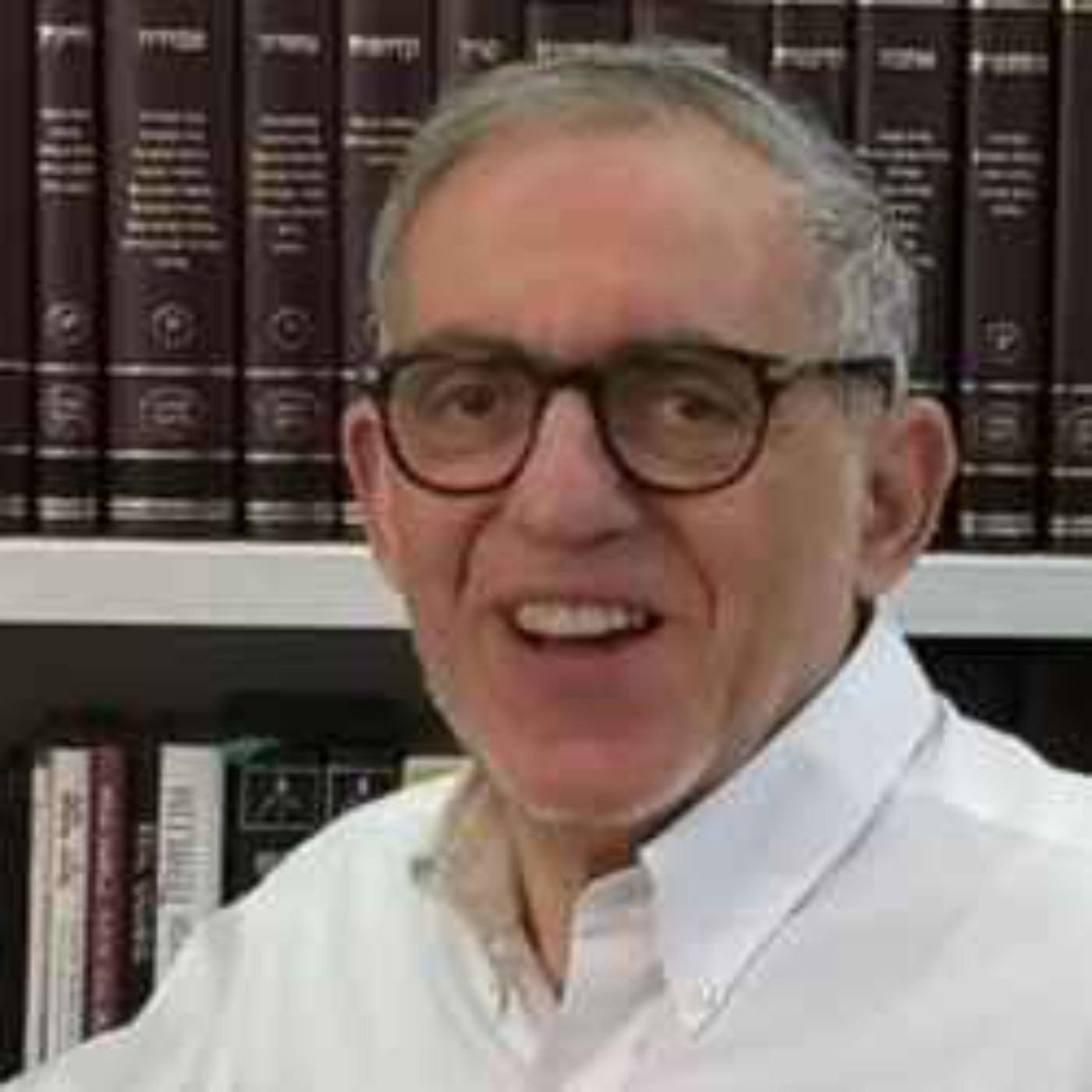
Standing in Two Worlds with Doctor Sam Juni-Episode 24-Yiddishkeit during Yuletide- Living as a Minority with a Majority Culture
December 23, 202040m 11s
Audio is streamed directly from the publisher (records.jewishpodcasts.fm) as published in their RSS feed. Play Podcasts does not host this file. Rights-holders can request removal through the copyright & takedown page.
Show Notes
Rabbi Kivelevitz and Professor Juni begin by recounting their respective experiences growing up in predominantly Christian neighborhoods. Both recall being enamored by the holiday spirit of goodwill and a sense of people attempting to overcome their negative tendencies. Kivelevitz recalls being enthralled by the holiday season music, decorations, and neighbors’ family get-togethers. In the same vein, Juni recalls his guilt appreciating the beauty of the choral music, and his awe of holiday services heard from the open church doors in the slum where he grew up. During this season, he observed the transformation of threatening personages into respectable-looking worshippers, as he discovered that Christians had a genuine belief in God. He gained respect for the dominant religion which -- as he matured and entered the secular world as a student -- morphed into a stance of respecting religiosity as an attitude regardless of particular beliefs or behavior codes.Kivelevitz notes efforts by some to de-religionize the Holiday spirit as less Christian and more human-secularist in tone. These efforts have been ascribed to a pernicious Jewish plot to destroy religionin some right wing propaganda. Kivelevitz citesthe wording of a sign on his neighbor’s lawn: Put Christ Back into Christmas.The concept of “Nittel Eve” (designating key nights of the holiday season) is discussed. On these evenings, some Jewish sub-groups minimize good deeds and religious rituals, with the rationale that spiritual benefits may be usurped by supernatural Christian forces. Juni views that stance as consistent with the belief in evil or dark forces he was raised with – such as the devil or Satan – which are actual negative counterparts to a positive deity.The Doctor expounds on a psychosocial maxim that minorities necessarily feel inferior to members of the host culture – especially in oppressive and subjugating contexts. He extends the principle to argue that Diaspora Jews therefore also feel that Judaism is lacking in some respects compared the religion of the greater culture.Kivelevitz feels that this negativity toward one’s own religion is heightened by efforts of Diaspora Jews to assimilate economically and socially into the host culture, despite their avowed fealty to their own heritage.The discussant grappling with the options Diaspora Jews have in view of their a priori feelings of inferiority to a non-Jewish host religious culture -- other than making Aliya. They recognize efforts by some to adjust Judaism so that it is less distinct from, and more in line with, a non-specific inclusionary religious template. This is contrasted with the opposite solution to self-isolate (e.g. Monroe and other Haredi colonies in New York and elsewhere). Asserting that both such efforts are destined to ultimately fail, Juni argues that marked negative effects can be mitigated by recognizing social realities straightforwardly. This entails admitting that we are affected by feelings of inferiority in some respects, and making a genuine effort to understand the host culture. He believes such a stance is antidote to distortions information-withholding about the non-Jewish world – a standard in traditional Jewish education. Prof, Juni hopes that an honest portrayal of our social milieu may well decrease the likelihood of youngsters becoming enamored when they encounter positive and alluring aspects of their host culture they were unaware of.Doctor Samuel Juniis one of the foremost research psychologists in the world today.He has published groundbreaking original research in seventy different peer reviewed journals, and is cited continuously with respect by colleagues and experts in the field who have built on his theories and observations.Samuel Juni studied inYeshivas Chaim Berlinunder Rav Yitzchack Hutner, and in Yeshiva University as aTalmidof Rav Joseph Dov Soloveitchick.ProfessorJuni is a prominent member of theAssociation of Orthodox Jewish Scientists, and has regularly presented addresses to captivated audiences.Associated with NYU since 1979,Juni has served as Director of MA and PhD programs, all the while heading teams engaged in important research.Professor Juni's scholarship on aberrant behavior across the cultural, ethnic, and religious spectrum is founded onpsychometric methodologyand based on a psycho-dynamicpsychopathologyperspective.He is arguably the preeminent expert inDifferential Diagnostics, with each of his myriad studiesentailing parallel efforts in theory construction and empirical data collection from normative and clinical populations.Professor Juni created and directed NYU's Graduate Program in Tel Aviv titledCross-Cultural Group Dynamics in Stressful Environments.Based inYerushalayim, he collaborates with Israeli academic and mental health specialists in the study of dissonant factors and tensions in the Arab-Israeli conflict and those within the Orthodox Jewish community, while exploring personality challenges of second-generation Holocaust survivors.Below is a partial list of the journalsto which Professor Juni has contributed over 120 articles.Many are available on lineJournal of Forensic PsychologyJournal of Aggression, Maltreatment, and Trauma.International Review of VictimologyThe Journal of Nervous and Mental DiseaseInternational Forum of PsychoanalysisJournal of Personality AssessmentJournal of Abnormal PsychologyJournal of Psychoanalytic AnthropologyPsychophysiologyPsychology and Human DevelopmentJournal of Sex ResearchJournal of Psychology and JudaismContemporary Family TherapyAmerican Journal on AddictionsJournal of Criminal PsychologyMental Health, Religion & CultureAs Rosh Beis Medrash, Rabbi Avraham Kivelevitz serves asRavandPosekfor the morningminyanat IDT.Hundreds of listeners around the globe look forward to his weeklyShiurinTshuvos and Poskim.Rav Kivelevitz is aMaggid ShiurforDirshu Internationalin Talmud and Halacha as well as a Dayan with theBeth Din of America.Please leave us a review or email us at [email protected] more information on this podcast visityeshivaofnewark.jewishpodcasts.org See acast.com/privacy for privacy and opt-out information. This podcast has been graciously sponsored by JewishPodcasts.fm. There is much overhead to maintain this service so please help us continue our goal of helping Jewish lecturers become podcasters and support us with a donation: https://thechesedfund.com/jewishpodcasts/donate