
Word of Life Church Podcast
852 episodes — Page 16 of 18

Your True Self
<p>One of the primary goals of spiritual formation is to become your true self. The real you is calm, content, wise, and unafraid. It is only the false self, the shadow self, that is agitated, grasping, foolish, afraid. You may have had very little contact with your true self. The self who is calm, content, wise, and unafraid is who you really are deep inside. Why are we more often agitated, grasping, foolish, and afraid? We have been distorted by sin. The fallen world has marred the image of God in our life. And so, we lift up our soul to God that we might recover the proper image and that we might escape our false self and find our true self. The psalms are meditations that bend the soul toward calm, content, wisdom, courage. This is one of the primary purposes of daily praying the Psalms: to lift up our soul to God and discover and recover our true self.</p>

Authentic People / Authentic Church
<p>Jesus is a king, the king; and he has a kingdom. To be a Christian is to confess that Jesus is the world’s rightful king and to enter that kingdom by faith and baptism. Our calling is to live as citizens of the kingdom of Jesus here and now, in the 21st century. We don’t live in 2nd century persecution or 12th century Christendom or 20th century modernity. We live in the 21st century postmodern world with its own challenges to the gospel and its unique opportunities to embody the Christian faith. If we can learn to live as a people faithful to Jesus we will be a city on a hill.</p>
A Tapestry of Grace
<p>God doesn't cause all things to happen, nor does he always prevent bad things from happening. But God does cause all things that happen to work together for good. But God is able to take all the events of your life, the good and bad, the beautiful and ugly, and weave them together in such a way that in the end the whole story is beautiful! Sometimes in the present moment our lives seem to be a confusing, painful mess. But the One at the loom working on the story of your life has a hand of grace. When dark, ugly, and painful events come into our life, we suffer. But never let go of the promise that, in the end, the tapestry of our lives will be beautiful.<br><br>"He will wipe away every tear from their eyes… and there will be no more pain, for the former things have passed away. And he who sits upon the throne says this: 'Behold! I am making all things new!'" –Revelation 21</p>
A Temple for the Imperfect
<p>When imperfect people aspire to perfection, the results are disastrous. And when people find themselves in a culture where perfection is expected, (in their family, or church, or job), they are forced to fake it. Perfectionism requires hypocrisy, and requires people to live outside of reality. But Jesus saves us from all of that! Jesus saves us from the pressure to be perfect. This is really good news! When you don’t have to be perfect, you can begin to be good. The glory of God is seen in mercy, not perfection. Jesus has established a temple for the imperfect. Being perfect is not what Christianity is all about. The church is a place where broken people can find acceptance, forgiveness, and healing in Jesus Christ. The house that Jesus builds is a temple for the imperfect. The church is to be a temple for the imperfect, a place where the glory of God is seen in mercy.</p>
Paul's Thorn
<p>We don't like to admit it, but it's not always our weaknesses that get us in trouble. Sometimes it's what we are good at— our strengths, our successes, our victories— that cause trouble to find us. We pray for success, and some of those prayers are answered. But too much success can become a stumbling block. If the Apostle Paul had nothing but success and smooth sailing in his ministry, it would have been his undoing. But Paul suffered, he felt weak, and knew he had to depend on the grace of Jesus. In this way, Paul’s life reflected the contours of the cruciform. Paul would have never achieved the same authority if he had not been subjected to great suffering. Paul gains both grace and credibility because he suffered deeply.</p>
Quietness and Trust
<p>Everywhere Paul went there were riots. But riots were never Paul's doing or desire or intent. Paul didn't advocate for angry, loud, public protest, but just the opposite. He wrote to the Thessalonians that they should “aspire to lead quiet lives." Paul advocates not for a riot Christianity, but a quiet Christianity. In a world that grows weary of the endless noise of ideological anger, the church is to be a haven of quietness and trust, a quiet refuge of peace. Isaiah dreams about what it will be like when righteousness returns to the earth. He write that the effect will be peace and the result will be quietness and trust. The result of righteousness among God's people is not riot and protest, but Quietness and Trust.</p>
Peter's Tears
<p>In the garden of Gethsemane, the disciple Peter was ready to go to prison and death with Jesus. But when he attempted to defend Jesus from the Roman soldiers who had come to arrest him, Jesus rebuked Peter, telling him to put away his sword and renounce violence. Peter was disillusioned and began to follow Jesus only at a distance. Before being redeemed, Peter would end up shedding some heavy tears. In in our own lives, often deep spiritual transformation happens only through the shedding of tears. Tears are necessary to soften the soul. But Jesus will not leave those tears unredeemed, they serve a holy purpose. Jesus remade Peter after his greatest failure, which caused those heavy tears. God, by his grace, uses our sins and failures to form Christ in us. Before you can be remade, you may have to be undone- and that will involve shedding some tears.</p>
The Useful God
<p>Pastor Derek Vreeland delivers a sermon entitled, "The Useful God".</p>
Jacob's Limp
<p>Jacob swaggered through life with the confidence typical of a con man. He was a success in the shallowest sense of the word. Jacob had a kind of success; but what he didn't have was dignity, integrity, holiness. God was at work in Jacob's life and would bring about holiness in Jacob. The tool that God would use to produce this holiness in Jacob’s life was pain. When Jacob came face to face with real pain he would see the face of God. Transformed by pain, Jacob limped the rest of his life. He had been blessed and broken— and his blessed brokenness gave him a new name and a new life.</p>
Breaking Badly
<p>Jesus breaks bread and calls it his body. His broken body becomes the source of our salvation This is breaking that is good and that belongs to redemption and resurrection. This is the kind of breaking we're called to share with Jesus. But there is a kind of breaking—a kind of response to pressure—that is not good. After receiving the broken bread, Judas departed into the night to betray Jesus. Judas' journey into the darkness was a response to pressure that is Breaking Bad. Pain, pressure, disappointment are the sources of inevitable breakage in our lives. As humans, you will experience these things. It's part of the human condition. How you respond to these pains determines whether you break good or break bad. We are called to follow the Jesus way of trusting God, and not breaking bad. When we trust God, God is faithful and becomes a source of healing. But when we break bad and try to take control, we inflict our wounds on others. Let's learn to trust in God!</p>
A Gospel Culture
<p>We are to be gospel-centric and gospel-saturated in the life of the church, because the gospel creates a certain kind of culture, shaping how we think and how we live. In order to be this kind of church, we preach the gospel first and morality second. God has saved us and called us to a holy life, but we emphasize the gospel of God's great love first. This life then creates the kind of culture whereby we can flourish in the holy life, where the Spirit continues his work of transformation within us.</p>
The Suffering God
<p>The idea that God could and would truly suffer is foreign and scandalous to us. From the dawn of religious consciousness, humanity has shared similar images of God: The Glorious God, The Almighty God, The Holy God, The Merciful God. But the idea that God could suffer is something altogether unexpected. But God did suffer; torture, crucifixion, and finally death. On the cross Jesus suffers with us as God. God not only became human, he became the kind of human we don't want to be; A despised and rejected outcast, a failure. Jesus Christ God with us in life, in struggle, in sorrow, in pain, and in death. Jesus died the worst kind of death, that he might go down to the ugliest depths of death. But this suffering is not just an act of solidarity; it's also an act of salvation. God in Christ suffered death that he might enter into death and lead the way out. God saves us by suffering death with us! Only the suffering God can help.</p>
The Night of Unknowing
<p>In the Bible, the new day doesn't begin at sunrise or at midnight, but rather, at sunset. God wants us to see that each new day begins with darkness. The new day does not begin by being able to see— The new day begins with being unable to see. Likewise, spiritual growth does not begin with knowing. Holding onto certitude and insisting you have all the answers prevents spiritual progress. The process of spiritual growth is knowing, unknowing, and then new knowing. There are some things you have to unlearn before you can make spiritual progress. We want to think that to make spiritual progress all we need is positive addition. But a lot of making spiritual progress is about negative subtraction. Unknowing is harder than not knowing. It's not the learning that is hard, it's the unlearning.</p>
God On Trial
<p>Religion can be misused as a way of avoiding the reality of pain. Religion becomes delusional and destructive when misconstrued as a guaranteed way of avoiding pain. This phenomenon is dramatized in the cycles of debate found in the Hebrew scriptures of Job. The first lesson we should learn from the book of Job is to be wary of explaining to sufferers why they are suffering. If we accept that Job was a blameless man who suffered outrageous and undeserved misfortune, as the scriptures says, then our false certitudes, our easy answers, and our trite clichés need to be called into question. Perhaps the main lesson we are to learn is that blame is the satan and serves no good purpose—whether it's the friends blaming Job, or Job nearly blaming God.</p>
A Eucharistic People
<p>The bread and wine in communion are more than a symbol, but not less than that. In the broken bread we see not only a symbol of the brokenness of Christ given for the sins of the world, we also see a picture of the church. Jesus blesses us; he breaks us; he gives us to the world. This three-step Eucharistic action provides for us our core identity. We are blessed. We are broken. We are given. In our brokenness we admit we are broken by sin and we also choose to break open ourselves to allow people to see us as we are. This kind of vulnerability is the pathway of love. We cannot love or be loved if we do not trust. We do not trust and do not become trustworthy if we do not know. We do not know and are not known if we are not vulnerable.</p>
Schooled In Denial
<p>Beginning at Bethlehem, Jesus enters the world of the wounded and is himself wounded. Yet there is a beautiful, sacred mystery: It is by those wounds that we are healed. In bringing our hurts to the wounds of Christ we begin to find our healing. But for this to happen we must first acknowledge our wounds, our own pain. In our culture we find this hard to do, because we are schooled in denial. We have been taught to deceive ourselves and deny our pains and our wounds. Of course that kind of denial only bottles up the pain until it poisons the soul. Depression, anger, addiction, sickness are what result from un-lamented pain. When we’re schooled in denial we earn a degree in how to stay miserable. But when we face our pain with honesty, when we grieve and lament openly, we open up space for the comfort of God, given by others, to come to us and heal us.</p>
The Society of Jesus
<p>The Church is the society of Jesus. That is, it is God's alternative society built around Jesus. Within the various societies of the world there are pockets of the society of Jesus, consisting of baptized communities learning to live the Jesus way and embracing the politics of Jesus. As these Jesus societies are faithful to the Jesus way they are the light of the world, the salt of the earth. But if they are unfaithful, they become nothing more than religious versions of the wider culture. This is why our first task must always be to remain faithful to Jesus, not to be "effective" or "successful." At Word of Life Church, we want to learn to be a faithful society of Jesus in 21st century American society.</p>
Pain Is The Price of Admission
<p>We inhabit a world of hurt. Pain is an ever-present possibility. Grief stalks us. This is not just true of people in third-world countries suffering deep, grinding poverty. This reality is not restricted to the victims of violent regimes in the Middle East. It is the human condition. Pain is no respecter of persons. It comes to us all. To take part in the journey of life, pain is inevitable and unavoidable. Part of our Christian hope is that God will someday lead his creation beyond pain. We have the hope of a world beyond hurt. But our present world is quite different. For now pain remains the price of admission into God's good creation. What we see in the Bible portraits is people who learned how to transform their pain. They learned that by grace we can transform our pain into a kind of grace: A grace that heals.</p>
Show Me The Place
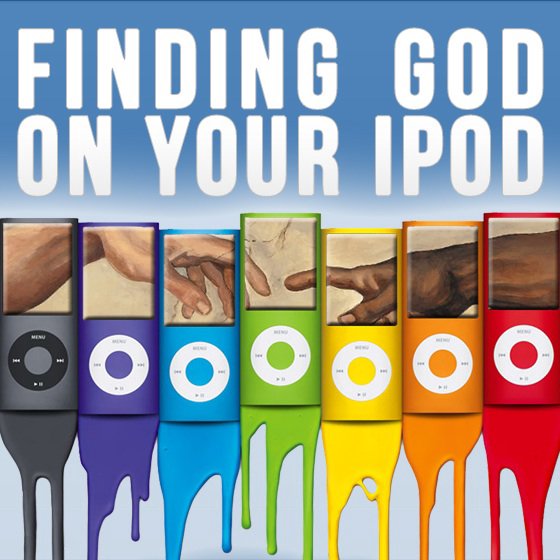
<p>In the final track of the summer 2013 series, Finding God On Your iPod, Pastor Brian Zahnd examines the song “Show Me The Place” by Leonard Cohen. It is a serious and prayerful reflection on the Incarnation. If we drift too far into the realm of ideas and out of the realm of matter, we easily drift away from Christianity and toward Gnosticism. Christianity is an intensely earthy, material religion. God came to earth, not merely as an idea, but in the form of a man, with all of the dirtiness and pain that human life requires. God shares human suffering with us. He suffered sorrow, bereavement, betrayal, rejection, torture, and even death. This is the great scandal of Christianity: We worship a suffering, crucified God.</p>
Hold On
<p>In the final Sunday morning installment of the 2013 edition of Finding God On Your iPod, the rock & roll foursome Alabama Shakes tell us that "you gotta hold on". Take hold of the life of the age to come... and hold on! We can't settle for the script of the old age; we must lay hold of a new way of being human. Jesus in his death and resurrection really did re-found the world. The powers and principalities with their ways and means of death have been overthrown. Believe that in the resurrection of Jesus a new world order has been inaugurated. Sometimes it's hard to see that God's new age has dawned, but hold on! The bitterness of death and the sting of salty tears is still with us, but hold on! The ugly specters of war, poverty, and injustice still haunt us, but hold on!</p>
Wing$
<p>Our 21st-century Western culture prescribes consumerism to quench the thirst of our soul. The up-and-coming hip-hop artist Macklemore uncovers the fraud of such prescription in his track called Wing$. As consumerism is exposed, it leaves us wondering is there anything that can truly quench the thirst of the human soul.</p>
Mercy
<p>Dave Matthews is someone who hungers and thirsts for justice. It's a theme that repeatedly appears in his songs. What Dave Matthews may not realize, however, is that the justice he hungers for is what the gospel is really all about. In the song Mercy, Dave Matthews sings, "Imagine that we could get it together / Stand up for what we need to be / Cause crying won’t save or feed a hungry child / Can’t lay down and wait for a miracle to change things". And in the song that immediately follows on the album, the recurring line is, "We gotta do much more than believe if we really wanna change things." We DO have to do more than believe and pray. But, we must believe and we must pray. We do this because believing and praying is how we are properly formed into agents of God’s mercy and redemption in the world. Jesus spent his time on earth in ministry changing the world as it was at that very moment. He did not have a focus of teaching people how to go to heaven when they die. Jesus insists that God actually cares about the kind of world we have. Jesus wants us to bring the will of God on earth as it is in heaven, right now! Between now and our death, let's try to bring heaven to earth. Let's multiply mercy.</p>
Demons
<p>In the song Demons by The National, Matt Berninger sings about wishing that he could rise above his depression, hurt, and pain, but instead "stays down with his demons". Emotions like shame and anger, lust and loneliness, are human emotions. But, improperly processed and left unattended, these wounds can become the breeding ground for demons, such as addiction, depression, violence, and suicide. Jesus never blamed people for their sins or for their demons. Jesus came, not to condemn people for their demons, but to lift them out! Alone, a person may not have the ability to rise above their demons. But a person can always turn towards Jesus. You don't have to stay down with your demons. Jesus can heal you and set you free from those demons.</p>
The Whole Night Sky
<p>If Blowin' In The Wind is a modern psalm of prophetic imagination, The Whole Night Sky is a modern psalm of lament. The idea that faith is a means of avoiding suffering is a big con. It is popular, but it's simply not true. Faith does not give us an exception from being human. Faith does not prevent pain and suffering. What faith does is enable us to encounter God, even in our pain, and give us purpose. Our purpose it to become fully human, like Jesus. Jesus endured pain and suffering, but transformed it into grace and beauty. Jesus' faith transformed an ugly crucifixion into the beautiful cruciform. We will either transform our pain or we will transmit our pain and hurt other people. Faith enables us to transform our pain from something ugly and destructive into something beautiful and redemptive. Jesus saves us in our pain and suffering, not by taking us out of it, but by sharing it with us. We are not alone in our pain and suffering; God in Christ shares it with us.</p>
I Will Wait
<p>Micah the poet/prophet was living during a time of economic prosperity, but he warned Israel and Judah of pending punishment. While judgment was coming, Micah expressed his desire to wait for the salvation of God. Much of the Christian journey is waiting. Following Jesus requires more patience than power. While many of us hate waiting, we find that in waiting we become more like Jesus. Waiting is the work of prayer where we create space for God to be at work. Prayer, corporate worship, and small groups are all places where we can wait on God.</p>
Society
<p>Pearl Jam front-man Eddie Vedder has quietly written and recorded a number of acoustic-driven songs over the last six years, songs filled with meaning and substance. In 2007, he wrote "Society" for the soundtrack to Into the Wild, a movie about Chris McCandles, a young man who lived life off the grid. Vedder captures the spirit of McCandles who said good-bye to a world filled with greed and consumerism. Jesus gives us a similar call to exit a world of wealth, a culture of consumerism, and a society of stuff. Life, according to Jesus, does not consist in the abundance of possessions.</p>
Dear God 2.0
<p>The Grammy-award winning, Philly-based, hip-hop band The Roots collaborated with Monsters of Folk to create a prayer in the form of a song. The heart of the song is the ancient question, "Why do we suffer?" Through artistry and poetry, the song wrestles with the classic problem of evil, that is, if God is all-good, all-loving, and all-powerful then why is evil and suffering still present in the world? In confronting this problem, we are well served by acknowledging evil instead of ignoring it, praying instead of simply reacting, and looking for solutions instead of assigning blame. In the end, while we do not find explanations, we do find hope in the mystery of our faith: Christ has died. Christ is risen. Christ will come again.</p>
Blowin' In The Wind
<p>What are prophets? Prophets are channels, conductors, conduits of holy imagination. Prophets have enough of the spirit of God to imagine the world other than it is. They give artistic expression to an alternative way of arranging the world. Today we tend to call them poets—but prophets are really just spirit-filled poets. In Blowin’ In The Wind we have a modern day poet asking a prophetic question: “How many roads must a man walk down? The answer, my friend, is blowin’ in the wind.” But what does that even mean? Is the answer just too ethereal to grasp? Or does it mean the answer is right in front of us? Perhaps the answer is from the breath of God, from the deep spirit of God, from the blowin’ wind of God.</p>
A Contemplative Breakthrough
<p>When we feel hurt, threatened, angered by a person, an incident, or some situation, we instinctively view it through a perspective of self-defense. If you are a non-contemplative person you will think your perspective is the total truth. We must have a change in perspective, or we will forever look at the world the same way. There are breakthroughs in perspective that occur through the practice of contemplative prayer that can happen no other way. Contemplative prayer is prayer without agenda and largely without words. In contemplative prayer, you sit with your problems and issues in the presence of Jesus. Jesus can give us an entirely new perspective outside of ourselves.</p>
Second Genesis
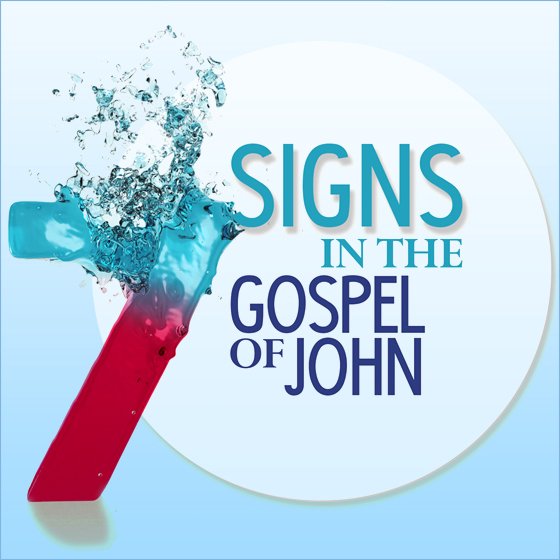
<p>In his gospel John strategically places seven miracles of Jesus as signs to guide us. These signs are intended to point us to the right way to believe in Jesus the Christ. In the final installment of the Seven Signs In The Gospel of John series, we have a surprise. There is actually an eighth, hidden sign in John's book. It is the sign of new beginnings. New beginning is one of John's major themes in his gospel. And when we read the account of Mary Magdalene coming to the tomb early on the third day after Christ's crucifixion, only to find the tomb empty, we are seeing the new beginning of the world. Jesus Christ is the firstborn of the new humanity. In Jesus Christ humanity finds its second genesis. In Jesus Christ we recover our original vocation: to make the world a garden.</p>
The Defeat of Death
<p>Jesus' received word that his friend Lazarus was sick and Jesus responded by waiting two whole days before he went to see him. During this time Lazarus died. His sisters, Martha and Mary, were grief-stricken. When Jesus went to see them, he did not lecture them or preach at them, but he entered into their grief, encouraging them and weeping with them, shedding the very tears of God. When he went to the tomb of Lazarus he raised him from the dead signaling the defeat of death, so that all who put their faith in Jesus no longer fear death, as the sting of death had been removed.</p>
Hardship as The Pathway to Peace
<p>While there are those who have attempted to strip all of the hardship out of the Christian life, the reality is life is hard and following Jesus is hard. The Apostle Paul said he chose to boast in his hardships, calling some of his hardships a “thorn in the flesh.” Jesus said the way he was blazing for us with narrow and hard, so we should accept hardship and expect it. The hard is what makes life great. Indeed everything we call great was bought by the hardship of someone.</p>
Jesus vs. Karma
<p>When Jesus’ disciples saw a man who had been born blind they asked the a question framed around blame. Who sinned? Who can we blame? Whose bad karma is this? The disciples belief was essentially that because something bad has happened, someone must have sinned, and somehow they deserved it. People who blame suffering on bad karma (and Christians do this all the time) still have mud in their eyes; they are still blind. Jesus is the light of the world. And his light brings a whole new perspective to the works of God. The works of God are not to assign blame and condemn the victim. If we will wash in the water of Jesus, we will get the mud out of our eyes and begin to see. It doesn’t matter who sinned; the way of God is grace and the work of God is mercy!</p>
No More Monster God
<p>Often, we confuse God for a malevolent monster that intends us harm. Because of deep-seated shame the thought of God produces anxiety and avoidance and generates a “monster god” neurosis. This becomes the foundation for appeasement-based religion. The monster god narrative feeds into a wrong theology about Jesus— that Jesus came in order to save us from God. We are terrified of the One who is actually trying to help us. We mistakenly think the One coming to help us is coming to harm us. But the revelation of God based in Christ tells us something else: God is love! Jesus comes as the rising sun giving full revelation and dispelling the monster god. Jesus does not save us from God! Jesus reveals God to us! Jesus calls us into a world free from the monster god— A world created by the true and living God, the Father God who is love.</p>
It Was a Dark and Stormy Night…
<p>In Jewish culture, the sea is a representation of chaos and the origin of evil. The biblical Israelites were not a seafaring people. This is made evident by the way the bible uses the sea in metaphor. The book of Revelation the new earth has no more sea. Job, in praise of God, says, “God tramples the waves of the sea.” And in the book of Daniel, the author describes a vision of beasts that come up out of the sea. So when Jesus came walking on the sea to the disciples who were in great distress in the storm, it is a sign. It is a sign that leads us to life and informs our faith in Jesus. When we see Jesus walking on water on the rough sea in a dark and stormy night, it tells us that Jesus is Lord! When our life feels like a sinking ship and we are in a dark and stormy situation, we are not alone. Jesus will come to us and calm our fears. When Jesus comes to you everything will be alright!</p>
God’s Attitude Toward You
<p>At your worst, most sinful, backslidden, far from God state, God’s heart towards you is still one which burst with longing for reconciliation. God is not full of vengeance or angry with you. His attitude toward you is one of unwavering love, like a mother or father has towards his children. God knows you and loves you, and knows you have a complicated story. Unlike most people, God does not put all of the blame on you. God as your Father is responsible for you.</p>
The Beauty of the Infinite
<p>The human condition suffers from a kind of emptiness. We are born with a pervasive mentality of scarcity and insufficiency. We don't perceive ourselves as blessed with abundance, but cursed with scarcity. We fear there won't be enough oil, land, water, food, money, labor to go around, so we use force to guarantee us what we believe is ours. This way of viewing the world is absolutely dominant, And into this sad world dominated by the paradigm of scarcity the Son of God appears. Jesus came to save us from the cycle of conquest, war, famine, death. Jesus constantly tell us not to worry about scarcity, but to trust in God. The miracle of the loaves and fishes is the sign pointing us to Jesus and a new way. Christ is the single point at which the Infinity of God is poured into the finite Creation. We don't have to fight down here. To connect with Christ is to connect with the Infinite! This connecting point is called Jesus Christ. To connect with this point is called faith. To believe in Jesus in the right way is to connect our lives to The Beauty of the Infinite.</p>
Substance and Evidence
<p>We read in Hebrews 11:1 that faith is the substance of things hoped for and the evidence of things not seen. We accept this statement about faith, but how exactly is faith substance and evidence? Some have tried to make faith too spiritual by imagining faith to be a spiritual substance, a force under our control. However this is not how we see faith at work in Scripture. Others have attempted to define faith as empirical evidence, trying to conjure up rational arguments to answer every question raised against the faith. Yet faith is not empirically verifiable because the God who is the object of our faith cannot be found using the rules of empiricism. When viewed in the context of Hebrews 11 and 12, we discover that faith is substance and evidence as it is confessed and lived out in the life of the Church. We become the substance and evidence of faith as we rightly confess and rightly live out the things we believe.</p>
Jesus At Work
<p>This is the third message in a series of the seven signs John recounts in order to form our faith in Jesus. It's the story of a man paralyzed for 38 years whom Jesus healed at the Pool of Bethesda. In this story we see that what the healing that the Pool of Bethesda promised is what Jesus does! And Jesus is not only the hope of the Jews; he is also the hope of pagan Gentiles. We are all in need of some kind of healing, and Jesus is the healer.</p>
Spiritual Openness
<p>In order to experience natural, open conversation with Jesus, an openness is required. All conversion results from a moment of spiritual openness. But too often we restrict spiritual openness to a single moment of conversion. An over-emphasis on a single "salvation" event ruins us for future spiritual growth. Often, people have their one moment of spiritual openness, and then slam the door forever! But nothing is more essential to spiritual development than spiritual openness. Christianity is an ongoing conversation with Jesus, the Living Word with whom we must constantly engage.</p>
The Logos of Life
<p>If we treat the Bible as a complete catalog of "do's" and "don'ts", then we can almost always find a way to justify whatever we want to justify. From slavery to genocide, you can find a scripture to "prove" just about anything you want in the Bible. But if we recognize that Jesus is the Living Word with whom we must engage, then we are engaging with the Logos of Life - God's Wisdom of how to live. To believe in Jesus is to believe that he is what God has to say. If you'll believe in the Logos of Life (Christ), your soul will be healed and you will find life.</p>
Temple to Table
<p>The kingdom of God is something that happens at a table. The church is not a kind of Temple, it is a kind of Table. The Temple, as understood 2000 years ago in Jewish society, was closed off, restricted to people of a particular ethnicity and nationality. Moving from Temple to Table is part of the reformation work of Jesus. It is the New Covenant. Instead of hierarchical, religion, and purity code religion that excludes outsiders, the center of God's activity is now the shared table.</p>
Water To Wine
<p>At the wedding in Cana, Jesus performs his first miracle, and in doing so, reveals his glory and his beauty. Jesus' first miracle is not "crucial". He doesn't heal the sick, or cleanse the leper, or cast out a demon, or calm a storm, or even raise the dead. Jesus' first miracle is to keep a wedding party well-stocked in wine. And it is a sign. In a beautiful and artistic way Jesus is announcing the arrival of the reign of God. It is a sign that there is about to be a huge shift in how we understand our relationship with God. Instead of washing, washing, washing, but never really feeling clean, the Kingdom of God will be more like eating and drinking with close friends. Jesus is signaling a seismic shift in the center of God's redemptive activity. With the coming of Jesus the center of redemption moves from the Temple to the Table! Instead of a hierarchical, sacrificial, purity code religion that excludes outsiders, the center of God's activity will be the shared table.</p>
Jesus Is What God Has To Say
<p>To first think of the "Bible" when say "Word of God" is a theological mistake. The Bible is the word of God, but only in a secondary sense. That the Bible is the word of God is true in the sense that it faithfully bears witness to the true Word of God: Jesus Christ. We're not born again by reading a book, we're born again by encountering Jesus Christ. We're not followers of a book, we're followers of Jesus! We are not worshipers of a book, we are worshipers of Jesus! There is no word from God that comes after Christ or supersedes Christ. Jesus is the true Word of God, the full Word of God, and the final Word of God. Jesus is how God speaks into the world. Jesus is what God has to say.</p>
New Creation (Not Evacuation)
<p>The world after Easter is fundamentally different than the world of Good Friday. In the world before Easter Caesar is Lord, because Caesar holds the power of death. But in the world after Easter Jesus is Lord, because Jesus has conquered death. And not by by means of a temporary resuscitation that ultimately again succumbs to death, but by the complete triumph of resurrection unto eternal life! Which is why our ultimate Christian hope is not heaven, but resurrection! When Christ appears heaven and earth will be made one. The resurrection of the dead is the full realization of New Creation. Christ is coming, not to take us away, but to bring heaven to earth. The blessed hope is not that we are going somewhere. The blessed hope is Christ is coming!</p>
Windbag Speeches
<p>The Old Testament story of Job is one of tragedy. In three thunderclaps of horror Job loses his wealth, his health, and his children. Very quickly following this episode, Job's friends show up to comfort him, but in reality, they end up tormenting Job's already shattered soul. These three friends likely intended well, but in their obsession to explain the tragedy they became satanic agents of accusation and cruelty. In the sermon Windbag Speeches by Pastor Brian Zahnd, we discover the cruelty of talking too much.</p>
Mystery Revealed / Dream Coming True
<p>The Messiah of the Jews was Jesus Christ. That Christ would be worshiped as King among pagan the Gentiles is the great hope of God! God always intended to unite the whole world as one people, without any division. God had to begin with one person, with one people; the Jewish people. But all along the plan was to unite the whole world into one body: the body of Christ! But this unity of worship doesn't come by triumphalism. It doesn't come by the ways of conquest and domination. If you have an attitude that we Christians need to conquer and convert others, you've missed the whole point! Triumphalism is the opposite of the humility of Christ! It comes by suffering! When we absorb enough of the sin and suffering of the world in an imitation of Christ, people are irresistibly drawn to the body of Christ.</p>
Mark of the Beast
<p>Calling things by their names is the way of the God and the first vocation of man. In Genesis, Adam is instructed by God to gives names to all the animals. Humans are the ones who make Creation a community of the named and known and not just an impersonal collection of unknown and disassociated things. Without humanity, the universe is a cold and impersonal collection of objects. But humanity gives names to things and the universe becomes known and personal. Be wary of an overemphasis on numbers. Turning names into numbers, persons into statistics, and people into things is what the Beast does. It is the root of the beastly actions of totalitarian regimes.</p>
Jesus Is Lord... and Caesar Is Not
<p>If you want to sum up the Gospel in its most succinct form, this is it: Jesus is Lord! The Apostles actually believed that with the death, resurrection, and ascension of Jesus, the world was now being governed by a new emperor, a new administration. The politics of Caesar and empire had been replaced by the politics of Christ. Through faith and baptism we become citizens of the kingdom of God, and we bring the culture of the Kingdom of God to earth through how we pray and how we live. This is what we mean when we say, "Thy kingdom come, Thy will be done, on earth as it is in heaven." For the baptized, our government is not from earth, but rather from heaven. Through the luck of our birth we may be American, or Chinese, or French, or Iranian. But if we are baptized, our allegiance is pledged to Christ and our citizenship is in heaven. Jesus is Lord, and Caesar is not!</p>
A Conversation With P.G. Vargis
<p>Pastor Brian Zahnd interviews P.G. Vargis, missionary and founder of the Indian Evangelical Team (IET), a Christian missions organization spread across India, Nepal, and Bhutan, and is the fastest growing missons organization in South East Asia. Today, IET trains hundreds of indigenous men and women to be effective, godly church planters and Christian leaders through its regional Bible schools and its leadership training centers.</p>