
Wonders of the World
133 episodes — Page 2 of 3

S8 Ep 69069 - The Grand Canal of Venice and the Fourth Crusade
In 1204, Christian crusaders sacked the world's largest Christian city, destroying or pillaging countless artifacts, books, and works of art. Some of those works of art ended up in the Most Serene Republic of Venice, for which 1204 represents the beginning of her dominance of the Mediterranean world. The story of how a canal-lined city in a marshy lagoon became a superpower and how cross-wearing soldiers wrecked Constantinople is a sometimes shocking tale, one that only makes sense when you consider the Sunk Cost Fallacy. We've already spent time, money or energy; we should just keep going. Vlad Zamfira from Wonderer's History Podcast joins us to discuss Venetian history and their role in the calamitous Fourth Crusade, while Kate Storm from ourescapeclause.com talks about her favorite city and how to escape the crowds. And of course, we'll talk about tiramisu. I think we can all agree we need some of that right about now. Sources: Hardy, Paula. Lonely Planet Venice & the Veneto Herrin, Judith. Byzantium: The Surprising Life of a Medieval Empire Madden, Thomas F. Venice: a New History McCart, Melissa. "The Mysterious Origins of Tiramisu, the Dessert That Took the '80s by Storm" in Eater Norwich, John Julius. Byzantium: the Decline and Fall Phillips, Jonathan. The Fourth Crusade and the Sack of Constantinople Rick Steves Venice Photograph by Bjoern Eisbaer Music by Antonio Vivaldi, performed by the Wichita State University Chamber Players, John Harrison, soloist.

S8 Ep 68068 - Mont-Saint-Michel and Eleanor of Aquitaine
The abbey on the lonely island rises from the tidal bay like a castle out of a Disney movie. Mont-Saint-Michel is one of France's best known sites, with a history to match. Some of that history connects with the story of one of medieval Europe's most renowned women: Eleanor of Aquitaine. Married first to King Louis of France and then King Henry of England, she and her family would both reach incredible heights and fail spectacularly, all while leaving stories that would echo throughout time. Maura Kanter from Historically Badass Broads talks about Eleanor and Louis, while Christine Caccipuoti from Footnoting History discusses her life with Henry and their sons. Listeners Emma and Laura reminisce on their visits to the Abbey. There's love, lust, disappointment, war, peace, murder, plausible deniability, and some truly horrible, horrible people. And crepes! It's the longest episode yet, but hopefully you'll find it worthwhile! Sources: Barber, Richard W. The Devil's Crown: A History of Henry II and His Sons de Torigny, Robert. The Chronicles of Robert de Monte Owen, D.D.R. Eleanor of Aquitaine: Queen and Legend Steves, Rick. Rick Steves France Weir, Alison. Eleanor of Aquitaine: a Life Williams, Nicola. Lonely Planet France Photograph by Amaustan

Bonus - Your Questions, Answered
bonusA quick break from the wonders narratives to answer many questions about Drew, the show, the wonders, food, travel and more! Find out which wonders missed the list, why there won't be a WotW cookbook, and why Drew has issues with "synergy" and "win-win" scenarios. Plus a new Demetrios Poliorcetes!

S8 Ep 67067 - The Djemaa el-Fna of Marrakesh and the Almohads
The greatest of squares throbs with life: the scent of spiced, roasted meat, the cacophony of voices and drums, the visual rainbow of color. The Djemaa el-Fna is everything and more. Its history reflects the great medieval golden age of Morocco under the Almoravid and Almohad dynasties, a golden age for prosperity but not necessarily for culture. Both dynasties began as fundamentalists determined to bring back religion to the libertine cities, and both eventually fell victim to cosmopolitan delights. But the story of Ibn Tumart and the Almohads has much to teach us about the intensity of extremism. The always brilliant Nitin Sil from Flashpoint History returns to discuss the rise and fall of the Almohads and their legacy in Spain, Morocco and beyond. And listener Jesse Oppenheim also comes back to discuss visiting the square. Plus there will be tagines! Photograph by Michal Osmenda

S8 Ep 66066 - Angkor Wat and the Khmer Empire
The Cambodian jungle hides one of the world's largest pre-industrial cities: Angkor. Highlighted by its magnificent main temple, Angkor Wat, the city's other monuments testify to the prosperity of the Khmer empire. Those other monuments, many still semi-ruined by the jungle, make for even more compelling travel than Angkor Wat itself. From Suryavarman's exploits in battle to Jayavarman VII's countless Buddha-like faces, Angkor's kings led a society built on pushing back the jungle, until the jungle finally won. Listener Jesse Oppenheim joins us to discuss visiting Angkor, learning from guides who survived the Khmer Rouge, and fighting through instagramming yogis. Plus, of course, food. Photograph by Gisling

S8 Ep 65065 - Monument Valley and the Ancestral Puebloans
Perhaps America's most famous landscape, Monument Valley and its fantastically shaped red-streaked buttes have starred in countless films and television shows. But its story truly hearkens to the people who have lived here for centuries: the Navajo, and before them, the Ancestral Puebloans. In this episode, we'll discuss how the Ancestral Puebloans rose and then collapsed, victims of social breakdown in the face of climate change, and how the legacy of colonial oppression lives on in the dish most commonly associated with the Navajo: fry bread and the Navajo taco. But despite those setbacks, the culture of the indigenous southwest lives on strong to this day. Sources: DuVal, Linda. "THE WRITING ON THE WALL; The Southwest: Mysterious and beautiful, the ancient petroglyphs and pictographs etched on canyons throughout Colorado, New Mexico, Arizona, Utah and Nevada speak to the eye and the soul." in the Baltimore Sun frommers.com (Arizona and New Mexico) Kohler, Timothy A., Mark D. Varien, Aaron M. Wright and Kristin A. Kuckelman. "Mesa Verde Migrations: New archaeological research and computer simulation suggest why Ancestral Puebloans deserted the northern Southwest United States" in American Scientist Newitz, Annalee. "Conservatism took hold here 1,000 years ago. Until the people fled." in the Washington Post. Schwindt, Dylan M., R. Kyle Bocinsky, Scott G. Ortman, Donna M. Glowacki, Mark D. Varien and Timothy A. Kohler. "The Social Consequences of Climate Change in the Central Mesa Verde Region." in American Antiquity Woodhouse, Connie A., David M. Meko, Glen M. MacDonald, Dave W. Stahle, and Edward R. Cook. "A 1,200-year perspective of 21st century drought in southwestern North America" in PNAS Photograph by wikipedia user Supercarwaar

S8 Ep 64064 - The Old City of Sanaa and Queen Arwa Al-Sulayhi
At the southern end of Arabia, Yemen was once rich from trade and frankincense. By the 11th century, it had fallen off the map, but two strong queens led it back to prosperity, particularly Arwa Al-Sulayhi, whose reign did more for Yemen than 350 years of men who followed. There's assassins, executions, heads on pikes. Among Arwa's accomplishments was refurbishing the Great Mosque of Sana'a, Yemen's capital, whose medieval old city features gingerbread-like skyscrapers. Despite the horrors of war, Yemen perseveres. Charlie from the Almost Forgotten podcast joins us to discuss Arwa and other historical figures that we've forgotten. Plus saltah! Sources: Daftary, Dr. Farhad. Sayyida Hurra: The Isma'ili Sulayhid Queen of Yemen Mackintosh-Smith, Tim. Yemen: the Unknown Arabia Mernissi, Fatima. The Forgotten Queens of Islam Walker, Jenny. Lonely Planet Oman, UAE and the Arabian Peninsula Wintour, Patrick. "Yemen civil war: the conflict explained" in the Guardian Music by Mohamed al-Kouek, Kamilia Anbar Yakout, and Mohamed Hmoud al-Harithy Photograph by Maria Gropa
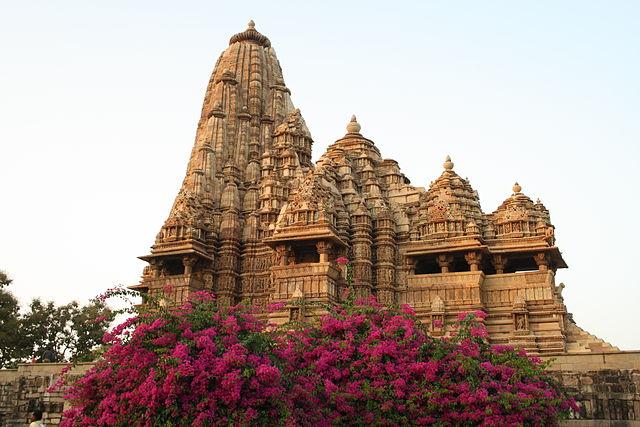
S8 Ep 63063 - The Western Group of Temples at Khajuraho and the Chandelas
ETHIS EPISODE CONTAINS EXPLICIT CONTENT. A group of temples sits in the hills of central India, stunningly studded with sculptures. Built by the Chandela dynasty, they are remarkably well preserved testaments to medieval power, but they are best known for their many erotic images. Anirudh Kanisetti of the Echoes of India podcast returns to discuss the Chandelas, their connection with tantra, their views of sex, their run-ins with the famed Turkic warlord Mahmud of Ghazni, and how all of that relates to India's political environment today. Medieval India shows the panoply of human experience in all its colors and shades. Nothing is a simplistic black and white. Sources: Bose, Nemai Sadhan. History of the Candellas of Jejakabhukti Desai, Devangana. Khajuraho Desai, Devangana. The Religious Imagery of Khajuraho Dikshit, R.K. The Candellas of Jejakabhukti Keay, John. India: a History Lonely Planet India Miller, Sam. Blue Guide India Mitra, Sisir Kumar. Early Rulers of Khajuraho Nasr, Mohamed. The Emergence of Muslim Rule in India Ramadurai, Charukesi. "India's Temples of Sex" BBC Travel Tammita-Delgoda, Sinharaja. A Traveller's History of India

S8 Ep 62062 - The Bayeux Tapestry and the Battle of Hastings
EIt's the world's greatest comic strip. The Bayeux Tapestry, technically an embroidery, documents the events leading up to the Battle of Hastings and the Norman Conquest. We explore this cheeky document and tell its tale: the story of 1066, that most crucial year in English history. It's the tale of Edward the Confessor, powerful earl Harold Godwinson, one-man military machine Harald Hardrada, and William the Bastard, Duke of Normandy. There's battles, invasions, and an insane amount of luck, and the Tapestry covers it all. Or rather the parts it wants to cover. I've wanted to tell this story since I started the podcast. I hope you enjoy it. Plus, there's an apple pie at the end you won't want to miss. Sources: Bridgeford, Andrew. 1066 : the hidden history in the Bayeux Tapestry Harper, Damian and Catherine Le Nevez. Lonely Planet Road Trips: Normandy & D-Day Beaches Howarth, David. 1066: the Year of the Conquest Marren, Peter. 1066: the Battles of York, Stamford Bridge & Hastings Morris, Marc. The Norman Conquest: The Battle of Hastings and the Fall of Anglo-Saxon England Rick Steves France Wilson, David M. The Bayeux Tapestry

Bonus - Lake Ohrid and Samuel vs Basil II
bonusIt's our bonus holiday episode! Nestled in the mountains along the border of North Macedonia and Albania sits Lake Ohrid, a deep, blue lake as old as time. On its shores, in the town of Ohrid, Samuel, tsar of the First Bulgarian Empire, directed his kingdom's last hurrah against the mighty Roman Empire to his east. His opponent: Basil II, known now as the "Bulgar-Slayer." I guess you can figure out how this goes. Eric Halsey of the Bulgarian History Podcast gives his thoughts on Samuel and his brothers and the epic confrontation with Basil, while Allison Greene from Sofia Adventures and Eternal Arrival shares her experience of visiting Ohrid, whose Byzantine-era churches charm and whose lakeside boardwalk invigorates. And we talk about Macedonian food, including ayvar, a red pepper spread-slash-dip that pairs with everything. Sources: Crapton, RJ. A Concise History of Bulgaria Evans, Thammy. Macedonia: the Bradt Travel Guide Herrin, Judith. Byzantium: The Surprising Life of a Medieval Empire Knowlton, Mary Lee. Macedonia Norwich, John Julius. Byzantium: The Apogee Michael Psellus. Chronographia John Skylitzes. A Synopsis Of Byzantine History, translated by J. Wortley Photograph by Silfiriel

3rd Anniversary Bonus - Fifty States Ranked
bonusTHIRD ANNIVERSARY BONUS EPISODE! People often ask me where they should go when they visit the US. Having been to all 50 states (plus DC and Puerto Rico, which should be states), I can actually answer this. And in this not-at-all-serious episode, I try to answer that question. Being a nerd, I created a spreadsheet and complex formula tanking each state in terms of natural scenery, historical sites, charm, cuisine, and debauchery. I share the top ten on this episode. For the full list, check out the website: wonderspodcast.com/50states When you disagree, and you will, drop me a line or pick a fight on Twitter (@wonderspodcast).

S7 Ep 61061 - The Volcanic and Geothermal Features of Iceland and the Viking Sagas
Europe and North America are drifting apart, and where the plates diverge, an underwater volcanic mountain range has formed. It peeps above the ocean in several spots, the largest and most magnificent of which is Iceland. Iceland's underground magma and mountaintop glaciers have conspired to create a wonderland of fire and ice, the perfect setting for the development of a remarkable medieval culture. In this episode, Noah Tetzner from the History of Vikings podcast joins us to discuss the settlement of Iceland, their literature (the sagas), their government, and their expansion to Greenland and North America. There's Flóki, the raven-carrying discoverer who gave Iceland its name. There are Ingolf and Leif, the oil-and-water brothers who first settled the island. There's Aud the Deep-Minded, noblewoman and matriarch. There's Þorgeir Þorkelsson, who had to make a choice that would change Iceland forever. And there's Erik the Red and his son Leif, who set out to find new lands to the west. In addition, listeners Brian Conn and Quinn Campagna describe their recent trips to the island and all the glorious natural wonders to see. And we'll have hot dogs (really), fermented shark meat (really), and Icelandic yogurt, or skyr, after a dip into the hot springs. Sources: Ari Þorgilsson, The Book of the Icelanders Averbuck, Alexis. Lonely Planet Iceland Barraclough, Eleanor Rosamund. Beyond the Northlands: Viking Voyages and the Old Norse Sagas The Book of Settlement (Landnámabók), translated by Thomas Ellwood Ferguson, Robert. The Vikings: a History Haywood, John. Northmen: the Viking saga, AD 793-1241 Konstam, Angus. Historical Atlas of the Viking World Laxdæla Saga, translated by Muriel A. C. Press Magnusson, Magnus. Vikings! Rick Steves Iceland Roberts, David. Iceland: Land of the Sagas The Saga of Erik the Red, translated by J. Sephton Music includes "Gjallar," "Fólkvangr," and "The Vikings" by Alexander Nakaradahttps://www.serpentsoundstudios.com Music promoted by https://www.free-stock-music.com Attribution 4.0 International (CC BY 4.0)https://creativecommons.org/licenses/by/4.0/ Photograph by Andreas Tille

S7 Ep 60060 - The Fjords of Norway and the Norse Vikings
Carved by glaciers during the Ice Age, Norway's more than 1100 fjords are spectacular. The sea enters narrow valleys with high cliffs laced with waterfalls. This rugged seacoast nurtured ancient Norway and its ruthless seafaring raiders: the Vikings. The Vikings came out of the north like a thunderbolt to ravage the coastlines of Europe, but the people of medieval Scandinavia were so much more than just Vikings. In this episode, Lee Accomando of the Viking Age Podcast talks about Harald Fairhair, legendary first king of united Norway, and his sons Håkon the Good and the excellently named Erik Bloodaxe. Lee has a soft spot for Erik's sorceress wife Gunnhild. Listener and patron Kjartan Bærem talks about his homeland, and tells us which fjords are most worth visiting. We also discuss various lamb dishes before curing our own salmon: dill-scented gravlax. Sources: Alcuin. Letter to Ethelred, King of Northumbria Alcuin. Letter to the Bishop of Lindisfarne Ferguson, Robert. The Vikings: a History Greshko, Michael. "Famous Viking Warrior Was a Woman, DNA Reveals" in National Geographic. September 12, 2017. Ham, Anthony. Lonely Planet Norway Haywood, John. Northmen: the Viking saga, AD 793-1241 Konstam, Angus. Historical Atlas of the Viking World Magnusson, Magnus. Vikings! Nozari, Elaheh. "My Biggest Accomplishment of 2018 Was Making My Own Gravlax" in Bon Appetit. December 13, 2018 Rick Steves Scandinavia Sturluson, Snorri. Heimskringla Music includes "Gjallar," "Fólkvangr," and "The Vikings" by Alexander Nakarada https://www.serpentsoundstudios.com Music promoted by https://www.free-stock-music.com Attribution 4.0 International (CC BY 4.0)https://creativecommons.org/licenses/by/4.0/ Photograph by TomasEE

S7 Ep 59059 - The Pyramid of Kukulkan at Chichén Itzá and the Post-Classic Maya
You've seen the Pyramid on countless tourism brochures, but what do you really know about the Mayan city of Chichén Itzá and it's magnificent pyramid? Did you know it's built over a cenote, a natural water-filled sinkhole? Have you heard the legend of the Toltec king from Central Mexico who might have conquered the city in 987? To help explore the answers, Robert Bitto from the Mexico Unexplained podcast appears with his take on the mysteries of the pyramid. We also talk about the Spanish archbishop who first described the city after having burned nearly all Mayan writings and the wild rush that was 2012, the apocalypse that didn't quite come off. Join us for some cochinita pibil as we talk about the Yucatán! Sources: Carlsen, William. Jungle of Stone: the True Story of Two Men, Their Extraordinary Journey, and the Discovery of the Lost Civilization of the Maya Fehrenbach, TR. Fire and Blood: a History of Mexico Hecht, John. Lonely Planet: Cancún, Cozumel & the Yucatán Landa, Diego de. Yucatan Before and After the Conquest Onstott, Jane. National Geographic Traveler: Mexico Prado, Liza and Gary Chandler. Moon Handbook: Yucatán Peninsula Schele, Linda. The Code of Kings: the Language of Seven Sacred Maya Temples and Tombs Stephens, John L. Incidents of Travel in Yucatan Weaver, Muriel Porter. The Aztec, Maya, and Their Predecessors: Archaeology of Mesoamerica Webster, David L. The Fall of the Ancient Maya: Solving the Mystery of the Maya Collapse Music by Los Tres Reyes, Los Montejo, Victor Manuel Aarón Sánchez, and Hidalgo Tzec Haas Photograph by wikipedia user Cocojorgefalcon

058a - The House of Wisdom
bonusSometimes a wonder which no longer exists is worth an episode. In the 9th century, the Abbasid caliphs of Baghdad created the Bayt al-Hikma, the House of Wisdom, a great library which served as the starting point for a remarkable intellectual program. There, hundreds of scribes translated as many Greek, Persian, Indian and other documents that they could, and these widespread translations fueled new advances that would make Baghdad the Silicon Valley of the 9th and 10th centuries. Men like al-Khwarizmi, the Father of Algebra, and al-Kindi, the Philosopher of the Arabs, changed the world. Dr. Ali A Olomi, frequent guest, friend of the show, and host of Head on History, appears to discuss the House of Wisdom, the thinkers who worked there, and the caliphs who helped make it happen, like Harun al-Rashid and al-Mamun. In the process, we'll cover murderous kings, "true crime" mysteries, civil wars that really were brother vs brother, medieval machines, brilliant alchemists and mathematicians, and the guy who gave us the three-course meal and toothpaste. Plus we revisit masgouf, Iraq's favorite grilled fish. Sources: Bobrick, Benson. The Caliph's Splendor: Islam and the West in the Golden Age of Baghdad Hann, Geoff et al. Iraq: the Ancient Sites & Iraqi Kurdistan: the Bradt Travel Guide Kennedy, Hugh. When Baghdad Ruled the Muslim World: the Rise and Fall of Islam's Greatest Dynasty Lyons, Jonathan. The House of Wisdom: How the Arabs Transformed Western Civilization Morgan, Michael Hamilton. Lost History: the Enduring Legacy of Muslim Scientists, Thinkers, and Artists Thousand and One Nights Photograph of Mustansiriya Madrassa by Taisir Mahdi

S7 Ep 58058 - The Medina of Fes and Fatima al-Fihri
Nestled in the hills of north central Morocco, Fès' ancient walled medina is a labyrinth of narrow alleys, passages, lanes and souks: the world's largest car-free urban space. Founded by Idris, an Arab refugee-turned-Moroccan king, Fès also claims the world's oldest university, built by Fatima al-Fihri, herself a refugee from Tunisia. There's no specific wonder here other than the medina, and that's OK. Sometimes a city or neighborhood is exemplary enough to be a wonder in and of itself. Listener Steve Fait joins us to talk about visiting Fès, navigating its maze, exploring its secrets and managing carpet salesmen. Plus, we discuss the joys of tagine, although the recipe this week is b'stilla, a savory/sweet Moroccan pot pie that is one of my all-time favorite foods. Sources: Abun-Nasr, Jamil Mirʻi. A History of the Maghrib in the Islamic Period Carrington, Daisy. "This 1,157-year-old library gets a facelift". CNN. DK Eyewitness Morocco Hourani, Albert. A History of the Arab Peoples Lonely Planet Morocco Nader, Emir. "The World's Oldest University Was Founded by a Woman of Color" in Vice Othman, Najwa. "Kairouan: Capital of Political Power and Learning in the Ifriqiya" Sarkeesian, Anita and Ebony Adams. History vs Women: The Defiant Lives that They Don't Want You to Know Wolfert, Paula. The Food of Morocco Photo by Alina Chan
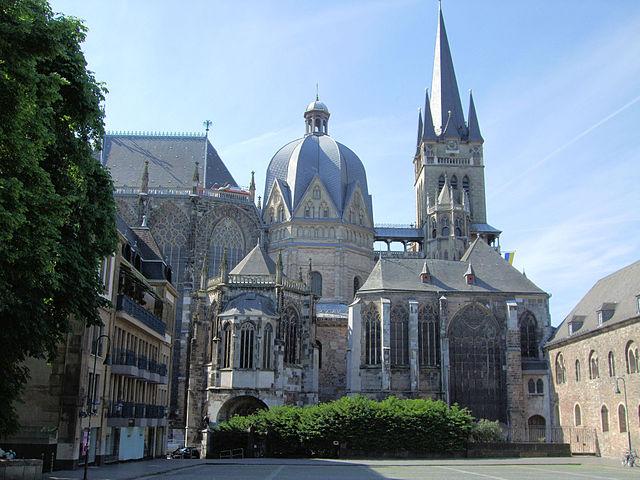
S7 Ep 57057 - Aachen Cathedral and Charlemagne
On the western fringe of Germany, near the Dutch and Belgian borders, sits Aachen, favored city of Charles the Great, or Charlemagne. He was King of the Franks in the late 8th and early 9th centuries, and through conquest and economic success, he unified much of Western Europe. Crowned Emperor of the Romans on Christmas Day, 800, he could be considered the father of Europe. Or he might just have been incredibly lucky. Travis Dow from the History of Germany Podcast joins us to discuss Charlemagne, his conquests, reforms, and buildings, including his great chapel in Aachen, one of the best examples of early medieval architecture. In its central octagonal chapel, you can still see Charlemagne's simple marble throne, where many future German kings would be crowned. Of course, there's lots of talk of food, from currywurst to döner kebabs, but Aachen is famous for its own special spicy cookies, Aachener printen, as well. And there's the story of Pippin, which is not at all as the musical described it. Sources: Barbero, Alessandro. Charlemagne: Father of a Continent Lonely Planet Germany Schillig, Christiane. "Wider den Zahn der Zeit: Der Dom zu Aachen" Monumente Online: Magazine of the Deutsche Stiftung Denkmalschutz Schneider-Ferber, Karin. Karl der Große. Der mächtigste Herrscher des Mittelalters Wilson, Derek. Charlemagne www.aachenerdom.de Photograph by Jim Linwood

S7 Ep 56056 - The Underground Cities and Rock Formations of Cappadocia and Iconoclasm
EIn the soft volcanic rock of Cappadocia, eroded by wind and water into fantastic shapes, ancient peoples carved dwelling places. By the Byzantine era, locals created vast underground refuges: places to hide from raiders and foreign armies. They painted murals on rock-cut churches, exemplars of medieval Roman religious art. In the 8th century, this art, both here and around the empire, became the centerpiece of a spirited controversy: iconoclasm. Some, particularly the emperors Leo III and Constantine V, believed that people's venerating religious art was causing God to forsake the empire. Others disagreed. The argument would have far-reaching consequences for the empire and for history. Iconoclasm initially ended under the guidance of Irene, the first ruling Empress in Roman history. She was ruthlessly efficient, as seen by her treatment of her son. She's one bad mother.... Listeners Krister and Jacob Törneke come by to discuss visiting Cappadocia, where cave churches and underground cities should the mark of the medieval Byzantines and where the natural landscape inspires jaw-dropping amazement. Plus, they talk about the Cappadocian Turkish food, including ayran, a salty yogurt drink that goes perfectly with meat kebabs, even if it sounds repulsive. Sources: Brownworth, Lars. Lost to the West: The Forgotten Byzantine Empire That Rescued Western Civilization Decrees of the Ecumenical Councils, ed. Norman P. Tanner Herrin, Judith. Byzantium: The Surprising Life of a Medieval Empire Lonely Planet Turkey Norwich, John Julius. Byzantium: the Early Centuries Theophanes. Chronographia Treadgold, Warren. A Concise History of Byzantium Photograph by Gerardo Lazzari

S7 Ep 55055 - The Mezquita of Córdoba and Abd al-Rahman
The eighth century's greatest adventure story. Abd al-Rahman, low-ranking Umayyad prince, finds himself the only male member of his family to survive a massacre at the hands of the Abbasid rebels. He escapes through many adventures to the Maghreb (present-day Morocco) where he decides to try his luck in Spain, or as it was called then: Al-Andalus. More adventures await him there before he eventually becomes the Emir of Córdoba, establishing what would become Medieval Europe's richest and most prosperous country. His greatest achievement is the mosque that still stands in Córdoba today: the Mezquita. Row upon row of red and white double arches fill the immense, contemplative space, except for a giant Renaissance cathedral dropped in the middle of it. Sarah Kildow, listener and Assistant Professor of Spanish at the University of Akron, stops by to discuss visiting Córdoba, seeing the Mezquita, eating tapas and enjoying Féria, the great Spring fair. Plus salmorejo, a chilled tomato soup that's perfect for hot summer days. Andalucía is one of my favorite places, and I'm excited to bring this story to you. Sources: Ahmed ibn Mohammed Al-Makkari. The History of the Mohammedan Dynasties in Spain Gerber, Jane S. The Jews of Spain: a History of the Sephardic Experience Jayyusi, Salma Khadra and Manuela Marín. The Legacy of Muslim Spain Kennedy, Hugh. Caliphate: the History of an Idea Kennedy, Hugh. Muslim Spain and Portugal: a Political History of al-Andalus Lewis, David Levering. God's Crucible: Islam and the Making of Europe, 570-1215 Lonely Planet Guide to Andalucía Lowney, Chris. A Vanished World: Medieval Spain's Golden Age of Enlightenment Masood, Ehsan. Science & Islam: A History Menocal, María Rosa. The Ornament of the World Rick Steves Spain Photograph by Fabio Alessandro Locati

Bonus - Notre-Dame de Paris
bonusOn April 15, 2019, a fire started in Notre-Dame de Paris and caused significant damage. In its honor, here is a bonus episode on the great cathedral. We know that Notre Dame will survive this calamity, because it has survived other calamities before. From Baroque refacing to revolutionary desecrations, Notre Dame had become an absolute wreck. Then Victor Hugo's novel started a restoration movement which led to the appointment of Eugène Viollet-le-Duc, whose detailed work created the church we've grown to love. Beyond talking about the cathedral, we have sidebars about post-war Poland (it makes sense; trust me) and the Montparnasse neighborhood. Finally, we link to the narrative by discussing the Muslim conquest of Spain and the Battle of Tours (or Poitiers) in 732, setting the stage for the next three episodes. Sources: Eyewitness Travel Paris Hollis, Edward. The Secret Lives of Buildings Horne, Alistair. Seven Lives of Paris Rick Steves Paris Robb, Graham. Parisians: an Adventure History of Paris Winston, Richard and Clara. Notre-Dame de Paris

S7 Ep 54054 - The Giant's Causeway and Early Medieval Ireland
On the coast of Northern Ireland lies a remarkable feature: a field of more than 40,000 interlocking hexagonal columns, leading down into the sea. To the ancient Irish, the basalt columns -- the result of a long ago volcanic eruption -- seemed like the foundations of a bridge made for giants. And so they are still called the Giant's Causeway to this day. On this abnormally long episode, we discuss the mythological origins of the causeway and the legendary Irish hero, Fionn Mac Cumhaill, a.k.a. Finn McCool. While the physical bridge to Scotland might be a myth, other connections in the early medieval period were very much evident. Dr. Lucy Barnhouse (@singingscholar), medieval historian and contributor to @historyfootnote, drops wisdom about Irish monasticism and its impact in Ireland and abroad. We discuss the beer-multiplying, chariot-riding St. Brigid, the hot-tempered St Columba, and the wandering St. Columbanus. In addition, listeners Jenn and Diarmuid talk about their experiences visiting the causeway and reflections on the North. We also discuss Game of Thrones locations, surfing off the Antrim Coast, and the joy of grabbing a pint in an Irish pub. There's Irish butter and soda bread and more Houses of the Holy references than are necessary. (That 1973 Led Zeppelin album features the Giant's Causeway on the cover). Sources: Bitel, Lisa M. "St. Brigit of Ireland: From Virgin Saint to Fertility Goddess" The Boyhood Deeds of Fionn mac Cumhaill Bunting, Eve. Finn McCool and the Great Fish Byrd, Robert. Finn MacCoul and His Fearless Wife: a Giant of a Tale from Ireland Byrne, Francis. Irish Kings and High-Kings Catholic Encyclopedia. "St. Columba" Cogitosus. The Life of St. Brigid The Colloquy of the Ancients De Hamel, Christopher. Scribes and Illuminators De Hamel, Christopher. A History of Illuminated Manuscripts Lord, Victoria. The Other Irish Saint: Brigid of Kildare Lonely Planet Guide to Ireland MacNab, P.A. Mull & Iona Marron, Emmet. "The Communities of St Columbanus: Irish Monasteries on the Continent?" McCaffrey, Carmel and Leo Eaton. In Search of Ancient Ireland: the Origins of the Irish from Neolithic Times to the Coming of the English McCullough, David Willis. Wars of the Irish Kings: a Thousand Years of Struggle from the Age of Myth Through the Reign of Queen Elizabeth I Meehan, Bernard. The Book of Kells O'Hanlon, John. Life of St. Brigid, Virgin: First Abbess of Kildare, Special Patroness of Kildare Diocese, and General Patroness of Ireland Ollivier, John J. Fun with Irish Myths: a Must for Every Irishman or Those Who Have to Live with One Rick Steves Guide to Ireland Suehle, Ruth. "The story of St. Columba: A modern copyright battle in sixth century Ireland" Photograph by wikipedia user Jal74 Music by Aislinn

S6 Ep 53053 - Borobudur and the Empires of Early Medieval Indonesia
While the Silk Road gets the fame, and the catchy nickname, the Indian Ocean maritime trade moved far more goods over a longer period of time. That trade, combined with its own unique products, made Indonesia and its first great kingdoms possible. The result were Indian-influenced trading empires and regional behemoths capable of creating the world's largest Buddhist monument on the island of Java. Anthony Frisina of the History of Indonesia podcast joins the show to discuss how these empires, the Srivijaya and Sailendra, came to be, how they built the great Borobudur, and why we don't know nearly as much about them as we'd like. We'll also discuss the interplay between Hinduism and Buddhism, which led to the creation of Prambanan, a massive Hindu temple just 44 km from Borobudur, that is a wonder in its own right. There's Chinese monks on pilgrimage, cloves a-plenty, and nasi goreng, a Javanese fried rice that hits all the right flavor notes. Sources: Cœdès, George. The Indianized States of South-East Asia Forman, Bedrich. Borobudur: the Buddhist Legend in Stone Guy, John. Lost Kingdoms: Hindu-Buddhist Sculpture of Early Southeast Asia Insight Guide to Indonesia Lonely Planet Guide to Indonesia Marks, Copeland. The Exotic Kitchens of Indonesia: Recipes from the Outer Islands Viegas, Jennifer. "Madagascar Founded By Women" on NBC News

S6 Ep 52052 - The Kailashanatha Temple of Ellora and the Rashtrakutas
Early medieval India saw the rise of an empire based in the Deccan plateau: the Rashtrakutas. Despite their significant power and influence, their story is little-known and under-appreciated. From their most remarkable king, Amoghavarsha the author, to their architectural masterpiece at the caves of Ellora, we will remedy this shocking omission. The Kailashanatha Temple, carved from the Deccan rock, is a true wonder, and Anirudh Kanisetti, historian and host of the Echoes of India, brings its magic to life. We also talk about Indian math, Sanskrit poetry, and chicken kolhapuri, a spicy Deccan specialty. Sources: Keay, John. India: a History Lonely Planet Guide to India Mani, Chandra Mauli. A Journey through India's Past (Great Hindu Kings after Harshavardhana) Reu,Pandit Bisheshwar Nath. History Of The Rashtrakutas Rice, Edward P. A History of Kannada Literature Sample, Ian. "Asteroid that killed dinosaurs also intensified volcanic eruptions - study" in the Guardian Photo by Ms Sarah Welch in wikicommons

S6 Ep 51051 - The Stelae of Copán and Waxaklajuun Ubaad Kawiil
We return to the land of the Maya, to visit their most stunning artistic achievement. The stelae of Copán, many constructed to honor Waxaklajuun Ubaad Kawiil, 13th king of the city, are remarkably intricate, humanist yet fantastic. His reign marked the highest point and also the lowest, as within decades of his untimely death, Copán and the other Classic Mayan cities would be abandoned. Or were they? Listener Richard Dennis describes his impressions of visiting Copán and traditional Honduran cuisine: beans and tortillas, culminating in the baleada. And we can't talk about Honduras without discussing the Football War. Sources: Bunce, Steve. "How a World Cup qualifier and the suicide of a young girl launched the bloody 100 Hour Football War" in the Independent. Earley, Caitlin C. "The Mesoamerican Ballgame" at Metropolitan Museum of Art's Timeline of Art History. Footprint Handbook: Honduras Martin, Simon and Nikolai Grube. Chronicle of the Maya Kings and Queens: Deciphering the Dynasties of the Ancient Maya Moon Handbook to Honduras and the Bay Islands Schele, Linda and Peter Mathews. The Code of Kings : the Language of Seven Sacred Maya Temples and Tombs Webster, David L. The Fall of the Ancient Maya: Solving the Mystery of the Maya Collapse Photo by Dennis Jarvis on wikicommons

S6 Ep 50050 - The Umayyad Mosque of Damascus and the Umayyad Caliphate
After the Muslims exploded onto the scene in the 7th century, they learned that anyone can take a empire, but holding an empire is another matter entirely. We go to Syria, where Damascus served as the capital of the Umayyad Caliphate. The Umayyads were the family who eventually took control following the turmoil of finding successors to Muhammad. Ali A Olomi, historian and host of Head on History, rejoins us to take us into the next phase of Muslim history, in which the rich and connected Banu Umayya demonstrate the durability of hegemony: after every revolution, the elite and connected always come back in the end. The Umayyads may get a bad rap in places, but they left an enduring empire in their wake, best shown in the remarkable mosque in their capital. While we discuss the splendor and tragedy of Damascus, try some tabbouleh, my all-time favorite salad. Sources: Armstrong, Karen. Islam: a Short History. Donner, Fred McGraw. Muhammad and the Believers: at the Origin of Islam Ingraham, Christopher. "How rising inequality hurts everyone, even the rich" in Washington Post Keenan, Brigid. Damascus: Hidden Treasures of the Old City Kennedy, Hugh. Caliphate: the History of an Idea Bradt guide to Syria Footprint Syria handbook Photograph by wikipedia user Aladdin

S6 Ep 49049 - The Giant Buddha of Leshan and Empress Wu Zetian
We return to China, where the Tang Dynasty has embarked on a golden age of culture and cosmopolitanism. In the valleys of Sichuan, a monk begins to carve the largest statue built in pre-industrial history. And in Chang'an, the world's largest and most international city, a young girl begins the path which would take her to the throne. And in Beijing, a half-Sogdian will launch the revolt that will bring everything crashing down. Katy and Nathan from the Queens podcast drop by to talk about Wu Zetian, the only ruling Empress in China's long history. The chroniclers reviled her as a monster, but we take a closer look at this woman who dominated her country for 50 years. Listener Jake volunteers to talk about his time in Sichuan, visiting the Giant Buddha, and eating Sichuan's famously delectable cuisine, fueled by tongue-tingling sichuan peppercorns. Speaking of cuisine, we dig into Gong Bao Chicken, the real thing, with all its sweet, spicy, crunchy goodness. Sources: Clements, Jonathan. Wu: The Chinese Empress Who Schemed, Seduced and Murdered Her Way to Become a Living God Keay, John. China: a History Lewis, Mark Edward. China's Cosmopolitan Empire: the Tang Dynasty Rough Guide to China Photo by Ariel Steiner

Bonus - The Murals of Panjakent
bonusIt's our holiday bonus episode! This time, we're going to Tajikistan, to visit the intriguing murals of the Sogdians, a civilization wedged between Persians, Arabs, Turks, and Chinese, yet rich and remarkable on their own. In Panjakent, we have wall paintings of regular people, preserved for centuries. What they tell us helps explain the links between these great 7th and 8th century civilizations. Nadeem Ahmad, of living history group Eran ud Turan, drops by to discuss Sogdian society, food, and the challenges of bringing ancient Central Asian and Iranian culture to life. Plus, medieval Persian poetry and palav, the national dish of Tajikistan, made of rice, fried veggies, spices and sometimes lamb, although every family had their own recipe. Follow Nadeem: @eranudturan on Twitter eranudturan on Facebook eruanudturan on Patreon Sources: Azarpay, Guitty. Sogdian Painting: The Pictorial Epic in Oriental Art British Library, "Eighth and ninth century versions of the Rustam cycle" BBC, "Is Oshi Palav the King of Meals?" Grenet, Frantz and Etienne de la Vaissière. "The last days of Panjikent" in Silk Road Art and Archaeology Lonely Planet Guide to Central Asia Marshak, Boris. Legends, Tales, and Fables in the Art of Sogdiana Middleton, Robert and Huw Thomas. Tajikistan and the High Pamirs Yabukovich, Ilya, "Mugh 1.I. Revisited"

S6 Ep 48048 - The Temples of Tikal and Nuun Ujol Chaak and Jasaw Chan Kawi'il
The Maya return as we visit Tikal, nestled in the jungles of northern Guatemala, and pick up the story of Nuun Ujol Chaak, after he left Palenque. Nuun Ujol Chaak was a rebel, facing unfathomable odds against an evil empire. And even if he might fall in the end, his son Jasaw Chan Kawi'il would take up the mantle and restore Tikal to greatness. It's his pyramids that tower above the treeline, representing the greatest architectural achievement of the Classic Maya. Nitin Sil from the Flash Point History podcast, appears to talk about his travels to Tikal, from climbing pyramids to avoiding monkeys. Guatemala is much more than Tikal, and its history as a "Banana Republic" gets a closer look. Its food, with its roots in centuries of Maya culture, merits a taste as well, especially pipian, a pumpkin-seed based sauce that works splendidly with chicken. Sources: Brown, Chip. "El Mirador: the Lost City of the Maya" in Smithsonian Magazine Harrison, Peter D. The Lords of Tikal: Rulers of an Ancient Maya City Insight Guides: Guatemala, Belize & the Yucatán Lonely Planet Guatemala Martin, Simon and Nikolai Grube. Chronicle of the Maya Kings and Queens: Deciphering the Dynasties of the Ancient Maya Montgomery, John. Tikal: an Illustrated History of the Ancient Maya Capital Schele, Linda and Peter Mathews. The Code of Kings : the Language of Seven Sacred Maya Temples and Tombs Photo by user chensiyuan on wikicommons

S6 Ep 47047 - The Temple of the Inscriptions at Palenque and King Pakal
Back to Mesoamerica, only this time, we introduce the Maya. At the edge of the highlands of Chiapas, Mexico, sits the city of Lakam Ha, today called Palenque. Among its magnificent ruins is the Temple of the Inscriptions, the tomb of king Pakal. His rule was one of the longest in human history; yet how much of his success came from the strong women around him? We talk about the Mayan calendar, 2012, Pakal's magnificent tomb, and his sarcophagus which was NOT made by aliens. There's more to see in Chiapas as well, like colonial San Cristóbal, indigenous villages, waterfalls, and Mayan ruins Bonmapak and Yaxchilán. But for food, we head to next door Oaxaca to talk mole and mezcal margaritas. Sources: Deane, Zain. Mexico's Aztec and Maya Empires: an Explorer's Guide Lonely Planet Mexico Martin, Simon and Nikolai Grube. Chronicle of the Maya Kings and Queens: Deciphering the Dynasties of the Ancient Maya National Geographic Society. "Exclusive: Laser Scans Reveal Maya 'Megalopolis' Below Guatemalan Jungle." 2/1/18. Pillsbury, Joanne. "The Red Queen and Her Sisters: Women of Power in Golden Kingdoms" Schele, Linda and Peter Mathews. The Code of Kings : the Language of Seven Sacred Maya Temples and Tombs Photo by Jan Harenburg Music by the Orchestra Marimba de Chiapas

Crater Lake and Oregon: 2nd Anniversary Bonus Episode
bonusIt's our SECOND ANNIVERSARY. Two years of history, travel, food, and such. What a ride. To celebrate, let's visit Oregon, a weird, magical place I love. I lived there for three years in the early 2010's and in this episode, I give the 30 things I love most about one of America's least understood states, including its real wonder, a volcanic caldera turned perfectly blue body of water: the imaginatively named Crater Lake. There's more to Oregon than meets the eye, and I hope you enjoy this little trip down the rabbit hole. Portlandia is reality television, by the way. Photo by Zainubrazvi on wikicommons.

S6 Ep 46046 - The Al-Aqsa Mosque, the Dome of the Rock, and Islam
Another big episode, as Muhammad arrives on the scene. An illiterate merchant in faraway Arabia, Muhammad develops a new faith and community that builds upon the monotheist faiths of his people's neighbors. Ali A Olomi, historian and host of the Head on History podcast, joins me to discuss Muhammad's impact as well as the holiest site in Islam: the Kabaa in Mecca. But most people are forbidden from visiting the Kabaa, so the wonder for this episode is the holiest site in Islam that others can, in theory, visit: the Al-Aqsa Mosque and the Dome of the Rock in Jerusalem. Randa Ulankiewicz drops by to discuss visiting those sites and Palestine in general. From the foundation of the religion to its remarkable rise and conquest of Syria and Mesopotamia, we'll cover the world-changing impact of the world's most unexpected major religion. This episode is therefore much longer than normal, with significantly more detail than usual. But there's stuffed grape leaves and hummus, so it's worth it. Sources: Armstrong, Karen. Islam: a Short History. Armstrong, Karen. Muhammad: a biography of the prophet Donner, Fred McGraw. Muhammad and the Believers: at the Origin of Islam Lonely Planet Israel & the Palestinian Territories Lonely Planet Saudi Arabia Moon Guide to Jerusalem

S5 Ep 45045 - The Hagia Sophia and Emperor Justinian
It's the story of a farmboy, an actress, an unruly mob, and a bacterium. The Roman Empire evolved, and based in Constantinople, it reached a new golden age under the leadership of Justinian. His success is best seen in the masterpiece church: the Hagia Sophia, or Ayasofya in Turkish. The Hagia Sophia was the greatest cathedral in Christendom for a thousand years, then a resplendent mosque, and now a fully restored museum. But shortly after its construction highlighted the peak of Eastern Roman prosperity, a bacterium came to Constantinople and brought the empire to its knees. Joining me to talk about Justinian, the Hagia Sophia, and the plague is the great Robin Pierson, host of the History of Byzantium podcast. Robin recently visited Istanbul and talks about exploring its Byzantine sites as well as how Turkish food charmed even his palate. There are fish sandwiches to eat and Ratatouille references to enjoy. Sources: Heather, Peter. The Restoration of Rome: Barbarian Popes and Imperial Pretenders Lonely Planet Istanbul Lord Kinross. Hagia Sophia Norwich, John Julius. Byzantium: The Early Centuries Paul the Silentiary, Descriptio S. Sophiae Procopius. The Secret History Procopius. Wars of Justinian Rick Steves' Istanbul Rosen, William. Justinian's Flea: Plague, Empire, and the Birth of Europe Music by Turku, Nomads of the Silk Road from their album Alleys of Istanbul

S5 Ep 44044 - The Citadel of Sigiriya and King Kassapa
Rising from the Sri Lankan jungle stands the citadel of Sigiriya. An immense rock of volcanic origin, Sigiriya was transformed into the magnificent palace of Kassapa, a king whose story will blow your mind. Think Macbeth meets Othello with a dash of a Poe short story. You're going to enjoy this one. By a tremendous bit of serendipity (which is useful, given that the word "serendipity" comes from the Arabic word for Sri Lanka), my daughter's two best friends are of Sri Lankan descent, and one of their mothers joined me for an in-person interview about visiting the magnificent citadel, other sites in Sri Lanka and of course, all the great things to eat, including kiribath, a coconut milk rice dish that serves as the official first meal of every new year. Sources: Bullis, Douglas and Wendy Hutton. The Food of Sri Lanka: Authentic Recipe from the Isle of Gems. Culavamsa, translated by Wilhelm Geiger Lonely Planet Sri Lanka Rough Guide to Sri Lanka Wanasundera, Nanda Pethiyagoda and Jo-Ann Spelling. Sri Lanka. Music by Niranjala Sarojini

S5 Ep 43043- The Nazca Lines and the Rise of Peruvian Civilization
Etched in the rocky plains of the southern Peruvian coast, the Nazca Lines fascinate visitors and archaeologists. While we still don't know why the Nazca people created lines, shapes and figures that could only be seen from the air, we have some hypotheses. We also know: not aliens. Max Serjeant from the Latin American History podcast talks about how civilization came to ancient Peru, how the Nazca and their predecessors tamed the desert, and why archaeologists think the Nazca created their geoglyphs. Tracy DeLuca, an avid traveller who recently flew over the lines, tells about her experience, both the amazing views and the stomach-churning turns. We also talk about Lima, one of my favorite cities, with its colonial architecture and incredible food scene, featuring ceviche, some of the best food on earth. So grab a pisco sour and enjoy! Sources: Dubé, Ryan. Moon Guide to Peru Hadingham, Evan. Lines to the Mountain Gods: Nazca and the Mysteries of Peru Lonely Planet Peru Masterson, Daniel. The History of Peru Moseley, Michael E. The Incas and Their Ancestors

BONUS! History Fangirl Podcast: the Lost History of Angkor
BONUS EPISODE! In March 2018, Drew Vahrenkamp appeared on Stephanie Craig's History Fangirl podcast to discuss what was once the largest city on earth, in area at least: Angkor, Cambodia. For the upcoming holiday weekend in the US, we are honored to share this episode with you. Please check out more of Stephanie's interviews with travelers, historians, bloggers and podcasters at https://historyfangirl.com. ************** Angkor, along with its most famous temple Angkor Wat, is one of the most unique places in the world. The French claim to have discovered it when Cambodia was part of French Indochina, but like so many "lost" places the locals always knew about it. However, much of what we know about the ancient city comes from inscriptions and other artwork on the temple. And because the jungle climate much of the other information we have about the city may be lost forever, but we do know that it was the largest pre-industrial city in the history of the world. My guest today is Drew Vahrenkamp of the Wonders of the World podcast. We chat about the ancient history of Angkor, how tourism in the city has changed dramatically over the last two decades, and how history lovers grapple with the ancient past of Cambodia, and the more recent reign of the Khmer Rouge.

S5 Ep 42042 - The Mogao Caves of Dunhuang and the Silk Road
A great trade route connected China to the West: the Silk Road. No place in China better illustrates the value of that route than Dunhuang, site of the Mogao Caves, grottos carved into a cliffside which hold the largest collection of Buddhist art anywhere. In Gansu province, Dunhuang was the site of the Jade Gate, where the main road left China into the lands beyond. Nathan Cherry of the Silk Road History Podcast helps tell the story of these caves, their city, and the route, starting with the expedition of Zhang Qian, China's Lewis (or maybe Clark?) who first traversed into the unknown. More stories follow: the son of immigrants who translated the sutras, the daughter who went to war, the crown prince who saved countless artifacts. The caves are remarkable; the town is too, nestled against giant sand dunes at the edge of the desert. To eat, try Lanzhou Beef Noodle Soup, the perfect breakfast, if you like soup for breakfast - Westerners might find this a perfect dinner instead. Selected Sources: Keay, John. China: a History Kwa, Shiamin and Wilt L. Idema. Mulan: Five Versions of a Classic Chinese Legend, with Related Texts Lagerwey, John and Lü Pengzhi, editors. Early Chinese religion. Part 2, The period of division (220-589 AD) Lonely Planet China Stephan, Annelisa. "14 Fascinating Facts about the Cave Temples of Dunhuang" from The Iris from the Getty Museum The Dunhuang Academy's website (http://public.dha.ac.cn/)
Exciting News
bonusA quick update about the podcast, with news of all sorts. To learn more: click here

S5 Ep 41041 - Diocletian's Palace and the Roman Dominate
Rome was entrenched in chaos, until one man took charge, and through sheer force of will - and the army - remade the Empire into a completely new government, one that would last for over a thousand years. Then he retired to farm cabbages, moving into an incredible palace on the shores of the Adriatic Sea, a palace which today forms the core of Split, Croatia's old town. Rob and Jamie from the Totalus Rankium podcast drop by once again to discuss Diocletian, one of the most significant emperors, whose legacy paved the way to medieval Europe. We dig into the good, like his bureaucratic reforms, the bad, like his persecution of Christians, and the ugly, like his edict on prices. Listener Hrvoje Tolić calls in to discuss Split, the sights, and the cuisine. Pašticada, a long-marinated beef roast served over njoki, is the recipe of the day.

S5 Ep 40040 - The Temple of Bel at Palmyra and Queen Zenobia
In 2015, ISIS terrorists destroyed the Temples of Bel and Baalshemin in the Syrian desert city of Palmyra, temples which had remained in pristine condition since their city's glory days in the 3rd century. Back then, under the capable leadership of its rulers Odenaethus and the "Warrior Queen" Zenobia, Palmyra rose from wealthy caravan town to leader of the Eastern Mediterranean, taking advantage of the chaos of the Roman Crisis of the Third Century. So. Many. Emperors. So. Much. Chaos. Scott Chesworth from the Ancient World podcast returns to finish his tale of Roman Syria, discussing how Palmyra challenged two empires, and how they very nearly pulled it off. Also, listener David Adam recounts his trip to Palmyra before the temples were destroyed; you'll appreciate how he brings the humanity of modern Syrians into the story. And you can see his photos here: https://www.wonderspodcast.com/single-post/2018/07/10/The-Temple-of-Bel-at-Palmyra The destruction of Palmyra and of Syria has been a great human catastrophe, and by acknowledging and remembering lost Palmyra, we might hope to prevent the next one. Also, there are cookies! Date-filled cookies, in honor of the date palms that gave Palmyra its name.

BONUS! History Fangirl Podcast: the Grand Place
BONUS EPISODE! In January 2018, Drew Vahrenkamp appeared on Stephanie Craig's History Fangirl podcast to discuss Brussels' glorious central square, the Grand Place. In honor of Belgium's appearance in the Round of 16 of the World Cup, we are honored to share this episode with you. Please check out more of Stephanie's interviews with travelers, historians, bloggers and podcasters at https://historyfangirl.com. Brussels, Belgium is an often-overlooked city, with neighboring capitals of Amsterdam and Paris stealing the spotlight. But Belgium is definitely much more than just great beer and chocolate. My guest today is Drew Vahrenkamp of The Wonders of the World podcast, and we sit down to chat about Brussels' La Grand-Place, or Grand Place, the city's central square. Drew is a self-described Belgiumphile, having studied there while in business school.

S5 Ep 39039 - The Temples of Heliopolis at Baalbek and Emperor Elagabalus
In the remote Bekaa valley in Eastern Lebanon sit the ruins of the great temples of Heliopolis, some of the largest and most impressive ever built in Antiquity, three times larger than the Parthenon, which columns half again as tall as as those in Karnak. The temples are mysterious, and Scott Chesworth from The Ancient World podcast helps explain what they might be, and how they might be connected to Elagabalus, one of the most fascinating and least appreciated Roman emperors. Not good, mind, but fascinating. Elagabalus does not get the coverage of a Caligula or Nero, but maybe he should. The teenage emperor did not kill indiscriminately, but his sexual and religious activities shocked conservative Roman society and make for excellent story-telling. Some modern writers call Elagabalus the world's first known transgender leader. Maybe? We'll discuss. There's also the story of how Caracalla meets his untimely demise, thanks to a prescient fortune-teller and a dislike of reading his own mail. And of course, we'll talk about Lebanon, its Phoenician heritage, and the way Lebanese food has spread around the world. The recipe of the week is kibbeh, a deep-fried croquette of goodness that is as popular in the Dominican Republic as it is in Lebanon.

S5 Ep 38038 - The Ruins of Leptis Magna and Emperor Septimius Severus (and Sons!)
So close to the tourist trail, yet so far, Libya sits on the Mediterranean yet has been isolated for decades by poverty, dictatorship and civil war. But should peace return, Leptis Magna is the jewel in Libya's crown: potentially the largest and best preserved Roman city in the Mediterranean. With a resplendent forum, theater, basilica, harbor, amphitheater, and especially, a colossal arch, Leptis is an unvisited gem. Leptis' golden age came under the leadership of local-boy-made-good Septimius Severus. To help tell the story of how a lad from Leptis became ruler of the "known world," Rob and Jamie from the Roman Emperors: Totalus Rankium podcast stop by. Not only do we talk about Severus and the disastrous emperor who preceded him (Didius Julianus), but we also discuss Severus' evil son Caracalla. Evil. Oh so evil. No discussion of Libya would be complete without discussing the cuisine: a blend of North African and Middle Eastern, highlighted by couscous. This isn't your store-bought fluffy cardboard; we'll be properly steaming it this time.

S5 Ep 37037 - The Backwaters of Kerala and the Indian Ocean Trade
Nestled along the coast of India's most southwesterly state, the Backwaters are a 600 km-long series of lakes, rivers, channels and canals linking the jungle to the sea. Their story, and Kerala's story, is the tale of maritime trade, and to help tell that story, Brandon Huebner from the Maritime History Podcast stops by. Kerala is the birthplace of pepper, and given how rancid meat would get in the age before refrigeration, the Mediterranean world craved it. The Romans traded extensively with the kingdoms of Southern India, we discuss how they figured out the monsoons, and what they brought in exchange for that piquant spice. Tianna Gratta from Passportchronicles.com was just in Kerala, and she gives her insights about traveling there today and riding on a houseboat along the backwaters: definitely the most chill of all the wonders on this show. We try different Keralan curries, rich with coconut, curry leaves, and pepper, and as the coup de grace, Marcus Aurelius makes a cameo, as trade to Asia had brought something unexpected to Rome: a plague. You take the good, you take the bad...

S4 Ep 36036 - The Pantheon of Rome and Emperor Hadrian
(This episode has been re-recorded since its initial release.) Back to Rome for a meeting with Hadrian, the roving emperor. Sarah Yeomans, archaeologist and art historian specializing in Imperial Rome, comes by to discuss the peripatetic emperor and one of his most impressive monuments, the Pantheon: the best preserved Roman temple anywhere. Sarah shares her experience visiting Hadrian's villa in Tivoli as well. Hadrian is a fascinating soul: bearded, homosexual, flaunting conventional wisdom, travelling to the farthest reaches of the empire just because. On his travels, he bickered with philosophers, visited historic sites, and micromanaged architects. Cheryl Morgan, an author who studies transgender and intersex people in the ancient world, brings the story of Favorinus, an intersex philosopher with whom Hadrian famously had a conversation. To eat, consider artichokes this spring, either alla Romana or alla giudia (Jewish-style), both Roman classics.

S4 Ep 35035 - The Pyramids of Teotihuacan and the Rise of Mexican Civilization
Let's take a break from Roman history and see what's happening in the Western Hemisphere. Ana from the History of Small Things takes us to her hometown of Mexico City to talk about ancient Mexican history. The standout wonders this episode are the great pyramids of Teotihuacan, started in 100 CE in a city which rivaled Rome in size and artistry. But that's just the start. We talk about the first Americans, the earliest Mexican civilizations, and stories of human sacrifice, wars, and mayhem. Mexico City is one of the world's great cities, and we talk about two of its most magnificent sights: the National Anthropology Museum and the Zocalo. Plus street food, tacos, tamales, and huaraches.

S4 Ep 34034 - The Colosseum and the Flavian Emperors
We who are about to podcast salute you! Titus comes back for one more round as he unveils his father's masterpiece: the Flavian Amphitheater, a.k.a. the Colosseum. The stadium on which all future stadia have been based is a magnificent creation, site of gladiatorial combat, public executions, and emperors giving thumbs up and thumbs down. Dr Peta Greenfield of the Partial Historians podcast drops by to talk about Vespasian, Titus, and the gladiators themselves. We discuss visiting Rome, gorging on gelato, and the joys of exploring the living city. The recipe is bruschetta, the perfect appetizer of which you've probably only had disappointing versions. Not this time, my friends. Not this time. Salvete!

S4 Ep 33033 - Pompeii and Herculaneum and the Eruption of Vesuvius
The volcano Vesuvius still looms of the ruined Roman cities of Pompeii and Herculaneum, along the coast of Southern Italy. Dr. Fiona Radford from the Partial Historians stops by to discuss these accidental wonders: towns whose destruction have preserved a remarkable view of Roman daily life. We follow Pliny the Elder as he ventures to his death, pillow strapped to his head. There's chaos, destruction, drama, and weird fish sauce! Plus I cannot be so close to Naples without talking about pizza, that most glorious gift to the world.

S4 Ep 32032 - Masada and the Great Jewish Revolt
A drama in three acts, all centered on the Fortress of Masada, a remarkable bastion perched above the Dead Sea in Israel. King Herod builds a pleasure palace, the Zealots make their last stand against Rome, and Israel returns at last. There are no heroes here, no villains, just complex people doing great and terrible deeds. Josephus, historian/traitor, takes us through the story of the Great Jewish Revolt and the destruction of the Temple. Masada visitor Lisa Goldberg tells us about the experience of climbing up (and down again) and exploring the ruins. And we eat traditional holiday goodies: sufganiyot and just in time for Purim, hamantaschen. Plus Israeli breakfasts.

031a - The Two Bethlehems
bonusA short bonus episode. Drew's daughter makes her first podcasting appearance as she tells you the story of the Two Bethlehems. Bethlehem, Indiana is a popular place to mail Christmas cards, but there's more to its story than that!

S4 Ep 31031 - The Church of the Holy Sepulchre and the Beginning of Christianity
Jesus Christ arrives on the scene, to the consternation of the Roman authorities and the Jewish establishment. We visit the Church of the Holy Sepulchre, site of his death and resurrection, and the holiest site in Christianity. What made Jesus so revolutionary? Garry Stevens from the History in the Bible podcast comes back to the show to talk about the historical aspects of the gospels, as we tell the story of that fateful weekend in April, nearly 2000 years ago. Even better, Gary Arndt from everything-everywhere.com returns to describe his visit to the church during Holy Week and to Bethlehem. And of course, there's food too, including Jerusalem mixed grill.