Witness History
2,139 episodes — Page 9 of 43
The UN retreat from Somalia
In 1991, a horrific civil war erupted between rival warlords in Somalia. A US-led United Nations mission tried to restore order and provide humanitarian aid. But, the mission ended in an embarrassing withdrawal in 1995 after US helicopters were shot down, as depicted in the film Black Hawk Down.Halima Ismail Ibrahim risked her life to work for the UN mission. She speaks to Ben Henderson.Eye-witness accounts brought to life by archive. Witness History is for those fascinated by the past. We take you to the events that have shaped our world through the eyes of the people who were there. For nine minutes every day, we take you back in time and all over the world, to examine wars, coups, scientific discoveries, cultural moments and much more. Recent episodes explore everything from football in Brazil, the history of the ‘Indian Titanic’ and the invention of air fryers, to Public Enemy’s Fight The Power, subway art and the political crisis in Georgia. We look at the lives of some of the most famous leaders, artists, scientists and personalities in history, including: visionary architect Antoni Gaudi and the design of the Sagrada Familia; Michael Jordan and his bespoke Nike trainers; Princess Diana at the Taj Mahal; and Görel Hanser, manager of legendary Swedish pop band Abba on the influence they’ve had on the music industry. You can learn all about fascinating and surprising stories, such as the time an Iraqi journalist hurled his shoes at the President of the United States in protest of America’s occupation of Iraq; the creation of the Hollywood commercial that changed advertising forever; and the ascent of the first Aboriginal MP.(Photo: UN soldier in Mogadishu. Credit: Thielker/ullstein bild via Getty Images)
Resusci Anne: the world’s first life-saving resuscitation dummy
In 1960, Norwegian toymaker Åsmund Lærdal began selling his latest invention - a life-size training dummy designed to teach mouth-to-mouth resuscitation.Resusci Anne is made of soft plastic and resembles an unconscious person. Åsmund wanted as many people as possible to be trained in this new method of life saving and he hoped that a female manikin would be less threatening to trainees.Anne's now believed to have saved the lives of more than two million people around the world.Jacqueline Paine speaks to Åsmund’s son Tore Lærdal, who explains how his father had been inspired by a near-death experience Eye-witness accounts brought to life by archive. Witness History is for those fascinated by the past. We take you to the events that have shaped our world through the eyes of the people who were there. For nine minutes every day, we take you back in time and all over the world, to examine wars, coups, scientific discoveries, cultural moments and much more. Recent episodes explore everything from football in Brazil, the history of the ‘Indian Titanic’ and the invention of air fryers, to Public Enemy’s Fight The Power, subway art and the political crisis in Georgia. We look at the lives of some of the most famous leaders, artists, scientists and personalities in history, including: visionary architect Antoni Gaudi and the design of the Sagrada Familia; Michael Jordan and his bespoke Nike trainers; Princess Diana at the Taj Mahal; and Görel Hanser, manager of legendary Swedish pop band Abba on the influence they’ve had on the music industry. You can learn all about fascinating and surprising stories, such as the time an Iraqi journalist hurled his shoes at the President of the United States in protest of America’s occupation of Iraq; the creation of the Hollywood commercial that changed advertising forever; and the ascent of the first Aboriginal MP.(Photo: Åsmund Lærdal with Resusci Anne in water rescue. Credit: Lærdal Medical)
JFK’s 1963 Ich Bin Ein Berliner speech
United States President John F Kennedy gave a speech in Berlin at the height of the Cold War on 26 June 1963. It galvanised the world in support of West Berliners who had been isolated by the construction of the Berlin Wall. In 2023, Tom Wills spoke to Gisela Morel-Tiemann, who attended the speech as a student. A Whistledown production. Eye-witness accounts brought to life by archive. Witness History is for those fascinated by the past. We take you to the events that have shaped our world through the eyes of the people who were there. For nine minutes every day, we take you back in time and all over the world, to examine wars, coups, scientific discoveries, cultural moments and much more. Recent episodes explore everything from football in Brazil, the history of the ‘Indian Titanic’ and the invention of air fryers, to Public Enemy’s Fight The Power, subway art and the political crisis in Georgia. We look at the lives of some of the most famous leaders, artists, scientists and personalities in history, including: visionary architect Antoni Gaudi and the design of the Sagrada Familia; Michael Jordan and his bespoke Nike trainers; Princess Diana at the Taj Mahal; and Görel Hanser, manager of legendary Swedish pop band Abba on the influence they’ve had on the music industry. You can learn all about fascinating and surprising stories, such as the time an Iraqi journalist hurled his shoes at the President of the United States in protest of America’s occupation of Iraq; the creation of the Hollywood commercial that changed advertising forever; and the ascent of the first Aboriginal MP.(Photo: John F Kennedy making his speech in Berlin. Credit: Lehnartz/ullstein bild via Getty Images)
The Wonder Woman of DC Comics
In 1976, Jenette Kahn took on one of the biggest roles in comic books - publisher of DC Comics, home to superheroes like Superman, Batman and Wonder Woman. She was only 28, and the first female boss.Her first mission was to change the company name. For decades it had been known as National Periodical Publications but, with sales stalling, Jenette reverted back to the original name: DC Comics.It wasn’t her only shake-up. The illustrator Milton Glaser created a new logo, and rules were brought in to make sure artists kept the rights to their own characters and ideas.The changes worked, bringing in more comic titles, new characters and a wider readership. Jenette was later promoted to president of the company, and then editor-in-chief, eventually leaving in 2002.By the time she left, the staff had grown from 35 people to 250, half of whom were women. Jenette tells her story to Jane Wilkinson.With movie trailer excerpts from the Warner Brothers films: Superman (Dir: Richard Donner, 1978), Batman Forever (Dir: Joel Schumacher, 1995) and Wonder Woman (Dir: Patty Jenkins, 2017).Eye-witness accounts brought to life by archive. Witness History is for those fascinated by the past. We take you to the events that have shaped our world through the eyes of the people who were there. For nine minutes every day, we take you back in time and all over the world, to examine wars, coups, scientific discoveries, cultural moments and much more.Recent episodes explore everything from football in Brazil, the history of the ‘Indian Titanic’ and the invention of air fryers, to Public Enemy’s Fight The Power, subway art and the political crisis in Georgia. We look at the lives of some of the most famous leaders, artists, scientists and personalities in history, including: visionary architect Antoni Gaudi and the design of the Sagrada Familia; Michael Jordan and his bespoke Nike trainers; Princess Diana at the Taj Mahal; and Görel Hanser, manager of legendary Swedish pop band Abba on the influence they’ve had on the music industry. You can learn all about fascinating and surprising stories, such as the time an Iraqi journalist hurled his shoes at the President of the United States in protest of America’s occupation of Iraq; the creation of the Hollywood commercial that changed advertising forever; and the ascent of the first Aboriginal MP.(Photo: The DC Comics superheroes. Credit: ABC Photo Archives/Disney General Entertainment Content/Getty Images)
The invention of superglue
In 1951, American chemist Dr Harry Coover was experimenting with a substance called cyanoacrylate but it was sticking to everything.He realised its potential as an adhesive and it went on sale in 1958 as Eastman 910, because it only took 10 seconds to set.But his product only became a commercial success after an appearance on a game show, I've Got a Secret, where Harry demonstrated his glue could hold the weight of the presenter.Rachel Naylor speaks to Harry's grandson, Adam Paul.Eye-witness accounts brought to life by archive. Witness History is for those fascinated by the past. We take you to the events that have shaped our world through the eyes of the people who were there. For nine minutes every day, we take you back in time and all over the world, to examine wars, coups, scientific discoveries, cultural moments and much more. Recent episodes explore everything from football in Brazil, the history of the ‘Indian Titanic’ and the invention of air fryers, to Public Enemy’s Fight The Power, subway art and the political crisis in Georgia. We look at the lives of some of the most famous leaders, artists, scientists and personalities in history, including: visionary architect Antoni Gaudi and the design of the Sagrada Familia; Michael Jordan and his bespoke Nike trainers; Princess Diana at the Taj Mahal; and Görel Hanser, manager of legendary Swedish pop band Abba on the influence they’ve had on the music industry. You can learn all about fascinating and surprising stories, such as the time an Iraqi journalist hurled his shoes at the President of the United States in protest of America’s occupation of Iraq; the creation of the Hollywood commercial that changed advertising forever; and the ascent of the first Aboriginal MP.(Photo: Dr Harry Coover holds up items stuck together with superglue in 1986. Credit: AP / Fred Jewell)
The 'ghost town' of Namibia
In the early 1900s, the first diamond was found in Kolmanskop, in the African country of Namibia. It led to a diamond rush and the town was created.Having become one of the wealthiest places, when the diamonds ran out it was abandoned.It meant this once vibrant place started being buried by the Namib Desert.Dieter Huyssen speaks to Megan Jones about his memories of visiting the town, which is where his family once called home.Eye-witness accounts brought to life by archive. Witness History is for those fascinated by the past. We take you to the events that have shaped our world through the eyes of the people who were there. For nine minutes every day, we take you back in time and all over the world, to examine wars, coups, scientific discoveries, cultural moments and much more. Recent episodes explore everything from football in Brazil, the history of the ‘Indian Titanic’ and the invention of air fryers, to Public Enemy’s Fight The Power, subway art and the political crisis in Georgia. We look at the lives of some of the most famous leaders, artists, scientists and personalities in history, including: visionary architect Antoni Gaudi and the design of the Sagrada Familia; Michael Jordan and his bespoke Nike trainers; Princess Diana at the Taj Mahal; and Görel Hanser, manager of legendary Swedish pop band Abba on the influence they’ve had on the music industry. You can learn all about fascinating and surprising stories, such as the time an Iraqi journalist hurled his shoes at the President of the United States in protest of America’s occupation of Iraq; the creation of the Hollywood commercial that changed advertising forever; and the ascent of the first Aboriginal MP.(Photo: Dieter's father's house. Credit: Dieter Huyssen)
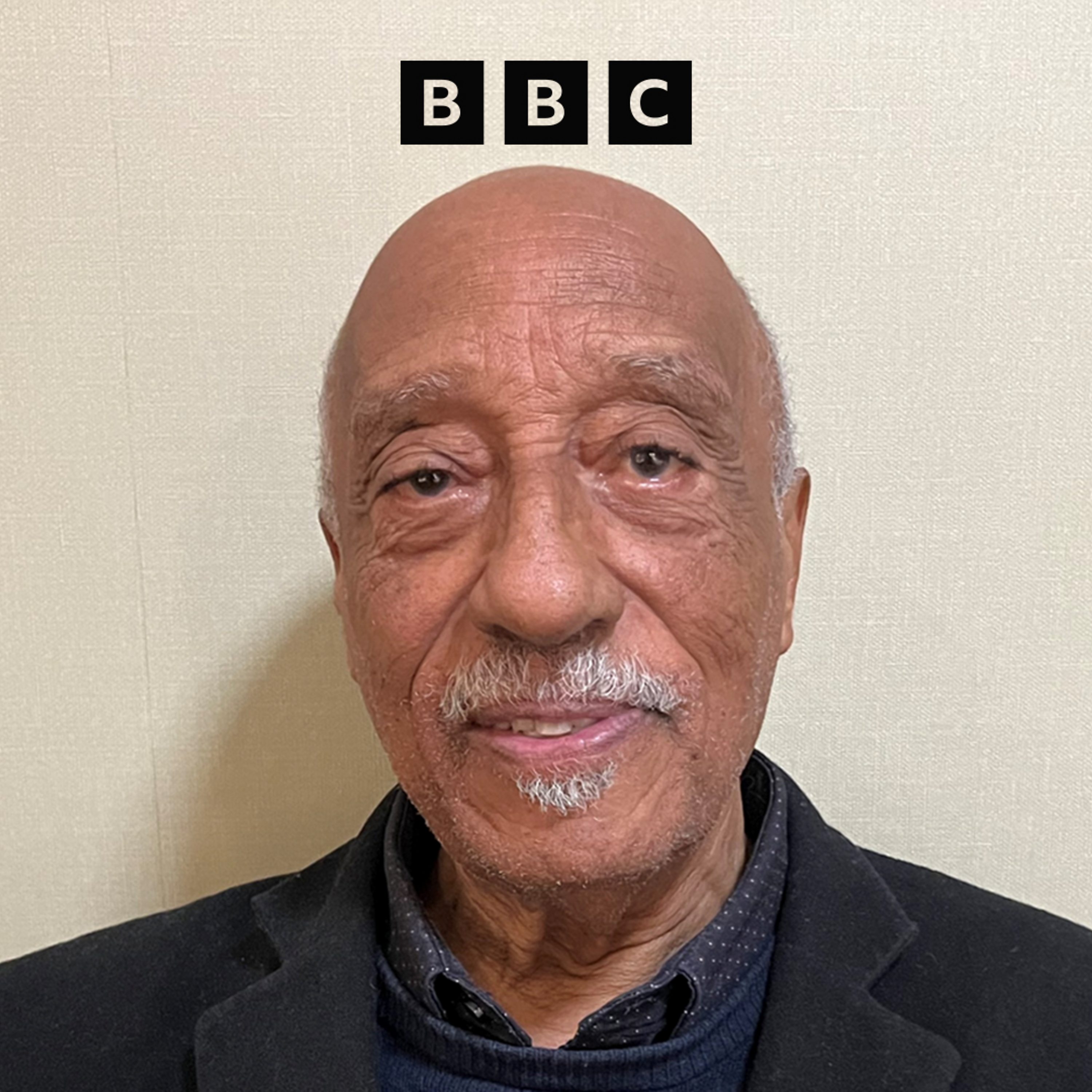
The father of Ethio-Jazz
For more than 50 years, Mulatu Astatke has been performing at venues around the world, inspiring audiences with his original genre of music known as Ethio-jazz.He recorded the volumes of ‘Afro-Latin Soul’ with his band, The Ethiopian Quintet, in 1966. They were the first experiments of this new sound, fusing Ethiopian traditional notes with Afro Latin and jazz forms. Mulatu Astatke tells Vicky Carter how he created the genre of Ethio-jazz. Eye-witness accounts brought to life by archive. Witness History is for those fascinated by the past. We take you to the events that have shaped our world through the eyes of the people who were there. For nine minutes every day, we take you back in time and all over the world, to examine wars, coups, scientific discoveries, cultural moments and much more. Recent episodes explore everything from football in Brazil, the history of the ‘Indian Titanic’ and the invention of air fryers, to Public Enemy’s Fight The Power, subway art and the political crisis in Georgia. We look at the lives of some of the most famous leaders, artists, scientists and personalities in history, including: visionary architect Antoni Gaudi and the design of the Sagrada Familia; Michael Jordan and his bespoke Nike trainers; Princess Diana at the Taj Mahal; and Görel Hanser, manager of legendary Swedish pop band Abba on the influence they’ve had on the music industry. You can learn all about fascinating and surprising stories, such as the time an Iraqi journalist hurled his shoes at the President of the United States in protest of America’s occupation of Iraq; the creation of the Hollywood commercial that changed advertising forever; and the ascent of the first Aboriginal MP.(Photo: Mulatu Astatke. Credit: BBC)
Harold Riley’s 'one of a kind' portrait of Nelson Mandela
Harold Riley was the only artist in the world granted a sitting to capture Nelson Mandela on canvas. The unique portrait was unveiled in 2005 and raised over $1m for South African children's charities at an auction held at the Rockefeller Centre in New York. Mandela sat for the English artist six times in Cape Town and Johannesburg over 18 months which Harold Riley described as "one of the greatest experiences" of his life.This programme was produced and presented by Reena Stanton-Sharma using archive. Eye-witness accounts brought to life by archive. Witness History is for those fascinated by the past. We take you to the events that have shaped our world through the eyes of the people who were there. For nine minutes every day, we take you back in time and all over the world, to examine wars, coups, scientific discoveries, cultural moments and much more. Recent episodes explore everything from football in Brazil, the history of the ‘Indian Titanic’ and the invention of air fryers, to Public Enemy’s Fight The Power, subway art and the political crisis in Georgia. We look at the lives of some of the most famous leaders, artists, scientists and personalities in history, including: visionary architect Antoni Gaudi and the design of the Sagrada Familia; Michael Jordan and his bespoke Nike trainers; Princess Diana at the Taj Mahal; and Görel Hanser, manager of legendary Swedish pop band Abba on the influence they’ve had on the music industry. You can learn all about fascinating and surprising stories, such as the time an Iraqi journalist hurled his shoes at the President of the United States in protest of America’s occupation of Iraq; the creation of the Hollywood commercial that changed advertising forever; and the ascent of the first Aboriginal MP.(Photo: Harold Riley's portrait of Nelson Mandela. Credit: Stephen Lovekin/WireImage for AOL Time Warner - Corporate Communications)
The suspicious death of Rear Admiral Durović
As Yugoslavia began to break down, the Balkans conflict began - a series of brutal wars characterised by disputes over territory, identity, and ethnic divisions. In 1991, the Croatian War of Independence started – the first of the major wars. One of its defining moments came in October, when the Yugoslav People’s Army advanced on the south of the country leading to the Siege of Dubrovnik. One of the Yugoslav People’s Army commanders in the region was Rear Admiral Krsto Durović, a Montenegrin who had spent his life working in Croatia, married a Croatian and planned to retire to the country. Attacking Dubrovnik was unthinkable for the Rear Admiral, and he promised the city’s major: “As long as I am the commander, not a single shell will fall on Dubrovnik."Shortly afterwards he was killed in a suspicious helicopter crash – his superiors claimed he was shot down, but there were no opposition forces in the area, and Croatian officials denied any part in the crash. There was never an autopsy and no military investigation. Soon after, Miodrag Jokic was appointed Durović’s replacement, and a vicious bombing campaign began which would later see Jokic convicted of war crimes. Johnny I’Anson speaks to Montenegrin journalist Veseljko Koprivica, and documentary maker Mladen Ivanovic who say Rear Admiral Đurović’s refusal to bomb Dubrovnik may have led to his untimely death. Eye-witness accounts brought to life by archive. Witness History is for those fascinated by the past. We take you to the events that have shaped our world through the eyes of the people who were there. For nine minutes every day, we take you back in time and all over the world, to examine wars, coups, scientific discoveries, cultural moments and much more. Recent episodes explore everything from football in Brazil, the history of the ‘Indian Titanic’ and the invention of air fryers, to Public Enemy’s Fight The Power, subway art and the political crisis in Georgia. We look at the lives of some of the most famous leaders, artists, scientists and personalities in history, including: visionary architect Antoni Gaudi and the design of the Sagrada Familia; Michael Jordan and his bespoke Nike trainers; Princess Diana at the Taj Mahal; and Görel Hanser, manager of legendary Swedish pop band Abba on the influence they’ve had on the music industry. You can learn all about fascinating and surprising stories, such as the time an Iraqi journalist hurled his shoes at the President of the United States in protest of America’s occupation of Iraq; the creation of the Hollywood commercial that changed advertising forever; and the ascent of the first Aboriginal MP.(Photo: Rear Admiral Durović. Credit: Durović family)
Goodluck Jonathan’s phone call that changed Nigeria
In 2015 Goodluck Jonathan became the first Nigerian president to concede election defeat. It allowed the transfer of power to the opposition party in Africa's biggest democracy - a country that had hitherto experienced vote-rigging and violence. His special adviser on media and publicity Dr Reuben Abati tells Josephine McDermott about the moment when the president phoned his opponent Muhammadu Bahari to congratulate him on winning the election.Eye-witness accounts brought to life by archive. Witness History is for those fascinated by the past. We take you to the events that have shaped our world through the eyes of the people who were there. For nine minutes every day, we take you back in time and all over the world, to examine wars, coups, scientific discoveries, cultural moments and much more.Recent episodes explore everything from football in Brazil, the history of the ‘Indian Titanic’ and the invention of air fryers, to Public Enemy’s Fight The Power, subway art and the political crisis in Georgia. We look at the lives of some of the most famous leaders, artists, scientists and personalities in history, including: visionary architect Antoni Gaudi and the design of the Sagrada Familia; Michael Jordan and his bespoke Nike trainers; Princess Diana at the Taj Mahal; and Görel Hanser, manager of legendary Swedish pop band Abba on the influence they’ve had on the music industry. You can learn all about fascinating and surprising stories, such as the time an Iraqi journalist hurled his shoes at the President of the United States in protest of America’s occupation of Iraq; the creation of the Hollywood commercial that changed advertising forever; and the ascent of the first Aboriginal MP.(Photo: President Goodluck Jonathan and Gen Muhammadu Buhari before the 2015 election. Credit: Getty Images)
The Germanwings plane crash
When General David Galtier hovered above the French Alps in a helicopter on 24 March 2015 he could not see the 60-tonne plane he was looking for. Instead he saw thousands and thousands of little pieces of metal. “There was nothing,” he says. “Only these little stars shining in the mountains.”Ten years on, he recalls to Josephine McDermott how he led the police’s search operation, from the moment he heard about the disappearance of Flight 4U 9525, to the handing back of the victims’ possessions.In the first 24 hours, the possibility that such a routine, short-haul flight cruising with two experienced pilots on board could end in the loss of 150 people was almost impossible to comprehend.Then, Gen Galtier heard the cockpit voice recorder which revealed the last efforts from air traffic control to communicate with Andreas Lubitz who had locked himself in the cockpit. Investigators drew the harrowing conclusion that he had intended to crash the plane. Eye-witness accounts brought to life by archive. Witness History is for those fascinated by the past. We take you to the events that have shaped our world through the eyes of the people who were there. For nine minutes every day, we take you back in time and all over the world, to examine wars, coups, scientific discoveries, cultural moments and much more. Recent episodes explore everything from football in Brazil, the history of the ‘Indian Titanic’ and the invention of air fryers, to Public Enemy’s Fight The Power, subway art and the political crisis in Georgia. We look at the lives of some of the most famous leaders, artists, scientists and personalities in history, including: visionary architect Antoni Gaudi and the design of the Sagrada Familia; Michael Jordan and his bespoke Nike trainers; Princess Diana at the Taj Mahal; and Görel Hanser, manager of legendary Swedish pop band Abba on the influence they’ve had on the music industry. You can learn all about fascinating and surprising stories, such as the time an Iraqi journalist hurled his shoes at the President of the United States in protest of America’s occupation of Iraq; the creation of the Hollywood commercial that changed advertising forever; and the ascent of the first Aboriginal MP.(Photo: The memorial site of the Germanwings plane crash. Credit: AP)
The visionary behind the European Space Agency
In October 2012, the founding father of the European Space Agency was honoured when a spacecraft named after him was sent to the international space station. Within the probe – called the Edoardo Amaldi Automated Transfer Vehicle – was a letter which had been written by Edoardo in 1958 detailing his plans for an organisation which would bring together the continent’s greatest minds in space science. It was in response to the brain drain Europe was facing in the years prior when its best scientists were flying off to work at NASA. His grandson, Andrea Amaldi, talks to Natasha Fernandes about the moment his grandfather’s letter was sent into space and the role he played in translating it on behalf of the visionary behind the European Space Agency.Eye-witness accounts brought to life by archive. Witness History is for those fascinated by the past. We take you to the events that have shaped our world through the eyes of the people who were there. For nine minutes every day, we take you back in time and all over the world, to examine wars, coups, scientific discoveries, cultural moments and much more. Recent episodes explore everything from football in Brazil, the history of the ‘Indian Titanic’ and the invention of air fryers, to Public Enemy’s Fight The Power, subway art and the political crisis in Georgia. We look at the lives of some of the most famous leaders, artists, scientists and personalities in history, including: visionary architect Antoni Gaudi and the design of the Sagrada Familia; Michael Jordan and his bespoke Nike trainers; Princess Diana at the Taj Mahal; and Görel Hanser, manager of legendary Swedish pop band Abba on the influence they’ve had on the music industry. You can learn all about fascinating and surprising stories, such as the time an Iraqi journalist hurled his shoes at the President of the United States in protest of America’s occupation of Iraq; the creation of the Hollywood commercial that changed advertising forever; and the ascent of the first Aboriginal MP.(Photo: ESA's ATV-3, Edoardo Amaldi, blasts off on March 23, 2012 from the European space centre at Kourou, French Guiana. Credit: JODY AMIET/AFP via Getty Images)
The historic handshake in space
In July 1975, former competitors the Soviet Union and the United States both launched rockets into the sky within hours of each other, as part of a joint project. They wanted two spacecraft, from two different countries, to achieve the first international docking in space. While millions watched on TV, the cosmonauts and astronauts opened the hatches between the two vehicles and shook hands, then shared meals and conducted joint science experiments. In 2022, former NASA chief historian, Bill Barry told Nick Holland why the unique rendezvous was a turning point. Eye-witness accounts brought to life by archive. Witness History is for those fascinated by the past. We take you to the events that have shaped our world through the eyes of the people who were there. For nine minutes every day, we take you back in time and all over the world, to examine wars, coups, scientific discoveries, cultural moments and much more. Recent episodes explore everything from football in Brazil, the history of the ‘Indian Titanic’ and the invention of air fryers, to Public Enemy’s Fight The Power, subway art and the political crisis in Georgia. We look at the lives of some of the most famous leaders, artists, scientists and personalities in history, including: visionary architect Antoni Gaudi and the design of the Sagrada Familia; Michael Jordan and his bespoke Nike trainers; Princess Diana at the Taj Mahal; and Görel Hanser, manager of legendary Swedish pop band Abba on the influence they’ve had on the music industry. You can learn all about fascinating and surprising stories, such as the time an Iraqi journalist hurled his shoes at the President of the United States in protest of America’s occupation of Iraq; the creation of the Hollywood commercial that changed advertising forever; and the ascent of the first Aboriginal MP.(Photo: Commander of the Soviet crew of Soyuz, Alexei Leonov (L) and commander of the American crew of Apollo, Thomas Stafford (R). Credit: NASA/AFP via Getty Images).
In event of moon disaster: 'The speech that never was'
“Fate has ordained that the men who went to the moon to explore in peace will stay on the moon to rest in peace.”These are the opening lines of the 'In Event of Moon Disaster' speech, written in 1969 in case the moon landing astronauts did not make it home.They were composed by President Richard Nixon’s speechwriter, William Safire, who died in 2009, at the age of 79.The speech continued: “These brave men, Neil Armstrong and Edwin Aldrin, know that there is no hope for their recovery. But they also know that there is hope for mankind in their sacrifice.”Using archive from the Richard Nixon Presidential Library and NASA, Vicky Farncombe tells the story of “the speech that never was”.Eye-witness accounts brought to life by archive. Witness History is for those fascinated by the past. We take you to the events that have shaped our world through the eyes of the people who were there. For nine minutes every day, we take you back in time and all over the world, to examine wars, coups, scientific discoveries, cultural moments and much more.Recent episodes explore everything from football in Brazil, the history of the ‘Indian Titanic’ and the invention of air fryers, to Public Enemy’s Fight The Power, subway art and the political crisis in Georgia. We look at the lives of some of the most famous leaders, artists, scientists and personalities in history, including: visionary architect Antoni Gaudi and the design of the Sagrada Familia; Michael Jordan and his bespoke Nike trainers; Princess Diana at the Taj Mahal; and Görel Hanser, manager of legendary Swedish pop band Abba on the influence they’ve had on the music industry. You can learn all about fascinating and surprising stories, such as the time an Iraqi journalist hurled his shoes at the President of the United States in protest of America’s occupation of Iraq; the creation of the Hollywood commercial that changed advertising forever; and the ascent of the first Aboriginal MP.(Photo: Edwin 'Buzz' Aldrin on the moon. Credit: Getty Images)
First spacewalk
On 18 March 1965, cosmonaut Alexei Leonov became the first person to spacewalk.He spent around 10 minutes floating above the Earth, tethered to the spaceship by a 5-metre “umbilical cord”.Recalling that moment, he said: “I felt almost insignificant, like a tiny ant compared to the immensity of the universe. At the same time, I felt enormously powerful.”But the mission didn’t go smoothly. The lack of atmospheric pressure in space had caused the Soviet’s spacesuit to inflate and become stiff – meaning he couldn’t fit back through the spaceship airlock.“It had become a dangerous situation. Very dangerous. Life threatening”, he said.Vicky Farncombe has been reading and listening to archive interviews with Alexei, who died in 2019, to bring you his dramatic story.Eye-witness accounts brought to life by archive. Witness History is for those fascinated by the past. We take you to the events that have shaped our world through the eyes of the people who were there. For nine minutes every day, we take you back in time and all over the world, to examine wars, coups, scientific discoveries, cultural moments and much more.Recent episodes explore everything from football in Brazil, the history of the ‘Indian Titanic’ and the invention of air fryers, to Public Enemy’s Fight The Power, subway art and the political crisis in Georgia. We look at the lives of some of the most famous leaders, artists, scientists and personalities in history, including: visionary architect Antoni Gaudi and the design of the Sagrada Familia; Michael Jordan and his bespoke Nike trainers; Princess Diana at the Taj Mahal; and Görel Hanser, manager of legendary Swedish pop band Abba on the influence they’ve had on the music industry. You can learn all about fascinating and surprising stories, such as the time an Iraqi journalist hurled his shoes at the President of the United States in protest of America’s occupation of Iraq; the creation of the Hollywood commercial that changed advertising forever; and the ascent of the first Aboriginal MP.(Photo: Cosmonaut Alexei Leonov. Credit: Getty Images)
The rocket that revived Brazil’s space programme
In 2003, 21 people died when a space rocket exploded at Brazil’s Alcantara Launch Centre, three days before its planned flight. It was the country’s third – and most serious - rocket failure in six years. But despite the setback, just 14 months later, Brazil revived its space ambitions by successfully launching its first rocket since the tragedy. Jacqueline Paine spoke to engineer Felix Palmerio, who spent decades working on a special project to develop a space rocket in Brazil, and who watched the launch.Eye-witness accounts brought to life by archive. Witness History is for those fascinated by the past. We take you to the events that have shaped our world through the eyes of the people who were there. For nine minutes every day, we take you back in time and all over the world, to examine wars, coups, scientific discoveries, cultural moments and much more. Recent episodes explore everything from football in Brazil, the history of the ‘Indian Titanic’ and the invention of air fryers, to Public Enemy’s Fight The Power, subway art and the political crisis in Georgia. We look at the lives of some of the most famous leaders, artists, scientists and personalities in history, including: visionary architect Antoni Gaudi and the design of the Sagrada Familia; Michael Jordan and his bespoke Nike trainers; Princess Diana at the Taj Mahal; and Görel Hanser, manager of legendary Swedish pop band Abba on the influence they’ve had on the music industry. You can learn all about fascinating and surprising stories, such as the time an Iraqi journalist hurled his shoes at the President of the United States in protest of America’s occupation of Iraq; the creation of the Hollywood commercial that changed advertising forever; and the ascent of the first Aboriginal MP.(Photo: Launch of a VSB-30 rocket. Credit: DLR)
Bardo Museum attack in Tunisia
On 18 March 2015, 22 people, mostly foreign tourists, were killed at the Bardo National Museum in Tunis, the capital of Tunisia. Hamadi Ben Abdesslem, a tour guide who led tourists to safety, tells Anouk Millet what it was like that day. A Whistledown production.Eye-witness accounts brought to life by archive. Witness History is for those fascinated by the past. We take you to the events that have shaped our world through the eyes of the people who were there. For nine minutes every day, we take you back in time and all over the world, to examine wars, coups, scientific discoveries, cultural moments and much more. Recent episodes explore everything from football in Brazil, the history of the ‘Indian Titanic’ and the invention of air fryers, to Public Enemy’s Fight The Power, subway art and the political crisis in Georgia. We look at the lives of some of the most famous leaders, artists, scientists and personalities in history, including: visionary architect Antoni Gaudi and the design of the Sagrada Familia; Michael Jordan and his bespoke Nike trainers; Princess Diana at the Taj Mahal; and Görel Hanser, manager of legendary Swedish pop band Abba on the influence they’ve had on the music industry. You can learn all about fascinating and surprising stories, such as the time an Iraqi journalist hurled his shoes at the President of the United States in protest of America’s occupation of Iraq; the creation of the Hollywood commercial that changed advertising forever; and the ascent of the first Aboriginal MP.(Photo: Bardo Museum after attack. Credit: Amine Landoulsi/Anadolu Agency/Getty Images).
The Gambia’s ‘Queen of Recycling’
In 1997, Isatou Ceesay, who lives in The Gambia had an idea to make bags and purses out of old discarded plastic.Her idea to help the environment started with a group of five women and has grown to become a national project that supports women in the country to improve their skills and income. She is now recognised worldwide for her environmental work and has become known in Africa as the ‘"Queen of Recycling".Isatou tells Gill Kearsley her story.Eye-witness accounts brought to life by archive. Witness History is for those fascinated by the past. We take you to the events that have shaped our world through the eyes of the people who were there. For nine minutes every day, we take you back in time and all over the world, to examine wars, coups, scientific discoveries, cultural moments and much more. Recent episodes explore everything from football in Brazil, the history of the ‘Indian Titanic’ and the invention of air fryers, to Public Enemy’s Fight The Power, subway art and the political crisis in Georgia. We look at the lives of some of the most famous leaders, artists, scientists and personalities in history, including: visionary architect Antoni Gaudi and the design of the Sagrada Familia; Michael Jordan and his bespoke Nike trainers; Princess Diana at the Taj Mahal; and Görel Hanser, manager of legendary Swedish pop band Abba on the influence they’ve had on the music industry. You can learn all about fascinating and surprising stories, such as the time an Iraqi journalist hurled his shoes at the President of the United States in protest of America’s occupation of Iraq; the creation of the Hollywood commercial that changed advertising forever; and the ascent of the first Aboriginal MP.(Photo: Isatou Ceesay. Credit: BBC)
The Capitol Crawl
By the beginning of 1990, the United States Congress stalled on passing the Americans with Disabilities Act, a piece of legislation aimed at prohibiting discrimination against people with disabilities.Frustrated by the government’s inaction, more than 1,000 disability activists showed up in Washington DC to protest on 12 March that year. When the group reached the Capitol Building’s stairs, hundreds of activists pulled themselves out of their wheelchairs and began to crawl up in a dramatic and symbolic protest. Stephanie Wolf talks to Anita Cameron who participated in the historic action. Co-produced by Rebekah Romberg.A Written in Air production. Archive recordings courtesy of Linda Litowsky.Eye-witness accounts brought to life by archive. Witness History is for those fascinated by the past. We take you to the events that have shaped our world through the eyes of the people who were there. For nine minutes every day, we take you back in time and all over the world, to examine wars, coups, scientific discoveries, cultural moments and much more. Recent episodes explore everything from football in Brazil, the history of the ‘Indian Titanic’ and the invention of air fryers, to Public Enemy’s Fight The Power, subway art and the political crisis in Georgia. We look at the lives of some of the most famous leaders, artists, scientists and personalities in history, including: visionary architect Antoni Gaudi and the design of the Sagrada Familia; Michael Jordan and his bespoke Nike trainers; Princess Diana at the Taj Mahal; and Görel Hanser, manager of legendary Swedish pop band Abba on the influence they’ve had on the music industry. You can learn all about fascinating and surprising stories, such as the time an Iraqi journalist hurled his shoes at the President of the United States in protest of America’s occupation of Iraq; the creation of the Hollywood commercial that changed advertising forever; and the ascent of the first Aboriginal MP.(Photo: Wheelchair users crawling up the steps of the US Capitol building in March 1990. Credit: Tom Olin Collection, University of Toledo Libraries)
King Kong: South Africa's first all-black musical
In 1959, Todd Matshikiza composed the score for King Kong, it was South Africa’s first musical with an all-black cast and it opened to critical acclaim. About the rise and fall of the heavyweight boxer Ezekiel Dlamini, it defied apartheid with the collaboration between black and white artists. Starring Miriam Makebe, it launched the singer's international career and went on to tour, arriving in London’s West End in February 1961. Todd’s daughter Marian was eight when the family moved to London for the run. She speaks to Reena Stanton-Sharma about her father’s music and what King Kong meant to him. Eye-witness accounts brought to life by archive. Witness History is for those fascinated by the past. We take you to the events that have shaped our world through the eyes of the people who were there. For nine minutes every day, we take you back in time and all over the world, to examine wars, coups, scientific discoveries, cultural moments and much more. Recent episodes explore everything from football in Brazil, the history of the ‘Indian Titanic’ and the invention of air fryers, to Public Enemy’s Fight The Power, subway art and the political crisis in Georgia. We look at the lives of some of the most famous leaders, artists, scientists and personalities in history, including: visionary architect Antoni Gaudi and the design of the Sagrada Familia; Michael Jordan and his bespoke Nike trainers; Princess Diana at the Taj Mahal; and Görel Hanser, manager of legendary Swedish pop band Abba on the influence they’ve had on the music industry. You can learn all about fascinating and surprising stories, such as the time an Iraqi journalist hurled his shoes at the President of the United States in protest of America’s occupation of Iraq; the creation of the Hollywood commercial that changed advertising forever; and the ascent of the first Aboriginal MP.(Photo: Todd Matshikiza. Credit: Jurgen Schadeberg via The Schadeberg Collection)
The invention of GPS
There are few inventions that we rely on as much as the Global Positioning System, also known as GPS. But, when it was created in the late 1970s, nobody wanted it.Prof Brad Parkinson and his team at the US Air Force built it, and the first GPS satellite was launched in 1978. However, GPS wasn’t widely used until an air disaster in 1983 highlighted the need for satellite navigation. Nowadays, GPS helps countless people travel in the right direction. But, we also rely on it for many things you might not realise: it keeps aeroplanes in the sky, props up global trade, farming and construction, and even supports banking transactions. Ben Henderson speaks to Prof Parkinson, "the father of GPS".Eye-witness accounts brought to life by archive. Witness History is for those fascinated by the past. We take you to the events that have shaped our world through the eyes of the people who were there. For nine minutes every day, we take you back in time and all over the world, to examine wars, coups, scientific discoveries, cultural moments and much more.Recent episodes explore everything from football in Brazil, the history of the ‘Indian Titanic’ and the invention of air fryers, to Public Enemy’s Fight The Power, subway art and the political crisis in Georgia. We look at the lives of some of the most famous leaders, artists, scientists and personalities in history, including: visionary architect Antoni Gaudi and the design of the Sagrada Familia; Michael Jordan and his bespoke Nike trainers; Princess Diana at the Taj Mahal; and Görel Hanser, manager of legendary Swedish pop band Abba on the influence they’ve had on the music industry. You can learn all about fascinating and surprising stories, such as the time an Iraqi journalist hurled his shoes at the President of the United States in protest of America’s occupation of Iraq; the creation of the Hollywood commercial that changed advertising forever; and the ascent of the first Aboriginal MP.(Photo: GPS devices. Credit: George Wilhelm/Los Angeles Times via Getty Images)
How bloodshed in Selma led to the US Voting Rights Act 1965
In March 1965, hundreds of peaceful civil rights protesters in Selma were brutally beaten by Alabama state troops.They had been marching to demonstrate against the denial of voting rights to Black Americans.The bloodshed in Selma prompted President Lyndon B Johnson to push for the Voting Rights Act of 1965, one of the most significant pieces of legislation ever passed by Congress. The landmark Act was brought in to tackle racial discrimination during elections and to guarantee the rights of African Americans to vote. Farhana Haider has been listening to the archive. A version of this programme was first broadcast in 2020.Eye-witness accounts brought to life by archive. Witness History is for those fascinated by the past. We take you to the events that have shaped our world through the eyes of the people who were there. For nine minutes every day, we take you back in time and all over the world, to examine wars, coups, scientific discoveries, cultural moments and much more. Recent episodes explore everything from football in Brazil, the history of the ‘Indian Titanic’ and the invention of air fryers, to Public Enemy’s Fight The Power, subway art and the political crisis in Georgia. We look at the lives of some of the most famous leaders, artists, scientists and personalities in history, including: visionary architect Antoni Gaudi and the design of the Sagrada Familia; Michael Jordan and his bespoke Nike trainers; Princess Diana at the Taj Mahal; and Görel Hanser, manager of legendary Swedish pop band Abba on the influence they’ve had on the music industry. You can learn all about fascinating and surprising stories, such as the time an Iraqi journalist hurled his shoes at the President of the United States in protest of America’s occupation of Iraq; the creation of the Hollywood commercial that changed advertising forever; and the ascent of the first Aboriginal MP.(Photo: Civil rights leader Dr Martin Luther King at the Selma to Montgomery march. Credit: Getty Images)
The Great Toyota War
In 1987, a decades-long war in Chad reached a dramatic turning point in what would come to be known as the Great Toyota War. Named after the rugged pick-up trucks that transformed modern desert warfare, this campaign saw the lightly armed Chadian forces out manoeuvre Libya’s heavily fortified military. They achieved a string of astonishing victories, including the capture of the Libyan airbase at Ouadi Dum. Former Chadian officer Mahamat Saleh Bani recalls the speed, ingenuity, and bravery that defined this extraordinary chapter of African history. He speaks to Pearse Lynch. An Africa Digital Audio production.Eye-witness accounts brought to life by archive. Witness History is for those fascinated by the past. We take you to the events that have shaped our world through the eyes of the people who were there. For nine minutes every day, we take you back in time and all over the world, to examine wars, coups, scientific discoveries, cultural moments and much more. Recent episodes explore everything from football in Brazil, the history of the ‘Indian Titanic’ and the invention of air fryers, to Public Enemy’s Fight The Power, subway art and the political crisis in Georgia. We look at the lives of some of the most famous leaders, artists, scientists and personalities in history, including: visionary architect Antoni Gaudi and the design of the Sagrada Familia; Michael Jordan and his bespoke Nike trainers; Princess Diana at the Taj Mahal; and Görel Hanser, manager of legendary Swedish pop band Abba on the influence they’ve had on the music industry. You can learn all about fascinating and surprising stories, such as the time an Iraqi journalist hurled his shoes at the President of the United States in protest of America’s occupation of Iraq; the creation of the Hollywood commercial that changed advertising forever; and the ascent of the first Aboriginal MP.(Photo: Great Toyota War. Credit: AFP)
The US invasion of Panama
In December 1989, more than 20,000 US soldiers descended on the tiny Central American country of Panama. The Americans sought to remove the country’s leader, General Manuel Noriega, who sought refuge from the invading forces with the Papal Ambassador. Noriega was a dictator and had been indicted in Florida over drug trafficking. In 2010, Neal Razzell spoke to Enrique Jelenszky, who assisted communications between the US troops and Noriega. Eye-witness accounts brought to life by archive. Witness History is for those fascinated by the past. We take you to the events that have shaped our world through the eyes of the people who were there. For nine minutes every day, we take you back in time and all over the world, to examine wars, coups, scientific discoveries, cultural moments and much more. Recent episodes explore everything from football in Brazil, the history of the ‘Indian Titanic’ and the invention of air fryers, to Public Enemy’s Fight The Power, subway art and the political crisis in Georgia. We look at the lives of some of the most famous leaders, artists, scientists and personalities in history, including: visionary architect Antoni Gaudi and the design of the Sagrada Familia; Michael Jordan and his bespoke Nike trainers; Princess Diana at the Taj Mahal; and Görel Hanser, manager of legendary Swedish pop band Abba on the influence they’ve had on the music industry. You can learn all about fascinating and surprising stories, such as the time an Iraqi journalist hurled his shoes at the President of the United States in protest of America’s occupation of Iraq; the creation of the Hollywood commercial that changed advertising forever; and the ascent of the first Aboriginal MP.(Photo: A US soldier raises the barbed wire barricade to stop demonstrators from marching towards the Vatican Embassy, where Noriega is seeking asylum/ Credit:REUTERS/Corinne Dufka)
The invention of the shopping trolley
In 1937, American supermarket owner Sylvan Goldman came up with a way to get his customers to spend more.He introduced his 'folding basket carriers' in his Humpty Dumpty chain in Oklahoma, hiring models to push them round his stores.They caught on, becoming known as shopping carts in the USA.Rachel Naylor uses clips from a 1977 CBS interview of Sylvan with Charles Kuralt to tell the story.Eye-witness accounts brought to life by archive. Witness History is for those fascinated by the past. We take you to the events that have shaped our world through the eyes of the people who were there. For nine minutes every day, we take you back in time and all over the world, to examine wars, coups, scientific discoveries, cultural moments and much more.Recent episodes explore everything from football in Brazil, the history of the ‘Indian Titanic’ and the invention of air fryers, to Public Enemy’s Fight The Power, subway art and the political crisis in Georgia. We look at the lives of some of the most famous leaders, artists, scientists and personalities in history, including: visionary architect Antoni Gaudi and the design of the Sagrada Familia; Michael Jordan and his bespoke Nike trainers; Princess Diana at the Taj Mahal; and Görel Hanser, manager of legendary Swedish pop band Abba on the influence they’ve had on the music industry. You can learn all about fascinating and surprising stories, such as the time an Iraqi journalist hurled his shoes at the President of the United States in protest of America’s occupation of Iraq; the creation of the Hollywood commercial that changed advertising forever; and the ascent of the first Aboriginal MP.(Photo: Sylvan Goldman, with models of his shopping trolley. Credit: Don Tullous, Oklahoma Publishing Company Photography Collection, Courtesy of the Oklahoma Historical Society)
The Calais 'Jungle' migrant camp
In 2015, Europe was in the grip of a migrant crisis, as more than one million people fled regions including the Middle East. Many set their sights on a new life in the UK. But, in order to get there, they had to cross the English Channel. One of the most common methods was to hide aboard vehicles destined for Britain at the French port city of Calais. This led to the creation of a squalid migrant camp outside Calais, known as the "Jungle". It was populated by seven to ten thousand people at its largest. Jean-Marc Puissesseau was head of the Port of Calais during the crisis. He speaks to Ben Henderson.Eye-witness accounts brought to life by archive. Witness History is for those fascinated by the past. We take you to the events that have shaped our world through the eyes of the people who were there. For nine minutes every day, we take you back in time and all over the world, to examine wars, coups, scientific discoveries, cultural moments and much more. Recent episodes explore everything from football in Brazil, the history of the ‘Indian Titanic’ and the invention of air fryers, to Public Enemy’s Fight The Power, subway art and the political crisis in Georgia. We look at the lives of some of the most famous leaders, artists, scientists and personalities in history, including: visionary architect Antoni Gaudi and the design of the Sagrada Familia; Michael Jordan and his bespoke Nike trainers; Princess Diana at the Taj Mahal; and Görel Hanser, manager of legendary Swedish pop band Abba on the influence they’ve had on the music industry. You can learn all about fascinating and surprising stories, such as the time an Iraqi journalist hurled his shoes at the President of the United States in protest of America’s occupation of Iraq; the creation of the Hollywood commercial that changed advertising forever; and the ascent of the first Aboriginal MP.(Photo: Chris Patten hands over flag during Honk Kong handover ceremony. Credit: Guillaume Pinon/NurPhoto via Getty Images)
Africa’s stolen Metis children
In 1953, in what was then the Belgian Congo, four-year-old Marie-José Loshi was forcibly removed from her family’s village and taken more than 600km away to live in a Catholic institute. The cause of her kidnapping was the colour of her skin. Under Belgium’s colonial rule, thousands of mixed-race children were taken from their homes and separated from their families. The state hoped the actions would quash any sense of revolt against the colony. More than 70 years later, Marie-José and four other women took on the former colonial power, seeking justice for themselves and the many other mixed-race children that suffered the same fate. She speaks to Kaine Pieri.Eye-witness accounts brought to life by archive. Witness History is for those fascinated by the past. We take you to the events that have shaped our world through the eyes of the people who were there. For nine minutes every day, we take you back in time and all over the world, to examine wars, coups, scientific discoveries, cultural moments and much more. Recent episodes explore everything from football in Brazil, the history of the ‘Indian Titanic’ and the invention of air fryers, to Public Enemy’s Fight The Power, subway art and the political crisis in Georgia. We look at the lives of some of the most famous leaders, artists, scientists and personalities in history, including: visionary architect Antoni Gaudi and the design of the Sagrada Familia; Michael Jordan and his bespoke Nike trainers; Princess Diana at the Taj Mahal; and Görel Hanser, manager of legendary Swedish pop band Abba on the influence they’ve had on the music industry. You can learn all about fascinating and surprising stories, such as the time an Iraqi journalist hurled his shoes at the President of the United States in protest of America’s occupation of Iraq; the creation of the Hollywood commercial that changed advertising forever; and the ascent of the first Aboriginal MP.(Photo: Marie-José Loshi. Credit: Marie-José Loshi)
Surviving Chile's tsunami
In 2010, an 8.8 magnitude earthquake struck the coast of Chile. It shook the central and southern parts of the country for more than three minutes, causing widespread damage which destroyed buildings, bridges and roads. The earthquake triggered a tsunami in the Pacific Ocean, which travelled 600 kilometres west to the remote island of Juan Fernandez where Alison Campbell and her family were on holiday.Hundreds of people died, and thousands were left injured and homeless. Alison Campbell tells Jane Chambers what it was like when the tsunami struck. Eye-witness accounts brought to life by archive. Witness History is for those fascinated by the past. We take you to the events that have shaped our world through the eyes of the people who were there. For nine minutes every day, we take you back in time and all over the world, to examine wars, coups, scientific discoveries, cultural moments and much more.Recent episodes explore everything from football in Brazil, the history of the ‘Indian Titanic’ and the invention of air fryers, to Public Enemy’s Fight The Power, subway art and the political crisis in Georgia. We look at the lives of some of the most famous leaders, artists, scientists and personalities in history, including: visionary architect Antoni Gaudi and the design of the Sagrada Familia; Michael Jordan and his bespoke Nike trainers; Princess Diana at the Taj Mahal; and Görel Hanser, manager of legendary Swedish pop band Abba on the influence they’ve had on the music industry. You can learn all about fascinating and surprising stories, such as the time an Iraqi journalist hurled his shoes at the President of the United States in protest of America’s occupation of Iraq; the creation of the Hollywood commercial that changed advertising forever; and the ascent of the first Aboriginal MP.(Photo: Rescue workers in Juan Fernandez. Credit: JORGE AMENGUAL/AFP via Getty Images).
Denmark’s Inuit children experiment
In 1951, a group of 22 Inuit children from Greenland were sent to live with foster parents in Denmark. It was part of a social experiment aimed at improving the lot of the Inuit people. But, for the children involved it was a confusing experience. Helene Thiesen was one of those children. She spoke to Ellen Otzen in 2015.Eye-witness accounts brought to life by archive. Witness History is for those fascinated by the past. We take you to the events that have shaped our world through the eyes of the people who were there. For nine minutes every day, we take you back in time and all over the world, to examine wars, coups, scientific discoveries, cultural moments and much more. Recent episodes explore everything from football in Brazil, the history of the ‘Indian Titanic’ and the invention of air fryers, to Public Enemy’s Fight The Power, subway art and the political crisis in Georgia. We look at the lives of some of the most famous leaders, artists, scientists and personalities in history, including: visionary architect Antoni Gaudi and the design of the Sagrada Familia; Michael Jordan and his bespoke Nike trainers; Princess Diana at the Taj Mahal; and Görel Hanser, manager of legendary Swedish pop band Abba on the influence they’ve had on the music industry. You can learn all about fascinating and surprising stories, such as the time an Iraqi journalist hurled his shoes at the President of the United States in protest of America’s occupation of Iraq; the creation of the Hollywood commercial that changed advertising forever; and the ascent of the first Aboriginal MP.(Photo: Helene Thiesen. Credit: Helene Thiesen)
The Nellie massacre
The Nellie massacre on 18 February 1983 was the worst bloodshed in the country since Indian independence in 1947. It is estimated that 3,000 people died that day. Bedabrata Lahkar was a journalist working for the Assam Tribune newspaper at the time. He tells Gill Kearsley about the events that led up to the massacre and the devastating scenes he witnessed.A warning this programme contains descriptions of violence and language that some people may find offensive.Eye-witness accounts brought to life by archive. Witness History is for those fascinated by the past. We take you to the events that have shaped our world through the eyes of the people who were there. For nine minutes every day, we take you back in time and all over the world, to examine wars, coups, scientific discoveries, cultural moments and much more. Recent episodes explore everything from football in Brazil, the history of the ‘Indian Titanic’ and the invention of air fryers, to Public Enemy’s Fight The Power, subway art and the political crisis in Georgia. We look at the lives of some of the most famous leaders, artists, scientists and personalities in history, including: visionary architect Antoni Gaudi and the design of the Sagrada Familia; Michael Jordan and his bespoke Nike trainers; Princess Diana at the Taj Mahal; and Görel Hanser, manager of legendary Swedish pop band Abba on the influence they’ve had on the music industry. You can learn all about fascinating and surprising stories, such as the time an Iraqi journalist hurled his shoes at the President of the United States in protest of America’s occupation of Iraq; the creation of the Hollywood commercial that changed advertising forever; and the ascent of the first Aboriginal MP.(Photo: Survivors of the 1983 Assam massacre. Credit: Santosh Basak/Gamma-Rapho via Getty Images)
Discovering the structure of haemoglobin
What was it in September of 1959 that caused an Austrian scientist to rush out from his lab and buy children's modelling clay?Austrian born Dr Max Perutz had made one of the greatest scientific discoveries of the 20th century. For the first time, he could see what a molecule of haemoglobin looked like in 3D. Using lectures and programmes from the BBC archive, Josephine McDermott tells the story of how his fellow Cambridge University students in the UK thought he was “mad” to try and map a molecule made of 10,000 atoms, and the “appalling task” which took 22 years to complete.It was an achievement that earned him and his colleague John Kendrew the Nobel Prize in Chemistry in 1962. It has since contributed to the study of blood diseases like sickle cell anaemia and Huntington's disease.Eye-witness accounts brought to life by archive. Witness History is for those fascinated by the past. We take you to the events that have shaped our world through the eyes of the people who were there. For nine minutes every day, we take you back in time and all over the world, to examine wars, coups, scientific discoveries, cultural moments and much more. Recent episodes explore everything from football in Brazil, the history of the ‘Indian Titanic’ and the invention of air fryers, to Public Enemy’s Fight The Power, subway art and the political crisis in Georgia. We look at the lives of some of the most famous leaders, artists, scientists and personalities in history, including: visionary architect Antoni Gaudi and the design of the Sagrada Familia; Michael Jordan and his bespoke Nike trainers; Princess Diana at the Taj Mahal; and Görel Hanser, manager of legendary Swedish pop band Abba on the influence they’ve had on the music industry. You can learn all about fascinating and surprising stories, such as the time an Iraqi journalist hurled his shoes at the President of the United States in protest of America’s occupation of Iraq; the creation of the Hollywood commercial that changed advertising forever; and the ascent of the first Aboriginal MP.(Photo: Dr Max Perutz in 1962. Credit: AP)
Assassination of Malcolm X
Sixty years ago, on 21st February 1965, the controversial black leader, Malcolm X, was assassinated in Harlem, New York as he was preparing to speak there.In 2011, Simon Watts spoke to Herman Ferguson who was one of the people who was in the audience that day.This programme contains outdated racial language that may offend.Eye-witness accounts brought to life by archive. Witness History is for those fascinated by the past. We take you to the events that have shaped our world through the eyes of the people who were there. For nine minutes every day, we take you back in time and all over the world, to examine wars, coups, scientific discoveries, cultural moments and much more. Recent episodes explore everything from football in Brazil, the history of the ‘Indian Titanic’ and the invention of air fryers, to Public Enemy’s Fight The Power, subway art and the political crisis in Georgia. We look at the lives of some of the most famous leaders, artists, scientists and personalities in history, including: visionary architect Antoni Gaudi and the design of the Sagrada Familia; Michael Jordan and his bespoke Nike trainers; Princess Diana at the Taj Mahal; and Görel Hanser, manager of legendary Swedish pop band Abba on the influence they’ve had on the music industry. You can learn all about fascinating and surprising stories, such as the time an Iraqi journalist hurled his shoes at the President of the United States in protest of America’s occupation of Iraq; the creation of the Hollywood commercial that changed advertising forever; and the ascent of the first Aboriginal MP.(Photo: Malcolm X speaks in Harlem six days before he was shot to death. Credit: Bill Quinn/NY Daily News Archive via Getty Images)
Murder at the Berlin Wall
On 29 March 1974, Czesław Kukuczka stormed into the Polish embassy in East Berlin, threatening to detonate a bomb unless he was allowed to escape to the West. Shot at point-blank range while trying to cross the Berlin Wall, the identity of Kukuczka's killer remained a mystery for decades - until archive documents led investigators to former Stasi officer Martin Naumann. Naumann's historic trial made him one of the first former Stasi officers to be convicted of murder.Dan Hardoon speaks to Dr Filip Gańczak, the historian whose work helped bring Kukuczka’s killer to justice.Eye-witness accounts brought to life by archive. Witness History is for those fascinated by the past. We take you to the events that have shaped our world through the eyes of the people who were there. For nine minutes every day, we take you back in time and all over the world, to examine wars, coups, scientific discoveries, cultural moments and much more. Recent episodes explore everything from football in Brazil, the history of the ‘Indian Titanic’ and the invention of air fryers, to Public Enemy’s Fight The Power, subway art and the political crisis in Georgia. We look at the lives of some of the most famous leaders, artists, scientists and personalities in history, including: visionary architect Antoni Gaudi and the design of the Sagrada Familia; Michael Jordan and his bespoke Nike trainers; Princess Diana at the Taj Mahal; and Görel Hanser, manager of legendary Swedish pop band Abba on the influence they’ve had on the music industry. You can learn all about fascinating and surprising stories, such as the time an Iraqi journalist hurled his shoes at the President of the United States in protest of America’s occupation of Iraq; the creation of the Hollywood commercial that changed advertising forever; and the ascent of the first Aboriginal MP.(Photo: The Berlin Wall. Credit: Owen Franken/Corbis via Getty Images)
Bolivia’s first indigenous president
In December 2005, Evo Morales made history in Bolivia when he became the country’s first indigenous president. The country is one of the poorest in South America and has the highest proportion of indigenous people on the continent – they had been marginalised for centuries. His election came after years of protests over the destruction of coca leaf crops and the privatisation of the country's oil and gas reserves. Tim O’Callaghan speaks to Bolivia’s former Vice President Álvaro García Linera. Eye-witness accounts brought to life by archive. Witness History is for those fascinated by the past. We take you to the events that have shaped our world through the eyes of the people who were there. For nine minutes every day, we take you back in time and all over the world, to examine wars, coups, scientific discoveries, cultural moments and much more. Recent episodes explore everything from football in Brazil, the history of the ‘Indian Titanic’ and the invention of air fryers, to Public Enemy’s Fight The Power, subway art and the political crisis in Georgia. We look at the lives of some of the most famous leaders, artists, scientists and personalities in history, including: visionary architect Antoni Gaudi and the design of the Sagrada Familia; Michael Jordan and his bespoke Nike trainers; Princess Diana at the Taj Mahal; and Görel Hanser, manager of legendary Swedish pop band Abba on the influence they’ve had on the music industry. You can learn all about fascinating and surprising stories, such as the time an Iraqi journalist hurled his shoes at the President of the United States in protest of America’s occupation of Iraq; the creation of the Hollywood commercial that changed advertising forever; and the ascent of the first Aboriginal MP.(Photo: Evo Morales. Credit: Reuters)
Bo: The death of a language
In 2010, one of the oldest languages in the world died after the death of its last remaining speaker.For 40 years, Boa Senior from the Indian Andaman Islands was the only person who spoke the Bo language. She died, aged 85.Leading up to her death, linguist Professor Anvita Abbi spent years attempting to learn the dying language.Without family or friends who understood her, Boa took to speaking to birds – she said they were her ancestors. Eventually she opened up to Anvita, singing songs and sharing ancient tales.Anvita was the first and last person to record Boa’s voice. She talks to Natasha Fernandes about her death and how it changed a whole way of life.Eye-witness accounts brought to life by archive. Witness History is for those fascinated by the past. We take you to the events that have shaped our world through the eyes of the people who were there. For nine minutes every day, we take you back in time and all over the world, to examine wars, coups, scientific discoveries, cultural moments and much more. Recent episodes explore everything from football in Brazil, the history of the ‘Indian Titanic’ and the invention of air fryers, to Public Enemy’s Fight The Power, subway art and the political crisis in Georgia. We look at the lives of some of the most famous leaders, artists, scientists and personalities in history, including: visionary architect Antoni Gaudi and the design of the Sagrada Familia; Michael Jordan and his bespoke Nike trainers; Princess Diana at the Taj Mahal; and Görel Hanser, manager of legendary Swedish pop band Abba on the influence they’ve had on the music industry. You can learn all about fascinating and surprising stories, such as the time an Iraqi journalist hurled his shoes at the President of the United States in protest of America’s occupation of Iraq; the creation of the Hollywood commercial that changed advertising forever; and the ascent of the first Aboriginal MP.(Photo: Boa Senior in a tsunami relief camp in 2005. Credit: Anvita Abbi)
The world's longest kiss
In 2013, Guinness World Records deactivated the record for the longest kiss after 15 years, saying it had become too dangerous and some of the rules conflicted with their current updated policies. It means Thai couple Ekkachai, and his wife Laksana, still hold the title, after first breaking it in 2011, with a time of 46 hours and 24 minutes, then again in 2013 with 58 hours and 35 minutes. The couple are no longer together but Ekkachai looks back at breaking the records with Megan Jones. Eye-witness accounts brought to life by archive. Witness History is for those fascinated by the past. We take you to the events that have shaped our world through the eyes of the people who were there. For nine minutes every day, we take you back in time and all over the world, to examine wars, coups, scientific discoveries, cultural moments and much more. Recent episodes explore everything from football in Brazil, the history of the ‘Indian Titanic’ and the invention of air fryers, to Public Enemy’s Fight The Power, subway art and the political crisis in Georgia. We look at the lives of some of the most famous leaders, artists, scientists and personalities in history, including: visionary architect Antoni Gaudi and the design of the Sagrada Familia; Michael Jordan and his bespoke Nike trainers; Princess Diana at the Taj Mahal; and Görel Hanser, manager of legendary Swedish pop band Abba on the influence they’ve had on the music industry. You can learn all about fascinating and surprising stories, such as the time an Iraqi journalist hurled his shoes at the President of the United States in protest of America’s occupation of Iraq; the creation of the Hollywood commercial that changed advertising forever; and the ascent of the first Aboriginal MP.(Photo: Thai couple kiss during a competition. Credit: Pornchai Kittiwongsakul/AFP via Getty Images)
Eva Peron: Argentina’s Evita
Eva Peron – otherwise known as Evita - became an icon in 1940s Argentina, famous for her passionate speeches and populist rhetoric. Born into poverty, she moved to Buenos Aries at the age of 15 to become an actress, and was soon starring in radio soap operas.In 1945, she married Colonel Juan Peron, a rising figure in the Argentinian military, and supported his campaign to become president. After he won the election, she set up the Eva Perón Foundation, to distribute money, food and medicines to the poor. It won her the adulation of Argentina’s working classes, although some believed she exploited her position for personal gain.Eva fell ill with cancer, and on 17 October 1951, she made her last major public appearance from the presidential palace balcony. It was to be her most famous speech, later inspiring the award-winning song, Don’t Cry for Me Argentina, from the musical Evita.Eye-witness accounts brought to life by archive. Witness History is for those fascinated by the past. We take you to the events that have shaped our world through the eyes of the people who were there. For nine minutes every day, we take you back in time and all over the world, to examine wars, coups, scientific discoveries, cultural moments and much more. Recent episodes explore everything from football in Brazil, the history of the ‘Indian Titanic’ and the invention of air fryers, to Public Enemy’s Fight The Power, subway art and the political crisis in Georgia. We look at the lives of some of the most famous leaders, artists, scientists and personalities in history, including: visionary architect Antoni Gaudi and the design of the Sagrada Familia; Michael Jordan and his bespoke Nike trainers; Princess Diana at the Taj Mahal; and Görel Hanser, manager of legendary Swedish pop band Abba on the influence they’ve had on the music industry. You can learn all about fascinating and surprising stories, such as the time an Iraqi journalist hurled his shoes at the President of the United States in protest of America’s occupation of Iraq; the creation of the Hollywood commercial that changed advertising forever; and the ascent of the first Aboriginal MP.(Photo: Eva Peron in 1951. Credit: Bettmann/Getty Images)
Paul Keating's Redfern speech
On 10 December 1992, Australia’s Prime Minister, Paul Keating, addressed a crowd in a Sydney suburb called Redfern, to mark the UN’s International Year of the World’s Indigenous People. What started as a low-key affair, is remembered as one of the most powerful speeches in Australian history. It was the first time an Australian Prime Minister took moral responsibility for the horrors committed against Indigenous Australians.The speech received significant backlash, but it’s often credited with paving the way for a later Australian Prime Minister, Kevin Rudd, to issue a formal apology to Indigenous Australians. In 2007, ABC radio listeners voted it the third most unforgettable speech in history behind Martin Luther King’s 'I have a dream' speech and Jesus’ Sermon on the Mount.Don Watson wrote the speech. He speaks to Ben Henderson.Eye-witness accounts brought to life by archive. Witness History is for those fascinated by the past. We take you to the events that have shaped our world through the eyes of the people who were there. For nine minutes every day, we take you back in time and all over the world, to examine wars, coups, scientific discoveries, cultural moments and much more.Recent episodes explore everything from football in Brazil, the history of the ‘Indian Titanic’ and the invention of air fryers, to Public Enemy’s Fight The Power, subway art and the political crisis in Georgia. We look at the lives of some of the most famous leaders, artists, scientists and personalities in history, including: visionary architect Antoni Gaudi and the design of the Sagrada Familia; Michael Jordan and his bespoke Nike trainers; Princess Diana at the Taj Mahal; and Görel Hanser, manager of legendary Swedish pop band Abba on the influence they’ve had on the music industry. You can learn all about fascinating and surprising stories, such as the time an Iraqi journalist hurled his shoes at the President of the United States in protest of America’s occupation of Iraq; the creation of the Hollywood commercial that changed advertising forever; and the ascent of the first Aboriginal MP.(Audio of Redfern speech: National Archives of Australia)(Photo: Prime Minister Paul Keating at Redfern. Credit: Pickett/The Sydney Morning Herald/Fairfax Media via Getty Images)
Mary Fisher's 'A Whisper of Aids' speech
When Mary Fisher was diagnosed with HIV in 1991 she did not represent the typical stereotype of someone HIV-positive. She was white, heterosexual and contracted the disease in marriage. She used her platform at the Republican National Convention in Texas in 1992 to try and change people's treatment of those carrying the Aids virus.The speech was broadcast live to millions of people via the major US TV outlets. She argued that she did not want her sons, aged four and two, to face stigma from the "whisper of Aids" once she had died.It is ranked as one of the most important speeches in the US in the 20th Century. Mary Fisher recalls the moment she delivered the speech to Josephine McDermott.Eye-witness accounts brought to life by archive. Witness History is for those fascinated by the past. We take you to the events that have shaped our world through the eyes of the people who were there. For nine minutes every day, we take you back in time and all over the world, to examine wars, coups, scientific discoveries, cultural moments and much more.Recent episodes explore everything from football in Brazil, the history of the ‘Indian Titanic’ and the invention of air fryers, to Public Enemy’s Fight The Power, subway art and the political crisis in Georgia. We look at the lives of some of the most famous leaders, artists, scientists and personalities in history, including: visionary architect Antoni Gaudi and the design of the Sagrada Familia; Michael Jordan and his bespoke Nike trainers; Princess Diana at the Taj Mahal; and Görel Hanser, manager of legendary Swedish pop band Abba on the influence they’ve had on the music industry. You can learn all about fascinating and surprising stories, such as the time an Iraqi journalist hurled his shoes at the President of the United States in protest of America’s occupation of Iraq; the creation of the Hollywood commercial that changed advertising forever; and the ascent of the first Aboriginal MP.(Photo: Mary Fisher delivers her speech in 1992. Credit: AP)
Eisenhower's farewell address
In January 1961, US President Dwight Eisenhower ended his time in the White House with a farewell address regarded as one of the greatest speeches made by a US president. He warned Americans against the "military-industrial complex", a phrase that he coined. In 2018, Louise Hidalgo looked back on the speech with Dwight Eisenhower's grandson, David Eisenhower, and one of his speechwriters, Stephen Hess.Eye-witness accounts brought to life by archive. Witness History is for those fascinated by the past. We take you to the events that have shaped our world through the eyes of the people who were there. For nine minutes every day, we take you back in time and all over the world, to examine wars, coups, scientific discoveries, cultural moments and much more. Recent episodes explore everything from football in Brazil, the history of the ‘Indian Titanic’ and the invention of air fryers, to Public Enemy’s Fight The Power, subway art and the political crisis in Georgia. We look at the lives of some of the most famous leaders, artists, scientists and personalities in history, including: visionary architect Antoni Gaudi and the design of the Sagrada Familia; Michael Jordan and his bespoke Nike trainers; Princess Diana at the Taj Mahal; and Görel Hanser, manager of legendary Swedish pop band Abba on the influence they’ve had on the music industry. You can learn all about fascinating and surprising stories, such as the time an Iraqi journalist hurled his shoes at the President of the United States in protest of America’s occupation of Iraq; the creation of the Hollywood commercial that changed advertising forever; and the ascent of the first Aboriginal MP.(Photo: President Dwight Eisenhower. Credit: Bettmann/Contributor via Getty Images)
La Pasionaria: Heroine of the Spanish Civil War
Dolores Ibárruri was nicknamed La Pasionaria for her fiery speeches to the anti-fascist forces during the Spanish civil war. The fighting had begun in July 1936. Troops, led by General Francisco Franco, launched an uprising against the democratically-elected government. These Nationalist rebels were backed by Adolf Hitler in Germany and Benito Mussolini in Italy.On the other side were supporters of the Republican government, including Spain’s communist party, and Dolores was one of its leaders. She was already known for her speeches against fascism, but it was the civil war that sealed her reputation as a passionate and persuasive speaker. Her favourite phrase even became a battle cry for the Republicans: “No pasaran! They shall not pass!” Jane Wilkinson has been looking through the archives to find out more.Eye-witness accounts brought to life by archive. Witness History is for those fascinated by the past. We take you to the events that have shaped our world through the eyes of the people who were there. For nine minutes every day, we take you back in time and all over the world, to examine wars, coups, scientific discoveries, cultural moments and much more. Recent episodes explore everything from football in Brazil, the history of the ‘Indian Titanic’ and the invention of air fryers, to Public Enemy’s Fight The Power, subway art and the political crisis in Georgia. We look at the lives of some of the most famous leaders, artists, scientists and personalities in history, including: visionary architect Antoni Gaudi and the design of the Sagrada Familia; Michael Jordan and his bespoke Nike trainers; Princess Diana at the Taj Mahal; and Görel Hanser, manager of legendary Swedish pop band Abba on the influence they’ve had on the music industry. You can learn all about fascinating and surprising stories, such as the time an Iraqi journalist hurled his shoes at the President of the United States in protest of America’s occupation of Iraq; the creation of the Hollywood commercial that changed advertising forever; and the ascent of the first Aboriginal MP.
Heathers: The making of a cult classic
In 1989, a dark teen comedy exploring self-harm and suicide flopped at cinemas.Heathers would have to wait years before achieving cult status through home video tape releases.Its stark portrayal of teenage life launched an age of more radical teen movies. Actress Lisanne Falk played one of the ‘Heathers’, a titular trio of girls who ruled their school, until someone started taking them down. She tells Drew Hyndman about Heathers’ journey to cult classic.Eye-witness accounts brought to life by archive. Witness History is for those fascinated by the past. We take you to the events that have shaped our world through the eyes of the people who were there. For nine minutes every day, we take you back in time and all over the world, to examine wars, coups, scientific discoveries, cultural moments and much more. Recent episodes explore everything from football in Brazil, the history of the ‘Indian Titanic’ and the invention of air fryers, to Public Enemy’s Fight The Power, subway art and the political crisis in Georgia. We look at the lives of some of the most famous leaders, artists, scientists and personalities in history, including: visionary architect Antoni Gaudi and the design of the Sagrada Familia; Michael Jordan and his bespoke Nike trainers; Princess Diana at the Taj Mahal; and Görel Hanser, manager of legendary Swedish pop band Abba on the influence they’ve had on the music industry. You can learn all about fascinating and surprising stories, such as the time an Iraqi journalist hurled his shoes at the President of the United States in protest of America’s occupation of Iraq; the creation of the Hollywood commercial that changed advertising forever; and the ascent of the first Aboriginal MP.
The first global case of coral bleaching
In 1998, a mysterious phenomenon turned many of the world’s most colourful coral reefs deathly white.It was the first recorded global coral bleaching event in history, and ecologists blamed it on rising ocean temperatures caused by climate change. Studies showed that when the oceans get warmer, it stresses the corals, causing them to expel the algae that give them their colour, and so turn white.Since then there have been four global bleaching events, which have destroyed up to 20% of the world’s reefs, and threatened the economy, tourism and livelihoods of more than 30 countries.Marine ecologist Clive Wilkinson worked as co-ordinator for the Global Coral Reef Monitoring Network, based in Queensland, Australia. He tells Jane Wilkinson how the first reports of the phenomenon caused shockwaves in 1998.Eye-witness accounts brought to life by archive. Witness History is for those fascinated by the past. We take you to the events that have shaped our world through the eyes of the people who were there. For nine minutes every day, we take you back in time and all over the world, to examine wars, coups, scientific discoveries, cultural moments and much more. Recent episodes explore everything from football in Brazil, the history of the ‘Indian Titanic’ and the invention of air fryers, to Public Enemy’s Fight The Power, subway art and the political crisis in Georgia. We look at the lives of some of the most famous leaders, artists, scientists and personalities in history, including: visionary architect Antoni Gaudi and the design of the Sagrada Familia; Michael Jordan and his bespoke Nike trainers; Princess Diana at the Taj Mahal; and Görel Hanser, manager of legendary Swedish pop band Abba on the influence they’ve had on the music industry. You can learn all about fascinating and surprising stories, such as the time an Iraqi journalist hurled his shoes at the President of the United States in protest of America’s occupation of Iraq; the creation of the Hollywood commercial that changed advertising forever; and the ascent of the first Aboriginal MP.(Photo: Reef in Trat, Thailand, damaged by coral bleaching. Credit: Sirachai Arunrugstichai/Getty Images)
Cuban blindness
In the early 1990s, as Cuba faced a devastating economic crisis, leading to severe food shortages and malnutrition, around 50,000 Cubans were inexplicably struck down with sight loss.One of America's leading eye specialists, Dr Alfredo Sadun, was invited to the communist-ruled island by Fidel Castrol to help figure out what was going on. Mike Lanchin spoke to Dr Sadun in 2021.Eye-witness accounts brought to life by archive. Witness History is for those fascinated by the past. We take you to the events that have shaped our world through the eyes of the people who were there. For nine minutes every day, we take you back in time and all over the world, to examine wars, coups, scientific discoveries, cultural moments and much more. Recent episodes explore everything from football in Brazil, the history of the ‘Indian Titanic’ and the invention of air fryers, to Public Enemy’s Fight The Power, subway art and the political crisis in Georgia. We look at the lives of some of the most famous leaders, artists, scientists and personalities in history, including: visionary architect Antoni Gaudi and the design of the Sagrada Familia; Michael Jordan and his bespoke Nike trainers; Princess Diana at the Taj Mahal; and Görel Hanser, manager of legendary Swedish pop band Abba on the influence they’ve had on the music industry. You can learn all about fascinating and surprising stories, such as the time an Iraqi journalist hurled his shoes at the President of the United States in protest of America’s occupation of Iraq; the creation of the Hollywood commercial that changed advertising forever; and the ascent of the first Aboriginal MP.(Photo: A man undergoes an eye examination in Cuba in1993. Credit: Adalberto Roque/AFP/Getty Images)
Oradour massacre
In June 1944, a village in France was destroyed in just one day. German soldiers entered Oradour-sur-Glane and gathered the villagers together. They separated the men from the women and children and took groups to different locations of the village.On that day, 642 were killed. Robert Hébras was just a teenager at the time.Robert’s granddaughter, Agathe Hébras tells Gill Kearsley his powerful story, from the arrival of the soldiers to his escape and then his realisation that he was one of the few survivors of the massacre. A warning, this programme contains descriptions of death.Eye-witness accounts brought to life by archive. Witness History is for those fascinated by the past. We take you to the events that have shaped our world through the eyes of the people who were there. For nine minutes every day, we take you back in time and all over the world, to examine wars, coups, scientific discoveries, cultural moments and much more. Recent episodes explore everything from football in Brazil, the history of the ‘Indian Titanic’ and the invention of air fryers, to Public Enemy’s Fight The Power, subway art and the political crisis in Georgia. We look at the lives of some of the most famous leaders, artists, scientists and personalities in history, including: visionary architect Antoni Gaudi and the design of the Sagrada Familia; Michael Jordan and his bespoke Nike trainers; Princess Diana at the Taj Mahal; and Görel Hanser, manager of legendary Swedish pop band Abba on the influence they’ve had on the music industry. You can learn all about fascinating and surprising stories, such as the time an Iraqi journalist hurled his shoes at the President of the United States in protest of America’s occupation of Iraq; the creation of the Hollywood commercial that changed advertising forever; and the ascent of the first Aboriginal MP.(Photo: Robert Hebras at age 86, walks through the ruins of Oradour-sur-Glane. Credit: Jean-Pierre Muller/AFP via Getty Images)
Jacques Derrida: ‘Rock star’ philosopher
In 1966, at Johns Hopkins University in the US, a little-known glamorous French philosopher called Jacques Derrida took to the stage and eviscerated the prevailing philosophy of the day, making him an overnight sensation.The following year, he published three hugely influential books making the case for his theory of “deconstruction”, which questioned the foundations of Western thought and knowledge.Deconstruction’s influence can still be felt today: from calls to decolonise the curriculum, to experimental architecture, to feminist retellings of the classics. While the word “deconstruct” has become widely used. On his death in 2004, The Guardian newspaper wrote: "Derrida's name has probably been mentioned more frequently in books, journals, lectures, and common-room conversations during the last 30 years than that of any other living thinker.”Hélène Cixous is one of France's most influential writers and a lifelong friend of Derrida. She speaks to Ben Henderson.Eye-witness accounts brought to life by archive. Witness History is for those fascinated by the past. We take you to the events that have shaped our world through the eyes of the people who were there. For nine minutes every day, we take you back in time and all over the world, to examine wars, coups, scientific discoveries, cultural moments and much more. Recent episodes explore everything from football in Brazil, the history of the ‘Indian Titanic’ and the invention of air fryers, to Public Enemy’s Fight The Power, subway art and the political crisis in Georgia. We look at the lives of some of the most famous leaders, artists, scientists and personalities in history, including: visionary architect Antoni Gaudi and the design of the Sagrada Familia; Michael Jordan and his bespoke Nike trainers; Princess Diana at the Taj Mahal; and Görel Hanser, manager of legendary Swedish pop band Abba on the influence they’ve had on the music industry. You can learn all about fascinating and surprising stories, such as the time an Iraqi journalist hurled his shoes at the President of the United States in protest of America’s occupation of Iraq; the creation of the Hollywood commercial that changed advertising forever; and the ascent of the first Aboriginal MP.
English TV lessons in China go primetime
In 1981 the first major series of English lessons was broadcast on Chinese television.President Deng Xiaoping had allowed private enterprise and was pursuing an era of “opening up” to the rest of the world. It followed a decade of educational turmoil when teachers had been castigated as bourgeois by the former leader Mao Zedong.Kathy Flower presented the English education programme, Follow Me, several times a week at primetime. It was watched by an estimated 500 million people keen to get a taste of the English language and observe westerners on television. Kathy Flower recalls to Josephine McDermott what it was like becoming the most famous foreign person in China.Eye-witness accounts brought to life by archive. Witness History is for those fascinated by the past. We take you to the events that have shaped our world through the eyes of the people who were there. For nine minutes every day, we take you back in time and all over the world, to examine wars, coups, scientific discoveries, cultural moments and much more. Recent episodes explore everything from football in Brazil, the history of the ‘Indian Titanic’ and the invention of air fryers, to Public Enemy’s Fight The Power, subway art and the political crisis in Georgia. We look at the lives of some of the most famous leaders, artists, scientists and personalities in history, including: visionary architect Antoni Gaudi and the design of the Sagrada Familia; Michael Jordan and his bespoke Nike trainers; Princess Diana at the Taj Mahal; and Görel Hanser, manager of legendary Swedish pop band Abba on the influence they’ve had on the music industry. You can learn all about fascinating and surprising stories, such as the time an Iraqi journalist hurled his shoes at the President of the United States in protest of America’s occupation of Iraq; the creation of the Hollywood commercial that changed advertising forever; and the ascent of the first Aboriginal MP.(Photo: Kathy Flower at a book signing in China. Credit: BBC)
1968 New York City teachers' strike
A series of unprecedented teachers’ strikes temporarily shut most of New York’s schools in the late 1960s, provoked by an ongoing dispute over whether parents could have a say in the running of their children’s schools. ‘Community control’ over the city’s schools was a divisive issue at the time, part of the civil rights and Black Power movement, in the USA.Linda Mannheim spoke to Monifa Edwards, who was a pupil at a school in the district of Ocean Hill-Brownsville, a name that became synonymous with the struggle over who controlled the local schools: the communities or the mainly white city officials.A CTVC production.Eye-witness accounts brought to life by archive. Witness History is for those fascinated by the past. We take you to the events that have shaped our world through the eyes of the people who were there. For nine minutes every day, we take you back in time and all over the world, to examine wars, coups, scientific discoveries, cultural moments and much more. Recent episodes explore everything from football in Brazil, the history of the ‘Indian Titanic’ and the invention of air fryers, to Public Enemy’s Fight The Power, subway art and the political crisis in Georgia. We look at the lives of some of the most famous leaders, artists, scientists and personalities in history, including: visionary architect Antoni Gaudi and the design of the Sagrada Familia; Michael Jordan and his bespoke Nike trainers; Princess Diana at the Taj Mahal; and Görel Hanser, manager of legendary Swedish pop band Abba on the influence they’ve had on the music industry. You can learn all about fascinating and surprising stories, such as the time an Iraqi journalist hurled his shoes at the President of the United States in protest of America’s occupation of Iraq; the creation of the Hollywood commercial that changed advertising forever; and the ascent of the first Aboriginal MP.(Photo: The Ocean Hill-Brownsville Governing Board and supporters march over the Brooklyn Bridge in March 1969. Credit: David Fenton)
Lithuania's 'wolf children'
In the aftermath of World War Two, children were left orphaned, or separated from their families. They were forced to flee East Prussia when the Red Army advanced.Whilst trying to survive, on their way to Lithuania, they were likened to hungry wolves roaming through forests. Now aged 84, 'wolf child' Luise Quitsch tells Megan Jones about her journey and what life was like growing up in Lithuania. Eye-witness accounts brought to life by archive. Witness History is for those fascinated by the past. We take you to the events that have shaped our world through the eyes of the people who were there. For nine minutes every day, we take you back in time and all over the world, to examine wars, coups, scientific discoveries, cultural moments and much more. Recent episodes explore everything from football in Brazil, the history of the ‘Indian Titanic’ and the invention of air fryers, to Public Enemy’s Fight The Power, subway art and the political crisis in Georgia. We look at the lives of some of the most famous leaders, artists, scientists and personalities in history, including: visionary architect Antoni Gaudi and the design of the Sagrada Familia; Michael Jordan and his bespoke Nike trainers; Princess Diana at the Taj Mahal; and Görel Hanser, manager of legendary Swedish pop band Abba on the influence they’ve had on the music industry. You can learn all about fascinating and surprising stories, such as the time an Iraqi journalist hurled his shoes at the President of the United States in protest of America’s occupation of Iraq; the creation of the Hollywood commercial that changed advertising forever; and the ascent of the first Aboriginal MP.(Photo: Luise. Credit: Luise Quitsch)
The Baltic chain protest
On 23 August 1989, approximately two million people joined hands to form a 690-kilometre human chain across Estonia, Latvia and Lithuania.It was a key moment in the protests in Eastern Europe that became known as the Singing Revolution.In 2010, Damien McGuinness spoke to MEP Sandra Kalniete, a Latvian organiser of the event. Eye-witness accounts brought to life by archive. Witness History is for those fascinated by the past. We take you to the events that have shaped our world through the eyes of the people who were there. For nine minutes every day, we take you back in time and all over the world, to examine wars, coups, scientific discoveries, cultural moments and much more. Recent episodes explore everything from football in Brazil, the history of the ‘Indian Titanic’ and the invention of air fryers, to Public Enemy’s Fight The Power, subway art and the political crisis in Georgia. We look at the lives of some of the most famous leaders, artists, scientists and personalities in history, including: visionary architect Antoni Gaudi and the design of the Sagrada Familia; Michael Jordan and his bespoke Nike trainers; Princess Diana at the Taj Mahal; and Görel Hanser, manager of legendary Swedish pop band Abba on the influence they’ve had on the music industry. You can learn all about fascinating and surprising stories, such as the time an Iraqi journalist hurled his shoes at the President of the United States in protest of America’s occupation of Iraq; the creation of the Hollywood commercial that changed advertising forever; and the ascent of the first Aboriginal MP.(Photo: Estonian nationalist demonstrators taking part in the protest. Credit: Reuters/Dominique Dudouble)