
Witness History: World War Two history
121 episodes — Page 1 of 3
The battle of Mandalay in WW2
The Chindits
During World War Two, an unconventional special force was formed. Known as the Chindits, they fought behind enemy lines in Burma, now Myanmar during 1943 and 1944 in the war against Japan.Their leader was the charismatic Orde Wingate, a British Army officer. This programme is made in collaboration with BBC Archives. It contains outdated and offensive language.Produced and presented by Gill Kearsley. Eye-witness accounts brought to life by archive. Witness History is for those fascinated by the past. We take you to the events that have shaped our world through the eyes of the people who were there. For nine minutes every day, we take you back in time and all over the world, to examine wars, coups, scientific discoveries, cultural moments and much more. Recent episodes explore everything from the death of Adolf Hitler, the first spacewalk and the making of the movie Jaws, to celebrity tortoise Lonesome George, the Kobe earthquake and the invention of superglue. We look at the lives of some of the most famous leaders, artists, scientists and personalities in history, including: Eva Peron – Argentina’s Evita; President Ronald Reagan and his famous ‘tear down this wall’ speech; Thomas Keneally on why he wrote Schindler’s List; and Jacques Derrida, France’s ‘rock star’ philosopher. You can learn all about fascinating and surprising stories, such as the civil rights swimming protest; the disastrous D-Day rehearsal; and the death of one of the world’s oldest languages.This programme has been updated since the original broadcast to add additional context.(Photo: The Chindits in 1944. Credit: Getty Images)
Nagasaki bomb
On 9 August 1945, the United States dropped an atomic bomb on Nagasaki, Japan, killing at least 74,000 people. It led to the end of World War Two in Asia, with Japan surrendering to the Allies six days later. The Nagasaki bomb, alongside the Hiroshima bomb on 6 August, remain the only times nuclear weapons have been used in a war.In an interview he gave to the BBC in 1980, British prisoner of war Geoff Sherring describes how he survived the explosion. Produced and presented by Rachel Naylor. This programme was made in collaboration with BBC Archives. Eye-witness accounts brought to life by archive. Witness History is for those fascinated by the past. We take you to the events that have shaped our world through the eyes of the people who were there. For nine minutes every day, we take you back in time and all over the world, to examine wars, coups, scientific discoveries, cultural moments and much more. Recent episodes explore everything from the death of Adolf Hitler, the first spacewalk and the making of the movie Jaws, to celebrity tortoise Lonesome George, the Kobe earthquake and the invention of superglue. We look at the lives of some of the most famous leaders, artists, scientists and personalities in history, including: Eva Peron – Argentina’s Evita; President Ronald Reagan and his famous ‘tear down this wall’ speech; Thomas Keneally on why he wrote Schindler’s List; and Jacques Derrida, France’s ‘rock star’ philosopher. You can learn all about fascinating and surprising stories, such as the civil rights swimming protest; the disastrous D-Day rehearsal; and the death of one of the world’s oldest languages.(Photo: The Nagasaki bomb on 9 August 1945. Credit: Universal History Archive/Universal Images Group/Getty Images)
World War Two’s Rome escape line
Between September 1943 and June 1944 in World War Two, the Italian capital Rome was occupied by German soldiers.Italy had surrendered and thousands of Allied prisoners of war had escaped from internment camps in the country. An Irish priest, Monsignor Hugh O’Flaherty, who was working for the neutral state of Vatican City set in the heart of Rome, did everything he could to help the escaped prisoners evade capture by the Nazis. Tim O’Callaghan has been speaking to his nephew – also named Hugh O’Flaherty about his uncle's life. Eye-witness accounts brought to life by archive. Witness History is for those fascinated by the past. We take you to the events that have shaped our world through the eyes of the people who were there. For nine minutes every day, we take you back in time and all over the world, to examine wars, coups, scientific discoveries, cultural moments and much more. Recent episodes explore everything from football in Brazil, the history of the ‘Indian Titanic’ and the invention of air fryers, to Public Enemy’s Fight The Power, subway art and the political crisis in Georgia. We look at the lives of some of the most famous leaders, artists, scientists and personalities in history, including: visionary architect Antoni Gaudi and the design of the Sagrada Familia; Michael Jordan and his bespoke Nike trainers; Princess Diana at the Taj Mahal; and Görel Hanser, manager of legendary Swedish pop band Abba on the influence they’ve had on the music industry. You can learn all about fascinating and surprising stories, such as the time an Iraqi journalist hurled his shoes at the President of the United States in protest of America’s occupation of Iraq; the creation of the Hollywood commercial that changed advertising forever; and the ascent of the first Aboriginal MP.(Photo: Hugh O'Flaherty. Credit: The O'Flaherty family)
VE Day celebrations
The end of the Second World War in Europe came on 8 May 1945, after more than five years of conflict.British Prime Minister Winston Churchill announced that people could allow themselves "a brief period of rejoicing". Crowds in their thousands gathered outside Whitehall and Buckingham Palace.BBC correspondents, including Richard Dimbleby, capture the scenes of joy across the city - from the East End to Piccadilly Circus.This programme was produced by Simon Watts using material from the BBC Archives recorded on VE Day in 1945.It was first broadcast in 2020.Eye-witness accounts brought to life by archive. Witness History is for those fascinated by the past. We take you to the events that have shaped our world through the eyes of the people who were there. For nine minutes every day, we take you back in time and all over the world, to examine wars, coups, scientific discoveries, cultural moments and much more. Recent episodes explore everything from football in Brazil, the history of the ‘Indian Titanic’ and the invention of air fryers, to Public Enemy’s Fight The Power, subway art and the political crisis in Georgia. We look at the lives of some of the most famous leaders, artists, scientists and personalities in history, including: visionary architect Antoni Gaudi and the design of the Sagrada Familia; Michael Jordan and his bespoke Nike trainers; Princess Diana at the Taj Mahal; and Görel Hanser, manager of legendary Swedish pop band Abba on the influence they’ve had on the music industry. You can learn all about fascinating and surprising stories, such as the time an Iraqi journalist hurled his shoes at the President of the United States in protest of America’s occupation of Iraq; the creation of the Hollywood commercial that changed advertising forever; and the ascent of the first Aboriginal MP.(Photo: VE Day in London. Credit: Getty Images)
The death of Adolf Hitler
On 30 April 1945 Adolf Hitler killed himself in a bunker in the German capital Berlin as Soviet Red Army soldiers closed in. But first he married his lover Eva Braun, and dictated his will. In 1989, Traudl Junge, one of Hitler’s secretaries who was in the bunker when he died, shared her testimony with Zina Rohan. This episode was first broadcast in 2013.Eye-witness accounts brought to life by archive. Witness History is for those fascinated by the past. We take you to the events that have shaped our world through the eyes of the people who were there. For nine minutes every day, we take you back in time and all over the world, to examine wars, coups, scientific discoveries, cultural moments and much more. Recent episodes explore everything from football in Brazil, the history of the ‘Indian Titanic’ and the invention of air fryers, to Public Enemy’s Fight The Power, subway art and the political crisis in Georgia. We look at the lives of some of the most famous leaders, artists, scientists and personalities in history, including: visionary architect Antoni Gaudi and the design of the Sagrada Familia; Michael Jordan and his bespoke Nike trainers; Princess Diana at the Taj Mahal; and Görel Hanser, manager of legendary Swedish pop band Abba on the influence they’ve had on the music industry. You can learn all about fascinating and surprising stories, such as the time an Iraqi journalist hurled his shoes at the President of the United States in protest of America’s occupation of Iraq; the creation of the Hollywood commercial that changed advertising forever; and the ascent of the first Aboriginal MP.(Photo: Adolf Hitler. Credit: Getty Images)
Exercise Tiger: Disastrous D-Day rehearsal
In April 1944, the Allies planned Exercise Tiger to practise their landing on France's Normandy beaches ahead of D-Day. During the rehearsal, a German fleet attacked, sinking two allied ships. Around 749 US servicemen died.The Allies’ military leaders ordered troops not to discuss the disaster because they didn’t want to damage morale or give away the D-Day plans. So, Exercise Tiger was largely forgotten for decades.Ben Henderson tells the story using archive interviews with Paul Gerolstein, who was on board one of the ships that came under attack.Eye-witness accounts brought to life by archive. Witness History is for those fascinated by the past. We take you to the events that have shaped our world through the eyes of the people who were there. For nine minutes every day, we take you back in time and all over the world, to examine wars, coups, scientific discoveries, cultural moments and much more.Recent episodes explore everything from football in Brazil, the history of the ‘Indian Titanic’ and the invention of air fryers, to Public Enemy’s Fight The Power, subway art and the political crisis in Georgia. We look at the lives of some of the most famous leaders, artists, scientists and personalities in history, including: visionary architect Antoni Gaudi and the design of the Sagrada Familia; Michael Jordan and his bespoke Nike trainers; Princess Diana at the Taj Mahal; and Görel Hanser, manager of legendary Swedish pop band Abba on the influence they’ve had on the music industry. You can learn all about fascinating and surprising stories, such as the time an Iraqi journalist hurled his shoes at the President of the United States in protest of America’s occupation of Iraq; the creation of the Hollywood commercial that changed advertising forever; and the ascent of the first Aboriginal MP.This programme has been updated since the original broadcast.Archive: Exercise Tiger Memorial Ltd courtesy of Dean Small and Laurie Bolton, audio/visual maintained by Chris Kirsten of CeeVisk David FitzGerald(Photo: US troops ahead of D-Day. Credit: AP)
'I wrote Schindler's List'
In 1980, Australian author Thomas Keneally stumbled across the story of Oskar Schindler while buying a briefcase in Beverly Hills, in the USA.The owner of the shop, a Polish Jew called Leopold Pfefferberg, told Thomas that a Nazi party member had saved him, his wife and many others from the Holocaust, by employing them in his enamel factory.Thomas tells Rachel Naylor why Oskar was such a compelling subject, full of contradictions, and why he believes his book has lasting appeal.Eye-witness accounts brought to life by archive. Witness History is for those fascinated by the past. We take you to the events that have shaped our world through the eyes of the people who were there. For nine minutes every day, we take you back in time and all over the world, to examine wars, coups, scientific discoveries, cultural moments and much more.Recent episodes explore everything from football in Brazil, the history of the ‘Indian Titanic’ and the invention of air fryers, to Public Enemy’s Fight The Power, subway art and the political crisis in Georgia. We look at the lives of some of the most famous leaders, artists, scientists and personalities in history, including: visionary architect Antoni Gaudi and the design of the Sagrada Familia; Michael Jordan and his bespoke Nike trainers; Princess Diana at the Taj Mahal; and Görel Hanser, manager of legendary Swedish pop band Abba on the influence they’ve had on the music industry. You can learn all about fascinating and surprising stories, such as the time an Iraqi journalist hurled his shoes at the President of the United States in protest of America’s occupation of Iraq; the creation of the Hollywood commercial that changed advertising forever; and the ascent of the first Aboriginal MP.(Photo: Thomas Keneally at his home in Bilgola Beach, Australia, in 1981. Credit: Martin James Brannan/Fairfax Media via Getty Images)
The mystery of Raoul Wallenberg
Raoul Wallenberg, a Swedish diplomat, saved thousands of Hungarian Jews from the Nazis during World War Two.Once Soviet troops reached Budapest, Wallenberg reported to Soviet officials on 17 January 1945. But he was never seen in public again. Rumours of his fate have circled ever since: a Soviet government report said he died of a heart attack in prison, while former officials said he was executed, and prisoners claimed to have seen him decades later. There is still a campaign to uncover what happened to him.Alex Last made this programme in 2015 using archive recordings.Eye-witness accounts brought to life by archive. Witness History is for those fascinated by the past. We take you to the events that have shaped our world through the eyes of the people who were there. For nine minutes every day, we take you back in time and all over the world, to examine wars, coups, scientific discoveries, cultural moments and much more. Recent episodes explore everything from football in Brazil, the history of the ‘Indian Titanic’ and the invention of air fryers, to Public Enemy’s Fight The Power, subway art and the political crisis in Georgia. We look at the lives of some of the most famous leaders, artists, scientists and personalities in history, including: visionary architect Antoni Gaudi and the design of the Sagrada Familia; Michael Jordan and his bespoke Nike trainers; Princess Diana at the Taj Mahal; and Görel Hanser, manager of legendary Swedish pop band Abba on the influence they’ve had on the music industry. You can learn all about fascinating and surprising stories, such as the time an Iraqi journalist hurled his shoes at the President of the United States in protest of America’s occupation of Iraq; the creation of the Hollywood commercial that changed advertising forever; and the ascent of the first Aboriginal MP.(Photo: Raoul Wallenberg in 1937. Credit: Keystone/Getty Images)
The Purple Heart Warriors
During World War Two, a Japanese American battalion became one of the most decorated army units in US military history.The 442nd Regimental Combat Unit earned more than 4,000 Purple Hearts and seven Presidential Unit Citations for extraordinary heroism in battle.The unit was set up in 1943, just over a year after Japan bombed the US naval base at Pearl Harbor. Following the attack, 120,000 Japanese Americans living on the west coast were sent to internment camps, but many were keen to show their loyalty to the US.They volunteered to join the 442nd RCT and fight in Europe. Hundreds of recruits came from the camps, while thousands of others were from the Japanese American community in Hawaii.Among them was 19-year-old Matsuichi Kusatsu. His son Clyde tells Jane Wilkinson about how the unit fought prejudice to prove their loyalty, and a warning, this story includes racist language of the time.Actor Clyde stars in the BBC World Service drama Purple Heart Warriors. To hear this six-part season search for Dramas, wherever you get your BBC podcasts.Eye-witness accounts brought to life by archive. Witness History is for those fascinated by the past. We take you to the events that have shaped our world through the eyes of the people who were there. For nine minutes every day, we take you back in time and all over the world, to examine wars, coups, scientific discoveries, cultural moments and much more.Recent episodes explore everything from football in Brazil, the history of the ‘Indian Titanic’ and the invention of air fryers, to Public Enemy’s Fight The Power, subway art and the political crisis in Georgia. We look at the lives of some of the most famous leaders, artists, scientists and personalities in history, including: visionary architect Antoni Gaudi and the design of the Sagrada Familia; Michael Jordan and his bespoke Nike trainers; Princess Diana at the Taj Mahal; and Görel Hanser, manager of legendary Swedish pop band Abba on the influence they’ve had on the music industry. You can learn all about fascinating and surprising stories, such as the time an Iraqi journalist hurled his shoes at the President of the United States in protest of America’s occupation of Iraq; the creation of the Hollywood commercial that changed advertising forever; and the ascent of the first Aboriginal MP.(Photo: Matsuichi Kusatsu in 1944. Credit: Family photo)
The woman who saved 2,500 children from the Warsaw ghetto
Irena Sendler was a Polish social worker who risked her life to save 2,500 Jewish children from the Warsaw ghetto during World War Two. Irena, a Catholic, was able to enter the ghetto because of her job. She was soon smuggling in food, medicine and clothing; and smuggling out children. And, as a member of the Zegota underground resistance movement, she recruited others to help. Some children were hidden in suitcases, potato sacks, and even inside coffins. Others escaped through sewers. In 1943, Irena was caught and tortured by the Gestapo but her supporters bribed a guard and she was released. Irena continued her work under a false name until the end of the war. In 1965, she was given one of Israel’s highest honours for non-Jews: the title of Righteous among the Nations. She died in 2008 at the age of 98. Eye-witness accounts brought to life by archive. Witness History is for those fascinated by the past. We take you to the events that have shaped our world through the eyes of the people who were there. For nine minutes every day, we take you back in time and all over the world, to examine wars, coups, scientific discoveries, cultural moments and much more. Recent episodes explore everything from football in Brazil, the history of the ‘Indian Titanic’ and the invention of air fryers, to Public Enemy’s Fight The Power, subway art and the political crisis in Georgia. We look at the lives of some of the most famous leaders, artists, scientists and personalities in history, including: visionary architect Antoni Gaudi and the design of the Sagrada Familia; Michael Jordan and his bespoke Nike trainers; Princess Diana at the Taj Mahal; and Görel Hanser, manager of legendary Swedish pop band Abba on the influence they’ve had on the music industry. You can learn all about fascinating and surprising stories, such as the time an Iraqi journalist hurled his shoes at the President of the United States in protest of America’s occupation of Iraq; the creation of the Hollywood commercial that changed advertising forever; and the ascent of the first Aboriginal MP.
Saving lives on D-Day
Charles Norman Shay was a field medic in the United States Army when he landed on the Normandy beach codenamed Omaha on D-Day.On June 6, 1944, the US 1st Infantry Division faced a bombardment of machine gun fire from the German soldiers on surrounding cliffs. More than 1,700 men died on Omaha alone. Aged just 19, Charles risked his own life to save his comrades from drowning, for which he was awarded the US silver star for gallantry. Although he had served his country, as a native American, he was deprived the right to vote until 1954. Aged 99, he tells Josephine McDermott his remarkable account.Eye-witness accounts brought to life by archive. Witness History is for those fascinated by the past. We take you to the events that have shaped our world through the eyes of the people who were there. For nine minutes every day, we take you back in time and all over the world, to examine wars, coups, scientific discoveries, cultural moments and much more. Recent episodes explore everything from football in Brazil, the history of the ‘Indian Titanic’ and the invention of air fryers, to Public Enemy’s Fight The Power, subway art and the political crisis in Georgia. We look at the lives of some of the most famous leaders, artists, scientists and personalities in history, including: visionary architect Antoni Gaudi and the design of the Sagrada Familia; Michael Jordan and his bespoke Nike trainers; Princess Diana at the Taj Mahal; and Görel Hanser, manager of legendary Swedish pop band Abba on the influence they’ve had on the music industry. You can learn all about fascinating and surprising stories, such as the time an Iraqi journalist hurled his shoes at the President of the United States in protest of America’s occupation of Iraq; the creation of the Hollywood commercial that changed advertising forever; and the ascent of the first Aboriginal MP.(Photo: Charles Norman Shay in October 1944 in Germany. Credit: Charles Norman Shay)
The woman whose weather report changed the date of D-Day
In 1944, a young Irishwoman called Maureen Flavin drew up a weather report that helped change the course of World War Two. Maureen was working at a post office in Blacksod on the far west coast of Ireland. Her duties included recording rainfall, wind speeds, temperature and air pressure.On 3 June, she sent one of her hourly reports to Dublin, unaware that the figures were being passed on to the Allied headquarters in England. It was the first indication of bad weather heading towards the coast of France - and it was a huge blow.Hundreds of thousands of British, American and Canadian servicemen had already gathered for the most ambitious operation of the war, the assault of the Normandy beaches on 5 June.But after reading Maureen’s report, chief meteorologist Group Captain James Stagg advised a delay of 24 hours. US General, Dwight Eisenhower, gave the order, and D-Day was finally launched on 6 June, 1944. A date that went down in history.Maureen's son Edward Sweeney tells Jane Wilkinson about the family's pride in their mother.Eye-witness accounts brought to life by archive. Witness History is for those fascinated by the past. We take you to the events that have shaped our world through the eyes of the people who were there. For nine minutes every day, we take you back in time and all over the world, to examine wars, coups, scientific discoveries, cultural moments and much more. Recent episodes explore everything from football in Brazil, the history of the ‘Indian Titanic’ and the invention of air fryers, to Public Enemy’s Fight The Power, subway art and the political crisis in Georgia. We look at the lives of some of the most famous leaders, artists, scientists and personalities in history, including: visionary architect Antoni Gaudi and the design of the Sagrada Familia; Michael Jordan and his bespoke Nike trainers; Princess Diana at the Taj Mahal; and Görel Hanser, manager of legendary Swedish pop band Abba on the influence they’ve had on the music industry. You can learn all about fascinating and surprising stories, such as the time an Iraqi journalist hurled his shoes at the President of the United States in protest of America’s occupation of Iraq; the creation of the Hollywood commercial that changed advertising forever; and the ascent of the first Aboriginal MP.(Photo: Maureen Sweeney. Credit: Sweeney family photo)
The 'comfort women' of World War Two
Between 1932 and 1945, hundreds of thousands of women and girls across Asia were forced into sexual slavery by the Imperial Japanese Army.Referred to as "comfort women", they were taken from countries including Korea, China, Taiwan, the Philippines and Indonesia to be raped by Japanese soldiers.Today, the issue remains a source of tension between Japan and its neighbours, with continuing campaigns to compensate the few surviving victims.Dan Hardoon speaks to Chinese survivor Peng Zhuying who, along with her elder sister, was captured and taken to a "comfort station" in central China.This programme contains disturbing content.(Photo: People visit a museum dedicated to the victims, on the site of a former comfort station in China. Credit: Yang Bo/China News Service/VCG/Getty Images)
The last eruption of Mount Vesuvius
The Mount Vesuvius eruption that buried Pompeii in 79AD is well known, but far fewer people know about the last time the volcano erupted in 1944.It was World War Two, and families in southern Italy had already lived through a German invasion, air bombardment, and surrender to the Allies.And then at 16:30 on 18 March, Vesuvius erupted. The sky filled with violent explosions of rock and ash, and burning lava flowed down the slopes, devastating villages.By the time it was over, 11 days later, 26 people had died and about 12,000 people were forced to leave their homes.Angelina Formisano, who was nine, was among those evacuated from the village of San Sebastiano. She’s been speaking to Jane Wilkinson about being in the path of an erupting volcano.(Photo: Vesuvius erupting in March 1944. Credit: Keystone/Getty Images)
French child evacuees of World War Two
In August and September 1939, tens of thousands of children began to be evacuated from Paris.The move, part of France's 'passive defence' tactic, aimed to protect children from the threat of German bombardment.Colette Martel was just nine when she was taken from Paris to Savigny-Poil-Fol, a small town more than 300km from her home.She’s been speaking to her granddaughter, Carolyn Lamboley, about how her life changed. She particularly remembers how she struggled to fit in with her host family, and how it all changed because of a pair of clogs.(Photo: Colette (left) with her sister Solange in 1939. Credit: family photo)
The WW2 escape line that fooled the Nazis
In 1940 a daring rescue operation began to help Allied servicemen escape from Nazi-occupied France.French resistance fighter Roland Lepers was among those who guided stranded Allied soldiers and airmen to neutral Spain during World War Two. The 1,000 km route became known as the Pat O’Leary Escape Line - or the Pat Line. It’s estimated 7,000 Allied personnel escaped through this route and similar escape lines, thanks to a network of people who clothed, fed and hid them. Peter Janes was one of those British servicemen.Roland’s daughter Christine and Peter’s son Keith, speak to Jane Wilkinson about their fathers’ adventures.(Photo: German-controlled checkpoint in France, 1940. Credit: Keystone-France/Gamma-Keystone via Getty Images)
Wang Jingwei: China’s traitor or protector?
In 1937, Japan invaded China committing atrocities including the Nanjing Massacre. Wang Jingwei was a Chinese national hero and second-in-command of China’s ruling Nationalist Party. He wanted to negotiate with Japan but his colleagues wouldn’t listen. So he defected, and in 1940 he agreed to lead a Japanese-controlled puppet government in Nanjing. Many Chinese have hated him ever since – his name is synonymous with the word ‘Hanjian’, a traitor to China. But Pan Chia-sheng’s memories of living under Wang Jingwei’s government tell a very different story. He speaks to Ben Henderson.(Photo: Wang Jingwei. Credit: Wang Wenxing via Wang Jingwei Irrevocable Trust)
Axis Sally: World War II traitor who broadcast for the Nazis
In 1949, Mildred Gillars – otherwise known as Axis Sally – became the first woman in American history to be convicted of treason.The former Broadway showgirl broadcast antisemitic Nazi propaganda on German State Radio during World War Two.Her weekly shows were heard by thousands of American servicemen who gave her the nickname Axis Sally.After her capture, she denied being a traitor, but a jury in Washington convicted her of treason, and she served 12 years in prison. Jane Wilkinson has been looking through the BBC archives to uncover her story.(Photo: Mildred Gillars. Credit: Bettmann, Getty Images)
Vidkun Quisling: Norway's traitor
In December 1939, fascist Norwegian politician Vidkun Quisling travelled to Berlin from Oslo for a secret meeting with Adolf Hitler.Quisling suggested to Hitler that the British were planning to move into Norway for their own strategic needs. Norway hadn’t been a concern for the Nazis but the meeting alarmed Hitler and within months Germany started its invasion of Norway.From that moment, Quisling was consigned into history as a traitor. So much so that in the time since, his name has become a byword for traitor in numerous languages.Matt Pintus hears from Norwegian journalist, Trude Lorentzen, who decided to study Quisling’s life after stumbling across his suitcase in an online auction.As part of her voyage of discovery, Trude interviewed Quisling’s Jewish neighbour Leif Grusd who was forced to flee to Sweden when the Nazis took over Norway.Leif Grusd's interview was translated from the NRK podcast "Quislings koffert" - Quisling's suitcase - released in 2021. It was made by production company Svarttrost for NRK.(Photo: Vidkun Quisling and Adolf Hitler. Credit: Getty Images)
Japan surrenders in China
In the autumn of 1945, World War II surrender ceremonies took place across the Japanese Empire. The one in China was held at the Forbidden City in Beijing bringing an end to eight years of occupation. Thousands of people watched the incredible moment Japanese generals handed over their swords. The United States, China, Russia and the United Kingdom were all represented. John Stanfield, now 103, is the last surviving British person who was there. He recalls to Josephine McDermott how he signed the surrender declaration documents on behalf of the British.Eye-witness accounts brought to life by archive. Witness History is for those fascinated by the past. We take you to the events that have shaped our world through the eyes of the people who were there. For nine minutes every day, we take you back in time and all over the world, to examine wars, coups, scientific discoveries, cultural moments and much more. Recent episodes explore everything from football in Brazil, the history of the ‘Indian Titanic’ and the invention of air fryers, to Public Enemy’s Fight The Power, subway art and the political crisis in Georgia. We look at the lives of some of the most famous leaders, artists, scientists and personalities in history, including: visionary architect Antoni Gaudi and the design of the Sagrada Familia; Michael Jordan and his bespoke Nike trainers; Princess Diana at the Taj Mahal; and Görel Hanser, manager of legendary Swedish pop band Abba on the influence they’ve had on the music industry. You can learn all about fascinating and surprising stories, such as the time an Iraqi journalist hurled his shoes at the President of the United States in protest of America’s occupation of Iraq; the creation of the Hollywood commercial that changed advertising forever; and the ascent of the first Aboriginal MP.
Lee Miller in Hitler's bath
Vogue's war correspondent Lee Miller found herself in Adolf Hitler's Munich apartment when the news broke that he was dead.Earlier that day, she and fellow photographer David Scherman had witnessed the harrowing scenes at the liberated Dachau concentration camp. Lee Miller's son and biographer, Antony Penrose, explains to Josephine McDermott the significance of the photograph taken in the final days of World War II in Europe.(Photo: Lee Miller in Hitler's bathtub. Credit: David E. Scherman © Courtesy Lee Miller Archives)
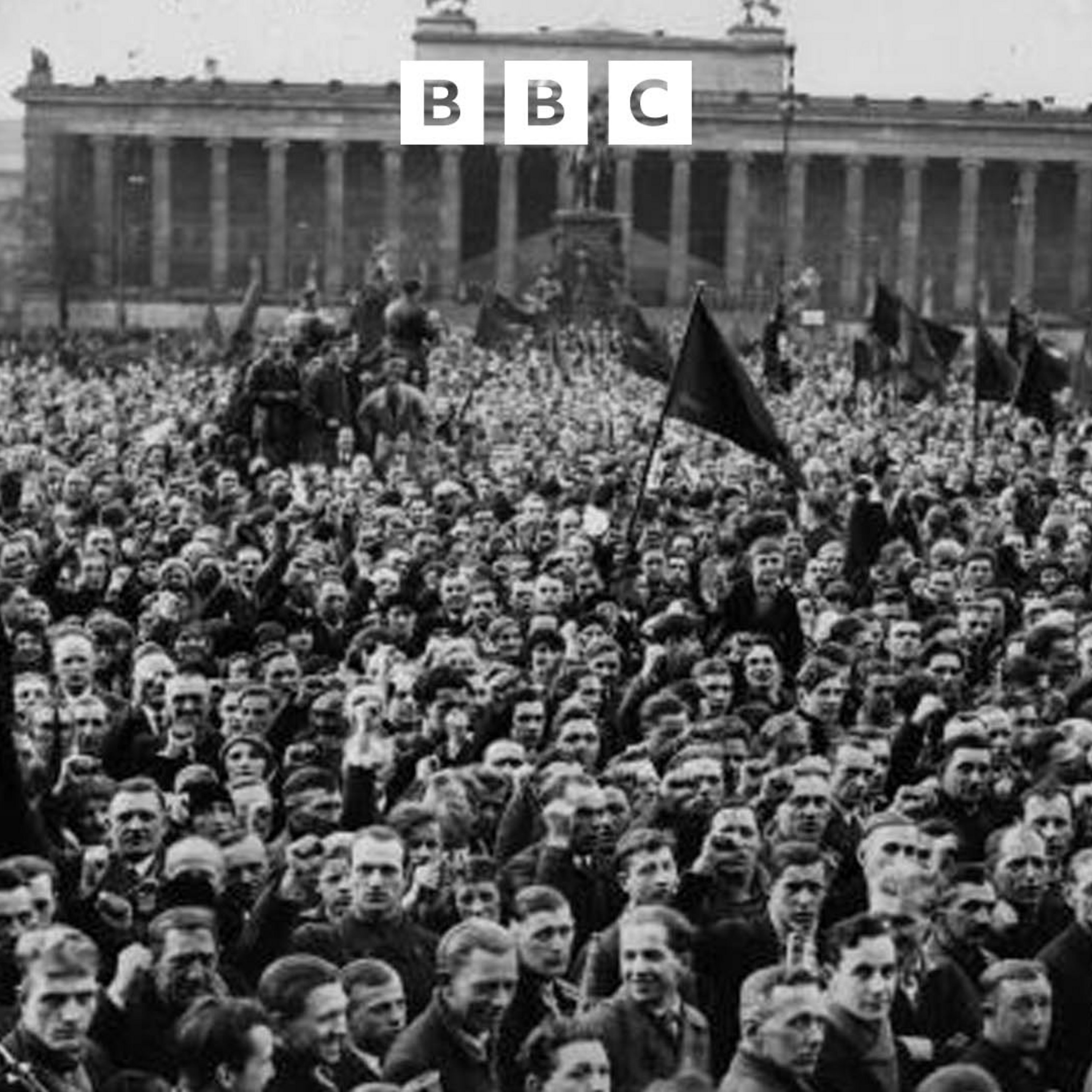
Last communist march before Hitler
On 25 January 1933 the last legal communist march was held in Berlin.Just a few days later Adolf Hitler became Chancellor of Germany.Soon the Communist Party was banned and the Nazi grip on power was complete.Eric Hobsbawm was a schoolboy communist at the time. He spoke to Andrew Whitehead in 2012.(Photo: Communist rally 1932. Credit: Hulton Archive/Getty Images)

The Dambusters
In the early hours of 17 May 1943 a bold World War II attack destroyed two dams in the Ruhr Valley in Germany's industrial heartland, causing 1,600 casualties and catastrophic flooding which hampered the German war effort.The dams were highly protected but 617 Squadron of the Royal Air Force had a new weapon – the bouncing bomb. Invented by Barnes Wallis, the weapon was designed to skip over the dams' defences and explode against the sides. The Dambusters mission was a huge propaganda success for Britain and later inspired a famous film.In 2013, Simon Watts spoke to George "Johnny" Johnson, the last survivor of the Dambusters squadron.(Photo: Squadron Leader George "Johnny" Johnson. Credit: Leon Neal via Getty Images)
German child evacuees of World War Two
Beginning in 1940 thousands of German children were evacuated to camps in the countryside to avoid the bombs of World War Two.These camps were seen as safe places where they could continue their education but also where Nazi beliefs could be taught. Alex Collins has listened to archive recordings from "Haus der Geschichte der Bundersrepublik Deutschland" in Bonn one of Germany's national history museums and hears the stories of former camp residents Gunter Stoppa and Klaus Reimer.You may find some of the contents distressing. (Photo: German children being evacuated to Prussia. Credit: Getty Images)
World War II victory in North Africa
Peter Royle, 103, endured a month of solid fighting in the hills outside of Tunis in 1943. Eventually the Allies prevailed and took more than 250,000 German and Italian prisoners of war. They declared victory in Tunisia on 13 May. Peter came close to dying many times. He recalls how he once hummed God Save the King to prevent himself being shot by friendly fire. He was under the command of Field Marshal Bernard Montgomery, fresh from victory in the North African desert, and recalls him being inspirational to the troops.This episode is presented by Josephine McDermott. Ahead of the 80th anniversary of the end of World War II in 2025, the BBC is trying to gather as many first-hand accounts from surviving veterans as possible, to preserve for future generations. Working with a number of partners, including the Normandy Memorial Trust and the Royal British Legion, the BBC has spoken to many men and women who served during the war. We are calling the collection World War Two: We were there.(Photo: Peter Royle in battle kit in 1941. Credit: Peter Royle's family)
Warsaw Ghetto uprising
In May 1943, the uprising in the Jewish Ghetto in Warsaw in Poland came to an end. The Germans had crushed the uprising and deported surviving ghetto residents to concentration camps.Simha "Kazik" Rotem was one of the Jewish fighters who survived to tell his story.He spoke to Louise Hidalgo in 2010.(Photo: Warsaw Ghetto. Credit: HUM Images/Universal Images Group via Getty Images)
Pink Triangles: Gay men in Nazi concentration camps
In 2009, Rudolf Brazda, one of the last known survivors of the Pink Triangles, returned to the former site of Buchenwald concentration camp where he’d been imprisoned during World War Two, for being gay in Nazi Germany. In never previously broadcast recordings, taped by Jean-Luc Schwab, who wrote Rudolf’s biography, we hear Rudolf’s reaction to returning as a 95-year-old man. Jean-Luc Schwab who became friends with Rudolf in the last few years of his life, speaks to Reena Stanton-Sharma.This programme contains distressing details. (Photo: Rudolf Brazda. Credit: Frederick Florin/ Getty Images)
Families interned in WW2 China
Despite facing malnutrition, starvation and disease, Christopher John Huckstep's father set up a school in the Japanese internment camp where his family was sent in 1943.Herbert Huckstep ensured the 350 children of Lunghwa Civilian Assembly Centre were taught a wide range of subjects using brown paper bags to write on. The school was called Lunghwa Academy and it had its own badge, motto and certificates. A syllabus was followed, exams were taken and there were even evening classes for adults. The Japanese set up more than 20 internment camps in China and Hong Kong holding an estimated 14,000 people, but it is not believed that such a sophisticated schooling system was established elsewhere. In spite of the many hardships, educational standards were kept so high that qualifications taken in the camp were later recognised by the Cambridge exam board when the exam scripts were taken to England after the war. Christopher John Huckstep shares his memories with Josephine McDermott.(Photo: Christopher John Huckstep and other children at Lunghwa Civilian Assembly Centre, Shanghai, in 1945. Credit: Oscar Seepol. Image courtesy of Susannah Stapleton and Special Collections, University of Bristol Library)
World War Two child evacuees in Britain
The 1 September 1939 was Kitty Baxter’s ninth birthday, it was also the day her life and millions of other people’s changed with the beginning of World War Two. Kitty was among the hundreds of thousands of children taken out of UK cities and into the countryside, away from the risk of German bombs. She’s been speaking to Laura Jones.(Photo: child evacuees leaving a London train station. Credit: Getty Images)
Shanghai at War
In 1937, Japanese forces entered Shanghai - spelling the end of a period when the Chinese city had been a thriving commercial centre governed by international powers and known as the "Paris of the East". During the eight-year Japanese occupation, local people in Shanghai endured starvation and brutal treatment; while foreigners scrambled to escape as their lifestyle of servants and glamourous parties slowly disappeared. Josephine McDermott speaks to Liliane Willens, who lived through the invasion and occupation of Asia's most international city.PHOTO: Japanese troops in Shanghai in 1937 (Ullstein Bild via Getty Images)
Britain's secret propaganda war
How sex, jazz and 'fake news' were used to undermine the Nazis in World War Two. In 1941, the UK created a top secret propaganda department, the Political Warfare Executive to wage psychological warfare on the German war machine. It was responsible for spreading rumours, generating fake news, leaflet drops and creating fake clandestine German radio stations to spread misinformation and erode enemy morale. We hear archive recordings of those involved and speak to professor Jo Fox of the Institute of Historical Research about the secret history of British "black propaganda".(Photo: The actress and singer Agnes Bernelle, who was recruited to be a presenter on a fake German radio station during the war)
Broadcasting D-Day
Hear how the BBC reported the Allied invasion of Nazi-occupied France on June 6th 1944. The operation was a crucial step in the liberation of western Europe. Using original BBC reports from the time - from Chester Wilmot, Richard Dimbleby, Robin Duff, Ward Smith and Alan Melville - we tell the story of D-Day. Photo: D-Day Landings: US troops in an LCVP landing craft approach Omaha Beach in Colleville Sur-Mer, France, on June 6th 1944 (US National Archives)
D-Day
Eyewitness accounts of the Allied landings on the coast of Normandy during World War Two on 6 June 1944. The massive operation was a crucial step in the liberation of western Europe from years of Nazi rule and the defeat of Hitler's Germany. In this episode, we present the accounts of veterans held in the BBC archive. Photo: The photo titled "The Jaws of Death" shows a landing craft disembarking US troops on Omaha beach, 6th June 1944 ( Robert Sargent / US COAST GUARD)
China and Japan at War
Japanese troops reached the Chinese city of Nanjing in December 1937. The violence that followed marked one of the darkest moments in a struggle that continued throughout WW2. Rebecca Kesby has been speaking to former General Huang Shih Chung, who survived the slaughter in Nanjing as a boy and then fought in China's war of resistance against the Japanese.Photo: Huang Shih-Chung as a young soldier.
Berlin's Rubble Women
At the end of WW2 much of Germany's capital had been destroyed by bombing and artillery. Almost half of all houses and flats had been damaged and a million Berliners were homeless. Caroline Wyatt has been speaking to Helga Cent-Velden, one of the women tasked with helping clear the rubble to make the city habitable again.Photo: Women in post-war Berlin pass pails of rubble to clear bombed areas in the Russian sector of the city. (Photo by Fred Ramage/Keystone/Getty Images)
The Arnhem Parachute Drop
Thousands of Allied troops parachuted into the Nazi-occupied Netherlands in September 1944. At that point, it was the most ambitious Allied airborne offensive of World War Two. British, American and Polish troops were dropped behind German lines in an attempt to capture a series of bridges on the Dutch/German border. Mike Lanchin has spoken to Hetty Bischoff van Heemskerck who, as a young woman, watched the Allied paratroopers come down close to her home in the city of Arnhem.(Photo: Allied planes and parachutists over Arnhem, Getty Images)
The Climbers of Leningrad
Mountaineers risked their lives to camouflage churches and palaces in the great Russian city during World War Two. The city was besieged by the Germans and under bombardment. The climbers used paint and canvas to conceal the landmarks from enemy attack. Mikhail Bobrov was just 18 years old when first got sent up the city's spires. He's been speaking to Monica Whitlock about his wartime experiences.Photo: A climber suspended from a spire in Leningrad. Credit: Tass/PA.
The Fake IDs That Saved Jewish Lives
Soon after Hitler ordered the invasion of Hungary in March 1944, the Nazis began rounding up hundreds of thousands of Hungarian Jews. Most were immediately sent to their deaths in the concentration camps at Auschwitz-Birkenau. David Gur was a member of the Jewish Hungarian underground, who helped produce tens of thousands of forged identification documents. These allowed Jews to hide their true identities and escape deportation to the death camps. Now 91 years old, David has been telling Mike Lanchin about his part in one of the largest rescue operations organised by Jews during the Holocaust.Photo: False Hungarian ID document (BBC)
Saving Italy's Art During WW2
Italy's great works of art were threatened by bombing and looting during World War Two. But a plan known as 'Operation Rescue' was devised to keep the paintings and sculptures safe. Some were hidden in remote spots, others were moved to the Vatican. Pasquale Rotondi was a leading figure in the operation, his daughter Giovanna Rotondi spoke to Alice Gioia about his wartime work.Photo: St George by Andrea Mantegna, circa 1460.(Credit DeAgostini/Getty Images)
Britain's Land Girls
Around 80 thousand women and girls volunteered to join the Women's Land Army during the Second World War. They helped provide vital food supplies to a country under siege. Kirsty Reid has spoken to Mona McLeod who was just 17 years old when she started working 6 days a week on a farm in Scotland. Mona has written a book about her experiences: 'A Land Girl's Tale'.Photo: Land girls carrying bundles of straw in 1941. (Credit: Maeers/Fox Photos/Getty Images)
The Frankfurt Auschwitz Trials
Hear from one of the German prosecution lawyers who helped put Nazi war criminals on trial 20 years after World War Two had ended. Gerhard Wiese has been speaking to Lucy Burns about the trial, and about visiting the Auschwitz death camp with other members of the court.Photo: Members of the Frankfurt court and several journalists pass through the Auschwitz camp gate with the words "Arbeit macht frei" (work brings freedom) above them. December 14,1964. Credit: Press Association.
The Sinking of the Lancastria
On 17 June 1940, a packed British troopship was sunk off the coast of France by German bombers. The ship had just picked up thousands of British military personnel left behind in France after the evacuation of the army at Dunkirk. It's believed around 5,000 people lost their lives. It was one of the worst maritime disasters in British history and news of the sinking was initially supressed in Britain. Alex Last spoke to 99-year-old Ernest Beesley, a sapper in the Royal Engineers, who is among the last survivors of the Lancastria. Photo: The Lancastria after being hit by German bombers off the coast of France in 1940 (Lancastria Association of Scotland)
The Roma Victims of the Holocaust
In 1942, the fascist government of Romania deported 25,000 of its Roma citizens to the former Soviet territory of Transdniestria. Half of them died of hunger and disease. Dina Newman spoke to one Roma Gypsy man who was five years old when he was sent to Transdniestria with his family. Photo: Nomadic Roma in Bucharest, Romania, outside their tent. Circa 1930. (General Photographic Agency/Getty Images)
The Katyn Massacre
Tens of thousands of Polish officers were secretly executed in the USSR during World War 2. The German occupying forces reported the first mass grave, in the village of Katyn in 1943, but Moscow only admitted to the killings in 1990. Dina Newman speaks to the son of one of the murdered officers, Waclaw Gasiorowski. Photo: Gasiorowski family in Warsaw in 1936. Credit: family archive.
The Germans Occupy Prague
On March 15th 1939, the German army occupied Czechoslovakia. Witness hears the story of one young boy who watched the German troops march into Prague and who later escaped on the Kindertransport. These were trains that brought thousands of mostly Jewish children out of Austria, Germany, Poland and Czechoslovakia, without their parents, to safety in Britain. That young boy went on to become a British MP and today sits in Britain's House of Lords; Alf Dubs tells Louise Hidalgo his story.Picture: German troops enter the centre of Prague on 15th March 1939; the German leader Adolf Hitler visited the city the next day. (Credit: AFP/Getty Images)
Sara Ginaite Lithuanian Jewish Partisan
During World War Two, a young Jewish woman, Sara Ginaite, escaped from the Kaunas Ghetto in Lithuania to fight the Nazis, With her husband Misha, she joined a detachment of communist-led partisans in the Rudnicki forest . They took part in the liberation of Vilnius, where she was famously photographed by a Soviet officer. Now in her 90s, Sara speaks to Witness. Photo: Sara Ginaite, a Jewish Lithuanian partisan , during the liberation of Vilnius, 1944. (USHMM)
Soviet Woman Bomber Pilot
Yelena Malyutina was a Soviet female bomber pilot who fought in WW2 and was wounded in action in 1944. She was in one of the three Soviet women's flying regiments which fought on the front line. Before her death in 2014, she was interviewed by Lyuba Vinogradova, author of 'Defending the Motherland: Soviet Women' who fought Hitler's Aces. Dina Newman reports. Photo:Yelena Malyutina and Lyuba Vinogradova (credit: private archive)
Italy's Partisan Fighters
In September 1943, Partisan fighters in Italy began organising in large numbers to help the Allies defeat Nazi Germany and rid their country of the remnants of Benito Mussolini's fascist state. As World War Two drew to a close, there was vicious fighting in many villages between the Partisans and Italians still loyal to the dictator. Alice Gioia speaks to a brother and sister who both took part in the Partisan struggle.PHOTO: Italian Partisans celebrating victory, May 1945 (personal collection)
The Fall of Paris
In June 1940, German forces, having swept across Belgium and Holland, and into France, were closing in on Paris. In the face of the German army, millions of French, Dutch and Belgians had taken to the roads in one of the biggest exoduses of people the world had ever seen. Witness talks to Daphne Wall, who lived in Paris in 1940 as a young English girl and whose family joined the exodus south as Paris fell.Photograph: the Nazi leader Adolf Hitler visits the Eiffel Tower following the occupation of Paris by the German army on the 14th June 1940 (Credit: Harwood/Keystone/Getty Images)