Wilder Podcast
58 episodes — Page 1 of 2
Ep. 057: Right to Roam - Who Is the Countryside Actually For? With Jon Moses
Ep. 056: Wildfires - What's Actually Burning, and What Can Be Done
Ep. 055: Together for Good - The Power of Community Climate Action
Ep. 054: The Psychology of Species Reintroductions with Pete Cairns
Ep. 053: Who Really Wins and Loses in the Food System? With Sue Pritchard
S1 Ep 52Ep. 052: Three Years In: The Honest Truth About Rewilding 80 Acres
No guest this week. Just Tom and Chloe with a drink, a lot to catch up on, and roughly an hour to get through it all.It's been 18 months since the last proper project update and quite a lot has happened. 4,000 trees planted. A tiny forest that nearly died twice and is now over six feet tall. A market garden. A distillery in the barn. A charity. Four schools through the gate in one week. And an otter, which felt significant.This is the third update episode - episode 9 was the start, episode 29 was one year in. This one's the most honest of the three.What We CoverRestoring More NatureThe trees, the dragon's nests, and what happens when you prepare the ground properlyWhy the tiny forest survived a drought, deer, and voles - and is now extraordinaryThe wood meadow: a rare habitat, hand-scythed by the community, and why it mattersThe pond that failed, then gave us house martins, a kestrel, and an otterThe pig situation (it got complicated)The cow debate: October, says Chloe. Tom is less sureBreeding birds: double the species recorded between 2024 and 2025Naturfa Pathway: one of four sites selected across Wales by the Welsh GovernmentProducing More FoodFrom silage grassland to 50-100+ varieties of fruit and veg - and why that matters for food securityThe cathedral polytunnel, the duck pond, the new orchard, and chickens planned for under the treesCourses launching this summer: market gardening, agroforestry, mushroom growing, seed saving and moreWhat it actually means when the food you grew feeds the people who came to help grow itContributing to the Local EconomyFrom two tractor drivers twenty days a year to six people working on siteWilder Spirits: pre-orders open 2 April. The first spirit distilled on a rewilding site in Wales, in a paper bottlePlatform Nature: 20 founding partners from Wildlife Trusts to a koala sanctuary in AustraliaThe Grange Hub, Wilder Away Days, and why Tom talks about money on a nature podcastRevenue transparency: what the first six months actually generatedConnecting More People to Wilder NatureWilder Connections charity: Chloe's co-design phase with schools across MonmouthshireWhat happened when a group of teenagers asked if they could hug a treeMonthly open days: selling out a month in advanceHopes for the rest of 2026 - and why Tom wants everyone to slow down a littleTimestamps00:00 - Tom's opening confession 01:31 - What we said on episode 29, and how much has changed 05:44 - The four pillars explained 07:04 - 28,000 listeners, 125 countries, and someone in Cape Town saving for their own rewilding site 07:53 - PILLAR 1: Restoring More Nature 08:12 - 4,000+ trees, dragon's nests, and the saplings finally breaking through 10:43 - Tiny Forest: 98% survival, over six feet tall, future outdoor classroom 13:59 - Hedgerows: planted, lost to drought, replanted 15:36 - Wood Meadow: what it is, why it's rare, and a lot of hand-scything 18:44 - Deer: why culling became unavoidable, and the experiment with over-planting 22:24 - The pond that collapsed - and then gave us house martins, a kestrel and an otter 26:39 - Voles everywhere, and what doubling bird species in one year actually means 27:13 - Pigs: what went wrong, what's coming next, and the ecological case for them 31:21 - The cow debate 33:54 - Welsh Rewilding Alliance: founding members 34:02 - Naturfa Pathway: recognised by the Welsh Government 35:05 - PILLAR 2: Producing More Food 35:37 - How a market garden ended up being run by the people who said they wouldn't run it 37:47 - Ducks, chickens, and the orchard 41:54 - 50-100+ varieties: why growing diversity is also food security 43:29 - From least to most efficient food production on the same land 44:33 - PILLAR 3: Contributing to the Local Economy 44:33 - Wilder Spirits: the distillery, the story, the paper bottle, 2 April 47:13 - Mark, Sandy, and why six people working on site matters 48:18 - Platform Nature: what it is, who's using it, and where it's going 52:31 - The Grange Hub: opened by the Future Generations Commissioner 53:13 - Wilder Away Days: NHS to corporate 55:23 - Why talking about money is part of the project 56:38 - Cabins: off Airbnb, direct only, and why that was the right call 57:34 - Revenue transparency: the real numbers from the first six months 58:39 - PILLAR 4: Connecting More People to Wilder Nature 58:58 - Wilder Connections: what the charity is, and why Chloe built it 01:01:11 - Four schools in one week 01:02:01 - Teenagers, sticks, and what co-design actually looks like 01:04:10 - The oak tree moment 01:05:38 - Open days: what they are, and why April sold out a month early 01:06:35 - Hopes for the rest of 2026Links and ResourcesThe Grange Project grangeproject.co.ukWilder Spirits - pre-orders open 2 April 2026 wilderspirits.co.ukWilder Connections - Chloe's charity for nature connection in young people wilderconnections.charityWilder Away Days - nature-centred corporate experiences wilderawaydays.co.ukPlatform Nature - tools for nature restoration project
S1 Ep 51Ep. 051: WTF is the Polycrisis and why should I care?
In this conversation, we update you on two big milestones for the Grange Project, the launch of the Welsh Rewilding Alliance and our OECM recognition, before sitting down with Professor Mike Berners‑Lee. We ask Mike to explain the polycrisis: how climate change, biodiversity loss, pollution, food insecurity and geopolitical instability are all interlinked. Mike helps us see why recycling alone won’t cut it: plastics are produced almost entirely from fossil fuels, their emissions could eat up a large chunk of the remaining carbon budget and their additives disrupt hormones. We also talk about why technology by itself isn’t enough, how misinformation slows progress and what practical steps we can all take-like switching to trustworthy media and supporting a national information campaign to wake up and act.Episode journey:[00:05] Introduction and mission. We open the show by explaining why we started the Wilder Podcast: to share our learning about rewilding and the wider forces shaping our world. We remind listeners that we created the Grange Project two and a half years ago to restore nature, grow food, support eco‑businesses and reconnect people with land.[02:24] Two big updates. We proudly announce the launch of the Welsh Rewilding Alliance and its report A Welsh Way to Wild. We also share that the Grange Project has been recognised by the Welsh Government as an OECM, a big step in confirming that our land management has rigorous governance and real biodiversity benefits.[07:08] Introducing Professor Mike Berners‑Lee. We explain how we first encountered Mike’s work-reading There Is No Planet B inspired us to buy the farm and start the Grange Project. Mike introduces himself as a professor, consultant and author.[11:09] What is the polycrisis? Mike explains that the polycrisis is a tangle of interconnected challenges driven by humanity’s unprecedented power. He emphasises that disasters like pandemics and wars no longer happen in isolation; their severity comes from the cascading effects they unleash. For us, it was eye‑opening to see how our economic and political systems amplify these stresses.[16:58] Examples of cascading crises. We discuss real‑world examples: the COVID‑19 pandemic and the war in Ukraine amplifying food and energy crises. Mike highlights that plastic production has boomed since the 1950s and plastics are a major source of emissions and endocrine disruption. It reinforced for us how everything is connected.[20:43] Wake‑up call and the National Emergency Briefing. Mike tells us about the National Emergency Briefing in Westminster, where experts covered nine dimensions of the crisis from health and food to national security and no one thought the situation was exaggerated. We both feel this shows how widely the severity of the crisis is recognised and why we need national action.[23:05] Misinformation and media ownership. We explore how misinformation is blocking progress. Mike challenges the narratives that climate action will leave us poorer and colder, and explains how social‑media algorithms spread disinformation. We urge you to choose trustworthy news sources and recognise manipulation.[29:14] Techno‑optimism vs. systemic change. Mike says that simply scaling up renewables isn’t enough. He points out that although renewable capacity has grown massively, fossil energy use has also climbed, so overall emissions keep rising. That’s why systemic measures like carbon pricing and fossil‑fuel constraints are critical.[33:35] Human psychology and leadership. Together we discuss why people aren’t inherently selfish. Neuroscience and social history suggest we can cultivate cooperation and empathy. Mike encourages us to seek leaders who are kind and honest, and we talk about the courage it takes to speak up and push for change.[47:19] Calls to action. We finish by encouraging you to sign the letter at nebriefing.org, host local screenings of the briefing film and start conversations in your community. Mike notes that facing these issues head‑on feels liberating, we felt it too.[49:05] Host reflections. After the interview, we reflect on our own nerves and gratitude for Mike’s clarity. We discuss doing a mini‑series on the individual crises and debate whether information alone prompts action. We conclude that people need both facts and relatable stories of hopeful change.About the guest:We were honoured to speak with Mike Berners‑Lee, a professor at Lancaster University and founder of Small World Consulting. He advises organisations on sustainability and wrote There Is No Planet B and A Climate of Truth. Mike is known for making complex issues accessible and for advocating systemic solutions to interlinked crises.Resources and links:National Emergency Briefing – A national information briefing on the climate and nature crisis with expert videos, action guides and community‑screening resources. Learn more at https://nebriefing.org.The Welsh Way to Wild report – The Welsh Rewilding Alliance’s report
S1 Ep 50Ep. 050: The Future of Rewilding in Cymru (Wales) - Tir Natur
Chloe and Tom speak with Gwenni Jenkins-Jones and Eben Muse from Tir Natur, a Welsh rewilding charity working to establish Wales’s largest rewilding site. The conversation explores the unique challenges and opportunities for rewilding in Wales and why this moment represents a turning point for nature recovery in the country.Tir Natur recently secured a 1,195-acre landscape in the Doethïe Valley in the Cambrian Mountains, creating a rare opportunity to demonstrate what large-scale ecosystem restoration could look like within a distinctly Welsh cultural and ecological context. The discussion moves beyond ecology alone, examining how rewilding intersects with language, rural communities, land ownership, farming identity and the future of the countryside.This episode is both hopeful and honest. It explores the realities of nature loss in Wales, the misconceptions surrounding rewilding and the importance of community participation in restoring landscapes. At its heart is a powerful idea: that restoring nature is not about removing people from the land, but about rebuilding relationships between people, place and the living systems that sustain both.Tir Natur Crowdfunder – Support the charity’s fundraising appeal for Wales’s largest rewilding project. https://www.crowdfunder.co.uk/p/tirnaturKey topics & chapter markers[00:05] – Introduction & project updates. Chloe and Tom welcome listeners, recount the story of spotting an unexpected otter on their land, apologise to “Pig Sheep Man Paul” for previous sheep‑related frustrations and announce a series of learning events at the Grange Project.[06:28] – Meet Gwenni & Eben. Guests introduce themselves: Gwenni recently became Tir Natur’s fundraising manager after volunteering for a year, while Eben volunteers in planning, community engagement and translation in addition to his day job in access conservation. They describe Tir Natur as a volunteer‑powered charity whose name means “nature’s land”.[08:30] – Why Wales needed Tir Natur. Rewilding projects in England and Scotland inspired action, yet Wales lacked a dedicated rewilding charity. Gwenni recounts that frustration with stalled government action and the desire to create a Welsh flagship site led to Tir Natur’s founding.[09:40] – What ‘rewilding’ means to Tir Natur. Eben and Gwenni define rewilding as restoring whole ecosystems rather than managing single species. They plan to use hardy grazer, cattle, ponies and pigs to create a mosaic of habitats and make the landscape resilient to climate change.[13:06] – The Welsh context. Eben outlines sobering statistics: Wales scores around 37 % on the Biological Intactness Index and 90% of its peat bogs are in poor condition. Agricultural pollution has degraded rivers, and political parties are reluctant to prioritise nature. Gwenni notes that shifting baselines mean many people have forgotten what a healthy landscape looks like.[20:50] – Navigating rewilding’s reputation. Gwenni acknowledges past projects that failed to engage communities and insists Tir Natur will listen to local voices, retain the farmer on the productive part of the land and ensure access rather than exclusion. Eben rejects profit‑driven rewilding and stresses that land should serve communities, not corporate reputations.[30:00] – A 1 195‑acre canvas for rewilding. Gwenni paints a picture of the Doethïe site: 1 195 acres with two rivers, 160 acres of degraded peat ready for restoration and 55 historic features including ancient farmsteads. The charity plans early interventions such as peatland rewetting and river restoration, followed by the introduction of grazing animals to kick‑start natural processes.[38:40] – Next steps & call to action. The first priorities after purchase are community engagement, bringing in hardy grazers and restoring peatlands. Gwenni invites listeners to visit the site, volunteer, share expertise or donate. Fundraising continues to finish purchasing the land and begin restoration.About the guestsGwenni Jenkins‑Jones is the fundraising manager for Tir Natur. After volunteering for a year, she now leads fundraising and community engagement for the charity, using her professional skills to connect donors with a shared vision for rewilding. Email: [email protected] Mewes works in access conservation and is an ambassador for Campaign for National Parks. He volunteers with Tir Natur, focusing on planning, community outreach and translation. Motivated by frustration with policy in Wales, he sees the new rewilding site as a chance to show what’s possible and to reconnect people with their landscapes.Resources & linksTir Natur – Charity website – Learn about the organisation’s vision for a Wales where wild nature and communities thrive together. https://www.tirnatur.cymru/Tir Natur – “The Land” – Explore the 1 195‑acre Doethïe site in the Cambrian Mountains, including peatbogs, river corridors and plans for natural grazing. https://www.tirnatur.cymru/the-lan
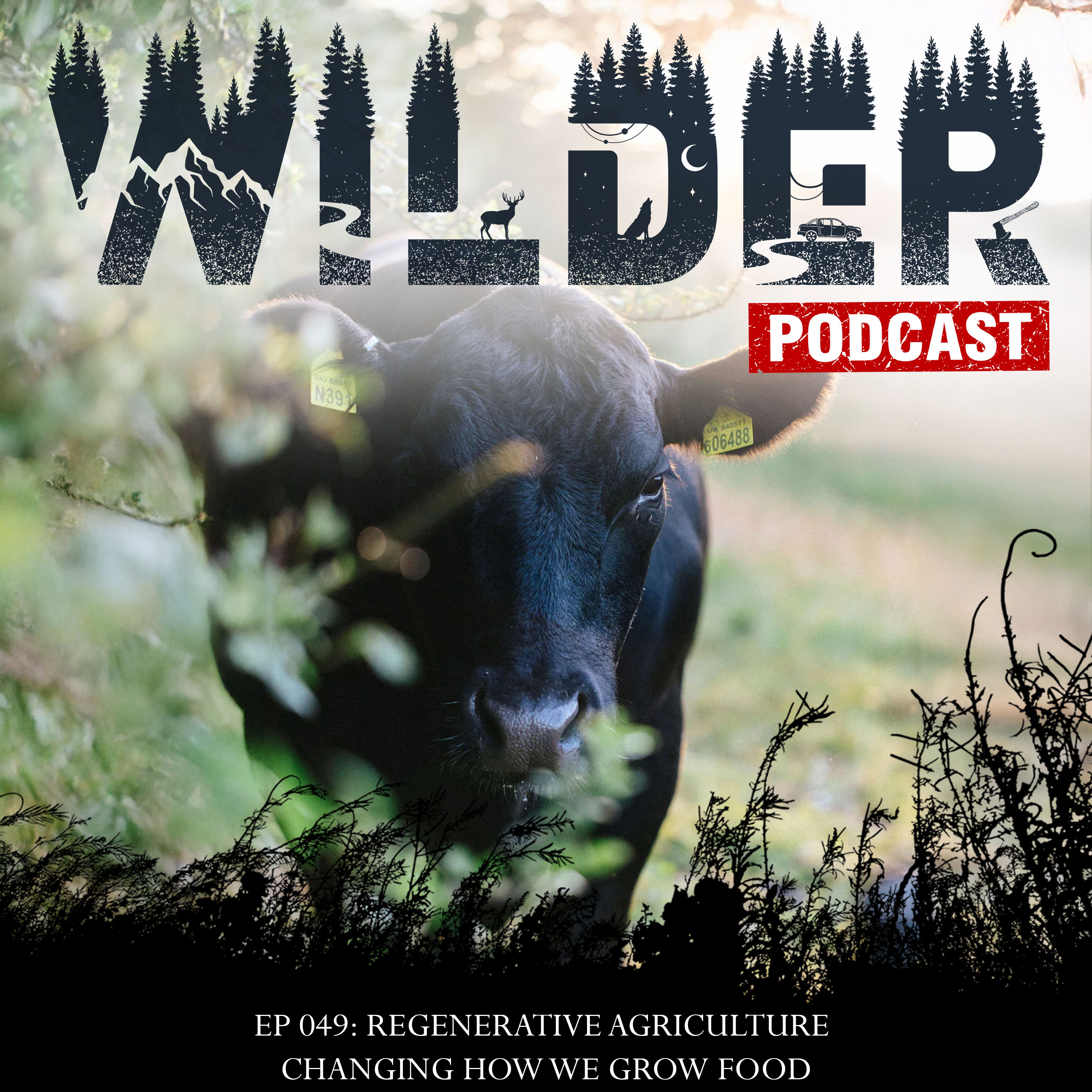
S1 Ep 49Ep. 049: Regenerative Agriculture Changing How We Grow Food
Tom and Chloe sit down with Clare from Planton farm to explore what regenerative agriculture really means. Drawing on Claire’s journey from the conventional food industry into regenerative farming, the conversation explores why our current food system is under strain and how working with nature offers a viable, hopeful alternative.Together they explore soil health, livestock grazing, culture change in farming, and the realities farmers face when trying to shift away from extractive systems. From cattle as “ecosystem engineers” to the surprising role chickens can play in regeneration, this episode is a grounded, honest look at food, farming and the mindset shifts required to restore landscapes while keeping farms viable.Key topics & chapter markers[00:00] – Introduction and contextClare joins the podcast after visiting the Grange Project, sharing her background and passion for grazing livestock and regenerative farming.[03:56] – What regenerative agriculture actually meansA clear explanation of regeneration as the opposite of degradation – restoring soil, water, biodiversity and people – and why there is no single “recipe” for doing it well.[05:24] – Regenerative vs organic farmingHow organic and regenerative systems overlap, where they differ, and why organic certification doesn’t automatically guarantee soil regeneration.[07:05] – The challenge of definition and greenwashingWhy regenerative agriculture lacks certification, how the term can be misused, and the importance of asking one key question as a consumer: what is this regenerating?[08:48] – Why the current food system is strugglingA look back to post-war agriculture, the drive for volume, the rise of chemical inputs and the unintended consequences for soil health, nutrition, biodiversity and resilience.[13:16] – Economics of regenerative farmingWhy high-input, high-output farming is hitting a ceiling, how rising input costs are eroding margins, and why some farmers turn to regenerative approaches for financial survival as much as environmental reasons.[15:02] – Culture change and farmer mindsetFarming as identity, pride and tradition – and why regenerative farming challenges deeply held ideas about tidiness, productivity and what “good farming” looks like.[20:28] – Roots to RegenerationClare explains the two-year Roots to Regeneration programme, designed to support farmers and food-system professionals through deep, supported transition rather than surface-level change.[24:23] – Cattle, climate and eating less but better meatWhy grazing animals can be central to regeneration, how grasslands co-evolved with ruminants, and why cattle can act as ecosystem engineers when managed well.[29:38] – Chickens in a regenerative systemExploring pasture poultry, nutrient imbalance, river pollution and why the current chicken industry is structurally broken.[36:07] – Interconnected roles on the farmHow chickens and cattle support each other through manure management, pest control, fertilisation and orchard grazing.[38:47] – The future of farmingRegenerative agriculture as a potential fifth agricultural revolution, the rise of eco-literacy and a vision of farming that is more resilient, humane and joyful.About the guestClare is a regenerative farmer and food-system specialist based in Shropshire. She runs Planton Fam, an 80-acre regenerative holding integrating cattle, chickens, trees and perennial crops. With a background spanning the National Farmers Union, major retailers and sustainability consultancy, Claire brings a rare systems-level perspective to farming, food and land use.She is also co-founder of Roots to Regeneration, a two-year transition programme supporting farmers and food-industry professionals to redesign agricultural systems that work for people, planet and profit.Resources & linksPlant & Farm – regenerative meat and produce with UK mainland delivery https://www.plantandfarm.co.ukRoots to Regeneration – applications open for the next cohort: https://rootsofnature.co.uk/roots-to-regeneration/Groundswell Agriculture Festival – learning and inspiration for regenerative farming https://groundswellag.comConnect with the Wilder Podcast🎧 Listen & subscribe on Spotify, Apple Podcasts or your favourite podcast platform🌱 Share the episode with anyone curious about food, farming or systems change💬 Join the conversation – what questions do you have about regenerative agriculture?
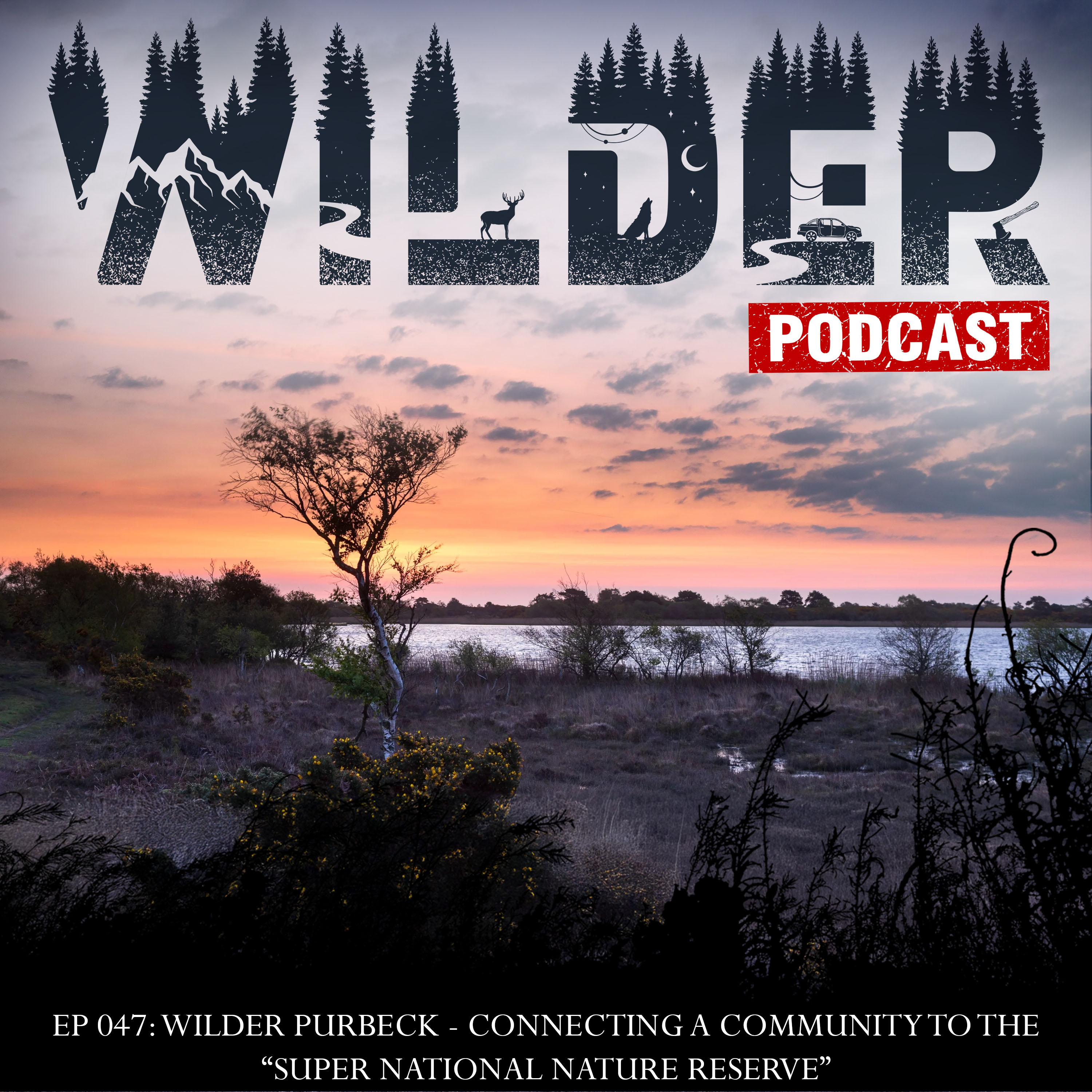
S1 Ep 48Ep. 048: Wilder Purbeck - Connecting a Community to the "Super National Nature Reserve"
In this pre‑Christmas episode, hosts Chloe and Tom sit down with Tom Clark and Alex Brocklesby from the National Trust at Purbeck.Purbeck is one of the UK’s most biodiverse areas, yet many residents remain disconnected from the nature on their doorstep. Tom and Alex explain how varied geology; including Pool Harbour, chalk ridges and heathlands, creates an incredible range of habitats.They describe how the Purbeck Heaths, the UK’s first super national nature reserve, unites 3500hectares of heathland owned by NGOs, statutory bodies and private landowners. The conversation explores why connecting local communities to this landscape is as important as ecological restoration, highlighting systemic barriers like work pressures and lack of time.Key topics & chapter markers:Each bullet below begins with the approximate start time for that segment:[00:05] Welcome & purpose of the Wilder Podcast. Chloe and Tom explain that the podcast has evolved from documenting their family’s rewilding journey to exploring wider systemic challenges—education, community, economy and eco‑entrepreneurship.[04:20] Conservation sheep and lessons in rewilding. Chloe and Tom recount borrowing six conservation sheep, difficulties moving them between fields and why most commercial sheep aren’t suited to rewilding. Conservation breeds like the Castlemilk Moorit nibble less and promote diverse grasslands.[16:55] Introducing Purbeck’s biodiversity. Tom Clark and Alex Brocklesby describe Purbeck as one of the most biodiverse parts of the UK because of its varied geology—harbours, chalk ridges, heathlands and limestone cliffs. They note the long‑standing presence of organisations like Natural England, the National Trust and RSPB.[19:17] Super National Nature Reserve. The guests explain that the Purbeck Heaths are the UK’s first super national nature reserve. The reserve unites several smaller reserves into a continuous 3500 hectare landscape that includes private landowners, demonstrating collaboration beyond NGOs.[20:54] – Experiences on the Isle of Purbeck. Visitors can see snakes, lizards, puffins, eagles, beavers and butterflies; picnic in flower‑rich meadows; explore sheltered beaches with seahorses; wander ancient woodlands; watch sunsets; or go coasteering along the Jurassic Coast. Four million people visit each year because the region offers so many ways to connect with nature.[22:55] – Why local people aren’t more connected to nature. Despite living in a biodiverse landscape, Purbeck residents aren’t any more nature‑connected than people elsewhere. Nearly 40 % of local children start school without ever having been to the beach. Tom and Alex discuss building trust with schools, community groups and businesses and reflect on the need for community‑led approaches, rather than top‑down conservation.[27:19] – Systemic barriers & opportunities. Modern lifestyles—commuting, low‑paid seasonal work, high numbers of second homes—leave little time for nature connection. Society is structured around nine‑to‑five routines rather than natural rhythms. The guests urge listeners to co‑create solutions that make time in nature accessible to everyone.About the guests:Tom Clark Land & Outdoors Manager for the National Trust’s Purbeck portfolio. He leads teams responsible for nature conservation, habitat restoration and visitor engagement across the Purbeck Heaths. Tom is passionate about collaborative, community‑led rewilding and believes the future of conservation depends on partnerships between NGOs and local people.Alex Brocklesby Community & Volunteering Manager for the National Trust at Purbeck. With a background in community organising, Alex builds relationships with schools, youth groups and local organisations to help residents benefit from the region’s natural assets. She co‑leads the Purbeck Community Project, which aims to make nature connection part of everyday life.Resources & links:Purbeck Heaths Super National Nature Reserve learn about the UK’s first “super” NNR, which brings together three existing reserves to create a bigger, more connected landscape. Visit the official site at https://purbeckheaths.org.uk.National Trust Purbeck the National Trust teamed up with six other landowners to create the Purbeck Heaths super reserve; find top facts, wildlife information and visitor guidance at https://www.nationaltrust.org.uk/our-cause/nature-climate/nature-conservation/uks-first-super-nature-reserve-at-purbeck-heaths.The Grange Project Chloe and Tom’s 80‑acre rewilding initiative in Monmouthshire aims to restore wilder nature and inspire people through community involvement. Explore our story at https://www.grangeproject.co.uk.Nature Connection research the University of Derby’s Nature Connectedness Research Group studies how people’s relationships with nature affect wellbeing and conservation behaviourderby.ac.uk. Read more and access resources at https://www.derby.ac.uk/research/themes/zero-carbon/zero-carbon-nbs-res
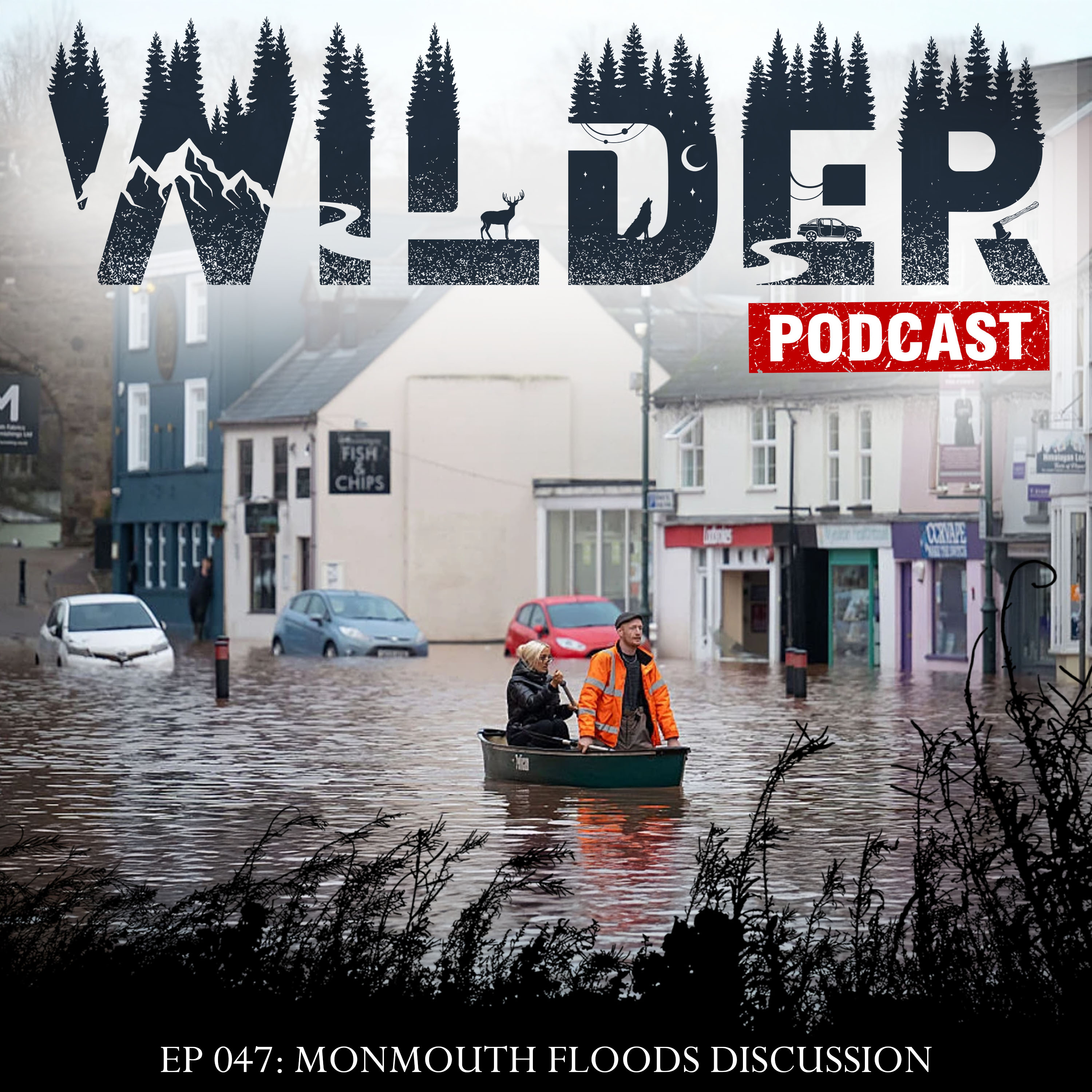
S1 Ep 47Ep. 047: Monmouth Floods Discussion
Guest: Tom Johnstone – Founder of We Are Nature BasedHost: Tom Constable (co‑founder of The Grange Project)Episode overviewIn this special episode, Tom Constable talks to flood‑management expert Tom Johnstone about the catastrophic flooding that recently hit Monmouthshire and large parts of Wales. We explore what drove the event, whether it was simply a natural flood or part of a climate‑induced trend, and what practical solutions exist to reduce future risk. This conversation is grounded in both data and lived experience; it also responds to a social‑media debate where some posts dismissed any link between climate change and flooding.About Tom Johnson:Founder of We Are Nature Based, a community interest company that helps water companies, local authorities and land managers adopt natural flood management techniques.Works across the UK integrating nature‑based solutions with traditional (grey) infrastructure, including leaky woody dams, tree planting and wetland creation.Previously collaborated with the Grange Project to install around 50 leaky woody structures in their stream – an effort that Tom Constable credits with slowing water on the farm.Episode highlights:[00:00] Introduction & purpose – Host Tom Constable explains the devastating floods that struck Monmouthshire and his aim to explore whether the floods are climate‑induced or natural.[01:50] Acknowledging the impact – Guest Tom Johnson sends sympathies to affected communities, noting the hardship and setting the tone for a thoughtful discussion.[03:20] Why Tom Johnstone? – Tom Johnstone outlines his credentials as the founder of We Are Nature Based and his expertise in natural flood management.[04:30] What happened? Rainfall & river levels – The conversation turns to the flood statistics: nearly 120 mm of rain fell in 12 hours (more than 10 % of the annual average) and the River Monnow’s defences were overtopped.[06:30] Are floods climate‑induced? – Tom Johnson explains that while floods are natural, the frequency of heavy rainfall and droughts is increasing due to climate change.[09:00] Land use, soils & runoff – They discuss how centuries of land drainage, river straightening and intensive farming have compacted soils and accelerated runoff; Tom uses a dried‑out sponge analogy to describe baked soils repelling water.[13:00] Dredging vs. slowing the flow – A pragmatic discussion on dredging where it’s needed and why slowing the flow with leaky dams, ponds and vegetation is often a better approach.[16:00] Grange Project anecdote & climate projections – Tom Constable shares how hedgerows, tussocky grass and woody debris have slowed runoff on his farm; Tom Johnson discusses predictions of more flash‑flood events in Wales.[19:00] Beyond higher walls: budgets & catchments – They question the wisdom of endlessly raising flood walls and advocate investing some flood‑defence budgets in catchment‑wide natural solutions.[22:00] Policy & planning recommendations – Tom Johnstone suggests permeable paving for new developments, smart rainwater butts, incentives for farmers to hold water on their land, and integrated catchment planning.[25:00] Closing thoughts & call to action – Tom Constable thanks his guest and encourages listeners to learn more, support affected communities and push for systemic change.Resources and further readingWe Are Nature Based: Tom Johnstone’s organisation specialising in natural flood management.The Grange Project: grangeproject.co.uk – Tom and Chloe’s nature‑restoration project in Monmouthshire.Ep Art Image acknowledgement: GETTY IMAGES
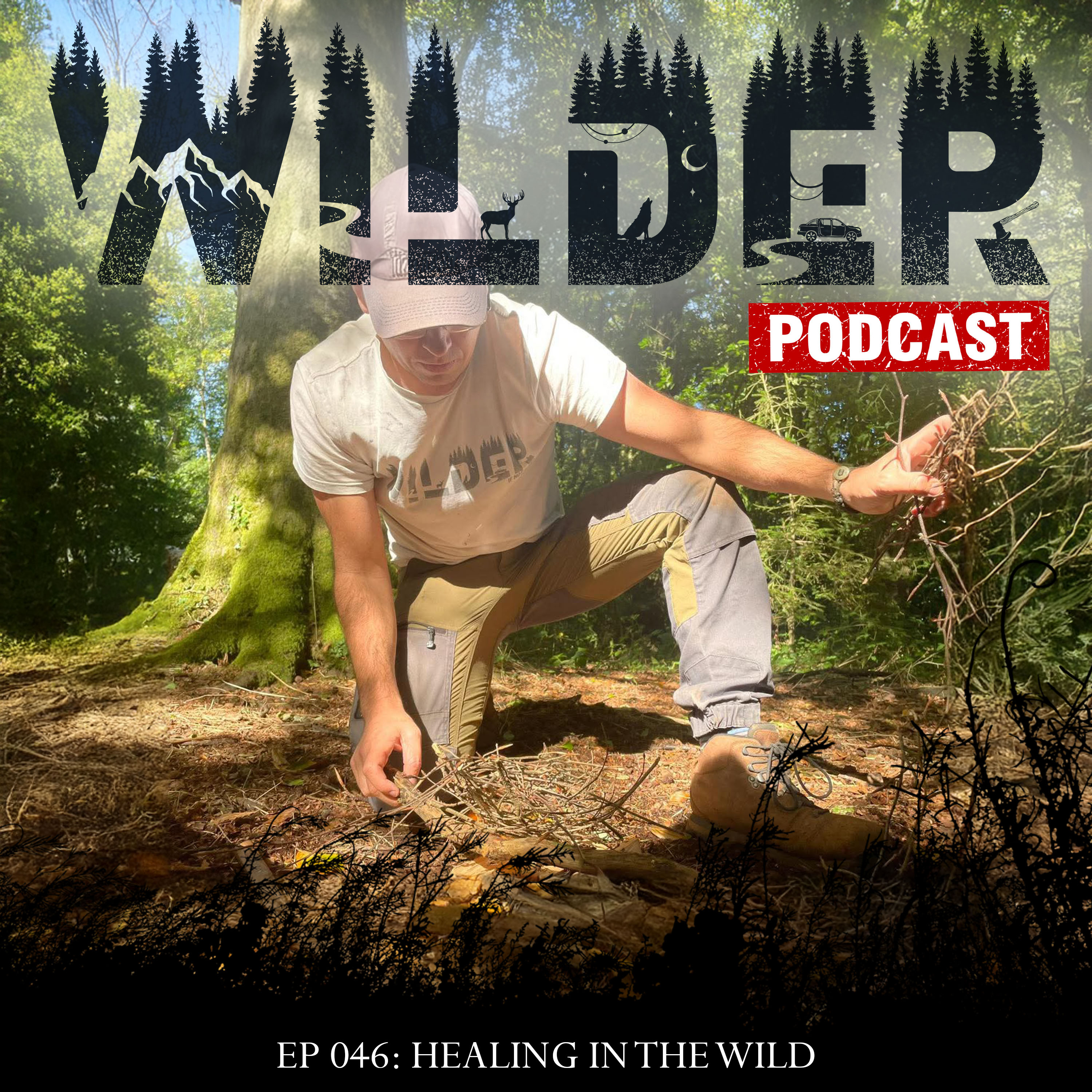
S1 Ep 46Ep. 046: Healing in the Wild with Jo Robert, CEO Wilderness Foundation UK
In episode 46 of The Wilder Podcast, hosts Chloe and Tom explore how wild places heal people and ecosystems. Their guest is Jo Roberts, CEO of the Wilderness Foundation UK. Jo shares how her childhood in South Africa fostered a deep respect for wilderness, how trauma influenced her career path, and why she believes access to nature should be a basic public health right. The conversation covers the Grange Project’s latest updates (volunteers, community‑days and new Berkshire pigs), the difference between parks and true wilderness, and the Wilderness Foundation’s programmes for survivors of domestic abuse, young people experiencing mental‑health challenges and at‑risk youth. Together they discuss why being outdoors with others, facing manageable challenges and reconnecting with non‑human nature can transform mental and emotional health.Guest:Jo Roberts – CEO, Wilderness Foundation UKJo has been Chief Executive of the Wilderness Foundation since 2004 and previously worked as Projects Director and Project Coordinatorwildernessfoundation.org.uk. A South African by birth, Jo was shaped by wild places across Africa and studied social anthropology during apartheid. She moved to the UK in 1984 and later merged her global network of wilderness practitioners into programmes that use nature to promote wellbeing and behavioural changewildernessfoundation.org.uk. Jo is a master NLP practitioner and psychotherapeutic counsellor who leads wilderness therapy programmes, with research interests in how immersion in nature affects mental healthwildernessfoundation.org.uk. She also serves on the Essex Climate Action Commission and champions the idea that “we help nature and nature helps us”wildernessfoundation.org.uk.Timestamps & Topics:[00:00] Introductions & Grange Project update[08:00] Jo Roberts’ background[16:00] What counts as wilderness?[28:00] Why wilderness heals[36:00] Programmes & therapeutic work[45:00] Access to nature as a public health right[55:00] Reflections & takeaways:Key Takeaways:Wild places are medicine. Research on the Wilderness Foundation’s TurnAround programme shows that spending time in wilderness and receiving long‑term support improves emotional wellbeing for most participants and helps them into education, training or worksmileymovement.org.Nature‑based therapy blends challenge and care. Programmes like Blossom and Brave Futures combine bushcraft, outdoor cooking and art therapy with trauma‑informed counsellingwildernessfoundation.org.ukwildernessfoundation.org.uk. Participants learn boundaries, resilience and self‑care in a supportive group.Volunteers and community matter. The Grange Project’s success owes much to volunteers and WWOOF‑ers who contribute energy and ideas; the hosts underline that community days not only help the land but also energise the hosts.Access to nature is a social issue. Jo argues that nature immersion should be a public health right, and points to transport, funding and education policy as barriers. She calls for greater investment in outdoor education and for teachers and parents to model curiosity about nature.Three ingredients for healing: a diverse, “wild” environment; a supportive group or tribe; and a challenge that develops mastery and resilience.Further Resources:Wilderness Foundation UK: Main charity page with information on programmes, events and volunteering opportunities – https://wildernessfoundation.org.uk.Blossom Programme: Nature‑based therapy for survivors of domestic abuse; meets for ten weeks in woodland near Chelmsfordwildernessfoundation.org.uk – https://wildernessfoundation.org.uk/domestic-violence-recovery/.Brave Futures: Eight‑week group‑therapy programme for children, teens and adults experiencing mental‑health challengeswildernessfoundation.org.uk – https://wildernessfoundation.org.uk/brave-futures/.TurnAround: A year‑long wilderness‑therapy programme for vulnerable young people; includes a Scottish expedition and mentoringsmileymovement.org – https://wildernessfoundation.org.uk/turnaround/.Grange Project: Tom and Chloe’s 80‑acre nature‑restoration site in Wales; volunteer opportunities and podcast archive – https://grangeproject.co.uk.WWOOF UK: Information on Worldwide Opportunities on Organic Farms (WWOOF), the volunteering network mentioned in the episode – https://wwoof.org.uk.How to Get Involved:Volunteer or donate: The Wilderness Foundation relies on volunteers and donations to run programmes; opportunities range from mentoring to conservation work. Details are on the Foundation’s volunteer page.Explore your local wild spaces: Whether it’s a city park or a remote forest, take time to notice birdsong, plant patterns and the feel of the wind. Even small pockets of wildness can soothe the mind.Share this episode: If you know someone who might benefit from wilderness therapy or who is interested in rewilding and mental health, share this episode of the Wilder Podcast.Contact
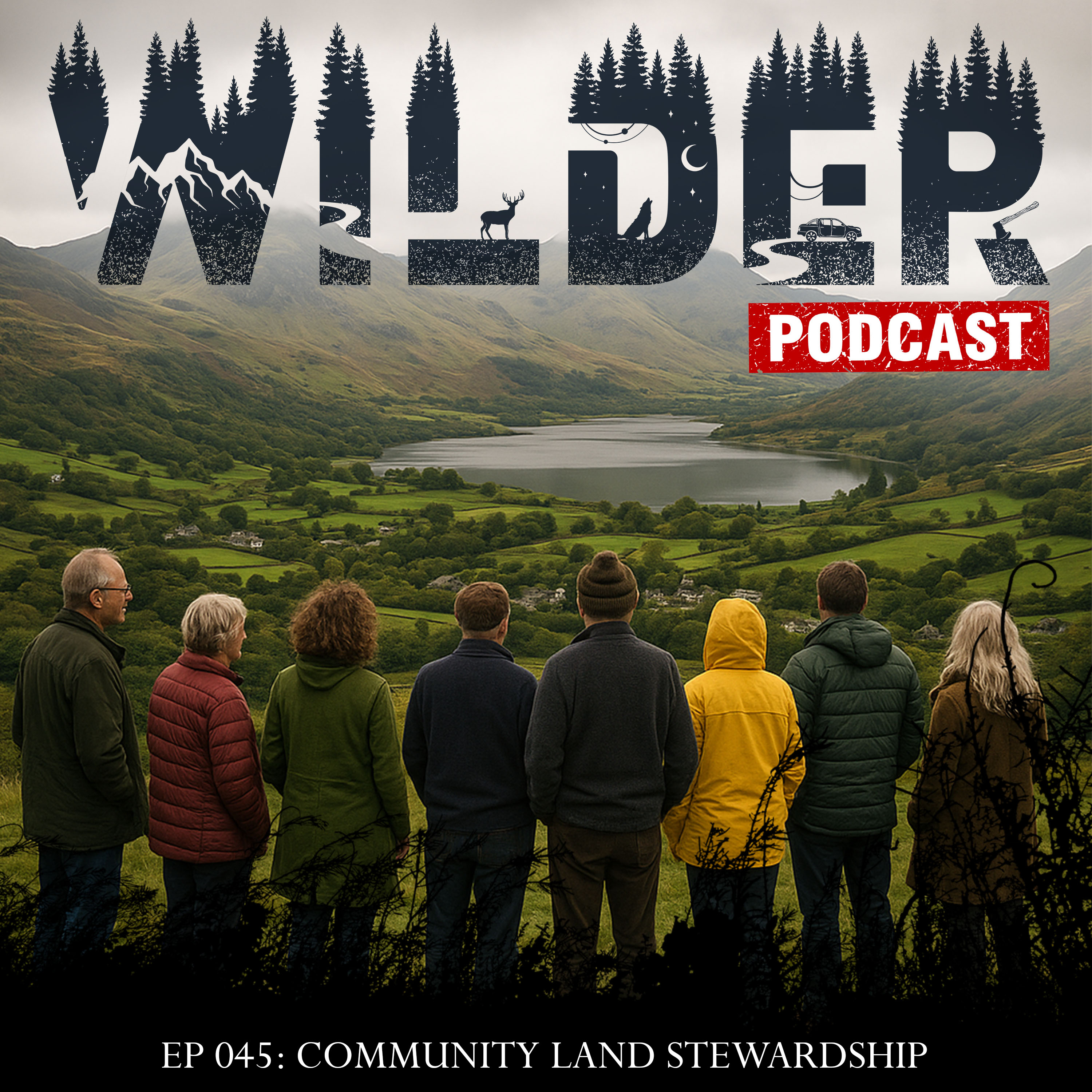
S1 Ep 45Ep. 045: Community Land Stewardship with Chris Blake
This week on the Wilder Podcast, we sit down with Chris Blake to explore how communities can steward land through collaboration, long-term vision and trust between local people and public bodies. We also share Grange Project updates (bumper apple harvest, the market garden & "cathedral-scale" polytunnel!), two recent courses, and announce Wilder Away Days - our nature-based corporate retreats.Key takeaways:Community land stewardship ≠ one model. Freehold, long leasehold, management agreements and co-production each offer different ways for local values to shape land.Co-production works when power is shared. Start with a blank page, bring evidence-givers (forestry, ecology, education), and let a mixed panel turn evidence into values & principles - not expert-written plans.Continuous Cover Forestry (CCF) can beat clear-fell on 100-year horizons: better soils, flood risk, vistas - and local, steady jobs from ongoing thinning rather than boom-and-bust harvesting.Public bodies win too. Communities unlock grants, volunteers and entrepreneurial energy that agencies often lack - delivering outcomes already in policy (biodiversity, access, carbon).Trust is the glue. A year-long, facilitated process built mutual respect between Natural Resources Wales managers and residents; FSC certification also helps keep plans on track.Practical first steps. If transfer isn’t feasible, explore long leases or co-produced forest/resource plans; talk to national support orgs early (see "Resources").Timestamps:00:06 — Welcome & what’s ahead00:30 — Grange Project update: community day, record apple harvest & juice pressing06:50 — Announcement: Wilder Away Days (purposeful team retreats in wild nature)10:15 — Guest intro: Chris Blake & the journey to community stewardship13:05 — What is “community land stewardship”? Why it matters15:40 — Lessons from Scotland’s community buyouts (Noidart, forestry, hydro, housing)19:40 — The co-production model in the Rhondda: who’s in the room & how it ran27:55 — Designing for Continuous Cover Forestry & local jobs over decades30:00 — Why agencies benefit: capacity, risk culture, and policy delivery34:35 — Accountability: FSC, public scrutiny & relationship-based safeguards37:55 — Inside the room: creative methods, expert “witnesses,” values > wish-lists47:50 — Where to go for help (nation-specific orgs)49:47 — Closing reflections: changing the values that shape landscapes50:02 — Hosts’ debrief: win-wins, optimism, and where else co-production fitsGuest:Chris Blake - social entrepreneur focused on community energy and land stewardship; founding director at The Green Valleys, long-term work in the Rhondda on co-produced forest visions; chair & founding trustee at Black Mountains College; volunteer director at Co-production Network for Wales and Global Action Plan.Resources & organisations mentioned:Natural Resources Wales (NRW) - public forest & land manager in WalesWelcome to Our Woods - community woodland group in TreherbertThe Green Valleys - community renewable energy & stewardshipBlack Mountains College - climate-focused higher educationCo-production Network for Wales - facilitation & trainingFSC certification - forest management standards & accountabilityGetting started / advice:England: LocalityWales: Development Trusts Association Wales (DTA Wales)Scotland: Community Land ScotlandNorthern Ireland: Development Trusts NI(Note: legislation and routes differ by nation - start with your country’s body above.)New: Wilder Away Days (for teams)Ditch the windowless hotel. Come to our architect-designed hub in wild nature for strategy, communication and team-bonding days - with facilitation by a clinical psychologist, purposeful conservation activities, and seasonal food grown metres from the table. Profits support Wilder Connections (youth nature-connection charity).Enquiries: wilderawaydays.co.ukAbout the hosts:Chloe Constable - clinical psychologist & systemic psychotherapist; facilitator of reflective, nature-based work with organisations, co-leads the Grange Project and the Wilder Podcast.Tom Constable - veteran, producer and entrepreneur; co-leads the Grange Project and the Wilder Podcast.Show description:The Wilder Podcast explores nature connection, rewilding and the practicalities of building people-and-planet-positive projects - told from the ground at our 80-acre Grange Project in Wales, plus conversations with practitioners, researchers and community leaders.Connect & share:Subscribe & review: it really helps others find the showShare this episode with someone working in land, community or local governmentBook a Wilder Away Day for your team: wilderawaydays.co.ukFollow the Grange Project for course dates, volunteer days & market-garden news: grangeproject.co.uk
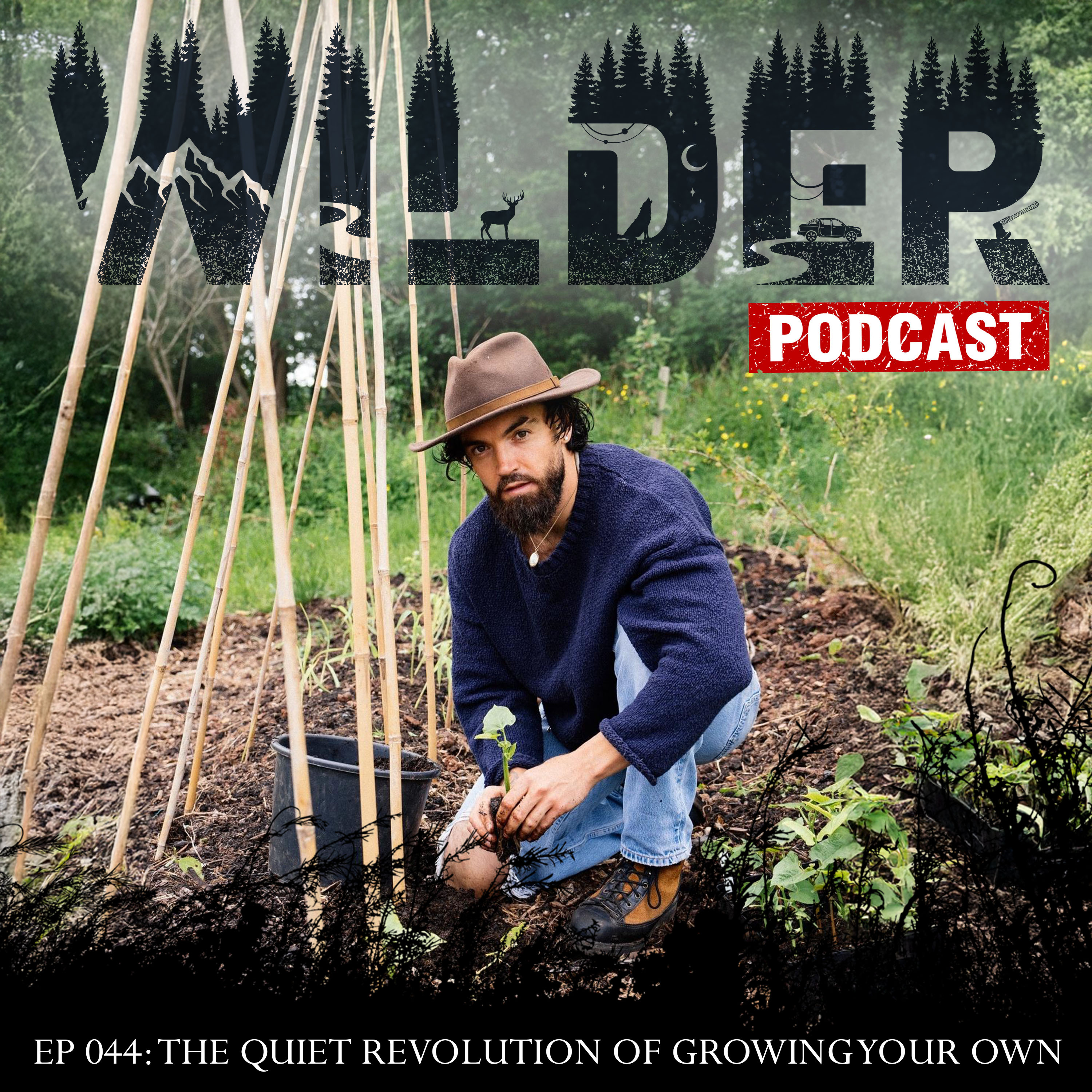
S1 Ep 44Ep. 044: The Quiet Revolution of Growing Your Own with Gaz Oakley
In this episode, Tom and Chloe sit down with chef-turned-homesteader Gaz Oakley to explore his remarkable journey from the high-pressure kitchens of Cardiff and London to a more grounded life growing food and foraging in the Welsh hills. With 1.8 million YouTube followers, five cookbooks, and a deepening connection to land, Gaz shares how food, nature, and simplicity became the foundation of his transformation.This honest conversation explores the systemic challenges of modern living, the healing power of growing your own food, and how small acts like growing herbs on a windowsill can become a radical form of resistance.Key TakeawaysNature deficiency is real. Gaz describes the anxiety and disconnection he felt in city life — and how growing his own food and spending time outdoors radically improved his wellbeing.Food is medicine. From fermenting tomatoes to foraging yarrow, Gaz has reimagined food not just as fuel but as nourishment for body, soul, and soil.Start small, grow meaningfully. Whether it's a tomato plant on a windowsill or an allotment plot in the city, Gaz encourages listeners to take accessible first steps towards food autonomy.Authenticity over aesthetics. Despite his large digital following, Gaz speaks candidly about the tension between online influence and offline peace, and his longing to connect with people in-person through real-world projects.Music, clothing, and relationships change. When you reconnect with nature, everything else aligns — even your Spotify playlist.Timestamps00:00 – A sip of hibiscus and a warm welcome01:00 – Setting the tone: hospitality, herbs, and grounding rituals03:00 – What’s The Grange Project? An intro for new listeners06:00 – Upcoming community day highlights (apple pressing, polytunnel building, wood meadows)08:00 – Meet Gaz Oakley: chef, YouTuber, homesteader11:30 – From burnout to foraging: Gaz’s turning point during COVID15:00 – How growing food changed Gaz’s entire relationship with cooking18:00 – The deeper meaning of foraging, soil health, and nourishment22:00 – From beats to birdsong: how Gaz’s music taste reflects his transformation25:00 – Systemic critique and compassion for city dwellers28:00 – Social media, influence, and the silent revolution of self-sufficiency34:00 – How self-sufficient is Gaz? The ups and downs of growing most of your food38:00 – Time, joy, and the rhythm of gardening41:00 – Herbalism, slow living, and detoxing from industrial life46:00 – Gaz’s advice: practical steps for rewilding your life — even in the city50:00 – Final reflections and future plans52:00 – Postscript chat: bromances, polytunnels, and McDonald’s metaphorsGuest BioGaz Oakley is a chef, author, YouTuber, and passionate homesteader based in Wales. Best known for his plant-based recipes and hugely popular channel "Avant Garde Vegan", Gaz is now on a mission to grow his own food, live more naturally, and inspire others to reconnect with the land.Links & ResourcesGaz Oakley on YouTube: https://www.youtube.com/avantgardeveganThe Grange Project: https://www.grangeproject.co.ukJoin the WhatsApp Community: https://www.grangeproject.co.uk/whatsappNewsletter Signup: Stay updatedSupport the podcast: Rate, review, and share!Mentioned in this episode:Visit & Stay at the Grange ProjectWould you like to escape the trappings of the modern world and wake-up in the morning to one of the best views in South Wales, where only the birds are noisy? We have two beautiful and sustainably built ‘tiny homes’, carefully located in secluded locations across our 80 acre rewilding project.Visit Grange Project
S1 Ep 43Ep. 043: From Loss to Life - Ben Goldsmith & Natural Capital
In this episode of the Wilder Podcast, we sit down with Ben Goldsmith, financier, conservationist, and passionate rewilding advocate, to explore the deeply personal and global dimensions of nature restoration.Ben shares how the tragic loss of his daughter, Iris, became the catalyst for rewilding his Somerset farm, transforming grief into a living love letter to her wild spirit. We also explore his belief in the healing power of nature, both for individuals and for landscapes, and why reconnecting young people with the natural world is one of the greatest challenges of our time.From there, we broaden the lens to global rewilding projects and the emerging role of nature credits, from carbon and biodiversity credits to water quality markets, in funding large-scale ecological recovery. Ben explains the opportunities, risks, and integrity challenges of these markets, and why, despite their imperfections, they may be one of the most powerful tools available to scale restoration at speed.Key TakeawaysHow the loss of Ben’s daughter Iris inspired his family’s rewilding journey.The healing role of nature in times of deep grief.Why rewilding can happen on any scale, from a window box to thousands of acres.The promise and pitfalls of nature credits, from carbon markets to biodiversity net gain.Why reconnecting young people with nature is essential for our collective future.How hope, optimism, and pragmatic financing can fuel a wilder world.Timestamps00:00 – Weather, drought, and the Grange Project’s changing landscape09:30 – Introducing Ben Goldsmith and his lifelong passion for nature16:00 – Rewilding in memory of Iris: grief, love, and transformation27:00 – Nature connection, childhood, and ecological identity33:00 – The return of beavers and winning hearts for rewilding36:00 – Nature credits explained: carbon, water, biodiversity46:00 – Risks, integrity, and scepticism in new nature markets52:00 – The future of Welsh farming and policy courage01:00:00 – Reflections on accountability, funding gaps, and next stepsGuest Bio – Ben GoldsmithBen Goldsmith is an environmentalist, investor, and writer. He chairs the Conservative Environment Network and is the founder of Rewilding the World, a podcast sharing stories of global restoration. His memoir, God is an Octopus, documents his journey through grief and the solace he found in rewilding his Somerset farm after the tragic loss of his daughter Iris. Ben has also worked extensively in green investment, particularly in natural capital and renewable energy, seeking ways to channel finance into large-scale ecological recovery.HostsTom & Chloe Constable are the founders of the Grange Project, an 80-acre rewilding initiative in Monmouthshire, Wales. Through the Wilder Podcast, they document their journey in restoring nature, raising a young family, and exploring the wider rewilding movement with leading voices from around the world.The Wilder PodcastThe Wilder Podcast explores the people, ideas, and projects driving the rewilding movement. From family farms to global landscapes, we share honest conversations about restoring nature, finding hope, and building a wilder future.Connect with Us🌱 Visit the Grange Project: www.grangeproject.co.uk🌿 Follow on Instagram: @grangeprojectwales🎧 Subscribe to the Wilder Podcast wherever you listen to podcasts
S1 Ep 42Ep. 042: Restorative Practices for a Wilder World
In this episode of the Wilder Podcast, Chloe and Tom discuss the recent opening of the Grange Hub and explore two significant restorative practices: Natural Flood Management (NFM) and Nature Guardianship. Tom Johnston from We Are Nature Based CIC explains how NFM utilises natural processes to manage water flow, contrasting it with traditional gray infrastructure. The conversation also explores Nature Guardianship, a concept that integrates the voice of nature into decision-making processes. The episode highlights the need for a mindset shift in water management and the potential for these practices to create our 'wilder world'.Community discount for the Grange Project's Wilder Cabins: 'COMMUNITY10'. Click here.Your Hosts:Tom Constable: https://www.linkedin.com/in/tom-constable/Chloe Constable: https://www.linkedin.com/in/chloe-constable-24155821b/Website: https://www.grangeproject.co.ukPodcast Journey Page: https://www.grangeproject.co.uk/wilder-podcastGrange Project Contact & Social Media:Email: [email protected]: https://www.instagram.com/grange.project/Facebook: https://www.facebook.com/groups/grangeprojectYouTube: https://www.youtube.com/@GrangeProjectLinkedIn: https://www.linkedin.com/in/tom-constable/Takeaways:The Grange Hub opening marks a significant milestone for the project.Natural Flood Management (NFM) uses natural processes to manage water flow.NFM can prevent flooding and enhance biodiversity.Nature Guardianship brings the voice of nature into decision-making.Restorative practices reconnect humans with nature.Community engagement is crucial for successful environmental initiatives.Cumulative small interventions can have a large impact on water management.Mindset shifts are necessary for effective water management.Nature Guardianship can help shift cultural attitudes towards nature.Investing in nature-based solutions is essential for sustainability.Chapters:00:00 Introduction to the Wilder Podcast and Grange Hub Opening12:23 Natural Flood Management: Understanding the Concept42:07 Nature Guardianship: A New Approach to Decision-Making54:25 Restorative Practices: Reflections from the interview.
S1 Ep 41Ep. 041: The Lost Art of Nature Connection
SummaryIn this episode of The Wilder Podcast, hosts Chloe and Tom explore the concept of nature connection, discussing its importance for mental health and wellbeing, the barriers that prevent it, and the pathways to rekindling our relationship with the natural world. They explore the significance of understanding nature connection, particularly among adolescents, and stress the need for systemic change to encourage deeper engagement with nature. The conversation underscores the reciprocal relationship between people and the environment, calling for a shift in language and policy to strengthen nature connection across society.Prof Miles Richardson's booksWebsiteThe Blackbird's SongReconnectionNature Connection Research GroupTakeawaysNature connection is vital for mental health and wellbeing.The UK ranks low in both nature connectedness and biodiversity.Urbanisation and technology are major contributors to disconnection from nature.Emotional engagement and education can foster stronger nature connection.Adolescents often experience a notable dip in nature connection during their teenage years.Research shows a strong correlation between nature connection and pro-environmental behaviour.Engaging the senses is a powerful way to deepen nature connection.Community involvement plays a key role in successful nature restoration projects.Nature connection should be seen as a reciprocal relationship.Systemic changes are essential to improving access to nature for everyone.Chapters00:00 – Introduction10:49 – Understanding Nature Connection16:01 – Defining Nature Connection21:25 – Nature Connection and Wellbeing32:55 – Barriers to Nature Connection45:43 – Pathways to Nature Connection50:48 – Engaging Adolescents in Nature Connection55:54 – Reflections and Future Directions
S1 Ep 40Ep. 040: Rivers in Crisis – A Conversation with James Wallace
What happens when we treat our rivers like sewers, ignore regulation, and allow polluters to profit from destruction? In this milestone 40th episode of The Wilder Podcast, we sit down with James Wallace, CEO of River Action, for one of our most eye-opening conversations yet. Beyond the outrage, this conversation is a masterclass in what needs to change, how it can change, and what each of us can do to be part of the solution.Your HostsTom Constable: https://www.linkedin.com/in/tom-constable/Chloe Constable: https://www.linkedin.com/in/chloe-constable-24155821b/Website: https://www.grangeproject.co.ukPodcast Journey Page: https://www.grangeproject.co.uk/wilder-podcastGrange Project Contact & Social MediaEmail: [email protected]: https://www.instagram.com/grange.project/Facebook: https://www.facebook.com/groups/grangeprojectYouTube: https://www.youtube.com/@GrangeProjectLinkedIn: https://www.linkedin.com/in/tom-constable/Fencing Company Tom Mentioned: https://www.wilcrickgroup.co.uk/Our Guest: James Wallace is the CEO of River Action, an environmental NGO committed to ending river pollution in the UK. A former archaeologist, campaigner, and founder of multiple environmental organisations, James has worked on conservation projects from the UK to Madagascar, and now leads legal and policy challenges to clean up Britain’s rivers.🔗 Visit River Action UK 🌊 Explore the River Rescue Kit 📱 Follow @riveractionuk on Facebook, Instagram, TikTok, LinkedIn and XEpisode Timestamps:[00:00] Introduction and updates from the Grange Project, including the new market garden, the first school visit to the project and freedom for the pigs.[09:42] Meet James Wallace – CEO of River Action and hear his journey from chalk stream childhood to river campaigner[13:42] What’s the problem with our rivers? A breakdown of pollutants[17:46] What healthy rivers could mean for wildlife, communities and the economy[23:24] Why haven’t we fixed this already? A deep dive into regulation and politics[27:35] What can individuals and communities do to make a difference?[34:33] What is the River Rescue Kit and how will it help local campaigners?[38:00] Do we need new laws or better enforcement of existing ones?[42:42] Political will, lobbying pressure, and the role of growth narratives[46:00] Why River Action is pursuing new legal challenges in 2025[49:00] Reflections on the river as a public good—and why this moment matters[53:20] Closing reflections from Tom & Chloe⭐️ Enjoyed the Episode?Tap Follow or Subscribe so you never miss a future conversationLeave a 5-star review to help others discover the showShare this episode with a friend or campaign groupScreenshot your favourite moment and tag us on Instagram!Mentioned in this episode:Visit & Stay at the Grange ProjectWould you like to escape the trappings of the modern world and wake-up in the morning to one of the best views in South Wales, where only the birds are noisy? We have two beautiful and sustainably built ‘tiny homes’, carefully located in secluded locations across our 80 acre rewilding project.Visit Grange Project
S1 Ep 39Ep. 039: The Act That Could Change the World
In this episode we speak with the inspirational Jane Davidson, the former government minister who proposed the groundbreaking Wellbeing of Future Generations Act. We discuss how the Act came to be, the influence the legislation has had and why Wales is now being watched by countries around the world looking to follow its lead.Your Hosts:Tom Constable: https://www.linkedin.com/in/tom-constable/Chloe Constable: https://www.linkedin.com/in/chloe-constable-24155821b/Website: https://www.grangeproject.co.ukPodcast Journey Page: https://www.grangeproject.co.uk/wilder-podcast**Community Day Sign-up** https://www.grangeproject.co.uk/volunteers-dayThrivalism Episode: https://www.grangeproject.co.uk/wilder-podcast/ep-038-thrivalism-with-tony-juniper-cbeGrange Project Contact & Social Media:Email: [email protected]: https://www.instagram.com/grange.project/Facebook: https://www.facebook.com/groups/grangeprojectYouTube: https://www.youtube.com/@GrangeProjectLinkedIn: https://www.linkedin.com/in/tom-constable/Our Guest: Jane Davidson is an environmentalist, author and international speaker. From 2000 - 2011, Jane was Minister for Education, then Minister for Environment and Sustainability in the Welsh Government, where she proposed legislation to make sustainability the central organising principle; the Wellbeing of Future Generations Act came into law in 2015. She introduced the first plastic bag charge in the UK, and her recycling regulations took Wales to third best in the world. She created a Climate Change Commission for Wales, the post of Sustainable Futures Commissioner, and the Wales Coast Path. Website: https://janedavidson.wales/LinkedIn: https://www.linkedin.com/in/jane-davidson-24070337/Listen out for:[00:00:00] Tom and Chloe update on the project, including an exciting update about the opening of the Grange Hub.[00:04:17] Jane introduces herself and the rich influences from her background.[00:13:23] We hear about the development of the Wellbeing of Future Generations Act, what it contains and what it means.[00:21:02] Chloe asks about how the act was received at a government level.[00:26:18] Tom questions Jane about examples of policy shifts associated with the act and she shares various examples, for example: universal basic income for care leavers, cessation of major road build projects in Wales and the 20mph speed limit in urban areas.[00:33:30] Jane tells us about how the act gives the government permission to think differently.[00:35:27] Tom asks Jane about the role of communication to all stakeholders around the act and we talk about the role of reframing and humour in this.[00:44:09] We discuss the international response to the wellbeing act.[00:47:54] Tom and Chloe reflect on the interview.Mentioned in this episode:Visit & Stay at the Grange ProjectWould you like to escape the trappings of the modern world and wake-up in the morning to one of the best views in South Wales, where only the birds are noisy? We have two beautiful and sustainably built ‘tiny homes’, carefully located in secluded locations across our 80 acre rewilding project.Visit Grange Project
S1 Ep 38Ep. 038: Thrivalism with Tony Juniper CBE
Tony Juniper, Chair of Natural England, shares with us a powerful thesis: we cannot fight the climate and ecological crisis without first addressing social inequality. Not content with just highlighting these connections, Tony describes the system change necessary to move us all forward; the new political philosophy of Thrivalism. Your HostsTom Constable: https://www.linkedin.com/in/tom-constable/Chloe Constable: https://www.linkedin.com/in/chloe-constable-24155821b/Website: https://www.grangeproject.co.ukPodcast Journey Page: https://www.grangeproject.co.uk/wilder-podcastGrange Project Contact & Social Media:Email: [email protected]: https://www.instagram.com/grange.project/Facebook: https://www.facebook.com/groups/grangeprojectYouTube: https://www.youtube.com/@GrangeProjectLinkedIn: https://www.linkedin.com/in/tom-constable/Our Guests: Tony’s career is devoted to Nature recovery, environmental protection and sustainable development. Working across many activities, including research, campaigning, policy and writing. Involvement with many organisations including Friends of the Earth, Wildlife Trusts, WWF, HRH The Prince of Wales’s International Sustainability Unit, CISL Cambridge and Birdlife International. In depth activity on climate change, Nature conservation, circular economy and more. Now the Chair at Natural England.Website: https://tonyjuniper.com/LinkedIn: https://www.linkedin.com/in/tony-juniper-cbe-a2763b31/?originalSubdomain=ukNew book "Just Earth": https://amzn.eu/d/8cwIaHnListen out for:[00:00:00] Tom provides a brief overview of the Grange Project and they discuss their latest addition: The Market Garden.[00:08:50] Tony introduces himself and his thesis that the environmental crisis cannot be addressed without first considering social inequality. [00:11:40] We discuss examples of the connection between these two concepts including the disproportionate use of resources, the perceived value of limitless economic growth and the differing impacts of environmental decline. [00:17:07] Tom asks about how the book has been received.[00:19:05] Chloe reflects on how cost of living is often given as a justification for environmental inaction, particularly with regards to cheap food, water and energy bills.[00:23:43] We talk about how we need to respond to these challenges and the concept of Thrivalism.[00:29:07] Chloe raises the point about how it’s in everyone’s interests to work towards a fairer society due to the risks of both environmental and societal collapse. [00:30:52] We discuss the benefits of more equal societies and the influences on our political systems.[00:38:08] Chloe asks about the definition of wealth and the philosophy of indigenous wisdom.[00:41:32] Tom asks about Tony’s hopes for Thrivalism.[00:44:40] Tom and Chloe reflect on the interview.Mentioned in this episode:Visit & Stay at the Grange ProjectWould you like to escape the trappings of the modern world and wake-up in the morning to one of the best views in South Wales, where only the birds are noisy? We have two beautiful and sustainably built ‘tiny homes’, carefully located in secluded locations across our 80 acre rewilding project.Visit Grange Project

S1 Ep 37Ep. 037: Taking Rewilding Mainstream with Alister Scott of the Global Rewilding Alliance
In this joyful episode to celebrate World Rewilding Day, we take a big picture view as Alister addresses key questions such as ‘what does a rewilded world look like’, ‘how do we get there’ and ‘what are the benefits?’ Amongst a range of topics, we discuss climate stabilisation, eco distress and environmental education, as well as the power of success stories in bringing the necessary energy to ‘take rewilding mainstream’.Your Hosts:Tom Constable: https://www.linkedin.com/in/tom-constable/Chloe Constable: https://www.linkedin.com/in/chloe-constable-24155821b/Website: https://www.grangeproject.co.ukPodcast Journey Page: https://www.grangeproject.co.uk/wilder-podcastGrange Project Contact & Social Media:Email: [email protected]: https://www.instagram.com/grange.project/Facebook: https://www.facebook.com/groups/grangeprojectYouTube: https://www.youtube.com/@GrangeProjectLinkedIn: https://www.linkedin.com/in/tom-constable/Our Guests: Alister has been a lifelong environmentalist since the eradication by silage making of the Corncrake where he grew up in the north west of Ireland. The thread of Alister’s career has been to learn how to make big, positive change happen. With a doctorate from the Science Policy Research Unit, University of Sussex, Alister spent 15 years at the interface between science and policy. He has helped to build multiple movements and has supported many catalytic leaders as a trained coach and facilitator. A father of two and widower, Alister loves to get out in nature and the great outdoors. Alister is an Honorary Professor at University College London.Website: https://globalrewilding.earth/LinkedIn: https://www.linkedin.com/in/dralisterscott/?originalSubdomain=ukListen out for:[00:00:00] Chloe and Tom provide a brief overview of the Grange Project and introduce the episode.[00:03:20] Alister introduces himself and the global rewilding alliance.[00:11:32] We talk about the stages of the rewilding movement: invention, experimentation, preparing for global scaling, scaling and mainstreaming. [00:19:54] Alister describes what a rewilded world at scale would look like, including changes at an urban scale and to people’s everyday lives.[00:28:36] We question Alister about the connections between rewilding, climate stabilisation and eco distress.[00:35:01] We talk about the power of the concept of rewilding and Tom asks Alister about the steps required to achieve the vision of mainstream rewilding.[00:41:26] Tom questions Alister about one of the oft cited challenges facing rewilding at scale, that of food security.[00:47:19] Chloe asks Alister how we create effective stories outside of the environmental movement.[00:50:55] We discuss the role of education in the rewilding movement.[00:58:40] Tom and Chloe reflect on the interview.Mentioned in this episode:Visit & Stay at the Grange ProjectWould you like to escape the trappings of the modern world and wake-up in the morning to one of the best views in South Wales, where only the birds are noisy? We have two beautiful and sustainably built ‘tiny homes’, carefully located in secluded locations across our 80 acre rewilding project.Visit Grange Project
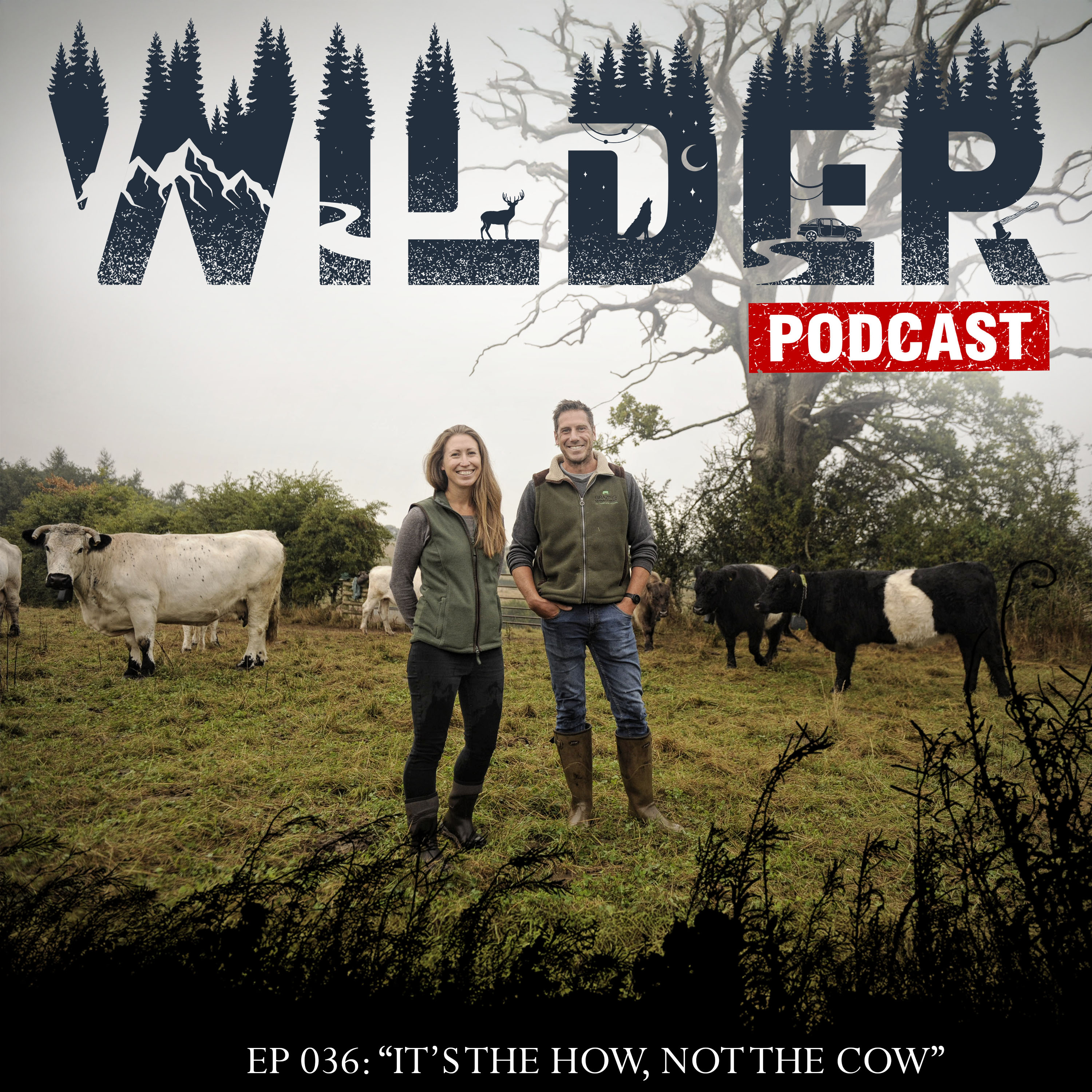
S1 Ep 36Ep. 036: "It's the how, not the cow" with Grazing Management
Join us round the farmhouse kitchen as we chat with Emily and Alex, the co-founders of Grazing Management. Over a cup of tea, and some excellent fruit cake, we discuss what conservation grazing is, why it’s so important for biodiversity and how they are managing to make it into a successful business. Your Hosts:Tom Constable: https://www.linkedin.com/in/tom-constable/Chloe Constable: https://www.linkedin.com/in/chloe-constable-24155821b/Website: https://www.grangeproject.co.ukPodcast Journey Page: https://www.grangeproject.co.uk/wilder-podcastGrange Project Contact & Social Media:Email: [email protected]: https://www.instagram.com/grange.project/Facebook: https://www.facebook.com/groups/grangeprojectYouTube: https://www.youtube.com/@GrangeProjectLinkedIn: https://www.linkedin.com/in/tom-constable/Our Guests: Grazing Management was set up by Alex and Emily Crawley in 2018. What started as an award-winning idea has since expanded into a business with an ever-growing flock and herd. They have built significant experience of working on a wide range of sites and still get excited about the emergence of wildflowers from areas which were once deserts of bracken. They were proud winners in their category at the prestigious British Farming Awards in 2023. Website: https://grazingmanagement.co.uk//LinkedIn: https://www.linkedin.com/in/alexander-crawley-78a3a014a/ & https://www.linkedin.com/in/emily-crawley-9361386a/Listen out for:[00:00:00] Chloe and Tom update on the Grange Project, including their reflections on the largest community day yet.[00:06:38] Emily and Alex introduce themselves, their backgrounds and the origins of Grazing Management. [00:15:00] We talk about the role of large herbivores in enhancing biodiversity.[00:22:01] Alex explains about the benefits of diversity for the cattle in kind, with the reduction in the use of medication.[00:24:46] Emily talks about the day to day operations of Grazing Management and the journey to this point. [00:29:44] We hear about the no fence collar and the possibilities this provides.[00:35:24] Alex describes the differing impacts of hay cutting and mob grazing versus conservation grazing.[00:40:37] Tom asks about the relationship of this system to methane and carbon.[00:44:27] We finish by discussing the varied income streams associated with Grazing Management.[00:46:34] Tom and Chloe reflect on the interview.Mentioned in this episode:Visit & Stay at the Grange ProjectWould you like to escape the trappings of the modern world and wake-up in the morning to one of the best views in South Wales, where only the birds are noisy? We have two beautiful and sustainably built ‘tiny homes’, carefully located in secluded locations across our 80 acre rewilding project.Visit Grange Project
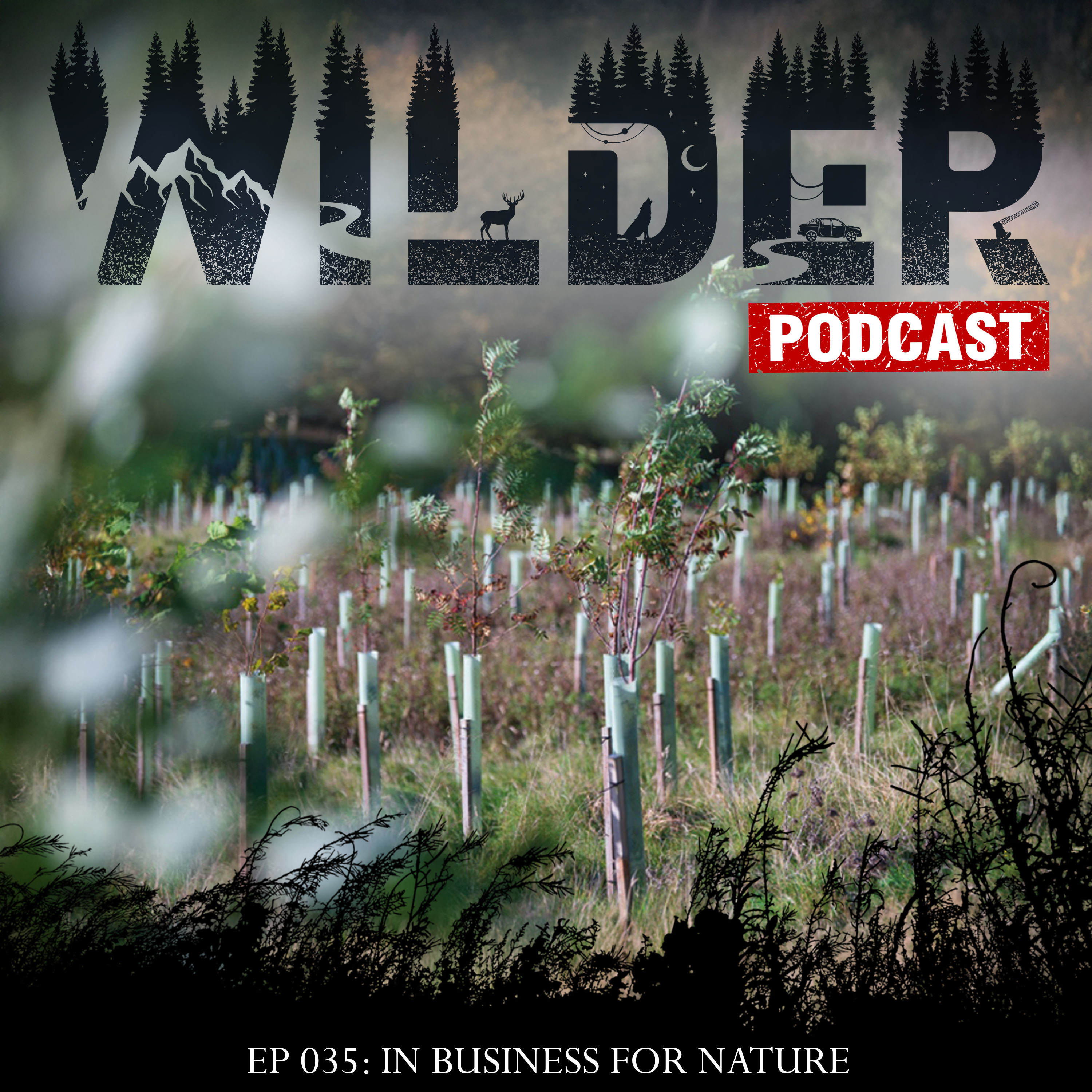
S1 Ep 35Ep. 035: In Business For Nature: Project Updates and Make it Wild
What does it take to turn a family passion into a powerful force for nature? In this episode of two halves, we start with an update about The Grange Project, including the last 6 months of physical interventions, our evolving business structure, and the latest developments at The Grange Distillery and Studio. We then move into conversation with Helen Neave, co-founder of Make it Wild, where we discuss their purpose of protecting nature across 500 acres in North Yorkshire, using carbon-offsetting and corporate partnerships to create a sustainable financial model.Your Hosts:Tom Constable: https://www.linkedin.com/in/tom-constable/Chloe Constable: https://www.linkedin.com/in/chloe-constable-24155821b/Helpful Links:Website: https://www.grangeproject.co.ukPodcast Journey Page: https://www.grangeproject.co.uk/wilder-podcastGrange Distillery: https://grangedistillery.com/Grange Project Contact & Social Media:Email: [email protected]: https://www.instagram.com/grange.project/Facebook: https://www.facebook.com/groups/grangeprojectYouTube: https://www.youtube.com/@GrangeProjectLinkedIn: https://www.linkedin.com/in/tom-constable/Our Guest: Helen Neave, Make it Wild:Helen is a retired surgeon on a mission to change the planet. Alongside her husband, Christopher Neave, they turned their family passion for nature into Make it Wild. With nature reserves across North Yorkshire, they have planted over 80,000 trees, dug ponds, restored wildflower hay meadows, protected ancient woodland and created many different habitats across over 500 acres. Working in partnerships with businesses, whether through carbon-offsetting, team conservation days or natural mindfulness walks, their purpose is to protect nature.Website: https://www.makeitwild.co.uk/LinkedIn: https://www.linkedin.com/in/helen-neave-42200938/Listen out for: [00:00:00] Chloe and Tom describe the structure of the episode, including a brief introduction to our guest, Helen from Make it Wild, and a brief summary of the landscape of the Grange Project.[00:04:06] Chloe leads an update in numbers about the physical interventions that have occurred across the project since September 2024; including trees, brash piles, yellow rattle, the tiny forest and our market garden. [00:10:35] Tom moves into a conversation about the structure of the Grange Project and the decision to move from a Community Interest Company into a Limited Company and Charity.[00:12:51] Finally, we update on the other commercial updates across the project: The Grange Distillery and the Grange Studio.[00:15:47] Helen introduces herself and the mission and landscape of Make it Wild.[00:22:57] Tom asks about the team at Make it Wild, including the conservation grazing team.[00:28:37] We hear about the business model that enables Make it Wild to carry on helping nature.[00:34:24] Chloe asks about carbon offsetting and Helen shares the basics of how this operates. [00:37:25] We discuss some of the ethical dilemmas of carbon offsetting, including the risk of not reducing emissions at source, focusing on carbon without considering the impact on nature or not maintaining trees for the long term.[00:48:00] Helen tells us about their land owner partners and the opportunities of a franchise model.[00:50:52] Tom and Chloe reflect on the interview, including their decision not to pursue carbon credits.Mentioned in this episode:Visit & Stay at the Grange ProjectWould you like to escape the trappings of the modern world and wake-up in the morning to one of the best views in South Wales, where only the birds are noisy? We have two beautiful and sustainably built ‘tiny homes’, carefully located in secluded locations across our 80 acre rewilding project.Visit Grange Project
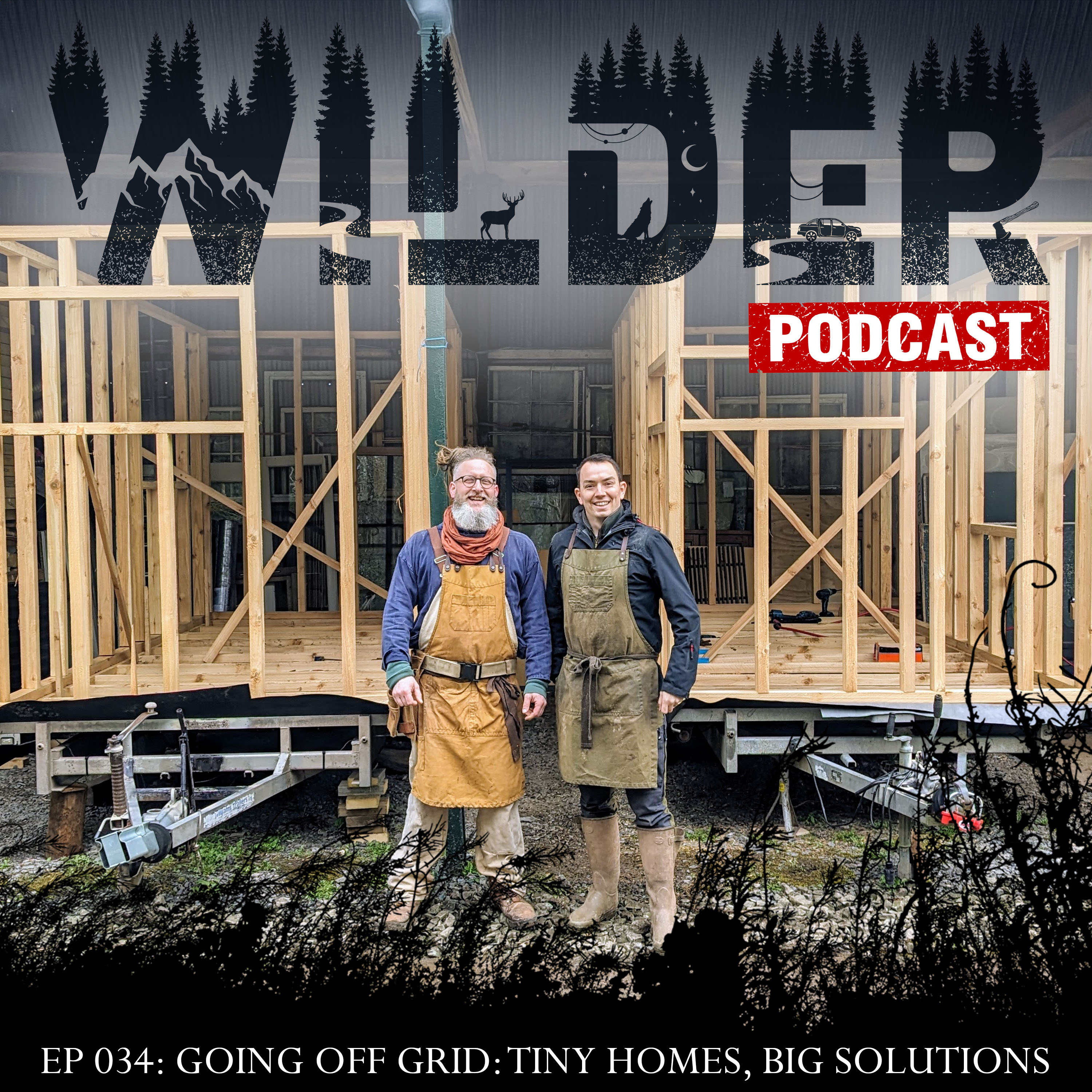
S1 Ep 34Ep. 034: Going Off Grid: Tiny Homes, Big Solutions
If you’ve ever contemplated heading to the hills in your own off-grid escape, this is the episode for you. Craftsman builder Simon Whitfield of the Tiny Home Company covers the key ingredients necessary to create your own self-built home, as well as philosophy underpinning the ‘tiny living’ lifestyle. We are so grateful to have worked with Simon in crafting the Grange Project’s Tiny Homes, if you feel inspired to experience them yourself after the episode, please book via our website.**Book to stay in one of our wonderful cabins by clicking here**Your Hosts:Tom Constable: https://www.linkedin.com/in/tom-constable/Chloe Constable: https://www.linkedin.com/in/chloe-constable-24155821b/Website: https://www.grangeproject.co.ukPodcast Journey Page: https://www.grangeproject.co.uk/wilder-podcastGrange Project Contact & Social Media:Email: [email protected]: https://www.instagram.com/grange.project/Facebook: https://www.facebook.com/groups/grangeprojectYouTube: https://www.youtube.com/@GrangeProjectLinkedIn: https://www.linkedin.com/in/tom-constable/Our Guest: Simon Whitfield, The Tiny Home CompanyThe Tiny Home Company was founded in 2013 by craftsman builder Simon Whitfield. With 20+ years of carpentry and building experience, the company has grown organically through years of practice converting and creating live-in vehicles, traditional cabins and tiny houses. Simon and his family have lived in self built homes on wheels ranging from their vintage double decker bus to ‘the chapel’ - a dream tiny home project which has now been lovingly converted into a luxury glamping wagon. Simon also teaches courses with Black Mountains College, covering an introduction to Tiny Home design and building.Website: https://www.tinyhomecompany.co.uk/Listen out for:[00:00:00] Chloe and Tom update on what’s occurred on the project since the last episode (including an apology and a big announcement!)[00:04:29] Simon describes his background and what exactly he means by a Tiny Home.[00:08:32] Tom invites Simon to give an overview of the process and key ingredients involved in building a Tiny Home.[00:16:11] We hear about where Simon sources his timber and the characteristics that he values.[00:22:32] We discuss the importance of insulation and energy sources, including a debate about the relative merits of natural versus reclaimed synthetic materials.[00:32:20] We talk about the values that inform conscious decision making and the courage that’s required to make these choices. [00:39:14] We hear about how Simon is contributing to off grid living through various commercial enterprises.[00:45:51] Tom and Chloe reflect on the interview and share more details about how you can book your own ‘tiny home’ experience at the Grange Project.Mentioned in this episode:Visit & Stay at the Grange ProjectWould you like to escape the trappings of the modern world and wake-up in the morning to one of the best views in South Wales, where only the birds are noisy? We have two beautiful and sustainably built ‘tiny homes’, carefully located in secluded locations across our 80 acre rewilding project.Visit Grange Project
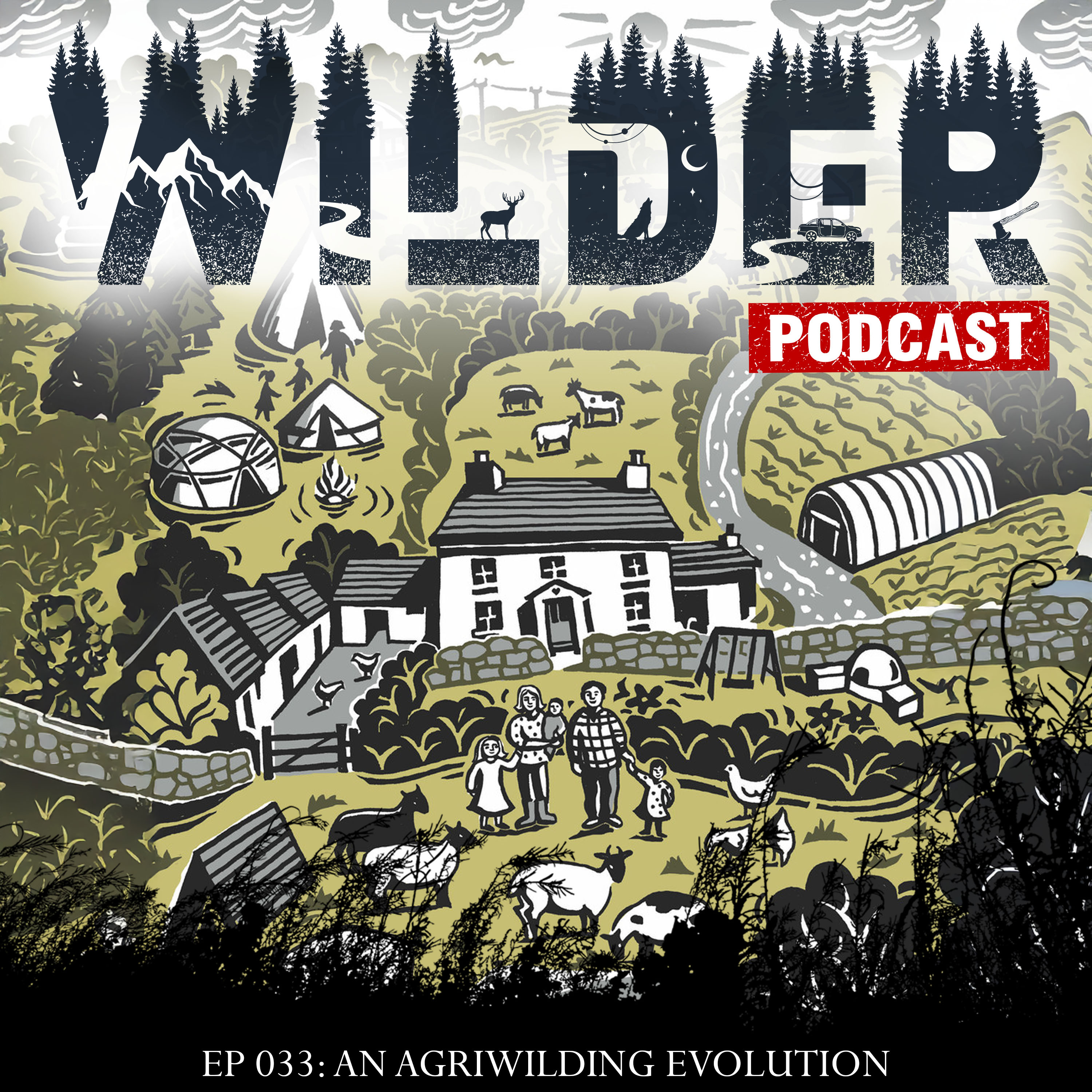
S1 Ep 33Ep. 033: An Agriwilding Evolution with Matt Swarbrick
Matt Swarbrick, a farmer in North West Wales, shares with us the journey of Henbant. Using the principles of holistic decision making and agriwilding, they’ve created a thriving ecosystem that enables them to produce delicious nutrient dense food and magical spaces for both people and nature. Enjoy Matt’s warmth and passion as he paints a picture of the beautiful world they are creating. Your Hosts:Tom Constable: https://www.linkedin.com/in/tom-constable/Chloe Constable: https://www.linkedin.com/in/chloe-constable-24155821b/Website: https://www.grangeproject.co.ukPodcast Journey Page: https://www.grangeproject.co.uk/wilder-podcastGrange Project Contact & Social Media:Email: [email protected]: https://www.instagram.com/grange.project/Facebook: https://www.facebook.com/groups/grangeprojectYouTube: https://www.youtube.com/@GrangeProjectLinkedIn: https://www.linkedin.com/in/tom-constable/Our Guest: Matt Swarbrick, HenbantMatt Swarbrick is a permaculture inspired farmer at Henbant in North Wales. An ecologist and filmmaker by background he and his family and the Henbant team are on a mission to prove that with a small farm you can produce good food, financial profit, build soil and biodiversity, build a community and enjoy it all at the same time. Henbant has an 80 share CSA scheme and produces enough eggs, beef and veg for 80 local families from amongst a diversity of silvopasture systems. They are now working with the Wildlife trust to explore the space between ecologically intensive farming and maximum biodiversity enhancement; agri-wilding Henbant’s watershed. Henbant runs a range of courses in and is one of Europe’s leading models of small scale regenerative agroecology.LinkedIn: https://www.linkedin.com/in/matt-swarbrick-322503289/?originalSubdomain=ukWebsite: https://www.henbant.org/Listen out for:[00:00:00] Tom and Chloe update on the project, focused on food production focused developments.[00:06:48] Matt introduces himself and his background.[00:12:30] Matt describes their journey to Henbant and the layout of the farm. [00:17:25] We discuss their approach; holistic decision making and the concept of agriwilding.[00:24:33] Tom and Chloe question Matt about the food Henbant is producing including the importance of agroforestry.[00:30:11] We discuss risk, entrepreneurship and the value of diversification.[00:35:58] Chloe asks about how people are invited to join the system at Henbant.[00:39:16] Matt tells us about the courses that are run from Henbant.[00:43:42] We question Matt about the future vision for Henbant.[00:47:40] Chloe and Tom reflect on the interview and what resonated most for them.Mentioned in this episode:Visit & Stay at the Grange ProjectWould you like to escape the trappings of the modern world and wake-up in the morning to one of the best views in South Wales, where only the birds are noisy? We have two beautiful and sustainably built ‘tiny homes’, carefully located in secluded locations across our 80 acre rewilding project.Visit Grange Project
S1 Ep 32Ep. 032: How to Build a Regenerative Nation with North Star Transition
How do you make a nation regenerative? What does it take to transform the Wye and Usk catchments? Jyothi Banerjee and North Star Transition are asking some of the most complex questions of our time, with three clear objectives: to propose a plan which is transformative, locally owned and investable. This is a fascinating conversation about systems change from an incredibly articulate communicator. Your Hosts:Tom Constable: https://www.linkedin.com/in/tom-constable/Chloe Constable: https://www.linkedin.com/in/chloe-constable-24155821b/Grange Project Contact & Social Media:Email: [email protected]: https://www.instagram.com/grange.project/Facebook: https://www.facebook.com/groups/grangeprojectYouTube: https://www.youtube.com/@GrangeProjectLinkedIn: https://www.linkedin.com/in/tom-constable/Our Guest: Jyoti Banerjee, Co-Founder and CEO of North Star TransitionJyoti was part of the team that created the Integrated Reporting movement globally. He has been an impact investor for two decades and used to be an entrepreneur in the tech sector. He taught technology entrepreneurship at Said Business School, University of Oxford. He grew up in New Delhi and lives in London.LinkedIn: https://www.linkedin.com/in/jyoti-banerjee/?originalSubdomain=ukWebsite: https://www.northstartransition.org/Helpful Links:Website: https://www.grangeproject.co.ukPodcast Journey Page: https://www.grangeproject.co.uk/wilder-podcastCitizen Zoo Conference Details: https://www.citizenzoo.org/https://sites.google.com/citizenzoo.org/2025rewildingconferenceListen out for:[00:00:00] Tom and Chloe update on the project, including our new ‘podcast journeys’ (find them on the Grange Project podcast webpage), a new floor for the Wilder Hub and the Citizen Zoo Conference: Rewilding Our Future.[00:05:20] Jyoti introduces himself and the origin of North Star Transition.[00:10:55] We hear about the approach of North Star Transition and their ambition to make Wales a regenerative nation.[00:17:20] Jyoti sets the context for the Wye Usk Transition Lab by describing why this landscape is in crisis. [00:21:30] Tom asks why the landscape is still deteriorating despite over 20 years of understanding and Jyoti describes the risk of the ‘silver bullet’ and the importance of asking the right question.[00:25:53] We discuss the role of the government in tackling these challenges and the importance of a credible reimagining. [00:29:19] Chloe asks Jyoti about what happens when stakeholders come together within the Wye-Usk Transition Lab and the role of behavioural science in this.[00:37:20] Jyoti defines the three objectives of the Wye Usk Transition Lab: transformational, locally owned and investable. We explore the notion of ‘investable’ in more depth.[00:45:20] Chloe questions Jyoti about how far they are away from proposing a plan that is credible for transformation, and how this is communicated. [00:49:10] Tom and Jyoti discuss whether they have the ‘right’ stakeholders round the table.[00:54:28] Chloe and Tom reflect on the interview and what resonated most for them.Mentioned in this episode:Visit & Stay at the Grange ProjectWould you like to escape the trappings of the modern world and wake-up in the morning to one of the best views in South Wales, where only the birds are noisy? We have two beautiful and sustainably built ‘tiny homes’, carefully located in secluded locations across our 80 acre rewilding project.Visit Grange Project
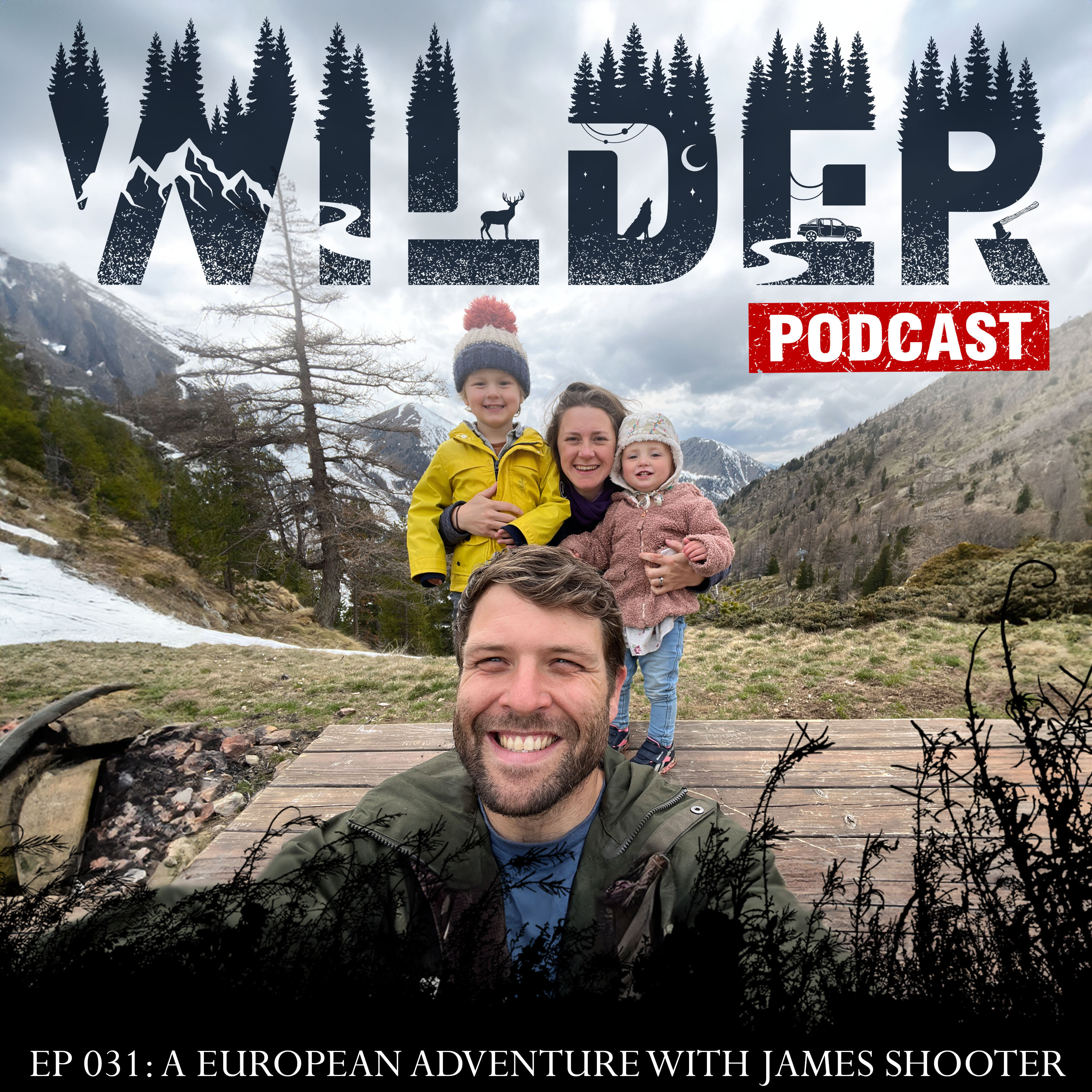
S1 Ep 31Ep. 031: A European Adventure with James Shooter
We journey across Europe with James Shooter, host of the rewild podcast. From inspirational community led rewilding projects, to the trial and tribulations of road tripping, sit back and enjoy his story-telling skills. On that theme, we end the episode with a discussion about the role of communications and collaboration in the rewilding movement.Your Hosts:Tom Constable: https://www.linkedin.com/in/tom-constable/Chloe Constable: https://www.linkedin.com/in/chloe-constable-24155821b/Website: https://www.grangeproject.co.ukGrange Project Contact & Social Media:Email: [email protected]: https://www.instagram.com/grange.project/Facebook: https://www.facebook.com/groups/grangeprojectYouTube: https://www.youtube.com/@GrangeProjectLinkedIn: https://www.linkedin.com/in/tom-constable/Grange Project Partnership Document: https://drive.google.com/file/d/1HNUjLB-bWDTgv4AJoYG7uUoAWEBE9q28/view?usp=drive_linkOur Guest:James Shooter is a nature photographer, filmmaker and podcaster currently based in the Cairngorms National Park, Scotland. He’s fully immersed in the world of rewilding, the large-scale restoration of nature, and finding ways to communicate positive environmental stories through a variety of different media.For the last 10 years he has worked at Scottish rewilding charity, SCOTLAND: The Big Picture as a visual content creator and guide. Throughout 2023 & 2024 he was travelling across the continent, teaming up with Rewilding Europe, to produce The Rewild Podcast - immersive discussions with an army of passionate people fighting back for nature.LinkedIn: https://www.linkedin.com/in/james-shooter-b1920256/?originalSubdomain=ukWebsite: https://www.jamesshooter.com/Podcast: https://rewildingeurope.com/the-rewild-podcast/Resources:3D Artist Karen: https://therubycube.com/Grange Project Partnership Document: https://drive.google.com/file/d/1HNUjLB-bWDTgv4AJoYG7uUoAWEBE9q28/view?usp=drive_linkListen out for:[00:00:00] Tom and Chloe update on the project, focusing on our newly launched Corporate Brochure.[00:05:30] We meet James who introduces himself, his family and the origin story of the Rewild Podcast[00:13:05] James summarises the aims of the Rewild Podcast[00:16:05] We hear about two of the projects he featured on the podcast that James found particularly inspirational, Seawilding on the west coast of Scotland and Greater Coa Valley in Portugal.[00:20:18] We discuss the differences in the scale of nature between Europe and the UK, and the power of nature recovery, even alongside modern day conflict in Ukraine. [00:26:58] James shares the unexpected challenges on route, which were mostly van related![00:32:44] Chloe asks James about the impact of the podcast, on listeners and him alike.[00:36:36] We then go on to discuss what’s next for James and the power of communication and conversation. [00:41:36] James tells a story about lynx reintroduction to illustrate the need for common ground in the UK. [00:44:32] Chloe and Tom reflect on the interview and what resonated most for them.Mentioned in this episode:Visit & Stay at the Grange ProjectWould you like to escape the trappings of the modern world and wake-up in the morning to one of the best views in South Wales, where only the birds are noisy? We have two beautiful and sustainably built ‘tiny homes’, carefully located in secluded locations across our 80 acre rewilding project.Visit Grange Project

S1 Ep 30Ep. 030: Tor to Shore - Landscape Level Recovery
There is a vision in Cornwall, one of large scale nature recovery from land to sea. In this episode we hear the story and the vision of ‘Tor to Shore’, eloquently described by Matt Walpole, CEO of Cornwall Wildlife Trust. We discuss unexpected challenges (looking at you beavers), the importance of joined up landscapes and the power of community engagement. Your Hosts:Tom Constable: https://www.linkedin.com/in/tom-constable/Chloe Constable: https://www.linkedin.com/in/chloe-constable-24155821b/Grange Project Contact & Social Media:Email: [email protected]: https://www.instagram.com/grange.project/Facebook: https://www.facebook.com/groups/grangeprojectYouTube: https://www.youtube.com/@GrangeProjectLinkedIn: https://www.linkedin.com/in/tom-constable/Our Guest:As an ecologist by training, Matt spent ten years conducting conservation research in Africa and Asia at the Durrell Institute of Conservation and Ecology (DICE) at the University of Kent. He then moved to Cambridge and the conservation charity sector, where he has been for the last 18 years.Matt has worked in leadership roles for international charities such as the UN Environment Programme World Conservation Monitoring Centre (UNEP-WCMC) and Fauna & Flora International. He is a longstanding member of the judging panel of the World Responsible Travel Awards and has acted as a trustee for various conservation organisations, including the Wildlife Trust for Bedfordshire, Cambridgeshire and Northamptonshire where he is currently Chair of the Conservation, Education and Communities Committee. He also directed a ground-breaking UK-wide assessment of the value of nature to society for Defra and the devolved administrations of Scotland, Wales and Northern Ireland.LinkedIn: https://www.linkedin.com/in/mattwalpole71/?originalSubdomain=ukWebsite: https://www.cornwallwildlifetrust.org.uk/Resources:https://www.cornwallwildlifetrust.org.uk/tor-to-shoreListen out for:[00:00:00] Tom and Chloe update on the project, including a few rewilding facts and the value of pig ‘micro-habitats’.[00:08:35] Our guest for today, Matt Walpole, introduces himself and the Cornwall Wildlife Trust.[00:13:01] We discuss what ‘rewilding’ means to the Trust and how they are applying these principles.[00:18:10] Tom and Chloe question Matt about the role of animals on the landscape. [00:20:51] Matt gives us an overview of the Tor to Shore project, including the opportunity to increase carbon sequestration through seagrass habitats.[00:24:46] Chloe asks Matt about the meaning of ‘nature friendly farming’ and how Tor to Shore are working to engage farmers, including the role of data collection.[00:31:55] We discuss the meaning of marine rewilding, the associated interventions and the engagement of fishermen and women. [00:35:53] Chloe asks Matt about the challenges they’ve experienced as part of the project to date, including an unexpected arrival.[00:39:33] Closing the conversation, we discuss the importance of landscape scale recovery, the funding behind it and where listeners can go to find out more. [00:44:45] Chloe and Tom reflect on the interview and what resonated most for them.Mentioned in this episode:Visit & Stay at the Grange ProjectWould you like to escape the trappings of the modern world and wake-up in the morning to one of the best views in South Wales, where only the birds are noisy? We have two beautiful and sustainably built ‘tiny homes’, carefully located in secluded locations across our 80 acre rewilding project.Visit Grange Project

S1 Ep 29Ep. 029: Failure and Success: 12 Months of Rewilding at the Grange Project
For both new and regular listeners, we cover everything you need to know about the Grange Project one year in. Whether you’re interested in the physical changes, how we intend to finance the project or our vision for nature education, we hope you find value in our enthusiasm!**Sign up for the newsletter at www.grangeproject.co.uk**Your Hosts:Tom Constable: https://www.linkedin.com/in/tom-constable/Chloe Constable: https://www.linkedin.com/in/chloe-constable-24155821b/Grange Project Contact & Social Media:Email: [email protected]: https://www.instagram.com/grange.project/Facebook: https://www.facebook.com/groups/grangeprojectYouTube: https://www.youtube.com/@GrangeProjectLinkedIn: https://www.linkedin.com/in/tom-constable/Resources:Find out more about Youngwilders at www.youngwilders.co.ukListen to Our Food 1200 with Duncan Fisher at https://www.grangeproject.co.uk/wilder-podcast/ep-027-future-farms-with-our-food-1200Listen out for:[00:00:00] Tom and Chloe set the context of the episode and what they intend to cover over the next 40 minutes.[00:03:17] Chloe shares the approach that informs the rewilding at the Grange Project: collaboration, experimentation and engagement.[00:10:38] We highlight some of the amazing volunteers who have supported the Project, as well as some of the rewilding interventions that have occurred on the land.[00:18:00] Tom introduces his beloved pigs, and their effects on the land.[00:25:00] We discuss the problems and possibilities of grants, including the one we received for our Tiny Forest.[00:28:58] Chloe and Tom share the implications of the successful planning application for our Wilder Lodge barn conversion, specifically for corporate partners.[00:33:57] Tom describes his hopes for ecopreneurship at the Grange Project, including our pending planning application for a micro-distillery, and our beautiful Tiny Homes.[00:36:56] We share our visions for nature literacy and connectivity from the Project.

S1 Ep 28Ep. 028: People and Technology in Rewilding with Simon Roper
In this interview with Simon Roper, we debate the problems and possibilities of technology in rewilding, covering everything from the latest innovations to whether technology ever could, or should, replace boots in the ground. Whether you’re a self described technology geek or living a low tech lifestyle, the debates in this episode offer something for everyone.Your Hosts:Tom Constable: https://www.linkedin.com/in/tom-constable/Chloe Constable: https://www.linkedin.com/in/chloe-constable-24155821b/Grange Project Contact & Social Media:Email: [email protected]: https://www.instagram.com/grange.project/Facebook: https://www.facebook.com/groups/grangeprojectYouTube: https://www.youtube.com/@GrangeProjectLinkedIn: https://www.linkedin.com/in/tom-constable/Our Guests:Simon Roper is the Director of Ambios responsible for external networks and vocational training. He leads in project focused grant fundraising and has a specific training role around species reintroductions and mammal ecology. Simon’s outreach work for Ambios includes visiting Universities to give talks about rewilding and helping to facilitate local and national rewilding networks. Simon is passionate about ecology, biodiversity and creating positive learning environments. He co-founded Ambios in 2001, to help people achieve their goals for nature and employment.LinkedIn: https://www.linkedin.com/in/simon-roper-97a989a/?originalSubdomain=ukWebsite: https://www.ambios.net/Resources:https://merlin.allaboutbirds.org/ - Merlin Bird Apphttps://www.picturethisai.com/ - Plant Identification Apphttps://butterfly-conservation.org/our-work/recording-and-monitoring/irecord-butterflies - Butterfly Identification AppListen out for:[00:00:00] Tom and Chloe update on the project, including news of a fallen tree and recent encounters with barn owls.[00:07:12] Our guest for today, Simon Report, introduces himself, Ambios and his interest in the use of technology in nature.[00:13:00] Tom asks Simon to describe a practical application of technology use within Ambios, including GIS mapping and drones.[00:19:50] We debate whether apps and technology can ever replicate ecological expertise. [00:24:41] We discuss significant moments in nature, with or without technology.[00:28:30] Simon reflects on a high risk and exciting development within technology in the world of learning, utilising AI.[00:36:51] Chloe questions Simon about how these technical developments may impact jobs in nature conversation. [00:39:07] Tom concludes the conversation by inviting Simon to reflect on the future technological developments in this space[00:42:37] Chloe and Tom reflect on the interview and what resonated most for them.Mentioned in this episode:Visit & Stay at the Grange ProjectWould you like to escape the trappings of the modern world and wake-up in the morning to one of the best views in South Wales, where only the birds are noisy? We have two beautiful and sustainably built ‘tiny homes’, carefully located in secluded locations across our 80 acre rewilding project.Visit Grange Project

S1 Ep 27Ep. 027: Future Farms with Our Food 1200
In the context of carbon emissions related to imported foods, increasing food insecurity, pollution from intensive farming and corporate monopolies, maybe it's time we reimagined the future of farming in the UK? Duncan Fisher eloquently describes how Our Food 1200 / Ein Bwyd 1200 are working to build a reliable and affordable supply of food for all, focusing on accessible and small scale agroecological farms. Your Hosts:Tom Constable: https://www.linkedin.com/in/tom-constable/Chloe Constable: https://www.linkedin.com/in/chloe-constable-24155821b/Grange Project Contact & Social Media:Email: [email protected]: https://www.instagram.com/grange.project/Facebook: https://www.facebook.com/groups/grangeprojectYouTube: https://www.youtube.com/@GrangeProjectLinkedIn: https://www.linkedin.com/in/tom-constable/Our Guest:Duncan Fisher is the Director and Co-Manager of Our Food 1200, he lives in Crickhowell and has a varied background, including extensive experience in child welfare and development and sustainable travel.LinkedIn: https://www.linkedin.com/in/duncanfisher/?originalSubdomain=ukhttps://ourfood1200.wales/ to find out more about the work of Our Food 1200, including the application link for the Future Farms Partnership in Powys.Listen out for:[00:00:00] Tom and Chloe update on the project, sharing the love from our second community day and news of a recently awarded grant.[00:06:40] Our guest for today, Duncan Fisher, introduces himself and gives an overview of Our Food 1200.[00:12:05] Tom asks Duncan to elaborate on why we require a new approach to farming, specifically in relation to food security and the affordability of farmland.[00:16:50] Chloe questions Duncan about the environmental impacts of our current food system, including the carbon impact of imported food, and the profitability of growing fruit and vegetables. [00:23:14] We discuss the definition of agroecological and what you might expect from a small-scale future farm.[00:26:16] Duncan introduces their flagship project: The Future Farms Partnership.[00:31:22] We discuss the perspective of George Monbiot and his ‘protein factories’, considering the importance of decentralisation. [00:35:58] Chloe reflects on the joy of community connections associated with local and small-scale farming. [00:39:25] Chloe and Tom reflect on the interview and what resonated most for them.Mentioned in this episode:Visit & Stay at the Grange ProjectWould you like to escape the trappings of the modern world and wake-up in the morning to one of the best views in South Wales, where only the birds are noisy? We have two beautiful and sustainably built ‘tiny homes’, carefully located in secluded locations across our 80 acre rewilding project.Visit Grange Project

S1 Ep 26Ep. 026: What have the Wildlife Trusts ever done for us?
James Hitchcock, CEO of Radnorshire Wildlife Trust, takes us on a big picture journey in this week’s episode. Covering a range of topics including the role of the Wildlife Trusts, the relationship between Wales and rewilding and the conception of his dream project, Wilder Pentwyn Farm. *********SIGN UP for the VOLUNTEERS DAY: https://www.grangeproject.co.uk/volunteers-day*********Your Hosts:Tom Constable: https://www.linkedin.com/in/tom-constable/Chloe Constable: https://www.linkedin.com/in/chloe-constable-24155821b/Grange Project Contact & Social Media:Email: [email protected]: https://www.instagram.com/grange.project/Facebook: https://www.facebook.com/groups/grangeprojectYouTube: https://www.youtube.com/@GrangeProjectLinkedIn: https://www.linkedin.com/in/tom-constable/Our Guest:James Hitchcock is the CEO of Radnorshire Wildlife Trust, he has extensive experience working in applied conservation, specialising in land management and associated skills, from practical management through to leadership roles. Of particular relevance to this podcast, James has a long held passion for restoring nature at landscape scale and believes rewilding to be a practical and holistic scalable solution to the challenges we face in the UK.LinkedIn: https://www.linkedin.com/in/james-hitchcock-a6263790/https://www.rwtwales.org/ to find out more about the fantastic projects of Radnorshire Wildlife Trust, including Wilder Pentwyn Farm. Listen out for:[00:00:00] Tom and Chloe update on the project, including the SEWBReC Recorder’s Day, our work with Youngwilders, the pigs and our summer community day.[00:07:03] Our guest for today, James Hitchcock, introduces himself and the journey to his current role.[00:10:26] James describes the role of Radnorshire Wildlife Trust (RWT) and how it works alongside other NGOs such as the National Trust and Natural Resources Wales. [00:20:18] Tom asks questions about the funding sources for RWT and whether James perceives them to be fit for the future.[00:26:33] James reflects on what drew him to Wales personally and some of the unique features of this country, including the Wellbeing for Future Generations Act.[00:29:43] We discuss the relationship between Wales and rewilding and James shares his perspective on the ‘Summit to Sea’ project.[00:35:39] James talks us through the conception and vision for Wilder Pentwyn Farm.[00:41:06] We conclude the conversation by thinking about our responsibilities as ‘good ancestors’.[00:42:30] Chloe and Tom reflect on the interview and what resonated most for them.Mentioned in this episode:Visit & Stay at the Grange ProjectWould you like to escape the trappings of the modern world and wake-up in the morning to one of the best views in South Wales, where only the birds are noisy? We have two beautiful and sustainably built ‘tiny homes’, carefully located in secluded locations across our 80 acre rewilding project.Visit Grange Project

S1 Ep 25Ep. 025: Finding Your Tribe with Rewilding Training
The foundations of this rich episode are a conversation with Laura Fairs, the Lead Facilitator and Co-Creator of the Embercombe Rewilding Training. We discuss the history of the training, the key subjects covered in the training and the importance of inclusivity and diversity. It was then our pleasure to host alumni from the 2023 course: Claudia, Olly and Gerry. They share with us their experiences and the power of the community that’s been created.*********SIGN UP for the VOLUNTEERS DAY: https://www.grangeproject.co.uk/volunteers-day*********Your Hosts:Tom Constable: https://www.linkedin.com/in/tom-constable/Chloe Constable: https://www.linkedin.com/in/chloe-constable-24155821b/Grange Project Contact & Social Media:Email: [email protected]: https://www.instagram.com/grange.project/Facebook: https://www.facebook.com/groups/grangeprojectYouTube: https://www.youtube.com/@GrangeProjectLinkedIn: https://www.linkedin.com/in/tom-constable/Our Guests:Laura Fairs is a conservationist, rewilder, facilitator and speaker. She is the co-creator and lead facilitator for the Embercombe Rewilding Training and the co-founder of Devon Wildland, a network of wilder sites and people across the Haldon Hills, Teign Valley and surrounding areas.LinkedIn: https://www.linkedin.com/in/laura-fairs/The alumni of the 2023 Rewilding Training were:Claudia Elliot, who provided comms and media consultancy for organisations and individuals working for social, economic or environmental justice. https://www.linkedin.com/in/claudia-elliot-884b811b/Gerry O’Brien, a nature connection specialist who is currently working as a environmental education at forest ranger in the Forest of Dean.https://www.linkedin.com/in/gerry-o-brien-51007323/OllyEmbercombe Rewilding Training: https://embercombe.org/the-rewilding-training/ Introducing the UK’s first in-depth, blended Rewilding Training. This 9-month learning journey will take you from a curiosity about rewilding to having the confidence, knowledge, skills, ability and contacts to be able to rewild your own site, or another landowner’s. Listen out for:[00:00:00] Tom and Chloe briefly introduce the podcast.[00:02:55] Our guest for today, Laura Fairs, introduces herself and the history of Embercome.[00:07:45] We talk about why rewilding training at Embercombe and the content of the training.[00:17:23] We discuss Laura’s perspective on the impact of the course and the power of community. [00:22:00] Laura reflects on the 2023 course and her hopes for the future. [00:26:22] We move to the second half of the episode, speaking to the alumni of the 2023 Rewilding Training course; they introduce themselves and what led them to Embercombe.[00:37:00] We discuss the experiences of Olly and Claudia, who joined the Rewilding Training from a non-nature based background.[00:46:04] Chloe asks the alumni about the impact of the training and the importance of community.[00:57:06] Chloe and Tom reflect on the interview and what resonated most for them.Keen for More:Wilding: The Return of Nature to a British FarmIn Wilding, Isabella Tree tells the story of the ‘Knepp experiment’, a pioneering rewilding project in West Sussex, using free-roaming grazing animals to create new habitats for wildlife. Part gripping memoir, part fascinating account of the ecology of our countryside, Wilding is, above all, an inspiring story of hope.https://uk.bookshop.org/p/books/wilding-the-return-of-nature-to-a-british-farm-isabella-tree/942604?ean=9781509805105Mentioned in this episode:Visit & Stay at the Grange ProjectWould you like to escape the trappings of the modern world and wake-up in the morning to one of the best views in South Wales, where only the birds are noisy? We have two beautiful and sustainably built ‘tiny homes’, carefully located in secluded locations across our 80 acre rewilding project.Visit Grange Project

S1 Ep 24Ep. 024: Keystone Species - Beavers
Why do beavers create dams? How do they enhance the ecosystem around them? What is getting in the way of their return? As a Project Officer with the Welsh Beaver Project, Alicia Leow-Dyke is the perfect guest to introduce us to the beaver and their importance within the British Landscape. *********SIGN UP for the COMMUNITY DAY: https://www.grangeproject.co.uk/volunteers-day*********Your Hosts:Tom Constable: https://www.linkedin.com/in/tom-constable/Chloe Constable: https://www.linkedin.com/in/chloe-constable-24155821b/If you’re interested in finding out more about the HighGround Charity (who Tom supported in his Offa’s Dyke adventure) please go to the following link: https://highground-uk.orgGrange Project Contact & Social Media:Email: [email protected]: https://www.instagram.com/grange.project/Facebook: https://www.facebook.com/groups/grangeprojectYouTube: https://www.youtube.com/@GrangeProjectLinkedIn: https://www.linkedin.com/in/tom-constable/Our Guest:Alicia Leow-Dyke has been the Wildlife Trusts Wales (WTW) Welsh Beaver Project Officer since 2016. With over 10 years of experience working with beavers, Alicia is the perfect guest to introduce us to the beaver and the feasibility of re-introducing them to Wales.Find out more at: https://www.northwaleswildlifetrust.org.uk/welshbeaverprojecthttps://www.facebook.com/beaverafancListen out for:[00:00:00] Tom and Chloe share the latest news from the Grange Project, including the outcome of Tom’s crazy challenge, the next community day and an update on planning![00:06:57] We introduce our guest, Alicia Leow-Dyke, and she gives us a beginner’s guide to beavers: what they look like, where they live and how they like to spend their time.[00:16:10] We then go on to talk about what’s just so special about beavers and the influence they have on the system around them as ‘ecosystem engineers’.[00:19:39] Alicia shares her knowledge about why beavers were lost from Britain.[00:22:07] We hear about the Welsh Beaver Project, why it was established, what’s been achieved and where beavers are in Wales. [00:25:06] Alicia shares some of the concerns that people hold about the reintroduction of Wales and where beavers are currently across the country.[00:35:12] We discuss the future of beavers in Wales and where you can find out more about the Project.[00:38:15] Chloe and Tom reflect on the interview and what resonated most for them.Mentioned in this episode:Visit & Stay at the Grange ProjectWould you like to escape the trappings of the modern world and wake-up in the morning to one of the best views in South Wales, where only the birds are noisy? We have two beautiful and sustainably built ‘tiny homes’, carefully located in secluded locations across our 80 acre rewilding project.Visit Grange Project

S1 Ep 23Ep. 023: There will be Leaves on the Mountain Again with Rob Penn
Rob graciously takes us back to woodland basics in this fascinating episode as we consider the role of trees in addressing the climate and ecological crises. We discuss the unique opportunities presented by the Welsh uplands, the (successful) efforts of bracken to take over the world and the innovative techniques developed by Stump up For Trees as they seek to plant one million trees across the Brecon Beacons. *****************************************************Keen to join the WhatsApp community?Follow this link: https://chat.whatsapp.com/CrMABch050S1BjiPliTE9h*****************************************************Your Hosts:Tom Constable: https://www.linkedin.com/in/tom-constable/Chloe Constable: https://www.linkedin.com/in/chloe-constable-24155821b/If you’re interested in finding out more about the Highground Charity (who Tom is supporting with his Offa’s Dyke adventure) please go to the following link: https://highground-uk.orgGrange Project Contact & Social Media:Email: [email protected]: https://www.instagram.com/grange.project/Facebook: https://www.facebook.com/groups/grangeprojectYouTube: https://www.youtube.com/@GrangeProjectLinkedIn: https://www.linkedin.com/in/tom-constable/Our Guest:Rob Penn is an author, journalist and broadcaster. He has written widely on subjects such as cycling, travel and bread, as well as a number of books about British woodland including the The Man Who Made Things Out of Trees, about the ash tree and Woods: A Celebration, published by the National Trust. He also wrote and presented Tales From the Wildwood, a series for BBC4 about woodland management. As well as being the co-founder and Project Manager of Stump up for Trees, he is patron of the Small Woods Association and set up a local community woodland group. Find out more at: https://stumpupfortrees.orgOr buy his books at: The Man who Made Things Out of Trees: https://uk.bookshop.org/p/books/the-man-who-made-things-out-of-trees-robert-penn/4252570?aid=477&ean=9780141977515&OR Woods: A Celebration:https://uk.bookshop.org/p/books/woods-a-celebration-robert-penn/263376?ean=9781911358114Listen out for:[00:00:00] Tom and Chloe share the latest news from the Grange Project, covering diverse subjects including the pigs (and their ecosystem engineer functions), the Monmouthshire Botany Group and Tom’s latest crazy challenge, [00:07:55] We introduce our guest, Rob Penn, and start the conversation by considering the importance of trees, including the ecosystem service they provide.[00:13:50] Rob then explains how we’re doing within the UK in terms of woodland cover (and how that compares internationally) and where we should be planting tees.[00:21:48] We hear about the attempts of bracken to take over the world, and how it’s being pretty successful within the Welsh uplands.[00:25:53] Rob then shares with us some of the challenges of planting on the steep bracken banks and the innovative techniques required to address them.[00:34:54] We discuss what is meant by ‘wood security’ and how this should be considered on an equal footing with food security.[00:37:27] Chloe asks about sources of funding for tree planting, including government and natural capital.[00:41:31] We conclude the conversation by hearing about the work of Stump Up For Trees and the joy of working alongside volunteers.[00:45:22] Chloe and Tom reflect on the interview and what resonated most for them.Mentioned in this episode:Visit & Stay at the Grange ProjectWould you like to escape the trappings of the modern world and wake-up in the morning to one of the best views in South Wales, where only the birds are noisy? We have two beautiful and sustainably built ‘tiny homes’, carefully located in secluded locations across our 80 acre rewilding project.Visit Grange Project
S1 Ep 22Ep. 022: Rewilding London with Citizen Zoo
Are you one of the 84.4% of the population that live in an urban setting? In this episode, Elliot and Digby from Citizen Zoo tell us about rewilding projects across London, including the reintroductions of water voles and beavers. We hear about some of the unexpected impacts of these projects, the opportunity to create nature friendly ‘cities of the future’ and some of the opportunities and challenges of urban rewilding. *****************************************************Keen to join the WhatsApp community?Follow this link: https://chat.whatsapp.com/CrMABch050S1BjiPliTE9h*****************************************************Your Hosts:Tom Constable: https://www.linkedin.com/in/tom-constable/Chloe Constable: https://www.linkedin.com/in/chloe-constable-24155821b/Grange Project Contact & Social Media:Email: [email protected]: https://www.instagram.com/grange.project/Facebook: https://www.facebook.com/groups/grangeprojectYouTube: https://www.youtube.com/@GrangeProjectLinkedIn: https://www.linkedin.com/in/tom-constable/Our Guests:Citizen Zoo is a social enterprise committed to rewilding and conservation, beginning with a group of friends and now ‘rewilding our future, to create a world filled with wildlife’. They currently have a portfolio of projects including: London beavers, Get InVOLEd and Wild Tolworth Farm, with a focus on community and engagement. Find out more at: www.citizenzoo.orgListen out for:[00:00:00] Tom and Chloe share the latest news from the Grange Project: update on the trees planted in March on the community day, our mixed emotions in the loss of a fallen oak and project pig.[00:00:00] Elliot and Digby introduce themselves and the mission and structure of Citizen Zoo (including the origins of the name).[00:00:00] We discuss what is meant by urban rewilding and its importance, with people as the driving force.[00:00:00] Elliot talks about one of the Citizen Zoo projects launched in 2019: Get InVOLed.[00:00:00] Elliot and Digby introduce us to one of the flagship projects of the social enterprise: returning beavers to London’s waterways. We particularly reflect on the impact on the local community.[00:00:00] We talk about the importance of volunteers, nature engagement and the opportunity of cultural diversity in urban settings.[00:00:00] Tom questions Elliot and Digby about some of the challenges for Citizen Zoo, including the risk of becoming ‘too successful’, the balance between the needs of humans and nature and the importance of flexibility and responsiveness. [00:00:00] We continue the conversation with a discussion about nature education and engagement, particularly within urban populations.[00:00:00] Finally, we conclude the conversation by hearing about Wild Tolworth Farm and the opportunity to bring large herbivores into urban settings.[00:00:00] Chloe and Tom reflect on the interview and what resonated most for them.Mentioned in this episode:Visit & Stay at the Grange ProjectWould you like to escape the trappings of the modern world and wake-up in the morning to one of the best views in South Wales, where only the birds are noisy? We have two beautiful and sustainably built ‘tiny homes’, carefully located in secluded locations across our 80 acre rewilding project.Visit Grange Project

S1 Ep 21Ep. 021: Save the Curlew, Save the World with Mary Colwell
In this inspirational conversation, we start off with the story of the curlew and end up discussing the importance of ‘nature literacy’. Mary’s creativity, passion and determination shine through as we hear about her historic campaign for the curlew, driving forward the natural history GCSE and her hopes for a nature pathway throughout our education system. ‘If you’re prepared to put yourself out there, to be uncomfortable, be vulnerable, do all the hard work, just because you love something, then you will be absolutely amazed about what happens’.Credit for the curlew call: Merlyn Driver, singer songwriter and nature focused musician, www.merlyndriver.com*****************************************************Interested in becoming a Wild Steward?Reach out to [email protected]*****************************************************Your HostsTom Constable: https://www.linkedin.com/in/tom-constable/Chloe Constable: https://www.linkedin.com/in/chloe-constable-24155821b/Grange Project Contact & Social MediaEmail: [email protected]: https://www.instagram.com/grange.project/Facebook: https://www.facebook.com/groups/grangeprojectYouTube: https://www.youtube.com/@GrangeProjectLinkedIn: https://www.linkedin.com/in/tom-constable/Our GuestMary Colwell is a writer, TV and radio producer and conservationist, whose massive walk across the breadth of the UK in 2016 helped raise the profile of the Curlew, and led her to write the greatly influential Curlew Moon. Mary founded Curlew Action in late-2019 after a series of talks, meetings and forums among experts discussing what was most needed to rescue the rapidly declining UK Curlew population. Mary loves long distance walking, camping, reading and cycling, as well as wildlife and storytelling, and it is her passion for telling the story of the curlew that has helped launch it into the public consciousness in the past few years. If that wasn’t enough, for eleven years, she spearheaded a successful campaign for a GCSE in Natural History.You can find her on LinkedIn: https://www.linkedin.com/in/mary-colwell-1202779/?originalSubdomain=uk Listen out for:[00:00:00] Tom and Chloe provide a few quick updates from the Grange Project: planning (again), the arrival of the British Saddlebacks and our collaboration with Youngwilders..[00:04:16] Mary Colwell joins us and we are introduced to the curlew, why they are so special and we hear an extract of their call.[00:09:47] Mary helps us reflect on the many factors that are contributing to the decline of the curlew and why Wales has been particularly badly affected.[00:15:04] Chloe questions Mary about what the systemic solution might be for this systemic problem and how they are indicators of the health of a landscape.[00:17:59] Mary talks to us about her relationship with curlews and the variety of activities she’s engaged in to help promote their story, as well as how successful this has been. [00:24:07] We hear about what we can do to address the problems of the natural world; putting yourself out there for what you love.[00:25:31] Tom and Chloe share their perspective on the importance of education and we hear about Mary’s concern about our lack of nature literacy.[00:29:10] Mary talks about what she hopes will be achieved as the result of the natural history GCSE and the process of campaigning for its introduction.[00:37:00] Tom shares his experience of teaching and what he feels might be needed to support teachers in the introduction of this new qualification. [00:41:59] Chloe and Tom reflect on the interview and what resonated most for them.Keen for more:https://www.curlewaction.org to learn about the many projects you could get involved in to help secure the future of the curlew and engage people with nature.https://teach.ocr.org.uk/naturalhistory for the latest information about the natural history GCSE and its content.Mentioned in this episode:Visit & Stay at the Grange ProjectWould you like to escape the trappings of the modern world and wake-up in the morning to one of the best views in South Wales, where only the birds are noisy? We have two beautiful and sustainably built ‘tiny homes’, carefully located in secluded locations across our 80 acre rewilding project.Visit Grange Project
S1 Ep 20Ep. 020: Heal Rewilding - New Spaces for Nature with Jan Stannard
Join the journey of Heal Rewilding as we hear about the mission of the charity, the acquisition of their first site and progress a year later. Jan Stannard, Founder Trustee and Acting CEO, clearly describes the many decisions made by the charity over the last year and the importance of new spaces for nature. We loved the ambition, the insights shared and Jan’s thoughtful reflections.*****************************************************Join the Grange Project Community WhatsApp Group. Link here: https://chat.whatsapp.com/CrMABch050S1BjiPliTE9h*****************************************************Your HostsTom Constable: https://www.linkedin.com/in/tom-constable/Chloe Constable: https://www.linkedin.com/in/chloe-constable-24155821b/Grange Project Contact & Social MediaEmail: [email protected]: https://www.instagram.com/grange.project/Facebook: https://www.facebook.com/groups/grangeprojectYouTube: https://www.youtube.com/@GrangeProjectLinkedIn: https://www.linkedin.com/in/tom-constable/Our Guest:Jan Stannard is a founder-trustee and Acting CEO of Heal Rewilding, which launched in March 2020 to raise money to buy land in England for nature recovery, climate change action and wellbeing. The charity’s goal is to create a new site in every English county, 48 sites in total covering 24,000 acres. Heal acquired its first site, Heal Somerset, in December 2022 which is now open to the public. Jan moved into the charity sector after 40 years’ experience in business, having served on company boards in the strategic communications and digital marketing sectors. She first became active in campaigning for wildlife in 2015 when she set up a local swift group, which has since organised the installation of hundreds of swift boxes. She also oversaw the largest ever amphibian ladder project in England in 2018, helping to stop migrating toads from drowning in road drains. She has a BA in Geography and a first-class honours degree in Psychology, and while studying for the latter, qualified as an executive coach and trained as a resilience specialist.You can find her on LinkedIn: https://www.linkedin.com/in/janstannardListen out for:[00:00:00] Tom and Chloe provide a few quick updates from the Grange Project: planning (or lack of), our WhatsApp Community Group and Project Pigs.[00:05:32] We are introduced to Jan Stannard from Heal Rewilding, she describes the inception and mission of Heal and the importance of new spaces for nature.[00:12:00] Jan describes the process of acquiring their flagship site, Heal Somerset, and the criteria for their sites.[00:17:55] We talk about one of the experiences offered by Heal - a unique nighttime soundscape experience performance entitled ‘Out of the Darkness’.[00:21:21] Jan talks about the importance of water on rewilding sites and takes us on a verbal journey around Heal Somerset. [00:25:27] Chloe raises a question about how to baseline survey a new rewilding project and why it’s important.[00:29:50] Jan describes what’s happened across the site over the last year and we debate levels of intervention within rewilding.[00:37:15] Tom questions Jan about the importance of community engagement and the balance of this with nature recovery.[00:40:09] We conclude the interview with a discussion about the perception of rewilding sites and what people should expect when they come to visit the site, as well as how to get involved with Heal Rewilding.[00:44:21] Chloe and Tom reflect on the interview and what resonated most for them.Keen for more:https://www.healrewilding.org.uk for information about the charity and the Heal 3x3 sponsorship scheme.https://www.healsomerset.org.uk for details of the Heal Somerset site, as well as local events and volunteering opportunities.Wonderful video documenting the installation of a wildlife pond and the ecosystem created: https://youtu.be/4LvaX748pVI?si=RVeGBj1qZizRdvFoMentioned in this episode:Visit & Stay at the Grange ProjectWould you like to escape the trappings of the modern world and wake-up in the morning to one of the best views in South Wales, where only the birds are noisy? We have two beautiful and sustainably built ‘tiny homes’, carefully located in secluded locations across our 80 acre rewilding project.Visit Grange Project

S1 Ep 19Ep. 019: Eat food, not too much, mostly plants with Frank Holleman
In this delightful chat with Frank, we start to make sense of why our relationship to food is so critical for the climate. We explore a range of topics including the scary impact of food waste, the challenge of our meat and dairy consumption and the role of social tipping points. As well as the science, Frank also shares with us his vision of the ‘good life’ and the benefits of this for our wellbeing and the planet.Your HostsTom Constable: https://www.linkedin.com/in/tom-constable/Chloe Constable: https://www.linkedin.com/in/chloe-constable-24155821b/Grange Project Contact & Social MediaEmail: [email protected]: https://www.instagram.com/grange.project/Facebook: https://www.facebook.com/groups/grangeprojectYouTube: https://www.youtube.com/@GrangeProjectLinkedIn: https://www.linkedin.com/in/tom-constable/Our GuestFrank Holleman is the co-founder of the Fork Ranger, which creates beautiful products to help us eat more sustainably, including a cookbook, seasonal calendar and a wonderfully engaging app. Frank has a background in communications before beginning Fork Ranger in 2019, you can follow him on Linkedin or learn more about Fork Ranger via their website, links below:https://www.linkedin.com/in/hollemanfrank/?originalSubdomain=nlListen out for:[00:00:00] Tom and Chloe share their reflections on the success of the Grange Project’s first volunteers day (more in the article link below).[00:] Frank introduces himself and his rationale behind starting the Fork Ranger, specifically the critical role food can play in addressing climate change.[00:] We begin to explore the impact of food waste, including the differences between avoidable, partly avoidable and unavoidable waste.[00:] Frank shares the importance of not heading for ‘perfection’ in our sustainable food choices.[00:] We then begin a conversation about the relationship between livestock and sustainable eating, specifically considering the role of land use. [00:] Tom questions Frank about our nutritional needs and whether they can be met by an entirely plant based diet.[00:] Frank highlights the difference between food consumption and production and we talk about the hope he holds for the future in our relationship to food.[00:] We consider whether we can make a difference at an individual level and how food really matters.[00:] Frank shares some research around social tipping points and Chloe and Tom share an example of their journey, with meat and diary becoming ‘luxury products’.[00:] We conclude the interview with Frank’s vision of the ‘Good Life’; less flying, more adventures, less stuff and more memories.[00] Chloe and Tom reflect on the interview and what resonated most for them.Keen for more:www.forkranger.com for all of the Fork Ranger products, don’t forget to use our 10% discount code of ‘Grange’ when you make your purchases!https://www.grangeproject.co.uk/articles/the-five-things-to-avoid-when-hosting-a-volunteers-day for our article reflecting on the volunteers day.Mentioned in this episode:Visit & Stay at the Grange ProjectWould you like to escape the trappings of the modern world and wake-up in the morning to one of the best views in South Wales, where only the birds are noisy? We have two beautiful and sustainably built ‘tiny homes’, carefully located in secluded locations across our 80 acre rewilding project.Visit Grange Project
S1 Ep 18Ep. 018: Rewilding in Semi-Urban Environments with Stephen Mason
As the majority of the UK population lives within an urban environment, it’s critical that ‘wilder nature’ is not the privilege of the rural landscape. Stephen Mason, Community Parks Officer at Cheltenham Borough Council, shares practical examples of what rewilding can look like in a semi-urban context, how to bring people along with the journey and the benefits for people, places and nature alike. ************SIGN UP for the VOLUNTEERS DAY: https://www.grangeproject.co.uk/volunteers-day************Your HostsTom Constable: https://www.linkedin.com/in/tom-constable/Chloe Constable: https://www.linkedin.com/in/chloe-constable-24155821b/Grange Project Contact & Social MediaEmail: [email protected]: https://www.instagram.com/grange.project/Facebook: https://www.facebook.com/groups/grangeprojectYouTube: https://www.youtube.com/@GrangeProjectLinkedIn: https://www.linkedin.com/in/tom-constable/Our GuestStephen Mason is the Community Parks Officer for Cheltenham Borough Council. He is passionate about nature, rewilding, volunteering and engaging communities, and is delighted to be paid for doing the work he loves!https://www.linkedin.com/in/stephen-mason-926893259/https://www.facebook.com/cheltenhamparksListen out for:[00:00:00] Tom and Chloe share a lengthy update on the Grange Project, discussing the plan for the volunteers day, the dilemmas of health and safety, and what they’ve learnt about native trees and tree protection.[00:] Stephen introduces himself and the role of a Community Parks Officer.[00:] We discuss the importance of context and what ‘rewilding’ means in a semi-urban to Cheltenham Borough Council, for example the creation of a wild-flower meadow in a heritage park within the town.[00:] Stephen shares the consultation process involved with making changes to community green spaces and how the council are working to engage and educate people.[00:] We then talk about a community orchard project, including a scrape, and the benefits for nature and the local residents.[00:] Chloe talks about her experiences working in mental health and the value of green prescribing and engaging young people with nature. [00:] Stephen shares more examples including veternising a mature sycamore tree in order to create wildlife habitats and the importance of a mosaic of habitats. [00:] We end the interview with Stephen by discussing the challenges of dispersal and wildlife corridors within a semi-urban environment.[00] Chloe and Tom reflect on the interview and what resonated most for them.Keen for more:https://www.cheltenham.gov.uk/info/33/parks_and_open_spaces/1816/weavers_field - the link for Weavers Field, Community Orchard ProjectMentioned in this episode:Visit & Stay at the Grange ProjectWould you like to escape the trappings of the modern world and wake-up in the morning to one of the best views in South Wales, where only the birds are noisy? We have two beautiful and sustainably built ‘tiny homes’, carefully located in secluded locations across our 80 acre rewilding project.Visit Grange Project

S1 Ep 17Ep. 017: (re)Wild the Boar with Chantal Lyons
Chantal’s passion for the wild boar exudes throughout this interview as we discuss the role the boar plays in habitat-regeneration, the challenge they present for their human neighbours and how they might just be rewilding us? Following the success of her recently published book ‘Groundbreakers - The return of Britain’s wild boar’, Chantal indulged our stories from the forest as we reflected on the myths, the debates and the opportunities of living alongside these complex animals.Your HostsTom Constable: https://www.linkedin.com/in/tom-constable/Chloe Constable: https://www.linkedin.com/in/chloe-constable-24155821b/Grange Project Contact & Social MediaEmail: [email protected]: https://www.instagram.com/grange.project/Facebook: https://www.facebook.com/groups/grangeprojectYouTube: https://www.youtube.com/@GrangeProjectLinkedIn: https://www.linkedin.com/in/tom-constable/Our GuestChantal is a naturalist, writer and science communicator. Having grown up in the tidy countryside of Kent, her encounters with the growing rewilding movement opened her eyes to the potential for restoring nature in Britain, and inspired her to study the relations between people and wild boar in the Forest of Dean. She currently lives in Cheltenham, never too far from the boar. https://www.linkedin.com/in/chantallyons/https://chantallyons.ukListen out for:[00:00:00] Tom and Chloe share an update from the Grange Project, specifically Tom’s first experience of a local community council meeting.[00:05:22] We welcome Chantal to the podcast and she describes her background and how found herself writing a book about wild boar.[00:09:08] Chantal gives us a history of wild boar in the UK and how they contribute to our ecosystems.[00:17:05] Tom describes the effects of wild boar disturbance and the hazards of running in the forest.[00:21:42] Chloe questions Chantal about some of the challenges of humans coexisting alongside wild boar, including disturbance and the ‘threat’ they present.[00:28:00] Chantal reports how the wild boar have started to ‘rewild’ people. [00:35:20] We discuss how Forestry England have worked to achieve a balance between the boar, the ecosystem and the people that live alongside them.[00:38:35] Chantal describes two possible futures for our relationship with the wild boar.[00:43:42] Chloe and Tom reflect on the interview and what resonated most for them.Keen for more:To purchase Chantal’s wonderful book: https://uk.bookshop.org/p/books/groundbreakers-the-return-of-britain-s-wild-boar-chantal-lyons/7453304?ean=9781399401630Mentioned in this episode:Visit & Stay at the Grange ProjectWould you like to escape the trappings of the modern world and wake-up in the morning to one of the best views in South Wales, where only the birds are noisy? We have two beautiful and sustainably built ‘tiny homes’, carefully located in secluded locations across our 80 acre rewilding project.Visit Grange Project

S1 Ep 16Ep. 016: Growing for the future with Green Up Farm
Toni, co-founder of Green Up Farm, takes us through everything you need to know about indoor hydroponic vertical farming: from what you need to get started, routes to market and the challenges of being zero waste. We loved this episode for Toni’s transparency and the strength of the values which underpin the success of Green Up Farm.************SIGN UP for the VOLUNTEERS DAY: https://www.grangeproject.co.uk/volunteers-day************Your HostsTom Constable: https://www.linkedin.com/in/tom-constable/Chloe Constable: https://www.linkedin.com/in/chloe-constable-24155821b/Grange Project Contact & Social MediaEmail: [email protected]: https://www.instagram.com/grange.project/Facebook: https://www.facebook.com/groups/grangeprojectYouTube: https://www.youtube.com/@GrangeProjectLinkedIn: https://www.linkedin.com/in/tom-constable/Our GuestToni is the co-founder of Green Up Farm, alongside her husband, Alex. They had a dream to set up an environmental and nature friendly method of producing food and following extensive research, they came across Indoor Hydroponic Vertical Farming. This led to the creation of Green Up Farm, Pembrokshire’s first indoor hydroponic farm growing microgreens, micro herbs and specialty crops for the hospitality industry.https://www.instagram.com/greenupfarm/Listen out for:[00:00:00] Tom and Chloe share updates from the Grange Project: a visit from Sara King at Rewilding Britain, our volunteer day and a new starter to the team. [00:04:56] We welcome Toni to the podcast and she shares the origins of Green Up Farm.[00:10:21] Toni describes the fundamentals of the business: what an indoor farm is, what they grow and who they sell to. [00:14:50] We talk about the problems and possibilities of being a zero waste business, automation and energy sources.[00:24:21] Tom questions Toni about the scaling of the business, generating custom and the financial viability.[00:30:54] Toni shares the advice she would give others interested in setting up an indoor farm and ecopreneurs, the possibilities of franchising and their vision for Green Up Farm. [00:36:44] Chloe and Tom reflect on the interview and what resonated most for them from the conversation. [00:40:10] We share an interview with Ella, the first recruit for the Grange Project, who is helping us with social media and community engagement.Keen for more:https://greenupfarm.co.uk: Explore the website to find out more about the benefits of indoor hydroponic produce, microgreens and some beautiful images of the produce itself!Mentioned in this episode:Visit & Stay at the Grange ProjectWould you like to escape the trappings of the modern world and wake-up in the morning to one of the best views in South Wales, where only the birds are noisy? We have two beautiful and sustainably built ‘tiny homes’, carefully located in secluded locations across our 80 acre rewilding project.Visit Grange Project

S1 Ep 15Ep. 015: Generation Wilder
The UK’s ecological health is in the bottom 10% on earth and over 80% of UK young people are eager to take action to help the environment, but only 1 in 5 believe they are being listened to on environmental issues. Jack and Noah share the story of Youngwilders, which exists to turn these statistics around. Listen to them talk about youth engagement, inclusivity within the environmental sector and how you can get involved as a young person or landowner.***********SIGN UP for the VOLUNTEERS DAY: https://www.grangeproject.co.uk/volunteers-day***********Your HostsTom Constable: https://www.linkedin.com/in/tom-constable/Chloe Constable: https://www.linkedin.com/in/chloe-constable-24155821b/Grange Project Contact & Social MediaEmail: [email protected]: https://www.instagram.com/grange.project/Facebook: https://www.facebook.com/groups/grangeprojectYouTube: https://www.youtube.com/@GrangeProjectLinkedIn: https://www.linkedin.com/in/tom-constable/Our GuestsJack Durant is the Co-Founder and Director of Young Wilders. Jack's love of spending time in unkempt natural spaces began with charging headlessly around Wimbledon Common as a child. Ensuring plentiful local, beautiful natural spaces like this has proved a central motivator in Jack's passion for the Youngwilders project. Jack studied philosophy at undergraduate level before completing a Masters at the Institute for Resources, Environment and Sustinability at the University of British Columbia in Vancouver. After a stint working as researcher in environmental philosophy, he is now focused on YW full-time and serves as the organisation's Director and primary point of contact. Reach him at: [email protected] Bennett is the Chief Technical Officer for Young Wilders. Noah has a background in Environmental Engineering, with a particular focus on hydro-morphology, flooding, and river restoration, and graduated with an MEng in The Environment, Energy and Sustainability in 2019. Following his degree, Noah worked for several years as an engineering consultant on a wide number of environmental projects with both the private and public sector. Noah is now the technical lead at Youngwilders, responsible for the detailed design of our wilding projects as well as the behind the scenes mapping and calculations which support our work. Noah has a passion for improving watercourses as part of our projects, and believes that river restoration can be the cornerstone for connectivity between wild spaces.Listen out for:[00:00:00] Tom and Chloe introduce the episode and share some big news for the Grange Project; their first volunteer day.[00:06:44] We start our interview with Jack and Noah who introduce themselves to the listeners. [00:09:36] Noah defines who Youngwilders work with and Jack describes the origins and aspirations of the organisation.[00:13:26] We discuss why rewilding is particularly attractive to young people.[00:16:15] Noah and Jack describe what Youngwilders actually do, how they access funding and some of the projects they’re currently involved in.[00:22:36] We talk about the format of the Youth Volunteer days and how they’re accessible for everyone, as well as how landowners can get involved. [00:28:08] The conversation expands to talk about financial sustainability, the future aspirations for Youngwilders and the challenges and opportunities of volunteering in the environmental sector. [00:36:35] Tom and Chloe reflect on the episode. Keen for more:https://www.youngwilders.org: The website for Youngwilders, a non-profit focused on accelerating the rewilding of the UK and involving young people in the movement. Working to address two problems: the UK’s ecological health is in the bottom 10% on earth AND over 80% of UK young people are eager to take action to help the environment, but only 1 in 5 believe they are being listened to on environmental issues.Mentioned in this episode:Visit & Stay at the Grange ProjectWould you like to escape the trappings of the modern world and wake-up in the morning to one of the best views in South Wales, where only the birds are noisy? We have two beautiful and sustainably built ‘tiny homes’, carefully located in secluded locations across our 80 acre rewilding project.Visit Grange Project

S1 Ep 14Ep. 014: The Moments that Shaped Us
As we look forward into 2024, Tom and Chloe have reflected on the Wilder Podcast back catalogue and selected six moments which particularly resonated from them. Whether you’re a regular listener who’d enjoy a reminder, or a new recruit who’s interested in what the Wilder Podcast is all about, we hope you take something away from our conversation. What moments shaped you?Your HostsTom Constable: https://www.linkedin.com/in/tom-constable/Chloe Constable: https://www.linkedin.com/in/chloe-constable-24155821b/Grange Project Contact & Social MediaEmail: [email protected]: https://www.instagram.com/grange.project/Facebook: https://www.facebook.com/groups/grangeprojectYouTube: https://www.youtube.com/@GrangeProjectLinkedIn: https://www.linkedin.com/in/tom-constable/Listen out for:[00:00:00] Tom and Chloe briefly introduce the intentions behind this episode and how the Wilder Podcast has been recognised by Rewilding Britain.[00:02:43] Chloe introduces her first clip from Episode 6 with Professor Alasdair Driver, talking about the importance of individual action in influencing political policy. [00:06:18] Tom reveals his first clip from Episode 3 with Retired Major General Richard Nugee highlighting the unique challenges climate change presents for mass migration.[00:09:38] Chloe’s second clip is from Episode 12 with Chris D'Agorne where we reflect on the power of stories in shifting behaviour.[00:13:00] The next clip selected by Tom is from Episode 5 with Julia Hailes MBE, where we talk about how individual action can send signals to business.[00:15:58] Chloe’s final clip is from Episode 10 with Lynn Cassells where she describes the value of slowing down and taking time to find out what really inspires you, to help give you energy to drive forward change.[00:18:23] Tom completes the episode with a clip from Professor Tom Crowther and Episode 4, in which he talks about biodiversity loss as the silent crisis. [00:20:40] Tom and Chloe reflect on the episode, share contact information and wish everyone a Happy New Year.Keen for more:Rewilding Britain Podcast Post: https://www.rewildingbritain.org.uk/blog/top-10-rewilding-podcastsEp. 006: Restoring the Wild: Rewilding Britain with Prof Alastair DriverAlastair talks with us about the history and vision of the charity, the challenges within the current government system (as well as the potential solutions) and some of the successes they’ve had in influencing policy. Alastair was also kind enough to share his reflections on our project and we describe our first step to ‘wilding’ our 80 acres.https://www.grangeproject.co.uk/wilder-podcast/ep-006-restoring-the-wild-rewilding-britain-with-prof-alastair-driverEp. 003: The Rising Tide of Climate (in)Security With Lt Gen Richard NugeeIn this episode, we discuss Tom's evolution to a 'reluctant eco-warrior' and co-founder of the Grange Project. We were then privileged to be joined by Lt Gen Richard Nugee who introduced us to the Climate Change and Sustainability Strategic Approach report he authored about the importance of a climate prepared defence force. We discuss the concerns an average British citizen should harbour about the report and make links between the ongoing cost of living crisis and narratives surrounding climate change.https://www.grangeproject.co.uk/wilder-podcast/ep-003-the-rising-tide-of-climate-insecurity-with-lt-gen-richard-nugeeEp. 012: DIY Nature ReserveCovering everything from the scientific theory of rewilding (diversity, disturbance and distribution!) to the art of tree planting on his very own nature reserve, the inspirational communicator that is Chris D'Agorne will leave you both enthused and resourced to enhance biodiversity in your own green space.https://www.grangeproject.co.uk/wilder-podcast/ep-012-diy-nature-reserveEp. 005: Growing Change: Julia Hailes MBE on Peat, Wilding and BiodiversityThis episode's focal point is a really informative interview with Julia Hailes MBE, who emphasises the impact of individual consumer choice on driving change. We also discuss the concept of 'wilding' and how her 9 acre land holding has evolved from field to nature haven. We talk about management strategies for cultivating wildflower meadows, handling thistles, docks, and nettles, and managing grasslands. Finally, Julia introduces her 'Wilding Weekends' and offers some top tips for encouraging biodiversity in gardens.https://www.grangeproject.co.uk/wilder-podcast/ep-005-growing-change-julia-hailes-mbe-on-peat-wilding-and-biodiversityEp. 010: Landscape of Hope: Lynbreck CroftSharing the wisdom generated over recent years of wilder farming on a 150 acre croft in the Cairngorms, Lyn Cassell’s reflects on the importance of connection to the land, holistic living and the principles of wilder regenerative farming. We leave inspired and full of admiration for the pioneering work at Lynbreck Croft, we hope you do too?https://www.grangeproject.co.uk/wilder-podcast/landscape-of-hop

S1 Ep 13Ep. 013: Can we even 'REWILD' in the UK?!
Is rewilding in the UK even possible? Why are terms important? What is rewilding anyway?In this episode we are joined by academic expert in rewilding, Dr Stephen Carver, as we discuss the role of human intervention, our desire for an ‘outcome’ and the challenges of rewilding in the UK. Our GuestDr Carver is a Geographer and Senior Lecturer at the University of Leeds. His areas of special interests include wilderness, wild land, rewilding, landscape evaluation and public participation. He has worked extensively on the development of wild land mapping and evaluation methodologies and has tested and applied these globally. Stephen has worked with a range of agencies on wild land topics and has published widely in over 100 papers, books, book chapters, conference proceedings and generalist articles. He is Director of the Wildland Research Institute and is Joint Chair of the IUCN CEM Task Force on Rewilding. He also sits on advisory panels for the Wild Ennerdale and Rewilding Britain projects and is co-chair of the World Wilderness Congress' Science and Stewardship Symposium. https://environment.leeds.ac.uk/geography/staff/1013/dr-steve-carverhttps://www.linkedin.com/in/steve-carver-509a917/Your HostsTom Constable: https://www.linkedin.com/in/tom-constable/Chloe Constable: https://www.linkedin.com/in/chloe-constable-24155821b/Grange Project Contact & Social MediaEmail: [email protected]: https://www.instagram.com/grange.project/Facebook: https://www.facebook.com/groups/grangeprojectYouTube: https://www.youtube.com/@GrangeProjectLinkedIn: https://www.linkedin.com/in/tom-constable/Listen out for:[00:00:00] Tom and Chloe introduce the episode and our guest, Dr Stephen Carver, and briefly share updates from the Grange Project: defeat for our drainage works, Tom’s new walking companion and an exciting update about the first podcast of 2024.[00:05:45] We begin our conversation with Stephen, who after introducing himself, shares his definition of rewilding and the scale necessary. [00:09:50] Tom questions Stephen about the tension between allowing nature to lead and the urgency of the climate and biodiversity crises, including a discussion about active and passive rewilding. [00:13:10] We discuss the risks and benefits of different approaches towards nature restoration; from active management to land abandonment.[00:19:50] Tom asks Stephen about the importance of words and we discuss the spectrum of rewilding and regenerative agriculture.[00:28:00] Is rewilding in the UK even possible? How are we going to restore 30% of our landscape by 2030? Does it mean everything and nothing?[00:39:22] Stephen reflects on the importance of positionality, government policy and fiscal mechanisms. [00:44:18] Tom and Chloe reflect on the interview together.Mentioned in this episode:Visit & Stay at the Grange ProjectWould you like to escape the trappings of the modern world and wake-up in the morning to one of the best views in South Wales, where only the birds are noisy? We have two beautiful and sustainably built ‘tiny homes’, carefully located in secluded locations across our 80 acre rewilding project.Visit Grange Project

S1 Ep 12Ep. 012: DIY Nature Reserve
Covering everything from the scientific theory of rewilding (diversity, disturbance and distribution!) to the art of tree planting on his very own nature reserve, the inspirational communicator that is Chris D'Agorne will leave you both enthused and resourced to enhance biodiversity in your own green space.Our GuestChris is an entrepreneur and a founder of a number of websites including How to Rewild, Life to Land and Buy Native. If you’re interested in rewilding and regenerative farming, these are all fantastic and ever evolving sources of guidance and support. Previously, Chris has held a number of roles including Communications Lead for Ecosulis (Ecology Consultancy focusing on Rewilding). Chris is also rewilding 3.5 acres in Somerset; taking an ecologically barren former horse paddock into his very own nature reserve.LinkedIn: https://www.linkedin.com/in/chrisdagorne/Your HostsTom Constable: https://www.linkedin.com/in/tom-constable/Chloe Constable: https://www.linkedin.com/in/chloe-constable-24155821b/Grange Project Contact & Social MediaEmail: [email protected]: https://www.instagram.com/grange.project/Facebook: https://www.facebook.com/groups/grangeprojectYouTube: https://www.youtube.com/@GrangeProjectLinkedIn: https://www.linkedin.com/in/tom-constable/Listen out for:[00:00:00] Tom and Chloe briefly share updates from the Grange Project - rain, mud and fence removal, before introducing their guest for today’s episode - Chris D’Agorne.[00:06:32] We meet Chris and he shares his passion for rewilding, the childhood dream of a nature reserve and some of the construction required to establish it.[00:12:00] We learn about Chris’ interpretation of the science behind rewilding - diversity, disturbance and distribution. [00:23:12] Chris highlights the importance of the philosophy of rewilding; connection with community, financial viability and consideration of neighbours.[00:28:45] We hear about the story of Chris’ nature reserve, how he found the field, the state it was in initially and the interventions that have taken place to date.[00:33:30] Chloe questions Chris about the approach he’s taken to tree planting at the nature reserve and the importance of prioritising a naturalistic feel.[00:42:25] We discuss Chris’ fantastic website resource - buynative.co.uk.[00:45:00] The conversation concludes with hopes for the future and the importance of stories.[00:48:18] Tom and Chloe reflect on the interview and what resonated for them both.Keen for more: Gerry the RangerInstagram: https://www.instagram.com/gerrytheranger/ Websiteshttps://howtorewild.co.uk 'How to Rewild' is a helpful source of clear and science-based advice on rewilding, with practical guides, accessible to people with all levels of rewilding knowledge. https://buynative.co.uk At Buy Native, it's not just easy, but fun to filter over 100 native plants that attract wildlife to your garden. Discover curated collections - plants for shade, for clay soils and more, or nerd-out on beautiful plant profiles, then click our seller links to buy plants from independent British nurseries. Mentioned in this episode:Visit & Stay at the Grange ProjectWould you like to escape the trappings of the modern world and wake-up in the morning to one of the best views in South Wales, where only the birds are noisy? We have two beautiful and sustainably built ‘tiny homes’, carefully located in secluded locations across our 80 acre rewilding project.Visit Grange Project

S1 Ep 11Ep. 011: What is COP 28 and why should we care?
As one of the key mechanisms of international action to address climate change, this episode covers everything you need to know about the COP: why it exists, what happens during the COP, the critiques of the process and what we should look out for at COP 28. ‘We can’t really afford not to engage with the COP, and not to drive the movement to lower the emissions to the level we need.’ - Noora Firaq, Climate Outreach.Our GuestNoora is the Deputy CEO of Climate Outreach where she leads on organisational development and business strategy. Noora is from the Maldives – one of the most climate-vulnerable countries in the world due to the country’s natural land scarcity and low-lying geography. Having experienced how people and communities are adapting to climate change, Noora is passionate about having an inclusive conversation about how we tackle climate change as a global community.LinkedIn: https://www.linkedin.com/in/noorafiraq/Your HostsTom Constable: https://www.linkedin.com/in/tom-constable/Chloe Constable: https://www.linkedin.com/in/chloe-constable-24155821b/Grange Project Contact & Social MediaEmail: [email protected]: https://www.instagram.com/grange.project/Facebook: https://www.facebook.com/groups/grangeprojectYouTube: https://www.youtube.com/@GrangeProjectLinkedIn: https://www.linkedin.com/in/tom-constable/Listen out for:[00:00:00] Tom and Chloe remind listeners about the aims of the Wilder Podcast and share their hopes for the episode today, alongside an introduction to Noora Firaq.[00:03:30] We are joined by Noora Firaq, she introduces herself and some of the work of Climate Outreach. [00:07:25] We get stuck-in to the theme of today’s episode, discussing what is the COP, who attends and what occurs during the process.[00:18:10] Tom questions Noora about some of the criticisms of the COP process, specifically that they haven’t had the specific impact we require to address increasing emissions. [00:22:50] We discuss the legal obligations of the COP process, and the best approach to engage people in a change process (using the recent change to 20mph in urban areas in Wales as an example!)[00:27:52] Noora shares some of the historic achievements of COP, specifically focusing on the Paris Agreement in 2015.[00:30:40] We look towards COP 28, what we should be looking out for and how you can engage with the COP process.[00:34:40] We talk about Noora’s current levels of optimism and her hopes for the future.[00:36:16] Tom and Chloe reflect on the interview and what resonated for them both.Keen for more: Websiteshttps://climateoutreach.org to find out more about how they’re putting people at the heart of tackling climate change, focusing their efforts on six key programme areas they believe are critical to building a social mandate for climate change: communities, impact and adaptation, policy and just transition, visuals and media, lifestyle changes and science communicators.https://climateoutreach.org/britain-talks-climate/ Britain Talks Climate is an evidence-based toolkit designed to support any organisation that wants to engage the British public on climate change. It offers a shared, strategic understanding of the British public, and – against a backdrop of growing concern about polarisation – identifies effective ways to engage across the whole of society. The segmentation research underpinning Britain Talks Climate is More in Common’s Core Beliefs model.https://www.cop28.com for all the information about the COP 28 UAE.PodcastsThe podcast "Outrage and Optimism" is a weekly podcast that explores the climate crisis from a dual perspective of outrage and optimism. The podcast is hosted by Christiana Figueres, Tom Rivett-Carnac and Paul Dickinson, and it features interviews with scientists, policymakers, activists, and everyday people who are working to address climate change. https://www.outrageandoptimism.orgMentioned in this episode:Visit & Stay at the Grange ProjectWould you like to escape the trappings of the modern world and wake-up in the morning to one of the best views in South Wales, where only the birds are noisy? We have two beautiful and sustainably built ‘tiny homes’, carefully located in secluded locations across our 80 acre rewilding project.Visit Grange Project

S1 Ep 10Ep. 010: Landscape of Hope: Lynbreck Croft
Sharing the wisdom generated over recent years of wilder farming on a 150 acre croft in the Cairngorms, Lyn Cassell’s reflects on the importance of connection to the land, holistic living and the principles of wilder regenerative farming. We leave inspired and full of admiration for the pioneering work at Lynbreck Croft, we hope you do too?Your HostsTom Constable: https://www.linkedin.com/in/tom-constable/Chloe Constable: https://www.linkedin.com/in/chloe-constable-24155821b/Our GuestLynn was working in the south east of England for the National Trust where she met Sandra, and they connected over their shared vision to live closer to the land – raise our own animals, grow our own produce and be as self-sufficient as possible. That vision has grown into Lynbreck Croft, a 150 acre croft in the Cairngorms from which they have created a new rural, vibrant enterprise. They firmly believe that working with natural processes and in harmony with nature is the only way to run our business and to live our lives.Social Media: https://www.facebook.com/lynbreckcroftGrange Project Contact & Social MediaEmail: [email protected]: https://www.instagram.com/grange.project/Facebook: https://www.facebook.com/groups/grangeprojectYouTube: https://www.youtube.com/@GrangeProjectLinkedIn: https://www.linkedin.com/in/tom-constable/Listen out for:[00:00:00] Tom and Chloe update on rewilding interventions on the Grange Project, including ‘leaky woody debris’ and mud (where it’s wanted and where it’s not).[00:06:40] Introduction to our guest and Lynbeck Croft, before being joined by the fantastic Lyn Cassells.[00:12:03] Reflections on the balance between a ‘busy life’ and a ‘full life’. [00:14:25] We discuss the principles of ‘regenerative wilder farming’, including responding to the land, mob grazing and the role of grazing animals in regeneration. [00:26:44] Exploration of the root cause behind why we need to rewild; the loss of our connection to the land.[00:30:18] We talk about the merits of natural regeneration versus tree planting.[00:37:06] Lyn shares her hopes behind the education and outreach activities at Lynbreck Croft - the Landscape of Hope and we talk about the financial viability of wilder food production, in balance with holistic living.[00:42:55] We talk about the value of reconnecting with nature and our land.[00:49:00] Tom and Chloe reflect on the interview and what resonated for them both.Keen for more: Websiteshttps://www.lynbreckcroft.co.uk for more about regenerative wilding farming and the merchandise, courses and tours offered from the croft.Books https://uk.bookshop.org/p/books/our-wild-farming-life-adventures-on-a-scottish-highland-croft-lynn-cassells/6584445?ean=9781645020707 This is the inspirational true story of Lynbreck Croft – a regenerative Scottish croft rooted in local food and community – and the dreams of two women in search of a new, wilder existence.Mentioned in this episode:Visit & Stay at the Grange ProjectWould you like to escape the trappings of the modern world and wake-up in the morning to one of the best views in South Wales, where only the birds are noisy? We have two beautiful and sustainably built ‘tiny homes’, carefully located in secluded locations across our 80 acre rewilding project.Visit Grange Project

S1 Ep 9Ep. 009: Building the Ultimate Mosaic: A Grange Project Update
We’re now 6 months in, and it seems like as good a time as any for a different type of episode. In a slightly shorter conversation than usual, thanks to Tom’s tenacious editing, we reflect on the progress of the Grange Project to date. Conversations touch on what we’ve appreciated (doughnuts in the digger), what's challenged us (what is rewilding anyway?) and we announce a shift in approach (listen to find out more!)Your HostsTom Constable: https://www.linkedin.com/in/tom-constable/Chloe Constable: https://www.linkedin.com/in/chloe-constable-24155821b/Grange Project Contact & Social MediaEmail: [email protected]: https://www.instagram.com/grange.project/Facebook: https://www.facebook.com/groups/grangeprojectYouTube: https://www.youtube.com/@GrangeProjectLinkedIn: https://www.linkedin.com/in/tom-constable/Listen out for:[00:00:00] Tom and Chloe discuss their hopes for today’s episode; to recap the listeners about the journey so far, reflect on appreciations and challenges, then to consider what they’re looking for (including a big announcement). [00:02:13] Recap about the Grange Project, including our ‘digital achievements’ over the past 6 months.[00:03:44] Discussion about the physical changes on the land including solar panels and the activities of ‘thinking like a wild boar’.[00:10:35] We discuss a shift in approach with the project, specifically a decision to step away from rewilding consultancy and towards ‘self-learning and discovery’.[00:12:55] Appreciations for learning, teaching and hard work. Reflections on challenges including the ‘rewilding spectrum’, varying perspectives and the fatigue of decision making! [00:21:40] Tom talks about the challenges of ‘storytelling’ about climate change and biodiversity loss, using the sycamore gap as an example.[00:23:40] What we’re looking forward to, including feedback from the pre-application, and the ‘big announcement’ of our collaborative rewilding project.Keen for more: Websiteshttps://embercombe.org for details of the Rewilding Course, and a range of other programmes, all set within a 50 acre valley in Rural Devon.

S1 Ep 8Ep. 008: Crushing Rocks for the Climate: Enhanced Weathering with Ben Westcott
How do you permanently remove billions of tonnes of carbon dioxide, utilising natural processes and of benefit to the land owner? Ben Westcott speaks to us about UNDO; an innovative company deploying the latest technology to speed up enhanced rock weathering, a geological process that locks away CO2. From this, we step into the challenges and opportunities of the carbon credit market and the co-benefits of nature based carbon storage technologies. Tom and Chloe also share some exciting news at the start of the episode about a pre-planning discussion for our community education space.Your HostsTom Constable: https://www.linkedin.com/in/tom-constable/Chloe Constable: https://www.linkedin.com/in/chloe-constable-24155821b/Our GuestBen Westcott is the Head of Enhanced Weathering Operations at UNDO, an innovative company utilising the latest technology to research the enhanced weathering of rocks for carbon removal. Ben was previously in the British Army for nearly 20 years, before joining UNDO in June of 2022. https://www.linkedin.com/in/ben-westcott/ Grange Project Contact & Social MediaEmail: [email protected]: https://www.instagram.com/grange.project/Facebook: https://www.facebook.com/groups/grangeprojectYouTube: https://www.youtube.com/@GrangeProjectLinkedIn: https://www.linkedin.com/in/tom-constable/Listen out for:[00:00:00] Tom and Chloe discuss the latest developments at the Grange Project; specifically a planning update regarding our education space and temporary cabins.[00:07:10] Introduction to the episode and our guest; Ben Westcott, Head of Enhanced Weathering at UNDO.[00:11:08] Ben describes what enhanced weathering is, the steps involved in the process and the benefits for agricultural land.[00:18:10] Tom questions Ben about the commercialisation of this approach and how it works for the landowner. [00:21:45] We step into Ben’s reflections on the challenges and opportunities of the carbon credit market.[00:26:53] We discuss how UNDO intend to scale-up their work, the future of enhanced weathering, and the co-benefits of other nature based carbon storage technologies.[00:30:40] Chloe queries about the risks of unintended consequences associated with nature based technologies.[00:33:58] Tom and Chloe reflect on the interview together.Keen for more: Websiteshttps://un-do.com to find out more about enhanced rock weathering, the co-benefits of this approach and how you can get involved.Mentioned in this episode:Visit & Stay at the Grange ProjectWould you like to escape the trappings of the modern world and wake-up in the morning to one of the best views in South Wales, where only the birds are noisy? We have two beautiful and sustainably built ‘tiny homes’, carefully located in secluded locations across our 80 acre rewilding project.Visit Grange Project