
Wikistrat Insider
57 episodes — Page 1 of 2
The Houthis and the Saudi War in Yemen
Will Putin Cross the NATO Line?
The US-Iran Deal: What's Next?
Operation Epic Fury: Implications for the Middle East
Ep 53The War in Iran and the Future of the Gulf
For years, the Gulf States sold the world on stability, investment, and distance from the Middle East's wars. Two weeks of Iranian strikes have shattered that narrative, targeting population centers, energy infrastructure, and military installations across the Arabian Peninsula. On March 12, Wikistrat invited Gulf and Middle East geopolitics expert Dr. Neil Quilliam to examine how the GCC is absorbing the shock and what the post conflict landscape means for the region's security, economy, and diplomatic future
Ep 52Operation Epic Fury: Decoding Sentiment Inside Iranian Society
The U.S.-Israeli air campaign has entered its second week, and Washington is looking to declare victory. But the Islamic Republic is intact, a successor is in place, and Iran's strategic calculus is already oriented toward reconstitution. On March 10, Wikistrat invited expert Ahmad Hashemi to assess the regime's wartime resilience, the hereditary succession, the failure of the opposition, and why no amount of bombing will produce the political transformation that Washington and Jerusalem expect
Ep 51Iran at War: Survival, Succession, and What Comes Next
Six days into the U.S.-Israeli air campaign against Iran, the strikes are producing battlefield results, but the strategy for what comes next remains undefined.. The Islamic Republic is battered, decapitated at the top, and under unprecedented pressure, but it is functioning, adapting, and drawing on a survival playbook decades in the making. On March 6, Wikistrat hosted Iran expert Dr. Sina Azodi for a webinar examining the regime’s wartime resilience, the looming question of leadership transition, and the strategic uncertainties surrounding Iran’s future
Ep 50Operation “Epic Fury”
Three days into Operation “Epic Fury,” the reported death of Ali Khamenei has redirected attention from tactical developments to questions of succession and institutional durability in Tehran. On March 2, Wikistrat hosted renowned expert Alex Vatanka to decode who runs Iran now, whether regime change is strategy or wishful thinking, and why the silence in Tehran's streets may be the most important signal of all
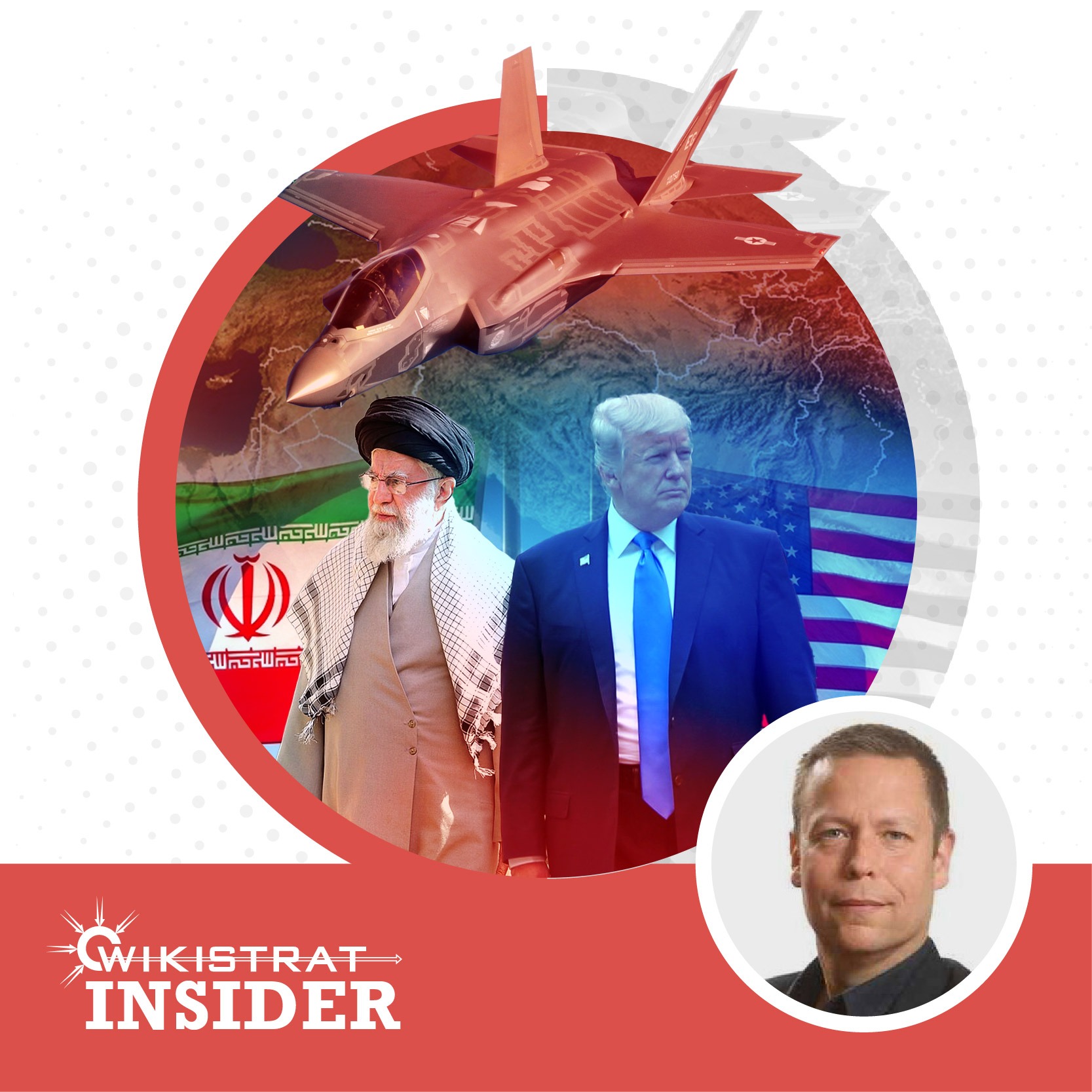
Ep 49On the Brink of War: Iran, the US, and What Comes Next
Iran's Supreme Leader faces what may be the defining decision of his tenure: capitulate to American demands and risk looking weak enough to invite future attacks, or absorb a U.S. military strike and bet that the regime survives it. According to Dr. Raz Zimmt, Khamenei has already made his choice. On February 27, Wikistrat hosted one of Israel's leading Iran experts, who laid out why a military strike is now more likely than an agreement, and what it could mean for the regime, the region, and the balance of power in the Middle East
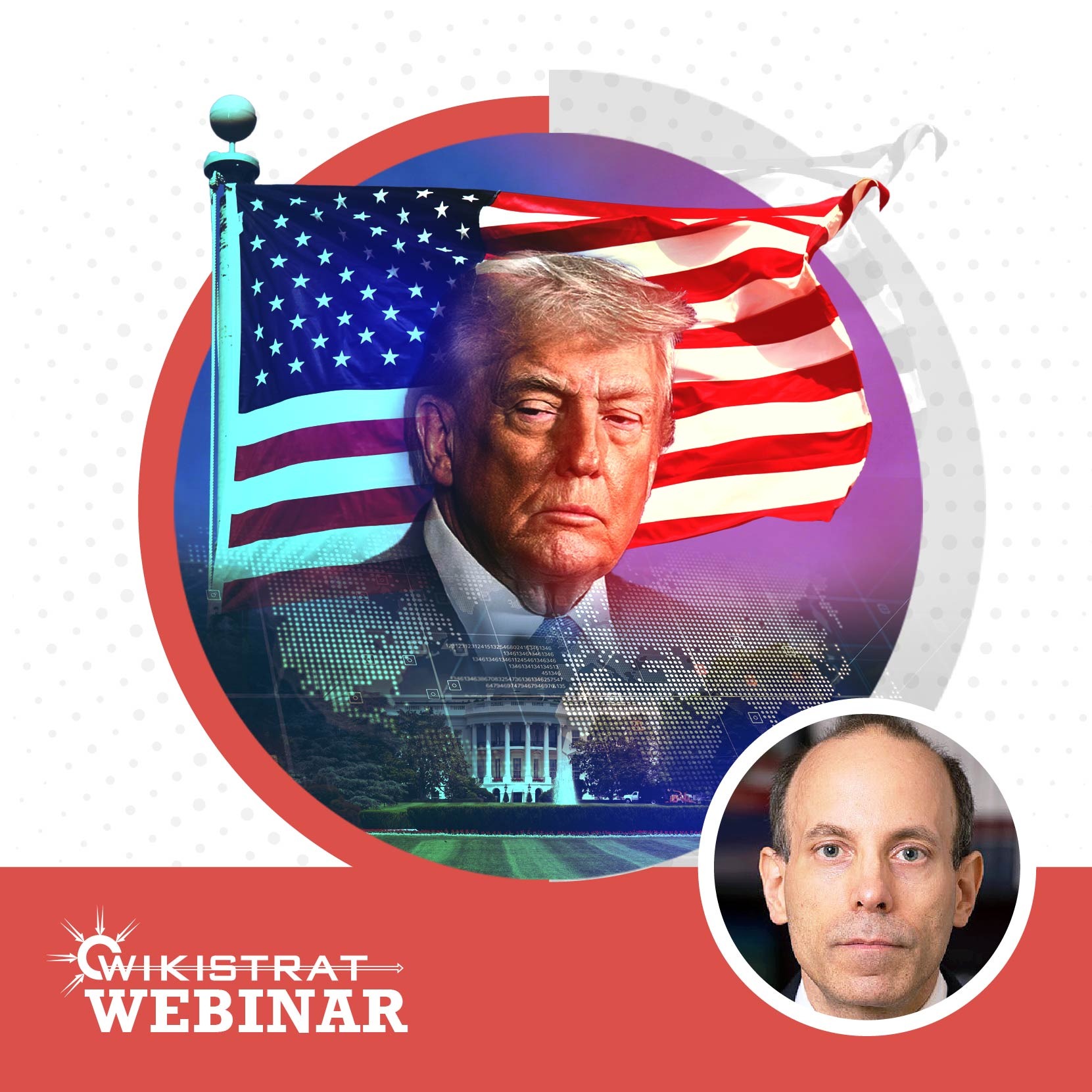
Ep 48Marking One Year of Trump 2.0
Donald Trump's second presidency has reached the one-year mark without triggering the catastrophic outcomes many predicted, yet without resolving the fundamental tensions his approach creates. Alliances strained but held, tariffs disrupted trade flows without collapsing them, and military force was deployed in sharp bursts rather than prolonged campaigns. On January 26, Wikistrat hosted Dr. Richard Weitz to examine what this volatile first year reveals about Trump's foreign policy instincts, how the world has adapted to his methods, and what the remainder of his term is likely to look like
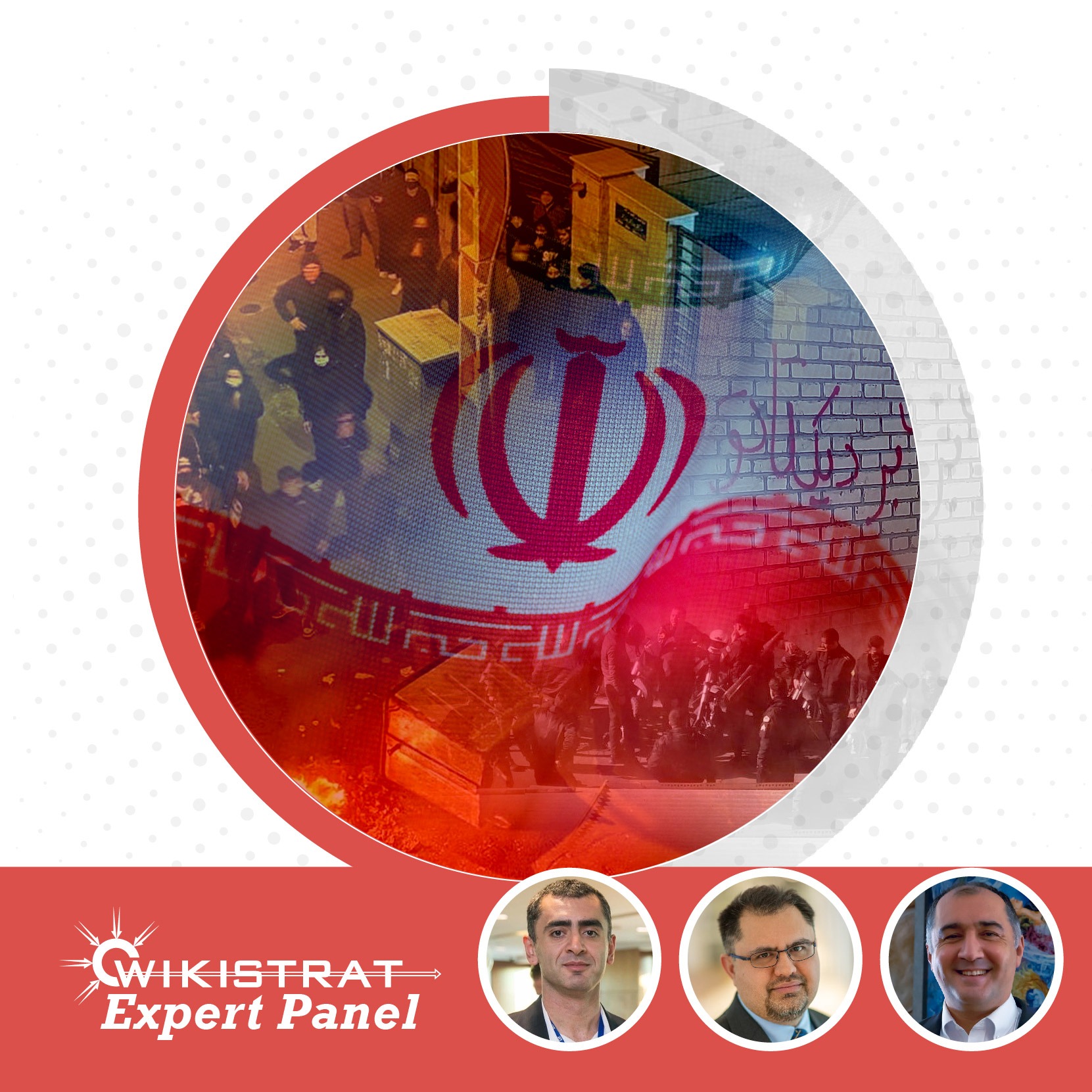
Ep 47Iran's Social Unrest and the Future of the Regime
Thousands dead, internet blackouts, and a currency in freefall. When merchants in Tehran's upscale Monet Street shopping center closed their stores on December 28, 2025, they triggered something the Islamic Republic hadn't faced in its 46-year history: sustained, nationwide protests met with unprecedented brutality. With over 2,000 casualties, a collapsing economy, and an 86-year-old Supreme Leader whose refusal to compromise has left the regime with no exit strategy, Iran finds itself at a crossroads. On January 13, Wikistrat convened Iran experts Dr. Sina Azodi, Ahmad Hashemi, and Alex Vatanka to assess whether this time is different and what comes next
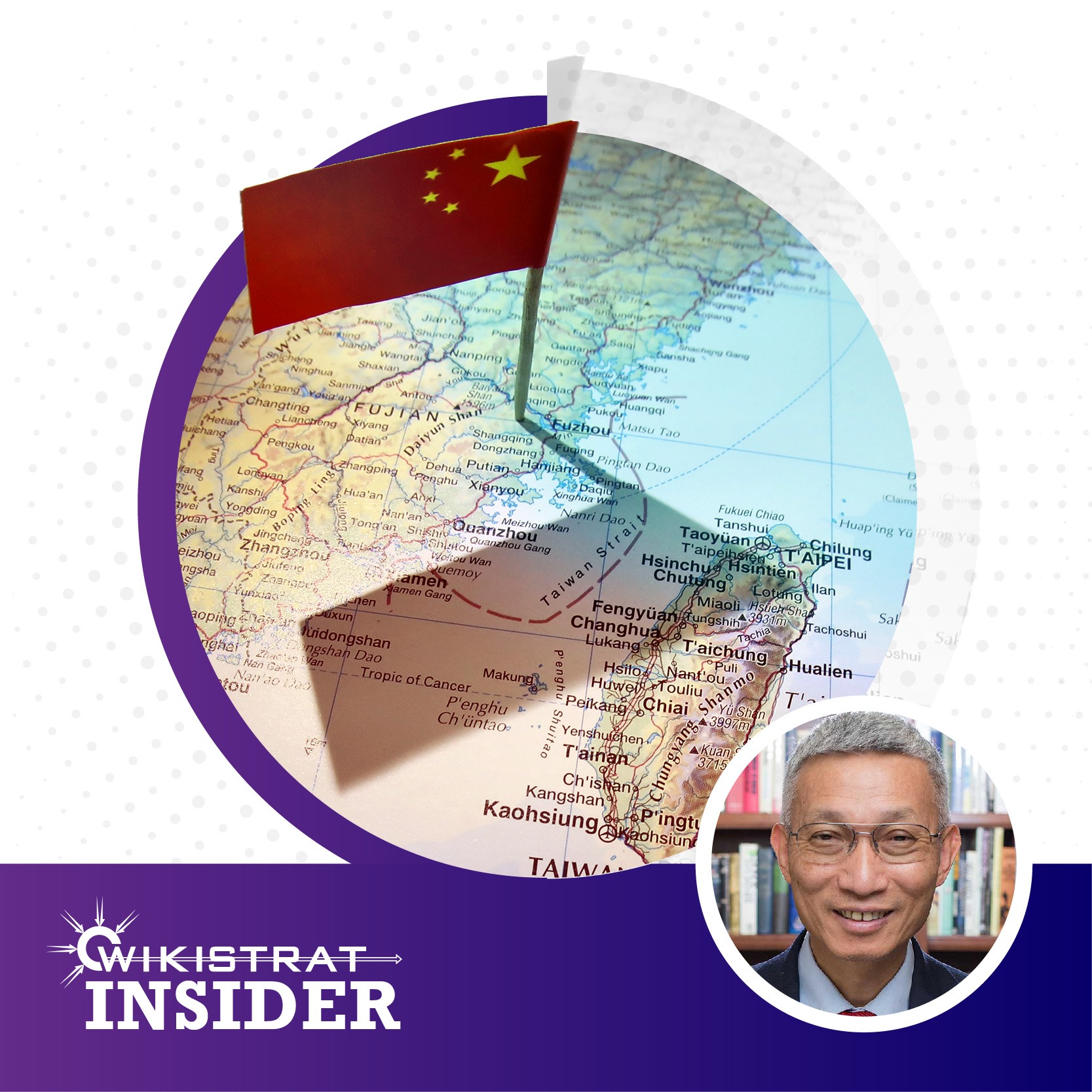
Ep 46Is Taiwan the Next Ukraine? Scenarios for the Decade Ahead
Taiwan is not on the brink of a 2027 invasion; the real danger is unfolding quietly in the gray zone. In this NYU Riskathon-exclusive webinar, Dr. Minxin Pei dismantles the widely accepted countdown narrative and argues that Beijing's most destabilizing tools are already in motion, from coercive military drills to pressure on undersea cables and commercial air routes. The flashpoint ahead is not the date everyone cites, but the political convergence of 2028, when elections in Taipei, Washington, and across the region collide with a Chinese leadership refining hybrid warfare options that stop short of war yet carry strategic shockwaves. Far from a distant scenario, Pei frames this as an imminent shift in the Taiwan Strait, concealed within procedural escalations that markets and policymakers are still treating as routine
Ep 45Exploring the Geopolitics of Rare Earth Minerals
Rare earth elements sit at the heart of the clean energy transition, digital infrastructure, and advanced weapons, yet public debate often treats them as mysterious and easily weaponized. China dominates the processing and magnet making stages that turn raw ore into strategic inputs, which fuels concern in Washington, Brussels, Tokyo, and elsewhere about overdependence on a single supplier. On December 4, Wikistrat hosted critical minerals expert Dr. Marina (Yue) Zhang to examine how China built this position, what it really means for energy security and defense, and how the rare earths market could evolve over the next years
Ep 44Tehran at Crossroads: Where Is Iran’s Nuclear Strategy Heading?
Iran’s nuclear program has reached a moment where every path carries risk. Advancing toward a weapon could ignite a larger war, stepping back from enrichment would look like capitulation, and holding the line preserves a status quo that is already eroding under sanctions, strikes, and regional setbacks. On November 26, Wikistrat hosted Iran expert Dr. Sina Azodi to examine why Tehran is stuck between these choices, how the leadership interprets pressure at home and abroad, and what the next phase of Iran’s nuclear strategy is likely to look like
Ep 43Understanding Russia's Strategy
Putin isn't losing the war in Ukraine, at least, not in his own mind. He believes time is on his side, that Russia can outlast Ukrainian resistance, and that the West's resolve will crack before his does. But is this confidence justified, or the product of an authoritarian system that can no longer tell him the truth? On November 5, Wikistrat hosted Mark Galeotti to examine the Kremlin's actual objectives, the forces shaping Russian decision-making, whether Moscow's strategy is working, and what might force Putin to change course

Ep 42Future-Proofing: How Can Companies Survive Through Times of Political Uncertainty?
Leaders today face not one crisis at a time, but overlapping shocks that feed into each other, what scholars call a polycrisis, creating uncertainty that demands new ways of thinking. In the latest Wikistrat podcast episode, Prof. Benjamin Laker drew from cases of companies that rerouted supply chains to bypass sanctions and firms that leapfrogged competitors by hiring during recessions to present counterintuitive principles for navigating this uncertainty
Ep 41Information Warfare in the 21st Century
Information warfare has evolved from leaflets and radio broadcasts to botnets, deepfakes, and AI-generated content. While the technologies have changed, the objective remains constant: shaping perceptions, sowing doubt, and undermining trust. On September 9, Wikistrat hosted information warfare and cyber operations expert Ari Ben Am to analyze one of the most pressing security challenges of our time

Ep 40Lessons from Four-Day Workweek Experiments
Is the four-day workweek a passing workplace perk, or the blueprint for how we will work in the future? As trials spread from startups to local governments, the question is no longer hypothetical. On September 8, Wikistrat hosted Professor Brendan Burchell, who led the UK’s groundbreaking 2022 trial, the world's largest four-day workweek experiment at the time, to share insights on what actually happens when organizations make this transition, from the psychological mechanisms that drive success to the implementation factors that determine whether companies thrive or struggle.
Ep 39Agentic AI & the Future of Work
As agentic AI moves from research labs into real-world organizations, will it simply enhance how we work—or fundamentally rewrite what work means? On July 28, Wikistrat hosted Matthew Versaggi, White House Presidential Innovation Fellow in AI, to explore how cognitive agents, built on decades of neuroscience-inspired architecture, are reshaping leadership, strategy, and human relevance in the workplace. In a world where machines can reason, act, and collaborate, the line between tool and teammate is quickly blurring—and those who fail to adapt may be left behind.Matthew Versaggi is a White House Presidential Innovation Fellow in Artificial Intelligence (AI), and a patent‑holding specialist in cognitive technology and quantum computing. He has led Fortune‑5 healthcare AI initiatives, founded the "College of Artificial Intelligence," and has over 30 years of experience as an entrepreneur and technologist.
Ep 38China, Russia, and the Israel-Iran War: Cracks in the Axis?
As Israel and Iran traded blows in a 12-day war, would Moscow and Beijing truly stand by Tehran if conflict escalated—or is the “Axis” narrative more myth than reality? On July 10, Wikistrat hosted Dr. Richard Weitz, Senior Fellow and Director of the Center for Political-Military Analysis at the Hudson Institute, to assess how China and Russia reacted, what they learned, and what this reveals about the limits of their partnership with Iran. In a world of shifting alliances, the future of this axis may shape the balance of power far beyond the Middle East.
Ep 37The War in Ukraine: Entering a New Phase?
Following headlines of front-line shifts and rumors of a “new phase” in the Ukraine war, is the conflict truly evolving—or are these continuations of deeper, long-term trends? On July 3, Wikistrat hosted Keir Giles to assess Russia’s trajectory, Ukraine’s resilience, and Europe’s readiness in a grinding war that may shape the continent’s future. As the conflict slips from the headlines, the stakes for Europe’s security are only growing.Keir Giles is a Senior Consulting Fellow with the Russia and Eurasia Programme at Chatham House, specializing in Russian military strategy, information warfare, and cybersecurity. He is the author of Russia’s War on Everybody (2022), and co-author of the 2023 Chatham House report How to End Russia’s War on Ukraine.
Ep 36After the Ceasefire: What's Next for Israel-Iran?
Following Israel’s strikes on Iran’s nuclear and missile programs, Tehran faces its most vulnerable moment since the Islamic Revolution. Its long-standing deterrence doctrine—built on proxies, missiles, and nuclear ambiguity—has been severely shaken. How will Iran’s leadership navigate this crisis while Khamenei’s frail rule nears its end? On June 30, Wikistrat hosted a podcast with Dr. Raz Zimmt to assess Iran’s post-war strategy, internal calculations, and regional trajectory.Dr. Raz Zimmt is Director of the Iran and Shiite Axis Research Program at the Institute for National Security Studies (INSS) and a Research Fellow at the Alliance Center for Iranian Studies at Tel Aviv University.
Ep 35The Israel-Iran Crisis: Assessing Future Scenarios
Following a 12-day military confrontation between Israel and Iran, the Islamic Republic faces a critical inflection point. Its long-standing national defense doctrine—centered on regional alliances, missile deterrence, and nuclear ambiguity—has been significantly strained. How will Tehran respond to the setbacks in its regional posture, domestic cohesion, and international standing? On June 26, 2025, Wikistrat hosted a pocast with Dr. Sina Azodi to assess Iran’s strategic outlook, internal dynamics, and post-conflict options.Dr. Sina Azodi is the Program Director of the M.A. in Middle East Studies at George Washington University’s Elliott School of International Affairs, where his research and teaching focus on Iranian foreign policy, nuclear non-proliferation, and U.S.–Iran relations.
Ep 34Syria in Flux - What Lies Ahead?
Six months after the collapse of the Assad regime, Syria is undergoing one of the most complex transitions in the modern Middle East. Can a fragile new government navigate economic collapse, armed fragmentation, and shifting regional dynamics—without triggering renewed instability? On June 25, 2025, Wikistrat hosted a podcast with Charles Lister to explore the trajectory of Syria’s post-Assad transition and the evolving balance of power within and beyond its borders.Dr. Charles Lister is a senior fellow and Director of the Syria Initiative at the Middle East Institute (MEI), specializing in Syria, terrorism, and insurgency across the Levant. He also serves as a consultant to the United Nations’ International, Impartial and Independent Mechanism (IIIM) for Syria and as an expert witness and advisor on counterterrorism for U.S., European, and Australian law enforcement and judicial bodies.
Ep 33The Israel-Iran War
As Israel’s military campaign against Iran’s nuclear program escalates, Tehran’s leadership is grappling with existential questions about survival, deterrence, and internal cohesion. Can the Islamic Republic navigate simultaneous military strikes, elite fractures, and growing public dissent—without conceding on the very ideological pillars that have sustained it for decades? On June 20, 2025, Wikistrat hosted a podcast with Dr. Saeid Golkar, a leading expert on Iran, to explore the regime’s strategic calculations, the shifting mood inside Iran, and the potential endgames now confronting one of the region’s most entrenched autocracies.Dr. Saeid Golkar is a senior fellow at the Tony Blair Institute for Global Change.
Ep 32The Iran Nuclear Negotiations: Closer to a Deal—or a Strike?
Less than 48 hours before Israel launched Operation Rising Lion on Iran’s nuclear sites on June 13, 2025, Wikistrat hosted a podcast featuring Dr. Raz Zimmt, Director of the Iran & Shiite Axis Program at INSS. In a strikingly prescient comment, he warned, “we’re at the closest point to military escalation that we ever were.” He went on to dissect the diplomatic flashpoints, Iran’s probable responses, and the potential ripple effects on regional stability. This timely session—including Q&A—is an essential watch for anyone seeking expert insight into the strategic escalation.Dr. Raz Zimmt is Director of the Iran and Shiite Axis Research Program at the Institute for National Security Studies (INSS) and a Research Fellow at the Alliance Center for Iranian Studies at Tel Aviv University.
Ep 31What’s Next for India-Pakistan Relations?
Following the most intense escalation between India and Pakistan in decades, the region faces a critical juncture. The Pahalgam terror attack ended four years of relative calm, prompting large-scale Indian airstrikes and cross-border exchanges that tested deterrence thresholds. What does this crisis reveal about the future of India-Pakistan relations and the risk of renewed conflict? On June 9, Wikistrat hosted a podcast with Michael Kugelman to examine the drivers of escalation, regional implications, and potential trajectories ahead.Michael Kugelman is a leading expert on South Asia, with a focus on India, Pakistan, and Afghanistan. He writes Foreign Policy's weekly South Asia Brief, offering insights on the region’s political and security dynamics.
Ep 30Brazil, the BRICS, and the War in Ukraine: Are Russia’s Relationships in Danger? - Fabricio Vitorino
How will the Russian invasion of Ukraine affect Brazil's election, and what does it have to do with Donald Trump? Why doesn't BRICS's future look too bright? And what can Australia's COVID-19 policy teach us about China-Brazil relations? In the latest Wikistrat Insider episode, Fabricio Vitorino discusses Brazil's reaction to the war in Ukraine, as well as the country's relationship inside BRICS, with the US, and with China.Fabricio Vitorino holds a master's degree in Russian culture from the University of São Paulo. He also works as a journalist, covering technology, education, and trending events around the world.
Ep 29US Energy Diplomacy in Light of the War in Ukraine - Dr. Umud Shokri
One month since the Russian invasion of Ukraine, it has become clear that the war in Ukraine is changing global energy geopolitics. To understand the role of energy in the US response to the Ukraine Crisis, Adam Hoffman and Dr. Rebecca Molloy of Wikistrat interviewed Dr. Umud Shokri, who is a Washington-based senior foreign policy and energy geopolitics advisor, on US energy diplomacy, the impact of the Russian invasion of Ukraine on the global energy market, and the Biden administration's energy policy.
Ep 28A Global Food Supply Crisis: The Consequences of Russia's Invasion of Ukraine - Dr. David Laborde
As the Russian occupation of Ukraine continues, millions of lives face immediate danger, even thousands of miles away from the battle zones. In our latest Wikistrat Insider episode, Dr. David Laborde explains how the "breadbasket of Europe" serves a major part in feeding Africa and parts of Asia; why sunflower oil plays an underrated role; what countries will be the first victims; how the current policies resemble the COVID-19 model; and most importantly, how this new situation will be a test in solidarity for the entire world.Dr. David Laborde is a Senior Research Fellow at the International Food Research Institute. His research includes globalization, international trade, and environmental issues.
Ep 27The Russian Invasion of Ukraine - Valeriy Akimenko
On February 24, Russia initiated a full-scale invasion of Ukraine by land, sea, and air. It was the biggest attack by one state against another in Europe since World War II and a confirmation of the West's worst fears. In our latest podcast episode, we invited Valeriy Akimenko to talk about Russia's strategy, the consequences of the sanctions, and the nuclear threat
Ep 26A Hundred-Year-Old Race to the Future: Where Are the Autonomous Cars? - Andrew Morris
Self-driving cars have long been dreamed about - but also explored and researched. And yet, almost a century after the first experiments were conducted, and despite the fact that the required technology is already developed, autonomous cars have yet to hit the roads. What is preventing their implication and why is it taking so long?In our latest "Wikistrat Insider" episode, Andrew Morris, a Professor of Human Factors in Transport Safety, explains how these cars will impact not only our streets - but even our relationships, why there's a greater chance a Scandinavian country, rather than Japan, will be the first to go "autonomous," and why we won't own a car in the future.Andrew Morris is a Professor of Human Factors in Transport Safety and leads the Behavioural Safety Research and Injury Prevention Research Group at Loughborough University.
Ep 25EU Migrants Crises: The Winners, the Losers, and What the Future Holds - Elisabeth Braw
It is one of the worst humanitarian crises happening right now. Thousands of people want to enter the EU, and one country claimed it could make it happen. In this Wikistrat Insider episode, we dive into the crisis at the Poland-Belarus border. Elisabeth Braw joins us to talk about the EU's commitment to human rights, non-traditional weapons, and what we can expect from the newly elected German government on migration issues.Elisabeth Braw is a journalist and a Resident Fellow at the American Enterprise Institute, where she focuses on defense against emerging national security challenges, such as hybrid and gray zone threats.
Ep 24The Geopolitics of Semiconductors: A Series of Unfortunate Events or a Predetermined Crisis? - Jan-Peter Kleinhans
As we have been experiencing a global semiconductor shortage for over a year, it's difficult to put a finger on a single industry that hasn't been affected in some way, from automobiles to ICUs. But can it be exclusively attributed to natural disasters and COVID-19 or was it inevitable, and even predictable? Will new players change the market, and what side will they take on the US-China rivalry? And how might the current China-Taiwan tensions disrupt the industry even more? In our latest Wikistrat Insider episode, Jan-Peter Kleinhans takes us behind the scenes of the semiconductor worldJan-Peter Kleinhans is Director of Technology and Geopolitics at Stiftung Neue Verantwortung e.V. Think Tank. His focus is on the analysis of semiconductors as a strategic asset, how resilient the global semiconductor value chain is to external shocks, and how Europe's competitiveness can be strengthened.
Ep 23The Way the Wind Blows: The Future of Renewable Energy - Dr. Andreas Schroeter
What does wind energy have to do with electric cars? Is building grids really cheaper than having batteries? Why is offshore wind energy about to have a renaissance? And why will the dream of relying on renewable energy remain a dream for the next 30 years? In light of the recent COP26 summit, we asked Dr. Andreas Schroeter, former Executive Vice President and Managing Director at DNV GL, to share some insights about the future of renewable energy in our latest podcast episode
Ep 22China’s Energy Crisis: Why Is China Dependent on Coal? - David Fishman
The worst power shortages in decades and coal prices that keep hitting record highs are only a part of the crisis that China is facing right now. As the world's second-largest economy is suffering from an acute energy supply deficiency, we talked to David Fishman, an expert on China's energy sector, in order to learn the possible solutions, how the world will be affected by the crisis, whether there any winners from this situation or only losers, and when we will see an end to it.
Ep 21Climate Change and Nuclear Power - David Hess
As the issue of climate change becomes more and more pressing, the search for a cleaner and more sustainable source of energy intensifies. But is heavily stigmatized nuclear power the optimal solution? And if so, is it limited to first-world countries only? And how important is the problem of radioactive waste? In Wikistrat's latest podcast episode, Marina Guimaraes interviewed David Hess, a policy analyst at the World Nuclear Association, to discuss civilian nuclear power in light of climate change.David Hess is a policy analyst at the World Nuclear Association. His work focuses on nuclear technology, climate change, sustainable development, and helping the nuclear industry meet the challenge of providing 25% of global electricity by 2050.
Ep 20China after the Fall of Kabul and Implications on US-China Relations - Michael Kugelman
In our latest Wikistrat podcast episode, Marina Guimaraes interviewed Michael Kugelman, a South Asia expert, to discuss China in light of the recent events in Afghanistan. They discussed what we can expect for the future of China-Taliban relations and how the fight against potential terrorist threats can make the US and China work together.
Ep 19Saudi-Taliban Relations After the Fall of Kabul - Neil Quilliam
Wikistrat's Head of Middle East Desk, Adam Hoffman, interviewed Dr. Neil Quilliam, an expert on the Gulf States and Saudi foreign policy, to discuss Saudi-Taliban relations, the implications of a Taliban-ruled Afghanistan for Saudi Arabia, and Saudi-US relations after the US withdrawal from Afghanistan
Ep 18The Implications of US Withdrawal From Afghanistan - Michael O'Hanlon
President Biden has announced that US troops will withdraw from Afghanistan by September 11. This decision has several implications for US foreign policy and also for Afghanistan's internal political conflicts and interests. To talk about these implications, Wikistrat's podcast host Marina Guimaraes interviewed Michael O'Hanlon. Mr. Michael O'Hanlon is a senior fellow and director of research in Foreign Policy at the Brookings Institution, where he specializes in US defense strategy, the use of military force, and American national security policy.
Ep 17Digital Transformation and Future of Work in 2025
Wikistrat's CEO, Oren Kesler, hosted a round table on new technologies that will shape the future of work in the year 2025. The panel discussed how the technologies adopted and adapted during COVID-19 are transforming human connection at work and their structural consequences for the workforce as we know it today. This panel is part of a simulation conducted by Wikistrat for Accenture on the future of work in the year 2025. The distinguished panel included three top experts, each offering a unique perspective: Dr. Kelly Monahan is an organizational behaviorist who studies the future workforce at Accenture Research and author of How Behavioral Economics Influences Management Decision-Making: A New Paradigm (2018, Academic Press/Elsevier Publishers).Steve Rader is the founder of Crowd Resources Consulting, with 32 years of experience at NASA with the last eight years of those with the agencies' open innovation efforts.Soumyasanto Sen is a Digital HR, Transformation & People Analytics leader with over 18 years of experience in advisory and author of the book Digital HR Strategy.
Ep 16Smart Cities in the Middle East - A Sign of Progress or Just Buzzwords?
This week's topic is Neom, a smart city in the Tabuk Province of northwestern Saudi Arabia. The city is part of Mohammed bin Salman's Saudi Vision 2030 program and is planned to attract investment, technology and also work as a tourist destination to the kingdom. This week's guest is Kristian Ulrichsen, who is a Baker Institute Fellow for the Middle East, who has worked as a senior Gulf Analyst at the Gulf Center for Strategic Studies and as a co-director of the Kuwait Program on Development.
Ep 15Nigeria and the Road Ahead - Omololu Fagbadebo
According to the African Development Bank, Nigeria's economy is likely to grow 1.5% in 2021 and 2.9% in 2022. After the protests in October 2020, the country has received growing media attention. Now, with the increase of kidnappings and terrorism, as well as a new four-year record of inflation, the path ahead for Nigeria seems uncertain.To talk about this issue, Wikistrat's podcast host, Marina Guimaraes, spoke with Omololu Fagbadebo. Mr. Fagbadebo is a Research Fellow at the Durban University of Technology, South Africa, and was the Press Secretary to the Speaker, Osun State House of Assembly, Nigeria, from 1999 to 2003.
Ep 14From India’s Perspective: The Impact of COVID-19 on India’s Foreign and Domestic Policy
The second wave of coronavirus infections to hit India has been devastating. At one point, India was responsible for more than half of the world’s daily COVID-19 cases and recorded about 400,000 cases in a single day. The situation has been exacerbated by only a tiny portion of the population being fully vaccinated.The impact of the pandemic on India was seen both domestically and regionally. India promoted coordination in its immediate neighborhood amidst the first wave. However, the second wave has led India to prioritize its own interests, as was showcased in Indian Foreign Minister S. Jaishankar’s recent visit to the US, which included ensuring vaccine production and distribution as well as the quest for an intellectual property rights waiver on vaccines.What are the short- and long-term implications on India’s politics, economy, and society? What further actions to mitigate the crisis can we expect to see from India’s leadership? Einat Elazari from Wikistrat interviewed Poornima Balasubramanian and Niranjan Marjani, experts in India’s foreign and domestic affairs, to discuss this in Wikistrat's latest podcast episode.
Ep 13Breaking Down the Belarusian Crisis - Mathieu Boulegue
Ryanair flight FR4978 was traveling from Athens to Vilnius, in Lithuania on May 23rd, but was forced to land in Minsk, Belarus after the pilot was told that there was a bomb on the plane. However, the real reason behind the forced landing was that opposition leader, Pavel Latushko was on board. He was sent to jail in Minsk.International community members have already expressed their discontent. The EU has announced an airspace ban against Belarus, promising more sanctions, and this reaction did not please Russia's President, Vladimir Putin.What does this latest development mean for the EU's relationship with Belarus, and what can we expect from the future of these ties? Wikistrat interviewed Matthieu Boulegue, an expert in Eurasian security, defense, and Russia's foreign and domestic policy to discuss this in Wikistrat's latest podcast episode.
Ep 12The 2021 protests and the future of Colombia - Dr. Andrei Gomez-Suarez
On April 28th, Colombians took their frustration to the streets. One year after the COVID-19 pandemic hit, citizens started protesting against tax reform proposals announced by President Ivan Duque. The protests have been happening for over three weeks and human rights abuses have been reported. What does that mean for Colombia? How might these events impact the country's elections happening next year? Wikistrat's podcast host, Marina Guimaraes spoke with Dr. Andrei Gomez-Suarez to learn more. Dr. Andrei Gomez-Suarez is Senior Research Fellow in the Centre for Religion, Reconciliation and Peace at the University of Winchester. He is a Colombian writer, international relations scholar, and peace practitioner, currently living in Oxford. He specializes in conflict resolution, peace negotiations, transitional justice, reconciliation, and dialogue.
Ep 11Analysis of the COVID-19 crisis in Brazil - Dr. Fernando Brancoli
In this Wikistrat Podcast, Wikistrat's CEO, Oren Kesler interviewed Dr. Fernando Brancoli an expert on Brazil politics and society to discuss the trifecta of crises in Brazil - health, economic, and political, resulting from the COVID-19 pandemic.Dr. Fernando Brancoli is an Associate Professor at the Federal University of Rio de Janeiro, Brazil, and an associate researcher at the Orfalea Center at the University of California, Santa Barbara, US. His areas of expertise are Brazil's political and social affairs.
Ep 10Exploring Behavioral Shifts in the Mining Industry - Therese Muirhead and David Andrews
Wikistrat's CEO, Oren Kesler spoke with Therese Muirhead and David Andrews from Sandpit Innovation to discuss the future of the mining industry in light of increased social awareness and rapid technological developments. This podcast took place as part of Wikistrat's "Digital Mining in the Age of Social Awareness" simulation which recently concluded.Therese Muirhead is a Senior Consultant at Sandpit. She is a psychologist and organizational development specialist with 14 years of experience working within and for organizations across various industries.David Andrews is a Principal Mining Engineer at Sandpit, and he has more than 20 years of experience in the mining industry, most of it with Vale, where he was the Director for Mining Technical Services at the North Atlantic region.
Ep 9The Revival of the Iran Nuclear Deal - Implications on the Gulf's Security?
On March 17 Wikistrat hosted a webinar that discussed the implications of a renewed US engagement with Iran for the Gulf States. The webinar deliberated how a return to the JCPOA might impact the Gulf States and regional stability in the Gulf, what the US role in the Middle East should be in this context, and how US-Iran talks might impact the Gulf States' relations with Iran.Participants:Dr. Raz Zimmt, Research Fellow at the Institute for National Security Studies (INSS) ;Dr. Kristian Ulrichsen, Baker Institute Fellow for the Middle East;Dr. Sebastian Sons, Researcher at the Center for Applied Research in Partnership with the Orient Institute in Bonn, Germany;Dr. Annelle Sheline, Research Fellow for the Middle East at the Quincy Institute for Responsible Statecraft.The event was moderated by Adam Hoffman, Head of Middle East Desk at Wikistrat, and Dr. Rebecca Molloy, Director of Wikistrat's Middle East Community.
Ep 8The Future of the Mining Industry - Prof. Alan Bye
Wikistrat's CEO, Oren Kesler spoke with Mining and Digital Value Chains expert, Prof. Alan Bye to discuss the future of the mining industry in light of increased social awareness and rapid technological developments. This podcast took place as part of Wikistrat's "Digital Mining in the Age of Social Awareness" simulation which recently concluded.Prof. Alan Bye is the Director of Digital Value Chains at Curtin University and founder of Imvelo Pty Ltd. Alan has 22 years of operational and executive experience focusing on the innovation and integration of the mining value chain. Alan was most recently Vice President Technology at BHP, in his global role he was accountable for execution of major innovation programs across 5 commodity value chains covering both digital and extractive technologies.