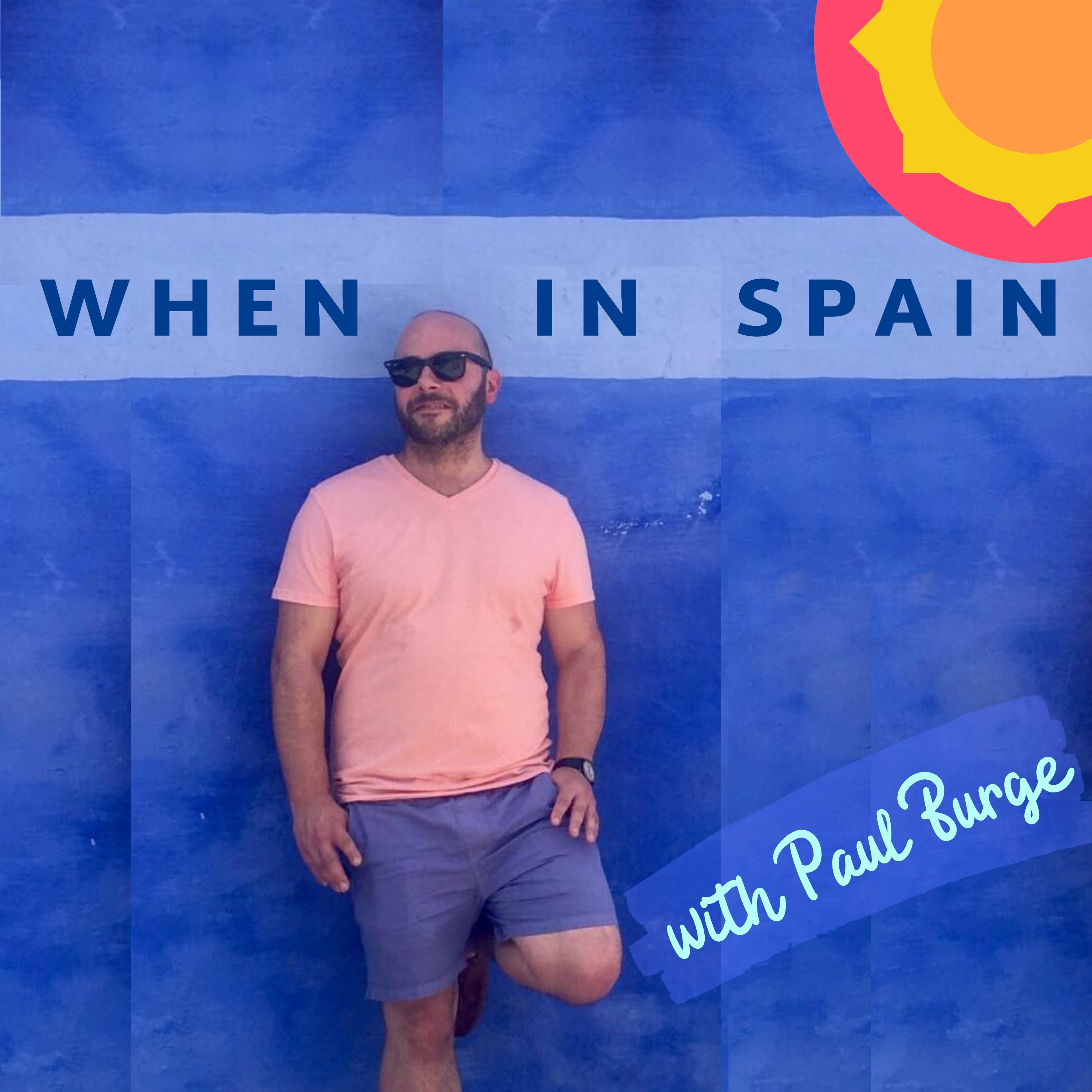
When in Spain
109 episodes — Page 3 of 3
Spain vs England – The cultures collide! WIS012
Spain vs England! I examine the cultural differences between Spain and the UK with the help of some of my Spanish friends who live and work in England. Let battle commence! I chat with Paula, Diego, Pedro and English ally Dan about the pros and cons of living in Spain and the UK, the things we miss, annoyances and frustrations from each country and share our observations on jobs, working conditions, corruption, families, politeness, bureaucracy, daily routines, the going out culture, outdoor life, food, weather and Brexit. Also in this episode I look ahead to future podcast interview with Ben Curtis from the Notes in Spanish and Notes from Spain podcast shows and talk about the new When in Spain Facebook group. FOLLOW WHEN IN SPAIN 📺Subscribe on YouTube: https://bit.ly/2SOrKrL 👨👩👧👦Join the When in Spain Facebook Group. https://bit.ly/2CdDgWt 📷Follow on Instagram to see photography from across Spain. https://bit.ly/2D5p6IJ WANT TO SUPPORT WHEN IN SPAIN? 💚 Make a small donation $1-$5 via Patreon: https://www.patreon.com/wheninspain WHAT IS WHEN IN SPAIN? The When in Spain show is a weekly podcast show, recorded in Madrid (and other parts of Spain) where l talk about my ‘warts and all’ observations and insights on life and culture on the Iberian peninsular. In each episode of the podcast I cast an eye on everyday life, people, places, politics, culture and history and attempt to give an honest opinion from a Brit who has a love-frustration relationship with Spain. I shall attempt to dispel or indeed confirm Spanish stereotypes through my ramblings and see if I can delve into the Spanish psyche. ……………………………………………………………………………………………………… WHO THE HELL IS WHEN IN SPAIN? I’m Paul Burge, former BBC journalist, Hispanophile and Manchego lover. A Brit, born in Oxford and living in Spain for almost 5 years. I currently live in the centre of Madrid.
How to open a Spanish bank account – WIS011
This week I explain how to open a Spanish bank account whether you’re a resident or non-resident in Spain. I look at the process and paperwork whether opening an account online or in person. I give a rundown of the major Spanish banks and some lesser-known ones and assess what kind of bank accounts are available and talk about how to avoid hidden bank charges and fees. All that plus my own personal experience of opening an account with CaixaBank. FOLLOW WHEN IN SPAIN 📺Subscribe on YouTube: https://bit.ly/2SOrKrL 👨👩👧👦Join the When in Spain Facebook Group. https://bit.ly/2CdDgWt 📷Follow on Instagram to see photography from across Spain. https://bit.ly/2D5p6IJ WANT TO SUPPORT WHEN IN SPAIN? 💚 Make a small donation $1-$5 via Patreon: https://www.patreon.com/wheninspain WHAT IS WHEN IN SPAIN? The When in Spain show is a weekly podcast show, recorded in Madrid (and other parts of Spain) where l talk about my ‘warts and all’ observations and insights on life and culture on the Iberian peninsular. In each episode of the podcast I cast an eye on everyday life, people, places, politics, culture and history and attempt to give an honest opinion from a Brit who has a love-frustration relationship with Spain. I shall attempt to dispel or indeed confirm Spanish stereotypes through my ramblings and see if I can delve into the Spanish psyche. ……………………………………………………………………………………………………… WHO THE HELL IS WHEN IN SPAIN? I’m Paul Burge, former BBC journalist, Hispanophile and Manchego lover. A Brit, born in Oxford and living in Spain for almost 5 years. I currently live in the centre of Madrid.
The Spanish NIE & Residency – Why you need it and how to get it WIS010
In Episode Ten of When in Spain I look at how to get the all-important Spanish NIE number and residency card. In this show I’ll explain why it’s crucial to get the NIE if you’re planning to live, work, study, retire or buy a property in Spain. I’ll guide you through the application process and talk about the frustrations and challenges of getting hold of this piece of paperwork that is the key to living in Spain. FOLLOW WHEN IN SPAIN 📺Subscribe on YouTube: https://bit.ly/2SOrKrL 👨👩👧👦Join the When in Spain Facebook Group. https://bit.ly/2CdDgWt 📷Follow on Instagram to see photography from across Spain. https://bit.ly/2D5p6IJ WANT TO SUPPORT WHEN IN SPAIN? 💚 Make a small donation $1-$5 via Patreon: https://www.patreon.com/wheninspain WHAT IS WHEN IN SPAIN? The When in Spain show is a weekly podcast show, recorded in Madrid (and other parts of Spain) where l talk about my ‘warts and all’ observations and insights on life and culture on the Iberian peninsular. In each episode of the podcast I cast an eye on everyday life, people, places, politics, culture and history and attempt to give an honest opinion from a Brit who has a love-frustration relationship with Spain. I shall attempt to dispel or indeed confirm Spanish stereotypes through my ramblings and see if I can delve into the Spanish psyche. ……………………………………………………………………………………………………… WHO THE HELL IS WHEN IN SPAIN? I’m Paul Burge, former BBC journalist, Hispanophile and Manchego lover. A Brit, born in Oxford and living in Spain for almost 5 years. I currently live in the centre of Madrid.
Thinking Spanglish – A survivor’s guide to learning Spanish
Anyone learning Spanish will tell you that the journey is long and full of twists and turns. Are you struggling to maintain motivation? Tongue-tied when it comes to talking? Does Spanish grammar fill you with dread? Should you even bother to learn Spanish if you’re living in Spain or planning to move here? In episode eight of When in Spain I talk to Melissa from Thinking Spanglish, a blog described as a ‘survivors guide’ to learning Spanish, aimed at helping people overcome their fear of learning and improving Spanish. We answer the ‘dreaded’ question, should you or shouldn’t you learn Spanish to live in Spain? Can you survive without it…? We find out. We also look at language learning resources, the challenges and rewards of learning Spanish, some top tips for language learning and of course we’ll compare our own language learning experiences and insights. Melissa’s long held ambition to live abroad brought her to Spain four and a half years ago – via her passion for flamenco and her various stints teaching in Spain. We met up on a sunny terrace in Madrid. Apologies for some of the loud and unexpected traffic noise on what’s usually a quiet street. Here are a few links to resources mentioned in the episode: http://www.bbc.co.uk/languages/spanish/mividaloca/ http://thinkingspanglish.com/best-flashcard-app-spanish-in-a-month-elky-entertainment-llc-version-1-28/ FOLLOW WHEN IN SPAIN 📺Subscribe on YouTube: https://bit.ly/2SOrKrL 👨👩👧👦Join the When in Spain Facebook Group. https://bit.ly/2CdDgWt 📷Follow on Instagram to see photography from across Spain. https://bit.ly/2D5p6IJ WANT TO SUPPORT WHEN IN SPAIN? 💚 Make a small donation $1-$5 via Patreon: https://www.patreon.com/wheninspain WHAT IS WHEN IN SPAIN? The When in Spain show is a weekly podcast show, recorded in Madrid (and other parts of Spain) where l talk about my ‘warts and all’ observations and insights on life and culture on the Iberian peninsular. In each episode of the podcast I cast an eye on everyday life, people, places, politics, culture and history and attempt to give an honest opinion from a Brit who has a love-frustration relationship with Spain. I shall attempt to dispel or indeed confirm Spanish stereotypes through my ramblings and see if I can delve into the Spanish psyche. ……………………………………………………………………………………………………… WHO THE HELL IS WHEN IN SPAIN? I’m Paul Burge, former BBC journalist, Hispanophile and Manchego lover. A Brit, born in Oxford and living in Spain for almost 5 years. I currently live in the centre of Madrid.  
Why are Spaniards so obsessed with milk? Linguistically speaking!
In episode six of When in Spain I go out to buy milk and get thinking about the strange and colourful Spanish expressions that revolve around milk or ‘la leche’. Learn some of these milky expressions in this episode and find out about their origins. Also, I take a look ahead to future When in Spain shows and talk about collaborations, subjects and themes you can expect to hear in the coming months. More colour pieces on culture and lifestyle, more practical how to guides and a look at the darker side of Spanish life. FOLLOW WHEN IN SPAIN 📺Subscribe on YouTube: https://bit.ly/2SOrKrL 👨👩👧👦Join the When in Spain Facebook Group. https://bit.ly/2CdDgWt 📷Follow on Instagram to see photography from across Spain. https://bit.ly/2D5p6IJ WANT TO SUPPORT WHEN IN SPAIN? 💚 Make a small donation $1-$5 via Patreon: https://www.patreon.com/wheninspain WHAT IS WHEN IN SPAIN? The When in Spain show is a weekly podcast show, recorded in Madrid (and other parts of Spain) where l talk about my ‘warts and all’ observations and insights on life and culture on the Iberian peninsular. In each episode of the podcast I cast an eye on everyday life, people, places, politics, culture and history and attempt to give an honest opinion from a Brit who has a love-frustration relationship with Spain. I shall attempt to dispel or indeed confirm Spanish stereotypes through my ramblings and see if I can delve into the Spanish psyche. ……………………………………………………………………………………………………… WHO THE HELL IS WHEN IN SPAIN? I’m Paul Burge, former BBC journalist, Hispanophile and Manchego lover. A Brit, born in Oxford and living in Spain for almost 5 years. I currently live in the centre of Madrid.
Where to rent in Spain – Cities & Neighbourhoods WIS005
In episode five of When in Spain we take a whistle-stop tour around Spain’s four biggest cities in search of the best neighbourhoods to rent rooms and apartments. We compare Barcelona, Madrid, Valencia and Seville. Paul gives a flavour of dozens of neighbourhoods, from the hip and trendy, to the studenty, traditional and family friendly. He also looks at what kind of properties you can expect to find and sorts the cheap from the expensive. There should be something to cater for every taste whether it’s Barcelona’s traditional Barrio de Gracia, Madrid’s classy Salamanca district or Seville’s home of flamenco in Triana. Let’s go house hunting! FOLLOW WHEN IN SPAIN 📺Subscribe on YouTube: https://bit.ly/2SOrKrL 👨👩👧👦Join the When in Spain Facebook Group. https://bit.ly/2CdDgWt 📷Follow on Instagram to see photography from across Spain. https://bit.ly/2D5p6IJ WANT TO SUPPORT WHEN IN SPAIN? 💚 Make a small donation $1-$5 via Patreon: https://www.patreon.com/wheninspain WHAT IS WHEN IN SPAIN? The When in Spain show is a weekly podcast show, recorded in Madrid (and other parts of Spain) where l talk about my ‘warts and all’ observations and insights on life and culture on the Iberian peninsular. In each episode of the podcast I cast an eye on everyday life, people, places, politics, culture and history and attempt to give an honest opinion from a Brit who has a love-frustration relationship with Spain. I shall attempt to dispel or indeed confirm Spanish stereotypes through my ramblings and see if I can delve into the Spanish psyche. ……………………………………………………………………………………………………… WHO THE HELL IS WHEN IN SPAIN? I’m Paul Burge, former BBC journalist, Hispanophile and Manchego lover. A Brit, born in Oxford and living in Spain for almost 5 years. I currently live in the centre of Madrid.
Renting a room or apartment in Spain WIS004
In episode four of When in Spain I look at how to rent a room or apartment in Spain. The focus is on Spain’s four biggest cities, Madrid, Barcelona, Valencia and Seville. Click on the player above to listen to the episode and hear all about my ups and downs of finding somewhere to rent in Madrid. In the podcast episode I look at when, and where to start your search. Price ranges and advice on things to watch out for. FOLLOW WHEN IN SPAIN 📺Subscribe on YouTube: https://bit.ly/2SOrKrL 👨👩👧👦Join the When in Spain Facebook Group. https://bit.ly/2CdDgWt 📷Follow on Instagram to see photography from across Spain. https://bit.ly/2D5p6IJ WANT TO SUPPORT WHEN IN SPAIN? 💚 Make a small donation $1-$5 via Patreon: https://www.patreon.com/wheninspain I’ve seen apartments/rooms like the one in the photo below described as ’boutique living’. Don’t fall for any shit. It’s dog eat dog out there. When should you start your search for a room or apartment? Well, if at all possible avoid looking in September/October. This is the time of year when everybody and their dog is looking. There are a few reasons for this. University students, Erasmus students and teachers starting the Auxiliares program along with many other English teachers all arrive ahead of the start of the academic year and frantically begin their house hunt. January can also be a busier time of year to find rental accommodation. Also, people who have secured a new job just before or during the summer tend to start their contracts in September. If they’re relocating from a different city they’ll also be lining up to view properties. How long will it take to get a roof over your head? Longer than you might think. My advice would be to allow yourself at least two or three weeks. It took me a few months to find somewhere I was happy with. It’s very unlikely that you’re going to find somewhere in just a few days. When should you look? June or July is a good bet. August, possibly. Although many landlords and people looking for housemates tend to go away on holiday during August. November is another good time to look, once things have quietened down a bit, although there may well be less availability. The spring is also a good bet, March – May. Where to conduct your online search… Here are a list of the most common property search websites in Spain. Idealista – The most popular site, many agencies tend to advertise here. Pisos.com Mil Anuncios – A classifieds website for just about anything but also includes rooms and apartments Fotocasa Badi – A bit like Airbnb and relatively new. Homeowners looking to rent out their spare room advertise on here. They tend to be quite fussy. Other options for conducting your search Locutorios Locutorios are small neighbourhood internet cafes/international calling points. They often sell mobile phone accessories and carry out repairs. Many of them have noticeboards that carry adverts for rooms and apartments in the local area. Locutorios are becoming less common, especially in city centres but you might get lucky. Flyers Walls and signposts are often plastered in flyers advertising properties, they’ll have a little tear-off phone number. Also, as you wander the street look up at balconies which often carry signs “Se Alquila’ For rent, and carry a phone number. Worth a try, especially as these are often posted by somebody from the ‘older’ generation let’s say, and who may not be internet savvy and therefore may be offering a bargain! Agencies Agencies can take the legwork out of the search, especially if you’re short on time. However they are usually very expensive. Most people use agencies if they’re looking for an entire apartment and not sharing. One option is to find other like-minded sharers and go in on an apartment together. You’ll usually end up paying at least one month’s rent in agency fees, money which you can kiss goodbye to. On top of that they’re usually much stricter in terms of deposits and may ask for two or sometimes three month’s rent upfront as a deposit plus the first month’s rent to enter the property. You might even find that because you’re not a Spanish citizen that they will ask for a guarantor known as ‘un aval’, either a bank or someone you know. They will also likely ask for proof of regular income such as a permanent job contract or three month’s of payslips. So you can see that using an agency can be expensive and complicated if you’ve only just arrived in Spain and haven’t started working yet. Social Media This goes without saying. There’s usually at least one Facebook group for foreigners or ‘Expats’ looking to rent properties in major towns and cities. Many groups advertise individual rooms and are also a good way of meeting other people who are looking for future housemates. It’s a good idea to post a mini advert about yourself and what you’re looking for. Usually you’ll get at least a few responses. Here are a few… Madrid Habitaciones – Pisos de alquiler en Madrid Rent a Room in Madrid COMPAÑER
Spain’s Festivals – La Feria de San Isidro
Hola a todos!! In episode three of When in Spain I guide us around the Feria de San Isidro in Madrid and take in the sights, sounds and flavours. To hear all the festivities hit play on audio player above and immerse yourself in all things Feria! FOLLOW WHEN IN SPAIN 📺Subscribe on YouTube: https://bit.ly/2SOrKrL 👨👩👧👦Join the When in Spain Facebook Group. https://bit.ly/2CdDgWt 📷Follow on Instagram to see photography from across Spain. https://bit.ly/2D5p6IJ WANT TO SUPPORT WHEN IN SPAIN? 💚 Make a small donation $1-$5 via Patreon: https://www.patreon.com/wheninspain What is a feria? In short, it’s an annual festival that takes place in practically every town and city across Spain between Spring and Autumn. Each feria usually lasts around a week and celebrates local traditions, music, dance, food and some of them have religious connections, such as Madrid’s San Isidro. If you’re thinking of the cliché of flamenco, girls in bright coloured figure-hugging dresses wearing flowers in their hair… My advice for anyone who’s never been to a feria. Go! It’a raucous induction to the España profunda – deep Spain. In my opinion some of the most lively and colourful ferias are in Andalucía in southern Spain. If you’re thinking of the cliché of flamenco, girls in bright coloured figure-hugging dresses wearing flowers in their hair and jugs of Rebujito flowing like water, (Sherry mixed with lemonade) this is as close as it gets. The big ones in the south are in Seville, Malaga, Cordoba and Cadiz. Other ferias Of course, not all ferias are made in Andalucía. There are a few others which are well-known. Pamplona in the north of Spain has it’s San Fermín, the one where people get chased by bulls through the city’s narrow streets, usually resulting in more than few drunken guiris getting trampled. Valencia, on the east coast has Las Fallas, a deafening feria where towering fallas – cardboard and paper-mâché figures are burned to the ground and a daily explosive barrage of coordinated firecracker and fireworks displays called Mascletàs take place. Not for the faint-hearted. Bring your earplugs. Once was enough for me. …and in Madrid, San Isidro So where does that leave Madrid’s Feria de San Isidro? Meh. For me it falls short. Nada especial. I only say this because considering Madrid is the capital city, its feria is pretty low-key which surprises me considering Madrid is renowned for its buzzing nightlife and lively ambiente. That said, it certainly has a charm to it and a curious history. San Isidro (Saint Isidore) is the Catholic Patron Saint of Madrid and the Patron Saint of Farmers. (1070 – 1130?) His full name is San Isidro el Labrador, Saint Isidore the worker of the land. He was born in Madrid in around 1070, to poor but very devout parents and spent his life as a farm hand for the wealthy landowner Juan de Vargas. The miracles of San Isidro Isidore married Maria Torribia, known as Santa María de la Cabeza and they had one son together. On one occasion, their son fell into a deep well but following the prayers of his parents, the water of the well miraculously rose to ground-level, bringing the child with it. Another story recounts how he had the help of angels in the fields. Isidro used to attend Mass before going to work. One day, his fellow farm workers complained to the boss that Isidro always turned up late for work. His boss decided to take it upon himself to do some detective work and found Isidro busy praying in a local church while an angel was ploughing the fields for him. On another occasion, Isidro’s master saw an angel ploughing either side of him, making Isidro’s work equal to that of three of his fellow field workers. Despite their humble lifestyle San Isidro and Santa Maria were well-known for their generosity and used to give food to the poor. An an act of kindness that is reflected in today’s feria when cocido madrileño – (Madrid stew) is given out for free. Where to celebrate San Isidro? In the podcast I started off in the Jardín de las Vistillas just off Segovia Street and a short walk from Madrid’s Royal Palace and Almudena Cathedral. This a park/square flanked by bars and restaurants where the procession of Gigantes y Cabezudos, giants and bigheads culminates, followed by bands and people dancing dressed in traditional dress or de chulapo/a. Then to Plaza de Isabel IIright next to the capital’s opera house to watch ‘older’ couples dancing Chotis, a traditional country or folk dance. It’s believed that the dance originated from Bohemia in central Europe, somehow via Scotland hence the name Chotis which is a corruption of Scottish. In Madrid, chotis were danced for the first time in 1850 at the Royal Palace during a party organised by Queen Isabel II. Apparently it became so popular that Madrileños decided to make it their own. The classic place to set-up camp for San Isidro is in the Pradera de San Isidro a huge hillside park a hop skip and a jump over the Mazanares ‘River’. Here you’ll fin
Exploring Madrid’s barrios – La Latina neighbourhood
In this, the second episode of the When in Spain podcast show I take you for a wander around La Latina, the neighbourhood where I live and one of the oldest and most famous in Madrid. We’ll take in the sights and sounds while I talk about everyday life in the barrio and offer a few personal observations. I’d say it’s still a pretty authentic barrio as far as central Madrid neighbourhoods go. It’s bustling, noisy, beautiful and gritty. It’s an everyday working neighbourhood that still manages to retain its own Spanish, Madrileñan and Castizo* identity despite a growing influx of tourists, immigrants and international students. All seem to rub shoulders fairly oblivious to each other’s existence – so far. However, the clank of plastic wheels from ‘carry-on’ suitcases as they’re dragged across the barrio’s maze of cobbled streets is becoming an increasingly common sound and one that often wakes me up and 6am. As abuelos pass away their apartments are being sold on and devoured by gangs of Airbnb-ers. This has pushed up rents and house prices in the last couple of years and, in turn gradually transforming La Latina into one of the more expensive areas in the Spanish capital. That said, this ain’t no Barceloneta or Bario Gotico, two of Barcelona’s most tourist-plagued, once-traditional neighbourhoods. On a daily basis for me it looks and feels like this. You’ll see a couple of octogenarians propping up a bar, grunting to each other as they pick at a slab of tortilla and sip thimbles of beer, their bespectacled eyes glued to a bulky TV clamped to the wall. Outside two elderly and perfectly coiffured Madrileñas will be conversing with each other at shouting volume, both clutching bags of fruit and veg from the greengrocer. As they stand directly in the middle of the pavement, knowingly blocking everybody’s passage, they’ll be comparing the price, quality and texture of said produce before moving on to comparing their seasonal ailments. Suddenly, Horns will start blaring. (The car horn is a favoured means of communication in Spain, it’s loud you see.) Half a dozen drivers are suddenly and furiously punching and pumping the steering wheel of their Seat Ibiza because two kids have run into oncoming traffic, chasing a rat-like dog, who in turn is chasing a ball. Cries will ring out from drivers and passersby ¡¡Ostia!! and ¡¡Joderrrr!! The thing I love about La Latina and Madrid and Spain in general, is that people still value and remain loyal to independent shops. The neighbourhood is home to dozens and dozens of independent greengrocer, butchers, bakers, grocery shops, pharmacies and ironmongers, all of which add character. It reminds me of growing up in England in my childhood. Some of these places are reminiscent of the 1950s. La Latina is also home to El Rastro Madrid’s biggest flea market. An amazing assault on the senses (Especially on a Sunday morning) and a treasure trove of antiques, clothes, bric-a-brac, art, music, household goods, plants and flowers. “La Latina, is very Castizo, and you’re gonna love it”. That’s what my old flatmate Laura told me when I first moved into the barrio. I’ve since been trying to work out what Castizomeans. It’s a word that gets bandied around a lot. Castizo (Spanish: [kasˈtiθo] or [kasˈtiso]) is a Spanish word with a general meaning of “pure”, “genuine” or representative of its race (from the Spanish: “casta”). The feminine form is castiza. So, anything can be castizo – but you only really know it when you see it, feel it, smell it, or hear it. It’s hard to explain. Despite all its antiquated charm La Latina has tonnes of modern, ‘trendy’ bars and restaurants. It’s definitely a place where people come to go out. Out out. You could easily drink and dine in a different venue every night for weeks, maybe months on end without leaving the neighbourhood. Old ‘tasca’ bars like the one I go to in episode 2, stand cheek by jowl with hip craft beer ‘socials’, there’s the traditional and modern in abundance. Ah, one small detail. The name ‘La Latina’ where does it come from? The neighbourhood was named after an old hospital, long since gone, founded in 1499 by Beatriz Galindo ‘La Latina’ 1465 – 1534. She was a writer and teacher of Queen Isabella of Castile and was viewed as one of the most educated women of her time. She was nicknamed La Latina for her skill in Latin and wrote poetry a commentary on Aristotle. Onwards around the neighbourhood… Some of the places where I went in episode 2… I had a quick Vermú in El Camarote, Plaza de La Puerta de Moros A fairly traditional and basic bar/cafe for cheap food and drink. Open all day for breakfast, lunch, dinner and late night drinks. Then on to two bustling and pretty squares, Plaza de los Carros and though to Plaza de la Paja. Next stop El Jardín del Príncipe de Anglona. One of my favourite quiet corners of Madrid to sit and contemplate. The former private walled garden of a house belonging to the Prince of Anglona. The house is still ther