
What's Your Problem?
217 episodes — Page 1 of 5
Did AI Write This?
Blockers | A Preview of Michael Lewis's New Audiobook
Can We Defeat Deepfakes?
The Printing Press: The Invention Built on Debt and Sin… from Business History
Should We Pause AI?
Bonus: Planning for Your Financial Future
Can a Robot Kill Fish Humanely?
Using Satellites to Prevent Famines
The Quantum Shift in Biomedical Discovery from Smart Talks with IBM
Can We Slow Down Aging?
Why Doctors Use Evidence but Managers (Mostly) Don’t
The Job AI Was Supposed to Kill
How China Won the Car Industry
Using Viruses to Fight Disease
How AI Could Reduce Inequality
Racing Wildfires to Warn the Public
How AI Could Actually Make the World Better
Finding Meaning (and Money) in the AI Age
Using Pokémon Go to Map the World
The Company Where Everyone Has Their Own AI Agent
Inventing a Better Apple
Welcome to Carbon Cowboys | From Drilled
Building a Business on the Moon
Building a Robot People Actually Want
Turning Waste Wood Into Buildings
The Great Fusion Debate: How Far Away Are We Really?
How SharkNinja Keeps Going Viral

From Here We Go Again With Kal Penn: Will Technology Replace Us? with Jacob Goldstein
Hello What's Your Problem? listeners! We'd like to introduce you to a show we think you might like. Here We Go Again is a brand-new podcast, where actor, author, comedian, and former White House staffer Kal Penn takes today’s trends and headlines and asks: Why does history keep repeating itself? In this episode: A.I. is automating thousands of jobs. But humanity's fear of technology replacing us is nothing new. Journalist and podcaster Jacob Goldstein tells Kal the story of the original Luddites during the early 1800s Industrial Revolution. They talk about how technology changes, how those changes reshape our work, and who historically gets protected and who gets left behind.See omnystudio.com/listener for privacy information.

S1 Ep 172Growing New Livers to Save Lives
Michael Hufford is the co-founder and CEO of LyGenesis, a company working on a new treatment for end stage liver disease. Michael’s problem is this: How do grow a new liver inside the body of a sick patient? In this episode, Michael explains: The liver's unique power of regeneration The organ transplant crisis and how regeneration can help The science behind using lymph nodes to grow new organs The status of LyGenesis’ human trials The future of regenerative medicine Learn more: Check out LyGenesis’ website Connect with us: Follow Jacob Goldstein on LinkedIn, X and Instagram Email us at [email protected] Follow Pushkin on Instagram, LinkedIn or X Listen to Jacob’s other show, Business History To listen to the show early and ad free, sign up for Pushkin+ See omnystudio.com/listener for privacy information.
S1 Ep 170Can the US Break China's Grip on Rare Earths?
Rare earth elements are inside pretty much everything with an on-off switch: Phones, laptops, cars. Even missiles. And China controls the world’s supply of components made from rare earths. David Abraham is the author of the book “The Elements of Power: Gadgets, Guns, and the Struggle for a Sustainable Future in the Rare Metal Age.” David’s problem is this: What should the US do about China's chokehold on the rare earth supply chain? According to Abraham, the current US strategy could wind up costing billions of dollars without solving the problem. And he has a big idea for what we should do instead. In this episode, David explains: How China quietly built a monopoly on rare earth materials Why the 2010 Japan crisis was a preview of today's trade war China’s export restriction strategy Why the problem goes deeper than billions in spending can solve Why electric vehicles are the key to reinvigorating the U.S. rare earth industry Learn more: Find David at his website Buy the Elements of Power Check out David’s article in the new Republic Connect with us: Follow Jacob Goldstein on LinkedIn, X and Instagram Email us at [email protected] Follow Pushkin on Instagram, LinkedIn or X Listen to Jacob’s other show, Business History To listen to the show early and ad free, sign up for Pushkin+See omnystudio.com/listener for privacy information.
S1 Ep 169How Quantum Computers Could Change the World
Ben Bloom is the co-founder and CEO of Atom Computing, a company building quantum computers out of individual atoms. Ben’s problem is this: How do you build a quantum computer that is actually useful for everything from discovering new medicines to building better batteries? In this episode, Ben explains: The practical applications of quantum computers Atom Computing’s approach using individual neutral atoms as qubits The key engineering challenge of scaling while maintaining accuracy The playbook for commercializing quantum computing Connect with us: Follow Jacob Goldstein on LinkedIn, X and Instagram Email us at [email protected] Follow Pushkin on Instagram, LinkedIn or X Listen to Jacob’s other show, (00:21:23) Business History To listen to the show early and ad free, sign up for Pushkin+ See omnystudio.com/listener for privacy information.
S1 Ep 168Fighting Wildfires from Space
Jonny Dyer is the founder and CEO of a satellite company called Muon Space. The company’s first big project is a satellite constellation called FireSat. Jonny’s problem is this: How do you capture data from space to help manage wildfires around the world in near-real time? In this episode, Jonny explains: How smartphone tech inspired smaller, cheaper satellites. Why fighting wildfires is still shockingly primitive. Why China does not distinguish between commercial and military satellites. Why data centers in space might arrive by 2035. Connect with us: Follow Jacob Goldstein on LinkedIn, X and Instagram Email us at [email protected] Follow Pushkin on Instagram, LinkedIn or X Listen to Jacob’s other show, Business History To listen to the show early and ad free, sign up for Pushkin+ See omnystudio.com/listener for privacy information.

S1 Ep 167The Killer We Refused to See
After bacteria were discovered, it took scientists 200 years to figure out that they cause disease. If scientists had made the link sooner, hundreds of millions of lives could have been saved. In his recent book So Very Small, Tom Levenson, a professor of science writing at MIT, tells the amazing story of germ theory, and argues that our worldview can prevent us from seeing what is right in front of us – even when lives are at stake.See omnystudio.com/listener for privacy information.

S1 Ep 166The Startup Run by AI Agents
EEvan Ratliff co-founded a publishing startup in 2011. Now he hosts a podcast called Shell Game. In the latest season of the show, Evan creates a company run by AI agents. The project is absurdly funny – Evan calls it an office satire – but it also illuminates the power and limits of AI agents.See omnystudio.com/listener for privacy information.

S1 Ep 165Can AI Help Solve Alzheimer’s?
Patrick Hsu is the co-founder of Arc Institute, which is integrating AI models and biological research. Patrick’s problem is this: How can you use AI to make biological research more efficient – and ultimately to find cures for Alzheimer’s and other complex diseases?See omnystudio.com/listener for privacy information.

S1 Ep 164The New Science of Preventing Heart Attacks
In recent decades, medical research has fundamentally changed how we think about heart disease. This fresh understanding has opened up new ways to prevent heart attacks. Eric Topol is a cardiologist and the founder of the Scripps Research Translational Institute in San Diego. Eric’s problem is this: How can doctors use recent technological developments to do a better job at preventing heart attacks?See omnystudio.com/listener for privacy information.

S1 Ep 163From Solar Pumps to Everything: Building a Market from Scratch
ESamir Ibrahim is the co-founder and CEO of SunCulture. When he started the company, he thought he was solving a simple problem: How do you sell solar-powered pumps to help poor farmers irrigate their land? It turned out, he was working on something much bigger: How do you help poor farmers get richer, and create a giant new market from scratch?See omnystudio.com/listener for privacy information.

S1 Ep 162Mass-Producing Stem Cells to Cure Disease
Nabiha Saklayen is the co-founder and CEO of Cellino. Nabiha’s problem is this: How can you make personalized stem cell therapies quickly and cheaply? Induced pluripotent stem cells, or IPSCs, have shown tremendous promise as treatments for illnesses like Parkinson’s, leukemia, and heart disease. On today’s show, Nabiha explains why IPSC manufacturing is still mostly done by hand, how her background in physics and lasers led her into biology, and what it takes to try and build tiny, automated cell factories.See omnystudio.com/listener for privacy information.

S1 Ep 161Building a Self-Driving Tractor to Change the Future of Food
Please take our survey https://tinyurl.com/wyplistenersurvey about the show! Tell us what you want to hear, and what would make it better. Tim Bucher is a farmer, and the founder and CEO of Agtonomy. Tim's problem is this: How do you build an autonomous tractor that can work for specialty crops like grapes, olives, apples, and almonds? On today’s show, Tim explains what makes certain farming processes so difficult to automate, and how autonomy may soon change how we eat.See omnystudio.com/listener for privacy information.

S1 Ep 160We’re Going to Need a Better Boat
Mitch Lee is the co-founder and CEO of Arc Boats. Mitch's problem is this: How do you build competitively priced electric boats?On today’s show, Mitch explains why water makes electrification so hard, the techno-economic puzzle of building giant battery packs, and how Arc’s high-end wake sport boat opened the door for a new generation of hybrid-electric tugboats.See omnystudio.com/listener for privacy information.

S1 Ep 159The App Where Strangers Lend Each Other Money
ENina Mohanty is the founder and CEO of Bloom Money. Nina’s problem is this: How do you build an app to help immigrants manage their money? On today’s show, Nina talks about bringing a saving and lending practice into the 21st century, navigating regulators who’ve never seen anything like it, and what global traditions can teach us about the future of money.See omnystudio.com/listener for privacy information.
Introducing Business History: The Edison Invention People Don't Talk About
bonusWhat's Your Problem? host Jacob Goldstein has a new show: Business History. How did Hitler’s favorite car become synonymous with hippies? What got Thomas Edison tangled up with the electric chair? Did someone murder the guy who invented the movies? On Business History, Jacob and fellow former Planet Money host Robert Smith examine the surprising stories of businesses big and small and find out what you can learn from those who founded them.In this episode: The inventor that transformed America and the world. Thomas Alva Edison registered over one thousand patents before he died in 1931—and we can thank him for advances in electric power, communications technology, music recording and even the movies. But his biggest breakthrough doesn't get nearly enough attention. In many ways, Edison invented modern inventing. Jacob and Robert they trace the life story of a scrappy young boy with bad hearing who almost singlehandedly invented R&D. This is the first of a three part series on Edison—if you want to hear the full series, ad-free, right now, join Pushkin+ on the Business History show page on Apple Podcasts or at pushkin.fm/plus. Find Business History (00:10) on Apple Podcasts, Spotify, YouTube, or wherever you get podcasts.See omnystudio.com/listener for privacy information.

S1 Ep 158Using Sound Waves to Destroy Tumors
EMike Blue is the CEO of HistoSonics. The company recently developed a device that uses ultrasound to destroy tumors.On today’s show, Mike talks about how a garage-built prototype became an FDA-approved machine; changing the company’s story after a failed clinical trial; and why he loves being a salesman but hates most sales pitches.See omnystudio.com/listener for privacy information.
S1 Ep 157From Desert Robots to Driverless Trucks
Chris Urmson is the co-founder and CEO of Aurora, a company trying to bring autonomous driving to commercial trucking.Chris led a team at the 2004 DARPA challenge that launched the autonomous vehicle industry. Then he held a senior role at Google’s self-driving car project, which later became Waymo.On the show today, he talks about the long arc of autonomous driving, why he left Google, and the future of autonomous trucking.See omnystudio.com/listener for privacy information.
S1 Ep 156Is the Future of Fresh Water Under the Sea?
Michael Porter is the Chief Technology Officer of OceanWell.Michael's problem is this: How can you desalinate water at the bottom of the ocean – and deliver it to land at a cost that’s competitive with other sources of fresh water?On today’s show, Michael explains how he built OceanWell’s prototype in his kitchen, what it takes to make a system that’s less disruptive to marine life, and why innovations from the oil and gas industry are making his work possible.See omnystudio.com/listener for privacy information.

S1 Ep 155Could Home Batteries Save the Grid?
Justin Lopas is the COO and co-founder of Base Power, a battery and power company based in Texas. Justin’s problem is this: How can you deliver more energy to more people without having to build so much more grid?On today’s show, Justin explains why the grid needs a major upgrade, and how putting batteries next to homes could help. Also: what Texas’ embrace of renewable energy could mean for the future of power in the U.S.See omnystudio.com/listener for privacy information.

S1 Ep 154Building a Better Public Bathroom
Fletcher Wilson is the CEO and co-founder of Throne Labs.Fletcher’s problem is this: How can you create public toilets that people actually want to use?On today’s show, Fletcher explains how his company is trying to make public bathrooms cleaner, safer and more accessible. The conversation also points to a bigger idea: why it’s so hard for cities to build and maintain pretty much anything.See omnystudio.com/listener for privacy information.

S1 Ep 153Could Autonomous Diggers Unleash a Building Boom?
Boris Sofman is the co-founder and CEO of Bedrock Robotics. Boris' problem is this: How do you teach machines not just to drive, but also to work: to grade roads, move heavy objects and dig big holes at construction sites. On today’s show, Boris talks about how his work at Waymo led him to found Bedrock, and he explains how autonomous construction equipment could help unleash an American building boom.See omnystudio.com/listener for privacy information.
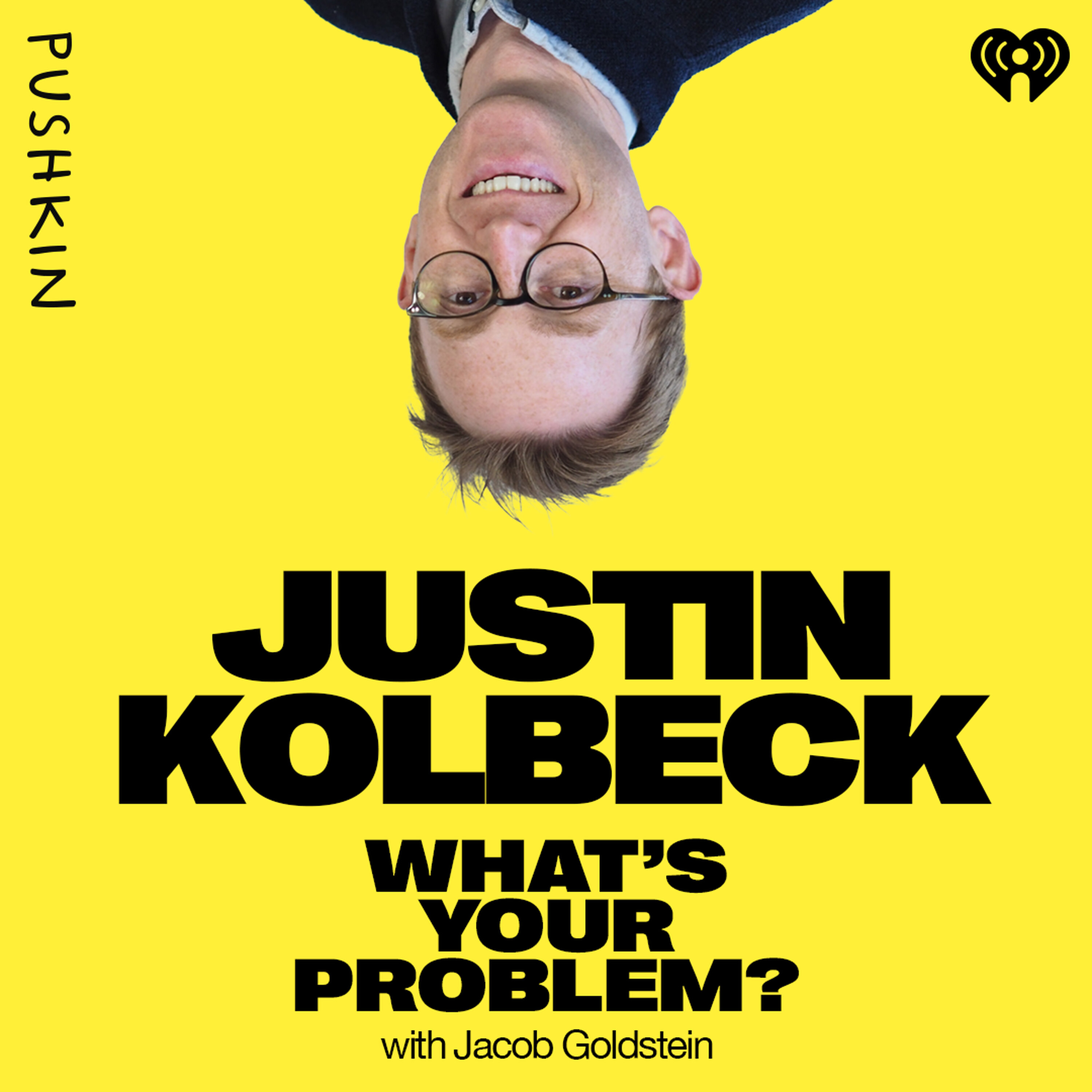
S1 Ep 152Growing Meat from Cells
Justin Kolbeck is the co-founder and CEO of Wildtype, a company making seafood without killing fish. Their first product is cultivated salmon, which is made from real salmon cells that are grown in a stainless steel vat.Justin's problem is this: How to sell no-kill, vat-grown salmon for the same price, or better, as wild-caught salmon? On today’s show, Justin explains how Wildtype will scale, what’s going on across the cultivated and plant-based meat industries, and how new state bans on cultivated foods are shaping the future of his business.See omnystudio.com/listener for privacy information.

S1 Ep 151The Ordinary Stuff Behind Technological Breakthroughs
Ed Conway is an economics journalist and author of the book “Material World: The Six Raw Materials that Shape Modern Civilization.” On today’s show, Ed reveals how three of those often-overlooked materials—iron, copper, and sand—shaped human advancement from the Renaissance to the Industrial Revolution to the digital age. And he talks about what they mean for our future.See omnystudio.com/listener for privacy information.