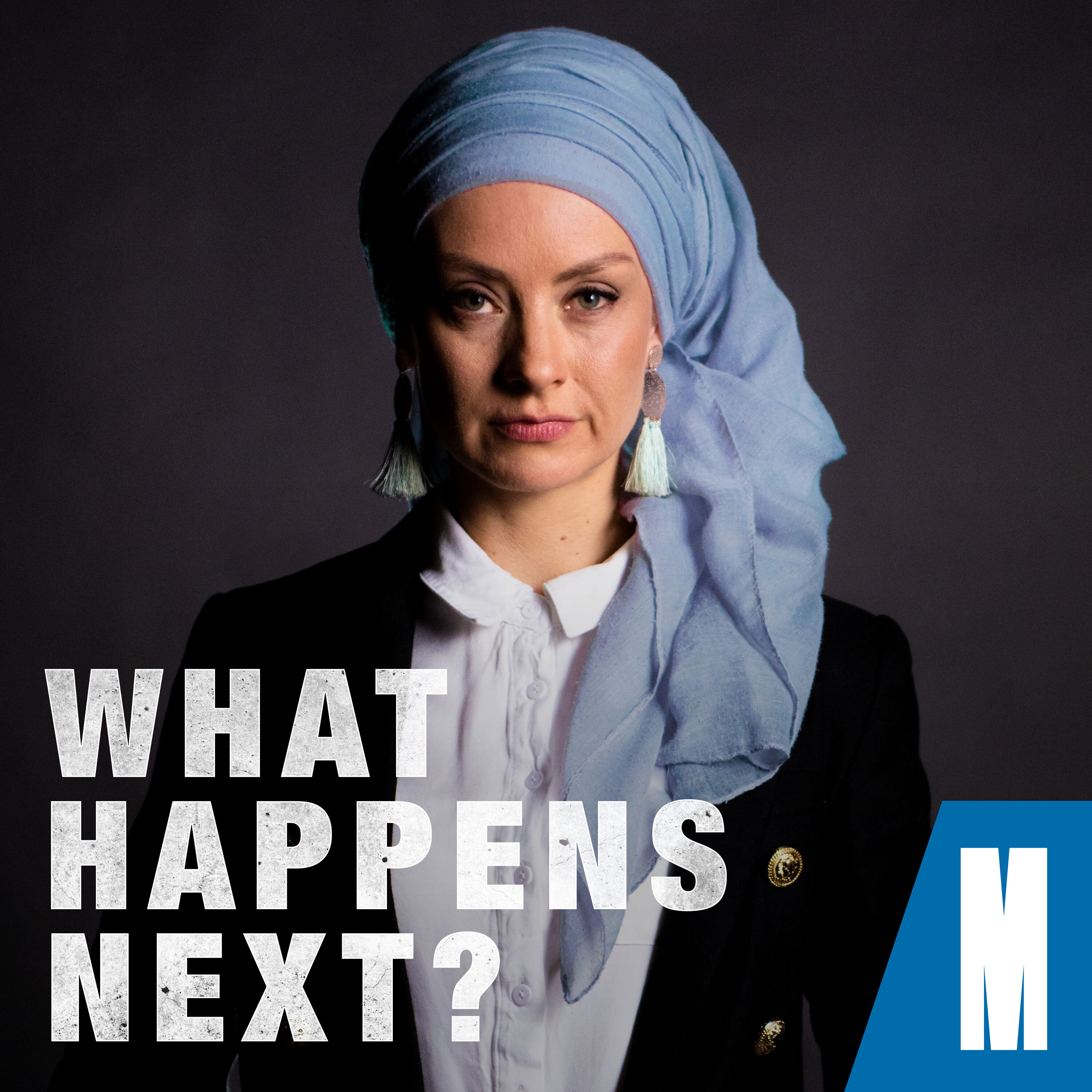
What Happens Next?
100 episodes — Page 2 of 2
S5 Ep 55Racism: It Stops With...? (Pt 2)
We’re wrapping up this season of What Happens Next? with some hope. The 2020 murder of George Floyd by former Minneapolis police officer Derek Chauvin sparked the embers of a long-smouldering conflict centred around racial injustice. The issues of systemic and institutionalised racism that have been brought to light in the wake of the movements that followed this incident can seem overwhelming. As an individual, it’s difficult to know where to start, and to believe it’s possible to make a difference. The Monash University Migration and Inclusion Centre, in collaboration with Welcoming Australia, recently hosted a panel discussion entitled “Racism: It Stops With…?”. Comprised of some of the foremost leaders working for equality in Australia and moderated by Dr Susan Carland, the panel focused on progressive, inclusive ways to eliminate racism within the community and the workplace, in the education sector, and in society at large. In part two of the discussion, which was recorded live for What Happens Next?, panellists Nyadol Nyuon, Div Pillay, Pro Vice-Chancellor (Indigenous) Professor Jacinta Elston and Emeritus Professor Andrew Markus identified steps each of us can take to stop racism in its tracks. They also shared the initiatives and developments they’ve come across in their work that are giving them hope for the future. If you enjoyed this season of What Happens Next?, don’t forget to rate the podcast and leave a review on your favourite listening app. Dr Susan Carland will be back with an all-new selection of topics soon. In the meantime, why not explore our back catalogue?See omnystudio.com/listener for privacy information.
Ep 54Racism: It Stops With...? (Pt 1)
Understanding racism is the key to positive social change. The ‘Racism: It stops with…..?’ panel discussion, moderated by Dr Susan Carland, focused on progressive, positive and inclusive ways to eliminate racism within the community and the workplace, in the education sector, and in our communities. Panelists:Nyadol Nyuon, Chair, Harmony Alliance Australia, lawyer and human rights advocateProfessor Jacinta Elston, Pro Vice Chancellor (Indigenous), Monash UniversityDiv Pillay, CEO, MindTribes and Monash AlumnaEmeritus Professor Andrew Markus, Monash University This webinar panel event was in partnership between the Monash Migration and Inclusion Centre and Welcoming Australia for National Unity Week, which encourages all Australians to join together and celebrate cultural diversity.See omnystudio.com/listener for privacy information.
S5 Ep 53A More Welcoming Country?
What are some of the ways we are making our cities more welcoming and how can we as individuals encourage a more diverse and inclusive society? In this episode, Dr Susan Carland asks some of Australia’s most knowledgeable and sought-after commentators on migration and inclusion about the policies and attitudes shaping society’s approach to immigration. Our guests are Bel Schenk, coordinator at Welcoming Cities Victoria, Rebecca Wickes and Marie Segrave of the Monash Migration and Inclusion Centre.See omnystudio.com/listener for privacy information.
S5 Ep 52Why Do Migrants Matter?
There’s no doubt about it: Migration has shaped and changed Australia. The country’s history is marked by a series of migrations – the British, the Chinese, the Greeks, the Italians. We’re a nation largely built on the shoulders of those who came here seeking a better life, but we’re still wrestling with what that means for our modern identity. In the first of this two-part series, Dr Susan Carland asks some of Australia’s most knowledgeable and sought-after commentators on migration and inclusion about the policies and attitudes shaping society’s approach to immigration. Our guests today are Sharon Pickering, Monash University’s Deputy Vice-Chancellor (Education) & Senior Vice President; labour economist Claudio Labanca; and criminologists Rebecca Wickes and Marie Segrave of the Monash Migration and Inclusion Centre.See omnystudio.com/listener for privacy information.
S5 Ep 51Can We Open the Halls of Power?
Class inequality is not inevitable, and it’s not too late to change things here in Australia to promote a better experience for all. In our second episode exploring class inequality, Dr Susan Carland asks the experts: How can we change things? How can we ensure that a diverse range of voices occupies equal weight in the halls of power and the rooms where decisions are made? Hear from the Monash University Sustainable Development Institute’s John Thwaites AM about the political and economic decisions that must be made if we’re going to remedy class inequality for good. Historian Tony Moore provides some additional context into Australia’s past relationship with the working class – a connection that informs the country to this day and may provide the key to a more equal tomorrow. Journalist Rick Morton and author Bri Lee also return with insights into how improving the accessibility of resources like education, housing, and other necessities will have a positive knock-on effect for generations to come.See omnystudio.com/listener for privacy information.
S5 Ep 50Is Australia Classist?
Who holds the power in Australia? In this two-episode arc, Dr Susan Carland seeks to answer that question – and understand how we got here. Over the past several decades, Australia’s social stratification has become more pronounced. It’s partially the result of economic trends such as trickle-down theory and the increasing casualisation of employment in the gig economy, but there are other factors at play here. In this series, host Dr Susan Carland sits down with John Thwaites, chair of the Monash Sustainable Development Institute and ClimateWorks Australia; Bri Lee, author of the book Who Gets to Be Smart?, Rick Morton, senior reporter for The Saturday Paper, and Monash Arts Associate Professor of Communications & Media Studies Dr Tony Moore. Find out how privilege and disparate levels of access to basic resources such as education are contributing to an imbalance of power and influence in the land of the ‘fair go’ – threatening the egalitarian ideals Australia’s striven to model for the world.See omnystudio.com/listener for privacy information.
S5 Ep 49Is It Time to Join the Psychedelic Renaissance?
Attitudes towards psychoactive drugs for the treatment of PTSD are changing, and for good reason – it’s hard to disagree with the evidence of the therapeutic benefits of psychedelic medicines for the treatment of mental illness. Compelling studies are being conducted around the world, several of them here at Monash. And it won’t be long until you see the results of these studies for yourself – experts suggest health care providers could begin prescribing psychedelic drugs for PTSD patients as soon as 2023. In this episode of “What Happens Next?”, Dr Susan Carland talks to Dr Paul Liknaitzky, the principal investigator on a number of Australia’s first clinical psychedelic trials. She’s also joined by Dr Meaghan O’Donnell, head of research at Phoenix Australia and professor in the Department of Psychiatry at the University of Melbourne. Learn how psychedelic drugs, in concert with more traditional therapies, can help trauma survivors shift their perceptions, and about some of the upcoming research that will revolutionise psychiatry and change the lives of millions of people suffering from mental illness. To be added to Monash University’s notification list for psychedelic drug trial recruitment, email [email protected] omnystudio.com/listener for privacy information.
S5 Ep 48Should We Decriminalise Psychedelics?
After years of very little pharmaceutical innovation in the treatment of mental illness, psychiatry is on the verge of something big: Psychedelic medicine is emerging as a game-changer. The evidence of the efficacy of drugs like psilocybin (also known as magic mushrooms) and MDMA, used in conjunction with therapy for illnesses such as depression, anxiety and post-traumatic stress disorder, is astounding. And society could use the help – the 2017-18 National Health Survey estimated that 1 in 5, or 4.8 million Australians reported having a mental or behavioural condition, and the impact of the pandemic has only exacerbated the issue. But the sociopolitical atmosphere surrounding illegal drugs – including psychedelics – has made research and development a difficult proposition. On a new episode of “What Happens Next?”, Susan Carland considers the political landscape surrounding drug legalisation, the cultural context of drug use, the science behind the mental health medication we already have – and what things will look like if we fail to engage in the “psychedelic renaissance.” Today’s guests are Dan Lubman, Turning Point Director and Monash University Professor of Addiction Studies; Andrea Whittaker, Convenor of Anthropology in the Monash School of Social Sciences; Paul Liknaitsky, head of Monash University’s Clinical Psychedelic Research Lab; and Arthur Christopoulos, Dean of Monash University Faculty of Pharmacy and Pharmaceutical Sciences.See omnystudio.com/listener for privacy information.
S5 Ep 47Should Comedy Cross Lines?
Growth comes with growing pains, and as we work to create a more inclusive, welcoming society, we see that reflected in how audiences respond to art. Artists and entertainers alike have been ostracised from social media and have even lost work for offensive conduct. But what if it’s your job to shock and satirise? Comedians go where the rest of us can’t – occasionally crossing lines and causing offense. In recent years, we’ve seen a number of comedians come under intense public scrutiny after saying something objectionable. In the second and final episode on the future of comedy and cancel culture, Dr Susan Carland talks to comedians about walking the fine line between humour and offense, the responsibility of the comedian, and which jokes they think we’ll cringe over in the coming years. Our guests today on the What Happens Next? podcast are Peter Helliar, presenter of The Project on Network 10; TV personality and activist Nazeem Hussain; 2020 RAW Comedy winner Prue Blake; and Michael Shafar, stand-up comic and writer for The Project.See omnystudio.com/listener for privacy information.
S5 Ep 46Are We Too Quick to Cancel?
EPublic opinions and attitudes shift, but the internet is forever. In recent years, we’ve seen example after example of entertainers and comedians “cancelled” by pop culture for old tweets and bad behaviour, even if the artist themselves have evolved. In an all-new series of ‘What Happens Next?’, an all-star lineup of comedians discuss the future of comedy with host Dr Susan Carland. Comedy holds a mirror up to society, but what happens when society doesn’t like what it sees? Where’s the line between humour and offence? And is it really a comedian’s job to represent an entire group of people and to wake audiences up with powerful emotional breakthroughs – or is it just to make you laugh? Our guests this episode are comedians Nazeem Hussain, Michael Shafar, Peter Helliar, Prue Blake, and Monash Faculty of Arts historian Dr Tony Moore. * Language WarningSee omnystudio.com/listener for privacy information.
S5 Ep 45How Do We Teach Machines to Think Responsibly?
If humans are the ones programming artificial intelligence, are we stuck with the human biases that inadvertently work their way into AI systems? Our guests today don’t think so. AI is undoubtedly playing a beneficial role in society, helping us respond more effectively to medical emergencies, improving surgical procedures, and even making our buildings smarter. There are already methods in place ensuring that society can hold AI and its designers accountable. Established ethics committees have been joined by new legislation and increasing awareness among policy-makers. Accessible courses and casual data science meetups enable any of us to join the conversation and help shape emerging technologies, the data they use, and how they use it. As we work towards a more ethical society, we can ensure our AI is ethical, too. Dr Susan Carland is again joined by communications and media studies expert Professor Mark Andrejevic, human-computer interaction scholar Yolande Strengers, Monash University Interim Dean of Information Technology Ann Nicholson, and Microsoft Australia’s former chief digital advisor, Rita Arrigo.See omnystudio.com/listener for privacy information.
S5 Ep 44Is AI a Little Too Human?
Humans have long dreamed of artificial intelligence and smart machines that can help us make better decisions or even just cut down on our own chores. What was once a sci fi fantasy is now a reality – AI is an increasing presence in our day-to-day lives. But AI is built by humans, and its algorithms are sometimes guided by very human biases. The more we rely on automated decision making, the more often we see examples of AI being sexist, racist or exhibiting other forms of prejudice. How did assumptions and biases find their way into machines? Is AI helping or hurting our progress towards social equality? How do we hold technology designers accountable for their creations? And can we address these issues without overcorrecting into social engineering? In the first ‘What Happens Next?‘ episode on bias in AI, Dr Susan Carland speaks with Communications and Media Studies Professor Mark Andrejevic, human-computer interaction scholar Yolande Strengers, Monash University Information Technology Interim Dean Ann Nicholson, and former Chief Digital Advisor at Microsoft Australia Rita Arrigo.See omnystudio.com/listener for privacy information.
S5 Ep 43Can We Reinvent the Justice System?
The last episode of What Happens Next? explained what we learned from the Royal Commission into Aboriginal Deaths in Custody (RCIADC) inquiry, why Indigenous incarceration rates remained so high in Australia, and its impacts on our society. What needs to happen to shift the needle in this complex issue? In this episode, Dr Susan Carland talks again with Monash University pro vice-chancellor (Indigenous) and head of its William Cooper Institute, Jacinta Elston; criminologist Kate Burns; and Meena Singh, legal director of the Human Rights Law Centre. These experts uncover some of the policies and initiatives needed for change to happen, and the role of localised actions as part of the solution. ‘With the last 30 years, they have been telling us, the community, what needs to be done to address this issue. So we need to be actually listening.’ Dr Kate BurnsSee omnystudio.com/listener for privacy information.
S5 Ep 42Why Is the Rate of Black Deaths in Custody So High?
More than 30 years ago, the Royal Commission into Aboriginal Deaths in Custody (RCIADC) was set up to investigate black deaths in custody, but in those three decades, very little has changed. Although the recommendations in the report continue to influence Australian social and criminal justice policy, many of the commission’s 339 recommendations have yet to be implemented. Today, Aboriginal and Torres Strait Islanders are incarcerated at 13 times the rate of non-Indigenous people. Since the RCIADC, nearly 500 Indigenous people have died in police custody. In this episode of ‘What Happens Next?’, host Dr Susan Carland is joined by Monash University pro vice-chancellor (Indigenous) and head of its William Cooper Institute, Jacinta Elston; criminologist Kate Burns; and Meena Singh, legal director of the Human Rights Law Centre. These experts explain what we learned from the RCIADC inquiry, and why Indigenous incarceration rates remain so high in Australia. We’ll also learn what society could look like if we fail to re-imagine our policing and justice systems.See omnystudio.com/listener for privacy information.
S5 Ep 41Does Hustle Culture Drive Creativity?
Last week’s episode of ‘What Happens Next?’ investigated the downsides of hustle culture – the pervasive idea that the only way to earn respect is by using every minute of the day to be productive. This attitude, embraced by LinkedIn influencers and productivity gurus, has far-reaching consequences, affecting us physiologically, psychologically, and even spiritually. But hustle culture’s not all bad. Some of today’s greatest success stories arose from humanity’s inherent drive to achieve. How can we ensure we’re dedicating our time and energy to the things that matter most? And what can we do to keep burnout at bay? In today’s episode, host Dr Susan Carland sits down again with Behavioural Psychologist Joshua Wiley, Associate Professor of Management and Accounting Carly Moulang, Philosopher Jakob Hohwy, and comedian and broadcaster Meshel Laurie to take a second look at the daily grind.See omnystudio.com/listener for privacy information.
S5 Ep 40Are We Hustling Ourselves to Death?
Productivity hacks and optimisation have long been buzzwords of success. Start-up founders and LinkedIn gurus are encouraging us to have side hustles rather than hobbies, telling a generation of young workers that a 24/7 work ethic is the way to achieve their dreams. Why are we so down on downtime? Is being busy the same thing as being productive? And what happens to our brains, bodies, and social lives if we keep measuring ourselves by our output? Are we hustling ourselves to death?See omnystudio.com/listener for privacy information.
S4 Ep 39Kicking Goals
Welcome to the final instalment of our topic on the culture of Sport. Richmond Football Club CEO Brendon Gale has a unique perspective on the culture of sport. He's been a player, head of the Players Association and now a member of the executive. He talks to host Susan Carland about how the game's culture has changed, and the work clubs like his are doing to try and drive change. We’ve also gathered the very best nuggets of wisdom from all our experts to help individuals take action and get involved.See omnystudio.com/listener for privacy information.
S4 Ep 38Running the Gauntlet
In this episode of the What Happens Next podcast, we look at what’s happening to change the culture in elite sport and find out why calling out sexist, racist and homophobic language is helping tackle the toxicity.See omnystudio.com/listener for privacy information.
S4 Ep 37A Level Playing Field?
Sport keeps hitting the headlines for what happens off the field. Experts in sport, gender and media Brett Hutchins and Ruth Jeanes explain why we idolise sporting legends, and why we’re often let down. See omnystudio.com/listener for privacy information.
S4 Ep 36Getting Down to Business
This is our last look at the gig economy, but it’s unlikely to be the last time we find ourselves part of it. That’s why we’ve gathered all the best tips and advice from our featured experts to help us as individuals make change. See omnystudio.com/listener for privacy information.
S4 Ep 35All Worked Up
This time on our investigation into the future of the gig economy, we’re talking about what’s helping to change it for people in a tough job market, and also ethical alternatives to popular sharing economy platforms.See omnystudio.com/listener for privacy information.
S4 Ep 34Taking Us For a Ride
Covid19 has shone an unflattering light on our reliance on casual and gig economy workers. Stories of people working numerous jobs across multiple workplaces unwittingly spreading the Corona virus. Drivers being killed while delivering food on bikes and scooters have brought into sharp relief the impact of the gig economy. But long before the pandemic, gig workers were facing dangers and drawbacks from which others are largely protected. What happens if we fail to reshape our economy post-Covid and continue to rely on gig workers? Are there any advantages to the system? What are the opportunities to change it for the better, and how do we ensure workers are not being exploited and their lives not endangered?See omnystudio.com/listener for privacy information.
S4 Ep 33History in the Making
In this final episode about exploring our history, Monash Alum Elizabeth Finkel explains why she tells the stories of how science works, and our experts offer their best tips and advice on where to do a deeper dig for knowledge. See omnystudio.com/listener for privacy information.
S4 Ep 32Culture and Country
Indigenous communities have deep connections to their physical and environmental history, and have been studying and preserving it for tens of thousands of years. Many are now generously sharing their knowledge and understanding, that is passed down from generation to generation, with non-indigenous archaeologists, anthropologists and palaeontologists and helping us all to better understand our country, community, culture and history.See omnystudio.com/listener for privacy information.
S4 Ep 31A Matter of Time
We’re kicking off Series 4 of What Happens Next by looking back, way back. This time we’ll ponder what happens if we stop exploring natural history - what would we lose? How can finding fossils help shape our future? And will humans ever grow wings? Monash experts help us get to the bottom of these big questions in a brand new series of What Happens Next?See omnystudio.com/listener for privacy information.
S3 Ep 30The Picture Of Health
In this episode, we've gathered all the practical tips from our experts about taking advantage of this acceleration in digital healthcare and how we can make it work for all of us. Monash digital health expert Chris Bain and Monash Alumni and Epic Group founder Cathie Reid have great advice on how we can get the best out of the shift towards digital health as patients, practitioners and a society. Maithri Goonetillake from the Monash School of Public Health and Selina Lo from the Monash Sustainable Development Institute point to resources and information for those who want to better understand and embrace the idea of planetary health. See omnystudio.com/listener for privacy information.
S3 Ep 29The AI Will See You Now
In this episode, we look at what healthcare delivery could be like in the future, and how technological change, innovation and advancement have been accelerated by Covid19. Chris Bain is a Professor of Practice in Digital Health in the Monash Faculty of Information Technology - the first to ever hold this role. He leads the university’s efforts in digital health, working with faculties and Institutes across the University, as well as with a range of health industry partners. With more than 30 years' experience in the health industry, including 12 in clinical medicine, Chris sees incredible potential for innovation and change for the better in healthcare delivery. Cathie Reid is the Co-Founder of Australia’s Epic Group, and she’s passionate about new health solutions. She’s also a Monash Alumni from the Faculty of Pharmacy and Pharmaceutical Sciences. Cathie talks to us about the acceleration of change driven by the Covid pandemic.See omnystudio.com/listener for privacy information.
S3 Ep 28A Bitter Pill
Covid19 has created and accelerated changes in the healthcare sector and how we think about our health as individuals, a national and a society. In this topic, we’ll discover what happens if we don’t change - what are the opportunity costs if we fail to grasp this moment and learn from this experience. We talk to the experts who are driving the changes we need right here in Australia, and how technology and behavioural science can help drive positive social outcomes. And as usual we’ll have all the practical tips you need to make change yourself.See omnystudio.com/listener for privacy information.
S3 Ep 27What On Earth Can We Do?
In this episode we’ve gathered all the best tips from our experts about how we can all support, and maybe even benefit from, the opportunities space exploration offers. What actions can we take in our day to day lives to ensure we continue to see the value in ongoing space exploration so that we can create a better life here on earth? We’ll discover how to look for the elements of space exploration that most excite and engage us, and better understand what the future might hold for us all. Episode note: Want to know more about what we talked about here today? Head to Monash Lens where you'll discover more of experts' groundbreaking work, along with every episode of What Happens Next.See omnystudio.com/listener for privacy information.
S3 Ep 26Rising Stars
In this episode, we’ll find out what space can teach us about life on earth and how to make a better future for all of us. You might be surprised at some of the ways space exploration is already shaping our daily lives, and will continue to do in future. We’ll discover how learning to live on Mars can help us solve some of the big problems here on earth, budding architects tell us what it’s like to t it’s like to design for entirely alien habitats, and we meet Australia’s very own rocket man, discusses the future of satellites and space travel. Participants: Jasmina Lazendic-Galloway runs the most successful Massive Open Online Course ever run in Australia. It teaches people to prepare for life on Mars. But rather than focus on Mars survival, Yasmeena wants the course to help others be more creative in solving problems on earth. Danica Karacic leads the Space Habitat studio as part of the Monash Bachelor of Architecture in the Faculty of Art Design and Architecture. She and Architecture students Betul and Dima tell us what it’s like to t it’s like to design for entirely alien habitats, Adam Gilmour is Australia’s very own rocket man. His company, Gilmour Space Technologies, specialises in the development of small, low-cost rockets purpose-built for today’s small satellites. He’s also a Monash Alumni from the Faculty of Business and Economics, and he joins us from his base on the sunny Gold Coast in Queensland.See omnystudio.com/listener for privacy information.
S3 Ep 25We Need Some Space
What if we stop exploring space? What do we lose? What are the opportunity costs? What’s next for space exploration and what could it tell us/do for us? How can it make our lives better? This theme will look at why space exploration not only helps us understand how we came to exist, but can also help us solve some of the biggest challenges we face here on earth. We'll talk to experts ranging from astronomers to architects about why it's vital we keep exploring beyond the earth.See omnystudio.com/listener for privacy information.
S2 Ep 24Power To The People
In this episode we've gathered all the very best practical tips and ideas from our experts to help you embrace renewables in your own life and how we can each change our mindset, behaviours and ways of living to help get Australia, and the world, on track to 100% renewable - and reliable - energy.See omnystudio.com/listener for privacy information.
S2 Ep 23Getting The Green Light
Despite the abundance of renewable energy resources in Australia, and huge growth in solar and wind farms, along with hydro, getting it into our cities and households is still a challenge. An old, complex energy grid, our island nation status and the complexity of demand vs supply mean we still have some work to do. But Monash engineers and scientists are confident we can solve these problems. Behrooz Bahrani works on grid integration - how we get all the valuable energy produced by Australia’s sun, wind and waves into the grid and powering our houses. Roger Dargaville is researching pumped hydro and explains how it can help take us all the way with renewables.See omnystudio.com/listener for privacy information.
S2 Ep 22Power Trip
Energy remains front and centre of political debate, a divisive issue among those who want to see a swifter transition away from fossil fuels and end the use of coal-fired power and those who don’t believe such a transition is necessary, or viable, due to potential economic impacts. Renewables have long been touted as the solution to reducing our reliance on fossil fuels, and in Australia renewable energy is growing at a per-capita rate 10 times faster than the world average - nearly three times faster than the next fastest country, Germany. So why haven’t renewables taken over yet? Our experts explain that the reason isn’t technical or economic, and the pure lack of political will to change could lead to unmitigated disaster.Paul Raschky is an economist specialising in insurance. The industry is already planning for situations in which parts of the world might become unlivable due to global temperature rises increasing natural disasters and catastrophic weather events. Liam Smith is a behaviour change expert who fears we’ve missed the window for the move to renewables scientists say is needed to limit global temperature rises at 2 degrees.See omnystudio.com/listener for privacy information.
S2 Ep 21Who's A Good Boy?
In our last episode of our series on Masculinity, we’ll hear from our experts about the best ways to support men and boys to cultivate positive masculinity. We’ll find out what works and why, and talk about the resources available.See omnystudio.com/listener for privacy information.
S2 Ep 20Nice Guise
On this episode we’ll hear a more positive perspective - how masculinity is changing and how men are being encouraged to change past patterns of behaviour. We’ll also discover the programs designed to help men connect in positive ways. Steve Roberts is Associate Professor of Sociology in the School of Social Sciences at Monash University. He works with PhD researchers Britt Ralph and Bec Stewart and together they examine a range of social issues around masculinity and its impact on men, women, families and communities. Dr Sandro Demaio is a medical doctor and globally-renowned public health expert and advocate. He is currently the Chief Executive Officer of the Victorian Health Promotion Foundation (VicHealth). See omnystudio.com/listener for privacy information.
S2 Ep 19It's a Man's World
The recent murder of Hannah Clarke by her estranged husband in Queensland shows us the frightening reality of domestic violence and makes us question the way we think about masculinity. Today we’ll take a look at what’s been described as the dystopia we are already living in and how we can create a better future for all of us - men, women and children. In this episode we speak to Associate Professor of Sociology in the School of Social Sciences at Monash University, Steve Roberts. We are also joined by George Variyan an experienced educator, with a background in teaching and school leadership in Australia. See omnystudio.com/listener for privacy information.
S2 Ep 18Until We Tweet Again
This episode features all the best tips and guidance from our experts about how to help parents and young people manage their social media use for mental health and wellbeing, and how it can be used to build communities and share stories.See omnystudio.com/listener for privacy information.
S2 Ep 17People You May Know
Every generation faces their own moral panic over new technology. Even right back to Socrates when the use of written text in books was seen as something that would negatively impact our lives. In the 20th century, wireless radio and television was thought or assumed to bring about the downfall of civilisation. In this social media digital age, Senior Lecturer in Sociology at Monash University Brady Robards focuses on the positive impacts social media brings to our lives. Whilst obviously there are negative impacts of social media, he is looking at ways young people are using these platforms as ways to help open communication and help deal with issues they face. Brady is currently working on a publication called Growing up on Facebook. Studying sustained or longitudinal social media use among people in their 20s who have grown up using social media. Gemma Sharp, a Clinical Psychologist and Monash researcher on the impact of social media on body image is also using social media as a positive tool to help at-risk young people.See omnystudio.com/listener for privacy information.
S2 Ep 16#NoFilter
Facebook founder Mark Zuckerberg has said that privacy is no longer a “social norm”. However, what impacts does this lack of privacy and use of social media have on us? What does the world look like if we fail to properly address the impacts of social media on mental health, especially in young people? Nicky Jacobs has a unique insight into the teenage mind and how its impacted by social media. Her research shows that teenage brains operate differently and are differently impacted by social media. In this episode we’ll talk to Nicky about what happens to the next generation if we don’t change how they engage with and use social media, and what’s happening inside those brains of theirs right now.See omnystudio.com/listener for privacy information.
S2 Ep 15My Art Will Go On
So what can you do to save us all from a world without art? On this episode our experts share all their best tips for finding art in new places, adding it into your own life. And why now, more than ever, art matters.See omnystudio.com/listener for privacy information.
S2 Ep 14Art and Soul
In this episode we hear from two people who are finding and creating art in places and ways in which wouldn't have been possible, or even imagined, 20 or even 10 years ago. They believe the future of art is bright, as long as we learn to look for and at it differently. Jon McCormack is an artist with a PhD in Computer Science and is a Professor of IT, which might seem an incongruous combination, but he believes the future of art is in human-robot collaboration. Nick McGuigan is an accountant who urges people to look for art where it may not obviously be. His highly successful Artist in Residence program in the Monash faculty of Business and Economics embeds art into accounting, pushing back against the ‘boring accountant’ stereotype.See omnystudio.com/listener for privacy information.
S2 Ep 13Broken Arts
What could happen to our world if we no longer have an appreciation for art and culture? At times when our most basic needs are at threat, can we even afford to consider art, let alone lament its loss? How does the world look and feel without new art being created? Or do we simply need to start looking for and at art differently? In this episode we hear from Ali Alizadeh, a literary critic, poet and writer on the philosophy of art, who sees the biggest threat to art as the growing need for it to have function, serve a purpose or send a message, rather than simply existing for the sake of art. See omnystudio.com/listener for privacy information.
S2 Ep 12Fact Or Fiction?
In this episode we've gathered all the very best practical tips and ideas from our experts to help you find your way through the massive amounts of news and information we see each day, how to identify misinformation and how to ensure you're getting the most objective, accurate and up to date information from your news sources. See omnystudio.com/listener for privacy information.
S2 Ep 11The Facts Of The Matter
What can be done to help counter these misinformation campaigns and fake news? We’ll talk to some of the experts exploring what we can change to help counter these campaigns. Dr David Holmes specialises in a different type of communication, using research and evidence to strategically send critical messages. The aim is to draw attention to climate change, to help people better understand the science, and therefore the impacts. The Hub works closely with weather presenters and media outlets to help ensure information they provide on weather and climate is scientifically accurate, up to date, and easy for the average person to understand and absorb. The Public Interest Journalism Initiative is on a mission to save democracy from the decline it faces at the hands of reducing news budgets and increasingly concentrated media ownership. Margaret Simons is one of the nation's most respected reporters, commentators and educators on the state of the media and politics. She was the founding chair of the PIJI and is a current board member.See omnystudio.com/listener for privacy information.
S2 Ep 10Ain't That The Truth
The US elections, Australia’s bushfire disaster and now Covid-19 - major events plagued by online agenda-driven misinformation campaigns and the spread of fake news, amplified by mainstream media outlets with their own agenda. Monash School of Media, Film and Journalism experts Mark Andrejevic and Johan Lidberg ponder the possibility of a future in which it’s impossible to verify sources and objectivity of information due to lack of diversity in media ownership and ongoing resource cuts to journalism. They consider the potential effect on our democracy and our society if we don’t act to prevent these campaigns continuing to drive divisions with false information. They fear the very democratic institutions we rely on for a common understanding of the world are in a state of collapse.See omnystudio.com/listener for privacy information.
What Happens Next on Series Two?
trailerThe events of 2020 have brought us closer than we could have imagined to the dystopian futures of The Handmaid’s Tale, Mad Max and Brave New World. Academic and commentator Dr Susan Carland is back, exploring a new range of issues on Monash podcast What Happens Next? She’ll talk to thought leaders and seek answers to big questions - What does our future look like if we don’t take action? Who’s at the forefront of the fight? Is there anything we can do at an individual level? In this series we’ll take a closer look at vital issues including fake news, the impact of art, social media and mental health, renewable energy and masculinity. Learn from experts, meet the people making a difference and discover how you yourself can help drive change. If you're new to What Happens Next, why not go back and check out Series One now! See omnystudio.com/listener for privacy information.
S1 Ep 9Right Here, Right Now
What should we do when confronted by right wing extremism in our daily lives? Our behaviour change expert shares the best strategies. See omnystudio.com/listener for privacy information.
S1 Ep 8What's Rightfully Ours: What Happens If We Ignore Right-Wing Extremism?
30.1.20What Happens Next?What's Rightfully Ours – What Happens If We Ignore Right-Wing Extremism? | 8 Right-wing extremism is on the rise and presents a complex and concerning phenomenon. Terrorism and extremism expert Pete Lentini, an associate professor in Monash University’s Faculty of Arts, talks to host Dr Susan Carland about the state of right-wing extremism in Australia and across the globe. Pete identifies the fear of a loss of status, cultural heritage and privilege as primary drivers of this type of extremism. These fears manifest as a perceived threat of extinction for the white race and traditional values, fuelling sentiments of resentment and exclusion. Despite the prevalence and threat posed by right-wing extremism, it’s not always taken as seriously as it should be. There are also unique challenges in countering this form of radicalisation. Pete points out that certain right-wing radical ideas have seeped into mainstream political discourse, contributing to a shift in the political landscape. This normalisation may further legitimise extremist viewpoints, creating a breeding ground for radicalisation. So is censorship a solution? Find out what Pete thinks about balancing the need for security with the preservation of democratic values and civil liberties. A full transcript of this episode is available on Monash Lens. In this series: Far Right, All Wrong – Is Right-Wing Extremism on the Rise? What's Rightfully Ours – What Happens If We Ignore Right-Wing Extremism? Right Here, Right Now – Can We Disarm Extremism? Learn more about right-wing extremism: COVID-19 and violent extremist groups adapt to an evolving crisis Legislation and the Christchurch Call: The problems of policing the internet Politicians increasingly stoking fears by replaying the immigration card If you’re enjoying the show, don’t forget to subscribe, or rate or review “What Happens Next?” to help listeners like yourself discover it. Subscribe to Monash’s YouTube channel to watch the video version of each full episode.See omnystudio.com/listener for privacy information.
S1 Ep 7Far Right, All Wrong: Is Right-Wing Extremism on the Rise?
23.1.20What Happens Next?Far Right, All Wrong: Is Right-Wing Extremism on the Rise? | 7 The internet’s a great place to meet like-minded people… even for far-right extremists. Today’s political climate has emboldened this growing group in Australia and beyond. How will society look if this growing threat goes unchecked? In a new series, Dr Susan Carland and her expert guests consider the complex issue of far-right extremism, shedding light on its impact, the actions taken to address it and what we can do to confront extremist ideologies. Emeritus Professor Andrew Markus, from Monash University’s School of International, Historical and Philosophical Studies, says that the Christchurch, New Zealand massacre and the infiltration of far-right groups into Australian politics serve as stark reminders of the urgency of addressing this issue. The internet has played a strong role in amplifying extremist ideologies, making recruitment and organisation easier, while governments and private companies have been hesitant to regulate speech. Can we shift societal perception to recognise hate speech as a clear cause of social harm? Legal expert Patrick Emerton champions the preservation of legislation that can play a crucial role in safeguarding against hate speech without compromising foundational liberties. A full transcript of this episode is available on Monash Lens. In this series: Far Right, All Wrong – Is Right-Wing Extremism on the Rise? What's Rightfully Ours – What Happens If We Ignore Right-Wing Extremism? Right Here, Right Now – Can We Disarm Extremism? Learn more about right-wing extremism: Conspiracy theories and the Australian far-right Christchurch Shooting: What's turning young men into killing machines? The future of terrorism If you’re enjoying the show, don’t forget to subscribe, or rate or review “What Happens Next?” to help listeners like yourself discover it. Subscribe to Monash’s YouTube channel to watch the video version of each full episode.See omnystudio.com/listener for privacy information.