
Episode #73: Navigating Mobility Challenges: From Childhood to Coaching
Mobility Challenges Won't Stop Nathan Gutierrez!
Water Prairie Chronicles Podcast
Audio is streamed directly from the publisher (waterprairie.com) as published in their RSS feed. Play Podcasts does not host this file. Rights-holders can request removal through the copyright & takedown page.
Show Notes
- Tonya
Show Notes:
In this insightful interview, we sit down with Nathan Gutierrez, a remarkable individual with spina bifida, to delve into his journey of living with a mobility disability. Nathan's candid sharing takes us through his childhood experiences, family support, education, healthcare insights, and his inspiring path to independence. Join us as we explore his triumphs over challenges, his engagement in sports and social activities, and his valuable advice for parents and individuals facing similar situations.
 Childhood and Family Support: Discover how Nathan's parents nurtured his independence from a young age, empowering him to overcome obstacles and actively participate in daily life.
Educational Experiences: Gain insights into Nathan's education within mainstream schools, his perspective on effective communication, and the significance of self-advocacy and Individualized Education Programs (IEPs).
Healthcare and Transition to Adulthood: Learn about Nathan's proactive approach to maintaining bladder health and preventing urinary tract infections (UTIs). Explore his journey from childhood to adulthood and the importance of gradually involving children in their healthcare routines.
Sports and Social Life: Dive into Nathan's engaging experiences with wheelchair basketball, youth sports, and coaching programs. Discover how these activities not only contributed to his physical well-being but also enriched his social interactions and self-confidence.
Tips for Parents and Individuals: Nathan shares invaluable advice for parents, emphasizing the significance of promoting independence, creative problem-solving, and collaborative approaches to managing mobility challenges.
Wheel Life Coaching: Nathan's latest venture, "Wheel Life Coaching," is dedicated to helping individuals and families with mobility disabilities navigate their unique journeys. Learn how Nathan's coaching aims to simplify information, provide tailored solutions, and empower individuals to achieve their aspirations.
Join us for this enlightening conversation, as Nathan's story reminds us of the power of determination, family support, and the unwavering spirit to thrive despite life's challenges. Don't miss out on this heartwarming and informative discussion – watch now!
*******************
Connect with Nathan:
Website: wheellifecoaching.com
Instagram: @wheellife_coach
Connect with Us: https://linktr.ee/waterprairie
Support this channel: https://www.buymeacoffee.com/waterprairie
Music Used:
“LazyDay” by Audionautix is licensed under a Creative Commons Attribution 4.0 license. https://creativecommons.org/licenses/by/4.0/
Artist: http://audionautix.com/
Childhood and Family Support: Discover how Nathan's parents nurtured his independence from a young age, empowering him to overcome obstacles and actively participate in daily life.
Educational Experiences: Gain insights into Nathan's education within mainstream schools, his perspective on effective communication, and the significance of self-advocacy and Individualized Education Programs (IEPs).
Healthcare and Transition to Adulthood: Learn about Nathan's proactive approach to maintaining bladder health and preventing urinary tract infections (UTIs). Explore his journey from childhood to adulthood and the importance of gradually involving children in their healthcare routines.
Sports and Social Life: Dive into Nathan's engaging experiences with wheelchair basketball, youth sports, and coaching programs. Discover how these activities not only contributed to his physical well-being but also enriched his social interactions and self-confidence.
Tips for Parents and Individuals: Nathan shares invaluable advice for parents, emphasizing the significance of promoting independence, creative problem-solving, and collaborative approaches to managing mobility challenges.
Wheel Life Coaching: Nathan's latest venture, "Wheel Life Coaching," is dedicated to helping individuals and families with mobility disabilities navigate their unique journeys. Learn how Nathan's coaching aims to simplify information, provide tailored solutions, and empower individuals to achieve their aspirations.
Join us for this enlightening conversation, as Nathan's story reminds us of the power of determination, family support, and the unwavering spirit to thrive despite life's challenges. Don't miss out on this heartwarming and informative discussion – watch now!
*******************
Connect with Nathan:
Website: wheellifecoaching.com
Instagram: @wheellife_coach
Connect with Us: https://linktr.ee/waterprairie
Support this channel: https://www.buymeacoffee.com/waterprairie
Music Used:
“LazyDay” by Audionautix is licensed under a Creative Commons Attribution 4.0 license. https://creativecommons.org/licenses/by/4.0/
Artist: http://audionautix.com/
The Water Prairie Chronicles Podcast airs new episodes every Friday at Noon EST!
Find the full directory at waterprairie.com/listen.
Mobility Challenges Won’t Stop Nathan Gutierrez!
Show Notes:
In this insightful interview, we sit down with Nathan Gutierrez, a remarkable individual with spina bifida, to delve into his journey of living with a mobility disability. Nathan’s candid sharing takes us through his childhood experiences, family support, education, healthcare insights, and his inspiring path to independence. Join us as we explore his triumphs over challenges, his engagement in sports and social activities, and his valuable advice for parents and individuals facing similar situations.
🔹 Childhood and Family Support: Discover how Nathan’s parents nurtured his independence from a young age, empowering him to overcome obstacles and actively participate in daily life.
🔹 Educational Experiences: Gain insights into Nathan’s education within mainstream schools, his perspective on effective communication, and the significance of self-advocacy and Individualized Education Programs (IEPs).
🔹 Healthcare and Transition to Adulthood: Learn about Nathan’s proactive approach to maintaining bladder health and preventing urinary tract infections (UTIs). Explore his journey from childhood to adulthood and the importance of gradually involving children in their healthcare routines.
🔹 Sports and Social Life: Dive into Nathan’s engaging experiences with wheelchair basketball, youth sports, and coaching programs. Discover how these activities not only contributed to his physical well-being but also enriched his social interactions and self-confidence.
🔹 Tips for Parents and Individuals: Nathan shares invaluable advice for parents, emphasizing the significance of promoting independence, creative problem-solving, and collaborative approaches to managing mobility challenges.
🔹 Wheel Life Coaching: Nathan’s latest venture, “Wheel Life Coaching,” is dedicated to helping individuals and families with mobility disabilities navigate their unique journeys. Learn how Nathan’s coaching aims to simplify information, provide tailored solutions, and empower individuals to achieve their aspirations.
Join us for this enlightening conversation, as Nathan’s story reminds us of the power of determination, family support, and the unwavering spirit to thrive despite life’s challenges. Don’t miss out on this heartwarming and informative discussion – watch now!
*******************
Connect with Nathan:
- Website: wheellifecoaching.com
- Instagram: @wheellife_coach
Connect with Us: https://linktr.ee/waterprairie
Support this channel: https://www.buymeacoffee.com/waterprairie
Music Used:
“LazyDay” by Audionautix is licensed under a Creative Commons Attribution 4.0 license. https://creativecommons.org/licenses/by/4.0/
Artist: http://audionautix.com/
Meet Today’s Guest:
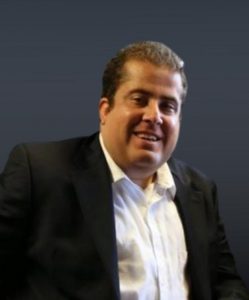
Nathan M. Gutierrez, Founder and CEO of Wheel Life Enterprises, was born with Spina Bifida and uses a wheelchair for mobility. He overcame kidney failure, became a youth sports nonprofit leader, worked in local government, and was nationally recognized for his work. Nathan is a Certified Corporate Speaker, Board Certified Clinical Hypnotherapist, and Life & Success Coach, committed to empowering individuals with disabilities to become more independent and develop a plan for their future.
Episode #73: Navigating Mobility Challenges: From Childhood to Coaching
Mobility Challenges Won’t Stop Nathan Gutierrez!
(Recorded July 29, 2023)
Full Transcript of Interview:
Tonya: So, Nathan, welcome to Water Prairie.
Nathan: Thank you for having me. I’m glad to be here.
We’re going to be talking today about your journey with Spina Bifida and some of the things that you’re doing. But with all of my guests this season, I’ve been playing a game called Two Truths and a Lie. And, um, listeners, if you haven’t been listening to other episodes, your job in this is to listen to Nathan’s facts that he’s going to share with us.
And I say facts or pseudo-facts because one of them will not be true. And, um, if you’re watching on YouTube, you can post your guess in the comments. If not, then go to Instagram and Twitter and look for the post that matches this episode, and place your guess at the bottom of that post. And a week after we release this, we’ll come back and we’ll put the answer so that you can check your work and see, see how you did.
So Nathan, would you be willing to share three facts with us about yourself or pseudo-facts that is?
Uh, first one is, uh, I played in the national wheelchair basketball association championship game. I’ve also been a two-time TEDx speaker. And the third one is I spoke to the White House, U. S. Department of Labor.
Wow. Wow. I’m pretty impressed with all three of those. So, we’re going to have to see which two are true, and which one is false. Um, so anyway, post your guesses, um, after you listen to this episode, of course, so finish listening first and then, then go and post your guess.
You might get some, uh, some tips to what the actual answer is. If you listen through all of it too, we’ll, we’ll see how our conversation goes. Well, last week we featured, um, Melissa Ortiz. She was talking about her journey with spina bifida and, um, her personal story there, and I’ve asked Nathan to come on because I wanted to continue the conversation a little bit more.
And for our parents who have children who have a diagnosis of spina bifida, I thought this would be really good, um, to help me understand it more, but to help them also get a better perspective of, um, some of the stories of adults who have, have gone on and what they’re doing with their lives today. So, um, so Nathan has agreed to come and talk to us some, and, um, Nathan, I wanted to ask you if you could, would you share with us a little bit about kind of how things got started?
Did your, did your parents know before you were born? Or was this something that was after you were born? How did, how did they first find out that you had spina bifida?
Well, it was a complete surprise to them. Uh, we’re talking 40 years ago, first of all, back in 1983. So, they don’t have the, they didn’t have the technology that they have now to diagnose, uh, different conditions and disabilities.
So, um, it was, like I said, I was born and, uh, I’m screaming as any normal baby does and when they realized that my arms were, were moving but my legs weren’t, they immediately turned me over onto my stomach and they saw about a quarter sized, uh, hole in my spine at the L1 level and the nerves were exposed and they knew immediately that I had spina bifida and it was at that point that they told my, my parents that, hey, you know, he’s never going to walk, he’s never going to talk, he’s never going to have a, any sort of quality of life.
So, it’s your decision on what you want to do, but we highly recommend that you, you probably give him up. And, you know, fortunately, my parents didn’t listen, and, uh, in fact, my mom was very offended, because here I was just born, and it was supposed to be the happiest moment of their life, and within minutes, they were saying, well, you know, he’s, he’s not going to be anything worth saving. So, you know, if you want to move on with your life, that’s okay, you can put them up for adoption.
And I’m so thankful every day that my parents decided to keep me and to raise me as I am. And then, looking back, well, my doctors were wrong. So, they were only wrong about one thing, and that was that I was never going to walk. Technically, that’s not even completely true because I did walk a few times in my life with the help of braces.
But then I realized that that was more challenging than being in a wheelchair. So I’ve just managed in, uh, to be in a wheelchair for most of my life and it’s, it’s made me the happiest because I’m mobile and able to do whatever I need to do using my chair.
Right. So, I’m trying to wrap my brain around a doctor telling your parents, do you want to just give him up? I mean, I, as, as a mom, I can’t even comprehend that. I’m just, so, so what would their answer have been that you would have been adopted by a family or put into an institution? What would they have done had your parents said?
Yeah. They said, they told my parents that I wouldn’t have any quality of life. I wouldn’t walk, I wouldn’t talk. And I would have a lot of challenges. That they would have to basically take care of me the rest of their life. And that there was really no way for me to ever be independent or successful in my life.
Well, then the other part of that statement that doesn’t click with me, I, I have MS. So I understand some of the nervous system and you know, how things connect and all. I don’t understand how. A spinal cord injury would affect your ability to talk. Does that really could, could, could that have been the outcome?
Well, it’s not the spinal part of it necessarily. It’s because I was born with hydrocephalus as well, and that’s water on the brain. Uh, and that’s connected to spina bifida more times than not. Uh, not always, but because of the, the water on the brain, the ventricles were swollen and sometimes that can cause uh, brain damage.
Okay. That, that, that does, doesn’t, I’m just, I’m just thinking, you know, if it’s just the, the spine, it wasn’t making sense on that, but that, but that I do understand because it could have caused a damage or something because of the, the pressure there I would assume.
Correct. Yeah. Well, and spina bifida does have, have its own challenges. I mean, it. You can’t walk, and there are bladder and bowel issues, which is what, you know, something I’ve dealt with most of my life, or really all my life, as most people with spina bifida do as well, uh, depending on the severity and the type of injury and where it’s located, that kind of thing. So, there are a number of factors that are involved when it comes to spina bifida.
So it’s not just the, well, they’re never going to walk again, they’re just going to be in a chair. It’s, it’s not that simple. There are a lot of other things to get taken into consideration. And then my parents were, well, when you look at today, they weren’t that young, but back then, uh, my dad was 25, my mom was 23, and I’m the firstborn.
So, you know, again, you’re looking at the, the moment of time where they’re expecting their firstborn, and me being the son, of course, they were both thrilled with that, especially my dad, being that I could carry on the family name. And then I’m born and then the doctor, within seconds of me being born and saying, Hey, there’s a problem that quickly shattered a lot of dreams, uh, in that moment.
And then for them, for the doctors to say, well, not going to be normal, so you might as well hurry and make the decision now. I mean, they hadn’t even had time to process what that even means.
Yeah.
So it was a very traumatic time for them.
Right. Interesting. Interesting. So, um, so they, so they think thankfully made the decision for you, for you to remain their son, which I, I, I’m just, I just still, still kind of reacting to, to the, to that even in being an option.
Um, did you, so, So from what I know, you have to forgive me, I don’t have a large understanding of spina bifida. Um, so I’m still figuring this out myself, but, um, but you said they were able to see, you said a quarter size section on your, on your spine. Now I, I’m imagining that it could be anywhere on the spine for a child.
So parents that are listening, it may be different, different areas because you’re saying, depending on what it would affect too.
Correct. Yes. So mine is at L1, uh, the lumbar one, uh, and that’s, you know, if you don’t know the spine, the way it’s laid out, it’s just above the tailbone.
Okay. Okay. In my, in my mind, that’s where I’ve always imagined it being. So what is the treatment that they would do? Did you have surgery right away? What did they do?
I did, so they covered the, the opening, the wound, and they rushed me into emergency surgery because they have to close that, that injury, that hole there, um, because the nerves were actually exposed. You can physically see them. And so that’s when they were able to determine, you know, where on the spine it was located, and then based upon those nerves that were damaged, they were able to determine.
What the potential outcome would be in terms of the severity of my injury. So different nerves Okay, do different things. And so, you know, there is some crossover with some of the nerves too, of course But then they were able to explain to my parents, you know down the road This is this is the side of the injury this this is what you can expect You know, and then, and then the lower on the spine it is, the less severe the injury is.
And of course, I’m talking about spinal cord injuries, too. So if anybody gets in an accident or something like that, depending on where that happened on the spine will determine the type of injury and the severity of it. The other thing is that you have two different types of nerves. You have motor nerves and you have sensory nerves.
And they’re exactly what they sound like. So the motor nerves are what help you with the movement, you know, your arms, your legs, whatever. The sensory nerves are, again, exactly what they sound like. Those are what allow you to feel. So, for instance, I had a friend growing up who didn’t have sensory nerve, or he had sensory nerve damage, but he, and he had spina bifida just like me, but it was lower on his spine, and the motor nerves were okay, but the sensory nerves were damaged.
So he could be in his chair, But he can kick his, his knees up and down, but he couldn’t feel. So it’s, it’s a very complex situation at times.
Interesting. Interesting. Yeah. I mean, having a mass, the nervous system itself has just, it, I’m always intrigued with it and just how our body and our brain works with it.
And learn sometimes to compensate with some damage, but not all damage to it. So it’s, um, it’s always, uh, uh, uh, an intriguing area for me to, to learn more about. So as a, so as an infant, you had the surgery. Did you have to have any other surgeries later as you were growing? Or was it just one and done early on?
For that one, it was just one and done, fortunately. A few months down the road, I think I was about three months old, they had to deal with the water on the brain, the hydrocephalus. So what they had to do is, um, they went in and they put a shunt, and in fact I still have it, it’s right here, I can feel it.
Uh, and what that does is it, it pulled all the water out of my brain, and then they wrapped a coil all the way down the back of my ear here, all the way into my stomach. And then when I was, because I was so small as an infant, uh, they coiled it up into my stomach, which would allow it to, to unravel as I grew.
And then at, at some point, and I can’t tell you when, I got tall enough, I guess you could say, to where the, the tube physically broke off the shunt and fell into my stomach. I don’t know when it happened. There was nothing that I felt. There wasn’t an emergency situation. Who knows? In fact, we just discovered it when I went in and had some x rays done.
And you could just see this tubing in my stomach that nobody could figure out what it was or where it came from and it was the whole thing. And it was just sealed up against my stomach lining. And so we finally figured it out that, oh, it’s, it’s the shunt tubing. And that’s when we discovered that it was no longer connected to the shunt in my head.
Um, fortunately, I’ve never had any revisions or issues with the shunt. I have known people who’ve had revisions or trouble with the shunt and have had to go in and have major brain surgery, because that’s what it is, and have the shunt either cleaned out and then, you know, their head put back together, or they’ve had to have the shunt removed completely and then replaced with a new one.
And that, that’s a pretty serious issue. But fortunately, I’ve never had that happen in my life. And now, like I said, the shunt doesn’t work. Because it’s not even connected.
So, so for you, it did, it, it’s resolved itself pretty much. You don’t, you’re not getting the fluid now that you, that you had when you were younger.
No, I, I mean, as far as I know, no. And I, I’ve had CAT scans several times in my life and there have no, been no indications of that ever occurring.
You said that you used braces for a, for a time when you were in school, were you using braces at any of that time or were you in the wheelchair at that by then?
Well, going to school, I was in the chair full time. When I was three, I want to say, is when I had my first pair of braces. And I might have worn them to school a little bit, but I, and I had a walker. I do recall this, but I don’t remember using them that often. It was always the chair. I think I would stand up and walk a little bit with the walker, but it was very cumbersome.
Uh, because they were literally almost full-body. I mean, they were up to my chest in order for me to walk and it was kind of a waddle. I’d have to throw my hips and everything to move step by step. Uh, so that was when I was three and then I went back and had another surgery to, uh, release, uh, behind my knees and behind my, and my heel cords, uh, when I was about, 7, 7 or 8, um, in order to get a new pair of braces.
And I was very reluctant at the time. Uh, I had a doctor, an orthopedic doctor who really pushed me into it. Um, you know, I, I had several people who, who told me that That was really going to be the only way that I was probably going to be successful was that if I could Stand up and walk because that’s how society functioned now We’re talking about pre-ADA here, and I just mentioned that because this last week We celebrated the 33rd anniversary with the Americans with Disabilities Act.
So we’re talking the late 80s here So just shortly before that when things weren’t as accessible as they are today And there was that real fear from family and friends Uh, who thought that, well, if, if I wasn’t able to walk, how was I going to be able to function in a very inaccessible society?
Yeah. Yeah. And it’s, it’s one of those things that, you know, thinking back now, it’s, it’s hard to remember sometimes how much has changed in that amount of time. I do want to hear a little bit about your, your childhood experiences. Um, so you’re, you’re in the wheelchair, accessing, accessing, accessing school, I can’t talk today. Um, did, did you find it, um, easy to make friends? Did you have, you know, like, I’m thinking as, as you’re getting older, maybe into older elementary school, even, um, were you involved, involved in any school clubs or sports or any programs that were going on?
Well, up until first grade, I was strictly in special education, uh, again, because there weren’t that many programs for people who could potentially move into mainstream education at that time, a lot of things were still being going on. Figured out and determined at that time. Uh, much, there was a lot of improvement by that time compared to previous generations.
Some of my friends who were, who were older, they had to deal with a lot more challenges. And I, I thank God that they were able to help pave the way for me to be able to eventually move into mainstream. But up until first grade, it was strictly special education. Uh, starting first grade, I was able to do half day, so I did.
The morning half in special education and in the second half of the day I was able to move into mainstream education. Second grade on, I was able to be fully mainstreamed and from that point through about sixth grade, uh, to answer your question, I, I had a lot of friends. Uh, I was not just the kid in the wheelchair that they saw in their class or out at recess.
I was Nathan, uh, who just happened to have a disability and be in a chair and… A lot of them wanted to push me, and a lot of them tried, but we had to set some ground rules at the beginning of every school year. My mom would bring our two little miniature schnauzers that we had at the time, and you know, we’d visit the class, and we’d show the dogs, and then we’d talk about me and say, Hey, look.
This is Nathan. This is his wheelchair. He uses this to get around as much as your legs get you around. And, uh, it’s important for you to know that you don’t touch the chair unless Nathan says it’s okay. Because it can be very dangerous for him if, if, you know, he were to fall over or something like that.
You know, we had to set those ground rules and those expectations that I was able to do most things on my own, but if there ever were a time that I needed some assistance, I would ask one of the kids, or I would ask an adult, a teacher most of the time, that, you know, who would be more capable of helping me?
And the kids were really good about it. I’d go out to recess, and we’d play basketball together, and… You know, I didn’t have the physical arm strength to shoot on the regular 10-foot-tall hoops, but they always included me. So that was, that was a lot of fun. And, and in fact, as of today, at 40, I’m still friends with a lot of those people.
So, you know, it really helped establish my foundation in getting connected with people in the non-disabled world, so to speak. Junior high is where things started to get tough and we’re talking socially, we’re talking academically. Um, I didn’t do so well academically in junior high and it was because I was really trying to focus on being more social and looking back.
It was not the best choice, but you know when you’re 12 13 years old that’s the most important part of your life and Yep, I almost paid the price for it. In fact in seventh grade. I was elected to the student body government I was the only seventh grader and I was the only boy so pretty exciting time in a young, uh, young boy’s life to be hanging around some older girls.
And, uh, you know, they were cute. And, uh, became friends with them. But it almost cost me, academically speaking, because I wasn’t doing well and I was falling below the performance levels that were expected of me. And the principal called me in. The, um, head of the, um, the department for, uh, You know, special needs came in and they said, Hey, you know, we really like you, but we’re, we’re having these problems here and you need to shore your academic performance up.
Otherwise you’re gonna have to be removed. And, you know, we’re, we’re trying to treat you kindly and we’re trying to help you out here. But, you know, we don’t know, you know, We don’t know if this is going to work out for you. But we want you to also know that we’re trying to help you save face. We don’t want to embarrass you or anything like that.
In fact, that principal was awesome. Um, the, the woman who was the head of the special education department in that district was great. In fact, the, uh, the lady became a neighbor of mine down the road. And, uh, a couple years down the road. And then the principal was by far the best principal I’d ever had in my life.
Um, in that same meeting, believe it or not, my mom came into that meeting and said, Absolutely not. If he’s not performing well, kick him out of office. And that’s how my mom was. She was very, was and is. Um, she was very, um, she wanted to ensure that I was going to be treated. Normal like everybody else and at that time in that moment.
I don’t want to be treated normally I wanted to be treated with right You know, my social life is on the line here that if I get removed from office that’s gonna be a lot of embarrassing situations for me to deal with, with my peers. The principal ultimately did keep me in office, and looking back as an adult you probably shouldn’t have, but at the same time I am very appreciative that he gave me another chance, and I was able to graduate with my peers.
I mean, I didn’t fall so far behind that I was in danger of not graduating or anything, but I did struggle enough to where there was a chance that at least I wouldn’t be able to participate in student body government anymore, but… I think I learned a lot from that experience, especially into my adulthood, that you can’t treat everybody the same, no matter what the definition of normal is, no matter what the definition of treating everybody the same, there’s so much diversity in the world that you don’t know, you know, what people are dealing with, you don’t know what their backgrounds are, you don’t know, What their feelings are, you have to take a lot of those things into account and consideration.
So, again, that’s not to say that you excuse bad behavior, or you excuse people who aren’t performing up to a certain level of expectation. But, I think we need to have more understanding of… What an individual situation may look like and not treat it like you’re grading it against a, an arbitrary rubric that everybody needs to be held to that same standard.
That’s nearly impossible to do in the first place. Um, as I moved into high school, similar situation in that, okay, now we’re going to an even bigger campus where, you know, we have getting kids from other junior high schools in, so then I had to meet new people. And, um, it was at that time and I know that You know, if you’re, if you’re parents of, uh, of teens, whether they have disabilities or not, you know what that’s, you know what that’s like.
Um, I would struggle a lot in high school, especially socially. So I was still very much struggling socially in high school. Doing my best. It got really challenging when… When a lot of my peers started getting their driver’s licenses and driving because I wasn’t there yet, and perhaps I wasn’t even mature enough to get there, but I didn’t have the resources at that point in time to even have that opportunity.
I didn’t have a car with the adaptive equipment in it. I needed to go somewhere who would, to a place that would, be able to train me on how to use those hand controls. Uh, I needed a car in the first place, which I didn’t have. So there, there were some things that I missed out on there. On top of that, there was dating.
And dating was very hard to deal with in that I was not able to participate in that. In fact, I only went to two dances the entire time I was in high school, and that was my senior formal and my senior prom. And my senior formal, I did go with a girl. And, um, uh, my parents rented a limo. And so I was able to go with her in that way, again, because I wasn’t able to drive.
And then I went to the formal, and I had my mom drop me off, but I didn’t go on a date or anything. Um, but I, I at least wanted to do that because that was my senior year. But high school was a challenge on its own, too. I, you know, I had pretty good teachers for the most part. I had a couple who were a bit challenging.
And I’m sure I was a bit of a challenge to them as well, in all fairness. Um, I did better academically, but I still wasn’t a spectacular student. And looking back now, you know, it’s one of those things that I regret that I didn’t do as well as I, I could’ve. And a lot of that was just because I was stubborn, and I was rebelling, and it just, I was being a teen.
I was being a teen with a disability. And, uh, again, that’s not what every teen goes through. It’s not what every teen with a disability goes through. So again, if you’re watching, I’m not trying to scare anybody there. Just telling you what my experience was. Um, I, I did get involved in athletics a little bit.
Uh, on my freshman year, I was the, Uh, student manager for the boys varsity team. And so I was there at all the games practices. As much as I could, at least. And then, my sophomore year, kind of interesting, Uh, I was able to be the, uh, manager, the student manager for the girls junior varsity team. I don’t know how that happened.
That was kind of a fluke, because they didn’t, as far as I know, they didn’t let any other boys be part of a girls team. Um, but I was able to do that, and that was kind of cool, again, because I’m around teenage girls, I’m a teenage boy, so hey. Uh, I did not object to that at all. And I knew all the girls. I mean, we, we were friends and, and you know, we were cool with each other, you know, nothing happened.
Um, but it was, it was fun and um, I’m not sure the coach was completely accepting of me at the time, but you know, she was in her early to mid twenties, so she was young too. She was a teacher on campus and I’ve seen her. Since then, you know, many years later, we’re, you know, we’re fine, but it was a different situation for all of us to, to get used to.
Uh, and then I, I graduated on time with my peers and, uh, was able to go across the stage. And I think that was a monumental moment in that looking back to, at least for my parents, looking back to, you know, where I came from in terms of my birth. Again, they were told that never walk it, never talk it, never make anything of myself.
And here I was graduating high school, so that was exciting for them. And then from there, I don’t know, do you want me to keep going in terms of education? Sure. Okay. Sure. Go ahead. Uh, from there, uh, I went to the junior college. Um, it was where I was able to get accepted first of all, and I’m still living at home.
And I was not thrilled about it again, because a lot of my peers were going off with scholarships to big universities away from home, and I, and I really wanted that, but I just, I didn’t have the, the tools. I didn’t have the academic tools. I didn’t have the social tools. I just, I wasn’t ready. But you know what, if we’re talking about God’s provision and God’s timing with things. I really think that was meant to be Because I was able to again stay at home and I met a professor at the junior college who was blind and He was blind from a condition that Didn’t really show up until he was in his late teens when he was about to go off to college And it turns out that he was the first blind student At that same college many, many years ago, and so he was one of my professors, uh, and he taught communications and he was a very good speaker.
And so he told me, he said, Hey, you’re in a wheelchair. That’s okay. You can learn how to communicate well. And then the wheelchair won’t matter. He goes, look at me, I’m blind, but I’ve, he traveled all over the world to speak. He appeared on Oprah. He appeared in front of the Pope. Um, he spoke to Nelson Mandela.
I mean, he, he was a celebrity in so many ways. Not world renowned in the way that everybody knew his name, uh, necessarily, but I don’t know if you’re familiar with the, the kindness movement. Uh, in the early nineties, uh, today, his, his, yeah, his quote was, today I will commit one random act of senseless kindness, will you?
So if you’ve heard that, that’s actually Dr. Chuck Wall, my, my old professor. And so, uh, it was really, really cool to learn from him. Um, in fact, he would. Stay after class a lot of days and his wife would come pick him up about an hour after you know We were all done and we’d sit in his office and he talked to me and he’d really give me encouragement he would give me life lessons and He really was one of the major influential players in 18 19 years old at the time and He’s the reason I think I’m on this podcast with you today because he’s the one who taught me How to have the courage to learn how to be a speaker, to learn to share my message, and to learn how to mentor and get other people to share their stories, so that we can create a stronger world, including people with disabilities.
Um, I can’t say enough about the man. Unfortunately, a couple years ago, he passed. He was in his 80s. But, uh, so he lived a long, full life, but I really wouldn’t be here had it not been for him. And, uh, I include him in a very small select group of people. My parents, my sister, uh, him, and maybe just a couple of others.
So he was very pivotal in my life. But from there, um, I was on the, what I call the lifetime plan at the junior college, because it seemed like I was going to be there forever. I was there about five years. Uh, four, four and a half, something like that. Yeah, and it’s a two year school, so, you know, I could have gotten there about two times.
Right, right.
Um, and again, it was adjusting to another type of education, it was going to different classes, going to a bigger campus, and now I was at the point where if I went to class or if I didn’t show up to class, nobody cared, because as long as the fee, the fees are paid, you can pass, you can fail.
Nobody’s going to hold you accountable to that. And so for me, it was great. I’m an adult. I’m going to do whatever I want to do. I learned some hard lessons there too. And again, I didn’t, I didn’t do so bad, but it took me longer, uh, than it probably should have, but again, I was just, I was learning and I was maturing and I finally got through it.
Um, as I was leaving though, as I was leaving the junior college. There was a point in time, now we’re around 2006, where I wasn’t feeling so well physically, and I didn’t know what it was, I didn’t know what was happening with me, I just knew that I was sick. And to just share a little bit of what that felt like, I would come home and…
I would just be tired all the time, I would be sick to my stomach, I couldn’t hold food down, I would go to the trash can or the bathroom and I would throw up. And this was happening daily for a few weeks. And now mind you, again, I’m in my early twenties, so I’m an adult now. And my mom, uh, my parents had divorced many, many years ago.
Before that, they divorced when I was about nine years old, but I maintained good relationships with, you know, my, my mom who was living with, my sister was living with, and my dad moved back to L. A. We were a couple hours from L. A. and he moved back down there and we, we had and still have a great relationship.
And, um, But at that time, my mom said, look, you’re an adult. You can take technically take care of yourself. And technically I can’t tell you what to do, but there’s something very wrong with you physically. And you need to go to the doctor and being a guy and being stubborn. I said, I’m fine. I’m fine, mom.
You know, don’t worry about it. I’m in school. I’m stressed out. I’m fine. Don’t worry about it. Well, she forced me to go to the doctor and she physically drove me to L. A. where my doctors were located. And she said, there’s something wrong with you. Let’s just get you checked out. So they did the blood work.
They did the, what I call the pat down test. You know, they just kind of pat you down and go, you’re fine, but we’ll take some blood. So they did a full blood panel. And about a week later or so, uh, I got a call from one of the doctors and they said, well, here’s the thing, you’re in full renal failure, which is another word for kidney.
Uh, your kidneys are shutting down and you have to go to the hospital today. And I went, oh, okay, well, and you know, that. That’s a showstopper right there. So I called my mom a