
Episode #52: Caring for Your Child with Disabilities: How to Plan for the Future
Special Needs Planning for the Future
Water Prairie Chronicles Podcast
Audio is streamed directly from the publisher (waterprairie.com) as published in their RSS feed. Play Podcasts does not host this file. Rights-holders can request removal through the copyright & takedown page.
Show Notes
- Tonya
Show Notes: In this episode of the Water Prairie Chronicles podcast, host Tonya Wollum interviews Amanda Owen, founder of the nonprofit organization Puzzle Pieces. Amanda shares her personal journey of growing up as a sibling to a brother with a rare disability and how it has impacted her life. She talks about the emotional impact of having a sibling with a disability, the challenges and joys that come with it, and the importance of emotional intelligence in processing those feelings. As a special education teacher, Amanda felt called to do more to support people with disabilities and founded Puzzle Pieces, a nonprofit organization that has been serving the community for almost 11 years. Through her own experiences and the work of Puzzle Pieces, Amanda has become a coach for parents and siblings of individuals with disabilities, helping them navigate the emotional and practical aspects of their situations. In this candid and heartfelt conversation, Amanda shares her perspective on growing up as a sibling to a brother with a disability and the lessons she has learned along the way. Whether you are a parent, sibling, or friend of someone with a disability, this episode will provide valuable insights and inspiration on how to support and advocate for those with disabilities. Join us next week for the rest of Tonya’s conversation with Amanda. She talks more about her experiences, the books she’s written to help support children with disabilities and spread awareness and acceptance, and her work with her non-profit, Puzzle Pieces. Amanda loves to connect! Find her at: Website: piecesofme.org Podcast: https://podcasts.apple.com/us/podcast/pieces-of-me/id1547078857 Facebook: https://www.facebook.com/piecesofmebyamanda Instagram: https://www.instagram.com/piecesofmebyamanda/ Connect with Us: https://linktr.ee/waterprairie Support this channel: https://www.buymeacoffee.com/waterprairie “2 Truths and a Lie” Game: Can you guess which statements Amanda shared were her truths and which was her lie? Post your best guess in the comments below. We’ll post the correct answer on Instagram next week so be sure to check and see if you were right. 1. Her brother was the 11th person in U.S. with his diagnosis. 2. She is 2 episodes from 100th on podcast. 3. She loves to cook and try new recipes. Music Used: “LazyDay” by Audionautix is licensed under a Creative Commons Attribution 4.0 license. https://creativecommons.org/licenses/by/4.0/ Artist: http://audionautix.com/
The Water Prairie Chronicles Podcast airs new episodes every Friday at Noon EST!
Find the full directory at waterprairie.com/listen.
Special Needs Planning for the Future
Show Notes:
In this episode of the Water Prairie Chronicles podcast, host Tonya Wollum interviews Amanda Owen, founder of the nonprofit organization Puzzle Pieces. Amanda shares her personal journey of growing up as a sibling to a brother with a rare disability and how it has impacted her life. She talks about the emotional impact of having a sibling with a disability, the challenges and joys that come with it, and the importance of emotional intelligence in processing those feelings.
As a special education teacher, Amanda felt called to do more to support people with disabilities and founded Puzzle Pieces, a nonprofit organization that has been serving the community for almost 11 years. Through her own experiences and the work of Puzzle Pieces, Amanda has become a coach for parents and siblings of individuals with disabilities, helping them navigate the emotional and practical aspects of their situations.
In this candid and heartfelt conversation, Amanda shares her perspective on growing up as a sibling to a brother with a disability and the lessons she has learned along the way. Whether you are a parent, sibling, or friend of someone with a disability, this episode will provide valuable insights and inspiration on how to support and advocate for those with disabilities.
Join us next week for the rest of Tonya’s conversation with Amanda. She talks more about her experiences, the books she’s written to help support children with disabilities and spread awareness and acceptance, and her work with her non-profit, Puzzle Pieces.
Amanda loves to connect! Find her at:
Website: piecesofme.org
Podcast: https://podcasts.apple.com/us/podcast/pieces-of-me/id1547078857
Facebook: https://www.facebook.com/piecesofmebyamanda
Instagram: https://www.instagram.com/piecesofmebyamanda/
Connect with Us: https://linktr.ee/waterprairie
Support this channel: https://www.buymeacoffee.com/waterprairie
“2 Truths and a Lie” Game:
Can you guess which statements Amanda shared were her truths and which was her lie? Post your best guess in the comments below. We’ll post the correct answer on Instagram next week so be sure to check and see if you were right.
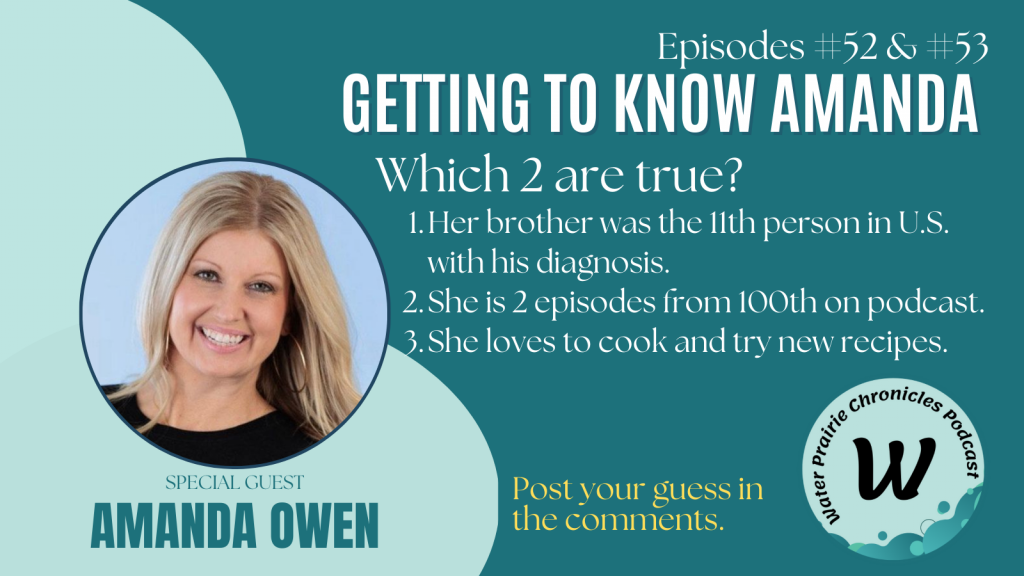
1. Her brother was the 11th person in U.S. with his diagnosis.
2. She is 2 episodes from 100th on podcast.
3. She loves to cook and try new recipes.
Music Used: “LazyDay” by Audionautix is licensed under a Creative Commons Attribution 4.0 license. https://creativecommons.org/licenses/by/4.0/ Artist: http://audionautix.com/
Meet Today’s Guest:
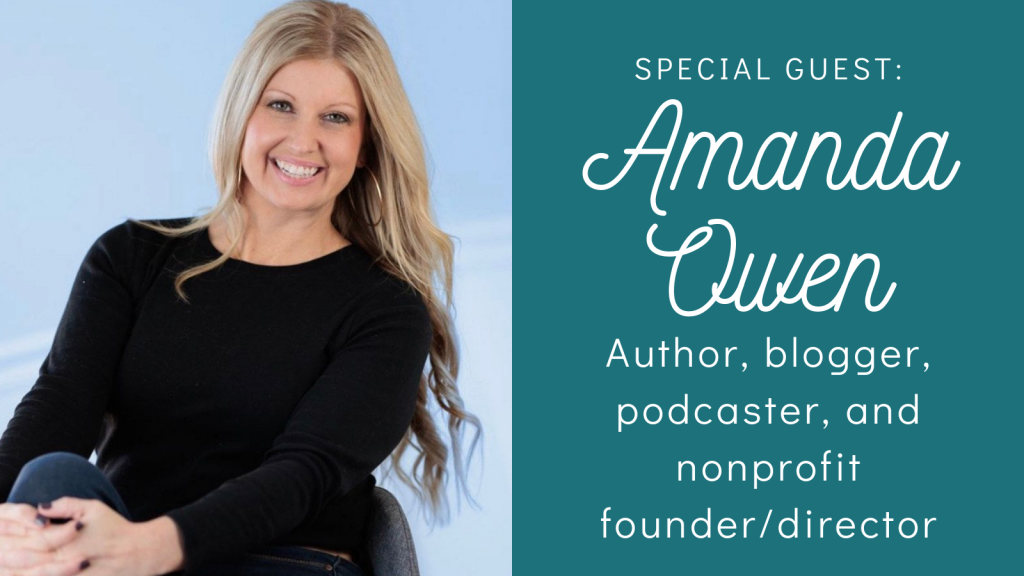
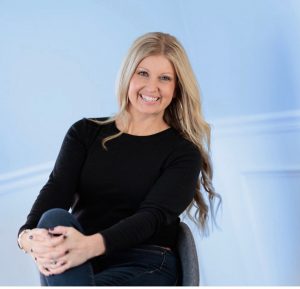 Amanda Owen is an accomplished children’s book author, blogger, podcaster, and nonprofit founder/director. She is a lifelong advocate for people with disabilities, inspired by her older brother Nick. Amanda is dedicated to empowering women to find their purpose and lead fulfilling lives, free from societal expectations. She and her husband, Justin, have two sons. Amanda’s inspiring message is to dream big, work hard, own your mistakes, and laugh often.
Episode #52: Caring for Your Child with Disabilities
How to Plan for the Future
(Recorded February 22, 2023)
Welcome to the Water Prairie Chronicles. A podcast created to encourage and support parents of special needs children. I’m Tonya Wollum and I’m glad you’re here.
Tonya Wollum: Welcome back to Water Prairie. We appreciate you being here today! I have a special guest with me today. Her name is Amanda Owen. And Amanda, I came across on Instagram.
I was pretty impressed with what she’s doing. It seems like every time I log in, I see something else that she’s involved in. So, I’m looking forward to getting to know her better today and introducing her to you. But just briefly, Amanda’s gonna tell us a little bit about her brother Nick. And I’m gonna hold off on that a little bit and let her tell us more.
She lives in Kentucky, and she is the host of a podcast called Fuel Your Purpose. She created a nonprofit. She’s maybe tell us a little bit more about that in detail. But the nonprofit is called Puzzle Pieces and she’s the author of a series of children’s books called Owen the Wonderer. So, Amanda, thank you for coming on today and welcome to Water Prairie.
Amanda Owen: Yes, thank you for having me. I’m super excited.
So, if you could take just a minute and tell us a little more about that, that was like a really rough overview of who you are, but, but there’s a whole lot more behind all of that. So, tell us a little bit more about yourself.
Yeah. So, you know, I think that when people ask especially women about who they are, they tend to start to say like, I’m a mom, I’m a wife.
You know, I’m a nonprofit founder, I’m an author. I’m all of these things, but yet I forget to say like, I’m Amanda. Right? And so that’s really the passion behind the platform, Pieces of me by Amanda is because I have so many different pieces and layers to me, and most people knew me as Nick’s sister, Amanda, and I think that that’s where kind of my journey started.
I’m a sibling to a brother with a very rare disability. and he’s older than I am, and I grew up in a very small town. I played softball. I used to love coaching softball. I had so many passions that I did, and I became a special education teacher. Started a family. Um, I have two boys. I love being a boy mom, and I’ve been married for, 16, 15 years.
Oh my gosh. I don’t even know how long I’ve been married. A long time. A long time. Um, so yeah, I, you know, I taught special education for six years. I knew that was gonna be the passion and the purpose in my life. And I, six years into it, I decided to start a nonprofit organization that is called Puzzle Pieces to support people with disabilities.
And since then, that was 10, almost 11 years ago now. And, wow, life has taken different … God just has led me on different paths to live out of purpose to honor His gifts that He has given me. So I know that that’s a loaded a lot of bio. Like when I send my bio out, I’m almost embarrassed cause I’m like, oh wait, can a person really do all of these things?
And like, I’m trying to figure out how to do all of those things. And you know, they’re not check boxes for me. It’s just honestly going through the doors in which God opens and I’m just very blessed to be able to, to live in life on purpose and figure out my purpose early in life, and everything’s aligned to that.
So yeah, that’s a little bit about me.
That’s great. That’s great. Those that are listening, in the show notes I’ll be putting links to all the things that she’s involved with. Because you’re gonna wanna dig in more and see more of what she’s doing. But we’re gonna talk about some of the specific pieces of what she’s doing during this meeting today.
As we get started, I’ve been asking this season for each of my guests to share three facts about themselves, two of them being true and one being a lie. So, Amanda, do you have your “2 Truths and a Lie” ready to share with us?
I do.
- My brother was the 11th person in the country to be born with his particular disability.
- I am two episodes away from recording my hundredth.
- I love to cook, and I’m always in the kitchen trying new recipes.
Okay. All right. Thank you for sharing that. Those that are listening, go to the show notes here and leave a comment. If you’re on YouTube, go to Instagram, go to Twitter. Post what you think the truths and the lie are, and a week after we release this, we’ll be posting the answer on Instagram and Twitter, so you’ll be able to see if you’re correct or not. If you’re listening to this later, you can still guess and then check your answer later.
So I wanted to get into, when I invited Amanda to come on to the podcast, I asked you about two different topics that I’d like to talk about. And um, the first one that I wanna talk about is specifically about being a sibling of someone with special needs.
You talked about Nick and having an older brother, so you’ve grown up in that environment yourself, but you’re also working with others who are in that same situation. So I thought you’d be the perfect person to bring in a little more information on this. Before we go into the questions themselves, is there anything that you’d like to share about just your personal experience with growing up as a sibling?
And then we can get into some of those specific questions that I had.
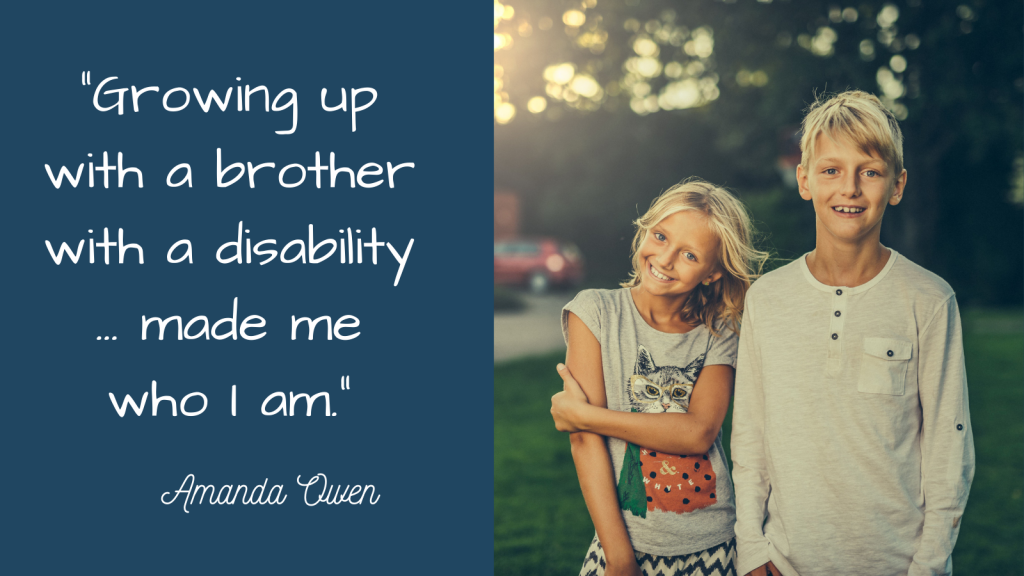
Yeah, I mean, honestly, I coach a lot of mamas now on the perspective or, uh, from the perspective of a sibling, because I think that I didn’t know then what I do know now as an adult, and I don’t think that I really understood the emotional impact that having and growing up with a brother with a disability had on my life.
https://www.pexels.com/photo/boy-standing-beside-girl-outdoors-590472/
Whether that was good or bad, it made me who I am and I didn’t realize or was able to put language or understanding to those emotions or to the significance of that impact until I was an adult processing that, and I don’t think it could have happened any sooner because I say this all the time to families I coach, is that children, they’ve had when a mama gets the diagnosis that their child has a disability, they’re, I mean, I would think they’re at least 18, 16 or older, right?
So they’re a little bit older in their life, and so their emotional intelligence to process what’s happening, they’ve had the entire pregnancy to process that. Then when they’re born, they’re learning through that as they’re navigating the diagnosis. Learning what the ends and the outs and, and navigating societies you know, what they think about it and, and how to advocate for that in school.
And then they might have another child with or without a disability. And so what happens when a child is processing that their sibling, they don’t have the emotional intelligence yet they, it hasn’t developed yet to understand maybe they don’t know life any, but probably some of the same emotions that a parent would go through, the sibling is going through, but they don’t, they don’t know what to do with those feelings, and they definitely do not know how to share those very well.
I didn’t know that until I was older. Right? And so I think that, and I am the woman I am today. I would not, you know, a lot of people, I get asked some of the questions like, do I ever resent my mom or my dad? You know, my dad doesn’t get hardly any credit. Um, but my parents are still together. Um, but like, do I resent them?
You know, what did they do better than most parents of why I turned out the way that I did? You know, like, or did I hate my brother growing up? Like all of these things I get asked on a daily, and really, I don’t know, these were the cards that were dealt. Like, I don’t know, if it wasn’t this, it was gonna be something else, right?
And so, right. I don’t know any different, I just know that the way my life was, whether it was through the sacrifices, whether it was through the joy, whether it was through the hard or the great, it made me the woman that I am today. And so yeah, I think that there’s so many, I don’t like to call it trauma, and I think some people would classify some of the things I went through as trauma as a child, but it wasn’t trauma to me. I didn’t know it would to be trauma. It was experiences that shaped me to, to be not just who I am, but how I think and how I wanna show up and the mom that I am. Um, so yeah, I think that I’ve learned a lot from that and now I’m able to have a platform to be able to share that and, and cast light to that because siblings as much as being a parent to a child with a disability is very isolating.
Sometimes being the sibling can be very isolating and we don’t have the support like a parent would, and so we just, I don’t know that I spend all my time there. Um, but really that’s not even my passion. It just happened. It’s God’s purpose for me to connect with other siblings because I’m gonna be a future caretaker for my brother, and I know that.
So, yeah, I don’t know if you, that’s a loaded answer. Uh, but that’s kind of …
No, it was, it was good.
Well, I think, I think you bring out an important part that, you know, our kids who were growing up as typically developing children who have a sibling with a special need or a disability, they don’t know life any differently than what they know.
And so, and I think that’s kind of what you’re saying there, your life was what it was. You don’t have a comparison with that. You may have had a girlfriend that you spent time with and saw their family was different, but every family’s different. So that may not have made a difference there either.
My kids joked, they were, some of the first couple of interviews that I did, we were kind of practicing on the family first. Before we had guests offsite. My son talked about being the sibling at first because my daughter was older. She’s visually impaired, so hers was cut and dry from day one.
We knew there was something going on, so he was always the one who kind of took the backseat for a while until his disability started creeping up as he got older. And so he joked about how she was more special than he was because we knew things before with her, but I do remember there were stages where they would kind of take a backseat for each other just outta necessity because they may have had some needs, but the other one definitely needed more help at that moment in time. And as a parent, I appreciated the fact that they were able to do that because I don’t know if I could have split myself to focus both directions at the same time.
Right, right.
https://www.pexels.com/photo/family-of-four-walking-at-the-street-2253879/
I give our parents with multiple children with multiple needs, a lot of credit, cuz it does take a lot of energy to figure out who needs what, where the doctors are, who the specialists are, all of those things. Especially when they’re little and you’re still trying to put all the pieces together for each of them.
Absolutely.
So the reason I wanted to talk to you really about this topic is because you are a sibling. You openly talk about being that sibling and you also have more knowledge, I think than most do as far as what’s gonna be involved with being that adult sibling. And as you said, you know, one day you will be the caretaker.
So that’s why I wanted to talk a little bit more specifically with you about this cuz I felt like you’d be able to bring to us a little more information than some of my other guests that I’ve spoken with. One of the questions I wanted to ask you was how can we, as a sibling, thinking more of that older child, younger adult, maybe that age range, how can siblings be involved in the care of their brother or sister and decision making without stepping on their parents or the legal guardians at that?
Like before they’re officially in that role of being a guardian or a caretaker, how can they still be involved knowing that one day that is gonna be theirs?
Well, I think I can answer this in two different ways. Um, I’m always, cuz I coach it in two different ways. I just spoke to a little girl, actually. I went to a school and spoke to a sibling who is trying to be mom. Um, and she’s in fourth grade and she is trying, and she wants to help. That’s primarily what happens is we wanna help because we see the struggle. We see the struggle more so that we’re not trying to help our sibling, we’re trying to almost help our parents because we see them not struggle. And I don’t wanna use that term loosely, but we see sometimes what they have to navigate. And we just want to be able to offer help because maybe if we do help, if we do step in, then maybe they’ll be able to see us. Or maybe they’ll think that, you know, I, that’s how I get to spend time with my mom and my dad.
And so I navigate a lot of kids, teenage, middle schoolers. You don’t have to be that now. And I think that sometimes we overly worry about the future. So, we’re almost too much involved. And so, we forget about how to be the sister or the brother. Um, and ultimately that’s what we need to be. We need to first be able to figure out how that relationship can just be not a caretaker.

https://www.pexels.com/photo/kids-playing-in-the-swimming-pool-5649993/
I’m not thinking like a caretaker. How do I just learn how to play? Be a sister. Like I used to remember thinking about, I was like in second grade, and I was poking fun of my brother about something stupid. I mean, I think and, and somebody, one of my friends was like, can you poke fun of him? I’m like, why not?
Like, he’s my brother. And they’re like, it, I think we forget that there still has to be a relationship there. And I see so many times parents either putting too much pressure for them to show up to be that perfect sibling. Right or not. You can’t poke fun of your brother, you know, he has a disability.
I’m like, I’m not even poking fun of him about his disability. Right, you know, like I’ll never forget when I was even younger too. I strapped my brother into this, his therapy tricycle, bicycle, I strapped him. It’s a wonder I didn’t kill him. I strapped him in and thought it was fun to be able, he pushed me down the hill, like pushed me on my bicycle. So, I was gonna push him on his bicycle, not thinking that thing was gonna tip over and he was gonna fall. Cuz he doesn’t have the ability to like steer it right now. Right? We were just being. Right? And those are the memories that stand out to me the most, even as an adult, is when we were just allowed to be kids and my mom wasn’t over there saying, you can’t do that with your brother.
Don’t do that. Like, he’s too gentle. Like, you gotta be right. Use gentle hands. I mean, there was sometimes I probably needed to be that reminded, but I’m just saying, and I know that I’m not really answering the question directly, however, indirectly I think siblings need to figure out how to be a sibling first and how to cultivate that relationship because it’s in those moments that will make them better caretakers later.
Because if we’re not a sibling first and we don’t understand how to like build trust in just a relationship of love and understanding disability or not. Then even as we get older either we’re not gonna know how to caretake because we never, it wasn’t built on anything or we’re not gonna have the desire to care.
So, I think that’s first and foremost. The second part to that is I think that we can’t get so involved. Sometimes caretaking comes naturally. I will say what my parents have not done a very good job of that I’m very open about to all other parents is that, and I try not to get emotional when I say this, but like my parents didn’t have conversations.
They still, to this day, don’t have conversations with me about what will happen when, when they die and what do I need to know about my brother. Like I feel like I know like. Uh, most things because I’ve seen it all my life, but now I’m not at home, right? And so my mom shares and, and I’m there. But like, am I, do I really know?
Do I really know what his favorite way is to do his morning routine? Do I really know that right? Or am I gonna assume that? Um, and we don’t have conversations about that because it’s too hard. Parents feel as though they’re in. and if I don’t have the answer, then I’m just gonna pretend like it’s never gonna happen.
Like my mom did not want to think about me being my brother’s caretaker ever because that was too hard for her. Yeah. She just wants to live forever and, but yet that’s not preparing me for the role that I need to play to make sure that transition is smooth for my brother, not for me, but for him, and so I really do coach of like, when the timing is right, you should know, but I think parents need to start journaling and, and leaving a guidebook if you can’t verbalize it.
I like that journal to leave the book, the playbook. Because I would much rather have a playbook, and I’m not just talking about the doc, here’s who you go to here, he goes to the doctor. This is his dentist. But that way we can still just focus on being the memories of a sibling and not, so it being daunting and drowning of, shoot, I’m gonna have to be their future caretaker and can I do this?
It’s not a matter of can I. Right? It’s just if I have the willingness. You know, do I have the, you know, what do I, what’s the foundation? I have to build on that? I hope that I was able to explain it.
No, I like that idea. I think that’s, I love the idea of parents just journaling what’s happening because life changes, and as the sibling is growing up as well their rate of growth, maybe a different rate of growth than yours, but they are still making changes and they’re maybe able to take on more of their own care, things like that.
But as all of us age as well, that might also reverse later as they’re getting older. So having someone that’s documenting those changes that are happening and how things are being done would help whether it’s the sibling coming in or someone else as well, knowing what’s happening. Well then, I really like that.
Well, the other thing to that, I think sometimes what I don’t know that I wish I did and luckily my mom, we don’t have intentional conversations about it, but I’ve just seen her over the years and other parents like, let’s just be real. This is not about just what my parent did. I coach and I support over 400 people with disabilities.
So like I’m, I sit back and call all their parents and taking care of them. Everybody wants me to be the future guardian and I just can’t do that. And I’m a caretaker right now to an adult with autism who lives with me. So I’m getting a play by play even now. So I’m actually having to journal cause I know he’s not gonna live with me forever.
So like I’m journaling even though I’ve known how to advocate. And that’s the biggest piece that you can’t teach. And there is no so, you know, whether that’s advocating for healthcare, like it’s not just a matter of leaving the doctor, the dentist in which they go to, but just know that these are the struggles that I’ve had to fight for with going to the dentist and this is how I overcame them.
Like, this is what I wish you would know that I knew later. Right? Because that, those are the things that it shouldn’t, we don’t want the individual with a disability to have to restart their life in just the hardest transition that they’ll ever encounter. Right. That’s only gonna be through the person leaving, and we just can’t assume that we’re always gonna be here.
Right? Well, depending on who this adult is that we’re talking about, they may have, you know, one comfort piece that made the difference in whether those transitions could happen or maybe they need a transition time to get ready for those things. Um, so a lot of our listeners, I mean, the focus of, of the podcast is for parents of young children, and I know this is kind of a little bit off from where they’re thinking right now. But at the same time, some of those lessons that they’re learning right now with that young child will still be the same situation with that older child with it. So, I think it is …
It's never too soon to start preparing!
Share on X
It’s never too, like, it’s never too soon to start preparing.
And I think because no matter how old their loved one is with a disability, their child, their fears are already there about long-term living. They’re already trying to figure out how they outlast their child. Um, I know that because I’m surrounded by families, like I said. So, the fear happens the day one, that they realize that they’re raising a child with, with different needs.
And so that fear can only be silenced or lessened when we have a plan in place. And if that means that you can’t verbalize that out loud, to a future caretaker. You don’t know who that future caretaker is. Like I get that a lot. Like, well, I don’t, they’re an only child or my other children do not wanna be their caretakers.
So even if you don’t know, start journaling now. Right? Like start leaving that because that is what’s going to help your child and give you some type of controlling peace around the fear. Because the fear is there no matter how old they are. Yeah.
Well these are important conversations. I think they are hard to have. No different than having that same conversation with their parents as they’re getting older too.
We’re gonna have, part of life is having these types of conversations.
Those that are listening, I sent Amanda a list of questions that I kind of wanted to run through, but as we talk, sometimes I change what I’m doing here.
Yeah. I’m an open book, so you can ask me anything.
Well, it’s like, I’d love to just, just continue pulling it all out of you here. So, as we’re talking about, just thinking of that older sibling there. Um, you know, not necessarily at the age that you and Nick are right now, even, it might even be, you know, our teenage siblings that are there.
Um, but how can a sibling help support and encourage independence for their sibling? Um, like are there any stories that you can think of from when? Because, because Nick is how much older than you.
He’s three years older than I am.
Three years older than you are, so he would’ve been in high school age or similar.
Mm. He’s 41 and I’m almost being 39. ,
uh oh. She… You’re just a child.
I’m still having a hard time. Yeah. I’m having a hard time with that,
But just thinking back, like when you were in high school, maybe, or even your early twenties, were there ways that you were able to help him have independence and all without maybe doing everything for him?
Is that, am I even making sense with that question?
Yeah. No. Yes. Um, I think that the unique thing about siblings is we have a different approach than our parents. And so, I do believe we need to lean into that. And luckily, my parents always allowed me the freedom to be able to be not only the sister, but to, to try things, to like teach to, to guide.
I knew when I was five years old, I told my mom I wanted to be a special education teacher so I could teach students like my brother because I saw what he didn’t have. So I was always trial and airing anything with my like, like if he I’ll never forget we were, I was making pizza and he wanted to help and I really kind of sometimes hated the idea of him helping me. So like I always be like, no, you’re not gonna help me, but you can make your own . You know, like I just, I was very, I think that