
Episode #134: The Surprising Reason Your Child Doesn't Do Things On Their Own
Learn how to prepare your neurodiverse child for adulthood with actionable steps on teaching daily living skills and building independence. Authors Kristin Lombardi & Christine Drew share expert advice.
Water Prairie Chronicles Podcast
Audio is streamed directly from the publisher (waterprairie.com) as published in their RSS feed. Play Podcasts does not host this file. Rights-holders can request removal through the copyright & takedown page.
Show Notes
- Tonya
The Water Prairie Chronicles Podcast airs new episodes every Friday!
Find the full directory at waterprairie.com/listen.
Show Notes:
Is your child ready for independence? Discover the first steps to take, whether they are 4 or 18.
In this episode of the Water Prairie Chronicles, host Tonya Wollum sits down with authors Kristin Lombardi and Christine Drew to tackle a topic that weighs on the hearts of many parents: preparing our children for independence.
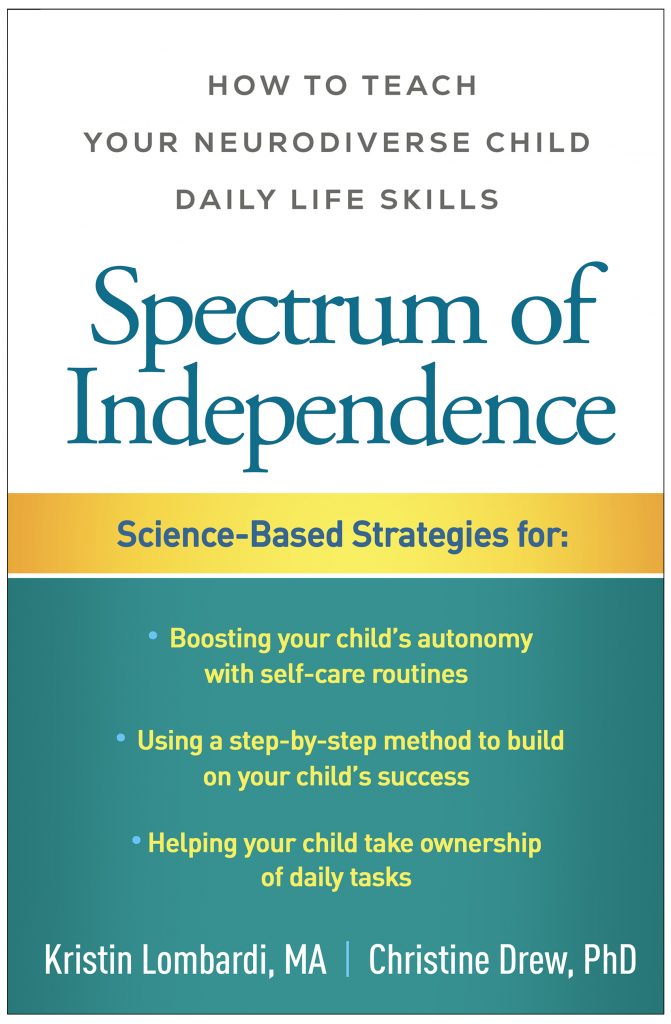
Drawing from their book, Spectrum of Independence: How to Teach Your Neurodiverse Child Daily Life Skills, Kristin and Christine provide practical, empathetic advice. They discuss how to “fade” your presence from daily routines, introduce powerful tools like task analysis, and why you should never fear that it’s “too late” to start. This conversation is a must-listen for any parent wondering how to build the foundation for a fulfilling, independent future for their child.
Key Takeaways:
- Starting small and early on daily tasks like toothbrushing can build confidence and momentum.
- Learning to fade your presence and prompts is crucial for your child to take ownership of their routines.
- The book introduces the concept of task analysis to break down large skills into small, manageable micro-steps.
- It’s never too late to start working on independence, and tools like phone alarms can be a great place to start with older children.
- Independence is a spectrum, and every small step is a win.
Episode Links and Resources:
- The Book: Spectrum of Independence by Kristin Lombardi and Christine Drew – https://amzn.to/3JtYFRp
- Authors’ Website: https://spectrumofindependence.com (Find links to the publisher’s site for downloadable worksheets and charts.)
- Free Resource: Download the “Preview the Power of Building Independence” PDF on their website to get a taste of the content. Fill in your email on the pop-up screen to get your free copy!
** As an Amazon Associate, I earn from qualifying purchases.**
 Are you getting our newsletter? If not, subscribe at https://waterprairie.com/newsletter
 Support our podcast and help us share more incredible stories by making a donation at Buy Me A Coffee. Your contribution makes a significant impact in bringing these stories to light. Thank you for your support!
Music Used:
“LazyDay” by Audionautix is licensed under a Creative Commons Attribution 4.0 license. https://creativecommons.org/licenses/by/4.0/
Artist: http://audionautix.com/

Kristin Lombardi, MA, BCBA, helps children and families prepare for independent living in her private practice in Locust Valley, New York. With a background in special education, psychology, and behavior analysis, she works with preschoolers through young adults with varying support needs.
Christine Drew, PhD, BCBA-D, is Assistant Professor of Special Education at Auburn University, where she teaches graduate and undergraduate courses and works with Auburn’s inclusive higher education program for students with intellectual disabilities. In her free time, Dr. Drew is usually in her garden, suggesting new recipes for her partner Craig to make, playing with her dog Mick, and watching very useless television shows.

Episode #134: The Surprising Reason Your Child Doesn’t Do Things On Their Own
Is your child ready for independence? Discover the first steps to take, whether they are 4 or 18.
(Recorded August 5, 2025)
Full Transcript of Interview:
00:00 Shift From Enabling to Empowering Our Children
Tonya: As parents, we often do things for our kids that we shouldn’t, and sometimes we don’t even realize it. It’s a common struggle, and in this episode of the Water Prairie Chronicles, we’re here to help.
I’m sitting down with Kristin Lombardi and Christine Drew, authors of the book Spectrum of Independence, to discuss how to shift from enabling our children to empowering them. We’ll cover why it’s never too late to start teaching independence and how every small step of this journey is a win.
Welcome to the Water Prairie Chronicles, a podcast for parents of children with disabilities. I’m your host, Tonya Wollum, and I’m glad you’re here.
Kristen and Christine, welcome to Water Prairie.
Kristin: Thank you. Happy to be here.
Christine: Thank you.
00:36 The Problem with Helping Too Much
Tonya: Today’s topic is one that a lot of our listeners are going to relate to. Parents who have children with ADHD, Down syndrome, autism, multiple disabilities. They all know firsthand how frustrating it can be when we feel that we’re repeating the same instructions over and over and over again and what seems like a simple task becomes this major meltdown.
And some of them may feel it’s just easier to do it for their child instead of trying to push their child to do it themselves, just to keep peace in the family. And we’re recording this in the summertime. I know we have a lot of overwhelmed parents who have been home 24 hours a day with their kids and they’re just trying to keep peace right now.
So part of what I was thinking about when we started looking at this topic was we have parents who are worried about the future. My kids right now are at the college stage, we’re at that independence level of trying to figure out when they exit for good, are they ready financially?
Are they ready to cook for themselves to keep their house in a healthy situation? We’re beyond the dressing and the brushing their teeth, things like that. But we started way back early with that mindset of how do we get them to be adults when they grow up? And there’s so many questions that every parent faces and our parents who have children with disabilities have even more questions, especially if their child’s neurodivergent.
02:00 Starting Small, But Starting Now
So these parents who are really, their kids are younger right now, but they’re worried about the future. You know, what’s gonna happen in 10 years and 20 years, whenever they’re at the stage that I am right now, are they gonna be able to let go one day? And so, how can they begin preparing their child for independence when they’re young without feeling like they’re putting too much pressure on them?
Kristin: Well, we like to start small and the earlier you start, the more opportunities you have to practice. And the less pressure and stress there is because you have time, right? Versus if the later you start, the more of this concern is like, oh my goodness, they’re gonna finish school and they’re supposed to go to college and they’re not independent.
And that clock is ticking, right? using the task analysis to break down skills or however you teach your child, you start small with just let’s work on toothbrushing. Let’s work on dressing. Before you’re working on the entire morning routine, right? And sometimes a big first step is just let me stop giving my kid 15 reminders to do something.
Let’s just start with that, Because that’s a big step. How do we, fade myself or begin to fade myself out of this routine? So I think you want a big picture of what you’re aiming for, but then you also wanna be able to step all the way back and be able to just take one step at a time.
‘Cause all of those steps add up. If you go into it with, this is the big picture, and I just need to be here right now. That, I think, is when it becomes very overwhelming for the parent and then simultaneously stressful for the kid.
Christine: Big worry of, 21, these sort of big cutoffs, right? So 18, if they’re graduating on a regular diploma, 21, if they are getting transition support, sometimes up to 22. for most people, that being pretty far in the future, if we’re thinking about a 8-year-old, 9-year-old, thinking you may not know even what the goal is, but you have an idea of, I want my child to, be able to take care of their daily living routines.
They might live with me, but, showering needs to be an independent activity as much as possible. Toileting needs to be an independent activity. picking and choosing these specific things to start on. And we recommend, things that you do multiple times a day because then again, you have more practice opportunities.
So toothbrushing is the big one because we should all be doing that. Twice a day. And so that gives you multiple opportunities and it’s something you can be really consistent with versus a skill that maybe you’re only doing once a week or twice a week, or even five times a week.
Again, those practice opportunities of twice a day, every day, keeps you as the parent consistent keeps you focused on on the task, versus a sporadic, oh, we’re gonna work on packing our backpack. Well, you might only do that five days a week. So, thinking of practical terms as well. What are you gonna do most often? What are you gonna be most likely to, hold yourself in your child accountable well?
Tonya: Would you recommend that a parent look at where their highest stress point is first?
Christine: We try to think about it too, where, let’s say, let’s say shoe tying, right? You’ve been tying your shoes every morning because, if they miss the bus, you have to drive 20 minutes in the opposite direction of work to drop them off at school, and it just starts the whole day off on a bad note and you know that it could spiral, right?
So you are to avoid stress doing this task for them. And so rather than saying,that’s your highest stress point, start there. We would say, let’s work on tying our shoes at a different time of day. Maybe start on the weekend when no one is stressed and there’s a really good thing, right?
So, okay, we’re gonna go to the park. That’s motivating for your child. They’re gonna want to be involved in the shoe tying versus school on a Monday, they’re gonna be like, Oh no. Oh no, I won’t be able to get to school on. Oh, no.” So we’re kind of removing the it from the stressful, yes, thinking about stress, but removing it from that stressful situation to work on it versus trying to work on it in that high stress environment and high stress time.
Kristin: And also I think there’s something to be said depending on the case and the family, whatever, that sometimes starting with the easier task the task that you’re the child is more closely to doing independently builds up a level of momentum and some confidence both in this child and in the parent.
And so sometimes that is the way to start too. I think it’s really very specific, depending on the family. we talk a lot about is the child ready and is the parent ready? And there’s a lot of info on what are you going through right now as a parent and sort of in working through all of that, It helps the parent then decide where to start, what would work for them.
06:54 The Biggest Challenge to Fading Prompts
Tonya: In the book, you talk about the importance of fading a parent’s presence. What’s the biggest challenge that parents face in that process, and what’s the key to making that successful?
Kristin: I think the biggest challenge, they don’t even realize how embedded they are in the routines.
When you say to them, we need you to get out, and they’re like, well no, but they can do this independently. But it’s not, when you really look at the details of what’s happening, there’s so much involvement, whether it’s reminders to do something, whether it’s leaving stuff out for them. For example, they’re supposed to take a vitamin in the morning, and you’re leaving the vitamin out on the counter for them versus them knowing to go get it themselves.
They might know how to measure out Tylenol for themselves, but do they know when they need to take the Tylenol? And so those are higher level examples. Younger kids, a lot of times there’s just this constant stream of verbal reminders and prompting, and it’s okay when they’re really little, but at some point, your child should know it’s seven o’clock.
I should go take a shower. And not be relying on you. I always say to parents, if the goal is to go to college, whether it’s inclusive, higher ed, or gen ed college, you are not going with them. So if you are involved, they’re gonna have a problem when you’re not there.
08:25 Are You Helping Too Much?
Christine: I would say similarly, it’s parents struggling to accurately assess what is a prompt, when am I providing a prompt?
And this, we have students who come to our program, and it is, oh, they shower independently. They do, they can do the manual tasks of showering, but maybe Monday, Wednesday, and Friday were showering days and the parents didn’t say, go take a shower. But rather they would say, oh, it’s Monday.
And that, by itself, is the prompt. And so the parents are thinking, I’m not helping at all. Right? They go to the bathroom themselves, they get their towel themselves, they, use all that. But then when, when we don’t have, oh, it’s Sunday, then we just don’t know that it’s time to take that shower.
I think part of it is helping parents to assess how much they’re actually doing, and the number of verbal prompts in particular Kristen and I talk about, are really difficult to fade. because we use it for multiple things, right? I’m keeping them on task, reminding them of the next step.
If they get a little distracted, that’ll get ’em back on track. So again, it’s this kind of constant presence. And then it’s most difficult to fade because a physical prompt, right, we can, we can fade ourselves really quickly, but verbal, you would have to fade to like partial verbal where you’re giving them part of what they need to know.
And again, then the parent has to also watch potentially their child struggle or not know what to do next. And so that’s why we really like the task analysis because it can be written, it can be visual. And that way, rather than having to use our words, which are difficult to fade, we could point at the, the task, pull out the picture.
We could do some things that again, can be transitioned to independence. The child can learn to pull the thing, they can learn to point, and maybe they can learn to self-coach verbally, but that is a harder, harder thing to fade out.
Tonya: All of our listeners are coming from a different point too.
We have some who have, twice exceptional kids who have very weak executive functioning skills, but they’re in a gifted and talented program. And so their prompts are gonna be very different. And I think almost that’s a harder group to recognize what they’re doing because they’re helping along.
And I was in that situation with my son and at the stage where he is now, he’s starting to push back. And that’s helping me to know and to recognize where I’m doing that. It’s difficult when you’re the parent because when you’ve had to care for a child a little different from what the ordinary path is,you’re more involved in those little things that you’re talking about. Helping them organize themselves just ’cause you go into survival mode, especially when they’re young. So, right. It’s really hard to recognize in ourselves when we’re doing that.
As a family, we’ve had to stop and look at that a few times. When I say we’ve been trying to push them out of the nest for years, it started when they were babies. We actually read a book back then called Growing Kids God’s Way. And their biggest piece of that was from day one, your goal is to make them independent adults one day. And that’s been the focus that my husband and I have had all these years, is how do we get them to that next level of independence?
And that’s hard as a parent. To watch it happen, as you’re saying. So, beyond that young child and trying to prevent the tantrum and outburst when you’re trying to get ready for work and you’ve got three other kids, you’re trying to get out the door, you know, you’re gonna get a call from school because nobody got to school in the right emotional mood at that point.
We also go through that in different things too. I’m thinking about now we’ve got listeners who have kids that are older, they’re in high school, maybe they’ve already launched and they’re in college right now. The parents are listening and they’re like, I haven’t, I’m still calling my child every morning.
12:24 Is It Too Late To Help My Teen Become Independent?
I’m still, telling them everything they have to do. What, what can they do at this stage? Their high schooler has a year left before graduation. What are some first steps that they can take to try to, to catch up? Maybe at this point?
Kristin: The first step is to realize what they need to stop doing the parents.
Right? There’s a story in the book of one of the vignettes about if you were sick in bed and you didn’t get out of bed, would your child make it to school themselves? Would they get up and get ready? And I think just going through that exercise, even if it’s in your head, of all the spots where your child would potentially get stuck because you weren’t there either as a visual prompt, just the sight of you, a verbal prompt that you weren’t setting stuff up for them, that morning or the night before to make everything run smoother.
If you’re, if you’ve removed yourself where all those bumps gonna be, and those are the places where you wanna start. If you have a child, for example, that has a motor delay, it might take a long time to teach dressing. It’s gonna take them a little bit longer to get the, the muscle memory down, right?
But you could have a kid who’s just become dependent on the prompts just because that’s what they’ve been doing, their whole life. And you could, you’ll find that once you explain to them, this is sort of the new way that this is all gonna work, right? Like, I’m not gonna be doing this anymore.
And it’s your responsibility that sometimes they can make very quick progress.
Christine: Even things like adding, we all have phones, so adding prompts to the phone. So coaching your child on, okay, so you need to have something on your phone, or you need to have an automatic alarm that’s set for Monday through Friday, right?
And we’ll get that set. It’ll go off. Your first reminder says, wake up at 8:00. At 8:15, it says, brush your teeth. At 8:30 it says, pack your lunch. At 8:45. So there are ways technology has allowed people to become a lot more independent in that way. And so that would be another thing is, yeah, first identifying where am I in this routine when I shouldn’t be, right?
14:38 Using Technology to Build Independence
And then how do I replace myself with either telling them, Hey dude, I’m not calling you in the morning anymore. Like this is on you. You need to figure it out. But for some folks, that is gonna be too, too difficult, right? That’s a big jump. So instead you could say, we’re gonna sit down, we’re gonna set some things on your phone.
When your phone makes a noise, you need to do something. That’s what that means. And we don’t just dismiss the prompt. We read what it says and then we do that activity. Most, I would say inclusive higher ed programs are going to have some level of prompting, either from an app or from multiple apps or multiple things on the phone.
Because again, that’s just a prompt that they carry with them at all times. So that would be another way to be strategic with what your young adult already has access to.
But most kids, talk about this young children will say, no, I do it.
But for children with disabilities or who have needed that extra support that “I do it” phase maybe never arrived or maybe arrived at 17 instead of two years old.
I think we have always had a lot of empathy for what parents are dealing with.
It’s more that parents just have not had these natural prompts from their child that they are ready for independence. That’s not the parent’s fault. They’re responding to what’s in their environment.
They’re responding to the needs of their child in that moment, and the needs of their family. It’s more about, taking that step back and thinking, okay, where should my child be at this age? That’s another hard thing,is developmental age versus physical age. Rather than thinking,well, my child is not developmentally ready, well, their body is gonna go through puberty in the same way as everyone else is.
And showering your child when they have hit puberty is uncomfortable for everyone. And so rather than thinking about, well, developmentally they’re not ready, we can also start thinking about, but physically here’s where they are, you know, grade level, here’s where they are, here’s what their peers are doing.
That can be a hard shift, I think, to take on. I appreciate your son telling you in whatever way he did, that he would like to do it on his own. I think that’s a really big step.
Tonya: With both of my kids because of the stage that they’re in. But because of, for him, executive functioning skills, you know, and I know when I’m talking to him, when I’m working with him, even though his conversational level is like years ahead of his physical age.
I also know that those organization skills are a few years behind. And so once I realized that several years back, it helped because then the stress decreased whenever my expectation changed. And then it was more, you know, how can I get him ready for that 18 year level instead of that 22 year level?
And so progress happens and I see growth in leaps and bounds with him. It’s fun to watch. My initial expectationwas that we’d be here five years ago. It was just a shift in where it was where his sister was there five years before, but she still needs, because of her visual impairment, she still needs different supports.
But her independence is in saying, you know, I need to do this. Can you drive me there? Can you go with me and help me get checked in? When you go to a doctor’s appointment, you’ve gotta read all the paperwork. For some reason no one has large print versions of these things. So she’s like, will you read this before I sign it?
You know, things like that. Those are her pieces, but she makes those adaptations and asks for where it is. You know, we’re here, we’re ready if she needs it. And that’s translated now to her asking friends to help with that. And my son has taken his knowing where his, his weaknesses are, and he’ll send me a text.
So if he’s at a doctor appointment and needs to do a follow up, he’ll text me. He’s just texting me, not for me to do anything. But that shows up now on our conversation. So that he has that reminder on his phone. And so that’s what he figured out on his own, that that’s what he needed to make sure that he noted it somewhere so that he knew that he had that appointment later.
So it’s, it’s been interesting watching how they’ve come up with their own solutions to some of these daily tasks that I used to do for them all the time.
Christine: Right. And the ones they come up with are the ones that stick. Right. The ones that we might come up with might not actually work for them. But if they can develop their own systems, then, you know, all the better.
19:12 Did You Block Your Child’s Independence?
Tonya: So what would you say to a parent who is hearing this and thinking, I’ve been enabling my child without even realizing it?
Kristin: I think it’s very common. It’s okay. It’s good that you realize it and you’re not alone.
Realizing it is the first step to being able to change it.
Christine: Take time to have some empathy for yourself. You are not enabling them on purpose. I should hope that no one is saying, oh, I just want my child to stay home with me forever and ever, and I wanna be pouring their cereal for the rest of their life.
Most people are not thinking that. You’re reacting to your environment. You were meeting the needs of your child when they were three and it was not enabling at the beginning. At the beginning it was meeting their need because they had a need. And then over time it has morphed into that.
So you started with good intentions. No one starts out enabling on purpose. And so have a moment of empathy for yourself. You were doing the right thing when they were three, and it’s only now that they’re 8, 9, 10, that it’s turned into this thing. To echo what Kristen said, it’s great that you’re recognizing it and now we can actually work on it.
Tonya: Nice. So it’s not too late.
Kristin: No, never too late. And the reality is, is we’re all rushed on some level, whether we’re rushed ’cause we’re trying to get out in the morning or we’re rushed because we want them to be in bed, at an appropriate time. We just all live very busy, fast-paced lives, and it is a lot easier in the moment to do something for your child or give that extra reminder to keep things moving than it is to work on independence. Our default mode is notlet me show you how to do this right now as we’re rushing. Our default mode is not, of course I wanna sit here for 10 minutes while you figure out how to put your shoes on.
Right? Our default mode is we gotta go like, it’s almost eight o’clock, the bus is going to be here in two minutes. Let me just put your shoes on for you. And if you have a child that is I tell, I joke with some of the parents that I work with. I say to the moms, your child is viewing you as their personal maid.
So they’re more than happy to sit and wait for you to come and do all of this for them. You’re not going to get any pushback for them. And so it really is much harder than, it’s very easy to hear it and say, oh my goodness, I’m enabling my kid. I shouldn’t be doing this. But in the day to day, it definitely takes a big mind shift to switch over to, let me start putting this on you.
Christine: And again, it’s a mental shift. It’s also about preparing them. And we talk about, ripping the bandaid, right? We don’t need to rip the bandaid. this is not something where you’re gonna, read the book or show up tomorrow and say, okay, you’re on your own kid.
But it’s this idea of slowly changing the ratio. So you are doing a hundred percent, your child’s doing zero. Okay? So then you’re gonna do 90 and they’re gonna do 10, and you’re gonna do 80 and they’re gonna do 20. Now, of course, Kristen said, if there you have a young adult who is very capable and they are, and it’s just a matter of you keeping yourself from doing it, that’s a different story.
But an 8-year-old and 9-year-old, or even a 19-year-old who lacks the skills, you cannot expect them to simply poof, develop the skills overnight. It’s unkind to just rip that bandaid and say you’re on your own, and so again, it’s this slow you shifting your mindset and then a slow tilt toward them being independent versus you providing all of this support.
So it’s not an overnight thing for most people. Again, like Kristen, who they were like, listen bud, I know you’re, I know you can do it. You just need to do it. But for most people, it’s gonna be this slow shift from parent-driven to child-driven or child-completed, over time.
Tonya: I want to look at a section of the book.
What I really liked about the format of this is you start each chapter with a personal story, and it really drew me in to relate to the parent situation that was happening. I could see myself in a lot of these through the different stages of life with, with one or both of my kids.
So I appreciated that ’cause it helped bring it personal to me before reading the content of the chapter. But in chapter seven is one I wanna look at. And you share a story about Gina and her daughter Lacey. they’re, talking about the idea of task analysis. Now that might seem like a strange term to a lot of our listeners.
So can you walk us through an example of what using task analysis might look like break it down for getting ready for bed at night. For maybe a nine or 10-year-old.
Kristin: The bedtime routine is complicated in the sense that there are multiple activities that lead into that, right? So to get ready for bed, put your toys away, take a shower, put on your pajamas, brush your teeth right there.
Different complicated routines, right? So in theory, maybe putting your toys away is easy, depending on what you were playing with. If it was one thing, but now you’re gonna talk about taking a shower, that’s, that could be 20 or 30 steps right there. So you wouldn’t tackle the bedtime routine in as a whole until all of these components were being done individually.
So can your child, shower themselves? Can they dress themselves? Can they brush their teeth? Then when they can do all those, thats when you’re. Tackling it as a group as far as are you transitioning from one activity to the next?
Christine: Well, and the thing about task analysis is it breaks down, so for typically develop, I use that term loosely.
Adults getting ready for bed is just, we don’t even, it’s not on a list anywhere. We don’t have it on a check. We just do it. automatic automaticity. but in reality it’s made up of a hundred tiny tasks that you do. And depending on how you break it down, it could be 200,
Because if you need a step for grabbing your pajama shorts and checking if the tag is at the back, that’s two steps, right? Putting one leg is in is one step. Putting the other leg in is another step. And so people with disabilities or neurodiverse individuals, those could all be separate steps and separate tasks that they have to complete.
That goes from being I’m getting ready for bed. to 200 things that I need to do before I can get myself into the bed. Again, it’s very easy for that to become overwhelming and for you to have one thing derail you. So if you’re trucking along and everything’s fine, and then the cap on the toothpaste, you don’t have the motor for it.
Well, I mean, we can’t brush our teeth, right? And so rather than focusing on, my kid can’t brush their teeth, it turns into my kid can’t get the lid off, which we can accommodate for or modify for. They have automatic toothpaste dispensers where you stick your toothbrush underneath. It gives you a little bit of toothpaste, and then you pull it out.
And so again, rather than it becoming, well, my kid can’t do the whole routine, if you have it laid out in tiny steps, you can target, oh, it’s just the lid.We break it down. We would never just sayall right, we’re gonna target the bedtime routine as a whole.
We’re gonna get even more granular than that. It’s a lot when you think about it.
Kristin: You could target the bedtime routine if you had, you were talking about, maybe you have an older child that’s 17. You know, they know how to take a shower themselves. they know how to put their pajamas on.
And it’s a matter of you providing reminders. It’s a matter of, I hear this a lot it’s like the, the kid goes upstairs to take a shower and half an hour later the parent goes upstairs and they’re hanging out on their bed, playing with some toy or reading a book, and they’re like, did you, did you shower?
Did, what are we doing up here? Nothing that was supposed to happen has happened. And so you could use task analysis or some sort of a checklist for these are all the things that need to be done and this is when it needs to be done by.
That’s sort of a more advanced skill and something we hope to, write about later,but there is a time and a place for targeting the bedtime routine.
27:42 What is a Task Analysis?
Tonya: So you’re using the task analysis to break down into micro steps, each piece of that larger task. So say, putting the toys away. You know, whatever the routine will be of, if you’ve got Legos out, you’ve gotta pick up each one.
You’ve got whatever the sort situation is, you’ve gotta go through all those pieces of it.
Kristin: If you’re only putting away Legos, you don’t necessarily need a task analysis for that, because in theory it’s if there’s a bin and you’re just putting them into the bin. But if you look at something like toothbrushing, we had a very fascinating review done by a woman who’s neurodiverse herself.
And what she said is she thought it was mind blowing that neurotypical people viewed toothbrushing as one activity. To her, of course, it’s not one activity, it’s a whole bunch of activities. So, something like toothbrushing you would break down into all of these different steps.
And a lot of times what parents will find is it’s not that the child can’t brush their teeth, it’s that they can’t do certain aspects. Of the sequence. And when you’re able to pinpoint where they’re having trouble, you can accommodate it. Maybe the toothpaste is an issue, squeezing out an appropriate amount, getting the cap on and off.
So maybe you got the automatic toothpaste dispenser. Maybe it’s just a matter of saying to the child’s OT, Hey, can you teach Johnny how to get the cap on and off the toothpaste? So we have some really specific practice just on that one piece that we’re stuck on at times other than when we’re doing the toothbrushing sequence.
Tonya: Okay. And in that chapter seven that we were talking about, you have a chart in there. It’s that task analysis. So parents that are looking will give you the idea here. You give the example of brushing the teeth in the book, which is a nice breakdown. Parents, when you look at this, you’re gonna see, they’re little micro steps all the way through.
I never thought about breaking down brushing teeth to this many steps. And I’m sure getting dressed, like you were saying, checking where the tag is, which foot do you put in first? And do you have the balance to be able to put that foot in there or are you sitting down?
So there is a blank chart in here, parents. So that when you get the book, it’s full of charts and worksheets and things