
Walden Pod
113 episodes — Page 2 of 3
56 - We probably shouldn't do anything about wild animal suffering
Wild animal suffering – is it possible to do anything about it? Should we do anything about it? Even though the general principles that inform our concern for animal welfare shouldn’t be arbitrarily limited to animals outside the wild, I think intervention on any serious scale would be ill-advised. The natural order is deeply interconnected, dynamic, and awesomely complex. Drastic action, such as ending predation, would plausibly cause the system to collapse into nonexistence or end in some other irreversible catastrophe. Sadly, natural evil is inextricably built into the biological order. “...for practical purposes I am fairly sure, judging from man’s past record of attempts to mold nature to his own aims, that we would be more likely to increase the net amount of animal suffering if we interfered with wildlife, than to decrease it.” - Peter Singer YouTube Consider supporting the show on Patreon here or Counter Apologetics hereListen to our sister show, Counter Apologetics here Music by ichika Nito and used with permission. Transcript Twitter @waldenpod @OnPanpsychism linktr.ee/emersongreen
Call In Show #1 - Personal Identity, Idealism
Personal identity, the potential evolutionary origins of religion, Bernardo Kastrup and analytic idealism, the Ship of Theseus and substance dualism. Leave a voicemail at (734) 707-1940 YouTube Twitter @waldenpod @OnPanpsychism Patreon.com/waldenpod linktr.ee/emersongreen
Mysterianism: One More Thing
A few thoughts on what mysterianism is not. Also, why "What is consciousness?" is a bad question. Linktree
55 - Mysterianism: Rational Pessimism in the Metaphysics of Consciousness
My opinionated introduction to mysterianism. Inspired by Noam Chomsky, Colin McGinn, and Eric Schwitzgebel, we explore a version of mysterianism that I think may be true. YouTubeSupport on PatreonListen to our sister show, Counter Apologetics here Transcript Shane Wagoner - From Physicalism to MysterianismMusic by ichika Nito and used with permission. Twitter @waldenpod @OnPanpsychism linktr.ee/emersongreen
54 - Physicalism, Schmisicalism
A few scattered thoughts about internet materialists, stronger forms of physicalism, underdetermination, neuroscience, the evolution of consciousness, qualia microscopes, and the hard problem of consciousness. YouTube Consider supporting the show on Patreon here or Counter Apologetics here Listen to our sister show, Counter Apologetics here Music by ichika Nito and used with permission. Twitter @waldenpod @OnPanpsychism linktr.ee/emersongreen
53 - William James' Evolutionary Argument Against Epiphenomenalism
If epiphenomenalism is true, mental causation is an illusion. Even if pain and pleasure were inverted, you’d go on behaving the same way you do now, since your conscious states have nothing to do with determining or motivating your physical behavior. This is counterintuitive, to say the least. But it also leaves us completely unable to explain why our conscious states line up appropriately with our actions. We typically think that natural selection molded our mental profile: that which aids in survival and reproduction is incentivized by experiences with a positive hedonic valence, and vice versa. Thus, we have an evolutionary explanation of harmonious correlations. But on epiphenomenalism, this can't be the right explanation, since experiences play no causal role at all. If they have no causal influence, they can't make any difference to genetic fitness. So how is it that harmonious correlations evolved if experiences are invisible to natural selection? Argument from Psychophysical Harmony w/ Dustin Crummett Psychophysical Harmony in a Nutshell Listen to our sister show, Counter Apologetics hereTranscriptMusic by ichika Nito and used with permission. Twitter @waldenpod @OnPanpsychismYouTube Consider supporting the show on Patreon here or Counter Apologetics herelinktr.ee/emersongreen
Friendly Debate w/ Ben Burgis - Do ethical thought experiments have any value in philosophy?
Ben Burgis recently invited me on his Callin show to speak about the value of “science fiction” thought experiments in applied ethics. I argue that in the realm of applied ethics, thought experiments often confuse more than they clarify. They don’t map on to the real world cases they’re intended to help with (for various reasons), and we shouldn’t be informing action with scenarios that differ in ethically relevant respects. Applied ethics is about what we should do – it’s a uniquely practical subfield of philosophy. Ethical thought experiments commonly provide us with both too much and too little information: they exclude morally relevant detail that we would possess in the real world, and they include morally relevant detail that we would not possess in the real world. So even though we may come to the same conclusion regarding an action or principle in a thought experiment doesn’t mean we’d agree in the real world case, since these two cases differ in morally relevant respects. Consequently, I think it’s often a mistake to inform action in the real world with conclusions drawn from a thought experiment. Ben Burgis - The Joe Rogan Experience Canceling Comedians While the World Burns The Left Should Oppose Censorship by Big Tech Companies Callin - Friendly Debate w/Emerson Green—Do “Science Fiction” Thought Experiments Have Any Value in Philosophy? James Wilson - Philosophy Bites Interview on the value of thought experiments in applied ethics Subscribe on YouTube Consider supporting the show on Patreon here or Counter Apologetics here Listen to our sister show, Counter Apologetics here Follow me on Twitter @waldenpod linktr.ee/emersongreen
52 - How I Became Disillusioned with the Skeptic Community
Many leaders in the skeptic community have proven themselves to be untrustworthy sources of information on the topics they speak about. They’ve misled me often about what others believe and why. Moreover, genuine skepticism seems to be far less important to the skeptic community than the kind of conclusions one comes to. Failure to adopt the required list of beliefs disqualifies one from being a real skeptic, it would seem. In today’s episode, I talk about how my atheism caused me to gravitate towards the skeptic community, and how the same subject caused me to drift away. We also discuss how skeptics mishandle the subjects of theism, parapsychology, the JFK assassination, 9/11, and aliens.For the record, this should not be seen as a comprehensive treatment of the topics raised (e.g. conspiracy theories). My framework was the following: Skeptics told me conspiracy theorists believed X for reason Y, but they were often wrong on both counts. I used a few examples, but I wasn’t aiming to provide a full account of what 9/11 truthers believe, or what alien abductees think, nor was I trying to defend a rejection of the Warren Commission. I especially shied away from that last topic, since it’s a bit different from the others for me. In the case of the JFK assassination, I’m more solidly on the side of the conspiracy theorists. Along with the majority of Americans, I don’t accept the Warren Commission.Watch on YouTube Consider supporting the show on Patreon here or Counter Apologetics here Listen to our sister show, Counter Apologetics hereTranscript Twitter @waldenpod LinktreeFor a more accurate picture of what these common skeptic targets believe and why: / JFKOliver Stone’s documentary JFK Revisited: Through the Looking Glass /or/ JFK: Destiny Betrayed [longer version of same doc] Mark Lane interviewed on JFK assassination (1992) / 9/11Three-part article in CovertAction Magazine - Peter Dale Scott, Aaron Good, Ben HowardThe Road to 9/11 (University of California Press) Peter Dale Scott / Theism Kenny Pierce defends theism against Graham Oppy (Dialogue) Joshua Rasmussen defends theism against Felipe Leon (Dialogue) / Parapsychology Mitch Horowitz: A parapsychologist’s take on James Randi / AliensNick Pope w/ Michael Shermer on UAPs and UFOsAvi Loeb w/ Michael Shermer on alien life and oumuamua
51 - Conversation with Luke Roelofs, Author of Combining Minds: How to Think About Composite Subjectivity
I’m joined by philosopher Luke Roelofs to discuss the combination problem for panpsychism, split brain cases, vagueness arguments, illusionism, mental privacy, the general and special composition question, mereological nihilism and universalism, and many other topics related to consciousness and composite subjectivity.Watch on YouTubeCombining Minds: How to Think About Composite Subjectivity (Oxford University Press) Amodal Mind Perception: Combining Inferentialism and PerceptualismLuke’s website Consider supporting the show on Patreon here or Counter Apologetics here Listen to our sister show, Counter Apologetics hereMusic by ichika Nito and used with permission. Twitter @waldenpod @OnPanpsychismlinktr.ee/emersongreen
50 - Is Free Will An Illusion? with Theoretical Bullshit
I'm joined by Scott Clifton (Theoretical Bullshit) to discuss free will skepticism, compatibilism, moral responsibility, revenge, and killing coyotes. Video version - Is free will an illusion? Scott's channel Follow me @waldenpod and TBS @TheoreticalBS Consider supporting Walden Pod here or Counter Apologetics here linktr.ee/emersongreen
49 - Compatibilism Debunked? Responding to CosmicSkeptic
I respond to Alex O'Connor's arguments against compatibilism, the view that there is no real conflict between determinism and free will. Is free will skepticism the better view, as Alex claims? Will the British ever learn their lesson? CosmicSkeptic - Compatibilism Debunked Subscribe on YouTube here Listen to our sister show Counter Apologetics here Consider supporting Walden Pod on Patreon here or Counter Apologetics here Follow on Twitter @waldenpod and @OnPanpsychism linktr.ee/emersongreen
48 - Responding to Very Bad Wizards on Panpsychism
After listening to Very Bad Wizards' new episode about panpsychism, I hit record and commented on a few clips that stood out to me. Subscribe on YouTube here Listen to our sister show Counter Apologetics hereConsider supporting the show on Patreon here or Counter Apologetics hereAn interesting article on panpsychist history by Joe ZadehFollow on Twitter @waldenpod and @OnPanpsychismlinktr.ee/emersongreen
47 - Can a determinist believe in free will?
Compatibilism is the thesis that free will is compatible with determinism. In other words, a compatibilist is someone who doesn’t have a quarrel with using the term “free will” and who doesn’t think we need to run around with our hair on fire if determinism turns out to be true. By my lights, free will skeptics and libertarians seem to be entirely wrong about the dramatic consequences that would follow from not possessing libertarian freedom. As you may have gathered, I’ve finally migrated from the free will skeptic camp over to the compatibilist camp. Years ago, learning about determinism and moral luck for the first time rocked my world. But as the dust settled, I wondered if I had been too quick to reject the entire notion of free will. How much does it matter that we don’t have libertarian free will? How much has actually changed? Is our ordinary sense of free will really unsalvageable? Consider supporting the show Subscribe on YouTube here Listen to our sister show Counter Apologetics hereFollow on Twitter @waldenpod and @OnPanpsychism Transcriptlinktr.ee/emersongreen
46 - Free Will "in the superlative metaphysical sense"
Can we be ultimately responsible for what we do? No one denies that we can be the proximate cause of our actions. I made this episode because I wanted to. But being the proximate cause of an action is compatible with determinism – no determinist in their right mind would deny that I made this episode because I wanted to. So is there a deeper sense of responsibility that can be attributed to human beings? One which absolves God, the world, ancestors, luck, and society of what we choose to do?This deeper kind of responsibility, which Nietzsche disparagingly called “‘freedom of the will’ in the superlative metaphysical sense,” and which is often ascribed to human beings by the religious, arguably requires one to be causa sui – to be the ultimate cause of oneself. Since this is impossible, we can be sure that we do not possess the kind of responsibility that so many seem convinced we have. You can’t be radically self-creating in a way that gets you beyond a compatibilist notion of responsibility.It’s unclear whether our lack of ultimate responsibility for our actions is a problem for libertarian free will. Do libertarians unanimously impute this degree of responsibility to humans? No – some do, some don’t. Regardless, the attacks on free will “in the superlative metaphysical sense” from Nietzsche and Strawson convincingly show that our responsibility for our actions is quite limited.Galen Strawson - Your Move: The Maze of Free WillTamler Sommers & Galen Strawson - You cannot make yourself the way that you areThe Panpsycast Philosophy Podcast - The Galen Strawson Interview Consider supporting the show on Patreon here Subscribe on YouTube here Listen to our sister show Counter Apologetics hereFollow on Twitter @waldenpod and @OnPanpsychism linktr.ee/emersongreen"The causa sui is the best self-contradiction that has been conceived so far, it is a sort of rape and perversion of logic; but the extravagant pride of man has managed to entangle itself profoundly and frightfully with just this nonsense. The desire for ‘freedom of the will’ in the superlative metaphysical sense, which still holds sway, unfortunately, in the minds of the half-educated; the desire to bear the entire and ultimate responsibility for one’s actions oneself, and to absolve God, the world, ancestors, chance, and society involves nothing less than to be precisely this causa sui and, with more than Münchhausen’s audacity, to pull oneself up into existence by the hair, out of the swamps of nothingness."Nietzsche, Beyond Good and Evil, sec. 21 (tr. W. Kaufmann)
45 - Philosophers on Consciousness: Talking About the Mind with Jack Symes
I’m joined today by Jack Symes, editor of the new book, Philosophers on Consciousness: Talking about the Mind. Jack is a Teacher and Researcher of Philosophy at the University of Liverpool, UK and is also the co-host of The Panpsycast Philosophy Podcast.Follow on Twitter @waldenpod and @OnPanpsychismFollow Jack on Twitter @_JackSymes @ThePanpsycast Philosophers on Consciousness: Talking about the Mind Support on Patreon here Listen to our sister show Counter Apologetics here linktr.ee/emersongreen/ timestamps /00:00 Introduction to the book15:52 The construction problem 20:23 Why philosophy of mind? Why not just neuroscience?28:28 Does Emerson misrepresent illusionism?38:11 The terminological mess in philmind46:21 Different forms of panpsychism52:20 Illusionism redux: the metaproblem of consciousness1:01:53 Practical implications of illusionism1:14:58 Podcasting1:18:55 Practical implications of panpsychism1:41:37 Paganism and panpsychism1:52:26 Pantheism1:55:48 Panpsycast stories2:02:05 LIVE SHOW2:03:13 Parting thoughts
44 - The Core Theory & Mental Causation
For the full episode, and access to other bonus episodes, subscribe at patreon.com/waldenpod How can one reconcile the reality of mental causation with the accuracy of “the core theory,” which Sean Carroll hails as explaining all of everyday life? Contrary to Carroll’s intention, his proclamation that the laws underlying the physics of everyday life are completely understood is one of the factors that lead some to adopt Russellian panpsychism. (This episode was recorded as a video, which is available to patrons.)
43 - No brain, no mind?
Is a brain necessary for experience? Do we have any good reason to limit the attribution of experience to creatures with complex nervous systems? Actually, no. Some materialists claim that consciousness can only exist in brains–sound reasoning, neuroscience, and physics all point in the same direction. We take a closer look at the reasoning that underlies the claim that complex nervous systems are necessary for experience. A quick note on terminology: In this episode, I use physicalism and materialism interchangeably. And by “consciousness,” I’m referring to subjective experience: the what-it’s-like of consciousness. I try to stick to “experience” for clarity, but when I say “consciousness,” or “mind,” unless otherwise specified, experience is what I mean. Swinburne quote Robert Epstein - Your brain is not a computer Peter Sjöstedt-Hughes - Panpsychism: 3 Reasons Why Our World is Brimming with Sentience YouTube Channel patreon.com/waldenpod linktr.ee/emersongreen

42 - H.P. Lovecraft’s Radical Political Evolution
Recently I learned that H.P. Lovecraft had undergone a surprising and dramatic political transformation in the final years of his brief life. I wanted to read a few of Lovecraft's letters and discuss his views on capitalism, socialism, and the influence of the profit motive on artistic expression. (In the middle part of this episode, I also indulge in a bit of culture war stuff, so consider yourself warned.) In these letters from the last several years of his life, his notorious racism seems to fade, and he explicitly rejects the reactionary political ideology he held prior to 1931. He ruthlessly critiques capitalism, speaks glowingly of Marx, and warns us that our only options are socialism or barbarism. Anyone familiar with the author knows how out of kilter this feels compared to the absurdly reactionary person who most of us know as Lovecraft. First episode on Lovecraft @waldenpodLovecraft Letters:1937, Catherine Moore1936 Arthur Sechrist 1934, Helen BarlowLovecraft Audiobooks:DagonThe Call of CthulhuAt the Mountains of Madness The Shadow Over Innsmouth/ timestamps / 00:00 Introduction 02:53 Flawed Characters, Real and Fictional 09:30 Letter to Catherine Moore (1937) 13:00 Letter to Helen Barlow (1934) 15:32 Letter to Arthur Sechrist (1936) 17:23 Art & the Profit Motive 19:52 The ShadowTranscript
What’s wrong with physicalism? — with Zac of Adherent Apologetics
I was recently interviewed by Zac of Adherent Apologetics on the subject of problems with physicalism. We outline a few arguments against the view, including physicalism’s conflict with realism about phenomenal consciousness and anti-emergentism, as well as a couple different forms of the vagueness argument against physicalism. We also talk a bit about the tradition of atheist non-physicalism, which is almost entirely behind the recent rise in interest in alternatives to physicalism. Other topics include the science of consciousness, the relationship between neuroscience and the metaphysics of consciousness, the standard thinking that motivates physicalism and where it goes wrong, panpsychism, and other subjects related to philosophy of mind. Subscribe to Zac’s channel and my channel linktr.ee/emersongreen Support on Patreon here emersongreenblog.wordpress.com Rate the show on iTunes here Listen to our sister show Counter Apologetics here Subscribe to CA and Walden Pod on YouTube here Follow on Twitter @waldenpod and @OnPanpsychism Music by ichika Nito. Used with permission.
41 - Phenomenal Conservatism & Epistemology with Michael Huemer
Today I'm speaking with Dr. Michael Huemer about phenomenal conservatism, a theory in epistemology that seeks to ground justified beliefs in the way things “appear” or “seem” to the subject who holds that belief. We discuss a wide range of issues in epistemology, including internalism vs. externalism, justified true belief, proper functionalism, the epistemic value of psychedelic experiences, religious experiences, radical skepticism, knowledge, conceptual analysis, intuition, and much else.Michael Huemer is a professor of philosophy at the University of Colorado. He is the author of more than seventy academic articles in epistemology, ethics, metaethics, metaphysics, and political philosophy, as well as several books, including Skepticism and the Veil of Perception, Ethical Intuitionism, Paradox Lost, and Dialogues on Ethical Vegetarianism, and his new book, Knowledge, Reality, and Value: A Mostly Common Sense Guide to Philosophy.PC: If it seems to S that P, then, in the absence of defeaters, S thereby has at least some justification for believing that P.Michael’s WebsitePhenomenal Conservatism - IEPCompassionate Phenomenal Conservatism MH YouTube Channel / / / linktr.ee/emersongreenFor the extended version of this interview, support on Patreon hereemersongreenblog.wordpress.comRate the show on iTunes here Listen to our sister show Counter Apologetics hereSubscribe to CA and Walden Pod on YouTube hereFollow on Twitter @waldenpod and @OnPanpsychism/ / / YouTube version of this episode
40 - What is Naturalism?
Naturalists, according to David Papinau, author of the Stanford Encyclopedia of Philosophy entry on naturalism, urge “that reality is exhausted by nature, containing nothing ‘supernatural’.” Naturalism “has no very precise meaning in contemporary philosophy” beyond this, along with an emphasis on science as a means to understand the natural world.Naturalism is the view that there is only the natural world. I defend this simple conception of naturalism, ward off a few criticisms, and argue that there’s a kind of parity between the terms “theism” and “naturalism.” In other words, if you don’t have a problem with the term “theism,” you shouldn’t have a problem with “naturalism.”Luke Roelofs - Combining Minds: How to Think about Composite Subjectivity Is God the Best Explanation of Things? A Dialogue - Joshua Rasmussen & Felipe Leon (this wasn’t mentioned in the episode, but Leon does a wonderful job fleshing out “liberal naturalism”Graham Oppy - The Best Argument Against GodSean Carroll - Poetic NaturalismGalen Strawson - Real NaturalismWilliam Lycan - Philosophy of Language: A Contemporary IntroductionNaturalism - SEP/ / / linktr.ee/emersongreen YouTube Transcript Rate the show on iTunes Support on Patreon here Listen to our sister show Counter Apologetics hereFollow on Twitter @waldenpod and @OnPanpsychism/ / / a few elaborations of naturalism...“By ‘naturalism’ I mean the view that the world contains a single basic type of stuff, whose behavior is governed by a single set of simple, general laws, and that these laws are those revealed by science. The most common version of naturalism among contemporary philosophers is physicalism, the view that the world is entirely made up of matter, and matter is exhaustively described by physics. But some philosophers reject physicalism, even while accepting naturalism, holding that matter is not exhaustively described by physics—there are fundamental aspects of matter that physics is blind to. In particular (they tend to say), there are certain things each of us can know about matter, such as that one particular portion of matter (the one between our ears) sometimes feels and thinks and experiences, which go beyond both what physics itself says and what can be deduced from any physical description, no matter how detailed. Because facts about my consciousness are left out by any purely physical descriptions, these ‘naturalistic anti-physicalists’ infer that consciousness must be itself a fundamental feature of reality, no more derivable from physical properties than mass is derivable from charge.”Luke Roelofs “Naturalism is a philosophy according to which there is only one world -- the natural world, which exhibits unbroken patterns (the laws of nature), and which we can learn about through hypothesis testing and observation. In particular, there is no supernatural world -- no gods, no spirits, no transcendent meanings. I like to talk about a particular approach to naturalism, which can be thought of as Poetic. By that I mean to emphasize that, while there is only one world, there are many ways of talking about the world. "Ways of talking" shouldn't be underestimated; they can otherwise be labeled "theories" or "models" or "vocabularies" or "stories," and if a particular way of talking turns out to be sufficiently accurate and useful, the elements in its corresponding vocabulary deserve to be called real.”Sean Carroll “Naturalism says that causal reality is natural reality: the domain of causes is nothing more nor less than the natural world. Atheism says that there are no gods; in consequence, atheism says that there is no God. Naturalism entails atheism: if causal reality is natural reality, then there is no (supernatural) cause of natural reality, and, in particular, there is no God. But atheism does not entail naturalism: to deny that there are gods is not to insist that causal reality is natural reality. . . . Supernaturalism says that causal reality outstrips natural reality: there are supernatural causes. . . . This ‘minimal’ conception of naturalism relies on a prior understanding of the distinction between the natural and the supernatural (as did our ‘minimal’ conception of theism). We shall proceed on the assumption that we do understand this distinction well enough. If we come to have doubts about whether we do understand this distinction well enough, then we can return to give it more careful consideration. ‘Minimal naturalism’ admits of elaboration in many different – mutually inconsistent – ways. Any suitably elaborated naturalism will hold that some features of the natural world are primitive – not susceptible of further explanation – whereas other features of the natural world are fully explained in terms of those primitive features. Thus, for example, some naturalists suppose that all of the primitive features of the natural world are physical features – i.e. features that lie in the proper domain of the discipline of physics. Other naturalists suppo
Panpsychism Debate: Emerson Green vs. Aaron Rabinowitz
Aaron is a lecturer in the Rutgers philosophy department (@ETVpod). Emerson is the host of Counter Apologetics and Walden Pod (@waldenpod).Aaron’s podcast, Embrace the Void https://voidpod.com/This debate took place on the Right to Reason podcast https://therighttoreason.podbean.com/e/panpsychism-debate/https://linktr.ee/emersongreen
39 - Defending Substance Dualism with Dustin Crummett
Dustin and I discuss vagueness arguments against materialism, phenomenal conservatism, doubt arguments, Phineas Gage, physical causal closure, the core theory, vitalism, ghosts, split-brain cases, occam's razor, panpsychism, idealism, dual-aspect theories, and the problem of psychophysical luck.Dr. Crummett received a PhD from the University of Notre Dame in 2018, and he is currently working on animal ethics as a postdoctoral researcher at the Ludwig Maximilian University of Munich. He specializes in social and political philosophy, ethics, and philosophy of religion. Dustin’s website http://dustincrummett.com/ Micah Edvenson & Dustin Crummett on Socialism Dustin Crummett with John Buck & Inspiring Christianity on Dualism A Deeper Analysis of the Problem of Evil with Dr. Dustin Crummett Is The Problem Of Evil Worse Than We Thought? Non-Alchemist & Dr. Dustin Crummett Science, Mind, and the Limits of Understanding - Noam Chomsky Can physicalism explain phenomenal consciousness? Luke Roelofs - Combining Minds Hedda Hassel Morch - The Evolutionary Argument for Phenomenal Powers / / / emersongreenblog.wordpress.comSupport on Patreon at patreon.com/waldenpod or /counter Rate the show on iTunes Subscribe to CA and Walden Pod on YouTube Follow on Twitter @waldenpod and @OnPanpsychismlinktr.ee/emersongreen
38 - What is Philosophy?
What is philosophy, and who counts as a philosopher? My two favorite answers come from Alvin Plantinga and Arthur Schopenhauer. According to Plantinga, philosophy is just thinking hard about something. Schopenhauer put it a bit more loftily: philosophy represents our attempt to “lay bare the true nature of the world.” (At least, this is true in philosophy’s more ambitious moments.) Additionally, I would submit that philosophy is the intensification of a natural human activity. linktr.ee/emersongreen David Egan on Philosophy [Aeon] Alvin Plantinga and William Lane Craig on Philosophy [Reasonable Faith] Transcript [emersongreenblog] Is philosophy dead? [iTunes] You’re wrong to hate philosophy [iTunes]
37 - Watching a painfully bad critique of panpsychism
linktr.ee/emersongreen You can watch the video version of this podcast here emersongreenblog.wordpress.com Rate the show on iTunes here Support on Patreon here Listen to our sister show Counter Apologetics here Subscribe to CA and Walden Pod on YouTube here Follow on Twitter @waldenpod and @OnPanpsychism

36 - Tunnel Vision Reductionism: Is love just a chemical reaction?
We discuss poetic naturalism and its nemesis, tunnel vision reductionism. Tunnel vision reductionism takes one description of reality and declares it to be the “real” description of reality to the exclusion of all others. At the very least, the given lower level of description is considered “more true” than higher-level descriptions.The basic problem with tunnel vision reductionism is that it has a narrow and inconsistent notion of the real. Neurons are taken to be real, but emotions are illusory (or at least, less real than neurons). Both are emergent, higher level phenomena, but for some reason, the former is the true description. But if love isn’t real because it’s a higher level description, then neurons aren’t real either. Neither are chemicals like oxytocin. But of course, higher level descriptions are real. There are many legitimate theories, models, vocabularies, stories, and ways of talking about the world. As poetic naturalist Sean Carroll puts it, “if a particular way of talking turns out to be sufficiently accurate and useful, the elements in its corresponding vocabulary deserve to be called real.” If we describe the biochemical correlates of love, we haven’t described everything there is to know about love, nor have we given the “real” description of love.“But all this only works if we reject reductive materialism, right?” No! This is true especially if one accepts reductive materialism. On reductive materialism, the feeling of love and oxytocin are both real in exactly the same way. LinktreeYouTube Transcript Twitter @waldenpod
Interview with John Buck and Craig Reed
Here’s my conversation with John Buck and Craig Reid that was held on Craig’s YouTube channel. I was invited on to discuss atheism and consciousness, two of my favorite subjects. Unfortunately we were having audio issues at different points, but I did a bit of editing to make it more listenable. Craig’s channel is primarily devoted to Christian apologetics, but here we mostly discuss consciousness. We talk about my religious background near the beginning, and my reasons for being an atheist a bit near the end, but most of the conversation is on physicalism, panpsychism, dualism, and a lot of interesting questions related to those ideas. Craig's YouTube Channel Follow John Buck on Twitter here and Craig Reed here https://linktr.ee/emersongreen
35 - A few reasons the combination problem doesn’t bother me much
When it comes to the combination problem, there are almost always controversial hidden assumptions about the stuff doing the combining and about the entity being formed by the combining. The assumptions one makes about the self and physical reality alter the difficulty and nature of the combination problem.As Luke Roelofs has argued in his extensive book, Combining Minds, the combination problem is a much wider problem that doesn’t dissipate if one rejects panpsychism in favor of physicalism. He also convincingly shows that panpsychists are not required to appeal to strong emergence to explain the existence of the self or subject.While the combination problem does not deter me from taking panpsychism seriously, it’s nonetheless an interesting research program that warrants thoughtful study. The distinction I’m trying to draw here is between a problem that should dissuade one from adopting a view, and a puzzle that should inspire one to keep thinking about the view. Luke Roelofs on Consciousness Live! with Richard Brown [YouTube] Nino Kadic on the Combination Problem and Phenomenal Routing [YouTube] Galen Strawson on the subject-experience-content identity view [YouTube] The Subject of Experience - Galen Strawson [Oxford University Press] Panpsychism’s combination problem is a problem for everyone - Angela Mendelovici [PDF] Combining Minds: How to Think about Composite Subjectivity - Luke Roelofs [Oxford University Press]/ / /Transcripts available at emersongreenblog.wordpress.comFollow on Twitter @waldenpod and @OnPanpsychismpatreon.com/waldenpodhttps://linktr.ee/emersongreen
34 - Can physicalism explain phenomenal consciousness?
We discuss the ideas that have led me away from physicalism. Specifically, realism about phenomenal consciousness, phenomenal precision, nonemergence (that there is only weak emergence, no strong emergence), monism, the objective/subjective divide, and the explanatory gap. David Chalmers - Facing Up to the Problem of Consciousness [text] Galen Strawson - Realistic monism: why physicalism entails panpsychism [doc] Thomas Nagel - Panpsychism [PDF] Nagel - What is it like to be a bat? [PDF] Nagel - Subjective and Objective [philpapers] Philip Goff - Orthodox Property Dualism+The Linguistic Theory of Vagueness=Panpsychism [Springer]Hunter Ash - The Argument from Vagueness [YouTube] Galen Strawson & Philosophy Bites - Panpsychism [YouTube] William James - Principles of Psychology [text] Panpsychism [SEP]. . . Transcripts available at emersongreenblog.wordpress.comFollow on Twitter @waldenpod and @OnPanpsychismhttps://linktr.ee/emersongreen

33 - Schopenhauer on Mind & Matter
We discuss the metaphysical views of pessimist philosopher Arthur Schopenhauer, as elaborated in his magnum opus, The World as Will and Representation. Schopenhauer developed a fascinating dual-aspect monism, according to which from outside, the world appears as representation, but from inside, it appears as will: ontological monism and epistemological dualism. To Schopenhauer, desire-driven will is what we are from inside, and he goes on to argue that we should think of the underlying reality of all appearance in the same way. You represent my will as a body, but I know that there’s an underlying reality to your representation that’s experiential in character. Schopenhauer thinks the basis of this dual-aspect character of reality pervades the natural world, organic and inorganic. Why? Because this is our only form of insight into—or acquaintance with—anything as a thing in itself. “[O]n the path of objective knowledge, thus starting from the representation, we shall never get beyond the representation, i.e., the phenomenon. We shall therefore remain at the outside of things; we shall never be able to penetrate into their inner nature, and investigate what they are in themselves…So far, I agree with Kant. But … we ourselves are the thing-in-itself. Consequently, a way from within stands open to us to that real inner nature of things to which we cannot penetrate from without. It is, so to speak, a subterranean passage, a secret alliance, which, as if by treachery, places us all at once in the fortress that could not be taken by attack from without.” - Schopenhauer Schopenhauer on Will and Representation - Academy of Ideas [YouTube] Peter Sjöstedt-H - Noumenautics: Metaphysics - Meta-Ethics - Psychedelics [Amazon] Schopenhauer and the Philosophy of Mind - Peter Sjöstedt-H [Philosopher.eu] Hedda Hassel Mørch - Argument for Panpsychism from Experience of Causation [PDF] Nietzsche’s Metaphysics? - Galen Strawson [YouTube] Idealism - Schopenhauer [Stanford Encyclopedia of Philosophy] Arthur Schopenhauer [SEP] Arthur Schopenhauer [Internet Encyclopedia of Philosophy] Transcripts available at emersongreenblog.wordpress.com Rate the show on iTunes here Listen to our sister show Counter Apologetics here Subscribe to CA and Walden Pod on YouTube here Support the show at patreon.com/waldenpod Contact me at [email protected] or on Facebook Follow on Twitter @waldenpod and @OnPanpsychism
32 - An F-Inductive Argument for Panpsychism
I would like to introduce what may be a new argument, the f-inductive argument from consciousness for panpsychism. Panpsychism entails the existence of consciousness, whereas most competing views do not. The evidence—consciousness, in this case—is not surprising on the hypothesis of panpsychism, but is surprising on the hypothesis of physicalism, as well as many of panpsychism’s rivals. The probability that consciousness would exist on panpsychism isn’t just high—it’s 1. The probability that we would find this evidence in a physicalist universe is less than that. In fact, it’s unexpected. So other evidence held equal, panpsychism has a notable edge here.Jeffery Jay Lowder | F-Inductive Arguments: A New Type of Inductive Argument [Patheos]Jeffery Jay Lowder | An F-Inductive Argument from Consciousness for Theism, Revisited [Patheos]Transcripts available at emersongreenblog.wordpress.comMy DiscordRate the show on iTunes hereSupport on Patreon hereListen to our sister show Counter Apologetics hereSubscribe to CA and Walden Pod on YouTube hereContact me at [email protected] or on FacebookFollow on Twitter @waldenpod and @OnPanpsychism/ / / Let B=background information or evidence; E=the evidence to be explained; H=an explanatory hypothesis; Pr(|H|)=the intrinsic probability of H; and Pr(x|y)=the epistemic probability of x conditional upon y.C-inductive: Pr(H | E & B) > P(H | B)F-inductive: Pr(E | H2 & B) > Pr(E | H1 & B)P-inductive: Pr(H | E & B) > ½Here is the F-inductive argument from consciousness for panpsychism:Let E in this case be consciousness.(1) E is known to be true, i.e., Pr(E) is 1.(2) Panpsychism is not intrinsically much less probable than Physicalism, i.e., Pr(|Panpsychism|) is not much less than Pr(|Physicalism|).(3) Pr(E | Panpsychism & B) > Pr(E | Physicalism & B).(4) Therefore, other evidence held equal, Panpsychism is probably true. Pr(Panpsychism | B & E) > 0.5.
31 - Panpsychism in Seven 1/2 Minutes
Here’s a very short overview of my version of panpsychism. Please keep in mind that this contains some technical language and assumes some background knowledge in philosophy of mind. @waldenpod on Twitter and @OnPanpsychism Transcript Rate the show on iTunes hereSupport the podcast at patreon.com/waldenpod Listen to our sister show Counter Apologetics here Subscribe to CA and Walden Pod on YouTube hereContact me at [email protected] or on Facebook
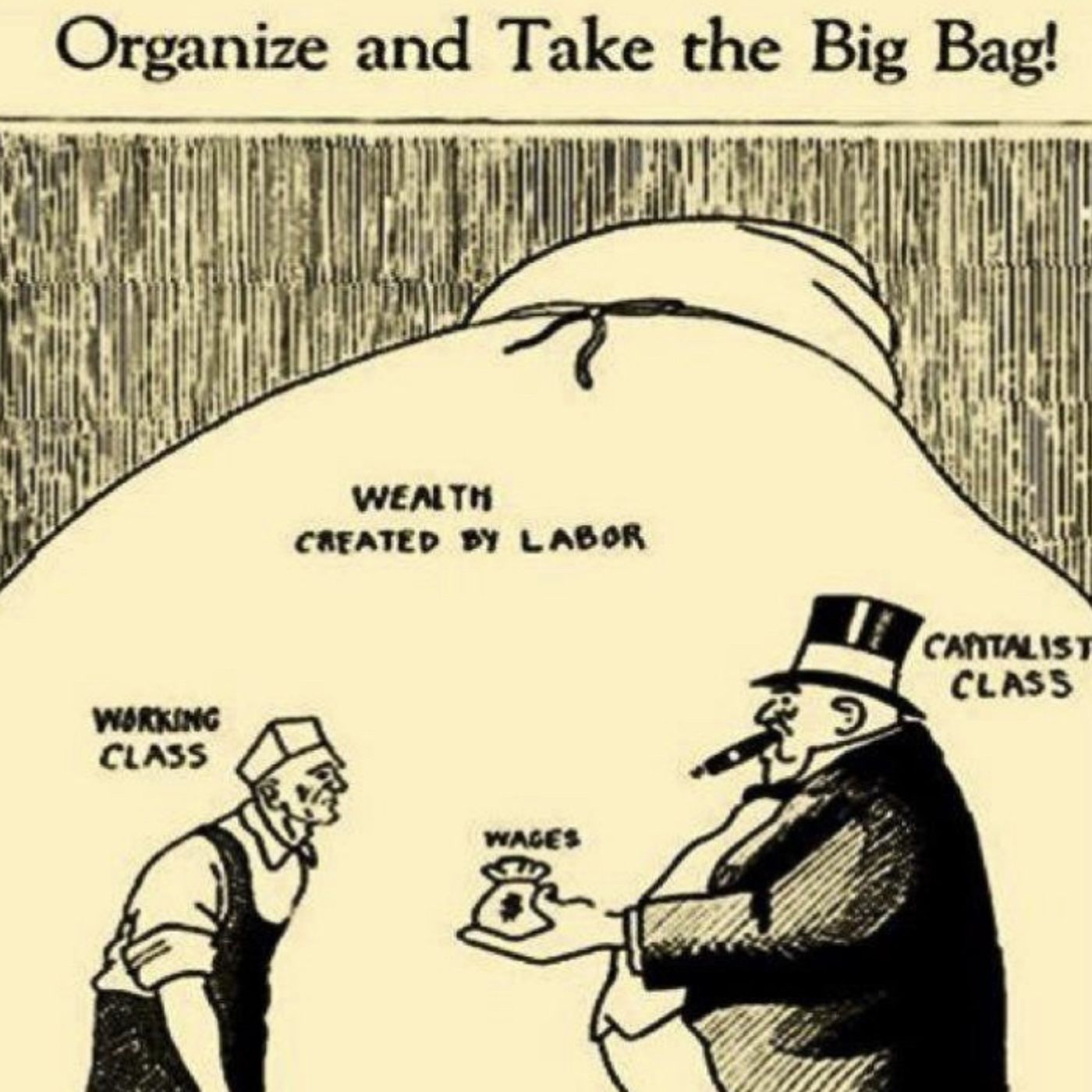
30 - Micah Edvenson on Socialism & Democracy
Micah Edvenson is here to corrupt the youth and spread communist propaganda with me today as we discuss socialism, why the kids are doing it, and much more. We talk about egalitarianism, inequality, the Soviet Union, the skeptical movement, libertarianism, taxation, whether socialists should support open borders, and answer several common anti-socialist canards. Videos and Articles (in the order they’re mentioned): On Anarchism - Noam Chomsky [Amazon] Rob Larson - Philanthropic Giving [Jacobin] Private Government: How Employers Rule Our Lives (and Why We Don't Talk about It) - Elizabeth Anderson [Amazon] When did everyone become a socialist? [NY Mag] Defining Capitalism and Socialism - Thomas Metcalf [1000 Word Philosophy] Homage to Catalonia - George Orwell [Amazon] George Orwell - Down and Out in Paris and London [Amazon] Ownership and Control [Current Affairs] Requiem for the American Dream - Noam Chomsky [YouTube] Capitalism vs. Freedom: The Toll Road to Serfdom - Rob Larson [Amazon] What We Owe Each Other - T. M. Scanlon’s Egalitarian Philosophy (Review from Martin O’Neill) [Boston Review] What's Wrong with Inequality? - T.M. Scanlon [PhilosophyBites] What is the Point of Equality? - Elizabeth Anderson [PDF] Dustin Crummett - In Defense of Socialism [YouTube] Introduction to the Left and Right - Dustin Crummett (Micah’s favorite paper) [PDF] Harrison Bergeron - Kurt Vonnegut [PDF] Healthcare - Science Vs [Apple Podcasts] Rubin Report - Peterson, Weinstein, Shapiro [YouTube] Marx: Overcoming Alienation - Plastic Pills [YouTube] Ben Burgis - Taxation is Theft? [YouTube] The Myth of Ownership - Thomas Nagel & Liam Murphy [Amazon] The Socialist Manifesto: The Case for Radical Politics in an Era of Extreme Inequality - Bhaskar Sunkara [Amazon] Richard Wolff - Democracy at Work [Amazon] Rutger Bregman - Utopia for Realists [Amazon] / / / Clips (in order of appearance): Business Insider - Billionaires and Coronavirus Why Millennials Don't Have Any Money - Robert Reich Richard Wolff & Chapo Trap House Richard Wolff Defines Socialism and Capitalism Carl Sagan - “Are you a socialist?” Trent Horn - Can a Catholic be a socialist? Bernie Sanders: "Open borders? That's a Koch brothers proposal” / / / Crusade Against Ignorance Videos: Socialism: What it is and isn’t - CAI [YouTube] Socialism and Economics - CAI [YouTube] Abortion & Philosophy - CAI [YouTube] Interview with Graham Oppy - CAI [YouTube] emersongreenblog.wordpress.com Rate the show on iTunes here Listen to our sister show Counter Apologetics here Subscribe to CA and Walden Pod on YouTube here patreon.com/waldenpod Contact me at [email protected] or on Facebook Follow Micah on Twitter @MicahEdvenson and Emerson @waldenpod / / /
29 - Nino Kadic on the Combination Problem for Panpsychism
Nino Kadic is a third year PhD student at King’s College, London. I recently saw Nino deliver a presentation at the Science of Consciousness Conference called Dynamic Selves: An Outline for a New Type of Panpsychism, and I reached out to him to talk more about it. We discuss the combination problem for panpsychism, Leibniz, phenomenal routing, supervenience, strong vs. weak emergence, the phenomenal concept strategy, continental vs. analytic philosophy, Star Trek, and many other related subjects. A Short Solution to the Hard Problem - Tim Bollands [PDF] ninokadic.com Rate the show on iTunes here Listen to our sister show Counter Apologetics here Subscribe to CA and Walden Pod on YouTube here emersongreenblog.wordpress.comContact me at [email protected] or on FacebookFollow Emerson on Twitter @waldenpod and Nino @nino_kadic
28 - All Materialism Collapses Into Illusionism
Is materialism compatible with the reality of phenomenal consciousness? I argue no. If one wishes to remain a materialist, they will eventually have to give up the reality of phenomenal consciousness and join the eliminativists. The logical result of materialism is illusionism. So if one wishes to remain a realist about phenomenal consciousness, they must abandon materialism.Some important definitions for our purposes today:Phenomenal consciousness: Phenomenal consciousness is that which mental states have when it is like something to be/have those mental states. Roughly, experience.Materialism: The view that phenomenal consciousness is either identical to or reducible to material states. Fundamental material reality is essentially non-experiential. If consciousness emerged, it was an instance of “weak emergence,” not “strong emergence”.Illusionism: A form of materialism (more specifically, a form of eliminative materialism) that claims phenomenal consciousness is illusory. Illusionists don’t claim to have explained why we have phenomenal states; they purport to explain why we think we have phenomenal states, and argue that this is sufficient to explain phenomenal consciousness.Nonreductive physicalism: The view that materialism is true, and that phenomenal consciousness is real and irreducible. Phenomenal consciousness is concretely real, but it’s not emergent, nor is it reducible to material states, nor is it identical to material states. (I think this view is incoherent.)Emergentism: Emergentism is synonymous with “strong emergence,” as contrasted with “weak emergence”. Emergentism is the view that phenomenal states are not identical to, reducible to, or deducible from material states. I think this is a species of dualism, though not necessarily substance dualism. Dualists believe that phenomenal states are not identical to material states, and that they are not reducible to material states; and that one could know all the material states and still not be able to deduce the mental states.Panpsychism: The view that experience is fundamental and ubiquitous in the natural world.Mysterianism: The view that humans will never solve the hard problem of consciousness. This position can be arrived at by several mutually exclusive motivations. In today’s episode, I consider all philosophers who take this position “mysterians”, even though they don’t all dub themselves mysterians.///Transcripts available at emersongreenblog.wordpress.com Rate the show on iTunes here Listen to our sister show Counter Apologetics here Subscribe to CA and Walden Pod on YouTube hereSupport the podcast at patreon.com/waldenpodContact me at [email protected] or on FacebookFollow on Twitter @waldenpod
27 - In Defense of Thought Experiments
Thought experiments have played a crucial role in the development of mathematics, philosophy, and science. As implausible as it may seem, reasoning a priori, comfortably from our armchairs, can actually teach us about the real world and drive progress in our understanding. Even ethical thought experiments have changed the minds and influenced the behavior of those who have been presented with them. Though this is a rare occurrence, it has been known to happen. Peter Singer - The Shallow Pond [YouTube] The Hospital Story [YouTube] James Wilson - Internal and External Validity in Thought Experiments [PDF] Philosophy Bites - James Wilson [mp3] Transcripts available at emersongreenblog.wordpress.com Rate the show on iTunes here Support on Patreon here Listen to our sister show Counter Apologetics here Subscribe to CA and Walden Pod on YouTube here Contact me at [email protected] or on Facebook Follow on Twitter @waldenpod
26 - Against Ethical Thought Experiments
I’m suspicious of ethical thought experiments. These short hypothetical scenarios are often presented context-free, eliminating morally relevant detail. And in the course of probing our intuitions, they often include detail that we wouldn’t have in the real world. In effect, we end up discussing a world vastly different from our own. The elimination of information that we usually possess and inclusion of information that we don’t ordinarily possess renders many ethical thought experiments worse than useless. They can confuse more than they clarify, derail ethical discussions, and often don’t translate to our lives at all. James Wilson - Internal and External Validity in Thought Experiments [PDF] Philosophy Bites - James Wilson [mp3] The Trolley Problem Problem - Wilson [Aeon]Transcripts available at emersongreenblog.wordpress.com Rate the show on iTunes here Support on Patreon here Listen to our sister show Counter Apologetics hereSubscribe to CA and Walden Pod on YouTube hereContact me at [email protected] or on FacebookFollow on Twitter @waldenpod
25 - Jacob Bell on Structural Realism and Neutral Monism
Jacob Bell has written articles on ancient philosophy for Classical Wisdom Weekly, and he manages a popular Facebook page called Philosophy Daily. We discuss what’s become the norm for this podcast, consciousness. We spend a lot of time on neutral monism and structural realism (or as it’s sometimes called, relational metaphysics). We also touch upon emergence, intrinsic natures, causation, and the Aristotelian notion of potentiality and actuality. Jacob’s Blog [ExistentialismToday] Philosophy Daily [Facebook] Neutral Monism [SEP] Michael Silberstein on Neutral Monism and Structural Realism [YouTube] Structural Realism [SEP] Michael Esfeld - Moderate SR [PDF] Philip Goff on Structural Realism [YouTube] Review of Every Thing Must Go: Metaphysics Naturalized - James Ladyman and Don Ross [Notre Dame Philosophical Reviews]Embrace the Void Interview on Emergence [ETV] Rate the show on iTunes hereSupport on Patreon hereor if you prefer to give a one-time donation, you can do so with Venmo (@emersongreenpodcast) Listen to our sister show Counter Apologetics here Subscribe to CA and Walden Pod on YouTube hereContact me at [email protected] or on Facebook@waldenpod
24 - Why epiphenomenalism is almost certainly false
We discuss three arguments against epiphenomenalism, the view that consciousness has no physical effects.(I) Plausible Examples of Mental Causationa. Utterances about phenomenal consciousnessb. The placebo effect(II) Popper’s Deductive Evolutionary Argument(III) James’s Abductive Evolutionary Argument Hedda Hassel Mørch - The Evolutionary Argument for Phenomenal Powers [PDF]Mørch’s paper was my primary resource for this episode, and it happens to be one of my favorite papers in philosophy of mind. A Pill Against Epiphenomenalism - Patrick Spät [PDF] Epiphenomenalism - Stanford Encyclopedia of Philosophy [SEP]Transcripts available at emersongreenblog.wordpress.com Rate the show on iTunes hereSupport on Patreon hereor if you prefer to give a one-time donation, you can do so with Venmo (@emersongreenpodcast) Listen to our sister show Counter Apologetics here Subscribe to CA and Walden Pod on YouTube hereContact me at [email protected] or on FacebookFollow on Twitter @waldenpod
23 - Is property dualism any better off than substance dualism?
We compare the merits of property versus substance dualism using William Lycan’s paper, “Is property dualism better off than substance dualism?” William Lycan - Is property dualism better off than substance dualism? [JSTOR] John Searle - Why I Am Not A Property Dualist [PDF] Richard Swinburne clip on brain events vs. sensations [Twitter]And since I mentioned dual-aspect monism a few times, here’s a fascinating exploration of the view: Jiri Benovsky - Dual-Aspect Monism [PDF]Transcripts available at emersongreenblog.wordpress.com Rate the show on iTunes here Listen to our sister show Counter Apologetics here Subscribe to CA and Walden Pod on YouTube hereContact me at [email protected] or on FacebookFollow on Twitter @waldenpodYou can support the show at patreon.com/waldenpod

Unlocked - Thomas Nagel's 'Mind and Cosmos'
We discuss Thomas Nagel's controversial book, Mind and Cosmos. The book has quite a reputation, but I think it's often misunderstood. Intelligent design proponents, happy to be taken seriously for once, hilariously extol the book. They don’t seem to realize that while the book does take them more seriously than they’re used to, it also provides naturalistic answers to all their objections. I guess they only read the subtitle. Naturalists, atheists, and darwinists, on the other hand, seem to perceive this book as a threat, which is mostly Nagel’s fault for his controversial presentation, and failing to make clear that he’s making adjustments to the dominant paradigm and not rejecting it in favor of theism or mysticism. His proposed adjustments are radical to be sure, but it’s flatly untrue to say he’s an evolution denier or anti-naturalist.We also discuss Nagel's neutral monism, natural teleology, and philosophy of science.Mind and Cosmos [Amazon] Nagel - The Core of Mind and Cosmos [NYT] Sean Carroll on Mind and Cosmos [Preposterous Universe] Michael Chorost - Mind and Cosmos [Chronicle of Higher Education]
22 - Has Physics Debunked Panpsychism? Answering Sabine Hossenfelder
Theoretical physicist Sabine Hossenfelder wrote a critique of panpsychism that’s become widely-cited in The Panpsychism Wars. Hossenfelder argues that physics has ruled out panpsychism. Panpsychists simply haven’t attempted to reconcile the massive conflict with the evidence. However, her arguments are deeply flawed, and one doesn’t need to affirm panpsychism to notice.Sabine Hossenfelder “Electrons Don’t Think”Transcripts available at emersongreenblog.wordpress.com Rate the show on iTunes hereSupport on Patreon hereor if you prefer to give a one-time donation, you can do so with Venmo (@emersongreenpodcast) Listen to our sister show Counter Apologetics here Subscribe to CA and Walden Pod on YouTube hereContact me @waldenpod on Twitter or on FacebookMusic is by ichika Nito and was used with permission.“Why do the Deniers ignore a long line of distinguished materialist predecessors and ally themselves with Descartes, their sworn enemy, in holding that experience can’t possibly be physical—thereby obliging themselves to endorse the Denial? The answer appears to be that they share with Descartes one very large assumption: that we know enough about the physical to be certain that experience can’t be physical.”- Galen Strawson “What a physiologist sees when he examines a brain is in the physiologist, not in the brain he is examining.”- Bertrand Russell “[M]aterialism ... is the philosophy of the subject who forgets himself in his calculation.”– Schopenhauer
21 - Élan Vital and Panpsychism
Is panpsychism the modern élan vital? Though many opponents of panpsychism have drawn the comparison, élan vital is a terrible analogy for consciousness and panpsychism. I’ve noticed that vitalism comes up frequently in discussions about consciousness. I think the lazy analogy that’s often drawn between the panpsychist and vitalist projects needs to be examined. Thomas Nagel - What is it like to be a bat? [PDF] Hylozoism [Wikipedia]David Chalmers on the vitalism analogy: https://twitter.com/mrstevetweedale/status/1320866551583494144?s=21 Transcripts at emersongreenblog.wordpress.com Rate the show on iTunes hereSupport on Patreon hereor if you prefer to give a one-time donation, you can do so with Venmo (@emersongreenpodcast) Listen to our sister show Counter Apologetics here Subscribe to CA and Walden Pod on YouTube hereContact me on Facebook or on Twitter @waldenpod
20 - Aaron Rabinowitz on Neutral Monism and Panpsychism
I’m joined by Aaron Rabinowitz of Embrace the Void and Philosophers in Space to discuss his view of consciousness and its place in nature. And to avenge all those who have suffered under his ETV Lightning Rounds, he’s also subjected to his own Realist / Antirealist Lightning Round. Our first discussion on The Right to Reason Podcast: https://therighttoreason.podbean.com/e/panpsychism-debate/ You can listen to Aaron on Embrace the Void here and Philosophers in Space here I didn’t do justice to Hunter Ash’s argument for panpsychism we mentioned early on, so here’s a brief explanation of the argument from the SEP: “More recently, Goff (2013) has argued that consciousness is not vague, and that this leads to a sorites-style argument for panpsychism. Very roughly if consciousness does not admit of borderline cases, then we will have to suppose that some utterly precise micro-level change—down to an exact arrangement of particles—marked the first appearance of consciousness (or the change from non-conscious to conscious embryo/foetus), and it is going to seem arbitrary that it was that utterly precise change that was responsible for this significant change in nature.” And here’s Aaron’s conversation with Hunter Follow Aaron on Twitter @ETVpod and Emerson @waldenpod Listen to ichika Nito here Rate the show on iTunes here Support on Patreon here Listen to our sister show Counter Apologetics here Subscribe to CA and Walden Pod on YouTube here Contact me at [email protected] or on Facebook
19 - Panpsychism: "Show me the evidence!"
We answer one of the more common challenges issued to panpsychists: some variation of “Show me the evidence.” We discuss whether panpsychism can be tested, our theory of mind module, emergence, Descartes's conception of matter, Occam’s Razor, and the fact that consciousness is always inferred, never observed. “We can but infer sentience rather than verify it, and people will differ in their guessed inferences: some might stop sentience at the lobster limit, others might stop at the beetle border – but why stop at all? If one demands a stop, the determining criterion must be established.” - Peter Sjöstedt-H “How do the combined material objects that make up a human body change from a state of being non-conscious to a state of being conscious? There are three possible answers: i) They don’t. Human beings are not conscious. ii) A miracle happens. A conscious state ‘emerges’ from non-conscious matter. iii) They don’t. Consciousness already exists within the matter our brains are made from.” - Tim Bollands Can Panpsychism be tested? - Philip Goff [Conscience and Consciousness] Emerson Green and Aaron Rabinowitz debate panpsychism on The Right to Reason podcast: https://player.fm/series/the-right-to-reason-2362355/panpsychism-debate New music used with permission from ichika nito ichika Nito’s YouTube channel Transcripts available at emersongreenblog.wordpress.com Rate the show on iTunes here Support on Patreon here or if you prefer to give a one-time donation, you can do so with Venmo (@emersongreenpodcast) Listen to our sister show Counter Apologetics here Subscribe to CA and Walden Pod on YouTube here Contact me at [email protected] or on Facebook
18 - From Wolves to Dogs
Happy Darwin Day! We discuss geneticist Dimitri Belyaev’s efforts to domesticate the Russian silver fox, and how his experiments shed light on the domestication of grey wolves. Belyaev's Foxes [Scientific American] Rats and Foxes [NYT] The Greatest Show On Earth - Richard Dawkins [Amazon] “There is grandeur in this view of life, with its several powers, having been originally breathed into a few forms or into one; and that, whilst this planet has gone cycling on according to the fixed law of gravity, from so simple a beginning endless forms most beautiful and most wonderful have been, and are being, evolved.” Intro music [YouTube] Outro music - Ichika Nito [YouTube] Transcripts available at emersongreenblog.wordpress.com Rate the show on iTunes here Support on Patreon here or if you prefer to give a one-time donation, you can do so with Venmo (@emersongreenpodcast) Listen to our sister show Counter Apologetics here Subscribe to CA and Walden Pod on YouTube here Contact me at [email protected] or on Facebook

17 - Antinatalism
I am not an antinatalist. It would seem, however, that the idea has been growing in popularity. I hold that 'the asymmetry problem' is a decisive blow to strong antinatalism. I also reject weak antinatalism on epistemological grounds. Environmental antinatalism, arguably the most popular form, can also be rejected since it is not the best solution to the environmental challenges that we face. We also discuss several more issues related to antinatalism, like existentialism, panpsychism, memetics, True Detective, The Walking Dead, suicide, and climate change.Transcript David Benatar - We Are Creatures That Should Not Exist [The Critique] Rust Cohle - clip from True Detective [YouTube] CosmicSkeptic on Antinatalism [YouTube] Al-Ma'arri, one of the first antinatalists [Existential Comics] Procreation - Stanford Encyclopedia of Philosophy [SEP] r/antinatalism [reddit] First Reformed (film recommendation) [Amazon]“Three passions, simple but overwhelmingly strong, have governed my life: the longing for love, the search for knowledge, and unbearable pity for the suffering of mankind. . . . This has been my life. I have found it worth living, and would gladly live it again if the chance were offered me.”Bertrand Russell“[Having children] contributes to problems. It also contributes to progress. If we want to have works of art, for example, or scientific understanding, or technological solutions to the problems around us, they’re going to come from people. If you don’t have the people, you don’t have the contributions.”Noam Chomsky
16 - Work and Its Own
This episode is a work of fiction. The PDF is available here: Work and Its Own, or In Defense of Those Who Take Really Long Bathroom Breaks
15 - You're Wrong to Hate Philosophy
I try to answer the question, "What's the value of philosophy?" This is a sequel to episode one of this podcast, Is philosophy dead? Bertrand Russell - The Value of Philosophy [pdf]David Egan on Philosophy [Aeon] The Panpsycast is a great philosophy podcast, as is Stephen West’s Philosophize This! Transcripts available at emersongreenblog.wordpress.com Rate the show on iTunes hereSupport on Patreon hereor if you prefer to give a one-time donation, you can do so with Venmo (@emersongreenpodcast)Listen to our sister show Counter Apologetics hereSubscribe to CA and Walden Pod on YouTube hereContact me at [email protected] or on Facebook
14 - In Defense of Ideology
Is ideology a bad thing? Should we strive to free ourselves from ideology? I think there is a lot of confusion around the concept, and that the word has wrongly fallen into disrepute. Ideology is frequently conflated with dogma, closed-mindedness, and irrational certainty. Ideology, however, is merely a “a system of ideas and ideals,” according to the Oxford English Dictionary. It’s a set of descriptive and normative beliefs. Everyone has an ideology, and we would all do well to admit as much and stop using it as a dirty word. Transcripts available at emersongreenblog.wordpress.com Rate the show on iTunes here Support on Patreon here or give a one-time donation through Venmo (@emersongreenpodcast) Listen to our sister show Counter Apologetics here Subscribe to CA and Walden Pod on YouTube here Contact me at [email protected] or on Facebook