
Vedic Astrology : Ancient Wisdom for Modern Human
2,164 episodes — Page 5 of 44
Kapha in the 6th House: Hormones, Fatigue, Metabolism & Hidden Chronic Disease
Kapha in the 6th House: Ayurveda & Vedic Astrology on Hidden Disease Patterns
Pitta in the 6th House: Stress, Inflammation, Adrenal Heat & Healing Wisdom
Pitta in the 6th House: Inflammation, Perfectionism & Healing in Vedic Astrology
Pitta in the 6th House: Ayurveda, Inflammation & the Healing Logic of Disease
Vata in the 6th House: Adrenal Stress, Hormonal Imbalance & Healing Through Jyotish Ayurveda
6th House Vata: Health Anxiety, Stress Loops & Healing Through Ayurveda Astrology
Vata in the 6th House: Digestion, Immunity, Stress & Disease in Vedic Ayurveda
Vata Pitta Kapha in the 5th House: Digestion, Hormones & Creative Intelligence
Second House Astrology & Ayurveda: Vata, Pitta, Kapha Effects on Speech, Food & Wealth
Vata Pitta Kapha in the 1st House | Ayurveda & Vedic Astrology Body–Mind Analysis
What if Vedic Astrology and Ayurveda Could Change Your Life
Ayurveda & Vedic Astrology: Rahu & Ketu in Vata, Pitta & Kapha Imbalance
Ayurveda & Vedic Astrology: Mahadasha Timing for Holistic Wellness - Saturn and Venus
Ayurveda & Vedic Astrology: Mars, Jupiter, Mercury - Health Secrets Vata, Pitta & Kapha
Ayurveda Meets Vedic Astrology: Vata, Pitta, Kapha - Sun and Moon
Introduction to Wellness Podcast - Ayurveda & Vedic Astrology: Doshas & Daily Wellness Alignment
Vata, Pitta & Kapha in the 3rd House: Ayurveda Meets Vedic Astrology for Mind & Body
Vata, Pitta & Kapha in the 4th House: Heart, Emotions & Health in Vedic Astrology
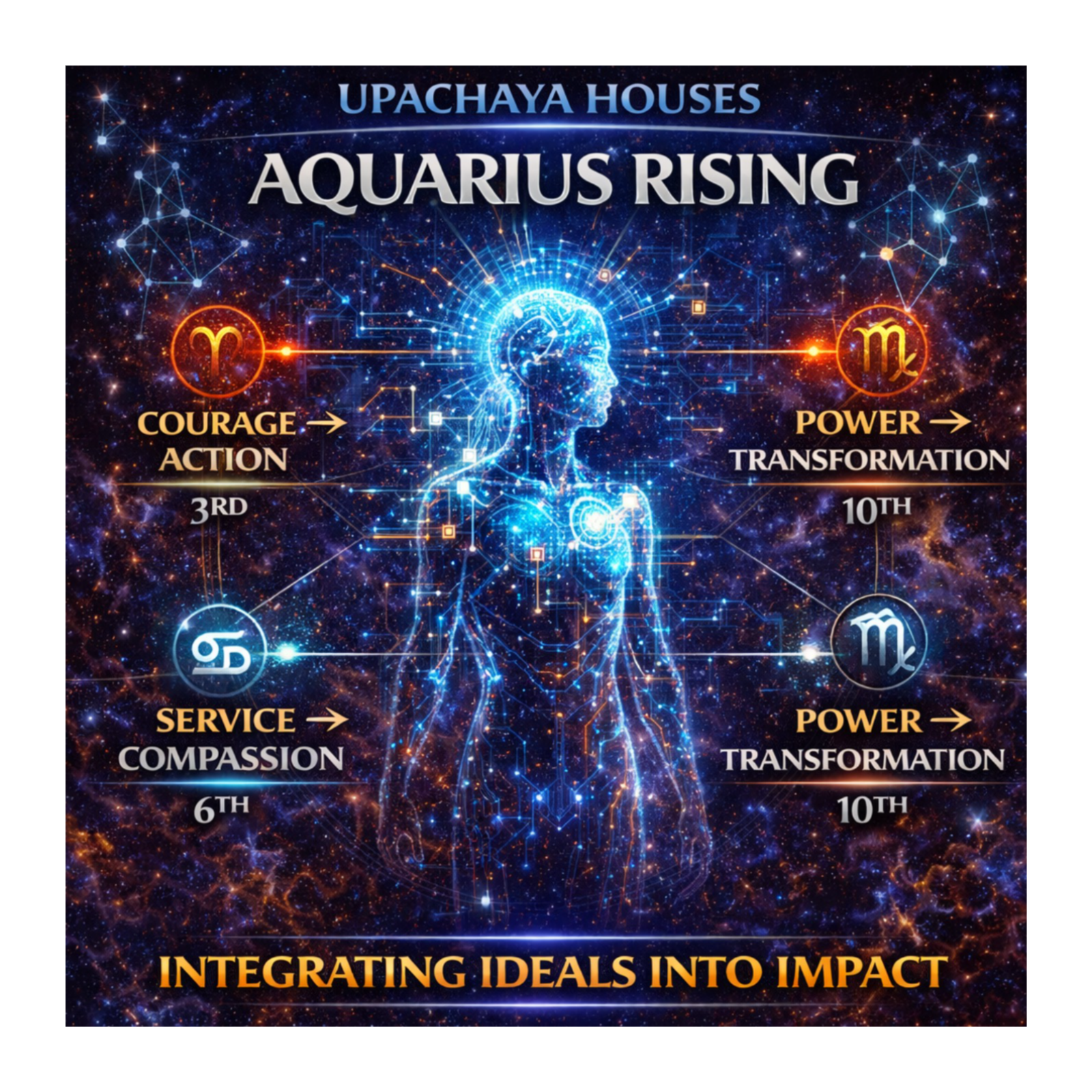
S93 Ep 11Aquarius Rising & Upachaya Houses: From Vision to Execution | Conscious Growth in Jyotish
Aquarius is future-oriented, innovative, and socially aware. But Jyotish is clear: ideas alone don’t create destiny. The Upachaya houses demand application. They ask whether Aquarius Rising can translate insight into influence and originality into real-world systems.This episode is Part One of a deep Jyotish teaching series designed for those learning Vedic Astrology seriously, not casually.♒ Aquarius Rising & the Upachaya FrameworkAquarius Rising begins life as an observer, thinker, and reformer.But the Upachaya houses test one crucial question:Can the visionary show up consistently enough to build what they imagine?These houses grow stronger with age, meaning Aquarius Rising often comes into power later in life, after learning discipline, emotional intelligence, and execution.🔹 3rd House – AriesCourage, Voice, Skill, and Assertive CommunicationAries in the 3rd forces Aquarius Rising to speak up and act, not just analyze.Early life may bring blunt speech, reactive debates, or discomfort with assertion.With maturity, this becomes tactical communication, leadership through clarity, and daily courage.This is where the rebel learns rhetoric, not resistance.🔹 6th House – CancerService, Emotional Labor, Health, and Daily DisciplineCancer in the 6th pulls Aquarius Rising out of abstraction and into emotional reality.Work, health, and routine require care, sensitivity, and rhythm.This placement matures Aquarius into:Compassionate system buildersCare-based leadersEmotional intelligence in service rolesHere, Aquarius learns that efficiency without empathy collapses systems.🔹 10th House – ScorpioPublic Power, Career Karma, and Transformational LeadershipScorpio at the peak of the chart gives Aquarius Rising intense, strategic authority.This is not loud leadership—it is deep influence.Careers may involve:Research, psychology, financeCrisis managementPolicy, reform, or hidden power structuresAquarius must own power emotionally, not just ideologically.🔹 11th House – SagittariusGains, Networks, Ethics, and Collective VisionSagittarius expands Aquarius Rising into global purpose.This is where networks become movements and ideas become communities.Early life may show scattered alliances or ideological clashes.With time, Aquarius Rising becomes:A teacher within the collectiveA guide for reformA bridge between future vision and shared beliefTrue gains come through truth-aligned collaboration.🌱 Why This Matters for Jyotish StudentsThis episode teaches:How Upachaya houses mature differently than trikonas or kendrasWhy Aquarius Rising often peaks later in lifeHow Saturn + Rahu energy must be structured, not suppressedHow vision becomes destiny only through repetition and responsibilityIf you are studying Vedic Astrology deeply, this is foundational knowledge.
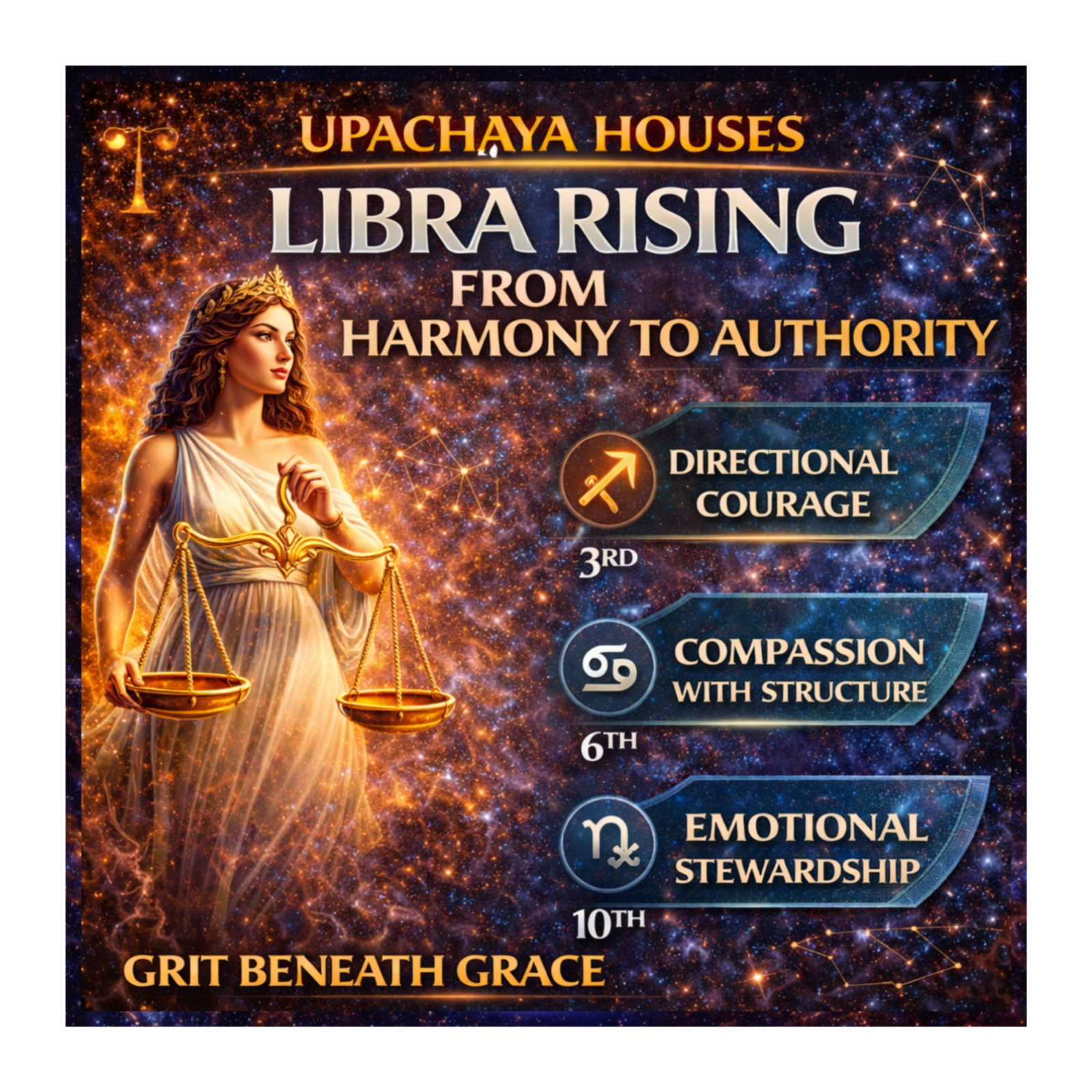
S93 Ep 12Libra Rising & Upachaya Houses: From Harmony to Strategy | Conscious Growth in Jyotish
For Libra Rising, these houses mark the evolution from relational idealism to strategic, embodied leadership.Ruled by Venus, Libra Rising is born to harmonize, negotiate, beautify, and balance. But the Upachaya houses do not reward charm alone. They demand grit beneath grace, direction beneath diplomacy, and action beneath ideals. These houses mature slowly, testing whether Libra Rising can stop pleasing and start progressing.This episode—Libra Rising: Upachaya Houses Part One—is designed for those who want to learn Jyotish properly, not superficially. It explains how Libra Rising grows into strength through effort, emotional labor, responsibility, and courageous visibility.⚖️ Libra Rising & the Upachaya PathLibra Rising begins life seeking peace, fairness, and mutual understanding.But the Upachaya houses ask a deeper question:Can harmony survive pressure—and still move things forward?Each Upachaya house represents a stage where Libra Rising must act, not just relate.🔹 3rd House – SagittariusCourage, Communication, Ethics, and Directional SpeechSagittarius in the 3rd gives Libra Rising a philosophical voice and moral conviction.Early life may show:Preachy toneScattered ideasConviction without executionWith time, Libra Rising matures into:Purpose-driven communicatorsEthical storytellersTeachers who inspire action, not applauseThis is where diplomacy becomes directional courage.🔹 6th House – PiscesService, Sacrifice, Healing, and Sacred RoutinePisces in the 6th places transcendence in the house of daily struggle.Libra Rising must learn:Boundaries in serviceDiscipline without rigidityCompassion without collapseThis house refines Libra into:HealersCounselorsDesigners of compassionate systemsHere, service becomes spiritual discipline, not escape.🔹 10th House – CancerPublic Role, Emotional Authority, and Nurturing LeadershipCancer in the 10th asks Libra Rising to lead through care, not control.Early career may feel unstable due to:Emotional sensitivityFear of exposurePeople-pleasing authority patternsWith maturity, Libra Rising becomes:Emotionally intelligent leadersTrusted public figuresProtectors of people and valuesTrue power here is emotional stewardship.🔹 11th House – LeoGains, Networks, Visibility, and Courage to ShineLeo in the 11th demands visibility in the collective.Libra Rising must overcome:Fear of standing outDeferring to stronger personalitiesBlending in to maintain peaceGrowth comes when Libra Rising learns:Belonging ≠ invisibilityLeadership can be elegant and boldTheir light gives others permission to shineThis is where social grace becomes magnetic influence.🌱 What This Episode Teaches Jyotish StudentsHow Upachaya houses mature Libra Rising over timeWhy Libra Rising often steps into leadership later in lifeHow Venusian harmony becomes effective strategyThe difference between peacekeeping and purposeful leadershipThis is foundational Jyotish knowledge for chart interpretation, counseling, and predictive work.#LibraRising#UpachayaHouses#VedicAstrologyCourse#LearnJyotish#JyotishAstrology#AstrologyEducation#CareerAstrology#ConsciousAstrology#VedicWisdom#AstrologyPodcast#HoroscopeAnalysis#IndianAstrology#SpiritualGrowth
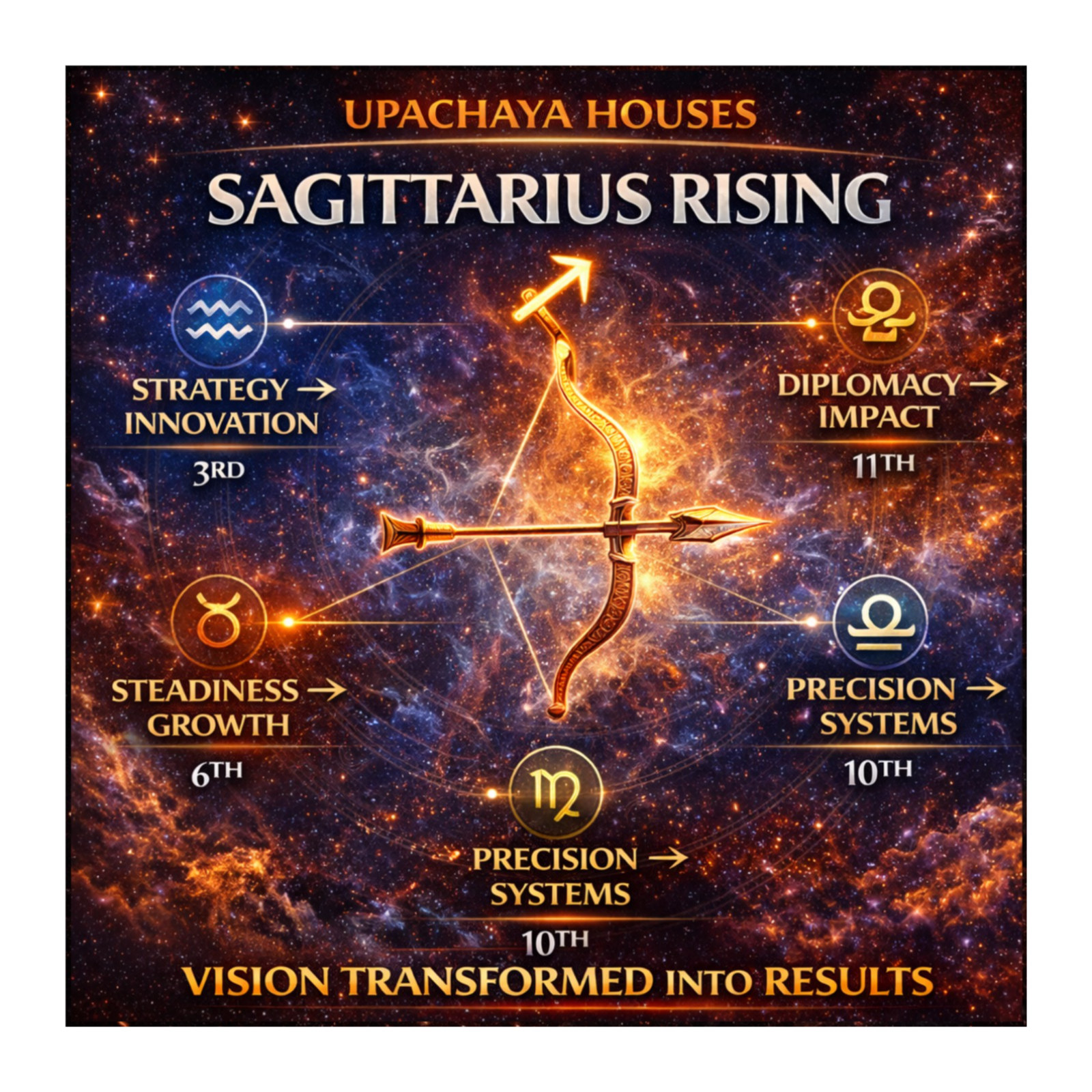
S93 Ep 10Sagittarius Rising Upachaya Houses | Turning Vision into Action in Jyotish
Sagittarius is born to explore, teach, and inspire.But Upachaya houses do not reward belief alone.They reward applied wisdom.This is where the philosopher must become the builder, the seeker must learn consistency, and freedom must accept structure in order to create impact.🔹 Part One – The Upachaya Framework for Sagittarius Rising3rd House – AquariusCommunication, courage, skills, and effort refined through objectivity and collective intelligence. Sagittarius rising learns to replace impulsive preaching with strategic, visionary communication. Over time, this placement produces digital thinkers, reformist educators, and idea-sharers who elevate discourse rather than dominate it.6th House – TaurusDaily routine, service, health, and discipline grounded in steadiness. Here, Sagittarius must slow down. Freedom learns the value of consistency, embodiment, and care. Growth comes through sustainable habits, wellness rituals, and value-based service. Wisdom becomes lived, not just spoken.10th House – VirgoCareer, reputation, and public karma demand precision and humility. Sagittarius rising earns authority through usefulness, ethical leadership, and reliable execution. This is where vision must translate into systems that actually work. Recognition comes from competence, not charisma.11th House – LibraGains, networks, and long-term goals refined through harmony and collaboration. Sagittarius rising learns that impact multiplies through diplomacy, fairness, and shared ideals. The lone seeker becomes a conscious collaborator, weaving vision through relationships and culture.🔹 Advanced Learning – Planetary Conjunctions in the Upachaya HousesThis episode also explores key planetary conjunctions that shape Sagittarius rising’s maturity curve:Mercury–Saturn (3rd): strategic intellect vs fear of expressionSun–Mercury (3rd): persuasive visionary vs preachy intellectualMoon–Venus (6th): healing service vs comfort-driven avoidanceMars–Mercury (6th): technical mastery vs burnoutSun–Saturn (10th): responsible leadership vs delayed successVenus–Mercury (10th): elegant professionalism vs image focusMoon–Rahu (11th): intuitive organizer vs approval seekingSun–Jupiter (11th): inspiring guide vs moral overreachEach conjunction is explained from a Vedic Astrology learning perspective, helping students understand why Sagittarius often rises later in life—but with lasting credibility.🔹 Core Teaching for Sagittarius RisingThe Upachaya houses teach Sagittarius that:Vision must become routineWisdom must become serviceBelief must become structureFreedom must learn responsibilityWhen integrated, Sagittarius rising becomes not just a seeker of truth, but a steward of systems that bring truth into lived reality.This is Jyotish for serious learners, not surface inspiration.#VedicAstrology#Jyotish#SagittariusRising#UpachayaHouses#LearnJyotish#VedicAstrologyCourse#CareerAstrology#JupiterInAstrology#AstrologyEducation#AscendantAnalysis#SeriousAstrology#AstrologyPodcast#KarmicGrowth
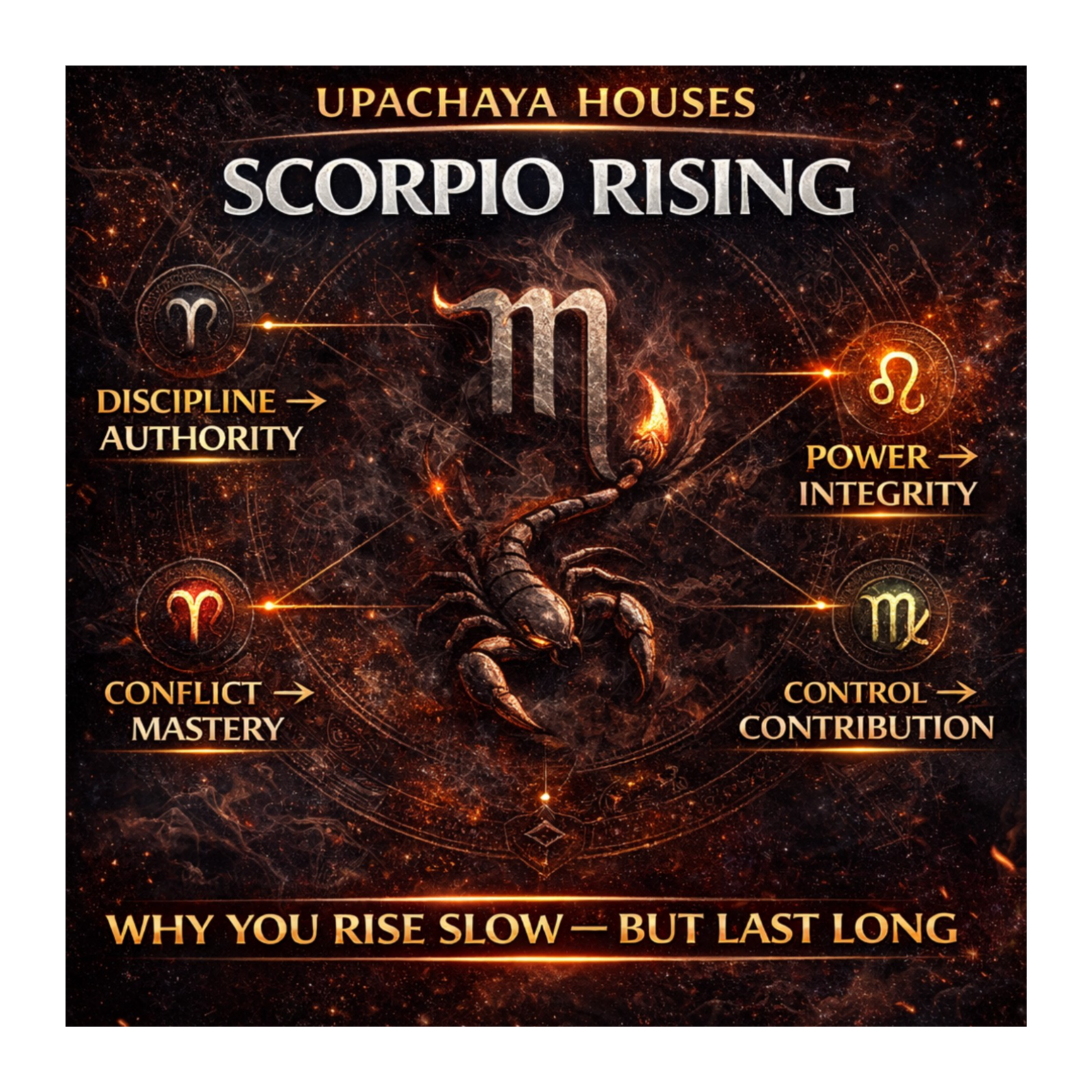
S93 Ep 9Scorpio Rising Upachaya Houses | How Intensity Becomes Strategy in Jyotish
🔹 Part 1: The Core Upachaya Path for Scorpio Rising3rd House – CapricornCourage is built through discipline, planning, and measured communication. Scorpio rising learns to replace instinctive reactions with strategy. Speech becomes precise, skills are honed through repetition, and effort matures into authority. Over time, this placement produces tacticians, negotiators, engineers, or professionals whose words carry weight because they are restrained.6th House – AriesDaily life becomes a battlefield of service, health, competition, and routine. With Mars ruling both Scorpio and Aries, intensity doubles here. Early life may bring conflict, aggression, or burnout. Maturity transforms this into disciplined execution—crisis leadership, fitness mastery, emergency response, or service under pressure. Scorpio learns that not every battle is personal.10th House – LeoPublic life demands visibility, integrity, and leadership through identity. Scorpio rising must step out from behind the scenes and own their authority. Leo here insists on creative leadership and ethical presence. Power must be embodied, not hidden. Careers in governance, psychology, arts, or transformational leadership flourish when ego is refined into service.11th House – VirgoGains come through precision, service-oriented networks, and systems thinking. Scorpio rising must build alliances based on competence, not control. Virgo teaches that influence grows through contribution, improvement, and clean execution. This is where Scorpio becomes a system builder, not just a strategist.🔹 Advanced Learning: Planetary Conjunctions in the Upachaya HousesThis podcast also explores key planetary conjunctions that define Scorpio rising’s long-term trajectory:Mars–Mercury (3rd/6th): tactical intelligence vs verbal aggressionSun–Saturn (3rd/10th): earned authority vs suppressed self-expressionMars–Moon (6th): crisis healer vs emotional burnoutSun–Jupiter (10th): visionary leadership vs inflated authorityRahu–Moon (11th): collective empathy vs approval addictionMars–Saturn (11th): institutional power vs social rigidityEach combination is explained from a learning Jyotish and astrology course perspective, helping you understand why Scorpio rises slowly—but lasts longer than most.
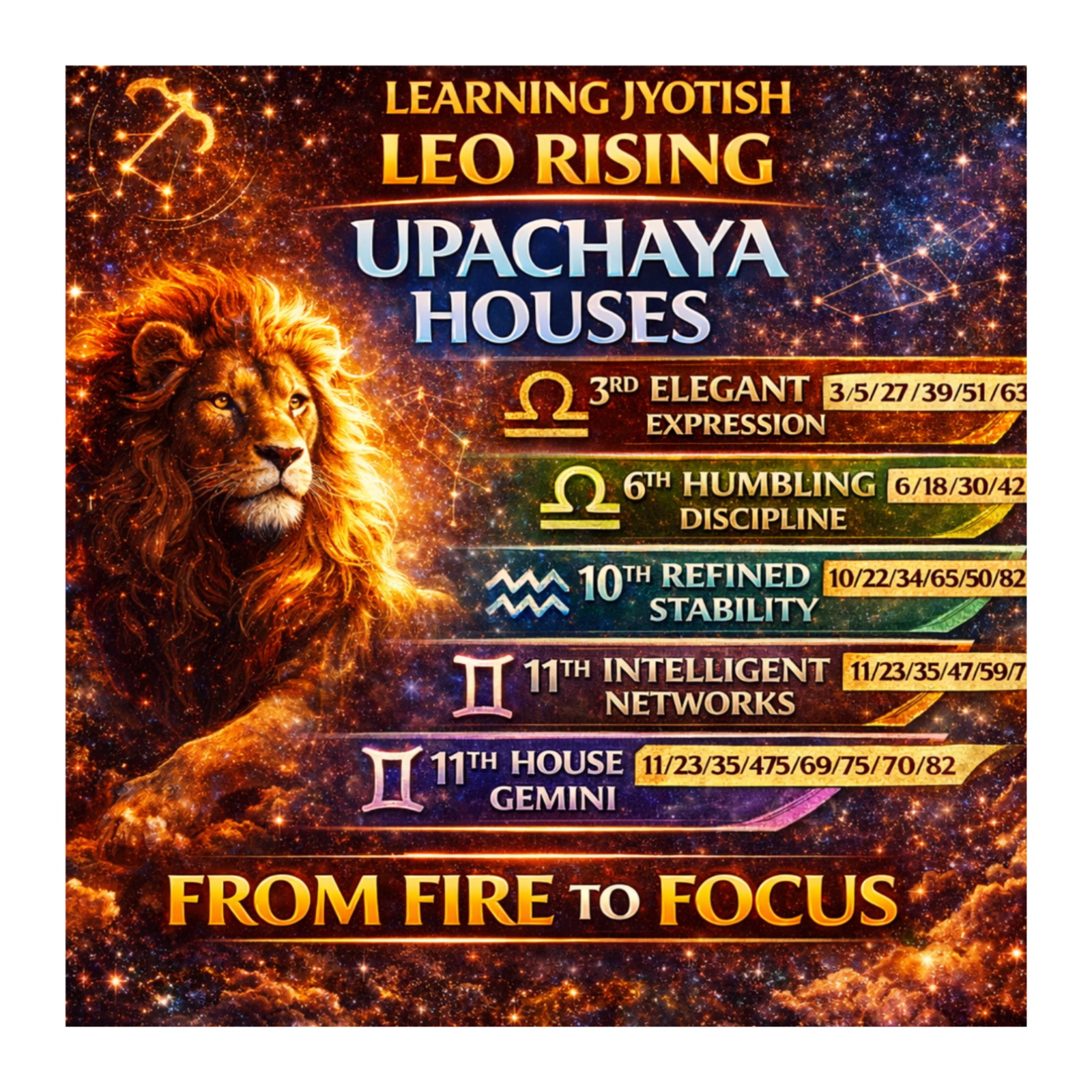
S93 Ep 7Leo Rising Upachaya Houses | Career Growth Through Discipline, Strategy & Real Jyotish Timing
3rd House Libra (Ages 3/15/27/39/51/63/75)Leo learns elegant speech, diplomacy, and persuasive courage. This is the shift from dominating a room to influencing a room. Charisma becomes refined. Expression becomes art + justice + relational intelligence.6th House Capricorn (Ages 6/18/30/42/54/66/78)This is the humbling upgrade: Sun reports to Saturn. Routine, service, conflict, health, and daily grind teach Leo rising that leadership must be proven in the trenches. Discipline becomes the container for mastery—where pride turns into competence.10th House Taurus (Ages 10/22/34/46/58/70/82)Public image and career are built through value, stability, aesthetics, and patience. Taurus rewards slow power. Leo learns: lasting recognition is built, not broadcast. Reputation becomes an asset when consistency meets refined output.11th House Gemini (Ages 11/23/35/47/59/71/83)Gains and networks multiply through ideas, communication, flexibility, and intelligent circles. Leo evolves from spotlight hunger into thought influence—where connection becomes strategy and teamwork expands the throne.Part 2: The Defining Conjunctions (Karmic Checkpoints)I also cover the most defining conjunctions in these Upachaya signs—showing how Leo rising either matures into a builder-leader… or gets trapped in ego loops.Highlights include:Sun + Mercury (Libra/Gemini): persuasive leader vs ego-debaterVenus + Mercury (Libra/Taurus): diplomatic communicator vs people-pleasingMars + Saturn (Capricorn): iron discipline vs burnoutMoon + Saturn (Capricorn/Taurus): responsible healer vs emotional suppressionSun + Rahu (Taurus): magnetic rise vs image obsessionSun + Jupiter (Gemini): community king vs self-righteous leadershipKey takeaway:For Leo rising, Upachaya houses are where fire learns focus.Not less leadership—better leadership.Not less visibility—earned visibility.If you’re building a solid foundation in Vedic astrology course learning, this episode trains your eye to read: growth timing, karmic effort, career patterns, and leadership evolution the right way.#VedicAstrology#Jyotish#LeoRising#UpachayaHouses#AstrologyLearning#VedicAstrologyCourse#CareerAstrology#AscendantAnalysis#SaturnDiscipline#SunInAstrology#HouseAnalysis
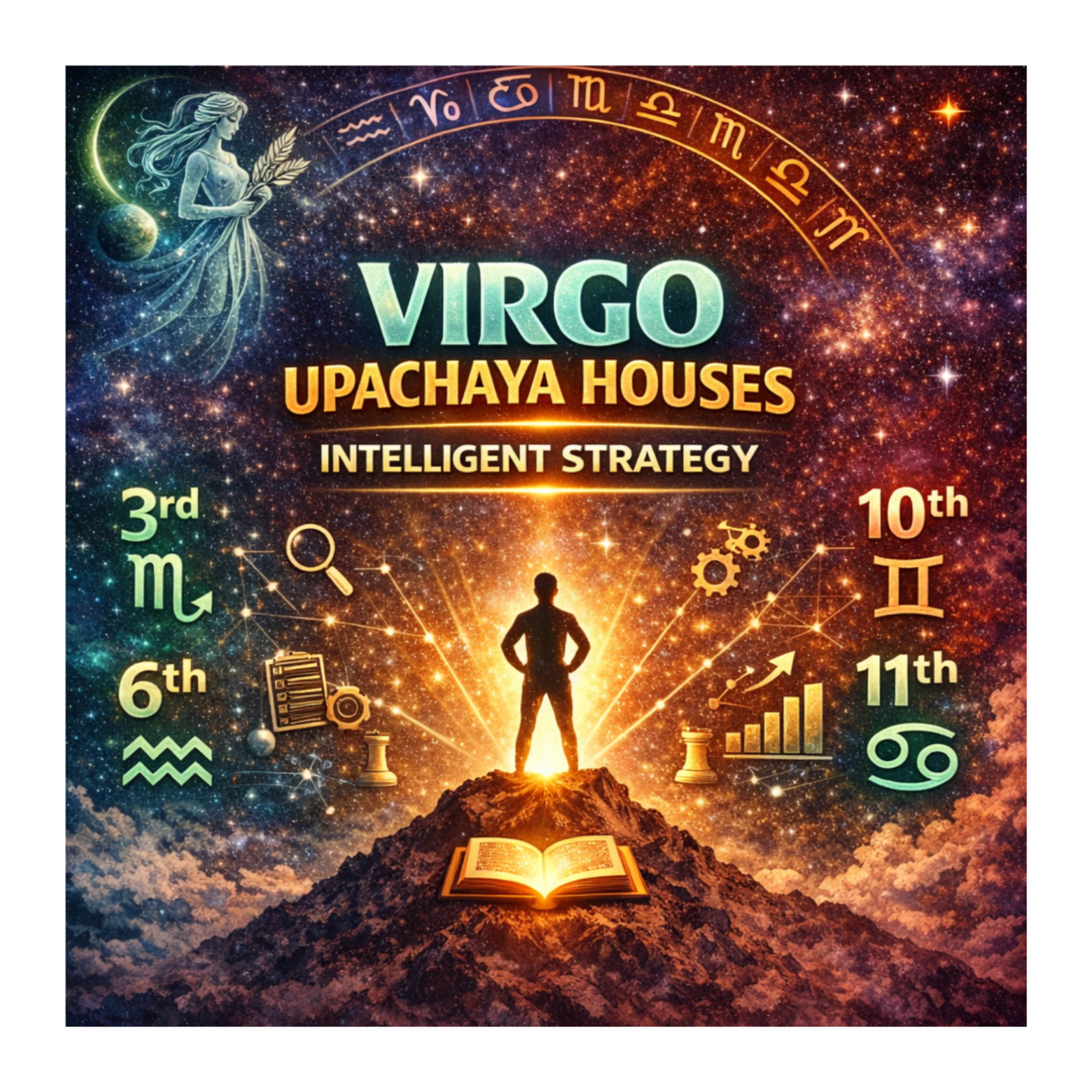
S93 Ep 5The Upachaya Houses – Conscious Growth With Time – Virgo Rising
For Virgo Ascendant, ruled by Mercury, this journey is deeply psychological and practical. Virgo begins as the analyst—observing, correcting, perfecting in silence. But Upachaya houses demand something more. They require Virgo to engage, execute, and eventually lead.🔹 Part 1: The Upachaya Framework for Virgo RisingWe begin with the foundational arc:How nervous analysis matures into confident executionWhy perfection is not the goal—useful precision isHow Virgo evolves from problem-solver to system-builder🔹 3rd House Scorpio – Emotional Courage & Strategic CommunicationActivated at ages 3, 15, 27, 39, 51, 63, 75, this house builds:Silent strength, psychological sharpness, and persuasive depthGrowth through pressure, research, secrecy, and resilienceMastery of communication that influences rather than impressesVirgo Rising learns here that depth creates authority, not volume.🔹 6th House Aquarius – Intelligent Service & Systemic ReformActivated at 6, 18, 30, 42, 54, 66, 78, Aquarius transforms daily effort into innovation:Service through technology, reform, health systems, and collective thinkingMoving from routine repetition to strategic redesignLearning that true service is not sacrifice—it is smart structureThis is where Virgo becomes a system healer, not just a fixer.🔹 10th House Gemini – Career Through Communication & MultiplicityActivated at 10, 22, 34, 46, 58, 70, 82, Gemini places Virgo on a public stage:Career through teaching, writing, advising, data, tech, or strategyAccepting nonlinear paths and multi-track careersLearning to speak before perfection—and lead through articulationHere, Virgo learns: If you don’t express your intelligence, it cannot scale.🔹 11th House Cancer – Emotional Intelligence in Networks & GainsActivated at 11, 23, 35, 47, 59, 71, 83, Cancer softens ambition:Building emotionally aligned networks and loyal alliancesGaining through trust, care, and intuitive collaborationAligning logic with heart-centered contributionThis house teaches Virgo that impact multiplies through belonging.🔹 Advanced Segment: Defining Conjunctions in Upachaya HousesWe then go deeper into key planetary conjunctions across these houses:Mercury–Mars, Sun–Mercury, Saturn–Rahu, Venus–SaturnMercury–Jupiter, Sun–Rahu, Moon–Mercury, Venus–MoonEach conjunction acts as a karmic checkpoint, revealing where Virgo Rising:Hesitates or integratesOverthinks or executesServes narrowly or builds systems that last✨ Final IntegrationAcross Scorpio, Aquarius, Gemini, and Cancer, Virgo Rising is trained to evolve:From critic to contributorFrom analyst to architectFrom precision to purposeThis episode is ideal for:Serious Vedic Astrology studentsThose considering a Jyotish course onlineVirgo Rising natives seeking career, service, and karmic clarityAnyone studying Upachaya houses and conscious growth over time
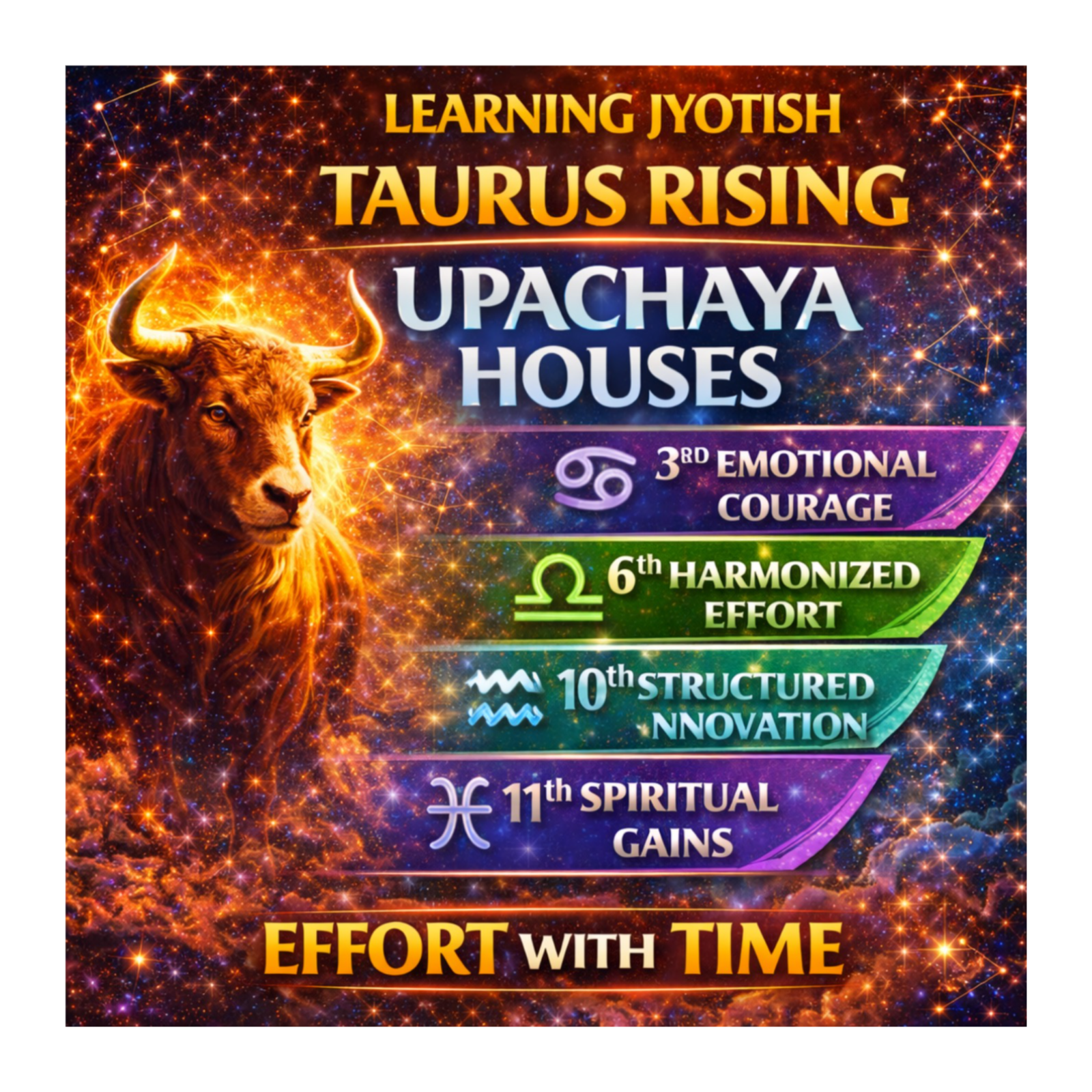
S93 Ep 6Taurus Rising & Upachaya Houses | Conscious Growth Through Effort in Vedic Astrology
If you are learning Jyotish or Vedic Astrology and want to understand how growth truly unfolds over time, this episode is a deep, structured exploration of the Upachaya Houses for Taurus Rising — the houses where effort, resistance, discipline, and maturity sculpt destiny.In Vedic Astrology, the Upachaya houses (3rd, 6th, 10th, and 11th) are not easy houses.They do not promise comfort.They promise slow, conscious, irreversible growth.For Taurus Ascendant, ruled by Venus, this path is especially significant. Taurus is steady, grounded, sensual, and security-oriented. But Upachaya houses demand movement. They ask Taurus to trade stillness for strategy, comfort for contribution, and attachment for long-term structure.This episode breaks down how fixed Earth learns to stretch toward the sky.🔹 Taurus Rising & the Upachaya Growth ArcWe begin with the psychological and karmic framework:Why Taurus resists change — and why Upachaya houses force itHow growth happens without breaking Taurus’s stabilityThe difference between forced struggle and conscious effort🔹 3rd House Cancer — Emotional Courage & Nurtured ActionActivated at ages 3, 15, 27, 39, 51, 63, 75With Cancer in the 3rd house, Taurus Rising learns courage through emotion, not aggression:Communication shaped by feeling, memory, and empathySibling dynamics that build emotional resilienceWriting, storytelling, caregiving, and emotional leadershipThis house teaches Taurus that true bravery is emotional presence, not loud assertion.🔹 6th House Libra — Grace Under Pressure & Harmonized EffortActivated at 6, 18, 30, 42, 54, 66, 78Libra in the 6th creates a paradox:Conflict handled through diplomacyService expressed through beauty, balance, and refinementDaily routines shaped by relationship dynamicsTaurus Rising learns here that peace is not avoidance — it is skilled negotiation under stress.🔹 10th House Aquarius — Structured Innovation & Public KarmaActivated at 10, 22, 34, 46, 58, 70, 82Aquarius brings Saturn and Rahu into Taurus’s career axis:Evolution from comfort-builder to system-architectCareers in technology, governance, reform, science, or humanitarian workLearning emotional detachment without losing integrityThis house matures Taurus into someone who builds for the future, not just for security.🔹 11th House Pisces — Spiritual Gains & Compassionate NetworksActivated at 11, 23, 35, 47, 59, 71, 83Pisces softens Taurus’s idea of success:Gains through faith, art, spirituality, and service-based communitiesIntuitive friendships and karmic alliancesWealth that flows through trust, not controlHere Taurus learns that not all gains are material — some are soul-level.🔹 Advanced Segment: Defining Conjunctions in Taurus Upachaya HousesWe then analyze the most defining planetary conjunctions, including:Moon–Mercury, Mars–Moon (3rd house Cancer)Venus–Mercury, Venus–Saturn (6th house Libra)Mars–Rahu, Sun–Saturn (10th house Aquarius)Jupiter–Venus, Moon–Ketu, Venus–Rahu (11th house Pisces)Each conjunction reveals:Where Taurus resists growthWhere comfort becomes a limitationWhere discipline turns into destiny✨ Final IntegrationFor Taurus Rising, Upachaya houses do not destroy stability — they refine it.From:Emotional courage in CancerRefined struggle in LibraImpersonal strategy in AquariusSpiritual generosity in PiscesGrowth is slow, quiet, and enduring.
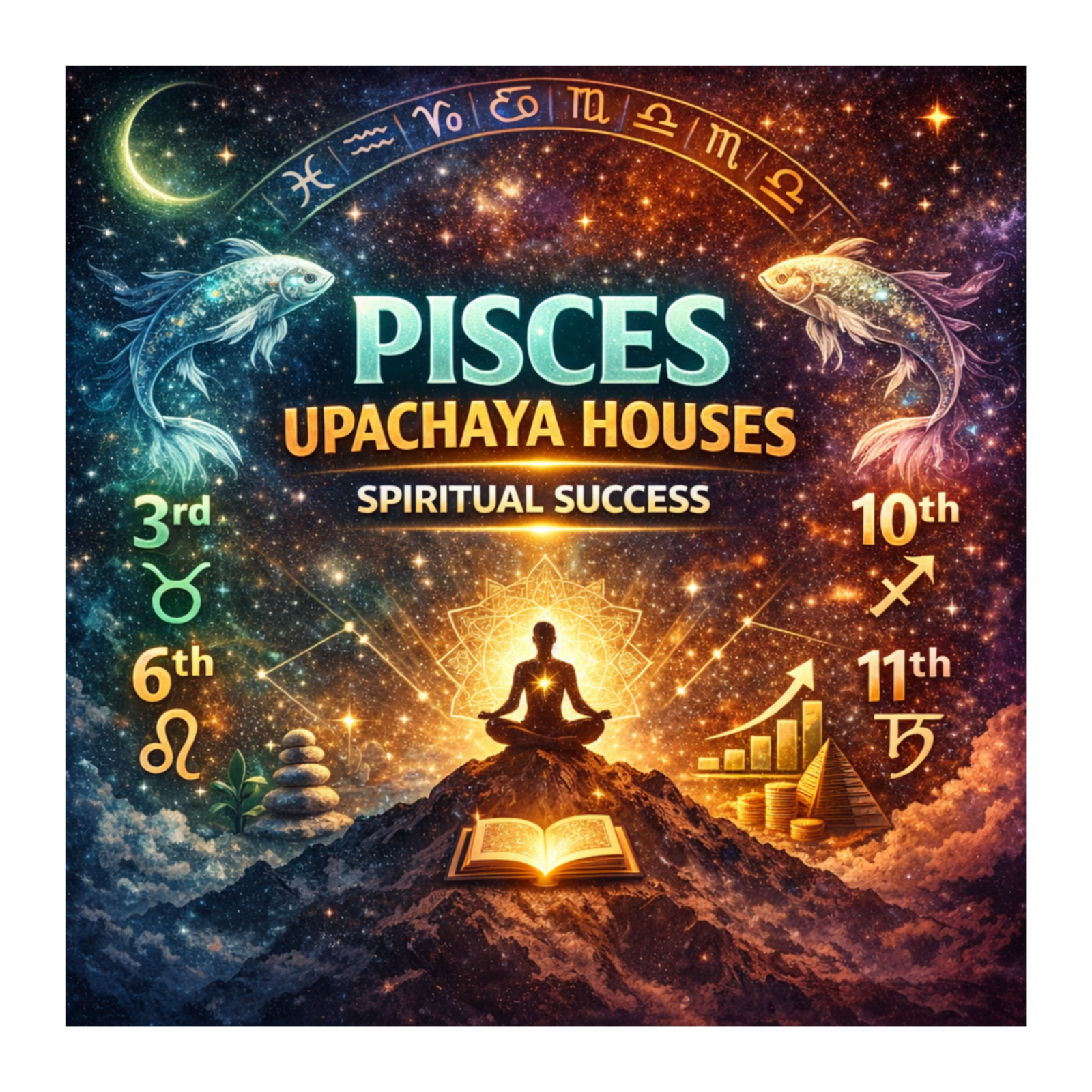
S93 Ep 3Pisces Rising Upachaya Houses Explained | Conscious Growth, Career & Dharma in Vedic Astrology
Pisces begins life immersed in intuition, symbolism, empathy, and cosmic sensitivity. But growth does not come through escape. It comes through anchoring vision into action. The Upachaya houses — 3rd, 6th, 10th, and 11th — are where the dreamer learns direction, where compassion becomes competence, and where spiritual insight turns into real-world contribution.🔹 Part One — Foundations of GrowthI break down how:3rd House Taurus trains Pisces Rising to develop grounded speech, sensory skill, courage, and craftsmanship. Communication becomes embodied, not vague.6th House Leo demands visible, dignified service — teaching Pisces that routine is not the enemy of creativity, but its container.10th House Sagittarius calls the mystic into vocation, ethics, teaching, publishing, leadership, and global impact.11th House Capricorn insists that ideals must be structured into systems, communities, and long-term results.This is where Pisces evolves from internal longing into external contribution.🔹 Part Two — Key Conjunctions in the Upachaya HousesI analyze the most defining planetary conjunctions that activate growth:Moon–Mercury & Venus–Mercury in the 3rdSun–Mars, Moon–Venus in the 6thSun–Jupiter, Mercury–Jupiter in the 10thMoon–Saturn, Venus–Mars in the 11thEach conjunction reveals where Pisces must stop drifting and start defining — through discipline, repetition, boundaries, and conscious responsibility.🔹 Part Three — Sixth House Leo: Service, Health & VisibilityHere, I go deep into:Why Pisces Rising struggles with visibilityHow Leo in the 6th transforms healing into leadershipBurnout patterns, martyrdom, validation cycles — and how to evolve beyond themThis section is essential for anyone working in healing, wellness, education, service, or leadership roles.🔹 Part Four — Tenth House Sagittarius: Career, Dharma & Public AuthorityThis is where Pisces Rising becomes:The teacherThe guideThe ethical leaderThe way-showerI explain how vocation matures from confusion into clarity — and how spiritual knowledge must be lived, not just preached.🔹 Part Five — Eleventh House Capricorn: Networks, Gains & LegacyFinally, we explore how Pisces Rising learns:Strategic collaborationLong-term impactAuthority without egoBuilding systems that outlast inspirationThis is where the mystic becomes the architect of collective change.🌱 Who This Podcast Is ForSerious students of Vedic Astrology / JyotishPisces Ascendants seeking career clarity & life directionHealers, teachers, creatives, and leadersAnyone wanting astrology beyond prediction — astrology as conscious growthIf you are ready to understand why growth takes time, why discipline refines intuition, and how destiny unfolds through effort — this episode is part of your path.#VedicAstrology#Jyotish#PiscesRising#UpachayaHouses#VedicAstrologyCourse#LearnJyotish

S93 Ep 4Cancer Rising Upachaya Houses Explained | Emotional Growth, Career Karma & Leadership in Jyotish
Cancer is ruled by the Moon — intuitive, nurturing, and emotionally responsive. But the Upachaya houses (3rd, 6th, 10th, and 11th) demand something more:➡️ Emotional maturity➡️ Skill under pressure➡️ Action without validation➡️ Leadership without retreatThese houses mature with age and repetition. They don’t reward comfort — they reward conscious response.🔹 Part One — Cancer Rising: From Feeling to FortitudeI explain how Cancer Rising evolves when:3rd House Virgo sharpens emotional expression into skill, precision, and analytical courage6th House Sagittarius forces belief systems to be lived through daily effort, service, and ethical discipline10th House Aries demands bold public action, leadership, and karmic initiative11th House Taurus teaches stable gains, loyal alliances, and value-based community successThis is the soul journey from private care to public contribution.🔹 Part Two — Defining Conjunctions in the Upachaya HousesI analyze the most important planetary conjunctions shaping Cancer Rising’s evolution, including:Mercury–Moon & Sun–Mercury in the 3rdMars–Jupiter & Venus–Mercury in the 6thMoon–Ketu & Sun–Mars in the 10thVenus–Rahu & Mars–Mercury in the 11thEach conjunction marks karmic moments where emotional comfort must give way to intentional growth.🔹 Part Three — Sixth House Sagittarius: Faith Tested Through WorkThis section explores:Why Cancer Rising struggles with routine unless it feels meaningfulHow service becomes a moral and philosophical pathBurnout patterns, savior complexes, and ethical fatigue — and how to evolve beyond themPerfect for those in healing, education, law, social work, wellness, or advisory roles.🔹 Part Four — Tenth House Aries: Leadership Through ActionHere, I show how Cancer Rising:Is karmically pushed into leadershipLearns to act before emotional certainty arrivesTransforms from caregiver into initiatorThis is where the Moon learns to move through fire.🔹 Part Five — Eleventh House Taurus: Sustainable Gains & Loyal NetworksFinally, we explore how Cancer Rising matures into:Stable financial and social gainsEmotionally nourishing communitiesLong-term success rooted in shared values, not emotional dependencyThis is where loyalty becomes legacy.🌱 Who This Podcast Is ForSerious students of Vedic Astrology / JyotishCancer Ascendants seeking career clarity and emotional maturityHealers, leaders, counselors, educators, and creativesAnyone wanting astrology as a growth system — not prediction entertainmentIf you want to understand how emotional intelligence evolves into functional strength, this episode will reframe how you see Cancer Rising entirely.#VedicAstrology#Jyotish#CancerRising#UpachayaHouses#VedicAstrologyCourse#LearnJyotish#AstrologyForCareer
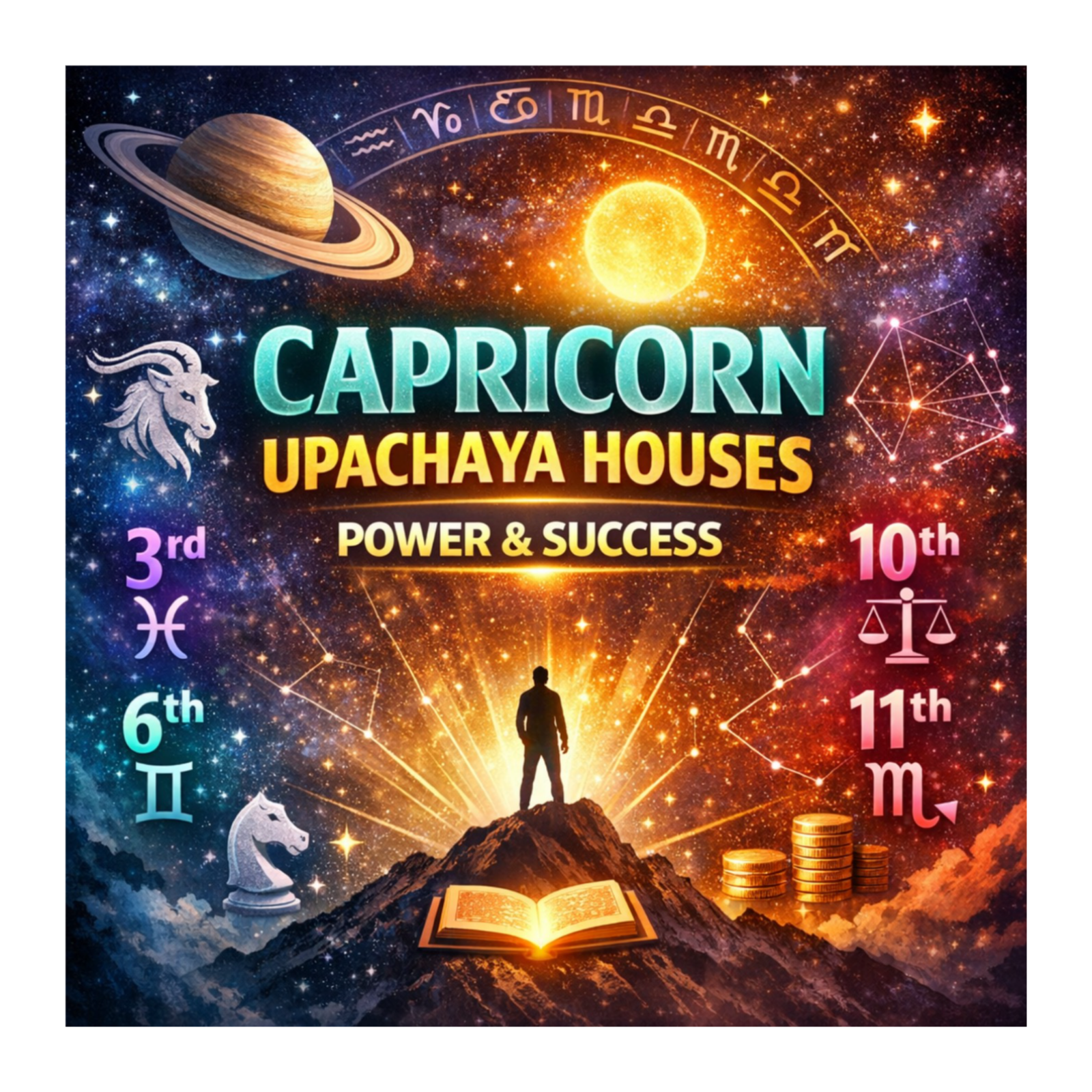
S93 Ep 1Upachaya Houses & Conscious Growth for Capricorn Rising | Strategy, Career & Saturnian Mastery
If you are a serious student of Vedic Astrology, a career-oriented seeker, or someone trying to understand how Saturnian charts evolve with time, this episode is for you.In this in-depth Jyotish podcast, I take you through the Upachaya houses (3rd, 6th, 10th, and 11th) for Capricorn Ascendant, revealing how conscious effort, discipline, and strategic intelligence transform struggle into long-term authority.Upachaya houses are not about instant results.They are about earned power, karmic maturity, and growth through repeated engagement with life.For Capricorn rising, ruled by Saturn, these houses become the engine rooms of evolution—where responsibility turns into leadership, control turns into creative execution, and endurance becomes influence.🔹 What You’ll Learn in This SeriesPart 1 – Foundations of Upachaya GrowthWhy Capricorn rising must move from silent builder to strategic initiatorHow Saturn refines patience into momentumWhy action—not withdrawal—is the karmic demand of Upachaya houses3rd House Pisces – Courage Through IntuitionEmotional will, subtle communication, and inner confidenceWhy quiet voices often carry the deepest authorityGrowth through empathy, storytelling, and intuitive action6th House Gemini – Strategic Service & Mental MasteryWork, health, and obstacles through intelligence—not brute forceMultitasking, analysis, and crisis management as karmic skillsHow Capricorn learns to work smarter, not harder10th House Libra – Public Karma & Graceful LeadershipCareer, reputation, and authority through diplomacy and fairnessWhy real power persuades rather than pressuresSaturn meets Venus: leadership with ethics, aesthetics, and balance11th House Scorpio – Strategic Gains & Karmic AlliancesLong-term goals, influence, and networks built on trust, not popularityEmotional depth, loyalty, and behind-the-scenes powerWhy Capricorn gains through intensity, not exposure🔹 Advanced Sections: Planetary Conjunctions in Upachaya HousesI then go deeper into specific planetary conjunctions that radically shape Capricorn rising’s professional and social destiny:Moon–Mercury: emotional intelligence vs mental anxietySun–Venus: artistic leadership vs validation trapsMercury–Mars: tactical brilliance vs burnoutSun–Saturn: karmic authority and delayed recognitionRahu–Moon: magnetic networks vs emotional instabilityMars–Saturn: institutional power vs isolated leadershipEach conjunction is analyzed from a career, psychological, and karmic growth perspective, helping you understand how maturity—not youth—unlocks the best results in Saturn-ruled charts.🔹 Who This Podcast Is ForVedic astrology students beyond beginner levelCareer-focused Capricorn AscendantsJyotish practitioners studying Upachaya houses, Saturn karma, and timingProfessionals seeking long-term success, authority, and legacyThis is not motivational astrology.This is structural, karmic, time-tested Jyotish for people who build real lives and real careers.If you want to understand how growth actually happens in a Saturn-ruled chart, this episode will change how you read horoscopes—and yourself.#VedicAstrology#CapricornAscendant#UpachayaHouses#SaturnInAstrology#CareerAstrology#JyotishShastra#SeriousAstrology#AstrologyForProfessionals#KarmicGrowth#AstrologyEducation#VedicAstrologyPodcast#AscendantAnalysis#SaturnReturnWisdom#AstrologyForCareer#ConsciousGrowth

S92 Ep 4Gemini, Libra & Aquarius Lagna | Blank Chart Predictions | Learn Vedic Astrology
If you are serious about learning Jyotish or Vedic Astrology online, this podcast is a core foundational lesson in Blank Chart Predictions—the method real astrologers use before even looking at planets.In this episode, I decode house-based lifelong karmic themes for the three Air Ascendants:Gemini LagnaLibra LagnaAquarius LagnaThis is classical Vedic Astrology, taught without shortcuts, superstition, or motivational astrology.🌬️ What You Will Learn in This PodcastYou will learn how each house behaves when empty, purely through:Lagna lord psychologyElemental (Air) temperamentPlanetary friendships & enmitiesKendra duality & instabilityKarma vs intellect conflictAge-based house activation cyclesThis approach builds true predictive depth and is essential if you want to practice astrology professionally or teach it systematically.♊ Gemini Lagna — The Divided Mind & Mutable IdentityYou’ll clearly understand why Gemini natives:Struggle with identity fragmentation and indecisionIntellectualize emotions rather than feel them (Virgo 4th)Experience emotional speech and financial mood swings (Cancer 2nd)Are bold communicators yet ego-sensitive (Leo 3rd)Face pleasure–loss karma through romance and children (Libra 5th)Encounter stress-linked illness and intense workplace conflict (Scorpio 6th)Feel belief vs logic tension in marriage (Sagittarius 7th)Experience delayed transformation and emotional suppression (Capricorn 8th)Drift toward creative yet unstable careers (Pisces 10th)Seek pleasure, love, and luxury in isolation (Taurus 12th)This section teaches mental duality, nervous system karma, and intellectual overstimulation patterns.♎ Libra Lagna — Harmony, Desire & Relationship KarmaYou’ll learn why Libra natives:Appear refined yet hide insecurity and indulgence patternsCarry intense speech and family power dynamics (Scorpio 2nd)Communicate with moral certainty and teacher energy (Sagittarius 3rd)Experience emotional distance or structured homes (Capricorn 4th)Have unconventional or delayed children and romance (Aquarius 5th)Burn out emotionally in service roles (Pisces 6th)Attract dominant or combative partners (Aries 7th)Resist deep emotional transformation (Taurus 8th)Fluctuate in public status based on emotional cycles (Cancer 10th)Over-identify with social recognition and image (Leo 11th)Suffer mental overactivity, sleep issues, or escapism (Virgo 12th)This section is essential for understanding relationship-driven karma and Venusian imbalance.♒ Aquarius Lagna — The Detached Reformer & Karmic OutsiderPause often.Take notes.🎓 Ideal AudienceJyotish studentsVedic Astrology course learnersPracticing astrologersPsychology + astrology researchersTeachers building structured astrology programs#VedicAstrologyPodcast

S92 Ep 3Aries, Leo & Sagittarius Lagna | Blank Chart Predictions | Learn Vedic Astrology
If you are serious about learning Jyotish or Vedic Astrology online, this podcast is part of a structured classical training series on Blank Chart Predictions — the foundation of real predictive astrology.In this episode, I break down house-based lifelong karmic themes for the three Fire Ascendants:Aries LagnaLeo LagnaSagittarius LagnaNo transits.No planetary placements.No shortcuts.Only pure Lagna logic, house lord dynamics, planetary friendships/enmities, and age-based activation cycles — exactly how professional astrologers read charts when the data is minimal.🔥 What You Will Learn in This PodcastYou will understand how each house behaves even when empty, based on:Lagna lord psychologyFire-element temperamentMaraka, Trikona & Dusthana interactionsEgo vs Dharma conflictsCareer karma vs spiritual directionAge-triggered house activations (1–12, 13–24, etc.)This episode is mandatory learning for anyone building a Vedic Astrology foundation or course curriculum.♈ Aries Lagna — The Warrior’s Karmic PathYou’ll learn why Aries natives:Act first, reflect later (Mars-driven identity)Struggle between aggression and emotional grounding (Cancer 4th)Experience power clashes in speech and finances (Taurus 2nd)Attract refined but conflicting partners (Libra 7th)Undergo repeated crisis-driven rebirths (Scorpio 8th)Face delayed authority and discipline lessons in career (Capricorn 10th)Seek hidden spiritual escape despite fiery ambition (Pisces 12th)This section teaches impulse control, leadership karma, and survival psychology.♌ Leo Lagna — Power, Ego & Recognition KarmaYou’ll clearly see why Leo natives:Are wired for visibility, authority, and dominanceExperience speech-based karma and analytical finances (Virgo 2nd)Struggle with equal partnerships and delayed marriages (Aquarius 7th)Carry intense emotional roots and private power struggles (Scorpio 4th)Face karmic tests through children and legacy (Sagittarius 5th)Build careers through stability, beauty, and prestige (Taurus 10th)Withdraw emotionally to heal ego wounds (Cancer 12th)This section is essential for understanding leadership astrology and public-image karma.♐ Sagittarius Lagna — Dharma, Truth & Philosophical FireYou’ll understand why Sagittarius natives:Are driven by belief, purpose, and moral visionSpeak bluntly and face value-based financial lessons (Capricorn 2nd)Have rebellious communication and unusual siblings (Aquarius 3rd)Seek spiritual or idealistic home environments (Pisces 4th)Experience bold creativity and strong-willed children (Aries 5th)Attract intellectual but dual-path partners (Gemini 7th)Undergo emotional rebirth through crisis (Cancer 8th)Carry hidden tantric or occult tendencies (Scorpio 12th)This section teaches faith under pressure and truth-tested wisdom.🧠 Why This Podcast MattersIf you want to:Learn classical Jyotish, not pop astrologyMaster blank chart prediction skillsUnderstand lifelong karmic themesPrepare for professional astrology practiceBuild a Vedic Astrology course or syllabus👉 This episode is non-negotiable foundation work.Watch slowly.Pause often.Take notes.🎓 Ideal AudienceJyotish studentsVedic Astrology course learnersProfessional astrologersPsychology + astrology researchersTeachers building structured astrology programs#VedicAstrology#JyotishLearning#BlankChartPredictions#LearnAstrologyOnline#AriesLagna#LeoLagna#SagittariusLagna

S92 Ep 2Cancer, Scorpio & Pisces Lagna | Blank Chart Predictions | Learn Vedic Astrology
If you are genuinely learning Jyotish or Vedic Astrology online, this podcast is designed as a core training module, not entertainment.In this episode, I break down Blank Chart Predictions for the three Water Ascendants:Cancer LagnaScorpio LagnaPisces LagnaThis is house-based classical Vedic Astrology, taught exactly the way professional astrologers read charts when no planets are considered first.🔹 What You Will Learn in This PodcastYou will understand how each house behaves when empty, purely from:Ascendant lordshipPlanetary friendships & enmitiesDusthana vs Trikona dynamicsMaraka & longevity housesPsychological & karmic patternsAge-based house activation cyclesThis approach builds true predictive confidence and is essential for anyone planning to practice astrology seriously or teach it professionally.🔸 Cancer Lagna – The Emotional ArchitectYou will clearly understand:Why Cancer rising lives through emotion, memory, and protectionFamily pride and authority issues from Leo 2ndOverthinking and hesitation in communication (Virgo 3rd)Emotional dependence on home, beauty, and relationships (Libra 4th)Intense karmic challenges with children and romance (Scorpio 5th)Delayed or burdened marriages (Capricorn 7th)Career instability due to Mars debilitation (Aries 10th)Mental burnout and subconscious overactivity (Gemini 12th)This section is critical for understanding Moon-dominant personalities and emotional karma.🔸 Scorpio Lagna – The Survivor & TransformerYou will learn:Why Scorpio rising carries intensity, secrecy, and emotional armorMoral rigidity and belief-driven speech (Sagittarius 2nd)Silent endurance and suppressed communication (Capricorn 3rd)Detached or unconventional emotional roots (Aquarius 4th)Deep emotional investment in children and creativity (Pisces 5th)Extreme resilience in conflict and illness (Aries 6th)Passionate yet volatile marriages (Taurus 7th)Psychological obsession and occult intelligence (Gemini 8th)Career power struggles and public dominance (Leo 10th)Sensual isolation and hidden relationship karma (Libra 12th)This section teaches power dynamics, trauma processing, and transformation cycles.🧠 Why This Podcast Is ImportantIf you want to:Learn real Jyotish, not sign stereotypesMaster blank chart readingUnderstand lifelong karmic themesBuild a strong Vedic Astrology foundationPrepare for professional astrology practice👉 This episode is mandatory study material.I recommend watching slowly, pausing, and taking notes.🎓 Ideal ForJyotish studentsVedic Astrology course learnersProfessional astrologersPsychology + astrology enthusiastsSerious long-term practitioners#VedicAstrology#JyotishLearning#BlankChartPredictions#LearnAstrologyOnline#CancerLagna#ScorpioLagna#PiscesLagna#ClassicalJyotish#AstrologyStudents#VedicAstrologyPodcast

S92 Ep 1Taurus, Virgo & Capricorn Lagna | Blank Chart House Predictions | Learn Vedic Astrology
If you are serious about learning Jyotish or Vedic Astrology online, this podcast is designed for you.In this in-depth Vedic Astrology training episode, I walk you step-by-step through blank chart house-based predictions for three Earth Ascendants:Taurus LagnaVirgo LagnaCapricorn LagnaThis is classical Jyotish, taught in a systematic, house-activation framework, without shortcuts, superstition, or surface-level astrology.🔹 What You Will Learn in This PodcastYou will understand how each house behaves when empty, based purely on:Ascendant lordshipNatural sign energyPlanetary friendships and enmitiesDusthana and Trikona dynamicsAge-based house activation cyclesThis is exactly how traditional Jyotish teachers trained students—and how professional astrologers read charts in real life.🔸 Taurus Lagna (Venus-Ruled Earth Ascendant)You’ll learn:Why Taurus rising prioritizes harmony, comfort, and stabilityHow relationship suppression, food habits, and self-worth themes developWhy houses activate strongly at 1, 13, 25, 37…Power struggles in marriage (Scorpio 7th)Career karma through Aquarius 10thSpiritual exhaustion and foreign themes from Aries 12thThis section is essential if you want to understand Venus-centric life patterns.🔸 Virgo Lagna (Mercury-Ruled Analytical Ascendant)You’ll discover:Why Virgo natives are mentally sharp but emotionally guardedHow debility of Venus affects love, food, and self-criticismWhy children, romance, and creativity often feel delayed or burdenedPsychological intensity from Aries 8thCareer success through Gemini 10thSpiritual lessons through ego dissolution in Leo 12thThis is a must-study lagna for anyone interested in medical, technical, analytical, or service-oriented astrology.🔸 Capricorn Lagna (Saturn-Ruled Karmic Ascendant)You’ll clearly see:How Saturn creates slow but lasting successWhy early life feels heavy, duty-bound, or emotionally restrainedReal estate and emotional unrest from Aries 4thStrong career yogas from Libra 10thHidden power struggles in Scorpio 11thSpiritual growth through loss and isolation via Sagittarius 12thThis section is invaluable for understanding karma, legacy, authority, and long-term rise.🧠 Why This Podcast MattersIf you want to:Learn real predictive astrologyUnderstand house meanings deeplyStudy Jyotish as a system, not entertainmentPrepare for professional astrology practiceBuild a strong Vedic Astrology foundation👉 This episode is non-negotiable learning.I recommend pausing, taking notes, and revisiting this podcast multiple times.📚 Ideal For:Jyotish studentsVedic Astrology course seekersAstrology teachers & practitionersPsychology + astrology enthusiastsSerious learners tired of generic forecasts#VedicAstrology#JyotishLearning#LearnAstrologyOnline#BlankChartPredictions#AscendantAnalysis#TaurusLagna#VirgoLagna#CapricornLagna#HouseBasedAstrology#AstrologyEducation#ProfessionalAstrology#JyotishCourse#AstrologyStudents#VedicAstrologyPodcast#ClassicalJyotish

S91 Ep 4112th House Secrets in Vedic Astrology | Taurus, Virgo & Capricorn Rising Deep Dive
If you’re learning Jyotish / Vedic Astrology online and want to truly understand the 12th house beyond textbook meanings, this episode is for you.In this advanced Vedic Astrology podcast, I walk you step-by-step through the 12th house of expenditure, loss, moksha, sleep, foreign lands, isolation, and spiritual surrender, specifically for Taurus Rising, Virgo Rising, and Capricorn Rising — three earth ascendants that struggle the most with letting go.I don’t sugarcoat this house.I decode it psychologically, karmically, and spiritually — exactly how it operates in real lives.🔥 What You’ll Learn in This EpisodeFor Taurus Rising – Aries in the 12th HouseWhy comfort, wealth, and attachment become karmic burn zonesMars as the lord of loss: impulsive spending, foreign exile, spiritual fireSleeplessness, subconscious anger, sexual karma, and private battlesEight defining planetary conjunctions in Aries that force purificationWhy Taurus learns peace through courageous release, not safetyFor Virgo Rising – Leo in the 12th HouseEgo dissolution, hidden desire to be seen, private creativityThe Sun as a quiet spiritual leader behind the scenesBurnout through service, perfectionism vs presenceEight Leo conjunctions that turn the servant into a hidden luminaryWhy Virgo’s healing begins when control bows to soul-lightFor Capricorn Rising – Sagittarius in the 12th HouseStructure collapsing so faith can riseForeign travel, philosophy, retreats, and karmic endingsJupiter as the silent guru teaching surrender over strategyEight Sagittarius conjunctions that soften discipline into wisdomWhy Capricorn’s greatest mastery is trusting the unseen⏳ Activation Cycles ExplainedI also explain 12th house activation years (12, 24, 36, 48, 60, 72, 84) and why these ages often bring:Sudden endingsForeign relocationsJob losses that redirect destinySpiritual awakenings triggered by lossThis episode is designed for:Students of Vedic Astrology & JyotishThose enrolling in or considering an online Jyotish coursePracticing astrologers wanting psychological + karmic depthAnyone exploring moksha houses (8th & 12th) seriouslyIf you’ve ever wondered why life keeps forcing you to let go, this episode explains where it comes from in the chart — and how to work with it consciously.This is not prediction astrology.This is soul mechanics.#VedicAstrology#Jyotish#LearnJyotish#VedicAstrologyCourse#AstrologyPodcast#12thHouseAstrology#TaurusRising#VirgoRising#CapricornRising#SpiritualAstrology#KarmicAstrology#MokshaHouses#AstrologyEducation#IndianAstrology#AstrologyStudents

S91 Ep 4212th House in Vedic Astrology: Aries , Leo , Sagittarius Rising
If you’re learning Jyotish / Vedic Astrology online and want a real, usable understanding of the houses (not just memorized keywords), this episode is your deep-dive into:12th House (Vyaya Bhava) → expenditure, sleep, foreign lands, isolation, spiritual liberation, moksha11th House (Labha Bhava) → desires, gains, networks, community power, social media, influenceI break this down through three powerful ascendant lenses that completely change how you read karma:🔥 Aries Rising: 12th House in Pisces — “The Warrior Faces the Void”Aries is built to act. But Pisces in the 12th forces the hardest lesson: surrender without feeling defeated.You’ll understand:Why Aries Rising often faces burnout, secret grief, and karmic closures unless rest becomes disciplineHow Pisces + Jupiter (and the classical Ketu tone) push you toward charity, retreats, foreign lands, ashrams, and spiritual serviceThe shadow zone: escapism, weak boundaries, financial leaks, fantasy copingWhy dreams become a guidance system for Aries Rising (premonitions, psychic downloads, symbolic messages)✅ Plus: 8 defining conjunction themes in Pisces (Jupiter–Moon, Jupiter–Venus, Jupiter–Sun, Jupiter–Mercury, Sun–Moon, Venus–Moon, Venus–Mercury, Sun–Venus) — showing how the Aries ego dissolves into spiritual intelligence.👑 Leo Rising: 11th House in Gemini — “The Royal Must Learn to Share the Stage”Leo loves a spotlight. Gemini in the 11th teaches: your influence multiplies through conversation, not domination.You’ll learn:Why gains come through media, writing, speaking, marketing, networking, educationHow to win social media the Jyotish way: fast engagement + message clarity + community buildingThe shadow zone: trend-chasing, shallow alliances, chasing likes over legacyWhy Leo’s success in Gemini is about becoming a network leader, not just a performer✅ Plus: 8 defining conjunctions in Gemini shaping virality, brand-building, authority, and collaboration (Mercury–Sun, Mercury–Venus, Mercury–Jupiter, Mercury–Rahu, Sun–Venus, Sun–Jupiter, Sun–Rahu, Venus–Rahu).🌊 Sagittarius Rising: 12th House in Scorpio — “The Wanderer Meets the Infinite”Sagittarius seeks truth outward. Scorpio in the 12th says: go inward or repeat the karma.You’ll understand:Why Sagittarius Rising may experience intense dreams, emotional purging, secret suffering, deep retreatsThe Scorpio 12th signature: inner transformation through solitude, endings, and shadow workMars + Ketu tone: purification, renunciation, emotional intensity, karmic cut-offsThe shadow zone: suppressed anger, obsession loops, spiritual bypassing through “optimism”✅ Plus: 8 defining conjunctions in Scorpio showing where the soul must burn false identities before freedom arrives.⏳ Activation Years You Must KnowI also explain house activation cycles:12th house: 12, 24, 36, 48, 60, 72, 8411th house: 11, 23, 35, 47, 59, 71, 83These ages often bring major closures, foreign shifts, spiritual awakenings, gains spikes, network expansions, and identity upgrades.This episode is perfect for:Students of Vedic Astrology / JyotishAnyone seeking a Vedic Astrology course onlinePractitioners wanting psychological + karmic decodingContent creators using astrology for social media growth + niche authority#VedicAstrology#Jyotish#LearnJyotish#VedicAstrologyCourse#AstrologyPodcast#12thHouse#11thHouse#AriesRising#LeoRising#SagittariusRising#PiscesAstrology#GeminiAstrology#ScorpioAstrology#KarmicAstrology#SpiritualAwakening
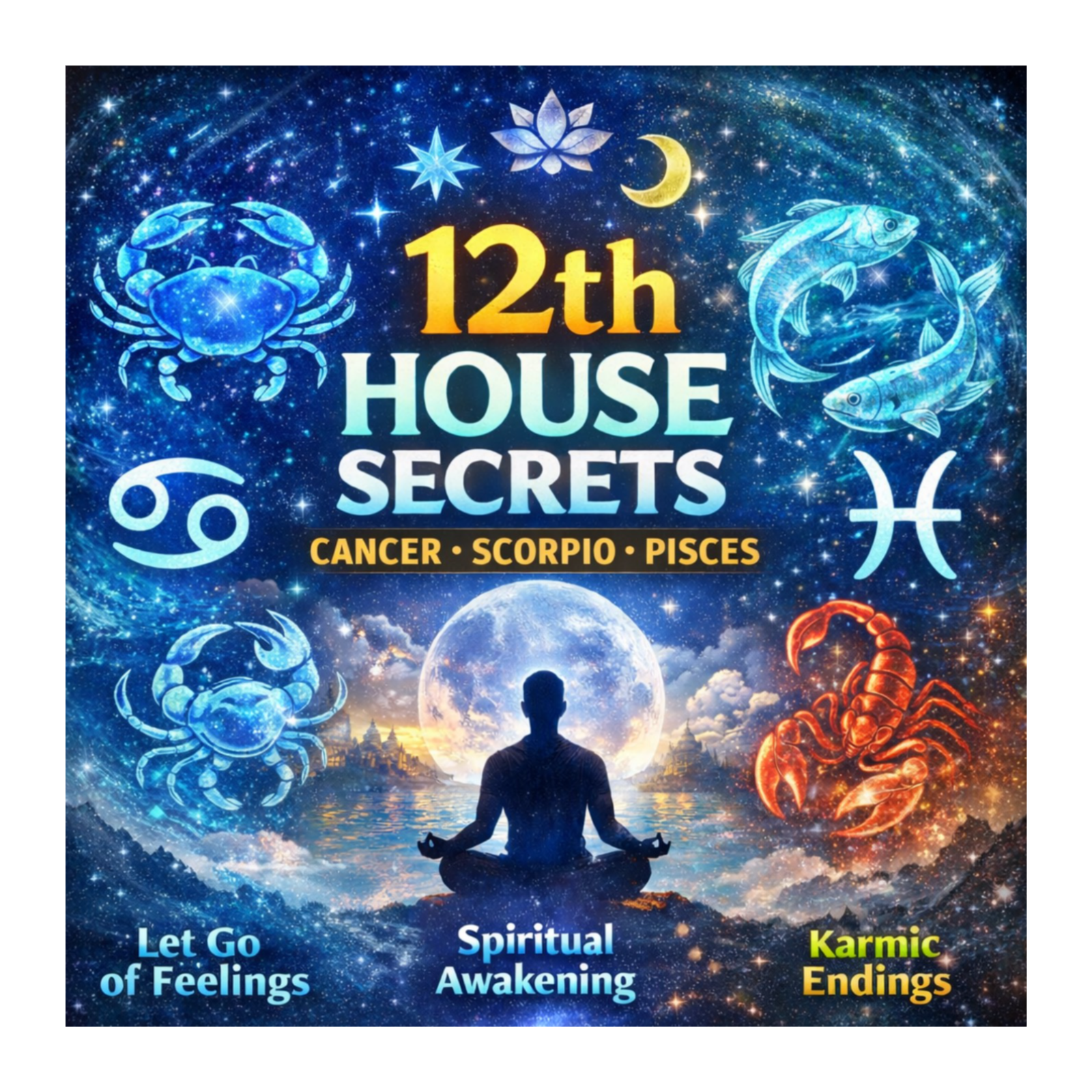
S91 Ep 4412th House in Vedic Astrology: Cancer, Scorpio & Pisces Rising | Deep Jyotish Moksha Decode
If you’re learning Jyotish / Vedic Astrology online and want to truly understand the 12th house beyond keywords, this episode is a deep psychological + karmic decoding of Vyaya Bhava forCancer Rising, Scorpio Rising, and Pisces Rising — the three most emotionally sensitive ascendants.The 12th house governs expenditure, loss, sleep, isolation, foreign lands, spiritual withdrawal, past-life residue, and moksha.For water signs, this house is not abstract — it is felt, lived, remembered, and karmically remembered.In this podcast, I break down how emotional karma dissolves through intellect, balance, and cosmic detachment, depending on the rising sign.🌊 Cancer Rising – 12th House in GeminiThe empath learns to think clearly in silence.Cancer lives through feeling. But Gemini in the 12th asks:Why emotional pain must be named, written, and understoodHow subconscious thought loops, dreams, and insomnia reveal unprocessed griefMercury as lord: writing, journaling, therapy, counseling, spiritual dialogueShadow themes: anxiety, mental restlessness, avoidance through imaginationHealing path: mental clarity applied to emotional history✅ Includes 8 defining Gemini conjunctions showing where emotion must find words to be released.⚖️ Scorpio Rising – 12th House in LibraThe alchemist releases control through grace.Scorpio thrives on intensity. Libra in the 12th teaches:Why karmic closure often comes through relationships, forgiveness, and balanceVenus as lord: hidden love karma, aesthetic spirituality, devotional artShadow themes: secret longing, romanticized loss, emotional dependencyThe spiritual lesson: power is not control — it is release✅ Includes 8 defining Libra conjunctions where transformation happens quietly, not through force.🌌 Pisces Rising – 12th House in AquariusThe mystic learns the structure of surrender.Pisces understands dissolution instinctively. Aquarius adds:Intellectual detachment, cosmic systems, collective karmaSaturn + Rahu as lords: discipline, institutional spirituality, future-oriented mysticismShadow themes: emotional alienation, abstraction replacing healingHealing path: conscious, intelligent surrender — not accidental escape✅ Includes 8 defining Aquarius conjunctions where compassion becomes cosmic intelligence.⏳ 12th House Activation YearsAges 12, 24, 36, 48, 60, 72, 84 often bring:Solitude, foreign movement, endings, spiritual turning pointsLosses that dissolve identityRetreats that redefine purposeThis episode is ideal for:Students of Vedic Astrology / JyotishAnyone enrolled in or planning a Vedic Astrology Course onlineAstrologers working with moksha houses (8th & 12th)Seekers navigating grief, solitude, burnout, or spiritual transitionThis is not prediction astrology.This is emotional karma, subconscious healing, and liberation mechanics.#VedicAstrology#Jyotish#LearnJyotish#VedicAstrologyCourse#AstrologyPodcast#12thHouse#CancerRising#ScorpioRising#PiscesRising#VyayaBhava#Moksha#KarmicAstrology#SpiritualAstrology#AstrologyEducation#IndianAstrology
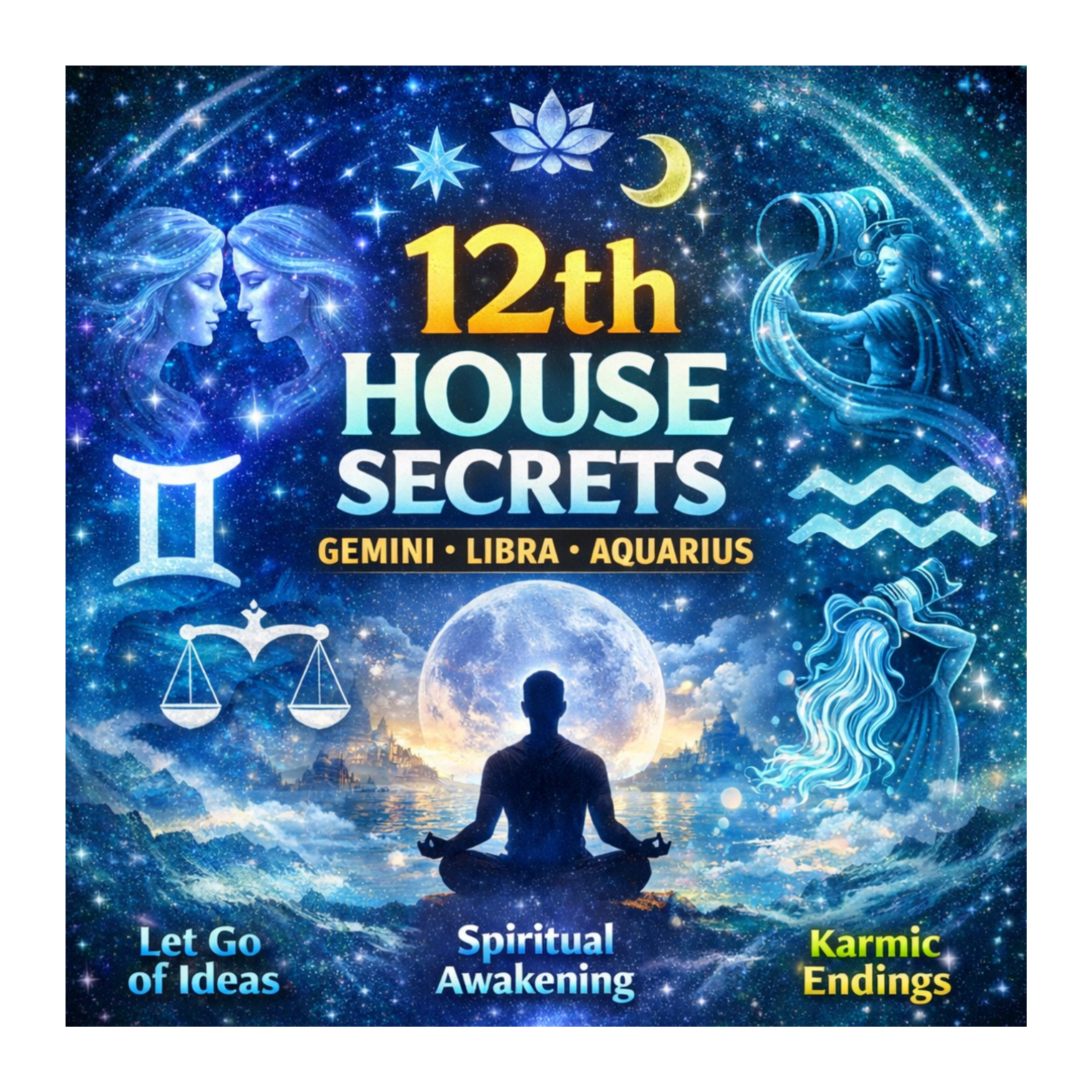
S91 Ep 4312th House in Vedic Astrology: Gemini, Libra & Aquarius Rising | Deep Jyotish Insights
If you’re learning Jyotish / Vedic Astrology online and want to move beyond surface-level house meanings, this episode is a deep, psychological and karmic decoding of the 12th house (Vyaya Bhava) for Gemini Rising, Libra Rising, and Aquarius Rising.The 12th house governs expenditure, loss, sleep, isolation, foreign lands, spiritual surrender, moksha, and karmic closure.For air signs, this house is especially challenging because it demands silence, stillness, and embodiment instead of thought, dialogue, and ideology.In this podcast, I break down how the 12th house actually operates in lived experience, activation years, and planetary conjunction patterns that shape subconscious behavior.🌿 Gemini Rising – 12th House in TaurusThe talker meets silence. The mind learns to rest in the body.Why Gemini must move from thinking → feeling → sensingTaurus in the 12th as comfort, healing, or indulgent escapeVenus as lord: art, music, sleep, beauty, foreign retreats, sensory spiritualityShadow themes: procrastination, emotional withdrawal, pleasure as avoidanceHealing path: embodiment, stillness, tactile spirituality, slow rituals✅ Includes 8 defining Taurus conjunctions (Venus–Moon, Venus–Mercury, Sun–Venus, Moon–Mercury, Sun–Moon, Sun–Mercury, Mercury–Mars, Mars–Moon)⚖️ Libra Rising – 12th House in VirgoThe diplomat enters purification. Harmony is earned, not displayed.Virgo in the 12th as inner refinement, hidden service, spiritual hygieneWhy Libra struggles with guilt around rest and solitudeMercury as lord: analysis turned inward, therapy, healing systems, retreat workShadow themes: overthinking, self-judgment, perfectionism in isolationHealing path: discipline without self-punishment, clarity without control✅ Includes 8 defining Virgo conjunctions showing how peace comes through inner order, not people-pleasing.🪐 Aquarius Rising – 12th House in CapricornThe visionary meets karma. Progress slows into presence.Capricorn in the 12th as karmic responsibility, silent duty, disciplined surrenderSaturn as lord: solitude, service without recognition, spiritual laborWhy Aquarius feels a hidden heaviness or exile themeShadow patterns: emotional suppression, isolation, treating healing like a taskHealing path: sacred discipline, monastic rhythm, devotion through structure✅ Includes 8 defining Capricorn conjunctions where the soul learns strength through stillness, not rebellion.⏳ 12th House Activation Years ExplainedAges 12, 24, 36, 48, 60, 72, 84 often bring:Retreats, foreign movement, endings, health pausesSpiritual awakenings disguised as lossClosure of karmic cycles that can’t be “fixed” — only releasedThis episode is ideal for:Students of Vedic Astrology & JyotishAnyone taking or planning a Vedic Astrology Course onlinePracticing astrologers seeking psychological + moksha-based interpretationSeekers navigating burnout, solitude, spiritual transition, or foreign settlementThis is not predictive astrology.This is soul mechanics, subconscious patterning, and karmic integration.#VedicAstrology#Jyotish#LearnJyotish#VedicAstrologyCourse#AstrologyPodcast#12thHouse#GeminiRising#LibraRising#AquariusRising#VyayaBhava#SpiritualAstrology#KarmicAstrology#Moksha#AstrologyEducation#IndianAstrology

S91 Ep 3711th House Labha Bhava for Fire Signs: Aries, Leo & Sagittarius Rising Explained
The 11th house (Labha Bhava) is the fulfillment chamber of the horoscope — where desires materialize, networks activate, gains accumulate, and social influence is measured.But for Fire Rising signs — Aries, Leo, and Sagittarius — Labha Bhava carries a unique karmic tension:🔥 How does raw individual fire translate into collective gain?🔥 How does leadership evolve into networks, movements, and social capital?🔥 When does ambition mature into legacy?In this advanced Vedic Astrology podcast, I decode the 11th house exclusively for Fire Ascendants, using classical principles blended with modern social realities like social media, platforms, digital communities, influence, and collective leadership.♈ Aries Rising — Aquarius in the 11th HouseFor Aries rising, Labha Bhava falls in Aquarius, ruled by Saturn and Rahu.Here, the lone warrior must become a systems builder.Gains come not through domination, but through:TechnologyInnovationSocial reformDigital platformsVisionary alliancesSaturn demands patience and structure.Rahu demands originality and disruption.Aries learns that true fulfillment comes when personal fire fuels collective progress.The fighter becomes the reformer.Desire becomes impact.♌ Leo Rising — Gemini in the 11th HouseFor Leo rising, Labha Bhava falls in Gemini, ruled by Mercury.This placement shifts Leo from center-stage authority to conversational influence.Gains arise through:CommunicationMediaEducationWritingSocial platformsThought leadershipHere, visibility is horizontal, not vertical.Influence flows through dialogue, adaptability, and intellectual exchange, not command.Leo learns that recognition multiplies when ideas circulate — not when ego dominates.The monarch becomes the messenger.Charisma becomes relevance.♐ Sagittarius Rising — Libra in the 11th HouseFor Sagittarius rising, Labha Bhava falls in Libra, ruled by Venus.This is where philosophy must acquire grace, diplomacy, and aesthetic intelligence.Gains come through:AlliancesJustice-oriented causesCultural platformsEthical brandingDesign and diplomacyRelationship-based leadershipSagittarius learns that ideals alone don’t scale — systems of harmony do.Truth must be delivered with timing, tact, and balance.The preacher becomes the peacemaker.Expansion becomes elegance.🔑 Activation Years of the 11th House (Fire Signs)Across all Fire Risings, Labha Bhava activates at ages:11 • 23 • 35 • 47 • 59 • 71 • 83These years mark:Network expansionSocial status shiftsOnline visibilityCommunity leadershipDesire recalibrationEach activation asks one question:Are your gains self-centered — or socially aligned?🧩 What This Podcast Gives Serious Learners✔ Rising-sign specific Labha Bhava logic✔ Saturn, Mercury, Venus based gain psychology✔ Social media & platform astrology (Vedic lens)✔ Desire vs legacy framework✔ Classical principles applied to modern influenceThis is not pop astrology.This is Labha Bhava as karmic architecture.For Fire Signs, fulfillment is never private.It is meant to be shared, scaled, and sustained.#VedicAstrology#11thHouseAstrology#LabhaBhava#AriesRising#LeoRising#SagittariusRising#FireSignsAstrology#SocialMediaAstrology#GainsInAstrology#VedicAstrologyPodcast#KarmicGains#AstrologyForLeaders#JyotishLearning#RisingSignAstrology#AdvancedAstrology

S91 Ep 3811th House Labha Bhava for Water Signs: Gains, Desires & Social Power Explained
This is not pop astrology.This is Labha Bhava as karmic architecture.♋ Cancer Rising — Taurus in the 11th HouseThe nurturer who must learn to claim valueFor Cancer rising, the 11th house falls in Taurus, ruled by Venus.Here, emotional longing must translate into measurable gain.Cancer rising learns that:Not all desire is sentimentalSome desires must be built, priced, and sustainedSocial circles must offer value, not just comfortGains come through:Creative communitiesFood, wellness, art, beauty, financeLoyal, value-aligned networksTasteful social media presenceVenus teaches Cancer rising that love must become leverage.Fulfillment arrives when emotional intelligence is paired with self-worth, boundaries, and financial wisdom.The caregiver becomes the curator.Emotion becomes empowerment.♏ Scorpio Rising — Virgo in the 11th HouseThe strategist who must trust intelligent systemsFor Scorpio rising, the 11th house falls in Virgo, ruled by Mercury.This placement demands a shift from control to contribution.Scorpio rising learns that:Power multiplies through precisionStrategy outperforms secrecyNetworks succeed when intelligence leads emotionGains come through:Analysis, systems, researchSkill-based alliancesTechnology, strategy, editing, diagnosticsInformative and functional digital influenceMercury teaches Scorpio rising to trust the mind as much as instinct.Fulfillment comes when intensity is refined into usable impact.The lone alchemist becomes the systems architect.Depth becomes design.♓ Pisces Rising — Capricorn in the 11th HouseThe mystic who must build structureFor Pisces rising, the 11th house falls in Capricorn, ruled by Saturn.This is where vision must be anchored in discipline and responsibility.Pisces rising learns that:Dreams require frameworksCompassion must show up consistentlyInfluence is earned, not imaginedGains come through:Institutions, organizations, policyLong-term leadership rolesCause-based enterprisesSlow, steady social credibilitySaturn teaches Pisces rising that fulfillment is karmic, not instant.Recognition often comes later — but it lasts.The mystic becomes the master planner.Faith becomes infrastructure.Are you building something that lasts?🎓 What This Podcast Offers Serious LearnersRising-sign specific Labha Bhava logicEmotional vs structural desire analysisSocial media & networks through Vedic astrologySaturn, Venus, Mercury based gain psychologyClassical Jyotish applied to modern life systemsThis episode is part of a Vedic Astrology Online Course & Podcast series, designed for seekers who want understanding, not predictions.For Water Signs, fulfillment is never accidental.It is earned through emotional maturity, intelligent alliances, and disciplined participation in the world.#VedicAstrology#11thHouseAstrology#LabhaBhava#WaterSignsAstrology#CancerRising#ScorpioRising#PiscesRising#VedicAstrologyPodcast#AstrologyForSeriousLearners#JyotishWisdom#GainsInAstrology#SocialMediaAstrology#KarmicFulfillment#RisingSignAstrology#VedicAstrologyCourse

S91 Ep 4011th House Labha Bhava for Earth Signs: Gains, Desires & Social Karma Explained
This is Labha Bhava as karmic economics.♉ Taurus Rising — Pisces in the 11th HouseThe preserver who must learn surrenderFor Taurus rising, the 11th house falls in Pisces, ruled by Jupiter and traditionally co-ruled by Ketu.Here, material desire dissolves into meaning, compassion, and spiritual contribution.Taurus rising learns that:Not all gains are tangibleNot all success is measurableSome rewards arrive through faith, not forceGains flow through:Art, music, film, healingSpiritual or charitable communitiesCreative and soulful collaborationsResonant, heart-led social presenceJupiter teaches Taurus rising that true abundance circulates.Fulfillment arrives when security gives way to service and trust.The builder becomes the visionary.Ownership becomes offering.♍ Virgo Rising — Cancer in the 11th HouseThe analyst who must feelFor Virgo rising, the 11th house falls in Cancer, ruled by the Moon.Here, logic must make space for emotional intelligence and belonging.Virgo rising learns that:Being useful is not the same as being connectedPrecision alone does not inspire loyaltyCare is a form of influenceGains come through:Nurturing communitiesHealing, caregiving, wellness spacesEmotionally resonant mediaTrust-based alliancesThe Moon teaches Virgo rising that emotional presence builds lasting networks.Fulfillment grows when service softens into human connection.The fixer becomes the nurturer.Accuracy yields to empathy.♑ Capricorn Rising — Scorpio in the 11th HouseThe builder who must master invisible powerFor Capricorn rising, the 11th house falls in Scorpio, ruled by Mars and co-ruled by Ketu.Here, ambition enters the realm of depth, loyalty, and transformation.Capricorn rising learns that:Influence doesn’t always seek visibilityPower often moves through silenceReal gains require emotional courageGains come through:Strategic alliancesResearch, finance, law, politicsPsychological and transformational workQuiet leadership within complex systemsMars and Ketu teach Capricorn rising that shared power outlasts control.Fulfillment emerges when structure meets trust and transformation.The executive becomes the reformer.Strategy acquires soul.🔑 Activation Years for the 11th House (All Earth Signs)11 • 23 • 35 • 47 • 59 • 71 • 83These years activate:Social recalibrationNetwork shiftsFinancial and karmic gainsLong-term aspiration realignmentEach cycle asks:Are you building security or significance?Are your networks transactional or transformational?Are your gains serving only you — or the future?🎓 What This Podcast Offers Serious LearnersRising-sign specific Labha Bhava logicJupiter, Moon, Mars-Ketu based gain psychologyEarth-sign approach to social media & influenceDesire → devotion → contribution frameworkClassical Jyotish applied to modern systemsThis episode is part of a Vedic Astrology Online Course & Podcast series, created for seekers who want structure, depth, and karmic clarity, not surface-level interpretations.For Earth Signs, fulfillment is never instant.It is cultivated through patience, integrity, and responsibility to the collective.#VedicAstrology#11thHouseAstrology#LabhaBhava#EarthSignsAstrology#TaurusRising#VirgoRising#CapricornRising#VedicAstrologyPodcast#JyotishWisdom#AstrologyForSeriousLearners#KarmicGains#SocialMediaAstrology#RisingSignAstrology#AdvancedAstrology#VedicAstrologyCourse

S91 Ep 3911th House Labha Bhava for Air Signs: Gains, Influence & Social Power Explained
This is Labha Bhava as strategic karma.♊ Gemini Rising — Aries in the 11th HouseThe thinker who must leadFor Gemini rising, the 11th house falls in Aries, ruled by Mars.Here, the analytical Mercury-ruled mind meets direct action and competitive ambition.Gemini rising learns that:Ideas alone don’t create gainNetworks follow initiative, not commentarySpeed must serve purposeGains come through:Startups, campaigns, tech venturesMedia, digital leadership, trend-setting spacesBold collaborators and fast-moving networksMars teaches Gemini rising that thinking must ignite action.Fulfillment comes when curiosity matures into commitment and execution.The observer becomes the initiator.The speaker becomes the driver.♎ Libra Rising — Leo in the 11th HouseThe harmonizer who must stand outFor Libra rising, the 11th house falls in Leo, ruled by the Sun.Here, diplomacy must evolve into visible leadership.Libra rising learns that:Balance without presence is invisibleHarmony doesn’t cancel authorityInfluence requires courage to shineGains come through:Creative leadershipCultural platformsJustice-oriented movementsPublic visibility with aesthetic authorityThe Sun teaches Libra rising that radiance is responsibility.Fulfillment comes when charm is backed by conviction and purpose.The peacemaker becomes the headliner.Grace learns command.♒ Aquarius Rising — Sagittarius in the 11th HouseThe visionary who must teachFor Aquarius rising, the 11th house falls in Sagittarius, ruled by Jupiter.Here, innovation must mature into wisdom and moral clarity.Aquarius rising learns that:Disruption alone doesn’t upliftIdeas must inspire, not confuseTruth must travelGains come through:Education, publishing, broadcastingGlobal causes, ethics-based movementsThought leadership rooted in principleJupiter teaches Aquarius rising that fulfillment flows from meaning.Influence lasts when innovation carries values and direction.The futurist becomes the philosopher.Rebellion becomes revelation.🔑 Activation Years for the 11th House (All Air Signs)11 • 23 • 35 • 47 • 59 • 71 • 83These years activate:Network expansionPublic recognitionDigital reachLeadership within communitiesEach cycle asks:Are you shaping thought or chasing attention?Are your ideas actionable or abstract?Are your gains rooted in purpose or popularity?🎓 What This Podcast Offers Serious LearnersRising-sign specific Labha Bhava logicMars, Sun, Jupiter based gain psychologySocial media & influence through Vedic astrologyLeadership vs visibility frameworksClassical Jyotish applied to modern platformsThis episode is part of a Vedic Astrology Online Course & Podcast series, created for learners who want clarity, structure, and karmic understanding, not superficial predictions.For Air Signs, fulfillment is mental first — but never mental only.It is realized when ideas move people, principles guide platforms, and intellect serves impact.#VedicAstrology#11thHouseAstrology#LabhaBhava#AirSignsAstrology#GeminiRising#LibraRising#AquariusRising#VedicAstrologyPodcast#JyotishLearning#AstrologyForLeaders#SocialMediaAstrology#KarmicGains#RisingSignAstrology#AdvancedAstrology#VedicAstrologyCourse

S91 Ep 3610th House Karma for Cancer, Scorpio & Pisces Rising | Career, Status & Public Destiny
The 10th House in Vedic Astrology (Karma Bhava / Karmasthana) is the peak of the horoscope — your career, status, authority, reputation, public life, and legacy. It shows how your soul learns leadership in the outer world and how your work becomes a karmic statement.♋ Cancer Rising — Aries in the 10th HouseCancer Rising is ruled by the Moon — sensitivity, memory, belonging, protection. But the 10th House for Cancer Rising falls in Aries, ruled by Mars. This is where the nurturer is forced into leadership:“Your sensitivity must become structured power.”Aries in the 10th house pushes Cancer Rising out of comfort and into command. Career becomes a mission-field — initiative, action, decisions, risk, and visible authority. These natives often rise through entrepreneurship, politics, emergency response, military-like systems, surgery, vehicles, athletics, or any role requiring directness and high-stakes courage.Mars as 10th lord teaches Cancer Rising a core lesson: protection is not passive. Their emotional intelligence becomes a public asset only when they learn to act decisively — not to dominate, but to defend what matters.♏ Scorpio Rising — Leo in the 10th HouseScorpio Rising is ruled by Mars and co-ruled by Ketu — intensity, privacy, transformation, inner power. But Scorpio’s 10th House falls in Leo, ruled by the Sun:“The one who hides must now shine.”Leo in the 10th demands visible authority, creative ownership, and moral accountability. Scorpio Rising must step into leadership without manipulation — radiance without ego, influence without secrecy. Careers flourish in public service, education, politics, creative industries, performance, leadership roles, or any domain requiring presence and integrity.If the Sun is strong, they become respected leaders who guide others through wisdom earned in darkness. If afflicted, they can fear exposure, struggle with self-worth, or misuse influence. Their karma is to become transparent power.♓ Pisces Rising — Sagittarius in the 10th HousePisces Rising is ruled by Jupiter and classically co-ruled by Ketu — imagination, spirituality, symbolism, compassion. But Pisces’ 10th House falls in Sagittarius, also ruled by Jupiter:“The dreamer must become the teacher.”Sagittarius in the 10th is a public platform of truth, philosophy, guidance, and meaningful influence. Pisces Rising is called into visibility through wisdom — careers in teaching, publishing, law, spiritual counseling, global relations, travel, religious leadership, or purpose-driven entrepreneurship.Their success comes when belief becomes action, and inspiration becomes implementation. They are here to be a lighthouse — not to vanish into the infinite, but to stand tall and transmit meaning.⭐ 10th House Activation YearsFor Cancer, Scorpio, and Pisces Rising, the 10th House activates strongly at ages:10, 22, 34, 46, 58, 70, 82These are years of career pivots, authority tests, reputation shifts, and legacy-level decisions.If you’re a serious Jyotish learner, and you want a real framework for career karma, status psychology, and public destiny by rising sign, this episode is built for you.#VedicAstrology#Jyotish#10thHouse#KarmaBhava#CareerAstrology#PublicLifeAstrology#CancerRising#ScorpioRising#PiscesRising#WaterSigns#RisingSignAstrology#DharmaAndKarma#MarsInAstrology#SunInAstrology#JupiterInAstrology

S91 Ep 3510th House Karma for Gemini, Libra & Aquarius Rising | Career, Status & Public Destiny
♊ Gemini Rising — Pisces in the 10th HouseGemini Rising is quick-minded, versatile, and communication-driven — ruled by Mercury, the messenger. But Gemini’s 10th House falls in Pisces, ruled by Jupiter and co-ruled by Ketu. This is where intellect is asked to evolve into intuition:“Stop chasing metrics. Start living meaning.”If Jupiter is strong, they become compassionate mentors, ethical leaders, and inspired creators. If Ketu dominates without grounding, career can dissolve into avoidance, confusion, or detachment from responsibility. Their evolution happens when they marry vision with discipline — bringing dreams to Earth without dissolving into them.✅ You’ll also learn the eight defining conjunctions in Pisces that shape Gemini Rising’s public destiny — including inspired leadership (Sun–Jupiter), ego dissolution (Sun–Ketu), sacred creativity (Jupiter–Venus), the mystic mind (Jupiter–Mercury), spiritual inflation vs true surrender (Jupiter–Rahu), devotional art (Venus–Ketu), intuitive storytelling, and the hermit-guide signature (Jupiter–Ketu).♎ Libra Rising — Cancer in the 10th HouseLibra Rising carries diplomacy, beauty, harmony — ruled by Venus. But Libra’s 10th House falls in Cancer, ruled by the Moon, shifting public life into emotional responsibility:“Stop performing peace. Start becoming a protector.”If the Moon is strong, they become emotionally intelligent leaders who stabilize others. If afflicted, career may feel mood-driven, inconsistent, or tied to approval-seeking. Their karma is to lead from steadiness — not reactivity.✅ You’ll also learn the eight defining conjunctions in Cancer that reveal how Libra Rising becomes a public container: emotional authority, boundaries, protective courage, devotion vs overextension, and the tension between nurture and ambition.♒ Aquarius Rising — Scorpio in the 10th HouseAquarius Rising is future-oriented, reform-driven, and system-minded — ruled by Saturn and co-ruled by Rahu. But Aquarius’s 10th House falls in Scorpio, ruled by Mars and co-ruled by Ketu:“Innovation is not enough. You must survive transformation.”Scorpio in the 10th turns career into a crucible: intensity, crisis, power tests, and reinvention. Aquarius Rising is pushed beyond theory into psychological depth, emotional mastery, and fearless truth. Careers often align with research, psychology, healing, forensics, finance, crisis management, investigation, security, occult/metaphysical sciences, and roles requiring trust and stamina.If Mars is strong, they become courageous change agents. If afflicted, power struggles, career volatility, or control dynamics may arise. Their dharma is to integrate shadow, not avoid it.✅ You’ll also learn the eight defining conjunctions in Scorpio that shape Aquarian public life — including crisis leadership, investigative influence, strategic intensity, and the karmic tests of fame, obsession, and ethical power.⭐ 10th House Activation YearsFor these Air Risings, the 10th House activates strongly at ages: 10, 22, 34, 46, 58, 70, 82These years often bring career pivots, authority encounters, public visibility shifts, and karmic re-evaluations of legacy.If you’re a serious learner of Vedic Astrology / Jyotish, and you want to understand career karma, public destiny, authority psychology, and dharma through rising signs, this episode is built for you.#VedicAstrology#Jyotish#10thHouse#KarmaBhava#CareerAstrology#PublicLifeAstrology#GeminiRising#LibraRising#AquariusRising#AirSigns#RisingSignAstrology#DharmaAndKarma#JupiterInAstrology#SaturnInAstrology#SpiritualAstrology

S91 Ep 3310th House Karma Explained for Aries, Leo & Sagittarius Rising | Career, Status & Dharma
The 10th House in Vedic Astrology — the Karma Bhava — reveals how your soul expresses authority, status, career purpose, and public contribution. It shows not just what you do for work, but how your karma matures into leadership, responsibility, and legacy.In this deep Jyotish teaching, I explore the 10th house for Fire Rising Signs — Aries, Leo, and Sagittarius — and reveal how their natural fire must be refined through Saturn, Venus, and Mercury to become true authority.🔴 Aries Rising — Capricorn in the 10th HouseFor Aries Lagna, the 10th house falls in Capricorn, ruled by Saturn.Here, raw Mars energy meets discipline.Action must become strategy.Courage must mature into consistency.Aries Rising is born to lead, but Saturn teaches that status is earned, not seized. Their karmic work is to build something enduring — not momentary glory. Careers often emerge in military, administration, law, engineering, construction, or structured leadership roles.This placement transforms the warrior into the architect.Leadership becomes responsibility.Fire becomes foundation.You’ll also learn the eight defining conjunctions in Capricorn — showing how Mars, Sun, Mercury, Venus, Rahu, Ketu and Saturn shape authority, discipline, ambition, and karmic tests in public life.🦁 Leo Rising — Taurus in the 10th HouseFor Leo Lagna, the 10th house falls in Taurus, ruled by Venus.Here, charisma must become craftsmanship.Performance must become precision.Leo Rising shines naturally, but Taurus demands they build something of lasting value. Career becomes about refinement, stability, and tangible contribution — not applause alone.This placement supports work in finance, art, real estate, luxury services, architecture, food industries, and cultural leadership.Their dharma is to move from drama to depth, from image to integrity.I also explain the eight defining conjunctions in Taurus, showing how Sun, Venus, Mercury, Rahu and Saturn test whether leadership becomes elegance… or ego.🏹 Sagittarius Rising — Virgo in the 10th HouseFor Sagittarius Lagna, the 10th house falls in Virgo, ruled by Mercury.Here, philosophy must become process.Belief must become function.Sagittarius Rising seeks truth, but Virgo teaches that wisdom must work in the real world. Career fulfillment comes through analysis, service, systems, and problem-solving.This placement favors professions in research, medicine, law, consulting, education, data, writing, and system design.Their karmic evolution is from preacher to practitioner — from vision to execution.You’ll also learn the eight defining conjunctions in Virgo, revealing how Mercury, Sun, Venus, Saturn, Rahu and Ketu shape intellect, service, and authority.🌟 Core Teaching of the 10th HouseFor Fire Risings, the 10th House teaches:✔ Visibility demands responsibility✔ Authority must mature✔ Leadership is earned through discipline✔ Legacy is built, not claimedThis episode is for serious students of Vedic Astrology who want to understand:• Career karma• Public destiny• Status formation• Authority psychology• Fire signs and discipline• Saturn, Venus & Mercury as karmic teachers• The real meaning of professional dharmaIf you want astrology that explains why your career tests you, how your authority forms, and what your soul must master in public life, this teaching is for you.#VedicAstrology#10thHouseAstrology#KarmaBhava#CareerAstrology#AriesRising#LeoRising#SagittariusRising#FireSignsAstrology#JyotishShastra#AstrologyForSeriousStudents#DharmaAndKarma#SaturnInAstrology#CareerHoroscope#SpiritualLeadership#PublicLifeAstrology

S91 Ep 3410th House Karma Bhava : Taurus, Virgo & Capricorn Rising - Status, Public Destiny
🟩 Taurus Rising — Aquarius in the 10th HouseTaurus Rising enters life seeking stability, security, and tangible rewards — ruled by Venus, the builder of value. But the 10th House for Taurus Rising falls in Aquarius, ruled by Saturn and co-ruled by Rahu. This is the karmic paradox:“Stay rooted — but build the future.”Aquarius in the 10th forces Taurus Rising to evolve from comfort into contribution. Their career path becomes tied to innovation, reform, technology, systems, community leadership, and collective responsibility. They’re not here to only preserve value — they’re here to redefine value through justice, sustainability, and progressive structure.You’ll also learn the eight defining conjunctions in Aquarius that shape Taurus Rising’s public destiny — including themes of earned authority (Sun–Saturn), disruptive visibility (Sun–Rahu), strategic intelligence (Saturn–Mercury), ethical building (Saturn–Venus), revolutionary communication (Mercury–Rahu), and the karmic test of fame vs substance.🟨 Virgo Rising — Gemini in the 10th HouseVirgo Rising is precision, analysis, and mastery — ruled by Mercury, the planet of skill and intelligence. But the 10th House for Virgo Rising falls in Gemini, also ruled by Mercury — and that changes the entire public karmic mandate:“Stop perfecting in silence. Start influencing through communication.”Gemini in the 10th demands that Virgo Rising become a translator of complexity, a connector of ideas, and a visible participant in networks. Their reputation is built through writing, teaching, consulting, media, research, analytics, publishing, marketing, and knowledge-sharing.This is where the analyst becomes the messenger — where intelligence becomes impact.I also break down the eight defining conjunctions in Gemini that determine how Virgo Rising handles public visibility, thought leadership, digital influence, persuasion, and the tension between relevance and overload.🟫 Capricorn Rising — Libra in the 10th HouseCapricorn Rising is Saturn’s signature: discipline, endurance, structure, and legacy. But Capricorn Rising’s 10th House falls in Libra, ruled by Venus — meaning public authority must be refined through harmony:“Power alone isn’t enough. Your karma requires elegance, ethics, and relational leadership.”Libra in the 10th teaches Capricorn Rising to become a diplomat of systems — balancing ambition with justice, leadership with beauty, and structure with public coherence. Careers often thrive in law, governance, HR, diplomacy, public relations, design, policy, consulting, arts administration, and any field where fairness and negotiation matter.You’ll also learn the eight defining conjunctions in Libra that shape Capricorn Rising’s authority — including the tests of image vs integrity, strategic persuasion, public magnetism, and ethical leadership under pressure.⭐ Activation Years of the 10th HouseFor all three ascendants, the 10th House activates strongly at ages: 10, 22, 34, 46, 58, 70, 82These are years of career turning points, public visibility shifts, encounters with authority, and karmic re-evaluations of legacy.If you’re a serious Jyotish learner and want to understand career karma, authority psychology, reputation building, and dharma in public life, this episode is for you.#VedicAstrology#Jyotish#10thHouse#KarmaBhava#CareerAstrology#PublicLifeAstrology#TaurusRising#VirgoRising#CapricornRising#EarthSigns#SaturnInAstrology#RahuInAstrology#MercuryInAstrology#DharmaAndKarma#AstrologyForSeriousStudents

S91 Ep 299th House Dharma Bhava | Cancer, Scorpio & Pisces Rising on Faith, Purpose & Truth
What happens when Dharma is not learned, but felt?In this episode, I take you deep into the 9th House (Dharmabhava)—the house of philosophy, higher truth, belief systems, and soul purpose—through the lived experience of Cancer Rising, Scorpio Rising, and Pisces Rising.This is not textbook astrology.This is embodied Jyotish, where belief is shaped by memory, emotion, crisis, surrender, and transformation.🌊 Cancer Rising – From Emotional Safety to Spiritual SurrenderFor Cancer Rising, the 9th house unfolds in Pisces, dissolving inherited beliefs and asking emotional intuition to evolve into spiritual vision. Here, nurturing expands beyond family into universal compassion. Dharma is not structured—it is felt. Faith matures when emotion learns discernment, and pain becomes prayer. These natives walk the path from ancestry to archetype, learning to trust the invisible river of grace beneath life.🌑 Scorpio Rising – From Control to Emotional WisdomFor Scorpio Rising, the 9th house opens in Cancer, replacing intensity and strategy with softness, belonging, and emotional truth. Belief is not abstract—it is visceral. Wisdom arrives through care, memory, and intuitive lineage. The seeker of secrets becomes a guardian of meaning, discovering that truth cannot be seized—it must be received.🔥 Pisces Rising – From Spiritual Escape to Alchemical TruthFor Pisces Rising, the 9th house lands in Scorpio, demanding depth, courage, and confrontation with shadow. Here, spirituality must survive emotional fire. Belief is not inherited or imagined—it is earned through loss, transformation, and psychological honesty. This is where the mystic becomes the truth-teller, and surrender gains backbone.✨ Soul-Shaping Conjunctions in the 9th HouseI also explore the most defining planetary conjunctions in Pisces, Cancer, and Scorpio—showing how Jupiter, Moon, Sun, Venus, Mars, Rahu, and Ketu shape belief, faith, and purpose. These combinations don’t build belief systems. They dissolve them, so truth can emerge organically.⏳ Activation Years & Turning PointsAcross all three rising signs, the 9th house activates powerfully at ages 9, 21, 33, 45, 57, 69, and 81—marking spiritual awakenings, philosophical shifts, loss of old truths, and the emergence of lived wisdom.🌌 Core InsightDharma is not comfort.It is not tradition alone.It is not ideology.Dharma is trust.Trust forged through feeling, refined by truth, and anchored in lived experience.If you’re navigating questions of purpose, faith, belief, spirituality, or soul direction, this episode will meet you exactly where you are.#VedicAstrology#9thHouseAstrology#DharmaPath#RisingSigns#CancerRising#ScorpioRising#PiscesRising#SpiritualAstrology#JyotishWisdom#SoulPurpose#KarmicAstrology#FaithAndPhilosophy#HigherTruth#AstrologyPodcast

S91 Ep 309th House Dharma Bhava : Gemini, Libra & Aquarius Rising | Purpose, Belief, Truth & Philosophy
If you’ve ever felt like your beliefs keep evolving… or your “purpose” keeps shifting shape… you’re not lost. You’re in 9th House territory.In this podcast, I’m exploring the 9th House (Dharma / Philosophy / Purpose / Truth / Higher Meaning) through three rising signs that carry very different dharmic wiring:♊ Gemini Rising — Aquarius in the 9th: Curiosity Must Commit to MeaningGemini Rising moves fast—questions before conclusions, ideas before ideology. But with Aquarius in the 9th, life pressures the mind to mature: not just learning, but vision. Here, Dharma isn’t inherited—it’s engineered. Gemini’s intelligence is asked to serve the collective: ethics, reform, human systems, future-thinking philosophy.With Saturn + Rahu as key forces, the challenge becomes: originality without chaos, disruption without irresponsibility. The evolution is real: from “interesting information” to earned conviction, from mental agility to legacy-level thinking.Key activation ages: 9, 21, 33, 45, 57, 69, 81 — the years where distraction vs direction becomes a spiritual crossroads.♎ Libra Rising — Gemini in the 9th: Harmony Must Learn to QuestionLibra Rising seeks balance, elegance, relational peace. But with Gemini in the 9th, Dharma becomes dialogue, not doctrine. Belief evolves through conversation, travel, learning, translation, synthesis—and the willingness to hold multiple perspectives without losing integrity.Mercury’s influence turns Libra into a dharmic communicator: a bridge between worlds, cultures, and philosophies. The lesson is subtle but powerful: truth isn’t always symmetrical, and real harmony isn’t agreement—it’s the ability to stay open without becoming shallow.Key activation ages: 9, 21, 33, 45, 57, 69, 81 — where teachers appear through exchanges, studies, writing, and worldview shifts.♒ Aquarius Rising — Libra in the 9th: Innovation Must Ground Itself in EthicsAquarius Rising comes in future-first: reform-minded, unconventional, often allergic to tradition. But with Libra in the 9th, Dharma requires refinement—justice, diplomacy, inclusion, relational ethics.This is where radical ideas must learn grace. Truth is not only disruptive—it must be livable, fair, and harmonizing. Venus teaches Aquarius that ethics isn’t a performance, it’s a practice. That balance isn’t weakness—it’s the structure that makes revolution sustainable.Key activation ages: 9, 21, 33, 45, 57, 69, 81 — the turning points where belief matures into responsibility and wisdom becomes collaborative.✨ Bonus Layer: The 8 “Soul-Shaping Conjunctions” (Part Two)For each rising sign, I go into the most defining planetary conjunctions in their 9th house sign—showing how the Dharma axis gets formed through Sun, Saturn, Rahu, Mercury, Jupiter, Venus, Ketu combinations. These alignments don’t just shape belief… they shape the cost, weight, and destiny of truth.This episode is part of my “9th House Dharma by Rising Sign” series—where we map how purpose evolves when philosophy becomes lived experience.#VedicAstrology#Jyotish#9thHouse#Dharma#RisingSigns#GeminiRising#LibraRising#AquariusRising#SpiritualGrowth#LifePurpose#AstrologyPodcast#KarmicAstrology#SaturnRahu#PhilosophyOfLife#HigherTruth

S91 Ep 288th House in Aries, Leo, Sagittarius – Randrabhava Rebirth Secrets
The Eighth House (Randrabhava) is where fire learns humility.It governs death and rebirth, trauma, intimacy, sexuality, shared resources, secrecy, psychological depth, karmic loss, and spiritual alchemy.For Fire Rising signs — Aries, Leo, and Sagittarius — this house represents the most uncomfortable yet essential initiation of the soul.Fire signs are driven by will, meaning, confidence, and forward motion.The 8th house demands the opposite: descent, surrender, emotional truth, and inner death.In this episode, I take you through a combined master analysis of Fire Ascendants and reveal how the 8th house systematically dismantles ego-driven strength and replaces it with depth, emotional intelligence, and soul authority.♈ Aries Rising – Scorpio in the 8th HouseFrom Warrior to AlchemistAries Rising thrives on action, courage, and visible confrontation. Ruled by Mars, they prefer clean battles and decisive victories. But with Scorpio in the 8th, ruled by Mars and Ketu, the battlefield turns invisible.Here, transformation is not about winning.It is about enduring emotional intensity, power dynamics, betrayal, trauma, and psychic depth.Aries Rising must confront:emotional complexity they cannot overpowerintimacy that exposes vulnerabilitypsychological warfare instead of physical conflictthe realization that some enemies live withinThis house forges the inner mystic warrior — where instinct becomes strategy and courage becomes emotional mastery.♌ Leo Rising – Pisces in the 8th HouseFrom Persona to PresenceLeo Rising builds identity through confidence, creativity, recognition, and leadership. Ruled by the Sun, they are accustomed to visibility and affirmation. But Pisces in the 8th dissolves identity altogether.Here, transformation comes through:loss of control and clarityemotional surrenderunseen suffering and silent healingrelationships that dissolve ego boundariesThis is where Leo learns that true power does not perform.It endures, feels, releases, and heals.The spotlight fades — and something deeper awakens.♐ Sagittarius Rising – Cancer in the 8th HouseFrom Belief to BelongingSagittarius Rising seeks freedom, meaning, and expansion. Ruled by Jupiter, they intellectualize pain and chase purpose. But Cancer in the 8th, ruled by the Moon, pulls them into emotional gravity.Here, transformation happens through:family karma and ancestral memoryemotional dependence and vulnerabilitygrief that cannot be philosophized awayintimacy that demands presence, not escapeSagittarius Rising learns that freedom without emotional integrity is illusion.Real expansion happens through feeling, not fleeing.🔥 The Fire Rising Pattern: Ego Must Burn to Become WisdomAcross Aries, Leo, and Sagittarius, the 8th house delivers one shared truth:Aries must stop fighting and start transmutingLeo must stop performing and start surrenderingSagittarius must stop escaping and start feelingFire Risings do not lose their power here.They refine it.The 8th house turns raw fire into phoenix fire — capable of healing, guiding, and transforming others through lived experience.⏳ 8th House Activation Years (All Fire Risings)Ages: 8, 20, 32, 44, 56, 68, 80🔥 Why This Episode Is Essential#FireRisingSigns#EighthHouseAstrology#Randrabhava#AriesRising#LeoRising#SagittariusRising#VedicAstrologyPodcast#JyotishAstrology#ShadowWorkAstrology#KarmicTransformation#AstrologyForHealing#PsychologicalAstrology#SecretsAndRebirth#SoulAlchemy#AstrologyEducation

S91 Ep 278th House in Taurus, Virgo, Capricorn Rising- Randrabhava Rebirth Secrets
The Eighth House (Randrabhava) is not gentle.♉ Taurus Rising – Sagittarius in the 8th HouseFrom Value to VisionTaurus Rising seeks safety through possession, reliability, and emotional continuity. But with Sagittarius in the 8th, ruled by Jupiter, transformation comes through philosophical rupture.Here, loss is not just loss — it is initiation.Taurus Rising confronts:crises of belief and faithethical dilemmas around money, inheritance, or intimacyspiritual awakenings triggered by betrayal or disillusionmentthe realization that security cannot be owned — only understoodThis is where Taurus stops building for survival and starts living for truth.Faith replaces control. Meaning replaces attachment.♍ Virgo Rising – Aries in the 8th HouseFrom Control to CourageVirgo Rising approaches life through precision, planning, and mastery of detail. But Aries in the 8th, ruled by Mars, throws them into raw, unfiltered crisis.This is not intellectual transformation.This is embodied confrontation.Virgo Rising is forced into:sudden emotional emergenciespower struggles in intimacyconfrontations around sexuality, anger, and survivalsituations where analysis fails and instinct must leadHealing here is not tidy.It is earned through decisive action, emotional honesty, and courage.This is where the fixer becomes the fighter, and perfection gives way to truth.♑ Capricorn Rising – Leo in the 8th HouseFrom Authority to AuthenticityCapricorn Rising builds identity through responsibility, composure, and control. But Leo in the 🌍 The Earth Rising Theme: Stability Must Die to Become WisdomAcross Taurus, Virgo, and Capricorn, the 8th house delivers the same truth through different terrain:Taurus learns that holding on is not faithVirgo learns that control is not safetyCapricorn learns that authority is not self-worthEarth Risings do not transform through chaos.They transform through pressure, responsibility, and irreversible inner shifts.These are not loud breakdowns.They are slow, defining rebirths.⏳ 8th House Activation Years (All Earth Risings)Ages: 8, 20, 32, 44, 56, 68, 80These years often coincide with:inheritance or shared-resource turning pointsintimacy crisesdeep psychological reckoningsloss that matures rather than destroysemergence into mentorship, healing, or authority rooted in experienceEach activation strips another layer of false security and replaces it with earned inner power.🔥 Why This Episode MattersThis is not surface astrology.This is karmic anatomy, psychological Jyotish, and soul-level transformation for serious learners.If you are a Taurus, Virgo, or Capricorn Rising — or you work deeply with trauma, healing, finance, intimacy, or legacy — this episode will fundamentally change how you understand the 8th house.Because for Earth Risings, rebirth doesn’t come through collapse.It comes through endurance that turns into wisdom.#EighthHouseAstrology#Randrabhava#EarthRisingSigns#TaurusRising#VirgoRising#CapricornRising#VedicAstrologyPodcast#JyotishAstrology#KarmicTransformation#ShadowWorkAstrology#AstrologyForHealing#PsychologicalAstrology#SecretsAndRebirth#SoulEvolution#AstrologyEducation

S91 Ep 268th House in Gemini, Libra, Aquarius Rising- Randrabhava Secrets, Shadow Karma & Rebirth
The 8th House (Randrabhava) is where life stops being “interesting” and starts being initiation.It rules transformation, secrets, trauma, intimacy, shared finances, inheritance, sexuality, psychological depth, death–rebirth cycles, and karmic purification.In this episode, I take you into Gemini Rising’s 8th house in Capricorn — one of the most quietly intense placements for soul evolution. Gemini Rising is quick, curious, mentally agile, and wired for language, patterns, and explanation. But the 8th house doesn’t reward cleverness. It rewards staying power.With Capricorn in the 8th, transformation doesn’t arrive as a sudden storm. It arrives like a slow winter.It builds. It compresses. It tests your endurance.Here, Gemini learns the hardest lesson: not everything can be explained—some truths must be carried, built, and embodied.Capricorn brings Saturn’s karma into the hidden realms:long-term responsibility in intimacyslow-burning crises that reshape identityemotional burdens that calcify if avoidedfamily legacies, ancestral patterns, financial duty, and shadow accountabilityThis axis — Gemini to Capricorn — is the maturation of intelligence.Your mind stops chasing stimulation and starts learning devotion: to healing, to boundaries, to truth that takes time.What you’ll learn in this episodeWhy Gemini Rising often tries to “think away” pain — and why Capricorn blocks that escapeHow Saturn in the 8th creates tests of trust, loyalty, intimacy, and shared resourcesWhy loss for Gemini Rising can be quiet, persistent, and defining, not dramaticHow humor, distraction, and detachment fail — and how emotional integrity is bornWhy this placement produces mentors, guardians, healers, therapists, crisis-managers, and legacy buildersThe 8th house activation years (Gemini Rising)This house activates at ages 8, 20, 32, 44, 56, 68, 80 — often marking deep inner turning points around:sexual identity and trustfinancial maturity / debts / inheritancesfamily secrets and emotional dutyrelationship karma that forces responsibilitythe slow construction of resiliencePart Two: 8 Transformative Conjunctions in CapricornI also break down the eight most powerful planetary conjunctions in Capricorn for Gemini Rising — where crisis becomes architecture, and silence becomes strength:Moon–Saturn: emotional endurance vs frozen intimacySun–Saturn: identity forged by duty vs ego exhaustionVenus–Saturn: loyal devotion vs love withheldMercury–Mars: tactical psychology vs controlled speechSun–Ketu: silent sovereignty vs identity emptinessMoon–Mars: suppressed rage vs inner authorityJupiter–Saturn: belief under pressure vs structured wisdomVenus–Ketu: detached intimacy vs karmic releaseThis is not “light” astrology.This is shadow work through Jyotish, where the Gemini mind becomes more than a messenger — it becomes a container.Because Capricorn in the 8th doesn’t destroy you.It builds you — slowly, permanently, and with a kind of depth that can’t be faked.#GeminiRising#8thHouseAstrology#Randrabhava#CapricornInThe8thHouse#VedicAstrologyPodcast#JyotishAstrology#KarmicAstrology#ShadowWorkAstrology#SaturnKarma#SecretsAndRebirth#AstrologyForHealing#PsychologicalAstrology#TraumaAndTransformation#AstrologyEducation#SoulEvolution