
UX Insights - User Experience Leadership and Strategy
Paul Boag
Show overview
UX Insights - User Experience Leadership and Strategy has been publishing since 2013, and across the 13 years since has built a catalogue of 604 episodes. That works out to roughly 70 hours of audio in total. Releases follow a weekly cadence.
Episodes typically run under ten minutes — most land between 5 min and 8 min — though episode length varies meaningfully from one episode to the next. None of the episodes are flagged explicit by the publisher. It is catalogued as a EN-language Business show.
The show is actively publishing — the most recent episode landed yesterday, with 14 episodes already out so far this year. The busiest year was 2014, with 69 episodes published. Published by Paul Boag.
From the publisher
Need quick, actionable insights to sharpen your UX leadership and strategy? Short on time but eager to grow your influence? UX strategist Paul Boag delivers concise, practical episodes designed to enhance your strategic thinking, leadership skills, and impact in user experience. Each bite-sized podcast is just 6-10 minutes—perfect for busy UX leaders and advocates on the go.
Latest Episodes
View all 604 episodesThe quick wins racket (and why I'm part of it)
Why UX Should Own Retention
From Doer to Director: The AI Mindset Shift
Why UX Teams Need a Maturity Audit Right Now

Ep 854Democratizing UX with AI
I've spent a lot of years arguing that most organizations have the wrong mental model of what a UX team is for. In the vast majority of organizations, UX is dramatically underinvested. You have one UX person, or at most a small team, supporting an organization with dozens of developers, product managers, and business analysts. Or a small digital team made up of a variety of disciplines and generalists, supposed to raise the quality of every digital touchpoint across an organization of several thousand. In that environment, expecting UX to own and shape the entire user experience is not a strategy. It is wishful thinking dressed up as one. The only approach that actually makes sense is democratization. Instead of trying to do everything yourselves, your job is to spread the capability: set the standards, train people, and give everyone who touches digital the knowledge and tools to apply UX best practice on their own. I've written about this for years, and most UX professionals I talk to agree with the principle. The problem has always been the execution. The playbook was the best answer we had For the past decade or so, the most sensible response to this challenge has been the digital playbook. A playbook, in this context, is a collection of policies, principles, standard operating procedures, and training material that documents how the organization should approach digital work. Done well, it does several things at once: it educates people who don't have a UX background, it standardizes how work gets done, and it gives the UX or digital team something to point at when a stakeholder wants to skip testing or cram twelve things onto a homepage. The UK Government Digital Service manual is probably the best public example of this. Comprehensive, well-structured, and genuinely useful. It also took a significant amount of work to produce, and presumably even more work to get people to actually use. The UK Government Digital Service Manual is probably the best example of a digital playbook. That last part is the problem with most playbooks. They ask a lot of the people you want to reach. If a product manager wants to run a quick survey to inform a decision, they now need to find the right section of the playbook, absorb methodology they've never thought about before, learn to apply it to their specific situation, and avoid the dozen ways this kind of thing typically goes wrong. That is a reasonable request if surveys are their job. It is a significant ask if they have three other priorities and a deadline on Friday. The playbook shifts the burden of UX knowledge from the UX team onto everyone else. In theory, fine. In practice, people are busy, and busy people take shortcuts. I say this having spent years advocating for playbooks, so make of that what you will. What AI changes about this picture I've been building out a library of AI skills for my own consulting practice over the past year or so, and somewhere along the way I realized these are doing the same job as a playbook, just in a radically different form. An AI skill, if you haven't come across the term, is a reusable standard operating procedure that an AI can follow on demand. You write it once, document the process in enough detail that an AI can apply it reliably, and from that point on anyone can use it without needing to understand the underlying methodology. This is what makes them interesting at an organizational level. A well-designed AI skills library doesn't ask your product manager to read the playbook before running a survey. It lets them say, "I need to design a survey to find out why users are dropping off at checkout," and have an AI walk them through the process, applying your organization's standards as it goes. The best practice is embedded in the skill. The person using it doesn't need to have absorbed it first. That is a qualitatively different proposition from anything a static playbook can offer. What an organizational AI skills library actually looks like The specific skills worth building will vary depending on the organization. But for a UX or digital team trying to extend their influence, the candidates tend to cluster around the tasks that non-specialists most often get wrong. Survey design is an obvious one. Writing questions that don't inadvertently bias the answers is harder than it looks, and most people who aren't researchers have no idea how their phrasing is leading respondents astray. A skill that guides someone through question design, flags leading language, and checks for common structural problems would save a lot of quietly-useless survey data from being collected. Prototype testing is another. The basics of a usability test, what to observe, what to ask, how to avoid putting words in a participant's mouth, are genuinely learnable. The problem is that someone needs to learn them before running the test, not during it. You could build skills for writing user stories that capture real intent rather than implementation

Ep 853Your AI Toolkit Is Your Competitive Edge
TL;DR: AI skills are reusable, chainable instructions that tell AI exactly how to complete a specific task your way. Building your own library of them now gives you a compounding advantage that will only grow over time. This post explains what they are, why they matter, and how to start building yours.

Ep 852Is your website copy faceless?
I was halfway through writing an article about generic website copy when something uncomfortable occurred to me. I should probably check my own website. My headline at the time read: "Helping You and Your Users Succeed." On the face of it, that doesn't sound terrible. It's positive, it's benefit-focused, and it sounds like exactly the kind of thing a UX consultant should say. The problem is that it also sounds like exactly the kind of thing every other UX consultant says. And their accountant. And possibly even their office cleaner! Generic copy is one of the most common problems I encounter doing conversion rate optimization work, and like a doctor who ignores their own symptoms, I had been sitting on a headline that failed every test I apply to client websites. So let's talk about how to spot problems and how to fix them. Three Questions That Will Expose Weak Copy When I'm reviewing website copy with clients, I use 3 simple questions to find out whether a value proposition is doing any real work. Could this statement apply to other products or services? A value proposition should be specific enough that it only makes sense in your context. “Help you and your users succeed” could work just as well on a SaaS website or on the site of a user researcher. If it can work on a different kind of website, it isn't a proposition at all. It's just a sentence. Could a competitor make this claim? If your direct competitors could copy-paste your headline and it would work just as well for them, it isn't differentiating you. It's just noise. Would the opposite statement be ridiculous? This is my favorite test, because it exposes just how empty a claim can be. If no company would ever say "We're helping your users fail" or "We provide terrible customer service," then the positive version isn't telling anyone anything. You're essentially saying "We are not actively terrible," which is not much of a selling point. Apply those 3 questions to my old headline. "Helping You and Your Users Succeed." Could it apply to other services? Absolutely. A web developer, a copywriter, and a business coach could all put it on their homepage without anyone raising an eyebrow. Could competitors claim it? Every UX consultant on the planet already does. Would the opposite be valid? No company would ever say "Helping You and Your Users Fail," which means the positive version communicates precisely nothing. It fails all 3 tests, which was enough to make me start over. Being Specific Is Harder Than It Sounds The fix sounds simple. Just be more specific. But that's where most people get stuck, because specificity requires you to actually commit to a position. Vague copy is often a symptom of vague thinking about what you offer and why it matters, and confronting that is a bit uncomfortable. In my case, getting specific meant being honest about what I actually do and why it's different. I work across 3 disciplines that most consultants treat as entirely separate. Conversion rate optimization is about improving customer acquisition. UX strategy is about improving retention once customers arrive. Design leadership is about getting the organizational buy-in to implement changes at all. Most consultants offer one of those. I work across all three. That led to a new headline: "Your Digital Funnel Leaks in 3 Ways. I Fix Them All." It passes the first 2 tests cleanly. It couldn't apply to a web developer or a copywriter, and a pure CRO specialist or a pure UX designer couldn't honestly claim it. The third test is more nuanced. If you literally flip it, "Your digital funnel works perfectly, and I'll make it worse" is clearly absurd. But a specialist could legitimately say "Your funnel leaks in one place, and that's what I fix," which is a valid positioning rather than a ridiculous one. That's worth being aware of: the third test is good at catching empty aspirational claims, but specific copy can still be outflanked by variations rather than direct opposites. The real differentiating work happens in tests 1 and 2. Back Up Your Claims With Evidence Specificity is a strong start, but evidence makes claims even harder to ignore. The more proof you can attach to a statement, the more credible it becomes. "We provide great customer service" is vague. "Our clients rate us 4.9 out of 5 for responsiveness" is specific and verifiable. "We're experienced professionals" is empty. "We've delivered over 200 UX audits for organizations ranging from NHS trusts to e-commerce startups" gives the reader something real to hold onto. I won't pretend I always have perfect statistics to hand. Often I don't, and in those cases I try to ground claims in specific outcomes or named examples rather than numbers. But any evidence is better than a confident assertion with nothing behind it. Try This on Your Own Homepage Pull up your website's homepage right now and read your headline and opening paragraph. Then apply those 3 questions. If your copy could live comfortably on a competi
Ep 851It’s all interconnected
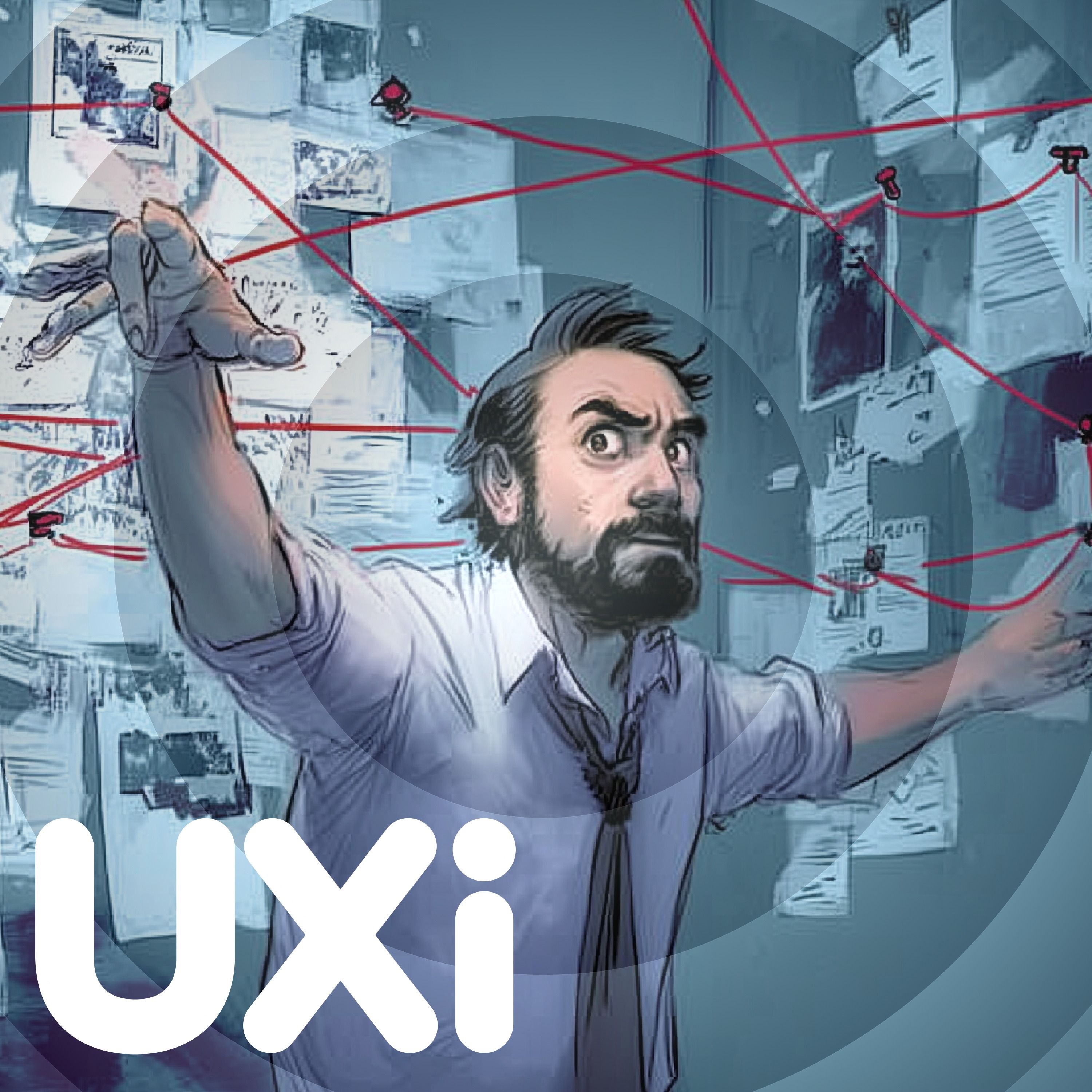
If you work in conversion optimization, user experience design, or design leadership, you probably think of these as separate disciplines. Different skill sets, different tools, different conversations.But treating them as separate is precisely what limits your impact.These three areas are deeply interconnected, and they build on top of one another in ways that make each more effective. If you're only working in one of these areas without considering the others, you're solving the wrong problems, or at best, only solving part of the right problem.I know this because my work spans all three, which makes me sound like I'm either a confused generalist or cobbling together random consulting gigs.People often ask what I actually do, because it doesn't fit neatly into a single box. When I list the three areas, I can see the confusion on their faces. I sometimes feel like that conspiracy theorist from the meme, standing in front of a pin board covered in red string, ranting about how it's all connected.But it is all connected. And if you work in any of these fields, you should be taking this holistic, interconnected approach as well.Let me walk you through how this actually works in practice, and why you should be thinking this way too.It starts with conversionUltimately, the goal of almost every project I take on is to improve a company's conversion rate through their website or app. Sometimes that means acquiring new customers, sometimes it means retaining existing ones, but the end goal is always the same: make the company more profitable through digital channels.In straightforward cases, I can achieve that with traditional conversion optimization techniques:A/B testingInterface design improvementsRefined copy and messagingThese are the tools you'd expect from anyone doing CRO work, and often they're enough to move the needle.But more often than I'd like to admit, those surface-level fixes aren't sufficient. The conversion problem runs deeper than a poorly worded call-to-action or a confusing checkout flow. When that happens, I need to look at the entire user experience, which means examining usability issues, carrying out proper user research, mapping out all the other touchpoints where customers interact with the brand, and understanding the full journey they're on.That's where the user experience design and strategy work comes into play.When UX goes beyond the screenHowever, sometimes even comprehensive user experience work isn't enough, because the real problems exist beyond the screen entirely.I once worked with a company that sold frozen ready meals to elderly customers. They wanted me to improve their website conversion rates, which seemed like a straightforward brief. We carried out user research and discovered that the elderly audience was nervous about multiple aspects of the experience, none of which had anything to do with the website design itself:Entering credit card details online because of fraud and scamsA strange delivery driver they didn't know turning up at their houseUnloading heavy trays of frozen products into their freezersNow, in most companies, a user experience designer would hit a wall at this point. You can't redesign a website to make someone feel safer about delivery drivers or less anxious about lifting heavy boxes. The best you could do would be to make the existing service as palatable as possible through clever messaging and reassurance copy.But in a company with a strong culture of design leadership, a UX designer can be instrumental in shaping solutions to these kinds of problems. Solutions that go way beyond polishing existing products to fundamentally reshaping the service itself.This is where the design leadership coaching aspect of my work becomes essential.Design leadership changes what's possibleIn that frozen meal company, we didn't just optimize the website. We fundamentally changed the offering based on what we learned from users:Customers got the same delivery driver every time, and when that wasn't possible, they'd be notified in advance and shown a photo of their driverAll drivers were police-checked so customers could feel confident about safetyThe driver didn't just dump the products and leave but actually unpacked everything into the customer's freezerCustomers could even reorder directly from their driver if they didn't want to use the website and enter card details onlineThe user experience shaped the product, and by extension, delivered the improved conversion rate the client originally asked for.You can see how these three areas that appear unrelated are actually deeply entwined. This interconnected approach is much more representative of what real user experience design should be about, rather than just pushing pixels around a screen.What this means for your workIf you're working in conversion optimization: Start asking deeper questions about the user experience.If you're doing UX work: Understand how it connects to business outcomes and conversion.If you

Ep 850Why I'm Not Worried About My AI Dependency
I have been thinking a lot about AI lately, and specifically about whether we should be worried about our over-reliance on it. Because if I am being completely honest with myself, I use AI for absolutely everything now. Every email that comes in gets pasted into Claude for analysis. Every project brief gets discussed with it. Every piece of writing gets shaped by it. When Claude goes down, my entire workflow grinds to a halt.So should I be worried about this dependency? Should you?After spending the last few weeks working through this question, I have landed somewhere that might be useful to share. Because I think the conversation about AI is happening right now in organizations everywhere, and the dividing line between those who embrace it and those who resist it matters more than most people realize.The dependency questionWhen I first noticed how reliant I had become on AI, my immediate reaction was concern. I started thinking about all the things that could go wrong. What if Claude disappeared tomorrow? What if I was outsourcing too much of my thinking? What if I was losing critical skills?But then I started looking at all the other dependencies in my working life:If the internet goes down, work stopsIf the power goes off, my life stops.If AWS servers fail (which seems to happen every other week), half the tools I rely on become uselessIf Figma stops working, design work haltsJust one more dependencyWe have built our entire professional lives on top of dependencies we barely think about anymore. AI is just one more in that stack.The question is not really whether we should be dependent on it, because that ship has already sailed for most of us. The question is what kind of dependency we are building.The thinking questionThe more interesting concern for me is whether AI makes us stop thinking. I have heard this worry from a lot of people, and I understand where it comes from. Because when you watch someone paste a problem into ChatGPT and blindly implement whatever comes back, it does look like they have outsourced their brain.But I think this misunderstands what most of us are actually doing with AI.Three layers of thinkingThere are different levels of thinking that happen in any given day:Strategic thinking about project direction, what problems need solving, what approach makes senseAnalytical thinking about whether an idea is sound, whether evidence supports a conclusion, whether a design solves the actual problemMundane thinking about how to word an email, how to structure a document, how to format a proposalAI as a thinking partnerWhat I have found is that AI handles that bottom layer beautifully. When a client sends me a long rambling email with five different questions buried in three paragraphs of context, I no longer spend mental energy untangling it. I paste it into Claude and say, "Summarize the key questions here." Then I think about my answers. I tell Claude what I think about each point. Sometimes I ask for its perspective on one or two where I am genuinely uncertain, not because I cannot think through it myself, but because having a sounding board helps me think better.When I worked in an agency, I had colleagues for this. I would turn to Marcus or Chris and say, "What do you think about this?" I do not have that anymore. AI fills that gap. It does not replace my thinking. It helps me think more clearly by taking away the low-level cognitive load and giving me something to bounce ideas against.The value questionWhere this gets really interesting is in what it lets me deliver to clients.The landing page playbook exampleI worked on a project recently where a client wanted to improve the conversion rate of their landing pages. They had a budget that, in the past, would have stretched to maybe three or four sample landing pages and a conversation about why I built them that way. That would have been useful, but limited. They would have had some examples to work from, but not much guidance on how to replicate the approach themselves.With AI, I was able to create an entire playbook. Detailed guidelines for every component. Design principles explained with examples. A system they could use again and again. I delivered probably four times the value in about a third of the time it would have taken me before. The strategic thinking was all mine. The understanding of what makes landing pages convert came from 30 years of doing this work. But the documentation, the articulation, the packaging of that knowledge into something comprehensive and usable came from working with AI.Why clients still need expertiseMost of my clients will not do this work themselves, even with AI:They do not know what questions to askThey do not have the pattern recognition that comes from seeing hundreds of projectsThey cannot evaluate whether the output is actually good or just sounds convincingThey haven’t the time to review and iterate upon the output to improve things.That is what they are paying me for. AI does not repla

Ep 849Stuck in a Website Fixing Loop? Try This.
I had a conversation recently with a web team at a college who were stuck in a painfully familiar trap. They had a sprawling, chaotic website that had grown like an untended garden over the years. They knew it was letting users down. They had plenty of ideas for how to make it better. And yet, every time they tried to improve things, they hit a wall.Sound familiar? I suspect it might.The team had been there for years, and they had developed what I call "institutional scar tissue." Every suggestion was met with an internal voice saying "we tried that once and it didn't work" or "I don't have the power to change that." They had been worn down by years of small defeats until the only option that felt possible was incremental improvement to what already existed.And incremental improvement, when applied to something fundamentally broken, is a bit like repainting a house with a crumbling foundation. Sure, it looks nicer from the street, but you're still one bad storm away from serious structural failure.The trap of fixing what existsWhen you try to fix an existing website, you inherit all the reasons it became broken in the first place. Every stakeholder who fought for their pet page is still there. Every "but we've always had that section" is still lurking. Every technical limitation that forced an awkward compromise is still constraining your options.Worse, you're starting from a position of defense. You have to justify why something should be removed or changed. The burden of proof is on you to explain why the current state is wrong, rather than on stakeholders to explain why their content deserves to exist.This is exhausting work. And it rarely produces genuinely transformative results.Wait, haven't I said the opposite?Now, if you've been reading my stuff for a while, you might be thinking "hang on, Paul. Haven't you spent years telling people not to do periodic website redesigns?" And you'd be right. I have. I've written at length about how the boom-bust cycle of website redesigns is damaging. How you end up with a shiny new site that slowly decays until someone throws a tantrum and the whole thing gets rebuilt from scratch.Incremental improvement is almost always the better path. Small, continuous changes based on real user data. No big-bang launches. No throwing out the baby with the bathwater.So why am I now suggesting we do exactly what I've warned against?Because sometimes the rot runs too deep. When you're dealing with thousands of pages of redundant, outdated, and trivial content, when every attempt at incremental change gets blocked by institutional politics, when the team has been so beaten down that they can't imagine anything better, you need a different approach. Not a traditional redesign where you migrate all the old problems into a new template. Something more radical.You need to imagine what you would build if you were starting from nothing.Start from nothingThe approach I suggested to this team was counterintuitive: stop trying to fix the website. Instead, imagine you're building from scratch.If you were launching this college's online presence tomorrow with no existing site, what would you build? What are the actual tasks people need to accomplish? What questions do they have at each stage of their journey? Strip away all the accumulated cruft and think about what a prospective student genuinely needs.For a college focused on student recruitment, it might be shockingly simple. Someone needs to find a course, understand if they can afford it, and apply. That's perhaps 200 pages of genuinely useful content. Not the thousands that currently exist.Frame it as a thought experimentDon't announce that you're redesigning the website. That triggers immediate defensiveness. Every stakeholder starts worrying about their territory. Before you've finished your sentence, half the room is already composing their objection.Instead, frame the whole exercise as a thought experiment. "We're not proposing anything. We're just imagining what perfect could look like. What would we build if we had no constraints? If we were starting fresh tomorrow?"This framing is disarming. People stop defending and start dreaming. They can engage with the vision without feeling threatened, because it's explicitly hypothetical. No one's being asked to commit to anything yet. It's like asking someone what they'd do if they won the lottery. They'll tell you all sorts of things they'd never admit to wanting otherwise.Make it a collective visionBut, don't do this thought experiment alone.Bring in a few trusted people from other departments early in the process. Ask them what excites them about what better could look like. Let them shape the vision alongside you.When you do this, something important shifts. It stops being "the web team's idea" and becomes a collective vision. Those collaborators become invested. They'll defend it in meetings you're not in. They'll sell it to their own teams. And if one of those collaborators happens

Ep 848Why Moving Buttons Won't Fix Your Conversion Rate
I had a client come to me recently with a familiar problem. Their landing pages were converting at less than 1%, and the industry standard for their sector sits somewhere between 2% and 5%. Not great.Their first instinct was to find someone who could sweep in, move some buttons around, tweak a few headlines, and magically fix everything. I've seen this expectation so many times now that I've lost count. And I understand the appeal. A quick fix sounds wonderful when your numbers look that bad.But if you want serious improvements to your conversion rate, shuffling UI elements around will only scratch the surface. It's like rearranging the deck chairs on the Titanic while ignoring the rather sizeable hole in the hull.---Free Webinar: Stop Lurking. Start Getting Known.On February 4th, I'm running a free 75-minute webinar on building your LinkedIn reputation without turning it into a second job. You'll get a simple weekly system, practical templates, and a way to stay visible that doesn't rely on willpower. Sign up here.---The Three Layers of Conversion OptimizationI think of effective conversion work as having three distinct layers, and UI changes sit right at the bottom.Layer 1: User InterfaceYes, the order and presentation of information matters. Yes, you can make improvements here. But this level has the smallest overall impact on conversion. It's where most agencies focus because it's visible and easy to point to, but it rarely moves the needle in a meaningful way.Layer 2: ContentThis is where things start to get more substantial. You simply cannot improve conversion without addressing the content on your pages.When I mention this to clients, I often hear, "But we don't produce the content. That's the content team." And therein lies the problem. Content teams are usually subject matter experts, not web writers. They understand their products inside out, but they don't necessarily understand how people scan web pages. They tend to focus on what the company wants to say rather than what the audience actually wants to know.Good conversion-focused content needs to:Address your users' pain points and the goals they want to achieveExplain the benefits you provide and how your features deliver themHandle objections before they become reasons to leaveBuild trust through social proof, case studies, awards, and certificationsWithout these elements, no amount of button-moving will save you.Layer 3: Organizational IssuesThis is the deepest and often most impactful layer, and it's also the hardest to fix because it goes beyond the website entirely.Organizational constraints regularly damage conversion rates in ways that are invisible from the outside.Legal requirements might force your copy to read like a compliance document.Your forms might have twelve fields because someone in sales wants to "validate" every inquiry.Your product offering might genuinely be wrong for your audience.Or your advertising might be driving bottom-of-funnel users to top-of-funnel pages (or vice versa).These are problems that no UI optimization can solve. They require conversations with stakeholders, changes to internal processes, and sometimes difficult decisions about how the business operates.You Can't Just Set and ForgetEven after you've addressed all three layers, you cannot just design your landing pages and walk away. Effective conversion optimization requires an ongoing program of continuous A/B testing and user research.And yet, I regularly encounter clients who want all of this but refuse to let me anywhere near their customers. Surveys? Too intrusive. User interviews? What if we upset someone? It's a bit like asking a doctor to diagnose you while refusing to let them take your temperature. If you want to understand what your users need, you have to actually talk to them. There's no way around it.And yes, I know what you're thinking. Can't we just A/B test our way to better results? A/B testing matters, but it can only tell you what works and what doesn't. It gives you no insight into why. And it certainly doesn't give you inspiration for what's worth trying in the first place. You need to talk to actual humans to get that.The vast majority of meaningful improvements come from continual testing and iteration, not from some expert arriving, waving a magic wand, and disappearing into the sunset. When clients come to me wanting a quick fix, what they actually need is a long-term commitment to understanding their users and optimizing systematically.So if you're struggling with conversion, by all means start with the UI. But don't stop there. Look at your content. Look at your organization. And commit to the ongoing work of understanding what your users actually need.Because moving buttons around might feel productive, but it's rarely where the real improvements are hiding.

Ep 847Generative Imagery: Stop Settling for Stock
If you've been reading this newsletter for a while, you'll have noticed I tend to focus on the big-picture stuff: organizational change, building design culture, getting stakeholder buy-in. This week I'm doing something different and getting into the weeds on generative imagery, a tool that's become part of my daily workflow. I'm genuinely curious whether you prefer the strategic content, the practical how-to pieces, or a mix of both. Hit reply and let me know.Generative imagery is quickly becoming an essential tool in the modern designer's toolkit. Whether you're a UI designer crafting interfaces, a UX designer building prototypes, or a marketer creating campaign visuals, the ability to generate exactly the image you need (rather than settling for whatever stock libraries happen to have) is genuinely useful.The Ethical DimensionThere's an ethical dimension here that makes me uncomfortable. Using generative imagery does, in theory, take work away from illustrators and photographers. I don't love that. But I also recognize that this is a pattern we've seen throughout history. Technology has consistently made certain professions more niche rather than making them disappear entirely. Blacksmiths still exist. Vinyl records still sell. And I suspect custom photography and illustration will follow the same path, becoming more specialized rather than vanishing completely.Besides, if we're being realistic, most of us weren't commissioning custom photography for every project anyway. We were pulling images from stock libraries, and I can't say I'll miss spending 45 minutes searching for a photo that almost works but has the person looking in the wrong direction.So with that acknowledged, let's get into the practical side of things.When to Avoid Generative ImageryBefore diving into how to use these tools well, it's worth noting when you shouldn't use them at all. Generative imagery has no place when you need to represent real people or real events. If you're showing your actual team, documenting a real conference, or depicting genuine customer stories, you need real photography. Anything else would be misleading, and your audience will likely spot it anyway.Why It Beats Stock LibrariesFor everything else, though, generative imagery offers some serious advantages over traditional stock. You can get exactly the pose you want, in exactly the style you need, matching your specific color palette. No more "this photo would be perfect if only the person was looking left instead of right" compromises.This matters more than you might think. Research suggests that users form initial impressions of a website in roughly 50 milliseconds. That's not enough time to read anything. Those snap judgments are based almost entirely on imagery, layout, color, and typography. The right image doesn't just look nice; it shapes how users feel about your entire site before they've processed a single word.Imagery also gives you a powerful tool for directing attention. A well-chosen image can guide users toward your key content or call to action in ways that feel natural rather than pushy.The right image composition can draw attention to critical calls to action.Copyright and Commercial UseBefore you start generating images for client work, you need to understand the legal landscape. And yes, it's a bit murky.The short version: most major AI image generators allow commercial use of the images you create, but the terms vary. Midjourney allows commercial use for paid subscribers. Adobe Firefly positions itself as "commercially safe" because it was trained on licensed content and Adobe Stock images. Google's Nano Banana Pro (accessible through Gemini) also permits commercial use.The murkier issue is around training data. Several ongoing lawsuits are challenging whether AI companies had the right to train their models on copyrighted images in the first place. These cases haven't been resolved yet, and depending on how they play out, the landscape could shift.For now, my practical advice is this: use reputable tools with clear commercial terms, avoid generating images that deliberately mimic a specific artist's recognizable style, and keep an eye on how the legal situation develops. For most standard commercial work (website imagery, marketing materials, UI mockups), you should be fine.Choosing the Right Tool: Style vs. InstructionsWhen selecting which AI model to use, you're essentially balancing two considerations: stylistic output and instructional accuracy.Stylistic OutputEvery model has its own aesthetic fingerprint. No matter how specific your prompts are, Midjourney images have a certain look, and Nano Banana images have a different one. You need to find a model whose default aesthetic works for your project.Instructional AccuracyThe other consideration is how well the model follows detailed instructions. If you need a specific composition (person on the left, looking right, holding a coffee cup, with a window behind them), some models handle

Ep 846Be a contributor, not a lurker
If you are having a rough time in the industry right now, you are not alone.I keep hearing the same two stories.People applying for job after job and hearing nothing back.Freelancers and agency owners finding that work is not arriving the way it used to.It is tempting to blame the economy, AI, or whatever headline is currently doing the rounds. Sometimes those things are genuinely part of the story.However, one factor we can control is whether people outside our immediate team know who we are, what we are good at, and what we care about.Be a contributor, not a lurkerMost opportunities come through people.Clients often hire because somebody they trust says, “Talk to them.” Hiring managers do the same thing, tending to hire via friends of friends.Even if you are not looking for a new job or chasing new clients, your reputation still matters. It shapes your credibility in the role you are in right now.If colleagues can see that you are respected outside your organization, and they see you sharing your expertise in public (even quietly), it tends to raise your internal credibility too.That does not mean you need to become an internet personality. It means you want to be findable and referable.The easiest place to start is simply showing upWhen people hear “build your personal brand,” they often picture loud self-promotion, forced networking, and a never-ending content treadmill.No wonder it makes so many people feel uncomfortable.A lot of the resistance comes from perfectly reasonable places:Self-promotion feels awkward.Networking can feel fake.Impostor syndrome whispers that you have nothing to offer.Fortunately, there is a gentler route. You can build a reputation by being useful, consistently.That can look like:Posting thoughtful experiences and ideas on social networks, and then sticking around to engage with the responses.Helping organize a local meetup.Chipping in regularly in Slack groups, forums, or Discord communities.Being active on LinkedIn by commenting thoughtfully on other people’s posts, and occasionally having a quiet chat in DMs.The point is not volume. The point is being present.“But I do not have anything worth saying”If you have ever thought that, welcome to the club.A simple reframe helps.Instead of trying to share “best practice,” share experience.You can write things like:“In a client meeting this week, we ran into this problem. Here is how we handled it.”“We tried this approach and it did not work. Here is what we would do differently next time.”“A stakeholder pushed back on research. This argument helped.”Nobody can reasonably attack you for reporting what happened and what you learned. You are not claiming to be the all-knowing oracle of UX. You are just being a person doing the work.In fact, the stuff you struggle with can be just as useful as the stuff you have mastered. People are often far kinder than your brain predicts, especially when you share what you learned the hard way.You can mine your day job for content (without making it weird)A lot of what I share online comes straight out of conversations.Like most people, I record many meetings. Then I grab the transcript and ask an AI tool to identify a few themes that might make useful posts.It is surprising how often a “boring meeting” contains an insight that would help somebody else.If you do this, be sensible about confidentiality. Strip out client details. Keep it focused on the pattern, not the organization.Contributing helps you thinkThere is another benefit that gets overlooked.When you share an idea, even one that is half-formed, you are forced to clarify what you mean, find the edges of your thinking, and learn faster because you are teaching.Writing is basically thinking with friction. It is annoying, but it works.Do not let AI turn you into a spectatorAI makes it easy to get answers.That is useful, but there is a risk. If all we do is consume, we slowly lose the community spirit that made the early web so valuable.So if you want a simple goal for 2026, try being a little less of a spectator and a little more of a participant.

Ep 845What I'm seeing for UX as we move into 2026
Every year around this time, I start seeing the prediction pieces roll in. "The year of X!" they declare. "Y will change everything!" And every year, I find myself wincing a little, because most of these predictions age about as well as milk left on a radiator.So rather than trying to predict the future (I learned my lesson after confidently declaring QR codes were dead in 2019), I want to talk about what I'm seeing among the UX professionals I work with, and what I think it means for 2026.The uncomfortable realityLet me start with the bit nobody wants to hear. UX is on the corporate chopping block again. If you've been in this industry long enough, you'll recognize the pattern. We saw it after the dot-com bust. We saw hints of it during various economic downturns. And we're seeing it now.Some folks think rebranding will save us. We tried that before, remember? We went from "usability" to "UX" and it bought us some time. But slapping a new label on the tin doesn't change what's inside.The interesting thing is that the World Economic Forum still lists UX as a growth area. So what's going on? I think we're seeing a split forming between two very different types of UX work: the shallow, template-driven kind that AI can increasingly handle, and the messy, human-centered kind that requires judgment, taste, and the ability to navigate complex organizational dynamics.The shallow end is drainingTemplates and processes won't cut it anymore. If your approach to UX is downloading frameworks and following checklists without much critical thinking, 2026 is going to feel uncomfortable. Because AI can do that now. And it does it faster.The UX professionals who thrive will be the ones with uniquely human skills. Critical thinking. Taste (yes, that subjective, hard-to-define thing your design school professor tried to explain). The ability to navigate messy organizational dynamics without making enemies. These soft skills are becoming more valuable than knowing your way around Figma.I've watched people who can facilitate a difficult stakeholder workshop bring more value to a project than someone with impeccable wireframing skills. Because the wireframes don't matter if nobody in the organization trusts them.AI is growing up (finally)The frantic "add AI for AI's sake" phase is mercifully winding down. I've lost count of how many product features I saw last year that felt like someone had desperately searched for a place to stick a chatbot, found nowhere sensible, and stuck it there anyway.Now we're moving into what I'd call the implementation phase. Organizations are finally asking "What problem does this actually solve?" rather than "How can we say we have AI?" This is genuinely good news for UX people. Because that question, that focus on real user needs, is exactly where we add value.This is our chance to demonstrate what we bring to the table. Not by fighting AI, but by being the people who understand how to apply it thoughtfully.What you might consider doing about all thisI've been thinking about what separates the UX people who feel energized right now from the ones who feel anxious. A few patterns keep emerging.Get comfortable with messUX work has always been messy, but I think some of us (myself included, at times) got a bit too attached to neat processes. Context matters more than frameworks. A template is a starting point, not a destination. If you find yourself downloading more frameworks than talking to actual users, it might be worth recalibrating.I've come to think of UX methods as a toolkit rather than a linear process. Instead of pushing every project through the same sequence of steps, you assess what the situation actually needs and reach for the right tool. Sometimes that's a full discovery phase. Sometimes it's a quick guerrilla test. The skill is knowing which to use when, not memorizing a fixed sequence.The people who seem to thrive actually enjoy that messiness. They see ambiguity as interesting rather than threatening.Wear more hatsThe boundaries between UX and other disciplines are blurring fast. I've been encouraging people to pick up knowledge in adjacent areas: systems thinking, data modeling, business strategy, even marketing. Not to become experts in everything (impossible), but to speak enough of the language to collaborate effectively.AI actually makes this more achievable than ever. You don't need to be an experienced developer to build a quick demo anymore. If you have a basic understanding of how development works, AI can help you create functional prototypes that would have required a developer's time before. The same applies to data analysis, content strategy, even basic marketing automation. A little knowledge, combined with the right AI tools, goes a surprisingly long way.Take control of your AI storyI wrote about this recently on Smashing Magazine, but it bears repeating. Take control of how AI shapes your job. Don't wait for someone else to do it for you, because they will, and you pr

Ep 844Your Christmas Shakedown!
Well, here we are. The UX Strategy and Leadership course has wrapped up, and I am officially putting down my digital pen until January 8th.I know. Try not to weep. 😭Before I disappear into a haze of mince pies and questionable Christmas jumpers, I wanted to take a moment to say thank you. Genuinely. You read what I write, you tolerate my rambling, and some of you have been doing this for years. That means more to me than I usually let on.I hope your Christmas is wonderful. I hope you get some proper time off. And I really hope the next few days of "urgent" requests, last-minute deadlines, and "can we just squeeze this in before the holidays?" meetings don't completely crush your soul before you get there.You deserve a break. Go take one.Now, About That Gift...Traditionally, this is the part where I'd offer you some sort of Christmas freebie. A template, a checklist, maybe a festive PDF with snowflakes on it.But I'm not going to do that.Instead, I have a favor to ask. I know, I know. The audacity!You've followed my work, read my articles, listened to my podcast, and taken my advice on UX and conversion optimization. Hopefully it has helped. Well, now the bill has come due! After all, I have never asked for anything in return. Well, except for buying my books, attending my workshops, and hiring me for projects. BUT, other than that I have never asked for anything! 😜If you have appreciated what I've shared over the years, I'm hoping you might support something that matters deeply to my wife, Catherine, and me.Why This Charity Is Personal to UsMy wife and I both work with a small UK charity called Hope of Bethesda, which supports a school doing education work in rural Tamil Nadu, India. A few years ago, we traveled out to visit the school ourselves.It's amazing what they're doing with nearly nothing. They are giving quality education in one of the poorest parts of India. Education that helps everybody, but especially the girls.Girls often don't get the same level of education as boys in rural India, and without that education they often end up getting married very young and facing a life of domestic work.But this community-led school changes all of that, allowing girls to go on to further education and successful careers.What Your Donation Makes PossibleThe school has grown to around 400 students who travel from miles around because it provides the best education available in the region.Donations support:Education from early childhood through college. Many students are supported from age 4 through 19+. Right now, 10 girls are in college.Safe accommodation during term time. For many girls, this provides not just education but a stable place to live so they can attend and thrive.Holistic support. Academic learning, extracurricular activities, and well-being support that other schools don't provide.And it goes beyond immediate education. A child born to a mother who can read (which is not as common as you might think in rural India) is 50% more likely to live beyond age five. Education doesn't just change one life. It changes entire communities for generations.Why I'm Asking YouHope of Bethesda is tiny. There's no fundraising team, no advertising budget, no government support, and no major donors. The charity is completely reliant on individual supporters like you.Your donation isn't a drop in the ocean. For a charity this size, one person's giving genuinely makes all the difference.Look, you've been generous with your time and attention over the years, reading what I write and listening to what I say. If my work has helped you in any way, and if you have room in your Christmas giving, I'd be grateful if you'd consider supporting Hope of Bethesda.Give What Feels RightThere's no minimum. Give what feels right to you.Whether that's £10 or £100, your support will help provide education, safety, and opportunity to girls who would otherwise have none of these things.Donate Now Via Stripeor learn more about Hope of BethesdaThank YouThank you for even considering this.Your willingness to support something that matters to my family means more than I can say. Whether you're able to give this Christmas or not, I'm grateful for your continued support of my work and for being part of this community.Have a wonderful Christmas. Rest up. Eat too much. And I'll see you on January 8th, ready to dive back in.

Ep 843Your Path Forward as a UX Leader
And so we've reached the end of the course on UX leadership and strategy (but not the end of my emails), and I want to leave you with some final thoughts and encouragement for the journey ahead.Being a design leader within an organization is challenging, and you will find yourself coming up against many roadblocks and difficulties along the way. I want to leave you with a quote from Winston Churchill that I absolutely love: "Success is going from failure to failure with no loss of enthusiasm."As you look forward and begin to work out how you're going to define your role within the organization and how you're going to begin to shift the culture to be more user-centric, I would very much encourage you to keep that quote in mind. Why? Because making these kinds of big organizational changes is a marathon, not a sprint. You won't transform your company's approach to UX overnight. There will be setbacks, resistance, and moments when you feel like you're not making progress. But if you maintain your enthusiasm through those failures and keep pushing forward, you will gradually see change take hold.What we've coveredLet me give you a quick recap of what we've covered in this course.Start by taking control of your role. Define your vision of what user experience is within the organization and what the role of your team is. Don't allow others to define that for you.Step back from day-to-day implementation work as much as you possibly can so that you can have a bigger impact across the organization on more digital projects. Do this by becoming an advisor, a consultant, but more importantly, somebody who provides resources, education, and tools for other people to use.Work at building relationships with your colleagues across the organization, teaching them and empowering them to start adopting user experience best practices themselves and to become UX practitioners. Ultimately, it all comes back to that well-known phrase: don't give a man a fish, but teach him how to fish. If you teach people how to do UX, they're going to be much more successful over the long term and in many more projects than if you just do it for them.Spend some time working on culture hacking, changing the organization as a whole. I'll be honest with you, that's going to be the hardest part of all of this and probably the one that you come to slightly later, once you've built some momentum. But certainly look at promoting yourself within the organization so that people are aware of what you do and your impact. Think about those guerrilla marketing tactics that I taught you about earlier in the course.Find your own wayIf you do all of that, you will be heading in the right direction. However, everything that I've talked about in this course will have to be translated for your organization and your circumstances. Not all of it will apply, and don't feel that you have to do things the way that I've taught you. You need to find your own way, but I hope that the things I've shared here will at least point you in the right direction.Outie's AsideIf you're a freelancer or agency working with client organizations, these principles apply to you too. Your challenge is helping your clients build internal UX capability without making yourself redundant.Focus on being the guide who teaches their team to fish rather than the person who catches all the fish for them. Position your engagements as building capability, not just delivering outputs. Create documentation, run workshops, and leave behind tools and resources that empower their teams after you've gone.Because the clients who learn from you become your best advocates and bring you back for bigger, more strategic work.I'm here if you need meFinally, I would encourage you to reach out to me anytime, and I mean this. You might be reading this years after I've produced it, but still feel free to reach out. Just hit reply to this email and I'll get back to you. I'm happy to answer any questions that you have because I know how difficult it can be being a UX design lead in organizations today.Although this is the end of the course, it's not the end of what I have to share. You will continue to receive emails on everything from conversion optimization, user experience design, UX leadership, user research, and the role of AI in our jobs.Thank you very much for sticking with me right to the end. It is hugely appreciated and I hope you found it useful.

Ep 839Engaging Stakeholders in UX Activities
Last week I talked about marketing UX within your organization and how you can use internal marketing strategies to build awareness and executive support. This week, I want to dig into a more hands-on approach: getting your stakeholders directly involved in UX activities.If all my talk about guerrilla marketing and PR stunts felt a bit overwhelming, this is a simpler path. The more you can expose stakeholders and colleagues across the organization to real users, the more user-centered their thinking will become. It really is that simple.Why bother getting them involved?I know what you might be thinking. Do I really want stakeholders hovering around during user research? What if they derail everything with their opinions?Fair concerns. But here is what happens when you do invite them in.It builds support. The more stakeholders are involved, the more invested they become. And the more likely they are to support UX initiatives when it matters.It builds empathy. When stakeholders interact with users, even indirectly, they begin to empathize with their frustrations and genuinely want to improve the experience.It builds relationships. By involving your stakeholders, you get to better understand their motivations and needs. And what will actually influence them to be more user-centered.Start with the basicsAt the most basic level, you can get stakeholders trying UX activities themselves. Sit with them and let them experience what card sorting feels like. Or walk them through a usability test as an observer.Then you can teach them how to run these processes on their own. I have done this countless times, and watching someone run their first usability test is genuinely rewarding.While this may seem obvious, remember that we are looking at how to influence others and change the culture. Getting hands-on experience is powerful.Expose them to real usersOne technique I use constantly is recording sessions I run with users and then creating short videos afterwards.Low-light videos (sometimes called horror videos) are 90-second compilations of all the frustrations and irritations a user has had with an experience. Watching someone struggle, get confused, or openly curse at your interface is deeply uncomfortable. And deeply effective at building empathy.Highlight videos are the opposite. I use these when I want to show stakeholders how improvements we made to the system really do work. There is something very powerful about allowing stakeholders to see real users interacting with the system and actually succeeding.Both types of videos work because they make the user real. Not a persona slide or a data point, but an actual human being trying to get something done. Circulate these videos to stakeholders and watch how quickly conversations change.You can also invite stakeholders to attend live usability sessions. Provide lunch as an incentive. Steve Krug's book "Rocket Surgery Made Easy" describes a brilliant approach: run three morning usability testing sessions that stakeholders observe, followed by a lunch meeting where you brainstorm improvements based on what everyone just witnessed.Another option is including users in stakeholder workshops. Pay users to attend and provide their perspectives during planning sessions. This creates situations where stakeholders interact with customers in ways they may never have before.Think about it. Many people in organizations rarely have face-to-face time with customers. Marketers, senior executives, compliance officers, developers... they operate based on assumptions and secondhand information. Any direct exposure to users can fundamentally shift their thinking.Turn engagement into advocacyOnce stakeholders are interacting with users and believing in the process, they can become advocates. People who influence others in their departments and across the organization.Build communities of people who care about UX. Provide them with tools to promote it, such as branded materials or how-to guides they can share with their teams.And remember to reward their advocacy. Celebrate those who promote UX best practices. Invest time in making them feel valued. I try to publicly recognize people who are championing user-centered thinking, even in small ways. It reinforces the behavior and signals to others that this matters.In essence, we need to involve our colleagues across the organization to help them understand users and become user advocates. Getting people hands-on with real users changes everything.Next week, I will look at how to break down business silos that often hinder user experience and limit the kind of cultural change we have been discussing.

Ep 842Quantifying UX Success and Proving Value
Last week, I talked about building credibility by looking outside your organization for validation. External benchmarking, expert opinions, and industry recognition all help shift internal perception. But validation only works if people understand the actual value you're delivering. That brings us to today's topic: measuring and communicating UX success in ways that resonate with stakeholders.Because, unless you can demonstrate value clearly, the rest of the organization won't recognize it.Fortunately, decision makers across your company have an inherent need to improve the metrics they see. By establishing the right metrics, you'll influence their behavior. It's a weird phenomenon, but if you give people something to measure, they will want to improve that thing.Two ways to quantify successThere are basically two ways to demonstrate the benefit of what you're doing.Qualitative data can be incredibly powerful. A compelling story generates empathy among stakeholders in ways that raw numbers sometimes can't. Testimonials, videos, and user feedback help people understand the human impact of your work.But quantitative data is even more powerful because people believe in hard numbers in a way they don't believe anything else. Ideally, this data should tie to some kind of financial return for the organization.There is something about hard data and having hard numbers you can track that really resonates with people and makes them want to start moving that needle.Deciding on your metricsThe first step is to have metrics based around organizational goals. Right back at the beginning of this course, I talked about getting that company strategy and identifying the organizational goals. Now we need to translate those into something measurable.Depending on what kinds of products and digital services your organization offers will impact how you go about doing this. Essentially, you're taking the company objectives and translating those to the website, app, or digital service that you're running. For example, "increase revenue" might be a company goal for the year, so your website's role might be to generate more leads. Then you need to get specific about key performance indicators. What metric are we going to measure? Maybe we're measuring the number of people completing an online form or visiting a contact page. You need to make those metrics very tangible because otherwise, you can't track them easily.Vary your metricsHowever, be careful. Many organizations end up focusing on a single metric like conversion, which often ends up undermining their long-term success. For example, if you only care about conversion, you end up using pop-up overlays and attention-grabbing things, especially if you're thinking about conversion over the next quarter rather than longer term. You'll do anything to meet that target for that particular month. But what you're also doing is alienating people who won't come back because your website is hard to use or annoying.It's much better to have a variety of metrics that you measure rather than focusing on just one area so that you approach things in a more rounded way.I typically try to have metrics in three broad areas:Engagement metrics assess if users find your design delightful, if the content is interesting, and if it's relevant to their needs. You might put out a quarterly survey on the website or measure dwell time (although sometimes that can be a sign that people are lost on the website) or track how much of a video they watch.Usability metrics answer whether users can find answers to their questions and use features effectively. Periodic usability testing can bring those metrics in. You can measure things like task success rate, time to complete tasks, error rates, and the system usability scale I mentioned earlier.Conversion metrics show whether the right users take action on the site and what the financial value of those actions is. You've got the conversion rate, average order value, average lifetime value, number of repeat customers, and so on.Tie metrics to dollar valueThe most important thing is to try and tie these metrics to a dollar value if possible. Let me give you an example of how powerful this can be.I was at a restaurant called Pizza Express here in the UK. My wife and I were sitting there when the server came over to take our order. However, they took forever to input the order into an iPhone app. I glanced at my wife, who immediately rolled her eyes at me because she knew exactly what I was thinking. That the app had a bad user experience and needed improvement. The server went away, and my poor wife had to listen to me go on about how annoying these apps can be. I then became obsessed and ruined our lunch by starting some calculations.I calculated that if we could save 10 seconds per order, with about 350 orders placed per day in an average restaurant, that would save 58 minutes every day. Pizza Express is open about 364 days a year, meaning we could save 351 hours p

Ep 841Building Internal UX Credibility Through External Validation
Last week I talked about breaking down business silos and getting different departments to work together on user experience. That kind of cross-functional collaboration can feel like an uphill battle, especially when you're trying to shift organizational culture. So, today I want to share a powerful shortcut that can make your life considerably easier: building your credibility internally by looking outside your organization.I know that sounds counterintuitive. When you're fighting to change culture from within, why would you spend time looking outward? But external validation can accelerate your progress in ways that internal efforts alone cannot.Two ways external focus builds internal credibilityExternal validation falls into two broad categories, and both matter.First, when you're making arguments about how things should be done, external evidence adds weight. Every time you express an opinion or recommend a direction, you want data, case studies, or expert quotes backing you up. This transforms your suggestion from "here's what I think" into "here's what the evidence shows."Second, your personal reputation matters. If people outside your organization respect you, people inside your organization will take you more seriously. An external reputation builds internal credibility faster than almost anything else.Let me walk you through practical ways to leverage both of these categories, starting with that first one: backing up your arguments with external evidence.Use AI to back up your argumentsI use Perplexity constantly to find supporting evidence for positions I'm taking. I've even done quick searches during meetings before expressing an opinion. Whether you're in a presentation, a meeting, or writing a report, never just state something and expect people to accept it.Try a prompt like "provide me with statistics that reinforce the argument that UX design provides tangible business benefits." In seconds, you'll have credible sources to cite, especially if selecting academic sources as the search parameter.The principle applies to any argument you're making. Always have evidence ready.But data and research aren't the only forms of external validation you can leverage. Sometimes the most powerful external voice is an actual person.Bring in external experts strategicallyAs a UX consultant, I'm often brought into organizations where the internal UX team is just as skilled as I am, sometimes more so. Yet they still hire someone like me. I've thought hard about why that happens, and I see three reasons external experts add value:Authority from cost. Your salary is a hidden expense that nobody sees regularly. When leadership hires an external consultant, that cost is visible and immediate. Because they've just spent money, people feel they need to listen. It's not entirely rational, but it's real.Second opinions carry weight. When an internal team member and an external expert share the same view, that consensus matters to senior management. Two voices saying the same thing are harder to dismiss.Impartiality on sensitive topics. If you're asking for more resources or budget, you might appear self-interested. An external expert making the same recommendation seems objective.If you don't have budget for consultants, you can still reference external experts. People like me publish content constantly, and you can cite that work to reinforce your arguments.Expert voices carry weight, but they're still qualitative. If you want to make an argument that's truly hard to dismiss, you need numbers that show how you stack up against the competition.Benchmark against competitorsExternal benchmarking gives you objective comparisons that stakeholders understand. This works the same way NPS scores do in marketing: they let you measure your performance against competitors in your sector and beyond.For user experience specifically, I recommend the System Usability Scale. You can run this standardized test on your own website and your competitors' sites, then compare scores. This creates a compelling, numbers-based argument that cuts through subjective debate.Recognized benchmarking tools give you credibility that opinion alone cannot provide.Outie's AsideEverything I've shared so far applies whether you're in-house or external, but if you're a freelancer or agency working with clients, external validation becomes even more critical because you don't have the luxury of building credibility over months or years in-house.When you walk into a client project, bring evidence with you from day one. Reference industry benchmarks, cite recognized experts, and show case studies from similar organizations. Your clients are paying you precisely because you have that external perspective, so lean into it.The System Usability Scale I mentioned works brilliantly in client work. You can demonstrate objectively where their site stands compared to competitors, which makes conversations about improvements much easier. Numbers cut through internal

Ep 840Breaking Down Business Silos for UX Success
Last week, I talked about getting stakeholders actively involved in UX activities like research sessions and workshops. That engagement is brilliant for building empathy and support, but it only takes you so far if everyone retreats back to their own departmental bubble afterward.This week, I want to focus on something that will amplify all that good work: breaking down the silos that keep teams isolated from one another.Why silos are killing your UX effortsIn most organizations, different teams work in their own little worlds. Developers, marketers, product owners, business analysts; they all contribute to and impact the user experience, but they rarely talk to each other beyond handoffs and status updates.This creates two problems for you as a UX leader.First, it causes friction in the user experience itself. When users move from one part of your product or service to another, they're effectively moving between teams. If those teams don't collaborate, users literally fall between the gaps.I've seen this happen over and over. The sales team promises one thing, but another department doesn't deliver it. Or a customer goes through a complaints process and gets a resolution, but that information never reaches finance, who keeps invoicing them anyway. Users get caught in the crossfire of departments that aren't talking to each other.These breakdowns aren't just annoying. They damage trust, create support overhead, and drive customers away. And from a UX perspective, you can have the most beautiful interface in the world, but if the experience breaks down because departments aren't aligned, none of that matters.The second area is much simpler. Your ability to change the culture will be limited by which teams you can access and influence. If you're stuck in one silo, your impact stays trapped there too.The benefits of breaking outWhen you start collaborating across departmental lines, good things happen.You plug the gaps in the user experience. When teams work together, you can identify and fix those places where users fall through the cracks. Sales and delivery get aligned. Support issues get fed back to the teams who can fix them. Information flows across departmental boundaries instead of stopping at them.You gain better business insights. You'll understand how UX affects different parts of the organization and what motivates other teams. That knowledge helps you frame UX in ways that matter to them.You build cross-departmental UX advocacy. When other teams see how UX helps them achieve their goals, they become advocates. That momentum spreads much faster than anything you could do alone.You increase your team's influence. As you collaborate and demonstrate value, you become essential to strategy and decision-making across departments, not just within your own corner.You streamline processes. Collaboration helps you integrate UX into different workflows and ensure those processes work better together. You deliver results faster and remove false assumptions people have about UX being slow or impractical.Which teams to prioritizeYou can't be everywhere at once, especially early on. Focus your energy on four groups that will give you the biggest return.Sales and marketing feel the impact of poor user experience most directly. If you help them improve conversion rates, average order values, or lead quality, you'll be improving the metrics that senior management actually cares about. Everyone wants to make more money, and this is your most direct path to those conversations.Customer support cares deeply about retention. It's much more expensive to win a new customer than keep an existing one, so reducing churn matters. Work with support to identify where UX improvements can reduce complaints and improve retention. They're usually quite receptive because better UX makes their job easier.Development has a huge impact on user experience through performance, security, and technical implementation. They're often frustrated by bottlenecks from design teams, so working with them improves the relationship and streamlines handoffs. You can also empower developers to handle some of the more routine UX work themselves.Business analysts (if your organization has them) evaluate potential projects and opportunities. They understand the importance of user acceptance, but they often don't feel equipped to assess it. If you can help them evaluate projects from a user perspective, you become invaluable to their process.How to start breaking down wallsLook, let me breakdown in what has worked for me.Conduct stakeholder interviews. Book casual chats with representatives from these departments. Ask about their challenges and explore ways your team can support them. This shows genuine interest and positions you as someone looking to help, not looking for help. That's powerful.Offer resources. Provide tools, time, and advice to help them overcome challenges. Give before you ask. It builds trust much faster than any formal presentation e