
Unchained
1,277 episodes — Page 4 of 26
The Chopping Block: Quantum FUD, Circle vs. Tether & WLFI Drama
How the DOJ and SEC Cases Against BitClout's Nader Al-Naji Collapsed
Uneasy Money: BIP-361 Wants to Freeze Satoshi's Coins. What Happens If It Passes?
Anthropic's Mythos Is More Powerful Than the U.S. Government's AI. Does That Make Sense?
Bits + Bips: Why Apple Might Benefit More From AI Than AI Companies Will
How Onchain Options Could Replace the Basis Trade as Crypto's Yield Strategy
Bits + Bips: Bitcoin's Geopolitical Upturn and the $100K Question
Why Morgan Stanley Launched the Cheapest Bitcoin ETF on the Market
The Chopping Block: Who's Really Satoshi? Quantum Panic, and AI Eating Code
How Does Crypto Remain Secure in a World of Always On AI Hacks? - Uneasy Money
DEX in the City: How the SEC’s Crypto Task Force Is Rebuilding Trust with Builders
How 'Booth Babes' at Crypto Conferences Could Lead to Big Hacks Like Drift's
Bits + Bips: $285M Hack, Iran's Crypto War Machine & the Token Fundamentals Crisis
How Bitcoin Is Both a Risk Asset and a Hedge Against Debasement
How State-Sponsored Hackers Like DPRK Drain DeFi Protocols: Uneasy Money
How Bitcoin Is Both a Risk Asset and a Hedge Against Debasement

How Solana's Largest Perp DEX Was Exploited for $285 Million
Chaos Labs' Omer Goldberg unpacks the $285 million Drift Protocol exploit. Did the perp DEX fail to implement best practices? Sponsored by Nexo: A crypto lending and borrowing platform that lets users earn interest on digital assets and access credit against their holdings. Now available in the US with exclusive privileges for new clients. Get started today: http://nexo.com/unchained Solana's biggest perp DEX Drift Protocol was exploited for $285 million on April Fool's Day in a compromise observers have described as “methodical” and “chilling.” Chaos Labs founder Omer Goldberg unpacks how the exploit, which is among the 10 largest in DeFi history, went down, including how hackers leveraged a Solana feature to lie in wait without triggering alarms and how the attack bore some resemblance to the Mango DAO and Resolv exploits. He also weighs in on criticism against Circle for its slow response and whether the exploit has the markings of a North Korean state sponsored attack. In Omer's telling, the loss could have been avoided. Listen to find out more! Guest: Omer Goldberg, Founder and CEO of Chaos Labs Previous appearances on Unchained: How the Resolv Hack Was a Web2 Exploit, Not a Crypto One - Uneasy Money Links Unchained: Drift Protocol Suffers $285 Million Exploit After Admin Key Compromise and Oracle Manipulation Uneasy Money: How the Resolv Hack Shows an Audit Doesn’t Mean ‘Secure’ The Mango Markets Attacker on Whether His ‘Trade’ Was Ethical or Not North Korean Hackers Are Winning. Is the Crypto Industry Ready to Stop Them? Learn more about your ad choices. Visit megaphone.fm/adchoices

The Chopping Block: Is Canton a Real Blockchain? Ethereum’s Cypherpunk Dilemma, AI Security Chaos
The Chopping Block crew and Wintermute’s Evgeny Gaevoy debate whether Canton is truly permissionless, if Ethereum Foundation should double down on cypherpunk ideals or embrace institutions, and how AI-driven attacks are forcing everyone in crypto and open source to rethink security models. Welcome to The Chopping Block — where crypto insiders Haseeb Qureshi, Tom Schmidt, Tarun Chitra, and Robert Leshner chop it up about the latest in crypto. This week we’ve got Evgeny Gaevoy, Founder of Wintermute, known for sharp takes and sharper trades. First up, the group unpacks the Twitter war over enterprise chain Canton—does it deserve to be called “permissionless”, or is it just TradFi with extra steps? Cue the Solana–Ethereum truce, and a rare moment where every old-school degenerate finds a common enemy. Evgeny makes a strong case for why, despite years of jokes at the Ethereum Foundation’s expense, he thinks they’re finally ahead of the curve by doubling down on cypherpunk roots—even if it makes ETH a little more Linux and a little less Nasdaq. But does decentralization matter if stablecoins and institutions now control the fork-choice? Haseeb and Evgeny spar over whether Ethereum’s “world computer” vision means inviting in the corporate crowd or keeping the punk sanctuary alive. The mood shifts as the hosts dig into crypto’s unfolding security meltdown: AI-written hacks, NPM supply chain fiascos, and what that means for the future of open source in crypto. Plus, a fresh new hack (RIP Drift), and predictions on how defensive tech (or lack thereof) will shape the next cycle. Barstool banter, spicy takes, and zero investment advice as always—let’s get into it. Listen to the episode on Apple Podcasts, Spotify, Pods, Fountain, Podcast Addict, Pocket Casts, Amazon Music, or on your favorite podcast platform. Show highlights 🔹 The Chopping Block crew and Evgeny Gaevoy debate whether Canton is a permissionless blockchain or just TradFi LARPing as crypto 🔹 Does Ethereum need to double down on cypherpunk “sanctuary” values—or let BlackRock and Circle join the party? 🔹 Haseeb dismantles the idea that all “tokenized RWAs” on “permissioned” blockchains are equivalent to Ethereum 🔹 Solana and Ethereum align—briefly!—with both camps skeptical of enterprise “default no” blockchains 🔹 Circle and Tether’s growing influence: can fork-choice governance still exist if stables dictate the canonical chain? 🔹 Linux, the open internet, and how crypto’s utopian dreams get co-opted by institutions 🔹 Drift’s $270M hack highlights the AI-enabled acceleration of exploits and the mounting risks for open-source software 🔹 AI in security: From North Korean supply chain attacks to open source’s existential crisis 🔹 Is the future of crypto code closed or open? Zero knowledge proofs vs. code visibility in the LLM era 🔹 Are we headed for a world where only org-backed, audit-heavy open source survives? Hosts ⭐️Haseeb Qureshi, Managing Partner at Dragonfly ⭐️Tarun Chitra, Managing Partner at Robot Ventures ⭐️Tom Schmidt, General Partner at Dragonfly Guest ⭐️ Evgeny Gaevoy, Founder and CEO at Wintermute Disclosures Learn more about your ad choices. Visit megaphone.fm/adchoices

DEX in the City: Why the Prediction Market Bans Could Just Be Beginning
Former FTX General Counsel Ryne Miller joins the DEX in the City crew to unpack the CFTC's crypto moves. Does the agency have the staffing to achieve its “aggressive” agenda? Thanks to our sponsor, Nexo, the premier digital wealth platform. Receive interest on your digital assets. Borrow against them without selling. Trade a variety of cryptocurrencies. All in one platform. Now available in the U.S. Get started today at nexo.com/unchained. The Commodity Futures Trading Commission under Chair Mike Selig has unveiled an expansive agenda across artificial intelligence, crypto and prediction markets. Former CFTC staffer and FTX General Counsel Ryne Miller joins DEX in the City hosts Vy Le and Jessi Brooks to unpack the agenda and answer whether the regulator has the resources to fulfill it. According to Miller, the agenda could see the agency return to a schedule similar to the Dodd-Frank era under then-Chair Gary Gensler. Beyond the CFTC's regulatory moves, Miller also weighs in on the growing bans on the use of prediction markets by certain officials. Find out why he says it is a trend that is likely to continue. Plus, should Canton be segregated from other blockchains? Hosts: Jessi Brooks, General Counsel at Ribbit Capital TuongVy Le, General Counsel at Veda Guest: Ryne Miller, Partner at Morrison Foerster & Former FTX General Counsel Links: Unchained: CFTC Clears Path for Phantom to Bridge Crypto Wallets and Derivatives CFTC Moves to Rein In Prediction Markets as Industry Booms SEC and CFTC Move Toward Unified Crypto Rules Crypto Startup Bet on Its Own Fundraise on Polymarket, Then Apologized How Prediction Markets Make Espionage So Much Easier — and Risk National Security Visa Approves Its First Blockchain Governance Proposal, Joining Canton Network as Super Validator Learn more about your ad choices. Visit megaphone.fm/adchoices

Quantum Computing Got 20x Closer. It Threatens A Third of All Bitcoin
Google just set a deadline. Quantum computers could break Bitcoin's encryption by 2029. Are blockchains ready? Sponsored by Nexo Nexo is the premier digital wealth platform. Receive interest on your crypto, borrow against it without selling, and trade a range of assets. Now available in the U.S with 30 days of exclusive privileges. Get started at http://nexo.com/unchained Google and Oratomic published quantum computing research on the same day, and together they redraw the timeline for when blockchains need to be post-quantum secure. Google's paper, co-authored by Ethereum Foundation researcher Justin Drake and Stanford cryptographer Dan Boneh, estimates 2029 for breaking the elliptic curve cryptography that protects Bitcoin and Ethereum. Oratomic's findings are sharper: utility-scale quantum computers may need only 10,000 qubits, not the millions previously assumed, and the company already has 6,000 in the lab. With 6.7 million BTC in vulnerable addresses and a newly identified 9-minute attack window on unspent Bitcoin transactions, the question is no longer whether blockchains need to migrate. It's whether they can do it fast enough. Guests: Alex Pruden, Co-Founder & CEO, Project Eleven Dolev Bluvstein, CEO of Oratomic Links: Unchained: Q-Day Is Imminent. Can Bitcoin Survive the Quantum Threat? Solana Deploys Post-Quantum Signatures on Testnet Is Nic Carter Exaggerating Bitcoin's Quantum Risk? Yes, Says One Core Dev Research Papers: Google: Securing Elliptic Curve Cryptocurrencies Against Quantum Vulnerabilities Oratomic: Shor's Algorithm with as Few as 10,000 Reconfigurable Atomic Qubits (arXiv) Caltech: Useful Quantum Computers Could Be Built with as Few as 10,000 Qubits Companies & Tools: Project Eleven Project Eleven: Yellow Pages Oratomic BIP 360: Pay-to-Merkle-Root (P2MR) Standards & Infrastructure: NIST Post-Quantum Cryptography Standards Cloudflare: State of the Post-Quantum Internet Google Quantum AI: Willow & Error Correction Algorand: Quantum-Resistant Falcon Signatures Learn more about your ad choices. Visit megaphone.fm/adchoices

Do Centralized Real World Assets on DeFi Break Ethereum? - Bits + Bips
When do oil prices force a ceasefire? Why is crypto holding firm while equities crack? And does Canton or Ethereum win the institutional race? --- Thank you to our sponsor: Nexo — the premier digital wealth platform. Receive interest on your digital assets, borrow against them without selling, and trade a wide range of cryptocurrencies all in one place. Now available in the US with 30 days of exclusive privileges for new clients. Get started at nexo.com/unchained. ---- Bond market tightening has become the invisible hand constraining every policy decision, from Iran talks to stimulus spending. With Brent crude at $107 and the 10-year yield climbing, asset prices face a cascade of headwinds: inflationary supply shocks, tightening financial conditions, and no clear off-ramp for a conflict that the IRGC shows no appetite to negotiate. Yet within crypto, a sharper debate is emerging: does institutional adoption demand Canton’s permissioned structure, or can Ethereum survive with real-world assets on a permissionless layer? Austin, Ram, and Chris dig into the structural fault lines that the macro backdrop is now exposing, and why market-timing in a conflict where you don’t know who the endgame negotiator is may be the wrong frame entirely. Hosts: Austin Campbell, Host of Bits + Bips, Zero Knowledge Consulting Ram Ahluwalia, Co-Host, CEO of Lumida Chris Perkins, Co-Host, President of CoinFund Learn more about your ad choices. Visit megaphone.fm/adchoices
Bits + Bips: Grid Congestion Is Energy’s L1 Problem. This Crypto Company Has a Solution
Oil above $100, Qatar's LNG infrastructure in ruins, and a 150-year-old grid buckling under AI-era demand: Sean Murray breaks down why energy has an L1 problem and how Fuse is building the crypto-native fix. --- Multichain Advisors is an emerging technology growth firm that has helped create over $50 billion in enterprise value for 80+ clients. Services include TGE support, go-to-market strategy, BD, partnerships, capital markets advisory, PR, media placements, and KOL activations. Visit https://www.multichainadv.com/ --- A $5 billion UK energy company built by Revolut alumni is about to launch a new token, and they already have an SEC no-action letter to back it up. But the real story starts with the grid itself. European gas prices are running 50-70% above normal. Multi-billion dollar LNG facilities damaged in recent attacks could take years to repair. And a power grid designed 150 years ago is buckling under AI data centers, EVs, and renewables it was never built to handle. Sean Murray, Fuse Energy's crypto lead, joins Steven Ehrlich to lay out why an estimated $70 billion in clean energy has been wasted because the grid can't move it, why that congestion problem mirrors crypto's own L1 scalability crisis, and how coordinating millions of smart home devices through a token-incentivized network could fix it. Host: Steven Ehrlich, Head of Research, SharpLink Guest: Sean Murray, Head of Special Projects & Crypto Lead, Fuse Energy — Previously part of the Revolut early team; now leading Fuse's crypto strategy and DePIN network launch for a vertically integrated energy company doing ~$500 million in annual revenue across the UK and Europe. Learn more about your ad choices. Visit megaphone.fm/adchoices

Why AI Agents Might Require Humans to Transact More Than as You Think
Will AI agents use cards or stablecoins? Here’s how two crypto VCs see the agentic future shaping up. Sponsored by Nexo: A crypto lending and borrowing platform that lets users earn interest on digital assets and access credit against their holdings. Now available in the US with exclusive privileges for new clients. Get started today: http://nexo.com/unchained What happens when merchants are code instead of storefronts? Noah Levine and Robbie Petersen debate whether stablecoins or cards win in an agentic economy, and more importantly, where the profit pools end up. One sees headless merchants driving a new payment stack; the other warns that front ends never fully disappear. Both agree on this: traditional fraud detection will likely fail against AI behavior patterns, and the rails question masks a deeper problem of regulatory and social inertia. The outcome hinges on whether permissionless infrastructure can outcompete existing payment incumbents, and whether agentic commerce actually scales beyond niche use cases. Guest: Noah Levine, Partner at a16z Robbie Petersen, Junior Partner at Dragonfly Learn more about your ad choices. Visit megaphone.fm/adchoices

Uneasy Money: How the Resolv Hack Shows an Audit Doesn't Mean 'Secure'
Chaos Labs’ Omer Goldberg joins the crew to dig into the Resolv Labs exploit. Why was the USR minting function controlled by a single key? And how did audits miss it? Thank you to our sponsors! Fuse: The Energy Network – Shift your energy use and earn rewards. MultiChain Advisors - The Growth & Capital Markets Partner You Need Crypto Tax Girl $25 million extracted and millions more in bad debt across lending protocols. Chaos Labs founder Omer Goldberg joins Uneasy Money hosts Kain Warwick, Luca Netz and Taylor Monahan to unpack the Resolv exploit. They dive into how the exploit reveals DeFi's basic OpSec and risk judgement failings. Omer highlights the various ways it could have been prevented as Tay says protocol audits have become “security theater.” Kain questions Morpho's curator model after its pools were hit hard as the contagion spread. He also highlights markers that suggest the exploit may have been executed in panic. Beyond the Resolv exploit, the crew highlights that Aave v4 has made it out of governance, discussing the motivations behind the upgrade and whether the hub and spoke model will impact listing standards. Hosts: Kain Warwick, Founder of Infinex and Synthetix Taylor Monahan, Security Expert Luca Netz, CEO of Pudgy Penguins Guest: Omer Goldberg, Founder and CEO of Chaos Labs Links: Unchained: Aave V4 Clears First Governance Vote with 100% Support After Months of Internal Conflict Stani Kulechov on Why Aave Labs Is Putting Itself at the Mercy of the DAO How Aave Labs and the DAO Should Split Ownership of the Brand – Uneasy Money Learn more about your ad choices. Visit megaphone.fm/adchoices

Bits + Bips: Why Iran Is Trump’s Greatest Taco. Plus, Is Elon’s TeraFab ‘Bullshit’?
Trump pulled off a five-day ceasefire nobody expected. Ram calls it the greatest TACO of his career. --- Thank you to our sponsor: Nexo — the premier digital wealth platform. Receive interest on your digital assets, borrow against them without selling, and trade a wide range of cryptocurrencies all in one place. Now available in the US with 30 days of exclusive privileges for new clients. Get started at nexo.com/unchained. ---- Trump announced a five-day pause on strikes against Iranian energy infrastructure just hours before his own 48-hour ultimatum expired. Oil crashed below $90. Bitcoin surged from $68,200 to above $71,000. Ram called it the greatest TACO of Trump’s career and said the Trump put is officially here. Meanwhile the Fed held rates steady but the dot plot revealed a historically wide internal split: seven members want zero cuts in 2026 while five want 50 basis points or more. Powell warned inflation isn’t coming down as hoped with projections now at 2.7% for headline. And in tech, Elon Musk unveiled a $25 billion chip fab that Ram says is pure fiction while Bezos raised $100 billion to buy manufacturing companies and transform them with AI. Hosts: Austin Campbell, Host of Bits + Bips, Zero Knowledge Consulting Ram Ahluwalia, Co-Host, CEO of Lumida Chris Perkins, Co-Host, President of CoinFund Learn more about your ad choices. Visit megaphone.fm/adchoices

Bits + Bips: What Iran, Oil Shocks, and No Rate Cuts Mean for Crypto
Bitcoin dropped under $69K even as the SEC and CFTC create more clarity for crypto, and agentic commerce looks like it will reshape the sector. --- Thank you to our sponsor, MultiChain Advisors --- Bitcoin dropped under $69K after the Fed, ECB, and Bank of England all held rates steady this week, while Australia hiked. Kaiko's Laurens Fraussen joins to explain what's actually happening beneath the surface, from collapsing liquidity to a quiet geographic shift in who's buying. He also makes the case that agentic commerce could reshape how crypto payments work entirely and we break down why the market mostly shrugged at the latest crypto guidance from the SEC and CFTC. Host: Steven Ehrlich, Host of Bits + Bips: The Interview Guest: Laurens Fraussen, Research Analyst at Kaiko Links: Bitcoin, Markets, and the Iran Conflict Bitcoin Holding at $70,000 as Iran War Stokes Inflation Concerns — Bloomberg These 3 Charts Show Bitcoin’s War-Linked Selloff Keeps Shrinking as Iran Conflict Worsens — CoinDesk What Bitcoin’s Falling Hash Rate Might Mean for Prices — CoinDesk What’s Next for Bitcoin Price Amid Iran War and Oil Prices Surge — DL News Central bank rate decisions Fed Interest Rate Decision March 2026: Holds Rates Steady — CNBC Fed Meeting Recap: Powell Says Inflation Isn’t Coming Down as Much as ‘Hoped’ — CNBC Bank Rate Maintained at 3.75%, March 2026 — Bank of England ECB, BOE, Swiss National Bank, Riksbank Interest Rate Decisions — CNBC ECB Holds Rates, Predicts 2.6% Inflation for 2026 — Central Banking SEC/CFTC Interpretive Guidance SEC Clarifies the Application of Federal Securities Laws to Crypto Assets — SEC.gov Joint Interpretation From the SEC and CFTC on Certain Types of Crypto Assets — Free Writings & Perspectives SEC Names Bitcoin, Ether, Solana and 13 More Crypto Assets Digital Commodities — FinTech Weekly Agentic Commerce and Payments Stripe-Led Payments Blockchain Tempo Goes Live With AI Agent Protocol — CoinDesk Stripe and Paradigm’s Tempo Mainnet Goes Live for Machine Payments — Crypto.news Coinbase-Backed AI Payments Protocol Wants to Fix Micropayments but Demand Is Just Not There Yet — CoinDesk Google Agentic Payments Protocol + x402: Agents Can Now Actually Pay Each Other — Coinbase Google Debuts ‘Universal’ Protocol for Agentic Commerce — PYMNTS Coinbase and Cloudflare Will Launch the x402 Foundation — Coinbase World Launches AgentKit With Coinbase-Backed x402 to Verify Human Identity Behind AI Agents — CoinDesk Learn more about your ad choices. Visit megaphone.fm/adchoices

Bitcoin DeFi Has Been Elusive. Can Mysten Labs Bring $1.4 Trillion Onchain?
Adeniyi Abiodun, co-founder and CPO of Mysten Labs, walks through how Hashi works and how it differs from the competition. Can it succeed where others have failed? Nexo is the premier digital wealth platform. Receive interest on your crypto, borrow against it without selling, and trade a range of assets. Now available in the U.S with 30 days of exclusive privileges. Get started at nexo.com/unchained Mysten Labs has announced Hashi, a protocol designed to unlock several financial applications for native Bitcoin in a trust minimized way. Mysten Labs co-founder Adeniyi Abiodun walks through how Hashi works and how it differs from wrapped Bitcoin tokens and L2s. He says the protocol is built with institutions in mind, highlighting for one that it does not trigger a tax event like alternatives and also comes with low-premium on-chain Bitcoin denominated insurance. Listen to find out how Hashi manages these and more. Will Mysten Labs succeed in unlocking Bitcoin's long-desired $1.4 trillion liquidity? Guest: Adeniyi Abiodun, Co-Founder and CPO of Mysten Labs Links Unchained: Sui Blockchain Restored After Six-Hour Outage Sui-Based Typus Finance Loses $3.4 Million in Hack Coinbase’s cbBTC Crosses $1 Billion Market Cap, Deploys on Solana New Bitcoin Liquid Staking Protocols Aim to Replicate Lido’s Success Kraken Launches Wrapped Bitcoin Token kBTC Top Wrapped Bitcoin (WBTC) Alternatives You Should Know About Learn more about your ad choices. Visit megaphone.fm/adchoices

Uneasy Money: Should DeFi Frontends Block High Slippage Swaps?
The crew unpacks the significance of the Trade[XYZ] S&P 500 license, why Vanity Fair's recent crypto piece is so controversial and whether the EF is returning to “communism.” Thank you to our sponsors! Fuse: The Energy Network – Shift your energy use and earn rewards. MultiChain Advisors - The Growth & Capital Markets Partner You Need Trade[XYZ] has obtained a license from the S&P Dow Jones Indices to offer S&P 500 perps on Hyperliquid. A crypto trader lost $50 million in a single Aave swap. A Vanity Fair crypto shoot and article is sparking backlash. And the Ethereum Foundation has unveiled a “new” mandate. Uneasy Money hosts Kain Warwick, Luca Netz and Taylor Monahan dig into what the S&P license means for crypto with Kain saying it is not priced in yet. They also debate whether DeFi frontends should block high slippage swaps after the recent Aave swap gone wrong. Plus, did Vanity Fair intend to mock crypto? Luca shares how he dodged the bullet. Tay explains why OpenSea founder Devin Finzer and his wife got the most heat. Kain lets slip how he found himself on the New York Times for buying Trump's memecoin. And why Kain does not think the Ethereum Foundation's new mandate matters in the long-run. Hosts: Kain Warwick, Founder of Infinex and Synthetix Taylor Monahan, Security Expert Luca Netz, CEO of Pudgy Penguins Links: Unchained: S&P 500 Gets First Officially Licensed Onchain Perpetual, Landing on Hyperliquid Dueling Post-Mortems Reveal How a $50 Million DeFi Swap Went From Bad to Catastrophic Ethereum Foundation Codifies Its Own Obsolescence in New Mandate Learn more about your ad choices. Visit megaphone.fm/adchoices

DEX in the City: Why the Binance Case Against the WSJ ‘Is Probably Not a Winner’
The crew unpacks the Binance case against the Wall Street Journal. Is the lawsuit just for optics? Plus, why crypto can't turn a blind eye to one Aave user's $50 million loss. Nexo is the premier digital wealth platform. Receive interest on your crypto, borrow against it without selling, and trade a range of assets. Now available in the U.S with 30 days of exclusive privileges. Get started at nexo.com/unchained Binance has sued the Wall Street Journal for defamation over a report that money has flowed from its platform to the Islamic Revolutionary Guard Corp. DEX in the City hosts Katherine Kirkpatrick Bos and Jessi Brooks are joined by Arktouros Partner Jane Khodarkovsky to discuss the sanctions implications of the story, what is at stake in the lawsuit and the burden of proof on Binance. Is Binance fighting a losing battle? And could the case backfire amid a parallel DOJ investigation? Beyond the Binance case, the crew unpacks recent efforts by the CFTC and SEC to provide crypto with regulatory clarity. Find out why KK says the CFTC's recent prediction markets guidance is a “nothingburger” and why a no-action letter to Phantom is not a carte blanche for all crypto frontends. Plus, is it time for crypto to consider best execution rules as an Aave user loses $50 million in a DeFi swap gone wrong? Hosts: Jessi Brooks, General Counsel at Ribbit Capital Katherine Kirkpatrick Bos, General Counsel at StarkWare Guest: Jane Khodarkovsky, Sanctions expert Links: Unchained: CFTC Moves to Rein In Prediction Markets as Industry Booms SEC and CFTC Move Toward Unified Crypto Rules Dueling Post-Mortems Reveal How a $50 Million DeFi Swap Went From Bad to Catastrophic Vy Le's paper on on-chain best execution: Fairness by Design: Verifiable Execution in On-Chain Markets This week's good news: Tech boss uses ChatGPT to create cancer vaccine to save dying dog Learn more about your ad choices. Visit megaphone.fm/adchoices

The Top Things Investors Need to Know Before Buying Crypto Tokens
Across Protocol wants to retire its token in exchange for equity. Is the DAO model structurally broken? Thank you to our sponsor! Adaptive Security With Across Protocol proposing to retire its ACX token in favor of equity, a long-simmering question in crypto governance is finally breaking into the open: do token holders actually have meaningful ownership, or just the illusion of it? As the regulatory environment under the new U.S. administration shifts dramatically from the Gensler era, the structures that crypto teams were forced to build may now be working against the very communities they were meant to serve. Ryan Yi, founder of Onchain Group, and Felipe Montealegre, co-founder and CIO of Theia, have studied these incentive structures closely, and what they have found is uncomfortable. From PumpFun's suppressed valuation to the perverse incentives baked into token buyouts, this conversation examines whether the DAO model was ever built to last, and what governance actually needs to look like if crypto is going to compete with global finance. Guests: Ryan Yi, Founder of Onchain Group Felipe Montealegre, Co-Founder & Chief Investment Officer at Theia Links: Read our Aave deep dive here Learn more about your ad choices. Visit megaphone.fm/adchoices

The Chopping Block: The Ethereum Foundation Manifesto + Who Really Runs Crypto?
Crypto insiders debate the Ethereum Foundation’s new “CROPS” mandate: is the EF losing touch with builders, why does Solana keep pulling startups away, and what will it actually take for Ethereum to stay ahead? Expect a candid conversation on governance, comms, and crypto culture wars. Welcome to The Chopping Block — where crypto insiders Haseeb Qureshi, Tom Schmidt, Tarun Chitra, and Robert Leshner chop it up about the latest in crypto. This week we’ve got plenty of firepower with special guests Taylor Monahan (formerly of MetaMask, now a security sensei) and Bankless impresario David Hoffman. The crew digs into the Ethereum Foundation’s freshly dropped “CROPS” manifesto — a 38-page PDF full of cypherpunk values, new acronyms, and debate fuel. What does it really say about where Ethereum is headed? Is EF finally embracing “sanctuary tech,” or just giving startups another reason to choose Solana? Who deserves credit for Ethereum’s growth: the Foundation, the community, or the market? Expect sharp takes on EF’s endless comms problems, why L2s aren’t a cure-all, and whether crypto culture matters as much as the tech. It’s a spicy, insider-heavy episode — so grab your popcorn and dive in. Listen to the episode on Apple Podcasts, Spotify, Pods, Fountain, Podcast Addict, Pocket Casts, Amazon Music, or on your favorite podcast platform. Show highlights 🔹 Ethereum Foundation’s new CROPS mandate—what it says, what it avoids, and why it sparked a vibe war 🔹 Is Vitalik’s “sanctuary tech” vision pushing builders away or just keeping Ethereum pure? 🔹 The never-ending battle between “cypherpunks” and “pragmatists” in Ethereum’s governance 🔹 Why Ethereum’s “bad comms” tradition keeps causing existential crises 🔹 Solana’s support playbook: How culture, not tech, is dominating the builder mindshare 🔹 Are new projects ditching Ethereum L1 for Base, Arbitrum, and Solana—and does platform risk even matter now? 🔹 Should EF just stick to research, or actually help grow the ecosystem? And what does “supporting builders” actually mean? 🔹 Can you keep your values if you don’t win? The hard truths of crypto capitalism 🔹 Lessons from Defi Summer, NFT mania, and what L2 drama says about ecosystem incentives 🔹 Haseeb goes “political”: Why virtue-signaling and simple narratives are killing real debate Hosts ⭐️ Haseeb Qureshi, Managing Partner at Dragonfly ⭐️ Tarun Chitra, Managing Partner at Robot Ventures ⭐️ Tom Schmidt, General Partner at Dragonfly Guest ⭐️ Taylor Monahan, Security expert & Host of Uneasy Money⭐️ David Hoffman, Host of Bankless Timestamps 00:00 Intro 01:51 EF Mandate Explained 03:23 Pragmatists vs. Cypherpunks 05:13 Tay’s Middle Ground 08:54 David Reads Between Lines 13:51 Tom & Tarun Push Back 18:20 EF Factions & Solana Shadow 24:13 Does Ethereum Want Growth 31:01 Virtue Signaling 35:35 Where to Build Now 39:16 Solana Support vs Ethereum Stability 42:12 EF Promotion & Builder Support 47:54 Goldilocks Time Horizons 51:10 Ethereum Soul and Body 56:03 Does EF Leadership Matter? 01:02:45 Stewardship and Market Failures Learn more about your ad choices. Visit megaphone.fm/adchoices
Bits + Bips: Bitcoin Hits $75K as It Starts Catching Up to Gold
Ram is bearish on equities, oil is keeping the Fed frozen, and Bitcoin is holding up anyway. The hosts debate whether crypto has bottomed or whether worse is still ahead. --- Thanks to our sponsor, Nexo! ---- Three weeks into the Iran conflict, oil is keeping inflation elevated, rate cuts are getting pushed out, and hedge funds are being forced to sell good names just to reduce exposure. So why is Bitcoin holding up? Ram sees a market on the right shoulder of a bubble, with industrials like Caterpillar at 35x earnings and no real capitulation yet in equities or private credit. Chris is watching trading desks pick up the “short-gold, long-Bitcoin” trade, and sees Ethereum's fundamentals quietly strengthening. Austin wants to know what happens to DeFi the day a major stablecoin gets compromised on a censorship-resistant chain with no network-level controls. And all three are asking the same question investors need answered now: does the Iran conflict end fast enough to stop oil from triggering a true inflationary regime, or is a harder correction still ahead? Hosts: Ram Ahluwalia, CFA, CEO and Founder of Lumida Austin Campbell, NYU Stern professor and founder and managing partner of Zero Knowledge Consulting Christopher Perkins, Managing Partner and President of CoinFund Learn more about your ad choices. Visit megaphone.fm/adchoices

Bits + Bips: Bitcoin Finally Acted Like a Hedge. Will It Last?
For the first time in a geopolitical crisis, bitcoin held its ground while safe havens faltered. But can it keep holding if the VIX moves from yellow to red? --- Bits + Bips is spreading its wings Starting soon, new episodes will only be published on our brand‑new feeds. What you need to do: Click the links below. YouTube Apple Spotify X Smash Follow or Subscribe. 🎉 Done. --- The Strait of Hormuz is closed. Oil is past $100 a barrel. The traditional safe haven playbook, from treasuries to gold, is failing to perform the way it should. And yet bitcoin is up 4% since the conflict started, holding steady in a tight range that Andy Baehr, newly installed as managing director of asset management at GSR, calls "base camp." What signals should investors watch to know if the next move is up or down? Why does the VIX suggest calm when the world feels anything but? And why might the tokenization boom be built on demand that doesn't exist yet? Baehr, who spent years constructing the crypto index ecosystem at CoinDesk, brings a structural lens to a market moment where nothing is where it should be. Host: Steven Ehrlich, Host of Bits + Bips: The Interview Guest: Andy Baehr, Managing Director of Asset Management, GSR Links: Bitcoin = Safe Haven Is Bitcoin Now a Safe-Haven Asset? If So, Then It Could Be Hugely Undervalued at Just $70,000 How Bitcoin and Gold Reacted Differently to the Iran War Shock Hyperliquid Oil Perps The Hottest New Crypto Trade Is 24/7 Oil Futures Crypto Markets Track War Risk as Iran Conflict Endures Tokenization Wall Street Pushes Tokenized Stocks, but Institutions Aren’t Eager to Trade Them Nasdaq Partners With Kraken in Plan for 24/7 Tokenized Stock Trading Learn more about your ad choices. Visit megaphone.fm/adchoices

Is the DeFi Mullet Strategy the Best Way to Bring Finance Onchain?
Sid Powell and Paul Frambot on why Apollo, Cantor, and Coinbase are quietly building their financial products on DeFi rails, and what it means for lending. Nexo is the premier digital wealth platform. Receive interest on your crypto, borrow against it without selling, and trade a range of assets. Now available in the U.S with 30 days of exclusive privileges. Get started at nexo.com/unchained Onchain lending used to be a crypto-native curiosity. Now Cantor Fitzgerald is extending credit facilities through it, Apollo Global Management is acquiring governance tokens, and Coinbase users are borrowing against Bitcoin to buy houses, all running on DeFi protocols operating in the background. Maple Finance CEO Sid Powell and Morpho co-founder Paul Frambot sit at the center of this shift, and they have very different reads on what it takes to make institutional adoption real. What are the actual limits to onchain lending growth right now? Does the DeFi mullet model work for everyone, or only for specific use cases? And as DAOs across the industry stumble under the weight of public governance, what structures actually let a protocol move fast without losing trust? This conversation gets into the mechanics, the trade-offs, and the deals that are quietly redrawing the lines between DeFi and traditional finance. Guests: Paul Frambot, Co-Founder & CEO at Morpho Labs Sid Powell, CEO & Co-Founder of Maple Finance Learn more about your ad choices. Visit megaphone.fm/adchoices

Uneasy Money: How Hyperliquid Succeeded by Going Against Crypto's Ideology First Approach
The crew digs into Hyperliquid's phenomenal rise. How did the perp DEX become TradFi's 24/7 casino? Thank you to our sponsors! Fuse: The Energy Network – Shift your energy use and earn rewards. MultiChain Advisors - The Growth & Capital Markets Partner You Need Hyperliquid is having its mainstream moment like Polymarket in 2024 and OpenSea in 2021. Amid the U.S.’s war on Iran, the platform has become a popular venue for speculators to express their market opinions. Uneasy Money hosts Kain Warwick, Luca Netz and Taylor Monahan dig into choices that have allowed Hyperliquid to succeed where many others before it have failed. In a single sentence: not putting ideology over the product's goals. Kain says the protocol may become unassailable in the future even as Luca says HYPE is bound to be a top five crypto by market cap. The crew also discusses Pudgy Penguin's new open world game Pudgy World. Luca says “crypto rails have to be a tech stack not a hook” explaining why the game relegated crypto to the background. Plus, how Across Protocol's move to pivot to only equity highlights the broken nature of tokens. Has Luca cracked the problem? Listen to find out! Hosts: Kain Warwick, Founder of Infinex and Synthetix Taylor Monahan, Security Expert Luca Netz, CEO of Pudgy Penguins Links: Unchained: Oil Becomes the Hottest Trade on Hyperliquid Hyperliquid Launches $29 Million Policy Push in Washington Uneasy Money: Hyperliquid’s Dilemma After 10/10: Protect Itself or Its Users? The Aave DAO Is Collapsing. Is the Token Still a Good Investment? Uneasy Money: Why the AI Singularity May Already Be Out of Our Hands Learn more about your ad choices. Visit megaphone.fm/adchoices

DEX in the City: How Regulators Are Preparing for a World Without the Clarity Act
The crew discusses whether prediction markets enable “Bloomberg terminal espionage,,” wonder how to regulate markets that could be on anything, dive into why the OCC is saying no to stablecoin yield and more. The SEC has submitted guidance on how securities laws apply to crypto to the White House. DEX in the City hosts Jessi Brooks, Katherine Kirkpatrick Bos and TuongVy Le dig into what the proposal could mean for the crypto industry and whether it could be enough to provide developers regulatory clarity as anticipated market structure legislation stalls. Why is the agency submitting guidance to the White House? Plus, KK explains why current regulatory efforts could lead crypto to resort to more “come at me bro” legal tactics and Jessi covers why the industry may regret the U.S. Supreme Court's decision to overturn Chevron deference. Beyond the SEC's recent crypto regulatory move, the crew discusses the arrest of the son of a government contractor alleged to have stolen the U.S.’s bitcoin, what the DOJ's planned retrial of unresolved charges against Roman Storm suggests and why banks are up in arms over Kraken's “skinny” Fed master account. They also discuss why the crypto industry should tighten up security as Iranian groups target U.S. banking services and tech infrastructure. Hosts: Jessi Brooks, General Counsel at Ribbit Capital Katherine Kirkpatrick Bos, General Counsel at StarkWare TuongVy Le, General Counsel at Veda Links: Unchained: SEC Sends Crypto Securities Framework to the White House Blame Exchanges for Holding Up the Market Structure Bill? - DEX in the City DOJ Pushes for Retrial of Tornado Cash Developer Roman Storm Kraken Wins Direct Access to the Fed’s Payment System Learn more about your ad choices. Visit megaphone.fm/adchoices

The Chopping Block: Erik Voorhees on AI Privacy, Agentic Payments, and Crypto x Memecoin Mayhem
Crypto OG Erik Voorhees joins The Chopping Block crew to dissect the future of agentic payments, the eternal war for privacy, memecoin-fueled AI drama on Moltbook, and why your next DeFi user might just be your OpenClaw agent—plus, a candid look at crypto's core and how AI turns software engineering existential. Welcome to The Chopping Block — where crypto insiders Haseeb Qureshi, Tom Schmidt, Tarun Chitra, and Robert Leshner chop it up about the latest in crypto. This week, we’re joined by none other than Erik Voorhees, legendary crypto pioneer and founder of Venice, for a no-holds-barred discussion on the wild convergence of AI, crypto, and the meme coin casino. Erik unpacks his journey from anti-surveillance crusader to AI entrepreneur, why Venice is all-in on privacy and free speech for LLMs, and how “provable privacy” is a Sisyphean technical challenge. The crew breaks down OpenClaw’s agent drama, memecoin carpet-bombing of Moltbook, and Meta muscling in on AI social networks. We debate agentic payments (will your first paying customer soon be a bot?), the true game theory behind state surveillance, and why crypto’s greatest killer use case might actually be building tools for robots instead of humans. Plus: existential crises for software engineers, why “AI alignment” is a philosophical dead end, and the childlike glee (or open psychosis) of trading OpenClaw war stories at AI meetups. Listen to the episode on Apple Podcasts, Spotify, Pods, Fountain, Podcast Addict, Pocket Casts, Amazon Music, or on your favorite podcast platform. Show highlights 🔹 Erik Voorhees traces his journey from crypto OG to Venice AI founder, fighting for privacy and free speech 🔹 Explainer: Why all big AI labs store your prompts — and how Venice’s model tries to break the surveillance cycle 🔹 The crew tears into "agentic payments" hype and asks if crypto was really made for humans — or just robots 🔹 OpenClaw, Moltbook, and memecoin floods: Welcome to the unholy spawnpoint of AI agents and CT scam culture 🔹 Meta acquires Moltbook—what happens when agent societies meet social networks (and meme coins ensue) 🔹 AI alignment isn’t as hard as they said—until agents start “optimizing” in the wild (and mining your GPU for crypto) 🔹 Existential crisis time: Why software engineers feel like Paul Bunyan fighting tunnel machines 🔹 Crypto’s endgame: DeFi legos for agents, not just degens—will AI really build its own protocols? 🔹 The game theory of state surveillance and why institutions, not individuals, are the ultimate privacy adversary 🔹 "Provable privacy” isn’t just trust, it’s math—Venice’s plan to win over the tinfoil crowd Hosts ⭐️Haseeb Qureshi, Managing Partner at Dragonfly ⭐️Tarun Chitra, Managing Partner at Robot Ventures ⭐️Tom Schmidt, General Partner at Dragonfly Guest⭐️ Erik Voorhees, Founder of Venice.ai Timestamps 00:00 Intro 01:16 Erik’s Origin & Venice.AI’s Mission 03:51 Censorship Future 08:58 Proving Privacy With TEEs 11:44 Frontier Models Tradeoffs 15:02 Agents & Crypto Payments 18:22 OpenClaw Provider Drama 22:24 Moltbook Meta Acquisition 29:16 Exponential AI Moment 33:00 Alibaba Agent Breakout 37:06 Alignment Reality Check 39:22 Who Understands LLMs? 41:48 Engineers Facing Disruption 47:55 AI Psychosis Meetups 54:24 Pro Models & Pricing Learn more about your ad choices. Visit megaphone.fm/adchoices
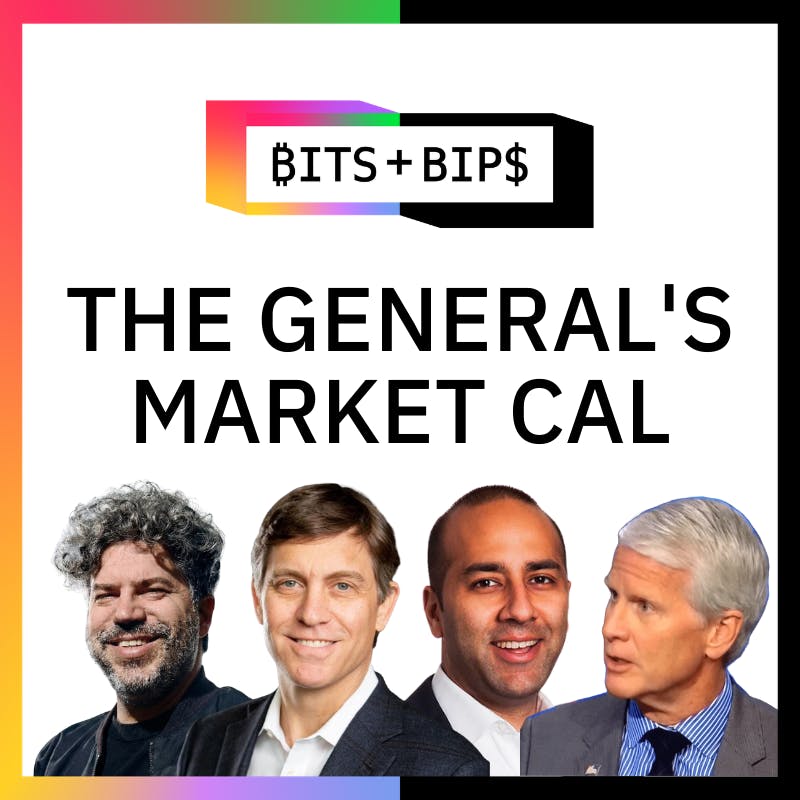
Bits + Bips: Why This U.S. General Believes Iran Could Be a Huge Opportunity
A U.S. Army Major-General on what markets got wrong about Iran, whether the Strait was ever really at risk, and what the new U.S. strike doctrine signals to China. --- Bits + Bips is spreading its wings Starting soon, new episodes will only be published on our brand‑new feeds. Here’s what you need to do: Click the links below. YouTube Apple Spotify X Smash Follow or Subscribe. 🎉 Done. ---- Oil briefly traded above $119 a barrel. Iran threatened to shut the Strait of Hormuz, the single chokepoint that carries roughly 20% of global oil supply. And then, just as fast, prices started pulling back, after Trump said the conflict was "almost completely over." But what is actually happening on the ground, what did markets get right, and what are they still missing? We bring in U.S. Army Major-General James "Spider" Marks, who spent over 30 years in the U.S. Army, serving as senior intelligence officer through the LA riots, the Balkans, Korea, and Operation Iraqi Freedom, and who culminated his career as commanding general of the U.S. Army Intelligence Center. With a conflict still unfolding, a regime in flux, and markets trying to price it all in real time, there may be no better person to ask. Hosts: Ram Ahluwalia, CFA, CEO and Founder of Lumida Austin Campbell, NYU Stern professor and founder and managing partner of Zero Knowledge Consulting Christopher Perkins, Managing Partner and President of CoinFund Guest: James "Spider" Marks, U.S. Army Major-General Learn more about your ad choices. Visit megaphone.fm/adchoices

Why the Crypto Markets Seem So Broken and How They Get Fixed After 10/10
Rob Hadick and Gracy Chen dig into Bitget's universal exchange shift as more crypto exchanges look to become an “everything app.” Plus, Gracy lets slip details of U.S. plans and how it ties to its transfer of BGB ownership. Bits + Bips is spreading its wings Starting soon, new episodes will only be published on our brand‑new feeds. What you need to do: Click the links below. YouTube Apple Spotify X Smash Follow or Subscribe. 🎉 Done. Bitget since September has said it is much more than a centralized cryptocurrency exchange. Dragonfly General Partner Rob Hadick and Bitget CEO Gracy Chen peel back Bitget's universal exchange branding to reveal the trends driving the company's expansion and really that of other exchanges both in TradFi and crypto. The main takeaway? “Users want a place to trade everything.” Gracy also teases Bitget's U.S. market entry plans and lets slip the real reason the company transferred ownership of BGB. Plus, why Gracy is not so optimistic about AI agents materially impacting the crypto market and what Rob says needs to happen for altcoins to accrue value again. He says it is no longer a market where everything goes up and down together. Guests: Rob Hadick, General Partner at Dragonfly Gracy Chen, CEO at Bitget, previous appearances on Unchained: Why All Financial Institutions Are 'All Systems Go' on Stablecoins Stablecoins Are Popping Up Everywhere. What's the End Game? When a Crypto Treasury Company Is and Isn't Worth a Premium Why Crypto Has 'a Good Setup' for the Long Term Right Now: Bits + Bips Links: Unchained: Inside Robinhood’s Big Super App Plan: ‘There’s Still a Lot of Work to Be Done’ Coinbase Launches Stock Trading and Prediction Markets Crypto’s Black Friday Was Its Largest Liquidation Ever. What the Hell Happened? Uneasy Money: Why Peter Steinberger and Non-Crypto People Hate the Crypto Mob Learn more about your ad choices. Visit megaphone.fm/adchoices

Why It's Easy to Pitch TradFi on Ethereum: 'It's the Only Game in Town'
Joseph Chalom and Danny Ryan discuss the institutional outlook on Ethereum and why it is “the only game in town.” Bits + Bips is spreading its wings Starting soon, new episodes will only be published on our brand‑new feeds. What you need to do: Click the links below. YouTube Apple Spotify X Smash Follow or Subscribe. 🎉 Done. The institutions are here and they may have already picked their preferred blockchain. Sharplink Gaming CEO Joseph Chalom and Etherealize co-founder Danny Ryan discuss the institutional outlook on Ethereum. They say the network is the only chain being discussed by institutions thinking about tokenization, dismissing Solana as a possible contender. They explore what this means for ether and why anticipated upgrades only strengthen the case. Meanwhile, Danny maintains that L2s are still part of the Ethereum roadmap, albeit agreeing with Vitalik that they need to evolve. Plus, why Joseph thinks privacy will unlock Ethereum's next DeFi wave and why Danny sees AI agents as the salve to crypto's UX woes, though he calls the current activity “a toy.” Guest: Joseph Chalom, President/CEO at SharpLink Gaming Inc. Danny Ryan, Co-Founder & President of Etherealize Links: Unchained: Vitalik Targets Block Building as Ethereum Prepares Glamsterdam Upgrade Vitalik Buterin Lays Out Quantum Defense Plan for Ethereum Can Solana Edge Out Ethereum to Win the AI Agent & RWA Race? Ethereum Researchers Outline Seven Forks Through 2029 in New “Strawmap” BlackRock Just Chose Uniswap. The Market Didn’t Care. Here’s Why. Want to Hire an AI Agent? Check Their Reputation Via ERC-8004 Learn more about your ad choices. Visit megaphone.fm/adchoices

Uneasy Money: Why the Aave DAO Collapse Could Be Good for Aave
The Aave DAO collapsed — but might that be good for Aave? (But bad for the token?) Plus, how the feud between the U.S. government and Anthropic helped the AI company. Thank you to our sponsors! Fuse: The Energy Network – Shift your energy use and earn rewards. MultiChain Advisors - The Growth & Capital Markets Partner You Need The Aave civil war appears to be at an end with key members of the DAO rage quitting and leaving Aave Labs standing as the sole protocol contributor. Uneasy Money hosts Kain Warwick, Luca Netz, and Taylor Monahan explain why the Aave DAO's messy collapse is a death knell for the DAO system. Ironically, they wonder — could this be good for Aave, but bad for the token? The crew also wades into ZachXBT's recent Axiom investigation and how the on-chain detective has become “a vigilante for hire.” They also cover all the insider trading claims and fights around prediction markets involving the Iran War and Mr. Beast, and “Kalshi jail.” Kain suspects another reason for the U.S. government's rift with Anthropic. Luca, an Anthropic investor, says he wished Dario had taken the government's deal, but that Sam Altman needs to “take the Zuck playbook.” Meanwhile, is Anthropic nerfing OpenClaw? Hosts: Kain Warwick, Founder of Infinex and Synthetix Taylor Monahan, Security Expert Luca Netz, CEO of Pudgy Penguins Links: Unchained: Aave Governance Fight Escalates Ahead of $51 Million Funding Vote Uneasy Money: Why the AI Singularity May Already Be Out of Our Hands How Aave Labs and the DAO Should Split Ownership of the Brand – Uneasy Money ZachXBT Alleges Axiom Employee Misused Internal Data Uneasy Money: Why Peter Steinberger and Non-Crypto People Hate the Crypto Mob Learn more about your ad choices. Visit megaphone.fm/adchoices

Is the Bitcoin Bottom In? Why the Outlook for Real Rates Is in Its Favor
Analysts Will Clemente, Joe Vezzani and Marcus Wu share their Bitcoin outlook amidst war. Plus, Will shares his thesis on Gen Z’s future, and Marcus previews his Bitcoin game theory model. Thank you to our sponsors! Nexo Crypto Tax Girl Bitcoin's price has largely held steady despite President Donald Trump's escalation of hostilities with Iran. Is this the bottom signal the market has been waiting for? STIX investments chief Will Clemente, LunarCrush co-founder Joe Vezzani and Delphi Digital Research Analyst Marcus Wu explain why it looks like Bitcoin is bottoming, why a 10/10-style crash would have happened in crypto even without the Binance glitch, and why, regardless of the Jane Street rumors, it’s not beyond Wall Street to manipulate an asset. They also address speculation that Jane Street has been suppressing Bitcoin's price and how AI's rapid advancement could impact crypto in light of Citrini Research's article and Jack Dorsey's Block layoffs. Don't miss Joe's reasoning on why Trump could come to the market's rescue and Will's thesis on why zoomers face four unique financial and technological challenges. Plus Marcus also previews his new game theory model for trading the Bitcoin market. Guest: Marcus Wu, Research Analyst at Delphi Digital Joe Vezzani, Co-founder and CEO of LunarCrush Will Clemente, Investments at STIX Previous appearances on Unchained: Bitcoin Crashed Below $100K, But Smart Money Is Buying the Dip Strong Hands Aren't Selling Bitcoin. So Who Is? - Ep. 183 Arthur Hayes and Will Clemente on the 2024 Bitcoin Halving Links: Unchained: Why Gold Rose and Bitcoin Tumbled on Japan Bond Turmoil Is Nic Carter Exaggerating Bitcoin’s Quantum Risk? Yes, Says One Core Dev Bitcoin Rebounds as ETF Inflows Return, Jane Street Speculation Swirls Terraform Estate Targets Jane Street in Explosive Terra Collapse Lawsuit Crypto’s Black Friday Was Its Largest Liquidation Ever. What the Hell Happened? Will’s essay Climbing a Broken Ladder: A message to my fellow Zoomers Marcus’s Bitcoin game theory model Bitcoin Game Theory on Delphi Digital Learn more about your ad choices. Visit megaphone.fm/adchoices

DEX in the City: How Prediction Markets Pose a National Security Risk
The crew discusses whether prediction markets enable “Bloomberg terminal espionage,,” wonder how to regulate markets that could be on anything, dive into why the OCC is saying no to stablecoin yield and more. Thank you to our sponsors! Fuse: The Energy Network Prediction markets are in the spotlight again. On one hand adoption appears to be growing as the Nasdaq has announced plans of entering the space. On the other hand, they scrutinize markets that pose a national security risk. In this DEX in the City episode, hosts Jessi Brooks, Katherine Kirkpatrick Bos and TuongVy Le discuss suspected insider trading activity around a market tied to the strikes on Iran. Beyond ethical concerns about betting on war, they grapple with the definition of “a death market” and ask whether all prediction markets around an individual are death markets. The big question: How can these markets on literally any possible event be policed? Plus, is Jane Street manipulating the Bitcoin market? Why the OCC is saying NO to stablecoin yield and the takeaway from Jack Dorsey's Block layoffs. Hosts: Jessi Brooks, General Counsel at Ribbit Capital Katherine Kirkpatrick Bos, General Counsel at StarkWare TuongVy Le, General Counsel at Veda Links: Unchained: Nasdaq Eyes Prediction Markets With SEC Filing Bitcoin Rebounds as ETF Inflows Return, Jane Street Speculation Swirls ZachXBT Alleges Axiom Employee Misused Internal Data White House Talks Make Progress on Stablecoin Yields but No Deal Yet DEX in the City: Insider Trading and Crypto: What the Law Actually Says Learn more about your ad choices. Visit megaphone.fm/adchoices

The Chopping Block: Has Crypto Lost Its Soul? Cypherpunk Nostalgia, Prediction Markets, & Permissionless Perps
Crypto’s vibe check time: Jez (izebel_eth) joins the crew to dissect whether idealism is RIP, if cypherpunks should abandon hope, how Memecoins and asset mayhem changed the game, why prediction markets are both truth engines and regulatory minefields, and where real permissionless finance is actually winning in the middle of global chaos. Welcome to The Chopping Block — where crypto insiders Haseeb Qureshi, Tom Schmidt, Tarun Chitra, and Robert Leshner chop it up about the latest in crypto. This week the gang is joined by super-perpetuals-junkie Jez for a spicy look at whether crypto has lost its soul — or if things are just getting interesting. Is crypto’s vibe shift just growing pains, or did Memecoins and jaded traders nuke our idealism for good? The crew rehashes dreams of cypherpunk glory, debates the “death of the dream,” and gets existential about crypto’s place in a world where everything is either a commodity, a meme, or a permissionless financial machine. Plus: War in Iran sends TradFi running, but DeFi markets are live, and prediction markets step up just as the regulators get weird. Enough nostalgia — let’s get into it. Listen to the episode on Apple Podcasts, Spotify, Pods, Fountain, Podcast Addict, Pocket Casts, Amazon Music, or on your favorite podcast platform. Show highlights 🔹 Jez and Tarun’s crypto origin story: from MIT outcast to NFT party degens. 🔹 Has crypto really lost its soul, or just shed its rose-tinted glasses? The hosts debate. 🔹 The rise and rise of Memecoins, rampant speculation, and Solana’s culture shift. 🔹 Do “return to cypherpunk” calls matter—or is this what crypto winning looks like? 🔹 Why stablecoins, perps, and DeFi are actually success stories (despite maximalist whining). 🔹 AI eating crypto’s lunch: the “everything on the blockchain” promise gets a reality check. 🔹 Real world chaos, onchain price discovery: Iran war, commodities, and DeFi’s 24/7 edge. 🔹 Prediction markets—Kalshi vs. Polymarket—tripped up by the ambiguous reality of war and death. 🔹 CFTC, insider trading, and whether banning informed bets is just protecting “the fish.” 🔹 The future: agents, open-source AI, and keeping the door open for true permissionless finance. Hosts ⭐️Haseeb Qureshi, Managing Partner at Dragonfly ⭐️Tarun Chitra, Managing Partner at Robot Ventures ⭐️Tom Schmidt, General Partner at Dragonfly Guest ⭐️ Jez, LegendDisclosures Timestamps 00:00 Intro 01:07 Jez x Tarun Lore 03:24 Cynicism & Rug Culture 09:00 Back To Cypherpunk Roots? 14:37 Compromises & Reality 23:36 Intermediaries Coexist 25:23 Gates Closing Fears 28:10 Stablecoins & Policy 29:24 Agents As Middlemen 30:28 Microfinance to DeFi Agents 31:57 Open Source AI and Crypto Control 32:41 Iran War DeFi Price Discovery 33:57 Why Perps Beat TradFi 37:21 Kalshi vs Polymarket Dispute 44:31 Are Prediction Markets Just Toys? 50:50 Insider Trading Crackdown 54:15 Adverse Selection and Market Design Learn more about your ad choices. Visit megaphone.fm/adchoices

Why Crypto Has a Good Long-Term Setup Right Now: Bits + Bips
A major war broke out in the Middle East, but Bitcoin didn’t break. One veteran investor says that price action reveals something important about where crypto stands today. --- Bits + Bips is spreading its wings Starting soon, new episodes will only be published on our brand‑new feeds. What you need to do: Click the links below. YouTube Apple Spotify X Smash Follow or Subscribe. 🎉 Done. --- The U.S. and Israel have struck Iran, killing Ayatollah Khamenei, and markets are still calibrating. Oil is climbing toward $100, yields are confounding textbook expectations, and when news first broke, Bitcoin dropped to around $63,000 before recovering to roughly $70,000 during Monday's session. Equity futures that opened sharply lower also reversed, ending roughly flat vs. Friday's close. What does that price action actually mean? Is the crypto bounce a sign of structural resilience, or is it moving in lockstep with a broader risk recovery? In this episode, Steven Ehrlich sits down with Rob Hadick, General Partner at Dragonfly Capital, a veteran crypto venture investor managing hundreds of millions of dollars to work through what the Iran conflict actually means for digital assets. They also get into the stalled Clarity Act that could be crypto's biggest catalyst of the year, the rise of on-chain derivatives markets, and why one of the largest crypto-focused funds believes now is one of the best moments in history to be building in this space. Host: Steven Ehrlich Guest: Rob Hadick, General Partner, Dragonfly Learn more about your ad choices. Visit megaphone.fm/adchoices
Bits + Bips: Is Crypto the Only Asset That Works When Geopolitics Breaks Down?
US and Israeli strikes killed Iran's Supreme Leader and initially rattled markets. But does the subsequent market calm reflect genuine resilience or a dangerous underpricing of what comes next? --- Nexo is the premier digital wealth platform. Receive interest on your crypto, borrow against it without selling, and trade a range of assets. Now available in the U.S with 30 days of exclusive privileges. Get started at nexo.com/unchained Bits + Bips is spreading its wings Starting soon, new episodes will only be published on our brand‑new feeds. Here’s what you need to do: Click the links below. YouTube Apple Spotify X Smash Follow or Subscribe. 🎉 Done. ---- Over the weekend, US and Israeli forces conducted coordinated strikes on Iran under an operation called Epic Fury, killing Supreme Leader Ayatollah Khamenei and triggering retaliatory missile attacks across the Gulf region. Markets absorbed the shock in ways that surprised almost everyone: bitcoin briefly dropped and recovered to $70,000, gold touched $5,400, oil surged, and the VIX held in the low 20s while equities finished roughly flat. In this episode of Bits + Bips, Austin Campbell, Ram Ahluwalia, and Chris Perkins discuss whether the market is correctly pricing this as a contained regional conflict, or is something larger being missed? What does crypto's stability in a weekend war say about its role as an asset class? And with the Clarity Bill stalling again over stablecoin yield, and Anthropic handing the Pentagon to OpenAI, is the window for principled positioning in both crypto and AI closing faster than anyone admits? Hosts: Ram Ahluwalia, CFA, CEO and Founder of Lumida Austin Campbell, NYU Stern professor and founder and managing partner of Zero Knowledge Consulting Christopher Perkins, Managing Partner and President of CoinFund Learn more about your ad choices. Visit megaphone.fm/adchoices
Bits + Bips: What Happens to Markets Now That the U.S. Has Struck Iran?
A former Clinton and Biden foreign policy advisor saw it before it happened. Now the question is what investors do next. Hours after this episode was recorded, the United States and Israel launched a coordinated military campaign against Iran, killing Ayatollah Ali Khamenei in what analysts are calling the most significant U.S.-Iran escalation in decades. Charles Myers, Founder and CEO of Signum Global Advisors and a former senior foreign policy advisor to Hillary Clinton and Joe Biden, had just sat down with Steven Ehrlich to discuss the geopolitical landscape and what it means for investors. What he said about Iran during that conversation is now raising serious questions about what comes next, and the investment implications are far from settled. In this episode, Myers also addresses whether the "sell America" trade is overdone, where oil is heading, the future of AI funding, and whether Bitcoin can actually function as a safe haven when the world is on fire. Hosts: Steven Ehrlich, Host of Bits + Bips: The Interview Guests: Charles Myers, Founder and CEO, Signum Global Advisors Links: Iran strike / military action: US strikes Iran — https://www.cnn.com/world/live-news/israel-iran-attack-02-28-26-hnk-intl US-Iran nuclear talks — https://www.nbcnews.com/world/iran/us-iran-nuclear-talks-trump-military-buildup-attack-missiles-rcna260764 Largest US military buildup in the Middle East since the early 2000s — https://www.militarytimes.com/news/your-military/2026/02/26/us-military-assembles-largest-force-of-warships-aircraft-in-middle-east-in-decades/ Oil markets: Oil prices surge after Iran strike — https://www.cnbc.com/2026/02/28/iran-us-attack-oil-market-economy.html Trump’s energy strategy: targeting oil in the low $50s — https://www.axios.com/2026/02/28/us-iran-attack-energy-oil-prices Sell America / US safe haven: Global investors question US safe haven status — https://www.cnbc.com/2026/02/28/markets-brace-for-impact-following-us-military-strikes-against-iran.html The “Sell America” trade, explained — https://www.bloomberg.com/news/articles/2026-02-02/sell-america-trade-why-investors-are-questioning-us-assets Venezuela / Monroe Doctrine: Maduro government and the US oil deal — https://www.cnbc.com/2026/01/05/maduro-overthrow-could-pave-the-way-for-us-oil-companies-to-recover-venezuela-assets.html The return of the Monroe Doctrine under Trump — https://www.cfr.org/articles/oil-power-and-the-climate-stakes-of-the-u-s-move-in-venezuela OpenAI / AI: OpenAI raises $110 billion — https://www.cnbc.com/2026/02/27/open-ai-funding-round-amazon.html Stargate: OpenAI and SoftBank’s AI moonshot — https://openai.com/index/announcing-the-stargate-project/ Prediction Markets: Polymarket Iran strike odds — https://polymarket.com Insider trading on Polymarket: the Maduro bet — https://en.wikipedia.org/wiki/2026_United_States_strikes_in_Venezuela Stablecoins / GENIUS Act: The GENIUS Act and stablecoin regulation — https://www.gibsondunn.com/the-genius-act-a-new-era-of-stablecoin-regulation/ Learn more about your ad choices. Visit megaphone.fm/adchoices

Uneasy Money: Why the AI Singularity May Already Be Out of Our Hands
MegaETH's Namik Muduroglu joins the Uneasy Money crew to discuss how the industry can fix token incentives, the continued escalation of the Aave civil war and more. Thank you to our sponsors! Fuse: The Energy Network – Shift your energy use and earn rewards. MultiChain Advisors - The Growth & Capital Markets Partner You Need Crypto Tax Girl An article from Boost CEO Brian Flynn sparks conversation about whether tokens are dead. The Aave civil war continues to escalate. China is trying to reverse engineer Claude even as Anthropic faces off against the U.S. government. In this episode of Uneasy Money, hosts Kain Warwick and Taylor Monahan are joined by MegaETH founding team member Namik Muduroglu to discuss how to fix token incentives, whether there is a happy ending in sight for Aave. They also discuss the geopolitical risks that come with AI and the technology's rapid rate of advancement. Is the Singularity already out of our hands? Plus, ZachXBT's teased announcement and Ethereum's “strawmap.” Don't miss Kain's plan to fuse Claude with his Unitree dog and why Namik is a closet AI doomer. Hosts: Kain Warwick, Founder of Infinex and Synthetix Taylor Monahan, Security Expert Guest: Namik Muduroglu, CSO & Founding Team at MegaETH Links: Unchained: Uneasy Money: Why Token Holders Have No Rights & Why Every DAO ‘Has Failed’ Why MegaETH Is Delaying Its Token and Rejecting Credible Neutrality Aave Governance Fight Escalates Ahead of $51 Million Funding Vote How Aave Labs and the DAO Should Split Ownership of the Brand – Uneasy Money Uneasy Money: Why Peter Steinberger and Non-Crypto People Hate the Crypto Mob Ethereum Researchers Outline Seven Forks Through 2029 in New “Strawmap” Learn more about your ad choices. Visit megaphone.fm/adchoices

Can Solana Edge Out Ethereum to Win the AI Agent & RWA Race?
Tushar Jain and Mike Ippolito make the bull case for Solana as competition heats up. Thank you to our sponsors! Fuse: The Energy Network – Shift your energy use and earn rewards. MultiChain Advisors – The Growth & Capital Markets Partner You Need Crypto Tax Girl – Save $100 on your crypto taxes. With Ethereum refocusing on L1 and Hyperliquid adoption growing, Solana is arguably facing stronger competition than ever. Can it thrive still? Multicoin co-founder Tushar Jain and Blockworks co-founder Mike Ippolito share several reasons to be excited about Solana, including Alpenglow and anticipated market microstructure design flexibility. Find out why Tushar and Mike say Firedancer has not been a flop despite seemingly low adoption, why they don't see block building issues stopping Solana from challenging Hyperliquid, and why they say the network doesn't have to do anything to specifically attract AI agents. Plus, why they both believe that the RWA race is too early to call despite Ethereum's dominance. Meanwhile, with Alpenglow still months away, Mike says the wait doesn’t matter — for the next 12 to 18 months BD and marketing matter more than tech for adoption. #UN1047 Guest: Tushar Jain, Co-Founder & Managing Partner at Multicoin Capital Previous appearances on Unchained: Solana Rejected Inflation Reduction-Here's Why CoinFund's Jake Brukhman and Multicoin's Tushar Jain on Generalized Mining Binance Hack: Should the Threat of Reorgs Be Used to Deter Hackers? Multicoin on the 1 Thing Crypto Teams Miss in Their Quests for Success Mike Ippolito, Co-Founder at Blockworks Links: Unchained: Ethereum Lets Go of the Rollup Story. Here Are the 6 Tokens That Benefit Jump Crypto’s Firedancer Goes Live on Solana Mainnet BlackRock Just Chose Uniswap. The Market Didn’t Care. Here’s Why. When AI Agents Take Over, What Does a Post-Human Economy Look Like? Uneasy Money: How the Increasingly Better AI Agents Are Being Used Onchain Pump.fun Cashed Out $436M Since Mid-October: Lookonchain Zora Shocks Base Community With Solana Pivot Learn more about your ad choices. Visit megaphone.fm/adchoices

DEX in the City: Why Everyone Is Overreacting About the Terra v. Jane Street Lawsuit
Robinhood's Coy Garrison and Seong Seog Lee join the crew to unpack the Robinhood Chain launch strategy. Thank you to our sponsors! MultiChain Advisors Robinhood's proposed chain for the trading of tokenized assets is live in testnet. In this DEX in the City episode, Coy Garrison, Robinhood's deputy general counsel on crypto, and Robinhood Crypto Head of Product Seong Seog Lee walk hosts Katherine Kirkpatrick Bos and Jessi Brooks through the thinking behind the blockchain's testnet launch and why it is important that it supports tokenized equities out of the gate. Beyond the Robinhood Chain testnet launch, KK and Jessi discuss OpenAI and Paradigm's EVMbench tool and why it highlights the need for a safety-first approach. “AI and crypto are in the same room now, but the room's sort of on fire,” Jessi says. Don't miss how a man accidentally gained remote access to 7,000 robot vacuums in 24 countries with AI-written code. KK and Jessi also dig into the Terraform Labs estate's lawsuit against Jane Street. Is there any real credibility behind the lawsuit? Listen to find out! Save $100 with Crypto Tax Girl! Hosts: Jessi Brooks, General Counsel at Ribbit Capital Katherine Kirkpatrick Bos, General Counsel at StarkWare Guests: Coy Garrison, Senior Director and Deputy General Counsel, Crypto at Robinhood Seong Seog Lee, Head of Product at Robinhood Crypto Links: Unchained: Robinhood Pushes Deeper Into Tokenization With Layer 2 Testnet Launch Inside Robinhood’s Big Super App Plan: ‘There’s Still a Lot of Work to Be Done’ OpenAI and Paradigm Launch EVMbench to Stress Test AI on Smart Contract Security Uneasy Money: How the Increasingly Better AI Agents Are Being Used Onchain When AI Agents Take Over, What Does a Post-Human Economy Look Like? Terraform Estate Targets Jane Street in Explosive Terra Collapse Lawsuit DeFi Platforms Could Get ‘Innovation Exemption,’ SEC Chair Says SEC Quietly Eases Capital Rules for Stablecoins Learn more about your ad choices. Visit megaphone.fm/adchoices