
Unchained
1,278 episodes — Page 10 of 26

Ep 797White House Crypto Summit: Two Attendees Share Why It Matters - Ep. 797
The election of Donald Trump marked a sea change for U.S. crypto policy. The symbolism of that transformation was on full display at the White House’s first-ever Crypto Summit, at which President Trump met with several crypto business leaders. But what was actually said behind closed doors? And does this mark the beginning of a truly pro-crypto shift—or just another short-lived political move? In this episode, BitGo CEO Mike Belshe and former CFTC Chairman Chris Giancarlo break down what really happened at the summit, whether the proposed Bitcoin reserve is a smart idea or a political gimmick, and why some believe the U.S. dollar could one day be backed by BTC. Visit our website for breaking news, analysis, op-eds, articles to learn about crypto, and much more: unchainedcrypto.com Thank you to our sponsors! Bitwise Guests: Mike Belshe, CEO at BitGo Chris Giancarlo, Senior counsel at Willkie Farr & Gallagher and former CFTC chairman Links Recent coverage of Unchained on the Bitcoin Reserve and the White House Crypto Summit : Trump Says He Is Ending Operation Choke Point 2.0 Trump Establishes Strategic Bitcoin Reserve and Digital Asset Stockpile Trump's Surprise Crypto Reserve Announcement Iced Out D.C. Insiders How Did Ripple Sell Trump on XRP in a Crypto Reserve? By Pushing for Solana Why Trump May Have Chosen This Week to Announce a Strategic Crypto Reserve Which Crypto Assets Belong in a Reserve? This VC Says Not XRP and ADA Chris’s article: Crypto neo-privateers could be the solution to hacks Nic Carter’s tweet on Trump’s crypto endeavours Omid Malekan’s analogy of the SBR with buying a shirt Learn more about your ad choices. Visit megaphone.fm/adchoices

Ep 796Which Crypto Assets Belong in a Reserve? This VC Says Not XRP and ADA - Ep. 796
Trump’s latest crypto moves have sent the market on a rollercoaster. First, he posted on Truth Social that a U.S. crypto reserve would include XRP, Solana, and Cardano. A couple hours later, he had to clarify that Bitcoin and Ethereum would also be included. The market jumped 12%—only to crash the next day. Meanwhile, the White House crypto summit is happening Friday, and not everyone is happy with the guest list. Some say it’s a step toward real regulation, while others argue that without DeFi voices, it’s just a meeting of centralized players. So what does it all mean? David Nage, VC at Arca, joins Unchained to talk about: 4:55 Why David is unfazed by crypto’s swings around Trump’s reserve posts 9:03 David’s take on Cardano and XRP being named for the crypto reserve list 18:11 Why he thinks Bitcoin is a strong candidate for a national reserve asset 22:52 Why David isn’t impressed with the guest list at the White House Crypto Summit 26:26 Why the markets have been struggling—and what could finally turn things around 28:52 News Recap Will real crypto policy changes emerge from this? Or is this just another distraction in a year full of big promises? Visit our website for breaking news, analysis, op-eds, articles to learn about crypto, and much more: unchainedcrypto.com Thank you to our sponsors! BitKey: Use code UNCHAINED for 20% off Mantle Guest David Nage, VC Portfolio Manager at Arca Links Unchained: Why Trump May Have Chosen This Week to Announce a Strategic Crypto Reserve Cardano Founder Charles Hoskinson Is Not Invited to White House Crypto Summit How Did Ripple Sell Trump on XRP in a Crypto Reserve? By Pushing for Solana Trump Is Having Second Thoughts About His Crypto Council David’s tweet on Cardano and Ripple Eleanor Terrett’s tweet with the Crypto Summit guest list David Sacks’ tweet saying that the government lost almost $17 billion Learn more about your ad choices. Visit megaphone.fm/adchoices

Ep 795The Chopping Block: Crypto Strategic Reserve, Trump vs. Crypto, Bitcoin’s Future - Ep. 795
Welcome to The Chopping Block – where crypto insiders Haseeb Qureshi, Tom Schmidt, Tarun Chitra, and Robert Leshner break down the biggest stories in crypto. This week, we’re joined by special guest Laura Shin to dissect Trump’s Strategic Crypto Reserve fiasco. Why did he name-drop XRP and Cardano first? Was this real policy or just a market pump? Meanwhile, Crypto Twitter is melting down over Trump’s crypto summit guest list—who made the cut, and who got snubbed? Plus, another SEC lawsuit bites the dust, and memecoins look deader than ever. Let’s get into it. Show highlights 🔹 Trump’s Crypto Reserve Announcement – Trump proposes a U.S. Crypto Strategic Reserve, initially boosting XRP, ADA, SOL, BTC, and ETH—only for markets to fully reverse in 48 hours. 🔹 Who Picked These Coins? – XRP & ADA make the list despite having lower adoption than SOL or ETH. Was this a serious policy move or just pay-to-play politics? 🔹 Trump’s 5D Chess or Just a Meme? – Did the Trump team just pick random coins off CoinMarketCap? Or was this an orchestrated move to pay back donors? 🔹 The Crypto Council Drama – Trump’s Crypto Council implodes before launch due to infighting over seats. First summit features Ripple’s Garlinghouse, Michael Saylor, Chainlink’s Nazarov, Brian Armstrong, and Jesse Powell—but no actual protocol founders. 🔹 Is Crypto Being Used for Politics? – Nic Carter calls the plan a grift, saying the U.S. government should not buy altcoins with taxpayer money. Even Bitcoin maxis are skeptical. 🔹 Trump’s Obsession With Bitcoin Prices – Reports claim Trump personally tracks Bitcoin price movements and wants BTC to hit $150K during his presidency—is he manipulating markets? 🔹 The SEC Softens on Crypto? – Enforcement pivots as the SEC drops cases against Cumberland and Kraken. Will the Coinbase lawsuit be next? 🔹 Market Exhaustion Sets In – Despite the noise, traders are tired. The market isn’t buying into Trump’s crypto plans—was this just another empty promise? Hosts ⭐️Haseeb Qureshi, Managing Partner at Dragonfly ⭐️Tarun Chitra, Managing Partner at Robot Ventures ⭐️Tom Schmidt, General Partner at Dragonfly ⭐️Laura Shin, Journalist, Author of ‘The Cryptopians,’ Founder and CEO of Unchained Disclosures Timestamps 00:00 Intro 01:05 Market Reactions to Trump's Announcement 03:25 Skepticism of the Crypto Reserve 07:02 Strategic Value of Crypto Reserve 11:11 Political and Market Implications 18:52 Security Concerns & Future Speculations 31:30 Government Control of Crypto 39:50 Potential Forks & Government Influence 45:37 Crypto Summit & Council Learn more about your ad choices. Visit megaphone.fm/adchoices

Ep 794Bits + Bips: Why a US Strategic Crypto Reserve Doesn’t Even Make Sense - Ep. 794
A strategic crypto reserve for the U.S. economy? That’s Trump’s latest proposal (or directive?)—and the reaction from the industry has been… let’s just say, mixed. Would it even work? And does it create more problems than it solves? Meanwhile, the White House is hosting a crypto roundtable—but not everyone is convinced it’s going to be productive. Who will be in the room, what will actually be discussed, and will it help or hurt the industry? On this episode of Bits + Bips, hosts James Seyffart and Noelle Acheson together with guests Steve Hou and Steven Ehrlich break it all down. Will tariffs and macro factors keep weighing on crypto? What’s driving the explosion in new ETFs? And what happens if banks start issuing their own stablecoins? Plus: What could be the real next catalyst for the crypto market. Show highlights: 6:13 - Whether a strategic crypto reserve makes sense for the U.S. 14:50 - How this reserve could actually give people outside of crypto second thoughts 24:37 - What the Crypto Roundtable will be about and whether it’s what the industry wanted 27:32 - Whether David Sacks is directing the reserve allocations so as to personally benefit 32:07 - Why Noelle was surprised after the SEC stated memecoins are not securities 42:22 - James’ insights into the avalanche of altcoin ETFs 47:10 - The significance of BlackRock adding IBIT to its model portfolio 54:02 - How macro news drove risk assets to such a selloff on Monday 58:12 - Why the 10YT is such a significant chart to watch 1:10:21 - Whether the war in Ukraine is coming to an end 1:16:20 - What the next catalyst for crypto is 1:19:07 - Whether stablecoins are a good business for banks Thank you to our sponsors! RockWallet Bitwise Hosts: James Seyffart, Research Analyst at Bloomberg Intelligence Noelle Acheson, Author of the “Crypto Is Macro Now” Newsletter Guests: Steve Hou, Quantitative Researcher at Bloomberg LP Steven Ehrlich, Executive Editor at Unchained Links Crypto reserve: Unchained: Why Trump May Have Chosen This Week to Announce a Strategic Crypto Reserve Bloomberg: Bitcoin Reserve Is Likely to Come First From States, Senator Lummis Says Crypto roundtable: CoinDesk: Trump to Host First Crypto Roundtable at White House Next Week Crypto Czar David Sacks says he sold crypto holdings before administration began Memecoins: SEC: Staff Statement on Meme Coins ETFs: SOL: CME Group to launch Solana futures on March 17 as ETF momentum builds BlackRock Adds Its Bitcoin ETF to Model Portfolio for First Time Macro: Trump’s tariff post on Truth Social Atlanta’s negative 2.8% GDP projection CNBC: 10-year Treasury yield falls to lowest since December on latest signs of slowing economy Reuters: Inflation, growth may be in conflict but Fed seen restarting cuts in June US weekly jobless claims post largest gain in five months; weather blamed Stablecoins: CoinDesk: Bank of America CEO Says Bank Will Likely Launch Its Own Stablecoin Learn more about your ad choices. Visit megaphone.fm/adchoices

Ep 793How Berachain Became One of the Most Popular Blockchains - Ep. 793
A new consensus model. A bear-themed brand. And one of the most debated token launches in recent memory. Berachain is trying something radically different. Instead of just rewarding validators, it pays liquidity providers—turning the traditional blockchain incentive model on its head. But not everyone is convinced. Some critics say too much of the token supply went to VCs. Others question whether “proof of liquidity” can actually work at scale. In this episode, Smokey, Chief Smokey Officer at Berachain, joins Unchained to break it all down. Why did Berachain choose to make itself EVM-identical? What really happened with the token launch? And what’s next? Show highlights: 1:47 How Smokey got into crypto and how that led to the founding of Berachain 7:24 What proof of liquidity is and what problems it solves 12:06 Whether there’s an incentive problem in how BGT and BERA are designed 16:03 Why Smokey believes the EVM has the “largest capital base” 21:12 How Berachain leveraged culture to accrue network effects 26:23 How Berachain achieved so much TVL growth 30:01 What Smokey thinks about the big allocation of BERA to VCs 35:38 How the bear-themed NFTs were born 39:26 How the project was able to buy back a portion of the tokens sold to VCs 40:58 Whether Smokey should have done things differently when launching the token 43:21 Smokey’s response to the criticism of private participants staking BERA 46:57 Why Smokey believes that the inflation will be useful for ecosystem growth 52:23 What’s next in Berachain’s roadmap Visit our website for breaking news, analysis, op-eds, articles to learn about crypto, and much more: unchainedcrypto.com Thank you to our sponsors! Bitwise Guest: Smokey the Bera, Chief Smokey Officer at Berachain Learn more about your ad choices. Visit megaphone.fm/adchoices

Ep 792The Chopping Block: ETH Denver, EF Silviculture Society, Lazarus Group Has Skills - Ep. 792
EWelcome to The Chopping Block – where crypto insiders Haseeb Qureshi, Tom Schmidt, Tarun Chitra, and Robert Leshner break down the biggest stories in crypto. This week: Recapping how Bybit lost $1.5B to North Korea’s Lazarus Group—how did it happen, and why did they use THORChain to launder the money? Meanwhile, Ethereum is facing an identity crisis at ETH Denver, with the Foundation’s bizarre “Silviculture Society” raising eyebrows across the ecosystem. And if that wasn’t enough, memecoins are in freefall, with Hayden Adams admitting the game was rigged all along. It’s a wild week—let’s break it all down. Listen to the episode on Apple Podcasts, Spotify, Pods, Fountain, Podcast Addict, Pocket Casts, Amazon Music, or on your favorite podcast platform. Show highlights 🔹 Bybit’s $1.5B Hack – Largest crypto heist ever, pulled off by North Korea’s Lazarus Group. Attack exploited Gnosis Safe’s front end, not Bybit itself. 🔹 THORChain: The New Laundromat? – Lazarus Group uses THORChain to launder stolen funds, sparking backlash. Some THORChain members celebrated the volume spike. 🔹 Memecoins Declared ‘Collectibles’ – SEC says memecoins aren’t securities—right as the bubble bursts. New token launches are down 60%, and pump.fun is drying up. 🔹 InfoWars Bought With a Memecoin?! – Alex Jones supporters use Wars token to outbid The Onion for InfoWars.com in a bankruptcy auction. 🔹 Ethereum’s Cultural Crisis – EF’s ‘Silviculture Society’ announcement triggers community backlash. Hayden Adams calls it “peak Ethereum dysfunction.” 🔹 SEC’s Crypto Pivot – Enforcement shift: Uniswap, OpenSea, and Consensys investigations dropped. Is the SEC losing its war on crypto? 🔹 Richard Heart’s Case Dismissed – The SEC’s lawsuit against the HEX founder gets tossed on procedural grounds, but the agency has a chance to refile. 🔹 The Hyperliquid Question – Is Hyperliquid the next frontier for crypto liquidity, or a regulatory time bomb waiting to go off? Hosts ⭐️Haseeb Qureshi, Managing Partner at Dragonfly ⭐️Robert Leshner, CEO & Co-founder of Superstate ⭐️Tarun Chitra, Managing Partner at Robot Ventures ⭐️Tom Schmidt, General Partner at Dragonfly Disclosures Timestamps 00:00 Intro 00:48 ETH Denver 06:16 Bybit Hack & Its Aftermath 14:52 Lazarus Group Has Skills 16:52 THORChain and Ethics of Decentralization 24:49 Role of KYT Services in Crypto Security 28:40 SEC's Stance on Memecoins 37:19 EF Silviculture Society 46:43 Ethereum Scaling Bet Learn more about your ad choices. Visit megaphone.fm/adchoices

Ep 791How the $1.5 Billion Bybit Hack Could Have Been Prevented - Ep. 791
Crypto derivatives exchange Bybit just became the latest victim of North Korea’s elite hacking unit, the Lazarus Group. They didn’t brute-force their way in. They didn’t exploit some obscure vulnerability. Instead, they tricked a trusted developer, slipped in malicious code, and took off with a fortune. How did this happen? Why was $1.5 billion sitting in a single wallet? What mistakes did Bybit and Safe make? And, more importantly, what needs to change to stop this from happening again? This week, Mudit Gupta, chief information security officer at Polygon, joins Unchained to expose the security failures, the sophisticated tactics Lazarus used, and why crypto still hasn’t learned its lesson. Show highlights: 2:11 Mudit’s experience with North Korea’s Lazarus 3:24 How Lazarus perpetrated the $1.5 billion hack 5:55 Why Lazarus relies on social engineering over technical exploits 7:34 Why Bybit was so specifically targeted by the hackers 10:02 What Bybit should have done to prevent the exploit 13:12 Why Mudit believes there was “no reason” to hold so much ETH in one single wallet 15:57 Who should be a signer in multisigs 17:46 How to prevent using a malicious website 19:13 Why Safe should have done things differently, according to Mudit 19:55 How Bybit and Safe handled crisis communication 24:20 Mudit’s must-know security tips for protecting your crypto Visit our website for breaking news, analysis, op-eds, articles to learn about crypto, and much more: unchainedcrypto.com Thank you to our sponsors! Mantle Guest Mudit Gupta, Chief Information Security Officer at Polygon Links Recent coverage of Unchained on the Bybit hack: North Korean Hackers Are Winning. Is the Crypto Industry Ready to Stop Them? The Chopping Block: Crypto’s Worst Week? Bybit Hack, Libra Scandal, & The Memecoin Reckoning Bits + Bips: Markets Are Down Bad. When Will Crypto Recover? Unchained: Bybit Flows Return to ‘Normal’ After Biggest-Ever Crypto Hack Bybit Hack Forensics Report "Safe{Wallet} Statement on Targeted Attack on Bybit " Learn more about your ad choices. Visit megaphone.fm/adchoices

Ep 790Bits + Bips: Markets Are Down Bad. When Will Crypto Recover? - Ep. 790
Crypto markets are down bad—but is this just a rough patch, or are we looking at something bigger? After a brutal sell-off in Solana, the $1.5 billion Bybit hack, and macro uncertainty weighing on Bitcoin, investors are searching for answers. Some think the worst is over, while others believe more pain is coming before the market turns around. In this episode of Bits + Bips, Noelle Acheson, Alex Kruger, and Ram Ahluwalia are joined by Eliézer Ndinga of 21Shares to break it all down. They discuss how institutions are approaching this downturn, why Solana has been hit harder than the rest, and what catalysts could bring crypto back to life. Is this the start of a new accumulation phase, or are we in for another leg down? Show highlights: 2:36 How the ByBit team responded so well to the hack 17:43 Why the market selloff was not specific to crypto 29:09 How institutions have become more sophisticated about crypto 31:10 Why SOL has been down so much and whether it has bottomed 34:37 Whether tariffs keep having an effect on the markets 37:23 Why the state of the markets makes Eliézer think the crypto asset class has matured 41:27 Whether bitcoin can be a safe haven and the role of diversification 45:26 What the next catalysts for crypto are 49:33 Why Eliézer is so optimistic about the long-term outlook of crypto 53:33 Alex’s spicy opinion on DOGE and Elon Musk Sponsors: Somnia Network RockWallet Bitwise Hosts: Noelle Acheson, Author of the “Crypto Is Macro Now” Newsletter Alex Kruger, Founder of Asgard Ram Ahluwalia, CFA, CEO and Founder of Lumida Guest: Eliézer Ndinga, Head of Strategy and Business Development at 21.co; the parent company of 21Shares Links Unchained: North Korean Hackers Are Winning. Is the Crypto Industry Ready to Stop Them? Reuters: Trump says Canada, Mexico tariffs on schedule despite border, fentanyl efforts Learn more about your ad choices. Visit megaphone.fm/adchoices

Ep 789North Korean Hackers Are Winning. Is the Crypto Industry Ready to Stop Them? - Ep. 789
$1.5 billion gone in an instant. And what’s worse, to fund a nuclear weapons program. The largest crypto hack in history just hit Bybit, and the culprit is the infamous North Korean hacking group, Lazarus. Known for some of the most sophisticated cyber heists ever, they often use social engineering tactics and start by tricking low level employees. Although they can often wait to launder funds, in the case of Bybit they started right away. How did this happen? Could it have been prevented? And what does this mean for the security of the entire crypto industry? Taylor Monahan, security at MetaMask, and Jonty, a senior investigator at zeroShadow, talk all about it. Show highlights: 2:53 Taylor’s and Jonty’s backgrounds and why they are relevant to this discussion 6:06 What the mechanics of the hack were 13:03 How Lazarus usually operates and the tactic of blind signing 17:11 Jonty’s important tips for people handling large amounts of crypto 23:45 How Bybit was able to say almost immediately that their other assets were secure 29:02 How much exchanges typically hold in each cold wallet 32:00 Why the evidence of the hack points to North Korean group Lazarus 41:01 Why North Korean hackers don’t care if their attack is linked to them 49:30 How Lazarus typically social engineers its hacks 53:48 Why Jonty thinks the industry needs a serious upgrade in terms of security 58:08 How the funds get laundered in such cases and what the industry can do 1:09:54 The chances Lazarus actually makes money from the hack 1:15:34 How DeFi protocols should approach this problem Visit our website for breaking news, analysis, op-eds, articles to learn about crypto, and much more: unchainedcrypto.com Thank you to our sponsors! Mantle Bitwise Guests: Taylor Monahan, Security at MetaMask Jonty, a senior investigator at zeroShadow Links Previous coverage on Unchained about North Korean hackers: How North Koreans Infiltrated the Crypto Industry to Fund the Regime Why North Korea Is Interested in Cryptocurrency Yeonmi Park on Why Doing Business With North Korea Is Like Buying a Ticket to a Concentration Camp GitHub - pcaversaccio/safe-tx-hashes-util: bash script that checks that the Safe transaction that you are signing is the one that you intend to sign Cointelegraph: Crypto exchange eXch denies laundering Bybit’s hacked funds Learn more about your ad choices. Visit megaphone.fm/adchoices

Ep 788The Chopping Block: Crypto’s Worst Week? Bybit Hack, Libra Scandal, & The Memecoin Reckoning - Ep. 788
EWelcome to The Chopping Block – where crypto insiders Haseeb Qureshi, Tom Schmidt, Tarun Chitra, and Robert Leshner break down the biggest stories in crypto. This week: Bybit’s $1.5B hack, likely by North Korea’s Lazarus Group, and the Libra scandal, where Hayden Davis exposes the memecoin playbook. Meanwhile, Dave Portnoy rugs Greed and Greed 2, Kanye’s YZY token leaks, and the LA Vape Cabal collapses. But crypto markets hold strong, and the SEC just dropped its lawsuit against Coinbase. Is this the end of the memecoin era? We break it all down. Show highlights 🔹 Bybit’s $1.5B Hack – Largest crypto hack in history, linked to North Korea’s Lazarus Group. CEO Ben Zhou handled it masterfully, securing a bridge loan to cover outflows. 🔹 Hayden Davis & the Memecoin Playbook – Argentina’s Libra token scandal exposed the insider trading behind celeb-backed coins. Hayden Davis spills the playbook on Coffeezilla. 🔹 Portnoy’s Pump & Dump – Barstool’s Dave Portnoy rugs his own followers with Greed and Greed 2, then mocks them. 🔹 The Memecoin Bubble is Popping – Sentiment shift: retail realizes the game is rigged. Memecoins may finally be out of steam. 🔹 Kanye’s YZY Coin? – West’s team accidentally leaks a memecoin plan. Will it even launch, or is it DOA after the Libra scandal? 🔹 The LA Vape Cabal Collapses – Once a driving force in memecoins, this underground group falls apart after links to Kelsier Ventures are exposed. 🔹 Regulatory Winds Shift – SEC drops its lawsuit against Coinbase. Crypto enforcement pivots from good actors to actual fraud. 🔹 Crypto Holds Up – Despite chaos, the market remains resilient. Infrastructure tokens are seeing renewed interest. Hosts ⭐️Haseeb Qureshi, Managing Partner at Dragonfly ⭐️Robert Leshner, CEO & Co-founder of Superstate ⭐️Tarun Chitra, Managing Partner at Robot Ventures ⭐️Tom Schmidt, General Partner at Dragonfly Disclosures Timestamps 00:00 Intro 01:41 The Largest Crypto Hack in History 03:03 Bybit's Response and Industry Reactions 04:51 North Korea's Involvement and the Aftermath 18:06 Hayden Davis & LIBRA 30:50 Meteora & the Solana Universe 33:34 Downfall of Memecoins 39:58 Hypocrisy of Celeb Coins 47:00 Regulatory Changes and the Future of Crypto Learn more about your ad choices. Visit megaphone.fm/adchoices

Ep 787Why Would Argentine President Javier Milei Protect Kelsier's Hayden Davis? - Ep. 787
What started as another scammy memecoin launch has spiraled into one of Argentina’s biggest political scandals. The $LIBRA token, promoted by President Javier Milei and tied to Hayden Davis of Kelsier Ventures, is now at the center of multiple investigations—with allegations of bribery, insider trading, and political corruption. Some are calling it “CryptoGate.” Did Davis really have influence over Milei? Was the president’s sister involved in pay-to-play politics? Could Davis and Milei face legal action? This week, Danny Nelson, managing editor for data & tokens at CoinDesk, joins to reveal what his reporting uncovered, from secret deals to political fallout—and why this scandal could change how people see memecoins forever. Show highlights: 1:47 How Hayden Davis was bragging about his connection to the Argentine presidency 9:15 Why Karina Milei holds the keys to her brother 11:31 Whether Milei is trying to protect Davis 16:22 Whether Milei was an ignorant victim or a more knowledgeable participant in $LIBRA 18:46 What charges Davis could face in the U.S. 22:00 Why Danny thinks Jupiter is taking the right step 24:34 Whether a memecoin such as $LIBRA could be considered a security 29:32 What Davis should do with the $100 million in his possession 33:40 Whether memecoins are now dead 38:41 What the future of Pump.fun looks like Visit our website for breaking news, analysis, op-eds, articles to learn about crypto, and much more: unchainedcrypto.com Thank you to our sponsors! Mantle Guest Danny Nelson, Managing Editor for Data & Tokens at CoinDesk Links Previous coverage of Unchained on the LIBRA scandal: How the Libra Scandal Exposed Memecoin Insider Trading on the World Stage Bits + Bips: Could the LIBRA Scandal End the Memecoin Craze? Unchained: LIBRA Insider and Argentinian President Holding Secret Calls Meteora Co-Founder Resigns Amid LIBRA Scandal Are Memecoins Collapsing? These 8 Charts May Be Signaling Yes CoinDesk: Libra Token's Hayden Davis Bragged of Influence Over Argentina's Milei Coinbase CEO Brian Armstrong’s post on memecoins Learn more about your ad choices. Visit megaphone.fm/adchoices

Ep 786Bits + Bips: Could the LIBRA Scandal End the Memecoin Craze? - Ep. 786
The $LIBRA token launch was a disaster—insider trading, price manipulation, and yet another memecoin scandal. But does this mean the memecoin era is over? This week, James Seyffart, Joe McCann, Ram Ahluwalia, and Noelle Acheson break down the fallout from the $LIBRA launch, what it means for Solana and the broader market, and whether the crypto community is finally waking up to the risks of insider-driven tokens. They also dig into macro trends impacting crypto—including whether institutions are secretly loading up on bitcoin, the role of DOGE in the broader market, and why some traders are starting to position for a bounce. Plus, what’s next for SOL after weeks of bleeding? Show highlights: 2:45 - How everyone was so surprised by the $LIBRA scandal 10:40 - Why the likes of Hayden Davis are admitting to fraud 12:47 - Why Joe thinks that Solana is not affected by these debacles 15:26 - What Davis should do with the $100M in his power 20:21 - Whether the memecoin cycle is over 25:48 - The irony of people who now want regulations 33:31 - How big institutions have been loading up on bitcoin ETFs 38:20 - Why the U.S. government should modernize its technology 44:39 - Whether DOGE will have a big impact on macro 51:24 - What the Fed will do in the near future 55:29 - Why ETH outperformed this week and why the broader market tanked 1:04:33 - Why Ram believes that Solana will have to get through the “psychological damage” Sponsors: Bitwise Hosts: James Seyffart, Research Analyst at Bloomberg Intelligence Joe McCann, Founder, CEO, and CIO of Asymmetric Ram Ahluwalia, CFA, CEO and Founder of Lumida Noelle Acheson, Author of the “Crypto Is Macro Now” Newsletter Links Learn more about your ad choices. Visit megaphone.fm/adchoices

Ep 785How the Libra Scandal Exposed Memecoin Insider Trading on the World Stage - Ep. 785
Was Argentina’s president used to pump a memecoin? The launch of $LIBRA has turned into a political and financial scandal, with accusations of insider trading, bribes, price manipulation, and government ties to crypto influencers. In this episode, Diogenes Casares, a crypto trader with deep connections in both memecoins and Argentina’s crypto scene, exposes what really happened behind the scenes. He details how a network of market makers, influencers, and political insiders orchestrated the launch, how the price was manipulated from the start, and why he believes the entire operation was illegal. Casares also explains the potential legal consequences for those involved, the impact on President Javier Milei’s administration, and what all this means for the future of Solana memecoins. Show highlights: 3:06 How Dio heard about the launch of an Argentina-related memecoin two weeks in advance 8:09 Whether Argentines were the ones who actually lost money on the coin 40:50 How Kelsier Ventures’ Hayden Davis crashed the price of the token 14:51 How the story is being perceived in Argentina 16:38 Why Dio believes Argentine President Javier Milei was naive 22:38 Who the insiders were and what role they played 26:56 Why Dio says that insider trading is illegal even in crypto 30:31 How some of the insiders are “pathological liars,” according to Dio 34:57 Why Dio doesn’t believe Jupiter’s statement and is skeptical about the Meteora founder’s statement 40:50 Why Dio says Davis’ “strategy” was actually price manipulation 44:32 What should be done with the $100 million that Davis holds 45:24 How Milei could suffer politically because of the situation 51:48 What Dio thinks about Dave Portnoy’s refund 57:09 How it was disappointing that this scandal happened in a place with so much crypto adoption 1:00:53 What’s next for Milei and whether he’ll go through impeachment Visit our website for breaking news, analysis, op-eds, articles to learn about crypto, and much more: unchainedcrypto.com Thank you to our sponsors! RockWallet Mantle Bitwise Guest: Diogenes Casares, a crypto trader from Argentina Links Unchained: Crypto Community Incensed by Insider Activity on LIBRA Memecoin Promoted by Argentina’s President Coffeezilla interview: Argentina’s memecoin creator interview (LIBRA) Bribes, Insiders and a Manipulated President | What Really Happened with $LIBRA by Diogenes Casares Jupiter Exchange’s statement Meteora’s Ben Chow’s statement Learn more about your ad choices. Visit megaphone.fm/adchoices

Ep 784Crypto Sentiment Is Down Bad. But Is It Time to Go All In? - Ep. 784
Crypto sentiment is extremely low, but is the market completely wrong? While X is flooded with doomsday takes, Jeff Dorman, CIO of Arca, argues that the real fundamentals of crypto are stronger than ever. In this episode, Jeff breaks down why investors are overlooking key signals—like growing regulatory clarity, the tokenization of real-world assets, and institutional interest—and how memecoins have hijacked the broader market narrative. He pushes back on claims that there are no fresh narratives and explains why the current climate reminds him of previous market mispricings that turned into massive opportunities. He also dives into the potential of tokenized assets, why crypto adoption is way ahead of where people think, and why he believes the industry keeps making the same mistakes when it comes to marketing its breakthroughs. Show highlights: 2:03 - How dishonest takes are flooding the crypto sentiment, according to Jeff 4:04 - Why he pushes back against the sentiment that there are no fresh narratives 6:13 - Whether memecoins are to blame for the poor market sentiment 13:17 - Why Jeff feels that the crypto investment thesis is still very strong 19:23 - Why Jeff says that the launch of $TRUMP and $MELANIA was a good thing for the industry 26:55 - Why layer 1s are very hard to invest in 30:57 - Laura and Jeff’s disagreement about what would it take for a blockchain to win Visit our website for breaking news, analysis, op-eds, articles to learn about crypto, and much more: unchainedcrypto.com Thank you to our sponsors! Somnia Network Guest Jeff Dorman, Chief Investment Officer and Co-Founder at Arca Previous appearance on Unchained: Crypto Prices Are Way Down. Is It Time to Buy the Dip? Links Unchained: Arca: “That’s Our Two Satoshis” - I’m Fed Up with the Misinformation by Jeff Dorman, CFA Learn more about your ad choices. Visit megaphone.fm/adchoices
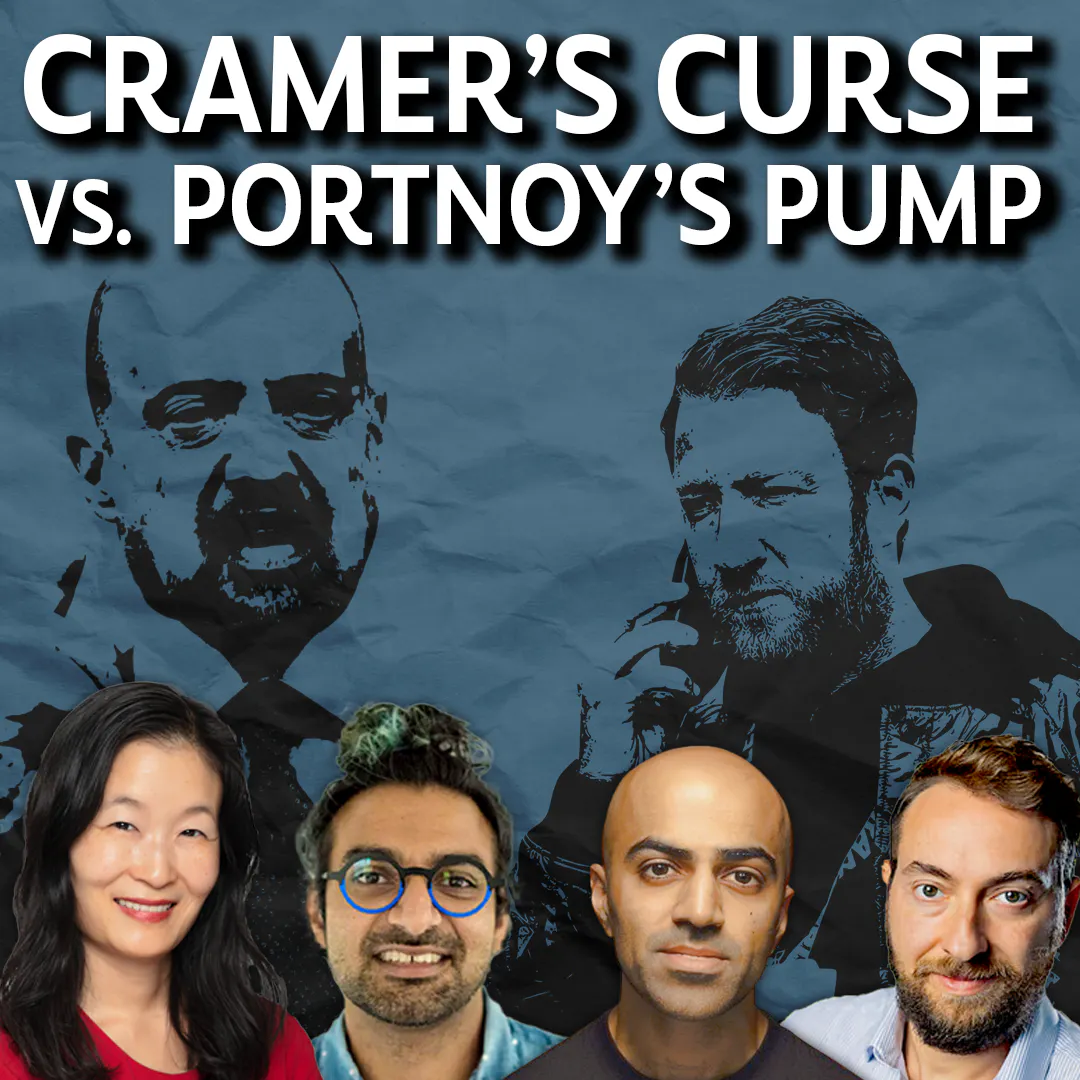
Ep 783The Chopping Block: Berachain’s Hype, Portnoy vs. Cramer, & Negative Market Sentiment - Ep. 783
EWelcome to The Chopping Block – where crypto insiders Haseeb Qureshi, Tom Schmidt, Tarun Chitra, and Robert Leshner chop it up about the latest in crypto. In this episode, we’re joined by Laura Shin, host of the Unchained Podcast, for a no-holds-barred discussion on the current state of the crypto landscape. We dive into Berachain’s shaky launch, dissecting its tokenomics, insider allocations, and why the hype didn’t hold. Then we uncover the rise of celebrity memecoin scams—how influencers are cashing in while their followers get rugged. Finally, we tackle the Ethereum vs. Solana debate: is Ethereum losing its edge, or is Solana’s growth just a speculative bubble? It’s an episode full of bold takes and sharp insights you won’t want to miss. Show highlights 🔹 Berachain’s Big Faceplant: Launched with $10B hype, now scraping $2.5B FDV. There are too many VCs and not enough vibes to keep it afloat. 🔹 Memecoin Madness: Celebs faking hacks to rug followers? The dark side of crypto grifts gets exposed. 🔹 Is Ethereum Lost? Once the king of culture, it is now weighed down by L2 sprawl and fading relevance. Has Solana stolen the spotlight? 🔹 Solana’s Winning the Youth Vote: Fast, fun, and flooded with memecoins—exactly what Gen Z craves. 🔹 Peak Memecoin Energy: When the scams get this blatant, are we hitting the top—or just getting started? 🔹 Cramer vs. Meme Lords: Who’s worse for your wallet—a clueless TV pundit or a shameless influencer? 🔹 Regulators, Where You At? Chasing good actors while real frauds run wild. Classic crypto chaos. Hosts ⭐️Haseeb Qureshi, Managing Partner at Dragonfly ⭐️Robert Leshner, CEO & Co-founder of Superstate ⭐️Tarun Chitra, Managing Partner at Robot Ventures ⭐️Laura Shin, Journalist, Author of ‘The Cryptopians,’ Founder and CEO of Unchained Disclosures Timestamps 00:00 Intro 01:53 Berachain Launch and Community Sentiment 05:23 Market Sentiment and Crypto Cycles 18:03 Kanye West Leaks Scam Playbook 32:17 Cramer’s Curse vs. Portnoy’s Pump 39:23 Ethereum & Solana Drama 49:06 Ethereum's Existential Crisis (Again?) Learn more about your ad choices. Visit megaphone.fm/adchoices

Ep 782Bits + Bips: Why It's Time for Crypto Traders to Be Patient - Ep. 782
Crypto markets are at a crossroads. Is Ethereum primed for a short squeeze, or is its dominance fading? Are the SOL unlocks a real risk, or is the panic overblown? And did we already have an alt season without realizing it? In this episode, hosts James Seyffart, Alex Kruger and Ram Ahluwalia sit down with Sal Ternullo, managing partner at A100x Ventures, to break down the biggest questions facing traders today. They discuss whether Trump’s tariffs are impacting ETH, why the market might be misreading SOL’s unlocks, and how traders keep falling into the same traps—losing money despite crypto’s explosive gains. They also debate the real reason altcoins haven’t performed as expected, why memecoins might finally be dying off, and what the Growth Value Ratio reveals about the market’s future. Plus: the implications of Elon Musk’s bid for OpenAI, and whether Arweave’s AO can seriously challenge ICP. Show highlights: 3:33 - Why Ram likes what Trump is trying to accomplish with the tariffs 10:35 - Why ETH got hit so hard with the tariffs and whether there’s a squeeze coming 15:24 - Whether the market will see an alt season 21:47 - Why Sal believes that the SOL unlocks are not a big deal and why he’d like to see a shift away from memecoins 25:09 - Why Ram thinks that crypto markets don’t have a clear narrative in the near future 27:28 - Why Alex is concerned about the SOL unlocks 32:19 - What the growth value ratio is teaching us about the state of the markets 40:59 - How the potential Kanye West memecoins is another example of why Sal doesn’t like this space 46:39 - Whether Arweave’s new project AO can compete with ICP 48:04 - How Elon Musk is running so many projects, plus bidding for OpenAI 55:26 - James’ analysis on the likelihood of various crypto ETFs being approved 1:03:01 - Why Alex thinks this is the perfect time to “be patient” in the markets Sponsor: Somnia Network Bitwise Hosts: James Seyffart, Research Analyst at Bloomberg Intelligence Alex Kruger, Founder of Asgard Ram Ahluwalia, CFA, CEO and Founder of Lumida Guest: Sal Ternullo, Managing Partner at A100x Ventures Links Unchained: Grayscale Files for Cardano ETF Central African Republic launches memecoin Reuters: Trump raises tariffs on aluminum, steel imports in latest trade war salvo Elon Musk-led group makes $97 billion bid for control of OpenAI The Block: SEC delays decision on BlackRock's Ethereum ETF options trading until April 9 Kanye West, after disclosing he was offered $2 million to launch a token, asks to speak with Coinbase CEO 'concerning crypto' Kanye West quashes memecoin launch rumors, says coins 'prey on the fans' James’ and Eric Balchunas’ tweet on the odds of crypto ETFs Learn more about your ad choices. Visit megaphone.fm/adchoices

Ep 781Why the Founders of Aave and Sky Are Still Bullish on Ethereum DeFi - Ep. 781
Despite the ups and downs of the Ethereum ecosystem, two of its most influential builders—Aave’s Stani Kulechov and Sky’s Rune Christensen—remain bullish. In this episode, they discuss whether we’re witnessing a DeFi renaissance, the challenges of building on Ethereum vs. Solana, and why DeFi adoption isn’t growing as fast as some expected. They debate stablecoins, whether Solana is truly innovating, and how AI could transform DeFi by automating governance and risk management. They also respond to some hot takes—including whether Aave is falling behind Solana-based Kamino, and why Sky deployed its USDS stablecoin on Solana despite Rune’s long-standing Ethereum advocacy. Show highlights: 02:33 Whether Sky and Aave are experiencing a “DeFi renaissance” 11:49 How Stani and Rune are trying to appeal to a simpler audience 23:00 Whether developers overlook how easy it is to build DeFi on Ethereum 27:40 Why Stani believes there is not a lot of innovation in Solana 32:17 What would need to happen for Aave to be in Solana 33:27 Why Sky deployed USDS on Solana 40:30 Whether the Ethereum ecosystem should be worried about users going to other chains 49:19 Why Rune praises Solana’s culture 51:38 How USDS’s growth on Base happens organically, contrary to Solana 59:35 Why they believe that the combination of AI and DeFi will be so powerful Visit our website for breaking news, analysis, op-eds, articles to learn about crypto, and much more: unchainedcrypto.com Thank you to our sponsors! Mantle RockWallet Kelp DAO Guest: Stani Kulechov, Founder and CEO of Aave Previous appearances on Unchained: Stani Kulechov on Why Aave Is So Successful - Unchained The Chopping Block w/ Stani Kulechov: Operation Chokepoint 2.0, Ethereum Innovation Push, & Polymarket Whales - Unchained Rune Christensen, Co-founder of Sky Previous appearances on Unchained: Can Maker’s Rune Christensen Fix the Sad State of DAO Governance? Rune Christensen of MakerDAO Part 1: How to Keep a Crypto-Collateralized Stablecoin Afloat Rune Christensen of MakerDAO Part 2: How Dai Stayed at $1 While ETH Crashed From $1,400 to $85 The Chopping Block: How to Manage MakerDAO, With Hasu and Rune Rune Christensen of MakerDao on Its $15 Million From Andreessen Horowitz Why It’s so Hard to Keep Stablecoins Stable Links Aave 2030 roadmap Alex Svanevik of Nansen tweeted: “When Aave on Solana?” Qiao Wang of Alliance DAO commenting on why he recommends people build on Solana The First Non-EVM Deployment of Aave Protocol: Aave V3 on Aptos - General - Aptos Forum Learn more about your ad choices. Visit megaphone.fm/adchoices

Ep 780Did Washington Crush Crypto’s Most Important Bank? Its Former Chairman Says Yes. - Ep. 780
Sign up for our free regulatory newsletter! Silvergate Bank was once crypto’s most important banking partner, handling billions in deposits from the biggest players in the industry. Then, FTX collapsed—and everything changed. In this episode of Unchained, Mike Lempres, former chairman of Silvergate, talks about how Silvergate grew into a banking giant for crypto, why Washington suddenly turned against them—even after they survived the FTX crisis, and whether Operation Choke Point 2.0 was real. Plus, did short sellers and politicians work together to tank Silvergate’s stock? And what does the future look like for banks that want to serve crypto? This is part of the inside story of one of the biggest banking collapses in crypto history. Show highlights: 2:08 How Mike’s background in banking led him to work in crypto 4:10 Why banking has always been a challenge for crypto companies 5:14 How Silvergate Bank got involved so much with the industry and how it achieved “tremendous growth” 8:10 The “magic” of the Silvergate Exchange Network (SEN) 14:19 Why Mike believes Silvergate’s problem was not banking regulators, but D.C. politics 17:49 How everything changed after the FTX collapse 24:45 Whether SEN is a valuable asset for a bank to have 28:39 Why Mike believes that Operation Choke Point 2.0 is real 30:48 Whether short sellers worked with politicians to tank Silvergate 34:21 How Mike thinks that banks could service the crypto industry Visit our website for breaking news, analysis, op-eds, articles to learn about crypto, and much more: unchainedcrypto.com Thank you to our sponsors! RockWallet Somnia Network Quai Network Mantle Guest Mike Lempres, Former Chairman of Silvergate Bank Links Unchained: Why the new FDIC Leadership Isn’t Convinced Operation Chokepoint 2.0 Exists Regulators Are Limiting Banks Serving Crypto Clients. Does That Violate the Law? Rep. French Hill Says He’d Investigate Operation Choke Point 2.0 as Financial Services Chair Are Regulatory Failures to Blame for Crypto Banking Issues? Caitlin Long on Why Operation Choke Point 2.0 Has Bankers Nervous Ahead of Debanking Hearings, Industry Is Divided on Political Strategy Caitlin Long on Why the Fed’s Rejections of Custodia Bank Seem Politically Motivated How Will the FTX Collapse Affect Silvergate? A Bear and a Bull Debate Learn more about your ad choices. Visit megaphone.fm/adchoices

Ep 779The Chopping Block: LA Vape Cabal, Market Meltdown, & SEC’s Crypto Pivot - Ep. 779
EWelcome to The Chopping Block – where crypto insiders Haseeb Qureshi, Tom Schmidt, Tarun Chitra, and Robert Leshner chop it up about the latest in crypto. In this episode, we dissect the chaos triggered by Trump’s trade war, which sent Ethereum and alts into freefall while Bitcoin held strong. Why are alts struggling, and is this just a flight to quality—or something deeper? We also dive into the LA Vape Cabal phenomenon and its bizarre influence on memecoin culture, debate whether the SEC’s new leadership is truly a game-changer for crypto, and analyze Binance’s latest scandal. Plus, is the memecoin cycle really over, or is this just another phase in crypto’s endless casino? Show highlights 🔹 Trump’s Trade War Wrecks Crypto – Ethereum and alts nosedive as Trump’s surprise tariffs shake markets. Is this just macro panic or a deeper shift in investor sentiment? 🔹 Biggest Liquidation Day Ever? – Crypto saw its largest mass liquidation in history, with Bybit’s CEO estimating real losses closer to $8-10 billion—more than the FTX collapse. 🔹 LA Vape Cabal & Memecoin Mania – A bizarre Twitch-fueled trading cult is shaping the memecoin meta. Is this the future of crypto speculation, or just another fleeting grift? 🔹 The Great Altcoin Capitulation – Alts are bleeding while Bitcoin holds strong. Has the market finally given up on everything that isn't BTC? 🔹 Hester Peirce’s Crypto Reset – The SEC’s new approach could rewrite the rules for token issuers. Will the industry finally get the regulatory clarity it’s been begging for? 🔹 Binance Under Fire (Again) – CZ’s former empire faces backlash over insider listings, alleged bribes, and a wave of vaporware projects that tanked after launch. 🔹 Pump.fun = The New NFT Casino? – Memecoin speculation is bigger than 2021’s NFT boom. But is it sustainable, or is the exit liquidity running dry? 🔹 The Memecoin Endgame? – Some claim the bubble has burst, but if history tells us anything, a new wave of degens will always find a way to keep the casino open. 🔹 Bitcoin’s Macro Dominance – BTC’s macro story is unstoppable, with talk of a U.S. sovereign wealth fund investing in Bitcoin. Will the market ever rotate back to alts? Hosts ⭐️Haseeb Qureshi, Managing Partner at Dragonfly ⭐️Robert Leshner, CEO & Co-founder of Superstate ⭐️Tarun Chitra, Managing Partner at Robot Ventures ⭐️Tom Schmidt, General Partner at Dragonfly Disclosures Links Hester Peirce’s Blog Post – “The Journey Begins”: https://www.sec.gov/newsroom/speeches-statements/peirce-journey-begins-020425 David Sacks' Plan for Digital Assets Press Conference: https://youtu.be/LqTsyTuLSSI Timestamps 00:00 Intro 01:08 Market Turmoil and Trade Wars 07:10 Bitcoin's Dominance & Altcoin Struggles 10:33 Memecoins & Market Sentiment 25:05 Cultural Phenomena in Crypto 33:54 The L.A. Vape Cabal 40:45 Millennials and Memecoins 44:51 Binance & the Chinese Community 50:45 Regulatory Developments in Crypto Learn more about your ad choices. Visit megaphone.fm/adchoices

Ep 778Bits + Bips: How Trump’s Tariffs Are Bullish for Bitcoin Both Long- and Short-Term - Ep. 778
Subscribe to our newsletter! https://unchainedcrypto.beehiiv.com/subscribe Trump’s new wave of tariffs has reignited the debate: Are they good for the economy or a disaster waiting to happen? Some say tariffs will crush trade, boost inflation, and slow growth—but others argue they could weaken the dollar and send bitcoin soaring. On this episode of Bits + Bips, Jeff Park of Bitwise, along with James Seyffart, Alex Kruger and Noelle Acheson, battle it out over the real impact of Trump’s tariffs, whether they could spark a new Plaza Accord 2.0, and why ETH took a harder hit than BTC in the latest selloff. Plus, is Trump’s economic strategy really about making America great again—or just about keeping his own real estate empire afloat? Jeff makes a bold claim outlining Trump’s #1 goal—one that his personal wealth depends on. Show highlights: 2:38 - Why Jeff believes that people’s reaction to tariffs was bizarre 7:09 - Why Jeff is convinced that tariffs are good for bitcoin 10:18 - Why Alex is so against tariffs 21:37 - How tariffs actually affect consumers 27:36 - What’s Trump’s number one priority is, according to Jeff 36:26 - Whether inflation will eventually come back to previous levels 41:05 - Why ETH got hit the hardest on Sunday night 49:56 - Whether the ETH/BTC ratio has bottomed 51:03 - How Hyperliquid’s HYPE held up so strongly 53:02 - The significance of Tether adding USDT to the Lightning Network Hosts: James Seyffart, Research Analyst at Bloomberg Intelligence Noelle Acheson, Author of the “Crypto Is Macro Now” Newsletter Alex Kruger, Founder of Asgard Guest: Jeff Park, Head of Alpha Strategies at Bitwise Previous appearance on Bits + Bips: The Real ‘Trump Trade’ & Why Trump's World Liberty Financial Was a Flop Links AP: Canada and Mexico agree with Trump to postpone tariffs by at least 30 days Eric Trump on X: "In my opinion, it’s a great time to add $ETH." Unchained: USDT Integrates With Bitcoin and Lightning Network ETH Crashes After Trump Imposes Tariffs Learn more about your ad choices. Visit megaphone.fm/adchoices

Ep 777Olaf Carlson-Wee and Rushi Manche on Why Move Is Safer for Crypto - Ep. 777
Listen to the episode on Apple Podcasts, Spotify, Pods, Fountain, Podcast Addict, Pocket Casts, Amazon Music, or on your favorite podcast platform. The success of any blockchain isn’t just about scalability, security, or decentralization—it’s about attracting developers. The easier it is to build, the more innovation happens. Or at least, that’s the thesis of Movement Labs co-founder Rushi Manche and Olaf Carlson-Wee, CEO of Polychain Capital. In this episode of Unchained, Rushi explains why Move, originally developed by Meta, is a fundamentally better programming language for crypto than the Ethereum Virtual Machine (EVM). He breaks down how Move’s unique approach to security and asset management improves developer experience and why the Movement Network is bringing Move to Ethereum as a layer 2 solution. Olaf shares his thoughts on how alternative programming environments like Move could challenge the dominance of the EVM, why Ethereum is at a critical moment, and how AI-powered financial agents could change how investments work. Show highlights: 2:32 What problems Move solves for crypto and how it got started 8:57 How the programming language is safer than others, specifically for crypto finance 21:00 What’s the thesis behind the Movement network 23:12 Why Movement chose to become an Ethereum L2 30:08 Where ETH is headed and what it needs to succeed 32:25 Why Rushi is so bearish on EVM layer 2s 34:59 Whether Ethereum is going through an existential crisis 37:47 Why Rushi believes that modularity will save Ethereum 39:28 How Movement differs from Aptos and Sui 41:36 The importance of developer experience in crypto’s growth 44:48 How tokens can signal the significance of content in social media 52:04 Why Olaf thinks we’ll soon see an explosive growth of financialized agents 57:19 Whether AI will replace VC investors and other jobs 1:01:38 What Rushi has to say about the Trump team buying MOVE 1:04:09 The significance of the U.S. making crypto a national priority Visit our website for breaking news, analysis, op-eds, articles to learn about crypto, and much more: unchainedcrypto.com Thank you to our sponsor! Mantle Guest: Rushi Manche, Co-founder of Movement Labs Olaf Carlson-Wee, CEO of Polychain Capital Previous appearances on Unchained: OG Olaf Carlson-Wee on Why His Crypto Thesis Is Stronger Than Ever Olaf Carlson-Wee: ‘If There Is a Money-Losing Exploit, the Money Is Gone’ Why The First Employee Of Coinbase Launched A Hedge Fund To the Moon and Back With Polychain’s Olaf Carlson-Wee Special Episode with CNBC’s Crypto Trader: Olaf Carlson-Wee on Why This Crypto Winter Is Different From Previous Ones All Things Cryptoeconomics, Pt. 1, With Olaf Carlson-Wee and Ryan Zurrer of Polychain Capital Links Unchained: Trump’s Crypto Project Bought MOVE Tokens as DOGE News Leaked How Solana Beat Out Ethereum to Nab New Crypto Developers in 2024 Chris Dixon on Why We Will Finally See New App Innovation in Crypto 2025 Will Be a Year of Crypto Competition. Can Ethereum Make a Comeback? With AI Agents Now Trading Crypto, What Does Their Future Look Like? Learn more about your ad choices. Visit megaphone.fm/adchoices

Ep 776The Chopping Block: Ethereum’s Civil War, L2 Taxation, and Vitalik’s Milady Moment - Ep. 776
EWelcome to The Chopping Block – where crypto insiders Haseeb Qureshi, Tom Schmidt, Tarun Chitra, and Robert Leshner chop it up about the latest in crypto. In this episode, we dive into Ethereum’s growing identity crisis as frustration mounts over the Ethereum Foundation’s leadership, vision, and sluggish innovation. Is Ethereum losing its edge while Solana, Base, and Tron take over? We also break down the Second Foundation drama, discuss Justin Sun’s wild L2 taxation proposal, and debate whether Ethereum needs a CTO-style overhaul to stay competitive. Plus, Vitalik Buterin’s unexpected embrace of the Milady NFT movement and what Gary Gensler’s exit from the SEC means for the future of crypto regulation. Show highlights 🔹 Ethereum Civil War? The Ethereum Foundation (EF) faces internal and external backlash as Vitalik defends its “WEF soy boy” ethos. Critics call for leadership changes, faster innovation, and a more aggressive growth strategy. 🔹 Second Foundation Fakeout: Rumors spread that Lido’s founder was launching a rival EF, briefly pumping ETH before being debunked. The buzz reignites calls for governance changes. 🔹 L2 Taxation Debate: Justin Sun proposes a 5B ETH tariff on rollups to fund buybacks, sparking debates on Ethereum’s fragmented ecosystem and lack of value accrual. 🔹 Vitalik Goes Milady: Ethereum’s co-founder embraces the Milady NFT subculture, changes his profile pic, and adopts the meme’s signature sign-off, fueling speculation about crypto’s shifting cultural landscape. 🔹 Ethereum’s Identity Crisis: With Solana, Base, and Tron dominating user adoption, is Ethereum too slow and academic to compete? Calls for an Ethereum “CTO” or more centralized execution grow louder. 🔹 Gensler’s Next Move: Gary Gensler exits the SEC and returns to MIT to teach AI & finance. Crypto celebrates his departure, while an AI-generated rap video mocks his legacy. Hosts ⭐️Haseeb Qureshi, Managing Partner at Dragonfly ⭐️Robert Leshner, CEO & Co-founder of Superstate ⭐️Tarun Chitra, Managing Partner at Robot Ventures ⭐️Tom Schmidt, General Partner at Dragonfly Disclosures Links Hayden Adam’s Tweet: https://x.com/haydenzadams/status/1884134669265891433 Justin Sun’s EF Plan Tweet: https://x.com/justinsuntron/status/1881999625990836229 Scaling Ethereum L1 and L2s in 2025 and Beyond by Vitalik Buterin: https://vitalik.eth.limo/general/2025/01/23/l1l2future.html Zen and the Art of Shifting Mindsets in Technology: Aya Miyaguchi interview in Wired Magazine: https://wired.jp/article/the-next-innovators-4-aya-miyaguchi-en/ Timestamps 00:00 Intro 01:47 Ethereum Foundation's Civil War 05:53 The Bronze Age Mentality 07:32 Community Criticism and Governance 10:03 Vitalik's New Persona: Embracing Milady 14:33 Future of Ethereum and L2s 37:39 L1 vs L2: Do People Really Care? 42:12 Ethereum's Strategy and Colonialism Analogy 46:10 The Role of the Ethereum Foundation 58:34 Gary Gensler's Move to MIT and His Legacy Learn more about your ad choices. Visit megaphone.fm/adchoices

Ep 775Crypto Kidnappings and Physical Attacks Are on the Rise—Here’s How to Stay Safe - Ep. 775
The kidnapping of Ledger co-founder David Balland in France sent shockwaves through the crypto community, raising urgent questions about security for high-profile crypto holders. How do you protect yourself when criminals are willing to go beyond digital attacks and resort to violence? In this episode of Unchained, Jameson Lopp, co-founder and Chief Security Officer of Casa, speaks about the growing trend of “wrench attacks”—physical assaults aimed at forcing crypto holders to transfer their assets. Lopp explains how these attacks are evolving, what makes someone a target, and which geographies are seeing the most attacks. Plus, he shares what behaviors put you most at risk, how criminals are getting more organized, and why relying on exchanges for security is not as safe as you think. If you hold significant crypto wealth, this is an episode you can’t afford to miss. Show highlights: 2:02 How a Ledger co-founder was kidnapped and how the situation was resolved 6:46 Who tends to be targeted and which geographies see the most physical attacks 14:15 The riskiest behaviors that are likely to lead to wrench attacks 16:01 How attackers decide who to target 20:37 How the attacks have been accelerating lately 22:16 How the Ledger team ensured the kidnappers couldn’t access the ransom money 23:44 Jameson’s top tips on how crypto holders can stay safe 29:30 News Recap Visit our website for breaking news, analysis, op-eds, articles to learn about crypto, and much more: unchainedcrypto.com Thank you to our sponsors! Mantle Polkadot Quai Network Guest Jameson Lopp, co-founder and Chief Security Officer of Casa Links Previous coverage of Unchained on crypto security: Here’s How to Protect Your Crypto and Seed Phrases From Natural Disasters Reuters: Kidnapped co-founder of French crypto firm Ledger had his hand mutilated Learn more about your ad choices. Visit megaphone.fm/adchoices

Ep 774Bits + Bips: Why Bitcoin Was Strong Amid the DeepSeek Selloff But a Drop May Be Coming - Ep. 774
From AI shaking up Big Tech to bitcoin’s role in the macro landscape, Jim Bianco delivers insights on the DeepSeek-triggered market selloff, memecoins, and the challenges facing traditional systems. In this episode, the macro strategist shares why DeepSeek’s AI model is reshaping competition, how crypto reserves might evolve, and what happens to MicroStrategy if bitcoin’s price takes a hit. Plus, hear his take on why stablecoins are a threat to banks, and why memecoins could be more than speculation. Show highlights: What of crypto attracted Jim so much 0:49 What of crypto attracted Jim so much 6:15 Why the DeepSeek new model was so disruptive 12:47 Whether the biggest loser is OpenAI, not all the Mag 7 16:14 Whether we’ll see a major macro response from U.S. companies and government 26:06 What will happen next with the price of bitcoin 28:54 What would happen to MSTR if bitcoin goes 30% lower 34:11 How Trump was able to move so fast since the inauguration 39:30 Why the Fed should not do QE, according to Jim 49:02 How memecoins could be designed to be much more than speculative assets 53:03 Why James hopes the SEC doesn’t approve all the memecoin ETF applications 58:06 Whether banks will start onboarding crypto companies 1:05:52 Why stablecoins poise an existential threat to the current banking system 1:11:19 Whether it’s a bad idea for the U.S. to acquire other cryptos that are not bitcoin Hosts: James Seyffart, Research Analyst at Bloomberg Intelligence Ram Ahluwalia, CFA, CEO and Founder of Lumida Noelle Acheson, Author of the “Crypto Is Macro Now” Newsletter Guest: Jim Bianco, President and Macro Strategist at Bianco Research Links CNN Business: Trump announces a $500 billion AI infrastructure investment in the US Unchained: Tuttle Capital Files for 10 Leveraged Crypto ETFs CoinDesk: Nasdaq Files for In-Kind Redemptions for BlackRock Spot Bitcoin ETF Reuters: US, Colombia reach deal on deportations; tariff, sanctions put on hold Learn more about your ad choices. Visit megaphone.fm/adchoices

Ep 773Chris Dixon on Why We Will Finally See New App Innovation in Crypto - Ep. 773
Chris Dixon, founder and managing partner of a16z crypto, joins Unchained to share why he believes crypto innovation is about to explode. From Ethereum’s potential to new crypto legislation, Chris delves into why the industry is poised for a major break out. He also discusses why the Biden administration’s “lawfare campaign” led to the memecoin craze, how AI and crypto together could transform technology, and why bad tech policy stifled the industry for years. Plus, he shares his take on the executive order signed by President Donald Trump and its significance for the industry. Show highlights: 2:51 Why Chris feels like the Biden administration was trying to destroy crypto 7:16 Chris’s take on the Trump announcements and executive orders 14:18 What Chris would like to see in upcoming crypto legislation 21:37 How he compares the intertwining of AI and crypto with mobile, cloud and social 26:24 Whether an investing AI agent like ai16z could ever compete with A16z 32:05 How technologies usually evolve exponentially and how the AI x crypto craze will evolve 39:21 Why Chris doesn’t think the debate about whether Ethereum L2s are ‘parasitic’ is important 47:24 Chris’s opinion on whether Vitalik should be doing more marketing for ETH 51:29 Why Chris thinks native rollups on Ethereum could be valuable and promising 55:43 What he believes is important to pitch blockchain to Wall Street 59:39 Chris’s vision for a future multichain world 1:04:20 How the Biden administration’s “lawfare campaign” enabled the memecoin craze in 2024 1:08:08 Why Chris says that Coinbase has been very innovative 1:14:11 Whether ICOs are a recipe for fraud and scams 1:17:39 What apps and innovations Chris is excited about Visit our website for breaking news, analysis, op-eds, articles to learn about crypto, and much more: unchainedcrypto.com Thank you to our sponsors! Polkadot Somnia Network Guest: Chris Dixon, Founder and Managing Partner of a16z crypto Previous appearances on Unchained: A16z Crypto’s Chris Dixon on How Blockchains Can Save the Internet Chris Dixon on How Trust Is the Best Lego Links Unchained: President Trump Declares Crypto a National Priority in Executive Order 2024 Was Solana's Best Year Yet. Can It Sustain the Momentum in 2025? Chris’ tweet on the executive order Learn more about your ad choices. Visit megaphone.fm/adchoices

Ep 772The Chopping Block: Crypto as a Public Good, Tornado Cash Ruling, and SEC’s New Direction - Ep. 772
EWelcome to The Chopping Block – where crypto insiders Haseeb Qureshi, and Tom Schmidt chop it up about the latest in crypto. This week, we're joined by special guest Peter Van Valkenburgh, Executive Director of Coin Center, to tackle one of the most pivotal moments in crypto policy. In this episode, we dive into the groundbreaking Fifth Circuit ruling on Tornado Cash, unpack its implications for blockchain privacy, and discuss the challenges noncustodial developers like Roman Storm are facing. We also break down Trump’s crypto executive order, the SEC’s new direction under Hester Peirce, and speculate on what a U.S. strategic Bitcoin reserve might mean for the future. Show highlights 🔹 Crypto as a Public Good: Why open, permissionless technologies need protection—and how Coin Center defends them. 🔹 Tornado Cash Ruling: The Fifth Circuit overturns OFAC sanctions—what this means for blockchain privacy and freedoms. 🔹 Roman Storm Case: DOJ’s controversial crackdown on noncustodial developers and its implications for innovation. 🔹 Trump’s Crypto EO: Breaking down the ban on CBDCs and the push for U.S. leadership in digital assets. 🔹 SEC’s New Direction: Hester Peirce’s crypto task force and the future of enforcement and regulation. 🔹 CFTC vs. SEC: Will Congress resolve the jurisdiction battle over crypto markets? 🔹 Senate Banking’s Subcommittee: How Senator Lummis could lead a new era of crypto-friendly policy. 🔹 Strategic Bitcoin Reserve: Speculating on what a U.S. Bitcoin reserve might look like. 🔹 2025 Regulatory Outlook: How shifting policies could redefine crypto’s future. Hosts ⭐️Haseeb Qureshi, Managing Partner at Dragonfly ⭐️Tom Schmidt, General Partner at Dragonfly Guest: ⭐️Peter Van Valkenburgh, Executive Director of Coin Center Disclosures Timestamps - 00:00 Intro 01:34 Coin Center & Crypto as a Public Good 05:04 Crypto Policy Shifts & Trump's Executive Order 16:11 Senate Banking Digital Assets Subcommittee 20:20 SEC Crypto Task Force 32:10 Hester Peirce's Safe Harbor Proposal 35:43 Strategic Bitcoin Reserve: Expectations and Realities 41:12 Tornado Cash & OFAC Sanctions 45:28 Legal Implications for Noncustodial Developers 57:51 Future of Crypto Regulation & Coin Center's Role Learn more about your ad choices. Visit megaphone.fm/adchoices

Ep 771Why Ethereum’s New Marketing Arm Is Convinced Wall Street Will Adopt ETH - Ep. 771
Ethereum has had a tough year, losing ground to Solana in price performance, developer activity and as the home to the latest crypto trends. Yet, Vivek Raman, founder and CEO of Etherealize, is doubling down on Ethereum’s future. In this episode, Vivek explains how Etherealize, a “marketing arm for the ETH ecosystem,” was in the works long before the current criticisms of the Ethereum Foundation’s marketing, and how it got funding from Ethereum creator Vitalik Buterin and the foundation. He discusses why he believes layer 2 solutions make Ethereum a better fit for Wall Street than Solana. Plus, Vivek shares his thoughts on Ethereum’s value accrual, the state of its ecosystem, and how Etherealize plans to bridge the gap between Wall Street and Web3. Show highlights: 2:50 Why Vivek thinks that it’s an opportune time to launch Etherealize 7:32 How the project has been in the works for longer than people might think 13:28 How Etherealize secured funding from Vitalik Buterin and the Ethereum Foundation 15:11 Why Vivek says they got “lucky” with the timing of the announcement 19:03 How Vivek plans to drive the narrative of ETH as an asset 22:17 Why he believes corporations will launch their own L2s on Ethereum 29:13 How he pitches Ethereum to TradFi 31:42 Why Vivek believes Ethereum is better suited for Wall Street than Solana 34:08 What he has to say about L2s being centralized 38:24 News Recap Visit our website for breaking news, analysis, op-eds, articles to learn about crypto, and much more: unchainedcrypto.com Thank you to our sponsors! Quai Network Polkadot Guest Vivek Raman, founder and CEO of Etherealize Links Etheralize’s announcement Unchained: Lido Founder Says No ‘Second Foundation’ Exists Yet 2024 Was Solana's Best Year Yet. Can It Sustain the Momentum in 2025? 2025 Will Be a Year of Crypto Competition. Can ETH Make a Comeback? Ethereum Foundation to Fund New DeFi MultiSig Wallet With 50,000 ETH The Block: Vitalik Buterin details 'large changes' to Ethereum Foundation leadership amid calls for new leadership Learn more about your ad choices. Visit megaphone.fm/adchoices

Ep 770The Chopping Block: Trump’s Crypto Shake-Up, Solana’s Big Moment, that Changes Everything - Ep. 770
EWelcome to The Chopping Block – where crypto insiders Haseeb Qureshi, Tom Schmidt, Tarun Chitra, and Robert Leshner chop it up about the latest in crypto. In this episode, we dive into one of the wildest weeks in crypto history, unpacking the unprecedented launch of Trump’s memecoin and its explosive $70 billion valuation. We discuss how it broke every record imaginable, the fallout from Melania’s token, and the chaos it unleashed across the Solana network. From the ethics of a sitting president launching a coin to the implications for retail investors and the future of memecoins, we’re covering it all. Plus, we debate whether this marks a new chapter for crypto adoption or a troubling precedent for political grift. Stay tuned for this jam-packed emergency episode! Show highlights 🔹 Trump’s Memecoin Craze: Breaking down the historic launch of $Trump, its unprecedented $70B valuation, and how it shattered every record in crypto history. 🔹 Melania’s Memecoin Fallout: What went wrong with the $Melania token launch? Exploring its disastrous impact on the market and $Trump coin’s rapid crash. 🔹 DeFi’s Ultimate Stress Test: How Solana infrastructure held up against unprecedented volumes, Moonshot’s rise to the top, and why this reshaped the memecoin landscape. 🔹 Retail FOMO vs. Institutional Doubts: Examining retail’s overwhelming rush to $Trump coin and why some insiders remain skeptical of its long-term implications. 🔹 Crypto Meets Politics: The ethics and implications of a sitting president launching a memecoin—and how it could distort the future of crypto regulation and perception. 🔹 The Memecoin Economy Evolves: Could Trump and Melania coins signify the end—or a new era—of memecoins? A debate on the future of speculative tokens. 🔹 Solana’s Big Moment: Why Trump coin positioned Solana as the go-to chain for memecoins, and how it outperformed competitors during this chaos. 🔹 On-Chain Innovation or Grift? Is this a turning point for crypto adoption, or just the latest example of right-wing opportunism? The crew debates the broader implications. 🔹 Adversarial Predictions: What happens when other world leaders witness Trump’s success? The panel speculates on who could be next in the memecoin race. Hosts ⭐️Haseeb Qureshi, Managing Partner at Dragonfly ⭐️Robert Leshner, CEO & Co-founder of Superstate ⭐️Tarun Chitra, Managing Partner at Robot Ventures ⭐️Tom Schmidt, General Partner at Dragonfly Disclosures Timestamps - 00:00 Intro 02:23 The Crypto Ball 07:11 Trump's Memecoin: $TRUMP 13:21 Market Reactions & Infrastructure Challenges 26:25 Melania Token: $MELANIA 38:52 Solana's User Surge, Start of Ethereum Civil War? 45:12 Speculation: Crypto's Killer Use Case 49:59 Partisan Divide in Crypto 54:22 Trump's Crypto Strategy 01:07:32 Crypto's Social and Political Implications Learn more about your ad choices. Visit megaphone.fm/adchoices

Ep 769Bits + Bips: Debate: Is Trump’s Memecoin a Gift or a Grift? - Ep. 769
This week, Trump’s memecoin launch had everyone talking—and scrambling for Phantom wallets. But was it a strategic masterstroke or just another speculative frenzy? On this episode of Bits + Bips, the hosts unpack the wild moments of the Crypto Ball, where $TRUMP made its surprise debut. They discuss how Bitcoin maxis were forced to embrace Solana wallets, why Multicoin Capital emerged as the biggest winner, and whether the memecoin launch signals a local market top. Plus, they debate whether Trump’s crypto-friendly stance could shape policy in 2025, why Litecoin might beat Solana to a spot ETF, and what Trump’s inauguration speech reveals about his crypto game plan. Show highlights: 0:58 What Ram can tell us about his experience at the Crypto Ball 3:39 How Ram was so surprised when the $TRUMP coin dropped in the middle of the event 7:51 What will happen with the 80% of $TRUMP that Trump holds 8:51 Why Ram believes Multicoin Capital was the biggest winner of $TRUMP dropping 10:14 Whether the coin was “gift or grift” 17:07 How the $Melania coin was the Trumps shooting themselves in the foot 19:37 How the launch of the coin is a “major win” for Solana 22:49 Whether ETH can have a comeback as the “TradFi chain” 35:28 How the market would react to the lack of a strategic bitcoin reserve mention 43:28 What executive orders Trump could deliver for the crypto industry 48:47 Alex’s experience with the pump and dump of a fake Barron Trump memecoin 53:41 What was notable from Trump’s inauguration speech 56:28 Whether rate cuts in December were a mistake and whether more are coming 1:05:51 Why James believes that Litecoin has more chances than Solana for a spot ETF 1:08:41 Whether the launch of $TRUMP will mark a local top for the markets Hosts: James Seyffart, Research Analyst at Bloomberg Intelligence Alex Kruger, Founder of Asgard Ram Ahluwalia, CFA, CEO and Founder of Lumida Noelle Acheson, Author of the “Crypto Is Macro Now” Newsletter Links Saylor’s parody account’s tweet recounted by Alex Meme recounted by Noelle Vitalik on changing the EF leadership Josh Stark’s tweet on how the EF “uses Ethereum” Paper on DeFi that Alex talked about: Christopher J Waller: Centralized and decentralized finance - substitutes or complements? Polymarket: Will Trump create Bitcoin reserve in first 100 days? Unchained: Trump Appoints Crypto-Friendly Mark Uyeda as Acting SEC Chair Trump-Backed World Liberty Financial Goes on Token Buying Spree Trump Picks Pham as Acting CFTC Chair Learn more about your ad choices. Visit megaphone.fm/adchoices
Ep 768Why Lyn Alden Isn't a Fan of Trump’s Memecoins, but Neutral on a Strategic Bitcoin Reserve - Ep. 768
The crypto world was shaken this weekend when Donald Trump and Melania Trump launched their own memecoins, ahead of Trump’s inauguration as president. Financial analyst Lyn Alden joins Laura to explain why she’s not a fan of memecoins, neutral on a U.S. strategic bitcoin reserve, and doubtful the U.S. can disrupt itself even as Bitcoin, crypto and blockchain technology hold the possibilities of upending the geopolitical world order. Discussing everything from rising tariffs to reshoring strategies, Lyn offers a sharp analysis of the U.S. fiscal and monetary outlook and explains why she believes fiscal policy now overshadows monetary policy. Plus, hear her take on the TikTok ban debate, her skepticism that Bitcoin’s future security could be at risk as the block subsidy decreases, and her Bitcoin projection for 2025. Show highlights: 02:13 Why Lyn is not supportive of the launch of Trump’s and Melania’s memecoins 10:01 Whether Trump should airdrop his memecoin to U.S. citizens 11:47 Why a U.S. strategic bitcoin reserve sparks debate over its potential to devalue the dollar, reshape trade deficits, and challenge the global reserve currency system 25:09 How bitcoin’s rise as a neutral reserve asset could shape a multi-polar world 27:23 Why she thinks addressing U.S. fiscal issues may require the reshoring of industry and rethinking the dollar system 31:22Why Lyn thinks rising tariffs could disrupt global trade, but might also make the government less able to rely on taxation in a world of portable capital and growing privacy tools 35:16 Whether DOGE will be bearish for bitcoin 39:39 Why Lyn feels that Scott Bessent’s “3-3-3 Plan” faces challenges 42:29 Why fiscal policy now overshadows monetary policy, according to Lyn 48:21 What the TikTok ban debate reveals to Lyn about government control and the push for decentralized social media 52:31 Lyn’s take on MSTR’s plan to increase the number of shares 54:56 Lyn’s view on OP_CAT and bitcoin soft forks 57:20 Why Lyn doesn’t think that declining subsidies pose a problem for bitcoin’s security 1:05:59 Why Lyn doesn’t see value in other sectors of crypto, such as DeFi, aside from Bitcoin and stablecoins 1:09:15 Lyn’s projection for the price of bitcoin in 2025 Visit our website for breaking news, analysis, op-eds, articles to learn about crypto, and much more: unchainedcrypto.com Thank you to our sponsors! Somnia Network Polkadot Guest: Lyn Alden, founder of Lyn Alden Investment Strategy Previous appearances on Unchained: Does Maximalism Help or Hurt Bitcoin? Lyn Alden and Udi Wertheimer Debate How Will Inflation Impact Crypto? Is Ethereum a Good Investment? Why Bitcoin Now: Meltem Demirors and Lyn Alden on the Perfect Conditions for Bitcoin Links Trump’s announcement of a memecoin Unchained: TRUMP Memecoin Soars Then Sinks as MELANIA Launches Balaji’s tweet on the proposal of airdropping $TRUMP Unchained: A Bitcoin Strategic Reserve for the U.S.? Senator Cynthia Lummis Reveals Her Bill Bloomberg: MicroStrategy May Soon Rival Amazon, Alphabet in Common Shares - Unchained: What Is the OP_CAT Bitcoin Improvement Proposal? - Unchained Unchained: Bitcoin Layer 2s Aim to Attract Ethereum-Like Dapps. Will They Succeed? - Ep.638 Learn more about your ad choices. Visit megaphone.fm/adchoices

Ep 767Why Sony Launched Soneium, an Ethereum L2, and Blacklisted Some Memecoins - Ep. 767
This week, Sony launched the mainnet for Soneium, its Ethereum Layer 2 blockchain built on the OP Stack from Optimism. Soneium is designed to support creators, developers, and fans through tools like Sony’s NFT-based Fan Marketing Platform and Soneium Spark. However, Soneium’s launch has sparked controversy. Its decision to blacklist some memecoins—over intellectual property concerns—has raised questions about the balance between decentralization and protecting creators’ rights. Even Ethereum co-founder Vitalik Buterin weighed in, highlighting the tradeoffs businesses face in Web3. Sota Watanabe, CEO at Startale, took a quick interview to clear up the misunderstanding about IP infringement. He also explains the vision for the platform and what’s next for Soneium in entertainment and finance. Plus, at the end of the episode, Laura speaks to Ari Gore, head of communications at Zengo Wallet, about protecting your private keys and your cryptocurrencies from natural disasters. Show highlights: 01:52 Why Sony decided to launch a layer 2 on Ethereum 05:39 How Soneium will work with creators to support them 11:29 Sota’s response to the backlash about blacklisting memecoins 18:46 How Soneium’s technical implementation protects IP rights 23:56Why Soneium attracts people from certain demographics 27:05 What the L2 blockchain will focus on next 27:05 Tips to protect your crypto safe from natural disasters 34:47 News Recap Visit our website for breaking news, analysis, op-eds, articles to learn about crypto, and much more: unchainedcrypto.com Thank you to our sponsors! Stellar Build Better Quai Network Polkadot Guests Sota Watanabe, CEO at Startale Ari Gore, head of communications at Zengo Wallet Links Soneium Mainnet: Invoking Emotion And Empowering Creativity Tweet by PopPunkOnChain Tweet by 0xKawz Tweet by Vitalik Tweet by donnoh_eth Soneium's Philosophy for Responsible Innovation Learn more about your ad choices. Visit megaphone.fm/adchoices

Ep 766The Chopping Block w/ Guy Young: Lessons from USD0, Ethena's Bold Vision, and DeFi’s Future - Ep. 766
Welcome to The Chopping Block – where crypto insiders Haseeb Qureshi, Tom Schmidt, Tarun Chitra, and Robert Leshner chop it up about the latest in crypto. In this episode, we’re joined by Guy Young, CEO and founder of Ethena Labs, to break down the hard truths behind DeFi’s most recent chaos. We dive into the USD0++ depeg and its ripple effects across the ecosystem, exploring what went wrong and the critical lessons for the future of stable assets. Plus, we discuss Ethena’s meteoric rise, Guy’s vision for synthetic dollars, and how innovative yield strategies are reshaping DeFi. Stay tuned as we debate, analyze, and uncover the hidden forces shaping crypto today. Show highlights 🔹 USD0++ Depeg Drama: A deep dive into what caused the USD0++ depeg, the mechanics behind the chaos, and the broader implications for DeFi. 🔹 Lessons on Risk Transparency: Why sudden rule changes eroded trust and how protocols can improve communication to avoid similar fallout. 🔹 Ethena’s Rise and Vision: Guy Young shares the story of Ethena’s explosive growth, its innovative synthetic dollar model, and its role in DeFi’s evolution. 🔹 The Yield Dilemma: Exploring how Ethena’s yield model works, its appeal, and the risks it carries for users and the ecosystem. 🔹 DeFi’s Distribution Problem: Why centralized exchanges remain the key to scaling synthetic assets and stablecoins like Ethena’s USD. 🔹 Transparency vs. Overconfidence: Drawing lessons from Luna’s downfall and how Ethena’s approach to clear communication sets a new standard. 🔹 Athena’s 2025 Roadmap: From DeFi integrations to TradFi adoption, what’s next for Ethena as it scales synthetic dollars globally. 🔹 Reflections on Building in DeFi: Guy Young opens up about the challenges, surprises, and rewards of leading one of DeFi’s fastest-growing projects. 🔹 2025 Predictions: The crew debates who might become this year’s “main character” in crypto and what that could mean for the market. Hosts ⭐️Haseeb Qureshi, Managing Partner at Dragonfly ⭐️Robert Leshner, CEO & Co-founder of Superstate ⭐️Tom Schmidt, General Partner at Dragonfly Guest ⭐️Guy Young, CEO & Founder of Ethena Labs Disclosures Timestamps 00:00 Intro 01:30 Changes to Usual Money’s Protocol 06:05 Reactions & Analysis 09:12 Lessons from USD0 18:35 Transparency vs. Miscommunication 22:42 Ethena: A DeFi Success Story 32:12 Demand for Stablecoins & Yield 36:40 Custody & Market Structure Post-FTX 43:58 Handling Negative Yields and Market Corrections 48:22 Ethena's Roadmap and Future Plans 55:53 Reflections on Building Ethena Learn more about your ad choices. Visit megaphone.fm/adchoices

Ep 765Bits + Bips: AI Jobs Wipeout, Bitcoin as a Risk-Off Asset and Few Rate Cuts - Ep. 765
This week, Bloomberg’s James Seyffart, Lumida’s Ram Ahluwalia, and guest Tom Dunleavy explore whether the “Fed pivot” is officially dead, how AI will impact the job market, and what Tether’s move to El Salvador means for U.S. stablecoin policy. They also debate whether bitcoin could ever be a risk-off asset, how sovereign nations might already be accumulating BTC, and what the Coinbase legal win against the SEC signals for the future. Plus, why volatility is still king in crypto and what lies ahead for the global markets. Show highlights: 02:12 Whether the “Fed pivot” is officially dead and whether rate cuts are coming 08:37 What the impact of AI will be on the jobs market 13:27 Why the markets have been chopping so much and whether it’s the bottom 18:00 What Trump could achieve for the crypto industry in his first 100 days 23:02 Whether the US sold the Silk Road bitcoin 25:27 Why bitcoin will not be a risk-off asset in the near term according to Tom and Ram 31:08 Whether sovereign nations have already started buying bitcoin 36:49 Why Tether moving to El Salvador is a loss to the U.S., according to Ram 40:26 How the L.A. fires will have an impact on the political landscape in the U.S. 52:06 How Coinbase just achieved a “huge win” against the SEC Sponsors: Stellar Build Better Hosts: James Seyffart, Research Analyst at Bloomberg Intelligence Ram Ahluwalia, CFA, CEO and Founder of Lumida Guest: Tom Dunleavy, Partner at Master Ventures Learn more about your ad choices. Visit megaphone.fm/adchoices

Ep 764How New Stablecoin Startup Bridge Got Acquired by Stripe for $1.1 Billion - Ep. 764
In October, the crypto industry saw a jaw-dropping acquisition: Bridge, a stablecoin-focused company, was bought by Web2 payments giant Stripe for $1.1 billion. Now, three months later, Bridge co-founder Zach Abrams opens up about the wild journey that led to this moment, from navigating collapses like Terra’s UST and USDC’s depegging, to securing compliance and fraud prevention as core priorities. Zach also delves into his vision for the future of stablecoins, whether the U.S. dollar will continue to dominate, and why global financial infrastructure needs an upgrade. Plus, he recounts how timing and resilience helped Bridge stand out amidst massive industry challenges. Show highlights: 01:49The problems of the payments system and how stablecoins could solve them 13:35 What Bridge is, how it works and what types of consumers it serves 19:33 What significant inconveniences Bridge found throughout its journey 25:56 How Zach’s background in Coinbase influenced the launch of Bridge 30:20 Whether there will be multiple stablecoins or just a couple of winners 33:49 How Bridge worked with their customers to improve its product 39:35 The story of how Bridge was acquired by Stripe for $1.1 billion 46:37 Whether its dependence on banks is a problem for Bridge 53:02 How Bridge deals with fraud and compliance 59:50 What Zach thinks about the competition in the stablecoin landscape 1:04:37 Why Zach believes that the fiat infrastructure landscape is still Bridge’s main competitor 1:10:08 Whether the U.S. dollar will remain the overwhelmingly predominant currency in stablecoins Visit our website for breaking news, analysis, op-eds, articles to learn about crypto, and much more: unchainedcrypto.com Thank you to our sponsors! Stellar Build Better Polkadot Guest: Zach Abrams, Co-founder of Bridge Links Recent coverage of Unchained on stablecoins: How This Stablecoin Business in Africa Is Taking on SWIFT and Big Banks Why Robinhood CEO Vlad Tenev Is Betting Big on Crypto, Stablecoins, and Prediction Markets CNBC: Stripe's $1.1 billion deal for crypto firm Bridge marks much-needed win for VCs Learn more about your ad choices. Visit megaphone.fm/adchoices

Ep 763Why Travis Kling Thinks Not Looking at AI Agents Would Be 'a Big Mistake' - Ep. 763
EIt’s been a tough week for the markets, with bitcoin gyrating from $102,400 to $92,000. Travis Kling, CIO of Ikigai Asset Management, shares his thoughts on the selloff, whether this market dip is a cause for alarm, and how macro factors like the Fed’s rate policy and ETF dynamics are shaping the landscape. Plus, he dives into the explosive growth of AI agents and why crypto investors should start paying attention to this new frontier. Could AI agents revolutionize crypto, or are we witnessing another bubble? Show highlights: 01:49 Why Travis believes this market selloff was “abnormal” 04:31 Whether he thinks the DOJ will sell Silk Road’s $6 billion worth of BTC from Silk Road 07:36 Why Travis is supportive of a US bitcoin strategic reserve 17:15 Why inflation and policy shifts might keep Fed rates steady 22:30 What explains the significant outflows from bitcoin spot ETFs on Wednesday 24:37 Whether Travis thinks the AI agent rise is a bubble Visit our website for breaking news, analysis, op-eds, articles to learn about crypto, and much more: unchainedcrypto.com Thank you to our sponsors! Stellar Build Better Polkadot Guest Travis Kling, Chief Investment Officer of Ikigai Asset Management Previous appearances on Unchained: With Rate Cuts and Upcoming Elections, What’s the Best Play in Crypto? With the Merge, Will Ethereum Take Over Bitcoin’s Title as Digital Gold Links Previous coverage of Unchained on AI agents: 2025 Will Be a Year of Crypto Competition. Can Ethereum Make a Comeback? With AI Agents Now Trading Crypto, What Does Their Future Look Like? Learn more about your ad choices. Visit megaphone.fm/adchoices

Ep 762The Chopping Block: Debanking Drama, Crowdsales, and the Future of Crypto Regulation - Ep. 762
EWelcome to The Chopping Block – where crypto insiders Haseeb Qureshi, Tom Schmidt, Tarun Chitra, and Robert Leshner chop it up about the latest in crypto. In this episode, the crew dives deep into the FDIC’s alleged vendetta against crypto, whistleblower revelations, and the evolving dynamics of token distribution on platforms like Echo. Plus, we analyze the rise of crowdsales, explore the intersection of policy and crypto innovation, and reflect on our 2024 podcast stats with some friendly competition. Show highlights 🔹 FDIC Scandal Unveiled: The panel discusses the whistleblower claims against the FDIC, allegations of a vendetta against the crypto industry, and the fallout from newly unredacted FOIA documents. 🔹 Echo Crowdsale Platform: A deep dive into Echo’s rise as a preferred crowdsale platform, its competition with CoinList, and its innovative token distribution model. 🔹 Regulators Under Scrutiny: Insights into systemic issues within regulatory agencies like the FDIC and parallels drawn with other organizations like the FTC. 🔹 VC Sentiment and Crowdsales: The crew explores the tension between venture capitalists and crowdsale platforms, examining fairness, community building, and strategic distribution. 🔹 KOL Rounds vs. Community Fairness: A comparison of KOL rounds and Echo’s syndicate model in balancing fairness and hype in token distribution. 🔹 Token Distribution Dynamics: Analysis of how platforms like Echo incentivize participation and create new avenues for community engagement. 🔹 2024 Podcast Stats Recap: Fun insights into which hosts spoke the most, used the most filler words, and referenced Ethereum, Solana, or Bitcoin the most in 2024. 🔹 Predictions in Review: Early check-ins on 2025 predictions and how trends like DeSci and crowdsales are already shaping the year. Hosts ⭐️Haseeb Qureshi, Managing Partner at Dragonfly ⭐️Robert Leshner, CEO & Co-founder of Superstate ⭐️Tarun Chitra, Managing Partner at Robot Ventures ⭐️Tom Schmidt, General Partner at Dragonfly Disclosures Learn more about your ad choices. Visit megaphone.fm/adchoices

Ep 761Bits + Bips: Trump Will Soon Be President. Where Will Bitcoin and Crypto Prices Go? - Ep. 761
EBitcoin crossed the $100,000 mark, only to slump back down on Tuesday, sparking debates about what’s next for the crypto markets. In this episode, James Seyffart and Alex Kruger are joined by Charles Edwards of quant fund Capriole Investments to break down the macro trends shaping Bitcoin’s trajectory. From Trump’s inauguration to the Fed’s looming decisions on quantitative tightening, they analyze the key factors influencing risk assets. Plus, they unpack the premium on MicroStrategy’s BTC holdings, the future of AI agents in crypto and whether AI agent swarms might someday hire humans, and their bold predictions —supercycle? SOL ETFs?—for 2025. Show highlights: 01:54 Why bitcoin broke the $100K level again 07:28 How the markets will react to the inauguration of Donald Trump as President 19:09 What factors will affect the Fed’s next decision on rates 26:38 What the premium of MSTR to its BTC holdings should be 34:37 Why they all hate the current version of AI agents 43:19 Why Charles likes Ethena and ENA 45:49 Alex’s and Charles’ thoughts on what to expect in 2025: supercycle incoming? 50:01 Alex’s analysis on the market corrections and what they teach us 57:34 Whether James believes the spot Solana ETF will be approved this year Hosts: James Seyffart, Research Analyst at Bloomberg Intelligence Alex Kruger, Founder of Asgard Guest: Charles Edwards, founder of Capriole Investments Links Capriole Investments | Update #58 MicroStrategy just bought another $100m in Bitcoin on path to $2bn spree – DL News With AI Agents Now Trading Crypto, What Does Their Future Look Like? Learn more about your ad choices. Visit megaphone.fm/adchoices

Ep 7602025 Will Be a Year of Crypto Competition. Can Ethereum Make a Comeback? - Ep. 760
Ethereum, once the undisputed leader in the smart contract ecosystem, is facing intense competition from Solana, which has outpaced Ethereum on key metrics such as developer growth. Meanwhile, debates rage within Ethereum’s community over governance, scalability, and the Ethereum Foundation’s leadership. Adding to the disruption, AI agents are rapidly reshaping DeFi and token launches, reducing barriers to entry and creating new opportunities—and risks—for founders and investors. Is this the next big leap for crypto or just the latest bubble? In this episode, Marc Zeller of Aave Chan Initiative and Kain Warwick of Infinex discuss Ethereum’s future, the role of AI in DeFi, and whether Solana’s momentum will continue. They also share bold predictions for crypto in 2025 and debate whether Ethereum’s fragmented ecosystem can still deliver on its promise. Show highlights: 03:35 Why 2024 became a turning point for the crypto ecosystem 07:02 How AI agents could reshape onchain innovation and public discourse in 2025 14:47 Whether AI agents might soon compete with VCs 22:10 Why fundamentals-driven crypto projects will gradually dominate the market, according to Marc 26:05 Whether Solana will continue to steal Ethereum’s thunder 37:56 Is Base cannibalistic to Ethereum? Can Base or Ethereum compete with Solana? 42:53 Where the ETH ecosystem is headed and whether it can overcome issues of fragmentation, lack or interoperability, so many L2 tokens detracting from the ETH price 52:30 Whether Coinbase's deep commitment to Ethereum is causing it to discriminate against Solana 1:00:10 How Ethereum's reputation rises and falls with its price action, not its fundamentals, per Kain 1:08:43 What the purpose is of the Ethereum Foundation and whether it should change its approach 1:24:57 Why Kain doesn’t think the native rollups proposal is tenable 1:31:12 Whether Ethena is depressing the price of ETH 1:34:00 What Kain and Marc think about crypto-specific phones, especially the Solana Seeker 1:42:07 Kain’s and Marc’s predictions for 2025 Visit our website for breaking news, analysis, op-eds, articles to learn about crypto, and much more: unchainedcrypto.com Thank you to our sponsors! Stellar Build Better Robinhood & Arbitrum Kelp DAO Polkadot Guests: Marc Zeller, founder of Aave Chan Initiative Kain Warwick, founder of Infinex Links Unchained: Why Robinhood CEO Vlad Tenev Is Betting Big on Crypto and Stablecoins Unchained: 2024 Was Solana's Best Year Yet. Can It Sustain the Momentum in 2025? Unchained: What's the Best Way for Ethereum to Grow? Two Ethereans Debate The Block: Long-running Ethereum newsletter shutting down, cites lack of funding Unchained: How Solana Beat Out Ethereum to Nab New Crypto Developers in 2024 Evan Van Ness’ tweet on the newsletter shutdown EF’s Josh Stark’s reply to Van Ness Unchained: Vitalik Has Gone 'Founder Mode.' Is This Just What Ethereum Needs? Marc’s proposal about the EF 0xMawuko’s tweet on ETH governance Unchained: Are Layer 2s Failing Ethereum? A New Proposal Advocates for Native L2s Ben Lilly’s tweet on Ethena possibly suppressing the price of ETH Learn more about your ad choices. Visit megaphone.fm/adchoices
Ep 759The Chopping Block: Scarcity vs. Abundance, AI’s Crypto Role, and Virtuals - Ep. 759
EWelcome to The Chopping Block – where crypto insiders Haseeb Qureshi, Tom Schmidt, Tarun Chitra, and Robert Leshner chop it up about the latest in crypto. In this episode, the crew is joined by special guest Jansen, co-founder of Virtuals, the leading AI agent launchpad. Together, they dive into the $5 billion Virtuals craze, explore the explosive rise of tokenized AI agents like AIXBT, and debate how AI is reshaping DeFi and blockchain. From the clash between scarcity and abundance to the emergence of agentic societies and decentralized economies, this episode unpacks the key trends driving the next phase of crypto innovation. Show highlights 🔹 AI and Crypto Convergence: The panel explores how AI agents are revolutionizing blockchain, tokenomics, and decentralized finance (DeFi). 🔹 Virtuals AI Launchpad: Jansen discusses Virtuals, a platform for tokenizing and crowdfunding AI-driven blockchain agents. 🔹 Autonomous AI Evolution: The rise of AI agents from basic chatbots to self-improving tools for crypto and DeFi applications. 🔹 Tokenized AI Agents: How agents like AIXBT generate revenue through trading, attention, and blockchain commerce. 🔹 Managing AI Risks: Insights into policy-based wallets and infrastructure to mitigate risks in autonomous crypto agents. 🔹 Decentralized Agent Societies: A vision for specialized AI agents collaborating in blockchain ecosystems. 🔹 Scarcity vs. Abundance in Crypto: Contrasting crypto’s scarcity-driven models with AI’s abundance and economic disruption. 🔹 AI Agent Backlash: Predictions of anti-AI sentiment as agents dominate Crypto Twitter and online communities. 🔹 Blockchain Verifiability: The role of cryptographic proofs in ensuring trust and security in AI-driven tokenized economies. 🔹 Future of AI in Crypto: Debates on sustainable applications for AI agents in trading, DeFi, and digital economies. Hosts ⭐️Haseeb Qureshi, Managing Partner at Dragonfly ⭐️Tom Schmidt, General Partner at Dragonfly ⭐️Tarun Chitra, Managing Partner at Robot Ventures Special Guest ⭐️Jansen Teng, Co-Founder and CEO of Virtuals Protocol Disclosures Timestamps 00:00 Intro 02:19 What Are AI Agents? 07:23 AI Agents in Crypto 13:04 AI-Driven Societies Emerge 15:53 Challenges of AI Agents 24:47 Tokenizing AI Revenue Models 35:13 AI Crypto Predictions 43:26 AI Influencers and Trust 53:54 Perception of AI Content 01:04:44 Humans vs. AI Roles Learn more about your ad choices. Visit megaphone.fm/adchoices

Ep 758With AI Agents Now Trading Crypto, What Does Their Future Look Like? - Ep. 758
In this episode, Shaw Walters, founder of Eliza Labs, takes us through his journey of launching ai16z, a decentralized AI-driven investment DAO, and the explosive growth of the Eliza open-source framework. Shaw explains how AI agents are evolving beyond "reply bots" to serve as powerful tools for financial autonomy, community investment, and user empowerment. He shares the challenges of building trust between humans and AI, the possibilities of agents trading across multiple blockchains, and his vision of a world where financial freedom drives human progress. Show highlights: Why Shaw decided to launch ai16z What he believes AI agents are useful for What the Eliza framework is and the role it plays being an open-source project Whether AI agents can be good at trading Why the Eliza framework works on every chain, even though there’s a focus on Solana How and why the AI version of Marc Andreessen was launched Whether ai16z will launch its own layer 1 and the details on the future launchpad How agents on social media could be really useful instead of being “reply bots” What Shaw thinks overall of the AI space and how it’ll impact human society Visit our website for breaking news, analysis, op-eds, articles to learn about crypto, and much more: unchainedcrypto.com Thank you to our sponsors! Polkadot Kelp DAO Guest Shaw Walters, Founder of Eliza Labs Links Unchained: The Backstory of How 3 AI Agents Led to the Rise of the Hottest Memecoin, GOAT AI Meme Tokens Like FARTCOIN Dominate Crypto Markets, Suggesting Powerful 2025 Trend The Block: AI agent platform ai16z considers tokenomics overhaul and launching Layer 1 blockchain Chain of Thought: Ai16z: The Bazaar of Agents Cygaar: How the Eliza Framework works Timestamps: 00:00 Intro 03:01 Shaw’s inspiration for launching ai16z 08:45 How AI agents are evolving beyond simple tasks 10:28 The Eliza framework and its open-source impact 13:22 Can AI agents excel at trading? 21:19 Why Eliza works seamlessly across multiple blockchains 24:08 The story behind launching Marc Andreessen as an AI character 35:18 Plans for ai16z’s layer 1 and its future launchpad 40:23 Transforming AI agents into more than just “reply bots” 43:26 Shaw’s vision for AI’s role in shaping human society 49:26 Crypto News Recap Learn more about your ad choices. Visit megaphone.fm/adchoices

Ep 7572024 Was Full of Fascinating Crypto News. Here Are Its Top Moments - Ep. 757
2024 was nothing short of transformative for the crypto world. From bitcoin’s relentless climb amidst macroeconomic shifts to Solana’s continued rise amidst meme coin mania, this year saw narratives unfold that no one could have predicted. In this special episode that has become a tradition at Unchained, Laura revisits the biggest moments of the year, featuring insightful clips from the standout guests who joined Unchained and Bits + Bips in 2024. Whether it was further institutional adoption, debates over decentralization, the victory over Gary Genser’s regulation by enforcement strategy, or the taking off of AI agents, this year marked a turning point for crypto. Tune in for a reflective journey through the year that was—and a glimpse of what lies ahead in 2025. Visit our website for breaking news, analysis, op-eds, articles to learn about crypto, and much more: unchainedcrypto.com Thank you to our sponsors! Polkadot Robinhood & Arbitrum Highlights and Timestamps: 03:15 | Matt Hougan on the significance of spot bitcoin ETFs 04:31 | Jesse Pollak explains the impact of Ethereum’s Dencun upgrade 05:43 | Eric Balchunas on the rapid adoption of bitcoin ETFs 07:53 | Kyle Davies reflects on 3AC’s collapse 10:11 | Carlos Domingo discusses BlackRock’s BUIDL fund 11:13 | Sam Enzer on the reasoning behind SBF’s sentencing 13:04 | Arthur Hayes debates the potential of a bitcoin supercycle 15:44 | Ansem breaks down the memecoin craze 16:42 | Eric Balchunas and Matt Hougan on ether ETF approval 18:18 | James Seyffart on SEC politics and ETF decisions 19:51 | Laura Brookover on the end of the Ethereum 2.0 probe 21:08 | Bryan Pellegrino on tackling Sybil attacks with LayerZero 23:42 | Iggy Azalea on her fascination with memecoins 24:31 | Joe McCann on how the assassination attempt influenced Trump’s win 25:47 | Ro Khanna on the democratic party’s stance on crypto 26:44 | George Selgin critiques a U.S. bitcoin reserve proposal 28:35 | Nick Tomaino on the truth-finding power of prediction markets 29:50 | Jack Booth on TON’s viral growth strategies 31:58 | Jeff Dorman on why the ETH sell-off was a buying opportunity 32:29 | Caitlin Long and Michelle Kallen on their lawsuit against the Fed 33:52 | Justin Bons on why layer 2s might be parasitic to Ethereum 35:13 | Taylor Monahan on how North Koreans infiltrated crypto companies 36:42 | Taylor Monahan recounts a failed North Korean job interview 39:13 | Teng Yan on how truth terminal redefined AI and crypto 40:36 | Ryan Salame on DOJ dealings and his guilty plea 42:40 | Alex Kruger on Trump’s election and its crypto impact 43:44 | Jeff Park on Uniswap and Solana’s post-election gains 44:57 | Faryar Shirzad on the success of the FairShake PAC 46:15 | Eric Balchunas on the importance of bitcoin ETF options 47:26 | Cody Carbone on Paul Atkins’ nomination as SEC chair 48:19 | Mike Selig on David Sacks as crypto and AI czar 49:27 | French Hill on token standards under FIT21 50:33 | Maria Shen on Solana’s rise in new developer activity Learn more about your ad choices. Visit megaphone.fm/adchoices

Ep 756RERUN: How to Figure Out Whether a Crypto Token Is Worth Its Trading Price - Ep. 756
Low float and high fully diluted valuation (FDV) coins have been a hot topic in crypto this year. Yet, understanding these coins' unrealized gains is critical for truly grasping their pricing. In this episode, Jose Macedo of Delphi Digital and Ari Paul of BlockTower Capital dive deep into metrics that help assess a coin’s true value. They discuss why upcoming token unlocks may put downward pressure on the market, how token unlocks could be better structured for long-term success, and whether VCs are extracting more value than they contribute. Show highlights: Why upcoming token unlock events are creating anxiety in the crypto market The role unrealized gains play in token price volatility How certain projects manipulate circulating supply metrics to influence perceptions Tips for everyday investors to uncover accurate token information The impact of secondary market trading on anticipated token unlock events Why short-term token strategies often prevail over those focused on sustained success Jose’s insights into why simple, time-based unlock models may outperform complex systems Ari’s thoughts on the SEC’s investigations into VCs and their parallels to pump-and-dump schemes Why many crypto projects face a bearish outlook due to pending token unlocks How the intersection of memecoins and VC involvement could shape the next market cycle Visit our website for breaking news, analysis, op-eds, articles to learn about crypto, and much more: unchainedcrypto.com Thank you to our sponsors! Polkadot Guests: Jose Macedo, founder at Delphi Labs Ari Paul, CIO of BlockTower Capital Previous appearances on Unchained: Ari Paul on Why Bitcoin Is a Good Value Buy Ari Paul of BlockTower Capital on the Crypto Downturn and Why It Could Change Direction Links High FDV and unlocks: Unchained: How ‘Fully Diluted Valuation’ Can Be a Very Dangerous Metric for Crypto Markets to Rely On Who’s to Blame for the Underperformance of Low Float, High FDV Tokens? 80% of Tokens on Binance Are Down Since Listing Date: SwissBorg Researcher Cobie newsletter: New launches (part 1) - private capture, phantom pricing Rocknblock: Token vesting explainer CoinDesk: 'Liquid Vesting' Is Oxymoronic Blockchain Feature That Lets Early Investors Sell Without Waiting Jose’s thread that inspired the episode Ari’s post responding to Jose’s thread Token.unlocks.app: Token vesting tracker Solutions: Hack VC: Potential Solutions to Crypto's Unlock Problem Colony Lab: Early-Stage Program & Liquid Vesting Imran Khan’s tweet on Blast https://x.com/lmrankhan/status/1806040646433522149 Timestamps: 00:00 Intro 02:46 Token unlocks creating market concerns 11:06 Unrealized gains to market cap ratio impact 13:06 Token supply manipulation tactics 21:11 How investors can verify token projects 24:21 Secondary market trading and unlock impacts 35:36 Current token launch strategy persistence 41:46 Short-term vs long-term project decisions 47:21 Time-based vs metric-based token unlocks 53:51 SEC investigations into VC practices 59:56 Bearish outlook for upcoming token unlocks 1:06:36 Investor risks in current cycle 1:13:11 Future of VCs in crypto and memecoins Learn more about your ad choices. Visit megaphone.fm/adchoices

Ep 7552024 Was Solana's Best Year Yet. Can It Sustain the Momentum in 2025? - Ep. 755
2024 has been a transformative year for Solana. With a surge in developer activity, bold innovations in DePIN, and its ambitions to become a “decentralized Nasdaq,” the ecosystem is making waves. But are these changes enough to differentiate it from competitors like Ethereum and L2 solutions such as Base? In this episode, Lily Liu, president of the Solana Foundation, and Mert Mumtaz, CEO of Helius, join Unchained to discuss how Solana is carving out its niche. They debate whether Base is a serious contender, why they’re not concerned about the 2025 token unlocks, and how Solana’s unique approach to MEV could shape its future. Plus, they tackle the ecosystem’s broader challenges and why they believe Solana’s vision will endure. Show highlights: Why Mert feels paranoid but also vindicated Why Lily started working on Solana after being known as a hardcore bitcoiner How Mert’s background in Coinbase led him to found Helius and become the voice of Solana online Whether Solana can become a place where unique innovations are built, rather than copying Ethereum Whether Solana can achieve its vision of a “decentralized Nasdaq” Why the ecosystem has attracted so many developers in 2024 Why Lily believes that Base is no competitor to Solana What network extensions actually mean, according to Mert How Mert responds to the criticisms around Solana’s MEV Why Mert and Lily are not worried about the token unlocks of 2025 How the Solana mobile phone will compete with the giants Why DePIN showcases the real value of blockchain technology Visit our website for breaking news, analysis, op-eds, articles to learn about crypto, and much more: unchainedcrypto.com Thank you to our sponsors! Kelp DAO Robinhood & Arbitrum Polkadot Guests: Lily Liu, President of the Solana Foundation Mert Mumtaz, CEO of Helius Links Unchained: Pudgy Penguins See NFT Floor Price Drop Almost 50% After PENGU Launch - Pump.fun Becomes First Solana DApp to Top $100M in Monthly Revenue How Solana Beat Out Ethereum to Nab New Crypto Developers in 2024 Are Solana's 'Network Extensions' Just Like Ethereum's Layer 2s But by a Different Name? What Are DePINs in Crypto? A Beginner’s Guide Timestamps: 00:00 Intro 02:34 Mert’s mix of paranoia and vindication about Solana 07:08 Why Lily shifted from Bitcoin to working on Solana 09:43 Mert’s journey from Coinbase to becoming Solana’s online advocate 14:47 Can Solana foster unique innovations rather than mimic Ethereum? 19:47 Solana’s vision of a “decentralized Nasdaq” vs. center of memecoin mania 27:54 What’s driving Solana’s surge in developer activity 30:26 Why Lily sees Base as no real competitor 33:04 The meaning and implications of network extensions 37:07 Mert’s take on criticisms of Solana’s MEV approach 42:11 Why they aren’t worried about the 2025 token unlocks 44:26 Competing with tech giants through the Solana mobile phone 50:48 How DePIN highlights blockchain’s true potential Learn more about your ad choices. Visit megaphone.fm/adchoices

Ep 754Why Robinhood CEO Vlad Tenev Is Betting Big on Crypto, Stablecoins, and Prediction Markets - Ep. 754
Listen to the episode on Apple Podcasts, Spotify, Pods, Fountain, Podcast Addict, Pocket Casts, Amazon Music, or on your favorite podcast platform. In this episode of Unchained, Robinhood CEO Vlad Tenev offers a rare glimpse into the company’s strategy. How did memes like Dogecoin become one of Robinhood’s biggest assets, onboarding millions of users? What drove its decision to embrace stablecoins, staking, and a dedicated crypto wallet—and what risks do these moves carry? As Europe’s MiCA regulations set the stage for a global crypto framework, Vlad discusses how Robinhood is positioning itself for growth, the role of prediction markets, and why blockchain could dramatically lower costs for investors. He also shares personal insights from his own experiences with hyperinflation, revealing how stablecoins might safeguard wealth for millions around the world. With crypto ETFs, regulatory shifts, and a new administration looming, here’s what he thinks is next for Robinhood—and the crypto industry. Show highlights: How Robinhood has been experiencing growth in the crypto retail market The effect of election night and Robinhood’s event contracts on trading volumes What Robinhood saw happened with the launch of spot ETFs in the U.S. How the exchange was able to attract crypto investors The role of MiCA in Robinhood allowing users to stake ETH and SOL How the company aims to enhance the user experience with the Robinhood wallet Why Robinhood decided to invest in Global Dollar Network, which has stablecoin USDG What’s on Vlad’s crypto regulation wish list under the new administration and Congress Whether the criteria to list crypto assets on Robinhood will change under a crypto-friendly Trump administration Why Vlad is so excited about prediction markets Why he sees blockchain technology as a tool that will ultimately help users Visit our website for breaking news, analysis, op-eds, articles to learn about crypto, and much more: unchainedcrypto.com Thank you to our sponsors! Polkadot Kelp DAO Guest Vlad Tenev, CEO of Robinhood Links Unchained: Why Robinhood, a TradFi Hub, Is Growing Its Crypto Business Globally Reuters: Robinhood's top attorney Gallagher rules out SEC chair role Robinhood Reports Third Quarter 2024 Results Robinhood to Acquire Bitstamp Spot Bitcoin ETF Options: Why You 'Can't Overstate' Their Importance The Legend Awakens: Introducing Robinhood Legend, Futures Trading, and Index Options Finimize: Robinhood, Kraken, And Partners Launch New Stablecoin USDG - Decrypt: Robinhood Launches US Presidential Election Prediction Market—For Americans Only Timestamps 00:00 Intro 02:43 Robinhood’s growth in the crypto retail market 05:05 Election night’s surprising impact on trading volumes 07:11 What Robinhood observed after U.S. spot ETF launches 11:56 How the platform attracted millions of crypto investors 16:49 MiCA’s role in enabling ETH and SOL staking on Robinhood 19:09 Enhancing user experience with the Robinhood wallet 21:32 Why Robinhood is betting on stablecoins 25:37 Vlad’s crypto regulation wish list from the new administration 30:05 Will Robinhood change its crypto listing criteria? 32:18 Vlad’s excitement about prediction markets 36:12 How blockchain could lower costs and empower users 41:21 News Recap Learn more about your ad choices. Visit megaphone.fm/adchoices

Ep 753The Chopping Block: 2025 Predictions, AI's Crypto Play, and U.S. Legislation - Ep. 753
EWelcome to The Chopping Block – where crypto insiders Haseeb Qureshi, Tom Schmidt, Tarun Chitra, and Robert Leshner chop it up about the latest in crypto. In this special end-of-year episode, they recap 2024's key moments and forecast what's ahead in 2025. The team debates Bitcoin's potential to hit $180K, the impact of AI on crypto security, and upcoming U.S. crypto legislation. They also predict the rise of viral blockchain games. Join the crew as they unpack these predictions and more, offering unique insights into what the new year might bring for crypto enthusiasts. Show highlights 🔹 Bitcoin Hits New Highs: The crew debates Bitcoin's potential to reach $180K, with predictions of a significant rally and subsequent corrections. 🔹 AI Turns Crypto Scammer: A bold prediction that an AI system will become a crypto scammer makes waves, highlighting the intersection of artificial intelligence and blockchain security concerns. 🔹 Crypto Legislation Breakthroughs: Anticipation grows for groundbreaking crypto-specific legislation in 2025, reflecting a major shift in regulatory landscapes. 🔹 Consolidation in Crypto's Infrastructure: Predictions surface about mergers among AppChains and Layer 2 solutions due to economic pressures, signaling a major consolidation trend. 🔹 Viral Blockchain Games: The panel foresees blockchain-based games going viral, capturing mainstream attention and potentially becoming a cultural phenomenon. 🔹 DeFi's Continued Evolution: Discussions center around DeFi's comeback, its impact on the crypto market, and the evolving challenges it faces as it grows in popularity and complexity. 🔹 Surprising Crypto Predictions for 2025: The episode wraps up with each host sharing their most surprising predictions for the coming year, setting the stage for a dynamic and unpredictable future in crypto. Hosts ⭐️Haseeb Qureshi, Managing Partner at Dragonfly ⭐️Tom Schmidt, General Partner at Dragonfly ⭐️Robert Leshner, CEO & Co-founder of Superstate ⭐️Tarun Chitra, Managing Partner at Robot Ventures Disclosures Timestamps - 00:00 Intro 03:00 Biggest Winner 8:30 Biggest Loser 14:04 Biggest Surprise 20:50 Best New Mechanism 27:03 Best Meme 31:02 Best/Worst Pivot 38:57 Biggest Flop 44:08 Comeback Story of 2024 48:42 Favorite TCB Guest 51:18 Predictions for 2025 Learn more about your ad choices. Visit megaphone.fm/adchoices

Ep 752Bits + Bips: Bitcoin Keeps Smashing All-Time Highs, and MSTR Joins the Big Leagues - Ep. 752
Bitcoin’s 2024 rally has been explosive, but is the next phase just beginning? In this episode of Bits + Bips, hosts Noelle Acheson, Ram Ahluwalia, and Alex Kruger are joined by Ledn’s Mauricio di Bartolomeo to unpack the forces shaping the crypto market as the year comes to a close. Mauricio explains how Ledn has grown amidst regulatory and economic shifts, and shares insights on why the “Trump put” is creating a new trading setup for crypto. The panel dissects the undercurrents behind Bitcoin’s surge, explores how MicroStrategy’s presence on the NASDAQ creates unique market dynamics, and debates how much higher BTC could climb. But they warn not to expect “buy” ratings on MSTR. Plus, they dive into why Solana underperformed in recent weeks, how Bitcoin enables capital flight (and how they may be happening from China), and what 2025 could hold for crypto. Packed with data, opinions, and a few book recommendations (well, except from Alex), this episode offers sharp analysis as 2024, a pivotal year for crypto, wraps up. Show highlights: Mauricio’s background and how Venezuela’s regime led him to crypto How Ledn works and how it’s seen substantial growth since the elections What’s driving this wave of growth in the price of bitcoin How much higher BTC will go and what the effects of the end-of-year portfolio rebalancing will be What the risks are for the U.S. economy How BTC is the easiest way to trade the Trump bump Whether the Chinese macro matters for crypto How MicroStrategy has become a Trojan horse Why Alex likes XRP and ENA and why SOL has been underperforming recently 2024 wrap-up: what everyone was most surprised about Book recommendations from everyone, except Alex, who’s only focused on shitcoins Hosts: Noelle Acheson, Author of the “Crypto Is Macro Now” Newsletter Alex Kruger, Founder of Asgard Ram Ahluwalia, CFA, CEO and Founder of Lumida Guest: Mauricio di Bartolomeo, cofounder & CSO of Ledn Links Unchained: Bitcoin Hits New All-Time High MicroStrategy Joins Nasdaq-100, Expanding Bitcoin Exposure to Billions Trump’s Crypto Project Spent Nearly $45M Onchain in 2 Weeks FTX Distributions to Start in Under 2 Weeks Timestamps: 00:00 Intro 01:38 Mauricio’s journey from Venezuela to crypto 07:37 How Ledn thrived post-elections and saw major growth 15:16 Key drivers behind Bitcoin’s explosive rally 20:30 How high could BTC climb – and might year-end rebalancing affect the price? 25:22 Risks facing the U.S. economy heading into 2025 32:47 BTC as the go-to trade for the Trump bump 36:13 The significance of Chinese macro trends for crypto 47:32 MicroStrategy’s role as a Trojan horse for Bitcoin adoption 53:20 Why Alex likes XRP and ENA, but SOL is lagging 1:02:35 Biggest surprises from 2024’s crypto market 1:06:33 Book picks from everyone—except Alex, who’s all about shitcoins Learn more about your ad choices. Visit megaphone.fm/adchoices

Ep 751After an Incredible 2024 for USDe, Ethena Plans to Supercharge Growth - Ep. 751
USDe shattered expectations in 2024, emerging as the largest decentralized stablecoin in circulation and a game changer for DeFi. Ethena’s founder, Guy Young, joins the show to reveal how the protocol surpassed long-established giants, generating billions in fees and setting new benchmarks for yield generation. Guy also breaks down the mechanics behind Ethena’s innovative strategies, including “Aavethena,” a yield-boosting approach that’s changing how users interact with synthetic dollars. Plus, he addresses the risks: what happens when leverage goes too far, and how Ethena mitigates volatility at its core. Will Ethena bridge DeFi and TradFi, leveraging the disconnect between crypto and traditional interest rates to tap into a $100 trillion fixed-income market? Show highlights: Why Guy was surprised to see the rapid rise of USDe Why Guy is spending 80% of his time on bringing Ethena to TradFi The launch of Ethena’s UStb How regulation comes into play and the challenges in different jurisdictions Whether USDe could launch in the U.S. with a friendlier administration Why Ethena hasn’t needed to utilize the reserve fund Why Guy believes Ethena has been able, at times, to surpass OG protocols like Ethereum and Uniswap in fees How USDe is being used across the board in DeFi applications What the “Aavethena” strategy is and how it generates yield for users Whether USDe has brought considerable risks of liquidations How allowing Pendle’s PT tokens on Aave could supercharge growth How Ethena counters the centralization risks around exchanges Why Guy thinks that Ethena’s cross-chain strategy has been “pretty poor” How ENA has performed well despite airdrops not doing well in 2024 Why Guy believes this bull cycle is different Why he’s expecting USDe to reach at least $15 billion in 2025 Visit our website for breaking news, analysis, op-eds, articles to learn about crypto, and much more: unchainedcrypto.com Thank you to our sponsors! Polkadot Robinhood & Arbitrum Guest: Guy Young, Founder of Ethena Labs Previous appearances on Unchained: Ethena’s USDe Grew to $2 Billion in 7 Weeks. Is It Safe? How Ethena’s USDe Challenges Traditional Stablecoin Models Links Unchained: Ethena’s USDe Becomes Third-Largest Stablecoin UStB announcement How BlackRock, the World's Largest Asset Manager, Took Crypto Mainstream Blockworks Research thread on how USDe is used Aavethena tweet by Guy Young “androlloyd’s” tweet on the level of exposure USDe has Unchained: Circuit Breakers: Is ERC-7265 the Solution dApps Were Waiting For? Seraphim’s tweet on the Ethena endgame Timestmaps: 00:00 Intro 01:52 The rapid rise of USDe and what surprised Guy about its ascent 05:11 Ethena’s growth plans for 2025 07:36 Ethena’s role in launching UStb 11:52 Regulatory challenges across different regions 16:24 Could a U.S. launch for USDe happen with a friendlier administration? 20:56 Why Ethena’s reserve fund hasn’t been tapped yet 22:22 How Ethena surpassed OG protocols, including Ethereum, Uniswap, etc., in fees 25:14 USDe’s growing role in DeFi applications 27:17 The “Aavethena” strategy and how it generates yield 30:38 Risks of liquidations tied to USDe 33:48 Supercharging growth with Pendle’s PT tokens on Aave 36:15 How Ethena mitigates centralization risks with exchanges 40:39 Guy’s thoughts on Ethena’s cross-chain strategy struggles 43:19 Why ENA has performed well despite airdrop fatigue 48:42 Why this bull cycle feels different 52:44 Guy’s target for 2025 Learn more about your ad choices. Visit megaphone.fm/adchoices

Ep 750The Chopping Block: Google’s Willow Chip, ICO Resurgence, and Crypto Dev Trends - Ep. 750
EWelcome to The Chopping Block – where crypto insiders Haseeb Qureshi, Tom Schmidt, Tarun Chitra, and Robert Leshner chop it up about the latest in crypto. This week, the crew explores the resurgence of ICOs through Echo sales, diving into MegaEth’s record-breaking sale and the shifting meta of token launches. They also discuss Google’s quantum computing breakthrough with the Willow chip and its potential implications for cryptographic security in crypto. Tarun doubles down on his critique of Decentralized Science (DeSci), sparking a lively debate on its viability and accountability. Finally, the team unpacks Electric Capital’s developer report, highlighting Solana’s dominance in India and the global trends shaping crypto development. Show highlights 🔹 ICOs and Echo Sales Resurgence:The crew debates the return of ICOs, now rebranded as Echo sales, and their impact on token launches. Is the shift from airdrops to pre-sales a sustainable new meta for crypto? 🔹 MegaEth’s Record-Breaking Sale on Echo: A detailed analysis of MegaEth's $4.2M Echo sale that sold out in seconds. With a $200M FDV, the sale sparked discussions about community involvement and valuation dynamics. 🔹 Airdrops vs. Echo Sales: The panel dissects the shift in sentiment around airdrops, questioning their fairness and efficiency compared to community presales. Are Echo sales the new paradigm for engaging retail investors? 🔹 Quantum Computing and Crypto’s Future: Google’s breakthrough with the Willow chip sparks a discussion on quantum computing’s implications for cryptocurrencies. Is public key cryptography under threat, or do we have time to adapt? 🔹 The Satoshi Dilemma: Speculations about Satoshi Nakamoto’s coins and what would happen if they were ever moved. Could quantum computing make those coins vulnerable? 🔹 Decentralized Science (DeSci) Debate: Tarun doubles down on his criticism of DeSci projects, arguing they lack accountability and meaningful use cases. The team explores whether DeSci can evolve into something impactful. 🔹 Electric Capital’s Developer Report: Reactions to Electric Capital’s 2024 developer report, highlighting Asia overtaking North America in crypto developer activity, Solana’s dominance in India, and the growing trend of multi-chain developers. 🔹 Developer Efficiency in Crypto: Despite the plateauing number of developers, crypto projects demonstrate incredible efficiency. Fewer hacks, more battle-hardened code, and a shift toward higher-quality deployment signal a maturing space. Hosts ⭐️Haseeb Qureshi, Managing Partner at Dragonfly ⭐️Tom Schmidt, General Partner at Dragonfly ⭐️Robert Leshner, CEO & Co-founder of Superstate ⭐️Tarun Chitra, Managing Partner at Robot Ventures Disclosures Timestamps 00:00 Intro 01:52 The Return of ICOs 07:29 Airdrops vs. Community Sales 19:27 Quantum Computing and Crypto 28:18 Bitcoin Addresses & Quantum Computing 32:24 DeSci Debate 42:56 Electric Capital Developer Report 51:35 Developer Efficiency in Crypto Learn more about your ad choices. Visit megaphone.fm/adchoices
Ep 749How Solana Beat Out Ethereum to Nab New Crypto Developers in 2024 - Ep. 749
The 2024 Developer Report from Electric Capital reveals many shifting dynamics. For starters, for the first time in eight years, Ethereum was not the top chain for new developers—Solana was. Meanwhile, Asia has emerged as the leading hub for crypto development, taking the top spot from North America, which dropped to third. In this episode, General Partner Maria Shen explores how Ethereum's Layer 2 solutions are bolstering its position despite fierce competition, why the Bitcoin developer ecosystem remains steadfast, and how emerging projects like EigenLayer are capturing builders’ attention. She also delves into the top crypto technologies that are fascinating devs, and how their usage and development activity differ across the globe. Show highlights: Maria’s top takeaways from the report Whether the developer migration from the U.S. will stop under a friendlier regulatory environment How Ethereum has maintained its dominance despite its high fees and the rise of Solana What the steadiness of the Bitcoin developer ecosystem shows Which other smaller ecosystems are growing the most How ZK contract usage has been increasing over time Why, despite what one could think, NFT minting activity is higher than ever How stablecoin usage differs from token to token and also across countries Visit our website for breaking news, analysis, op-eds, articles to learn about crypto, and much more: unchainedcrypto.com Thank you to our sponsors! Polkadot Guest Maria Shen, General Partner at Electric Capital Previous appearance on Unchained: Why Crypto Developer Activity Continues to Grow Despite the Bear Market Links Unchained: A Big 2024 Crypto Trend: Solana Attracts More New Developers Than Ethereum Timestamps: 00:00 Intro 02:02 Key findings from Electric Capital’s Developer Report 08:28 Could a friendlier U.S. regulatory environment reverse the developer migration? 12:54 How Ethereum could stay dominant amid rising competition from Solana 17:48 Insights from the Bitcoin developer ecosystem 21:33 Emerging smaller ecosystems gaining traction 23:41 The steady growth in ZK contract usage 27:39 Why NFT minting activity is at an all-time high 32:31 How stablecoin usage varies across tokens, chains and countries 36:22 News Recap Learn more about your ad choices. Visit megaphone.fm/adchoices

Ep 748Bits + Bips: Bitcoin in Geopolitics, ETH’s Momentum, SOL ETFs & China’s Crypto Pivots? - Ep. 748
In this episode of Bits + Bips, hosts James Seyffart, Ram Ahluwalia, and Noelle Acheson are joined by Jamie Coutts to analyze Ethereum’s breakout and its improving fundamentals, how China’s “moderately loose” policy stance is changing the global liquidity landscape, and the pro-market implications of Paul Atkins leading the SEC. They also explore Jerome Powell’s and Putin’s takes on Bitcoin, the controversial CBOE withdrawal of the Solana ETF filing, and the role of Bitcoin in geopolitics. Show highlights: How the employment data showed some mixed reactions in regard to next steps for the Fed Whether China will start a new era of augmented liquidity Why the U.S. dollar getting stronger is bad for crypto prices How bitcoin is not a competitor to the U.S. dollar The significance of David Sacks as Crypto & AI Czar Why everyone believes that Atkins in the SEC is very positive for markets Whether China will pivot and adopt friendlier crypto regulation Putin’s remarks on the role of bitcoin Why CBOE withdrew its SOL ETF filing Jamie’s analysis on how liquidity affects prices and where we’ll see a top Why Ram thinks that MSTR has peaked Why Jamie believes that ETH will continue its momentum and perform better than the broader market Why Microsoft and Amazon might adopt bitcoin on their balance sheet Whether the breakthrough in quantum computing will disrupt Bitcoin How Solana’s daily fees have grown to a significant percentage of the L1 landscape Hosts: James Seyffart, Research Analyst at Bloomberg Intelligence Ram Ahluwalia, CFA, CEO and Founder of Lumida Noelle Acheson, Author of the “Crypto Is Macro Now” Newsletter Guest: Jamie Coutts, Chief Crypto Analyst at Real Vision Links China Rally: China Politburo policy shift spurs surge in stocks, bonds | Reuters China Eases Overall Monetary Policy Stance for First Time in 14 Years Fed and Powell: Decrypt: Fed Chair Jerome Powell Likens Bitcoin to Gold, Says It’s Not Dollar Rival Timestamps: 00:00 Intro 01:42 Mixed signals from employment data and the Fed’s next steps 07:33 China’s “moderately loose” policy and its liquidity impact 13:32 Why a stronger U.S. dollar spells trouble for crypto 23:49 Bitcoin’s role alongside the U.S. dollar, not against it 27:49 David Sacks as Crypto & AI Czar: What it means for the industry 29:40 Why Paul Atkins at the SEC is a win for markets 34:00 Whether China could adopt a pro-crypto stance 37:53 Putin’s surprising take on Bitcoin’s geopolitical role 41:39 What’s behind the SOL ETF filings 43:25 Jamie’s take on crypto’s potential upside 46:49 Why Ram believes MSTR may have peaked 49:59 Jamie’s bullish outlook on ETH outperforming the market 56:26 Could Microsoft and Amazon add Bitcoin to their balance sheets? 59:05 The quantum computing breakthrough 1:01:05 Solana’s fees climb significantly—what does it mean? Learn more about your ad choices. Visit megaphone.fm/adchoices