TrueLife
880 episodes — Page 16 of 18

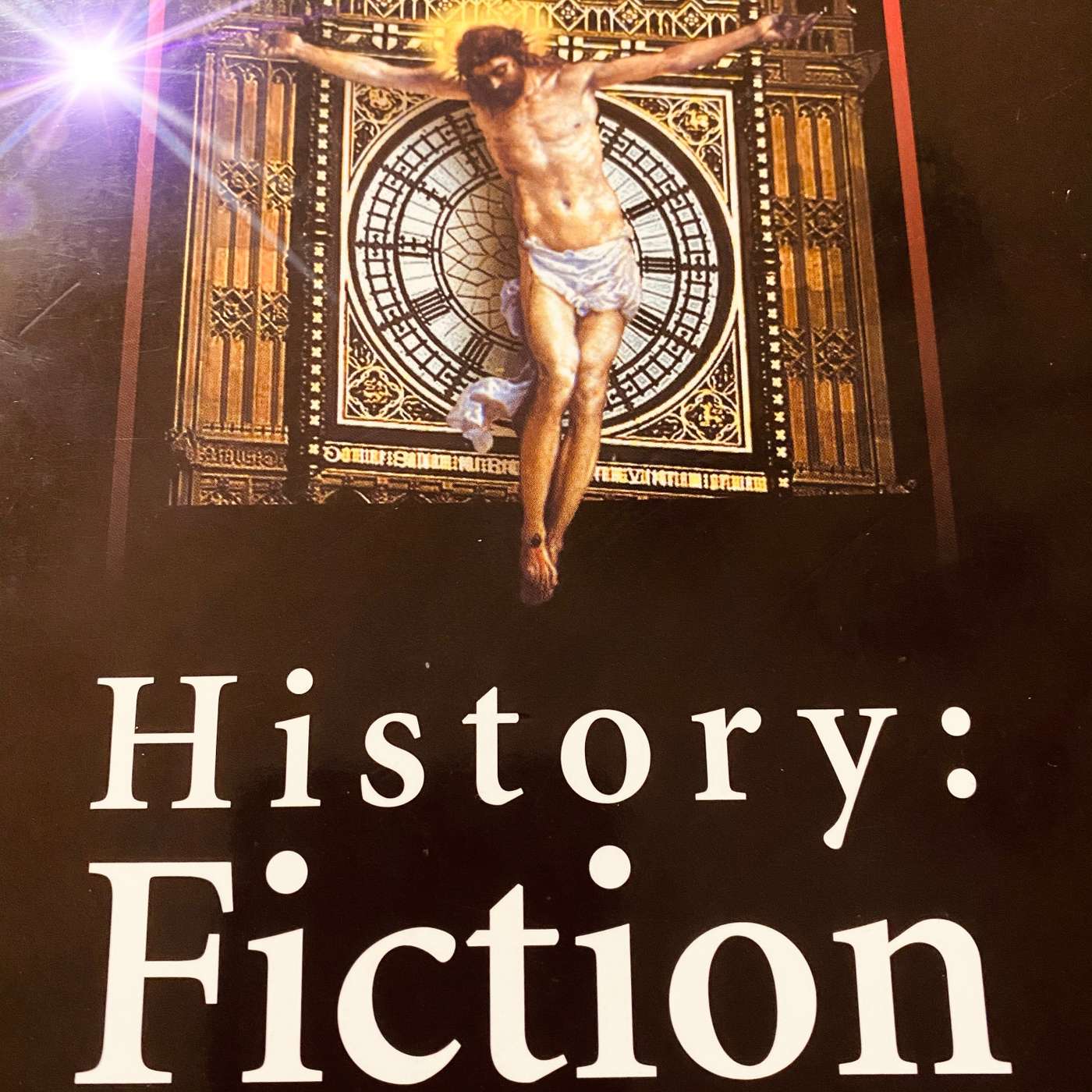
Ep 131HISTORY: FICTION or SCIENCE # 7
Support the show:https://www.paypal.me/Truelifepodcast?locale.x=en_USOne on One Video Call W/George https://tidycal.com/georgepmonty/60-minute-meetingTranscript: https://youtu.be/TO1vP6IeFp0Speaker 0 (0s): Welcome back ladies and gentlemen, thank you for returning participating and that hopefully enjoying this phenomenal series by Anatoli flamenco FICTION or SCIENCE. What is this thing? We call history. We are on the seventh reading chapter two, astronomical. Datings the strange leap of parameter D in the theory of lunar motion. Nowadays, we have special calculation tables. The so-called cannons whose compilation was based on the theory of lunar motion. They contain the date of each eclipse, the area to be covered by the lunar shadow, the phase, et cetera. See the famous, astronomical Canon of Gunzel. For instance, if an ancient text describes some eclipse in enough detail, we can determine what characteristics of the eclipse had been observed. The phase, the geographical area, that the shadow passes over, et cetera. The comparison of these characteristics to the referential ones contained in the tables may give a concurrence with an eclipse possessing, similar characteristics. If this proves a success, we can date the eclipse. However, it may turn out that several eclipses from the astronomical Canon fit the description. In this case, the dating is uncertain. All the eclipses described in the quote, ancient unquote and medieval sources have been dated by the following method. To some extent, at least nowadays the datings of the ancient eclipses are occasionally used in astronomical research. For instance, the theory of lunar motion has the notion of the so-called parameter D the second derivative of lunar elongation that characterizes acceleration. Let us remind the reader of the definition of elongation figure 2.1 figure 2.1 shows the solar orbit of the earth and the Tellerik orbit of the moon. The angle between the vectors, IES and EMS called lunar elongation, D D the angle between the lines of sight drawn from the earth to the sun and the moon. Apparently it is time dependent and example of the elongation of what Venus can be seen in the picture on right. Maximal elongation is the angle where the line of sight as drawn from earth to Venus touches the orbit of Venus. One has to know that the orbit in figure 2.1 are shown as circular while being elliptic in reality. However, since the eccentricity is low here, the ellipses are schematically drawn as circles. Some computational problems related to astronomy require the knowledge of lunar acceleration as it had been in the past. The problem of calculating parameter D over a large time interval as a time function was discussed by the Royal society of London and the British academy of sciences in 1972, the calculation of the parameter D was based on the following scheme. The equation parameters have lunar motion, including D D R taken with their modern values, and then varied in such a way that the theoretically calculated characteristics of ancient eclipses coincide with the ones given for day-to-day eclipses in ancient documents, parameter D is ignored for the calculation of actual eclipse dates. Since the latter are a rougher parameter, whose calculation does not require the exact knowledge of lunar acceleration alterations in lunar acceleration affect secondary characteristics of the eclipse, such as the shadow track left by the moon on the surface of the earth, which may be moved sideways Speaker 1 (4m 54s): A little, Speaker 0 (4m 56s): The time dependence of D was first calculated by the eminent American astronomer. Robert Newton, according to him, parameter D can be defined well by the abundant information about the date scattered over the interval from 700 BC until the present day Newton calculated 12 possible values of parameter D having based them on 370 ancient eclipse descriptions since Newton trusted scholar, Jurien chronology completely. It is a little wonder that he took the eclipse dates from Skalla Jerian chronological tables, the results of our nutrient combined with the results obtained by Martin, who has processed about 2000 telescope observations of the moon from the period of 1627 to 18 60 26 values altogether have made it possible to draw an experimental time dependency curve four D according to our Newton, the most stunning fact is the drastic drop in D that begins with 700 and continues until about 1300. This drop implies the existence of a square wave in the osculating value of D such changes in the behavior of D in such rates of these changes cannot be explained by modern geo-physical theorists. Robert Newton wrote an entire monograph titled astronomical evidence concerning non gravitational forces in the earth moon system. That was concerned with trying to prove this mysterious gap in the behavior of D which manifested as a leap by an entire numeric order. One has to know that these mysterious non gravitational forces failed to ma

Ep 130The Dissolution of Perfection: How Imperfection Shapes Consciousness and Culture
ESupport the show:https://www.paypal.me/Truelifepodcast?locale.x=en_USOne on One Video Call W/George https://tidycal.com/georgepmonty/60-minute-meetingPerfection is an illusion, a mirror reflecting what cannot exist. In this episode, George Monty delves into the paradox of imperfection — why chaos, failure, and breakdown are not enemies but catalysts for transformation. From cultural systems to personal growth, we explore how dissolution opens space for creativity, resilience, and awakening.In this episode:The psychology of perfection and its illusionsHow breakdown fosters innovation and consciousness expansionImperfection in culture, leadership, and personal lifeLessons from entropy, systems theory, and human evolutionWhy embracing imperfection may be humanity’s greatest survival toolTranscript:https://app.podscribe.ai/episode/71643670Speaker 0 (0s): Welcome back. My friends. Welcome back. Hope everybody is enjoying the day. The moment in your life, your relationships, your constant classroom, learning the idea that as you go through life, you begin to see things from different points of view. Hopefully, hopefully the lessons while difficult are rewarding, what is better than a good story? Speaker 1 (41s): Pizza, boatloads cocaine in a stripper, Speaker 0 (47s): You might think to yourself, a good story that makes me think, and its in that spirit that I have a story for you today. Are you ready? Here we go. There were five brave warriors Speaker 2 (1m 6s): Who set out on a quest. Speaker 0 (1m 10s): They set out on a quest on a journey. Speaker 3 (1m 15s): They set out to do something. No one had ever done before. Speaker 0 (1m 20s): Not because the task at hand was impossible. It was more of a fantasy. Let me explain in this world, in which these five warriors lived, there was often a yearly story Speaker 3 (1m 40s): That was as such a magnitude. Most people would never walk out of their houses. The lightning, the thunder crashing the torrential rains and winds made it almost impossible to be outside. However, there was a myth in this village slash town that if one was brave enough and could go out into these storms and could sail the seas during this storm, it was rumored that they could move through the waters and sail to a mythical island where everything was perfect. So that's what these five warriors decided to do. They have been preparing their shit. Speaker 0 (2m 42s): They had been preparing their minds and their rations in their weapons. Clouds began to role in the sounds of thunder. Enlightening came crashing down upon seeing the storm heading towards their village. The young men prepared their boat and set out to see the journey began, wins, crashing the sea, being angry and tossing the boat. But the men moved on. They kept pushing Speaker 3 (3m 22s): Forward and before long Speaker 0 (3m 26s): They were out to sea. However, they could not see anything unsure of which way the boat was heading. The large sails began to rip and tear into shreds. The boat was thrust up against walls of water, cracking the hole. On one side, the crewmen were thrown from side to side before long the boat was in tatters and the men had collapsed, but that's not the end of our story. It's just the beginning. They woke up all fives on a boat in pieces in tatters, but on a reef Speaker 3 (4m 26s): And not far from the shallow reef, they saw an island one that wasn't on any map Speaker 0 (4m 33s): That had ever seen. They made their way. The short distance from where their boat was to the island, upon reaching the island, they were greeted by men and women who looked almost like themselves, but seemed to be more perfect in that the skin was flawless. There a tire was magnificent, flawless, not a wrinkle on their clothes, not a spot on their shoes that I hear out, a place. The strangers welcomed, the five warriors. The strangers told the warriors that they will be able to repair their ship and they will be able to heal them in most of which had injuries from their violent sea voyage. The men were taken into the town into a large homestead where they were given rations and medical attention. Their boat was taken to a shipyard to be repaired on the third day, when the men began feeling better, I thought they knew a little training. So the five warriors make their way to the training grounds for some exercise and to look around the island a bit. And what they see is, or appears to be a world much like their own, but almost perfect cobblestones are smooth. The architecture beautiful. It seems immaculate. The five warriors begin trying to comprehend all the things they are seeing and they are taking in the beauty and they are blown away by how precise and how exact and how seemingly beautiful perfection can be. As they're thinking this, a young woman from one of the stables comes by to bring them some refreshments in to check on. And as the young woman makes her way towards the five warriors, she slips on a cobblestone and as s
Ep 129History: Fiction or Science #6
Support the show:https://www.paypal.me/Truelifepodcast?locale.x=en_USOne on One Video Call W/George https://tidycal.com/georgepmonty/60-minute-meetingTranscript:(Follow along with HD pictures of the fore-mentioned audio on my YouTube channel: https://youtu.be/nlqwSBbJkxo) One on One Video call W/George https://tidycal.com/georgepmonty/60-minute-meetingSupport the show:https://www.paypal.me/Truelifepodcast?locale.x=en_US🚨🚨Curious about the future of psychedelics? Imagine if Alan Watts started a secret society with Ram Dass and Hunter S. Thompson… now open the door. Use Promocode TRUELIFE for Get 25% off monthly or 30% off the annual plan For the first yearhttps://www.district216.com/Legal Disclaimer / Release of Liability for Podcast:This content is for educational and informational purposes only. Nothing in this transmission constitutes legal, financial, or professional advice. I am not your lawyer, financial advisor, or telling you what to do.This podcast documents historical events, analyzes publicly available information, and explores hypothetical scenarios. Any actions discussed are presented as educational examples of how systems work—not as instructions or recommendations.You are solely responsible for your own decisions and actions. Any application of information presented here is at your own risk. I assume no liability for consequences of actions you choose to take.By continuing to listen, you acknowledge that this content is educational commentary, that you’re responsible for researching applicable laws in your jurisdiction, and that you’ll consult appropriate professionals before taking any action that could affect your legal, financial, or personal situation.

Ep 36Neuro-Linguistic Programming (NLP) # 1
ESupport the show:https://www.paypal.me/Truelifepodcast?locale.x=en_USOne on One Video Call W/George https://tidycal.com/georgepmonty/60-minute-meetingNLP.... a course in self deception This podcast is a set of 8 lectures designed to help you understand & navigate life’s linguistic labyrinth.Course # 1 Understanding How You ThinkSpeaker 0 (0s): <inaudible> Speaker 1 (4s): Welcome to Thursday. My friends let's start off this podcast episode From a book by Alice O'Neill Proverbs words and wisdom, Wisdom. Although knowledge is not wisdom. Knowledge is harmony. And if you know yourself, you will know the gods for knowing others is wisdom. Knowing yourself is enlightenment. Actually knowledge is like water for the land. Therefore learn from the mistakes of others. So you don't have to make them yourself for it's better to know too much than too little wisdom begins in wonder, but wisdom only comes when you stop looking for it. And since knowledge takes up no space and learning is a treasure. No thief can steal. Why not open a school, close a prison for when you educate a woman, you educate a population to know all is to forgive all. So leave half of what you know, in your head and be aware that still waters run deep for he who knows, does not speak while he who speaks does not know. Of course not knowing is Buddha common sense. They say to attain knowledge, add things every day to attain wisdom, remove things every day. And since all sense is not kept under the same roof. Even if you know, a thousand things always ask a man who knows something, indeed seek education. Even if it means traveling to China, but go carefully for in the desert of life. The wise man travels in a caravan, the fool by himself. It's true. That to get lost is to learn the way. But if you are on the road to nowhere, change the road and don't give up for wisdom rides on the ruins of folly and a disaster teaches more than a thousand warnings, a wise man, drinks, little and believes less because wisdom is the lifelong attempt to acquire it. Indeed only when a tree has grown, can you tie your horse to it? Always remember everything is relative. So everyone likes justice in another's house, none in their own and never forget. Our first teacher is our heart. That is the wisdom part of wisdom and idiots. Now let's dive into the idiot part of wisdom and idiots, idiots beware wise, looking man, as brains are not found in the, and no, that all seems the same to someone who knows nothing just as in the unknown village, the chickens have teeth, sadly, a fool grows without rain, and there is no Royal road to learning, which is why so often the ignorant are the enemies of wisdom. Remember a person who knows little repeats it often. So fear a man who only knows one book, indeed fear an ignorant man, more than a lion. Listen, a fool is known by his laugh and every fool wants to give advice, but try with all your might. You'll not get milk from a bull and he dog has no help in a Smithy. So only an idiot looks for a calf under an ox. It's better to leave those in error who love error for by the time an idiot learns the game, the players have dispersed, indeed the dogs bark. The caravan passes on. Remember even a broken clock is right twice a day. And even the stupidest person seems wise if he keeps his mouth shut, which is why a wise man sits over the hole in his own carpet. Speaker 0 (4m 19s): <inaudible> Speaker 1 (4m 21s): I thought that would be a nice new segment. I'm going to start kind of comparing and contrasting using Proverbs and some one liners. And for me, there's a lot of wisdom in those old Proverbs. It's a way of using language to paint pictures as a way of using language to, I would say it's a way of using language like a virus. And when there's a certain pattern of language that we can use to inject into someone else's mind, the right words can be subtly planted into the right person at the right time. If you know exactly the right signs to look for that being said, my friends, we're going to continue to work on our authentic today in the world of language, we have been doing quite a bit of work on propaganda. We've been doing quite a bit of work on language, and we've been doing quite a bit of work on understanding How to make the world a better place using language. That being said, let's kind of go into neural linguistic programming a little bit. If you remember alas, a few podcasts back, I told a story about how I would wake up my wife on the weekends. And if you haven't caught that podcast, let me just briefly tell you that story again. On the weekends in the morning, I usually get up first and I will go into my I'll go downstairs and make some coffee. And at a certain time, if my wife's before she wakes up, I will come up. I'll make her a coffee and I will walk into the room and I will put on her favorite song, kind of light. She happens to like Mariah Carey. And so I will come in and I will on my phone. I will have that
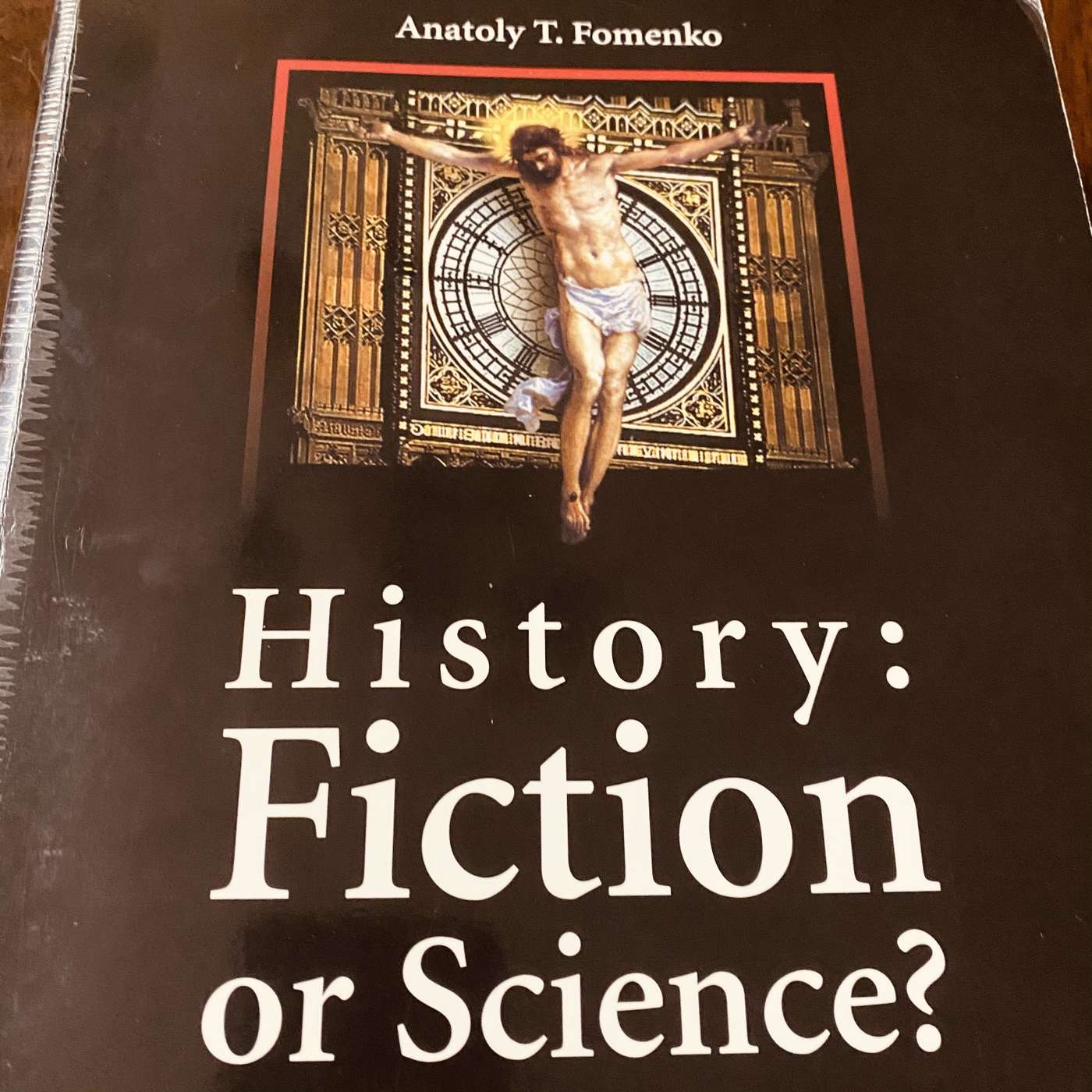
Ep 128HISTORY: Fiction or Science # 5
ESupport the show:https://www.paypal.me/Truelifepodcast?locale.x=en_USOne on One Video Call W/George https://tidycal.com/georgepmonty/60-minute-meetingTranscript:http://anatolyfomenko.com/https://en.m.wikipedia.org/wiki/The_Society_of_the_Spectaclehttps://youtu.be/3Say79Pcg8Ihttps://app.podscribe.ai/episode/70399806Speaker 0 (0s): Welcome back my friends, we are back again with our friend and a toll, a four Manco history Fiction or Science left off. Number four, the foundations of archeological methods have been based on the scallop Jerian chronology from the very beginning. Let us begin. 13.1, the ambiguity of archeological datings and their dependence on the existing chronology. The reader may inquire about the state of affairs concerning other methods of dating historical sources and artifacts use nowadays modern archeologists speak of the ignorant diggers of the previous centuries in painted tones. Since many artifacts have become defaced in the search for valuables, the archeologist count a a S Y S excavated 7,729 mounds in thee Vladimir sues doll area, a S S spits in has the following to say about it. When the items found in excavations in 1851 to 1854 came to the disposal of the <inaudible> sorry for the pronunciation guys, Rummy on Stev museum, they were a chaotic pile of materials with no markings whatsoever. And no one could tell which mound this or the other object had belonged to the grandiose excavations of 1851 through 1854 shall be mourned by the scientists for years to come. Nowadays, the excavation methods are a lot more advanced. However, applying them to ancient excavations is as impossibly is an impossibility. Since these have already been conducted by the diggers of the past, the basics of archeological dating methods are as follows. The best way of reducing the age of a given European culture is finding out which Egyptian dynasty, this European tribe traded with the findings of my son. I made Greek in the Egyptian mounds of the 18th and 19th dynasties allow the archeologist to consider the dynasty and the culture as contemporaries similar vessels are found later on in mice and I together with a particular kind of pin that is later also found in Germany near some urns, a similar urn is found near a finger together with the different kind of pen, which resembles the one found in Sweden in the so-called borrow of king Bjorn, which can thus be dated as a contemporary of the 18th, 19th Egyptian dining in his disease. However, it turns out that king Bjorn barrel could not have a belong to Bjorn king of the Vikings, a a well-known medieval character. Sure. Since it predates his time by about two millennia, firstly, one fails to understand what criteria of similarity have been used here. Secondly, and a lot more importantly, I might add all that all of these methods are heavily dependent on the all priority datings of the ancient Egyptian Pharaoh died. Dynasty's this method, which is also known as the Dominos method and all similar ones are based on pure <inaudible> subjectivism in that principally on a scale of Jerian chronology, newly found artifacts, such as vessels are compared to similar findings dated in accordance with the consensual chronology, the alteration of the chronological scale scale automatically alters the chronology of the new archeology findings and erroneous chronology, completely invalidates all such methods. It is a little wonder that the archaeologist investing there trust in such methods are constantly confronted with bizarre facts. It appears that in certain remote parts of India, Europe, what encounters, the coexistence of things whose prototype's in the east are separated from each other by centuries. These furthermore L S T a line firmly denies all connections between king Bjorn's Baro and the medieval Beorn king of the Vikings. This method tells us only that Bjorn borrow is contemporary to the 18th, 19th Egyptian dynasties. It tells us nothing about the possible datings and these actual rains, which may well be medieval along with Bjorn Viking. The first screen teams of Egyptian chronology were based on the work of monotheists who had compiled the list of the pharaohs, allegedly in the century, BC and grouped them into 30 dynasties. Having added up all the years of Raines and assuming that their rains have all been consecutive, the figures, he got proved, formidable, Flanders portray Elle Barnhart, and other Egyptologists had estimated the duration of the history of ancient Egypt to equal five to 6,000 years. This is how the long chronology of Egypt was born. The one that had been prevalent for a long time E Meier and his followers had developed a so-called a short chronology as an alternative. It's a problem is that the pharaohs and their entire dynasties often reigned simultaneously as COE ruler's in different parts of the country. Men, a Theone was making the assumption that the state had been a monolithic one under a single ruler. And so he had line
Ep 127Time: 15 Grams of Mushrooms — Exploring Consciousness, Eternity, and the Psychedelic Frontier
ESupport the show:https://www.paypal.me/Truelifepodcast?locale.x=en_USOne on One Video Call W/George https://tidycal.com/georgepmonty/60-minute-meetingWhat happens when the veil of ordinary time dissolves under the weight of a massive psilocybin journey? In this episode, George Monty explores the mind-bending experience of 15 grams of mushrooms — a threshold few dare to cross. From altered perception of time to mystical insight, listeners are guided through the landscape of expanded consciousness and the archetypal lessons hidden in the psychedelic frontier.In this episode:The subjective experience of time under high-dose psilocybinHow perception, ego, and narrative dissolve in extreme statesIntegration strategies for intense psychedelic journeysLessons on consciousness, mortality, and universal connectionBridging shamanic insight with modern psychedelic scienceTranscript:https://app.podscribe.ai/episode/70104363Speaker 0 (0s): <inaudible> well, well, well, welcome back. My friends in has been way too long since I have spoken with you. And I'm hopeful that you're taking time to listen to this. And if you are listening to this, then thank you. I had a bit of an absence for a while. Things have been a little bit out of control. However, I realized that I miss talking to the people, even though I'm really just talking to myself, I miss talking to you guys. So here we go. I want to get into the topic of time. What does time, whose time? My time or your time do you got the time? What time is it? Depends where you live. What year is it? Depends. What calendar you go buy? What is this concept of time? Do you think that if we destroyed all the clocks around the world, chaos would ensue. Was there a land before time? Have you ever experienced time different? Let me tell you about a recent time where I took 15 grams of mushrooms and had a profound experience. I shall begin that story now. So I cut up my 15 grams and I prepared myself for what I thought was going to be an evening of transformative visions, living in a time. Most people wouldn't understand. And so I did, I took the magic mushrooms and it hit me rather quick, maybe 30, 30 minutes. So it's a little faster than normal. However, as I laid there tripping, I thought to myself, I should be tripping a lot harder than I'm tripping. Now you see the amount I took should have had me pinned to my world, holding on for dear life, but it didn't. Instead, it pinned me to a world of new ideas. And let me be clear on what I mean, one of the first insights I had was that in any sort of communication, in order to change people's minds, they must think it is their idea. If you want to create profound behavioral change in other people, then you must communicate to them. You must, when speaking to them, in order to create the change that you want to see, you must get that other person to tell you that they need to change their behavior. It must be their right idea. And if it is their idea, then you've planted the seed correctly. It was one of the first insights that I had, and then things began to get weird. And let me tell you what I mean by weird. As I lay there thinking to myself, wow, while I am in this odd peculiar state, it seems to me, things should be more hectic. They should be stronger. And right then I close my eyes in. When I opened them, I saw a red flashing lights outside my window. So I looked out the window and then there was a firetruck and they whipped into my complex where I live and shortly behind the firetruck was a cop car and then a second car and then a third cop car. And I thought to myself, whoa, there's something going on outside. I should investigate this. And so I did that went downstairs. I went outside and I, I noticed that the emergency vehicles were like one stack over. Let me explain to you a little bit of where I live so that you can get a visual if you were, I live in a series of town-homes. And so if you go downstairs, out in my yard, out in the back gate and you look to the left, there is a small little park and I'm not sure park is the right word, but it fits the narrative. There's a small little park in the black, in the middle of the blacktop parking structure where the cars parked to go to their individual townhomes. So at that little park, about 40 feet away from me on the other side of it, that's where all the emergency vehicles were parked. And so as I walked out, outside my gate, I walked over to the park and I just sat on top there. I wasn't bothering anybody. And I, you know, in my, in the state, in which I found myself, I probably wasn't going to be the best conversationalist. So I sat up there on top of the, on the park hill and just kind of watch what was happening. And it took me a minute. It took me a few minutes to thoroughly understand the scene. And the scene was as follows fire truck ambulance, multiple cop cars, both cop cars were parked on the opposite sides of the emergency vehicles, blocking the entrance and o
Ep 126The Fourth Turning: Cycles of Collapse, Rebirth, and the Transformation of Civilization
ESupport the show:https://www.paypal.me/Truelifepodcast?locale.x=en_USOne on One Video Call W/George https://tidycal.com/georgepmonty/60-minute-meetingHistory moves in rhythms — and according to The Fourth Turning by William Strauss and Neil Howe, we are deep within the storm phase of civilization’s great cycle. In this episode, George Monty examines the archetypal pattern of rise, crisis, and rebirth that has shaped human history — and what it means for the world we’re building now.From societal breakdown to spiritual awakening, we explore how chaos becomes the crucible of renewal, and how each generation carries a unique role in the turning of the wheel.In this episode:The four-turning generational theory explainedWhy we may be entering the climax of the current cycleParallels between ancient myths and modern sociopolitical shiftsHow crisis catalyzes creativity and collective evolutionThe spiritual opportunity hidden within collapse One on One Video call W/George https://tidycal.com/georgepmonty/60-minute-meetingSupport the show:https://www.paypal.me/Truelifepodcast?locale.x=en_US🚨🚨Curious about the future of psychedelics? Imagine if Alan Watts started a secret society with Ram Dass and Hunter S. Thompson… now open the door. Use Promocode TRUELIFE for Get 25% off monthly or 30% off the annual plan For the first yearhttps://www.district216.com/Legal Disclaimer / Release of Liability for Podcast:This content is for educational and informational purposes only. Nothing in this transmission constitutes legal, financial, or professional advice. I am not your lawyer, financial advisor, or telling you what to do.This podcast documents historical events, analyzes publicly available information, and explores hypothetical scenarios. Any actions discussed are presented as educational examples of how systems work—not as instructions or recommendations.You are solely responsible for your own decisions and actions. Any application of information presented here is at your own risk. I assume no liability for consequences of actions you choose to take.By continuing to listen, you acknowledge that this content is educational commentary, that you’re responsible for researching applicable laws in your jurisdiction, and that you’ll consult appropriate professionals before taking any action that could affect your legal, financial, or personal situation.

Ep 125Prelude to Technocracy: The Rise of Algorithmic Power and the Death of Human Choice
ESupport the show:https://www.paypal.me/Truelifepodcast?locale.x=en_USOne on One Video Call W/George https://tidycal.com/georgepmonty/60-minute-meetingBefore the world becomes fully governed by machines, there comes a prelude — a quiet handover of power disguised as convenience. In this rough-cut episode, George Monty explores the dawn of technocracy: the fusion of governance, surveillance, and artificial intelligence that promises efficiency but threatens autonomy.From predictive algorithms to social credit systems, this episode dissects how data becomes destiny and how humans are slowly being coded out of their own decisions.In this episode:What technocracy really means — and why it’s already hereHow data replaces democracy in the digital ageThe illusion of choice in algorithmic societiesThe merging of corporate and governmental power through AIWhat it means to remain human in an automated civilizationKeywords: technocracy, artificial intelligence, surveillance, digital control, data governance, social credit, algorithmic society, transhumanism, freedom, automation, future of humanityTranscript:https://app.podscribe.ai/episode/65113183Speaker 0 (0s): Hmm, Speaker 1 (18s): Welcome back everybody. It's George Monty, coming at you going to pull back the curtain on those of us who are trying to utilize the heavy machinery to spray as Dan with propaganda and garbage, fake vaccines and fake Wars, global warming and all this other nonsense, I'm going to dig into what I think has happened. And I think everybody has to admit there's something wrong. There's something wrong. I don't know exactly what it is, but if you feel like I feel then, you know, when you're being lied to and were being lied to, can we start off with a poem here by a John Calhoun Merrill technocrats, the story goes, we'll solve the horrid mess where ethics failing gadgets work, and we'll bring about success. Just plug it in and hit the key and let the old brain rest just what we should or should not do. Technology can answer best, But gadgets. They may be the cause of the angst. The people feel for science is cold and does not care about the common wheel. Old Khan. Still whispers is moral laws, but a few still hear his voice all is relative and there is no truth. Just leave it to personal choice. Computers, buzz, and wheels go round and bend them in the middle are dead. The person's free to do his thing. Morality has all gone to bed. All of this freedom and self esteem, leaving conscious as the guide. The world is fun and is a game with the Technocracy. By my side, I am the postmodern man and man means woman to what is the purpose of our lives? There's not the slightest clue. We do our res to cyberspace and compose the digital thunder, just how the technology does for the soul causes me to wonder. I think it's important to just give you a quick remembrance. I'm sure most of you were familiar with Plato's to make us where he talks about for everything. Technology brings us. It takes something away from us in the case of tomatoes while there's more than they could possibly summarize in this little rant I got here. I do remember one point where one individual was speaking. I think it was toff the toast Toth. However you want to say it. He was speaking to his creator about a technology. He created an, That creation was writing and he said, Oh, glorious creator. I have created a technology that will help our human friends become wise beyond belief. It is the technology of writing no more to the people need to remember what it is when they can just turn the pages and reread and recategorize and understand what has been passed down from generation to generation. And his creator smiled upon Toth, who was a God at the time as if he was a baby and said, Oh, talk to my Paragon of invention. It has Never wise for the creator of a technology to forecast how that technology will work. You have indeed created a great technology. However, the idea of writing will have the opposite effect of what you think. People will no longer need to work. The muscle of memory. They will no longer need to truly understand situations when they can just turn to the experience of another who had written it down, they will lose the true meaning of that experience. And I would argue that's exactly what's happened. That is what technology does for everything that it gives us, take something away and I would take it one step further. I would take it to the next level and say that for everything technology gives us and not only takes something away, but it takes something of our humanity away. It takes away our understanding, our fundamental understanding of how we need to treat each other, the planet that which is important. It takes away all of that. And that is when we are. Now, we are in the midst of a technocratic takeover that you have been seeing, playing out since probably the seventies and were at a point now where in my opinion, you know, let's, let's get into some fun cons

Ep 124Technocracy: The Takeover Part 1 — How Data, Power, and AI Converge to Rule the World
ESupport the show:https://www.paypal.me/Truelifepodcast?locale.x=en_USOne on One Video Call W/George https://tidycal.com/georgepmonty/60-minute-meetingIn Technocracy: The Takeover (Part 1), George Monty dissects the quiet revolution shaping the 21st century — a global system powered by data, guided by algorithms, and ruled through information. This is not a future we’re waiting for; it’s a present we’ve already entered.From social media manipulation to corporate-state alliances, we explore how the architecture of control is built — and how humans can awaken within it.In this episode:The origins and meaning of “technocracy”How AI and big data are merging governance with machine logicWhy surveillance is the new form of complianceThe illusion of digital freedom in a world of algorithmic ruleHow awareness and resistance can reclaim the human spiritTranscript:https://app.podscribe.ai/episode/64907076http://www.technocracy.news/author/patrickwood/Speaker 1 (0s): Welcome back. My friend's. If you're new here, AE. Thanks for giving me a chance to check this out. You got questions. We got answers. What the hell is going on? Look around right now. Look outside. What do you see? Is this how the world should be working? You think so you think this is how the world should be working. Listen, man, I don't know. I don't know. A a hundred percent of what I'm going to tell you is 100% accurate because nothing is a a hundred percent accurate, but I can tell you for sure that we're being lied to. I feel we are being lied to on a scale that is scandalous. All of us we're being played propagandized. And I'm here to tell you it's part of a plant. Think about this. Think about the most ruthless, intelligent, successful people you've ever known. You know, when you're going to be ruthless, think about the most successful people on the planet. Any biography you've read or anybody, you know, people have plans. People don't plan to fail. They fail to plan and anybody who's successful has plans. You have goals, your family has goals. That's how you succeed in life. And if you want to be really good, you've got a five-year plan. You've got a 10 year plan. And in the case of set like a family office, someone who is really wealthy, they have generational plans, hundred-year plans and birds of a feather. What do they do? They flock together, right? We all know this. So is it really that obtuse to think that a bunch of really wealthy individuals who probably went to the same Ivy league schools who were probably went to the same fraternities, I E stolen bones and all those homo erotic fag boy clubs, you know what I'm talking about? All of those dummies, those people who have a plan for the world. And it's like, I always say, if you're don't have a seat at the table than you are on the menu, I'm going to tell you where we're at. I think that we are in the midst of a technological global Takeover. Technocracy right. And I'm going to get into, if you haven't checked out a gentleman named Dr. Patrick Wood, well worth your, while he has a website called Technocracy, I think it's called Technocracy dot news, but I'll put it on the show notes. I'm going to go over some, some stuff that he's written a book called Technocracy the hard road to the world order. And again, his name is Patrick. M would just Google him and listen to what this guy says. He's really gets into stuff. And he really knows what he's saying. So let's talk about the plan that was formulated a long time ago. And I'm going to read to you about this plan from documents of this plan. And you tell me if you think it sounds like what's happening right now are right. Are you ready? Let's go. Let's answer some questions. 1934, 1934 gentlemen was when Technocracy Speaker 2 (3m 42s): There. And Speaker 1 (3m 43s): Let me just explain what Technocracy is. Technocracy has the science of social engineering, the scientific operation of the entire social mechanism to produce and distribute goods and services to the entire population. Not only did they invent the science of social engineering, but they intended to impose its method okay. On the entire society forgive, right. Or the object of the exercise was to produce goods and services to everyone. Well, it doesn't that sound nice. It does that sound nice and fair. There is no doubt. The technocrats themselves openly declared that Technocracy was a replacement economic system for capitalism and the rest of the techno Technocracy study course explain how it must be implemented and then operated by technocrats consisting of engineers, scientists, and technicians. Okay. This was the definition of the tech, No cratic government system in the thirties. This is like their mission statement. Now I want you to think about where our economy was in the thirties. Right? We had the roaring twenties and then what do we have? Then we had the, the incredible stock market meltdown, right? What was going on in the world? Remember our friend's the Germans, Speak
Ep 123Dying Ideas, New Technology, and the Birth of Infinite Opportunity
ESupport the show:https://www.paypal.me/Truelifepodcast?locale.x=en_USOne on One Video Call W/George https://tidycal.com/georgepmonty/60-minute-meetingEvery collapse is a signal — the sound of an idea outliving its usefulness. In this episode, George Monty explores how outdated paradigms are dissolving under the pressure of new technologies, and how moments of uncertainty often carry the greatest potential for reinvention.From the ruins of old institutions to the rise of AI, blockchain, and bioengineering, this is a conversation about adaptation — about seeing crisis not as an ending, but as an initiation into the next phase of human creativity.In this episode:How dying systems make room for revolutionary innovationWhy technological disruption is both threat and opportunityThe psychology of adaptability in times of massive changeThe invisible link between chaos, creativity, and evolutionHow to harness technological transformation consciouslyTranscript:https://app.podscribe.ai/episode/64296104Speaker 0 (0s): Well, well, well, welcome back, everybody. Hope you enjoyed the last podcast where we got into an in depth idea or multiple ideas of supply chains and eugenics in a world that seems to be changing in a way reminiscent of old ideas. Does that make sense? I guess what I'm trying to say in a way to segway into this new idea I have is to talk just a little bit more about the old idea. And the old idea is this world of boomer ideology and the old ways. It seems to me, there's a lot of talk about the fourth turning in the fourth industrial revolution and what it comes down to is cycles. And there was no, I don't want to get into people being evil or angry or racist, or I think what's probably more likely is that there is nothing more powerful than an idea whose time has come. I think we've all heard that before. And what we're seeing right now is in fact, the retirement of a large group, probably the largest group, the boomers are retiring. And so were, there are ideas. And it's not that even though gen X, Y zoomers millennials, they tend to look at these older people in positions of authority and power and think to themselves, how can these people do what they do? Do they not see the level of destruction that they are bringing down upon the world? Do they not understand the level of poverty they are bringing to the future people on this planet? Do they not care? And it's a valid point. However, it's not that those people don't care. It's just that those Ideas are the only idea. Those were there, Ideas. They don't have new ideas. They only have their ideas and their ideas of what worked in the past logically should work in the future. When you're set in your ways, it's very difficult for you to see things differently. And that's why things are changing. And that's why there is this old world. And nothing seems to be working the dollar. The military might have the United States, this idea of globalization, as idea of stakeholder capitalism. These are all really old ideas that never truly came to fruition in the way the people thought they would come into fruition. You look at Klaus, Schwab, Henry Kissinger, Joe Biden, Donald Trump. You look at all these old people that did their best to try and do what they thought was right. I don't agree with a lot of what they did. However, I'm willing to give them the benefit of the doubt that they did, what they thought was right. And they are Dying. And so were there Ideas, it's cyclical. And now we're moving into this new brave new world where it is possible that if we don't remember our past, we're doomed to repeat it in the future. Let me read to you a quick little excerpt of what I'm talking about. And I think it lends credence and evidence to show that this argument is something that has been with us forever, unity and division within appearance, a lively New debate about the concepts. One divides into two and to fuse into one, this is unfolding on a philosophical front in every country. This debate is a struggle between those who are four and those who are against the materialistic dialectic, a struggle between two conceptions of the world, the proletarian and booze was a conception. Those who maintain that one divides into two is the fundamental law of things are on the side of the materialistic dialectic. Those who maintain that the fundamental law of things is that to fuse into one are against the materialistic dialectic. The two sides have drawn a clear line of demarcation between them and their arguments are diametrically opposed. This polemic reflects on the ideological level, the acute and complex class struggle taking place in China and in the world. This is a passage from the red flag of peaking, September 21st, 1964. I want you to think about those two struggles. The struggle between two classes, one divides into two Speaker 1 (5m 59s): Or to fuse into one. I think about that for a minute. Does Speaker 0 (6m 5s): One divided into two? Can you cut it in half

Ep 122Corporatocracy, Supply Chains, and Eugenics: The Hidden Architecture of Power and Population Control
ESupport the show:https://www.paypal.me/Truelifepodcast?locale.x=en_USOne on One Video Call W/George https://tidycal.com/georgepmonty/60-minute-meetingBeneath the surface of the global economy lies a network of control — invisible, efficient, and deeply intentional. In this episode, George Monty investigates the nexus between corporatocracy, global supply chains, and the shadow of eugenic thought that persists in policy, technology, and social design.From historical power structures to modern biotech frontiers, this conversation explores how control systems evolve — and how awareness and autonomy become acts of rebellion.In this episode:The rise of corporatocracy and the privatization of global governanceHow supply chains shape dependency and power distributionThe historical and ethical echoes of eugenics in modern systemsBiopower, surveillance, and the commodification of lifeReclaiming human agency in an algorithmic worldTranscript:https://app.podscribe.ai/episode/63987412Speaker 0 (0s): Welcome back. My friends. Welcome back to another day in paradise. I've missed your last week, but I'm back this week. I've been thinking about Everybody and I've been thinking about the world in which I live the world in which you live. And though I don't have the right to talk about the exact world in which you live. I am trying to empathize. It seems to me around the world. There is quite a bit of chaos and strife. However, I think that's always been what I want to talk about this kind of going to be a witch's cauldron of ideas and thoughts that have been swirling around in there. Yes. Reality brew ha ha of fundamental flaws in our society. Why do I mean by that? Well, on one hand, I look at some headlines and I see people in the streets rioting and fighting for their right to go outside. There are rights to be treated like a human being for their rights to be recognized as human beings, a universal right, a right to some sort of, normalicy some sort of freedom to take your kid to school or to do something with your family on a weekend, right? Some videos from my brothers and sisters and the Netherlands today, it was just heart wrenching. The same with Italy. People being pushed back into their homes and pushed back into the stone age is because the people who claim to be in charge do not want to face the final reckoning, which is coming their way. Right. You know, I, I honestly believe that what we're seeing right now is not an epidemic or a pandemic that we're being told about. We are facing both of those. However, COVID is just to cover up for all our world's broken financial system. If you look at some of the hardest hit places right now, they are the hardest hit places with the most of the places in which our hit the hardest, like lets look at Brazil, they have so many natural resources right now. There's been a long-term struggle in Brazil to free up those resources and get those resources into the Supply Chains of the world. There is in fact there was a fight right now amongst China and the U S everybody knows about, but what people aren't really talking about is the fight for Supply Chains. So if we think about COVID as a broken down financial system, perhaps a better, you know, perhaps a chick, a side chain would be COVID as an attempt to re assign Supply Chains to the rest of the world is a battle for supply chain dominance. And that means the economy. That means resources. That means human resources. That means capital. That means roads. That means infrastructure. And we're not going to move forward until this happened. And everything that you see in front of you is in fact, a manifestation of this fight COVID is an excuse. COVID is an excuse to allow the pharmaceutical companies to test people like Guinea pigs COVID is an excuse to inflate the money Supply so that we can break it down and build back a new one. Let me try to give you some more evidence on why I think the way that I think and why that this COVID is in fact a cover for supply chain rediscovering. It seems to me that there are some very, it seems to me that if you're looking for patterns, you're going to find them. And let me know if you think that this is a pattern that I'm making up in my head, or if this is something that is actually happening, every country is talking about building back better. Hey, let's build back better. The prime minister of Canada, the UK, Joe Biden, Everybody build back better, build back, better, build back better inside the phrase, build back better. His, we must demolish It, right? Cause you can't build something back better unless it's broken. Does that make sense? You can't build anything back unless it's been destroyed. So if you're going to build something back better, it implies that you must break it. And that is what we're seeing. Now, what we're seeing now is in fact, this creative destruction. So let me talk about one area of creative destruction that encompasses the Supply Chains, the economy, and the vacc
Ep 121Your Life Is a Sandcastle: Adam & Eve, Impermanence, and the Architecture of Human Meaning (Part 2)
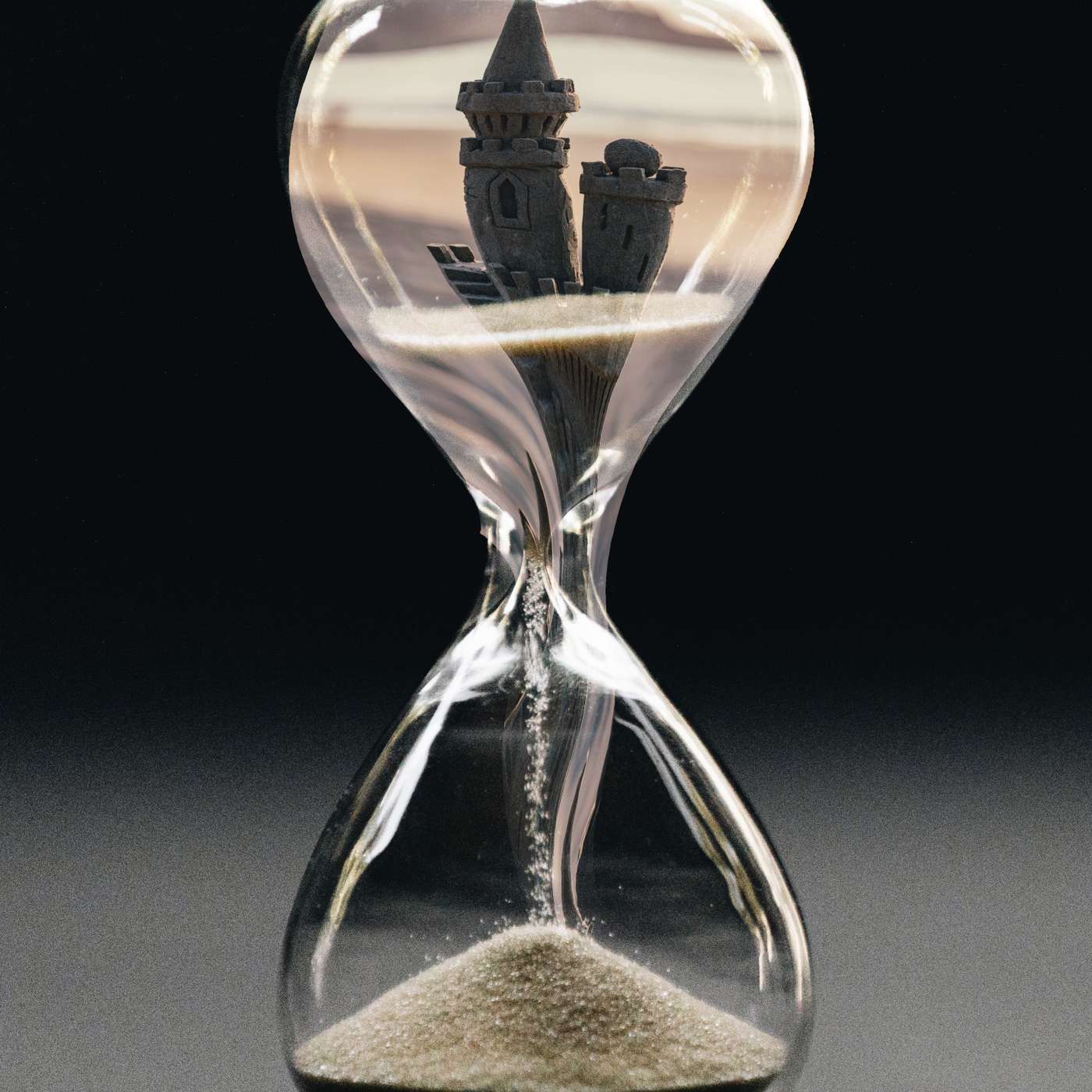
Support the show:https://www.paypal.me/Truelifepodcast?locale.x=en_USOne on One Video Call W/George https://tidycal.com/georgepmonty/60-minute-meetingEverything we build — empires, identities, civilizations — is a sandcastle against the tide. In this second conversation of the Adam & Eve series, George Monty explores the mythic cycles of creation and dissolution, weaving together themes of impermanence, human longing, and the eternal return.From the Garden to the digital age, this episode invites you to see your life not as something to preserve, but as something to participate in — a living pattern of art, entropy, and evolution.In this episode:Adam & Eve as archetypes of human consciousness and dualityThe spiritual and psychological meaning of impermanenceCreation and destruction as one unified actHow ego, identity, and narrative dissolve in time’s tideRebuilding with awareness, purpose, and playTranscript:https://app.podscribe.ai/episode/63305932Speaker 0 (0s): Welcome back everybody. So nice to get to see you and hear your voice, even though I can't really see you. I'm happy to be talking to you. I hope you all had a great week so far. I hope the sun is shining. Birds are singing. I wanted to get into a, a little bit more of this alternative history. We left off with Adam and Eve and this great shifting or this great displacement of Earth's crust that caused the oceans to zip across the face of the continence district and everything in their way as the Pacific and Atlantic oceans, just pile up miles, high sweep across the continents, you racing, everything we know today, it reminds me. I once saw, I once saw a documentary on these Tibetan monks and they were just talking about the same lifestyle on the things they did throughout the day and how they thought about life and the things that weren't and the senior monks. They played this game where over a period of three months, they created the most elaborate puzzle, not a puzzle in that. It's something you put together, but it was almost like a piece of artwork where they took different color Sand or, or die or better to think of it as Sand. And they made these just incredibly intricate designs on, on a platform, the size of a quilt. That's like a thing of like a beach towel or maybe a beach quilt. And they made these elaborate designs all over the entirety of the quilts. And it was just a beautiful than pristine with a perfect color combinations. In some parts were higher in some parts were lower and they would bring the children once a day to see it and help. And once they finished, once they finish the actual product, everyone stood back in amazement and just in the, the cameraman showed that it was beautiful, just this beautiful tapestry of colors and shapes and beauty and hard work and sacrifice for six months. And then they all collectively got down and blew it off. Just blew all of the sand off, like it was nothing. And I always thought to myself, wow, what a great way to symbolize the power of the year? What a great way to symbolize the idea of how we in prison ourselves. Never think about that. If you think about all of these things that we make, be it mankind or yourself, there are all like sand castles right now. You can build a really cool Sand Castle however, it's just a matter of time for the tide comes up, takes it down. Sometimes you can fool yourself, like, yeah, I'm in the sand castle competition. Let me bring my hair spray, bring these special, a little cones and make a turtle. You know what? I'm going to make this huge Sand Castle that looks like the Trump tower, or I'm going to make a Sand cause I was at the white house, or I'm going to make a sandcastle. It's like a mummy. You ever seen those competitions? It's kind of like our life. We spend all our time making these sandcastles that we think are so important. Put in the grand scheme of things. It's just a matter of time before the tide comes and walks them down. I'm not saying that you shouldn't spend time building your Sand Castle of life. What I am saying is they, you should be mindful that what you're building is not going to last. And I think that will help you to put some things in perspective. Nothing Lasts not to love you have for your parents, not the trees that you've planted in the ground, not the experiences that you had when you were five, not the place where you work. Not that the company you started, not the car you drive, not even a love for your family. Nothing Lasts some people may think, wow, that are just kind of dark. Oh, you mean Nothing Lasts we should just run out and be crazy. And Rob banks and do you know, that's not what I'm saying it all I'm saying Nothing Lasts so you should enjoy your life. And when I think of a joy in my life, I think of trying to be present and trying to stay in the moment so that I can make everyone around me, better understand, like we spent so much time in our heads. We spend so much time trying to fantasize about what thin

Ep 120A History of Cataclysms: Earth’s Magnetic Field, Climate Change, and the Cycles of Civilization
ESupport the show:https://www.paypal.me/Truelifepodcast?locale.x=en_USOne on One Video Call W/George https://tidycal.com/georgepmonty/60-minute-meetingCivilization has risen and fallen more than once — often erased not by war, but by the Earth itself. In this episode, George Monty uncovers the story of planetary cycles, geomagnetic shifts, and cataclysms that have repeatedly reset human history.From ancient flood myths to modern data on magnetic pole movement and climate disruption, this is a deep exploration of how cosmic and terrestrial forces shape consciousness, culture, and survival.In this episode:The link between geomagnetic reversals and civilizational collapseHow ancient myths encode memories of global cataclysmsThe role of solar activity and pole shifts in climate cyclesWhat current scientific data reveals about Earth’s changing fieldHow humanity might prepare for — or evolve through — planetary changeTranscript:https://app.podscribe.ai/episode/62906236https://www.cia.gov/readingroom/document/cia-rdp79b00752a000300070001-8https://www.cia.gov/readingroom/docs/CIA-RDP79B00752A000300070001-8.pdfSpeaker 0 (0s): It's time. Nothing stays the same. Speaker 1 (9s): Well, well, well there's my old friend. There you are. Oh, wow. I got a mind blowing mind, expanding, incredible idea. That is half of fantastical, half of potential. And you know what, since we're talking about the fantastic, lets just make it half of reality. I know what you think in George they can't be three haves man. Half is just half. I guess I got a call it a third. So what am I blabbering about? Well, its kind of two parts first off it. You know what? I love books. I love reading and I love stories and I love being able to convey to you. Who's listening to this ideas that are fantastic. Speaker 0 (1m 5s): Right? Speaker 1 (1m 8s): So have any of you ever heard of the Adam and Eve stories? Of course you have. Right who hasn't heard of that. However, have any of you ever heard the Adam and Eve story? The history of Cataclysims buy one Chan Thomas I venture to say most of you have not heard that what you might want to do. What a little fun fact for you is there's a book called the Adam and Eve story. The history of Cataclysims by Chan Thomas, which we will be getting into today. Now this book, if you try to buy it is about $600 because it's no longer in print. Actually let me, let me put a little caveat on that. The book is in print. You can get the new version of it, which has cost you like five to 10 bucks. If you buy a used on Maybe Amazon, however, the original hard copy by Bengal tiger press or run. You close to $600. You probably thinking why does that matter? George is it a first edition? Is that why it's so expensive? No because there are pages in this hard copy book that we have next to us that are not in the new book. In fact, there's a lot of hype and a lot of speculation about why that is. Some people say that it was banned due to the information inside of it. Some people say that it was never banned. It was just a that the people who participated in the book were pulled in and questioned by these CIA in another fun fact, if you want to go in the CIA website, you can look this book up and see that it has a special designation on that site about banned. So Y all the hubbub Well, there is an alternative theory to evolution that was put forth by people such as Charles Hapgood, who wrote a book called the path of the poll, a gentleman by the name of <inaudible> and multiple other really world renowned geologists had a theory that was running counter to the theory of evolution. And that is that we as a species, it's not that we evolved from what'd. You tell me a little bit, we always say that it might be your ancestor, but it's not our ancestor who is a relative, but not our ancestor. This alternative theory of evolution is one that is hidden to most people. In fact, hidden to all of us that are History is not known to us. And we are a species with amnesia Yeah due to Cataclysims. And we're going to get into this year is going to be a couple of parts. But the crux of the argument is that if you think of the world and fractal terms, our planet spins around its axis. Our planet spins around the sun, which in turn spins or spirals around the galaxy and our galaxy. Let's do that part again. That part is the duct, Speaker 0 (4m 32s): Right? Speaker 1 (4m 37s): If you look at it from a fractal nature, let's look at it like that. Our planet spins around its axis, our planet on its axis, spins around the solar system. All our solar system spins around our galaxy and our galaxy spins around the universe. Speaker 0 (4m 60s): No, look, look at him. And I spent a negative Speaker 1 (5m 10s): The great year, the galactic year. If you think about our planet, how it's tilted on its axis. And as it spins around the sun, we have different seasons. Doesn't it also make sense that if that is in fact true, and we're, corkscrewing our S our solar

Ep 119The Spectacle of Modern Society: Media Illusion, Control, and the Death of Authentic Experience
Support the show:https://www.paypal.me/Truelifepodcast?locale.x=en_USOne on One Video Call W/George https://tidycal.com/georgepmonty/60-minute-meetingWe no longer live in reality — we scroll through its imitation. In this episode, George Monty explores The Spectacle of Modern Society through the lens of Guy Debord’s prophetic ideas, examining how technology, social media, and culture have transformed authenticity into performance.From algorithmic echo chambers to the monetization of attention, this episode exposes the machinery behind the modern illusion — and offers insight into reclaiming truth in an age of distortion.In this episode:Guy Debord and the origins of The Society of the SpectacleHow social media has weaponized identity and emotionThe psychological cost of constant performanceEscaping the algorithmic hypnosis of modern lifeRediscovering authenticity, presence, and real connectionTranscript:https://app.podscribe.ai/episode/62724997Speaker 0 (0s): Got it on the spot. You could ask yourself question. Do I do, Speaker 1 (9s): If you're lucky, welcome back. Everybody so nice to see you, even though I can't see you. When I close my eyes, I can imagine you, Speaker 0 (20s): Duane is speculative and he would join the Spectacle. Speaker 1 (34s): There's a difference between substance and appearance, Speaker 0 (41s): Right? Speaker 1 (42s): And you, you look around, do you see the people in your life that care about you? When you look in the mirror or do you see that person that loves you Speaker 0 (50s): Walking around like regular people, they don't want to see each other. And we see what they want us to see. Speaker 1 (59s): The substance things are what they are. It is what it is. For instance, however long, a log lies in the water. It never becomes a crocodile. And you don't gather grapes from thorns or figs from thistles nature app whores, a vacuum. Thus, the pebble comes from the mountain and each day has its own wind in nature. There's no such thing as a lawn. Even if you try to drive out nature with a Pitchfork, she'll keep coming back. Speaker 0 (1m 40s): <inaudible> we'll get the lip is split. Speaker 1 (1m 46s): Indeed nature follows its course and the cat, the mouse. So cats don't catch mice to please God human nature is the same. The world over just as the name given to a child, becomes natural to it. Perhaps because of this, sometimes a person is nothing and some aren't even that. So never forget. There's a prawn under every rock and to him who watches, everything reveals itself. This spectacle of Society in which we find ourselves today, Speaker 0 (2m 28s): Spectacle of Society in which we find ourselves today to speak to the society. We find ourselves to do Speaker 1 (2m 42s): The fact that the practical power of modern society detached itself and built an independent empire in the Spectacle the Spectacle ladies and gentlemen can be explained only by the fact that this practical power continue to lack cohesion and remained in contradiction within itself. The oldest social specialization, the specialization of power is at the root of the Spectacle. The Spectacle is thus a specialized activity, which speaks for all of the others. It is the diplomatic representation of hierarchic Society to itself where all other expression is banned here. The most Modern is also the most archaic. Speaker 0 (3m 48s): Oh, the Spectacle Spectacle the Spectacle all right. Speaker 1 (3m 54s): Spectacle is the existing orders on interrupted discourse about itself? It's a lot of Tori monologue. It is The self portrait have power in the Epic of a totalitarian management of the conditions of existence. The fetishistic purely objective appearance of spectacular relations conceals the fact that they are relations among men in classes as a second nature with its fatal laws seems to dominate our environment, but the Spectacle is not the necessary product of technical development scene. As a natural development. The Society of the Spectacle is on the contrary, the form, which chooses its own technical content. If the Spectacle taken in the limited sense of quote-on-quote mass media, which are its most glaring, superficial manifestation seems to invade society as a mirror equipment. This equipment is in no way neutral, but it's the very means suited to which is total self movement. If the social needs of the epoch in which such techniques are developed, can only be satisfied through their mediation. If the administration of this Society and all contact among men can no longer take place except through the intermediary of this power of instantaneous communication. It is because this communication is essentially unilateral. The concentration of communication is thus and accumulation in the hands of the existing systems administration of the means, which allow it to carry on this particular administration. The generalized cleavage of the Spectacle is inseparable from the modern state, namely from the general form of c
Ep 118NLP: Quality of life = Quality of communication
ESupport the show:https://www.paypal.me/Truelifepodcast?locale.x=en_USOne on One Video Call W/George https://tidycal.com/georgepmonty/60-minute-meetingTranscript:https://app.podscribe.ai/episode/62481361Speaker 1 (10s): Five languages. We all speak.Speaker 1 (17s): The world inside someone's mind is based on five languages, sight, sound, smell, taste, and feeling. Think about each one of those. As a language, sight, sound, smell, taste, and feeling the world. Each person sees. And Liz in is really the world inside their head. It's important to know this one. We all make the mistake of seeing things the way we want them to be. Instead of seeing things the way they really are, Speaker 2 (1m 2s): There was a time I could see. And I have seen boys like these younger than knees, their arms torn out, their legs ripped off, but that isn't nothing like a site of an amputated spirit. There is no prosthetic for that. You think you're merely sending this splendid foot soldier back home in the argon with his tail between his legs. But I say you are executing. His soul Speaker 1 (1m 34s): Is not your fault or anyone's fault is just, that's how we were raised. That's how we are taught to interpret the world. And once you start using this technique of, of saying, okay, is that true? Do you know on my left arm, I have a tattoo of Socrates. And every time I look down, I see Socrates staring at me. It's funny. Cause my daughter always asks me out. Who's that? I don't have to tell her that. Socrates, what do you, why? Why didn't you get them on your arm? Well here's the reason. Every time I see Socrates, I think of the question. Is that true? Is that true? You should think of that question. Anytime someone ever says anything to you, I want you to instinctually and subconsciously ask yourself the question in your mind. Is that true? If it, if it's not true, then you don't even have to answer that person. If it's not true, you can think of a fun answer to say, you could think of something silly to say, you can say nothing at all. If it's not true, it doesn't matter if it is true, then there's a different set of answers that you use. It's a different set of thinking that you can use, right? Then you're going to go to the next step and have to evaluate the level of concern that, that particular comment or that particular question or what that person is trying to convey to you. But it backs up the point. The world, each person sees in lives in is really the world inside their head. The next key point the world, each person sees in lives in is really the world inside their head. The next key point, the world, each person sees and moves in is really the world of cyber hurt. People often favor one sense or mode over the others. So they are more visual or auditory or more kinesthetic. It's important. We should, if you should know which one you are. I see you. I hear you. I feel you. Speaker 3 (3m 48s): Woo. It was almost like the ignored it because they want it to happen. Right? Speaker 1 (4m 45s): What do you find out? Which one you are try and work to build up your knowledge in the other one's and you can do that by if you were a visual person, spent a little bit of time with a blindfold on listening to an audio book. If you're an audio person, try and put some of your plugs in and just take a few moments to see the world as it is. Or you could use the television. If you were, you could use a television for this to blindfold yourself and listen to the TV would just your ears, or you can put your plugs in and just watch that people are turning to sound off and just watch the people. When it comes to your body. I recommend just for me, I like to do an exercise for us and I was before I go to bed, I'll just lay there. And I will, with my eyes closed in the quiet darkness, I will think in my mind, feel your fingertips. Can you feel your fingertips? Can you feel the tips of your toes, feel your calf. What does that feel like? When I say that I'm not taking my hand down and touch on them. I'm just in my mind's eye, trying to locate that part of my body. And once you tune into it, you can feel your heart racing. You can feel the blood being pushed Speaker 4 (6m 5s): To your fingertips. If you concentrate on that, you can do it next week. Speaker 1 (6m 13s): The key point is what people remember is a moving target. It shifts each time someone calls up a memory. I think most people are aware of that. Every time you rethink something, your reconstructing, that memory is never the same thing that happens. Your mixing and matching. Every time you recall something, it's like that game of telephone. Remember that when you were a kid, one person says something by the time that makes it a round, the circle, it's something totally different. The next key point, our minds can recall what we specifically experienced and combined remembered elements to create new imagined experiences and ideas, which are critical to change and innovation. This one is tr
Ep 117NLP: Generalisation, Deletion, & Distortion
Support the show:https://www.paypal.me/Truelifepodcast?locale.x=en_USOne on One Video Call W/George https://tidycal.com/georgepmonty/60-minute-meetingTranscript:https://app.podscribe.ai/episode/62205477Speaker 0 (0s): <inaudible> Speaker 1 (9s): So ascribing, meaning to events. That's the first one there Generalisation Deletion Distortion here we go. The next key idea is when we learn, we generalize. When we learn, we generalize this color person robbed that person over there. Therefore, all of these colors, people, Rob people, the guy speeding past me. It was in a red car. Therefore red cars, all speed, the guy and this kind of uniform takes away the bad guys. Therefore the people in these kind of uniforms always take away bad guys. Do you see it? So they call those. That's like a heuristic. It's like a mental shortcut that people do. So they don't have to do long, hard thinking about it. Not because they're lazy, not cause they don't want to do long, long, critical thinking. It's just a mental shortcut that most people use in order to get on with their day. Right? It's like having the, the doors auto lock instead of having to reach over and lock them yourself. The doors. When I shut my door, they auto lock there for, I don't need to lock the doors. So you got to be in charge of your own thinking and re evaluate and retune the way you think things through generalizations can be good. They allow us to save time. They allow us to have a big picture and they allow us to have a foundation on which to judge. However, it is those generalizations that at times back us into a corner or it is those generalizations that allow us to be manipulated. Think of the BLM movement. How are people generalizing that? How do you generalize that? Another key idea is still on Generalisation is Generalisation is how beliefs get formed. Billy's filter all the different stimuli coming in the mind doesn't really get raw information it no longer to get to choose. So if you think about that, think about any event that happens and there's multiple variables and each variable is based on a Generalisation. Doesn't have to be complicated if you take time to think it through and really understand it, then you can do some fine tuning. However, if you're not going to do that, you can understand how multiple variables variables based on Generalisation can lead you to a, a thought process that is going to persuade you to do something you don't want to do. The next key point Deletion Deletion is when the mind ignores specific sensory input, right? Maybe your, your flying down the freeway. And you're going to see something up ahead and fill out on a truck so that you have to swerve in this Speaker 2 (3m 29s): Big WC. What you did in Speaker 1 (3m 32s): Your mind is deleting the fact that the car next to the U, that you just passed is yellow. It's deleting the input that you're under an underpass. You know, it was deleting the information that you don't need at the moment. Again is another heuristic. And again, it's, it's an effective strategy. That's that's, these are techniques that are hardwired into the majority of us, but can you think of a time when Deletion might not be that well, if there is a subtle detail that you might need to recall, if you think about the process of Deletion, then when you find yourself and critical moments, you will instinctually understand the concept of Deletion and you won't be as susceptible to Deletion. Does that make sense? Let me just do this for you, because I love ya. The next time you are in a situation, you listening to this right now, we'll be able to recall that situation very clearly without deletion. The next time you are in a situation, you will be able to recall that situation without Deletion, without Deletion right now, very clearly to recall that situation very clearly without Deletion to recall that situation without Deletion instinctually, understand the concept of Deletion, you will not allow generalizations to fog or muddy the waters of clarity of the situation. Next key point Distortion Distortion is changing an experience from what it actually is to some modified form of It. You see, this is a term Distortion or something that gets a bad one, Speaker 2 (5m 40s): Right? Speaker 1 (5m 43s): And it's a technique as a form of Distortion that is found. And a lot of it, Psychopaths, lunatics, Speaker 2 (5m 56s): Heroes, successful people Speaker 1 (6m 5s): Distortion as something that's found on both sides of the spectrum. And the further you go out on the spectrum of each side, whether it's the spectrum of the hero or the spectrum on the psychopath it's equally used. Does that make sense? So I think about a situation where you saw an event and then you change the details of that event. Lawyers are really good at using this technique to change the picture, the mental picture for the jury, Speaker 2 (6m 49s): Right? Speaker 1 (6m 52s): There was a, a, a, there's a famous book about this guy
Ep 116NLP: The viral properties of Language P1
Support the show:https://www.paypal.me/Truelifepodcast?locale.x=en_USOne on One Video Call W/George https://tidycal.com/georgepmonty/60-minute-meetingTranscript:https://app.podscribe.ai/episode/61915350Speaker 0 (0s): Wisdom, although No Speaker 1 (17s): Is not wisdom, knowledge is harmony. And if you know yourself, you will know the gods for knowing others is wisdom. Knowing yourself is enlightenment. Actually knowledge is like water for the land. Therefore learn from the mistakes of others. So you don't have to make them yourself for it's better to know too much than too little wisdom begins in wonder But wisdom only comes when you stopped looking for it. And since knowledge takes up no space and learning is a treasure. No thief can steal. Why not open a school clothes, a prison for when you educate a woman, you educate a population to know all is to forgive all. So leave half of what you know, in your head and be aware that still waters run deep for he who knows, does not speak while he who speaks does not know. Of course not knowing is Buddha. For me, there's a lot of wisdom in those old Proverbs. It's a way of using language to paint pictures. There's a way of using Language like a virus. There's a certain pattern of language that we can use to inject into someone else's mind. The right words can be subtly planted into the right person at the right time. If you know exactly the right signs to look for that being said, my friends we're going to continue to work on our authent today in the world, have language on the weekends or in the morning. I usually get up first and I will go into my I'll go downstairs and make some coffee. And at a certain time, if my wife's before she wakes up, I will come up. I'll make her coffee and I will walk into the room and I will put on her favorite song, kind of light. She happens to like Mariah Carey. And so I will come in and I will on my phone. I will have that song playing. Speaker 0 (2m 27s): We didn't have a hero Combs a little bit Speaker 1 (2m 30s): And I, we should make sure its at that one Speaker 0 (2m 32s): Spot. So when I come into the room, Speaker 1 (2m 36s): We can hear the music is her favorite artists. It's also that part of the song. You know, I started there for a reason because it says when a hero comes along, that happens to be what I'm doing. So the first thing she hears when she wakes up Speaker 0 (2m 57s): Her eyes Speaker 1 (2m 58s): Open her favorite, a little bit of dopamine starts going through her brain. She opens her eyes. She sees me now that had a dopamine. This is going through her brain is a visually connected to her husband. She hears a song. Her eyes see me. Dopamine is running through her brain. She connects all those things together. So she's connected, waking up in a good mood. She's connected her favorite song. She's connected to the word hero. And those are all ways. You can get someone to see you the way that you want them to see you. Speaker 2 (3m 37s): You need to, Speaker 1 (3m 50s): That people use in marketing and media and propaganda. And this is a form of neuro-linguistic programming. This is a form of dare. I say manipulation. And I think sometimes the word manipulation gets a bad rap because it is often used in the dark arts of media, in the dark arts of propaganda. However, it can be an incredibly effective tool in raising children. It can be an effective tool on your relationships and it can also be an effective shield in not allowing yourself to fall victim to these same techniques. It's like we say all the time, if you can teach something to someone, you know, as well, therefore if you can use the structure or if you can use the techniques, you can do it. Are there, see them if there were a wheel that against you so that you have an idea of what neuro-linguistic programming is. Let me go ahead and, and just start with a quote. Life consists of what a man is thinking of all of it. That's Ralph Waldo, Emerson. What you're about to listen to what you're about to listen to what you're about to listen to will be something that you can go back from time to time and really listen to and understand some key points. All right. So in the spirit of Mr. Emerson, I'm going to give you some key ideas and then some examples of those key ideas. However, I would like you to be thinking of your own experiences and how they relate to the key ideas. Our brains interpret the sensory input we get and assign a meaning to it. As soon as the meaning is assigned, it leads to an emotion. This is unconscious and fast so that we have the stimulus and the motion. The rest is that of course our awareness. All right, let me try and unpack that our brains interpret the sensory input we get, obviously. So if you see something you're interpreting you, right, and what is interpreting, interpreting is translating. So I may translate the experience that I see different, even though you and I saw the exact same thing. You and I may have two incredibly dif

Ep 115It’s a Wall Street Government… Until Satoshi: Bitcoin, Power, and the Rebellion of Decentralization
Support the show:https://www.paypal.me/Truelifepodcast?locale.x=en_USOne on One Video Call W/George https://tidycal.com/georgepmonty/60-minute-meetingWall Street became the new Washington — a regime of invisible power run by numbers, speculation, and control. But then came Satoshi Nakamoto, a ghost in the machine who rewrote the rules.In this episode, George Monty explores how Bitcoin and decentralized technology challenge the legacy of financial empires. This isn’t just economics — it’s mythology in motion. The system that once enslaved us to debt is now being rewritten in open code, one block at a time.In this episode:How finance replaced democracy as the real governing powerThe philosophy behind Bitcoin and decentralizationWhy Satoshi’s creation represents a turning point in human autonomyThe parallels between financial collapse and digital awakeningThe spiritual and cultural revolution of cryptographic freedomTranscript:https://app.podscribe.ai/episode/61542979Speaker 0 (0s): And it's hard sometimes to remember everything that happened. It's a wall street, Government the financial crisis rock wall street. It's a wall street. Government some of the largest investment banks in the world. Failed stock markets. Plunged banks stopped lending to families and small businesses. It's a wall street Government Speaker 1 (27s): Of the past few weeks. Many Americans have felt anxiety about their finances and their future. I understand their worry and their frustration. We've seen triple digit swings in the stock market. Major financial institutions have teetered on the edge of collapse. Speaker 0 (42s): Yeah, it's a Wall Street Government Speaker 1 (45s): And some have failed. As uncertainty has grown. Many banks have restricted lending credit markets of frozen and families and businesses have found it harder to borrow money. Speaker 0 (57s): Yeah, it's a Wall street. Government three of America's five largest investment banks failed. It's a wall street. Government yesterday wall street suffered it's worse losses since just after nine 11. It's a wall street government. We are in the most serious financial crisis in generations. It's a wall street. Government Speaker 1 (1m 23s): We are in the midst of a serious financial crisis. Speaker 0 (1m 25s): Yeah, it's a Wall Street Government Speaker 1 (1m 28s): Potentially driving down stock's for their own personal gain. Speaker 0 (1m 32s): It's a wall street. Government the philosophy, but says we should get more and more to those with the most joy and hope that prosperity trickles down. It's a wall street. Government, it's a philosophy that says even common sense. Regulations are unnecessary and unwise it's a wall street. Government, that's a philosophy that lets Washington lobbyists shred consumer protections and distort our economy. So it works for the special interests instead of working people. It's a wall street, Government that some of the most damaging behavior on wall street, in some cases, some of the least ethical behavior on wall street, wasn't illegal. It's a wall street. Government that is so wrong on so many levels. Oh, what they did was illegal. I mean, I don't tell the justice department, what they do is just a wild coincidence. They have prosecuted almost no one, its a wall street Government among the top banks who happened to be in a wild coincidence. Some of my top donors in 2008, it's a wall street. Government Goldman Sachs' in fact was his number one donor. These are all wild coincidences. But when he actually says, Hey, you know what? They did nothing illegal. Well that just isn't true. It's a wall street. Government Obama spoke of the need to reform the financial industry. We want to have systemic risk regulator increased capital requirements. We need a consumer financial protection agency that we need to change Wall Street's culture. But in his first year, the Obama administration did not enact a single major financial reform, addressing Obama and quote regulatory reform. My response, if it was one word would be high. There's very little reform. How come it's a wall street? Government there's very little reform. How come it's a wall street? Government Speaker 2 (3m 38s): $700 billion to rescue the country's failing banks weeks later. And with the economy still in turmoil, many are wondering what happened. So now we were talking about sort of trying to put the toothpaste back in the two, we were trying to say, wait a minute, Okay the money is gone. Where did it go? Does he have to press contacted 21 banks that received at least 1 billion in Government dollars and ask four questions? How much has been spent? What was it spent on how much is being held in savings? And what's the plan for the rest? None of the banks responded. We didn't get one answer. Now one straight answer. If got a lot of where trying to meet the intentions of the law, we were trying to boost the economy. We're trying to lend more money, but no numbers, no bank would tell us exactl
Ep 114Emerging from the Spectacle: Awakening from Media Illusion and Reclaiming Human Presence
Support the show:https://www.paypal.me/Truelifepodcast?locale.x=en_USOne on One Video Call W/George https://tidycal.com/georgepmonty/60-minute-meetingWe’ve lived too long inside the performance — mistaking simulation for life, and spectacle for truth. In this episode, George Monty explores what it means to emerge from the machine of distraction, to see reality again with unmediated eyes.Drawing on the ideas of Guy Debord, Marshall McLuhan, and spiritual traditions from East and West, this episode investigates how to dissolve the trance of digital culture and rediscover what it means to be fully alive.Music by Mystic Crookhttps://mysticcrock.bandcamp.com/album/zigzag-24-bitTranscript:https://app.podscribe.ai/episode/61247203Speaker 0 (0s): <inaudible> Speaker 1 (13s): There you are. They looking for you? Come in. I got to show you something. Are you ready to see some of the blow your mind right now? But you got to believe a little bit. If you're like me, you're probably humble and poor, but you know what? That's the precondition for Exxon station. Take my hand. Speaker 0 (35s): <inaudible> Speaker 1 (43s): One cannot abstractly contrast the Spectacle to actual social activity, such a division is itself divided to Spectacle which inverts the real is. In fact, produced lived reality is materially invaded by the contemplation of the Spectacle while simultaneously absorbing the spectacular order giving It positive cohesiveness. I like to think that in the beginning there was the word, the word was made flesh. And in this time of digitization, the flesh is being made into the word. Objective reality is present on both sides to every notion fixed to this way has no other basis than its passage into the opposite. Speaker 0 (1m 36s): So you are not a coverup artist and you are a liar, not a snitch Speaker 1 (1m 42s): Reality rises up within the spectrum. And the spectacle is real. This reciprocal alienation is the essence and the support of the existing society Speaker 0 (1m 54s): Time evolves. And that comes to a place where it renews again, because there was the first day of purification time. Then there was a renewal time. We are getting very close to this time Speaker 1 (2m 18s): In a world, which really is topsy turvy. The truth is, but a moment of the false, the concept of Spectacle unifies and explains a great diversity of a parent phenomena. The diversity and the contracts are appearances of a socially organized appearance. The general truth of which must itself be recognized considered in its own terms. The Spectacle is affirmation of appearance, an affirmation of all human life, namely social life as mere appearance. What the critique, which reaches the true of the Spectacle exposes It as the visible negation of life as a negation of life, which has become visible to describe the Spectacle its formation it's functioned. And the forest has, which tend to dissolve It. One must artificially distinguish certain and separate elements when analyzing the Spectacle one speaks to some extent, the language of the spectacular itself in the sense that one moves through the methological to terrain of the very society, which expresses itself in the Spectacle. But the spectacle is nothing other than a sense of the total practice of a social economic formation. Speaker 0 (3m 56s): We were told we would see a marathon come in and go in a sense, America is dying from within because they feel that the instructions on how to live on earth Speaker 1 (4m 15s): It's use of time. It is the historical movement in which we are caught the social economic formation. Speaker 0 (4m 25s): What are the instructions on how to live on earth? You are a cover up artist and you are a lot. Speaker 1 (4m 31s): There's not a snitch. What a better description for the Spectacle the life you live, the things that you see, the park, the community that you live in, the government, the town, the place where you work, it's a social economic formation in which you play a major role in what are you doing? And at any time you can choose to increase your role or decrease your role in that social economic formation. Changing the way you think about that environment can fundamentally change your appearance. It can change the way you interact with the world, both on the social front and the economic fun. If you can learn to see the Spectacle as a social economic formation, you can begin to see the world like it truly is the Spectacle presents itself as something enormously positive, indisputable, yet inaccessible. It says nothing more than that, which appears as good as that, which is good. Appears the attitude, which it demands in principle is passive acceptance, which in fact, it already obtained by its manner of Appearing without reply, by as a monopoly of appearance, the basic pathological character of the Spectacle flows. It flows from the simple fact that it's means our simultaneously it's in ends. It's means are simultaneously it's in its m

Ep 113The Violent Nature of the Coming Spectacle: Media, Manipulation, and the Theatre of Control
ESupport the show:https://www.paypal.me/Truelifepodcast?locale.x=en_USOne on One Video Call W/George https://tidycal.com/georgepmonty/60-minute-meetingBackground music “Desert Dwellershttps://youtube.com/c/DesertDwellershttps://youtu.be/zE23KL2WwlQTranscript:https://app.podscribe.ai/episode/61012249We are entering an age where violence wears the mask of entertainment, and control comes disguised as content. In this episode, George Monty dissects The Society of the Spectacle in its modern form — a digital coliseum where attention is currency and outrage the algorithmic engine.From mass media to meme warfare, from staged conflict to curated chaos, this conversation explores how the spectacle feeds on emotion, confusion, and division — and how awareness becomes the only true rebellion.In this episode:The evolution of Debord’s “spectacle” in the digital ageHow algorithms reward outrage and amplify controlThe emotional economy of conflict and fearWhy perception has become the new battlefieldStrategies to reclaim awareness and resist manipulationSpeaker 0 (0s): Welcome my friends to your illusion. Speaker 1 (11s): Welcome to this illusion that you call your life. What is the difference between reality and illusion? How do you think of yourself? What if I told you, you could change who you are by thinking about yourself differently. How long would that take Speaker 0 (29s): And what the truth? You can't handle the truth, Speaker 1 (33s): Certainly for the present age, which prefers the sign too. The thing Signifyd the copy too. The original fancy two reality. The appearance too, the essence illusion only is sacred truth profane as truth decreases and illusion increases so that the highest degree of illusion comms to be the highest degree of sacredness, Speaker 0 (1m 10s): Jesus Christ Speaker 1 (1m 12s): In societies where modern conditions of production prevail, all of life presents itself as an immense accumulation of spectacles. Spectacle not enough. People have noticed that everything that was directly lived has moved away. And so, but a representation suddenly they're like, Oh, you're a Trump supporting a Q a non conspiracy theory. No I'm telling you what the people who made the vaccine set the images detached from every aspect of life Fuze in a common stream in which the unity of this life can no longer be reestablished retained, escaping reality, considered partially unfold in its own general unity as a pseudo, a world apart object of mere contemplation, the specialization of images of the world is completed in the world of the autonomous image with a liar has lied to himself. The spectacle in general has the concrete in version of life is the autonomous movement of the non-living Speaker 0 (2m 35s): Jesus. We can't escape in the Spectacle Speaker 1 (2m 44s): Presents itself simultaneously. Speaker 0 (2m 47s): The Spectacle presents itself simultaneously Speaker 1 (2m 53s): As all of society, as part of society. And as instrument of unification as a part of society, it is specifically this sector, which concentrates all gazing in all consciousness due to the very fact that this sector is separate. That is the common ground or the deceived gaze in a false consciousness. And the unification, it achieves is nothing but in official language of generalized separation to Spectacle ladies and gentlemen, the society, the culture, the things that you think you see your readers are. In fact, the language, the protests, the abuse, the separation of classes, racism, isms in general. It's the world trying to tell you something a separate reality. The Spectacle a separate reality. The Spectacle you spoke to me is the language. It's a living link. It's a language you can see that I have trouble making a sense of 'cause. You can't have the whole picture, right? You can, you can see the whole picture, but you can only see it from one point of view. You may only be able to see it from the point of view of a woman in her fifties, you may only have the vantage point of a seven year old girl from India, from where you're standing. It may look as though racism is something that will never be conquered from your vantage point. It may seem as though the world is turning on white people, but every one of those is only a small sample. Every one of those point of views, there's like a color and the rainbow it's, they're not the whole story. In in fact, when you look at the whole story, those of you that can see the whole story, those of you that can imagine what the whole story must look like. You can see nothing, buddy mince beauty can see nothing, but the way that it must be the Violent nature of our planet, the violent nature of one another is not something to be afraid of. It is something to be embraced The Violent nature of our community. The Violent nature that is upon us, the Violent nature. That must be right down upon everyone. Not to hurt, not to make, but to sharpen, but to aluminate to make strong. Speaker 2 (6m 30s): It's

Ep 112The Terry Tucker Story - Discipline = Freedom
Support the show:https://www.paypal.me/Truelifepodcast?locale.x=en_USOne on One Video Call W/George https://tidycal.com/georgepmonty/60-minute-meetinghttps://www.motivationalcheck.com/https://www.amazon.com/dp/B08GLGVTVSTranscript:https://app.podscribe.ai/episode/60693892Speaker 0 (0s): <inaudible> of my friends. Speaker 1 (22s): Terry can I tell you a good morning? And I hope you're having a great day. Speaker 2 (27s): I am George. Thank you. I appreciate you getting up at this hour in the morning to talk with us, Speaker 1 (32s): Man. For those of you that don't know, my friend Terry here is an amazing man. He is someone that I've read his story. And while I can tell everybody listening Terry story, Terry, I would like to turn it over to you and my friend. And can you tell us, I was hoping maybe you can start with something about a little something similar to the Monday motivational moment, and then tell us a little bit about yourself. Speaker 2 (59s): Sure. I, you know, it's funny cause I've, I've taken the Monday morning V a C for AMS. You can even say it it's a great alliteration, but you can't talk about the Monday morning. Motivational message was always, when I started, it was a, what was kind of a Story where people can read it and, and I've kind of gotten now into doing videos with people, you know, were, were kind of life lessons, animated things to stuff like that, because I think, you know, the visual part of it is, is so important to people. So I it's funny because years ago, I, I mean probably 25 years ago, there was a radio station in Santa Barbara, California when we lived out there and they had the Monday morning motivational message. And that's, that's really where I got that from and in that. So, so that's kinda kind of the message, you know, so you kind of got to go to my site, motivational check.com and, and every Monday morning I'll have either a video or a story or something like that out there for ya. So a little bit about me I'm I was born and raised in Chicago. I'm the oldest of three boys. I'm six foot eight and I played college basketball at the Citadel. I've got a brother who's six foot seven that pitched for Notre Dame. And then I have another brother who's six foot six who was drafted by the Cleveland Cavaliers in 1983. And then my dad was six with five. So if you sat behind our family and church, when we were growing up, you weren't going to see a thing that was going on there. So athletics specifically basketball is an important part of my life growing up. And I attended college at the Citadel in Charleston, South Carolina, on a basketball scholarship, despite having three knee surgeries in high school. When I graduated from college, I moved home to find a job. This was old. So this was a log before the internet. I was in the first person in my family to graduate from college. And I was all, you know, set to make my Mark on the world with my newly obtained business administration degree. And I quickly realized, I didn't know a damn thing about business, you know, so I was fortunate to find that first job I worked in the corporate office of a Wendy's international, the hamburger chain in Dublin, Ohio and the marketing department. But I also ended up unfortunately, living with my parents for the next three and a half years is I helped my mother and my grandmother, or I helped my mother care for my grandmother and my father who were both dying of different forms of cancer. And then finally my wife and I had been married for 27 years. We have a daughter who's a graduate and the United States air force Academy, and as a Lieutenant in the, a newly formed space force. And that's pretty much a me in a nutshell, Speaker 1 (3m 43s): It's interesting. It's M in, in a way, it's the Story of all of us. It's the story of, you know, you live in your life and it's a story of taking chances and, and making the most out of what you can out of life. And is it fair to say Terry that along the way in your life, you've met with a little bit of a constraint, is that fair to say, Speaker 2 (4m 10s): So are you sending me off there at George? I I'd say that's a fair to say. Speaker 1 (4m 14s): Nice. Can you tell the people a little bit about maybe to define what you think a challenge is? And then maybe you, could you explain to some of the people that maybe the challenges that you have been through along the way? Speaker 2 (4m 27s): I, I think it's a challenge. I don't know if I can give you a good definition of a challenge that I can probably describe to you what, what I think a challenge is, but I mean, it's certainly something that, that you're faced with, at least in my circumstances, that, that you're not sure that you've got what it takes to, to deal with or, or to overcome. And that's certainly happened to me in, in early 2012, when I was diagnosed with a rare form of melanoma that presented on the bottom of my left foot. By the time the cancer was detected, it had metastasized to a ly
Ep 111Man, Culture & Chaos: How Civilization Crumbles and Consciousness Evolves
ESupport the show:https://www.paypal.me/Truelifepodcast?locale.x=en_USOne on One Video Call W/George https://tidycal.com/georgepmonty/60-minute-meetingtranscript:https://app.podscribe.ai/episode/60389202Speaker 0 (0s): Welcome back, everyone. Welcome back to number two of 2021. The true life podcast. Speaker 1 (10s): Things Speaker 0 (11s): Are really heating up out there. Am I right? It's getting nuts with the Colvin. I'm out here in Hawaii and I just witnessed the storming of the congressional houses. Wow. What a year? It's going to be anybody, anybody invested in Bitcoin telling you that's the move? I think pretty sure that's the move. I think if you have a little bit of extra now is the time to start putting your future into the new monetary system, which I think is big Speaker 1 (48s): Coin. Why am I opening up with this? Because of me Speaker 0 (52s): Getting into Culture today's talk podcast is going to be about Man in Culture Speaker 1 (1m 3s): We're at Speaker 0 (1m 3s): A pivotal point right now, I believe in 2021. Isn't it, it seems that maybe 20, 21, I should have been the Mayan calendars 2012. Maybe it was Maybe. Things began to happen in 2012 and they've just been rapidly increasing. And now it's time. So when I talk about culture, let me break it down a little bit, kind of break the ice and move our way into what Culture is, how it influences us. Speaker 1 (1m 38s): And let me ask you this question. Do you think that for me, Speaker 0 (1m 42s): People can socially engineer and environment Speaker 1 (1m 47s): By changing Speaker 0 (1m 48s): The culture Can people shape the culture that shapes the behaviors of the people. Speaker 1 (1m 58s): Culture is the way that we are. Speaker 0 (1m 60s): Do you see and do things as a society? The term incorporates the social norms, values, traditions, knowledge and technology. I think technology is very persuasive. Food, language arts, there's tons of other things. It's an important Speaker 1 (2m 22s): Part Speaker 0 (2m 23s): Of the way. All of us experience our lives. Whether we stay at home or travel the world engaged with the latest news in political debates, or simply enjoy reading a good book or watching a good movie were actively engaging in the culture that surrounds us. There was a couple of quotes that I think will help kind of get the juices flowing Culture is the name for what people are interested in, their thoughts, their models, the books they read and the speeches they hear that's by Walter Littman Culture is the arts elevated to a set of beliefs. Thomas Wolf, let us begin at the beginning, when you were brought up Speaker 2 (3m 10s): And in this world, Speaker 0 (3m 16s): The light and the doctor picks you up, picks you up by the feet and smacks your bottom. And you started crying from that day. We were brought in to this world in a helpless condition, the helpless condition of the new born human arises from the fact that it is neurological and muscular systems are largely undeveloped and uncoordinated. His nervous system is in particular is like a telephone system of a great city in which almost none of the connections from phone to phone or from phone to switchboard are closed. Speaker 2 (3m 54s): We were sorry. All circuits are busy. Please try again. Later. Speaker 0 (3m 58s): Of course, this comparison is by no means perfect for the human nervous system is much more complicated, much more adaptable and much faster than any telephone system. The human brain alone, as a kind of central switchboard has millions of neural connections. Other millions are distributed throughout the body the way in which these are connected up, or even the fact that they come to be connected up at all, depends on what happens to the child, how we use trained, how he grows. Speaker 2 (4m 35s): Okay, Speaker 3 (4m 37s): Well, we run, there is some industrial strength, electrical cable from the top of a clock tower down. So spending you get over on the street between these to lampposts, meanwhile, we don't have to fit in with the type of vehicle with this big pole and hook, which runs directly into the flux capacitor at the calculator. The moment you start off down the street, driving directly to where the cable accelerated to 88 miles per hour, hoarding with a flier at a precisely 10:04 PM. This Saturday night, lightning will strike the clock tower, electrifying the cable just as a connecting hook, makes contact thereby sending one point 21 gigawatts into the flux capacitor and sending you back to 1985. Speaker 0 (5m 18s): The things he is capable of becoming originally we will speak of as his potentiality is the things he does become as the result of experience and training we can speak have, as actualities pretend nothing about that, there is a two differences. There are the, some of his potential realities. We're going to call a human nature while the sum total of his actualities we're going to call his human personality is quite clear that human nature pote
Ep 110The Evolution of Civilization: From Primitive Instinct to Planetary Consciousness
ESupport the show:https://www.paypal.me/Truelifepodcast?locale.x=en_USOne on One Video Call W/George https://tidycal.com/georgepmonty/60-minute-meetingTranscript:https://app.podscribe.ai/episode/60099856Speaker 0 (0s): <inaudible> Speaker 1 (13s): Podcast new year, breaking down some big ideas. Do you have a good new year? Did you get the hangout with the family? You didn't catch COVID or did you see the Evolution of civilizations and with the evolution of civilizations Cubs, the disintegration of parts of our Civilization Speaker 0 (39s): Peanut first three Speaker 1 (44s): But disintegration is the gradual transformation of social instruments into institutions. That is the transformation of social arrangements, functioning to meet real social needs into social institutions, serving their own purposes, regardless of real social needs. Think about social security. Think about health care. These are social instruments that are designed to help real social needs. However, the corruption that has crept in has turned these social instruments into social arrangements or social institutions that no longer serve real needs that are only serving their own purpose. They no longer do what their set up to do. Even our government and no longer function is to serve the people. And no longer function is to serve the needs where the real needs of the society. Instead it only serving the needs of the people on the top. I think that comes back to absolute power and the corruption of conformity. I think the big question today is whether we have lost a Western view of reality. Speaker 0 (2m 11s): Yeah. Speaker 1 (2m 12s): Right. Which has given our 2000 years of history, its unique vitality constantly pregnant with new versions of social structure. The truth unfolds in time through a communal process. People must constantly search for the truth by building upon what others have learned, but no knowledge can be assumed to be complete and final. It could be contradicted by new information received tomorrow. Speaker 0 (2m 44s): Those weapons of mass destruction. You've got to be somewhere. I did not have sexual relations with that woman read my lips. <inaudible> Speaker 1 (3m 2s): The possible termination of open ended. Western civilization is upon us with access to an explosive technology that can tear the planet apart, coupled with the failure of Western civilization to establish any viable system of world government, local political authority will tend to become violent and absolutest as we move into irrational activism, States will seize upon ideologies that justify absolutism the 2000 year separation in Western history of state and society would then in Western people would rejoin those of the rest of the world in merging the two into a single entity, authoritarian and static. The age that we are about to enter would be an ideologic one consistent with the views of Hagle and Marx, a homeostatic condition that triumph would end the Western experiment and return as to the experience of the rest of the world. Namely, that history is a sequence of stages in the rise and fall of absolutist ideologies. Speaker 2 (4m 19s): I guess the way it is just the way Speaker 1 (4m 25s): It's interesting to think about. There was another book I read a while back by Thomas Piketty called capital. And in that book, it goes in depth about capital, be it monetary capital human capital. And it tells us it's, it's a tome in this book, it's over a thousand pages and is really well detailed. And Thomas Piketty goes on to tell us that capital has two States. He goes, he tells us that throughout history Speaker 0 (5m 4s): People Speaker 1 (5m 4s): Are either really, really wealthy or they are really, really poor. Those are the two States. And if you take a look back into history, I would recommend if you, if you question this to read Thomas picket his book, the information in there is a vast, and I think irrefutable, what we have seen in the United States while we have scene in the West is But a blip, a tiny little blip on the radar, the Increased wages and living standard of the Western or American middle class. It was a consequence of devastated industry and Europe. 'cause the two world Wars, the Bretton woods system, the strong dollar. It meant that people in the United States in a way, we're the only game in town Speaker 0 (6m 8s): I'm looking over here and I see green <inaudible>. Speaker 1 (6m 18s): And so that rising tide lifted all the boats that were in the United States. However, as industry caught up in investment was large investments were made in other countries, supply chains were changed. There is no longer this giant tide lifting the boats of the United States. And again were beginning to see the natural state of Capitol, which is all the money settles at the top. And the crumbs are left to the people on the bottom, Speaker 0 (7m 2s): Right? Speaker 1 (7m 3s): There's a world of competition. His it's a law of nature, w
Ep 109Ritualistic Beauty: How Sacred Acts Shape the Soul and the Self
Support the show:https://www.paypal.me/Truelifepodcast?locale.x=en_USOne on One Video Call W/George https://tidycal.com/georgepmonty/60-minute-meetingFrom ancient temples to digital filters, humanity has always worshipped at the altar of beauty. But beneath the surface of fashion, art, and aesthetics lies something older — a sacred impulse to order chaos through meaning. In this episode, George Monty unpacks how ritualistic beauty connects psyche, culture, and spirit, revealing why our obsession with the beautiful is really a longing for the divine.In this episode:The psychology of ritual and the neurochemistry of aweWhy beauty and symmetry are language before wordsHow modern culture distorts ancient sacred aestheticsThe difference between performance and presenceBeauty as rebellion in an age of noiseTranscript:https://app.podscribe.ai/episode/59345621Speaker 0 (0s): Right. Speaker 1 (8s): Yeah. Good morning everybody. How are you guys doing out there? I was supposed to have a, a, a, a live interview four, you today at seven 30 with a motivational speaker, but I blew it because I didn't realize that Colorado time was more than two hours. I thought it was just like California time. So I kind of spaced at right there, but that being said, you know what? I didn't want to deny everybody the opportunity to get to a, I don't want to deny myself the opportunity to get the hang out with anybody. So I thought I had walked out of the park. So you guys are a little sun, a little sunrise. Well sunrise here in Hawaii on a wahoo. And I wanted to tell you some things I was thinking about specifically, some things that I think are beautiful and of course, you know, that's my wife and my mom and my sister and my cousins and all my family. And of course all you, you know, you're beautiful, but you know, in times of crisis it seems like it's also a time of opportunity. And I bet most of you so much like me, I have been, maybe he had a little bit of extra time to think about life and think about what you're doing with your life and how your family is doing. And, you know, I, I had a really good friend of mine. What's up, my friend, Bernie man, you know, him and his family have been affected by COVID whether you have it or you don't have that, or whatever you believe you probably been affected by. And so all of these things together just kind of got me thinking about stuff. And I had a, what I think is a pretty beautiful idea. And maybe some of you have had this idea as well. And I think the older you get, the more you'll understand this idea and is the idea of, of, you know, maybe looking at life in a different way. One way is one way I have been looking at it is that instead of coming into this world, you come out of it. You know what I mean? Like, just like, just like to use pine trees, how, how pine needles, like a pine tree grows, pine cones. So does the earth grow people? And if you can humor me for a minute and just think about it from that perspective, that means that everybody you meet is kind of like a different version of you. And I know it sounds kind of crazy, but let me give you an example. I was talking to this young kid who I worked with and he's really smart. He was kind of arrogant and he was kind of like wanting to show everybody how smart he is and that's pretty annoying. Right? And then I started thinking about it and I'm like, man, this kid's like young version of me kind of annoying sometimes kind of thing that I'm a no at all, sometimes. And then it kind of dawned on me. It kind of clicked like everybody you meet is going through something that you've been through or is going through something you might go through. And that means that you have an opportunity to maybe help that person. But the first thing that you have to do is be able to identify what it is about that person that they were going through. And if you can think like that, if you can just take a few moments to really listen to people when they are, when you meet them and, and try to understand what they're going through, I think you can have a lot better communication with them. And I think you can have a lot better interaction with them, you know, for me anyways, I, I know sometimes when I'm talking to people, sometimes I get, instead of listening, I just, I'm waiting my turn to talk. So this strategy of just thinking about other people as a different version or at a different spot in their life than I am, But knowing where are the same has really helped me communicate better in it. It's just kind of seemed like a beautiful strategy and you guys should try it, see what you think. Let me know. And then I had another idea. I was thinking about education, right? Because a lot of our kids or stuck at home and they're, you know, they're, they're being bombarded by just different information, whether it's from teachers or I don't know, wherever that wherever we are, maybe your kids have been running on zoom or, or whatever it is. And there's so m

Ep 108Technological Slavery: Ted Kaczynski’s Warning and the Rise of the Machine Mind (Reading #8)
ESupport the show:https://www.paypal.me/Truelifepodcast?locale.x=en_USOne on One Video Call W/George https://tidycal.com/georgepmonty/60-minute-meetingBefore he became a symbol of rebellion and tragedy, Ted Kaczynski was a mathematician turned philosopher who saw the trajectory of civilization as a slow suicide by technology. In this reading and analysis of Technological Slavery, George Monty dives into the uncomfortable truths of Kaczynski’s arguments — the loss of autonomy, the illusion of progress, and the psychological toll of a world governed by machines.This episode isn’t an endorsement — it’s an examination of a prophetic, dangerous mind who saw the future unfolding faster than anyone could stop it.In this episode:The core philosophy behind Technological SlaveryHow technological systems dominate human behaviorThe paradox of freedom in a hyper-connected worldThe moral and psychological collapse of industrial societyCan humanity reclaim control from its own creation?Transcript:Technological Slavery pdfhttps://app.podscribe.ai/episode/58868276Speaker 0 (0s): I Speaker 1 (3s): Haven't. We done enough with So self-important so self-important, everybody's got to save something. Now, save the trees, save the bees, save the whales, save those nails and the greatest arrogance of all save the planet. What are these fucking people? Kidding me. Save the planet. We don't even know how to take care of ourselves yet. We haven't learned how to care for one another. We're gonna save the fucking planet Maybe sides. There is nothing wrong with the planet, nothing wrong with the planet. The planet is fine. The way people are fucked. Speaker 0 (43s): Welcome back everybody. Thank you for taking time to listen to this. Technological Slavery the writings of the Unabomber number eight, eight, eight Strategy the technocrats are taking us all on an utterly reckless ride into the unknown. Many people understand something of what Technological process is doing to us yet take a passive attitude towards it because they think it inevitable, but we don't think its inevitable. We think that can be stopped and we will give, hear some indications of how to go about stopping it. As we stated earlier, the two main tasks for the present, our to promote social stress and instability in industrial society as well to develop and propagate an ideology that opposes technology and the industrial system. When the system becomes sufficiently stressed and unstable, a revolution against technology may be possible. The pattern would be similar to that, of the French and Russian revolutions, French society and Russian society for several decades prior to their respective revolutions showed increasing signs of stress and a weakness. Meanwhile, ideologies were being developed that offer a new worldview that was quite different from the old one. In the case of the Russians revolutionaries were actively working to undermine the old order. Then when the old system was put under a sufficient additional stress by a financial crisis in France, by military defeat in Russia, it was swept away by Revolution. What we propose is something along the same lines. It will be objected that the French and Russian revolutions were failures, but most revolutions have two goals. One is to destroy an old form of society. The other is to set up the new form of society is envisioned by the revolutionaries. The French and Russian revolutionaries failed. Fortunately two create the new kind of society have, which they dreamed, but they were quite successful in destroying the old society. We have no illusions about the feasibility of creating a new ideal form of society. Our goal is only to destroy the existing form of society. If we paused there for a minute often here, the case is made that it is easier to tear something down and it is difficult to rebuild something. The argument Ted Kaczynski is making his that yes, we understand that. However, in this case continued progress down the route of technical Speaker 1 (4m 5s): Continued power Speaker 0 (4m 8s): Amassing in the hands of the technophiles the technologically you think Speaker 1 (4m 15s): I can only lead to one area, right? Speaker 0 (4m 22s): I think it's important to note whether it's, whether it's fascism, whether it's nationalism or socialism, both of those are fascist regime regimes. And both of those nationalism and socialism are a path albeit a different path, but to the same destination, black cat, white cat, they both catch mice regardless of which one of those ideologies is being pursued. And it seems as though those are the two only competing ideologies we will end up in the same spot. Nationalist will seek to use. Technological advanced for genocide, for eradicating people. They seem on pure the socialist we'll use the same technology to distribute the wealth of the middle class until there was no more wealth to give the only wealth who remained in the hands of a few. Ultimately both of those ideologies le

Ep 107Technological Slavery: Ted Kaczynski’s Warning and the Rise of the Machine Mind (Reading #7)
ESupport the show:https://www.paypal.me/Truelifepodcast?locale.x=en_USOne on One Video Call W/George https://tidycal.com/georgepmonty/60-minute-meetingBefore he became a symbol of rebellion and tragedy, Ted Kaczynski was a mathematician turned philosopher who saw the trajectory of civilization as a slow suicide by technology. In this reading and analysis of Technological Slavery, George Monty dives into the uncomfortable truths of Kaczynski’s arguments — the loss of autonomy, the illusion of progress, and the psychological toll of a world governed by machines.This episode isn’t an endorsement — it’s an examination of a prophetic, dangerous mind who saw the future unfolding faster than anyone could stop it.In this episode:The core philosophy behind Technological SlaveryHow technological systems dominate human behaviorThe paradox of freedom in a hyper-connected worldThe moral and psychological collapse of industrial societyCan humanity reclaim control from its own creation?Transcript:Technological Slavery pdfhttps://app.podscribe.ai/episode/58824685Speaker 0 (0s): <inaudible> Speaker 1 (19s): Welcome back, everybody let's jump right back in to Technological Slavery writing's of the Unabomber Human Race at a Crossroads we have gotten ahead of our story. It is one thing to develop in the laboratory, a series of psychological or biological techniques from manipulating human behavior and quite another to integrate these techniques into a functioning social system. This to me brings to mind the Stanley Milgram experiments. For those of you on aware of the Stanley Milgram experiments, look up a Stanford prison experiment and Stanley Milgrim. I think you'll find it amazing. The latter problem is the more difficult of the two. For example, while the techniques of educational psychology doubtless works quite well in the lab schools, where they are developed, it is not necessarily easy to apply them effectively. Throughout our educational system. We all know that many of our schools are alike. The teachers are too busy as of 1995, taking knives and guns away from the kids to subject them to the latest techniques for making them into computer nerds. Thus, in spite of all its technical advances relating to human behavior, the system to date has not been impressively successful in controlling human beings. The people whose behavior is fairly well under the control of the system are those have the type that might be called booyah, but there are growing numbers of people who were in one way or another are rebels against the system. Welfare leeches, youth gangs, Colt, a Satanist Nazis, radical environmentalist's militiamen, et cetera. The system is currently engaged in a desperate struggle to overcome certain problems that threaten its survival among which the problems of human behavior are the most important. If the system succeeds in acquiring sufficient control over human behavior quickly enough, it will probably survive. Otherwise it will break down. We think the issue will most likely be resolved within the next several decades, say 40 to a hundred years. Suppose the system survives the crisis of the next several decades. By that time, it will have to have solved or at least brought under control. The principle problems that confront it in particular that have socializing human beings that is making people sufficiently docile so that their behavior no longer threatens the system that being accomplished. It does not appear that there would be any further obstacle to the development of technology. And it would presumably advanced toward its logical conclusion, which has complete control over everything on earth, including human beings and all other important organisms. The system may become a unitary monolithic organization, or it may be more or less fragmented and consist of a number of organizations coexisting in a relationship that includes elements of both cooperation and competition just as today, the government, the corporations, and other large organizations, both cooperate and compete with one another human freedom mostly will have vanished because individuals and small groups will be impotent. Vis-a-vis large organizations armed with super technology and an arsenal of advanced, psychological and biological tools for manipulating human beings, besides instruments of the surveillance and physical coercion. That's like the trifecta. You have technology over everyone. You have advanced psychological and biological tools. Some say at the beginning of those biological tools, our in fact, this new vaccine coming your way only a small number of people will have any real power. And even these probably we'll have only very limited freedom because there are behavior too will be regulated just as today. Our politicians and our corporation executives can retain their positions of power. Only as long as their behavior remains within certain fairly narrow limits. Don't imagine that the system will stop developing further t
Ep 106Technological Slavery: Ted Kaczynski’s Warning and the Rise of the Machine Mind (Reading #6)
ESupport the show:https://www.paypal.me/Truelifepodcast?locale.x=en_USOne on One Video Call W/George https://tidycal.com/georgepmonty/60-minute-meetingBefore he became a symbol of rebellion and tragedy, Ted Kaczynski was a mathematician turned philosopher who saw the trajectory of civilization as a slow suicide by technology. In this reading and analysis of Technological Slavery, George Monty dives into the uncomfortable truths of Kaczynski’s arguments — the loss of autonomy, the illusion of progress, and the psychological toll of a world governed by machines.This episode isn’t an endorsement — it’s an examination of a prophetic, dangerous mind who saw the future unfolding faster than anyone could stop it.In this episode:The core philosophy behind Technological SlaveryHow technological systems dominate human behaviorThe paradox of freedom in a hyper-connected worldThe moral and psychological collapse of industrial societyCan humanity reclaim control from its own creation?Technological Slavery PDF:https://www.dropbox.com/s/yrb2e1njc4yae8d/kaczynski-tech-slavery.pdf?dl=0Transcript:https://app.podscribe.ai/episode/58495097Speaker 0 (0s): <inaudible> Technological, Slavery the writings of the Unabomber. Number six, here we go. You know, the drill Technology is a more powerful social force than the aspiration for freedom. What do you guys think? Yes, no, maybe. So. Let's see what Ted Kaczynski thinks it is not possible to make a lasting compromise between technology and freedom because technology is by far the more powerful social force and continually encroaches on freedom through repeated compromises. Imagine the case of two neighbors, each of whom at the outset owns the same amount of land, but one of whom is more powerful than the other. The powerful one demands, a piece of the other's land. The weak one refuses. The powerful one says, okay, let's compromise. Give me half of what I asked the weak one has little choice, but to give in sometime later the powerful neighbor demands another piece of land. Again, there was a compromise and so forth by forcing a long series of compromises on the weaker man. The powerful one eventually gets all of his land. So it goes in the conflict between Technology and freedom. Let us explain why technology is more powerful, social force than the aspiration for freedom. A technological advance that appears not to threaten freedom. Often turns out to threaten it very seriously. Later on, for example, consider a motorized transport. A walking man, formerly could go where he pleased go at his own pace without observing any traffic regulations and was independent of Technological support systems. When motor vehicles were introduced, they appeared to increase mans freedom. They took know freedom away from the walking men. No one has to have an automobile. If you didn't want one, and anyone who did choose to buy an automobile could travel much faster and farther than a walking man. But the introduction of motorized transport soon change to society and such a way as to restrict greatly man's freedom of locomotion. When automobiles became numerous, it was found necessary to regulate their use of extensively in a car, especially in densely populated areas. One cannot just go where one likes at one's own pace. One's movement is governed by the flow of traffic and by various traffic laws, one is tied down by various obligations, licensed requirements, driver, test, renewing registration, insurance, maintenance required for safety, monthly payments on purchase price. Moreover, the use of a motorized transport is no longer optional. Since the introduction of motorized transport. The arrangement of our cities has changed in such a way that the majority of people no longer live within walking distance of their place of employment, shopping areas and recreational opportunities so that they have to depend on the automobile for transportation or else. They must use public transportation. In which case they have even less control over their own movement than when driving a car or even the walkers freedom is now greatly restricted in the city. He continually has to stop to wait for traffic lights that are designed mainly to serve auto traffic in the country. Motor traffic makes it dangerous and unpleasant to walk along the highway note, this important point that we have just build a straight in with the case of motorized transport. When a new item have technology is introduced as an option that an individual can accept or not, as he chooses, it does not necessarily remain optional. In many cases, the new technology changes society and such a way that people eventually find themselves for us to use it while Technological progress as a whole continually narrows our sphere of freedom. Each new technical advance considered a by itself appears to be desirable, electricity, indoor plumbing, rapid long distance communications. How could one argue against any of these things or against any other of th
Ep 105Technological Slavery: Ted Kaczynski’s Warning and the Rise of the Machine Mind (Reading #5)
ESupport the show:https://www.paypal.me/Truelifepodcast?locale.x=en_USOne on One Video Call W/George https://tidycal.com/georgepmonty/60-minute-meetingBefore he became a symbol of rebellion and tragedy, Ted Kaczynski was a mathematician turned philosopher who saw the trajectory of civilization as a slow suicide by technology. In this reading and analysis of Technological Slavery, George Monty dives into the uncomfortable truths of Kaczynski’s arguments — the loss of autonomy, the illusion of progress, and the psychological toll of a world governed by machines.This episode isn’t an endorsement — it’s an examination of a prophetic, dangerous mind who saw the future unfolding faster than anyone could stop it.In this episode:The core philosophy behind Technological SlaveryHow technological systems dominate human behaviorThe paradox of freedom in a hyper-connected worldThe moral and psychological collapse of industrial societyCan humanity reclaim control from its own creation?Technological Slavery PDFTranscript:https://app.podscribe.ai/episode/58413191Speaker 0 (0s): Right, right. Speaker 1 (6s): Welcome back. My friends. Hope you're all having a great day were getting right back into some Technological Slavery Reading number for you Speaker 0 (14s): Or for, for, for by Theodore John Cause it's the same Speaker 1 (22s): And one revised and expanded addition. If you remember, when we left Speaker 0 (25s): Off, Speaker 1 (28s): Excuse me, when we left off with, so the motivations of scientists' the nature of Freedom, how people adjust, right? Speaker 0 (34s): And we are moving forward Speaker 1 (37s): With the industrial society and its future. Let's jump right in. I don't want to keep you any longer than I already have some principles of history. Think of history as the sum of two components and erratic component that consists of unpredictable events that follow no discernible pattern Speaker 0 (1m 1s): And a regular Speaker 1 (1m 1s): Component that consists of long-term historical trends. Here we are concerned with the long-term trends. Speaker 0 (1m 11s): First principal, right? Speaker 1 (1m 13s): If a small change is made, that affects a long-term historical trend than the effect of that change will almost always be transitory. The trend will soon revert to its original state example. A reform movement designed to clean up political corruption in a society rarely has more than a short-term effect sooner or later, the reformers relax and corruption creeps back in the level of political corruption in a given society tends to remain constant or to change only slowly with the evolution of society. Normally a political cleanup will be permanent only if a company by widespread social changes, a small change in the society will not be enough. If a small change in a long-term historical trend appears to be permanent. It is only because of the change acts in the direction in which the trend is already moving so that the trend is not there Speaker 0 (2m 21s): And altered, but only pushed a step ahead. You know what I, Speaker 1 (2m 27s): Regardless of what country you live in, I think we are seeing evidence of this first principle take place. Speaker 0 (2m 33s): Yes. And let me try to break that down a little bit for everyone. Does anybody really remember before COVID I know it's been a while Speaker 1 (2m 45s): Really overwhelming for a lot of people and there's a lot of different beliefs. However, I want to talk about Speaker 0 (2m 50s): The state of our Speaker 1 (2m 52s): Politics, the state of our world prior to COVID. If you remember the students in Taiwan protesting there we're the yellow vest in France. Speaker 0 (3m 2s): There was Cerisa. Am I saying that right in Greece and a note on a note on that, Speaker 1 (3m 10s): And I was paying attention to verify because that gentlemen with his <inaudible>, I think he, and the people that are working there are doing some really good work. They have some really good ideas. And if you haven't read any of the <inaudible> Fox's work, you should definitely check into it. I maybe I'll do a, a, a, a series on him as well. It's fascinating to think about what went on and, and how he, as the finance minister and was able to walk in to the ministers of finance and, and say what he had to say. And then he just ended up getting sold out by secrecy. So that's the first principal of all the economic chaos that was in fact happening prior to COVID makes me think that COVID is just an umbrella to squash that the world was on fire. There was a populous backlash around the world, the people that you lead. So the now controlling technocrats are scared and they realized the only way to move forward with their plan to distribute resources mainly for themselves, and cut off tiny little slivers from everybody else Speaker 0 (4m 25s): That is in danger. That's what I mean by normally Speaker 1 (4m 33s): A little cleanup will be permanent only if a company by a widespread social

Ep 104Technological Slavery: Ted Kaczynski’s Warning and the Rise of the Machine Mind (Reading #4)
ESupport the show:https://www.paypal.me/Truelifepodcast?locale.x=en_USOne on One Video Call W/George https://tidycal.com/georgepmonty/60-minute-meetingBefore he became a symbol of rebellion and tragedy, Ted Kaczynski was a mathematician turned philosopher who saw the trajectory of civilization as a slow suicide by technology. In this reading and analysis of Technological Slavery, George Monty dives into the uncomfortable truths of Kaczynski’s arguments — the loss of autonomy, the illusion of progress, and the psychological toll of a world governed by machines.This episode isn’t an endorsement — it’s an examination of a prophetic, dangerous mind who saw the future unfolding faster than anyone could stop it.In this episode:The core philosophy behind Technological SlaveryHow technological systems dominate human behaviorThe paradox of freedom in a hyper-connected worldThe moral and psychological collapse of industrial societyCan humanity reclaim control from its own creation?Keywords: Ted Kaczynski, technological slavery, technology and freedom, digital age, psychology, industrial civilization, transhumanism, AI ethics, surveillance societyTechnological Slavery PDFTranscript:https://app.podscribe.ai/episode/58048050Speaker 0 (0s): Well, well, welcome back, everybody. Hope everyone's doing, Speaker 1 (7s): Well breaking it out here on this Wednesday, back to our friend, the mad man in the cabin, the Harvard LSD experiment tour coming to you from the industrial society and its future. Technological Slavery. Here we go. If you remember yesterday, we kind of left off about the power process. We left off about feelings of inferiority, how our society can over socialize us and what kind of potential psychological problems that, that leads to today. We're going to get into how some people adjust to those particular issues. Here we go. Not everyone in industrial technological society suffers from psychological problems. Some people even profess to be quite satisfied with society as it is. We now discuss some of the reasons why people defer so greatly in their response to modern society. One beginning, interjection I often heard and where I once heard that in a society that is sick, the sickest people seem to be the most healthy. Think about that. First, there are doubtless are innate differences in the strength of the driver for power individuals, with a weak drive for power may have relatively little need to go through the power process, or at least relatively little need for autonomy in the power process. These are docile Speaker 0 (1m 59s): <inaudible> Speaker 1 (2m 3s): At old South. We don't mean to sneer the plantation of the old South to their credit. Most of the slaves were not content with their servitude. We do sneer at people who are content with their servitude. Some people may have some exceptional drive and pursuing which they satisfy their need for the power process. For example, those who have an unusually strong dry for social status may spend their whole lives, claiming the status ladder without ever getting bored with that gain people vary in their susceptibility to advertising and marketing techniques. Some people are so susceptible, even if they make a great deal of money, they cannot satisfy. There are constant craving for the shiny new toys and the marketing industry that Speaker 2 (3m 0s): The marketing industry dangles before their eyes. So they always feel hard pressed financially, even if their income is large and their cravings are frustrated. Some people have low susceptibility to advertising and marketing techniques. These are the people who aren't interested in money. Material acquisition does not serve their need for the power process. People who have mediums susceptibility to advertising and marketing techniques are able to earn enough money to satisfy their craving for goods and services, but only at the cost of serious effort, putting in overtime, taking a second job, earning promotions, et cetera, thus material acquisition serves their need for the power process, but it does not necessarily follow that their need is fully satisfied. They may have insufficient autonomy in the power of process. Their work may consist in following orders and some of their drives may be frustrated, EEG security, aggression. We are guilty of oversimplifying oversimplification because we have assumed that the desire for a material acquisition is entirely a creation of the advertising and marketing industry. Of course, it's not that simple. Some people partly satisfy their need for power by identifying themselves with a powerful organization or a man and individual lacking goals or power joined some movement or an organization adopts its goals as his own then works towards those goals. When some of the goals are attained, the individual, even though his personal efforts have played only a insignificant part. And the attainment of those goals feels through his identification with the movement or organiz

Ep 103Technological Slavery: Ted Kaczynski’s Warning and the Rise of the Machine Mind (Reading #3)
ESupport the show:https://www.paypal.me/Truelifepodcast?locale.x=en_USOne on One Video Call W/George https://tidycal.com/georgepmonty/60-minute-meetingBefore he became a symbol of rebellion and tragedy, Ted Kaczynski was a mathematician turned philosopher who saw the trajectory of civilization as a slow suicide by technology. In this reading and analysis of Technological Slavery, George Monty dives into the uncomfortable truths of Kaczynski’s arguments — the loss of autonomy, the illusion of progress, and the psychological toll of a world governed by machines.This episode isn’t an endorsement — it’s an examination of a prophetic, dangerous mind who saw the future unfolding faster than anyone could stop it.In this episode:The core philosophy behind Technological SlaveryHow technological systems dominate human behaviorThe paradox of freedom in a hyper-connected worldThe moral and psychological collapse of industrial societyCan humanity reclaim control from its own creation?Transcript:https://app.podscribe.ai/episode/57850587Speaker 1 (15s): Hello, everybody. I hope your day is going awesome. Sun is shining and the birds are singing. We are in the midst of a Corona virus, pandemic lockdown, blade runner, total recall, 1984, brave new world. Something like that. I hope you guys can find a reason to smile. I hope you can find something to love. Something to look forward to and something to do asked for this podcast, we are getting into some more of a, the industrial society and its future. According to the writings of Theodore John Kaczynski, Reading number three, this particular reading is going to be a sources of social problems. However, I wanted to give you guys a little look ahead into some other interesting ideas that we'll be talking about. The nature of freedom, some principles of history, industrial technological society cannot be reformed. How about this? The restriction of freedom is unavoidable in industrial society. The bad parts of technology cannot be separated from the good parts and is technology more, a more powerful social force than the aspiration for freedom. Got to get into all of that ladies and gentlemen, hope you're having a great day. Let's get started on some of the sources of social problems. And I want you to think about, as you are listening to this, do you agree? Do you disagree? Is there more to add or do you know people that are going through some of these things? Let's check them out. Here we go. Any of the foregoing symptoms can occur in any society, but in modern industrial society, they are present on a massive scale. We aren't the first to mention that the world today seems to be going crazy. This sort of thing is not normal for human societies. There's good reason to believe that primitive man suffered from less stress and frustration and was better satisfied with his way of life than modern man is. It is true that not all was sweetness and light and primitive societies, abusive women. What was common among the Australian Aborigines transsexuality Speaker 2 (3m 1s): Was fairly common amongst some of the American Indian tribes, but it does appear that generally speaking, the kinds of problems that we have listed in the proceeding paragraph were far less common among primitive peoples. Then they are in modern society. We attribute these social and psychological problems of modern society to the fact that Speaker 3 (3m 26s): That society requires people to Speaker 2 (3m 28s): Live under conditions, radically different from those under which Speaker 3 (3m 35s): Human race evolved that is for sure, and to behave in ways that conflict with that Speaker 2 (3m 43s): Patterns of behavior that the human race developed while living under the earlier conditions. It is clear from what we have already written that we consider lack of opportunity to properly experience the power process as the most. Speaker 3 (4m 1s): How important have the abnormal conditions to which modern society subjects people, but it is not the only one before dealing with Disruption of it. Speaker 2 (4m 12s): Power process as a source of social problems, we will discuss some of the other sources among the abnormal conditions present in modern industrial society are excessive density of population isolation of man from nature, excessive rapidity of social change and the breakdown of natural, Speaker 3 (4m 35s): Small scale communities, such as the extended family, the village or the tribe. I would agree. Speaker 2 (4m 43s): And with all of those, what do you guys think have normal conditions, excessive density of population. Yes. Where I live, I live in Honolulu in there's so many Crain's downtown and they were just constantly building bigger, taller, newer buildings, and it's just becoming so dense. And I always think to myself, you know, as a delivery driver, right, I deliver to some of the new buildings, the construction sites, some of the older buildings. And I, I always speak to the doorman. He was like, you kn

Ep 102Technological Slavery: Ted Kaczynski’s Warning and the Rise of the Machine Mind (Reading #2)
ESupport the show:https://www.paypal.me/Truelifepodcast?locale.x=en_USOne on One Video Call W/George https://tidycal.com/georgepmonty/60-minute-meetingBefore he became a symbol of rebellion and tragedy, Ted Kaczynski was a mathematician turned philosopher who saw the trajectory of civilization as a slow suicide by technology. In this reading and analysis of Technological Slavery, George Monty dives into the uncomfortable truths of Kaczynski’s arguments — the loss of autonomy, the illusion of progress, and the psychological toll of a world governed by machines.This episode isn’t an endorsement — it’s an examination of a prophetic, dangerous mind who saw the future unfolding faster than anyone could stop it.In this episode:The core philosophy behind Technological SlaveryHow technological systems dominate human behaviorThe paradox of freedom in a hyper-connected worldThe moral and psychological collapse of industrial societyCan humanity reclaim control from its own creation?Transcript:https://app.podscribe.ai/episode/57574254Speaker 0 (0s): <inaudible> welcome back. Speaker 1 (17s): It's Monday for me. What day is it for you? Is it Tuesday and Wednesday? Saturday, the greatest day ever, whatever day it is. Thank you for taking a few minutes to hang out with me. We're getting back into Whoo Theodore Ted Kaczynski AKA the unit bomber. This guy, I'll tell you what this guy was ahead of his time. He may have been out of his mind Speaker 0 (46s): And when he was definitely ahead of his time. And to me, Speaker 1 (51s): It's interesting to think about people who think about things differently. I think that also backs up the statement that man's best thinking is done outdoors. This is a guy that moved out into a shack way out in the middle of nowhere. I think he was out in Montana, had a small little cabin where he would just read and kind of live life, the natural way and be away from technology. The reason he was so far away from technology is his belief that technology was going to enslave the world. We left off talking about feelings of inferiority. This is from the book, technological slavery, and the first part, the book is called industrial society and its future. We are moving on to the next reading, which is going to be over socialization. Again, these are what I am reading is they're clearly not my ideas. However, I think these ideas are important enough for people to consider them. And that's why I'm going over them with you and my friends. What do you guys think about this? Is it just pure craziness or can you find some nuggets? Speaker 0 (2m 13s): The truth in the words of Ted Kaczynski let us begin. Psychologists Speaker 1 (2m 21s): Used the term socialization Speaker 0 (2m 24s): To designate Speaker 1 (2m 25s): The process by which children are trained to Think Speaker 0 (2m 29s): And act as a society demands as a person Speaker 1 (2m 34s): Has said to be well socialized. If he believes Speaker 0 (2m 37s): In and obeys the moral code of his society and fits in well as a functioning part of that society, it may seem senseless to say that many leftists are over socialized since the leftist is perceived as a rebel, Never Speaker 1 (2m 54s): In the last of the position can be defended. Many leftists are not such rebels Speaker 0 (2m 58s): As they seem. Let me just stop there for just one quick second. For those of you that have kids, I want you to think about this term over socialization. I want you to think about what you watched and what you listened to when you were a kid I'm in my forties. And when I was as a kid, we, there was a GI. Joe is the big cartoon. And what did GI Joe do for men? Well, GI Joe taught young men that you should be in the military and that you should knowing is half the battle. You should try and understand what's going on because now, you know, and knowing is half the battle for girls that were Barbies and Barbie was a lot like the Housewives today and GI Joe of yesterday is a lot like the first person shooter games up today. So if you think about our media and you think about socialization and you think about the music and the programs that we're programming, the people our age, you can see a path. And if you could see that path, you could kind of predict the future. Remember the movies we saw like top gun and you know, all the movies about the military we're America was a good guy and we're going in and save and people. And you know that those are all propaganda. That's aimed at young impressionable people to socialize them in a way in which is beneficial for this state. The reason I'm yammering on about this is I've noticed some interesting, well, I think they are. I think that they're kind of scary if that's true. If, if the programs that are being shown to kids now are any idea of the future than I think you can see a future beginning that is going to make us do some horrible things. My daughter was watching this program from Disney and it's all about the, it's all abou

Ep 101Technological Slavery: Ted Kaczynski’s Warning and the Rise of the Machine Mind (Reading #1)
ESupport the show:https://www.paypal.me/Truelifepodcast?locale.x=en_USOne on One Video Call W/George https://tidycal.com/georgepmonty/60-minute-meetingBefore he became a symbol of rebellion and tragedy, Ted Kaczynski was a mathematician turned philosopher who saw the trajectory of civilization as a slow suicide by technology. In this reading and analysis of Technological Slavery, George Monty dives into the uncomfortable truths of Kaczynski’s arguments — the loss of autonomy, the illusion of progress, and the psychological toll of a world governed by machines.This episode isn’t an endorsement — it’s an examination of a prophetic, dangerous mind who saw the future unfolding faster than anyone could stop it.In this episode:The core philosophy behind Technological SlaveryHow technological systems dominate human behaviorThe paradox of freedom in a hyper-connected worldThe moral and psychological collapse of industrial societyCan humanity reclaim control from its own creation?Transcript:https://app.podscribe.ai/episode/57320536Speaker 0 (0s): Your skin is technological. <inaudible> free Speaker 1 (11s): Industrial society and its future. Speaker 0 (18s): Okay. Speaker 1 (19s): For those of you that are not aware of mr. Kaczynski, he was the Unibomber and Harvard graduates graduate. Have a, I believe he was in the Harvard LSD studies is Well mathematician turned in by his brother and he had some fascinating ideas on the future of technology. And that's what we're going to get into his philosophy and get into some of his ideas and kind of go through and point out some areas in which he may have been correct in some ways in which he may have not been correct. So it should be fun. I, I, I find his writings to be peculiar in their authenticity. It seems they're very genuine. What he's saying is something he truly believes, and he presents a lot of evidence to back it up. And it's a, it is a new angle that is rarely spoken up. So without getting too much further into the weeds, let's just go ahead and start it here. The industrial revolution and its consequences have been a disaster for the human race. They have greatly increased the life expectancy of those of us who live in advanced countries, but they have destabilized. A society have made life unfulfilling have subjected human beings to indignities have led to widespread psychological suffering in the third world to physical suffering as well and have inflicted severe damage on the natural world. The continued development of technology will worsen the situation. It will certainly subject human beings to a greater indignities and inflict greater damage on the natural world. They will probably lead to greater social disruption and psychological suffering, and it may lead to increased physical suffering, even in advanced countries and a lot in their right. Let's just go over a little bit of it here. Would you agree that it has destabilized society? I would think so. The ever widening gap in education finance literacy health clearly has been radicalized during the industrial revolution. Has it subjected human beings to indignities? Well, I think we all have added to that. I'm talking to you on an iPhone and I have phones made at Fox con in China where people live in the building's like dorms and they have nets outside there Dwellings so that people don't jump off the roof and kill themselves or so that when people jump off the roof, they land at a net. Speaker 2 (3m 43s): It is Speaker 1 (3m 45s): To be fair, quite unfulfilling. And I think a lot of people are subjected to indignities, although it's not just in the third world. I mean, increasingly in advanced societies in the United States, people that are treated like cogs and wheels and they are treated as if they are numbers, instead of people, It does definitely inflicted severe damage on the natural. And it's, it's odd. It's, you know, the, the promise of tech is that it will, it we'll make the world a better, however, there has been continued development. However, the way it has worked in the situation, I mean, It clear cutting of forest. You could argue that fracking has made us energy independent. However, it's also a polluted. A lot of water, The industrial technological system may survive, or it may break down. If it survives, it may eventually achieve a low level of physical and psychological suffering, but only after passing through a long and very painful period of adjustment, and only at the cost of permanently reducing human beings and many other living organisms to engineered products and mere cogs and the social machine. Furthermore, if the system survives the consequences, we'll be inevitable. There is no way of reforming or modifying the system. So as to prevent it from depriving people of dignity and a tie, Speaker 2 (5m 32s): I mean, Speaker 1 (5m 37s): I think we were at those crossroads right now. Are we going to see the industrial technological system survive? Or is it going to break down

Ep 100Art in Manipulation & Deception: How Influence Shapes Reality and the Human Mind
ESupport the show:https://www.paypal.me/Truelifepodcast?locale.x=en_USOne on One Video Call W/George https://tidycal.com/georgepmonty/60-minute-meetingFrom politics to social media, from advertising to personal relationships, manipulation is a subtle art — often invisible, yet profoundly powerful. In this episode, George Monty unpacks the psychological, cultural, and symbolic mechanisms of deception, exploring how art, narrative, and perception can be wielded to shape behavior and belief.In this episode:The psychology of influence and persuasionHow culture and media engineer consentThe thin line between storytelling and manipulationRecognizing patterns of deception in daily lifeStrategies for awareness and reclaiming autonomyTranscript:https://app.podscribe.ai/episode/57036897Speaker 0 (0s): Hello, everybody. This is going on out there. You're ready for the Thanksgiving. You guys to join your day. I'm enjoying mine. Life can be pretty interesting. Speaking of that, I got, I got an idea. I wanted to share it with you guys. Let me know if this has ever happened to you and if it hasn't, then you should do, or you might want to try this mental exercise. Have you ever been deceived by your ambition? Does that kind of make sense? Let me give you an example of something that happened to me and then how it made me feel. So obviously I'm stoked on doing the podcast. A lot of cool people I've met and I've talked to, and I really enjoy the way it helps me organize. My thoughts for me. The goal of my podcast is to share some ideas that I think are interesting to help me develop my thoughts and to maybe leave something behind for my daughter or my grandkids too, listen to their dad, or they were crazy. Grandpa ramble about things were just to get an idea of what it might have been like to talk to me if they listened to this and I'm gone, of course, that would be lying. If I said it, wouldn't be awesome to make some money, to write as well as reinventing myself. So that being said, I recently got an email about some advertising revenue and immediately I was excited. I was so excited that we're showing people how to look at this. You know, it looks like we have made it more excited. I'm thinking to myself, like Yeah all this hard work is paying off. You know, when you show up, my ego starts kicking in. I'm like, you know, really have been going over some pretty interesting things lately. I can't believe this didn't come earlier. And so I get all excited and I'm thinking about stuff. And then for a long, like I was stoked for, for hours. And I was like, yes. Awesome. And then I begin to think about it. I like the shininess to begin to wear off. Then I started thinking of things like wood, you want to sell this product? Why would you want to place this product in your pockets? How would it change your podcasts? How would it change your idea? How much money is it? And as I begin thinking about that, I began to find like chinks in the armor. I began to find out that I didn't really read the email that Well. In fact, all I saw was what I wanted to see. I saw this dollar amount and I saw the possibilities of my life changing from getting up in delivering packages everyday to make me go into like a studio and doing a podcast with interesting people, looking into new ideas and investigating things that I find fascinating and making money to do it. And so I, I revisited the email and then I realize this is a fucking scam. This wasn't even real. Oh my gosh, what a dummy I am. And like my whole outlook changed. I went from thinking about Yeah, did I have been crushing it to, Oh my gosh. Or your So egomaniac? Like, who's gonna pay you to do this. And then like bummed me out for a while now for too long But for a little while. And I got over that and I was like, okay, what an interesting experience. This is what a incredible way to understand confirmation bias. What an interesting way to understand how I particularly work. And I think there might be some other people that find themselves in a similar situation where when you get news that you want to hear, you want to believe it. And it just goes to show how, at least for me, how easily one can be manipulated. And it's important to watch out for those kinds of things in it while, I mean, look, I didn't spend any money or, and give up my ID or, you know, there was really no negative consequences as far as me losing anything. However, it is a little bit disheartening to realize how easy it is to fall for something, if you want it to happen. That's the negative side of it. The positive side of it is that you should be vigilant about the information that you get. It, you should be cautious about. Good news that comes suddenly. Additionally, a good thing about it is to realize that this might be a blind spot for you. And to be honest with yourself, and then once you've understood that once you go, Oh yeah, you know what? Here's a, here's a topic that I really like. I should be extra careful

Ep 99The Second Wave: Fear, Control, and the Anatomy of the Modern False Flag
Support the show:https://www.paypal.me/Truelifepodcast?locale.x=en_USOne on One Video Call W/George https://tidycal.com/georgepmonty/60-minute-meetingIn times of crisis, the truth becomes fluid. “False flag” operations — real or imagined — reveal how fear and spectacle shape human behavior and public belief. In this episode, George Monty examines the anatomy of deception in the digital era, where media, government, and algorithmic forces merge into one vast theater of control.This isn’t about conspiracy — it’s about consciousness. The question isn’t if we’re being deceived, but how deep the illusion goes, and whether awareness itself can become an act of resistance.In this episode:The history and psychology behind “false flag” tacticsHow mass media amplifies fear and obedienceThe merging of propaganda, politics, and performanceWhat “the second wave” reveals about cycles of crisisTools for awareness and mental sovereignty One on One Video call W/George https://tidycal.com/georgepmonty/60-minute-meetingSupport the show:https://www.paypal.me/Truelifepodcast?locale.x=en_US🚨🚨Curious about the future of psychedelics? Imagine if Alan Watts started a secret society with Ram Dass and Hunter S. Thompson… now open the door. Use Promocode TRUELIFE for Get 25% off monthly or 30% off the annual plan For the first yearhttps://www.district216.com/Legal Disclaimer / Release of Liability for Podcast:This content is for educational and informational purposes only. Nothing in this transmission constitutes legal, financial, or professional advice. I am not your lawyer, financial advisor, or telling you what to do.This podcast documents historical events, analyzes publicly available information, and explores hypothetical scenarios. Any actions discussed are presented as educational examples of how systems work—not as instructions or recommendations.You are solely responsible for your own decisions and actions. Any application of information presented here is at your own risk. I assume no liability for consequences of actions you choose to take.By continuing to listen, you acknowledge that this content is educational commentary, that you’re responsible for researching applicable laws in your jurisdiction, and that you’ll consult appropriate professionals before taking any action that could affect your legal, financial, or personal situation.
Ep 98Our Future, Our Ideas & Their Life Cycle: How Concepts Shape Civilization and Consciousness
Support the show:https://www.paypal.me/Truelifepodcast?locale.x=en_USOne on One Video Call W/George https://tidycal.com/georgepmonty/60-minute-meetingIdeas are living entities — they emerge, mutate, and either flourish or fade. In this episode, George Monty examines the invisible ecosystem of thought, exploring how individual and collective ideas influence our world, culture, and future. From memes and movements to technologies and philosophies, every concept carries the potential to change society or be lost to oblivion.In this episode:The birth, growth, and decay of influential ideasHow culture and technology amplify or suppress thoughtThe interplay between individual creativity and collective consciousnessWhy some ideas persist across centuries while others vanishStrategies to cultivate impactful thinking and idea resilienceTranscript:https://app.podscribe.ai/episode/56635884Speaker 0 (0s): Well, well, well, hello everybody. How's your day going? You know, I got to tell you something. I wish you could see what I see right now. I'm a way out on a mountain in Hawaii. Just looking down at the city, breezes, gently blowing through the pine needles is a bird singing. It's a is really pretty. I feel a real thankful. No, they see a man's best thinking as done in nature. And I would have to agree. I hiked out quite a ways today and to try to get away from everything, get a bird's-eye view of not only of the city, but a bird's eye view of what I think is happening in the world right now. And you know, what I think is happening is there's a lot. I've got a pretty good article today. And that article talked about some of the new advances in medical technology, specifically different vaccines. We're in a good article. And it was about the M are in a vaccine, which is a new type of vaccine. With my limited knowledge, with my limited knowledge, let me try to explain what I think is happening with these new vaccines, what these vaccines are. And granted, I'm not a doctor, although I do like dr. Pepper and dr. Dre for that man, I'm about as much have a doctor's those guys. So the regular vaccines, they, they work on your DNA, right? They have the injecting piece of DNA from a virus into your body so that your body will fight these new type of vaccines, specifically the modern on it. And the Pfizer, a vaccine, R a M R in a way, they're the messenger. They know they're not actual DNA, or they are the molecule that tells your DNA what to do. And so what these new vaccines do is they attach, excuse me, they attach to your DNA and they tell your DNA to make different proteins. See the difference there. They don't alert your DNA to kill this virus. They don't, they're not the regular type of DNA. It's a new form of a new medical technology that will tell all your DNA to create a new and novel proteins that can kill them. I want you to think about that for a minute. The reason that so prolific, the reason that is so amazing is that theoretically, this new type of vaccine can cure any of the cancer diabetes all times or anything. As long as the messenger RNA can attach to your DNA and get the accurate proteins to me. And as long as they can give the accurate instructions, you can program yourselves to do anything as far as killing viruses cancer or a pathogen. Sounds pretty amazing. All right. And it is however, no one knows the long term effects. The Pfizer trials on the moon during a trials have shown lots of side effects. However, the long-term ramifications, no one knows. Let's just do a thought experiment though. Like, let's say that, lets say that you can let say that you can use this new type of vaccine to cure all of these things like that will work. Speaker 1 (4m 31s): What does that mean for our society? Does it mean you live forever? Who gets all these vaccines? Is the person making less than 50 grand a year and get the cancer vaccine or does he does die or does she just die? How about the person with a lower IQ? Do they get it? What if you were a person that has a disability, do you get the cancer vaccine, but not the Alzheimer's vaccine who decides that? What about, is there a vaccine for a four intelligence? You know, it sounds like a scifi movie, however, it's today's world Speaker 0 (5m 19s): Thinking about the long-term ramifications for that. Think about it. The entire organization known as medicine, how many people's world revolves around a career in modern medicine, B in a hospital, a doctor, a nurse, a lab technician, people that deliver to hospitals, rag people, you know, the, the people that clean up the hazardous materials, people that work in the cafeteria think about how large of an industry the medical industry is and what happens when we take away. All those people's livelihoods. Not saying that's a bad thing. Like it's a, it's a modern miracle to have a vaccine that could cure all of these things. How does the world look after that though? When I think the world will look awesome. However, I also th
Ep 97Spotlight on Alfred North Whitehead #2: Process, Reality & the Flow of Consciousness
Support the show:https://www.paypal.me/Truelifepodcast?locale.x=en_USOne on One Video Call W/George https://tidycal.com/georgepmonty/60-minute-meetingAlfred North Whitehead redefined how we understand reality, not as static objects, but as dynamic processes constantly in flux. In this episode, George Monty dives into Whitehead’s philosophy of process, examining how events, experiences, and relationships form the evolving tapestry of consciousness and existence.In this episode:The core principles of Whitehead’s process philosophyUnderstanding reality as dynamic, relational, and interconnectedHow consciousness emerges from processes, not particlesImplications for society, technology, and human understandingWhy Whitehead’s ideas resonate in a world of rapid changeTranscription:https://app.podscribe.ai/episode/56549397Speaker 0 (0s): Part to me, Whoo my friends. Welcome back to the beginning. We're back here with Alfred North Whitehead we are in what we're doing, what we're doing is we are looking at the future through the eyes of a philosopher in the past. Yeah. And it is so intriguing and beautiful and amazing journey all through the eyes of the past. I got to tell you, this is really something to reading these older books that are not fiction and they're not science fiction. And there are really not literature. They are the dialogs, the paper's the written correspondences of, of people in the past. There is something so visceral about it. And I hope all of you, we're getting a chance to get out of this. What I get out of it, let's dive right back in here and you can actually, hopefully you can get a sense of what I have been getting a sense of. And again, these are just the dialogues of Alfred North Whitehead and they were taken or written down over the course of about 20 years or 30 years. So let's, let's jump right back into it here. Again, I'm going to just kind of go through some excerpts that I've highlighted, stopping every now and then to give you a sense of what I think about it. And hopefully allowing you a few moments to do a little mental exercise with me and see what you think about it. So that being said, I just jumped right back in here from the book. I raised the question why the creation of an artwork exhausts the experience for his creator, but is infinitely potent have repeated stimulations in the enjoyer. Perhaps you said it is because of all human effort is directed towards the achievement of an end, whether it is satisfied or not. And the artists in, although never quite the result he hoped for is largely attained. And therefor finished for him to a point in which he ends is where the enjoyer begins. That's an interesting way to look at it. What do you think the generation now at the age of 50 or thereabouts, he said seems to, to have had its upbringing terribly bungled. When I address an assemblage of youths under the age of 30, I am aware of feeling a hearty respect for them. I think he continued, it came from their parents having lost their own belief, but going on insisting on the dead formula of conduct in order to keep their children quote unquote good. When they no longer believed in these formula themselves to children eventually found that out, deceived their parents in turn and it resulted in deceit all around. They knew their old religion was empty, but were not honest with themselves no more with their children about it, their children in those years, between 18 and 24, when one is experiencing for the first time, the vital necessities, emotional and physical were left in total ignorance of the social consequences of certain types of conduct. I think that's really relevant today. I know that when I was growing up, there were certain ideas and certain Speaker 1 (4m 21s): Conceptions of how life should be done. Speaker 0 (4m 25s): We weren't necessarily true. And those do in fact lead to social consequences, but why such an advance in the past two centuries when mathematics had been highly developed by the Greeks at least 26 centuries ago, Speaker 1 (4m 51s): That was an interesting point. Mans earlier discoveries in mathematics were made by observation, Speaker 0 (4m 58s): All of his physical surroundings as Speaker 1 (5m 2s): The Contra distinguished from abstract reason, set he on the Plains of Cal DIA, he noticed the stars swinging round and round. Do you do just the conception of the circle and finally arrived at the wheel? Interesting to think about how mathematics may have been discovered Speaker 0 (5m 27s): In the past and how the evolution of our science resulted from it. I think you can go much like the wheel for me, Speaker 1 (5m 38s): I'll circle in understanding the relationship. Speaker 0 (5m 42s): So between mathematics and abstract thought and how today being away from nature Speaker 1 (5m 50s): And submersed in this world of tech, Speaker 0 (5m 54s): The logical abundance. No, that makes sense. That makes sense that our idea and our worldview has become so narr
Ep 96Spotlight on Alfred North Whitehead #1: Process, Reality & the Flow of Consciousness
Support the show:https://www.paypal.me/Truelifepodcast?locale.x=en_USOne on One Video Call W/George https://tidycal.com/georgepmonty/60-minute-meetingAlfred North Whitehead redefined how we understand reality, not as static objects, but as dynamic processes constantly in flux. In this episode, George Monty dives into Whitehead’s philosophy of process, examining how events, experiences, and relationships form the evolving tapestry of consciousness and existence.In this episode:The core principles of Whitehead’s process philosophyUnderstanding reality as dynamic, relational, and interconnectedHow consciousness emerges from processes, not particlesImplications for society, technology, and human understandingWhy Whitehead’s ideas resonate in a world of rapid changeTranscript:https://app.podscribe.ai/episode/56427257Speaker 0 (0s): You went out, Speaker 1 (17s): They haven't talked to you for awhile. You're doing well. You could get a haircut. It looks good. I like it. What else was going on having a good day? Good evening. You enjoying a glass of red wine in a beautiful sunset. Talking about your family while you're doing something with you to guard as the thoughts that have attempted enter your conscious time for one, having a great day. Thanks for asking for things. We're thinking about the topic of drinking. I have been reading a book called The Dialogues of Alfred North Whitehead do you ever get a chance to pick up anything by Alfred North Whitehead I would highly suggest you do it. And that is what this podcast is going to be about. It's important to note that the majority of this book takes place from 1840, tonight at 40, it goes into it a little bit of history in, and it gets into mr. Alfred, North Whitehead slides. We'll be going through some of his ideas, some of his thoughts and mind you, this is a book, not particularly about anything in particular. It is a sad day. She was a Dialogues at, he had with a lot of different reporters. And so that any further waiting on your part, let's dig in here. I'm just going to go from time to time. Some things that I've highlighted to get my thoughts of course allow when you talk about it, what it means to be nice to have made friends, do you have a domesticated one? So we have no black looks or angry words for our neighbors. It's a few enjoys himself on his own way to the whole earth subculture, a famous man, and their story is not a grave and only on stone over their native earth, butterflies on far away without a visible symbol woven into the stuff of other men's lives, pretty feet, right? So we're just going to go through and check out a few more quotes and we get to some that kind of jump in and tell you what I had to think about the American newspapers give a totally wrong impression for the 10 month. One comes to read their small man. He finds that they are written by very sensible pieces and in their space a lot, they are much more fair to political opponents than Speaker 2 (3m 36s): English one. Speaker 1 (3m 39s): Clearly this was written on the creative art. They ran out well, not very imagine the Americans, students that are less well-informed of more eager to learn English are less eager, Speaker 2 (4m 10s): Have a more informed. The American boy knows less about what interests him more. The English boy knows more about what seems to interest him less. Interesting. I always find it fascinating to learn about different cultures and not just by reading a book, but hearing about the perspective Speaker 1 (4m 42s): I have other culture for people's point of view. I think the English vs the American culture as fascinating to hear and learn about, especially from a gentleman like Alfred North Whitehead who was prior to coming to America, I would say a part of not the aristocracy, but higher middle class. If you get an idea of the gentleman, what it was like when he moved over here. So it's a fascinating book. If you guys get an opportunity, I'm going to try to stoke your curiosity by getting into some other stuff that you talked about here. All right. Ages of upheaval, favorable to creation. I fancy they are, if not to prolong to violent, I think that out of great chaos Can come great creation. And in fact, only out of chaos can come without chaos without the tearing down for the great eight. Is it a, how would you describe, like if you think about things right now, you could make the case that chaos is moving in on our society. Thunder storm clouds gathering, getting ready to fall down on, but we need that. You have to wonder sometimes, you know, as chaotic as it is right now, that can be done except to face the chaos and while its easy to lay blame for saved by it and whatever you want to throw out there it's seems to me that is unavoidable and that there is, there is no solution. There's just these periods of violent upheaval where we as a species needs to not only face, but become the catalyst on that. We must destroy some of the old ideas so that we cou
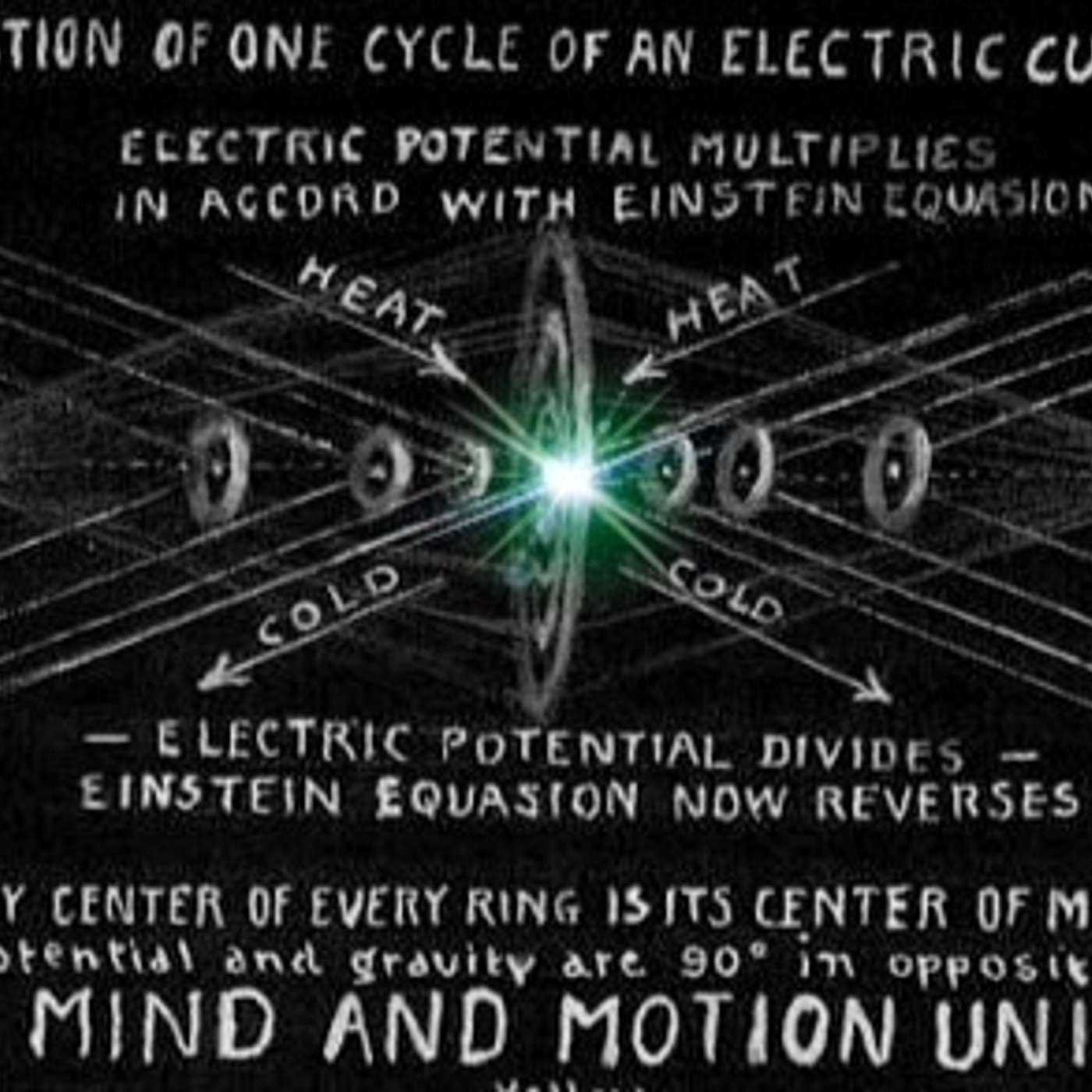
Ep 95System vs Experience: How Structures Shape Reality and the Human Psyche
Support the show:https://www.paypal.me/Truelifepodcast?locale.x=en_USOne on One Video Call W/George https://tidycal.com/georgepmonty/60-minute-meetingSystems govern society — governments, corporations, technology, even language itself. But human experience rarely fits neatly into a framework. In this episode, George Monty investigates the tension between imposed structures and the messy, dynamic reality of lived experience. We explore how rules, hierarchies, and institutions shape thought, behavior, and culture — and how the human spirit navigates, resists, and sometimes transcends these constraints.In this episode:The psychology of systemized thought vs intuitive experienceHow culture and institutions impose frameworks on human behaviorThe tension between predictability and creativityCase studies of systems clashing with human experienceStrategies for navigating and transcending structural limitationsTranscript:https://app.podscribe.ai/episode/56173891Speaker 0 (0s): Right. Speaker 1 (14s): Well Well wow. How you doing today? I'd been looking for you. Yeah. You, you listen in to this. How does it feel to be that handsome? How does it feel to be that beautiful ladies, gentlemen? You know, you know, you're an awesome person, ladies and gentlemen, the both of you. If you're listening to this, I want you to do something for me. Go ahead and reach back. Give yourself a little Pat on the back. A little Pat, Pat, Pat, give yourself a smile. Look in the mirror and look long. And in the mirror, look at your eyes, get some good eye contact in their, look at that person. Do you see that person's smiling back at you, that's you, you handsome devil you beautiful young lady. I have an interesting topic. I wanted to talk to you about today, about the future of our species, about our past experience, about the system and which we grow and learn on a daily basis. Let me start off with this. The status of life in nature is the standing problem of philosophy and of science. Indeed. It is the central meeting point of all the strains of systematic thought humanistic naturalistic philosophic. The very meaning of life is in doubt. When we understand it, we shall also understand its status in the world, but its essence and its status or a like baffling. That is a mouthful of words. Isn't it? I feel as if today I feel as if in our lifetime and probably I think it's safe to say that people in the future will feel the same way as the people in the past, we are always changing. We are always evolving. What we see today is But a small slice of what is possible for us to see. And in this time of crisis in this time of chaos, we are beginning to expand our understanding of what is possible. Speaker 0 (3m 2s): I believe that we are beginning to, Speaker 1 (3m 10s): They understand the relationship between experience and systemization do I say that, right? System System systemization everything is a system. Some people see the earth as a closed system. Some people see a school system society as a System education as a system evolution as a system, the climate as a system, Speaker 0 (3m 42s): I guess that's one way to look, Speaker 1 (3m 45s): I guess that is a one-way to interpret things on a grand scale. However, on an individual scale, I believe it is better described as Experience Speaker 0 (4m 0s): You can read a book, take a class and understand, or at least Speaker 1 (4m 12s): Begin to understand how the system works. Speaker 0 (4m 17s): However, Speaker 1 (4m 18s): Until you have the Experience, You will never truly understand it. Speaker 0 (4m 25s): Oh, like a horse and carriage or love and marriage systems. And Experience are two sides of the same coin. Speaker 1 (4m 47s): I feel that you are individual contribution to this world. Speaker 0 (4m 51s): It is to create Speaker 1 (5m 3s): A system of Experience. Does that kind of make sense? So my name is George. I'll think about it. Think about it. It, this way that you can use your own name for this. I am a being, having a George Monty experience may be you are someone having the Jennifer Nicholson experiments or the marijuana Experience Speaker 0 (5m 26s): If you were the same Speaker 1 (5m 27s): Organism, just choosing to have a different human experience, Right? It seems to me that we are all of the same organism looking at ourselves. Speaker 0 (5m 41s): So from a day, Speaker 1 (5m 43s): A different point of view, its like this grand puzzle, this grand game in which we are, we have split our consciousness in order to better understand who we Yeah. Speaker 0 (5m 52s): They are. It seems to me that Speaker 1 (5m 60s): If we could all operate from that level, if we could all operate from the understanding that we're one organism, if we can all operate from the understanding that we're all part of this giant organism and that while you're having your personal experience, you should not want to have the experience. That's not right. You should understand that the experience you're h

Ep 94Platforms, Algorithms & Castle Walls: The Digital Kingdoms That Rule Our Minds
Support the show:https://www.paypal.me/Truelifepodcast?locale.x=en_USOne on One Video Call W/George https://tidycal.com/georgepmonty/60-minute-meetingIn the modern world, our castles are coded and our kings are unseen. Platforms and algorithms have become the new feudal lords — shaping our conversations, filtering our perceptions, and deciding what reality looks like. In this episode, George Monty explores the architecture of digital power, the psychology of algorithmic influence, and the human cost of life inside these invisible kingdoms.In this episode:How algorithms quietly engineer behavior and emotionThe psychology of control and dependency in digital spacesWhy social platforms mirror medieval hierarchiesThe illusion of choice in algorithmic designStrategies for reclaiming digital sovereignty and awarenessTranscripthttps://app.podscribe.ai/episode/55965045Speaker 0 (0s): Well, well, well, Hello. My friends. Did you miss me? I missed you. I hope you're well, a smile. And right now our blue skies, smiling at you or the waves waiving to you who Whoo over here. Hey com take a dip. Water is nice. How about the trees? The trees bending their branches low for you. Can you smell that? Ah, fresh air for me? It's the salt there, Speaker 1 (39s): Right? Speaker 0 (43s): We have found a strange footprint on the shores of the unknown. We have devised profound theories, one after another to account for its origin. At last, we have succeeded in reconstructing the creature that made the footprint Speaker 1 (1m 6s): And lo it is our own Arthur S Eddington had a thought today. Speaker 0 (1m 18s): Maybe you will share this thought AB you have had this thought. Maybe you were thinking of it right now. No, no, no, its not how handsome I am. But if you're having that thought, you're not alone. Trust me. You're not alone. The thought I had was about change, not the kind of in your pocket. No real change, different presidents, Deserts and oceans change. You can see a, a forest being clear. Cut. That's changed. How about moving from one town to another? That's changed. How about your environment? Let's just kind of expand it out a little bit. The environment in which you live is changing, right? I'm sure you can think of multiple ways of change, but have you thought about this? Have you thought that when you have experienced change, it's not that The subject in which has changed. It's not that what you're thinking about has changed. It's not the subject of what you're thinking about that has changed. It is your thoughts that have changed. Do you see the difference there? Speaker 1 (2m 53s): Right? Speaker 0 (2m 54s): There's a difference. Profound change comes from at things in a different way. And when that is unconscious, when Speaker 1 (3m 6s): If you do not Speaker 0 (3m 12s): Make the conscious change, it seems as though the environment changes, the environment is constantly changing. And if you don't take a few moments to stop and look around as Ferris Bueller says, then you won't notice the change, Speaker 1 (3m 29s): Right? Speaker 0 (3m 35s): If you wanted to, you could fundamentally change the way you think about yourself and you would fundamentally change your life. Interesting to think about, right? I think so it gets me on this topic of language is right, Speaker 1 (3m 52s): Right. Speaker 0 (3m 55s): It's been growing in my mind for quite some time. I feel compelled. I feel almost obsessed with, and I feel like I'm on the cusp of finding something new about our language. I know that sounds egoistic, Speaker 1 (4m 16s): Right? Speaker 0 (4m 16s): Translating symbols into sounds, you know, in my last podcast, if you'd get a chance, go back and check it out is called a more perfect logos. And I was doing this thought experiment where I would say a word and I would, I would give the word that I set a color as it flowed from my mouth. And I based that a little bit on the tone in which I use so that the tone of my voice would match the word in my mind. I believe there was a similar frequency that would match and that would help facilitate a more perfect correspondence and language. I got a great comment or multiple comments on my awesome YouTube channel and on the podcast and this gentlemen was saying, wow, wouldn't that be cool? That this was a game in which I could listen or I can watch your YouTube videos. And then I could see the colors of the words coming out of my mouth. I thought, yes, that would be phenomenal. Alas, it's impossible. Or is it, how about the advent of Not virtual reality, but augmented reality, would it be possible clearly it would be possible. And in virtual reality for you to see the physical come out of my mouth with a corresponding color, whether it was written in code, I could code the words or code the tone to create the words coming out of my mouth to be a certain color than you. Dear listener. If we were in a conversation in the world of virtual reality or potentially even augmented reali

Ep 93Visualizing the Sound of Language: When Words Become Light, Color, and Consciousness
ESupport the show:https://www.paypal.me/Truelifepodcast?locale.x=en_USOne on One Video Call W/George https://tidycal.com/georgepmonty/60-minute-meetingLanguage isn’t just communication — it’s vibration crystallized into form. Every word carries frequency, intention, and unseen structure. In this episode, George Monty explores the synesthetic frontier where sound meets sight — from cymatics and sacred geometry to the neuroscience of linguistic resonance. What if words don’t just describe reality, but build it?In this episode:How sound frequencies shape matter and perceptionThe visual geometry of language through cymaticsThe intersection of neuroscience, spirituality, and linguisticsWhy language might be humanity’s oldest technologyThe future of expression in a multisensory worldTranscript:https://app.podscribe.ai/episode/55810427So she was like, what's that, babe, I love you. And it comes out like a pink purple and then I would wrap it with like, Oh, you know what I mean? Gorgeous. I was just thinking about you, how beautiful you are. And that's kind of like a baby blue turning into like a dark blue. And it just wraps around her words. And if you could think about conversations like that, if you can think about decorating someone else's language, if you can think about using your words as a way to decorate the Language of other people, I believe you could have a better conversation with people. If you can use the color coding scheme to talk about things in your day, I believe your conversation would be more interesting. I believe you can get to a point where the color of your words that you speak will tell you the mood in which you are in, but not just you, it can tell you the mood of the conversation that you're in. It can tell you the actual words, The color of the words of your language can tell you the state of the emotion, your conversation's in, what state is going to be in and what state it was previously in. You can also tell if you have chemistry with someone, if you can, the color of their words, in your words, you can also have someone find you more attractive. If you are able to decorate their words with the right color of words coming out of your mouth. Speaker 1 (6m 13s): I think the same Speaker 0 (6m 15s): Type of color coded system could be used for all. Language. I think you could apply a color to the sounds coming out of a barking dog. I don't think you can apply a color to a bird chirping and that you can decode that color. The colors. I don't know if the colors are the same for everybody. However, I think that everybody has a different type of code code, a color and Ora. That would be different to them. I think the color of the words you use can be seen. That might be the more perfect logo's that was the phylo today is talked about a logos that can be seen and you can see it. If you're listening to this, if for some reason you're listening to the TrueLife podcast right now, I'm telling you, you have the ability to see not only the words physically come out of your mouth, see the color of them. There it is. Again, it's Brown. Speaker 1 (7m 20s): Try it. Speaker 0 (7m 22s): I am going to try it right now and use a set of words that I think best fit. Like some are colors like the light for sea foam green and a blue. So here we go. Let me try this. The that's a Brown Can I'm not, I'm not getting it right now. It's almost like you have this weird writer's block. It's just let it flow or just let it flow. Maybe poetry is color-coded Maybe maybe when you speak in verse, it could be the same for you. Maybe it's frequency, maybe the words you use when you speak to people, you care about the cadence that you use to communicate the way you feel at a certain time. Maybe it is the pattern in which you use a certain type of descriptive flowing. Language maybe when you decide to slow down the frequency, when you decide to lather the language, do you use with softer baritone? Maybe in fact, when you can use this burgundy breath, when you can use the purple sails to float a word over to someone, when you can fly a kite Speaker 1 (9m 9s): Kind of works, right? Speaker 0 (9m 11s): What kind of works? You have to work on that. I mean, I think it might be frequency, right? Because color's have frequency. Light has a frequency and sound has a frequency. So of all of those match, theoretically, you should be able to match up the tone of your voice, the frequency you use to get your point across to somebody. If you want to get your point across to somebody, then you must navigate the distance. You must navigate the pathway to get your point across to. Sometimes you can sail your point on a sea foam, green solid, beautiful sunlit DEI. You can just say, get your point on your catamaran with your Stripe blue shirt, that cold, cool brisk wind with soft little dollops of water.dot, dot. That's your point? It's a little dollops as your point. I was like a light blue, right? Maybe a sea foam green. I want to do the col

Ep 92The Economy of Critical Race Theory: Power, Perception, and the Politics of Meaning
ESupport the show:https://www.paypal.me/Truelifepodcast?locale.x=en_USOne on One Video Call W/George https://tidycal.com/georgepmonty/60-minute-meetingCritical Race Theory isn’t just a debate about race — it’s a lens for understanding power, systems, and who gets to define truth. In this episode, George Monty examines the economy behind ideas — how theories become commodities, how narratives are weaponized, and how identity and ideology circulate like currency through culture and media.In this episode:What Critical Race Theory actually is (and isn’t)The social and psychological economics of identityHow media and institutions monetize ideological conflictThe balance between awareness, accountability, and manipulationMoving beyond polarization toward collective understandingTranscript:https://app.podscribe.ai/episode/55705854 Speaker 1 (0s): Hello, my friends. Hello everybody. How's your day going so far, you live in the dream out there. Are you doing whatever you can? Are you living on the edge of what is possible? Are you looking around trying to find out from trying to find a way to make the people around you better? Isn't that a good recipe for success? If you can make everyone around you better, more successful than aren't you, in fact, making yourself successful. That's what I try to keep in my mind. I'm not always successful and making people around me successful. However, I entertain that thought. I try to do it. I think it's a good recipe. I think is something that you can find helpful in your life. Additionally, I think if you are to do that, people will find you helpful. We want to be around you. Which leads me to the point I was thinking about today. My thought of the day, my idea Maybe of the week. This would be my thought of the week. Let me know what you think. Speaker 0 (1m 27s): <inaudible> Speaker 1 (1m 31s): First off in order to set this up. Let us think about our economic system. Are you thinking about it? Good. Now think about language. Okay. Now think about the merging of the two. Are you doing it right now? Okay. Or your eyes closed either mind. Think about capitalism, capitalism, competition, wall street money. It seems to me that the focus of our economy right now is a digital economy. The focus of our economy is into artificial intelligence. We believe the future of our world lies in robotics, in digital communication, and that these technologies are going to fundamentally radically change society forever. Speaker 0 (2m 45s): Okay. Speaker 1 (2m 46s): In fact, there is a Race according to Speaker 0 (2m 52s): Well. Speaker 1 (2m 55s): I am clearly not an authority on the source, but it seems to me that there a race between China and the United States for technological superiority, the race to AI, Google Ray Kurzweil, All of these new technologies, just competing to get there first and the money being poured into this industry and getting behind different agencies to when the races Speaker 2 (3m 30s): Staggering, Speaker 1 (3m 34s): The pace at which we are moving forward into this digital digital future is also a staggering. In fact, the pace is so rapid. We're leaving most people behind And there's people that do not want to look back. Oh, well, we left those people behind adios, Amigos. You can stand the heat. Get out of the kitchen. No Mosse Bert, huh? Nope, no Mohs. Roberto Duran. I almost said no Mohs burrito. And that's crazy because I definitely want more burritos, but you understand what I'm saying? Right? The pace at which we are advancing leaves behind not only people in our country, but the majority of the third world country, what do we do? Speaker 2 (4m 26s): There seems to be no slowing down. Speaker 1 (4m 29s): There seems to be no taking a break. In fact, if you listen to the pundits, if you listen to the money, if you look at the critical infrastructure for the future, It is the only path forward. According to our financial system, unlimited growth Speaker 2 (4m 56s): Quicker, faster, stronger. Speaker 1 (4m 58s): We got to get there. Hurry. We're going to get there. Now hurry Speaker 2 (4m 60s): Up, Speaker 1 (5m 4s): Argue that there's a very technology that we're pursuing Is changing our language. The financial system that we currently are under, It goes hand in hand with this particular technology goes hand in hand with our language Speaker 2 (5m 26s): And Speaker 1 (5m 26s): It started with McLuhan in a printing press. Now we have the internet and it's just like this Speaker 2 (5m 35s): Quickening Speaker 1 (5m 38s): Incredible pace at which every one is being forced to run. You could say that's evolution. You could say, well, look the slow. We're going to get caught there, going to be the goo under your shoe. And that's just how it is. Speaker 2 (5m 57s): It seems Maybe Speaker 1 (6m 1s): Maybe it's the turn of the century. You know, maybe it was the Mayan calendar, 2012. Maybe it's something we are unable to understand, but we are at the corner of revolut
Ep 91Digital Jesus 2: Technology, Transcendence & the Rebirth of the Human Spirit
ESupport the show:https://www.paypal.me/Truelifepodcast?locale.x=en_USOne on One Video Call W/George https://tidycal.com/georgepmonty/60-minute-meetingTranscript:https://app.podscribe.ai/episode/55621357Speaker 0 (0s): Welcome back my friends Digital Jesus episode to, to, to do it. Well, hello. My friends are so happy to have you back so happy you're here. Let's do it a little thinking about our friend Digital Jesus yesterday, ran into some guys on my route. If you were listening, thanks for tuning in. Let me know if you guys ever, and this goes out to every body. Reach out to me. If you want to be on the podcast with the little interview, just reach out. You can get my e-mail at G E O R G E P M O N T Y at Gmail. Send me a note. So I was thinking more about this Digital Jesus and it made me cry, opened the good book and dig into Genesis a little bit. If you remember yesterday, I spoke a little bit about how the internet is very similar in a lot of ways, too, right? Omnipotent powers. How does that make sense? Like, you know, and the idea or manifestation of God is everywhere and all-knowing so is the internet. The internet is always on. It seems to be all knowing or it at least seems to have an opinion on everything. And it didn't take me very long to just start finding some interesting similarities. Let me just begin with, we have everyone knows Genesis about Adam and Eve. Let me read one quick passage from you for you. The Lord, God took the man and put him in the garden of Eden to work it out and take care of it. And the Lord, God commanded the man. You are free to eat from any tree in the garden, but you must not eat from the tree. Have the knowledge of good and evil for when you eat of it. You will surely die where we all know the story, that beautiful seductive woman, Eve, I, she was beautiful. What you think handle Adam and Apple boom, takes a bite. I think about that for a minute. He takes a bite out of an Apple. What is the logo for Apple? Well, it is in fact that bite out of it, Apple is pretending to be the fruit from the tree of knowledge of good and evil. So how, how can that fall into? Well, it's funny. I would say the word fall, the fall of man eating from the tree of knowledge of good and evil. Does that mean that Apple is the tree of knowledge? That's what they want you to think. However, it seems more realistic to me or maybe a more abstract that the internet is the knowledge of good and evil, or can't be the knowledge of good and evil. I think about the way its being splintered. I know how many of you who have seen that documentary, the social dilemma. However, it's not imperative that you've seen it to understand that the echo chamber that is the internet is creating quite a bit of good and evil. And depending on where you live in the world, you may see my good as evil, but I may see your evil as good. I think what the Bible is telling us they're is that you should judge not, you don't have enough information to judge. And that's the exact same principle we should be applying to the internet were using the internet as a judge in a jury. The fact is there's too much information for us to judge. And if there's too much information for us to judge there could there couldn't not be in artificial intelligence that could judge you. That is because the artificial intelligence is in fact program by man. Another interesting part, I think is, remember when Jesus went into the temple, flipped over the money changers tables, it was like, get out of my dad's house. You Vipers. It seems to me that that's what the internet is doing to AKA Digital Jesus. He is gone into the new temple, which is an interesting fact. Let me just birdwalk for a moment to go off on a quick tangent, you can tell who is the most powerful structure in a society by the buildings. If you remember, it was in the beginning, it was the castle. That was the biggest building or infrastructure in the primitive times, the dark ages. And then you had the temple, the church that became the biggest. And then today in our world, you see the banking institution, you see the commercial properties. So you could argue that it was the divine right of Kings to rule. Then in fact, that power went to the priestly class and now, right, we have a new divine, right? And that is the internet national bankers wall street. Our God is printed on our money. And so the halls of the temple now would be Wallstreet. The halls of the temple now would be the bank of international settlements. And Digital Jesus rolls in there with his Bitcoin or his digital currency, and just flips over all of this table's and there's chaos. And these Vipers, these Heatons that have been putting their knee on the neck of the working people are now in danger, running for their lives. Is there a currency? There are tools they've used to manipulate right on the planet are no longer sharp. The duel, the Dole blade of currency is no longer able to cut to the bone Digital Jesus has com

Ep 90Digital Jesus Part 1 — AI, Faith & the Future of Humanity
ESupport the show:https://www.paypal.me/Truelifepodcast?locale.x=en_USOne on One Video Call W/George https://tidycal.com/georgepmonty/60-minute-meetingTranscript:https://app.podscribe.ai/episode/55567045Speaker 0 (0s): Well, hello. My friends. Welcome back to the podcast. It's election day. Are you guys excited? Did you go out and vote? Who'd you vote for? Come on. You can tell me you want to know who I voted for. I voted for pizza. I'm just kidding. I voted for burritos and I think that anybody that doesn't vote for burritos is a horrible person. Yeah you know who you are, how can you not like burritos? Disgusting. I'm just playing. I for 1:00 AM super excited that this election selection, craziness, at least this part of it is over. And I wanted to offer. Everybody a new vision. Kind of like, I know I'm not Luke Skywalker, but I would like to give you a new hope. Do you see what I did there? You see that? And that's all right. A new hope, a new vision. How about this one? Let's think about what could be happening. And besides what everyone is telling us, let's think for a minute were, were getting our information from be at COVID be it, the election, be it. Trump is going to kill Everybody or Biden's son. He's a pedophile. You know, the, the level of chaos is almost comical. I would like to offer you this vision. So where are we getting our information from television? I argued in a previous podcast at the people who are most afraid. The people who are most scared are the people who were watching the most TV. These are the people who believe that Trump is a racist, homophobic bigot, or these are the people that believe Joe Biden is a side dealing crack head, father, child, hair, sniffing retard. I got news for you. They're both kind of Right all of these men are not very good men. In fact, I would argue that the majority of people in positions of authority are not very good for you right Speaker 1 (3m 1s): Now. Speaker 0 (3m 1s): You may be saying to yourself, well, George look at you in your 2002 Toyota truck, all high and mighty. Mr. I got a 2002 truck and a 2008 Honda accord. Yeah, you're right. I don't know. I think once, like, look at how you get into positions of authority. You have to go and beg people who have a lot of money for some of their money so they can loan it to you. So you can run your campaign. Those people want a lot of favors. There is no such thing as a free lunch, and it doesn't matter if you're in the United States and Mexico and Canada, wherever you are, if you would like to be in the halls of power in the halls of government, then you were gonna have to get on your knees and do some serious But kissing, Speaker 1 (3m 53s): Right? Speaker 0 (3m 57s): That's how it's always been an over the last, I don't know, 20 years we've seen the development of the internet. We have seen the promise from the tech companies of this artificial intelligence. I'd like to think of the internet as a new form of communication. Although it may be better described as a new form of the printing press. I've done some previous podcast that talked about the medieval internet and how might it be possible that the internet is creating these caves or these bubbles where certain like-minded people only interact with certain like-minded people. There are definitely some similarities there. And I would like to remind you, you, you should go back and listen to those podcasts because I've got to tell you, I think they're pretty good. I think you'd enjoy them. I mean, what else were you doing if you're like that in your house? Why not hang out with George, but that's not what we're going to talk about today. What if this, what if artificial intelligence? What if this new form of communication much like the printing press allowed people to become more literate, at least in a linear print way? What if the internet is now allowing everyone to see the inner workings of government? What if the internet has exposed all of these so-called elite people as just elite crooks. It kind of makes sense. If you look at censorship as a form of celebration and what do mean by that? How can censorship be celebration? I think it was Julian Assange, who said, whenever you begin to see a lot of censorship, it's time for celebration. And that reason is because the existing power structures are so weak. They must sensor anything out. There 'cause even the smallest nugget of truth is now a threat to them. Therefore celebration in times of censorship might be something to look at. Nowadays. It seems to me and I, I don't write code. However, I try to read a little bit and it seems to me and correct me if I'm wrong, but the algorithms feed people on what's being clicked in. Even if, even if the big tech or the engineers in there they go and they change the code so that people can't look at the different conspiracy theories. It doesn't mean people aren't digging to find them, or does it mean people aren't digging to click on them. And if those
Ep 89We Know the Price of Everything & the Value of Nothing: Culture, Greed & the Death of Meaning
ESupport the show:https://www.paypal.me/Truelifepodcast?locale.x=en_USOne on One Video Call W/George https://tidycal.com/georgepmonty/60-minute-meetingTranscript: One on One Video call W/George https://tidycal.com/georgepmonty/60-minute-meetingSupport the show:https://www.paypal.me/Truelifepodcast?locale.x=en_US🚨🚨Curious about the future of psychedelics? Imagine if Alan Watts started a secret society with Ram Dass and Hunter S. Thompson… now open the door. Use Promocode TRUELIFE for Get 25% off monthly or 30% off the annual plan For the first yearhttps://www.district216.com/Legal Disclaimer / Release of Liability for Podcast:This content is for educational and informational purposes only. Nothing in this transmission constitutes legal, financial, or professional advice. I am not your lawyer, financial advisor, or telling you what to do.This podcast documents historical events, analyzes publicly available information, and explores hypothetical scenarios. Any actions discussed are presented as educational examples of how systems work—not as instructions or recommendations.You are solely responsible for your own decisions and actions. Any application of information presented here is at your own risk. I assume no liability for consequences of actions you choose to take.By continuing to listen, you acknowledge that this content is educational commentary, that you’re responsible for researching applicable laws in your jurisdiction, and that you’ll consult appropriate professionals before taking any action that could affect your legal, financial, or personal situation.
Ep 88The Tyranny of Globalization: Power, Control & the Erosion of Identity
ESupport the show:https://www.paypal.me/Truelifepodcast?locale.x=en_USOne on One Video Call W/George https://tidycal.com/georgepmonty/60-minute-meetingTranscript:https://app.podscribe.ai/episode/55417488Speaker 0 (0s): Welcome back to the podcast. My friend, hope you're all enjoying the day, or I hope you're enjoying the evening. I wanted to talk to today. Not only do the most amazing people that are listening, there would be you. However, I wanted to talk today about a certain subject that I found really interesting. And that subject is the crossroads of conformity. Sounds like a mouthful of words. Doesn't it. Let me try and explain exactly what it is I'm thinking about. It seems to me that humanity is at the crossroads, the crossroads of conformity, a cursory glance back in history. Be it the history of your life, a history of your parents' life or history in general, regardless of how true that history is. One of the major flaws of humanity is also its greatest asset in that is the emotional drivers that make us human love, passion, hate anger, animosity, jealousness, all of these powerful emotions that we have. These, this irrational exuberance, the inability to see things clearly the pathway to abstraction all of these things, our inability to see the opposite sex at times clearly as an individual, as an equal, our inability to see things clearly because our mind is clouded with emotions. Be it lust or desire, be it guilt or animosity. These are the things that hold us back from truly embracing one another as part of the same organism. When you listen to policymakers being in the past or the day, they have this grand idea for this utopian world view of We, we can unite the world and we can extract a resources and distribute them fairly. And it's so naive to me, don't get me wrong. It's beautiful. It's just naive. If you listen to the meditations of Marcus or really is, you will see, even then he was speaking about the issues with emotions, how it clouds your judgment, it makes it unable for you to accomplish your goals. At times that driver those drivers, these tools of creativity, these ideas of inspiration, these methodologies for moving forward or at a point where they can be corrected. If you look at them as if there is a problem, or if there is a disease, and that is the crossroads, I'm talking about artificial intelligence, although I don't think that's the correct term, or I think it's a poor choice of words to describe the idea of computers being, thinking entities. They are without emotion. They are without the drivers of humanity. It, as much as people want to get rid of those, some people would like they get rid of them. Not all people as much as some of these policy makers or, or even those of us who live day to day in our not making conscious choices as much as technology would like us to be seen that way. I'm not sure if I'm saying that, right, we are not robots. We are not computers. However, it is possible for us to move towards an evolutionary change without emotions. It is possible for us to evolve into a less critical thinking, less evolved set of organisms. I think that is what technology is doing to us or better yet. That is the fork in the road. And in which the economic model of technology is pushing us and Britain a little something. And I'll let me know kind of, I'm trying to flesh it out here, but let me just read you this rough draft have kind of what I have put down. We are on an evolutionary. We are at an evolutionary turning point. As far as human emotions go, it is true that our emotions, our in fact, the roadblocks that stop us from grand utopian dreams, grand utopian dreams of a peaceful, pragmatic harmony, which one of us can not see the organized brilliance of the hive. Mind this hive, this cooperative brood, this, this highest level of organization. Do you not understand how productive we could be? How fair life could be, how equally we could divide the Earth's resources. Am I the only one who sees this as a dystopian nightmare? Have we not been warned by the likes of Orwell, Huxley and Patrick Wood? We are all far from perfect. We are all far from being the best versions of ourselves. We are all far from rational because we can never be these things. This is what it means to be human, imperfect, irrational, emotional. We are all in a process of evolution, the same process of evolution. It's not a pretty picture, but it is necessary if the path where as smooth as the rocks and the rocks, as few as the handholds and the handholds, a soft as a breeze, there would be no reason to climb the mountain. There would be no sense of accomplishment once you've climbed them out. Humanities leaders' at this point in time, it's seems to me have this naive idea that they can make the world, this peaceful place of harmony. You can't, you can't. No, we are. We are animals on some nature and it's such small thinking. It is such a naivete. It is such small mindedness for people who find
Ep 87The Relationship Between Sound & Experience: How Vibration Shapes Consciousness & Reality
ESupport the show:https://www.paypal.me/Truelifepodcast?locale.x=en_USOne on One Video Call W/George https://tidycal.com/georgepmonty/60-minute-meetingNow Available: NewsletterTranscripts:https://app.podscribe.ai/episode/55146996Speaker 0 (0s): Well, good afternoon, good evening to where you are. And I hope you find yourself Speaker 1 (23s): In a state of bliss. I hope that you are enjoying your day. I hope you've got someone to love something to look forward to and something to do. If you've got those three things, life is looking pretty good right now. What we'll come back to the podcast. I've been thinking about you. I actually have a little a housekeeping to do today in that I got an awesome message from a good friend of mine. And I think what we were speaking about as relevant and really got me thinking about different things. And I would like to share it with you. I like to share what he had written me and what I wrote back to him. So here we go. This one was to my amazing friend, Eby, who is one of the coolest people I've ever met on the planet. One of the most spiritual people I've ever met. And if you're listening to this buddy, I love you, man. Here's what he says. George listen to do a couple of the podcast today. And I really liked them. See that right off the bat. You can tell he's a good guy that made me think the analogy of the locusts, the middle-class and minorities. They are the majority of people. We have ideas of swarming the people on top of the upper-class or the corrupt politicians in putting them in jail. I've always thought that the way you defeat a rich, powerful entity is to take their money away by not paying for their products. I have also been thinking about origins. People saying, follow the money to fund the corruption, looking at everything's origin. Where did it come from? Where was it made? How was it made? Who made it with what material? Where did that material come from, et cetera then, is it worth it to pay for it? What ever it is. If people got together and boycott products on a mass scale, that would get way more attention than a couple of dead CEOs. It's hard to express revolutionary revolutionary ideas, the texts because of the very thing that you expressed in your podcast about Facebook. So why don't want to kill anybody? And the fact that I want revolution makes me uncomfortable writing this because it is likely that someone or some entity is monitoring this particular communication via an algorithm it's possible red flags, types of words. Everything seems to be monitored these days. I know am a peon in the scope of global society, but I imagine if anyone was able to get any traction on transforming corporate industrial society, they would have their worst fear released. By the way, besides that point, my kids asked me last year, what my greatest fear was and what superpower I would want. And my answer was at the most afraid of things that you cannot see, not so much ghosts, but germs, bacteria, and virus, things like that. The greatest superpower is the power to heal and not just a physical, but also the mental balance. Thanks for provoking. This thought George much love. So there's a lot in there. Let me read you. guys' what, what I wrote back first off. Thank you brother. I said it before, and I'll say it again. You are one of the most spiritual people I've ever met on the topic of swarming locusts. Isn't it fascinating. I've been consumed lately with that type of language, the language of life. Imagine being alone in a field on a beautiful sunny day off in the distance of black cloud, 80 million locus traveling towards you at 12 miles per hour Is not really that different than an angry Speaker 2 (4m 19s): Mob. Speaker 1 (4m 22s): The locusts descend on the field, stripping flesh from bone, leaving a trail of famine, plague and devastation. You are really similar to a mob of angry people, Speaker 2 (4m 33s): But yet that has only on a superficial understanding. Maybe Speaker 1 (4m 39s): That's a swarm of locusts. That is the meek inheriting the earth, or maybe it's a call to action. Perhaps its a warning may be an omen, I guess it all depends on if you identify as the grasshopper or the grain I'm of the opinion that it is the spirit of the earth, communicating the concept of infinite possibility, arising from circumstances of fine attune on the topic of rebellion, the hammer brothers minority and middle-class or as I like to call them sledge in Jack, they clearly have the power to pummel, the rich and powerful and corrupt into a pink pasty pile of flesh and hair. Ultimately that will get us nowhere. The truth is the people on top could rape and pillage and plunder the lower classes in perpetuity if they were not so greedy and so arrogant. If the elite were willing to sacrifice just one, just one of their own to the justice system. If they were willing to sacrifice one, just one of their own to a public execution, if they were willing to sacrifice one, just one t

Ep 2A New Dimension of Language: AI, Consciousness & the Evolution of Meaning
Support the show:https://www.paypal.me/Truelifepodcast?locale.x=en_USOne on One Video Call W/George https://tidycal.com/georgepmonty/60-minute-meetingIn this episode we will tackle the printed word. McLuhan made the claim that linear print has brought about linear thinking. It has given us ideas such as the printing press, the assembly line, & the theory of interchangeable parts. All of which have had profound effects on the demise of our culture. Is there another dimension of language we can use to recreate our society? I think so.... One on One Video call W/George https://tidycal.com/georgepmonty/60-minute-meetingSupport the show:https://www.paypal.me/Truelifepodcast?locale.x=en_US🚨🚨Curious about the future of psychedelics? Imagine if Alan Watts started a secret society with Ram Dass and Hunter S. Thompson… now open the door. Use Promocode TRUELIFE for Get 25% off monthly or 30% off the annual plan For the first yearhttps://www.district216.com/Legal Disclaimer / Release of Liability for Podcast:This content is for educational and informational purposes only. Nothing in this transmission constitutes legal, financial, or professional advice. I am not your lawyer, financial advisor, or telling you what to do.This podcast documents historical events, analyzes publicly available information, and explores hypothetical scenarios. Any actions discussed are presented as educational examples of how systems work—not as instructions or recommendations.You are solely responsible for your own decisions and actions. Any application of information presented here is at your own risk. I assume no liability for consequences of actions you choose to take.By continuing to listen, you acknowledge that this content is educational commentary, that you’re responsible for researching applicable laws in your jurisdiction, and that you’ll consult appropriate professionals before taking any action that could affect your legal, financial, or personal situation.

Ep 86Structural Power in the Digital Age: Networks, Control & Influence
ESupport the show:https://www.paypal.me/Truelifepodcast?locale.x=en_USOne on One Video Call W/George https://tidycal.com/georgepmonty/60-minute-meetingBased on a phenomenal book by Jakob Linaa Jenson: “ The medieval Internet”https://books.google.com/url?client=ca-google-gppd&format=googleprint&num=0&id=01xtzQEACAAJ&q=https://www.barnesandnoble.com/w/_/_%3Fean%3D9781839094132&usg=AFQjCNFfVMUuvVasbzyny83HOe-woq9rGQNow Available: NewsletterTranscript:https://app.podscribe.ai/episode/54901077Speaker 0 (0s): See, hope you are ready for the next episode. Hey, welcome to the next episode. Speaker 1 (8s): We're getting into the medieval internet here. This particular chapter is going to be specifically about instruments of internet. Power I'm going to get into the micro as well as the macro level. So let's jump right in here. Instruments of internet Power in the digital age, this is part of three of the series. The sociological study of communities and the public sphere has aimed at looking at what forces bind people together and how society emerges in that framework to play the necessary role of mediating between individuals in nature, another influential approach, which is sometimes correlated to the above approach and sometimes competes with it is to study power. As it constitutes social relations, regulating actions and institutions, finding subjects to rulers and penetrating the entire social order from government and the family life. Let us try to figure it out how the internet, which was touted by futurists in the 1990s and the two thousands as the ultimate tool have freedom. The liberating WEPAN giving the grassroots a voice and a space against the oppression in all its forms has been more coolly seen in the last decade as a means to exorcize various forms of Power strengthening rather than weakening Power relations. That keep the social order as strictly hierarchized and controlled. We are going to define and identify and describe a range of online Power mechanisms from the direct and instrumental to Structural and algorithmic. Let's talk a little bit about the power. I'm sorry. The concept of Power power and the way it binds social relations is among the most discussed topics in sociology, as well as in political theory, the mini diverging concepts of power might be summarized on a scale from actor based to structure based in short, from an instrumental view to a structural view on the one side of the scale Power can be ascribed to individual agency. Whereas two, the other side of the scale power is embedded in structures and agency, which has a definite force and effect in the eighties and nineties, many most notably Anthony Giddens attempted to give a more complex account of the dialectic between agency and structure by viewing structure itself as structured by the changing the result of the continual course of agent structure relations in which agents find and exploit holes and structures and thereby change the structures imminent form. The actor based instrumental view is often found in the liberal tradition, for instance, by Robert doll, it is also a dominant in the American sociological tradition of symbolic interactionism for instance, in the works of George Herbert Mead and Herbert Blummer here, power is a product of human habits, norms and actions that are ultimately turned into rules and institution Governing the power structures of society in this tradition. However, power structures are always subject to change based on human actions. In this tradition, there was a profound focus on agency and thereby fundamentally on the freewill and empowerment of individual. You take a few minutes to think about how your life is structured. Where does the power lie in your life? Are you someone who has legitimate power in that people look up to you? Are you someone that has coercive power as in you can't do something to them negatively, if they don't follow what you say, Speaker 2 (4m 37s): Do you work Speaker 1 (4m 38s): For an institution that has power? Thus, some of that power is lent to you. What is your role in the world and how does power or your personal power manifest itself in the world in which you live? Speaker 2 (4m 54s): It's a good Speaker 1 (4m 55s): Idea to take a moment right here, just to go over that concept and think about where you fit in. Speaker 2 (4m 59s): We have this, once you do that, I think you'll have Speaker 1 (5m 3s): A better understanding of how the internet Speaker 2 (5m 6s): Has Speaker 1 (5m 8s): Found ways to either compliment the Power you have, or to take away Speaker 2 (5m 14s): The power that you have Speaker 1 (5m 19s): Structural view is found in the American sociological tradition of Structural functionalism. Most clearly found in the works of Talcott Parsons and his followers. Here's the society can be explained by a scheme. Parsons was known for his famous agile scheme, a G I Speaker 2 (5m 38s): L Speaker 1 (5m 41s): Reference in which human

Ep 85Control, Surveillance & Digital Feudalism: Power, Privacy & the Modern World
ESupport the show:https://www.paypal.me/Truelifepodcast?locale.x=en_USOne on One Video Call W/George https://tidycal.com/georgepmonty/60-minute-meetingNow Available: Newsletter!Based on a phenomenal book by Jakob Linaa Jenson: “ The medieval Internet”https://books.google.com/url?client=ca-google-gppd&format=googleprint&num=0&id=01xtzQEACAAJ&q=https://www.barnesandnoble.com/w/_/_%3Fean%3D9781839094132&usg=AFQjCNFfVMUuvVasbzyny83HOe-woq9rGQTranscript:https://app.podscribe.ai/episode/54618977Speaker 0 (0s): March day is just another man manic Monday, Monday, Monday, Monday, what's going on, everybody. Welcome to the middle of October. Today is Monday episode. I hope you've got a great weekend. I hope you are enjoying yourself. I hope your family's healthy. I hope you're healthy. I hope you've got a smile on your face. You've got some to look forward to. Maybe even in this podcast, maybe you've been looking forward to this podcast all weekend that will bring a smile to my face. Wanted to continue today with the next series of power politics and poverty in the digital age. It's fascinating. I know a lot of you have seen the documentary, the social dilemma, and it talks a lot about some of the issues we're having with the internet, the way its changing our society, the way its changing and organizing new laws around itself. I found it fascinating and it had dovetailed nicely with a lot of different books. I've been reading most of which I have done reviews on or spoke about in the podcast. Let me tell you a little bit about some of those. And then I'm going to dive into the series, which is going to get into the metal internet and how we're kind of sliding backwards in a lot of areas. The first few first few books I read were Marshall. McLuhan's the global village, the medium in his message, his ideas on the printing press and how linear print has given way to linear thinking. I want a lot of ways, although it was a phenomenal invention, it narrowed our view of the world. I'm going to link in the show notes to an experiment that I did with a penny. And I can tell you a little bit about the penny experiment here. So take a penny, you set it on the table and you look down on it from an overhead point of view and you'll see a circle with some, you know, some etching on it, depending on how good your eyes are. You might see some letters in some numbers, but you will see a lot of detail and even some depth. You know, if you slowly squat down until your eyes are level with the table and you look at that penny, it will actually turn into a straight line if you get dead, even with it. And that is a good experiment to explain and visualize what linear print has done to our point of view. It's a really cool experiment. You can check out with a link in the show notes where you can try out with yourself. It's a highly recommended. It's really cool. The next set of books I was reading is by a Russian mathematician called Anatoli Flamingo. When you can follow along that series and the podcast it's called history of science or a fiction, I don't, I can't speak to the validity of the book. However, it's fascinating to read the amount of detail and the inconsistencies in which a history has been recorded. It brings up the George Orwell quote that he who controls the future. Control's the past, Speaker 1 (3m 56s): Right? Speaker 0 (3m 59s): And in order to control the past, you must control the present. Also it helps me understand that when people talk about truth, if you talk about truth or someone claims something to be true, you should ask yourself, is that true enough? Cause nothing's really ever true. Right, it's more of a opinion. So those are two books that kind of led me here. And as I dive down a little deeper, I wanted to share with you some new insights I got from this book. I'm currently reading called the medieval internet by Jacob Lena Speaker 1 (4m 37s): Jensen. Speaker 0 (4m 41s): The first is I'm going to repeat a couple of passages and then I will try to dive in and do a little breakdown and tell you my thoughts on it. Here's the first passage that I was reading is a paradox that the internet, the ultimate symbol of modernity transparency and enlightenment facilitates logics of enclosures, censorship and social control on the internet is used in the service of democracy and freedom movements around the world. But it is also used by dictatorships to clamp down on activists and opposition. It has used to preach the gospel of freedom and to liberate the suppressed and alienated at the same time, sworn enemies of modernity and education like ISIS, Al Qaeda and Boko Haram. They use it to advocate their viewpoints and achieve their goals, new medium technologies, liberate and educate, but they are also used to narrow our horizons, create information, bubbles and willfully are not make us more ignorant and less aware of worlds unfamiliar to our own. It's relatively new the internet. I mean, at least f
Ep 84Power, Politics & Poverty in the Digital Age: Inequality, Influence & Control
ESupport the show:https://www.paypal.me/Truelifepodcast?locale.x=en_USOne on One Video Call W/George https://tidycal.com/georgepmonty/60-minute-meetingBased on a phenomenal book by Jakob Linaa Jenson: “ The medieval Internet”https://books.google.com/url?client=ca-google-gppd&format=googleprint&num=0&id=01xtzQEACAAJ&q=https://www.barnesandnoble.com/w/_/_%3Fean%3D9781839094132&usg=AFQjCNFfVMUuvVasbzyny83HOe-woq9rGQTranscript:https://app.podscribe.ai/episode/54443874Speaker 0 (0s): Welcome back. My friend, I change by not changing history. Doesn't repeat, but it isn't it weird how the older you get, the more you become like your parents, even though when you were young, you swore to yourself that you would never become like your parents. It seems to me, you can run your whole life, but not go anywhere. There's nothing new under the sun. Do you guys see what's happening right now? If you want to know the future, you must look at the path he who controls the future controls the past. He controls the past control as the present did, get it. You understand, we have this weird feeling of deja VU right now, a feel, and I hope you feel this way. And if you don't feel this way, I am going to try to make you feel the way that I feel using the words I'm using. I'm going to paint you a picture. I'm hopeful. It will be a masterpiece. I'm hopeful that if you can get goosebumps by listening to the words, I'm about to talk to you about the words I'm about to give to you. If I can make you get goosebumps, if I can make your face flush, then I am communicating with you. So let me see if I can do that. This whole COVID the whole world of the internet. It seems eerily familiar. Doesn't it? You know, history is something that can be so amazing and so beautiful. And so poetic. If you want to know where your rat in your life, there's probably someone who wrote a book or a story or a fable. There's probably a story that explains your life. Your story is a beautiful story. If your willing to take control of it, if you're willing to take ownership of your life and your story, it will be a story that can be remembered. And if you've lost your way, they look back and you can find your way ahead. Let me explain what I mean or at least attempt to do so controlling information is controlling the world. Speaker 1 (3m 1s): Gonna say that again, controlling information is controlling the world. If you can control information, you can control the world. I'm going to make the argument that we in today's society in 2020 are beginning to look a lot more like a medieval system. Speaker 0 (3m 21s): The, the comments, the monarchy, the Catholic church, Speaker 1 (3m 29s): What worries about new technology they're as old as the discoveries of new technologies already, Plato was warning that writing would damage memory and recognize the double sided nature of new technology with on the one side, the vast advantages given by writing in the organization of his resources. And on the other side, have the ability of insurgence to use writing, to organize against the powers that be. We've touched upon this a little bit. There's a book Speaker 0 (4m 4s): That Speaker 1 (4m 6s): Goes in to some of this. It's called tech knobbly, and he also speaks about this exact same passage. However, he takes it back further. He takes it back to the times of Toth. Remember the Emerald tablets of talk. Do you remember that? And Toth goes up into his, his master, Speaker 0 (4m 25s): God damn. And I forgot that guys name Speaker 1 (4m 28s): Anyways, I'll come back to it. However, he goes and he speaks to them and he says, listen, to have created this new technology called writing, and it's going to help the people so much cause they didn't have to remember everything in the leader says on a top Toth, you are marvelous. You come up with all of these beautiful technologies and inventions, but think about it writing while it would make things easier for people in the long run, it's going to make them weaker. It's going to make them weaker due to the fact that they no longer need to understand why they need don't. They no longer needed to have to remember. They were just going to refer to this book and it's going to weaken the mentally. And isn't that the case with all our technologies, all our technologies make life a little bit easier, but they also take something away from us. Let me put it into a, into a term that the blue collar guy, guys like me can understand. I I can drive a 40,000 pound truck stick, shift up a Hill. I realize how to put one foot on the brake, one foot on the clutch and then gas. It slowly led off. Put that thing in first and then move up the Hill without rolling back too far in today's world. Most people Speaker 0 (5m 52s): Have a, Speaker 1 (5m 55s): The car. If you live in the first and an upper class neighborhood, you have a car. This not only has an automatic transmission, but it has a backup camera. You might even have a car that