
Timeline: Vermont Public Classical
243 episodes — Page 1 of 5

Timeline - Chevalier Part 5 - The White Chevalier
We’ve been exploring the life of Joseph Bologne Chevalier de Saint-Georges, a multi-talented violinist, composer and conductor who was famous in France in the 18th Century. In the last four episodes, as we’ve relayed all of this history, I’ve left something out on purpose, but it’s now time to address the elephant in the room. Anyone who has studied or listened to the music of Chevalier will know him by a particular nickname, “The Black Mozart” a title given after his death.
Timeline - Chevalier Part 4 - Revolution
Joseph Bologne Chevalier de Saint-Georges was a world-renowned fencer, a composer, violinist and conductor in 18th century France. Even with all of his success, there was a limit to what Chevalier was allowed to achieve.
Timeline - Chevalier Part 3 - Rising Star
This is our third episode exploring the life of 18th Century French composer, violinist and conductor Joseph Bologne Chevalier de Saint-Georges. We’re answering the question, why was this incredibly talented individual, who was quite popular in his day, barely known to us today. In the last episode we spoke about Joseph’s heritage, being the son of a Senegalese enslaved individual and French aristocrat. In this episode we’ll dive into the early life of this multi-talented prodigy.
Timeline: Chevalier Part 2 - Dear 'ole dad
***Just a quick content warning before we begin. This episode will make references to sexual assault and might be triggering for some listeners.*** Chevalier’s father, George, was born into a long line of colonists. The family owned extensive sugar and coffee plantations in Guadeloupe and beyond, meaning they were quite wealthy and had participated in slavery.
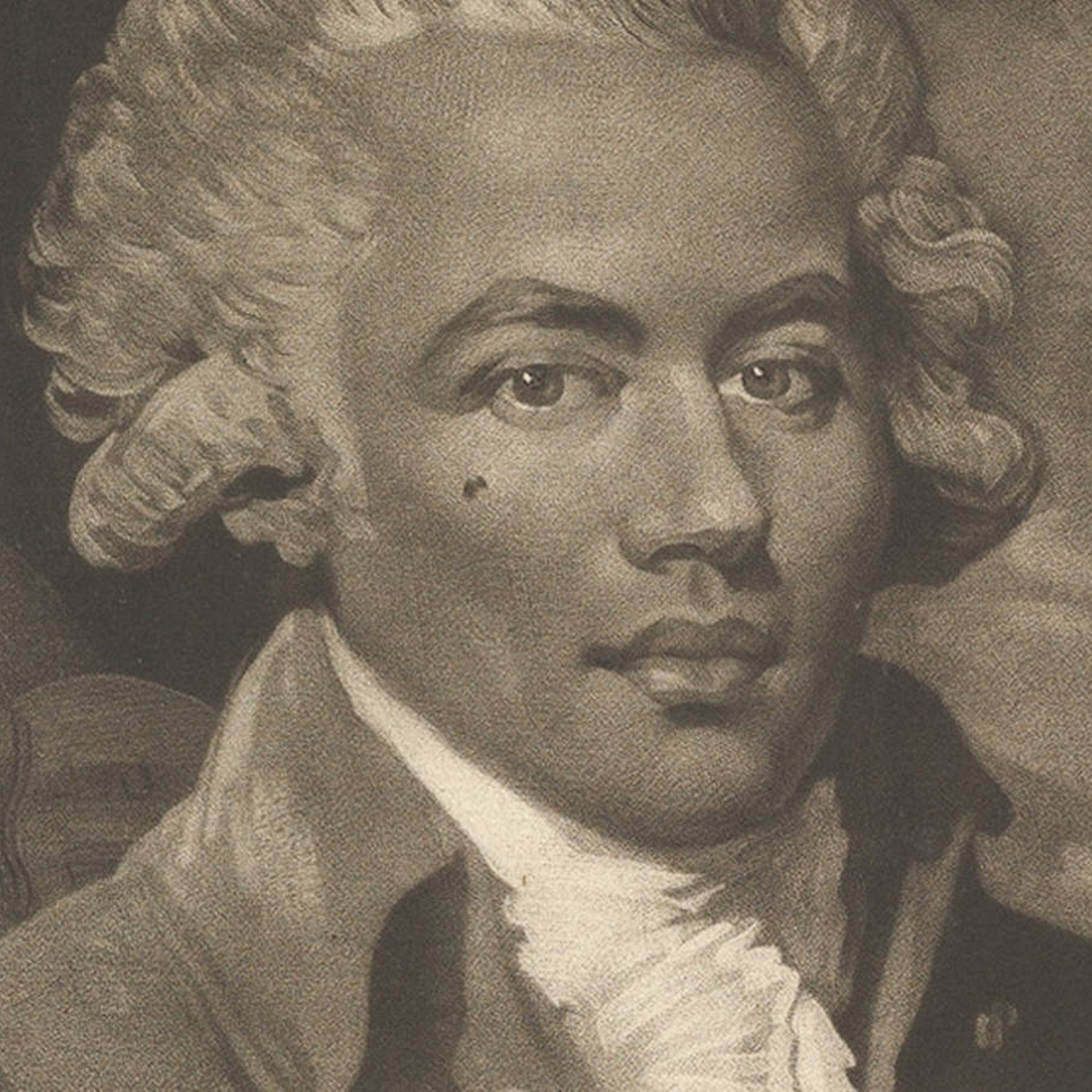
Timeline: Chevalier, reintroducing a Black genius
Joseph Bologne, Chevalier de Saint-Georges was an 18th Century French composer, violinist and conductor of mixed race. Why was this talented individual, who was quite well known in his day, all but forgotten in ours?
Julius Eastman - Complete Series
Timeline from Vermont Public Classical presents the ten-part series about composer Julius Eastman as one complete podcast episode. Explore the life and legacy of this amazingly talented composer/performer who died penniless and homeless in 1990, but whose work is finally getting the attention it deserves today.
Julius Eastman Part 10 - The Holy Presence
This is our final episode in our ten-part series on the life, music and legacy of composer Julius Eastman. Over the course of ten episodes, we’ve talked about art, race, sexuality, expression, and who gets to be in the classical canon. As we wrap up this discussion we remember Julius Eastman separate from his musical legacy, Eastman the person. And hear some stories told by the people who knew him.
Julius Eastman Part 9 - Righting the Canon
This is part nine of our ten part series on composer Julius Eastman. The Classical canon is a collection of pieces that are the most often played and studied; sort of like the greatest hits of classical music. It’s a curated list of quote/unquote “important” pieces, composers and works. This curation started in the 19th century and the list heavily favors white, European men. In this episode we'll talk about righting the canon by making room for more diverse voices and composers.
Julius Eastman Part 8 - Songbooks
This is part eight of our ten part series about Julius Eastman; a composer whose work has been experiencing a renaissance lately as a new generation is discovering his individual musical style.
Julius Eastman Part 7 - What's in a name?
This is the seventh of our ten part series about Julius Eastman; a composer whose work has been experiencing a renaissance lately as a new generation is discovering his individual musical style. In this episode we'll discuss the way that Eastman chose to title his works and push the boundaries of classical music.
Julius Eastman Part 6 - Organic Music
We’re at part six of our ten-part series exploring the life, work and influence of composer Julius Eastman. We’ve talked a lot about Eastman’s past and personality, in this episode we’ll focus on his music.
Julius Eastman Part 5 - Village Voice
We’re deep in our series exploring the life and legacy of composer Julius Eastman. We’ve already spoken with authors, composers and musicians who are bringing Eastman’s music and story to a new generation. In this episode, we have the chance to hear more of the story first-hand.
Julius Eastman Part 4 - Femenine
We’re at part four of our ten part series exploring the life and legacy of Julius Eastman, an openly gay, black composer that died nearly forgotten, penniless and homeless in 1990; nearly forgotten that is, until now.
Julius Eastman Part 3 - Unjust Malaise
We’re focusing on the life and influence of Julius Eastman, a composer who is just now getting his due attention in the classical world. For decades, Julius’ music was all but forgotten; that is until another composer, a friend of Eastman, got involved.
Julius Eastman Part 2 - Fierce Black Queen Iconoclast
This is part two of our series on the life and works of Julius Eastman, a deeply neglected composer of contemporary music in the late 70s and early 80s. In fact, he was almost forgotten. I, myself, had barely heard of Eastman in all my musical studies and he certainly wasn’t on my radar, that is until an email appeared in my inbox.
Julius Eastman Part 1 - 8 Songs
On Timeline, we will be diving into the music, life and legacy of Julius. We’ll look at his development as a musician and an artist. We’ll talk about his reputation and his struggles with being an openly gay, black man in the late 70s and early 80s. We’ll discuss the triumph and tragedy and also discuss the place that Eastman’s music has, or should have, in the canon. Of course, that means talking about the very concept of the classical canon itself.
209 - J H Kwabena Nketia
On September 27, 2017, the nation of Ghana gathered to celebrate the life and music of 96 year old composer Kwabena Nketia. On that day it was declared that, “…Professor Nketia’s life symbolizes the evolution of our nation in the 20th century…a bridge between our indigenous culture and modern culture, non-literate and literate traditions, old and young artists, Ghana and Africa...” The event was also held to raise funds to archive Nketia’s lifelong work of ethnomusicology. According to the University of Ghana, Nketia had collected, “thousands of archival files and field notes on Ghanaian culture, history, language and arts.”
208 - Abdullah Ibraim (1934 - )
Abdullah Ibraim, also known as Dollar Brand, was born Adolph Johannes Brand in Cape Town, South Africa in 1934. He started taking piano lessons at the age of seven and was performing professionally by the time he was 15. Brand was of mixed-race so under the South African apartheid system, he was considered “colored.”
207 - Justinian Tamusuza
Justinian Tamusuza is one of the premiere, contemporary African composers today. His music has been compared to American minimalist composers like Steve Reich and John Adams. However, what sets Tamusuza apart is his use of rhythm that calls to mind the pulse of traditional African music.
Francis Bebey (1929-2001)
We continue our series on African composers by exploring the life, music and legacy of Cameroonian composer, Francis Bebey.
205 - A Conversation with Akiko Fujimoto
Last year, the Vermont Symphony Orchestra’s long-time music director, Jaime Laredo, stepped down after over 20 years with the orchestra. Now, the VSO has several candidates to fill that position. They’ll be coming to Vermont, meeting with the orchestra and the audience, as well as conducting concerts this coming season. The first, conductor, Akiko Fujimoto, will be conducting the orchestra’s October 30th concert that’s taking place at the Flynn Center in Burlington. I had a chance to chat with Akiko, via zoom.
204 - Olatunji Akin Euba (1935-2020)
We continue our series of episodes about African composers with an exploration of the life, music and legacy of Nigerian composer Olatunji Akin Euba.
203 - Neo Muyanga
Since the dawn of the Romantic era, composers have used their music as a means to express their individual nationalities and their hopes for their culture. Consider the nationalism evident in the music of Mikhail Glinka or the activism in the works of Jean Sibelius. Today, composers are still finding new ways to incorporate their ethnic identity and cultural heritage in the tradition of classical music; as evident in the works and influence of contemporary South African composer Neo Muyanga.
202 - Emahoy Tsegué-Maryam Guèbrou
August of 2013, the city of Jerusalem hosted a series of tribute concerts dedicated to the music of Ethiopian violinist, pianist and composer, Emahoy Tsegué-Maryam Guèbrou. It was the first time that her music had been performed in that city. However, her recordings had been around for decades. Her solo piano waltzes have a unique lilt and style, with an almost blues-like quality. Perhaps that’s why Guèbrou has been nickname “The Honky-Tonk Nun.”
201 - Fela Sowande (1905-1987)
The Yoruba people are one of the largest ethnic groups in Western Africa. Over the centuries many of the Yoruba were displaced, first by the Atlantic slave trade and later in the 20th century by mass migration to the United States and the United Kingdom. The music of Nigerian composer Fela Sowande provided a voice for these African people entering a Western world. Sowande is an internationally recognized African composer and was called the father of Nigerian art music.
200 - Jacqueline Nova
Innovation and transformation are impossible without experimentation. That’s something that 20th Century Columbian composer, Jacqueline Nova, truly understood. Nova pioneered electroacoustic music and smashed limitations, including form, sound, discipline and even gender.
199 - Astor Piazzolla
Austria has the Viennese waltz; Kiev has the hopak; Spain the flamenco and Argentina the tango. This rhythmic dance came from Buenos Aires and Montevideo in the late 19th century. In the hands of 20th century composer Astor Piazzolla the tango evolved into an expressive, experimental musical form.
198 - Antonio Lauro (1917-1986)
Antonio Lauro always thought of himself as a composer first, not a performer. However, late in life he and his guitar embarked on a successful solo concert tour around the world. Just before his death in 1986, Lauro was given the Premio Nacional de Musica, the highest artistic award in Venezuela.
197 - Alberto Ginastera (1916-1983)
Just as Bela Bartok gave a voice to the folk music of Hungary in the 20th century, Alberto Ginastera did the same for the music of Argentina. Many call Ginastera one of the most important South American composers of the past century.
094 - Nadia Boulanger
Aaron Copland, Jean Franciax, Elliot Carter, Philipp Glass and Quincy Jones; what do all of these musicians have in common? They were all students of Nadia Boulanger. Nadia was a composer, conductor and teacher. For seven decades, out of her family’s flat in Paris, she taught some of the most influential composers of the 20th century.
196 - Cacilda Borges Barbosa (1914-2010)
Sometimes you run across the name of a composer you’ve never heard of before and when you read about their life and their work, you start to wonder, why? Why have I never heard of this person? That was certainly my experience when I started researching the life and work of Brazilian composer Cacilda Borges Barbosa.
071 - Amy Beach
Originally Aired - Aug. 29, 2016 In the 19th century, composition was a man’s world. The stigma of being a female composer made it difficult for a woman’s work to be read or heard. One woman helped to break through this glass ceiling and pave the way for a generation of female composers, her name was Amy Beach.
195 - A Conversation With Jaime Laredo
Jaime Laredo is a world-renowned violinist and conductor. I had a chance to speak with him via Zoom recently, as we are celebrating his 80th birthday and over 70 years of public performance. Jaime’s also served as the music director of the Vermont Symphony Orchestra since the year 2000. It was announced in 2019 that he would be stepping down from that position and I asked Jaime what his feelings were about this change.
056 - Clara Schumann
Originally aired May 16, 2016 19th century Germany was not a hospitable environment for female composers. Nevertheless, Clara Weick-Schumann left an indelible mark with her compositions, her soulful musicianship, her inspired instruction and her influence on many major composers of her generation.
194 - Mozart Camargo Guarnieri (1907-1993)
Wolfgang Amadeus Mozart Camargo Guarnieri spent most of his career under the shadow of his name and of fellow Brazilian composer, Heitor Villa-Lobos. Like Villa-Lobos, Guarnieri brought the music of Brazil to the concert stage through symphonies, operas, dance music and song. After all, with a name like Mozart what else could you be but a composer?
193 - Carlos Chavez (1899-1978)
Besides being a composer/conductor, Carlos Chavez was also a journalist, historian and educator, guiding the course of Mexican orchestral music in the 20th century.
192 - Heitor Villa-Lobos (1887-1959)
Heitor Villa-Lobos was a Brazilian guitarist, cellist, composer and conductor. He’s not just one of the most celebrated South-American composers of all time, but also one of the most prolific. Villa-Lobos composed over 2000 works, and his music is the soundtrack for a period of great upheaval and change for Brazil in the 20th century.
015 - Maddalena Casulana
The Renaissance was a time of re-birth as science and the arts changed the face of culture. However, some old ideas persisted in the midst of this change; especially beliefs about the roles and intellectual capacity of the genders. Even though the Renaissance saw many female heads of state it was still held as common knowledge that women were inferior to men, physically, mentally and artistically. As a result we have very few examples of female composers during this period of music history. There is an exception though, the work of Maddalena Casulana.
191 - Maria Grever (1885-1951)
Maria Grever was the first Mexican, woman composer to earn international attention. You’ve probably heard her melodies and lyrics sung and performed by so many popular musicians from the United States and Latin America. We know her tunes, but very few of us know her name.
003 - Hildegard Von Bingen
Originally aired on June 1, 2015 Hildegard of Bingen was a writer, composer, philosopher, mystic, abbess, polymath and a literal visionary of the 12th Century.
190 - Manuel Ponce (1882-1948)
Manuel Ponce was the first internationally recognized Mexican classical composer. Ponce’s music bridged the gaps between categories like popular, classical, folk and orchestral. He was called the “creator of the modern Mexican song.”
189 - Teresa Carreño (1853-1917)
Teresa Carreño spent the majority of her life on tour, traveling around the world as an operatic soprano and virtuoso pianist. She was called the “Valkyrie of the piano” and “a queen among pianists.”
188 - Don't Tokenize Us: An Interview With Elisabeth Blair
Over the past couple of months we’ve been featuring composers of color and the last few episodes have focused on the life, music and legacy of African-American women composers. So many of these names and these pieces are just not as familiar to us as others. Why is that? Why does there seem to be less diversity and inclusion in the world of classical music, especially in composers of classical music? I reached out to the creator of another podcast for her insights about inclusion and representation.
187 - Undine Smith Moore (1904-1989)
Undine Smith Moore was a composer, a performer, an educator and an outspoken advocate for civil rights. She’s been called the “Dean of Black Women Composers.”
186 - Julia Perry (1924-1979)
Julia Perry was a uniquely talented and educated composer, pianist and conductor. Her music is a combination of many different influences from her training in the United States and Europe as well as her African-American heritage. Even though she passed away at the age of 55, Julia Perry left behind an impressive catalogue of works including three operas and 12 symphonies.
185 - Margaret Bonds (1913-1972)
Bonds was a composer who wore her heart on her sleeve. She left behind a legacy of activism and artistry, paving the way for many African-American musicians to follow.
184 - Florence Price (1887-1953)
2009 in a broken-down, abandoned house, just outside St. Anne, Illinois, dozens of musical scores and papers by composer Florence Price were discovered. In this forgotten treasure trove there were two violin concerti and Price’s 4th Symphony, left unperformed and forgotten. It’s only been in the past decade that we’ve truly come to understand the genius and beauty of Florence Price’s music.
183 - George Walker (1922-2018)
June 17th 1997, was “George Walker Day” in Washington DC as established by Mayor Marion Berry. It was a day to commemorate the life, music and legacy of one of the most accomplished American composers of late 20th Century, George Theophilus Walker.
182 - William Grant Still (1895-1978)
William Grant Still Jr. was called the “Dean of Afro-American Composers.” His career was full of “firsts”; milestones that broke through the racial and social barriers that were so prevalent in the United States.
181 - Scott Joplin (1868-1917)
Much like mazurkas evoke Poland and waltzes remind us of Vienna, the “rag” will forever be tied to the United States. Composer Scott Joplin was called “The King of Ragtime.” Though his works were popular during his lifetime, Joplin did not have an easy life or kingly riches.