PLAY PODCASTS
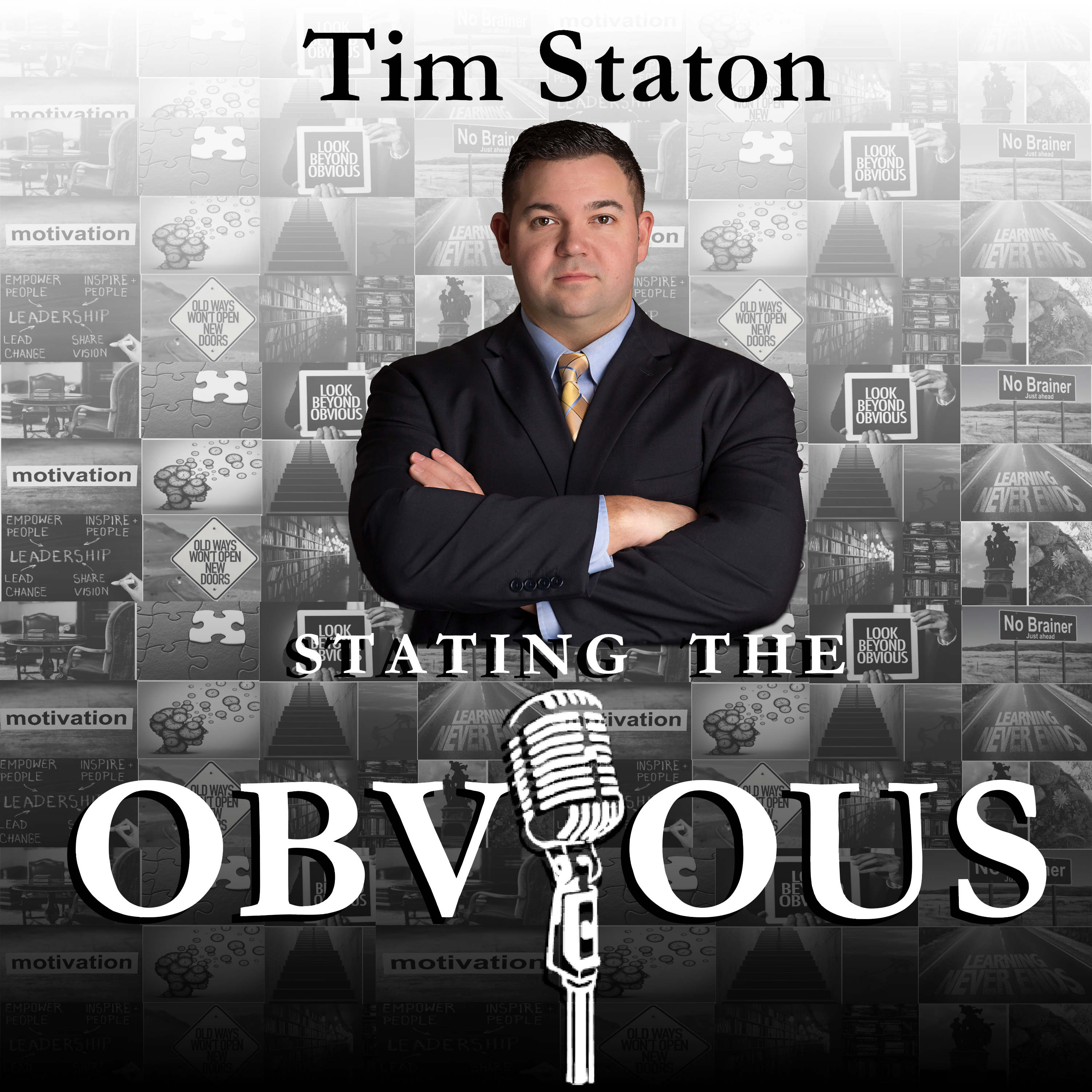
Tim Stating the Obvious

Tim Stating the Obvious

statingtheobvious

116 episodesEN

Show overview

Tim Stating the Obvious has been publishing since 2023, and across the 3 years since has built a catalogue of 116 episodes. That works out to roughly 50 hours of audio in total. Releases follow a fortnightly cadence, with the show now in its 7th season.

Episodes typically run twenty to thirty-five minutes — most land between 19 min and 35 min — though episode length varies meaningfully from one episode to the next. None of the episodes are flagged explicit by the publisher. It is catalogued as a EN-language Business show.

The show is actively publishing — the most recent episode landed 4 days ago, with 33 episodes already out so far this year. Published by statingtheobvious.

Episodes
116
Running
2023–2026 · 3y
Median length
24 min
Cadence
Fortnightly

From the publisher

Turning leadership principles into practical application

Latest Episodes

View all 116 episodes

AI at Work with Kate Marshall

Jun 26, 202628 min

The AI Ready Human with Paul Slater

Jun 19, 202641 min

Are Critical Thinking Skills Declining with Geoff Gibbins

Jun 12, 202637 min

Fractional CEO Services For Small Businesses

Jun 5, 202634 min

Unlock Six-Figure Careers for Veterans

May 22, 202639 min

37 Secrets to Lead with Confidence with Bill Miller

May 15, 202639 min

The Fragility of Trust in Leadership

May 8, 202629 min

The Human Side of Leadership with Nanci Appleman-Vassil

May 6, 202634 min

Palm’s Up Leadership with Rich Plumery

May 1, 202636 min

The Leadership Toolkit with Dave Berkus

Apr 29, 202637 min

Civilian Life Trap: Veterans Get This Wrong

Apr 24, 202630 min

Stop Losing Your Best Employees Now!

Apr 22, 202633 min

Mastering Business Exit Strategies

Apr 17, 202631 min

Cash Flow Secrets to Financial Independence

Apr 15, 202634 min

From Heart Disease To Heart-Centered Leadership

Apr 10, 202638 min

The Unspoken TRUTH About Selling Your Business

Apr 8, 202631 min

S7 Ep 16Unclaimed Funds: A Veteran’s Mission

In this episode, Unclaimed Funds: A Veteran’s Mission, he welcomes Tamara Rucker, a former military police officer and Army veteran who transitioned into entrepreneurship as the founder of Ruckwood Recovery, a veteran-owned small business. Tamara shares her journey from military service—including deployments and key leadership lessons on accountability and proper training—to overcoming PTSD after leaving the service, which shaped her path to helping others. She established Ruckwood Recovery to specialize in asset recovery in finance, particularly guiding clients through the complex process of reclaiming unclaimed property and tax foreclosure surplus funds. Tamara explains what asset recovery involves: assisting individuals in identifying and claiming forgotten or lost financial assets, such as unclaimed funds held by states. Drawing parallels between her military background and current work, she highlights the role of thoroughness, interpersonal communication, and advocacy in navigating these claims. The discussion also covers her efforts as a public policy advocate, pushing for legislative changes to streamline the asset recovery process and make it more accessible. As a veteran-owned small business, Ruckwood Recovery benefits from resources like SBA support, while Tamara's story inspires those interested in starting a veteran-owned business or exploring related opportunities. This episode blends inspiring personal growth, practical insights into unclaimed property Missouri search and asset recovery services, and motivation for veterans considering veteran-owned business benefits or becoming an effective policy advocate. Connect with Tamara: Ruckwood Recovery's website is www.ruckwoodrecovery.com YouTube: @RuckWoodRecovery Facebook: https://www.facebook.com/share/1CyoQhcLCD/ Connect with Tim: Website: timstatingtheobvious.com Facebook: https://www.facebook.com/timstatingtheobvious YouTube: https://www.youtube.com/channel/UCHfDcITKUdniO8R3RP0lvdw Instagram: @TimStating TikTok: @timstatingtheobvious LinkedIn: https://www.linkedin.com/in/tim-staton-04b41a271/ SKOOL Community: https://www.skool.com/timstatingtheobvious-9537/about?ref=de9c7e65d8ba4eeabc1a8eea413c125b

Mar 27, 202621 min

S7 Ep 17Tired of Excuses? Take Back Your Leadership Now

In this episode, Tired of Excuses? Take Back Your Leadership Now, Tim dives into timeless leadership principles—responsibility, authority, and accountability—and shows how they're deeply interconnected for truly effective leadership. Drawing from the classic Garden of Eden story (and its core summary), he uses Adam and Eve's experience as a powerful biblical illustration: God gave clear responsibility and authority to tend the garden, but when things went wrong, the failure to own accountability led to serious consequences. Tim stresses a key insight—that while you can delegate responsibility (much like the single responsibility principle in software design or management, where one person or role owns a specific duty to avoid confusion and inefficiency), true accountability can't be passed on. He ties this to broader ideas like the authority and responsibility principle in management, the ethical weight of accountability, and leadership lessons from military and Army traditions, as well as examples rooted in biblical principles. Through real-life examples, Tim highlights what happens when leaders neglect these elements—poor outcomes, broken trust, and missed opportunities—while encouraging practical steps: clearly define responsibilities, delegate thoughtfully, and hold yourself and others accountable. The result? Stronger, more effective leadership that stands the test of time. Connect with Tim: Website: timstatingtheobvious.com Facebook: https://www.facebook.com/timstatingtheobvious YouTube: https://www.youtube.com/channel/UCHfDcITKUdniO8R3RP0lvdw Instagram: @TimStating TikTok: @timstatingtheobvious LinkedIn: https://www.linkedin.com/in/tim-staton-04b41a271/ SKOOL Community: https://www.skool.com/timstatingtheobvious-9537/about?ref=de9c7e65d8ba4eeabc1a8eea413c125b

Mar 20, 202620 min

S7 Ep 15Be Do Have Model: Transform Your Life

Are you caught in the endless daily grind? Chasing success on a hamster wheel constantly doing things that lead to burnout and misalignment? In this episode, Be Do Have Model: Transform Your Life, Tildet Varon invites you to step off that wheel and cultivate your own flourishing rose garden as a powerful metaphor for personal unfolding and growth. Drawing from her journey—starting with just three rose bushes that expanded to 90—Tildet shares how this garden became a living symbol for self-discovery. Each person is a unique rose in various stages of blooming, pruning, or support, and we all serve as gardeners tending our own growth while nurturing others in our interconnected human garden. At the heart of her philosophy is the Be-Do-Have framework (also known as the be do have mindset, be do have model, or be do have principle), which flips the typical success chase: Start with being—your authentic identity, emotional discipline, and internal state—rather than jumping straight to doing. When you align your core values, mind, heart, and authentic self through personal reflection and self-leadership, your actions (doing) flow naturally with positive energy, emotional intelligence, and purpose. The results (have)—trust, fulfillment, career fulfillment, life balance, holistic well-being, and lasting success—emerge organically, without the anxiety-driven grind for success. Tildet addresses the challenges of our doing-obsessed culture, where the hamster wheel mentality fuels stress, mental health struggles, and stress management issues. She offers gentle, invitational ways to embrace stillness, mindful living, and alignment—shifting from grinding out of fear to purposeful action fueled by excitement and anticipation. The conversation explores blind spots in self-perception, the vital role of mentorship, accountability, community, and human connection to uncover them and accelerate personal growth and self-mastery. Tildet emphasizes bringing your true self to the journey, honoring individual uniqueness while rising together. She also discusses her book, The Thriving Family Business: Celebrating Peace at the Table and Profits to the Balance Sheet, which applies these principles to family business dynamics. It provides guidance on succession planning, navigating the generational gap in values and communication, fostering family harmony, and building a legacy that balances interpersonal peace with financial success—no one-size-fits-all formula, but a focus on relationships and decision making rooted in understanding. Ultimately, this episode is a call to prioritize self-leadership, professional development, purpose driven living, and internal state mastery—so you can show up unapologetically, contribute your unique magnificence, and create thriving outcomes in both life and leadership. Whether you're seeking how to get out of the daily grind or exploring be do have examples in action, Tildet's insights offer practical steps toward true alignment and joy. Connect with Tildet Varon Book: The Thriving Family Business: Celebrating Peace at the Table, Profits to the Balance Sheet Amazon link: https://www.amazon.com/dp/B0FV3W6KKP Website: https://www.tildet.com/ Social Media Facebook: https://www.facebook.com/InnerMasterySpecialist Instagram: https://www.instagram.com/innermasteryspecialist LinkedIn: https://www.linkedin.com/in/tildetvaron Connect with Tim: Website: timstatingtheobvious.com Facebook: https://www.facebook.com/timstatingtheobvious YouTube: https://www.youtube.com/channel/UCHfDcITKUdniO8R3RP0lvdw Instagram: @TimStating TikTok: @timstatingtheobvious LinkedIn: https://www.linkedin.com/in/tim-staton-04b41a271/ SKOOL Community: https://www.skool.com/timstatingtheobvious-9537/about?ref=de9c7e65d8ba4eeabc1a8eea413c125b

Mar 13, 202635 min

S7 Ep 13Never Fire Anyone with Mark Morgenfruh

In this episode of , Never Fire Anyone with Mark Morgenfruh, The Essence of Great Leadership and Trust, I sit down with our Guest Mark Morgenfruh who highlights a trust deficit in business, where employees are often viewed with suspicion despite inherently wanting to succeed, leading to a lack of trust in leadership. He argues that corporate leadership often prioritizes data over people, creating a disconnect. This perspective comes from Mark Morgenfruh’s 33 years in HR. Furthermore, discussions touched upon what are the generational gaps, noting how different generations perceive leadership and career progression. Mark Morgenfruh’s book, “Never Fire Anybody,” advocates a values-based disciplinary model. It posits that performance issues often stem from employees being overpromoted into unsuitable roles. Instead of firing, leaders should reassign employees to roles where they can excel, retaining valuable institutional knowledge and relationships. Tim Staton notes this mirrors military reassignment practices. This approach helps in understanding the generational gaps meaning by recognizing differing career expectations across age groups. Implementing this model requires changing mindsets and focusing on individual worth. Instead of rigid PIPs, leaders should have frank discussions about struggles and propose repurposing. This is more cost-effective than replacing employees. Tim Staton raises the issue of generational gaps, where younger employees might expect rapid advancement. Mark Morgenfruh suggests guiding them to “try on” new roles to prove capabilities before promotion, which is key to bridging generational gaps. This approach helps manage generational gaps in the workplace by setting realistic expectations and fostering development. Understanding what are the generational gaps is crucial here. Mark Morgenfruh argues promotions require demonstrated performance, not just potential vs performance. For executive hires, rigorous vetting, including simulations, is crucial to ensure fit and performance, using a potential vs performance matrix effectively. Difficult conversations should happen early, starting by asking employees about their self-perceived performance. Empathy in leadership is key; leaders should support employees through personal challenges, fostering loyalty and engagement. This showcases why empathy is important in leadership and exemplifies an empathy leadership style. Tim Staton stresses prioritizing people to create a caring environment, highlighting the strong connection between empathy and leadership. Connect with Mark: Website: https://gethrready.com/ LinkedIn: https://www.linkedin.com/in/markmorgenfruh/ Book: https://www.neverfireanyone.com/ Connect with Tim: Website: timstatingtheobvious.com Facebook: https://www.facebook.com/timstatingtheobvious YouTube: https://www.youtube.com/channel/UCHfDcITKUdniO8R3RP0lvdw Instagram: @TimStating TikTok: @timstatingtheobvious LinkedIn: https://www.linkedin.com/in/tim-staton-04b41a271/ SKOOL Community: https://www.skool.com/timstatingtheobvious-9537/about?ref=de9c7e65d8ba4eeabc1a8eea413c125b

Mar 6, 202631 min
Copyright 2019 All rights reserved.