This Unmillennial Life
138 episodes — Page 2 of 3

{new} An Odds & Ends Episode
I typically reserve Odds & Ends Episodes for times when there's been a lot to catch up later in the season. But there's been so much happening since Season 3 ended, over the summer and in recent weeks, I wanted us to catch up on a few things sooner rather than later. In this episode: A recap of recent recipes on ThisUnmillennialLife.com My (unpaid) experience with Walmart+ An overview of "the bra discussion" recently happening in the Facebook group Addressing why I'm no longer doing BodyPump anymore and what I'm doing instead An update to our previous discussions about Omega-3 consumption and the role DHA/EPA play in protection from cardiovascular disease Thanks for tuning in this week! ~Regan This is a public episode. If you would like to discuss this with other subscribers or get access to bonus episodes, visit reganjonesrdn.substack.com
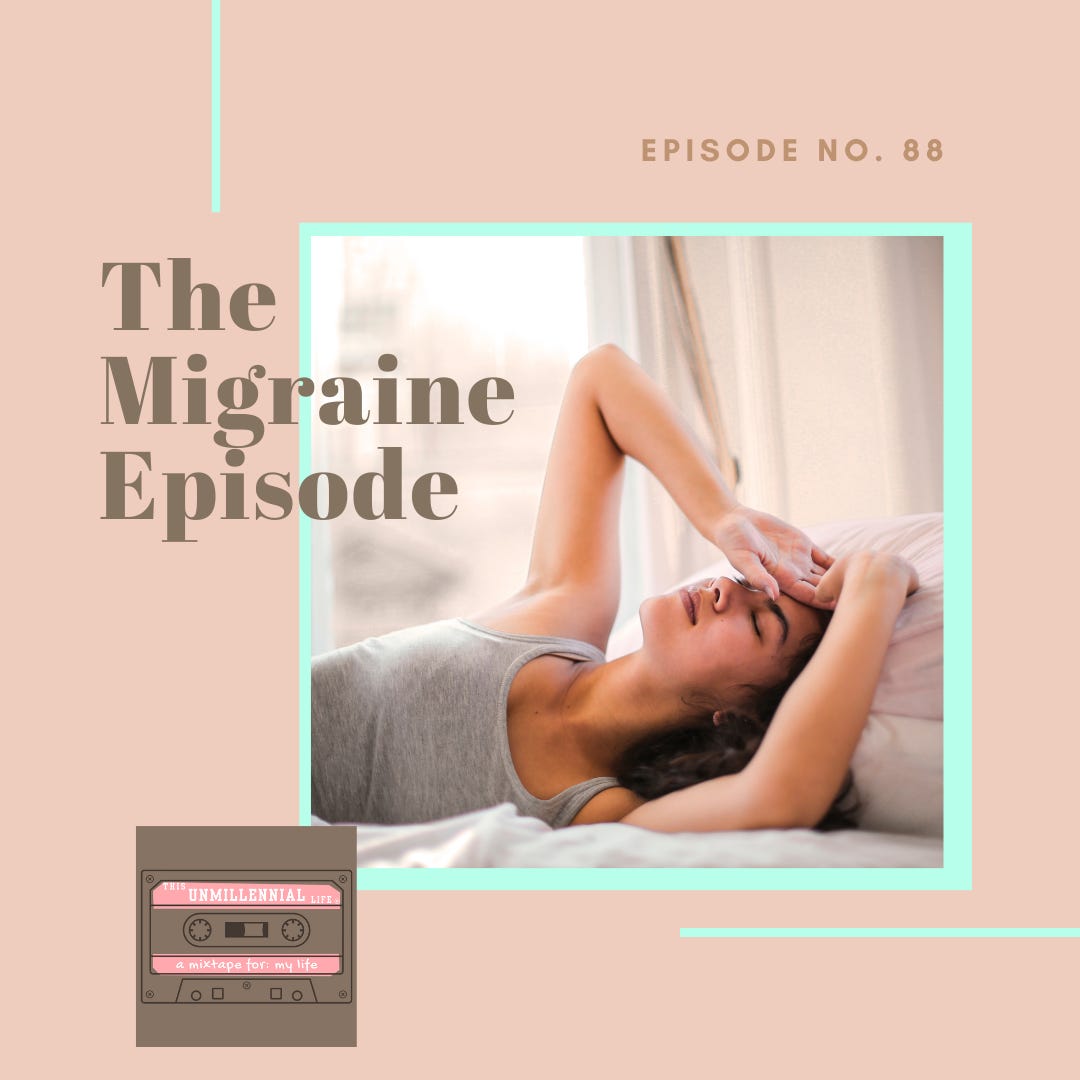
no. 88 - The Migraine Episode
Kicking off Season 4 of the podcast is the much-awaited and anticipated Migraine Episode. Recorded (and promised to listeners) at the end of Season 3, this episode has been a long time coming. As a migraine sufferer myself, I’ve struggled off and on over the years to determine triggers and find the best preventative treatment. Today’s episode features all that and more with Dr. Rani Banik — a board-certified Integrative Neuro-Ophthalmologist and Associate Professor of Ophthalmology at Mount Sinai School of Medicine in New York City. Dr. Rani uses traditional medical and surgical approaches, combined with therapeutic diets and lifestyle changes for better vision and brain health. She has been featured as an expert in the media on Good Morning America, The New York Times, CBS, ABC, Fox 5 News, and the Washington Post. In this episode we discuss: The prevalence of migraine and migraine with aura in the U.S. The fact that migraine with aura is a brain event even though it manifests with visual disturbances The many different triggers that can cause a migraine, including shifting hormones and dehydration The visual disturbance that occurs with migraine aura — consisting of a blurry, shimmery C-shaped image that starts small and then takes over one’s field of vision and lasts between 15 – 30 minutes The various other sensory disturbances that may accompany a migraine, including ringing in ears, dizziness and “visual snow” The difference between migraine with aura and an ocular migraine The “brain fog” that occurs in the hours and possibly days following a migraine We also discuss Dr. Rani’s personal history with migraine as she details how her nutrition and lifestyle in medical school played an extensive part in both the development of her migraines and eventually, the management of her migraines. Dr. Rani also details the importance of maintaining adequate magnesium status to prevent migraines, sharing that the two forms of magnesium most effective to prevent migraine are magnesium glycinate and L-threonate (as compared to the common salt forms of magnesium found in many magnesium supplements — magnesium oxide, citrate, and malate.) As a follow-up to the importance of magnesium for migraine prevention, Dr. Rani also encourages listeners to supplement with vitamin B2 (riboflavin), noting that in some studies doses up to 400mg have been shown effective in the prevention of migraine. Lastly, we discuss the various ways listeners can connect with Dr. Rani online by visiting: www.rudranibanikmd.com Dr. Rani’s Migraine Resources Page Telemedicine Consult Private Facebook groups: EnVision Health Eye on Migraine Instagram: @dr.ranibanik Youtube Channel Rudrani Banik, M.D. I wrap up today’s show with an Odd & Ends segment. First, I share the positive experience I’ve had buying Color Street Nails from my friend Kelly of KelKnockoutNails. Then, I share with listeners a special offer by my friends and colleagues — Deanna and Serena of TeaspoonofSpice — to get a free e-book when you pre-order their new cookbook: Easy Everyday Mediterranean Diet Cookbook: 125 Delicious Recipes from the Healthiest Lifestyle on the Planet. Never Miss A New Post! SIGN UP HERE TO SUBSCRIBE This Unmillennial Life is available each week via Apple Podcasts, NPROne, Libsyn, Spotify, and Podcasts on Pandora. *** GIVEAWAY ALERT: This week's podcast is sponsored by Nature's Nate Honey Company and features a chance to win one of three $50 Visa giftcards, simply by sharing a story of "something sweet" that's happened to you during 2020. Tune into the episode to learn more! This is a public episode. If you would like to discuss this with other subscribers or get access to bonus episodes, visit reganjonesrdn.substack.com
no. 87 - The Endocrine Disrupting Chemicals and Obesity Episode
Joining me in today’s show is Dr. Gabriel Smolarz. He is the medical director of obesity in US Medical Affairs at Novo Nordisk, Inc. in Plainsboro NJ. He is also Clinical Assistant Professor of Medicine at Rutgers Robert Wood Johnson Medical School and a practicing endocrinologist in NJ. He is board-certified in Endocrinology as well as Obesity Medicine. In the show, we discuss: What is the Endocrine system - a network of glands including ovaries, testicles, pituitary and more that regular the body’s normal healthy development, growth and functions like hunger, sex drive, etc. The Endocrine Disrupting Chemicals we’re talking about today are the chemicals throughout our environment that are interfering with the normal function of our body’s Endocrine’s normal operating system. How/Why Obesity is a chronic disease and not simply a function of “lack of will power.” How Obesity is closely tied to our genetics and is especially influenced by how our environment interact with our unique genetics How appetite regular and satiety is not truly under the control of one’s will power as many people may think — with biology in your body driving when to eat, how much to eat, etc. The delicate balance of food in the gut and sending the appropriate signaling can easily be disrupted leading to a scenario of overconsuming more calories than the body needs An explanation of how EDCs can mimic, block, or interfere with the various signaling involved in energy regulation, metabolism, etc. How EDCs are involved in multiple health conditions including but not limited to infertility, certain cancers, and diabetes Why glucose metabolism and insulin sensitivity can also be blocked or interfered with as an influence by EDCs So what do we do about endocrine disrupting chemicals? Dr. Smolarz acknowledges that EDCs are everywhere, but the first step in reducing exposure is increasing awarness. Beyond that, though, he suggests: Read labels — try to avoid grocery items and food storage items, specifically plastics, that contain BPA and phthalates Be aware of which plastics are BPA-free, including those labeled as recycling 1, 2 or 4 Understand that cleaning products and personal care products can also contain EDCs Be aware of the potential pesticide impact on fruits and vegetables, buying organic when it makes sense and is an option, but also realizing that no matter whether you choose organic or not, it’s important to wash your fruits and vegetables Don’t microwave in plastics Avoid storing plastic water bottles in hot areas. Use steel/glass containers when possible. We wrap up our interview with an important discussion about the importance of a complete, respectful and personalized approach to weight management. Dr. Smolarz urges us all to change the overall narrative of the disease and speak differently about Obesity and use people-first language — people living with obesity, not obese people. He offers Hormone.org as a valuable resource for more information on Endocrine Disrupting Chemicals. I close out today’s show with an Odds & Ends ending that includes: A brief mention of my new commitment (as a result of this episode) to cleaner personal care products and why I’ve set up a new Beautycounter account here on my website A book I’m reading right now about “highly sensitive children” The most recent true-crime podcast I’m listening to while daily quarantine walks — Bear Brook There’s only one more episode to go and it’s coming up soon! Take care friends and stay tuned during the summer for lots of new recipes on the Blog. If you’re not a subscriber for recipe info, you can get notifications at ThisUnmillennialLife.com/Subscribe. Take care, Regan Never Miss A New Episode! SIGN UP HERE TO SUBSCRIBE Today’s Episode is brought to you by Life Extension… …. I’ve learned a lot this year about the importance of Omega 3s. Maybe it’s because I’m a mom with a child playing sports or maybe it’s my growing interest as I age in heart and brain health. No matter the reason, I know two things. I want to take an Omega 3 that offers a high enough dose to meet experts’ recommendations… But I don’t want it to cause fish burps! Yep. I said it. Fish burps. If you’ve tried Omega 3s before and found that to be a problem, I have good news for you. Life Extension’s Clearly EPA/DHA Omega 3 supplement is manufactured close to where the fish is sourced, which maximizes the freshness of their fish oil. I’ve been taking their Omega 3 for quite a while and I love it! To learn more about Life Extension’s Clearly EPA/DHA Omega 3, visit lifeextension.com/regan. As a fan of the show, you’ll get $5 off orders of $50 or more plus free shipping. Again, that’s lifeextension.com/regan. These statements have not been evaluated by the Food and Drug Administration. These products are not intended to diagnose, treat, cure, or prevent any disease. This is a public episode. If you would like to discuss this with other subscribers or get access to bonus episodes, visit reganjonesrd

no. 86 - The Sleep Recovery Episode
Joining me in this episode is Dr. Chris Mohr, a frequent guest on the podcast who – along with his wife Kara – specializes in the importance of sleep for overall health and wellness. Recently, Chris wrapped up an article for Men’s Health that involved testing products geared toward helping us recover during sleep, especially following exercise but also just following the daily stresses of life. In the episode, we discuss the various devices he tried, including: The Oura ring, which measures quality & quantity of sleep, heart rate and general activity Other wearable devices, like a Garmin watch, which also measure quality & quantity of sleep, heart rate and activity Under Armour’s line of recovery pajamas The {highly recommended} Ooler Chill Pad — a thin mattress cover-like device containing small tubes of water that can be set to temperatures ranging from 55 – 110 degrees F A weighted sleep mask Chris and I wrap up the segment with a brief discussion about the importance of first tackling all of the other aspects of getting a good night’s sleep BEFORE buying any device. [Be sure to listen to The Sleep Episode and The Sleep Episode (Part II) if you haven’t already]. Before break, I share that Chris and I are now also sourdough baking friends, along with Sally of Real Mom Nutrition. I invite listeners of the show to reach out to me if they’re currently experimenting with sourdough baking during this time of shelter-in-place and let me know what they’re baking. I also remind listeners that I’m posting recipes on my Blog that I don’t talk about on the show and remind them to SUBSCRIBE to be notified of all my new recipes. I end the show with a brief reveal of how I’m now able to get curly hair that I don’t hate. I’ve been getting lots of compliments about it on Instagram, but all the credit goes to Alexis of Hummusapien. I watched a recent Instastories tutorial she gave about how she gets good curl, that’s not flat and stringy and too curly in others. Her tip has been a game-changer for me! While I’ll likely go back to a good home-blow-out using my beloved hair brush hair dryer, during this time of being home 100% of the time, I’m gonna opt for curly much more often. Lastly, I invite listeners to drop into the Facebook group and share their stay-at-home beauty tips. I’d love to include them in a future episode! Thanks so much for tuning in this week. Take care. ~Regan --- Today’s episode is brought to you by Life Extension. One of the more common questions I get asked is “Regan, which supplements do you take on a regular basis?” And while there are certain supplements that move in and out of my life, there’s one that’s been taking up permanent residence for quite a while. And that supplement is vitamin D. I became aware of the importance of vitamin D years ago when I learned that HALF of the population has a vitamin D insufficiency. And while we know that your skin can produce vitamin D, typically that production alone typically isn’t enough or at least, it wasn’t for me. Through Life Extension’s personalized lab testing I found that my vitamin D was low and now I take their 125 mcg (5000 IU) soft gel daily. If you’d like to learn more about vitamin D, what I take and why I take it, you can read more here on my Blog or visit LifeExtension.com/Regan to purchase and receive $5 off $50 or more plus FREE shipping. This is a public episode. If you would like to discuss this with other subscribers or get access to bonus episodes, visit reganjonesrdn.substack.com

no. 85 - The Supplements Episode [sponsored by Life Extension]
A Note from Regan: When this podcast was originally recorded, health & wellness had a very different meaning than the acute health crisis we found ourselves in as of the date of this post — April 6, 2020. When you listen, please keep that in mind. The recommendations given are meant for a time when health routines and daily living return to normal. The most important health consideration right now is to stay home and stay well, friends. Much love, Regan. “Do you need to take a supplement if you have an otherwise healthy diet?” It’s a question I get asked a lot and my very simple answer is “Yes!” But what you take, what brand you buy and in what dose can differ from person to person. Joining me in today’s episode is Dr. Michael A. Smith, the Director of Education for Life Extension® — the world’s leading organization dedicated to helping people stay healthy and live better. Dr. Mike is an author, national spokesperson and is a graduate of the University of Texas, Southwestern Medical Center in Dallas, Texas. He completed his internship in internal medicine at the University of Utah and completed three years of residency at UT Southwestern Medical Center. In this episode we discuss: Why someone might need a dietary supplement even if they eat fairly healthfully How people know if they’re purchasing a high-quality product Why third party testing of raw materials for supplements is so important and why consumers should ask for the Certificate of Analysis to verify they’re getting the highest quality product possible What regulatory bodies of the Federal Government (FTC & FDA) oversee the regulation of supplements and ensure their safety I close out this part of the show with a brief overview of the supplements I take each day, which includes Menopause 731 (check out The Perimenopause Episode for more information on this product…it’s been a game-changer in supporting the alleviation of the discomforts of night sweats for me); vitamin D (a supplement I’ll discuss in greater detail here on the blog very soon); Omega 3s (be sure to listen to Part 2 of The Kids & Concussions Episode if you aren’t sure why Omega 3s are important); magnesium (Hope you didn’t you miss The Magnesium Episode last week!) and a multi-vitamin/multi-mineral. I’m also presently taking additional vitamin C and zinc for immune system support. [To purchase any of the products mentioned in today's episode AND to receive $10 off any purchase of $75 or more, visit lifeextension.com/regan.] Wrapping up this episode, I offer a brief conversation in the Odds & Ends ending about my recent experience getting an Alaskan sourdough starter, started. If you’d like to follow along as I continue experimenting and baking sourdough, be sure you’re following me on Instagram where I post daily about my sourdough experience. Thanks so much for tuning in this week. I know there’s a lot of news to take in right now. Thanks for making me a part of what you’re choosing to listen to today. ~Regan This is a public episode. If you would like to discuss this with other subscribers or get access to bonus episodes, visit reganjonesrdn.substack.com
no. 84 - The Magnesium Episode
Today’s episode is all about Magnesium — the mineral that every body needs to run better. In this episode, you’ll learn about assessing your current total nutrition to see if you give your body enough magnesium to help your sleep, bones, digestion, hormones, metabolism, and muscles work better. Joining me today is dietitian Ashley Koff. With over twenty years in private practice, as an advisor, spokesperson, author and media expert, Koff currently runs The Better Nutrition Program — an organization “on a mission to make it easier and more efficient to assess current total nutrition to develop truly personalized recommendations.” She is the host of My Better Nutrition Alexa skill and co-host of the podcast Take Out With Ashley and Robyn. In this show, we discuss: Why magnesium is such an important mineral for helping the body destress. Why lifestyle choices like high-intensity training and a low-carbohydrate diet might be affecting your magnesium status. Why a blood test isn’t the best way to assess magnesium status. How we know if we get enough magnesium. Which is better — magnesium from food or supplements. What our body needs to use magnesium effectively When is the best time to assess magnesium needs Which forms of magnesium are best, including why magnesium can have a laxative effective depending on the amount or form taken Why gastric issues (like low motility) can influence which form of magnesium is best to take Why it’s important to keep sweetened magnesium supplements to a minimum in the evening and why salts and creams may be a good alternative During our discussion, Ashley offers podcast listeners a discount code for all of the resources available at The Better Nutrition Program website, including specifically The Magnesium Evaluation tool (Use CODE “UML20” at checkout for the discount.) She also shares insight into her Practitioner Network, where listeners can find a registered dietitian who specializes in various conditions, assessments and support of overall health goals. I wrap up my interview with Ashley giving listeners a reminder that Show Notes are always available on ThisUnmillennialLife.com along with any new recipes I’m posting. Recently, I posted a recipe for Curried Chickpeas and Vegetables in Coconut-Peanut Sauce as a favorite pantry-staple meal. To be sure you’re notified whenever I release a new episode or post a new recipe, you can SUBSCRIBE at thisunmillenniallife.com/subscribe. I take a quick break to remind listeners that they can get a FREE audiobook download and FREE 30-day trial of Audible by visiting audibletrial.com/unmillennial. I also direct listeners to this post on Real Mom Nutrition that has some great book recommendations. To end the show I’m sharing my new favorite app to stay connected, visually, with family and friends — Marco Polo. I also share a quick audio clip from listener of the show, Heather, detailing how she and her family helped a friend celebrate a birthday… from a distance. If YOU have something positive you’d like to share, please LEAVE ME A VOICEMAIL here. That’s all for today’s show. Stay healthy and stay home if you can. Take care. ~Regan This Unmillennial Life is available each week via Apple Podcasts, NPROne, Libsyn, Spotify and Podcasts on Pandora. Never Miss A New Episode! SIGN UP HERE TO SUBSCRIBE Want to CONNECT with Regan and This Unmillennial Life on social media? Join the Facebook group OR follow on Instagram and Twitter. This is a public episode. If you would like to discuss this with other subscribers or get access to bonus episodes, visit reganjonesrdn.substack.com

no. 83 - The Enneagram Growth Episode
Often discussed as personality imperfections and struggles, people initially seem fascinated with knowing their Enneagram number. But what some experts say is missing is a quest to go deeper into Enneagram growth and use that knowledge for personal growth and enlightenment. In today’s episode, I’m joined by blogger and former ministry leader, Tim Branch — author of The Enneagram Growth Guide: How to become healthier in your number. In this episode we discuss: How Tim became interested in the Enneagram Why he believes there’s a lot we’re missing out on when it comes to the Enneagram and why focusing on Enneagram Growth is important The significance of the “childhood wound” and the role it plays in each person’s quest to protect and succeed Why Tim believes that each number’s traits can be representations of God’s goodness, grace and power in our lives and the world Wrapping up the show today in the Odds & Ends ending, I’m playing an audio clip shared by friend of the show, Mickela (who joined me for The Freezer Meals Episode) about the importance of getting a concussion baseline measurement for any child playing sports. And lastly, I’m sharing a water bottle recommendation that’s taking my high school friend group by storm. I’ve linked to it on my Amazon Shop page, along with all of the recommendations I’ve shared on the show. Thanks for tuning in this week for this mid-week episode. I’ll be back Monday with a regularly scheduled episode. Take care, Regan This Unmillennial Life is available each week via Apple Podcasts, NPROne, Libsyn, Spotify and Podcasts on Pandora. © This Unmillennial Life ® by Regan Jones. All images & content on this site are copyright protected. Please do not use my images or content without my permission. Please Note: This post may contain affiliate links. I may receive a small commission at no extra cost to you. I only use affiliate links for products I believe in. This Unmillennial Life with ReganJones, RDN is a participant in the Amazon Services LLC Associates Program, an affiliate advertising program designed to provide a means for sites to earn advertising fees by advertising and linking to amazon.com. This is a public episode. If you would like to discuss this with other subscribers or get access to bonus episodes, visit reganjonesrdn.substack.com

no. 82 - The Game Changers Movie Episode
As one of the most popular films on Netflix at the moment, The Game Changers Movie has elevated the conversation about plant-based and vegan eating for elite athletes, weekend warriors and general fitness fans to an all-time high. While the film has no shortage of supporters, critiques of the film are also pretty easy to come by. From articles like this one in Men’s Health to a nearly 4-hour debate-style episode of The Joe Rogan Experience, the (often heated) conversation surrounding the movie tends to focus on point-by-point fact-checking of the movie’s content. What’s arguably lost in the discussion about the film, though, is a discussion of what the film gets right. At least that’s the opinion of today’s podcast guest, Sharon Palmer, MSFS, RD — The Plant-Powered Dietitian. With more than 18 years of experience in the field of plant-based nutrition and sustainability, Sharon has authored more than 1000 articles on plant-based eating in various publications, including Better Homes and Gardens, Oprah Magazine, and LA Times. In today’s episode we discuss that while the film at times presents information that doesn’t necessarily meet the gold standard of science, its overall message of positivity toward plant-based eating can be viewed as inspiring. We also go through some of the various claims made by the film about the anti-inflammatory properties of plant-based eating and refute the claims that a diet that includes animal-based foods has been proven to be pro-inflammatory. As fans of soy, Sharon and I both discuss how the film does a good job of dispelling some of the more common soy myths — including the fact that it has not been shown to promote cancer and instead may protect against some forms of cancer. We round out our interview discussing how the film does a good job of offering a different portrayal of what a diet for an elite athlete can look like, but also acknowledge how important it is for that diet to be well-planned to ensure its overall healthfulness. Sharon provides listeners insight on where to find her resources online, including an offer to sign up for her new Vegan Tool Kit for free. I wrap up the show with a recap of a discussion I first opened up in the Facebook group — the insights Spotify provided me about what music listeners of the show enjoy the most. I note — with much embarrassment — that apparently I’m the only person I know, who didn’t know who Lizzo was. If you’d like to jump into that discussion on Facebook, join that group at Facebook.com/groups/thisunmillenniallife. If you have opinions about the list I share in that post about the listening audience’s favorite aritist, let me know! You can reach me at regan at thisunmillenniallife dot com, message me on Instagram OR tweet me. Thanks so much for tuning in this week! ~Regan Today’s podcast is brought to you by DexaFit Atlanta. DexaFit Atlanta, your premier provider of medical-grade diagnostic body composition and metabolic testing, is offering listeners of This Unmillennial Life a 10% discount on any purchase of any package by booking at Dexafit.com and mentioning the code “UNMILLENNIAL” at checkout. This is a public episode. If you would like to discuss this with other subscribers or get access to bonus episodes, visit reganjonesrdn.substack.com

no. 81 - The CBD Episode
Joining me in this episode is Holistic Cannabis Practitioner and fellow Registered Dietitian Nutritionist, Janice Bissex. I interviewed Janice in Season 1 of the podcast in The Cannabis Episode. Today she’s back to focus solely on CBD — its benefits, uses, and recommendations for dosing. While people have increasingly become familiar with the term “CBD,” they may not know exactly what it is, where it comes from, or what the particular legalities are surrounding its sale and uses. In this episode, Janice educates us about all of these things and more as we discuss: The difference between Cannabis and Hemp and what constitutes CBD The conditions Janice treats in her practice with CBD, as well as other conditions for which there is research to support CBD usage, including — anxiety, pain, insomnia, depression, MS, arthritis and inflammation Why CBD works especially well for pain as it decreases the transmission of pain signals making the pain more manageable to tolerate How the neuro-calming properties of CBD make it especially effective in helping with anxiety What forms of CBD are available Why dosing is very individualized What the legality is of CBD and what the know about traveling with CBD We wrap up our discussion with Janice’s input on what to look for in a CBD brand, including independent lab testing, organic status and company reputation Before the Odds & Ends ending of today’s show, I preview a fun, new GIVEAWAY related to today’s episode — Carlene Thomas’ newly published book, CBD Drinks for Health. My end of the show includes a discussion of two Netflix shows — one that I’m recommending as having made my “If I Had A VCR I’d Tape This” segment — Don’t F**K with Cats. The second, the show Cheer that all of my friends and colleagues are raving about. If you’ve watched either of these shows, LET ME KNOW. I’d love to hear your voice. Leave me a voicemail on my Contact page. If you have questions about CBD or any episode of the podcast, feel free to reach out to me via email, regan at thisunmillenniallife dot com, OR across social media — Facebook, Twitter or Instagram. Keep in mind you can always join the Facebook for more unmillennial conversation each week. Until next time, take care. ~Regan This is a public episode. If you would like to discuss this with other subscribers or get access to bonus episodes, visit reganjonesrdn.substack.com

no. 80 - The Kids and Concussions Episode (Part 2)
Experts say nearly 45 million kids play sports in the U.S. and of those, 3 to 5 million experience some form of brain injury like a concussion each year. In this two-part podcast series, one mom shares her son's story following a traumatic brain injury suffered during a basketball game. In Part 2, I interview the nation's leading expert on targeted nutritional therapy for concussion protection and recovery. Up first in this second episode of the series, I'm interviewing Dr. Michael Lewis -- founder of Brain Health Education and Research Institute and a global expert in nutritional interventions for brain health, particularly the use of omega-3 fatty acids for the prevention, management, and rehabilitation of concussions and traumatic brain injury (TBI). In this episode we discuss: Dr. Lewis' distinguished career and how he got involved in treatment of traumatic brain injury The statistics about kids and concussions -- both how many are experienced each year and what the general recovery rates are His general protocol for both treatment and protection against concussion, which includes optimal doses of the specific Omega 3s, DHA and EPA Why it's important for parents to be aware of the levels of DHA and EPA in their child's supplement, noting specifically that specified doses of most gummies typically don't contain near enough DHA and EPA What type of symptom improvement patients see and when, when following his concussion recovery protocol We end the interview with a brief discussion of Dr. Lewis' book -- When Brain Collides -- and the importance of the material in it as a resource for parents with kids playing sports, specifically. After my interview with Dr. Lewis I share a brief discussion with frequent podcast guest, Dr. Chris Mohr. Having known Chris for years, I was aware that he and his family are already following these advanced levels of Omega 3 supplementation and wanted to give him a chance -- as both an expert in the field and parent of two young children -- to share with listeners what his family is doing in the way of Omega 3 supplements. I end the show with one final interview -- a quick discussion with my friend and colleague, Sally of Real Mom Nutrition, about her No Spend January experience. Thanks so much for tuning in to this two-part series. It's truly been one of my favorite podcasts I've produced to date. I hope you enjoy them both and take away information helpful to both you and your family. If you enjoyed this episode and listen to the show on Apple Podcasts, please be sure to leave a 5-star rating and/or a positive review. I look forward to bringing you a new episode next week. Take care. ~Regan This is a public episode. If you would like to discuss this with other subscribers or get access to bonus episodes, visit reganjonesrdn.substack.com

no. 79 - The Kids and Concussions Episode (Part 1)
Experts say nearly 45 million kids play sports in the U.S. and of those, 3 to 5 million experience some form of brain injury like a concussion each year. In this two-part podcast series, one mom shares her son's story following a traumatic brain injury suffered during a basketball game. In Part 2, I interview the nation's leading expert on targeted nutritional therapy for concussion protection and recovery. In this first episode, I'm joined by Amy Savage Fisher who details her son Malone's story. In the show we discuss: How Malone was injured during a high school basketball game Their experience in the emergency room, which including a clear CT-scan and being initially told everything was fine and to go home Amy's intuition that something wasn't right and how a second evaluation revealed Malone didn't know who anybody was, including his mother and his coaches How returning to school revealed such immediate issues as not knowing where his locker was and not knowing who his teachers were The long recovery process that included re-learning basics including counting, ABCs, etc. How depression and anger are a very real and scary part of the concussion recovery experience Following Amy's detailed recount of Malone's experience, we discuss some of the more practical statistics parents need to be aware of when it comes to a child's actual chance to become a college and/or professional level athlete. Amy offers her perspective from her experience of seeing parents and coaches push too hard, too quickly to get kids who have suffered a concussion to return to the court and field. I end the episode here and briefly preview the next episode in the series -- The Kids and Concussions Episode (Part 2). As always, thanks for tuning in to this and every episode. ~Regan This is a public episode. If you would like to discuss this with other subscribers or get access to bonus episodes, visit reganjonesrdn.substack.com

no. 78 - The Gas Episode
Everyone has it. Nobody wants to talk about it. Gas can be a normal by-product of digestion, but not always. Today's episode discusses why. In this episode, I'm joined again by friend and fellow registered dietitian, Kate Scarlata -- one of the nation's leading experts on all things gut health. In this show, we discuss: What's normal and what's not when it comes to gas Why we have gas in the first place Why having gas can actually be a good sign of things happening in our digestive system When "more gas" might mean a trip to your healthcare provider is in order How excess protein consumption can cause an increase in gas and cause gas to become more smelly How eating too much protein may be associated with a more pathogenic and pro-inflammatory microbiome Why eating certain fibers with protein may actually reduce these negative effects What causes painful gas How a high-fat diet may actually make trapped gas worse Steps to take to alleviate painful, trapped gas The role plant-based food and fiber play in the production of gas Tips to increase fiber consumption without negative effects Lastly, we debunk the myth that flying actually *causes* more gas. I end the show with a brief discussion about the book I'm reading right now -- The 5 Love Languages -- an older read, but one that I'm finding very helpful. I also preview my thoughts on the new binge-worthy show from Apple TV -- The Morning Show -- and discuss whether or not I think it should make my "If I had a VCR I'd tape this" list. Thanks as always for tuning in today. If you enjoy this episode or any of these episodes, please consider leaving a 5 Star Rating and/or Review. More importantly, please consider sharing with a friend. Have a great week! ~Regan This is a public episode. If you would like to discuss this with other subscribers or get access to bonus episodes, visit reganjonesrdn.substack.com

no. 75 - The Middle School Parenting Episode
Somewhere around the age of 11 children begin to change, embarking on what today’s guest calls “The Middle School Construction Project.” As they begin to develop an adult body, an adult brain, and an adult identity, parents may be faced with a new dynamic in engaging with their child that provides a whole new set of challenges. Today’s guest is Michelle Icard, author of Middle School Makeover and a to-be-released guide for high school parents Fourteen by Fourteen. In this episode we discuss: Why the separation parents feel from their children during this period is actually positive. If our goal is to raise children who can live independently from us, this “defiance” attitude is actually a crucial part of that process. How important this identity exploration is to ensure our children don’t end up in codependent relationships in the future — both personally and professionally. Why the “drama” of middle school is a natural result of children trying to find a way to navigate evolving identities and developing relationships. How important it is as middle school conflicts with peers arise that parents let the child lead in terms of how much involvement for parents to take and why kids need the opportunity to “figure out” the conflict resolution without parental involvement, which the exception of clear bullying where the parent needs to step in. How technology amplifies behavior and gives children more access and why kids need “breaks” from it as a result. At the end of the interview, we discuss Michelle’s next book, Fourteen by Fourteen — the 14 essential conversation to have with your kid and how to have them. It will cover topics ranging from talking to kids about taking responsibility for their actions to making healthy decisions about their bodies. We also discuss where to find Michelle online, including both her website and her Facebook group — Less Stressed Middle School Parents. To close the show, I detail my surprised-delight over a Christmas present I received — a hairbrush dryer that I’ve talked all about on Instagram and in the Facebook Group. I give tips and tricks for using it to create the best salon-quality blowout at home. This Unmillennial Life is available each week via iTunes, NPROne, Libsyn, iHeartRadio, Spotify and Podcasts on Pandora. This is a public episode. If you would like to discuss this with other subscribers or get access to bonus episodes, visit reganjonesrdn.substack.com
no. 74 - The Sober September Episode
Dry January. Sober September. No Drink November. No matter what it's called or when it's done, it's the same thing -- a month-long alcohol-free experience. It's also something I never thought I'd try... until I did. This past September I made a commitment to go alcohol-free for 30 days. Today's episode is about what I experienced. For a few years now, I've sensed that the "glass or two" of wine I was including most nights as a part of my nightly routine was becoming, well, too routine. I've gone through periods of measuring it out to be sure I was drinking "only the amount recommended" and even had a fairly lengthy stent of "cutting it out during the week" when I was macro counting with Emily Field. But never in all of that time of cutting back or cutting out did I feel like it was my first choice. I still wanted to drink each evening, even if I felt like I "shouldn't." I'm not sure what changed in the days leading up to September 1st that made a 30-day alcohol-free experience seem appealing. I've talked a bit on the show and in the Facebook group about some of the inner work I've been doing this year (be sure to check out The Enneagram Episode). I think somewhere in that work I began to realize my nightly glass of wine had a greater hold on my heart and habits than I cared to admit. I'd be lying if I said that was the primary reason, though, that I decided to embark on a self-imposed Sober September challenge. My motives were frankly a little more selfish than that. Simply put -- I wanted to get a good night's sleep. I've talked on the podcast from the very beginning about the struggle I have to drink wine and sleep soundly. The older I get, the worse it becomes... and somewhere around September 1st I became fed up with the fight for sleep. I decided on that first day of September to give my body a full month's worth of alcohol-free living to see what happened. And what I realized was that the benefits of being alcohol-free FOR ME far exceeded my expectations. Here's what I noticed: I slept better. This was no surprise. As I said, it was my primary motivation. I felt stronger in my workouts. I noticed this a week or two in. And when I say stronger, I mean A LOT stronger... and a lot better overall... more energized. I also recovered more quickly with less soreness. My thoughts were clearer. This is a bit hard to explain (and somewhat unexpected), but I realized that day after day, my head just seemed sharper. It's worth noting that I've never been a binge-drinker, so this had nothing to do with being "hungover." I wasn't sure where the additional clarity originated, but I liked it. I had a more positive outlook on life. This change was subtle but noticeable. I tend to find the dark cloud in every silver lining. During Sober September that seemed to fade. My leggings fit a little better. Who's to say if it was the number of calories that were cut by ditching the daily drink, the improved workouts described above or just an overall reduction in inflammation by being alcohol-free, but there's no denying my belly bloat improved. My grocery bill nudged down. While I wasn't spending boatloads of cash on wine each week, a bottle or two of even modestly priced wine begins to add up. But getting to the place where I saw these benefits for what they were didn't happen overnight. The first 10 days were hard. Very hard. Each afternoon around 4 o'clock I would question my decision to embark on this experience. Honestly, the main thing that kept me keeping going was that elusive good night's sleep I had re-captured. As I crawled into bed each evening -- 100% sober -- knowing those late-night and early-morning tossing and turning sessions didn't await, I found myself renewed in my commitment. (It's worth noting that in this same 10-day period while the craving for a 5 o'clock pour kept calling, an afternoon sugar-craving crept in stronger than I expected.) It was all very real. And very strong. Until it wasn't. After about 10 days or so, it didn't seem like a battle. I don't know if this is psychological, physiological or both. I simply realized one evening after dinner was done and the day was over that the thought to binge on brownies and a bold Cabernet hadn't happened. At the very end of the month, I had the chance to celebrate with some dear friends the wrap-up of an important work event. Given that my self-imposed Sober September deadline was coming to a close, I decided to celebrate with a glass of bubbly -- typically my favorite drink of choice. Experiment done. Lessons learned. Now, time to "get back to normal" and see what happened, right? What happened was the bubbly didn't taste as good as I hoped, but the sobriety felt better than I expected. A few more weeks passed, and I found myself headed to a work conference that typically offers a plentiful selection of ways to sip away the stress of the day. I had not, at that point, really had anything to drink since I started Sober September (minus a glass of wine o

no. 73 - The Microblading Episode
After years of overplucking, you want lush brows. Is microblading for you? Here's everything you need to know about microblading for eyebrows. In today's episode, I'm interviewing my friend Betsy, who is no stranger to microblading. In this show we discuss: How she got interested in having microblading How long she's been getting microblading done How she found a microblading artist Why she says it's important to find someone who can do an array of choices -- from microblading to microfeathering The difference between microblading and tattooing What level of pain or discomfort she experienced The recovery and care process after the procedure How long recovery takes and how long microblading lasts Why it's important to allow enough time for healing A general range for costs to do microblading Betsy and I wrap up our time together with a discussion of a related product -- Beautycounter's new tinted brow gel. Betsy also provides listeners with an overview of why she's a fan (and rep) for Beautycounter including most notably their commitment to safer beauty products. To close out this episode, I'm running through the last of the fond food memories shared with me via the This Unmillennial Life Facebook group. First, a few different memories from (another) Betsy from the group -- including a new-to-me composed gelatin salad. Next, a Thanksgiving-birthday memory from Marsha, followed by a brief mention of my own Thanksgiving with family this year. With just one more episode to go before I shut down production for the Christmas season, I'm encouraging fans of the show to be sure they're subscribed to be notified of new episodes and asking them to be sure to rate & review the show via the Apple Podcast app by simply tapping 5 stars. It's the perfect holiday gift for me! Lastly, I'm letting listeners know about my new Amazon storefront -- linked directly from the homepage -- that features all my favorite items from what's in my kitchen to the gadgets I'm loving these days. As always, thank you so much for listening, subscribing and downloading. Have a great week! ~Regan Never Miss A New Episode! SIGN UP HERE TO SUBSCRIBE This is a public episode. If you would like to discuss this with other subscribers or get access to bonus episodes, visit reganjonesrdn.substack.com
no. 72 - The Breast Lift Episode
Get a breast lift vs. breast implants? It's a decision some women in midlife may be thinking about. Pregnancy, breastfeeding, weight loss and aging can all lead to changes in a woman's breasts that she may want to alter. Today's episode details one woman's decision to get a breast lift, her experience, and recovery. Joining me in this episode is my friend Holly, who listeners have previously been introduced to on The Crossfit Episode. In this show we discuss: Why she decided on a breast lift vs. breast implants How she found her surgeon What the pre-surgery, surgery & post-surgery process for a breast lift was like How long recovery took How having a breast lift impacted her ability to exercise How her decision to have a breast lift was viewed by family and friends What the scarring has been like We also discuss a scare Holly had during the recovery period after she experienced a rare incident in which the blood vessels in one of her breasts opened and began to leak blood, leading to a hematoma. Today’s commercial break is a reminder that Audible is offering listeners of This Unmillennial Life a free audiobook and free 30-day trial by visiting audibletrial.com/unmillennial. As I promised recently in The Self Care Episode, I’m working on a Game of Thrones episode. I’m late to the GOT fandom, but I’ve arrived with 110% intensity in embracing all things related to the world of Westeros, including reading the books and binging my way through my favorite Game of Thrones podcast — Binge Mode. I was able to carve out enough time recently during traveling to read the first book in the series — A Game of Thrones — but I’ve opted to download the second book, A Clash of Kings, on Audible. I’m encouraging listeners of this podcast to join me in listening to the GOT books OR to simply start trying out audiobooks if they haven’t already. To end the show, I share important news about Instagram’s recent announcement to begin testing out hidden Like counts as a measure specifically aimed at reducing the pressure kids & teens are feeling as a result of these public-facing metrics. I also provide a clip of input provided to me on this topic from the founder of Children and Screens, which includes a plea to Instagram and other social media sites to eliminate Likes all together. I also personally encourage listeners to check out the book Digital Minimalism to gain a better understanding of the slot machine mechanisms that most social media sites implement to keep users on their sites. Lastly, I offer a brief reminder of the Screentime limits function of the iPhone and the success my family has had in using Verizon’s Smart Family app coupled with our in-home Eero Wi-Fi system. I close out today’s episode – the last one before the Thanksgiving holidays – with a few more fond food memories shared in the This Unmillennial Life Facebook group. First, a cranberry jello memory from Carina and next, two memories from Shelley – including a favorite fudge and a discussion on sweet potato casserole. Thanks so much for listening, subscribing and downloading this week’s episode. And as always, thank you for sharing with a friend. Please take a moment to leave a 5 Star Rating on iTunes if you haven’t already! I look forward to bringing you a new episode after the holidays! ~Regan Never Miss A New Episode! SIGN UP HERE TO SUBSCRIBE This is a public episode. If you would like to discuss this with other subscribers or get access to bonus episodes, visit reganjonesrdn.substack.com

no. 71 - The "Fueling Young Athletes" Episode
As unmillennial parents of kids playing sports, our days of providing the occasional sideline snack have given way to weeks of fueling kids for tournaments, meets and more. But as we are constantly reminded — tweens and teens are not simply small adults. They are growing at a rapid pace, which yields nutrition needs far different from those of their younger or future selves. Joining me in this episode is a registered dietitian nutritionist who specializes in the unique nutrition needs of young athletes. Heather Mangieri, MS, RDN, CSSD — author of Fueling Young Athletes is a dietitian with more than 20 years of experience in sports and fitness nutrition. As a mother of three, Heather knows well the challenges placed on growing bodies when adding in the additional stress of training for sports. In this episode we discuss: How Heather first started working with families who were interested in learning more about nutrition for young athletes Why she wrote her book after realizing families seem to face the same set of problems Her favorite part of the book and why she aims to make all of her recommendations easy for families to implement The different needs of pre-puberty versus puberty versus post-puberty when it comes to nutrition for young athletes After wrapping up my interview with Heather, I share my thoughts on a new product I was introduced to recently at the Academy of Nutrition and Dietetics Food & Nutrition Conference 7 Expo — Nature Nate’s Honey Packets — and why they make an excellent pre-fuel option for young athletes, especially when compared to popular artificially colored and flavored blocks and gels. I also briefly discuss why the company is one I’m personally happy to support based on the story of their founder and the mission work he’s doing across the globe. Next up, I give a brief discussion about my most recent sponsored recipe development with Sunnyland Farms for Pecan Pie Bars. I share with listeners what makes these bars different than your average holiday dessert recipe — including the high-quality, fresh-from-the-orchard pecans available by Sunnyland Farms and the use of honey (instead of corn syrup) to yield a bar that’s so good a friend stopped me at church to tell me how much he liked them! I close out the show recounting some of the most recent fond food holiday memories shared with me on both Voxer and in the This Unmillennial Life Podcast Facebook group. Memories from Sally about her grandmother’s jello and Cool-Whip, Casey’s Mom’s Pumpkin Roll, Kelly’s Grandmother’s Yorkshire Pudding and my own mother’s memory of her mother’s Orange Date Nut Cake. If YOU have a food memory you’d like to share with me, I would LOVE to share that with you. Leave me a voicemail, Voxer me, Tweet me, Message me on Instagram or drop a note in the Facebook group… or send me an email [regan at thisunmillenniallife dot com]. I read every email I receive and am appreciative of them all. Until next week! Regan This is a public episode. If you would like to discuss this with other subscribers or get access to bonus episodes, visit reganjonesrdn.substack.com

no. 70 - The Self-Care Episode
I’ll admit that when today’s guest originally pitched me the notion of doing an episode on “self-care” I had a twinge of cynicism that made me second guess the idea. Historically, especially when I had younger children, I viewed self-care (and frankly the people who promoted it) as a concept reserved for only those who had more time on their hands than I did. But after speaking with today’s guest and after considering the journey I’ve been on this year to deepen my understanding of my internal dialog (be sure to check out The Enneagram Episode for more on that), I’ve come to realize that the times when I think I have no time for myself are likely the times when I need self-care the most. Joining me today is Julie Jones — a certified personal trainer, a certified yoga instructor, a corporate wellness manager, and a longtime friend. Through Julie’s work training and coaching clients in the wellness space, she’s come to appreciate fully the importance of self-care and discusses the particulars in this episode, including: Why taking time to take care of yourself actually boosts your self-esteem and resiliency How self-care is not about being selfish and taking time away from family, but rather about identifying one’s needs in order to be fully healthy for those you love The importance of being able to say “No” and set boundaries to create a life grounded in what’s important to you and avoiding being over-extended Why self-care is more than cliched portrayals of “pedicures & pampering” and instead includes mindful choices in physical, mental, spiritual, emotional and social pursuits To round out our discussion Julie offers a brief preview into the self-care retreats she hosts — why she started organizing these trips, who the ideal attendee is and what location they are headed to next. I end today’s episode with a preview about an episode that’s yet to come — The Game of Thrones Episode. While I haven’t started production on it yet, I want to give listeners who haven’t watched the wildly popular series a chance to get in on the binge with me. I recently watched all 8 seasons in 3 weeks — to say I’m a huge fan is an understatement, obviously. But it wasn’t always that way. For years, I fought the notion that I would enjoy the fantasy-based power plays of the imaginary world of Westeros… until I heeded the advice of my stylist who encouraged me to give it at least 7 episodes. I did and from there, I was hooked. I’m now on my second watching of the entire season AND I’m reading the books. Setting aside the explicit and mature content as something that did leave me at the time a little ill at ease, Game of Thrones will go down as one of my all-time favorite binges, if not my absolute favorite. The upcoming episode will be produced from the standpoint of discussing the show in full. So now is the time to get caught up on watching it if you never have. Don’t let the talk of dragons fool you. This show is so much more — from complex character development to intricate plot entanglement, it’s a brilliant chronicle of the very real struggle between good and evil and perhaps most specifically, the blurred lines between both. Thanks for spending this time with me this week. See you next episode. Take care, Regan This is a public episode. If you would like to discuss this with other subscribers or get access to bonus episodes, visit reganjonesrdn.substack.com

no. 69 - The Instant Pot Episode
You've heard your friends say the Instant Pot changed their lives, but all yours is doing is {at best} cooking rice and {at worst} simply collecting dust. Annemarie Rossi of Real Food Real Deals joins me in this episode to unlock all the best ideas for what to make in an Instant Pot. As a food blogger with page after page of family-friendly Instant Pot ideas, Annemarie is the perfect guest for today's show. Her recipes are budget-conscious, but always crowd-pleasers. In this episode we discuss: Why she resisted buying an Instant Pot originally How many times per week she currently uses her Instant Pot Why an Instant Pot is much more than just an electric pressure cooker -- including the slow cooker, keep warm, saute and yogurt functions plus more The safety aspects of an Instant Pot We also walk through Annemarie's favorite Instant Pot ideas and recipes, including: Steel-cut oats Potato Salad Beef Stew Pork Tenderloin Butternut Squash Soup Chicken Tortilla Soup Carrot-Ginger Soup Cranberry Sauce Applesauce Homemade Ricotta Banana Bread Pumpkin Bread We wrap up our discussion of Instant Pot ideas with a brief discussion of my extra Instant Pot insert and the silicone Instant Pot lids I use to cover the insert and store in the fridge. Before ending the show today, I'm sharing a brief update and personal discussion on my newly acquired Certified Personal Trainer credentials through The American College of Sports Medicine. I first shared this announcement on Instagram and appreciate all of you who have reached out with words of congrats. I hope to hear from you if YOU have more Instant Pot ideas we didn't cover in this episode. Leave me a voicemail on the Contact page. Until next week... take care. ~Regan This is a public episode. If you would like to discuss this with other subscribers or get access to bonus episodes, visit reganjonesrdn.substack.com

no. 68 - The Teen Suicide Episode
Today's episode is one that I will never forget. It features "Lisa" as she details the story of her son's suicide attempts and what her family has been through since the first moment of his hospitalization. Lisa's is a deeply personal story recounting what the healing process looks like for her son (which she describes as "not being a linear process"), her struggles in the early days not being able to reach out to family and friends for support, the lack of professional support available in the medical community following her son's suicide attempts, why she enrolled her son in a wilderness treatment program and what life is like today as their family continues to work on living life together in light of her son's struggles. I am forever grateful to both Lisa for sharing this account with me and to the friend of the show who first connected us. ~Regan We can all help prevent suicide. The National Suicide Prevention Lifeline provides 24/7, free and confidential support for people in distress, prevention and crisis resources for you or your loved ones, and best practices for professionals. 1-800-273-8255 This is a public episode. If you would like to discuss this with other subscribers or get access to bonus episodes, visit reganjonesrdn.substack.com

no. 67 - The "Breaking Up With Cardio" Episode
If you’re spending hours at the gym on the treadmill, attending back-to-back boot camps each week or simply pushing yourself to sweat as much and as often as possible and STILL aren’t seeing the results you’d hoped for, you may need to ask yourself — How Much Cardio Is Too Much? According to today’s guest, Leslie Ann Quillen — host of the podcast Get To The Point with Leslie Ann and creator of the Fat Loss Lifestyle School, women are overdoing it in the cardio arena while failing to understand the importance of slowing down, stressing less and simply picking up heavy weights. In this episode we discuss: How overtraining our bodies through cardio-based exercises can lead to bodies that are stressed out (even if we don’t “feel” stressed out while enjoying the endorphin high) The age ranges for building muscle and why it’s important to start ASAP lifting weights to age healthfully Why “burning calories” shouldn’t be your goal if you’re looking to change body composition, feel stronger and look more fit How calories burned through exercise don’t substantially impact our overall daily caloric needs, especially when compared to NEAT (aka non-exercise activity thermogenesis) Why overtraining via cardio may lead to intense food cravings and overeating We close out our discussion with a helpful preview of Leslie Ann’s recommendation for a more balanced approach to fitness that includes daily activity at the base, weight lifting in the middle and cardio at the tip of a pyramid-based visual for understanding how much cardio women should be doing. I wrap up the show with a discussion on our decision to {finally} give my oldest son a cell phone, the Cell Phone Contract I’ve made available to listeners for free. I also discuss how applications like Verizon’s Smart Family app have helped me minimize the distractions that 24/7 cell phone access can be for a middle schooler. Season 3 is off to an exciting start with lots more great episodes to come! If you have a show topic you’d like to share with me, please let me know! Thank you for listening, subscribing, downloading and most importantly, thank you for sharing with a friend. ~Regan This Unmillennial Life is available each week via iTunes, NPROne, Libsyn, iHeartRadio, Spotify and Podcasts on Pandora. This is a public episode. If you would like to discuss this with other subscribers or get access to bonus episodes, visit reganjonesrdn.substack.com

no. 66 - The Enneagram Episode (Part 2)
Internal motivation and Healthy Eating -- Is there a connection between the Enneagram and Nutrition? This podcast guest says the answer is YES! In last week's Season 3 premiere I interviewed YourEnneagramCoach, Beth McCord to discuss the origins of the Enneagram, how the Enneagram is different from other "personality" tests, why motivation is the key to determining your Enneagram type and the importance of not using the Enneagram as a "sword or shield" on yourself or others. Today, I'm following up that episode Part II of this series -- my interview of Jenna Braddock, a sports dietitian and personal trainer who is currently investigating the connection between Enneagram and nutrition, health and wellness behaviors. In this episode we discuss: How/Why Jenna first became interested in the connection between the Enneagram and Nutrition How Enneagram type may affect a person's willingness to try new foods How Enneagram type may influence a person's self-assessment of "What's Healthy?" How stress may affect differing Enneagram types differently How a "challenge" environment for change may or may not be a good fit for different Enneagram types The importance of understanding and appreciating that different Enneagram types might respond differently to different dietary interventions -- from macro counting to intuitive eating, etc. We wrap up by encouraging listeners to participate in Jenna's survey and providing links to where to find Jenna is now offering Enneagram-based nutrition counseling on her website. To close out the show, I share a very important follow up to The Laser Hair Removal Episode. I had the chance to visit with my guest from that episode, Katy Widrick, recently and she shared with me some not so encouraging long-term results of her hair removal experience. Thank you again to everyone who helped make Season 2 such a success! Season 3 is off to an exciting start with lots more great episodes to come! Thank you for listening, subscribing, downloading and most importantly, thank you for sharing with a friend. ~Regan This is a public episode. If you would like to discuss this with other subscribers or get access to bonus episodes, visit reganjonesrdn.substack.com
no. 65 - The Enneagram Episode (Part 1)
To kick off Season 3 of the podcast, I interviewed YourEnneagramCoach, Beth McCord. After following Beth on social media and then listening to her as a guest on Annie F. Down's "EnneaSummer" podcast series over the summer myself, I knew I wanted to have her on the show. As a teacher for over 15 years, Beth is passionate about coming alongside individuals and helping them re-write their story, allowing them to see that lasting change, meaningful relationships, and a life of deep purpose is possible. This passion is what drove her to create her community, a safe place for individuals to explore the Enneagram. Beth's passion is to make the Enneagram accessible for everyone, anywhere so they can experience the transformation they long for. In this episode, we answer the basic question -- "What is the Enneagram?" Beth characterizes it as a GPS for self-discovery and personal growth and explains how the Enneagram uncovers why you think, feel and behave in particular ways. Throughout the episode we discuss: The origins of the Enneagram How the Enneagram is different from other "personality" tests Why motivation is the key to determining your Enneagram type The importance of not using the Enneagram as a "sword or shield" on yourself or others We go through the Enneagram types, discussing the core Fear, Desire, Weakness and Longing of each Enneagram number. ONE - The Moral Perfectionist TWO - The Supportive Advisor THREE - The Successful Achiever FOUR - The Romantic Individualist FIVE - The Investigative Thinker SIX - The Loyal Guardian SEVEN - The Entertaining Optimist EIGHT - The Protective Challenger NINE - The Peaceful Mediator To close out the show, Beth and I discuss the various ways people can come to discover and/or deepen their understanding of their type, including a discussion on whether or not taking a test is the best approach to identifying your Enneagram number. We also discuss Beth's new book and program -- Becoming Us -- a Gospel-centered approach to marriage transformation based on the Enneagram. Listeners of the show can find Beth on social media at Instagram, Facebook, Twitter and her website, yourenneagramcoach.com. I wrap the episode up there with a brief tease of next week's episode, which will also tap into the power of the Enneagram. Only next week, I'll be coming at it from a much different angle, talking with a registered dietitian who uses the Enneagram in her practice to help better understand what types of eating patterns and approaches work for individuals based on their Enneagram number. Thank you again to everyone who helped make Season 2 such a success! I'm looking forward to each and every episode I have lined up for Season 3. Thank you for listening, subscribing, downloading and most importantly, thank you for sharing with a friend. ~Regan This is a public episode. If you would like to discuss this with other subscribers or get access to bonus episodes, visit reganjonesrdn.substack.com

no. 64 - The Grazing Boards Episode
If you've ever stumbled onto an Instagram picture of a beautiful board piled high in meats, cheese, fruits and more, you can appreciate the appetite appeal of being served a grazing board. Today's show features Robin Plotkin -- a culinary dietitian who turned her love of entertaining with grazing boards into a successful new business, Board Mama, that brings beautiful boards to events like girls' night out, real estate open house, teacher appreciation and much, much more. While these board-based gifts are growing rapidly in popularity with her customer base in Dallas, Robin is sharing with the listening audience her best tips for making your own grazing boards at home, including: how she chooses themes and colors for her grazing boards what surfaces work best to create a grazing board estimating how much food to buy for each board ideas to avoid food waste when there are leftovers from the board some of her favorite finds from stores like Aldi's and Trader Joe's I'm rounding out this final episode of Season 2 with a recommendation that I actually shared with Robin off-line -- my recommendation that she try Les Mills Body Flow. As a class that's 60% yoga, plus Tai Chi and Pilates, I've found Body Flow to be a wonderful addition to my weekly workout routine. With a different feel, vibe and music selection from a traditional yoga class, it offers the benefits of yoga poses and stretches for those of us who aren't as comfortable in the traditional yoga environment. Thank you again to everyone who helped make Season 2 such a success! Thank you for listening, subscribing, downloading and most importantly, thank you for sharing with a friend. ~Regan This is a public episode. If you would like to discuss this with other subscribers or get access to bonus episodes, visit reganjonesrdn.substack.com

no. 63 - The Juicing Episode
Is juicing good for you? It’s a question often asked of dietitians, but can be met with mixed messages. Today’s episode on juicing unpacks the potential of juicing for health, addresses who benefits most and discusses what fruits & veggies are best to juice. In this episode with Danielle Omar, author of Skinny Juices: 101 Juice Recipes for Detox and Weight Loss, we discuss: common misconceptions about juicing for health what’s better between juicing for health and blending whole fruits & veggies whether or not there are nutrients in juice beyond the fiber content the best fruits and vegetables to juice for health tips for easing into a more veggie-rich vs. fruit-rich juice (Here is the Breville juicer I have and recommend.) I round out this episode with a continued discussion on juice, specifically clarifying misinformation about orange juice. As a result of my trip to Florida to visit with Florida Department of Citrus I learned a few key pieces of information about 100% OJ that I’m sharing in today’s episode, including information on the health benefits hesperidin AND the observational data from studies that show 100% OJ consumption is actually NOT associated with weight gain. This Unmillennial Life is available each week via iTunes, NPROne, Libsyn, iHeartRadio, Spotify and coming soon, Podcasts on Pandora. Each full-length show is also now available via ReganJonesRD on Facebook making it easier than ever to share with a friend. Musical support provided by Ben Williams at Kudzu Studio. Website support provided by Katy Widrick at MakeMediaOver.com. Please Note: This post may contain affiliate links. I may receive a small commission at no extra cost to you. I only use affiliate links for products I believe in. © This Unmillennial Life ® by Regan Jones. All images & content on this site are copyright protected. Please do not use my images or content without my permission. This is a public episode. If you would like to discuss this with other subscribers or get access to bonus episodes, visit reganjonesrdn.substack.com
no. 62 - The Panic Attacks Episode
Is there a difference between a panic attack and an anxiety attack? It's a common question, but one that many people can't answer. There are some important distinctions between the two and today's episode uncovers the truth about panic attacks. As a part of Mental Health Awareness Month, today's episode features my interview with Dr. Lata McGinn of Cognitive Behavior Consultants. In the show we discuss: the difference between a panic attack and an anxiety attack why and when panic attacks are most likely to occur who is most susceptible to panic attacks strategies for dealing with a panic in the short term how cognitive behavioral therapy may offer the best long-term treatment for panic attacks and panic disorder I close out today's show with a recommendation for the perfect gift for graduates this time of year. I'm recommending Prep: The Essential College Cookbook by my colleague Katie Morford. As a complete guide to cooking basics, it's a great way to help ensure this next generation is more well-equipped in the kitchen. This is a public episode. If you would like to discuss this with other subscribers or get access to bonus episodes, visit reganjonesrdn.substack.com

no. 61 - The Stories of Elders Episode
Known as "The Greatest Generation," people born before 1945 witnessed incredible changes throughout their lives, and perhaps most notable were the changes seen in technology. As the years pass quickly by, we are losing more and more members of this generation and with them, the wisdom of what a world looks like untouched by the digital revolution. Today's interview with Veronica Kirin, author of Stories of Elders: What The Greatest Generation Knows About Technology That You Don't, offers discussion and insight into what she learned driving 12,000 miles across the U.S. to interview members of The Greatest Generation about their insights into how technology has changed their lives. In my interview we discuss: why the belief that older generations always avoid technology is wrong how intentionality is a key component of why this generation chooses or chooses not to use a particular technology the social importance to be gained by understanding the perspective of people whose lives largely never involved modern-day tech conveniences I close out the show with today's Odds & Ends ending that includes a reminder to listeners of the podcast to visit ThisUnmillennialLife.com to check out some of the many recipes I'm posting there on the regular; a brief discussion about the new ability to return Amazon purchases at Kohl's; and lastly, a discussion of a viral post from Facebook about the pressures of being a working mom. This is a public episode. If you would like to discuss this with other subscribers or get access to bonus episodes, visit reganjonesrdn.substack.com
no. 60 - The Nutrigenomics Episode
The popularity of DNA testing is widespread, but what, if anything can our DNA tell us about the food we should eat and the exercises we should do? Understanding nutrigenomics -- the scientific study of the interaction of nutrition and genes, especially with regard to the prevention or treatment of disease -- may provide some answers. In this episode of the podcast, I am chatting with Courtney McCormick about nutrigenomics. Courtney is the Manager of Clinical Nutrition and Research for Tivity Health where she supports the overall clinical and nutrition strategies for the Nutrisystem and South Beach Diet brands. She is a registered dietitian with over 10 years of experience in nutrition and weight management. During our interview, we discuss: what nutrigenomics is a basic overview of where we were previously with genetic testing and where we are now what nutrigenomic testing is available to people in general the testing and report that Nutrisystem offered me via their DNA Body Blueprint how genetic markers work -- do they absolutely predict traits or rather suggest tendencies steps someone would take if they were interested in the DNA Body Blueprint testing I follow up my interview with Courtney by providing additional insight from registered dietitian Mary Purdy of Mary's Nutrition Show on the importance of seeking out the support of a dietitian to interpret nutrigenomics results and provide recommendations on potential lifestyle and nutrition changes to be made. Closing out the show via the Odds & Ends ending of the show I'm sharing my experience with ThredUp's "goody box" that was discussed in The Online Clothing Consignment Episode. While the ordering and receiving process was seamless, the shipping/returns process was not and resulted in my account being charged for hundreds of dollars of clothing that I did not keep from the goody box. I share details of ThredUp eventually crediting me for that clothing, but summarize that for me this service isn't worth the risk. This week's episode of This Unmillennial Life is sponsored by The Soyfoods Council in celebration of Soyfoods Awareness Month. This Unmillennial Life is available each week via iTunes, NPROne, Libsyn, iHeartRadio, Spotify and coming soon, Podcasts on Pandora. Each full-length show is also now available via ReganJonesRD on Facebook making it easier than ever to share with a friend. This is a public episode. If you would like to discuss this with other subscribers or get access to bonus episodes, visit reganjonesrdn.substack.com
no. 59 - The Sleep Episode (Part II)
And just like that, we're back where we started -- SLEEP! When you open up your podcast app today you'll see I'm revisiting the topic that kicked off the podcast -- Sleep. Since sleepless nights plague many of us after 40 it's always worthy for a discussion and especially in light of the fact that so many folks who follow me on Instagram have asked about my gravity blanket. So that's what I'm doing today... discussing my weighted blanket and more ... with Dr. Kara Mohr (yes, you've met her hubs on the show before, Chris Mohr.) Specifically, Kara is sharing more about how the habits we’ve developed during the day may be setting us up for tossing and turning at night. We cover: our mutual love for weighted blankets and Kara's personal recommendation for Gravity Blankets and a sunrise alarm the importance of keeping your "work/office space" outside of your bedroom to avoid sleepless nights how choices to enjoy an extra glass of wine in the evening or to stay up a little later should be intentional with the knowledge that it will disturb sleep Kara's history with getting what she thought was "enough sleep" only to realize it was adversely impacting her overall mood and day-to-day interactions I close out today's episode with additional follow up about a recent recipe I mentioned at the beginning of a recent {wednesday rewind} of The Protein {Powder} Episode and shared on the blog and -- the recipe for How I Created My Own High-Fiber Protein Powder. I share insight into my discussion with dietitian colleague Danielle Omar about "how much fiber" is actually in this recipe and how/why some people might want to use less. I end the show by sharing two voicemails I received recently from fellow dietitian and fan of the show, Lauren Harris-Pincus -- a self-proclaimed F-Factor fan -- about the prebiotic inulin fiber she's subbing into her version of the F-Factor 20/20 protein powder and the results she's having. This Unmillennial Life is available each week via iTunes, NPROne, Libsyn, iHeartRadio, Spotify and coming soon, Podcasts on Pandora. Each full-length show is also now available via ReganJonesRD on Facebook making it easier than ever to share with a friend. Musical support provided by Ben Williams at Kudzu Studio. Website support provided by Katy Widrick at MakeMediaOver.com. This is a public episode. If you would like to discuss this with other subscribers or get access to bonus episodes, visit reganjonesrdn.substack.com
no. 57 - The Adult Acne Episode
You know you’re unmillennial when you’re buying acne cream for both you and your teenager. Adult acne becomes a new complaint for many women at midlife. Today’s episode discusses why it occurs and how to treat it. In this episode with my guest from The Skin Cancer Episode, Dr. Emily Keller, we discuss: the hormonal causes of adult acne why hormonal birth control is not the course of treatment Dr. Keller recommends an alternative prescription treatment for adult acne — spironolactone why rentinoids are recommended as a topical treatment for both adult acne and general skin care for all women I close out the show in the Odds & Ends ending with a recap of my current skincare routine, including how pleased I’ve been with the over-the-counter retinol product made by Neutrogena that Dr. Keller recommended in The Skin Cancer Episode; the new BeautyCounter Overnight Peel I’ve added after seeing how much Tina from Carrots n Cake liked it; and the tinted sunblock from La Roche Posay that I continue to enjoy. I also discuss at the end of the show why I’m not shy about sharing that I get Botox (a fact I detailed at length in The Botox Episode) plus detail a new Botox experience I had recently after trying a new-to-me aesthetics clinic that resulted in less pain. This Unmillennial Life is available each week via iTunes, NPROne, Libsyn, iHeartRadio, Spotify and coming soon, Podcasts on Pandora. Each full-length show is also now available via ReganJonesRD on Facebook making it easier than ever to share with a friend. Musical support provided by Ben Williams at Kudzu Studio. Website support provided by Katy Widrick at MakeMediaOver.com. This is a public episode. If you would like to discuss this with other subscribers or get access to bonus episodes, visit reganjonesrdn.substack.com

no. 56 - The Online Clothing {Consignment and Rental} Episode
Millennials may be MarieKondoing their way to the most minimalist closet they can create, but one thing remains the same across generations — we all want to look our best. Making that option affordable and easy is the goal of online clothing consignment and rental services like Rent the Runway, Tradesy, Poshmark and more. But are they really worth the price tag? And how do they work? In today’s episode with my friend Deanna, author of The 30-Minute Mediterranean Diet Cookbook, and former guest of the show (check out The Airbnb Episode and The Autism Episode) we discuss how each of these services works, tips/tricks for making the most of them, general pricing and pros/cons: Rent the Runway Poshmark Thred Up Stitchfix (FYI: This is my affiliate link) I close out this segment of the show with a quick recap of the online clothing consignment store I use most often — Tradesy and discuss how it seems initially to different from Poshmark in both inventory size and selection of high-end designers. I close out the show with a discussion of two articles I recently shared in the This Unmillennial Life Facebook group. The first article from the NY Times is a wonderful read that brings to light the personal story of one reporter’s realization of how much mindless phone scrolling he’d been doing on a daily basis. I discuss the changes I’m making to my phone habits as a result. And subsequently, I lead into a follow up on The Screentime {Behaviors & Addiction} Episode by sharing a recent article that called into question whether or not screentime really is as harmful as we think. Having read the article, I shared it with my guest from The Screentime Episode – Dr. Victoria Dunckley, author of Reset Your Child’s Brain – for her insights. She offered some solid counterpoints, which I detail in this episode. I round out the show once again by thanking the This Unmillennial Life audience for pushing the show into the Top 75 of Personal Journal podcasts on iTunes. Your support means the world to me! ~Regan This week’s episode of This Unmillennial Life is brought to you by The Soyfoods Council. Feeling your best is just as important as looking your best and for some unmillennial women that means addressing lifestyle factors like hot flashes. More than 20 years worth of studies support the research that the isoflavones in soybeans may reduce hot flash symptoms by up to 50%. For more information on this research, visit http://thesoyfoodscouncil.com/. This Unmillennial Life is available each week via iTunes, NPROne, Libsyn, iHeartRadio, Spotify and coming soon, Podcasts on Pandora. Each full-length show is also now available via ReganJonesRD on Facebook making it easier than ever to share with a friend. Musical support provided by Ben Williams at Kudzu Studio. Website support provided by Katy Widrick at MakeMediaOver.com. This is a public episode. If you would like to discuss this with other subscribers or get access to bonus episodes, visit reganjonesrdn.substack.com

no. 55 - The Dexafit Episode
Tons of scales on the market may say they offer up body fat analysis, but experts agree most of them are riddled with inaccuracies. The gold standard DEXA-scan offers a much truer picture of body composition, but up until recently had been fairly difficult to access for the average, everyday athlete or weekend warrior. DexaFit locations across the country are changing that. Disclosure: I was provided the testing done in this episode at no cost. In this episode with Maureen O’Mara, owner of the Atlanta DexaFit location, we discuss: the different testing services DexaFit offers, including DEXA Body Composition Analysis, 3D Body Scanning, RMR (Resting Metabolic Rate) Testing, Vo2max Cardiovascular Fitness Testing and more the pre-test protocols required for theRMR (Resting Metabolic Rate) Testing what type of reporting DexaFit provides to clients following their tests how the testing provides more than just insights into body aesthetics by offering a measure longevity I close out the show with a preview of a topic that’s likely to become a future show topic and one that’s been on my mind lately — enneagrams. I’m candidly sharing that my status as an enneagram “1” and therefore my need to be “right” is a character trait that I’m working on. I’m also asking listeners of the show to let me know about their enneagram OR let me know if this is a topic that they’ve never even heard of. Lastly, I want to say a BIG THANK YOU to the This Unmillennial Life audience for pushing the show into the Top 75 of Personal Journal podcasts on iTunes. Your support means the world to me! ~Regan This week’s episode of This Unmillennial Life is brought to you by The Soyfoods Council.Whether you’re vegan, vegetarian or an omnivore like me, soy protein can be an excellent source of muscle-building protein. In fact, a comprehensive analysis that included 9 clinical studies published in 2018 found that among men engaged in weight lifting, soy protein lead to similar gains in strength and muscle mass as animal protein and milk protein. This Unmillennial Life is available each week via iTunes, NPROne, Libsyn, iHeartRadio, Spotify and coming soon, Podcasts on Pandora. Each full-length show is also now available via ReganJonesRD on Facebook making it easier than ever to share with a friend. Musical support provided by Ben Williams at Kudzu Studio. Website support provided by Katy Widrick at MakeMediaOver.com. This is a public episode. If you would like to discuss this with other subscribers or get access to bonus episodes, visit reganjonesrdn.substack.com

no. 54 - The Diastasis Recti Episode
A little sprinkle when you sneeze, a "mummy tummy" that doesn't go away long after you've given birth or even worse all may be the symptoms of a seldom-discussed but quite common condition known as Diastasis Recti. In this episode with Kelly Dean of The Tummy Team we discuss: a brief anatomy lesson on the muscles that make up the abdomen the definition of "Diastasis Recti" how common "mom postures" worsen the condition why "ab exercises" aren't the best approach to rehab after pregnancy the importance of functional core strength and neutral pelvic alignment for overall health the reality that it's never too late for a woman to work on improving functional core strength the high rate of success The Tummy Team has with improving women's symptoms related to Diastasis Recti the resources Kelly's team offers at TheTummyTeam.com -- including free resources, online programs/courses and more I close out the show with a detailed follow-up to a topic I've talked about before -- my at-home self-tanning routine. I received tons of questions recently on Instagram after posting a quick picture of my Maxi-Mist spray tan machine and am answering those questions in this segment. I discuss: where I tan who sprays my tan on what brand of spray tan liquid I use the imperfections of spray-tanning at home my current face tanning regimen and why I haven't yet listed it on the Cool Stuff page THANK YOU for your support and for sharing this podcast. There are a ton more great episodes in line for the remainder of Season 2. I look forward to bringing a new episode to you next week. ~Regan This week’s episode is brought to you by Food Photography Basics -- a self-guided, on-demand course approved for 1 hour CEU for registered dietitians. To enroll, visit nutritioncommunicationsacademy.com. This Unmillennial Life is available each week via iTunes, NPROne, Libsyn, iHeartRadio, Spotify and coming soon, Podcasts on Pandora. Each full-length show is also now available via ReganJonesRD on Facebook making it easier than ever to share with a friend. Musical support provided by Ben Williams at Kudzu Studio. Website support provided by Katy Widrick at MakeMediaOver.com. This is a public episode. If you would like to discuss this with other subscribers or get access to bonus episodes, visit reganjonesrdn.substack.com

no. 53 - The Screen Time {Behavior and Addiction} Episode
When a child can't seem to pull away from his favorite game or refuses to put down the phone for even a moment, is it simply youthful defiance or something worse? Screen time is increasingly recognized as a threat to the mental health of children. Today's podcast details how screens may be making children moody, crazy and lazy. In this episode with integrative child, adolescent and adult psychiatrist, Victoria Dunckley, MD, we discuss: the prevalence of "screen addiction" the definition of electronic screen syndrome whether some children are more susceptible than others to the effects of screen time the difference between the use of interactive screens and passive screen watching the cognitive and behavior changes associated with interactive screentime why a digital fast may be the best approach to resetting a child's brain how parents can monitor for behavior changes and adjust screen time limits accordingly I close out the show with a detailed account of how I'm currently using the native Screen Time setting in the iPhone (for detailed instructions, read this). Along with Apple's "family" feature, I'm able to put limits on not only the time of day my son can access various apps on his iPod but also the overall amount of time he has access those apps. I briefly recount how I'm doing this similarly with Playstation and Nintendo Switch. I end with an account of how I manage access to wi-fi in general in my home using our new Eero wireless system (Amazon affiliate link). 2019 is off to a great start for the podcast. THANK YOU for your support and for sharing this podcast. There are a ton more great episodes in line for the remainder of Season 2. I look forward to bringing a new episode to you next week. ~Regan This week’s episode is brought to you by Food Photography Basics -- a self-guided, on-demand course approved for 1 hour CEU for registered dietitians. To enroll, visit nutritioncommunicationsacademy.com. This Unmillennial Life is available each week via iTunes, NPROne, Libsyn, iHeartRadio, Spotify and coming soon, Podcasts on Pandora. Each full-length show is also now available via ReganJonesRD on Facebook making it easier than ever to share with a friend. Musical support provided by Ben Williams at Kudzu Studio. Website support provided by Katy Widrick at MakeMediaOver.com. This is a public episode. If you would like to discuss this with other subscribers or get access to bonus episodes, visit reganjonesrdn.substack.com

no. 52 - The Career Burnout Episode
Not ready for retirement, but clearly not new to the workforce, many unmillennials find themselves at a crossroads of their careers wondering "Is this all there is?" This podcast takes a deeper look into the idea of career burnout, what's behind it and how to overcome it. Beth Kennedy, author of Career Recharge (affiliate link) and today's podcast guest, has more than 20 years experience as an executive coach and resiliency-training expert. In this episode she details her Benatti Resiliency Model, which has helped thousands of people develop the resilience to adapt to changing career circumstances, remain productive and engaged, and find greater life and career satisfaction. In the show we discuss: The importance of focusing on well-being to recharge How self-awarenesss provides insight into our purpose Why developing your own "brand" is important and relies on understanding your strengths The importance of connection and cultivating relationships to fight burnout How innovation plays a crucial role in challenging yourself and bolstering resiliency Throughout the interview, Beth expands on each of the aforementioned concepts with resources to support them, including: recommendations for her favorite meditation apps (Calm, Breathe, 10% Happier and Headspace) her recommendation for 360Reach as a tool to support personal branding a challenge to listeners to start a "Friday 5" practice each week, answering the questions What are my wins this week? What could I do differently? What do I want to do next week? I close out the show with a quick bit of feedback from podcast fan Catherine, who emailed me to agree that the Life Changing Chili recipe I mentioned in The Keto Episode is, in fact, life changing! (Thanks Catherine!) Next up, I give a detailed account of my tips for success using the One Two Cosmetic's Magnetic Eyelashes, as recommended on The Eyelashes Episode, on ReganJonesRD Instagram and on the Cool Stuff page. Thanks to every listener who made 2018 an amazing year for me and this podcast! The first episode of 2019 opened with our highest regular season episode release to date! Thank you thank you! I can't wait to bring you all the new episodes I have in the works for the remainder of Season 2. ~Regan This week’s episode is brought to you by Food Photography Basics -- a self-guided, on-demand course approved for 1 hour CEU for registered dietitians. To enroll, visit nutritioncommunicationsacademy.com. This Unmillennial Life is available each week via iTunes, NPROne, Libsyn, iHeartRadio, Spotify and coming soon, Podcasts on Pandora. Each full-length show is also now available via ReganJonesRD on Facebook making it easier than ever to share with a friend. Musical support provided by Ben Williams at Kudzu Studio. Website support provided by Katy Widrick at MakeMediaOver.com. This is a public episode. If you would like to discuss this with other subscribers or get access to bonus episodes, visit reganjonesrdn.substack.com

no. 51 - The Upparent Episode
Word of mouth has always been one of the ways parents get recommendations on things to do with kids. Upparent.com makes finding these recommendations easier than ever before. Intended as a way for users to browse parenting-related content and recommendations, Upparent.com is quickly becoming a go-to resource for parents who want to spend less time researching and more time enjoying activities with their kids. In this episode I interview Upparent co-founder Alexandra Fung as we discuss: Which markets Upparent currently provides market-specific content for What types of information parents can find on Upparent, including topics that range from the best sippy cups for kids to races the entire family can run How content on the site is generated, curated and monitored for quality control Why the topic of volunteering as a family is popular on the site and with its founders I close out this final 2018 episode with a brief discussion about the Cool Stuff page, where I include my choices for favorite and recommended products, including a recommendation of my favorite natural deodorant by LaVanila ( LaVanila's underarm detox mask as shared with me by their team, in case listeners are looking for a way to transition from traditional deodorant to a natural one. Thanks to every listener who has helped to make 2018 an amazing year for me and this podcast! I look forward to bringing you all new episodes in January of 2019. ~Regan This week’s episode is brought to you by Audible, who is offering a free trial and free audiobook download to This Unmillennial Life listeners who visit audibletrial.com/unmillennial This Unmillennial Life is available each week via iTunes, NPROne, Libsyn, iHeartRadio, Spotify and coming soon, Podcasts on Pandora. Each full-length show is also now available via ReganJonesRD on Facebook making it easier than ever to share with a friend. Musical support provided by Ben Williams at Kudzu Studio. Website support provided by Katy Widrick at MakeMediaOver.com. This is a public episode. If you would like to discuss this with other subscribers or get access to bonus episodes, visit reganjonesrdn.substack.com

[sponsored] The Perimenopause Episode
Perimenopause, the transition to menopause, begins well before many women would like to admit. Most experts agree that somewhere in our 40s and perhaps even our 30s, our ovaries begin to produce less estrogen, leaving women feeling less than their best. The cluster of discomforts brought on by perimenopause is often assumed to be simply the basic complaints of menopause -- hot flashes and irritability. But the reality is this early mid-life hormonal shift actually brings with it numerous changes in our bodies ranging from sleep disturbances to joint discomfort. In today's episode, we open up about the real complaints women have during perimenopause and potential ways to treat them. My guest on today's show is Dr. Michael A. Smith, the Director of Education for Life Extension® -- the world’s leading organization dedicated to helping people stay healthy and live better. Dr. Mike is an author, national spokesperson and is a graduate of the University of Texas, Southwestern Medical Center in Dallas, Texas. He completed his internship in internal medicine at the University of Utah and completed three years of a residency at UT Southwestern Medical Center. In the show we discuss: The real ages perimenopause begins in a woman's life Common complaints women experience in perimenopause The hormonal imbalance that occurs during perimenopause The need for women to assess their hormonal imbalance Resources available via Life Extension for female blood panel testing The support Life Extension provides to customers after testing to discuss their results with a wellness specialist A discussion on hormone replacement therapy, including bioidentical hormones Research findings on the efficacy of Siberian rhubarb root to treat common complaints of perimenopause and menopause We end the show with a discussion of Life Extension's new product Menopause 731 -- a botanical solution for perimenopause and postmenopausal women experiencing associated discomforts that features Siberian rhubarb root. Available on the Life Extension website, Menopause 731 provides comprehensive support to help relieve hot flashes and night sweats, irritability and mood swings, sleep disturbances, physical and mental exhaustion, joint and muscle discomfort, vaginal dryness, as well as help support healthy urinary tract and sexual function. This episode and so many of the show topics this season I’m addressing are direct requests from listeners. If you have a topic you’d like to hear more about, let me know! Submit a show idea here, connect by leaving me a voicemail, tag or message me on social media (Instagram, Twitter or Facebook) or email me at [email protected]. If you haven’t checked out the new Fan Shop, please do! It’s the only place where listeners can order merchandise to show off their “unmillennialness” to friends and family. Thank you for listening and for subscribing. If you enjoy the show, please leave a review! And if you’ve been listening to the show for a while or are a new listener and have thoughts about what you like/don’t like, I’d love for you to share them with me through this very brief LISTENER SURVEY. Thanks for your feedback! Until next time, ~Regan This Unmillennial Life is available each week via iTunes, NPROne, Libsyn, iHeartRadio, Spotify and coming soon, Podcasts on Pandora. Each full-length show is also now available via ReganJonesRD on Facebook making it easier than ever to share with a friend. Musical support provided by Ben Williams at Kudzu Studio. Website support provided by Katy Widrick at MakeMediaOver.com. This is a public episode. If you would like to discuss this with other subscribers or get access to bonus episodes, visit reganjonesrdn.substack.com

no. 50 - The Juuling Episode
Often marketed as a means to help current smokers quit, e-cigarettes have unfortunately given birth to an entirely new generation of inhalers. The popularity of vaping among teens is on the rise, with juuling leading the way. Parents who listen to the show have expressed concerned about the popularity of juuling and risks associated with vaping and requested a show to address both. As a result, I sought out Jamie Ducharme to join me as a guest. Jamie is a health writer for Time who has covered not only the risk associated with e-cigarettes but also the rise in popularity of e-cigarettes among teens. In the show we discuss: How e-cigarettes work What is juuling The legalities of marketing e-cigarettes and juuls to minors The popularity of e-cigarettes and juuls among teens and tweens The dangers of e-cigarettes and juuls The notion that e-cigarettes and juuls may be a gateway for non-smokers to actually start smoking What a juul looks like and what parents need to be on the lookout for Why the juul company has no intention in changing the design We end this segment of the podcast discussing breaking news from the FDA concerning restriction of sales of flavored e-cigarettes. In the odds & ends segment of today's episode, I'm revisiting a fan-favorite -- if I had a VCR, I'd tape this -- where I discuss what I'm binge-watching on Netflix at the moment. Having just wrapped up Part 2 of Making a Murderer, I'm offering insight (as spoiler free as possible) into why I liked this season of the documentary even more than Part 1 and specifically encouraging fans of the show to start following Kathleen Zellner on Twitter if they aren't already to stay up to date on breaking news in the case, and specifically to learn more about the potential additional suspects in the case. Today’s episode and so many of the show topics this season I’m addressing are direct requests from listeners. If you have a topic you’d like to hear more about, let me know! Submit a show idea here, connect by leaving me a voicemail, tag or message me on social media (Instagram, Twitter or Facebook) or email me at [email protected]. If you haven’t checked out the new Fan Shop, please do! It’s the only place where listeners can order merchandise to show off their “unmillennialness” to friends and family. Thank you for listening and for subscribing. If you enjoy the show, please leave a review! And if you’ve been listening to the show for a while or are a new listener and have thoughts about what you like/don’t like, I’d love for you to share them with me through this very brief LISTENER SURVEY. Thanks for your feedback! Until next time, ~Regan This week’s episode is brought to you by Audible, who is offering a free trial and free audiobook download to This Unmillennial Life listeners who visit audibletrial.com/unmillennial This Unmillennial Life is available each week via iTunes, NPROne, Libsyn, iHeartRadio, Spotify and coming soon, Podcasts on Pandora. Each full-length show is also now available via ReganJonesRD on Facebook making it easier than ever to share with a friend. Musical support provided by Ben Williams at Kudzu Studio. Website support provided by Katy Widrick at MakeMediaOver.com. This is a public episode. If you would like to discuss this with other subscribers or get access to bonus episodes, visit reganjonesrdn.substack.com

no. 49 - The Adrenal Fatigue Episode
Tiredness, sleep issues, weight gain, digestive issues -- are these isolated symptoms or a sign of a bigger problem? According to some experts, it may be related to a non-medical diagnosis known as Adrenal Fatigue. While opinions differ on whether or not adrenal fatigue is "real" or really over-hyped, there's no denying the cluster of symptoms often associated with the condition are of real concern to many women. Today's guest is Cynthia Thurlow -- a nurse practitioner who specializes in the treatment of adrenal fatigue. In this episode she discusses: how adrenal fatigue is not yet recognized as a medical diagnosis why the cluster of symptoms is clinically relevant without a diagnosis what the most common cluster of symptoms are what defines a state of being "overstimulated" additional lifestyle factors that contribute to adrenal fatigue why "working harder and harder" isn't a badge of honor in terms of a woman's health what women are most at risk for adrenal fatigue Because adrenal fatigue is such a hot - and hotly debated topic - I wanted to offer up a few more viewpoints about the condition. First, I share some brief but candid feedback from registered dietitian Elizabeth Ward who expresses significant concern over practitioners treating a condition that isn't recognized by the medical community. Next, I offer some additional insights from registered dietitian Danielle Omar on how she works with clients to address the symptoms associated with adrenal fatigue but prefers to avoid the label. I'm closing out this episode with a recommendation for a new-to-me podcast, Light the Fight. I first learned of the podcast month's ago when a listener recommended it as a resource for a potential show on teen suicide (a show that I continue to work on producing, but haven't yet been able to secure Heidi Swapp -- the show's host -- as a guest on my show.) But it wasn't until I recently queried the This Unmillennial Life Facebook group and the show was once again recommended as a good listen to address the topic of Emotional Resiliency that I decided to start listening. I'm now hooked and hope that listeners of this show - especially those that are parents - will give it a try. Today’s episode and so many of the show topics this season I’m addressing are direct requests from listeners. If you have a topic you’d like to hear more about, let me know! Submit a show idea here, connect by leaving me a voicemail, tag or message me on social media (Instagram, Twitter or Facebook) or email me at [email protected]. If you haven’t checked out the new Fan Shop, please do! It’s the only place where listeners can order merchandise to show off their “unmillennialness” to friends and family. Thank you for listening and for subscribing. If you enjoy the show, please leave a review! And if you’ve been listening to the show for a while or are a new listener and have thoughts about what you like/don’t like, I’d love for you to share them with me through this very brief LISTENER SURVEY. Thanks for your feedback! Until next time, ~Regan This week’s episode is brought to you by Life Extension. Visit lifeextension.com to learn more about their products and services, including my FAVE liquid melatonin drops. I never travel without them! This Unmillennial Life is available each week via iTunes, NPROne, Libsyn, iHeartRadio and Spotify. Each full-length show is also now available via ReganJonesRD on Facebook making it easier than ever to share with a friend. Musical support provided by Ben Williams at Kudzu Studio. Website support provided by Katy Widrick at MakeMediaOver.com. This is a public episode. If you would like to discuss this with other subscribers or get access to bonus episodes, visit reganjonesrdn.substack.com

no. 48 - The Keto Episode
Can a keto diet be healthy? It's a question debated among dietitians, asked frequently in the media and pondered among friends interested in losing weight. While you can easily find vocal proponents of a ketogenic diet and those who swear it off as if it's a nutritional nuisance, today's episode uncovers some of the more positive parts of a ketogenic diet approach to eating and acknowledges the reality that a keto diet isn't for everyone. In this episode, I'm interviewing Christa Biegler, a registered dietitian nutritionist and host of The Less Stress Life podcast. Christa uses principles of a ketogenic diet in her practice for some patients and offers listeners the following insights on a keto diet: The difference between a ketogenic diet and a "low carb" diet The "right" way to do a ketogenic diet, including a focus on anti-inflammatory foods Thoughts on whether or not a ketogenic diet is a lifelong option Patients that are most suited to try a ketogenic diet and those that are not Insights on the best methods to determine if a person is in ketosis Christa rounds out the segment discussing how/why/when she chooses to incorporate a keto diet with her clients and why she believes it's not always the best place to start. After my interview with Christa, I give listeners both my thoughts on framing the internal dialog around the desire to lose weight and provide one additional perspective on ketogenic diets by my friend and colleague, Dr. Chris Mohr. In the wrap up to the show, I do something a little different. I share a recap of the Life Changing Chili recipe I shared on Halloween via the This Unmillennial Life Facebook Group. It's a simple 4 ingredient chili recipe that friends, family, and fans tell me is one of their all-time faves. It's just so simple... you can't help but love it! Today's episode and so many of the show topics this season I'm addressing are direct requests from listeners. If you have a topic you'd like to hear more about, let me know! Submit a show idea here, connect by leaving me a voicemail, tag or message me on social media (Instagram, Twitter or Facebook) or email me at [email protected]. If you haven't checked out the new Fan Shop, please do! It's the only place where listeners can order merchandise to show off their "unmillennialness" to friends and family. Thank you for listening and for subscribing. If you enjoy the show, please leave a review! And if you've been listening to the show for a while or are a new listener and have thoughts about what you like/don't like, I'd love for you to share them with me through this very brief LISTENER SURVEY. Thanks for your feedback! Until next time, ~Regan This week's episode is brought to you by Audible, who is offering a free trial and free audiobook download to This Unmillennial Life listeners who visit audibletrial.com/unmillennial. This Unmillennial Life is available each week via iTunes, NPROne, Libsyn, and Spotify. Each full-length show is also now available via ReganJonesRD on Facebook making it easier than ever to share with a friend. Musical support provided by Ben Williams at Kudzu Studio. Website support provided by Katy Widrick at MakeMediaOver.com. This is a public episode. If you would like to discuss this with other subscribers or get access to bonus episodes, visit reganjonesrdn.substack.com

In Memory of Maggie
Thank you, Maggie, for giving of yourself to make us better friends and family members to those in our lives. You enriched the world when you didn't have to. You shared a story you could've kept as your own. Your light shone brightly to those who knew you. We can only hope to honor your memory through our actions as you would've wished. To listeners of this podcast, please take a minute to consider not only what Maggie shares in this episode, but also the mission she set forth in establishing Maggie's Brightside and donating to this very worthy cause: "The mission of Maggie’s Brightside is to build a supportive community for those impacted by cancer and terminal illness through generating awareness, increasing access to resources and promoting positive and honest living. Our goal is to bring services to those affected free of charge and to offer a bit of sunshine when the clouds roll in. Your support allows Maggie’s Brightside to thrive. We are a 501c3 organization, and donations are tax deductible. https://maggiesbrightside.com/donate-now/" ~Regan This is a public episode. If you would like to discuss this with other subscribers or get access to bonus episodes, visit reganjonesrdn.substack.com

no. 47 - The Laser Hair Removal Episode
Most unmillennial women have been carrying the daily beauty burden of shaving for more years than they can remember. So it's not surprising that Laser Hair Removal is an option they have questions about. Questions like how much does it cost, is it painful and is it permanent? Today's show is answering all of those questions and more. In today's episode, I'm interviewing former podcast guest, Katy Widrick (last heard on The Orangetheory Episode) about her experience with laser hair removal, including: Where she's being treated The level of pain she's experienced The permanence of the process Why she chose laser hair removal How she found a laser hair removal provider Tips to get the best price on laser hair removal To close out the show, I'm opening up about my struggles to cultivate a tribe of friends locally as I share feedback I received on the This Unmillennial Life Facebook Group (join here) on an article recently entitled "What Moms Need In A Friendship As We Grow Older." This season many of the show topics I'm addressing are direct requests from listeners. If you have a topic you'd like to hear more about, let me know! Submit a show idea here, connect by leaving me a voicemail, tag or message me on social media (Instagram, Twitter or Facebook) or email me at [email protected]. If you haven't checked out the new Fan Shop, please do! It's the only place where listeners can order merchandise to show off their "unmillennialness" to friends and family. Thank you for listening and for subscribing. If you enjoy the show, please leave a review! And if you've been listening to the show for a while or are a new listener and have thoughts about what you like/don't like, I'd love for you to share them with me through this very brief LISTENER SURVEY. Thanks for your feedback! Until next time, ~Regan This week's episode is brought to you by Audible, who is offering a free trial and free audiobook download to This Unmillennial Life listeners who visit audibletrial.com/unmillennial. This Unmillennial Life is available each week via iTunes, NPROne, Libsyn, and Spotify. Each full-length show is also now available via ReganJonesRD on Facebook making it easier than ever to share with a friend. Musical support provided by Ben Williams at Kudzu Studio. Website support provided by Katy Widrick at MakeMediaOver.com. Additional support provided by Robin Plotkin of RobinsBite.com. This is a public episode. If you would like to discuss this with other subscribers or get access to bonus episodes, visit reganjonesrdn.substack.com

no. 46 - The Probiotics and Prebiotics Episode
Walk down the supplement aisle of any pharmacy or supermarket and you'll no doubt notice shelves full of probiotics and prebiotics promoting gut health. But what, if any, benefit do these products really provide? Today's show features frequent podcast guest and gut health expert, Kate Scarlata. Kate's previous appearances on both The Poop Episode and The IBS Episode landed her at the top spot for a return episode to discuss pro- and prebiotics, by listener request. In this episode, we discuss: The difference between probiotics and prebiotics Benefits of probiotics and prebiotics Sources of probtioics and prebiotics Which is more important - probiotics or prebiotics Best sources of probiotics and prebiotics Signs that someone may not be tolerating a prebiotic Recommendations/Resources for determining which probiotics may be indicated for certain conditions To close out the show, I'm walking listeners through my most recent experience using the new Apple iOS software -- Screen Time. Found under "Settings" on the iPhone, Screen Time can not only help you monitor your usage but more importantly, allow you to set up limits on app usage and designate periods of time that you want to "force" yourself to be off your phone. While I'm only discussing what I've experimented with for myself in this episode, I plan to implement these controls with my kids very soon and report back. If you have used Screen Time, I'd love to hear your feedback. I'd also invite you to share feedback with me on this entire episode and others, simply by tagging or messaging me on social media (Instagram, Twitter or Facebook) or emailing me at [email protected]. You're also always invited to join the This Unmillennial Life Facebook Group or connect by leaving me a voicemail. If you haven't checked out the new Fan Shop, please do! It's the only place where listeners can order merchandise to show off their "unmillennialness" to friends and family. And as always, I hope you find this show helpful. If you have a show idea you'd like to hear about, let me know and submit a show idea here! Thank you for listening and for subscribing. If you enjoy the show, please leave a review! And if you've been listening to the show for a while or are a new listener and have thoughts about what you like/don't like, I'd love for you to share them with me through this very brief LISTENER SURVEY. Thanks for your feedback! Until next time, ~Regan This week's episode is brought to you by Audible, who is offering a free trial and free audiobook download to This Unmillennial Life listeners who visit audibletrial.com/unmillennial. This Unmillennial Life is available each week via iTunes, NPROne, Libsyn, and Spotify. Each full-length show is also now available via ReganJonesRD on Facebook making it easier than ever to share with a friend. Musical support provided by Ben Williams at Kudzu Studio. Website support provided by Katy Widrick at MakeMediaOver.com. Additional support provided by Robin Plotkin of RobinsBite.com. This is a public episode. If you would like to discuss this with other subscribers or get access to bonus episodes, visit reganjonesrdn.substack.com

no. 45 - The Screentime Limits Episode
Note: This episode was recorded and finalized prior to the new iOS 12 release by Apple, which includes "Screen Time." According to Apple "Screen Time also gives parents access to their child’s Activity Report right from their own iOS devices using Family Sharing in iCloud, and allows them to schedule times to limit when a child’s iOS device can be used, such as during bedtime." Because this feature is such an important addition to the screentime limits and controls parents have available, I will be producing a follow up to this episode to discuss setting up and using Screen Time on Apple devices. For a quick-reference guide to get started now, visit this post by Wait Until 8th. *** As unmillennials, many of us vividly remember our first cell phones because we were adults or darn-near-it by the time we got one. But our children came into the world with access to hand-held technology at their fingertips day or night. As parents, we find ourselves in the unique position of parenting a generation of digital natives and navigating -- without a guide -- when and how to tell them to turn it off and tune it out. So what happens when the folks who made all of this technology possible -- the movers and shakers of the tech world -- find themselves making those same decisions with their kids? Do they handle it differently than we do? What limits do they place or not place in their own homes? In today's episode, NBC News writer Elizabeth Chuck shares with us what she learned when asking just these very questions to leaders in the tech field in researching this recent article. What she found may surprise you. In this episode we discuss: The reality that tech parents in many ways struggle as much as the rest of us to find the right balance The wide range of tactics and limits tech execs use in their homes The balance of wanting kids to embrace and master technology while avoiding the pitfall of being a slave to the cell How parenting kids in a world filled with screen requires more than simply saying "NO" To end the show, I'm following up on another new series I'm loving these days on Amazon -- Jack Ryan. As a follow up to the show's sponsorship with Audible (and my recommendation to grab a copy of a Jack Ryan book from Audible for free by signing up at audibletrial.com/unmillennial), I'm recommending you either consider reading or watching... either way ... enjoy a bit more Jack Ryan. The storyline is that good (and I'm acknowledging I am perhaps the last human on Earth who hasn't read a Tom Clancy book!) If you have feedback on this or any episodes, I WOULD LOVE TO HEAR FROM YOU! Please tag or message me on social media (Instagram, Twitter or Facebook) or email me at [email protected]. You're also always invited to join the This Unmillennial Life Facebook Group or connect by leaving me a voicemail. If you haven't checked out the new Fan Shop, please do! It's the only place where listeners can order merchandise to show off their "unmillennialness" to friends and family. And as always, I hope you find this show helpful. If you have a show idea you'd like to hear about, let me know and submit a show idea here! Thank you for listening and for subscribing. If you enjoy the show, please leave a review! And if you've been listening to the show for a while or are a new listener and have thoughts about what you like/don't like, I'd love for you to share them with me through this very brief LISTENER SURVEY. Thanks for your feedback! Until next time, ~Regan This week's episode is brought to you by Audible, who is offering a free trial and free audiobook download to This Unmillennial Life listeners who visit audibletrial.com/unmillennial. This Unmillennial Life is available each week via iTunes, NPROne, Libsyn, and Spotify. Each full-length show is also now available via ReganJonesRD on Facebook making it easier than ever to share with a friend. Musical support provided by Ben Williams at Kudzu Studio. Website support provided by Katy Widrick at MakeMediaOver.com. Additional support provided by Robin Plotkin of RobinsBite.com. This is a public episode. If you would like to discuss this with other subscribers or get access to bonus episodes, visit reganjonesrdn.substack.com

no. 44 - The Personal Trainer Episode
If your trips to the gym aren't producing results, is it time to consider hiring a personal trainer? Viewed by some as a luxury item only few can afford, personal trainers can actually be a cost-effective way to ensure you're getting the most from your workouts. Today's show uncovers the reasons why a personal trainer might be a good choice and more importantly, what to look for in a personal trainer. In this episode, I'm chatting with my friend and colleague -- Jim White of Jim White Fitness. A nationally-recognized fitness expert and registered dietitian, Jim's been a leader in the fitness industry for years and has a well-established level of expertise in this area. He shares with listeners: The range of prices you can expect to pay when hiring a personal trainer The importance of finding a credentialed professional Which credentials are most reputable in the fitness industry Why just "training" isn't where a personal trainer relationship ends and the importance of getting your trainer to write out a long-term plan To end the show I'm giving a quick update on my own family's cord cutting experience as follow up to last week's Cord Cutting Episode. If you've had a good experience with a personal trainer, have cut the cord OR have any feedback from a recent episode, I WANT TO HEAR FROM YOU! Please tag or message me on social media (Instagram, Twitter or Facebook) or email me at [email protected]. You're also always invited to join the This Unmillennial Life Facebook Group or connect by leaving me a voicemail. If you haven't checked out the new Fan Shop, please do! It's the only place where listeners can order merchandise to show off their "unmillennialness" to friends and family. And as always, I hope you find this show helpful. If you have a show idea you'd like to hear about, let me know and submit a show idea here! Thank you for listening and for subscribing. If you enjoy the show, please leave a review! And if you've been listening to the show for a while or are a new listener and have thoughts about what you like/don't like, I'd love for you to share them with me through this very brief LISTENER SURVEY. Thanks for your feedback! Until next time, ~Regan This week's episode is brought to you by Audible, who is offering a free trial and free audiobook download to This Unmillennial Life listeners who visit audibletrial.com/unmillennial. This Unmillennial Life is available each week via iTunes, NPROne, Libsyn, and Spotify. Each full-length show is also now available via ReganJonesRD on Facebook making it easier than ever to share with a friend. Musical support provided by Ben Williams at Kudzu Studio. Website support provided by Katy Widrick at MakeMediaOver.com. Additional support provided by Robin Plotkin of RobinsBite.com. This is a public episode. If you would like to discuss this with other subscribers or get access to bonus episodes, visit reganjonesrdn.substack.com

no. 43 - The Cord Cutting Episode
As a generation raised during the rise of cableTV, unmillennials may find themselves a little slower to "cut the cord" than their younger millennial counterparts. But the cost-savings and freedom of choice for channels make cord cutting appealing to many customers, no matter their age. In today's episode, I interview Luke Buoma of Cord Cutters News and share with listeners the basics anyone needs to consider before cutting the cord, including: The estimated cost savings someone can expect when they cut the cord Benefits beyond money when you cut the cord, like portability and channel selection The shift in mindset to consider before cord cutting in thinking about programs versus networks What type of equipment is required to cut the cord, including antennas for local Live TV and streaming devices What sports fans can expect in terms of availability and access to Live TV I round out this episode with some odds & ends including a follow up about Season 2 of Ozark and a new recommendation for a binge-worthy podcast, Dr. Death. I share listener feedback from both The Intermittent Fasting Episodes and The Chores Episode. If you've already cut the cord, please tag me on social media and share your experiences! I always love to hear from fellow unmillennials what you think. You can join me and other fans of the show over at the This Unmillennial Life Facebook Group or connect with me via Instagram, Tweet Me @ReganJonesRD, leave me a voicemail or email me regan[at]thisunmillenniallife[dot]com. If you haven't checked out the new Fan Shop, please do! It's the only place where listeners can order merchandise to show off their "unmillennialness" to friends and family. And as always, I hope you find this show helpful. If you have a show idea you'd like to hear about, let me know and submit a show idea here! Thank you for listening and for subscribing. If you enjoy the show, please leave a review! And if you've been listening to the show for a while or are a new listener and have thoughts about what you like/don't like, I'd love for you to share them with me through this very brief LISTENER SURVEY. Thanks for your feedback! Until next time, ~Regan This week's episode is brought to you by Audible, who is offering a free trial and free audiobook download to This Unmillennial Life listeners who visit audibletrial.com/unmillennial. This Unmillennial Life is available each week via iTunes, NPROne, Libsyn, and Spotify. Each full-length show is also now available via ReganJonesRD on Facebook making it easier than ever to share with a friend. Musical support provided by Ben Williams at Kudzu Studio. Website support provided by Katy Widrick at MakeMediaOver.com. Additional support provided by Robin Plotkin of RobinsBite.com. This is a public episode. If you would like to discuss this with other subscribers or get access to bonus episodes, visit reganjonesrdn.substack.com

no. 42 - The Chores Episode
We may be known these days as unmillennials, but at one time we were "latch-key" kids. And as such, most of us arrived home in the afternoons to man the fort either alone or with our siblings and very likely were met with a daily list of chores our parent or parents left for us. So when we find ourselves deep in parenting this new iGen generation and realizing that their idea of clean up is deleting files off their phone to make room for a new game, we gotta ask... is this okay? In today's episode on Chores, I'm owning up to my own struggle to teach my kids the value of hard work in the home and instilling in them the kind of "your contributions to this family matter" attitude that promotes self-worth and a can-do attitude. While "chores" may seem simply like a means to "get stuff done," they're actually an integral part of teaching kids to grow into self-sustaining, self-assured adults. (And yes, it doesn't hurt for mom or dad to have one less load of laundry to do as well.) In this show, you'll be introduced to Becky Mansfield of Your Modern Family. Becky's warmth and gentle spirit are infectious and she inspires in me a desire to create a better routine for my children. Throughout the episode we discuss: the importance of chores how it may actually be worse to "do" for your kids rather than helping them learn how to "do" for themselves the difference between an assigned chore and a daily responsibility how to start a routine when you - the parent - don't really feel like doing Pinterest-worthy "chore charts" plus a bonus discussion about the realization Becky made about how kids do better when they're forced to turn off separate screens and actually watch TV together I close out the show with a quick follow up discussion on an email I sent to Becky about how all of this should change/shift to accommodate busy school weeks. I also share with listeners the personal update on having to "cancel" Panera Fridays in favor of a new, quicker Friday morning routine. (And I hope that any of you who have started your OWN routines will tag me on social media and share your routine with me directly. I'm LOVING all the ones you've already told me about! Seriously, it makes my heart sing to see these sweet family memories take shape.) As always, you're invited to join the This Unmillennial Life Facebook Group or connect with me via Instagram, Tweet Me @ReganJonesRD, leave me a voicemail or email me regan[at]thisunmillenniallife[dot]com. If you haven't checked out the new Fan Shop, please do! It's the only place where listeners can order merchandise to show off their "unmillennialness" to friends and family. And as always, I hope you find this show helpful. If you have a show idea you'd like to hear about, let me know and submit a show idea here! Thank you for listening and for subscribing. If you enjoy the show, please leave a review! And if you've been listening to the show for a while or are a new listener and have thoughts about what you like/don't like, I'd love for you to share them with me through this very brief LISTENER SURVEY. Thanks for your feedback! Until next time, ~Regan This week's episode is brought to you by Audible, who is offering a free trial and free audiobook download to This Unmillennial Life listeners who visit audibletrial.com/unmillennial. This Unmillennial Life is available each week via iTunes, NPROne, Libsyn, and Spotify. Each full-length show is also now available via ReganJonesRD on Facebook making it easier than ever to share with a friend. Musical support provided by Ben Williams at Kudzu Studio. Website support provided by Katy Widrick at MakeMediaOver.com. Additional support provided by Robin Plotkin of RobinsBite.com. This is a public episode. If you would like to discuss this with other subscribers or get access to bonus episodes, visit reganjonesrdn.substack.com

no. 41 - The Intermittent Fasting Episode (Part II)
As unmillennials we've lived through our share of diet crazes. We've been told what to eat and what not to eat for weight loss, heart health, cancer prevention and more. But what if all this talk about the "what" should've really been talk about the "when"? Intermittent fasting has taken hold in recent years as one of the most popular approaches to weight loss. But what does the research say? Is it, in fact, superior to other methods of weight loss? And is weight loss the only benefit? In the first episode of this two-part series, I share my interviews with two registered dietitians who offer their thoughts on intermittent fasting. You'll be introduced to Carolyn Williams, PhD, RD -- an award-winning author who stumbled into IF through a work assignment for Cooking Light Magazine. She'll share both her surprise at what the research about intermittent fasting says and briefly cover how IF easily became a part of her daily routine. Next, frequent show guest Emily Field, RD, will summarize the take-away for us on whether or not IF is superior to other approaches to weight loss and then detail the benefits of fasting beyond weight. She'll provide more detailed insight on who fasting may and may not be a good option for. In the second episode, I provide an account of "the other side" of the intermittent fasting conversation, based off the work of Dr. Jason Fung, a nephrologist from Canada who is championing the fasting movement online and through his books The Obesity Code and The Complete Guide to Fasting. I also provide a brief insight into a new book I'm reading that supports the benefits of "time-restricted eating", The Circadian Code by Satchin Panda, PhD. I close out the episode by sharing my experiences testing out two popular intermittent fasting protocols -- 16:8 and 5:2. (All book links mentioned above are Amazon Affiliate links.) In both episodes you'll hear me implore listeners to avoid intermittent fasting if they fall into a group for whom fasting isn't recommended, including pregnant and nursing moms, people under the treatment of a medical doctor for certain medical conditions and individuals suffering from a history of an eating disorder and/or who find restrictive eating to be triggering and a precursor to obsessive thoughts of food. I close out both shows with an invitation to join the This Unmillennial Life Facebook Group or connect with me via Instagram, Tweet Me @ReganJonesRD, leave me a voicemail or email me regan[at]thisunmillenniallife[dot]com. I preview for listeners the new Fan Shop, where listeners can order merchandise to show off their "unmillennialness" to friends and family. And as always, I hope you find this show helpful. If you have a show idea you'd like to hear about, let me know and submit a show idea here! Thank you for listening and for subscribing. If you enjoy the show, please leave a review! And if you've been listening to the show for a while or are a new listener and have thoughts about what you like/don't like, I'd love for you to share them with me through this very brief LISTENER SURVEY. Thanks for your feedback! Until next time, ~Regan This week's episode is brought to you by Audible, who is offering a free trial and free audiobook download to This Unmillennial Life listeners who visit audibletrial.com/unmillennial. This Unmillennial Life is available each week via iTunes, NPROne, Libsyn, and Spotify. Each full-length show is also now available via ReganJonesRD on Facebook making it easier than ever to share with a friend. Musical support provided by Ben Williams at Kudzu Studio. Website support provided by Katy Widrick at MakeMediaOver.com. Additional support provided by Robin Plotkin of RobinsBite.com. This is a public episode. If you would like to discuss this with other subscribers or get access to bonus episodes, visit reganjonesrdn.substack.com

no. 40 - The Intermittent Fasting Episode (Part I)
As unmillennials we've lived through our share of diet crazes. We've been told what to eat and what not to eat for weight loss, heart health, cancer prevention and more. But what if all this talk about the "what" should've really been talk about the "when"? Intermittent fasting has taken hold in recent years as one of the most popular approaches to weight loss. But what does the research say? Is it, in fact, superior to other methods of weight loss? And is weight loss the only benefit? In the first episode of this two-part series, I share my interviews with two registered dietitians who offer their thoughts on intermittent fasting. You'll be introduced to Carolyn Williams, PhD, RD -- an award-winning author who stumbled into IF through a work assignment for Cooking Light Magazine. She'll share both her surprise at what the research about intermittent fasting says and briefly cover how IF easily became a part of her daily routine. Next, frequent show guest Emily Field, RD, will summarize the take-away for us on whether or not IF is superior to other approaches to weight loss and then detail the benefits of fasting beyond weight. She'll provide more detailed insight on who fasting may and may not be a good option for. In the second episode, I provide an account of "the other side" of the intermittent fasting conversation, based off the work of Dr. Jason Fung, a nephrologist from Canada who is championing the fasting movement online and through his books The Obesity Code and The Complete Guide to Fasting. I also provide a brief insight into a new book I'm reading that supports the benefits of "time-restricted eating", The Circadian Code by Satchin Panda, PhD. I close out the episode by sharing my experiences testing out two popular intermittent fasting protocols -- 16:8 and 5:2. (All book links mentioned above are Amazon Affiliate links.) In both episodes you'll hear me implore listeners to avoid intermittent fasting if they fall into a group for whom fasting isn't recommended, including pregnant and nursing moms, people under the treatment of a medical doctor for certain medical conditions and individuals suffering from a history of an eating disorder and/or who find restrictive eating to be triggering and a precursor to obsessive thoughts of food. I close out both shows with an invitation to join the This Unmillennial Life Facebook Group or connect with me via Instagram, Tweet Me @ReganJonesRD, leave me a voicemail or email me regan[at]thisunmillenniallife[dot]com. I preview for listeners the new Fan Shop, where listeners can order merchandise to show off their "unmillennialness" to friends and family. And as always, I hope you find this show helpful. If you have a show idea you'd like to hear about, let me know and submit a show idea here! Thank you for listening and for subscribing. If you enjoy the show, please leave a review! And if you've been listening to the show for a while or are a new listener and have thoughts about what you like/don't like, I'd love for you to share them with me through this very brief LISTENER SURVEY. Thanks for your feedback! Until next time, ~Regan This week's episode is brought to you by Audible, who is offering a free trial and free audiobook download to This Unmillennial Life listeners who visit audibletrial.com/unmillennial. This Unmillennial Life is available each week via iTunes, NPROne, Libsyn, and Spotify. Each full-length show is also now available via ReganJonesRD on Facebook making it easier than ever to share with a friend. Musical support provided by Ben Williams at Kudzu Studio. Website support provided by Katy Widrick at MakeMediaOver.com. Additional support provided by Robin Plotkin of RobinsBite.com. This is a public episode. If you would like to discuss this with other subscribers or get access to bonus episodes, visit reganjonesrdn.substack.com

no. 39 - The Cell Phone Monitoring Episode
What if every moment of your adolescence could be captured in a snap? What if every thought you had as a teenager could be sent in a few thumb taps? What if as a pre-teen you'd had 24-hour-a-day, 7-day-a-week access to send a message to every single person you did or did not like in school? With smartphones in hand, kids today are experiencing a level of constant connectedness the world has never known. Unfortunately, many experts say it's causing never before seen levels of anxiety and depression and blazing an unintended trail of life-altering digital permanence. What's a parent to do? Is occasional cell phone monitoring too much? Or not enough? In today's episode, I'm interviewing Titania Jordan -- nationally-recognized social media, tech expert and CPO of The Bark App (affiliate link). In this episode we discuss: How electronic & social media usage stimulates the same part of the brain as commonly known addictive compounds and why that's a risk for our children The concept of digital permanence and why children need to understand its ramifications at an early age Options for parents who don't want to give their kids a smartphone at an early age Why it's important for parents to be aware of communications on their children's phone that relate to signs of anxiety, depression, suicide, predatory grooming, etc. The reality of "sexting" and how the receiving OR forwarding of related images could be life-changing Why a cell phone monitoring option like Bark.us may be a better approach than simply spot checking your child's phone I close out today's show, as the end of Season 1, with a recap of what the This Unmillennial Life Facebook group listed as their most memorable moments from this season of the podcast. As always, I hope you find this show helpful. If you do, be sure to share it with a friend. If you have a show idea you'd like to hear about, let me know and submit a show idea here! Or connect with me via Instagram, Tweet Me @ReganJonesRD, leave me a voicemail, email me regan[at]thisunmillenniallife[dot]com or join the This Unmillennial Life Facebook Group. Thank you for listening and for subscribing. If you enjoy the show, please leave a review! And if you've been listening to the show for a while or are a new listener and have thoughts about what you like/don't like, I'd love for you to share them with me through this very brief LISTENER SURVEY. Thanks for your feedback! Until next time, ~Regan This week's episode is brought to you by Audible, who is offering a free trial and free audiobook download to This Unmillennial Life listeners who visit audibletrial.com/unmillennial. This Unmillennial Life is available each week via iTunes, NPROne, Libsyn, and Spotify. This is a public episode. If you would like to discuss this with other subscribers or get access to bonus episodes, visit reganjonesrdn.substack.com