
The World Turned Upside Down - The British Civil Wars 1638-1651
135 episodes — Page 2 of 3

A family at war – Lord and Lady Brooke of Warwick
New research now published by the Royal Historical Society reveals for the first time how Lord and Lady Brooke and their household made Warwick Castle a strategic stronghold for Parliament and withstood a Royalist siege. In this podcast, the authors of the book explore the lives of these men and women revealed in the household accounts of ... Read more

Women in the english civil wars
To mark Women’s History Month we invited distinguished historian Jackie Eales, Emeritus Professor of Early Modern History at Canterbury Christ Church University, to explore the role of women in the civil wars – a topic largely ignored in earlier studies of the period. She concludes that overall changes in the social status of women were limited and ... Read more

Remembering the Civil Wars – The fraught story of commemoration
Following the execution of Charles I on 30th January 1649, the Republic’s government faced a dilemma: How should recent events be remembered and how, if at all, should they be commemorated? In the decade between the Regicide and the Restoration, authorities and individuals who had fought on both sides of the recent bloody conflict struggled to ... Read more

Split – The New Model Army versus Parliament – The Saffron Walden debates
The Saffron Walden debates In June 1646 as the First Civil War ended, there was an ever-widening gulf between the New Model Army and Parliament which would eventually split the two pillars of what later became Britain’s only experiment with a republican constitution. By the end of the year the pay of the New Model ... Read more

Women and Cromwell’s Navy – The hidden story
While the attention paid to the naval history of the British and Irish Civil Wars has increased in recent years, the parts played by women have often been ignored. In this programme, Dr. Elaine Murphy, Associate Professor in History at the University of Plymouth, reveals how more and more women engaged with Parliament’s navy in ... Read more

Cromwell’s Navy – The civil wars at sea
The histories of the British and Irish civil wars of the mid-Seventeenth century are usually written from the perspective of the conflict fought on land while the strategic importance of the war at sea which contributed so much to Parliament’s eventual victory, is often ignored or only mentioned in passing. But these maritime engagements were ... Read more

The European context – The British Civil Wars and the 30 years war
As civil war raged in Britain, the heart of Europe was being torn apart by a bitter conflict which lasted from 1618 to 1648. These three decades became a byword for the horrors of war unsurpassed until the world wars of the 20th century. Every European power apart from Russia, was sucked into the fighting as ... Read more

Royalist conspiracy – the story of the Sealed Knot
The Sealed Knot was the most important, and certainly the most famous, royalist organization to emerge in England during the Protectorate. At its heart was a group of second sons of Royalist families in East Anglia, each of whom had fought for the King in the Civil War. Their experiences left them suspicious of reckless ... Read more

She-Intelligencers – Women and espionage in the British Civil Wars
For the first time the role played by women in the espionage networks of both sides in the Civil Wars is being recovered through the pioneering research conducted by Nadine Akkerman, Professor of Early Modern Literature and Culture at Leiden University in the Netherlands. Professor Akkerman tells publisher, Mike Gibbs, how she uncovered the extent ... Read more

“A war of trenches, ramparts, palisades, bombardments and blockades”- Fortress warfare
The British civil wars were largely played out around numerous fortified strongpoints at locally important strategic sites throughout the three Kingdoms. Such “fortresses” ranged from purpose-built artillery platforms known as sconces which can still be seen in places such as Newark in Nottinghamshire, through to medieval castles such as Corfe in Dorset or local homes ... Read more

The surprising story of peacemaking during the English civil wars
It is surprising to learn that the carnage of the civil wars took place against an often unrecognised background of near-constant peace negotiations and that popular agitation for an end to the conflict was frequently expressed in petitions with thousands of signatures and public demonstrations calling for an end to the conflict. Apart from small ... Read more
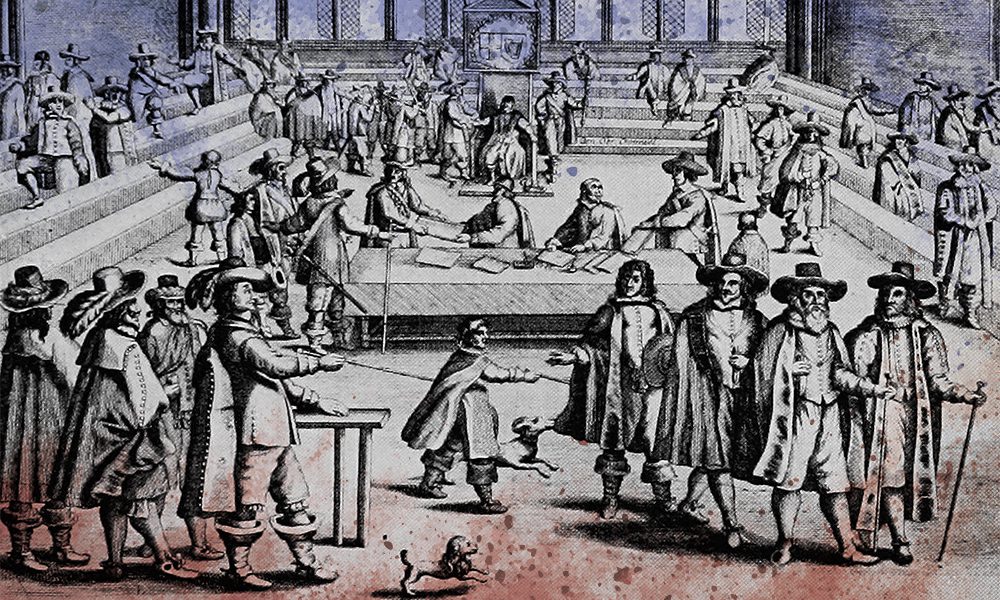
Oliver Cromwell’s House of Lords
On 19th March 1649 the House of Lords was abolished by an Act of Parliament, which declared that “…the House of Lords is useless and dangerous to the people of England.” But in 1657, the Cromwellian regime established a second Parliamentary chamber – the “Other House” – under the terms of The Humble Petition and Advice. ... Read more

Oliver Cromwell’s Protectorate – A genuine revolution or a drift back to traditional government?
In our regular series of programmes Key Questions: Expert Answers, we invited leading academics to address some of the most important questions – often controversial – asked about the causes, conflicts and consequences of the British Civil Wars. These are the thorny questions which are regularly asked about this unique period of British history which ... Read more

The General who made the Restoration possible – General Monck
General George Monck is best known for the key role that he played in the Restoration of the Monarchy in 1660 when his actions undoubtedly changed the course of British history. Without his military intervention it is likely that Charles Stuart would not have regained the throne, that Britain would have remained a Republic or ... Read more

Controversy – Oliver Cromwell in Ireland (1649-1650)
In just 40 weeks Oliver Cromwell ruthlessly subdued Ireland in a bloody and ruthless campaign which still casts a shadow over the remembrance of one of the most famous – or infamous – figures in British history. This campaign continues to be bitterly argued over by historians and politicians today. When he arrived on 15th ... Read more

Living through civil war sieges in Newark – the civilian experience
In the seventeenth century the market town of Newark sat at the lowest bridging point across the River Trent astride the Great North Road which linked London with the north and Scotland. Unsurprisingly, control of this town became a strategic objective for both sides during First Civil War. Besieged not once but three times, by ... Read more

Witch-hunting in revolutionary England
While witch-hunting and witch trials here in England never reached the levels reported in Europe, they were at their highest against the background of the turmoil of the 1640s. This was the time of the notorious Witch-finder General, Matthew Hopkins (1620-1647) and his associates, including John Stearne (1610-1670). These men operated in East Anglia, an ... Read more

The Civil War Memorials Project – Battlefields Trust
Memorials of conflicts that have occurred since the nineteenth century are commonplace around the country. Most cities, towns and villages contain some form of physical structure dedicated to the memory of former inhabitants who gave their lives in service, especially those who fought during the First and Second World Wars. But did those who lived ... Read more

The last days of the Republic – The return of the King – Part 2
This is the second programme in our two-part series asking why England’s only experiment with Republicanism spectacularly disintegrated within a few months of the death of Oliver Cromwell, the first Lord Protector? You will hear from author and historian, Dr Henry Reece, Emeritus Fellow of Jesus College, Oxford, that the return of Charles II was ... Read more

The last days of the Republic – The fall of Richard Cromwell – Part 1
This programme is the first of a two-part series telling the story of the turbulence and upheaval that followed the death of Lord Protector Oliver Cromwell on 3rd September 1658 and which ended in the return of the monarch, Charles II, to London on 8th May 1660. In this episode we learn about the fall ... Read more

The importance of radicalism in the 1640s
Over the last decade, extensive research conducted by academic historians in universities in England, Wales, Scotland and Ireland has significantly expanded our knowledge of the origins, conducts and consequences of the British and Irish Civil Wars. As a result, attitudes and perceptions of this critically important period of history are continuously evolving. This presents a ... Read more
New understandings of Charles I kingship
Over the last decade, extensive research conducted by academic historians in universities in England, Wales, Scotland and Ireland has significantly expanded our knowledge of the origins, conducts and consequences of the British and Irish Civil Wars. As a result, attitudes and perceptions of this critically important period of history are continuously evolving. This presents a ... Read more

Killing the New Model Army – The fate of Cromwell’s old soldiers 1660-1685
Much has been written about the New Model Army, which, when combined with images of Oliver Cromwell, has come to represent civil wars in popular books, films and TV programmes. In academic studies, the main focus has been on the founding and organisation of the army, its battlefield victories, the men who fought in its ... Read more

Creating new civil war resources for schools – Best practice
The British and Irish Civil War offer multiple opportunities across the curriculum and each of the key stages (KS). In this short talk Dr Jim Carroll, Departmental Lecturer in History Education at the University of Oxford, discusses: Current status of civil war history in schools Where the Civil War might be used to enhance learning ... Read more

Ruling without Parliament – Charles I
On the 10th March 1629, Charles I dissolved his third parliament beginning years of Personal Rule which were described by his opponents as “11 years of tyranny”. Indeed it is these years which many historians regard as a critically important causal factor in the outbreak of civil war in England in 1642. Knowing the upheaval and ... Read more

Multitudes of hands – The power of petitioning in seventeenth-century England
In seventeenth-century England, petitioning was one of the few opportunities for people at every level of society to make their voices heard by those in power. As a result, petitions became the ubiquitous means by which groups such as the Levellers sought to radically change the government and the organisation of religion in England, through ... Read more

Prince Rupert’s burning love of England, discovered in Birmingham’s flames
On Easter Monday 1643 Prince Rupert led a force which assaulted the town of Birmingham as he moved along the road to meet up with Queen Henrietta Maria who was on her way to meet Charles I in Oxford. This was a short and seemingly insignificant skirmish. Birmingham had no significant defences and the parliamentary ... Read more

The making of Oliver Cromwell – His early years
The Greek philosopher, Aristotle, said: “Give me a child until he is seven and I will show you the man”. How far is this true of the life of Oliver Cromwell who rose from being an obscure yeoman farmer in East Anglia to become one of the most revered, and by some reviled, figures in ... Read more

Were the Commonwealth and the Protectorate doomed from the start?
This is one of the great ‘what if’ questions of British history. Could the Commonwealth and the subsequent Protectorate have survived after the death of Oliver Cromwell on 3rd September 1658, or was it doomed to failure from the beginning? In our series ‘The Big Questions’, we invite distinguished historians to answer such critical important ... Read more
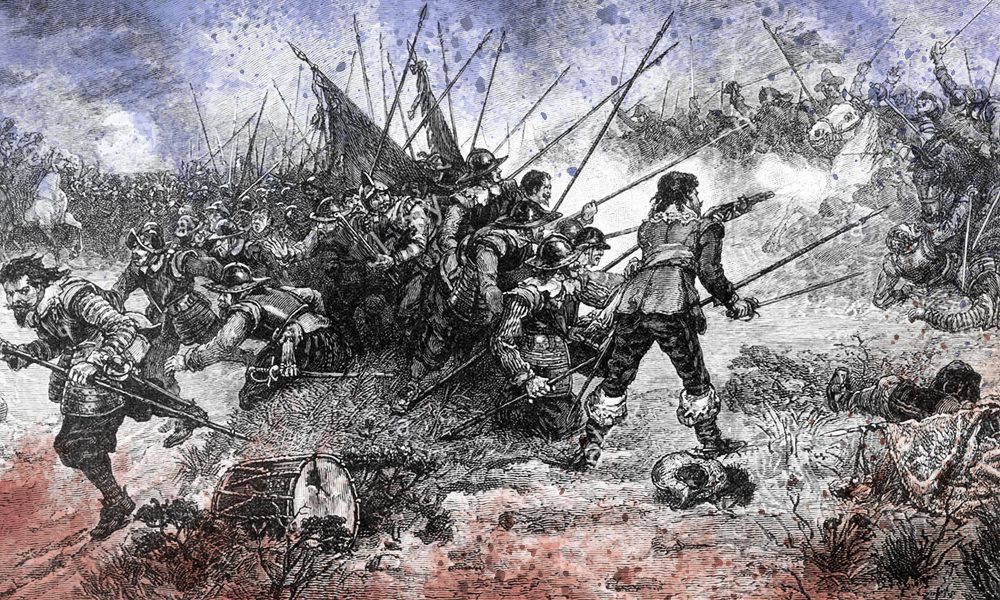
The bloodiest battle – Marston Moor (2nd July 1644)
By 1644, the Civil War was entering its third year. Until then, the conflict in the North of England had been dominated by a victorious Royalist Army led by the Marquis of Newcastle, but the intervention of a Scots Army of 20,000 men dramatically now changed the balance of power in Parliament’s favour. By April, ... Read more

Yorkshire in the Civil Wars – A bloody strategic battleground
Many histories of the civil war fought in England focus on the south and the midlands. In contrast, this programme shines a light on the significant role played by the county of Yorkshire in the north of England in Parliament’s victory during the Civil Wars. In this programme, Professor Andrew Hopper of the University of ... Read more

Uncovering a ‘forgotten’ massacre at Shelford House
The military history of the British and Irish Civil Wars has been dominated by the stories of the battles between the two field armies in England such as Marston Moor, Newbury and Naseby. But in reality, this was largely a conflict of relatively small-scale local conflicts, often around strongpoints such as fortified houses. These engagements ... Read more

Raids, skirmishes and sieges – How the Civil War was fought
While accounts of the British and Irish civil wars frequently focus on the large set-piece battles between the two field armies, much, if not most of the conflict was fought by regional or local forces in raids, skirmishes and sieges of strongpoints. These clashes disrupted local lives time and again as the conflict ebbed and ... Read more

‘The Christian Centurion’ – Sergeant-Major-General Philip Skippon
Sergeant-Major General Phillip Skippon was described by an earlier biographer, Lucas Phillips, as “… the type of man found in the best British armies throughout the centuries – not over-endowed with brains, but stout of heart, loyal of spirit, direct of speech, generous to a fault, God-fearing, the first into action and the last out ... Read more

‘Black Tom’ – Sir Thomas Fairfax, Creator and Commander of the New Model Army
Ask who was the Parliamentary general who created and commanded the all-conquering New Model Army during the civil wars and the most likely answer will be “Oliver Cromwell”. But in fact, it was Sir Thomas Fairfax – known to his enemies as “Black Tom” – who emerged as the most successful military commander of the ... Read more

Taken for a Soldier – Conscript or Volunteer?
Napoleon Bonaparte famously said “Soldiers generally win battles, generals get credit for them”. This is certainly true of many of the histories of the British Civil Wars. Whilst much is written about famous military figures such as Oliver Cromwell and Prince Rupert of the Rhine, the hundreds of thousands of ordinary men they led – ... Read more

1647 – A year of tumultuous and unstable ‘peace’
1647 was the first year of peace after Parliament’s victory in the First Civil War. Rather than a return to pre-war normality, the year brought more instability as the lives of the British and Irish peoples were turned upside down. The year began when the defeated King was ‘sold’ to the Westminster Parliament by his ... Read more

‘Yet One Warning More, to Thee O England’ – Quakers and the Restoration, 1660-1689
Between 1660 and 1689, Quakerism in England underwent substantial trials and transformations. This was a time of great political and religious instability which posed formidable challenges for early Quakers who had survived the civil wars. Following the Restoration of the monarchy, Quakers faced intensified persecution under the so-called Clarendon Code, which sought to suppress dissenting religious ... Read more

‘Light Risen Out of Darkness’ – The Civil Wars and Early Quakers, 1646-1660
Quakerism emerged in England in the social and religious tumult of the Civil Wars. It was in these years that Quakers tapped into the widespread feeling of uncertainty in a world turned upside down, zealously spreading their messages in print and through a travelling ministry. This brought them into direct confrontation with the authorities who ... Read more

1641 Depositions Project – Lessons for todays divided world
The landmark 1641 Depositions Project at Trinity College Dublin, has digitised and analysed more than 8,000 witness statements made during the Rebellion which swept through Ireland in 1641 and 1642. These testimonies mainly by Protestants, but also by some Catholics, from all social backgrounds, concern their experiences. They document the loss of goods, military activity, ... Read more
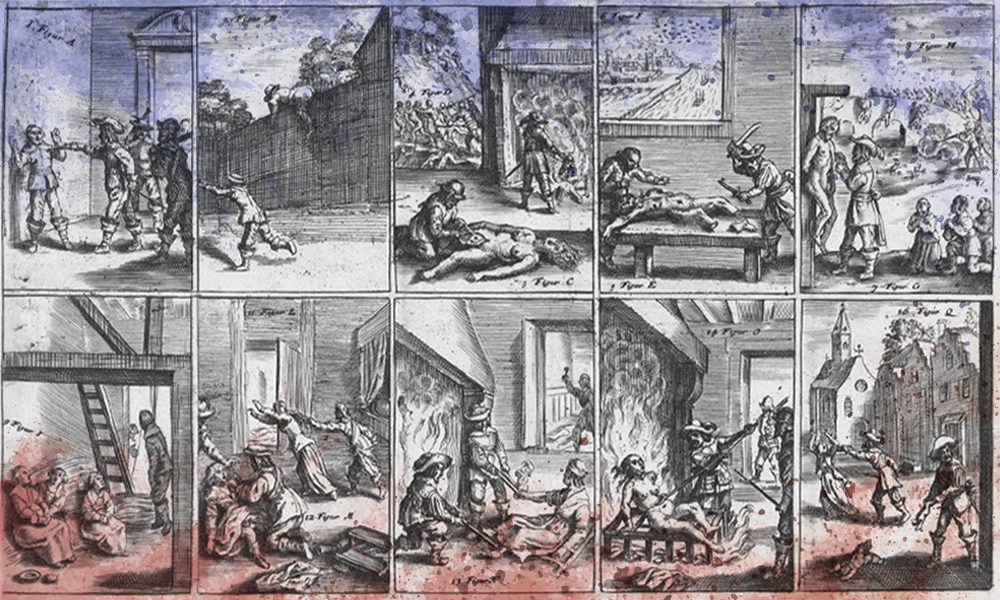
The Irish Rebellion 1641 – Sorting the facts from the fake news
Events in Scotland and Ireland in the late 1630s and early 1640s directly contributed to and amplified, the worsening political crisis which in 1642 would explode into Civil War in England and Wales. By 1641 there was instability across the Three Kingdoms. In Ireland, the deteriorating condition of the so-called “deserving Catholics” who held property ... Read more

John Poyer – Starting the second civil war in Wales
This is the incredible but true story of John Poyer of Pembroke. Poyer’s early years are obscure but he rose from poverty to become mayor of the isolated and poor town of Pembroke in the farthest reaches south west Wales. When civil war broke out in 1642 Poyer seized the town and castle for Parliament ... Read more

The Civil War encapsulated in a single siege
Between 1643 and 1645, Basing House in Hampshire – which once rivalled Hampton Court in size and opulence – was besieged by Parliament’s forces. The house was a Royalist bastion and its owner, the Marquess of Winchester, who repeatedly refused to surrender, had the motto “Love Loyalty” etched into the window. The house finally fell ... Read more

Beyond England’s Borders – Wales Besieged (1642-1648)
Some historians refer to the British Civil Wars as the Wars of the Three Kingdoms of England, Scotland and Ireland. As a result it is easy to forget the Welsh experience and imply that it was unexceptional. But Dr Lloyd Bowen, Reader in Early Modern and Welsh History at Cardiff University says this ignores the important ... Read more

Fleeing the Irish Rebellion 1641 – Refugees’ experiences
On the 23rd of October 1641 – about a year before the outbreak of civil wars in England and Wales – a bloody Rebellion swept across Ireland. Lead by a small group of Catholic gentry and military officers, many of whom were Gaelic Irish, the rebels’ goal was to oust the hated English administration and ... Read more

How Scottish Presbyterians became so powerful in England
In January 1644, the Scottish army was sent into England to directly intervene in the Civil War in Parliament’s favour. The Scots became aligned with the Presbyterians at Westminster, where they generated the political ideas which shaped much of Parliament’s war effort.

How Scots opposition irreparably damaged the King’s authority
From 1637 popular opposition to Charles I in Scotland ignited a crisis which first spread to Ireland in 1641 and then to England and Wales in 1642. It was here in Scotland that the king initially made the concessions which publicly exposed his weakness and his inability to sustain his Divine right to rule. Once ... Read more

Understanding the Importance of Scotland, Ireland and Wales
Historians now recognise that the civil wars of the mid-seventeenth century must be viewed in a British and Irish context and not exclusively from an English perspective. Events in both Scotland and Ireland are fundamentally important if we are to gain an understanding of the causes of the conflict and the events which occurred throughout ... Read more

Historians’ evolving views of John Pym
John Pym was one of the most influential Parliamentary leaders of the Opposition to the arbitrary rule of Charles the First in the years preceding the outbreak of civil war in 1642. And after the conflict began, he was an influential and widely respected figure in the development of the strategy developed by the Parliamentarians, ... Read more

John Pym (1584-1643) – Pivotal Parliamentary figure and opponent of the King
John Pym, who was born in 1584 and died in December 1643, was one of the most important Parliamentary figures in the years leading up to the outbreak of the Civil Wars. He earned a reputation as a parliamentary revolutionary, leading opposition to the arbitrary rule of Charles I. Throughout this time, Pym’s leadership in ... Read more