The Work in Sports Podcast - Insider Advice for Sports Careers
300 episodes — Page 4 of 6

Ep 422Best Sports Career Advice of 2021
The sports industry changed drastically due to the COVID-19 pandemic in 2020, but job openings rebounded this year. During this resurgence of sports job openings, WorkInSports took a look at the pressing issues that matter to candidates in the State of Sports Hiring Report. As the industry adjusts to the new realities of a candidate-centered job market, the WorkInSports Podcast continued to offer sports career advice that reflected the unique circumstances to lay out a road map of how to work in sports. VP of Content and Engaged Learning Brian Clapp chatted with 41 experts in the sports industry and has picked out the best sports career advice to take home as you hit the ground running for your job search in 2022. This compilation of sports career advice includes (among others):Scott O’Neil (former Harris Blitzer Sports and Entertainment CEO): Don’t fake it until you make it, or things will go sideways quickly.Mike Neligan (Vayner Sports CMO): Show a tangible way you improve his work environment. Zach Maurides (TeamWorks Founder and CEO): Have a competitive mindset.Emily Caron (Sportico Sports Business Reporter): Be your own advocate.

Ep 421Making Money in the SportsBiz
Working in the sports industry comes with a particular shine. Many people watch sports, and when they hear someone at a social gathering say that they work in the field, their ears perk up. However, the exciting stories at parties cover up that salaries in sports careers sometimes lag behind other professions. Jacob tackles this topic with his question for the WorkInSports Podcast:“Hey Brian, I’ve listed for a long time, and one subtle theme that comes through from your guests and even you is jobs in the sports industry don’t always start with very competitive salaries. Why is that, and what career paths in sports can make the most money?”The simple answer to the first question is supply and demand economics. There are a lot of candidates competing for a limited number of jobs in the sports industry. As of this episode’s publishing date, there are over 24,000 job openings on WorkInSports. That number includes every type of job in the field: coaches, video editors, athletic trainers, and sales representatives, to name a few. That is far fewer opportunities compared to iHire career sites such as Nursing (398,000 jobs), Sales (260,000), and Marketing (51,000).Catch the full episode to get VP of Content and Engaged Learning Brian Clapp’s complete answer to the salary question, and be sure to subscribe wherever you listen to the WorkInSports Podcast for more sports career advice!

Ep 420The Art of Sports Content w/Phoenix Suns' Shawn Deloney
For sports brands, content creation is its version of show business. Check any sports social media feed and you’ll see energetic hype videos, crisp infographics, and trendy TikTok crazes. Fans can’t get enough of them when they come out, and then they move on to the next thing. Of course, that next thing could be more of the same, or it could be a new platform that the brand maneuvers into to stay relevant in another digital space.Joining VP of Content and Engaged Learning Brian Clapp is the Phoenix Suns’ Shawn Deloney, the NBA franchise’s associate director of content. Deloney joined the Suns as a production assistant in 2011 while wrapping up his undergraduate at Arizona State and gained full-time employment as a digital video producer upon graduating in 2013. As a result, he lives in the sports social media sphere for the Suns and satisfies the fanbase’s unending appetite for content.Catch the full episode of the WorkInSports Podcast where Clapp and Deloney discuss:What early memories of working in the sports industry stick with him today.How being with a winning team helps perform the day-to-day aspects of the job.The differences in content strategy between the NBA and NFL.The ins and outs of the gameday experience.How he balances working in sports with his family life.

Ep 419Overcoming Nerves at a Job Interview
One of the draws of working in the sports industry is witnessing amazing athletes excelling in high-pressure situations. From hitting a game-winning kick at the end of the Super Bowl, to sinking a pair of free throws with a championship on the line, to getting the final out in the World Series, there are countless opportunities when an athlete is under the spotlight with all the pressure on their shoulders. The ability to shake off the nerves in those situations is part of what makes elite athletes who they are.Building on that idea of handling pressure, Jennifer from Portland, Oregon, has a question for VP of Content and Engaged Learning Brian Clapp to lead us into the topic of this WorkInSports Podcast episode:"Hi Brian, I love the podcast and saw one of your promotional videos on LinkedIn for your interview with Jason La Canfora, and LOVED it. I can't believe I'm only just now finding your show. I'm binge listening now, and it is so good. My question is a simple one. I've had three interviews in the last three months, but I bombed them each because of nerves. I get tongue-tied and stumble, and I don't know how to stop it. Any ideas?"Here are a few other bits of sports career advice to take home and combat the nerves while preparing for a job interview:• Give yourself something to do leading up to the interview.• Build a routine for yourself to keep you grounded.• Dig into why you feel nervous to discover a way to combat it.Catch the full episode of the WorkInSports Podcast for detailed job interview tips to nail your next opportunity, and be sure to subscribe to our YouTube channel for more content!

Ep 418The Strategy Behind Sports Business w/Florida Panthers' Sam Doerr
Preparation is everything in life. At WorkInSports, we approach finding a job in the sports industry through the lens of developing a specific strategy to give you the best chance of landing the job you are after. Even if you aren't a list person, chances are you have a plan in the back of your mind laying out how to achieve a goal.A higher-level strategy actively or passively influences how you search for a job in the sports industry. Everything from the college courses you enroll in, the organizations you sign up for, and the internships you take fits into a strategy of building up the right set of skills, constructing a network of contacts, creating a resume that employers, and polishing your interviewing skills.Our guest on the WorkInSports Podcast is the Florida Panthers' Sam Doerr, who serves as the team's Chief Strategy Officer. Doerr's role is to search for strategic revenue opportunities and evaluate whether they make sense for the organization to adopt. We talk about NIL, NFTs, esports and other market trends. Enjoy!
Ep 417Five Questions to Ask at the End of a Job Interview
One of the goals of this site along with the WorkInSports Podcast is providing a roadmap to getting your career started in the sports industry. That roadmap includes tips for optimizing your resume, building a network that gets you noticed, and job interview advice to land you that dream job. Today’s question addresses a crucial moment of the last point, we’ll let Janice from Illinois take it away:“Hey Brian, I love your podcast and I am getting so much better at interviewing and network because of you. I have to admit my last two interviews I reached the end and when asked “What questions do you have for me?” I froze. I didn’t get either job and I really think I messed up this last impression. Can you help? I need ideas of what to ask and a way not to forget after a long interview!”This is a common pitfall, you enter the job interview prepared, you’ve sold yourself with strong answers to the employer’s questions and then the table gets flipped and you are the one driving the conversation and you go silent. Regardless of how well you perform during the interview when the ball is in the employer’s court, it is expected that you will have questions for them at the end. The best questions to ask in a job interview shows the employer these two things:How interested you are in the position by showing your curiosity.How much you were listening throughout the interview.

Ep 416Sports Marketing’s Future w/Fan Controlled Football’s Jasmine McGee
Today’s WorkInSports Podcast guest, Fan Controlled Football’s Senior Director of Marketing Partnerships Jasmine McGee, runs the marketing and sponsorship efforts for a new league that considers itself football for the modern world. The games are an hour long, streamed on Twitch, with no kickers or punters, and played on a 50-yard field at 7-on-7. The hook is that fans call the plays as part of the interactive Twitch experience and you can be a part owner of a team. To get traction, a business needs financial backing, and Fan Controlled Football has that covered with sponsorships from Wendy’s, Verizon, and Progressive just to name a few. Current and former NFL Players such as Austin Ekeler, Richard Sherman, Dalvin Cook, and Marshawn Lynch have hopped aboard the train as owners to lay a strong foundation.McGee’s sports marketing efforts have paid dividends. The FCF went from 735,000 viewers on Twitch in its first week to 2.1 million in the playoffs. It also got something the XFL and AAF did not, a second season. “FCF Season v.2.0” will begin in Spring 2022 after the Super Bowl. The four-team league is expanding to eight and they announced a broadcast deal with NBCUniversal’s NBCLX and Peacock to broadcast every game of the season.

Ep 415Proactively Researching a Company’s Workplace Culture
For all the allure of a sports career, who you are working for is just as important, if not even more important, as the job itself. The following question from Matt dives into workplace culture:“I am not sure if you saw the recent article about the Suns owner, Robert Sarver, talking about the toxic workplace he created. I wanted to ask you, as a job seeker, what measurements can I take to make sure I am going into an organization with a good culture?”Culture is a hot topic at all companies, and the “About Us” section of job postings are often littered with buzzwords about the culture being “like a family,” “forward-thinking,” or “innovative” WorkInSports Podcast Host Brian Clapp himself has broached the topic in terms of a catalyst of the Great Resignation, horrible bosses, or management creating a toxic work environment that drives away employees. However, this is a strong question involving how to proactively find out whether or not where you are applying is actually a good environment to work in before you enter it.
Ep 414Getting Started in Sports Social Media w/Memphis Grizzlies' Lexi Ross
Given the immense competition to land sports social media positions in major professional leagues, it is noteworthy when someone fast tracks their career and bypasses those stepping-stone positions. Lexi Ross, Memphis Grizzlies’ Social Media and Digital Content Producer and our guest on the WorkInSports Podcast, is one such person. Lexi earned her Bachelor’s in Sport Leadership and Management from Miami University in 2019. Fast forward two years, and she’s gone from studying in Oxford, Ohio, to managing social media for an NBA team. Clearly, the Memphis Grizzlies saw something in the creative content that Lexi was producing. In addition to her direct role with the team, she also builds content for the Grizzlies’ G-League affiliate, Memphis Hustle, their esports team, Grizz Gaming,, and FedEx Forum. This rising star joins the WorkInSports Podcast to chat with VP of Content and Engaged Learning Brian Clapp to share some sports career advice regarding:How she built up her resume while attending Miami University.What made her decide to pursue a sports social media career.Which memories she recalls from interviewing with the Cleveland Indians out of college.How she keeps fans engaged on social media during a pandemic.How she continues producing fresh content for many different areas of the franchise.Enjoy this episode!

Ep 413Why Your Cover Letter Stinks & How to Make it Better
When he isn’t dispensing job search advice on the WorkInSports Podcast, VP of Content and Engaged Learning Brian Clapp makes the rounds with speaking engagements at various universities. There, he shares his wisdom with college students to build the foundations of their careers. This week’s Q&A podcast episode comes from a topic that came up time and again during Brian’s most recent encounters with undergraduates:1. Do employers even read cover letters anymore?Or:2. What should I do on my cover letter to stand out?Catch the full episode for Brian's answer on how important a cover letter is on your job search and how to make sure you stand out with yours!

Ep 412Insider's View on Sports Reporting w/CBS Sports' Jason La Canfora
We all face them. Sometimes they are dramatic, like the failure of a relationship, or the bankruptcy of a business. And sometimes they are less dramatic, but no less important like a new assignment at work, or an uncomfortable conversation.As humans, we often tend to take action when we feel comfortable the results will be positive. We lean into those things where we know the success rate is high. Today’s guest Jason La Canfora was a highly successful beat writer for the Detroit Free Press covering the Stanley Cup winning Detroit Red Wings. But he wanted to take on more. On to the Washington Post covering the NFL and the Washington Football Team.Not bad – that sure looks like success.Next thing you know, NFL network comes calling, we want you to be on camera and be our NFL insider.That’s a challenge staring you in the face.So what do you do? The Detroit Free Press was something many would have been happy with and deservedly so. The Washington post? For a beat writer that is top of the pile. But, if you truly want to grow, if you truly want to fly – sometimes you have to get our of that comfort zone, and take on that stretch. That thing you never thought you could reach. Jason La Canfora was ready for the challenge and thrived on camer and leading the NFL news and information gathering at both NFL network and now CBS Sports.Buckle up – this is quite the conversation with Jason La Canfora from CBS Sports.
Ep 411You NEED to Customize Your Resume
Having a polished resume highlighting your professional attributes is job hunting 101, but Jim’s question for the WorkInSports Podcast takes it a bit further this week.“Hey Brian, big fan of your podcast. I have a professor who is advising us to have multiple versions of our resume. I’m a junior in college. He gave us this advice, but he couldn’t explain why. I pressed him on why and he said he heard you talk about it on one of your podcasts. I would like to ask why should we have multiple copies of our resume?”As a premium job board geared towards matchmaking between aspiring sports employees and organizations hiring them, WorkInSports Podcast host Brian Clapp naturally dives into a football reference regarding his resume writing tips. Football teams have a basic scheme for how they want to play (your base resume) and they tweak their game plans based on what they see in their upcoming opponent each week to maximize their odds for success (highlight different skills based on the job posting).Fundamentally, you want a basic (maybe even boring) resume that won’t trip up the Applicant Tracking Systems where you apply along with a visually appealing version of your resume that you can show to a human being that will entice them to look at it.
Ep 410Celebrating National Disability Employment Awareness Month with Megan Gausemel and Ben Collins from Special Olympics
October is National Disability Employment Awareness Month – you are now aware of this concept. But let’s go deeper. We need to get past awareness, we need to think about our collective contributions to the solution. Joining me today are Megan Gausemel, Director of Awareness Planning and Operations at Special Olympics International and Ben Collins, 40-year Special Olympic athlete, and the first athlete with a intellectual disability to be hired at Special Olympics headquarters – that what was 29 years ago. When I was first introduced to Ben, the last line of his bio nearly made me cry, he said, “If I didn’t have Special Olympics in my life I would be sitting at home or on the sidelines doing nothing at all.”Listen in to Megan and Ben's important story.
Ep 409Leveraging the Great Resignation
We got our first video question in our Q&A session of the WorkInSports Podcast as Matt asks about leveraging the Great Resignation that the job market is smack dab in the middle of. This episode discusses why employees are leaving their jobs, even without another position secured, along with advice to turn this sports industry churn into a landing spot for you.
Ep 408Sports Betting: The Industry's Biggest Growth Sector w/Johnny Aitken
Sometimes it can be helpful to look back into sports history to understand where we are now and how radical the changes have been over the last 10 years or so.I’m going to read two quotes and I want you to guess what we are talking about:Here’s former NFL commissioner Paul Tagliabue: "It is a matter of integrity, It is a matter of the character of our games, of the character of our fans, and a matter of values."Now here’s former MLB commissioner Bud Selig fearful statement to federal court “Players would not be viewed by fans as exceptionally skilled and talented competitors but as mere assets to be exploited for fast money.”That topic was sports betting of course and in 2018, we’ve got legalized sports betting. Not everywhere... but in a growing number of states. And guess what, the world didn’t blow up. Players didn’t end up under the thumb of some mob boss, and again... the leagues themselves made money, with increased interest in their games.How does all this happen? It’s not just at casinos, or riverboats, or racetracks --- we’re in the digital age baby, and today’s guest Johnny Aitken CEO of PointsBet USa is the leader of this charge. We are at the tip of a very large iceberg, and Johnny’s here to tell us all about the journey and the upside... here’s Johnny.
Ep 407Should I Make a TikTok Resume?
One of the most useful traits of maintaining a strong presence on social media is branding yourself as a professional. On our latest Q&A segment of the WorkInSports Podcast, Darren from Atlanta writes:“Hey Brian,Big-time listener here, I’ve picked up a lot of great advice from you so thanks for all that you do. I have a question regarding TikTok, I see a lot of people posting their resumes there and I wonder if there’s some value there or is it a waste of time? Thank you for your insight.”While we’re never shy about advice to people looking to start a career in social media and iHire writes at length about optimizing your social media profiles to get hired, considering newer platforms such as TikTok to get your resume out there is a first, so thanks for the question Darren!TikTok has exploded onto the scene over the past couple years and is a platform of choice for teenagers and college-age students especially, so of course brands (like us!) are considering jumping into it. There is a hashtag, #CareerTok, that is providing fantastic career advice on the platform right now. It’s a great place to gather short pieces of advice from experts.

Ep 406Evolving Sports Content w/The Athletic's Evan Parker
The introduction, improved performance, and “free” nature of the internet upended every business model of sports consumption. Suddenly, all the content you paid for individually was at your fingertips with only an internet bill to pay for it. Magazines went online, struggled to maintain subscriptions, and several shut down permanently. As time went on and streaming apps became prominent even ESPN’s media empire faced diminished profits as consumers started cutting the cords to bloated cable bundles.Newspapers got it the worst of anyone. In 2006, there were 74,410 people employed in the newspaper industry. By 2020, that number was cut in more than half to a total of 30,820. The sports section was not immune from those trends and several prominent beat writers with large online followings were shown the door.This episode's guest, Evan Parker, serves as Senior Vice President and General Manager of The Athletic. Its subscription-based model has managed to thrive by focusing on all the things the internet seemed intent to prove was obsolete, and he tells us how on the WorkInSports Podcast.
Ep 405Advice for Career Changers
Our latest episode of the WorkInSports Podcast hits an area in the middle of a slew of reasons for career changes as we approach what employment experts are calling the Great Resignation. We’ll let Bre, one of our newest listeners, set the stage:“My name is Bre, and I'm a new follower of your podcast –which by the way, is so awesome and informational! I saw that we could send you emails with questions, so I thought I'd better reach out to you as I am seeking a career change. I am 24 years old. I'm currently miserable in my current career choice. I am a recent graduate who has received her master’s in a health-related field; yes, I work in the hospitals/health. I was extremely young when I chose to major in Speech-Language Pathology, and now I feel stuck. I am a former college athlete who still loves sports and would love to work in the field as an event manager/coordinator. The only problem is... I have majored in Speech Pathology for both my undergrad and graduate. I do have experience in event coordinating (my part-time job) but not event coordinating in sports.”How do I become a top candidate as a person who only has a background in SLP? 1.) Do I have to go back to school to get my doctorate or masters in Sports Management? I really don't want to go back to college, but if I must, then I understand. 2.) Where would you start if you were me? I do not know where to begin in this process. So, if you don't mind, please send me all of the advice you have because I really want to be in a career that is surrounded by my first love: SPORTS!!”The full episode will dive deeper into how to make this kind of drastic career change.

Ep 404Working in College Athletics w/Auburn Assistant AD Dan Heck
On our latest WorkInSports Podcast, we go a little deeper into the realm of college athletics as VP of Content and Engaged Learning Brian Clapp sits down with Auburn University’s Assistant AD for Marketing and Fan Engagement Dan Heck, who details his journey from a marketing graduate assistant at Central Michigan University to his current post running the Tigers’ marketing efforts in the football hotbed of the SEC.The Draw of College AthleticsThere is a “cool factor” to working in sports that has traditionally drawn a large pool of candidates to any job opening to be part of the action, and college athletics is no different in this regard. You can flip on football games across the country on Saturday and see packed stadiums of diehard fans cheering their lungs out to create an energetic atmosphere. Working in college athletics offers a chance to live in and provide that environment. As a marketer, Heck is responsible for putting on the pageantry of a gameday and giving fans a connection to Auburn’s student-athletes.Catch the full episode, it has a lot of great info on getting into and excelling in college athletics.
Ep 403You are Probably Making A Terrible First Impression
No fan questions this week for the WorkInSports Podcast, but VP of Content and Engaged Learning Brian Clapp has advice all the same for our aspiring sports professionals.Communication. It’s a crucial part of branding yourself not only as a trusted expert on your social media accounts and in your industry. Communication is also an important and exciting aspect of branding yourself because you can control the conversation and show a lot of cool content off to your followers. Your personal brand is more than just your activity on social platforms. Emails, texts, comments, and posts are also a piece of it. When you reach out to someone to connect on LinkedIn and you add a sloppy note (or don’t add a note), that is a representation of your personal brand. When you email a boss, a professor, or an internship coordinator, you are giving a sample of your personal brand. That’s not as sexy as putting out a post on social that gets shared and liked hundreds of times, but it is critical to getting where you want in the industry.Why Interpersonal Communication MattersEvery communication touchpoint is an opportunity for whomever you communicate with to evaluate your personal brand. In this episode, Brian uses the example of emailing a professor for assistance, but leaving vague information that does not let the instructor clearly know how to help. If you are the person who sends that type of email, understand that your exchange makes an impression and leads the professor to classify you as someone with low potential (and probably not worth the extra effort to help excel).Social media is the sexy part of building your personal brand – and crafting a good persona there can absolutely set you on the path to success. However, there are still some nuances in doing so. Take LinkedIn, the go-to site for budding professionals to connect and network with experts in their chosen industry. While you can find people the algorithm suggests and hit “connect” to spit out an automated “John Smith would like to connect on LinkedIn” request, remember that you get 300 characters of your own to help that connection request stand out. Use those characters to ensure that initial outreach counts. Make that person feel like more than another number to add to your list of connections or followers.
Ep 402Changing Lives Through Sports w/Under Armour Coach Ambassador Desmond Dunham
Adversity. Everyone has had to overcome it in some form or another in their lives, but the amount of barriers differ between people. On this episode of the WorkInSports Podcast, Brian Clapp speaks with someone who has overcome countless obstacles throughout his life to excel, and he is paying it forward. Desmond Dunham turned to running as his way through those obstacles, an elite cross country athlete turned inspirational coach, Dunham has mentored over 100 Junior Olympic All-Americans and over 100 high school All-Americans, with myriad other accomplishments on the course and track. His new book, Running Against All Odds, is coming out soon and I'm thrilled to have him share some of his story on here.
Ep 401How to Ask For (and Use) References
On the WorkInSports Podcast, we pride ourselves on offering career advice to folks looking to break into or move up in, not only the sports industry, but wherever talented workers ply their trade. Our question from Jonathan in Texas is one that definitely applies to everyone finishing up a job or internship application:“Hey Brian – I'm Jonathan; I am a junior in college who is just starting to apply for internships this year. I’ve been listening to a lot of your advice, partially because my professor talks about your podcast all the time! (He’s right, it’s really informative). But one thing I couldn’t find in your archives was any information on asking for and getting professional references. I’ve started applying for internships and I was asked for references which caught me off guard. I was not prepared – what should I do? And what should be my strategy to handle this in the future?” This is a great question. People spend so much time updating and reformatting their resumes. They will write countless cover letters and tweak their formulas each time. Those things are extremely important and completely within their control.Using references, though, is something that requires input from other people who are willing to speak on your behalf or take the time to write you a letter of recommendation. It can also be what puts you over the hump when employers start evaluating their applicants. Catch the full episode of the podcast where Brian Clapp, VP of Content and Engaged Learning for WorkInSports, covers: Why Do References Matter?Etiquette of the Process

Ep 400Disruptive Trends in Sports Marketing w/Vayner Sports CMO Mike Neligan
We have this vision of the sports agent. Contracts. Negotiation. Schmoozing. Glad handing. A lot of this is true... but times have changed. Elite athletes used to choose their agents based on their history of signing massive long-term contracts for other clients -- “oh you helped Pedro Martinez sign a record-breaking contract extension – you're my guy!”Now, athletes are looking deeper into the broader opportunities an agency can provide outside of just their on-the-field contract. Can you help me build my personal brand, my influence?Can you help me get an equity deal with a company I believe in?Can you help me leverage social media, NFT’s, Names, Image and Likeness?Can you help me build my foundation, leave an impact, develop a community?Enter Gary Vee and today’s guest Mike Neligan CMO of Vayner Sports.Gary Vaynerchuk is the CEO of VaynerX and Vayner Media – and is one of the most disruptive forces in social and digital media. He’s built a huge brand and following from scratch, become an internet celebrity, authored 6 books and genuinely tries to change the world one day at a time.Gary loves sports, so in 2016 he built his own sports agency to go along with his media empire. Vayner Sports started out as a football agency working with amazing Pro Bowl level talent like Leonard Williams and Allen Robinson.When Mike Neligan came on board as CMO he brought an amazing background in baseball having worked with big names like Derek Jeter and Clayton Kershaw, he knew how to market big time athletes. This creation, Vayner Sports, is becoming the most disruptive and innovative brand in sports agency and I’m super excited to have CMO Mike Neligan on the show.

Ep 399Analyzing the State of Sports Hiring Report
Last week, WorkInSports.com released its inaugural State of Sports Hiring Report. Naturally, Brian Clapp leaned into the data it revealed in the latest episode of the Work In Sports Podcast to determine what the findings mean. One takeaway:A Lot of Movement is About to HappenIndustries nationwide have been dreading a “Great Resignation” that is supposedly fast approaching, and the data in sports is bearing that out as nearly 60% (58.1%) of our State of Sports Hiring Report respondents were currently employed and either actively or passively searching for a new job. Additionally, only 5% of the respondents were employed and NOT seeking a new job.One area that is having some difficulties within the sports realm is college athletics. There is a lot to unpack in that area as college athletics is a massive sports employer. If you look on our job board today, you can find roughly 5,000 jobs in college athletics, more than one-sixth of the over 29,000 sports jobs featured on WorkInSports.com. Downsizing hit them over this pandemic and some sources that we spoke with in our look at the current landscape of college athletics are struggling to build their staffs back up. Sports are fun to watch and experience and additionally should be fun to be around at work. Yeah, the hours are long and non-traditional at points, but people who enter it generally do so because they enjoy that atmosphere. So when you hear that almost 60% of the people we surveyed are currently working in sports, but are at least considering leaving their post, that ties into the culture of the job they are at.
Ep 398FanDuel Co-Founder Nigel Eccles - WorkInSports Podcast
With every sports gambling enthusiast's favorite season kicking off this week, the WorkInSports Podcast is doing a repost of Brian Clapp's Jan. 13 conversation with Nigel Eccles, Co-Founder of FanDuel. Strap yourselves in for an inside look at how he helped start up the sports book and daily fantasy sports service that boasts over six million users today. He takes us through the journey to disrupting the sports industry with FanDuel, pivoting to make this business model successful, and the changing world of sports business and what it means going forward.

Ep 397Changing Sports Recruiting Through Innovation w/James Sackville (Athletes in Recruitment)
Hey everybody, I’m Brian Clapp VP of Engaged Learning at WorkInSports.com and this is the WorkInSports podcast...I’m going to share one of my favorite sayings with you today.“If something is wrong, fix it if you can. But train yourself not to worry: Worry never fixes anything.”-Ernest HemingwayThis doesn’t apply to everything, my daughter started high school this week, I will worry. There is no problem to fix, I know she has to go to school and I can’t help but worry.But in general, this concept, fixing problems versus worrying is the guiding light in my world.I think that is why I am so drawn to entrepreneurs. They see a problem that either affects them or countless others and say to themselves “I can fix that, I have an idea”But it doesn’t stop there, an idea isn’t viable unless you can execute it. Successful entrepreneurs have an idea, put together plans, generate interest and funding, establish teams, lead people and in the end create something that changes us. All that is to say -- entrepreneurs have something special about them and I want to bottle it. Today’s guest is a shining example – James Sackville. James moved from Melbourne, Australia to the U.S, in 2016 and became SMU's starting punter for the next four seasons.While in school James became dismayed by the recruiting experience he and his teammates lived through, so he set out to fix it, make recruiting more equitable fair market experience.In May, he launched Athletes in Recruiting (AIR) a three-sided platform that's a cross between LinkedIn and a dating app--but for recruiting. Athletes can promote themselves to coaches, compare themselves to their peers and swipe right on colleges they have interest in. Coaches can also sort, filter and swipe on a prospective athlete based on recruiting needs.But enough of me yapping – lets get to James.

Ep 396Pivot in Your Sports Career
Today’s question ties into great to this concept for today’s question from Corrine in Nevada, As you touched on in one of your previous podcasts, there are many different areas of specializations in both professional and collegiate sports (i.e Sports Reporting, Community Relations, marketing, business operations, analysts, etc). What do you think about people who are working in an area but want to pursue a position in new one? How do you recommend going about it?But my answer will apply for anyone who wants to make a change in their career within the sports industry. So if you are working in sales and want to get into operations, this advice works for you too.Corinne, the first thing you need to realize is that everyone pivots.We all shift and move in our career and try different paths. In fact, according to multiple studies people change careers, full careers, 5-7 times over their lifetime. One report from CNN Money said in the first decade out of college millennials change employers on average 4 times…which is a huge change over previous generations.The reason I bring this up is because the first thing you have to do is remove fear or a feeling of, I can’t do this, out of your mind. It’s not as uncommon as you think, people change and shift and adjust all the time.We all tend to shackle ourselves with emotional chains that aren’t based in fact. Often the first thing you need to do in any career shake up moment, is to convince yourself it’s not only possible it’s probable.

Ep 395Turning Pro Athletes Into Global Superstars With Roc Nation VP of Operations Michele Rinchiuso
On this week's expert podcast, Brian Clapp gets within two (or three?) degrees of separation from Jay-Z as he chats with Roc Nation Sports VP of Operations Michele Rinchiuso. On this WorkInSports episode, Brian discusses his journey in the world of sports marketing at Puma to pivoting over into Jay-Z's empire on the sports side of things and the traits that can help you get to where you want to be in your career journey.
Ep 394Job Interviewing is a Skill, Here's How to Improve It
Hey everybody, I’m Brian Clapp VP of Content and Engaged Learning at WorkInSports.com and this is the Work in Sports podcast. This week, we've got a question from a curious high school senior named Jeremy who is passionate about getting into the sports industry. He writes:“Hi Brian, I am entering my senior year of High School, I play soccer and baseball at the varsity level, but not quite good enough to play in college. Nonetheless, I’ve figured out that I really want to work in sports and you are the expert on that, so here I am with a question! This year we’ll be practicing mock job and college application interviews. One thing I’ve learned about myself is that I am terrible in these situations. I know interviews and professional conversations are really important, can you help give me some tips to do better and improve?” Keep playing to get the in depth details, but here are a few tidbitsBuild your emotional intelligenceGive yourself a few key messages you want to get across

Ep 393Creating Great Sports Content with Gary Belsky, former Editor-in-Chief ESPN the Magazine
Remember ESPN the Magazine? NEXT athlete, the Body Issue – for me, the Mag was appointment reading. Maybe I’m a little different, but I grew up addicted to the sports magazine scene. Sports Illustrated, Sport, The Sporting News. Every year my grandmother would get me a subscription to these mags for Christmas, she didn’t have to think about it, just renew the subscription each year and I’d be happy as could be. SI covers adorned my walls. In my mind's eye I can still picture the SI cover with Bernie Kosar in his Browns jersey and mini fro, with the headline “Banking on Bernie”. I see it clearly because it was the cover that grabbed your eye as you walked into my bedroom. I didn’t particularly like the Browns or Bernie, it just so happened to be in your line of sight, and I remember it vividly. Growing up, these mags were all I read. Cover-to-cover. My mom tried to get me to read more novels, more classics, but I loved the storytelling that came through on those pages. Frank Deford, Leigh Montville, Alexander Wolff. ESPN the Magazine raised the bar. The pictures were better, content was faster paced, the branding, the stats, the data visualizations and the storytelling were just awe inspiring. I worked at a competing sports network and yet read ESPN the Magazine for inspiration. NEXT athlete, the Body Issue, Athlete X, The Biz, Two Way – it was amazing. But magazines, well, they died, and it wasn’t climate change that killed them, it was audience change. TL;DR became a thing. Everything we needed was on our phones. Information was right here all the time. September 2019 ESPN published their last magazine. They said the demise was caused by the “rapid evolution of consumer habits” which means, people were no longer buying paper publications. Get this in December of 2018, just 9 months before shuttering, The Association of Magazine Media, ranked ESPN The Magazine No. 1 in total audience. It ranked No. 1 among magazines in web and mobile web audiences and was top ranked in video. And that wasn’t enough. It still didn’t work. Remember magazines, those were great. Today’s guest Gary Belsky worked at ESPN the Magazine for almost 14 years, culminating in being Editor in Chief 2007-2011, in fact the Body Issue was one of his brain children. He’s written 8 books, is an accomplished speaker and is the Chief Content Officer for Elland Road Partners. As former guest Joan Lynch told me, Gary Belsky is one of the smartest people I’ve ever had the pleasure of speaking with. After my conversation with Gary which, you are about to hear, I concur. Listen to Gary Belsky on the latest Work In Sports podcast...

Ep 392Starting a Career in Sports Social Media
Today's Sports Career Q&A Question comes in from Felicia in Seattle: “Hey Brian, I’ve been listening to your podcast for the past 6 months and it is fantastic, such incredible advice that has served me so well. Your content has helped me gain focus and confidence in my sports career, you have mentioned many times that we should get focused on specific career goals while in college and I’ve figured it out... drum roll...I really want to work in sports social media. Now the question for you. Outside of the obvious, what should I focus on to get myself prepared to work in sports social media?” Listen in to the Work In Sports podcast to learn how to start a career in sports social media!

Ep 391Sports Science in Action w/National Biomechanics Institute Founder Dr. Rami Hashish
There are two goals in every interview we conduct. 1) We want to paint a picture of our guests career, how they got there and why they love it, because this could inform your later decision in life. I love it when someone says to me “Listening to your show helped me realize I wanted to work in sports marketing.”2) We want to inform. Even if you have no desire to be an expert in biomechanics, we can still make the conversation interesting and appealing to everyone who listens.As I consider guests for the show, I ask our team does this guest represent a career in demand that the audience may desire to become, and is this subject interesting enough to everyone else who doesn’t want that career?So a few weeks back I get a pitch from a PR firm for Dr. Rami Hashish. I get a good deal of pitches, most of them are book tours and don’t serve the audience well so I pass. But I always consider them. This was very different, and it got me excited right away. I was expecting something like, “Dr. Hashish has written a book on body movement would you be interested in having him on your show?”What I got instead was Dr. Rami is the Founder of the National Biomechanics Institute and the Chief Technological Officer of pareIT. He has been retained as an expert witness on more than 1,000 occasions, examining injuries in sports, the workplace, motor vehicle, and aviation accidents. Dr. Rami has consulted for various organizations including pro sports team in the NBA and NFL. He has been asked by national media outlets to comment on everything injury related, including Tiger Woods’ car crash by the USA Today.Subjects he is prepared to discuss:• How to make the ultimate fantasy football team this year using science and research based on previous injuries and training.• Can those shoes really make your butt bigger?” • How is Tom Brady still crushing it on the football field at age 43?”• Can the vaccine negatively affect athletic performance.Now, I have no interest in being a biomechanical expert, but I would love to know the answers to the shoe question and everything else!Get ready for a great conversation with Dr. Rami Hashish, Founder of the National Biomechanics Institute.
Ep 390Q&A Time: How Do Your Co-Workers Describe You?
After a week away from this, time to dip back into the mailbag (digitally speaking) and we've got a great question from Ally in Virginia.“Hey Brian, love your podcast thank you so much for your guidance and expertise. I really appreciate how raw and honest you are. I was blown away by your vulnerability during your tribute to your CEO John last week. I think I cried a little and didn’t even know him! I do have a question for you if you have the time to answer. I just had an interview and I was asked a question I was totally unprepared for, I bombed it. I have a feeling it will come up again, can you maybe help advise? They asked “How would your boss or co-workers describe you” and I basically stared at them and said I had no idea. Please help me for next time!”Listen for how you can nail that question for your next interview!
Ep 389A New Era in Sports Sponsorships with Ishveen Jolly, OpenSponsorship Founder & CEO
Hey everybody, I’m Brian Clapp, VP of Content and EngagedLearning at WorkInSports.com and this is the Work In Sports podcast.In 2015 Ishveen Jolly brought to market her dream of an openmarketplace for brands and athletes to do business.Brands have messages they want to get out in support oftheir products, athletes of all levels are great spokespeople – let's bringthem together in a transparent and accessible way. Simple right? Not exactly. There is a lot that goes into taking an ideaand making it a reality, a reality that businesses like Anheuser Busch,Groupon, The Vitamin Shoppe Draft Kings, Verizon and thousands more feel isreputable and credible enough to do business with.The first 4-5 years were about growth and expansion, both ofcredibility and business opportunity. Then as the business matures, you getinto a “what’s next” mentality. Do we need to cross into other verticals outsideof sports, like entertainment? Is there new technology we need to develop? Dowe need to change our staffing and our process?Leading a business as the CEO requires a constant mindset of“where are we going, vs. Where we have been. There is no such thing ascomfortable. Challengers emerge, technology changes – it's all fluid.And then, the biggest change of them all. Names, Images andLikeness legislation.Think about this for a second, Ishveen’s businessOpenSponsorship, was dependent on a limited number of professional athletesable to leverage who they are to generate business for other brands.Now, enter in 460,000 new collegiate athletes able to do thesame. As of July 1st, college athletes can use theirname, their image, and their likeness to earn money! This opened up a huge opportunityfor Ishveen and the great folks at OpenSponsorhip. And, amazingly, it isn’t just the big stars and the bigbrands who are making money, for example, Jackson State DE Antwan Owens strucka deal with 3 Kings Grooming! Hadn’t heard of either before I recorded this,but I love this, every bit of it. For long-time listeners you know I had Ishveen on the showtwo years ago, she is amazing, I learned so much then. Now we’re checking backin to learn more about what has happened in the NIL world over the first couplemonths of wild west action!Here’s my good friend, Ishveen Jolly...
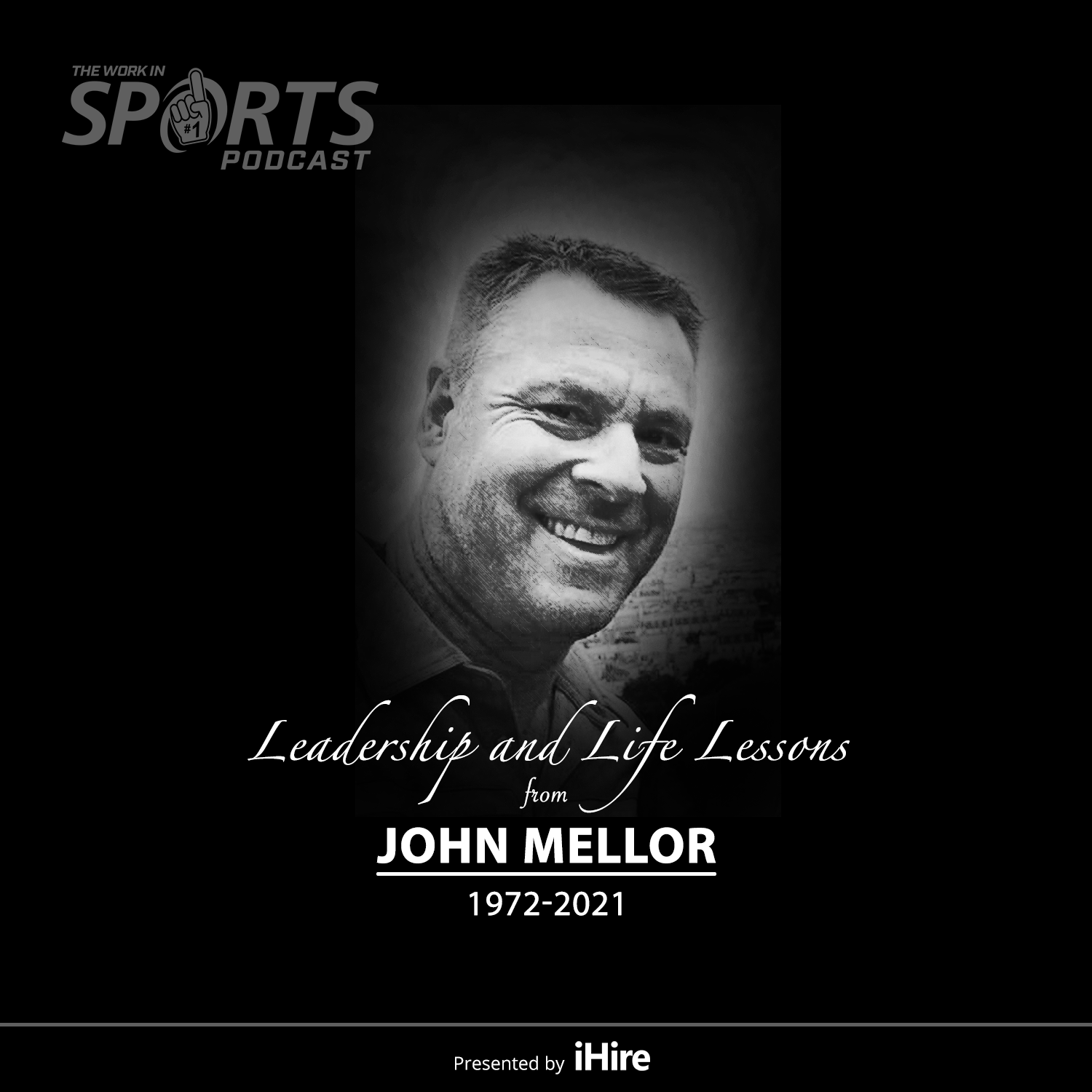
Ep 388Lessons in Leadership and Life from John Mellor, 1972-2021
I’m not going to sugarcoat anything, I’m a bit of a mess right now. Our CEO and one of my great friends, John Mellor, died last week at the age of 49 after battling cancer. You don’t listen to this show to hear me drone on about my life’s problems, we all have them, they are part of the human experience. But I can’t pretend this isn’t affecting me, and we are in an era of mental health awareness and transparency. So here’s the compromise, I’m going to tell the story I need to tell about Johnny, through the lens of the things he has taught me that have changed my life. You will get value out of it, and get insight into an amazing man, father, friend and boss. Please, do me the honor of listening to this one.
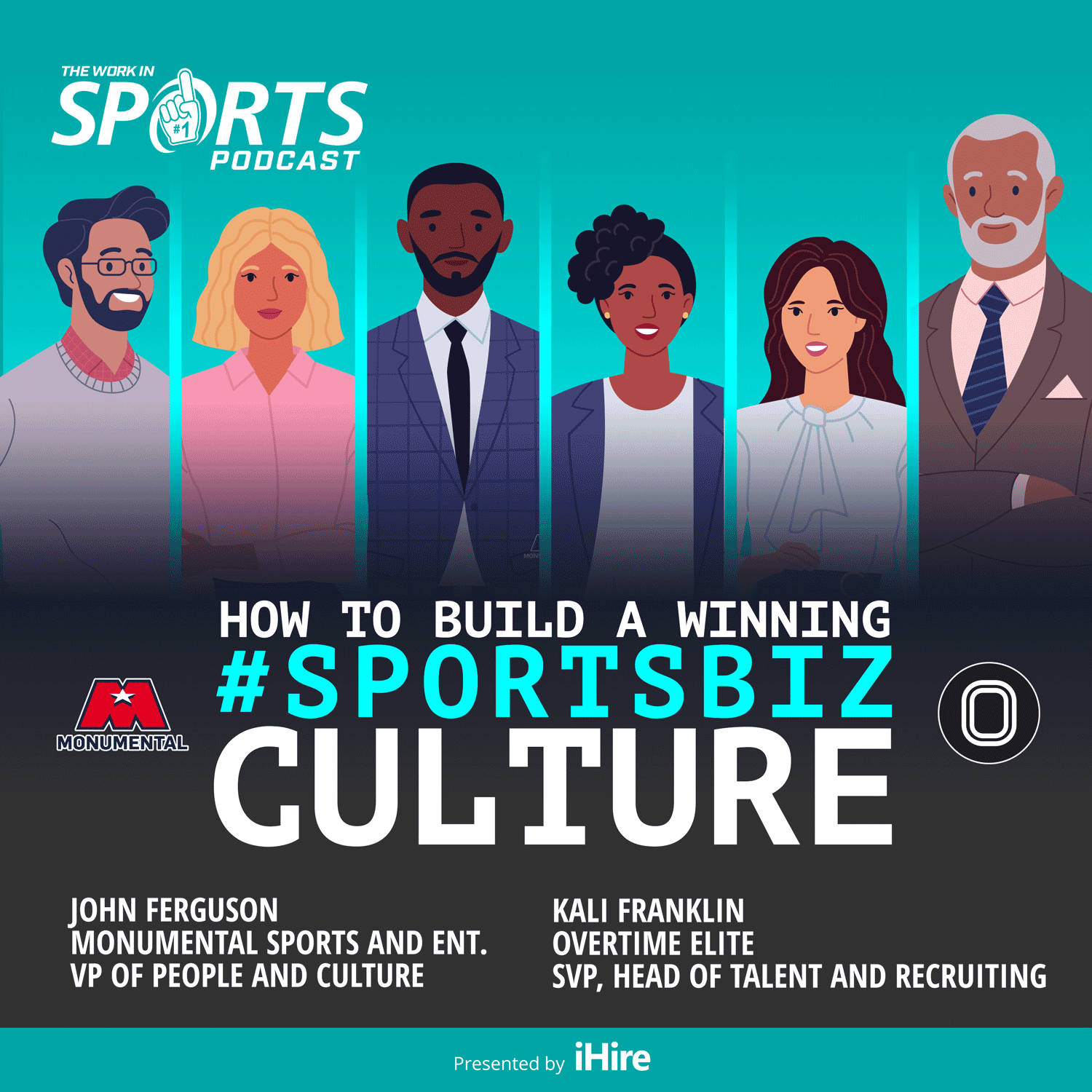
Ep 387How to Build a Winning #SportsBiz Culture with John Ferguson and Kali Franklin
Almost 390 episodes in to the work in sports podcast and we’re trying something a little different. Two guests -- Two All-time great guests together on one show. In 2021 one of the main goals I had for myself was to be more of a connector in the industry. I have met amazing people from my career in the sports media, and even more great people from hosting this podcast. I have made it a goal to say after each interview, “who can I connect that person with that makes sense for both parties?” The goal is to be a connector in the industry by asking honestly and authentically, how can I bring my worlds together in a truly beneficial way? To be transparent, the idea is great, my execution has been poor. I’ve connected a few people, but far from the consistency I imagined. No one is perfect. Nonetheless – today you are in for a treat because I brought together two of my favorites for this episode, and as predicted, they are amazing together. John Ferguson is the VP of People and Culture at Monumental Sports and Entertainment, and Kali Franklin is the SVP, Head of Talent and Recruiting for Overtime Elite. I’ve had podcast interviews with each of them, and LOVED the conversation. The idea to fuse them together into one conversation, dare I say was brilliant. We originally built this to be bonus content for after our Job Recovery Summit at Hashtag Sports, but this was too good to hold back. They are amazing together – I barely even needed to be there – check it out – here are John and Kali!

Ep 386How To Handle a Low Ball Salary Offer - Work In Sports podcast
Today's Sports Career focused question comes in from Kenton in California, “Hey Brian, I just completed an interview cycle for a job I was really interested in. I listened to your podcasts and really nailed the process, thank you so much, I had so much confidence throughout from your guidance and advice. My excitement continued to rise as I went further in the process and really liked the people I’d be working with and the projects I’d be part of. Then they made me an offer. And it was bad. I don’t know what to do now. I’m disheartened and worried...do I have to accept? What should I do?” Kenton – amazing question and a frustration many have had before you and many will after. I jumped this to the head of the discussion because I know time is of the essence for you....so let’s dig in. Listen in for tips to help you negotiate a low ball salary offer!

Ep 385How to Engage Today's Sports Fans with Jack Settleman CEO SnapBack Sports
Hey everybody, I’m Brian Clapp VP of Content and Engaged Learning at WorkInSports.com and this is the WorkInSports podcast!Just as much as change is a constant, so too is resistance to change. Every generation, to some degree, fights against change. They like how things operated in their youth, that is what they see as their perfect combination of how things should be. This definitely applies to sports, and unfortunately just about everything else. A lot of the discord in our society comes down to many people being unwilling to change, they like the powerful seat they have, and change could disrupt that. In sports, it’s often about nostalgia, memories of going to the game with their dad and getting a hot dog vs. sharing memes on social media. I remember vividly how upset the generation before mine was about the wild card being introduced in baseball... it was going to ruin the game! The Wild Card, really? The game is so fragile that introducing more teams to the playoff format can break it? This resistance is nonsense, things change. The world changes. Demand changes. The fact you carry around a supercomputer in your back pocket capable of giving you real time game results, means you don’t have to wait for Headline News to give you updates on the sports news of the day at the 10’s and 50’s of each hour. And you surely don’t have to wait for tomorrow’s newspaper. Anyone that is resistant to these changes is stuck. Now, that said, I’m not always a social media maven, I still like to watch a game instead of just highlights, I still like a well-crafted story...and every once in a while, when I’m feeling nostalgic, I’ll turn on SportsCenter and remember the olden days. That was a bit of a rocket shot at ESPN... sorry, love you guys! Today’s media and fans are changing, their appetite their interests. Do you think commissioners like Adam Silver can afford to sit back and think, man I loved the days those fans acted in this particular way. That was great. No! They are constantly evolving! That bring us to today’s guest Jack Settleman, CEO and Creator of SnapBack Sports. Jack hosted a panel right after mine, at the recent Hashtag Sports conference, and he captivated me. Jack was talking new media, new fans ad new levels of attraction...I was hooked and wanted to learn more. Snapback sports tagline: a new way to consume sports – does just that, really well. Snapback is the largest sports Snapchat account in the world totaling over 500M+ views YTD. And Jack and his team leverage other social channels, collaborations, memes, experiences, betting, fantasy –it's amazing, and it works. Let’s learn a little something about fandom with Jack Settleman CEO f SnapBack Sports!

Ep 384Lots of Job Interviews, No Job Offers. What Do I Do Now?
Hey everybody, I’m Brian Clapp, VP of Content and Engaged Learning at WorkInSports.com and this is the Work In Sports podcast. We’ve got a good question coming in this week and I want to jump right on it, it speaks to the urgency of this moment, and it comes from Michelle in Boston. “Hi Brian, huge fan of your podcast you have given me guidance and confidence as I traverse this super strange time in the sports industry. My question for you is simple, but I also hope profound enough to pique your interest. I have been getting a lot of job interviews, I had three last month for example, but I am not getting the job. I’m panicking a bit because every time I go on LinkedIn, I see another person landing their dream job and celebrating. It seems like everyone else is landing their dream opportunity and I’m still on the bench. What am I doing wrong and how do I step up my game?” Michelle, wonderful question and we’re going to dive in deep. Topics we'll dive into:Why the interview process is the most important step. What do the interviewers know about you right now? What do they need to know about you? What is the experience like for your interviewer? Put yourself in their shoes. Executive summary – do you have stand out skills, traits, message? Pick two to three things you want to make sure you hammer home – leadership and technical skills – passion and organization – project management and attention to detail. How do you know which 2-3 to focus on? Study the job description, the company, the news surrounding the company. Do your research. Stay flexible – if the interviewing is leaning you in other directions be able to adjust. You keep talking about your leadership skills and they are throwing a vibe, that’s nice but we need someone strong in execution. PIVOT! Tell stories surrounding these traits Walk through your thought process, why you did the things you did, how you learned and progressed. Don’t just walk me through the X’s and O’s -- share your process, let me learn more about you! Get into your how and why! You want to be memorable. Listen in to the full episode to learn more about how to nail the interview process.
Ep 383Ben Baskin: The Shift in Sports Journalism
If we have learned anything over the last year, it is that we all must constantly adjust, or we will watch the world pass us by. Quick story – in 2006 I went to Europe for the first time, my wife was competing in a field hockey tournament that took us to Germany, Amsterdam, Scotland and Belgium. IN Germany we visited Charlemagne’s castle – not Charlemagne Tha God, the Charlemagne who was the King of Franks. The castle was amazing, just what you’d expect a castle to look like built in the 790’s it had the turrets and the grand ballrooms, lots of castle stuff. Later when we went to Scotland, we visited Edinburgh, another beautiful castle built in 1103. 300 hundred years later. What struck me is that extraordinarily little had changed. The architecture, building processes, planning and arrangement of spaces – not particularly different. I’m sure some historian would argue with me, but it was Castle v Castle, and they were remarkably similar despite being 300 years separated. That is not the world we live in anymore. Things change exponentially every 5 years. Everything changes. This about your life in 2016 – sounds like a long time ago, right? Think about your phone, social media, analytics, electric cars, self-driving cars – everything changes at ridiculous speed right now. Will you adjust, or will you stand pat trying to slow down the world and make it fit what you remember and like? One of the many things that strikes me about today’s guest Ben Baskin, Senior Writer and podcast host for Religion of Sports, is his ability to adapt without sacrificing what he loves. Ben got his masters in journalism from Columbia, worked at Sports Illustrated for 5 years, loved in-depth storytelling and research and reporting. If you told him he had 10,000 words on the Chicago Bears he’d salivate trying to figure out the best angle and the best reporting to craft his missive. But the world changed under his feet. TL DR became thing. People stopped reading. Content bosses wanted click bait and listicles, debate shows and digital first content structures. Ben could have pined for the old days, and maybe in his quiet moments he does, but I like the action he took instead. He took his long form story telling chops to podcasting, crafting, really crafting amazing stories for his Lost in Sports podcast. It is my favorite show, Ben is my favorite storyteller, and you must start listening to this amazing style of content that should captivate and engage all of you. Ben adjusted his craft to fit the audience demands, and it worked. Will you do the same when faced with a similar challenge? This conversation is amazing, buckle up we have a lot of sharing to do. Here’s Ben Baskin.

Ep 382Job Interviewing Skills We Need To Talk About
Today's Work In Sports podcast subject: interviewing skills we don’t discuss enough. We’ve talked about research and preparation, first impressions, video technology, phone interviews, panel interviews and more. But we might not have talked about a few other skills that can’t be lost in the preparation for your big moment. I have five I’d like to share today and implant in your memory banks as you get ready for your next big interview day:Small TalkEmpathyActive ListeningStory TellingBody LanguageLet's Go!
Ep 381Ari Kaplan, Baseball Analytics Pioneer
Managing and leading people requires a unique blend of patience and expertise. Patience is paramount to success as a manager because you are inherently managing and leading people who are less experienced in this expertise than you are. If someday you become the director of group sales for a sports organization, you will be influencing the day-to-day actions of people new to the business, and junior in their experience. This means you must be patient in executing your plans, taking their growth with the logical steps forward and steps backward. It’s like having a kid - you work on their reading, and as soon as you make progress the next day they look at you like they’ve never seen the word AND before. You want to scream, like, "we did this 25 times yesterday" and then you realize they are 6-years-old and child protective services have already told you to stop yelling so much. I’m kidding of course, child protective services have never yelled at me, even if that story was slightly autobiographical. But this is patience in action. No one learns in a straight line, they go up and down. They grasp some concepts quickly and others take longer. They need repetition and acceptance of their shortcomings. This is a major part of being a thought leader at a company. You can’t write people off as hopeless, you have to work with them, find their learning style, figure out ways to translate your information into their language. Nowhere is this trickier than in the world of sports analytics. Analytics is one of the roles in the highest demand for the sports industry, and yet it is a very, very different language than most people speak. The best in this business have learned how to adjust their style to their stakeholders, whether that’s a GM, a coach or a player. Some are visual learners, and need heat maps, others like massive amounts of data and want it all, while others need to be told a singular thing at a time that can help them advance in their skill set. Everyone learns differently, and as long as they have the passion, the learning will come. I was watching TV with my wife the other night, and she was watching some competition fashion show and they are talking through designers and styles and sewing techniques -- and I said to her, "How in the world can anyone keep up with all these designers and techniques?"She looked at me deadpan and said: “So who did the Patriots draft in the 3rd round of the 2007 draft?”And I said, “trick question, they didn’t have a 3rd round pick”It took me a minute until I realized she set the trap and I jumped in it. The point is, everyone has the capacity to learn what they are interested in and is placed in front of them within the right format.That is the challenge for those in analytics - taking complex data, that their audiences want to understand, and making it understandable. The passion is there, it’s on the analyst to make it more than just numbers. It takes patience. Today’s guest Ari Kaplan understands this more than most - over the last three decades he’s been finding ways to give pro sports teams an edge through data AND having the patience to share the information in the right manner so that it can make a difference. This interview is fascinating - I learned so much because I have the passion, and Ari has the patience… so where do you fit in?Let’s find out -- here’s Ari Kaplan…

Ep 380It is Time to Go EXTRA in Your Sports Job Search
I’m going to jump right into things this week with a passionate plea for all of you job seekers out there. The time is now to go extra. What is happening in the sports industry right now? Huge shifts in hiring. For the last year there has been staffing contraction due to COVID – not necessarily because of revenue depletion, sure in some cases it was, but not everywhere. Certain jobs were temporarily contracted due to the lack of live attended sports events, no need for me to rehash that, many of you lived it. The need was always going to be there, and come charging back...which is happening now, we are seeing a huge uptick in hiring. There are a few other things happening too. 1: People changed over the last year. Their priorities shifted, their desires changed, their focused took on new meaning. Many people sat back and said --- “maybe sports aren’t my jam.” Maybe the schedule isn’t my thing. Maybe I don’t want to be around 15,000 people a night. Maybe I don’t want to work holidays and weekends. Everyone reprioritized for some reasons. Everyone was affected differently by the last year. I’ve talked to many people who have said, I think I;m giving up on the sports idea...or I’m going to look for something closer to family, because that what I learned to appreciate and value in the last year. Our society is taking a new view on work, and even more, purpose...and I respect the heck out of that. You do you. I hear that, and I love that people are knowing themselves and engaging in self-care, but I also think...that opens opportunities for others, and that other could be you. Let’s get into the thrust of this conversation: Now is the time to go EXTRA.

Ep 379How to Build a Player Marketing Strategy with JB Greer, Octagon Director of Player Marketing, Baseball
Hey everybody, I’m Brian Clapp VP of Content and Engaged Learning at WorkInSports.com and this is the Work In Sports podcast. I have a new theory I’m testing out – let’s call it a lukewarm take in progress. Over the last 10 years as I’ve spoken at colleges and universities across the country, a vast majority of the young people I talk to equate working in the sports industry with becoming an agent. This makes total sense. Superficial generally unrealistic benefits of being an agent: Rub elbows with famous athletes. Be part of their entourage Go to cool events. Get good tickets to games. Possibly have a movie made about you. Drive a fancy car. Sounds pretty cool right? That is the romanticized version of being a sports agent. Most don’t find this glory, but that is hard to process when you are young and feeling invincible. I don’t say that dismissively, I totally thought I was invincible in my 20s, and that positivity possibly leaked into my 30s. When I was young, I didn’t see downsides or pitfalls as something that could happen to me, that was the other people, I’d be the successful one. The reality of being a sport agent: Very few make it TONS of competition If you don’t know athletes, it is near impossible to get rolling Lots of money spent, before money comes in – you could spend tons of your own money on some undrafted free agent that gets invited to training camp, never makes a roster and doesn’t sign a big contract. No payday for you. To drill down to the point, Sports Agent has been the big dream career of many – but it ain’t easy. Not trying to dissade anyone, just pointing out the reality. Get ready here comes the warmish take. I think there is a shift. I think we’re seeing more and more interest in player marketing, and today’s guest JB Greer Director of Player Marketing for baseball at Octagon, is one prime example of this dream career. I’ll let JB tell you about the benefits and why he loves is job, but surface level: Still rubbing elbows with incredible players Super creative – getting to come up with partnerships, marketing activations and player branding. You are part of a bigger team – at Octagon there are multiple agents, marketers, financial advisors and coordinators on the baseball team working in conjunction with one another. No trying to go it alone. And I’m guessing you still get good tickets to the game. Bottom line – if I were starting out again, I think this may be the way I’d go, and it’s definitely something you in the audience should consider. Let’s hear all about it from today’s guest – JB Greer.
Ep 378How to Start Your New Job on the Right Track
Question from Gerald in Oregon:“Hey Brian, whether you know it or not, you have been advising me for years. I know this is the first time I’ve reached out, but I’ve been a huge fan and you’ve profoundly changed my perspective and approach on so many career-focused initiatives. I started listening when I was a junior in college, I graduated last year, and just landed my first full-time gig in the sports industry. One thing I haven’t heard you talk about is starting a new gig. What should I expect in my first month and what can I do to really stand out for the right reasons?” I've got 5 things you should do, and 3 things you shouldn't when starting a new job and trying to make an impact. Let's GOOOOOOO!
Ep 377Working in Digital Media, NBA Style with Shahbaz Khan, Minnesota Timberwolves
I know this may sound trite, but I learn something from every interview I conduct on this show. It’s true - when you keep yourself open to learning and open to your own need for improvement, you start to see the opportunity in everything. I don’t want to let the cat out of the bag, but today’s guest Shahbaz Khan director of digital content for the Minnesota Timberwolves and Lynx, really woke me up during this interview with his ideas. Now, full disclosure -- if someone asked me what my dream job would be right now, it would be leading a digital content group for a pro sports team -- so Shahbaz had me piqued from the get-go.Check it out - Shahbaz has a great story to share, and vivid experiences!
Ep 376Why You Should Consider Community Relations for your Sports Career
Hey everybody, I’m Brian Clapp VP of Content and Engaged learning for WorkInSports.com and this is the Work In Sports podcast…Community relations is food for the soul of an organization. Still one of my favorite quotes. It’s from an anonymous CEO, I’d give credit if I could.And it’s a true statement. When most departments of an organization are focused on internally beneficial revenue creation, it is the community relations department that is focused on more outwardly impactful projects. They are literally giving, with no intention to receive anything but joy and fulfillment. But, even though the quote hits the mark on the spirit of community relations, it’s purpose and mission, it doesn’t take into account the actual scope of the job. What we see from the outside are hundreds of events each year utilizing the reach and power of a team brand and its athletes to make a difference in the local community. Support for education, the military, cancer survivors, blood drives, coaching -- that what we see, and are moved by as human beings.But when we talk about the job, when we talk about Community Relations as a career, yes it starts with caring about the people and the causes -- but it also requires elite skills. Event management, marketing, promotions, budgeting, staffing, leadership skills, and more are required to impact and change the local community. It starts with heart, but it requires skill. Today’s guest is a shining example of that mix, a combination of elite skill and unrivaled passion and enthusiasm for making a positive change the world. Kevin Brown is the Director of Community Impact for the Detroit Red Wings -- it’s my pleasure to have him as our guest Here we go -- let’s dive into the world of community relations with Kevin Brown…

Ep 375How To Lose Your Shot at a Job Interview
Question of the week comes in from Brian in Pennsylvania. Yes for the second time in a row I am answering my own question. “What are the big problems you are seeing first-hand as you review applicants to your job openings?” Great question Brian. As you all should know I’m hiring for three roles, and I’m in the weeds of resumes, phone calls and interviews. It’s awesome. Seriously, I love being in this conversation. BUT, there is also a ton of tidbits I want to share with you all. 1: Spray and Pray (7:10)2: Resume Length (10:03)3: Mission Statements That Aren't Aligned (11:13)4: Resume Doesn't Match Job Description (13:25)5: Not Doing Your Research/Homework (16:54)

Ep 374Scott O'Neil, CEO, Harris Blitzer Sports and Entertainment
Hey everybody, I’m Brian Clapp, VP of Content and Engaged Learning at WorkInSports.com and this is the Work In Sports podcast. Over the last year, I, like many others, have spent time contemplating my own preconceived notions and unconscious biases in every walk of my life. We all have them, it is a part of the human condition, but where do they come from, and why are they allowed to stay? This question has perplexed me as I’ve tried to open up my lens and question myself every time an instinctive thought comes into my psyche. While the social justice issues of 2020 may have sparked my internal curiosity, it would be naïve to think bias only comes into issues of race, gender and culture. When you pay attention to it, and the way your mind processes information, unconscious bias and preconceived determinations are everywhere. I did some digging, and studies indicate that many children by five years of age have entrenched stereotypes about various social groups. The world we are exposed to forms our foundational beliefs and hen becomes a tool to make snap judgements and conclusions on sight. Kind of spooky right? It’s like our brain is hardwired by societal influence. We watch Saturday morning cartoons and don’t see any black or asian children, OK, white people hold more important statuses, got it. We don’t see women in positions of power, OK, men are more powerful, got it. But it can even be simpler and more pervasive than race and gender, we see a hard charging, demanding CEO on TV and start to lump information together, OK, CEO’s are smart, but mean and cutthroat, got it. We see sales people represented in pop culture as in your face buy, buy, buy, and we think, OK, that’s not me. Our belief structures become formed, not out of some nefarious agenda, but because we as children are trying to make sense out of our world and the easiest way to do that is draw conclusions from what we see and hear. As children we have no choice, we lack the cognitive ability to evaluate the validity of our assumptions. As adults we do, if we pay attention to their existence. I’ll use a personal example. A couple of weeks back I had on Dr. Bill Sutton, one of the absolute best people in our industry. After our interview was complete we chatted a bit, and he suggested today’s guest Scott O’Neil CEO of Harris Blitzer Sports and Entertainment as someone he could connect me with. My instantaneous reaction was hell yes, but my subconscious notion was – he's the CEO of the Philadelphia 76ers and New Jersey Devils, he’s going to be tough, he’s not going to have time to really do this, I’m going to get canned answers that aren’t authentic, he’s not going to be all that interested to talk to me, and this may very well sound better than it is in practice. This is what ran through my head immediately! Within a day the session was booked. Dr. Sutton came through. Scott and his team were kind, gracious, courteous and attentive. He sent me over a copy of his new book, Be Where Your Feet Are: Seven Principles to Keep You Present, Grounded, and Thriving...and I was blown away. I really like meditation, being intentional, paying attention to your mind and the energy you throw off to others around you – but to learn Scott, this Harvard educated, top of class, wildly successful guy was contemplating true happiness alongside me? I was blown away and read his book from beginning to end. And there it is, preconceived notions, drawing unfair conclusions about people or evens before you KNOW a damn thing. It's all I've been able to think about since I concluded the interview with Scott.I've read his book, it is insightful, so introspective,
Ep 373Trends in Athlete Marketing for 2021 and Beyond
July 8th 2010, for many this represents the dawning of the Player Empowerment Era. If you don’t remember that date, and why should you unless you live in Cleveland, that is the date “Lebron: The Decision” aired on ESPN. Lebron James announcing his intent to take his talents to South Beach in an ESPN special that was probably 10 minutes but felt like 20 hours. Forgetting how mind-numbingly awful that show was, it did put a stake in the ground for all athletes moving forward to say “we can take control of our careers and pull the levers of our own lives.” It’s clear how monumental this event was, based primarily on the anger it caused in then NBA commissioner David Stern. Stern was a very smart man and savvy businessman, and according to may I’ve spoken to who knew him, he loved being in control of the league and its players. Stern pushed ESPN to cancel The Decision, former ESPN executive John Skipper detailed after the fact that he believed "[Stern didn't like it] probably because the player was in charge here." And there it is, the dawning of the player empowerment era. Well, that is if that’s how you define player empowerment. I think I’d take a different view. If empowerment is the authority given to someone to do something, I think athletes have been empowered far before Lebron James walked the Earth. Jesse Owens earning 4 gold medals at the 1936 Berlin Olympic Games as Hitler watched outraged. Jackie Robinson Althea Gibson Billie Jean King Bill Russell Muhammad Ali They all took back their power, leveraged their abilities into change moments. It wasn’t choosing what team to play for, it was choosing to change the world. I’m not trying to be belligerent, clearly today’s athletes are using their voices and power toward good causes and are effecting change in the world. Nothing has interested me more in the last 10 years than the Player Tribune, the ultimate platform for athletes to show they are more than an athlete. Athletes today have a louder megaphone and more tools in their toolbelt than ever before. And they are using them all. One of those tools many athletes leverage are Athlete Marketer, people trained and dedicated to help build the profile and brand of today’s top athletes. One of my favorites, is Jennifer Keene, VP of Athlete and Property Marketing at Octagon, Jennifer Keene. For long time listeners of this show, Jennifer has been here before and knocked it out of the park. I wanted to have her back on to discuss many of the emerging sports marketing trends in 2021...and she was kind enough to join me despite the fact she is moving from New York to LA! So when you see videos of the show, she wanted me to make it clear she is moving, not a hoarder with boxes everywhere. Here she is, my friend Jennifer Keene ready to discuss sports marketing trends in 2021.